
Several news sources featured in the Daily Digest may limit the number of articles you can access without a subscription. However, gift articles and open-access links are provided when available. For more open access California water news articles, explore the main page at MavensNotebook.com.
On the calendar today …
- MEETING: State Water Resources Control Board beginning at 9am. Agenda items include a informational presentation on the Second Statewide Agricultural Expert Panel recommendations for the Irrigated Lands Regulatory Program; Consideration of a proposed Resolution authorizing the Executive Director, or designee, to issue a Final Concurrence Letter regarding the Kern River Oil Field Aquifer Exemption Proposal; and an informational presentation on Constituents of Emerging Concern Program and interagency coordination on 6PPD and 6PPD-Quinone updates. Click here for the full agenda.
- WEBINAR: Intermountain West June Drought Update and Outlook from 10am to 10:45am. Drought has intensified in much of the Intermountain West, with 95% of the region (Arizona, Colorado, New Mexico, Utah, Wyoming) in drought, according to the May 12, 2026 U.S. Drought Monitor. Join this Intermountain West Drought Update and Outlook Webinar to get information on current regional drought conditions and outlooks. The webinar will also include an update on the status of the 2026 North American Monsoon outlook, as well as the developing El Niño and how it may impact drought in the region. Finally, the state of Colorado will share their approach to drought preparedness and response to the current drought conditions. These webinars provide the region’s stakeholders and interested parties with timely information on current and developing drought conditions, as well as climatic events like El Niño and La Niña. Speakers will also discuss the impacts of these conditions on things such as wildfires, floods, disruption to water supply and ecosystems, and impacts to affected industries such as agriculture, tourism, and public health. The webinar covers Arizona, Colorado, New Mexico, Utah and Wyoming. Click here to register.
- WestFAST WEBINAR: NASA’s Water Resources Program: Supporting Water Management in the U.S. West and Beyond from 11am to 12pm. The third WestFAST webinar of 2026 will be held on Tuesday, June 16 at 12pm Mountain Time. Perry Oddo and Sean Fleming will lead the webinar, which will focus on NASA’s programs and data tools that support water management in the West. Click here for more information. Microsoft Teams meeting Join: https://teams.microsoft.com/meet/210989093533386?p=5SF5bAkLm03bEK46Oj
- WEBINAR: BCTools- DWR’s Open-Source Toolset for Data-Driven Basin Characterization from 12:30pm to 1:30pm. DWR released BCTools in April 2026, a publicly available, open-source suite of analytical tools designed to integrate AEM and hydrogeologic datasets for basin characterization, modeling, and groundwater management applications. BCTools consists of two primary components: the Data2HSM suite for hydrostratigraphic model development, and Texture2Par, which supports the estimation of 3D texture models and the development of aquifer parameters for numerical groundwater models. These tools can be used independently, or in tandem to provide a flexible and efficient framework for subsurface characterization that can handle a diverse array of input datasets and project objectives. The session will highlight how BCTools can be applied in practice, highlighting key workflows and real-world applications. Attendees will see representative outputs, learn how the tools adapt to different datasets and project goals, and gain a practical understanding of how BCTools supports basin characterization and modeling efforts. Click here to register.
In California water news today …
Two-Basin Solution partners respond to meeting between USDA, Interior, PG&E, and Elsinore Valley Municipal Water District regarding Eel River Dams
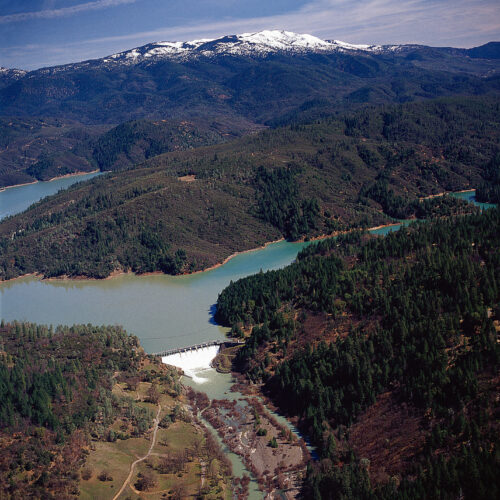
“Today, the coalition of water agencies, counties, Tribes, and conservation organizations behind the Two-Basin Solution expressed serious concern over reports that Agriculture Secretary Brooke Rollins convened a meeting with PG&E’s chief executive, Interior Secretary Doug Burgum and the Elsinore Valley Municipal Water District in Washington, D.C. regarding the future of the Potter Valley Project on the Eel River. “We share the Secretary’s concern with maintaining water security in the region, but the USDA’s actions undermine our locally negotiated agreement that provides that security” said Mari Rodin, a member of the City of Ukiah City Council and an appointee to the Mendocino County Inland Water and Power Commission. “It is incredibly important to us and our communities that control of resources stay in local hands.” … ” Continue reading from the Two Basin Solution Partners.
SEE ALSO: Water Agencies, Tribes and Conservation Groups Defend “Two-Basin Solution” Amid Federal Meetings on Potter Valley Project, from Native News Online
Cloverdale City Council’s fractious hearing on Potter Valley Project shows rifts among members
“The Cloverdale City Council’s attempt to weigh in on the fate of two Eel River dams broke down this past week in a public hearing marked by at least two council members hurling accusations at one another, exposing deep rifts in the elected panel. The bare-knuckled discussion included barbed exchanges between Andrés Marquez and Todd Lands, who stand on opposite sides of a divide over PG&E’s plans for its pair of dams in Mendocino and Lake counties. The utility wants to tear down the dams and an aging, shuttered power plant that has helped funnel Eel River water into the upper Russian River for more than a century. Lands made opposition to dam removal a centerpiece of his run this year for a seat on the Sonoma County Board of Supervisors, denouncing PG&E’s bid to decommission the Potter Valley Project as a disaster that would jeopardize regional water supplies. … ” Read more from the Santa Rosa Press Democrat.
The essential role of Tribes in regional water management
 “Tribal nations inhabit nearly every watershed in California, yet Tribal water rights are often poorly understood. In an event earlier this month, Letitia Grenier, director of the PPIC Water Policy Center, presented new research about the history and status of Tribal water rights, which was followed by an expert panel discussing why these rights matter. California is home to 109 federally recognized Tribes and more than 55 Tribes that are not currently recognized. Water rights are essential to Tribes’ health, economy, and well-being, and Tribes are deeply involved in regional water management as the state confronts challenges of water availability and a changing climate. “We have to cooperate more, and Tribes are a part of that,” said Grenier, citing how water managers and regulators are increasingly referencing Tribes’ traditional knowledge of California’s ecosystems. … ” Read more from the PPIC.
Investing in solar, transforming rice fields into wetlands
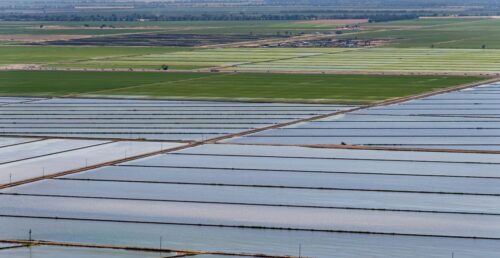
“Gallagher Ranch, a multi-generational rice farm, sits bout forty minutes north of Sacramento. I visited recently when Chico Electric presented the Gallagher family with a sustainability award. If you visit the farm, it’s clear that the folks at Gallagher Ranch have embraced solar in a massive way. The panels (see the photo below) supply their farm with clean, renewable energy, and as Jeff Gallagher is quick to point out, it gives them some level of control over their electric bill. The solar panels caught my eye. What caught my ear was hearing that the Gallagher Ranch often floods its rice fields during the winter months. Doing so provides ducks, geese and other waterfowl with habitat along the Pacific Flyway. It’s not just one farm. Sacramento Valley’s flooded rice fields provided enough habitat for nearly 150,000 birds per day in 2022-23, and it’s needed. Not only has Sacramento Valley lost 90% of its wetlands, but mallard duck populations in the valley are down 63%, gadwalls are down 30% and cinnamon teals 56%. … ” Read more from Environment America.
State Water Board to consider nitrogen regulation as new report details statewide pollution crisis
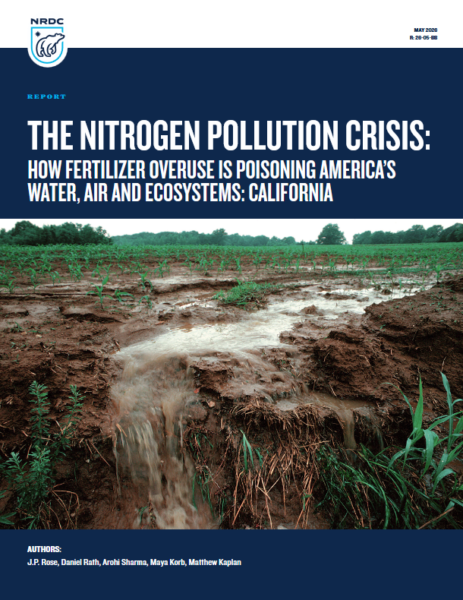 “Today, the State Water Resources Control Board will be hearing feedback from stakeholders on nitrogen fertilizer regulation in California, including whether to advance enforceable numeric limits on nitrogen applications and discharges from irrigated agriculture. The Board’s own Second Agricultural Expert Panel concluded in March that sufficient data exists to set numeric limits now in some areas of the state and adopting them would make California the first state in the nation to do so. [Today]’s hearing follows a new NRDC report, The Nitrogen Pollution Crisis: California, which details how fertilizer overuse is contaminating the state’s drinking water, fueling harmful algal blooms, and imposing enormous costs on taxpayers and vulnerable communities—and why decades of voluntary, data-only programs have failed to stop it. … ” Continue reading from the NRDC.
State Water Board releases Revised Draft Dairy Order
“Advancing California’s nation-leading approach to protecting water sources from agricultural practices, the State Water Resources Control Board today released a Revised Draft Dairy Order that aims to safeguard groundwater quality from milk cow dairy manure. The revised draft order requires dairies to conduct stricter nitrogen monitoring, ensure dairy manure retention ponds are not leaking at rates that affect groundwater and provide alternative drinking water supplies for households on nitrate-affected wells. The revised draft order also develops new requirements that will progressively restrict dairies’ application of manure to dairy croplands and prevent unsafe concentrations of nitrate in groundwater. … The revised draft order seeks to encourage and facilitate the large-scale export of treated dairy manure from dairies to other agricultural lands, where it can be applied at rates that both fertilize crops and protect groundwater. … ” Read more from the State Water Resources Control Board.
A new tool can help protect communities from flooding and optimize reservoir management during rain-on-snow events
“While Reno families were celebrating the 1997 New Year, the Truckee River was surging into the city’s downtown streets. A rainstorm was falling on the Sierra Nevada’s deep snowpack, melting it rapidly and creating a hazardous situation for downstream communities. Rain-on-snow storms like this one have been challenging for emergency managers to forecast and prepare for due to limited understanding about how the snowpack responds to rain. A new tool directly addresses this problem by utilizing hourly soil moisture data from the SNOwpack TELemetry Network (SNOTEL) to provide insight into how the snowpack is responding to a storm in near real-time. The tool is publicly available on DRI’s website at https://snow.dri.edu/snowpackrunoff/ and is paired with a new publication validating its efficacy in Water Resources Research. The study applies the tool to the Upper Carson River watershed, which drains the eastern Sierra Nevada, finding that storms from 2006 to 2022 demonstrate its potential for capturing the timing of runoff. DRI scientist Anne Heggli led the effort with input from partners at the California-Nevada River Forecast Center, the National Weather Service, and the State of Nevada’s Department of Transportation. … ” Read more from Desert Research Institute.
The ‘super El Niño’ is here. What happens next could upend food systems worldwide.
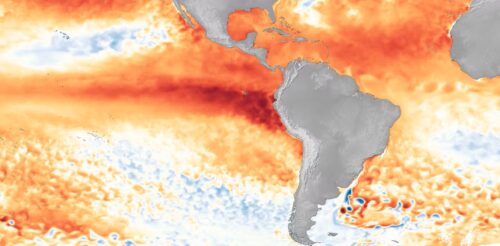
“The oceanic phenomenon known as El Niño, which increases temperatures worldwide, has officially begun, according to U.S. weather forecasters at the National Oceanic and Atmospheric Administration, or NOAA. Meteorologists have warned that this could be the strongest El Niño this century. It is expected to drive extreme weather events around the world, including both severe droughts and heavy rainfall, likely leading to major disruptions in agricultural production and food security. El Niño is part of a cyclical, naturally-occurring weather pattern that redistributes warm air, surface water temperatures, and moisture across the tropical Pacific Ocean. During El Niño, trade winds that typically blow east-to-west from the Americas to southeast Asia slow down or sometimes reverse. Normally, these winds push warm water along the Equator — but during El Niño conditions, that warm water shifts back east. Although El Niño does not follow a specific timeline, it typically occurs every two to seven years. … ” Read more from Grist.
Solano Together warns of California Forever bill
“Nate Huntington of Solano Together expressed concerns Monday that California Forever will seek to circumvent Solano County local control by obtaining needed regulation changes through a budget trailer bill passed by the California State Legislature. Huntington said his organization raised the alarm over the weekend because Monday is the deadline for the state’s budget to be passed for the upcoming fiscal year. He said a bill text could be available as soon as Monday evening, but noted that the governor’s office could add trailer legislation to the budget anytime in the coming weeks, usually before the end of June. “Sometimes items can be put in there that weren’t previously a bill before,” he said. In a statement to The Reporter on Monday, California Forever neither confirmed nor denied efforts to secure legislative action for itself. … ” Read more from the Vacaville Reporter.
King tides along California coast prompt advisories following two deaths
“Massive waves, coastal flooding and dangerous rip currents are roiling the California coastline this week as authorities advise people to take precautions while visiting beaches following two deaths last week. Turbulent waters swept a five-year-old girl, who was walking with her mother and brother, out to sea from the shore of Treasure Island Beach in Orange county in southern California on Tuesday. Bystanders were able to rescue the mother and son, but the girl was not found and her body was recovered on Thursday. In the city of Santa Cruz, the tide took two women to sea, leaving one dead and another in critical condition. Meanwhile, in San Francisco sea water poured into the Embarcadero on Saturday night. The city saw its highest summer water level on record, according to the San Francisco Bay Area office of the National Weather Service. … ” Read more from The Guardian.
California is heading into an above-average peak wildfire season, Cal Fire warns
“It’s only June, and fires are already popping up across California. Fire officials are predicting a prolonged peak season this year. California started out the year drought-free. The U.S. Drought Monitor map showed no drought in the state in January, although it was short-lived. While that can be a great thing, the water makes the grass grow, and six months later, that grass is now dry. “The wet weather is a double-edged sword. When we first get it, it gives us a little relief of any fire danger. Those fuel moistures come up, but then that fuel — the grass, the brush — eventually dries out and it becomes fuel for those fires,” said Brent Pascua, battalion chief with the California Department of Forestry and Fire Protection (Cal Fire). … ” Read more from CBS News.
Stanford study finds surprising upside of prescribed burns
“As climate change drives up the chance of extreme wildfires, smoke pollution presents a real health risk for people in the West. But now scientists have documented how using prescribed burns — one of California’s leading strategies for mitigating wildfires — could actually reduce air pollution over time. In a study published in the journal Science on June 11, Stanford University researchers found that intentionally burning 500,000 acres of conifer forests in California every year could reduce wildfire smoke pollution overall by about 10% over a decade. “This study highlights that yes, prescribed fire is good, but sometimes the benefits take a while,” Marshall Burke, a professor in the Doerr School of Sustainability at Stanford and the senior study author, told SFGATE. “As a species, we’re not that good at delayed gratification, but our numbers say in the end, it’s worth it.” … ” Read more from SF Gate.
In regional water news and commentary today …
NORTH COAST
Parasites, warm temperatures contributing to juvenile salmon die-off in the Klamath River
“Dead and dying juvenile Chinook salmon have been found along sections of the Klamath River this month, raising concerns among researchers as warm water temperatures and parasites appear to be contributing to the fish kill. Researchers said most of the affected fish are hatchery-raised juvenile Chinook salmon found along the Klamath River mainstem between Fall Creek and the Shasta River confluence. Sascha Hallett, a Research Associate Professor at Oregon State University, said juvenile Chinook salmon were found dead or dying in rotary screw traps and along riverbanks in early June, prompting fish samples to be sent to several laboratories for testing. … ” Read more from KRCR.
A microscopic threat to Humboldt’s water supply is changing the rules at Ruth Lake
“A spontaneous afternoon at Ruth Lake used to mean grabbing the boat and going. This year, that impulse trip could end at the gate, especially for wakeboard boats. Show up with a ballast tank that hasn’t been pre-banded, and staff may have no choice but to turn the boat away for a full month. That’s the reality boaters are running into as the Humboldt Bay Municipal Water District and the Ruth Lake Community Services District roll out their toughest mussel prevention measure yet: a mandatory 30-day quarantine for any watercraft with ballast tanks or other components that can’t be fully drained. “I actually just experienced that yesterday while I was working at the store at the campground,” said Caitlin Canale, general manager of the Ruth Lake Community Services District, in an interview earlier this month. “They said that they weren’t aware of it, and so they were not able to launch, and I placed a red band on their boat.” That boater now has to wait thirty days before they’re able to launch at Ruth Lake. … ” Read more from the Redheaded Blackbelt.
SIERRA NEVADA
Volunteers replant, restore, and improve a creek on Tahoe’s East Shore
“On Saturday, June 13, 41 volunteers gathered on Tahoe’s East Shore to replant, restore, and improve Marlette Creek as part of Keep Tahoe Blue’s Tahoe Forest Stewardship Days event. Now in its 29th year, Tahoe Forest Stewardship Days is the region’s longest-running and largest single-day ecosystem restoration volunteer effort, held in early summer and fall each year. The event focuses on restoring streams, creeks, marshes, meadows, and wetlands. When healthy, these ecosystems are Lake Tahoe’s best protection from the impacts of climate change. They are also a natural filtration system, preventing tiny particles of sediment from flushing into the Lake, where they harm Tahoe’s water quality and clarity. … ” Read more from South Tahoe Now.
Solving California’s forest problem and protecting Nevada’s water supply – The Truckee River Watershed Council is addressing both
“The nonprofit Truckee River Watershed Council (TRWC), alongside staff from the Tahoe National Forest, is launching a new forest health project near Boca Reservoir later this month that will help reduce the risk of catastrophic wildfire locally, and protect the drinking water for hundreds of thousands of people living downstream in the Reno-Sparks area. In total, the project anticipates treating approximately 1,940 acres of US Forest Service lands over the next three years to improve overall forest health. The project will remove ladder and surface fuels and use mechanical thinning to produce a healthy distribution of trees of varying sizes to decrease stand density and improve forest resilience and wildlife habitat. Fireline construction and any necessary trail reconstruction will also be completed. “Thinning the overstocked forest around Boca Reservoir isn’t just about reducing fire risk in California—it’s also about ensuring that our neighbors downstream in Nevada continue to have access to clean, safe drinking water,” said Eben Swain, project director at TRWC. “The Truckee River provides about 85% of water for homes and businesses in the Reno-Sparks area. As we work to create healthy forests, we’re also creating healthy watersheds and healthy communities.” … ” Read more from the Sierra Sun.
Lake Tahoe water clarity improved in 2025, but long-term recovery remains stalled
“Lake Tahoe’s water clarity has reached a plateau, showing no significant long-term improvement or decline, even as the annual average has trended downward over the past several decades. The annual average water clarity measured in 2025 was 69.2 feet — nearly 7 feet better than the average of 62.3 feet recorded in 2024, according to the 2025 Lake Tahoe Clarity Report. by UC Davis’ Tahoe Environmental Research Center. Scientists gauge clarity by lowering a 10-inch white disk, called a Secchi disk, into the lake and measuring the depth at which it remains visible. … ” Read more from the Sacramento Bee.
SACRAMENTO VALLEY
Big Chico Creek tests show no sign of E. coli strain linked to 2025 illnesses
“Big Chico Creek is free of E. coli O157, according to Butte County Public Health. E. coli O157 is a specific variant of E. coli, which was responsible for a cluster of illnesses in Big Chico Creek in summer 2025. BCPH collected water and sediment samples on May 4 from several locations across the creek, and sent them to a the State Water Board laboratory, which did not detect any of the O157 variant. Dr. Jarett Beaudoin, the county Public Health officer, said that the O157 variant is one of many variants of E. coli. “There’s hundreds, if not maybe thousands, of different types of E coli,” Beaudoin said. “We’re testing towards that one type (O157) that can put little kids in the hospital.” … ” Read more from the Chico Enterprise-Record.
The curious comeback of Putah Creek’s salmon
“In California, a long-abused river has been reborn. For decades, humans disrupted its course and restricted its flows to the detriment of its ecosystem, only to lately reverse direction and restore it to a facsimile of its natural state. And salmon, the bellwethers of aquatic health, have responded, returning much faster and in greater abundance than anyone anticipated. This description applies not to the Klamath River — or not only to the Klamath, recently liberated from its four lower dams — but rather to the far less-celebrated Putah Creek. Near its headwaters in the Mayacamas Mountains, the Putah is narrow and boulder-studded; as it nears the Sacramento River’s floodplain, it begins to slow and broaden. Along its 85-mile course, it is imprisoned behind dams, siphoned off by ditches, squeezed between artificially straightened and hardened banks. Although it lacked salmon for decades, in 2025 more than 2,000 chinook returned to spawn — an improbable triumph that reflects both human-led restoration and the resilience of the fish themselves. … ” Read more from High Country News.
NAPA/SONOMA
Thousands of Napa County property owners to pay new groundwater fee this December
“Some property owners above Napa Valley’s 72-square-mile groundwater subbasin will see a new fee on their property tax bills in December. As part of the Napa Valley Subbasin Groundwater Sustainability Plan, Napa County mailed informational postcards this past week to subbasin property owners and groundwater users, encouraging them to review information about the groundwater fee that will range anywhere from $38 to $129 per acre per year. County officials expect to raise $2.17 million per year from a total of 2,600 subbasin residents, according to the county’s natural resources manager Jamison Crosby. … ” Read more from Local News Matters.
BAY AREA
Marin Audubon Society closes deal for Novato baylands
“The Marin Audubon Society has completed its purchase of two parcels spanning 323 acres in unincorporated Novato. The nonprofit bought the diked bayland properties on Thursday, following through on a purchase agreement it signed last year. The group worked in partnership with Marin Baylands Advocates on the acquisition. “We’re thrilled to be able to do this,” said Barbara Salzman, president of the Marin Audubon Society. “It’s just a wonderful opportunity, and it really is on the Marin side, the last piece to make a continuous boundary of wetlands all along the Petaluma River and the land between the river and marshes.” … ” Read more from the Marin Independent Journal.
Flooding hits San Francisco’s Embarcadero as experts warn of more to come
“Overnight flooding along San Francisco’s Embarcadero is offering a preview of what scientists warn could become more frequent as sea levels rise. Michael Beck, director of the Center for Coastal Climate Resilience at UC Santa Cruz, said conditions are expected to worsen and require long-term planning and investment. “It is going to get worse, and we need to start preparing for the fact that it is going to get worse. There are some places which we are going to have to invest in more protection. There are some places where we can still rely on wetlands, and wetlands coupled with our levies, to reduce some of these risks in the future,” Beck said. … ” Read more from KABC.
Santa Clara County begins boat inspections to combat spread of invasive golden mussels
“Clean, drain, dry and tag: State and county officials are relying on boaters to prevent the spread of an invasive golden mussel that has infested much of the San Francisco estuary. On Monday, new rules that aim to curb the spread of the species go into effect for all reservoirs open to recreational boating within Santa Clara County. The first North American detection of golden mussel was in California in 2024, according to the state Department of Fish and Wildlife. The inch-long golden mussels live in both fresh and brackish waters, and county officials say they can hitch rides on boats and trailers, allowing them to spread rapidly between waterways. Water agencies have reported infestations at facilities connected to California’s vast water delivery system, clustering onto pumps, pipes and fish screens, potentially threatening drinking water supplies, agriculture and hydropower operations. … ” Read more from Local News Matters.
El Niño turns crumbling California pier into climate battleground over what to save — and who pays
“As a historic El Niño supercharges the Pacific Ocean and San Francisco experiences record high seasonal sea levels, the latest structural casualty of intense wave action is prompting Bay Area politicians to call for help from the state and federal governments. They want to rebuild a concrete pier shut down this month after officials deemed it unsafe because of cracking from decades of pounding surf and storms. As waves crashed against the derelict structure Monday morning, U.S. Rep. Sam Liccardo (D-San José) held a news conference and asked the federal government to follow through on $50 million in climate resilience funding promised by the Biden administration but terminated by the Trump administration in 2025. … ” Read more from the LA Times. | Read via AOL News.
SAN JOAQUIN VALLEY
Invasive golden mussels run rampant in San Joaquin County, spark plea for federal assistance
“Tony Faso has been in the boating business for 23 years. In that time, he’s never been able to see the fish swimming near the shores of the San Joaquin Delta, until now. “The clarity of the water is wild,” Faso, owner of the Delta Marine Yacht Center in Stockton, explained. “It’s sad to say, but we could never even see that deep.” That clear water is a clear warning sign of the invasion happening below the surface as hundreds of thousands of golden mussels filter the water while wreaking havoc on critical infrastructure. “I don’t want to say it’s a foregone conclusion that we can’t stop it, but we have to find a way to slow it down,” Faso said. … ” Read more from CBS News.
EASTERN SIERRA
Ridgecrest: Desert groundwater agency seeks information on proposed AI data center
“A proposed Inyokern artificial intelligence data center dominated public comments and concerns for the second month in a row at the Indian Wells Valley Groundwater Authority. Though the authority doesn’t have the power to approve or deny the project, it is working on fact finding. Residents concerned about the data center’s potential water consumption in the already overdrafted valley asked the authority for several actions. … Though the project has not been presented to the Kern County Board of Supervisors, Authority Chair Phillip Peters, also a supervisor, made a motion to ask the county for a memo outlining what sorts of conditions it could impose on a data center. … ” Read more from SJV Water.
SOUTHERN CALIFORNIA
Olympics-bound Los Angeles wants famous ‘Interceptor’ trash ship to stop river garbage at the source
“Efforts to improve beach conditions before the 2028 Summer Olympics are pushing Los Angeles officials to focus farther inland, where a trash-collecting barge created by Boyan Slat could play a major role. Officials from two Los Angeles-area districts want The Ocean Cleanup’s “Interceptor” installed on the San Gabriel River before the Games. Instead of waiting for debris to arrive at the shoreline, local leaders are looking at ways to capture it upstream before it reaches some of Southern California’s busiest beaches. Good News Network reported that officials in Seal Beach and nearby communities have been considering whether Boyan Slat’s Interceptor technology could be used for the San Gabriel River. … ” Read more from The Cool Down.
Tapping into Torrance’s brackish water plume
“Situated underneath the city of Torrance, Calif., is a vast source of groundwater just waiting to be extracted. It’s just way too salty. The Water Replenishment District (WRD) of Southern California is working on a solution as part of its Brackish Groundwater Reclamation Program. Although the program includes numerous capital projects, one of its most critical efforts is the Torrance Groundwater Desalter Expansion (TGDE), which will treat this salty underground plume and provide up to 7,100 acre-ft per year of clean drinking water for up to 105,000 local residents. Realizing this project, for which a formal groundbreaking was held on June 10, has required a creative delivery, extensive piloting and some coordinated logistics to manage multiple site constraints. When completed by 2028, the TGDE will include four new production wells, feedwater pipelines and additional treatment capacity at the Robert W. Goldsworthy Desalter. … ” Read more from Engineering News Record.
King tides wash away berms and leave some Long Beach streets covered in mud
“Powerful waves crashed over sand and wooden berms as exceptionally high tides slammed the shoreline overnight in Long Beach. When the king tides receded Monday morning, they left behind debris on the boardwalk and some streets near the ocean. Cleanup crews fanned out into neighborhoods and rebuilt berms that were knocked down before dawn. The higher-than-normal tides are expected to continue this week with warnings for dangerous coastal conditions extended until late Wednesday at Los Angeles County beaches and Friday at Orange County beaches. … ” Read more from NBC LA.
IMPERIAL/COACHELLA VALLEYS
Imperial Valley data center developer files lawsuit seeking access to Colorado River water
“For months, Sebastian Rucci said his massive data center project would not take water from the drought-stricken Colorado River. Rucci is a developer and lawyer based in the Southern California suburb of Huntington Beach. His company, a LLC called Imperial Valley Computer Manufacturing (IVCM), is trying to build a massive artificial intelligence complex in the Imperial Valley that he said needs around 750,000 gallons of water per day for cooling. In the Imperial Valley, the only source of fresh water is the Colorado River. The mighty waterway is facing a climate change-fueled drought and has fallen to dangerously-low levels this year. … ” Read more from KPBS.
SAN DIEGO
Local lawmakers ask small business admin for Tijuana River Valley support
“Members of San Diego’s congressional delegation Monday called on the U.S. Small Business Administration to continue to support small businesses impacted by Tijuana River Valley pollution. Reps. Juan Vargas, Scott Peters, Sara Jacobs, all D-San Diego, and Rep. Mike Levin, D-San Juan Capistrano, also asked for additional information from SBA Administrator Kelly Loeffler on what steps the SBA has already taken. “As South San Diego County’s beaches continue to be impacted by untreated wastewater, sediment and trash from the Tijuana River, South Bay businesses have suffered economically,” the lawmakers wrote in a joint letter. “While we continue to work with our Mexican counterparts to address the causes of the pollution, it’s important that we also take steps to support local small businesses impacted by the pollution and the consumers who rely on them. … ” Read more from NBC San Diego.
Along the Colorado River …
Colorado River states have plans to survive a future with less water. But it will cost billions
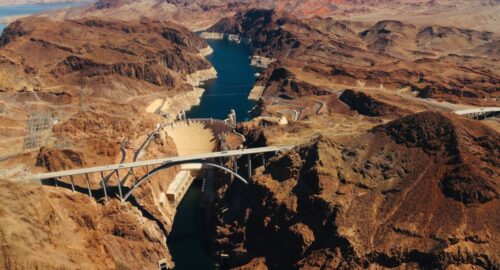 “Across the Southwest, there’s a plan to survive a drier future. But it will come at a steep cost. Water managers in states that use the Colorado River say they have plans to make water systems more efficient as supplies shrink due to drought and climate change. A new list of potential water infrastructure projects shows the ways Arizona and its neighbors might adapt to a drier future, and the massive spending it will take to make them possible. The list appears to follow an April meeting between Interior Secretary Doug Burgum and governors from the seven states that use water from the Colorado River. The secretary requested a sort of wishlist from those states, and they returned a wide-ranging collection of more than 80 projects with ballpark cost estimates that totaled in the tens of billions of dollars. The list, which was obtained by KJZZ, outlines more than $25 billion of potential spending in Arizona alone. … ” Read more from KJZZ.
Lake Mead’s slow demise just sped up in latest federal study
“The reservoir that serves as Southern Nevada’s main water supply is headed for an even more painful decline than thought due to historic drought and recent water management decisions, according to federal forecasters. Lake Mead could plummet to 1,015.77 feet above sea level in July 2027, far below any level seen since the reservoir was filled in the late 1930s. After that, though projections are less reliable the further into the future they go, water managers expect only a small uptick until another record low is set at 1,011.74 feet in May 2028. That low level is nearly 29 feet below the reservoir’s all-time low set in 2022. On Monday, the reservoir was almost 29 percent full at about 1,047 feet above sea level. “It is very grim,” said Sarah Porter, director of the Kyl Center for Water Policy at Arizona State University. “We didn’t expect good news. But the study underscores, again, that we’re in a really bad place.” … ” Read more from the Las Vegas Review-Journal.
SEE ALSO: Lake Mead Water Levels Set to Break Record Low, from Newsweek
Exploring the innovative solutions aimed at saving the shrinking Colorado River
“The Colorado River has long been the lifeblood of the American Southwest, winding through seven states and supporting roughly 40 million people along the way. It is a river that has been dammed, diverted, and depended upon at a scale few waterways anywhere in the world can match. What makes today’s moment so different from previous droughts or dry spells is the convergence of long-term climate change, a century of overallocation, and the sheer weight of a growing population pressing against a system that simply cannot keep pace. The solutions being proposed and, in some cases, already deployed range from engineering feats to political agreements to rethinking how water is valued and used. None of them is a silver bullet. Taken together, though, they represent the most concentrated effort in the river’s managed history to keep it alive. … ” Read more from Yahoo News.
Who depends more on Colorado River water: 40 million people or 1.8 million cattle?
“In terms of actual volume consumed, cattle depend significantly more on Colorado River water than people do. All total, the Colorado River water that’s consumed by the 40 million people who have access to it represents about 18% of the river’s total allocate use. Meanwhile cattle and their forage – specifically alfalfa and hay, use 46% of the river’s allocated use, making livestock the single largest consumer of the Colorado River. … ” Read more from Coyote Gulch.
Groundwater supplies in the Colorado River basin are falling fast. Is there a solution?
“As the crisis on the Colorado River grows, new pressure to pump groundwater will further stress already-depleted aquifers across the Southwest, according to water managers and scientists studying the ongoing drought. The decline of groundwater supplies along the Colorado River basin has been accelerating for decades, according to analysis by Arizona State University’s Jay Famiglietti. Most of those losses have come in Arizona. “We have to be exceptionally careful because it took tens of thousands of years to accumulate, we’re burning through it on a century time scale,” Famiglietti said. “There is essentially no hope of high-magnitude replenishment.” Because water is heavy, satellites in space can detect the diminished gravitational pull of the water when it’s removed from the ground, he said. … ” Read more at WBUR.
62% of agriculture producers in AZ are American Indian. Expert wants to reorient them to help tribes
“A new study out of the University of Arizona measures the scale and economic output of tribal agriculture in Arizona — and it’s big. University of Arizona professor and Hopi dry farmer Michael Kotutwa Johnson co-authored the study. It found American Indians operate 62% of farms in the state and manage more than 80% of the state’s total agricultural land — to the tune of 20 million acres. But, as Kotutwa Johnson told The Show, it’s a seriously under-researched area. … ” Read more from KJZZ.
Lower water levels put Grand Canyon river recreation at risk
“The new climate-changed reality of less water in the Colorado River has Grand Canyon river guides worried about the future viability of their businesses.” Listen at NPR.
Utah drought deepens as wildfire risk spikes
“Utah is running low on water, burning earlier than usual, and bracing for a long, difficult summer. State officials released a drought update on June 11, 2026, painting a picture of a state under growing pressure from heat, dry soils, and shrinking water supplies. The numbers are striking — and the warnings from water managers, fire officials, and wildlife experts are hard to miss. Across Utah, reservoirs are sitting at an average of 68% of their total storage capacity. That sounds decent on the surface. But that figure is 7 percentage points below normal for this time of year, and 18 points below where things stood at this same moment in 2025. The shortfall is hitting Utah state parks hard. Water levels at many recreational lakes have dropped so low that some parks have been forced to close their boat launch ramps to protect visitors and their equipment. … ” Read more from Western Water.
In national water news today …
Regulation and innovation drive new PFAS treatment strategies
“Per- and polyfluoroalkyl substances (PFAS) have become one of the most closely watched groups of chemicals in the world. Their resistance to heat, water, oil, and chemical degradation has enabled widespread use across industrial and consumer applications, but these same characteristics have also made them a growing environmental concern. Today, the discussion surrounding PFAS extends far beyond contamination detection. Governments, utilities, manufacturers, and technology providers are increasingly focused on a broader challenge: how to manage existing PFAS contamination while reducing future environmental impacts. As a result, the next phase of PFAS management is being shaped by three interconnected forces — regulation, treatment technology, and material innovation. … ” Read more from Plastics Today.

