
Several news sources featured in the Daily Digest may limit the number of articles you can access without a subscription. However, gift articles and open-access links are provided when available. For more open access California water news articles, explore the main page at MavensNotebook.com.
In California water news this weekend …
7 ways El Niño and large marine heatwave could affect West Coast marine species
 “A large marine heatwave has bathed parts of the West Coast in very warm ocean waters over the past year, breaking temperature records in the Pacific. NOAA has also announced that El Niño has developed in the tropical Pacific and is predicted to intensify to a moderate or strong level this fall. El Niño represents another form of marine warming , though with different drivers and influences. The prolonged period of high temperatures could affect fisheries and marine life in the California Current that have already been buffeted by shifting ocean conditions over the last decade. One factor may help dampen the impacts, though: The same strong upwelling of cool water along the coast that fuels the West Coast ecosystem with nutrients could help keep some warmer waters at bay, as happened in 2025. … Here are some of the ways warming water can impact marine life, coastal communities, and economies. … ” Read more from NOAA Fisheries.
El Niño could hit California economy with flood, supply shocks
“Federal forecasters say El Niño is officially underway — and for California, that likely means a wetter, stormier winter with high stakes for flooding, infrastructure, and the state’s already volatile water cycle. Globally, the climate pattern — driven by unusually warm Pacific Ocean waters — has a track record of causing trillions in economic losses. Experts warn this one could rank among the most expensive on record as shifting weather disrupts agriculture, supply chains, and economies worldwide. A 2023 study found past El Niño events triggered massive global income losses, including about $4.1 trillion after the 1982–83 event and roughly $5.7 trillion after the 1997–98 event. “The current forecasts imply this could be the costliest El Niño on record,” said Justin Mankin, a Dartmouth geographer who studies its economic impacts. Here’s what to know about El Niño’s potential effect on California and the global economy. … ” Read more from the Desert Sun. | Read via Yahoo News.
Iranian hacker group alleges it breached Bakersfield, Visalia, Chico water systems
“An alleged breach of several California water systems by an Iranian-linked hacker group did not compromise any water production or delivery systems, according California Water Service Company. “We have conducted a preliminary scan of our internal IT and OT networks and have no signs of any compromise within our IT, water production, and delivery systems at this time,” an email Friday from Yvonne Kingman, director of communications for CalWater, states. Kingman said the investigation is continuing and she didn’t have further information in response to a follow up question about whether the hacker group, called Handala, had accessed other systems, such as CalWater’s billing system. Handala stated Thursday that it had gained access to several systems, including in Bakersfield, Visalia and Chico and showed screenshots of what it said were residents’ bills, according to several news sites. It claimed to have five gigabytes of data from the alleged breach on its website, according to Iranian news network Press TV. … ” Read more from SJV Water.
SEE ALSO: Iran-Linked Handala Breached a California Water Utility. It Could Have Done Worse, and It Knows That, from Security Affairs
YOUR INPUT WANTED: The draft Unified Water Plan for the San Joaquin Valley has been released and is now open for review and comment
On Sunday, I published the post about a draft plan that had been announced as available for public comment. I have since learned that the announcement was sent in error by the organization. The draft plan is not currently available for public comment. As a result, I have removed the original post. I apologize for any confusion this may have caused and will share updated information if and when the draft plan is officially released for public review. –Maven
California Forever foes fear state deal
“Solano Together, a group opposed to California Forever’s development plans, said it believes the group is working with Gov. Gavin Newsom on a backroom budget deal “to benefit the billionaire backers of that project.” It noted the information comes from multiple sources, but those sources were not identified. “We understand very few people have even seen the legislation, and it’s unclear exactly what the substance of the deal is. Still, it could be related to shipbuilding, annexation, environmental impact reviews and CEQA exemption, or tax abatements,” the organization stated. An email the Daily Republic sent to California Forever asking about any state activity on its projects went unanswered. “This Monday, June 15th, is the deadline for the legislature to adopt the state budget, and Governor Newsom must sign it into law by July 1st,” Solano Together said in a call for action from its supporters. … ” Read more from the Daily Republic.
Toxic algal blooms linked to deaths of recently stranded humpback whales
“Marine mammal stranding teams have completed major response activities for two deceased juvenile humpback whales discovered less than 10 miles apart in Monterey Bay earlier this month, and issued preliminary necropsy findings. To recount, the first whale stranded on a sensitive beach in Pacific Grove on June 3, while a second juvenile humpback whale was found stranded on June 5 at Sunset Beach, near Watsonville. Response efforts were led by the Marine Mammal Stranding Network at the University of California, Santa Cruz, and San José State University’s Moss Landing Marine Laboratories. On June 11, responders successfully towed the Pacific Grove whale offshore. By relocating the carcass away from the shoreline, the whale can now decompose naturally and contribute nutrients to the deep-sea ecosystem, where whale falls provide important habitat and food resources for a diverse community of marine organisms. … ” Read more from UC Santa Cruz.
Less grazing, more feed for livestock in some regions may benefit climate
“A new study offers the most comprehensive assessment to date of how altering livestock grazing practices across the world’s rangelands could help reduce climate-changing greenhouse gas emissions. Rangelands, which include grasslands such as prairies and savannas, cover about half of Earth’s surface. Generally poorly suited for crop farming, these lands host native vegetation that supports around 500 million people worldwide, feeding their herds of cattle, sheep, goats, and other animals. Scientists and policymakers are seeking ways to improve how rangelands are grazed to address climate change by boosting plant growth and capturing more carbon dioxide, while maintaining livestock production. This strategy typically means preventing overgrazing, which damages root systems and causes erosion. … ” Read more from Stanford News.
NorCal braces for dry, dangerous fire season as SoCal faces typical conditions
“Southern California’s top fire officials met behind closed doors in East Los Angeles Friday to discuss the outlook for this year’s peak fire season and how to coordinate the region’s world-class firefighters to keep communities safe. At a press conference afterward, officials stressed that even though coastal Southern California is not expected to have an exceptionally dangerous fire season, they are doing everything they can to protect Californians. They urged residents to do the same. “It is clear that wildfires are no longer solely a fire-service problem. They are an all-of-us problem,” said Orange County Fire Authority Interim Chief T.J. McGovern, standing in front of a suite of emergency response vehicles at L.A. County Fire Department’s headquarters. “They can only be mitigated by all of us working together.” … ” Read more from the LA Times. | Read via Yahoo News.
California Democrats threaten to block Newsom priorities over imperiled climate deal
“California Senate Democrats want to put the brakes on a new program by Gov. Gavin Newsom’s administration that steers free pollution permits to oil refineries and other major polluters — and they’re using the state budget to force the issue. In the spending proposal they released last month, the senators moved to block the program until the state funds a three-party climate deal the governor struck with the Legislature last year, an agreement they say Newsom is now breaking. They call their counterplan “Deal is a Deal,” signaling a standoff that could stretch through the summer. “We really need to stay to the deal,” said Sen. Eloise Gómez Reyes, a San Bernardino Democrat and chair of the Senate’s climate budget subcommittee. At stake are billions of dollars earmarked for public transit, safe drinking water and affordable housing raised from climate market auctions. The Senate is also threatening to hold up many of Newsom’s own priorities, including funding for high-speed rail and wildfires, electric-car tax credits and a clean jet fuel subsidy. … ” Read more from Cal Matters.
And lastly … Has all the water on Earth been peed before?
“As water molecules move around the planet through the water cycle, they take on many forms, moving from solid to liquid to gas and back again. They can make up snowpacks melting in the spring, a river rushing to the ocean, clouds carried on sea breezes, and even pee flushed down the toilet. But with this complex cycle of evaporation, condensation and precipitation continuing over and over, has the water coming out of your faucet been inside a dinosaur or a mammoth at some point? And does that mean all the water on Earth has been peed before? The answer depends on how you approach the question. … ” Continue reading at Live Science.
In commentary this weekend …
San Diego’s big bet on salt water
The Washington Post editorial board writes, “While cities across drought-stricken western states struggle to meet their water needs, San Diego has a surplus of the all-important resource. That’s largely thanks to the county’s investment in desalination, which other localities would be wise to consider. San Diego’s desalination plant first opened in 2015, and it now supplies about 10 percent of the county’s water — around 50 million gallons a day. That new supply has put the community on a more sustainable path. San Diego now has so much of the scarce resource, in fact, that its water authority recently struck a deal to sell its access to the Colorado River to Arizona and Nevada. San Diego’s success provides much-needed hope for the parched region. It’s also a useful counter to those who write off technology before it has a chance to mature. … ” Read more from the Washington Post.
In people news this weekend …
Promotions, passings, profiles – submit people news items to maven@mavensnotebook.com.
Hanford farmer Aubrey Bettencourt nominated for Bureau of Reclamation commissioner
 “Hanford farmer Aubrey Bettencourt has been nominated to the position of U.S. Bureau of Reclamation commissioner by President Donald Trump. Bettencourt is a third-generation farmer at Bettencourt Farms, which has a popular pumpkin patch. “This is a big moment for Hanford and for the Central Valley. Aubrey grew up here, understands agriculture and water from firsthand experience, and has spent her career tackling some of the most complex water issues in the West,” said Dusty Ference, Kings County Farm Bureau executive director. Bettencourt recently stepped down as chief of the Department of Agriculture Natural Resources Conservation Service, helping producers, soil and water conservation districts conserve natural resources on private working lands. … ” Read more from the Hanford Sentinel.
Podcasts …
WE GROW CALIFORNIA: We’re back & we missed you
Darcy and Darcy are back – finally – from their unplanned sabbatical! Darcy V has been doing what farmers do: farming and solving major problems in the field. He’s also been coaching Tee Ball and busy with life. Darcy B has been doing what she does best – influencing water policy at all levels, preaching water quality and public health—and is super excited to bring Darcy V, and you, up to speed. This episode will give you the California water updates you need including big changes at the Association of California Water Agencies (ACWA), Friant Water Authority, infrastructure projects, and everyone’s least favorite mussel – the Golden Mussel. Darcy and Darcy tried to cover all the bases and are glad to be back!
TAHOE TAP: Darcie Goodman Collins – Keep Tahoe Blue
In this episode, Tahoe TAP welcomesDarcie Goodman Collins, PhD, CEO of Keep Tahoe Blue , the nonprofit organization at the forefront of protecting and restoring the clarity, beauty, and environmental health of Lake Tahoe. The conversation explores the challenges facing the lake today, what progress is being made to protect Tahoe’s future, and how residents and visitors alike can play a role in keeping Tahoe blue. Tune in for an insightful conversation with one of the strongest voices working to protect the place we all love.
AgNET WEST NEWS HOUR: Driscoll’s CEO discusses berry markets, California farming challenges
Driscoll’s CEO says weather volatility, rising regulations, labor concerns, and water challenges continue shaping the future of California’s specialty crop industry, even as consumer demand for berries remains strong. Driscoll’s Chief Executive Officer Soren Bjorn recently joined AgNet News Hour to discuss the current berry season, the company’s growth, and the challenges facing specialty crop growers throughout California and beyond.
ECONEWS REPORT: Cleaning Up Cannabis
The Green Rush is over and we are dealing with the consequences. Abandoned cannabis farms speckle the landscape. And on these abandoned farms are a variety of environmental harms that need remediation: improperly graded roads and undersized culverts send sediment into salmon-bearing streams; piles of garbage rotting in the wildlands; pesticides, fertilizers and petroleum improperly stored and at risk of failing; and poorly-constructed ponds at risk of sudden collapse. That’s where Scott Bauer, the California Department of Fish and Wildlife’s Cannabis Remediation Manager, steps in. Working together with nonprofits, local governments and cannabis farmers, Scott works to coordinate clean up of abandoned sites. Scott joins the program to discuss the historic and ongoing impacts from cannabis production and what is being done to address them. And you are helping too: Each time you buy cannabis products from a legal California market, a portion of your taxes go to environmental programs.
WATERLOOP: A $2 trillion wake-up call for drinking water
States will need between $2.1 and $2.4 trillion in drinking water infrastructure investment over the next 25 years—and the funding gap is widening fast. In this episode, the findings of Beyond The Replacement Era are explained by Mike Grimm of West Slope Water District, Heather Collins of the Metropolitan Water District of Southern California, Janet Clements of One Water Econ, John Mastracchio of Raftelis, and Adam Carpenter of AWWA. The report identifies a structural shift in water sector costs, with utilities now navigating compounding pressures from PFAS and lead regulations, climate resilience, cybersecurity, and increasingly scarce water sources—not just aging pipes.
WATER IS A MANY SPLENDOR’ED THING: Morning Dew
 More humid summer conditions in California is a reminder of how morning dew impacted my early life in Pittsburgh, Pennsylvania. My adventures as a kid are worth remembering and I give water the highest score on the early mornings of summer. Why, when I was a kid, did dew only show up in the morning? Water is a Many Splendor’ed Thing brings you another water relationship that has a personally significant impact to your life. Produced by Stephen Baker, Bringing People Together to Solve Water Problems, water@operationunite.co 530-205-6388
In regional water news this weekend …
NORTH COAST
Hundreds of illegal cannabis plants destroyed as Siskiyou County intensifies summer enforcement effort
“The North State Marijuana Investigation Team (NSMIT) has been hard at work this spring to eradicate and build cases against the black market marijuana industry in Siskiyou County. In just one case last week on June 4th, a search warrant was served at a parcel in the Mount Shasta Vista Subdivision that resulted in the eradication of 903 illegal marijuana plants and 90lbs of processed marijuana. Last year, the NSMIT team successfully eradicated 332,871 illegal marijuana plants and 54,070 pounds of ready to sell product. During the course of these warrant searches of cultivation sites, the Sheriff’s Office made 118 arrests and seized 34 firearms on site. In addition, over 80% of the illegal cultivation sites contain dangerous foreign-labeled pesticides which are both known carcinogens extremely toxic to humans, animals, and the environment in which it is spread. … ” Read more from the Redheaded Blackbelt.
Humboldt Bay is ‘a hidden gem’ for oyster production
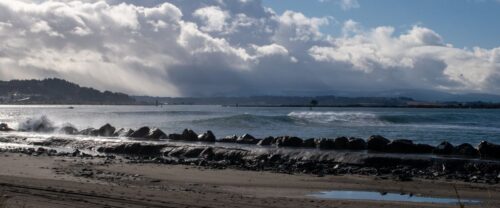
“Humboldt Bay is one of the only places left on the West Coast where oyster seed can be grown and shipped across state and international lines, a distinction that has become the backbone of the region’s shellfish economy. Local growers say the bay’s rare disease‑free status is what keeps the industry alive as climate change, ocean acidification and fast‑moving pathogens reshape oyster farming from California to Alaska. “It’s kind of a hidden gem, Humboldt Bay,” Justin Mojonnier, the director of science and technology for Hog Island Oyster Company, said of Humboldt Bay’s importance in the oyster and shellfish industry. “People don’t really realize it, but we’re a huge shellfish nursery; we produce a ton of shellfish seed out of this bay, we have a long history of producing shellfish seed out of this bay. It’s a really big part of the whole West Coast industry. I think last year we produced over 400 million shellfish seeds, so that’s both oysters and Manila clams. A big chunk of the West Coast supply chain has lived part of its life in Humboldt Bay, and the only reason that we could do that is the disease-free status.” … ” Read more from the Eureka Times-Standard.
Arcata Wastewater Treatment Facility completes milestone
“The city of Arcata hosted a ribbon-cutting ceremony Wednesday afternoon marking the completion of Phase One of the Arcata Wastewater Treatment Facilities Improvements Project. The ceremony took place just after 4 p.m., following a site tour at the 600 South G Street wastewater treatment plant adjacent to the Arcata Marsh. The ceremony was well attended with representatives from local, regional and state agencies, as well as partners who worked on the conception, design and construction of the project represented. Project Manager Laura Kadlecik served as master of ceremonies. And speeches were made by a number of local officials and project stakeholders, including longtime City Councilmember and former Mayor Alex Stillman, Felicity Gasser with the California Department of Housing and Community Development, Ken Wahlund of Wahlund Construction, Director of Community Development David Loya and Mayor Kimberley White, who called the occasion “an incredibly important milestone.” … ” Read more from the Eureka Times-Standard.
SIERRA NEVADA
State, regional partners work to keep invasive golden mussels out of Sierra-Cascade region
“In less than two years, the invasive golden mussel has spread from the Sacramento-San Joaquin Delta to many other waterways throughout the Golden State. That does not yet include the Sierra-Cascade or Eastern Sierra, and state authorities and local and regional partners are working diligently to ensure this destructive foreign species doesn’t flex its way into these pristine and critical waterways. First detected in the Port of Stockton, the golden mussel quickly spread throughout the Delta region and, according to the data and maps from the Department of Fish and Wildlife, is now in water sources from the Bay Area to San Diego. “Water is the lifeblood of the Central Valley, and we cannot allow an invasive species to threaten the infrastructure our farmers, families, and communities depend on,” wrote Congressman Vince Fong in a recent bipartisan letter to the U.S. Fish and Wildlife Service requesting emergency federal funding to help combat the threat. “Golden mussels are spreading fast, clogging pipes, damaging equipment, and straining critical water systems across our region. Early action now will prevent significant damage down the road.” … ” Read more from the Sierra Nevada Conservancy.
Tahoe’s famously clear water is getting cloudier each summer — and scientists aren’t sure why
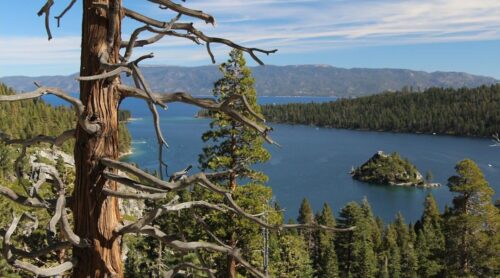 “To the throngs of visitors who’ll flock to Lake Tahoe’s shores this summer, the famously crystalline waters may not appear as clear as they remember. That’s because the lake is getting cloudier this time of year. New research from the UC Davis Tahoe Environmental Research Center shows that Tahoe’s clarity has been gradually worsening during the warm months for the past 60 years. In the 1970s, the average summertime depth of clarity was 84.8 feet; in the 1990s it dropped to 68.7 feet; and in the past decade it sunk to 57.2 feet. Since the first 10 years of recorded findings, the lake’s summertime clarity has declined by nearly 33%. … ” Read more from the San Francisco Chronicle. | Read via Yahoo News.
SEE ALSO: Lake Tahoe clarity improves slightly, but researchers see no meaningful change, from KUNR
BAY AREA
El Niño is here. Here’s what it could mean for the Bay Area this winter
“It’s official: El Niño has formed, and climate experts expect the natural phenomenon to strengthen this winter. The federal agency forecasts a 63% chance of a very strong El Niño this year, which “would rank among the largest El Niño events in the historical record going back to 1950,” National Oceanic and Atmospheric Administration officials wrote Thursday. Historically, the climate pattern has increased the odds of wet, stormy weather across California, especially the southern part of the state. But because the Bay Area sits on the northernmost edge of the wet zone, intense rainfall is less guaranteed than in Southern California. Still, experts said human-caused climate change may be changing that equation. “What that means for California is it’s basically supercharged in the atmosphere,” said Patrick Barnard, research director for the UC Santa Cruz Center for Coastal Climate Resilience. … ” Read more from Capital Public Radio.
Bay Area could see record high tides this weekend
“The Bay Area could see unusually high tides and flooding this weekend, possibly even setting a record for this time of year. “It’s potentially going to be the highest summer tides on record,” Karleisa Rogacheski, a meteorologist with the National Weather Service, told SFGATE by phone Saturday. The high tide could reach 1.9 feet above normal on Saturday evening, 2 feet above normal on Sunday night and 1.9 feet above normal on Tuesday morning, according to National Weather Service estimates at the San Francisco tidal gauge. The previous record was set in July 2022 at 1.7 feet. … ” Read more from SF Gate.
Editorial: Marin Municipal Water District’s pump plan for Soulajule makes sense
The Marin Independent Journal’s editorial board writes, “Marin old-timers, those who endured the drought in the mid-1970s that brought severe water restrictions, can remember that the construction of the Soulajule Reservoir was pitched as insurance against local water supplies running dry again. But the remote reservoir created northwest of Novato doesn’t get much use, primarily due to the high cost of pumping its water to Nicasio Reservoir, another one of Marin Municipal Water District’s chain of reservoirs. MMWD’s board, charged by voters in 2022 to bolster the local water supply, has green-lighted plans to make Soulajule a more reliable source by electrifying its pump station. The last time Soulajule was tapped happened during the 2020-21 drought, when MMWD warned it was perilously close to running out of water. It had to rent a 1-megawatt diesel-powered generator to run the pump station, costing $627,000, not including staff time required to set it up and keep it running. … ” Read more from the Marin Independent Journal.
The mystery behind one of San Francisco’s best parklets
“A ritual was happening along Clement Street, marked only by an anonymous note. “Dan, you’re a legend,” it read. The note was taped on the side of an overgrown parklet at Third Avenue, one that’s been there so long that it’s practically part of the sidewalk. I passed by countless times before I realized that there was something peculiar about this space. It didn’t seem to be connected to any adjacent business, an anomaly in a time when so many parklets are de facto dining rooms. It’s big, the size of three parking spaces. Sturdy. But the most striking thing is the greenery. The plants that ring the edges are so healthy and well established that to sit there is to forget that traffic is only a few feet away. The space is curious for other reasons, too. There’s a long-standing bar, and big slabs of wood are stacked to make a seating area that’s something between a sculpture and a throne. … ” Read more from SF Gate.
Advocates worry San Jose will fast track data centers
“San Jose is pushing ahead to create standards for data centers amid community angst around health and environmental impacts — though advocates said it’s too soon to tell whether these standards will protect residents or fast track approvals. At the Rules and Open Government Committee meeting Wednesday, Councilmembers David Cohen, Rosemary Kamei, Bien Doan, Domingo Candelas and Vice Mayor Pam Foley unanimously voted to have the city manager come up with uniform guidelines for data centers. These standards would help mitigate environmental impacts, provide a process for community engagement and support cleaner infrastructure, according to the memo written by Mayor Matt Mahan and Councilmembers Peter Ortiz, Candelas and Cohen. The goal of creating these standards isn’t to simply regulate data centers, but to create a flexible framework to support economic growth and responsible development, the memo states. The City Manager’s Office will return with these standards to the full City Council in December. “I think this is important, that we as a city have an opportunity to be at the forefront of this, given the concerns that we’re hearing,” Candelas said at the meeting. … ” Read more from San Jose Spotlight.
SAN JOAQUIN VALLEY
Troubled, forgotten slough in the heart of Stockton getting some positive attention
“It’s hard to envision the vibrant landscape that the Mormon Slough could become if Restore the Delta’s community-focused efforts finally bear fruit. The 6.5 mile slough is mostly dry on its westerly trek from about two miles east of Highway 99 through central Stockton to the San Joaquin River. It used to be a natural drainage channel for excess water from the Calaveras River but was intentionally cut off in 1910 when the federal government built a canal to skirt the Calaveras around Stockton to prevent flooding and keep silt from building up in the deep water port. As with so many other natural waterways, however, manmade changes initially seen as improvements triggered unforeseen consequences. … ” Read more from SJV Water.
California State Parks and partners celebrate completion of floodplain restoration at Great Valley Grasslands State Park
“California State Parks celebrated the completion of a major floodplain restoration today at Great Valley Grasslands State Park (SP). Over 15 years of project planning and coordination reconnect the San Joaquin River to more than 200 acres of historic floodplain habitat, restoring the ecosystem and reducing the threat of catastrophic floods. With California Secretary for Natural Resources Wade Crowfoot, conservation leaders, and partners in attendance, the celebration was one of the spotlight events for the fifth annual California State Parks Week (June 10-14). “Restoring floodplains is a big idea and a critical action that we need to take,” said Secretary Crowfoot. “Floodplains are the reason why the Central Valley is this rich agricultural region with a remarkable abundance of nature and incredible habitat for birds, fish, and wildlife. This floodplain restoration project represents a win-win-win for conservation, access and reducing flood risk for downriver communities, and I’m thankful for all the partners who helped make it possible.” … ” Read more from American Rivers.
Back-to-back copper wire thefts leave Tulare County farmers without water
“A South Tulare County agricultural farm was targeted twice within 48 hours in a copper wire theft that left crops without water and caused significant damage. TJ Singh, the farm manager, said thieves stole copper wire from a water pump on two consecutive occasions, preventing irrigation at a critical time. “We were supposed to have water on the crops 10 days ago. Since this first occurred, we have had our pumps off this whole time, and our trees are struggling,” Singh said. The thefts resulted in more than $20,000 in damage. The stolen copper wire is believed to yield only about $150 when sold, highlighting the disproportionate impact on farmers. … ” Read more from Channel 30.
Kern agencies discuss golden mussel treatment, prevention even as state nixes boat inspections at key reservoir
“A host of Kern water districts gathered recently to share information about the golden mussel as part of the county’s emergency declaration over the rapidly spreading invasive species. At the top of the needs list was funding, yes, but also a coordinated battle plan from the state level on down. Water managers have been frustrated by what they feel is a lack of urgency and consistency toward the mussels on the part of the state. So far, the Governor hasn’t declared a statewide emergency. And the Department of Water Resources recently stopped mandatory boat inspections at Lake Oroville, which feeds into California’s largest water delivery system. … ” Read more from SJV Water.
SOUTHERN CALIFORNIA
El Niño is here. What that means for fire season in Southern California
“Southern Californians could face floods and fires this year. A hot, dry winter has led to fires already, and experts said Friday at a news conference in Los Angeles that that is projected to continue. Different from previous wildfire seasons, though, experts are also closely watching El Niño, a powerful weather pattern that causes changes in winds and ocean temperatures. “California is faced with multiple disasters, whether it be fires, floods, hazardous material incidents,” said Brian Marshall, fire and rescue chief with the California Office of Emergency Services. Marshall said the El Niño “could impact fires and could impact flooding across the state.” … ” Read more from the LAist.
Pasadena looks to local water sources as officials weigh long-term supply challenges
“City officials expressed confidence Tuesday that the city will have enough water to meet projected demand through 2050, but some policymakers questioned whether regional water supplies will remain reliable as climate change and infrastructure uncertainties continue to threaten the state’s water system. The Municipal Services Committee (MSC) unanimously recommended approval of Pasadena’s 2025 Urban Water Management Plan, a state-mandated document updated every five years that outlines the city’s long-term water supply outlook and response plans for drought and other emergencies. Councilmember Rick Cole questioned whether the city’s long-range assumptions adequately account for climate change and potential disruptions to imported water supplies. … ” Read more from Pasadena Now.
After pilot success, water district lets desalination flow
“In a move to diversify its water supply, a Southern California water district is partnering with a provider of an emerging desalination technology to purify seawater cheaper and with less environmental impact than the conventional process. The Las Virgenes Municipal Water District (LVMWD) in Calabasas, Calif., recently completed a pilot project with OceanWell, to deploy one of the company’s desalination pods about 50 feet below the surface of one of the district’s reservoirs to test its ability to purify the water. “It’s not a technology that’s been fully developed yet. In fact, it’s not being done anywhere in the world. So this is a first,” Dave Pedersen, Las Virgenes Municipal Water District general manager, said. “We’re very much working on developing, and ground-truthing, and proving out the technology, while working on what it would look like to implement it.” … ” Read more from GovTech.
Orange County grand jury report highlights OCWD’s PFAS response
“A recently released Orange County Grand Jury report, “PFAS and Public Awareness: A Closer Look at Orange County Drinking Water,” recognized the Orange County Water District’s (OCWD) proactive response to per- and polyfluoroalkyl substances (PFAS), including regional efforts to restore impacted groundwater wells, construct treatment facilities, secure funding, and educate the public. OCWD manages the Orange County Groundwater Basin, which provides approximately 85% of the drinking water supply for 2.5 million people in north and central Orange County. Following the detection of PFAS in portions of the basin (measured in parts per trillion), 106 groundwater wells were taken out of service. Since 2019, OCWD and its local cities and retail water districts have worked to restore groundwater production, returning 53 wells to service through the construction of PFAS treatment facilities. … ” Read more from the Orange County Water District.
King tides this weekend add flooding worry as big waves continue
“Big waves combined with king tides could spell disaster this weekend. Officials said residents in low-lying beach areas could see salt water flooding into streets and homes, especially as a recent run of strong swells has chomped away at beaches, which serve as a barrier between the ocean and infrastructure. The city of Newport Beach issued an advisory on Friday, June 12, warning residents to prepare for a series of high tides, called king tides, expected on Saturday, June 13, through Tuesday, June 16, in the evening hours. Areas most susceptible to flooding include: Newport Island, Balboa Island, Finley Tract, Lido Village, Balboa Village, LaFayette Avenue, the Peninsula and portions of the Marcus, River and Lake avenues area. … ” Read more from the OC Register.
SEE ALSO: Dangerous king tides prompt flooding, high surf warnings across Southern California, from Fox 11
IMPERIAL/COACHELLA VALLEYS
IID opens $7.5 million grant program to support local water projects
“The Imperial Irrigation District (IID) is pleased to announce that its new FLOW grant program (Funding Local Opportunities for Water) is now accepting applications. Applications are due no later than 5 p.m. Wednesday, July 15, 2026. FLOW is a one-time cost-share grant program that allows local government agencies to partner with IID (and other funding partners) on water and/or agriculture-related projects and/or programs within IID’s water service area. “The FLOW grant program is an excellent example of how IID continues to invest in and give back to the communities we serve,” said IID Board Chairwoman Karin Eugenio. “These grants are focused on partnering with local government agencies to move water projects forward that provide broad community benefits. We encourage all eligible agencies to apply.” … ” Read more from the Imperial Irrigation District.
AgTech welcomed elected officials and media for behind-the-scenes look at agricultural operation
“AgTech welcomed elected officials, community leaders, and members of the media on Monday, June 8, for a firsthand look at its agricultural operation and the science behind the reuse of treated biosolids in farming. The event, held at AgTech’s Somerton-area farm, provided attendees, which included Yuma County Supervisors Lynne Pancrazi and Jonathan Lines, along with County Administrator Ian McCauchey, an opportunity to tour the operation, observe farming practices up close, and learn how treated biosolids are used to improve soil health while conserving water. The visit comes amid public concern about biosolids and their role in agriculture. AgTech leaders used the event to answer questions, share research, and demonstrate the safeguards and regulations governing the practice. … ” Read more from the Imperial Valley Press.
SAN DIEGO
No, the governor did not just give $46 million to the Tijuana River
“Gov. Gavin Newsom dropped a confusing press release Thursday that made it seem like the Tijuana River sewage crisis was getting $46 million in state funding. Media outlets nationwide jumped on the news. Except that wasn’t the case at all. Newsom was merely announcing that the State Water Resources Control Board was now accepting applications for a piece of a $46 million pot designated to help clean up contaminated cross-border rivers. The Tijuana River isn’t the only cross-border river with a problem. The New River flows into the United States from the Mexicali Valley and empties agricultural runoff, industrial and urban waste into the land-locked and highly polluted Salton Sea in Imperial Valley. It arguably suffered contamination just as long if not longer than the Tijuana River. … ” Read more from the Voice of San Diego.
Permit approved and funding declared to clean up California toxic river
“Months after San Diego County Supervisor Paloma Aguirre asked Gov. Gavin Newsom to declare a state of emergency to address the toxic sewage and fumes at the Tijuana River, Newsom said the state is sending over another $46 million to address the crisis. The sewage at the Tijuana River has been an ongoing problem for decades, but it recently broke records for the amount of hydrogen sulfide gas that it’s releasing into the area, causing residents in the South Bay area of San Diego to suffer from migraines along with respiratory, heart and neurological problems. It has also closed the beach in Imperial Beach for over 1,000 days, crippling the area’s businesses and tourism economy. … ” Read more from SF Gate.
New steps toward reducing Tijuana River valley pollution
“San Diego County received two major boosts this week in its efforts to reduce pollution in the Tijuana River Valley: a new $46 million state grant program and a California Coastal Commission-approved project that will help cut harmful gases near the Saturn Boulevard crossing. The State Water Resources Control Board has opened applications for a $46 million grant program to improve water quality and reduce pollution in the Tijuana River Valley and the New River. … The California Coastal Commission also approved a County project to temporarily extend two culvert pipes at the Saturn Boulevard crossing. … ” Read more from San Diego County News Center.
Commentary: Outrage alone won’t solve the Tijuana River sewage crisis
John Beckham, managing director of the North American Development Bank, writes, “In reading Jim Gogek’s recent article about the Tijuana sewage crisis, one is reminded that the frustration surrounding this issue is real and warranted. Last week’s collapse of a major wastewater line and the resulting closure of several San Diego beaches was another reminder of just how fragile the system has become. For decades, the Tijuana River watershed has reflected the consequences of inadequate urban planning, deferred investment, fragmented responsibility and aging infrastructure, leaving communities on both sides of the border with unsafe water and polluted air. For San Diegans, constant beach closures have become routine. But they shouldn’t be. Frustration on its own will not repair these systems or protect public health. Progress requires sustained investment, collaborative execution and institutional accountability. Today, across the CaliBaja region, we are beginning to see a monumental shift in that direction. … ” Read more from the Times of San Diego.
Along the Colorado River …
Utah, Wyoming plead for hydrological truce before Colorado River deadline
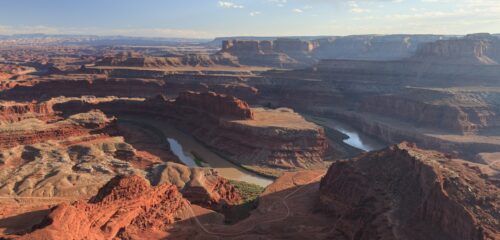 “The clock is ticking to decide who conserves how much water from the Colorado River during low water years. With the final deadline now less than four months away, Utah and Wyoming are trying to get their neighbor states to renew negotiations. The water year ends Oct. 1. If the seven basin states fail to reach an agreement by then, the Department of the Interior will impose a plan. Arizona and Colorado have both indicated they will pursue litigation if they feel the Interior’s plan is unfair. The 1948 compact allocated 51.75% of the Upper Basin’s 7.5 million acre-feet to Colorado, 23% to Utah, 14% to Wyoming and 11.25% to New Mexico. Water was apportioned by quantity rather than percentage to Lower Basin states. California was given 4.4 million acre-feet, Arizona was given 2.8 million acre-feet and Nevada was given 0.3 million acre-feet. “The window to solve this without lawyers, judges and generational damage to basin relationships is shrinking faster than Lake Powell,” said Amy Haas, the executive director of Colorado River Authority Utah, during her testimony before the Senate Energy and Natural Resources Committee on Wednesday. … ” Read more from Deseret News.
Colorado River Basin’s 2026 crisis
“The Senate Energy and Natural Resources Committee convened on Wednesday, June 10 for an oversight hearing on the Colorado River Basin’s post-2026 future, but the session quickly became a proxy war over committee process, the Forest Service Roadless Rule, and federal firefighter benefits, all before witnesses on the river crisis got a word in. The hearing landed just weeks after the Trump administration signaled it would impose water cuts of up to 3 million acre-feet per year on Lower Basin states if negotiations continue to stall. The 2007 Colorado River Interim Guidelines expire at the end of 2026 and seven-state negotiations have collapsed. In January, the Bureau of Reclamation published a Draft Environmental Impact Statement (DEIS) outlining post-2026 management alternatives. On May 1, Arizona, California, and Nevada submitted a unilateral proposal to Reclamation, bypassing the stalled multi-state process. Interior Assistant Secretary Andrea Travnicek put it bluntly the day after the hearing: “If they can’t move their stakes to get closer, we are going to have to make the decision.” … ” Continue reading at Legis 1.
Arizona lawmakers add $6 million to Colorado River legal fund ahead of potential court battle
“Arizona lawmakers are tripling the size of the state’s legal fund for potential lawsuits about sharing water from the Colorado River. The new state budget will add $6 million to the pool of money, which was first set up in 2025, bringing the fund to a total of $9 million. States that share the Colorado River are caught in a standoff about how to cut back on water use amid drought, climate change and shrinking reservoirs. Negotiators from the seven states are under pressure to agree on a new set of rules for sharing water after the current ones expire later this year. They have been unable to forge a deal, meaning that the federal government will likely force a water management plan on the states. If that happens, states are likely to sue one other or the federal government, sending the Colorado River’s future to a messy legal battle that would likely end up in the Supreme Court. … ” Read more from KJZZ.
Drought grips the West as heat builds across the basin
“Across the United States, the week ending June 11, 2026, brought a patchwork of weather — heavy summer thunderstorms in some corners of the country, persistent dryness in others. The greatest rainfall departures from normal fell across parts of the central and southern Plains, West Texas, and the Midwest, while the East Coast stayed mostly dry. Florida’s Atlantic coast was a notable exception. For much of the American West, however, the story was familiar: little rain, rising temperatures, and a drought that refuses to let go. The U.S. Drought Monitor’s latest report, released June 11, paints a sobering picture for the western United States. Aside from scattered rainfall along the Pacific Northwest coast and parts of southern California, most of the West recorded below-normal precipitation for the week. … ” Read more from Western Water.
Arizona could get water from San Diego within 6 months
“Under a landmark agreement, Arizona is negotiating to buy Colorado River water now owned by a San Diego-area agency, and experts say the first of that water could be headed to the state in four to six months. The goal of the new agreement, signed by federal officials and leaders of water agencies in Arizona, California and Nevada, is to eventually transfer potentially large amounts of Colorado River water between states. The first step is to negotiate how actual sales would be consummated, legally and financially. The plan is to start small, with a pilot program. At first, it would transfer maybe one-tenth the amount of Tucson’s annual drinking water demand from the San Diego County Water Authority to Arizona, Nevada or other water agencies in Southern California, then ramp up the transfers by up to 10 times as much or more. … ” Read more from the Arizona Daily Star.
Is Horsetooth Reservoir full enough for summer?
“As summer recreation ramps up across Northern Colorado, many residents are asking the same question: Will drought and low snowpack affect boating, swimming and other activities at Horsetooth Reservoir in Larimer County? The short answer, according to the water utility company in Berthoud, Northern Water, is no. Horsetooth Reservoir is expected to provide a mostly normal recreation season, even as dry conditions affect other reservoirs across the state. “Just like most normal years, Horsetooth is very close to full here at the end of May and going into June,” said Jeff Stahla, public information officer for Northern Water. … ” Read more from KUNC.
Drought impacts flow into northwest Colorado fisheries
“Unprecedented spawning, low flows, hotter temperatures — these are some of the phrases used by state biologists to describe the situation facing Colorado’s northwestern fisheries as a drought persists in the region. At the start of June, 100% of Colorado was experiencing some drought conditions following the state’s lowest snowpack on record and warmer-than-normal temperatures across the winter months. Record-setting heat in March led to an early melt-off and has brought concerns into summer for Colorado’s fisheries as the drought impacts streamflows and reservoirs. “This drought is something that’s being closely watched with a lot of anxiety by many, many people,” said Jon Ewert, Colorado Parks and Wildlife’s aquatic biologist for Grand and Summit counties, during a June 2 drought tour in Grand County. … ” Read more from the Steamboat Pilot.
In national water news this weekend …
Scientists rethink how much carbon forests can store
“Forests may capture as much planet-warming carbon as scientists once thought. Researchers have found oak trees continue photosynthesizing long after their annual growth has stopped, suggesting that taking in more carbon does not always translate into more carbon stored in wood. The findings, published Friday in Science Advances, suggest some climate models may overestimate the amount of carbon forests can store if they assume increased photosynthesis automatically translates into increased growth. “Right now, most models assume that if you have photosynthesis, you have growth. We find that’s not the case,” said lead author Mukund Palat Rao, an ecoclimatologist at Columbia University’s Lamont-Doherty Earth Observatory, in a press release. “Just because there is more photosynthesis might not necessarily mean more tree growth in the future.” … ” Read more from the Courthouse News Service.
A commercial space race prompts a thorny question: Who owns the sky?
“The starry night sky has always anchored humanity’s sense of place in a vast universe. It’s a map guiding travelers, a calendar for migrations and harvests, a wellspring of stories. But a surge of commercial satellite launches into the upper fringes of Earth’s atmosphere threatens the relationship between people and the celestial commons by crowding the night sky and polluting the atmosphere, scientists warn. Research shows potential impacts on Earth’s climate, including a 2025 paper led by a NASA scientist that found accumulations of metal particles from satellites disintegrating in the upper atmosphere can alter temperatures and wind flows, with ripple effects on surface climate patterns. More than 15,000 active and inactive satellites orbit Earth, up from under 1,000 at the start of the century, and scientists estimate that hundreds of them are overhead at any given hour over North America and Europe. Now several companies want to launch huge fleets of satellites over the next 10 to 20 years, pending regulatory approval and financing. … ” Read more from Inside Climate News.

