
A wrap-up of posts published on Maven’s Notebook this week …
Note to readers: Sign up for weekly email service and you will receive notification of this post on Friday mornings. Readers on daily email service can add weekly email service by updating their subscription preferences. Click here to sign up!
In California water news this week …
El Niño is here, and it’s developing earlier and faster than many typically do
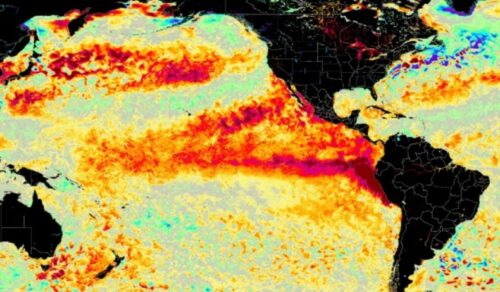 “El Niño has developed in the Pacific Ocean, a climate pattern that can reshape weather around the globe into 2027. The last El Niño was in 2023-24, and forecasters say this one is developing earlier than many typically do. “The sea surface temperatures are quickly changing in the equatorial Pacific,” AccuWeather Long-Range Expert Paul Pastelok explained. By early June, the water in this region had risen by at least 0.9 of a degree F, reaching a threshold associated with El Niño conditions. “Most El Niños begin in the fall, so this is developing much earlier and faster than expected,” AccuWeather Senior Meteorologist Chad Merrill said. “The weather patterns here early in the summer are also lining up to what is expected with an El Niño.” AccuWeather experts say there is a 40% chance it evolves into a “super El Nino.” To reach that level, water near the equator in the eastern Pacific would need to climb to at least 3.6 degrees F above the long-term average. The stronger El Niño becomes, the greater its potential influence on weather patterns around the world. … ” Read more from AccuWeather.
El Niño is here — and likely to be historic. Here’s how California will be impacted
“El Niño is here, and it’s only getting stronger. The National Oceanic and Atmospheric Administration on Thursday announced El Niño is present in the tropical Pacific and issued an advisory for the climate pattern that is expected to last through at least March 2027. The agency forecasts greater than 90% odds of a “strong” El Niño and a 63% chance of a “very strong” event by early winter. … El Niño probably won’t significantly impact California’s weather this summer. An enhanced Pacific hurricane season may direct larger swells, more frequent dry lightning or a rare tropical storm toward the state, but the most pronounced effects are expected this winter. An El Niño in historic territory would favor all of California for above-normal precipitation this winter. That doesn’t guarantee historic floods, but El Niño alters the position and strength of the storm track, favoring the southern U.S. in particular for more frequent winter rain. NOAA also warns of more coastal flooding due to a double whammy of more storms and higher seas. … ” Read more from the San Francisco Chronicle.
A marine heat wave and a potential super El Niño could threaten California’s salmon recovery before it takes hold
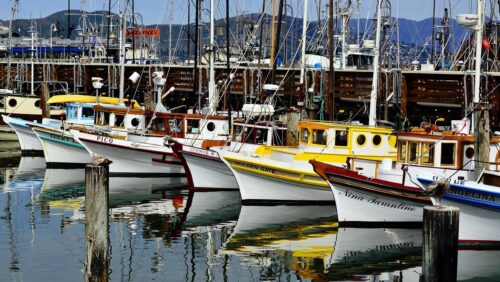 “California’s salmon fishery just reopened after three devastating years of closures. Now scientists are warning that a double threat of warming ocean water could put the recovery at risk before it takes hold. KQED reported that a widespread marine heat wave, the seventh in seven years off the California coast, is already raising sea surface temperatures across the Pacific. If a potential super El Niño materializes later this year, as forecasters expect with 82% probability by July, the combined warming could disrupt ecosystems, harm marine life and threaten the juvenile salmon that are heading out to sea for the first time since populations began to recover. The concern is specific and urgent. Young salmon that hatch in rivers like the Sacramento, Klamath and Eel spend their first months in the ocean, where they depend on cold, nutrient-rich upwelling water to find food and survive. When ocean temperatures rise, that food web breaks down. The prey species that juvenile salmon depend on shift northward or decline, and survival rates drop. … ” Read more from Active NorCal.
‘It’s an injustice’: Shrinking state funds could slow fixes for Californians with toxic water
“In a neighborhood flanked by grapevines and orange groves on the east side of the San Joaquin Valley, people cannot drink the water from their faucets because it’s contaminated. Residents in the area north of Porterville, many of them farmworkers, have been discussing a solution, which they expect will require running pipes to connect to the nearby city system. But the clean water program that has been one of Gov. Gavin Newsom’s major initiatives, bringing solutions like these, is significantly cut in his latest proposed budget. Residents here are worried this could slow the effort to bring them clean water. “I hope they help us,” said Paula Fernández, a resident who lugs gallon bottles of water for drinking and cooking. “I hope this gets resolved because we need it.” … ” Read more from the LA Times. | Read via Yahoo News.
Iran-backed hackers claim breach of California water systems
“The Tehran-linked hacker group Hanzala claimed on Thursday that it had breached water infrastructure systems in California in response to what it described as a US attack on Iranian civilians and water facilities. In a statement carried by Iran’s state broadcaster IRIB, the group said it had gained access to systems linked to California’s water infrastructure but had deliberately refrained from disrupting water supplies to American cities, describing the operation as a “warning” to Washington. Hanzala further warned that any action against Iran would be met with reciprocal measures targeting critical infrastructure. … ” Read more from Iran International.
SEE ALSO: Handala hacks California water systems in warning after US strike on Iran’s reservoirs, from Press TV
Peter Gleick: A U.S. attack on an Iranian water system follows a disturbing pattern
“Reports this week from Iran’s West Asia News Agency and the New York Times indicate that the recent U.S. military strikes on Iran included attacks on civilian water systems, cutting off water for 20,000 villagers near the town of Bemani. These reports follow news from early March of attacks on desalination plants in Iran and Bahrain and highlight the growing problem of violence against water infrastructure. Attacks on civilian water systems are war crimes, forbidden by the 1977 Protocols to the Geneva Convention and related international laws. Reliable water resources are central for modern economies and especially the survival of communities in the arid Middle East. Iran, Israel, Palestinian territories, Syria, Lebanon and Persian Gulf countries are among the most water-poor nations of the world, with large and growing populations, few reliable perennial rivers, inconsistent rainfall and extensively over-tapped and overpumped groundwater. … ” Read more from Peter Gleick at the San Francisco Chronicle.
State Water Board rejects Reclamation’s Final Shasta Temperature Management Plan, seeks stronger salmon protections
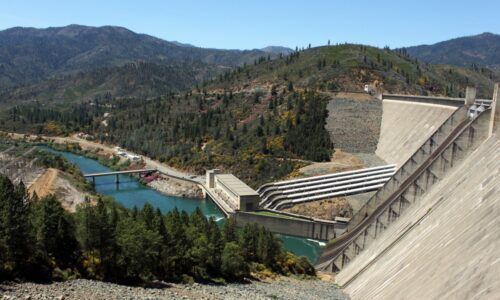 “The State Water Resources Control Board received the Bureau of Reclamation’s final Sacramento River Temperature Management Plan (TMP) on June 1, 2026. Although the State Water Board recognizes the difficult hydrologic conditions and uncertainty surrounding temperature management, it has rejected the plan as currently written. State Water Board Order 90-5 requires Reclamation to manage Sacramento River temperatures to protect fish species, including winter-run and fall-run Chinook salmon. In its May 15, 2026 comment letter, State Water Board staff asked Reclamation to strengthen the final TMP to better protect winter-run and fall-run Chinook salmon. Staff said this could include retaining more water in storage at the end of September to improve river temperatures this year and reduce risk next year. However, the final TMP remains largely unchanged from the draft and does not reflect Board staff’s understanding of how Reclamation would operate under the 2024 Shasta Operations Framework for long-term CVP and SWP operations. That framework was intended to support more predictable operations and avoid very low reservoir storage, temperature problems, and water supply impacts. The California Department of Fish and Wildlife raised similar concerns in its May 27, 2026 comment letter on the draft TMP. “Given these circumstances, I cannot approve the final TMP as currently written,” writes Eric Oppenheimer, Executive Director, State Water Resources Control Board. … ” Continue reading at Maven’s Notebook.
NGOs say Water Board must compel Reclamation’s compliance with water rights permits for Shasta Temperature Management Plan
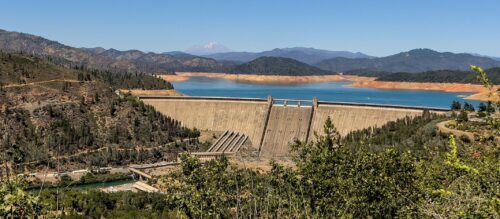 “San Francisco Baykeeper, the Winnemem Wintu Tribe, the California Sportfishing Protection Alliance, Restore the Delta, the Resource Renewal Institute, and Friends of the River sent a letter to the Executive Director of the State Water Resources Control Board supporting the decision to reject the Bureau of Reclamation’s Shasta Temperature Management Plan. However, they urged the Board to require Reclamation to comply with its permits, arguing that otherwise the Board’s response amounts to an objection in name only. The groups describe Reclamation’s temperature and reservoir management strategy as unlawful and misguided, and they contend that the plan conflicts with the 2024 biological opinion issued by the National Marine Fisheries Service as well as Water Rights Order 90-5. They argue that Reclamation has not meaningfully changed its plans or approach despite concerns raised by the Water Board, the California Department of Fish and Wildlife, and the Southwest Fisheries Science Center’s analysis of temperature-dependent mortality and related impacts on winter-run Chinook salmon. In their view, the Water Board was right to reject the plan. … ” Continue reading at Maven’s Notebook.
Can Delta smelt make a comeback?
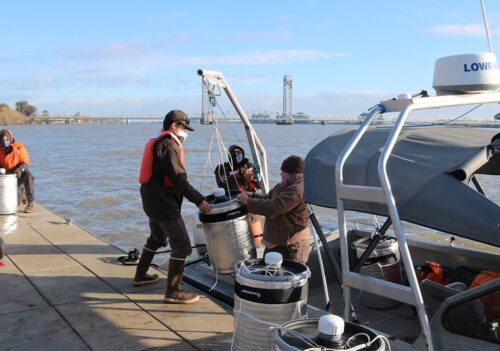
“Five years ago, a multi-agency team launched an effort to restore Delta smelt, a finger-sized iridescent fish unique to California’s Sacramento-San Joaquin Delta. Delta smelt were once among the most common fish in the region but are now critically endangered due to a suite of threats including loss of suitable habitat and food. As Delta smelt dwindled, a refuge population was established a quarter century ago as a hedge against extinction at the University of California, Davis Fish Conservation and Culture Laboratory near Byron. Releases of hatchery Delta smelt into the wild began in 2021. Additional partners in this effort include the U.S. Fish and Wildlife Service, the California Department of Fish and Wildlife, the California Department of Water Resources, the U.S. Bureau of Reclamation and the U.S. Geological Survey. Delta smelt are famously sensitive to their environment―including temperature, water quality, and physical disturbance―and must be handled with care. Initial experimental releases involved transporting the fish from the UC Davis hatchery to the Delta in 20-gallon carboys. While this method was intended to be easy on the smelt, it took a crew all day to release just 6,400 of them. … ” Continue reading from Robin Meadows at Maven’s Notebook.
Delta Conveyance Project receives critical federal clearance to advance construction
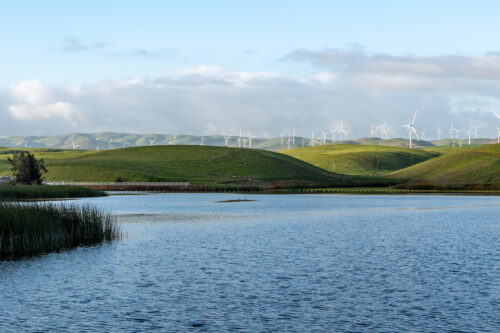
“Governor Newsom’s Delta Conveyance Project achieved another major milestone this week as it continues to advance towards construction. The California Department of Water Resources (DWR) has received Biological Opinions from the U.S. Fish and Wildlife Service (USFWS) and National Marine Fisheries Service (NMFS) for Delta Conveyance Project construction and construction-related maintenance activities. This important milestone marks the completion of the Endangered Species Act process for construction. California is now one critical step closer to completing the complex state and federal planning and permitting processes needed to begin project implementation. “The science is clear: California must quickly complete the Delta Conveyance Project to meet our water needs in the future,” said Governor Gavin Newsom. “I thank the federal government for their partnership in moving this project forward. By meeting this important milestone, we are closer than ever to seeing this vital piece of infrastructure completed and benefiting all Californians. Let’s get this built.” … ” Read more from Governor Newsom.
California scales back golden mussel safeguards at vital reservoir, alarming experts
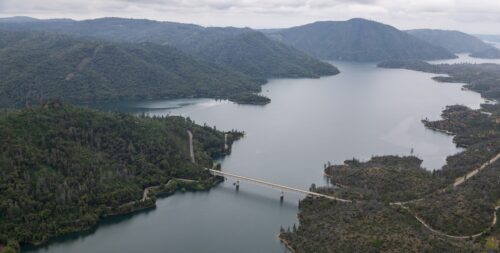
On this date, the water storage was 3,355,264 acre-feet (AF), 98 percent of the total capacity. Andrew Nixon / DWR
“The state of California is walking back protections meant to keep destructive golden mussels out of Lake Oroville, one of the largest and most important reservoirs in the state. The move follows a new state-funded risk assessment that the invasive species poses a lower risk to the lake, which water managers say changes the state’s calculus on costly and difficult measures aimed at keeping the invaders at bay. No state agencies or scientists have found mussels in Oroville yet. But invasive species experts say the revised policy of the Department of Water Resources increases the likelihood that golden mussels will invade Lake Oroville and hitch a ride on boats to other lakes. They disagree, though, about whether preventing such an incursion is even possible. ”California is under an epidemic of golden mussels,” said Anthony Ricciardi, a professor of biology and the director of the Bieler School of Environment at McGill University. “Like in any epidemic, you got to control the key hubs — or else the war is lost.” … ” Continue reading from Cal Matters.
Agriculture and water use on California’s tribal lands
“In a report and fact sheet released last month, [the PPIC] analyzed the development and current status of Tribal water rights in California. In this post, we use remote-sensing and other publicly available data to look at agricultural land and water use on Tribal reservations. Except where noted, this analysis does not capture Tribal agriculture located outside reservation boundaries, and it therefore likely underestimates Tribes’ total agricultural holdings. Additionally, we do not include land outside California for reservations that cross state boundaries. Of the 103 federally recognized Indian reservations in California, only about 20 consistently host irrigated agriculture, and most of these are relatively small-scale (less than 100 acres). In an average water year, about 15,800 acres are irrigated on Tribal reservations (about 0.2% of statewide irrigated acreage), including by non-Tribal residents. Irrigated acreage tends to decline slightly during drought years and rebounds during wet and normal water years. Water demands for this agriculture amount to about 60,000–70,000 acre-feet per year (about 0.2% of total statewide applied water). … ” Read more from the PPIC.
New report studies data center development, water availability, and environmental justice in California
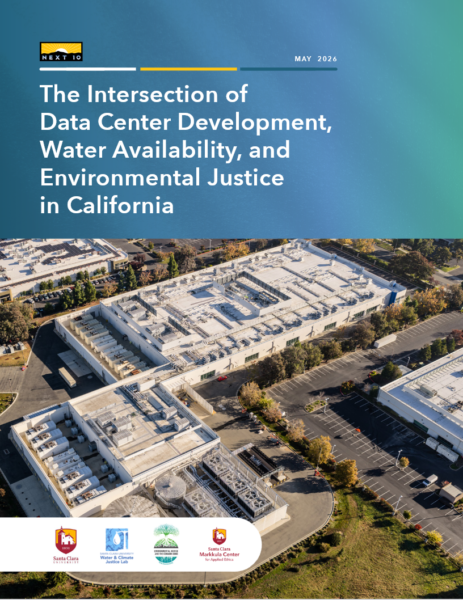 “A new report from the nonprofit Next 10, The Intersection of Data Center Development, Water Availability, and Environmental Justice in California, co-authored by Santa Clara University researchers, asks a question that doesn’t get posed enough: What could be done right now to make the planning and development of data centers in California both more sustainable and more equitable? The short answer, it turns out, is “a lot.” The research, led by Prof. Iris Stewart-Frey (who directs Santa Clara University’s Climate Justice Lab) and Irina Raicu (who directs the Internet Ethics Program at the Center), was published in May 2026. It is co-authored by several Santa Clara University students, and it’s the first effort to map every known operating and planned data center in California and review them through two key lenses: water access and environmental justice. … ” Read more from Santa Clara University.
WATER STORAGE INVESTMENT PGM: Chino Basin Program update highlights progress, costs, and public benefit
“The Chino Basin Program (CBP) was one of the topics discussed at the California Water Commission’s May meeting, where staff from the Inland Empire Utilities Agency outlined the project’s progress toward meeting Water Storage Investment Program requirements. General Manager Kevin Alexander and Program Manager Elizabeth Hurst delivered the update. The Chino Basin Program is one of five projects selected for the Water Storage Investment Program (WSIP), which allocates $2.7 billion from Proposition 1 of 2014 to support the public benefits of those projects. Proposition 4 of 2024 added another $75 million for existing WSIP projects. The CBP is a group of water treatment and storage projects designed to strengthen regional water supply, storage, and delivery systems. The CBP includes a state-of-the-art Advanced Water Purification Facility and aquifer replenishment wells that will produce and store up to 15,000 acre-feet of water annually in the Chino Basin. … ” Continue reading at Maven’s Notebook.
Managing and preventing invasive species in tomorrow’s Delta
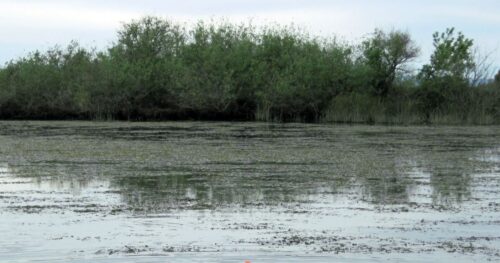
“California depends on the health of the Sacramento-San Joaquin Delta’s ecosystem. It supports native fish, provides recreation, and helps move water across the state. Yet, that ecosystem is being reshaped. The San Francisco Bay Delta is one of the most invaded estuaries in the world, with nearly 200 non-native species already here and new ones arriving. This includes the destructive golden mussel, which has been spreading rapidly since its detection in the Delta in 2024. They clog pipelines, damage other water infrastructure, and may compete with fish for food. No single agency can solve the invasive species problem alone; success depends on coordination among state, federal, local partners, and communities. For example, the Golden Mussel Task Force includes agencies as well as academic and non-governmental partners working together to address this newest threat. … ” Read more from the Delta Stewardship Council.
Some Tulare County farmers pumping like it’s the “wild west” with no oversight
“Some farmers in southern Tulare County – where excessive groundwater pumping has already caused hundreds of millions in damage to the Friant-Kern Canal – are back to pumping like crazy while there’s a gap in oversight. It hasn’t gone unnoticed. “They have got to be serious about stopping the pumping,” said Jeevan Muhar, general manager of Arvin-Edison Water Storage District Groundwater Sustainability Agency. “It needs to stop for the canal to function as it is supposed to.” The “they” Muhar referred to is the Tule East Groundwater Sustainability Agency (GSA), which took over a large chunk of the Tule subbasin after its predecessor, Eastern Tule GSA, folded. But there’s not much that can be done right now as Tule East is still in its formation stages. … ” Read more from SJV Water.
Kings County judge considering whether to advance groundwater lawsuit
“A Kings County Judge may decide next week whether to allow a lawsuit by the Kings County Farm Bureau to move to the next phase in its quest to prove the state Water Resources Control Board overstepped its authority when it placed the region on probation in 2024 for lacking an adequate groundwater plan. The Farm Bureau is also disputing what it says was an improper blanket denial by the Water Board of exemptions for some local agencies from those probationary measures, which require farmers to meter and register wells at $300 each, report extractions and pay the state $20 per acre foot pumped. At a June 3 hearing, Kings County Superior Court Judge Robert Burns said he may rule by June 11 on whether to start the discovery process, where both sides seek documents. If he does not issue a ruling, the parties will meet July 2 to determine next steps. … ” Read more from SJV Water.
Report: Refining farmland appraisals for SGMA and subsidence rules in California
“Groundwater is changing the ground rules of farmland appraisal in California. Traditional methods of appraising California farmland are growing increasingly obsolete as the state’s new subsidence best management practices (BMPs) drafted under the Sustainable Groundwater Management Act (SGMA) complicate the process via groundwater cutbacks tied to critical head thresholds with the power to suddenly reduce the economic lifespan of orchards. Cody Dahl, PhD, Vice President of Acquisitions and Strategy, AgIS Capital, LLC, and JoAnn Wall, ARA, CEO, Above and Beyond Real Estate Services, Inc., have collaborated to author an in-depth paper examining how this new consideration affects the application of cost, sales comparison, and income approaches when valuing farmland, and to offer guidance on how integrating hydrological indicators can result in reliable price valuation. … ” Read more from the Agriculture Investment Marketplace.
Ag expert panel completes deliberations, approves final report; Additional comment opportunities forthcoming
“The final plenary meeting of the Second Statewide Agricultural Expert Panel was held June 5, 2026. Panel members worked to refine the wording of their recommendations through the very end of the session, when panel chair Daniel Geisseler called for a motion to approve the report. The motion was made, seconded, and passed unanimously. During the meeting, Chair Geisseler scrolled through the tracked changes version of the document and the panelist who made each edit explained their rationale. The panel accepted numerous copyedits without comment, but they discussed some issues in greater depth including how to define small-scale diversified farms, the value of in-season soil nitrate testing, the depth to which soil samples would provide an accurate measure of leaching risk, and use of the word “unreasonable” when describing low A-R or A/R values. To complete the expert panel process, Chair Geisseler will present the report to the State Water Board at the Board’s June 16 meeting as an informational item. The meeting will be held in person at the Cal EPA building in Sacramento and also broadcast online. … ” Read more from Jane Sooby at Maven’s Notebook.
In commentary this week …
Stop the Delta Tunnel before it becomes another High Speed Rail
Barbara Barrigan-Parilla writes, “The Delta Tunnel project is shaping up to financially mirror California’s out-of-control High Speed Rail project: failing to deliver on promised increases in water supply while also threatening the state’s largest and most fragile estuary. The Legislature had a crucial opportunity to demand accountability and transparency before even more money was spent, but declined to schedule a state audit hearing of the project for early June. This is on top of the Legislative Audit Committee also failing to schedule a vote on an audit of the Department of Water Resources’ spending on the Delta Tunnel last year as well. The audit was requested by Assemblymember Rhodesia Ransom, D-Stockton, and would have provided long overdue scrutiny of one of the state’s most costly infrastructure proposals. … ” Continue reading at the Sacramento Bee.
Delta Counties Coalition says Governor’s “milestone” claim on Delta tunnel is premature and disingenuous
“The Delta Counties Coalition (DCC) Chair Supervisor Pat Hume issued the following statement in response to the Administration’s announcement regarding the California Department of Water Resources (DWR) receiving Biological Opinions from the U.S. Fish and Wildlife Service (USFWS) and National Marine Fisheries Service (NMFS) for Delta Conveyance Project construction and construction-related maintenance activities: “The Administration is once again declaring victory on a milestone that does not authorize a single shovel of dirt in the Delta. These Biological Opinions address construction impacts only. They do not resolve how this tunnel would be operated for decades to come, and they do not, on their own, permit any in-water work. For the communities that live, work, and depend on the Delta, the announcement changes nothing about the unresolved harms this project would inflict on our homes, our farms, our water quality, and one of the most important estuaries in the country. … ” Read more from the Delta Counties Coalition.
An alternative vision for the Potter Valley Project
Edward Ring, Director of Water and Energy Policy at the California Policy Center, writes, “A recent article in Grist characterized recent efforts by the Trump administration to preserve Scott Dam as a “culture war crusade.” That is accurate, so long as we recognize that efforts to demolish the dam – and diminish the value of the entire Potter Valley Project that the dam is a part of – are also the result of a culture war crusade. Behind Scott Dam is Lake Pillsbury, completed in 1922. The original storage capacity of the lake was 94,863 acre feet; today sediment has reduced its capacity to under 70,000 acre feet. Twelve miles downstream from Scott Dam is the much smaller Lake Van Arsdale. It is a forebay for an 8 foot diameter, one mile long diversion tunnel that sends water to the north end of the Potter Valley. The 450 foot drop in elevation provides enough hydropower to generate 9 megawatts, and this water diversion nourishes farms, ranches and cities all the way down to Marin County. The average amount of water diverted rarely reaches even 60,000 acre feet per year, representing barely one percent of the average annual flow reaching the ocean via the Eel River. … ” Continue reading from Edward Ring.
Trump is pushing to erase this Northern California national monument’s protected status
Heather Bourbeau, a poet and fiction writer, writes, “I visited the newly designated Sáttítla Highlands National Monument this June as part of a series of trips I was making to national lands at risk of losing federal protection. Over the course of 10 months, I traveled to 40 national forests, monuments, parks, and other designated public lands across the Western U.S. I set out to document these lands before they were lost or irrevocably altered. What I learned was just how devastating these losses would be to all Americans. Sáttítla Highlands encompasses 224,676 acres in Northern California’s Modoc, Shasta-Trinity, and Klamath national forests. Sáttítla — which means “obsidian place” in the Ajumawi language — includes part of the ancestral homelands of the Pit River (Ajumawi–Atsugewi) and Modoc Peoples (Mo Wat Knii–Mo Docknii) and is central to their spiritual beliefs and cultural practices, as well as that of a number of other local tribes, including the Karuk, Klamath, Shasta, Siletz, Wintu and Yana. … ” Read more from the San Francisco Chronicle.
Learning the right lesson from San Diego’s desal water surplus
Sara Sutherland, senior research fellow at the Property and Environment Research Center (PERC), and Eric Edwards, a PERC senior fellow and an associate professor in agricultural and resource economics at UC Davis, write, “Desalination may sound like the California answer to water scarcity. With drought stressing the Colorado River and other water supplies, the promise of a new supply from the Pacific Ocean seems politically irresistible. But San Diego’s experience should give Californians pause. The San Diego County Water Authority is paying roughly $3,200 per acre-foot for water it doesn’t need, then selling some of it to Riverside County for $1,350. Officials call it innovative water management. It’s not. It’s an effort to minimize losses from an expensive desalination investment. Now, as drought tightens across the seven states that share the Colorado River, Upper Basin states are calling on California to cut its diversions in exchange for more desalination facilities. Before the West bets its water future on desal, California’s 11 years of experience with “the largest, most technologically advanced and energy-efficient seawater desalination plant in the nation” offers a reality check. … ” Read more from the OC Register.
California is conserving Colorado River water, but not some states
Michelle Paul, executive director of the California Farm Water Coalition, writes, “Complex problems require deliberate solutions. That’s exactly what the Colorado River is lacking, months after the 2007 interim guidelines stewarding operations on the river officially expired. What makes this especially frustrating is that we’ve known this moment was coming for nearly 20 years. Yet, deadlines continue to be missed and from all outside appearances, a seven-state solution seems unlikely. This is despite the Bureau of Reclamation openly stating its preference for a collaborative approach. At every step of the negotiations, California’s representatives were at the table, sleeves rolled up and ready to work. … ” Read more from the Desert Sun.
In regional water news this week …
Parasite thriving in warming waters of Upper Klamath River killing off young Chinook salmon
“Earlier this month, in an act of urgency after finding many young Chinook salmon dead in the vegetation along the Upper Klamath River near the Oregon-California border, scientists drove to an Oregon expert with several of the fish carcasses they normally would have mailed. Dead fish typically sink to the depths of the river or become food for scavengers, so the number of carcasses raised alarms. “These are juveniles, they’re small, so for there to be so many that you can see groups of them along the sides of the river and in the vegetation along the sides of the river, that’s concerning,” said the expert, Oregon State University fish parasitologist Sascha Hallett, who has studied parasitic species in the Klamath Basin for more than two decades. … ” Read more from the Oregon Capital Chronicle.
On the Eel River, the most hated fish is a California native — but a stranger nonetheless
“Every summer a line of volunteers in masks and wetsuits floats down the South Fork Eel, shoulder to shoulder across the current, counting the one fish almost everyone on the river wants gone. They are counting Sacramento pikeminnow, and this is the 11th year they’ve done it. The Eel River Recovery Project runs the dive every summer along a 12-mile stretch of the South Fork, from Rattlesnake Creek down to Standish Hickey State Recreation Area — two six-mile reaches, six divers, the whole run knocked out in a day when enough volunteers show up. They count only fish over four inches and sort them by size, and they also log the young salmon and steelhead they pass on the way. … ” Read more from the Mendocino Voice.
2025 Lake Tahoe Clarity Report: Water clarity at Lake Tahoe continues to hold steady
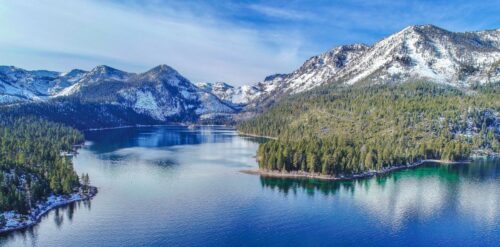 “Staring into the depths of Lake Tahoe, you might think the view goes on forever. But researchers at the UC Davis Tahoe Environmental Research Center have been tracking precisely how far a person can see through the famed lake’s waters for nearly 60 years and sharing the results in the annual Lake Tahoe Clarity Report. The 2025 Lake Tahoe Clarity Report, released today, shows that the annual average clarity remains at a plateau, neither significantly improving nor declining compared to previous years. The annual average was 69.2 feet in 2025. That is 7 feet clearer than last year’s average of 62.3 feet, but not statistically different from recent years, mostly due to a continuing trend of relatively low clarity during summer. … ” Read more from UC Davis.
Fire and ice—Study explores Caldor Fire’s effect on snowpack
“A recently published study on the 2021 Caldor Fire burn scar is shedding light on how fires can impact snowpacks. Often referred to as the “frozen reservoir”, the Sierra Nevada snowpack provides 30% or more of California’s water. As wildfires in the west are not only burning increasingly more acreage, but are also going higher in elevation—including into areas where snowpacks occur—it’s raising questions about what that means for one of the state’s biggest water resources. Marianne Cowherd set out to find answers, studying the Caldor Fire area during the 2022-2023 winter along with others, including UC Berkeley Central Sierra Snow Lab Director Andrew Schwartz. “These fires are massively problematic for us trying to ensure we’re managing our water correctly,” Schwartz said, “and so that’s why it’s important that we study how they affect different snow processes.” … ” Read more from the Tahoe Daily Tribune.
Napa County’s new groundwater fees to take effect July 1
“Napa County’s new groundwater sustainability fees, an upcoming annual charge to groundwater users in the Napa Valley subbasin to help fund the county’s state-mandated groundwater agency, are set to kick in starting July 1. And Napa County is currently pushing forward with efforts to make sure affected property owners understand the fee and whether or not it applies to their properties. That effort includes sending postcards to all groundwater users in the subbasin — which include information specific to their groundwater user categories and directs them to a frequently asked questions web page, according to a county news release. The county is also planning two virtual community meetings, set for June 17 and July 1, to provide information and answer questions. … ” Read more from the Santa Rosa Press Democrat.
A chemical from car tires is reaching San Francisco bay and killing salmon
“A chemical in your car tires is washing into San Francisco Bay every time it rains, and it is killing salmon. ABC7 reported that scientists have documented the presence of 6PPD-quinone, a toxic compound produced when a common tire rubber additive reacts with ozone in the air, in stormwater runoff reaching San Francisco Bay. The chemical is lethal to coho salmon and steelhead trout at extremely low concentrations and has been linked to mass fish die-offs in urban streams across the Pacific Northwest. The compound forms when 6PPD, an antioxidant added to nearly all vehicle tires to prevent cracking, breaks down on road surfaces. When rain washes it into storm drains, creeks and rivers, it enters waterways where salmon and steelhead are trying to survive and reproduce. … ” Read more from Active NorCal.
Two nonprofits petition state board to demand stormwater permits from facilities that allegedly pollute Salinas Watershed.
“With the goal of lowering alleged stormwater-driven pollution by local industrial and commercial sites, two nonprofits that work to protect clean and healthy water filed a petition on June 1 with the Central Coast Regional Water Quality Control Board. According to the California Coastkeeper Alliance and Monterey Waterkeeper, the institutional sites that generate runoff into the Salinas Watershed affect Gabilan Creek, Natividad Creek, Alisal Creek, Santa Rita Creek and the Reclamation Ditch. The petition by the nonprofits demands that the Central Coast Regional Water Quality Control Board implement its clout under the federal Clean Water Act to require stormwater permits for privately-owned commercial, industrial and institutional—often referred to as CII—sites throughout the Salinas River Watershed. … ” Read more from Monterey County Now.
Sacramento Suburban Water District may buy Rancho Cordova company for $4.1M
“Sacramento Suburban Water District, which serves residents in Arden Arcade and North Highlands, is looking to purchase a well maintenance company, saying the move would save money in the long term. The district wants to purchase Rancho Cordova-based Kirby’s Pump and Mechanical for $4.1 million, according to a staff report. The deal would include a $2.4 million payment at closing, $750,000 after the first year and $850,000 after the second year. The payback period, when projected savings would exceed the purchase price, is about three years and five months, including the cost of adding staff. … ” Read more from the Sacramento Bee.
Grower lawsuit against Madera GSA denied
“In a decision dated June 2, 2026 Judge Eric J. LiCalsi of the Superior Court in Madera issued a finding that Madera County did not violate the California constitution under either Proposition 218 or Proposition 26 when it imposed a groundwater allocation program and initiated a per-acre fee to pay for groundwater management activities in 2022. As a result, the per acre GSA fees are allowable applied to the growers in the Madera Subbasin GSA white areas. Led by local grower Ralph Pistoresi, a group of farmers calling itself Valley Groundwater Coalition, sued the county to stop its collection of the GSA project fees of $246 per acre on white area acreage in the Madera Subbasin and $138 per enrolled acre in the Delta-Mendota Subbasin. According to GSA leadership, those fees were required to carry out a wide range of activities intended to bring balance to groundwater use by 2040 as required under SGMA. … ” Continue reading from Water Wrights.
Boswell-run groundwater agency agrees to work with other Kings County agencies after antagonist is fired
“Subsidence from over pumping is still a problem in the Tulare Lake subbasin covering most of Kings County. Opinions on how much sinking is too much are still sharply divided. As are views on how much pumping is too much and whether groundwater can be moved from one area to another. Yet, the El Rico Groundwater Sustainability Agency (GSA) voted June 9 on several measures it expects will reunite the fractured region. That includes an effort to write a single, subbasin-wide groundwater plan rather than each of the five GSAs writing their own. What’s changed? One man was fired from a water district in the northern reaches of the county. “The reason for breaking up is now gone,” said El Rico Board President Jeof Wyrick at the June 9 meeting. He referred to Dennis Mills, former manager of the Kings County Water District. … ” Read more from SJV Water.
Ridgecrest: Phase 2 of adjudication will define basin safe yield, but sustainability work continues
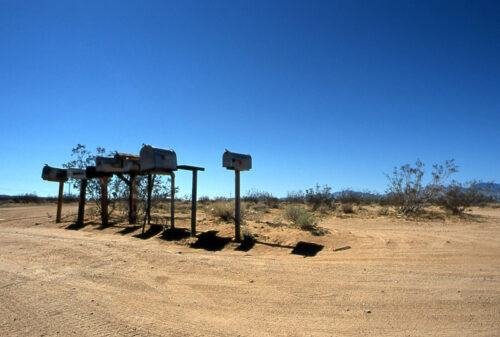
“On June 8, 2026, the Orange County Superior Court began hearing Phase 2 of the comprehensive adjudication for the Indian Wells Valley Groundwater Basin. The trial will focus on the basin’s “safe yield” and the scientific evidence used to calculate that figure. At the conclusion of Phase 2, a judge will issue a ruling determining the basin’s safe yield, which is the amount of groundwater that can be pumped from the basin each year without causing long-term harm, such as falling water tables, dry wells, or land subsidence. In short, the Indian Wells Valley Water District filed a comprehensive groundwater adjudication in 2021 to challenge the groundwater authority’s findings that the basin’s sustainable yield is 7,650 acre-feet per year. Three years later, the water district claimed the safe yield in the basin is 14,300 acre-feet per year. Phase 2 is a critical milestone in the adjudication process that will ultimately effect pumping in the basin. What it will not do, however, is change the fundamental challenge water users face. In 2024, legally required reporting of all pumpers in the valley showed that 20,840 acre-feet was pumped from the basin, which is far more than either estimate presented of what the basin can sustain. … ” Continue reading from the Indian Wells Valley Groundwater Authority.
LA County demands answers after East LA oil spill emits odors, hurts businesses, kills birds in L.A. River
“An oil spill on the eve of the Memorial Day weekend from a ruptured pipeline in East Los Angeles poured thousands more gallons than first reported into the Los Angeles River, killing wild birds and emitting pungent odors into the homes and businesses of the tight-knit Latino community, the county reported on Tuesday, June 9. Los Angeles County’s Public Works, public health and business affairs departments are working with county attorneys to learn who was at fault, and bring litigation to recoup millions of dollars spent in an emergency cleanup effort that will continue through the summer, officials said. “This was one of the largest oil spills into the Los Angeles River in its history,” said Mark Pestrella, director of Public Works told the Board of Supervisors. While the oil pipeline is no longer leaking, the effects remain, officials said. … ” Read more from the LA Daily News.
Aubrey Bettencourt in line to lead Reclamation as river crisis worsens
“A third-generation farmer from California’s San Joaquin Valley may become the next head of the federal agency that oversees water supplies in the drought-stricken Colorado River Basin. Aubrey Bettencourt, who recently stepped down as head of USDA’s Natural Resources Conservation Service, is expected to be formally nominated by President Donald Trump as the next commissioner of the U.S. Bureau of Reclamation. If confirmed by the U.S. Senate, Bettencourt would take over as the agency confronts a growing crisis on the Colorado River and a region experiencing a hotter, drier climate, drought and decreasing water supplies. … ” Read more from Arizona Central. | Read via AOL News.
Arizona faces 77% cut in share of Colorado River as states remain deadlocked over water allocation
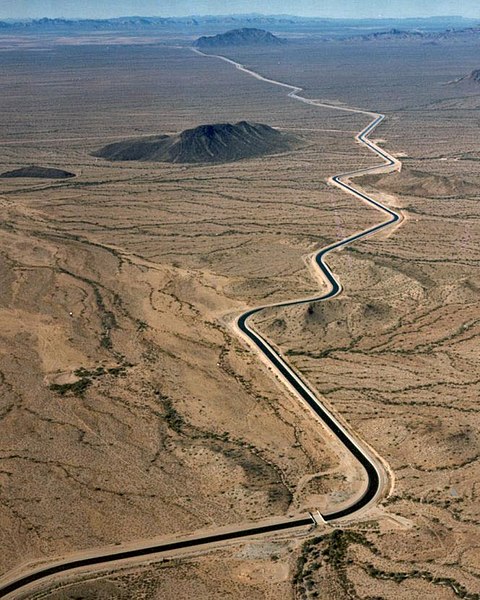 “An ongoing deadlock between the seven states that rely on the Colorado River may have dire consequences for Arizona. A lack of agreement between the Upper and Lower Basin states would mean the federal government imposes its own plan for reallocating the water over the next 10 years – a plan that could mean cuts up to 77% for Arizona. No other state faces such severe cuts under the “no deal” federal proposal. Nevada would see its share of the river reduced by 6%. The other five states would see no change. For obvious reasons, Arizona has been scrambling to find an alternative. A May 1 proposal offered by Arizona, California and Nevada calls for spreading reductions among the Lower Basin states over the next three years. The plan emphasizes voluntary cuts, and states could receive compensation from the federal government for conservation efforts. Tom Buschatzke, director of the Arizona Department of Water Resources, said the Lower Basin states believe their proposal respects the laws and compacts that have long governed how the river is shared while also taking into account the current scarcity. “We looked at how Lake Powell and Lake Mead would be impacted from an elevation standpoint and tried to cover as many hydrologic scenarios as possible,” he said. “It’s not a guarantee, but it’s a robust level of protection.” … ” Continue reading from Cronkite News.

