
Several news sources featured in the Daily Digest may limit the number of articles you can access without a subscription. However, gift articles and open-access links are provided when available. For more open access California water news articles, explore the main page at MavensNotebook.com.
In California water news today …
Rising odds of a strong-to-historic El Niño event in 2026, with growing likelihood of significant regional-to-global scale impacts
Dr. Daniel Swain writes, “El Niño is the warm phase of the El Niño-Southern Oscillation (ENSO), a semi-regular recurring cycle that transfers vast amounts of heat and momentum from the tropical Pacific to the global atmosphere. It is triggered every 3–7 years when the prevailing easterly trade winds weaken or reverse, allowing warm water from the western Pacific to surge eastward while suppressing the vertical upwelling of cool water typically found off the coast of Peru. … As we emerge from the so-called Spring Predictability Barrier, multi-model ensemble predictions have become even more aggressive and are now explicitly predicting an El Niño of very strong, and quite possibly record-breaking, magnitude by autumn or early winter. In fact, the just-released multi-model “superensemble” predictions for June are nothing short of remarkable, with the median forecast from every single international model ensemble depicting at least a “strong” event, and the majority indicating a top-tier, very strong-to-historic event. … ” Read more from Weather West.
El Niño is here — and likely to be historic. Here’s how California will be impacted
“El Niño is here, and it’s only getting stronger. The National Oceanic and Atmospheric Administration on Thursday announced El Niño is present in the tropical Pacific and issued an advisory for the climate pattern that is expected to last through at least March 2027. The agency forecasts greater than 90% odds of a “strong” El Niño and a 63% chance of a “very strong” event by early winter. … El Niño probably won’t significantly impact California’s weather this summer. An enhanced Pacific hurricane season may direct larger swells, more frequent dry lightning or a rare tropical storm toward the state, but the most pronounced effects are expected this winter. An El Niño in historic territory would favor all of California for above-normal precipitation this winter. That doesn’t guarantee historic floods, but El Niño alters the position and strength of the storm track, favoring the southern U.S. in particular for more frequent winter rain. NOAA also warns of more coastal flooding due to a double whammy of more storms and higher seas. … ” Read more from the San Francisco Chronicle.
SEE ALSO:
- A ‘very strong’ El Niño is likely. And it could hit California hard, from the LA Times
- Weather pattern El Nino is here and could reach historic intensity, from the Courthouse News Service
- 6 ways this year’s “Super El Niño” could affect climate, humans, and marine creatures, from EOS
Why the media keep quoting the same climate scientist
“The success of the climatologist Daniel Swain rests on a simple foundation: His specialty has long been how global climate change messes with local weather. Many climatologists focus on subjects that seem arcane: mean global temperatures registered in Celsius, radiative forcing, the reflectivity of clouds. Swain, in contrast, talks in plain English—constantly, really, in interviews with CBS, NBC, the Weather Channel, and The Washington Post, as well as on his own blog and YouTube channel, Weather West—about the wind and the rain and the temperature outside, and how they are influenced by the larger forces of the atmosphere. “He uses language that is both precise and deep but very accessible, and that’s why you see him quoted everywhere,” Mark Hertsgaard, a longtime climate journalist who is the executive director of Covering Climate Now, told me. … ” Read more from The Atlantic (gift article).
Iran-backed hackers claim breach of California water systems
“The Tehran-linked hacker group Hanzala claimed on Thursday that it had breached water infrastructure systems in California in response to what it described as a US attack on Iranian civilians and water facilities. In a statement carried by Iran’s state broadcaster IRIB, the group said it had gained access to systems linked to California’s water infrastructure but had deliberately refrained from disrupting water supplies to American cities, describing the operation as a “warning” to Washington. Hanzala further warned that any action against Iran would be met with reciprocal measures targeting critical infrastructure. … ” Read more from Iran International.
SEE ALSO: Handala hacks California water systems in warning after US strike on Iran’s reservoirs, from Press TV
Peter Gleick: A U.S. attack on an Iranian water system follows a disturbing pattern
“Reports this week from Iran’s West Asia News Agency and the New York Times indicate that the recent U.S. military strikes on Iran included attacks on civilian water systems, cutting off water for 20,000 villagers near the town of Bemani. These reports follow news from early March of attacks on desalination plants in Iran and Bahrain and highlight the growing problem of violence against water infrastructure. Attacks on civilian water systems are war crimes, forbidden by the 1977 Protocols to the Geneva Convention and related international laws. Reliable water resources are central for modern economies and especially the survival of communities in the arid Middle East. Iran, Israel, Palestinian territories, Syria, Lebanon and Persian Gulf countries are among the most water-poor nations of the world, with large and growing populations, few reliable perennial rivers, inconsistent rainfall and extensively over-tapped and overpumped groundwater. … ” Read more from Peter Gleick at the San Francisco Chronicle.
NGOs say Water Board must compel Reclamation’s compliance with water rights permits for Shasta Temperature Management Plan
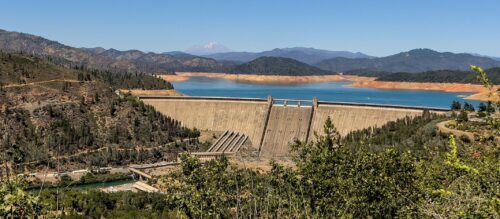 “San Francisco Baykeeper, the Winnemem Wintu Tribe, the California Sportfishing Protection Alliance, Restore the Delta, the Resource Renewal Institute, and Friends of the River sent a letter to the Executive Director of the State Water Resources Control Board supporting the decision to reject the Bureau of Reclamation’s Shasta Temperature Management Plan. However, they urged the Board to require Reclamation to comply with its permits, arguing that otherwise the Board’s response amounts to an objection in name only. The groups describe Reclamation’s temperature and reservoir management strategy as unlawful and misguided, and they contend that the plan conflicts with the 2024 biological opinion issued by the National Marine Fisheries Service as well as Water Rights Order 90-5. They argue that Reclamation has not meaningfully changed its plans or approach despite concerns raised by the Water Board, the California Department of Fish and Wildlife, and the Southwest Fisheries Science Center’s analysis of temperature-dependent mortality and related impacts on winter-run Chinook salmon. In their view, the Water Board was right to reject the plan. … ” Continue reading at Maven’s Notebook.
California scales back golden mussel safeguards at vital reservoir, alarming experts
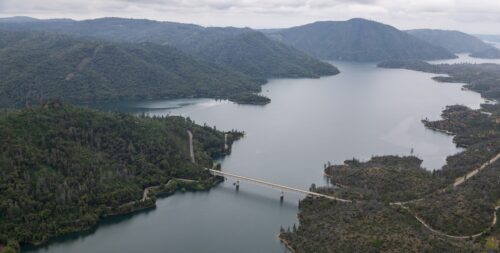
On this date, the water storage was 3,355,264 acre-feet (AF), 98 percent of the total capacity. Andrew Nixon / DWR
“The state of California is walking back protections meant to keep destructive golden mussels out of Lake Oroville, one of the largest and most important reservoirs in the state. The move follows a new state-funded risk assessment that the invasive species poses a lower risk to the lake, which water managers say changes the state’s calculus on costly and difficult measures aimed at keeping the invaders at bay. No state agencies or scientists have found mussels in Oroville yet. But invasive species experts say the revised policy of the Department of Water Resources increases the likelihood that golden mussels will invade Lake Oroville and hitch a ride on boats to other lakes. They disagree, though, about whether preventing such an incursion is even possible. ”California is under an epidemic of golden mussels,” said Anthony Ricciardi, a professor of biology and the director of the Bieler School of Environment at McGill University. “Like in any epidemic, you got to control the key hubs — or else the war is lost.” … ” Continue reading from Cal Matters.
May 2026 Blue Moon contributes to poor Bay-Delta habitat conditions
“This post is a follow-up to a prior post on early spring conditions in the Bay-Delta in 2026. May 2026 featured five primary lunar phases, including two full moons. The first full moon (Flower Moon) peaked on May 1, followed by the third quarter on May 9, a super new moon on May 16, and the first quarter on May 23. The month closed with a second full moon (a micro blue moon) on May 31. These phases of the moon worsened the consequences, for fish and water quality, of water operations by the Bureau of Reclamation. First, the poor May Delta habitat conditions resulted from low Delta inflow – unusually low Sacramento River inflows to the Delta at Freeport (Figure 1). The low inflow, in conjunction with a late spring heatwave, led to high north Delta water temperatures. … ” Read more from the California Fisheries blog.
Trump admin urges Supreme Court to reject water case
“The Trump administration has asked the nation’s highest bench to add a water case to its slush pile. Conservation groups earlier this year petitioned the Supreme Court to overturn a ruling that a California agricultural drainage project is exempt from the Clean Water Act’s permitting requirements for point sources that flow directly into U.S. waters. President Donald Trump’s top Supreme Court advocate responded in a recent brief that the project does not need a permit and the case isn’t worth the justices’ time. “If petitioners’ proposed interpretation were correct,” wrote Solicitor General D. John Sauer, “‘all three of Congress’s aims’ in enacting the irrigated-agriculture exemption ‘would be thwarted.’” … ” Read more from E&E News (sorry, subscription required).
Ag expert panel completes deliberations, approves final report; Additional comment opportunities forthcoming
“The final plenary meeting of the Second Statewide Agricultural Expert Panel was held June 5, 2026. Panel members worked to refine the wording of their recommendations through the very end of the session, when panel chair Daniel Geisseler called for a motion to approve the report. The motion was made, seconded, and passed unanimously. During the meeting, Chair Geisseler scrolled through the tracked changes version of the document and the panelist who made each edit explained their rationale. The panel accepted numerous copyedits without comment, but they discussed some issues in greater depth including how to define small-scale diversified farms, the value of in-season soil nitrate testing, the depth to which soil samples would provide an accurate measure of leaching risk, and use of the word “unreasonable” when describing low A-R or A/R values. To complete the expert panel process, Chair Geisseler will present the report to the State Water Board at the Board’s June 16 meeting as an informational item. The meeting will be held in person at the Cal EPA building in Sacramento and also broadcast online. … ” Read more from Jane Sooby at Maven’s Notebook.
Driscoll’s CEO Soren Bjorn talks California strawberries, berry innovation, labor, water, and the future of farming
“If you’ve ever purchased strawberries, blueberries, raspberries, or blackberries at your local grocery store, chances are you’ve seen the iconic Driscoll’s label. What many consumers don’t realize is the enormous network of family farmers, innovation, and agricultural expertise behind every package of berries. “The Ag Meter” Nick Papagni sat down with Driscoll’s CEO Soren Bjorn for a fascinating conversation to discuss California’s strawberry season, global berry production, labor challenges, water issues, consumer trends, agriculture policy, and the future of farming in America. The interview provided a rare behind-the-scenes look at one of the world’s most recognizable produce brands and the challenges facing the specialty crop industry today. … ” Read more from AgNet West.
A weird, new rain machine takes aim at passing clouds
“Dairy cows tend to eat a lot of grass and alfalfa. But those crops need water and there isn’t much of that in Gill, Colorado, these days. On a recent morning, after the driest winter on record, the little farm town just east of the Rocky Mountains was as tan and crispy as a potato chip, roiling with tumbleweed and fire ants. Scott Morris, chief technical officer of a startup called Rain Enhancement Technologies Inc., was there to try to change that, at least a bit. The affable Australian stood next to a gangly contraption, a shock of metal in the sea of brown. Two poles 26 feet high held a 39-foot beam spooled with stainless steel wire. Morris tapped his phone and the contraption started to faintly hum like a cloud of mosquitos. An electric charge — supplied by a small solar array — imperceptibly chewed up the metal wire and sent charged particles into the sky, like electrons from a battery terminal. In a moist cloud, the particles attract water droplets like iron filings to a magnet. When enough moisture gloms on, the whole package falls out of the sky as a raindrop. Happy cows. Happy cow farmers — at least that’s the theory. … ” Read more from Bloomberg.
Early summer heat, dry conditions may cause increased wildfire risk
“As California enters June, rising temperatures, dry vegetation and shrinking moisture levels are causing increased wildfire danger across the state. With a warmer-than-average spring, as well as lower snowpack in the Sierra Nevada, vegetation has been drying out earlier than usual, according to a press release from the California Fire Foundation. The California Fire Foundation is a nonprofit that provides assistance to fallen and active firefighters and their families. The foundation’s board is comprised of active and retired firefighters from around the state. The snowpack of the Sierra Nevada provides as much as a third of California’s water supply by accumulating snow during wet winters, which is released slowly during the dry springs and summers. According to the California Department of Water Resources, warmer temperatures, especially early in the spring and summer, causes the snow to melt faster, making it more difficult to store during the dry season. … ” Read more from the Chico Enterprise-Record.
SEE ALSO: Carrying the massive weight of the wildfires, commentary at the Chico Enterprise-Record
UC Davis study: Prescribed burns, forest thinning save billions but underused
“As firefighters continue to work to contain the Putah Fire, an escaped prescribed that has charred more than 800 acres, a study published by UC Davis researchers found that greater investment in treatments such as prescribed burns may be needed to effectively reduce wildfire damage. The researchers found that underused strategies known as fuel treatments — including forest thinning, prescribed burns and removal of excess vegetation — can prevent billions of dollars in damage while also reducing wildfire severity. “There’s a strong case to be made to sort of increase treatments in order to really make a bigger dent in this, the annual cost of wildfires,” said Frederik Strabo, the lead author of the study, which was published last month in the journal Science. … ” Read more from the Sacramento Bee.
What will happen to $2 billion meant for California water, air, wildfire efforts?
“The fate of roughly $2 billion annually that was intended to help reduce wildfire risk, promote clean water and build affordable housing, along with other efforts across California, is uncertain as the Legislature races to pass a state budget by Monday. Recent changes to what used to be known as the state’s cap-and-trade program by the California Air Resources Board are behind that funding uncertainty. The program, which is now called cap and invest, places an emissions limit on businesses in the state and then allows those companies to buy and sell permits to keep emitting carbon dioxide. Money from those sales has been dedicated to fund efforts aimed at reducing greenhouse gases. But the annual amount generated is now expected to be cut in half, according to the Legislative Analyst’s Office, which advises the Legislature on policy and fiscal matters. … ” Read more from the Sacramento Bee.
Want to predict wildfires? The key may be underground
“Western wildfires start and spread because of a whole host of factors—wind, temperature, drought, forest health. But scientists are finding that the most important indicator of where the next big fire might ignite isn’t held in the trees themselves, but in the soil their roots are buried in. Recent studies demonstrate how soil moisture data can help wildfire experts predict a potential fire’s location and severity. Those studies could eventually aid in developing more precise forecasts for fires across the country. This link, between how moist the ground is under a forest or grassland and fire risk, is gaining more traction among scientists due to an increasingly expansive network of monitoring equipment. In Colorado’s Roaring Fork Valley, 10 remote soil moisture sensors transmit data hourly, measuring the amount of water in the soil at that specific location and a certain depth, so scientists and researchers can better understand the ecosystem. … ” Read more from The Water Desk.
In regional water news and commentary today …
NORTH COAST
Upper Klamath Lake trout rules tighten to save redband population
“The Oregon Department of Fish and Wildlife is changing fishing rules to protect native redband trout in Upper Klamath Lake and its spring-fed creeks. Starting June 15 through Oct. 31, anglers must release any redband trout they catch and can only use flies and artificial lures. Bait fishing is not allowed for any species during this time. Klamath Lake redband trout numbers are dropping because of poor water quality, low stream flows, less food in cold-water refuges and a lack of places for young fish to grow. The fish gather in cold-water refuge areas during summer and early fall, making them easier targets for anglers. … ” Read more from KDRV.
Parasite thriving in warming waters of Upper Klamath River killing off young Chinook salmon
“Earlier this month, in an act of urgency after finding many young Chinook salmon dead in the vegetation along the Upper Klamath River near the Oregon-California border, scientists drove to an Oregon expert with several of the fish carcasses they normally would have mailed. Dead fish typically sink to the depths of the river or become food for scavengers, so the number of carcasses raised alarms. “These are juveniles, they’re small, so for there to be so many that you can see groups of them along the sides of the river and in the vegetation along the sides of the river, that’s concerning,” said the expert, Oregon State University fish parasitologist Sascha Hallett, who has studied parasitic species in the Klamath Basin for more than two decades. … ” Read more from the Oregon Capital Chronicle.
Juvenile salmon are dying in the Klamath River. The parasite that’s killing them is now at every monitoring site.
“Dead juvenile salmon are washing up on the banks of the Klamath River, and the parasite driving the die-offs has now been detected at every monitoring site on the system. KOBI-TV reported that Oregon State University researchers tracking the Klamath River have confirmed Ceratonova shasta at all six monitoring sites as of June. Low winter snowpack and warmer-than-average spring temperatures accelerated the parasite’s proliferation, which thrives in warm, slow-moving water and attacks the intestinal lining of young salmon. The story confirms what a federal health report from the U.S. Fish and Wildlife Service flagged on June 1: 46% of juvenile Chinook salmon tested in the upper Klamath were infected, more than double the 2025 rate. Of those, 18% carried parasite loads at levels associated with mortality. … ” Read more from Active NorCal.
Coast Guard increasing patrols for Northern California salmon season
“As Northern California’s recreational salmon season ramps up, the U.S. Coast Guard says they are increasing patrols to help keep anglers safe and ensure boaters are following federal and state safety regulations. This marks the second recreational salmon season after several years of closures, bringing more boat traffic to the water as anglers head out in search of salmon. The Coast Guard says their focus during the busy season will be less about fishing violations and more about making sure boaters are prepared before leaving the dock. … ” Read more from KRCR.
SACRAMENTO VALLEY
DWR begins summer monitoring for harmful algal blooms at Lake Oroville
“California Department of Water Resources scientists have begun their annual summer monitoring program for harmful algal blooms at Lake Oroville, the Thermalito Forebay and the Thermalito Afterbay, with early results showing no toxins detected in monitored recreation areas. Environmental scientists began collecting weekly water samples in May from recreation areas throughout the Oroville-Thermalito Complex. The samples are sent to a laboratory for analysis to determine whether toxin-producing cyanobacteria, commonly known as blue-green algae, are present. … ” Read more from KRCR.
New water infrastructure for the Sutter National Wildlife Refuge
“The Sacramento Valley is home to one of the most remarkable intersections of working lands, rivers, and wildlife habitat in the world. The Sutter National Wildlife Refuge is a living example of how healthy floodplains support both nature and people. Yet, to keep this system functioning in the face of drought, floods, and weather whiplash, we must invest in modern water infrastructure that sustains the refuge and strengthens the entire Valley. Today we celebrated the completion of a major water infrastructure project to provide more reliable water delivery and supply to Sutter National Wildlife Refuge. This project has been a partnership of Ducks Unlimited working with the U.S. Fish and Wildlife Service and the U.S. Bureau of Reclamation (Reclamation), and with funding support from the California Natural Resources Agency and Reclamation. This newly completed lift station project enables water for Sutter National Wildlife Refuge to be diverted from the East Sutter Bypass ditch at lower levels, ensuring a more consistent and reliable water delivery to the refuge and avoiding impacts to neighboring agricultural lands. … ” Read more from the Northern California Water Association.
Rice farmers worry about pipeline moving north state water throughout California
” … About 40 miles north of Schaad’s farm, a new reservoir the size of Lake Berryessa is planned for a remote valley at the border of Colusa and Glenn counties. The reservoir will store diverted Sacramento River water for agencies and districts that have bought into the project, many of which are hundreds of miles south. To reach those places, as far as San Bernardino, Irvine and Los Angeles, the water first needs to navigate its way down the length of the state through a network of canals dug by Californians over the last century. But those canals don’t all connect. To solve that, project officials plan on building a 9-foot diameter pipeline across 4 miles on the northern edge of Yolo County near Dunnigan, the small town where Schaad farms his land. He and a group of local farmers are worried that the volume of water moving through the pipeline could overwhelm the existing canal, flood their fields and put their livelihoods in jeopardy. … ” Read more from PBS Abridged.
NAPA/SONOMA
Seven Moons Farm brings locally grown avocados to Sonoma County
““It’s a real conversation starter,” says farmer Rebecca Bozzelli, laughing because it’s not something people often say about an avocado. But when she brings her fresh, plump, nearly softball-sized Reed, Bacon, Gem, Hass, and Mexicola Grande specimens to farmers markets — most likely the only locally farmed avocados sold in Sonoma County — customers want to know every detail about each variety. “Then when they come back for more, they’re telling us how each variety tasted and which ones they liked the best,” says Bozzelli, who crowns the Reed as her favorite because they’re “so buttery. Scan any annual report from the California Avocado Commission, and you’ll never see Sonoma County mentioned amid the thousands of acres planted in southern counties like Ventura, San Diego, Santa Barbara, Riverside, and San Luis Obispo. That’s because avocados are typically grown in subtropical-to-tropical climates. … ” Read more from Sonoma Magazine.
Napa County’s new groundwater fees to take effect July 1
“Napa County’s new groundwater sustainability fees, an upcoming annual charge to groundwater users in the Napa Valley subbasin to help fund the county’s state-mandated groundwater agency, are set to kick in starting July 1. And Napa County is currently pushing forward with efforts to make sure affected property owners understand the fee and whether or not it applies to their properties. That effort includes sending postcards to all groundwater users in the subbasin — which include information specific to their groundwater user categories and directs them to a frequently asked questions web page, according to a county news release. The county is also planning two virtual community meetings, set for June 17 and July 1, to provide information and answer questions. … ” Read more from the Santa Rosa Press Democrat.
BAY AREA
S.F. to see highest-ever summer high tide, flooding — and the forecast just got worse
“The highest summer tide on record is predicted in San Francisco Bay this weekend — a direct consequence of global warming and a surging El Niño — prompting the National Weather Service to tell residents to expect coastal flooding that’s unusual for this time of year. Tidal overflow is possible in eastern Marin County, San Francisco’s Embarcadero and other places that are typically inundated by minor coastal flooding. A coastal flood advisory is in effect from 7 p.m. Thursday to 3 a.m. Wednesday for the shorelines of San Francisco and San Pablo bays. The highest tide is predicted for late Sunday, when water at the San Francisco gauge is forecast to be 1.9 feet above normal at 11:10 p.m., according to a weather service update released Thursday afternoon. … ” Read more from the San Francisco Chronicle.
‘On the clock’: San Rafael scrambles for sea-level defense
“A recent report that says defending San Rafael against rising seas would cost $720 million to nearly $2 billion has sent shockwaves through the community and spurred officials to come up with solutions quickly. The feasibility study outlines three adaptation strategies — seawalls, flood gates or raising the land — and envisions a 25-year timeline to get a project done. It also presents several hurdles that stand in the way. After a presentation on June 1, members of the City Council said developing the right response is a daunting task that is beyond the responsibility of the city alone. “San Rafael absolutely needs to be a strong advocate, but I’d say right now we also need to be a strong advocate for a lead agency, and for regional coordination,” Vice Mayor Rachel Kertz said. “If we even tripled our budget, it would not be enough — and that means not doing anything else in the city to just address sea-level rise.” … ” Read more from the Marin Independent Journal.
Microsoft breaks ground on new data center in San Jose
“Microsoft broke ground Wednesday on a 48-megawatt data center campus in San Jose’s Alviso neighborhood that city leaders say will support growing demand for cloud computing and artificial intelligence. The project will be Microsoft’s first purpose-built, company-owned and operated data center in San Jose, according to Jonathan Noble, Microsoft’s senior director of government affairs. John Kane, senior vice president at the HITT Contracting firm working on the project, said the facility will employ more than 600 workers at peak construction. San Jose Mayor Matt Mahan said the data center will support more than 100 ongoing jobs once operational. Mahan described data centers as “critical infrastructure” needed to support modern services, including healthcare, transportation and artificial intelligence. … ” Read more from NBC Bay Area.
CENTRAL COAST
Santa Margarita Groundwater Agency seeks board alternate
“Santa Margarita Groundwater Agency is accepting applications for a Well Owner Alternate Representative to serve on its Board of Directors. The agency, which was formed in 2017 to comply with California’s Sustainable Groundwater Management Act, oversees groundwater management in the Santa Margarita Groundwater Basin, serving communities in the San Lorenzo Valley and Scotts Valley areas. Eligible applicants must own, manage or be served by a private or shared domestic well, a small water system well, or an irrigation well used for commercial, industrial, institutional, recreational or agricultural purposes within the basin. The position carries a three-year term and is unpaid. … ” Read more from the Press Banner.
SAN JOAQUIN VALLEY
Grower lawsuit against Madera GSA denied
“In a decision dated June 2, 2026 Judge Eric J. LiCalsi of the Superior Court in Madera issued a finding that Madera County did not violate the California constitution under either Proposition 218 or Proposition 26 when it imposed a groundwater allocation program and initiated a per-acre fee to pay for groundwater management activities in 2022. As a result, the per acre GSA fees are allowable applied to the growers in the Madera Subbasin GSA white areas.Led by local grower Ralph Pistoresi, a group of farmers calling itself Valley Groundwater Coalition, sued the county to stop its collection of the GSA project fees of $246 per acre on white area acreage in the Madera Subbasin and $138 per enrolled acre in the Delta-Mendota Subbasin. According to GSA leadership, those fees were required to carry out a wide range of activities intended to bring balance to groundwater use by 2040 as required under SGMA. … ” Continue reading from Water Wrights.
Boswell-run groundwater agency agrees to work with other Kings County agencies after antagonist is fired
“Subsidence from over pumping is still a problem in the Tulare Lake subbasin covering most of Kings County. Opinions on how much sinking is too much are still sharply divided. As are views on how much pumping is too much and whether groundwater can be moved from one area to another. Yet, the El Rico Groundwater Sustainability Agency (GSA) voted June 9 on several measures it expects will reunite the fractured region. That includes an effort to write a single, subbasin-wide groundwater plan rather than each of the five GSAs writing their own. What’s changed? One man was fired from a water district in the northern reaches of the county. “The reason for breaking up is now gone,” said El Rico Board President Jeof Wyrick at the June 9 meeting. He referred to Dennis Mills, former manager of the Kings County Water District. … ” Read more from SJV Water.
SOUTHERN CALIFORNIA
Activists, supervisors debate use of chemicals in Orange County’s flood control channels
“Biking on river trails, going on picnics and surfing in the ocean are activities California residents cherish every summer. But headlines about the use of toxic chemicals in flood control channels around Orange County have created anxiety for those looking forward to their favorite activities this summer. Dozens of environmental activists and Orange County residents packed the Orange County Board of Supervisors meeting this week to urge the county to halt the routine use of toxins they say poison waterways and wash out into the ocean. But several supervisors said it wasn’t that simple. The chemical prevents overgrowth in flood control channels, and that overgrowth could lead to backups and flooding, affecting neighborhoods and businesses during heavy rains. … ” Read more from LAist.
Water Replenishment District and the City of Torrance Break Ground on the Torrance Groundwater Desalter Expansion Project
“The Water Replenishment District (WRD) and the City of Torrance celebrated a major milestone this week with a ceremonial groundbreaking for the Torrance Groundwater Desalter Expansion Project (TGDEP). The event brought together elected officials, community leaders, and funding partners to mark the next phase of a transformative effort to convert brackish groundwater into a reliable local drinking water supply for the South Bay. As a key part of WRD’s Brackish Groundwater Reclamation Program (BGRP), the project expands the Robert W. Goldsworthy Desalter and increases options for sustainable groundwater replenishment within the West Coast Basin. Upon project completion, the TGDEP will purify up to 7,100 acre-feet, or 2.3 billion gallons, of high-quality drinking water each year, contributing a significant portion of the municipal supply for the South Bay residents. … ” Read more from Morningstar.
SAN DIEGO
Newsom announces $46 million of voter-approved funding to help address Tijuana River pollution
“Gov. Gavin Newsom announced Thursday he is deploying $46 million in voter-approved funding to help clean up the chronically contaminated Tijuana River at the California-Mexico border. Since 2018, more than 100 billion gallons (378 billion liters) of raw sewage filled with industrial chemicals and trash have poured into the Tijuana River, according to the International Boundary and Water Commission. The United States and Mexico signed an agreement last year to clean up the longstanding problem by upgrading wastewater plants to keep up with Tijuana’s population growth and industrial waste from factories, many owned by U.S. companies. For years, tens of thousands of people have and continue to be exposed to the sewage. During a February visit to San Diego, Environmental Protection Agency Administrator Lee Zeldin said it will take a couple of years to fix one of the nation’s worst and longest-running environmental crises that affects largely low-income Latino communities. … ” Read more from the Associated Press.
READ MORE: $46M available in California funding to help address water quality issues at Mexico border, from CBS 8
Along the Colorado River …
If the IID wants their farmers to use less water, why don’t they just charge more for it?
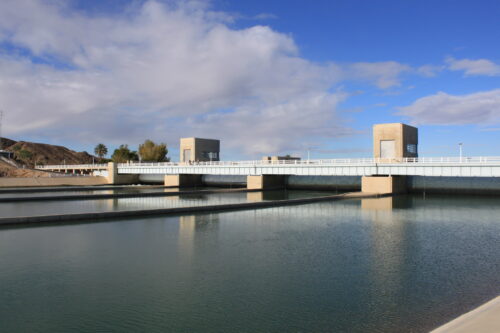
“In 2022 – while conducting a study of the Colorado River crisis, Dr. Brad Barham – a Professor of Agricultural Economics at the University of Wisconsin, Madison, two of his undergrads and I watched a Powerpoint presentation given by the Imperial Irrigation District’s Watermaster, Merlon Kidwell. Kidwell retired last year after fifty years with the IID. Besides the IID’s hospitality that day, there were two fundamentally-important things we’ve never forgotten – 1. The IID maintains 3,000 miles of delivery canals and agricultural drains that convey 3.1 million acre feet of Colorado River water every year. This amount represents about a quarter of the Colorado River’s average annual 12.5MAF output since 2000. … 2. Similarly, the IID does not charge farmers for the water itself. It charges farmers (who are connected to the IID’s water delivery system) an annual fee for that connection, plus a flat $20 per acre foot for the costs associated with the delivery of their water. … ” Read the full post at Coyote Gulch.
Colorado River at 34%: Senate demands a deal
“The numbers are hard to ignore. As of June 8, 2026, the Colorado River system held just about one-third of its total water storage capacity. Lake Powell, the massive reservoir straddling the Utah-Arizona border, sat at 25 percent capacity. Lake Mead, the nation’s largest reservoir, was at 29 percent. Together, the two great lakes of the American West are approaching record lows. Lake Powell has dropped by roughly 172 feet from its full level. More alarming still, the reservoir now sits only about 37 feet above what engineers call the minimum power pool, the lowest point at which Glen Canyon Dam can still generate electricity. If the water drops below that line, the consequences ripple fast and far, from power outages across the Southwest to threats to the dam’s physical infrastructure. … ” Read more from Western Water.
Mike Lee warns Lower Colorado River states that a water lawsuit will cost them
“The chair of the Senate Energy and Natural Resources Committee warned Arizona and two other states that rely on the Colorado River on Wednesday that they will lose access to hundreds of millions in conservation aid if they pursue litigation over water rights. Roughly $354 million is still available under a 2022 climate law. But the funds expire at the end of September. “States that choose to sue their fellow basin states over Colorado River operations should not expect Congress to reward that decision with additional federal funding,” Sen. Mike Lee, a Republican from Utah – one of the four Upper Basin states, said at the outset of a hearing on the stalemate among the seven states that share the river. “Federal taxpayers should not be asked to subsidize litigation among the states.” … ” Read more from KUER.
SEE ALSO: Mike Lee says Congress shouldn’t reward states that sue over Colorado River, from the Salt Lake Tribune
Arizona: Year after millions of chickens buried in Tonopah, residents still have questions about groundwater
“A year after millions of chickens were buried in Tonopah following a devastating avian influenza outbreak, some residents say they are still looking for answers about what the burial could mean for the groundwater many in the community rely on. The outbreak struck Hickman’s Family Farms in May 2025, leading to the euthanization and burial of approximately 2.75 million chickens and related materials, according to records from the Arizona Department of Environmental Quality (ADEQ). The burial site remains a source of concern for some community members, who say they worry about the long-term impacts on drinking water. “The concern, the main concern is, is the drinking water from our wells going to be okay?” said Mike Worth, owner of Saddle Mountain RV Park. … ” Read more from Channel 15.
As river outfitters brace for a low-water season, a glampground on the Colorado River is betting big
“The most noticeable thing at Kampa Lampa campground is so noticeable it would be misleading not to mention it. It’s the long black strip of pavement rippling just beyond the Colorado River with massive trucks rumbling across it. So many trucks that if you’re counting, it’s easy to lose track. Best to insert the ear plugs owners Kathy and John Haas provide campers, because semis barrel down Interstate 70 all night. But if you’re rafting down the most accessible stretches of the Colorado River inside Colorado — from the Pumphouse to Radium section or through Ruby Horsethief Canyon — “you’re going to be dealing with the train running all night.” Inviting people to raft and camp along I-70 “is about setting expectations,” says Ken Murphy, founder and CEO of Adventure Outdoors, a consortium of family-run outdoor recreation businesses that partners with Kampa Lampa. … ” Read more from the Colorado Sun.
In national water news today …
Why a notably warm start to the year foreshadows what’s ahead
“It’s been a particularly toasty start to the year on planet Earth — and it may be a sign of the kind of temperature extremes coming in the year ahead. So far this year, over 70 percent of the globe has experienced well above average temperatures. Of that area, 8 percent has seen record-breaking warmth, including parts of the western United States, Asia and the Arctic. Meanwhile, just about 1 percent of the planet has experienced well below average temperatures. This significant imbalance has occurred despite one of the coldest winters in decades along the East Coast, where temperatures so far this year have balanced out closer to average from Boston to Miami. It has been particularly chilly in Alaska and northern Canada. … ” Read more from the Washington Post.

