
Several news sources featured in the Daily Digest may limit the number of articles you can access without a subscription. However, gift articles and open-access links are provided when available. For more open access California water news articles, explore the main page at MavensNotebook.com.
On the calendar today …
- PUBLIC HEARING: Delta Conveyance Project water right hearing beginning at 9am. The State Water Resources Control Board Administrative Hearings Office is holding a Public Hearing on the pending Petitions for Change of Water Right Permits for the Delta Conveyance Project. Interested members of the public who would like to watch this hearing without participating may do so through the Administrative Hearings Office YouTube channel at: bit.ly/aho-youtube. Click here for the meeting notice.
- WEBINAR: Beaver Coexistence in California from 9am to 11:30am. Are you ready to learn more about how beaver coexistence can build capacity for land managers and owners in California? Join the California Beaver Coexistence Training and Support Program on June 10 from 9-11:30am for an informative webinar featuring coexistence experts and practitioners. During our 2nd annual webinar, participants will hear from Grey Hayes, Beaver Coexistence Program Manager at Occidental Arts & Ecology Center. Grey will share about the California Beaver Help Desk. The webinar will also feature presentations and discussions with two of the state’s leading beaver coexistence professionals: Cathy Mueller with Connected Ecology and David Krawitz-Greenspan of Wet Meadows Institute. They will share case studies showing how their work makes living alongside beaver easy and affordable for communities. The Beaver Institute’s Aaron Hall will describe the national context of California’s beaver coexistence efforts. Additionally, Molly Alves from the California Department of Fish and Wildlife’s Beaver Restoration Program will offer updates about that program, and Vicky Monroe of CDFW’s Human Wildlife Conflict division will discuss how her team works to resolve human-beaver conflicts. Click here to register.
- WEBINAR: Policy and Partnership for a More Resilient California from 10am to 11am. California’s rivers, wetlands, and watersheds are essential to long-term climate resilience. From the Sierra Nevada to Southern California streams, restoration projects help reduce flood risk, improve water reliability, support biodiversity, and strengthen the communities dependent on healthy ecosystems. Done right, nature-based solutions are investments not only in ecosystem health, but in public safety, economic resilience, workforce development, and cultural restoration. So, how do we move from promising projects to statewide success? Join Sustainable Conservation for the final webinar in our spring Voices from the Field series as we explore what it takes to advance restoration in California today. We’ll discuss how the Cutting Green Tape Initiative and the state’s 30×30 strategy are removing policy and permitting barriers. You’ll also hear from leaders at the California Natural Resources Agency and California Trout on the cross-sector collaboration and on-the-ground strategies driving nature-based solutions forward, and what it will take to scale them statewide. Click here to register.
- WEBINAR: Pivotal Moment to Restore Hetch Hetchy from 11am to 12pm. This month’s Power in Nature Sierra Nevada 30×30 Regional Group meeting will feature a special session on the future of one of California’s most iconic and debated landscapes: Hetch Hetchy Valley in Yosemite National Park.This timely discussion will explore the opportunities and challenges surrounding proposals to restore Hetch Hetchy Valley, including dam removal and resilient water solutions for San Francisco. A once-in-a-generation ecological restoration opportunity, the conversation will examine what restoration could mean for water reliability, ecosystems, outdoors recreation, and the future of this treasured landscape. There will also be a discussion on opportunities for engagement and how we can support and be part of this effort. Click here to register.
- WEBINAR: Global Water Bankruptcy: Living Beyond our Hydrological Means in the Post-Crisis Era from 11am to 12:15pm. Professor Kaveh Madani, Director of the United Nations University Institute for Water, Environment and Health (UNU-INWEH), has been named the 2026 Stockholm Water Prize laureate, the world’s most prestigious award for outstanding achievements in water. Click here for more information.
- IN-PERSON: Fish Water People Film Festival: Flow State | Orinda Screening from 6pm to 9:30pm. Join us in Orinda for the second annual Fish Water People Film Festival, hosted by California Trout – an evening of storytelling, connection, and celebration of the lands and waters that shape us and our state! Click here for tickets.
In California water news today …
A marine heat wave and a potential super El Niño could threaten California’s salmon recovery before it takes hold
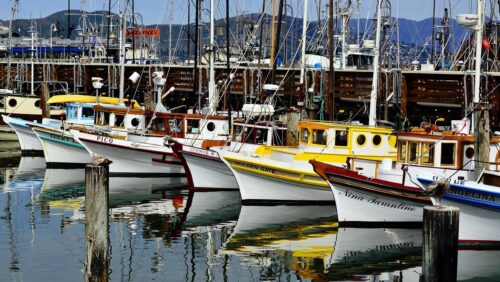 “California’s salmon fishery just reopened after three devastating years of closures. Now scientists are warning that a double threat of warming ocean water could put the recovery at risk before it takes hold. KQED reported that a widespread marine heat wave, the seventh in seven years off the California coast, is already raising sea surface temperatures across the Pacific. If a potential super El Niño materializes later this year, as forecasters expect with 82% probability by July, the combined warming could disrupt ecosystems, harm marine life and threaten the juvenile salmon that are heading out to sea for the first time since populations began to recover. The concern is specific and urgent. Young salmon that hatch in rivers like the Sacramento, Klamath and Eel spend their first months in the ocean, where they depend on cold, nutrient-rich upwelling water to find food and survive. When ocean temperatures rise, that food web breaks down. The prey species that juvenile salmon depend on shift northward or decline, and survival rates drop. … ” Read more from Active NorCal.
‘It’s an injustice’: Shrinking state funds could slow fixes for Californians with toxic water
“In a neighborhood flanked by grapevines and orange groves on the east side of the San Joaquin Valley, people cannot drink the water from their faucets because it’s contaminated. Residents in the area north of Porterville, many of them farmworkers, have been discussing a solution, which they expect will require running pipes to connect to the nearby city system. But the clean water program that has been one of Gov. Gavin Newsom’s major initiatives, bringing solutions like these, is significantly cut in his latest proposed budget. Residents here are worried this could slow the effort to bring them clean water. “I hope they help us,” said Paula Fernández, a resident who lugs gallon bottles of water for drinking and cooking. “I hope this gets resolved because we need it.” … ” Read more from the LA Times. | Read via Yahoo News.
Creating a living laboratory through land repurposing in California
“When it was first conceived, California’s Multibenefit Land Repurposing Program (MLRP) was envisioned to be one of many initiatives needed to help landowners and communities adapt to less groundwater pumping and prevent the San Joaquin Valley from turning into a dust bowl of fallowed fields. Instead, the idea was to fund projects that strategically transition farmland to other uses that deliver a range of new benefits, from wildlife habitat to community open spaces to low-impact solar farms. Four years and two rounds of funding later, MLRP is delivering some additional benefits that proponents of the program (including EDF) never imagined. The Tule Basin Land & Water Conservation Trust’s Capinero Creek Restoration Project is one of the most inspiring examples of these unexpected positive results, from the early return of an endangered lizard to high school students winning a scholarship for college. … ” Read more from EDF’s On the Waterfront.
Webinar explores four income alternatives for California agricultural land
“As the Sustainable Groundwater Management Act, or SGMA, continues to reshape how much groundwater can be pumped in many basins, some landowners are exploring new uses for irrigated acreage. In a recent webinar, the California Chapter of the American Society of Farm Managers and Rural Appraisers examined four alternative income opportunities for agricultural properties: hunting, conservation easements, solar and carbon storage. … ” Read more at Maven’s Notebook.
The chemical that caused the Garden Grove evacuations is stored all over California
“Fire officials near a Garden Grove aerospace facility stared down two potentially bad outcomes over Memorial Day weekend: Either an industrial tank could explode, or it could unleash large amounts of a toxic chemical into the air. For many, it was the first time they’d ever heard of the chemical – methyl methacrylate – and its potential consequences: respiratory issues, nosebleeds, nausea and skin reactions that could lead to hospitalization. The Orange County Fire Authority narrowly avoided a disaster when the tank cracked just enough to relieve the pressure. Gov. Gavin Newsom declared a state of emergency, and multiple agencies are now investigating what happened. But the danger remains for some. A CalMatters review of federal data from the Environmental Protection Agency found 14 facilities stored methyl methacrylate in California in 2024. That year, four of them stored amounts that are similar to or greater than the amount that nearly caused a disaster near the GKN Aerospace facility in Garden Grove. … ” Read more from Cal Matters.
Kalra’s SB 2218 passes State Assembly unanimously
“Assembly Bill 2218, authored by Assemblymember Ash Kalra, unanimously passed the California State Assembly last week, marking a significant step toward aligning California water policy with Tribal rights, stewardship, and justice. The bill now moves to the State Senate for consideration. As the 19th century Gold Rush drove California to develop its water rights system under the doctrine of “first in time, first in right,” Indigenous People were excluded from recognition as lawful water users despite being the original stewards of the state’s watersheds. The result was a legal framework that institutionalized dispossession while shaping water allocation for generations. “My tribe was displaced from our ancestral villages along the Sacramento River and Delta waterways, but we have not and will not abandon our role as guardians of the water. It is imperative for state policy to recognize and repair the harms tribes have suffered. State agencies should protect our water uses and ensure that tribes receive just compensation for the destruction of our lifeways,” said Malissa Tayaba, Vice Chair of the Shingle Springs Band of Miwok Indians. … ” Read more from the Karuk Tribe.
Hard Rain: The battle over weather modification
“A radar tower stands alone in northeast Oklahoma City, surrounded by a green field. It is one hundred feet tall and topped with a smooth, white orb. Hidden inside the orb, an antenna rotates while pulsing electromagnetic waves into the distance, waiting for a faint bounce to arrive back in the dish. It is not quite an all-seeing eye. The tower can identify hail, rain drops, a cloud of cicadas, the spiraling debris in tornadic winds from more than one hundred miles away. As the sun set on July 6, 2025, though, there was nothing to detect. It was one of those summer Sunday nights in the middle of the country when you know the heat is coming, but it hasn’t arrived just yet. The moon was waxing gibbous and would be full in four days. The fireworks that had popped over the river on Independence Day were long gone. The city philharmonic had packed up its instruments after an outdoor concert titled “Red, White, & Boom!” Anyone who glanced at the news would’ve seen something about a flash flood in Texas, a riverside summer camp washed away in the night, the number of dead still unconfirmed. At 9:35 pm, a bearded man approached the radar tower and began to climb the chain-link fence around it. … ” Read more from Harper’s Magazine.
A new study by University of Nevada faculty addresses the impacts of wildfire on freshwater ecosystems through smoke plume modeling
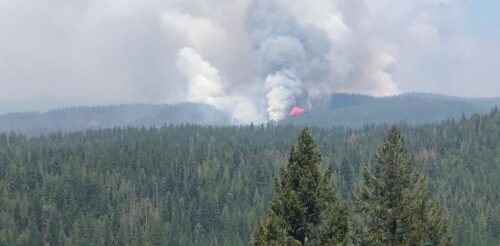 “The 2026 wildfire season is already making history, with fires burning from coast to coast across the United States, and the rest of the year is projected to be one of the most severe on record. But can the effects of these wildfires be felt far beyond the active burned landscapes? Groundbreaking research from the University of Nevada, Reno and Utah State University, published in Communications Earth & the Environment, a journal from Nature Portfolio, is helping global wildfire scientists predict downstream impacts from wildfire. The research, together with a highly anticipated National Science Foundation FIRE NET workshop this week, promises to reshape how we understand and combat wildfires. The publication comes from the work of Facundo Scordo, Ph.D., research assistant professor in the Tahoe Institute for Global Sustainability and the Department of Biology at the University of Nevada, Reno. In the work, Scordo and team created innovative models based on research from the Caldor fire in 2021 that impacted Lake Tahoe. The models will help predict how future wildfire smoke plumes may travel downstream and impact surrounding ecosystems and watershed health. … ” Read more from the University of Nevada Reno.
Wildfire almost destroyed a pristine California island. Inside the fight to save this ecological oasis
“Just steps above a white sand beach with calm, turquoise waves, the effects of the largest fire in Channel Islands National Park history are particularly stark: Fields of island grasses and chaparral have been reduced to ash, the earth singed to black. Hillsides are colored a rusty red from desperate retardant drops. And when the wind whips, the air reeks of a potent campfire — but no campers are around. It’s been just four days since firefighters reached 100% containment of the 18,379-acre blaze that scorched about one-third of the island and damaged many prized resources, including the island’s rare Torrey pines. The remote island — some 30 miles southwest of Santa Barbara — is typically quiet, yet the stillness feels almost heavy this sunny afternoon. The 150 firefighters who responded to the blaze have returned to the mainland, and the island remains closed to the public. The only humans who remain are a team of about a dozen park rangers and Department of Interior scientists who are working to review the fire damage and understand the scale of the loss. Their findings will serve to prepare for what will likely be a years-long mitigation and restoration effort. … ” Read more from the LA Times. | Read via AOL News.
Lawmakers demand answers after Mother Jones revealed forest service spraying roundup all over public lands
“Two members of Congress have sent a letter to US Forest Service Chief Tom Schultz calling on the agency to justify its actions following an investigation by Mother Jones that found glyphosate—the controversial key ingredient in the herbicide Roundup—was being sprayed in record amounts on public lands. “Given the recent scientific disputes, retracted studies, and litigation surrounding glyphosate due to serious ecological and health harms, we are deeply concerned by the alleged use of the herbicide and lack of information available regarding current and planned use,” wrote Reps. Chellie Pingree (D-Maine) and Jared Huffman (D-Calif.). While glyphosate is more well-known for its use in agriculture, its fastest-growing use in California—where our investigation analyzed more than 5 million state pesticide records—is on forestlands. Private timber companies and the Forest Service have been dousing hundreds of thousands of acres of the state’s forests in the herbicide, especially areas affected by wildfires. … ” Read more from Mother Jones.
As wildfires increase in the West, so does suppression spending
“Hotter, drier conditions in the western United States have led to a rise in wildfire activity that has damaged or destroyed infrastructure, natural ecosystems, and entire towns across the region. As fires grow larger and more destructive, the cost of managing them rises as well. Fire management agencies in the United States have been feeling the pressure. Between 2014 and 2023, fire management agencies across all levels of government experienced a 131% increase in total area burned and a 268% increase in total fire spending adjusted for inflation compared to the period between 1985 and 1994. Today, federal agencies like the Department of the Interior (DOI) and the U.S. Department of Agriculture Forest Service (USFS) continue to invest in aiding states and managing hazardous fuel growth on public land, as well as suppressing active fires. Policymakers and federal agencies alike must decide how to manage limited budgets while protecting people, property, and natural resources. … ” Read more from EOS.
In regional water news and commentary today …
NORTH COAST
On the Eel River, the most hated fish is a California native — but a stranger nonetheless
“Every summer a line of volunteers in masks and wetsuits floats down the South Fork Eel, shoulder to shoulder across the current, counting the one fish almost everyone on the river wants gone. They are counting Sacramento pikeminnow, and this is the 11th year they’ve done it. The Eel River Recovery Project runs the dive every summer along a 12-mile stretch of the South Fork, from Rattlesnake Creek down to Standish Hickey State Recreation Area — two six-mile reaches, six divers, the whole run knocked out in a day when enough volunteers show up. They count only fish over four inches and sort them by size, and they also log the young salmon and steelhead they pass on the way. … ” Read more from the Mendocino Voice.
CalTrout just secured major funding for a coho salmon restoration project on the Eel River
“A 950-acre piece of the Eel River estuary that was diked and drained generations ago is about to get its tidal flow back, and the salmon that need it are running out of time. The Wildlife Conservation Board awarded California Trout a $4 million grant to advance restoration of the Cannibal Island Unit in the lower Eel River estuary in Humboldt County. The site sits at the heart of what was once some of the most productive wetland habitat on the North Coast before it was cut off from natural tidal flows by a system of dikes built for agriculture. The core of the project is reconnecting Cannibal Island to the estuary by restoring tidal channels and estuarine wetlands. Right now, the land is dry and ecologically stagnant. Restoring the flow will bring back the dynamic, nutrient-rich conditions that make estuaries critical for fish and wildlife. … ” Read more from Active NorCal.
SIERRA NEVADA
Lake Tahoe’s water clarity is holding steady but still far from where it used to be
“UC Davis just released the 2025 Lake Tahoe Clarity Report, and the short version is this: you can see about 69 feet into the lake. That sounds impressive until you learn it used to be 97. The annual report from the Tahoe Environmental Research Center shows that average water clarity came in at 69.2 feet in 2025, up from 62.3 feet the previous year. But researchers say the increase is not statistically significant and the lake’s clarity has been stuck at a plateau for decades, neither meaningfully improving nor declining. Clarity is measured by lowering a 10-inch white disk into the water and recording the depth at which it disappears. Between 1967 and 1971, the average was 97.4 feet. Clarity declined rapidly through the late 1990s and has leveled off ever since. … ” Read more from Active NorCal.
SEE ALSO: How clear is Lake Tahoe? Most recent clarity report released, from South Tahoe Now
Rise Gold abandons use permit lawsuit against Nevada County
“In May of 2024, Rise Grass Valley, a wholly owned subsidiary of Rise Gold Corp, filed a two part lawsuit against Nevada County in an attempt to overturn the two decisions by the Nevada County Board of Supervisors: to deny Rise’s claim of a “Vested Right” to operate the Idaho-Maryland Mine, and to deny Rise’s application for a Use Permit. On May 7, 2026, Nevada County Superior Court Judge S. Robert Tice-Raskin ruled against Rise in the Vested Rights portion of the suit. Normally, at this point, the Superior Court would have proceeded toward resolving the second part of the lawsuit: the denial of the Use Permit. However, at the Case Management Conference (CMC) on June 8, Judge Tice-Raskin announced that Rise had requested a dismissal of the remaining case. A tentative follow up CMC was set for June 22 in order to assure correct closure of the case. … ” Read more from YubaNet.
BAY AREA
SF: Annual 2025 Water Report shows no PFAS; All state, federal standards met
“The San Francisco Public Utilities Commission’s 30th Annual Water Quality Report released Monday said the city’s drinking water met or exceeded all federal and state standards in 2025 after more than 95,000 tests. The report also said no presence of per- or polyfluoroalkyl substances, otherwise known as PFAS or “forever chemicals,” was detected in the water tests. Introduced in the 1940s, these synthetic chemicals have been used to make various products resistant to heat, oil, stains and water, while also having been linked to severe health conditions. Additionally, the commission reported that its management of watersheds helped to produce high-quality water for 2.7 million residents and businesses in the Bay Area. … ” Read more from SF Gate.
EBMUD approves emergency repairs for punctured Alameda sewer line
“The East Bay Municipal Utility District Board of Directors on Tuesday approved an emergency resolution to repair an essential wastewater pipe puncture that occurred in the city of Alameda. The pipe, known as the Alameda interceptor, sits just above a storm drain and serves as a sewer line for both Alameda Island and Bay Farm Island. The line was punctured on May 28 by city workers during a repair of the storm drain in preparation for the next wet season. “We are moving fast on this,” said Garin Warren, manager of wastewater engineering for EBMUD. “We went out to the site, assessed the condition of the day after we were notified, and by the following day, we had a draft repair.” … ” Read more from Local News Matters.
South Bay data center boom sparks questions about water and climate impacts
“With more than a dozen data center projects taking shape in Santa Clara County, local leaders have offered assurances that potential environmental impacts will be thoroughly assessed before any new facility gets switched on. But when it comes to water usage, a group of Bay Area researchers is warning such environmental reviews have an alarming number of blind spots. In a report released Thursday, researchers with Santa Clara University and San Francisco-based policy nonprofit Next 10 conducted a comprehensive statewide survey of data centers, amid a rapid AI-fueled buildout that has led to concerns about potential strains on utilities, such as power and water. The report found that spotty legal requirements for environmental review make it difficult to predict the potential impact of new data centers on the state’s water system. … ” Read more from Local News Matters.
‘You can’t beat Mother Nature’: Destroyed cafe gives Pacifica look at climate-changed future
“Pacifica tore down a beloved local cafe on Tuesday as frustrated residents debated the future of the city’s coastline, which is slipping toward the sea amid a constant barrage of waves and erosion. Several hundred stood in silence as excavators ripped the Chit Chat Cafe’s sign off its facade at the base of the Pacifica Municipal Pier, the Pacific Ocean steadily pummeling the rocks below. Pacifica resident Kirk Edison stood on a concrete barrier to film the machines tearing apart the cafe. “I feel bad for the owners,” said Edison, who brought his kids to the pier growing up. “I will be shocked if they fix it. You can’t beat Mother Nature — she will win.” … ” Read more from KQED.
SAN JOAQUIN VALLEY
Water rate increase passes on 4-1 vote
“A series of water rate increases have been approved by the Oakdale City Council, designed to fund system operations, infrastructure improvements and long-term capital needs. The 4-1 vote on June 1 saw Council Member Jarod Pitassi casting the lone dissenting vote after arguing the city should wait to see how revenue from new development affects water system finances before raising rates. The action followed a Proposition 218 public hearing required under California law before local agencies can adopt property-related fee increases. City officials reported that notices were mailed to 9,139 property owners and customers on April 15, while City Clerk Colleen Andersen announced that only two written protests had been received, far short of the majority protest threshold required to block the increase. … ” Read more from the Oakdale Leader.
SOUTHERN CALIFORNIA
LA County demands answers after East LA oil spill emits odors, hurts businesses, kills birds in L.A. River
“An oil spill on the eve of the Memorial Day weekend from a ruptured pipeline in East Los Angeles poured thousands more gallons than first reported into the Los Angeles River, killing wild birds and emitting pungent odors into the homes and businesses of the tight-knit Latino community, the county reported on Tuesday, June 9. Los Angeles County’s Public Works, public health and business affairs departments are working with county attorneys to learn who was at fault, and bring litigation to recoup millions of dollars spent in an emergency cleanup effort that will continue through the summer, officials said. “This was one of the largest oil spills into the Los Angeles River in its history,” said Mark Pestrella, director of Public Works told the Board of Supervisors. While the oil pipeline is no longer leaking, the effects remain, officials said. … ” Read more from the LA Daily News.
Massive surf hits the coast and leads to several rescues, mutant Wedge draws crowds
“The largest south swell in years showed up at Southern California beaches on Tuesday, June 9, bringing hazardous conditions and several rescues up and down the coast, with lifeguards warning beachgoers to use extreme caution for the next few days. “This is a serious, serious swell,” O.C. Lifeguard Chief Jason Young said. “Our goal is to prevent rescues, because they can be life-threatening.” The National Weather Service issued a “beach hazard statement” for the Southern California coast through Thursday afternoon — the largest waves were anticipated Tuesday and Wednesday. Because of the swell’s direction, Orange County will be hit hardest by the largest surf, with some areas expected to reach 8 feet to 10 feet, others up to 15 feet. … ” Read more from the LA Daily News.
Along the Colorado River …
Arizona faces 77% cut in share of Colorado River as states remain deadlocked over water allocation
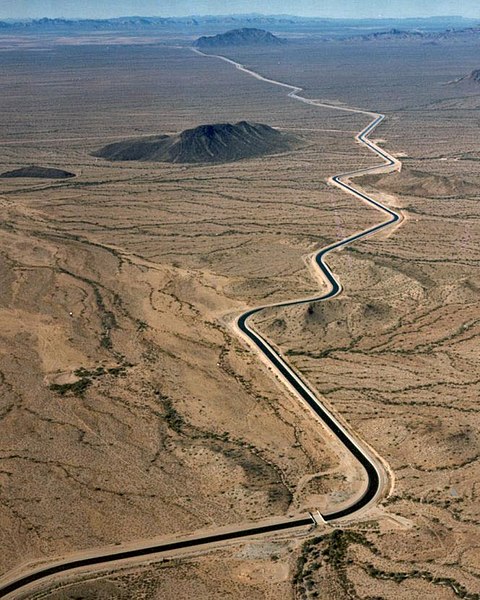 “An ongoing deadlock between the seven states that rely on the Colorado River may have dire consequences for Arizona. A lack of agreement between the Upper and Lower Basin states would mean the federal government imposes its own plan for reallocating the water over the next 10 years – a plan that could mean cuts up to 77% for Arizona. No other state faces such severe cuts under the “no deal” federal proposal. Nevada would see its share of the river reduced by 6%. The other five states would see no change. For obvious reasons, Arizona has been scrambling to find an alternative. A May 1 proposal offered by Arizona, California and Nevada calls for spreading reductions among the Lower Basin states over the next three years. The plan emphasizes voluntary cuts, and states could receive compensation from the federal government for conservation efforts. Tom Buschatzke, director of the Arizona Department of Water Resources, said the Lower Basin states believe their proposal respects the laws and compacts that have long governed how the river is shared while also taking into account the current scarcity. “We looked at how Lake Powell and Lake Mead would be impacted from an elevation standpoint and tried to cover as many hydrologic scenarios as possible,” he said. “It’s not a guarantee, but it’s a robust level of protection.” … ” Continue reading from Cronkite News.
The Colorado River is at a tipping point, as states, feds look for a way forward
“On the heels of a warm, dry, winter, the Colorado River is at a tipping point. Its biggest reservoirs are draining, climate change is making the region warmer and drier, and leaders have not been able to come up with a plan to reduce water use. That context shaped conversations at the Getches-Wilkinson Center for Natural Resources, Energy, and the Environment at CU Boulder’s School of Law on June 4 and 5, as water experts, attorneys, and Colorado River Basin leaders gathered for the 46th annual conference on the Colorado River. This year’s theme was “Searching for Solutions in the Face of Uncertainty,” and was co-hosted by the Water and Tribes Initiative. “The climate future looks awful,” said Brad Udall, a water and climate researcher at Colorado State University. “Much of the same and worse.” … ” Read more from Aspen Public Radio.
Senate discusses plans for the Colorado River Basin
“The Senate Energy and Natural Resources Committee has scheduled a Colorado River Basin hearing for Wednesday, June 10, titled “An Oversight Hearing To Examine The Colorado River Basin, Including Post-2026 Operations Negotiations.” This hearing arrives as the 2007 Interim Guidelines governing Lake Mead and Lake Powell operations approach expiration. Negotiations among the seven basin states (Arizona, California, Colorado, Nevada, New Mexico, Utah, and Wyoming) and the federal government are ongoing, and the committee is now asserting direct congressional oversight over a process that has largely played out at the agency and state level. No transcript or witness list was available as of this writing. … ” Read more from Legis 1.
Colorado River negotiators made a rare public appearance, but there’s still no deal
“With a deadline for a new Colorado River plan fast approaching, the states who share its water are still at an impasse, and still repeating many of the same talking points that have emerged during more than a year of unsuccessful negotiations. Federal officials said they will formalize a plan for dividing the shrinking water supply as soon as mid summer. That threat hasn’t brought state officials closer to a seven-state agreement that would keep the river working somewhat normally and stave off messy lawsuits between states and the federal government. Negotiators representing the seven states — Utah, Wyoming, Colorado, New Mexico, Arizona, California, and Nevada — rarely address the public together, but an annual water policy conference in Boulder, Colorado, put two of them on the same stage. … ” Read more from Utah Public Radio.
Lake Powell about 158 feet away from “dead pool”
“Lake Powell’s water levels remain under pressure heading into summer after a disappointing snow season across much of the Colorado River Basin, raising fresh concerns about water supplies in the Colorado River System, one of the nation’s most important river systems. The reservoir, which straddles the Arizona-Utah border, depends heavily on spring runoff from mountain snowpack. But this year’s snow season never fully developed across many parts of the West, limiting the amount of water flowing into the Colorado River and its major reservoirs. Lake Powell and Lake Mead, two of the largest reservoirs that feed the Colorado River system, are both sitting critically low. This week, Lake Powell’s elevation is right around 3,527 feet above sea level, which is only about 158 feet away from “dead pool.” This is the threshold at which the Glen Canyon Dam can no longer generate hydropower. … ” Read more from The Weather Channel.
Aubrey Bettencourt in line to lead Reclamation as river crisis worsens
“A third-generation farmer from California’s San Joaquin Valley may become the next head of the federal agency that oversees water supplies in the drought-stricken Colorado River Basin. Aubrey Bettencourt, who recently stepped down as head of USDA’s Natural Resources Conservation Service, is expected to be formally nominated by President Donald Trump as the next commissioner of the U.S. Bureau of Reclamation. If confirmed by the U.S. Senate, Bettencourt would take over as the agency confronts a growing crisis on the Colorado River and a region experiencing a hotter, drier climate, drought and decreasing water supplies. … ” Read more from Arizona Central. | Read via AOL News.
Unease trickles into the Grand Canyon rafting community as water levels dwindle
“It’s late May at Lee’s Ferry, the starting point for rafting trips down the Colorado River in the Grand Canyon. The ferry lies at the end of a two-lane asphalt road that snakes under cliff faces the color of campfire embers. It’s hot. There’s the smell of spray-on sunscreen, the buzz of excited crowds, and — beyond that — the extrasensory vibrations of a tinge of collective anxiety. Anxiety, because the water level in the river is on the lower side of normal for this time of year. Because a historically dry winter in terms of snowpack in some parts of the West means less water in Lake Powell, and less water released into the Colorado River by Glen Canyon Dam. Because, aside from the millions of people who rely on the river system for water and hydropower, there’s an entire river rafting economy in the Grand Canyon that does not know what to expect going forward. … ” Read more from KNAU.
Arizona braces for a potentially powerful monsoon season
“Most of the headlines this spring have zeroed in on the so-called Super El Niño, the rapidly warming stretch of water spreading across the eastern Pacific Ocean. It is a weather story that has captured public attention in a big way. But a quieter, perhaps equally important development has been taking shape closer to home, and water managers in Arizona want people to know about it. Off the coast of California’s Baja Peninsula, a pool of unusually warm ocean water has been building. According to the Arizona Department of Water Resources, which published a report on June 1, 2026, that warm water patch could play a meaningful role in shaping the Southwest’s upcoming summer monsoon season, potentially delivering desperately needed rainfall to a region that has been running dry. … ” Read more from Western Water.
Judge sides with developers challenging Arizona groundwater regulations
“New recent court rulings could open the door for more housing to be built in high-demand areas at the edge of the Valley, despite state concerns over long-term groundwater reliance. Monday, Maricopa County Superior Court Judge Scott Blaney struck down a rule by the Arizona Department of Water Resources that provides a path for developers to gain the necessary 100-year groundwater assurance designation to build in otherwise unattainable areas. Under the Alternative Path to Designation of Assured Water Supply rules, developers in those areas must provide additional water to offset their groundwater usage. Holtzman Vogel Partner Andrew Gould, representing the Homebuilders Association of Central Arizona, said the ruling helps developers build in high-demand areas at the edge of the Valley without the added regulations and costs for consumers. … ” Read more from Channel 15.
SEE ALSO: Judge halts new Arizona groundwater-saving program, from the Arizona Daily Star
In national water news today …
Millions of Americans lack clean tap water. Can the US close the gap by 2040?
“Rosa Runyon has lived her entire life inside the “water gap” — emptying the rain barrels she positioned beneath her gutters to use later to wash her clothes, and hauling home water from a nearby spring for cooking, bathing and drinking. That’s how she lived for decades while raising her children. When Runyon, 81, and her husband moved into their current home in McDowell County, West Virginia, the couple had to lay their own pipes to bring “mountain water” from an abandoned mine to their home. … And Runyon is not alone. Data shows that in entire swaths of West Virginia, Kentucky, Texas, New Mexico, Arizona, California and the Navajo Nation, a total of nearly 2 million Americans lack access to running water. But the number could be far greater: DigDeep, a non-profit that helps bring water into homes without it, estimates the number of Americans living in the water gap could be as high as 10 million. … ” Read more from Straight Arrow News.
Oceans are warming, but scientists are concerned about this cold blob
“As the planet warms, it’s becoming increasingly rare to see cooler than average conditions across vast stretches of the ocean, particularly as an expected super El Niño scorches parts of the Pacific. But right now, an expansive area of well below-average ocean temperatures exists in the North Atlantic, to the east of Newfoundland. There, unusually cool waters have lingered for the last year. This patch of cool water is occurring in one of the few areas where the ocean hasn’t warmed in recent decades — and where scientists are closely monitoring for changes in the Atlantic meridional overturning circulation (AMOC). The AMOC, which extends deep into the Atlantic Ocean, is a vital current that carries heat northward from the tropics toward the pole and plays a critical role in the climate around Greenland, Iceland and northern Europe. If the cold blob persists for years, it could eventually cool the climate in these places — and signal this key current is weakening. Should it collapse, a massive cooling could occur in the Northern Hemisphere, while it warms in the south; sea levels could rise in some areas and seasons could flip in others. … ” Read more from the Washington Post.

