
Several news sources featured in the Daily Digest may limit the number of articles you can access without a subscription. However, gift articles and open-access links are provided when available. For more open access California water news articles, explore the main page at MavensNotebook.com.
On the calendar today …
- PUBLIC HEARING: Delta Conveyance Project water right hearing beginning at 9am. The State Water Resources Control Board Administrative Hearings Office is holding a Public Hearing on the pending Petitions for Change of Water Right Permits for the Delta Conveyance Project. Interested members of the public who would like to watch this hearing without participating may do so through the Administrative Hearings Office YouTube channel at: bit.ly/aho-youtube. Click here for the meeting notice.
- WEBINAR: NOAA Drought Seminar: Progress and Challenges on Understanding Snow Droughts in the Western United States from 10am to 11am. Mountain snowpack acts as the water towers of the Western United States and provides the majority of freshwater used for agriculture and public consumption. Years with below-average snowpack, known as snow droughts, can cause water shortages and landscape impacts such as increased drying of soil moisture and vegetation. Progress has been made in the research community over the past decade to try and define snow droughts and understand some of the drivers and impacts, but challenges remain including an agreed upon method or definition that can be used by the operational community (e.g., forecasters and natural resource managers). Another major monitoring and communication challenge is that snow drought impacts on the timing and quantity of water supply can vary greatly across the West depending on the underlying causes (low precipitation, warm temperatures, or both). In this virtual seminar, Dan McEvoy, a researcher at the Desert Research Institute, will describe some ways snow droughts are defined, the role of warming temperatures on snow droughts, atmospheric drivers, and ongoing efforts to communicate real-time snow drought conditions and impacts to the water resources community. Click here to register.
- WEBINAR: California-Nevada June 2026 Drought & Climate Outlook from 12pm to 1pm. The June Drought & Climate Outlook Webinar will provide drought and climate updates and the outlook, as well as updates on relevant tools and research for the region. The California-Nevada Drought Early Warning System June 2026 Drought & Climate Outlook Webinar is part of a series of regular drought and climate outlook webinars designed to provide stakeholders and other interested parties in the region with timely information on current drought status and impacts, as well as a preview of current and developing climatic events (e.g., El Niño and La Niña). Click here to register.
In California water news today …
Can Delta smelt make a comeback?
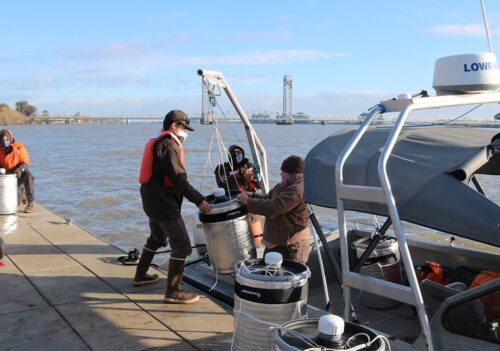
“Five years ago, a multi-agency team launched an effort to restore Delta smelt, a finger-sized iridescent fish unique to California’s Sacramento-San Joaquin Delta. Delta smelt were once among the most common fish in the region but are now critically endangered due to a suite of threats including loss of suitable habitat and food. As Delta smelt dwindled, a refuge population was established a quarter century ago as a hedge against extinction at the University of California, Davis Fish Conservation and Culture Laboratory near Byron. Releases of hatchery Delta smelt into the wild began in 2021. Additional partners in this effort include the U.S. Fish and Wildlife Service, the California Department of Fish and Wildlife, the California Department of Water Resources, the U.S. Bureau of Reclamation and the U.S. Geological Survey. Delta smelt are famously sensitive to their environment―including temperature, water quality, and physical disturbance―and must be handled with care. Initial experimental releases involved transporting the fish from the UC Davis hatchery to the Delta in 20-gallon carboys. While this method was intended to be easy on the smelt, it took a crew all day to release just 6,400 of them. … ” Continue reading from Robin Meadows at Maven’s Notebook.
In the weeds: The surprising role of an invasive plant in salmon survival
“It is easy to assume that restoring habitats to their native states benefits native species. But sometimes, there are too many factors at play for that to be true. Complex dynamics between native and non-native species in aquatic ecosystems can make some restoration approaches difficult, and in some cases, may even harm the native species that the project was designed to help. Recent research in the Sacramento-San Joaquin Delta (Delta) investigates this phenomenon, unveiling the intricate relationships between submerged aquatic vegetation (SAV), juvenile Chinook salmon (Oncorhynchus tshawytscha), largemouth bass (Micropterus salmoides), and striped bass (Morone saxatilis). Given the Delta’s historic struggle against invasive aquatic plants and their ecological and economic impacts, studying these interactions is integral to successful restoration and conservation efforts. … ” Read more from FishBio.
Rethinking Western cities and water
Dave Owen writes, “The popular mythology of water management often treats cities as the bad guys. We tend to condemn those cities–often in colorful terms–for their avarice, arrogance, and power, and those narratives have policy consequences. But they often miss the mark. One of the oldest truisms of western water is that cities—particularly big, desert cities in the southwest—are villains. Marc Reisner’s Cadillac Desert, for example, famously chronicled how Los Angeles “employed chicanery, subterfuge, spies, bribery, a campaign of divide-and-conquer, and a strategy of lies to get the water it needed. In the end, it milked [Owen Valley] bone-dry, impoverishing it, while the water made a number of prominent Los Angeleans very, very rich.” Los Angeles was Reisner’s primary target, but it was not alone. Phoenix was a “make-believe city;” San Francisco’s landscaping was a “fraud;” and Las Vegas was a “tawdry mirage.” (Los Angeles, for good measure, was also a “fake.”) … ” Read more from the California Water Blog.
Advocates push for new vision to tackle water scarcity in California
“Ahead of the election of a new governor in California, a coalition of environmental advocacy organizations is sounding the alarm about the future of water in the Golden State. Without major changes to how water is sourced, conserved, and distributed, municipalities will struggle under the weight of ecological decline to provide the necessary resource to millions of households, according to the group’s new report, titled “A Water Renaissance for California.” The report released on May 20 by the coalition, which includes organizations from northern and southern parts of the state, details how a shift toward local water sourcing and away from the current model of transporting water hundreds of miles from its source can mitigate impacts of climate change, restore imperiled waterways, and help secure cities against a near-guaranteed future where water availability is less predictable. … ” Read more from Prism Reports.
Governor Newsom applauds Trump administration for advancing Delta Tunnel construction
Dan Bacher writes, “California Governor Gavin Newsom, who often styles himself as the “resistance” to President Donald Trump, today applauded the Trump Administration’s approval of a key federal permit needed to construct the Delta Tunnel. The California Department of Water Resources (DWR) received “Biological Opinions” from the U.S. Fish and Wildlife Service (USFWS) and National Marine Fisheries Service (NMFS) greenlighting Delta Conveyance Project construction and construction-related maintenance activities, according to a statement from the Governor’s Office. “The science is clear,” Newsom claimed. “California must quickly complete the Delta Conveyance Project to meet our water needs in the future. I thank the federal government for their partnership in moving this project forward.” … ” Continue reading from Dan Bacher at the Daily Kos.
A record die-off of sea stars was followed by something that stunned biologists
“For much of his career, Bruce Menge assumed he would conduct the same research until he died. The marine biologist has studied sea stars since the 1970s, and the animals had always seemed more solid a bet than others in the ocean. They have no natural enemies, regenerate limbs when they lose them and reproduce prolifically. Then, just over a decade ago, a mysterious disease wiped out 90 percent of the West Coast’s sea star population. Tide pools emptied, and Menge had no idea what might become of his work. “I was upset,” Menge said. “I thought these animals were immortal.” Little did he know, some of the biggest and busiest days of his career were still ahead of him. … ” Read more from the Washington Post.
The Forest Service wants to close research hubs to save money. That could be costly
” … More than 1,000 Forest Service employees work in hundreds of Research and Development facilities and structures located across the country. Staff work out of greenhouses, laboratories and cabins in urban areas like Baltimore and in more rural offices near the 193 million acres of national forest and grassland that the agency manages. The employees work on a range of projects, from restoring native trees in Hawaii after invasive species take over to learning how to prevent wildfires in Montana. Those projects often include local partners like Camp Small, Forest Service employees said, and theirs is the largest forestry research network in the world. But on March 31, the Forest Service announced a reorganization of the agency that would close facilities used for research, including the one in Baltimore. … ” Read more from NPR.
In commentary today …
Stop the Delta Tunnel before it becomes another High Speed Rail
Barbara Barrigan-Parilla writes, “The Delta Tunnel project is shaping up to financially mirror California’s out-of-control High Speed Rail project: failing to deliver on promised increases in water supply while also threatening the state’s largest and most fragile estuary. The Legislature had a crucial opportunity to demand accountability and transparency before even more money was spent, but declined to schedule a state audit hearing of the project for early June. This is on top of the Legislative Audit Committee also failing to schedule a vote on an audit of the Department of Water Resources’ spending on the Delta Tunnel last year as well. The audit was requested by Assemblymember Rhodesia Ransom, D-Stockton, and would have provided long overdue scrutiny of one of the state’s most costly infrastructure proposals. … ” Continue reading at the Sacramento Bee.
In regional water news and commentary today …
NORTH COAST
Klamath farmers will take payments to idle their fields
“The Klamath Project Drought Response Agency’s program to pay farmers who idle their fields has seen strong interest, said Scott Seus, president of the Klamath Water Users Association. Many growers have applied and plenty more intend to sign up before the deadline of June 15, he added. The KWUA held informational meetings for farmers and other irrigators in late May about the program, which is estimated to have $18 million available this season. “We are trying to give everybody the tools to make the choices for themselves about what is most important to them and their operation,” Seus said. … ” Read more from the Rogue Valley Times.
CalTrout gets $4 million for Cannibal Island, Eel River estuary restoration
“A project to restore habitat on the Cannibal Island unit of the lower Eel River estuary has received a financial boost from the Wildlife Conservation Board (WCB). At its May 28 meeting in Sacramento, the WCB awarded the project a $4 million grant under Proposition 4, the Safe Drinking Water, Wildfire Prevention, Drought Preparedness and Clean Air Bond Act, passed by California voters in 2024. The property in question is owned by the California Department of Fish and Wildlife, and the grant was awarded to CalTrout. “CalTrout and our partners are working to restore important estuary habitat on the 950-acre Cannibal Island Unit of the lower Eel River estuary,” CalTrout Associate Director of Communications Kara Glenwright said in an email. “The project aims to reconnect the landscape with natural tidal flows, creating healthier conditions for coho salmon and many other fish and wildlife species that depend on estuarine habitats.” … ” Read more from the Eureka Times-Standard.
SIERRA NEVADA
Sierra Nevada Conservancy awards $4.6M for wildfire projects
“The Sierra Nevada Conservancy has approved more than $4.6 million in funding for wildfire resilience and recreation projects across the Sierra-Cascade region, backing efforts to reduce wildfire risk, improve public access to outdoor spaces and advance future forest restoration work. During the state agency’s recent board meeting, governing members approved nearly $1.5 million for two wildfire resilience projects and just over $3.1 million for seven recreation and tourism projects spanning several Northern and Central California counties. Angela Avery, the executive officer of the Sierra Nevada Conservancy, said the effort started in April 2025. “Since the governor approved the early action wildfire resilience funds from the Climate Bond in April of last year, our staff has worked diligently to get investments out to our regional partners for high-priority projects that protect communities and the landscape from damaging wildfires,” Avery said in a statement. … ” Read more from the Sacramento Bee.
Public is invited to free training on how to protect Lake Tahoe from golden mussels, other aquatic invasive species
“On Tuesday, June 9, a team of Tahoe’s protectors will lead a training on how to protect the Lake’s blue waters from the threat of aquatic invasive species as part of California Invasive Species Action Week. The morning event will take place at Valhalla Tahoe in South Lake Tahoe, is open to all, and free to attend. Aquatic invasive species (AIS) — mollusks, plants, and others — can outcompete native species, throw off the Lake’s delicate ecosystem, and threaten to turn Tahoe’s famously blue waters a murky green. Golden mussels, an environmentally harmful and highly invasive species, are spreading rapidly across California. Just days ago, a boat unknowingly carrying golden mussels was stopped at one of Tahoe’s boat inspection stations before it could launch on the Lake. This summer is a critical time for paddlers, anglers, and beachgoers to be aware of AIS and to Clean, Drain, and Dry their equipment before entering the water. … ” Read more from the Tahoe Daily Tribune.
SACRAMENTO VALLEY
Iron Canyon Fish Passage project makes progress
“In the depths of Big Chico Creek’s Iron Canyon, a team of humans are hard at work to help fish swim up to cooler spawning areas about 8.5 miles up the creek. An excavation crane lowered into Iron Canyon along Big Chico Creek on Friday, June 5, 2026 in Chico, California. … ” Read more and see picture from the Chico Enterprise-Record.
Bats are everywhere, from Yolo Basin to Downtown Sacramento
““Birds are just great, and bugs are fun, but bats have always been my favorite,” said Mary Jean “Corky” Quirk. She’s in a classroom at the Yolo Basin Foundation Visitor Center, a building off of I-80 that can be missed in a blink. Quirk is an educator. That becomes obvious as she delivers rapid-fire facts during a show-and-tell with her winged exhibit bats, permitted by the state and federal government. “They’re not flying rats or rodents,” she asserted. “They’re actually closer to hedgehogs and shrews.” She explained that their wings are actually webbed hands, and that they’re the only flying mammal. … ” Read more from PBS Abridged.
NAPA/SONOMA
Farmers, researchers differ on total costs of climate-related drought
“The economic impacts of drought on agriculture are well-known in Sonoma County, as every business from wineries to dairies feels the weight of a dry season and climate change. But regional producers and researchers are questioning a recent report by regulatory compliance firm Trace One, which estimated farmers lose nearly $17 million each year to climate-related disasters. The actual financial losses of climate change are difficult to estimate, agricultural leaders say. Research from Trace One — a company that offers product lifecycle management and regulatory compliance software to food and beverage, cosmetics and chemical brands — used data from the U.S. Department of Agriculture (USDA) and the Federal Emergency Management Agency (FEMA) National Risk Index. It reported Sonoma County’s farmers lose nearly $17 million each year to climate-related disasters, largely droughts. This was found in comparison to Napa County, which has suffered similar drought impacts, at nearly $23 million in annual losses. … ” Read more from the Santa Rosa Press Democrat.
Why a 31-year-old software engineer wants to build a new neighborhood in Wine Country
“Behind the wheel of a dusty blue Subaru, Devon Zuegel drove down a gravel road near the Sonoma-Mendocino county line, where a swath of land in Wine Country’s northernmost outpost fans out in undulating grasses and gnarled oakes. A canvas for a controversial dream. Zuegel, a 31-year-old software engineer raised in the heart of Silicon Valley, arrived in Cloverdale two years ago with fanciful renderings for a village with upwards of 600 new apartments and homes on the city’s eastern edge. She gave it the name Esmeralda, and in this tight-knit town of just under 9,000 people, the idea stoked both excitement and alarm. Zuegel’s connections to the global center for tech innovation inspired comparisons to billionaires talking about forming their own governments and living on Mars. Zuegel has said that’s not her world, but a place like Cloverdale could be. A live music festival runs on Friday nights all summer, shutting down the boulevard and drawing crowds of local families, retirees and neighbors. Banners hang on light posts celebrating active military service members…. ” Read more from the San Francisco Chronicle.
SAN JOAQUIN VALLEY
Central Valley Water Board penalizes unpermitted growers
“The Central Valley Regional Water Quality Control Board has reached settlements with two San Joaquin County growers who failed to obtain required water quality permit coverage for irrigated agricultural land. J. S. Batth, Inc. and Jagpal S. Batth agreed to pay penalties of $5,000 each for failing to enroll 72 and 124 acres of cropland, respectively, under the Irrigated Lands Regulatory Program (ILRP). The program helps protect rivers, streams and groundwater from pollution associated with commercial irrigated agriculture. While the penalties are modest, regional water board officials say the enforcement actions underscore the importance of compliance and serve as a warning to growers who remain outside the program. “Most growers have enrolled and are meeting their responsibilities under the Irrigated Lands Regulatory Program,” said John J. Baum, assistant executive officer for the Central Valley Regional Water Board. “These cases send a clear message that growers who fail to obtain required permit coverage will face enforcement action and penalties.” … ” Read more from the Central Valley Regional Water Board.
Mysterious ‘Poleee’ structure along I-5 draws curious travelers to Kettleman City | Bartell’s Backroads
“A remote stretch of Interstate 5 known for its long, uneventful drive between Sacramento and Los Angeles has an unlikely roadside attraction — one that doesn’t appear on official maps, but has drawn attention online. In Kettleman City, a tall red-and-white structure known as “Poleee” — spelled with three E’s — has been described in Google Maps reviews as beautiful, magnificent and even “soul inspiring.” So, of course reporter John Bartell had to check it out. Despite its growing reputation online, the site itself is difficult — and potentially unsafe — to access. There’s no sign marking its location, a fence blocks direct entry and the only nearby stopping point is along the side of the freeway, where cars rush past. … ” Read more from Channel 10.
IMPERIAL/COACHELLA VALLEYS
Lithium Valley study costs rise again as board approves seventh budget modification
“The Imperial County Board of Supervisors approved the seventh modification to cover additional expenses on Tuesday, June 2, for Dudek to conduct and prepare the Programmatic Environmental Impact Report (PEIR) and the lithium development infrastructure assessment for the Lithium Valley Plan. The additional expense has a price tag of just over $90,000, bringing the project’s new grand total to about $3.3 million. The Lithium Valley, formally known as the Salton Sea Renewable Resource Specific Plan Programmatic Environmental Impact Report, is required under Governor Gavin Newsom’s Senate Bill 125. SB 125 also allocated $5 million from the state’s general fund for this project. … ” Read more from the Imperial Valley Press.
SAN DIEGO
‘It’s our livelihood at stake’: Businesses struggle due to toxic Tijuana River
“What was once one of San Diego County’s affordable vacation towns has been forced to close its beach for more than 1,000 days. An acrid smell lingers in the air, and the sewage and chemical pollution surging from the Tijuana River are visible from space. It’s more than enough to ruin an afternoon of lounging on the sand, but it’s not just an inconvenient environmental problem. Businesses in Imperial Beach, a beach town of around 25,000 people between San Diego Bay and the Mexican border, are feeling the impact as the town goes ghost. “No one wants to come here, and it’s really sad,” Jen Crumley, owner of the ice cream shop Cow-A-Bunga, told SFGATE. “It’s just really empty. It’s a beautiful beach. It’s gorgeous. I just wish that we can get it cleaned up.” … ” Read more from SF Gate.
Toxic Tijuana River crippling one of California’s most affordable beach towns
“What was once one of San Diego County’s affordable vacation towns has been forced to close its beach for more than 1,000 days. An acrid smell lingers in the air, and the sewage and chemical pollution surging from the Tijuana River are visible from space. It’s more than enough to ruin an afternoon of lounging on the sand, but it’s not just an inconvenient environmental problem. Businesses in Imperial Beach, a beach town of around 25,000 people between San Diego Bay and the Mexican border, are feeling the impact as the town goes ghost. “No one wants to come here, and it’s really sad,” Jen Crumley, owner of the ice cream shop Cow-A-Bunga, told SFGATE. “It’s just really empty. It’s a beautiful beach. It’s gorgeous. I just wish that we can get it cleaned up.” … ” Read more from SF Gate.
Along the Colorado River …
The West’s water war arrives in Washington
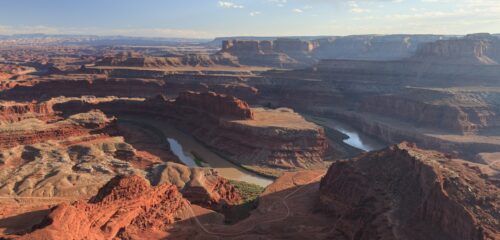 “The high-stakes brawl over the drought-stricken Colorado River comes to Capitol Hill this week. The Trump administration’s top Western water official is set to appear before the Senate Energy and Natural Resources Committee on Wednesday as the Interior Department is preparing to wrest control of the waterway later this summer. The department already invoked emergency authorities in April when it became clear that the river would see the lowest flows on record this summer, threatening the ability to produce hydropower and release water out of one of the country’s largest reservoirs, Lake Powell. Part of those emergency operations — releasing roughly a third of the water out of Flaming Gorge reservoir upstream from Powell — has had negative impacts on the recreational economy in ENR Chair Mike Lee’s home state of Utah, as well as neighboring Wyoming. … ” Read more from E&E News.
Lower basin states prepare for the loss of Colorado River water
“Arizona, California, and Nevada are actively preparing for a future that may provide little or no Colorado River water through a combination of aggressive local conservation, infrastructure changes, and unprecedented collective agreements. On May 1st – driven by the imminent expiration of current river guidelines, the states finalized a joint Water Stabilization Plan to collectively slash usage by up to 3.2 million acre feet. J.B. Hamby, the Chairman of the Colorado River Board of California, said, “We’re putting forward additional measurable water contributions for the system. Without that, the system will continue to decline.” … ” Read more from Coyote Gulch.
These Colorado River forecast models go beyond what’s in the river itself
“The Colorado River is stretched thin, and the amount of water in it every year has big consequences for the roughly 40 million people who depend on it. As the river feels the crunch of drought, climate change, and steady demand, scientists are working to make Colorado River forecasts more accurate to help cities and farms plan for shortages. A team of researchers at Arizona State University is building models for Colorado River flows that go beyond the amount of water in the river itself, bringing in satellite data about the amount of water held in snow and soil. … ” Read more from Utah Public Radio.
Commentary: Is Southwest water problem serious enough yet?
Greg Walcher, author and columnist, writes, “One month after proposing to put a man on the moon, JFK said getting drinking water from the ocean would be “one of the great breakthroughs of history” that would “dwarf any other scientific accomplishments.” Californians have worried about water for decades. The Colorado River, upon which the entire Southwest depends, is dying. The region’s only major water source is drying up, the climate is changing, the globe warming, the snow no longer falling, the reservoirs shrinking, and there is no end in sight. Everyone must use less water, especially those upstream from California (which is everyone else). Forget new development – there is no more water. All the legal agreements must be rewritten because the river simply cannot continue to supply all the people who once relied on it. … ” Read more from the Mountain Mail.
Colorado River basin states head toward legal clash over post-2026 water rules
Boyd T. Miller, PhD, CEO/Director of North American Safe and Clean Water, writes, “The federal government issued its primary strategies for the Upper and Lower Colorado basins. The Bureau of Land Management (BLM), under the direction of the Interior Department and Doug Burgum, has put the basin states on a direct path toward interstate litigation, with potential court rulings expected in the near future. Procedural hurdles, including determining which state’s law applies, establishing jurisdiction, and navigating out-of-state discovery, may influence the timeline and outcome of these disputes. Additionally, California and Arizona are under District Court Ten, while the other states are under District Court Nine. The Lower Basin comprises California, Arizona, and Nevada. The Upper Basin comprises Colorado, New Mexico, Utah and Wyoming. Due to the continued drought, population growth and agricultural needs, the new strategies put both basins on a path to arguing before the Supreme Court, hopefully this October 2026. The approaching federal deadline of Oct. 1, 2026, underscores the urgency for stakeholders to prepare for potential legal and policy shifts that could significantly alter water allocations and management practices. … ” Read more from the Arizona Daily Star.
Nevada ready for challenge of potential water cuts thanks to decades of focused efforts
“Lake Mead slipped below 1,050 feet above sea level last week, crossing a sobering threshold as the nation’s largest reservoir slides toward historically low water levels.[18] Sitting at just 35% of its total capacity and roughly 180 feet below full pool, the reservoir behind Hoover Dam is on a trajectory that experts say could carry it past its 2022 record low of 1,040 feet — and well beyond. Federal projections released by the Bureau of Reclamation place Lake Mead’s most probable elevation at 1,020 feet by July 2027 — more than 20 feet below that previous record. And yet, for the 2.4 million residents of the Las Vegas Valley who depend on the Colorado River for about 90% of their drinking water, the picture is more complicated than simple alarm. Decades of aggressive conservation, ingenious water recycling and forward-thinking infrastructure have positioned Southern Nevada as arguably the best-prepared community in the American West to weather what’s coming. … ” Read more from the Las Vegas Sun.
Arizona’s salty solution for its water future
“For years, Arizona has explored the possibility of turning seawater into drinking water as a way to help offset shortages on the Colorado River. Now, state water leaders say a new partnership with California could move that concept one step closer to reality. This week, Arizona signed a memorandum of understanding with California water agencies to explore a first-of-its-kind water exchange involving desalinated ocean water from Southern California. The agreement centers on the Claude “Bud” Lewis Carlsbad Desalination Plant in Carlsbad, California, which currently has the capacity to produce about 56,000 acre-feet of drinking water annually. According to the San Diego County Water Authority, the facility could be expanded by an additional 6,000 acre-feet. … ” Read more from Channel 15.
‘They don’t understand the risk’: Scottsdale not prepared for potentially deep cuts to Colorado River supply, water expert warns
“Arizona cities face deep cuts to their water deliveries in the coming months from the overused and drought-depleted Colorado River. The city most exposed to cuts is Scottsdale, which gets 70% of its water from the Colorado. Scottsdale might also be the city that’s least prepared to absorb cuts. “I don’t think that they understand how big the risk is right now,” Sarah Porter, director of the Kyl Center for Water Policy at Arizona State University, said on this weekend’s “Square Off.” “We’re really on the edge of a very, very deep, disruptive cut in Colorado River supplies. We have to plan for that possibility.” … ” Read more from Channel 12.
Arizona lake closes indefinitely to visitors after all of its fish die
“Arizona officials have indefinitely closed a popular lake to visitors after its entire population of fish died recently. The recreation and wildlife department that maintains San Carlos Lake said in a Facebook statement on Friday that drought conditions as well as water released from a dam there “resulted in a major fish kill affecting approximately 100% of the fish population”. According to the statement, decomposing fish pose health hazards to people who try to fish or swim in the human-made reservoir. Officials therefore said they would not allow fishing, harvesting or possessing fish, or any associated activities at San Carlos Lake, “until further notice”. … ” Read more from The Guardian.
SEE ALSO: San Carlos Reservoir: Drought kills every fish, from Western Water
Are less-thirsty crops a solution to Colorado’s growing water problems?
“Surveying miles of sprouting Eastern Plains farm fields, the logic around Colorado’s deepening water crisis might sound simple. Colorado each year sinks deeper and deeper into a crisis of water shortages. Up to 90% of the water available in the state each year is used for agriculture. It takes 44 inches of water a year in Burlington to grow alfalfa. Only about 10 inches of water drops on Burlington in a year. It only takes 15 inches of water to grow a healthy crop of black-eyed peas in Burlington. So. The numbers point to seemingly obvious questions: Why couldn’t a lot of eastern Colorado farmers switch crops to black-eyed peas, and sell their saved irrigation water to thirsty Front Range cities, or get paid to leave it in the Colorado and South Platte rivers for others to use? Could that help calm the intensifying interstate and urban-rural wars over shrinking water supplies? … ” Read more from the Colorado Sun.
Landscape experts ask Colorado to “embrace the beige” for drought adaptation
“It may be a hard sell to get Colorado homeowners to “embrace the beige” during this extreme drought season, but Colorado State University’s gardening and water experts are up for the challenge. Scott Curry and Lori Catalano threw out the eye-opening phrase during a campus podcast, alongside a bunch of tips for homeowners to accept their watering limitations this year, and then think long term about altering their landscape. We caught up with Curry, an assistant professor of landscape design, and added in other suggestions from their podcast, which can be found here. What’s their message with “embrace the beige”? Basically, they want people to tweak their water use this summer, not sweat a few patches of less-than-emerald home turf during an historic drought, and for the long term, change their mindset about what can be a beautiful homescape. … ” Read more from the Colorado Sun.
In national water news today …
As El Niño develops, this city is seeing beach weather — during winter
“The months of May and June typically mark the onset of cooler temperatures and increasingly winter-like weather in Lima, Peru, a Southern Hemisphere city home to more than 10 million people. But things have been different this year. Instead of cooling off, it’s getting warmer. People have flocked to the beach amid summer-like 80-degree warmth — and waded into ocean waters that have recently risen almost 10 degrees Fahrenheit above average. In Paita, Peru, north of Lima, waters have risen a remarkable 14.2 degrees Fahrenheit above average. That’s because a wave of record-breaking undersea warmth has traversed the depths of the Pacific over the past two months and is now arriving along the country’s shores. The wave is associated with a developing El Niño, which according to latest modeling could become the strongest one on record. … ” Read more from the Washington Post.
Majority of US’s new AI datacenters to be built on drought-hit land
“A record-shattering drought has racked much of the US. But the artificial intelligence industry is pushing ahead regardless, with the majority of planned datacenters set to be built in drought-ridden locations, a Guardian analysis has found. About two-thirds of upcoming datacenters, which typically require a large amount of water to operate, are set to be built in places that have been among the driest in the country over the past year. Of 809 planned datacenters, 517 are in locations that have been in drought conditions throughout the past year, according to data from Cleanview and the federal government, which grades drought across four levels of severity. A similar proportion of existing datacenters are already situated in drought-affected areas. … ” Read more from The Guardian.
Researchers say this new Trump rule could destroy American science as we know it. They’re fighting back
“Scientists across multiple disciplines are sounding the alarm after the White House proposed taking greater control over how scientific research gets funded and allowing political appointees to decide whether to approve scientific grants. Critics of the proposed rule say it would codify the administration’s attempts to destroy the scientific research enterprise in the US that has led to remarkable discoveries on treating cancer, HIV and rare diseases — as well as understanding weather and climate science and developing artificial intelligence. It could have far-reaching implications on what kinds of research topics get studied in the first place. One of the main casualties in OMB’s proposal would be the country’s longstanding scientific peer review process for grantmaking. Peer review has been widely used since the post-World War II research boom, and relies on panels of experts in their fields judging federal funding decisions on the scientific merit of the grant proposals, rather than any politically-motivated criteria. … ” Read more from CNN.

