
A wrap-up of posts published on Maven’s Notebook this week …
Note to readers: Sign up for weekly email service and you will receive notification of this post on Friday mornings. Readers on daily email service can add weekly email service by updating their subscription preferences. Click here to sign up!
In California water news this week …
Trump official shares vision of desal plants lining California coast
“President Donald Trump’s top Colorado River official visited San Diego Wednesday to say the president sees “real potential” in developing more plants that make drinking water using the ocean – right off the California coast. That’s a problem for environmentalists, who say desalination plants are environmentally harmful, energy intensive and costly. “Imagine a future where a string of six, or even a dozen desalination facilities are operating along the California coast providing ample amounts of beautiful, clean, clear, fresh water in an environmentally benign way to serve not just California communities but to be shared at a reasonable price with… sister states to the east,” said Scott Cameron, acting commissioner of the Bureau of Reclamation, standing in front of the Carlsbad desalination plant. … ” Read more from the Voice of San Diego.
Sinking land, shrinking capacity: DWR confronts subsidence on the California Aqueduct
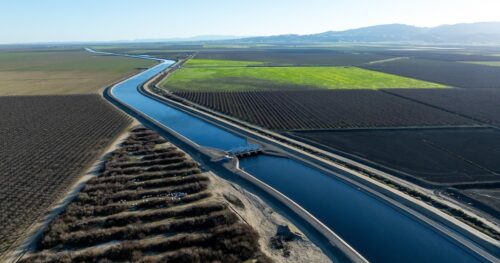
“At Metropolitan Water District’s May Imported Water Subcommittee meeting, Christopher Martin, executive policy advisor for the State Water Project at the California Department of Water Resources, outlined the extent of subsidence along the California Aqueduct, the state’s response strategy, planned corrective measures, and the funding now being assembled for repairs. Subsidence occurs when groundwater pumping lowers water levels and reduces pore pressure in the aquifer system, causing the fine-grained clay and silt layers in the sediments to compact. In the San Joaquin Valley, those compressible clay-rich layers are especially important: they act like weak, water-bearing cushions between coarser sand and gravel aquifers. When pumping draws down groundwater, the clays slowly drain and compress, and much of that compaction can be permanent. As those buried layers thin, the land surface above sinks. Because the sinking is often uneven from place to place, it creates differential subsidence that can distort the slope and freeboard of infrastructure such as the California Aqueduct, reducing conveyance capacity and increasing repair needs. … ” Continue reading from Maven’s Notebook.
Solar power for state’s biggest water project comes with hefty price tag – for users
“Water contractors can expect to pay between 1% to 3% more for the energy it takes to bring supplies down the state through California’s largest project thanks to just one renewable energy project that came online recently in Kern County – the Pastoria Solar Project. And that’s just the beginning. When the Department of Water Resources (DWR) brings on enough renewable energy projects to fully power the State Water Project (SWP), contractors can expect their costs to increase another 10% to 20%, according to a presentation at the May 20 California Water Commission meeting by DWR Manager of Power Operations Jorge Quintero. … ” Read more from SJV Water.
Stanford researchers launch ambitious plan to map and track water: Here’s how
“A major project being launched by Stanford’s Doerr School of Sustainability could change the way we manage a precious resource. It’s an ambitious project to map water. And with the potential of severe shortages looming, researchers say it’s critical to track every drop . Following Stanford Researcher Rosemary Knight, PhD, of Stanford’s Doerr School of Sustainability, can make you feel a bit like a pirate who’s just found a treasure map. But in this case, the buried treasure isn’t gold. It’s water. “Just revealing the complexity of this groundwater system. What’s connected to what, where groundwater is connected to rivers, where there are large areas appropriate for storing recharged water. So this is a phenomenal data set that I will probably be working with for the next 30 years, Knight explains. … ” Read more from ABC 7.
Toxic algal blooms are getting worse in the Sacramento-San Joaquin Delta. Scientists are trying to figure out why.
“Harmful algal blooms were rarely observed in the Sacramento-San Joaquin Delta before 2000. Over the past two decades, they have become a regular summer event, and scientists are racing to understand why. DWR is co-leading a five-year, $3 million research project funded by NOAA to investigate what is driving the increase in harmful algal blooms across the Delta and San Francisco Bay. The effort, called MERHAB, brings together scientists from the U.S. Geological Survey, the San Francisco Estuary Institute, UC Santa Cruz, Cal Poly Maritime Academy and several regulatory agencies. Harmful algal blooms form thick mats on freshwater surfaces during warm, stagnant conditions. As they decompose, they suck oxygen from the water and produce toxins that can be dangerous to humans, pets and wildlife. The blooms thrive on warm temperatures and a steady supply of nutrients, which is why they peak during the spring and summer months. … ” Read more from Active NorCal.
New report highlights Delta rice farming as key strategy for protecting California water infrastructure and building local economies
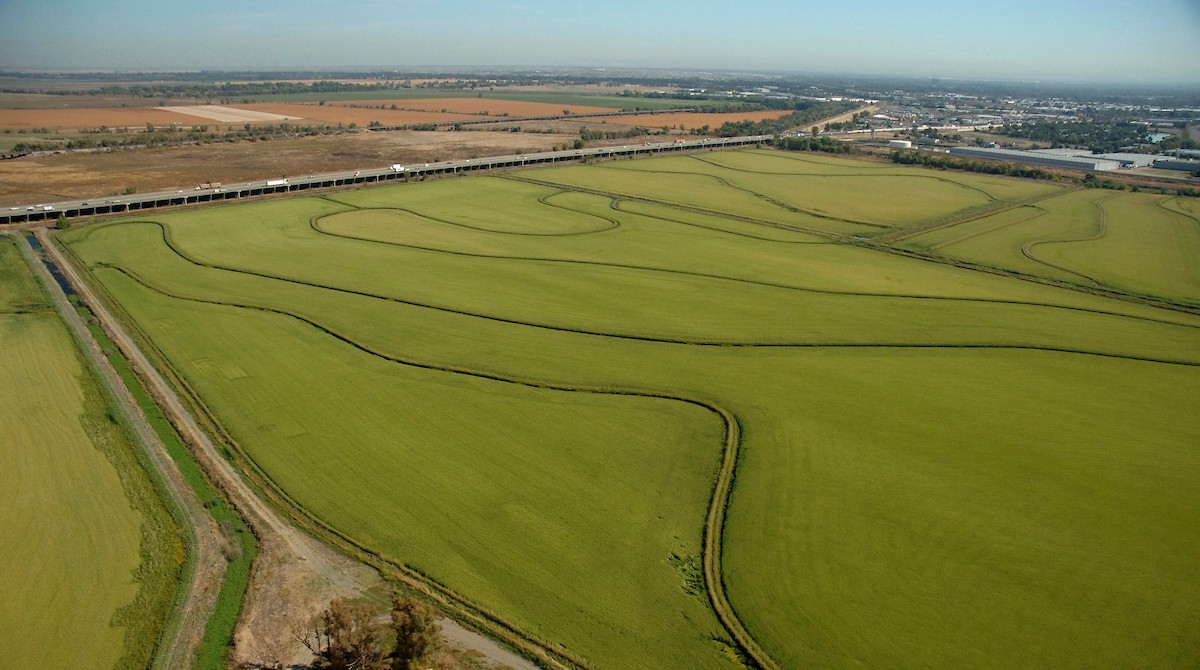
“Today, Restore the Delta released a new report detailing one of the many local solutions outlined in the recently unveiled Water Renaissance Plan: expanding rice farming in the Sacramento-San Joaquin Delta as a strategy to combat land subsidence and support a more sustainable regional economy. Supported by BEAM Circular, which sponsored the critical research for the region, the report documents that Delta rice acreage has increased fivefold over the past eight years and lays out the environmental and economic benefits of rice cultivation as a strategic defense against subsidence. “Without major levee investment in the next 25 years, over $10 billion in infrastructure faces severe flood risk,” said Morgen Snyder, Director of Policy and Programs for Restore the Delta. “Flooded rice cultivation restores the anaerobic conditions that slow and may stop peat oxidation that has already caused some Delta islands to sink as much as 25 feet. Pairing Delta levee investment with rice farming and wetland restoration benefits ecosystem health, as well as driving new economic opportunities for the region.” … ” Read more from Restore the Delta.
Polluted rain runoff from big box parking lots could see a crackdown
“When rain falls on California shopping centers and warehouses, the water runs off parking lots carrying metal dust and chemicals from vehicle tires and brake pads, oil and grease from engines, and bacteria from trash. The gunk washes into storm drains and pollutes creeks, rivers and beaches. Now environmental advocates are pushing state regulators to crack down by requiring stormwater permits — essentially best practices — for businesses that haven’t been held accountable for their polluted runoff. “Commercial properties right now are not regulated under any stormwater permit,” said Sean Bothwell, executive director of California Coastkeeper Alliance. “Think Costco, think Amazon warehouses. Large places with large parking lots are really what we’re going after.” … ” Read more from the LA Times. | Read via AOL News.
How a deep-ocean desalination startup hopes to rewrite California’s water future

“An elephant standing full weight on a smartphone. That’s the pressure 1,400 feet underwater that a startup hopes to use to push seawater through ultrafine filters and make drinking water off the coast of Malibu — without much of the controversy that surrounds desalination. Desalination plants are notoriously large electricity users. Some have natural gas pipelines running to them to fuel dedicated power plants. The company OceanWell estimates its technology will cut that electricity use by up to 40%. Its goal is to anchor an array of units 4.5 miles offshore, at a cost of $500 million to $1 billion, to deliver 60 million gallons of water per day. That’s enough for about 400,000 people. Prompted by severe water cutbacks four years ago, the Las Virgenes Municipal Water District has been working with Menlo Park-based OceanWell to develop a cheaper, less power-hungry way to turn saltwater into drinking water without sucking in tons of sea life. In a recent test at a local reservoir, it worked. … ” Read more from the LA Times. | Read via Yahoo News.
Butte County Supervisor Bill Connelly criticizes state response on Oroville Dam responsibilities
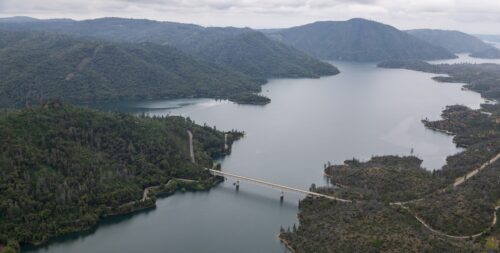
Andrew Nixon / DWR
“The California Department of Water Resources has refuted some of the information presented in Butte County’s new website, ourwatertheirpower.org, which chronicles the more than 50-year history of issues surrounding Oroville Dam including undeveloped recreational facilities and the economic burden the dam places on the local community. Following the April 4 publication of a story about the new website, California Department of Water Resources Public Information Officer II Raquel Borrayo sent an email to this newspaper with a lengthy statement from John Yarbrough, DWR’s deputy director of the State Water Project pertaining to some of the information presented on the website. We forwarded the statement along to Butte County Supervisor Bill Connelly for comment. … ” Continue reading from the Chico Enterprise-Record.
Defining reasonable use, one regulation at a time
“The State of California’s current constitution, which has been amended over 500 times since its adoption in 1879, requires that all uses of water must be “reasonable and beneficial.” This benign request is not accompanied by an exact definition of what that means in practice, but notes that it does not take away lawful water rights, provided that those rights are used, again, reasonably. Merriam-Webster’s Dictionary defines reasonable as being in accordance with reason, fairness, duty, or prudence. Cambridge Dictionary defines reasonable as being based on or using good judgment, therefore being fair and practical. Cornell Law School defines reasonable as just, rational, appropriate, ordinary, or usual under the circumstances. California’s reasonable use doctrine does not offer a concrete definition. According to a 2015 report from Brian E. Gray of the UC Hastings College of Law, reasonable use is described as a flexible, changing standard dependent on current water conditions, competing demands, and evolving social, economic, and environmental needs. Meaning that a water use deemed acceptable at one time may later become unreasonable as circumstances change. … ” Read more from Valley Ag Voice.
California charts smarter path to support farmers and ranchers while maintaining food safety and clean water
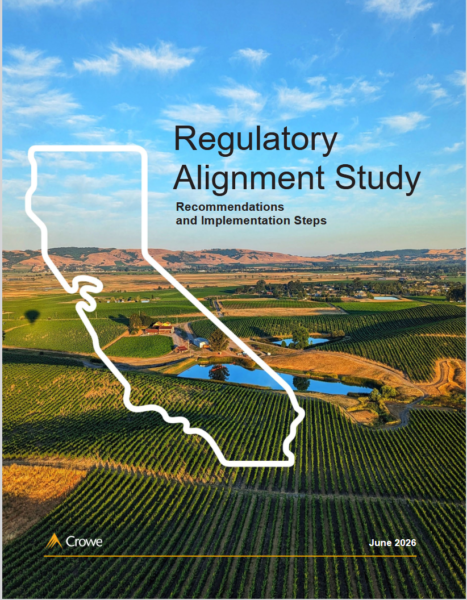 “The Newsom administration today released the final recommendations from a study that intends to improve food safety and water quality reporting for California’s agricultural community. This interagency collaboration between the California Department of Food and Agriculture (CDFA), California Environmental Protection Agency (CalEPA), and the State Water Resources Control Board was developed with input from farmers, ranchers, and local leaders and demonstrates California’s continued efforts to build a roadmap for the future. “California agriculture leads the world, not by standing still but by constantly innovating,” said Governor Gavin Newsom. “This roadmap is about making the regulatory process work better for the people growing our food and sustaining communities across the state, while maintaining the food safety and water quality standards that Californians depend on. We are proving that meaningful protections and a strong agricultural economy can help move our state interests forward together.” … ” Read more from the Department of Food and Agriculture.
California voters had their first chance to be heard on data centers. They didn’t hold back.
“California’s first-ever anti-data center ballot measure is shaping up to be an absolute shellacking for the tech industry — part of a wave of opposition rising across the country, as communities and lawmakers grapple with the frenzied push to build AI infrastructure. Monterey Park, a city of 60,000 people about 10 miles east of downtown Los Angeles, placed a measure on Tuesday’s ballot asking voters if they wanted to prohibit data centers in their city. The response, so far, has been an unequivocal “yes,” with 86 percent of votes counted as of Wednesday afternoon in favor of the proposal. Local officials and environmental organizers said they hope the drubbing will spur other cities to enact similar bans. “A lot of the other cities that are facing data center proposals are going to follow suit,” Elizabeth Yang, the city’s mayor, said on Tuesday. “There’s [a] bad reputation across the board, across the country, from other data centers that have been built in neighborhoods.” … ” Read more from Politico.
In commentary this week …
Recent assessment of California’s water misallocation is the first step toward justice
David Sathuluri and Marco Tedesco with Columbia University’s Lamont-Doherty Earth Observatory, writes, “California is in the middle of a quiet but high-stakes argument about what it would mean to fix our water system in a hotter, drier century, especially in the age of AI. Echoes of this argument will resonate in everyone’s lives. One side focuses on efficiency: building more conveyance, freeing up markets and moving water to its highest-value use. The opposite side insists that any reform must start from justice: the human right to safe water, tribal rights and the support to those communities already living with contamination and scarcity. A major new working paper from the National Bureau of Economic Research, “Measuring Water Misallocation in California,” speaks directly to this debate. Via detailed empirical work, it shows that California’s water system is ill-suited to the climate realities ahead. … ” Read more from the LA Times. | Read via AOL News.
California cities need to come together to secure our water future
Rudy Mendoza, mayor of Woodlake and the second vice president of Cal Cities’ Mayors and Council Members Department, writes, “California has never lacked passion, innovation, or resolve. Yet when it comes to water, we find ourselves often divided, reactive, and constrained by politics. Water in California is often framed as a conflict: north versus south, urban versus rural, environment versus agriculture. But the truth is far more complex and far more interconnected. Every community experiences water differently. What looks like a supply issue in one place may be a management challenge in another. Coastal cities may explore desalination, while inland communities depend on groundwater and snowpack. Agricultural regions face pressures that urban centers may not fully see and vice versa. If we are serious about securing our future, we must begin by acknowledging this diversity of experience. We cannot solve a problem we do not fully understand. That means checking egos at the door. It means listening — especially when perspectives differ from our own. And it means committing to collaboration over confrontation. … ” Read more from Western City.
Conservation depends on cooperating and transcending borders
Ken Salazar, former U.S. secretary of the Interior and ambassador to Mexico, and Leslie Harroun, the executive director of the Salazar Center for North American Conservation, write, “Political tides rise and fall. They always have. Laws change. Priorities shift. Administrations come and go. Across generations, societies debate, correct course and eventually find new balance. Some long-standing norms endure because they serve the common good. Others, like the once-accepted evil of slavery, are rightly rejected as societies mature. But nature does not operate on election cycles. Rivers do not stop at checkpoints. Wildlife does not recognize borders. Air pollution does not pause at state lines. Drought, wildfire and habitat loss do not ask whether a community voted “red” or “blue.” And once a species, an old growth forest, a mountaintop or a river are destroyed, they’re gone forever. … ” Continue reading at the Marin Independent Journal.
Watchdog group busts myths about California data centers
Ross Marchand, the executive director of the Taxpayers Protection Alliance, writes, “As usual, California is first in the nation…for ridiculous rules. Recently, Monterey Park residents voted overwhelmingly to permanently ban data centers. Meanwhile, legislation making its way through the California State Legislature would impose all sorts of onerous rules on these innovative projects. At the core of these restrictive efforts is a barrage of misinformation charging that data centers are to blame for rivers drying up, electricity bills soaring, and run-away noise pollution. As a recent analysis by the Taxpayers Protection Alliance (TPA) makes clear, these claims are completely unfounded. California can lead a digital renaissance and create thousands of well-paying jobs, but not with heavy-handed bureaucracy buoyed by falsehoods. Data centers are quickly being built across the country—and California is losing out. As San Francisco Chronicle reporter Emma Stiefel notes, “California is currently home to 5% of the U.S.’ total data center capacity, according to a Chronicle analysis of data from energy database company Cleanview. But if all data center plans announced during the current building boom pan out, California’s share will shrink to 1%. … ” Continue reading at the OC Register.
The Forest Service is too important to be a political pawn
Dan Glickman and Ann Veneman, former secretaries of Agriculture, write, “While most folks think that the U.S. Department of Agriculture focuses on farm policy, the largest agency within USDA is the Forest Service — famous for Smokey Bear and quietly doing significant work on many fronts. As secretaries of Agriculture during the Clinton and Bush administrations, we spent years getting to know what this agency does: not only timber management but also stewardship of the 193-million-acre National Forest System across virtually every state and oversight of two-thirds of federal firefighting resources. But now, the Trump administration has taken significant steps to dramatically change the agency, following an executive order last summer to consolidate the firefighting work of USDA and Interior. In January, the Interior secretary created the U.S. Wildland Fire Service, which brings together that department’s firefighting functions — but which does not yet incorporate the Forest Service. … ” Read more from the LA Times.
In regional water news this week …
Trump administration doubles down on effort to stop California dam removal
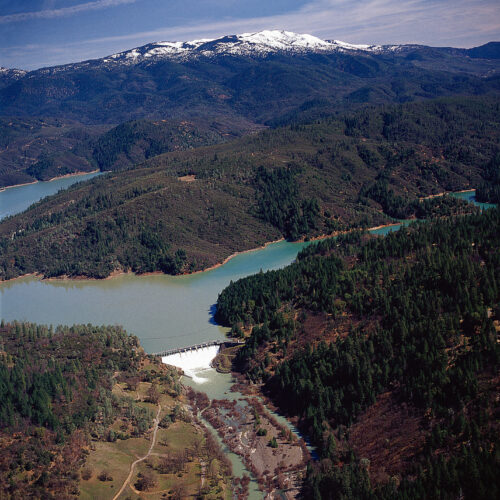
“The Trump administration has offered one of its most detailed explanations of why it wants to stop dam removal on Northern California’s Eel River, citing in a letter numerous concerns that include water, power, wildfire safety and even the state’s “radical leadership.” Still, big questions remain. Agriculture Secretary Brooke Rollins sent the three-page letter Friday in response to a Congressional inquiry about her agency’s sudden interest in a pair of relatively obscure PG&E-owned dams. The inquiry was opened in April by Rep. Jared Huffman, D-San Rafael. In the letter obtained by the Chronicle, Rollins said her agency is actively looking for someone new to operate the project, to both continue power generation and maintain water supplies. She called such a plan not only widely beneficial but financially doable. … ” Read more from the San Francisco Chronicle. | Read via MSN News.
Why is this Trump official dead set on saving a failing California dam?
“The Potter Valley Project, which dams Northern California’s Eel River, isn’t doing very much right now. Its reservoir is clogged with sediment, and drought often empties it out. The project once supported a hydroelectric power plant that could produce about 9 megawatts of electricity, which is about 1 percent of a typical fossil-fuel-fired plant, but it has not worked in years. Plus, some of its infrastructure may be at risk of collapsing during an earthquake. Like thousands of other small dams across the U.S., it is now more trouble than it’s worth. That’s why the utility that owns the project, Pacific Gas and Electric, moved last year to demolish it and undam the river. PG&E has wanted to abandon the project for decades, but a final removal agreement required years of careful negotiation. The dam project currently supplies water to vineyards and cities in Sonoma County, and it’s the sole water source for the rural farm community of Potter Valley. The final agreement was a delicate compromise: The Round Valley Indian Tribe, which has senior rights to water from the Eel, agreed to let some water flow from the river to farmers through a diversion tunnel, and the farmers agreed to accept about half the water they had received in past years when the reservoir was full. Supporters say that dam removal will restore natural water flow for vulnerable fish that have long inhabited the river. But now, U.S. Secretary of Agriculture Brooke Rollins appears determined to blow up the deal. … ” Read more from Grist.
Flood bypasses are key to the future of wild salmon in Sacramento Valley
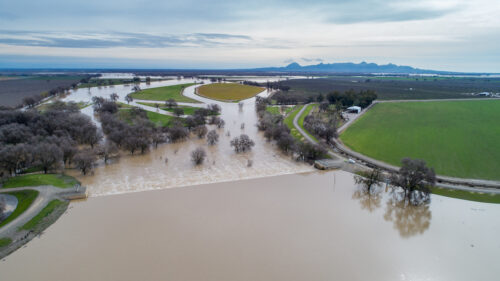
Tom Cannon writes, “The Big-Notch Project at the Fremont Weir came online in late 2025. In this post, I describe events in December 2025 that provided improved access for juvenile salmon to floodplain habitat in the Yolo Bypass through that new Big Notch. The goal of notch projects at the Fremont and Tisdale weirs in the Sacramento Valley is to create greater access to floodplain habitats for juvenile winter-run Chinook salmon, as well as fall-run and spring-run, in the upper Sacramento River Valley. The Fremont Weir project, completed in 2025, now improves access for salmon into the Yolo Bypass. The Tisdale Weir notch project, when completed, will improve access of upper Valley salmon populations into the Butte Basin and the Sutter Bypass floodplains. … ” Continue reading from the California Fisheries blog.
Central Valley Water Board advances groundwater protection, safer drinking water in Modesto area
“The Central Valley Regional Water Quality Control Board yesterday approved the Modesto Management Zone Order, advancing implementation of the Central Valley Salinity Alternatives for Long-Term Sustainability (CV-SALTS) Nitrate Control Program in one of the region’s highest-priority groundwater areas. Since the program launched in 2021, over 2,200 households have received free replacement drinking water and more than 5 million gallons of safe drinking water have been distributed. The order builds on that progress by establishing a long-term framework to protect drinking water supplies, reduce nitrate pollution and restore groundwater quality within Modesto and surrounding area covered by the Modesto Management Zone. “Since the inception of the Nitrate Control Program in 2018, farmers, municipalities and businesses in the valley have been providing residents with free replacement drinking water when testing shows that their wells have been impacted with nitrates,” said Patrick Pulupa, executive officer of the Central Valley Water Board. “This order begins the next phase of the program, where permittees in the Modesto Management Zone will work even harder to reduce nitrate pollution and restore groundwater. This action is a major step toward improving water quality for thousands of Central Valley families.” … ” Continue reading from the Central Valley Regional Water Board.
New fee will charge Paso Robles farmers for water they used last year
“People who’ve pumped from the Paso Robles groundwater basin will see a new charge on their property tax bills this year, after a one-time fee meant to help bring the region’s basin back into balance was approved this week. On Wednesday night, the Paso Robles Area Groundwater Authority voted unanimously to charge of $22.90 per acre-foot of groundwater used by farmers, commercial pumpers and water systems like the city of Paso Robles during water year 2025. An acre-foot is roughly enough to cover a football field in a foot of water. The fee will fund the agency’s budget as it works to balance the basin in accordance with state law — or risk the state setting its own pumping rules and fees for the area, according to board member Hilary Graves said. “Agriculture is struggling right now. It’s a really hard time for farmers,” she said. “I’m definitely not eager to add another regulatory cost to the ones that farmers are already bearing, but we were given the job of finding a way to comply with a law.” Meanwhile, domestic well owners will not be charged water use fees. … ” Read more from the San Luis Tribune.
Kern agency releases details of deal to keep taps flowing to homes near Patterson
“A reshaped agreement for the Kern County Water Agency to provide water to a housing development 200 miles to the north erased $14 million in debt, giving residents water certainty into the future just days before KCWA had threatened to shut off their supplies. Other details contained in a “letter of intent” between KCWA and the Western Hills Water District, which serves the 600-home Diablo Grande development west of Patterson, include: KCWA will make up to 1,500 acre feet a year available for purchase to Western Hills, depending on how much is allocated by the State Water Project each year. If it doesn’t need the full amount, Western Hills can return some excess water to KCWA for credit or bank it with a third party for use in dry years. … ” Read more from SJV Water.
Los Angeles symposium charts path forward for greening schoolyards and harvesting stormwater across the region
“More than 125 participants gathered on May 13 for “From Runoff to Resilience: Stormwater Harvesting on School Campuses,” a full-day symposium hosted by Council for Watershed Health, Heal the Bay, Los Angeles Waterkeeper, and Randolph Consulting Group. The event brought together parents, school districts, city agencies, nonprofit organizations, community-based organizations, consultants, and teachers to explore how greening schoolyards can improve water resilience, reduce water pollution, address the urban heat island effect, and benefit students and communities across the LA region. “Participants left the Runoff to Resilience Symposium inspired for the future of stormwater harvesting on school campuses,” said Maggie Gardner, Science and Policy Manager at LA Waterkeeper. “Our speakers shared case studies and research on successful projects and their impacts, including both water quality and student well-being. We learned how practitioners are overcoming challenges in project design and management, operations and maintenance, and off-site stormwater and liability, and what challenges we still need to solve. We ended the day by exploring funding opportunities for schoolyard greening projects with stormwater harvesting elements.” … ” Read more from the LA Waterkeeper.
Tijuana wastewater line repairs complete after collapse
“The Mexican Section of the International Boundary and Water Commission says repairs to a collapsed wastewater pipe are now complete. The Tijuana Parallel Gravity Line, which transports wastewater in Tijuana, collapsed Friday night. The collapse led to heavy wastewater flow through the South Bay International Wastewater Treatment Plant. The plant, designed to treat 35 million gallons a day (MGD), sustained flows above 45 MGD for 13 hours and peaks above 60 MGD for nine hours over the weekend — well above its design capacity, according to the USIBWC. … ” Read more from Channel 10.
New Colorado River water exchange framework signed, raising questions for Imperial Valley agriculture
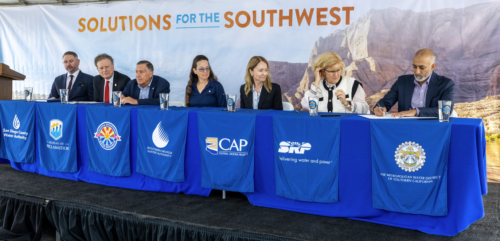
“A Memorandum of Understanding (MOU) signed June 3 at the Claude “Bud” Lewis Carlsbad Desalination Plant marks an early step toward interstate water exchanges in the Colorado River Basin, using desalinated ocean water and recycled supplies to potentially shift allocations on paper. While the agreement itself authorizes no immediate water transfers, agricultural leaders and observers in the Imperial Valley are closely watching its long-term implications for the region’s water rights, farming economy, and the Salton Sea. The MOU, involving the U.S. Bureau of Reclamation, San Diego County Water Authority (SDCWA), Metropolitan Water District of Southern California (MWD), Southern Nevada Water Authority, Arizona Department of Water Resources, Central Arizona Water Conservation District, and Salt River Project, will explore how new water supplies from desalination and advanced purification could be integrated into basin operations. … ” Read more from the Desert Review.
Water leader from California is likely nominee to run top federal Colorado River agency
“The Bureau of Reclamation, the top federal agency for Colorado River matters, is poised to get a new leader in the coming weeks, according to multiple people familiar with the situation. Federal officials are soon expected to announce the nomination of Aubrey Bettencourt to lead Reclamation. She has held multiple government positions related to agriculture and water, and would join Reclamation at a tense time for the agency, which is involved in negotiations about new rules for sharing the shrinking Colorado River. Multiple people who work closely with Reclamation told KJZZ that they expect Bettencourt’s nomination to be announced in the near future. KJZZ agreed not to name the sources, as they were not authorized to speak on the matter. Bettencourt would join Reclamation — a division of the Interior Department — after nearly two decades of jobs with ties to Western water and farming. … ” Read more frpm KJZZ.
Federal officials target ‘mid to late summer’ for a new Colorado River plan
“The top federal official on the Colorado River said his agency is targeting the middle of this summer to formalize a new water-sharing plan. Scott Cameron, the acting commissioner of the Bureau of Reclamation, the federal agency which manages the nation’s largest reservoirs, addressed a crowd of water experts in Boulder, Colorado. “I can’t give you exact dates,” he said, “But I would expect mid to late summer, and as we get closer, we’ll try to signal a bit more precision around that.” Cameron’s speech, delivered at an annual conference on water policy, was a relatively rare public appearance for the Reclamation chief. He has been working alongside state leaders to craft a new plan for managing shrinking water supplies from the Colorado River. … ” Read more from KJZZ.

