
Several news sources featured in the Daily Digest may limit the number of articles you can access without a subscription. However, gift articles and open-access links are provided when available. For more open access California water news articles, explore the main page at MavensNotebook.com.
On the calendar today …
- PUBLIC HEARING: Delta Conveyance Project water right hearing beginning at 9am. The State Water Resources Control Board Administrative Hearings Office is holding a Public Hearing on the pending Petitions for Change of Water Right Permits for the Delta Conveyance Project. Interested members of the public who would like to watch this hearing without participating may do so through the Administrative Hearings Office YouTube channel at: bit.ly/aho-youtube. Click here for the meeting notice.
- WORKSHOP: Drought Resilience Interagency & Partners (DRIP) Collaborative Drought Indicators and Metrics from 10am to 12pm. Join the Department of Water Resources for the Drought Resilience Interagency & Partners (DRIP) Collaborative Drought Indicators and Metrics Workshop #2. Members of the public are able to attend the meeting remotely via Zoom. Remote participation will be conducted via a Zoom platform. Register here: https://ca-water-gov.zoom.us/meeting/register/XW1lzgnPRd6xMrBldIODdQ
- PUBLIC MEETING: Irrigated Lands Regulatory Program: Final Plenary Meeting of the Second Statewide Agricultural Expert Panel from 10am to 4pm. The State Water Resources Control Board (State Water Board) will hold the final plenary meeting of the Second Statewide Agricultural Expert Panel to review and discuss initial recommendations in response to the Panel charge questions, which ask the Panel to consider the approaches adopted in the State Water Board Order WQ 2018-0002, In the Matter of Review of Waste Discharge Requirements General Order No. R5-2012-0116 for Growers Within the Eastern San Joaquin River Watershed that are Members of the Third-Party Group (East San Joaquin Petition Order) and State Water Board Order WQ 2023-0081, In the Matter of Review of General Waste Discharge Requirements for Discharges from Irrigated Lands Order No. R3-2021-0040 (Central Coast Ag Petition Order). Click here for the meeting notice.
- MEETING: Delta-Mendota Subbasin Domestic Well Mitigation Program from 12pm to 1pm. During this session learn more about the Delta-Mendota Subbasin Domestic Well Mitigation Program. The briefing will focus on domestic wells and small water systems with 14 or less connections and cover what the program includes, who is being protected, and critical steps Groundwater Sustainability Agencies are taking to protect drinking water. We will also discuss steps to take if lower groundwater levels put a well at risk, or if there are issues with a dry well, or well water quality. If you have a domestic well in the subbasin or help people that do, this briefing is for you. Click here to register.
In California water news today …
Stanford researchers launch ambitious plan to map and track water: Here’s how
“A major project being launched by Stanford’s Doerr School of Sustainability could change the way we manage a precious resource. It’s an ambitious project to map water. And with the potential of severe shortages looming, researchers say it’s critical to track every drop . Following Stanford Researcher Rosemary Knight, PhD, of Stanford’s Doerr School of Sustainability, can make you feel a bit like a pirate who’s just found a treasure map. But in this case, the buried treasure isn’t gold. It’s water. “Just revealing the complexity of this groundwater system. What’s connected to what, where groundwater is connected to rivers, where there are large areas appropriate for storing recharged water. So this is a phenomenal data set that I will probably be working with for the next 30 years, Knight explains. … ” Read more from ABC 7.
Polluted rain runoff from big box parking lots could see a crackdown
“When rain falls on California shopping centers and warehouses, the water runs off parking lots carrying metal dust and chemicals from vehicle tires and brake pads, oil and grease from engines, and bacteria from trash. The gunk washes into storm drains and pollutes creeks, rivers and beaches. Now environmental advocates are pushing state regulators to crack down by requiring stormwater permits — essentially best practices — for businesses that haven’t been held accountable for their polluted runoff. “Commercial properties right now are not regulated under any stormwater permit,” said Sean Bothwell, executive director of California Coastkeeper Alliance. “Think Costco, think Amazon warehouses. Large places with large parking lots are really what we’re going after.” … ” Read more from the LA Times. | Read via AOL News.
About half of California waterways contaminated with PFAS, pesticide analysis finds
“Around half of California waterways tested by regulators are contaminated with pesticides considered Pfas, “forever chemicals”, a new analysis of state and federal records shows, highlighting a risk in the substances’ wide use that is only beginning to come into focus. The pesticides are linked to a range of health problems, including cancer, and the review is the first to systematically check for the dangerous substances in streams and rivers, which include drinking water sources. More than half of sediment samples also showed some levels of the pesticides, which are increasingly applied to California and the nation’s food crops. … ” Read more from The Guardian.
Own this entire private island in Sacramento region for $39,000
“A $39,000 price tag doesn’t usually buy much in California real estate. But in the heart of the San Joaquin Delta, it buys something few people can claim: an island. The 5.6-acre private island in the tranquil waters off West Eight Mile Road, between Correia and Potato roads, has hit the market near Stockton, 48 miles south of Sacramento. The triangular property is sparse on improvements — because there really aren’t any — but that’s part of the appeal. The land is surrounded entirely by water, making it a blank slate that’s less about a house and more about the idea of getting away from everything. “Your own private island in the heart of the California Delta,” the MLS property description reads, noting that the setting “feels a world away yet remains within reach of Stockton and the greater Sacramento region.” … ” Read more from the Sacramento Bee.
SEE ALSO: A rare private island in California is for sale for $39,000, from SF Gate
Bay-Delta Flows Coalition celebrates successful day of advocacy in Sacramento
“Tribes, environmental justice organizations, fishing groups, and environmental advocates joined forces yesterday in a Day of Advocacy for the Delta, engaging with legislators on water policy issues impacting Delta communities, environment and economy. The Day of Advocacy, organized by the Bay-Delta coalition, focused on support for the California Water Renaissance Plan which proposes a shift towards a sustainable local water supply and away from expensive, unreliable water imports; support for AB 2218 which would establish a statewide policy directive to remedy historical water inequities with California Tribes; and support for SB 872 which invests proactively in Delta levees and subsided state conveyance infrastructure to ensure long term protection for communities and water supply … ” Read more from Restore the Delta.
Breaking silos: Blueprint Executive Director Ewell discusses how collaboration is shaping the Valley’s water future
“The water challenges facing the San Joaquin Valley do not fit neatly within the boundaries of a single agency, organization, or community. That was the central message delivered by Water Blueprint for the San Joaquin Valley Executive Director Austin Ewell this week at the Groundwater Resources Association’s 2026 SGMA Summit – Faces of Implementation, where he participated in a panel discussion titled “Breaking Silos: Cross-Sector Collaboration in Action.” During the discussion, Ewell highlighted the development of the Unified Water Plan for the San Joaquin Valley as a powerful example of what can be accomplished when a broad coalition of organizations work together toward a common goal. … ” Read more from the Water Blueprint for the San Joaquin Valley.
San Joaquin Valley Water Resilience Summit – From Reports to Results, Day Two
“The California Water Institute at Fresno State organized and conducted a two-day conference aimed at not only providing new information but also setting priorities for action to address the water crisis in the San Joaquin Valley. Over 150 people attended all or parts of the two-day session on May 20-21 on campus representing an array of water industry participants including growers, community leaders, water managers, academics and government officials. The group heard reports of new studies from the Department of Water Resources (DWR), an update on the recently completed “Unified Water Plan for the San Joaquin Valley” from the Water Blueprint and the State’s Water Plan for 2028. Panel discussions provided additional background on this detail during the first day. Then on the second day, the whole group engaged in an in-depth effort to identify actions needed to accomplish specific priorities for results. … ” Continue reading at Water Wrights.
California charts smarter path to support farmers and ranchers while maintaining food safety and clean water
 “The Newsom administration today released the final recommendations from a study that intends to improve food safety and water quality reporting for California’s agricultural community. This interagency collaboration between the California Department of Food and Agriculture (CDFA), California Environmental Protection Agency (CalEPA), and the State Water Resources Control Board was developed with input from farmers, ranchers, and local leaders and demonstrates California’s continued efforts to build a roadmap for the future. “California agriculture leads the world, not by standing still but by constantly innovating,” said Governor Gavin Newsom. “This roadmap is about making the regulatory process work better for the people growing our food and sustaining communities across the state, while maintaining the food safety and water quality standards that Californians depend on. We are proving that meaningful protections and a strong agricultural economy can help move our state interests forward together.” … ” Read more from the Department of Food and Agriculture.
Slowing the spread of golden mussels in California
“You may have seen golden mussels mentioned on your local news or on the website of a state agency. Wherever you heard of them first, you are now aware that California is at the beginning of a long fight. The objective is to protect waterways and water infrastructure from a takeover by golden mussels. The golden mussel (Limnoperna fortunei) is native to China. This small, invasive freshwater mussel presents multiple risks to native species of fish. The golden mussel can colonize, or encrust, over the surface of a lake bed, dock, component of water infrastructure, or boat relatively quickly. This makes such surfaces dangerous for fish to cross. The tips of the mussel’s shells are sharp, and can cut a fish’s belly. Cuts like these can lead to fungal infections. They can also increase the risk of predation. … ” Read more from the California Sportfishing Protection Alliance.
New Urban Water Use Objective dashboard now live
“The State Water Board is excited to announce the release of the Urban Water Use Objective Dashboard, a new tool that offers water use insights from reports submitted to the State Water Board under the Making Conservation a California Way of Life regulation. With this tool, you can easily access detailed information about individual water suppliers across the state, including their progress towards meeting annual objectives for efficient water use. … ” Read more from Maven’s Notebook.
Court of Appeal strengthens protections for water and wastewater rates
“On June 2, 2026, the California Court of Appeal certified for publication its opinion in Hiller v. Marin Municipal Water District. This decision reinforces the powerful preclusive effect of California’s Validation Statutes, which Senate Bill (SB) 323 made applicable to water and wastewater rates. Best Best & Krieger LLP (BBK) represented Marin Municipal Water District, the prevailing party, in this case. Proposition 218 imposes substantive and procedural limits on new and increased water and wastewater rates. However, it does not specify how ratepayers can challenge those rates in court. To that end, the Legislature enacted SB 323 in 2021, adding Government Code section 53759. Section 53759 provides three important protections for rates adopted on and after January 1, 2022. … ” Continue reading at Best Best & Krieger.
Capitalizing on California’s $3.8 billion water resilience funding
“With the rollout of Proposition 4 funding entering its next critical phase in the second quarter of 2026, California water providers have a historic opportunity to secure financial backing for vital infrastructure and climate resilience projects. Passed by voters in November 2024, the $10 billion climate bond earmarks $3.8 billion explicitly for safe drinking water, drought preparedness and flood resilience. The State’s current 2025-2026 spending plan has authorized roughly $1.2 billion of the total water allocation, serving as a primary lifeline for water providers amid broader General Fund deficits. These funds are actively being rolled out on a competitive grant basis. Looking ahead, the Governor’s proposed 2026–2027 budget also looks to add another $792 million specifically for water-related programs on a year-by-year proposal basis. In an article for Nossaman’s California Water Views – 2026 Outlook, we explore the key funding allocations being targeted by the Proposition 4 funding and how water providers can position themselves to win these highly competitive grants.” Read more at Nossaman.
Newsom wants Prop 4 funds for golden gate fields. Some local conservationists have other priorities.
“This year, lovers of the East Bay shoreline got a boon: a “once-in-a-generation” opportunity to transform a piece of prime shoreline into a park for the people. Governor Gavin Newsom wants the state to foot $125 million of the $175 million purchase price for the former Golden Gate Fields horse-racing track—using funds from the $10 billion 2024 climate bond, Proposition 4. The catch: Using this money could come at the expense of many other projects, says Annie Burke, executive director of TOGETHER Bay Area, a regional coalition of conservation organizations. Coalition members alone had a $1.26 billion list of potential projects for Proposition 4 money—and Golden Gate Fields wasn’t on it. … ” Read more from Bay Nature.
California launches sweeping rules aimed at cutting plastic packaging waste
“In the 1967 film The Graduate, a businessman offers career advice to a young Dustin Hoffman with a single word: “Plastics.” At the time, plastics were the future. Since then, as production has exploded worldwide, scientists have found plastic pollution everywhere from Arctic ecosystems to human breast milk. With global production projected to triple in the next 25 years, California is attempting something no state has done before: requiring producers to dramatically reduce plastic packaging and take responsibility for the waste they create. Regulations are now rolling out to make manufacturers responsible for reducing the amount of plastic they use, recycling currently single-use plastic and ensuring that all of their packaging is recyclable or compostable by 2032. The regulations, spurred by a state law signed in 2022, also require producers to pay into a fund to help clean up plastic pollution and restore ecosystems, focusing on low-income communities and rural areas. … ” Read more from KQED.
Environmental groups file suit against CA’s weakened plastic pollution regulations
“Environmental groups challenged in court CalRecycle’s recently finalized regulations for the state’s landmark plastic packaging law, which were weakened and create giant loopholes that undermine the law’s recycling and plastic reduction goals. NRDC, Californians Against Waste Foundation, and Oceana filed a petition and complaint in San Francisco Superior Court that the department, charged with protecting public health and the environment by reducing plastic pollution and increasing recycling, fails to meet the requirements of SB 54, the Plastic Pollution Prevention and Packaging Producer Responsibility Act. … ” Read more from YubaNet.
In commentary today …
Conservation depends on cooperating and transcending borders
Ken Salazar, former U.S. secretary of the Interior and ambassador to Mexico, and Leslie Harroun, the executive director of the Salazar Center for North American Conservation, write, “Political tides rise and fall. They always have. Laws change. Priorities shift. Administrations come and go. Across generations, societies debate, correct course and eventually find new balance. Some long-standing norms endure because they serve the common good. Others, like the once-accepted evil of slavery, are rightly rejected as societies mature. But nature does not operate on election cycles. Rivers do not stop at checkpoints. Wildlife does not recognize borders. Air pollution does not pause at state lines. Drought, wildfire and habitat loss do not ask whether a community voted “red” or “blue.” And once a species, an old growth forest, a mountaintop or a river are destroyed, they’re gone forever. … ” Continue reading at the Marin Independent Journal.
Watchdog group busts myths about California data centers
Ross Marchand, the executive director of the Taxpayers Protection Alliance, writes, “As usual, California is first in the nation…for ridiculous rules. Recently, Monterey Park residents voted overwhelmingly to permanently ban data centers. Meanwhile, legislation making its way through the California State Legislature would impose all sorts of onerous rules on these innovative projects. At the core of these restrictive efforts is a barrage of misinformation charging that data centers are to blame for rivers drying up, electricity bills soaring, and run-away noise pollution. As a recent analysis by the Taxpayers Protection Alliance (TPA) makes clear, these claims are completely unfounded. California can lead a digital renaissance and create thousands of well-paying jobs, but not with heavy-handed bureaucracy buoyed by falsehoods. Data centers are quickly being built across the country—and California is losing out. As San Francisco Chronicle reporter Emma Stiefel notes, “California is currently home to 5% of the U.S.’ total data center capacity, according to a Chronicle analysis of data from energy database company Cleanview. But if all data center plans announced during the current building boom pan out, California’s share will shrink to 1%. … ” Continue reading at the OC Register.
In regional water news and commentary today …
NORTH COAST
Health advisory and warning issued for Upper Klamath National Wildlife Refuge
“Oregon Health Authority issued a recreational use health advisory for Upper Klamath National Wildlife Refuge after finding cyanotoxins above safe levels. People should avoid swimming and high-speed water activities like water skiing or power boating in areas where blooms are present. The major route of exposure is ingestion or inhalation of water, not through skin absorption, though people with skin sensitivities may get a puffy red rash. OHA encourages people to still visit the wildlife refuge for activities like fishing, bird watching and canoeing. Boating is safe as long as speeds don’t create excessive water spray, which could lead to inhaling cyanotoxins. … ” Read more from KDRV.
Flow saga in the Klamath Basin
“As the irrigation season proceeds, eyes are on the Klamath Basin. Removal of four dams recently opened over 400 miles of habitat for salmon and steelhead. Annual snowpack was so dismal that it has already disappeared from the upper basin. State agencies are currently advancing long-term policies to limit river dewatering in key Klamath tributaries. But the Trump administration is flexing federal muscle to siphon off instream flow at the headwaters of the Klamath River’s mainstem. … Reclamation announced 2026 Project allotments in April. It allocated 221,000 acre-feet from the Upper Klamath Lake, 63% of the “normal” allocation. In addition, Reclamation allocated 35,000 acre-feet from Gerber Reservoir and 35,000 acre-feet from Clear Lake Reservoir. The combined 70,000 acre-feet represents full allocation from these sources. In total, Reclamation plans to deliver 291,000 acre-feet of water. … ” Read more from the California Sportfishing Protection Alliance.
The Klamath Fish hatchery just reopened after a five-year rebuild. It can produce 3 million fish a year.
“The Klamath Fish Hatchery near Chiloquin, Oregon, is back in business after a five-year rebuild that turned a devastating fire into a fresh start. The Oregon Department of Fish and Wildlife reopened the hatchery to visitors on June 1, marking the end of a long recovery from the 2020 Two Four Two Fire that destroyed the facility’s 100-year-old main building and killed approximately 50,000 triploid brown trout. Volunteer firefighters saved staff residences and outbuildings by using the hatchery’s own water pumps to fight the blaze. Reconstruction took far longer than expected. Archaeological reviews, cultural resource surveys and soil problems forced engineers to redesign the foundation, which now sits on 131 steel piles. The result is a new concrete, noncombustible building that is slightly larger than the original and includes expanded fish-rearing capacity. … ” Read more from Active NorCal.
Siskiyou County rescinds approval of two Shasta Valley production wells
“Siskiyou County has rescinded approvals for two proposed irrigation wells in the Shasta Valley. It has also withdrawn the associated Public Trust findings, California Environmental Quality Act (CEQA) exemption, and determinations of no significant impact. The County made these decisions after a coalition of environmentally-oriented nonprofit organizations took action. This coalition engaged in months of negotiations, threats of litigation, and conversations about the future of water management in the Shasta River. The entities involved in this effort include California Sportfishing Protection Alliance (CSPA), Environmental Protection Information Center (EPIC), Friends of the Shasta River, Mount Shasta Bioregional Ecology Center, Water Climate Trust, and attorney Jason Flanders from Aqua Terra Aeris Law Group. … ” Read more from the California Sportfishing Protection Alliance.
Trinity County logging plan draws conservation group’s ire
“Friday marks the last day to submit comments in opposition to the U.S. Forest Service’s North Trinity County Community Risk Reduction Project, a project that could, according to the Environmental Protection Information Center, have devastating consequences for the northern spotted owl population — and critical refugia that sustain the species — in Northern California. In an article published this week on the EPIC website, the center’s Conservation Director Kimberly Baker said that the project, which targets some 12,805 acres of the Shasta-Trinity National Forest. “The North Trinity County Community Risk Reduction Project, with the stated goals of wildfire risk reduction and forest health, proposes roughly 8,500 acres of commercial logging,” Baker wrote. “At its most aggressive, this includes removing roughly 75% of the forest structure or basal area; at its most restrictive, it would remove 40%. … ” Read more from the Eureka Times-Standard.
SIERRA NEVADA
Nevada agencies warn summer boaters of growing threat beneath state waters
“As Nevada enters the busy summer boating season, state and Tribal agencies are urging boaters and paddlers to help stop the spread of aquatic invasive species that threaten waterways across the state. The Nevada Department of Wildlife, Tahoe Regional Planning Agency and Pyramid Lake Paiute Tribe are reminding recreationists to follow the “Clean, Drain, Dry” protocol and “Pull Your Plug” before leaving any waterbody and before launching somewhere new. Officials also urged recreationists to plan ahead for watercraft inspections during busy weekends and holiday periods. Before leaving a lake, river or reservoir, boaters and paddlers should remove mud, plants and debris from their equipment, drain any standing water from areas such as bilges, ballast tanks, motors, coolers and live wells, and ensure boats and gear are completely dry before entering another waterway. The guidance applies to all recreational equipment, including boats, kayaks, paddleboards, trailers, fishing gear, anchors and waders. … ” Read more from KTVN.
SACRAMENTO VALLEY
Revegetation project to span 70 acres of Oroville Dam
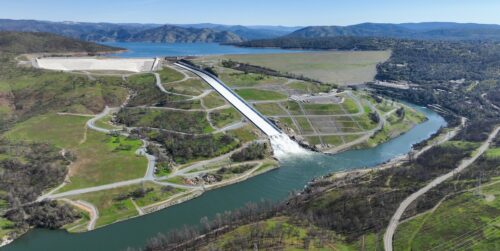
“The California Department of Water Resources is looking at a $14.5 million revegetation project along roughly 70 acres of land across the Oroville Dam. Raquel Borrayo, a spokesperson for DWR, said the work will consist of adding seeds to the landscape as well as “replanting six acres of woody vegetation.” “The project is designed to improve the appearance of areas near trails and roadways while enhancing the view for visitors and motorists traveling along Oroville Dam Boulevard East,” Borrayo said. “A five-year establishment period has been incorporated into revegetation efforts, with temporary irrigation tanks being installed to support initial vegetation growth.” Those passing by will likely see heavy equipment along the side of the dam throughout the timeline of the project, Borrayo said. … ” Read more from the Chico Enterprise-Record.
BAY AREA
Marin Water’s Atmospheric River Capture (ARC) Project unlikely to live up to its name
“The Marin Municipal Water District (Marin Water) is a public utility that provides water to 190,000 residents in central and south Marin County. Marin Water is proposing what it terms an “Atmospheric River Capture (ARC) Project” to divert rainwater from atmospheric river events (rainstorms) during the North Bay’s rainy season. The publicity for the Project suggests that it would capture water sourced from the Russian River in Sonoma County during atmospheric rivers and convey the water for storage in the existing Nicasio Reservoir in Marin County. In reviewing the Project, it seems much more likely that either an atmospheric river that filled the Russian River would also fill Nicasio Reservoir, or Marin Water would need to divert water from the Russian River when an atmospheric river was not occurring in either watershed. … ” Read more from the California Sportfishing Protection Alliance.
Aging eucalyptus trees in this S.F. park pose potential wildfire risk, report warns
“While the risk of wildfires is low across cold and foggy San Francisco, a new report found that aging groves of eucalyptus trees clustered in Glen Canyon pose a potential danger. The San Francisco Civil Grand Jury, a government oversight panel of volunteer residents, said in a report released Thursday that red flag warnings and Diablo winds create “perfect conditions” for wildfire several days or weeks each year in San Francisco’s urban wildland areas. But the jury found city efforts to mitigate the risk are disjointed. After the Pacific Palisades fire devastated Los Angeles suburbs in early 2025, the grand jury evaluated wildfire risk in Glen Canyon, a recreation area with steep slopes and hundreds of eucalyptus trees. The jury concluded the eucalyptus trees, an invasive species, are highly flammable and known to explode during wildfires due to their high oil content. … ” Read more from the San Francisco Chronicle.
Amazon data center rises in Gilroy. Residents say they were left in the dark
“A massive Amazon data center already being built on Gilroy’s eastern edge has become a flashpoint over how much say residents get before Silicon Valley’s next wave of tech infrastructure arrives in their backyards. The project, expected to begin operating by the end of the year, never went before the Gilroy City Council because the land had already been zoned for heavy industrial use. But many residents say they learned about the data center only after construction began. Amazon and city officials, however, say the company followed the rules and has gone above and beyond to offset the project’s water and energy impacts. “We believe we built a solution that fits the community,” said Roger Wehner, vice president of Economic Development at Amazon Web Services, at a meeting Wednesday night to discuss its plans for the data center. “We’ve made every effort to not just meet but exceed the requirements about transparency, and I think tonight is an example of that.” … ” Read more from the San Jose Mercury News.
CENTRAL COAST
Annual report shows Santa Maria Valley groundwater supplies in good shape
“An annual report presented in Santa Maria Thursday morning showed groundwater supplies and water quality are remaining in good shape. The presentation was the 2025 Annual Report of Hydrogeologic Conditions, Water Requirements, Supplies and Disposition of the Santa Maria Valley Management Area. The report was prepared and delivered by Luhdorff and Scalmanini, the Bay Area-based Management Area engineering firm. “That is a requirement of the adjudication of this basin and be submitted to the court again every year,” said Randy Sharer, Twitchell Management Authority (TMA) Chair. … ” Read more from KEYT.
SAN JOAQUIN VALLEY
Central Valley Water Board advances groundwater protection, safer drinking water in Modesto area

“The Central Valley Regional Water Quality Control Board yesterday approved the Modesto Management Zone Order, advancing implementation of the Central Valley Salinity Alternatives for Long-Term Sustainability (CV-SALTS) Nitrate Control Program in one of the region’s highest-priority groundwater areas. Since the program launched in 2021, over 2,200 households have received free replacement drinking water and more than 5 million gallons of safe drinking water have been distributed. The order builds on that progress by establishing a long-term framework to protect drinking water supplies, reduce nitrate pollution and restore groundwater quality within Modesto and surrounding area covered by the Modesto Management Zone. “Since the inception of the Nitrate Control Program in 2018, farmers, municipalities and businesses in the valley have been providing residents with free replacement drinking water when testing shows that their wells have been impacted with nitrates,” said Patrick Pulupa, executive officer of the Central Valley Water Board. “This order begins the next phase of the program, where permittees in the Modesto Management Zone will work even harder to reduce nitrate pollution and restore groundwater. This action is a major step toward improving water quality for thousands of Central Valley families.” … ” Continue reading from the Central Valley Regional Water Board.
San Joaquin County water right application for groundwater recharge: threat or opportunity?
“On May 18, 2026, San Joaquin County issued a draft environmental impact report (DEIR) to support water right application 29835. The application seeks to divert up to 158,000 acre-feet of water per year from the Mokelumne River. The stated purpose of the project is conjunctive use. Conjunctive use refers to coordinated management of surface water and groundwater in an area. In the DEIR, San Joaquin County branded the application as the Mokelumne Integrated Conjunctive Use Program (MICUP). The Project as now proposed would be the fifth revision of water right application 29835. The Mokelumne Water and Power Authority, an entity that no longer exists, first filed the application in 1990. The California Sportfishing Protection Alliance (CSPA) protested the application in 1996. … ” Read more from the California Sportfishing Protection Alliance.
Fresno County residents can help fight invasive species
“When Europeans first settled in California in the 1700s, they brought with them – by accident or on purpose – plant and animal species from their home countries. Californians have benefited from many of these plants and animals – including grapes, olives, potatoes, cattle and many more. However, a small proportion of introduced species have been deemed “invasive” because they harm the state’s environment and economy – such as Tree of Heaven, yellow starthistle and Scotch broom. To raise awareness about and prevent the introduction of invasive species, a number of California organizations and agencies are working together to host the annual California Invasive Species Action Week, June 6 to June 14, 2026. … ” Read more from UCANR.
EASTERN SIERRA
Continuing DWP diversions threaten Mono Lake’s biodiversity
“The Los Angeles Department of Water & Power (DWP) has diverted water from the Mono Basin for 85 years, and the impacts to the lake’s ecological health are accumulating. Diversions from Mono Lake’s tributary streams have dramatically reduced the lake’s elevation and volume, increased salinity, and created conditions that are disrupting ecosystem function and the food that supports nesting and migratory birds. In particular, these conditions are reducing the survival of California Gull chicks. If this sounds like a repeat of a story from the early days of the effort to save Mono Lake, it is. But with the passage of time it has become worse, as the number of nesting gulls at Mono Lake has plummeted by two-thirds, and the productivity of the lake’s ecological engine—phytoplankton and brine shrimp—is showing signs of stress and systemic dysfunction. … ” Read more from the Mono Lake Committee.
Gold exploration work begins on Conglomerate Mesa
“Local conservation groups and residents are carefully monitoring all activities related to a Canadian firm’s mining operations on Conglomerate Mesa and are dedicated to protecting a landscape they call a desert gem. K2 Gold officially began its recently approved second phase of gold exploration on Conglomerate Mesa on May 18. Conglomerate Mesa is the traditional homeland of the Lone Pine Paiute Shoshone and Timbisha Shoshone Tribal Nations, both of which oppose mining in the area. A total of 11 tribes were consulted about the project, and their view was that K2 Gold’s proposed mining activities would cause permanent adverse impacts on the mesa. … ” Read more from the Mammoth Times.
SOUTHERN CALIFORNIA
California water agency ramps up deep-sea desalination plan
“Los Angeles area water agencies were hard hit in 2022 by successive years of drought and an unprecedented meager State Water Project allocation, but none was more impacted than Las Virgenes Municipal Water District, which serves about 70,000 users in an upscale section of the city with virtually no other supply alternatives, in-state or out. The severe per-person water-use limit prompted officials to come up with a plan to create new supply through a novel in=ocean desalination process. “We cannot stand idle for a repeat of 2022 when our water supply from [the Metropolitan Water District of Southern California] was reduced by 74%. It was not an anomaly” says David W. Pedersen, water district general manager. But onshore desalination used elsewhere in California is energy intensive and can cause environmental harm—prompting him and other officials to link up with developer OceanWell to test its offshore approach, using cylindrical “pods” placed as deep as 1,400 ft that would rely on ocean pressure to power seawater intake pumps and filters to produce potable fresh water through reverse osmosis. Las Virgenes completed pod testing in a municipal reservoir in late 2025. … ” Read more from Engineering News-Record.
Los Angeles symposium charts path forward for greening schoolyards and harvesting stormwater across the region
“More than 125 participants gathered on May 13 for “From Runoff to Resilience: Stormwater Harvesting on School Campuses,” a full-day symposium hosted by Council for Watershed Health, Heal the Bay, Los Angeles Waterkeeper, and Randolph Consulting Group. The event brought together parents, school districts, city agencies, nonprofit organizations, community-based organizations, consultants, and teachers to explore how greening schoolyards can improve water resilience, reduce water pollution, address the urban heat island effect, and benefit students and communities across the LA region. “Participants left the Runoff to Resilience Symposium inspired for the future of stormwater harvesting on school campuses,” said Maggie Gardner, Science and Policy Manager at LA Waterkeeper. “Our speakers shared case studies and research on successful projects and their impacts, including both water quality and student well-being. We learned how practitioners are overcoming challenges in project design and management, operations and maintenance, and off-site stormwater and liability, and what challenges we still need to solve. We ended the day by exploring funding opportunities for schoolyard greening projects with stormwater harvesting elements.” … ” Read more from the LA Waterkeeper.
Carcinogen from LA fire cleanup may have spread up to 9 miles downwind, study shows
“A potent carcinogen may have spread to communities as far as nine miles downwind of the Eaton and Palisades fire burn zones during debris clean-up, according to a new peer-reviewed study in the journal Nature. A team of researchers has been studying the air pollution effects of clearing the remains of more than 16,000 homes and businesses destroyed in the 2025 fires. Scientists with UCLA and UC Davis drove through Altadena and Pacific Palisades in an electric vehicle with mobile air monitors periodically over about seven months after the fires. They measured nanoparticles of hexavalent chromium, or chromium-6, within the cleanup areas. … ” Read more from the LAist.
Riverpark Coalition and Los Angeles Waterkeeper announce landmark settlement to expand public park space and protect the Los Angeles River
“The Riverpark Coalition (RPC) and Los Angeles Waterkeeper are proud to announce a comprehensive settlement agreement with the owner of the property at 3701 Pacific Place. The agreement resolves the organizations’ lawsuit under the California Environmental Quality Act, or CEQA, regarding the Pacific Place Project, a self-storage and RV parking facility adjacent to the Los Angeles River that had been approved for construction by the Long Beach City Council. Resolving the case advances the organizations’ commitment to enhance public open space, improve regional trail connectivity, and protect the Los Angeles River. The property owner has agreed to work in partnership with RPC and LA Waterkeeper to advance the future development of publicly accessible open space on the adjacent Los Angeles County Flood Control parcel, including improvements to multi-modal and equestrian trails and other design improvements at the project site to reduce the project’s environmental impacts. The County Parcel, located immediately west of the project site and connected to the existing LA River (LARIO) trails, serves as a vital opportunity site for the western Long Beach community, which currently has very limited public open space. … ” Read more from the LA Waterkeeper.
Orange County health officials walk back claim that there was ‘no leak’ in chemical tank crisis
“Orange County health officials are walking back a claim that no vapor or fumes were released during a chemical tank crisis at a Garden Grove aerospace company two weeks ago, but state officials maintain that any leak did not pose a major health risk to the public. The Los Angeles Times asked the Orange County Healthcare Agency about the statement of Health Officer Dr. Regina Chinsio-Kwong, who during a media briefing on Memorial Day said that “there was no contamination, there were no fumes, there were no vapors that came from this incident, there was no leak.” Chinsio-Kwong’s statement seemed to contradict repeated statements by officials with the Orange County Fire Authority, whose leaders said they responded on May 21 to a crippled pressurized tank at a Garden Grove aerospace firm that was “off-gassing with some fumes,” and that there was “a vapor release from a tank containing an industrial chemical used in plastic and manufacturing,” and that rising temperature forced the activation of a relief valve. … ” Read more from the LA Times. | Read via AOL News.
Imported water expands groundwater storage across the region
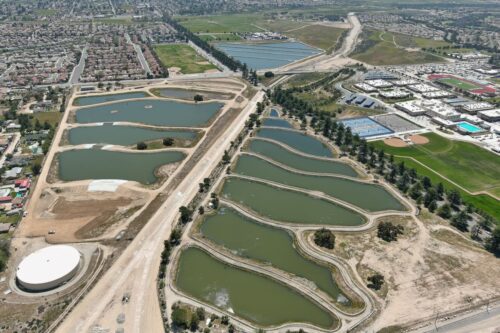 “San Gorgonio Pass Water Agency (SGPWA) is moving quickly to maximize the Department of Water Resources’ (DWR) recent increase in the 2026 State Water Project (SWP) allocation to 45 percent, strengthening local water supplies and
groundwater recharge efforts throughout the Pass area. “This allocation increase is an opportunity to act, not wait,” said SGPWA Board President Robert Ybarra. “Every acre-foot we can recharge helps protect the communities we serve. SGPWA is focused on making the most of every available drop of water.” The increased allocation, combined with existing supplies and carryover water, brings SGPWA’s total water supply portfolio to 17,035 acre-feet. That additional water will be used strategically to support groundwater recharge, improve regional water security, and prepare local communities for future dry conditions. … ” Read more from the San Gorgonio Pass Water Agency.
IMPERIAL/COACHELLA VALLEYS
Imperial County considers data center moratorium as proposals multiply in the area
“After more than half a year of mounting community pressure, Imperial County officials will consider putting a temporary pause on data center projects in order to revise the county’s building policies. That’s after those same officials advanced a massive data center on county land that could bypass the state’s most rigorous environmental review, a proposal emerged for another data center on nearby Quechen tribal land and other plans surfaced for a new data center that could be built without a full environmental review. The Imperial County Board of Supervisors discussed creating new guidelines for data center construction on Tuesday, and the board decided a draft of the guidelines was insufficient to adequately address community concerns over lax regulation. “I think we need to look at the resolution as presented and bring it back with more teeth,” said Supervisor Jesus Eduardo Escobar. … ” Read more from iNewsSource.
SAN DIEGO
Construction gets underway on $16.8M Ramona-Barona pipeline
“Construction of the $16.8 million Ramona-Barona pipeline project got underway May 27 with a groundbreaking ceremony at the Barona Fire Station. Barona Band of Mission Indians Tribal Council members joined Ramona Municipal Water District directors to shovel dirt to kick off the start of construction. The two organizations have been collaborating to design and build the pipeline to provide water and recycled water to the tribal reservation. While speaking at the groundbreaking event, Barona Tribal Chairman Raymond Welch described how the tribe has relied entirely on well water from the ground for the past 94 years. In that time, they have managed water shortages, monitored water tables and “carried the heavy daily burden of securing a basic human right,” he said. … ” Read more from the San Diego Union-Tribune.
Federal officials renew contract with operator of South Bay wastewater plant
“The federal government awarded Veolia Water West Operating Services Inc. a $27.29 million sole-source contract to continue operating the South Bay International Wastewater Treatment Plant, a critical wastewater treatment plant at the U.S.-Mexico border playing a key role in the ongoing Tijuana River pollution and sewage crisis. The contract, awarded March 31, runs through March 31, 2027, with a two-month option period extending through May 31, 2027, to allow for transition to a future contractor if needed. The U.S. Section of the International Boundary and Water Commission, which oversees the plant, directed the award to Veolia without a competitive bid process after canceling a prior solicitation. According to a formal Determination and Findings document prepared by USIBWC, the previous solicitation was scrapped due to technical deficiencies, ambiguous requirements and the discovery of an undisclosed organizational conflict of interest. … ” Read more from the San Diego Union-Tribune.
Tijuana wastewater line repairs complete after collapse
“The Mexican Section of the International Boundary and Water Commission says repairs to a collapsed wastewater pipe are now complete. The Tijuana Parallel Gravity Line, which transports wastewater in Tijuana, collapsed Friday night. The collapse led to heavy wastewater flow through the South Bay International Wastewater Treatment Plant. The plant, designed to treat 35 million gallons a day (MGD), sustained flows above 45 MGD for 13 hours and peaks above 60 MGD for nine hours over the weekend — well above its design capacity, according to the USIBWC. … ” Read more from Channel 10.
Along the Colorado River …
Federal officials target ‘mid to late summer’ for a new Colorado River plan
 “The top federal official on the Colorado River said his agency is targeting the middle of this summer to formalize a new water-sharing plan. Scott Cameron, the acting commissioner of the Bureau of Reclamation, the federal agency which manages the nation’s largest reservoirs, addressed a crowd of water experts in Boulder, Colorado. “I can’t give you exact dates,” he said, “But I would expect mid to late summer, and as we get closer, we’ll try to signal a bit more precision around that.” Cameron’s speech, delivered at an annual conference on water policy, was a relatively rare public appearance for the Reclamation chief. He has been working alongside state leaders to craft a new plan for managing shrinking water supplies from the Colorado River. … ” Read more from KJZZ.
Lake Mead keeps dropping toward new low while Lake Powell gets a spring boost
“Lake Mead’s march to lower water levels hit a milestone this week, dropping below 1,050 feet as it heads toward its low since the reservoir was filled in the 1930s. About an hour before Sunday ended, the elevation of the lake’s surface cracked the 1,050-foot mark, and it has dropped nine inches since then, registering 1,049.25 feet at 11 a.m. on Thursday. By July, the lake will drop under its previous low, 1,041.71 feet on July 27, 2022. That was noted in our end-of-summer article chronicling a troubling summer that included a body found in a barrel, a race to keep boat ramps operating, pipelines going out of operation because intakes were above the waterline, 23 deaths within Lake Mead National Recreation Area and more. … ” Read more from KLAS.
Killing Lake Powell won’t save the Colorado River
“Contrary to popular belief, rearranging deck chairs on a sinking boat can theoretically be of some benefit, if you’re clearing a path to the lifeboats, say, or keeping panicky people busy. Very quickly, though, you’ll have to confront the real problem, which is that you are on a sinking boat. Unlike the Titanic, the Colorado River has too little water rather than too much. But many of the solutions people are proposing to address the river’s worst crisis in recent human history are tantamount to deck-chair rearrangement. None address the long-term, underlying issue that we are asking too much of a dwindling resource. “We have a much smaller glass and too many straws in that glass,” Brad Udall, senior water and climate scientist at Colorado State University, told me. “The only way to make it work in the long run is to pull some straws out.” … ” Read more from Bloomberg.
Lake Mead sits at 30% full as thirsty AI data centers fuel backlash across Southern Nevada
“There is growing backlash in Southern Nevada over the strain of AI data centers on the region’s resources. According to Newsweek, U.S. Bureau of Reclamation data from May 27 said Lake Mead was only about 30% full. As drought continues to pressure the Colorado River system, residents and lawmakers are taking a closer look at the water and electricity needed to support the AI boom. In Las Vegas, where several major data centers already operate near Lake Mead—including Google’s facility in Henderson and Switch’s The Core Campus—debate is intensifying. The scrutiny comes as the United States is now home to more than 4,300 data centers nationwide, with 70 of them in Nevada, according to Data Center Map. … ” Read more from The Cool Down.
It’s not all doom and gloom, and 4 other things we learned at CU Boulder’s Colorado River gathering
“Water negotiators, river enthusiasts, Native tribes and lots of lawyers convened at the University of Colorado Law School on Thursday to take stock of the future of the dwindling Colorado River. Here are five things KUNC’s water and environment reporter learned on the first day of the gathering. There’s a thirst for treating the river as more than something to be consumed, and monetized and stretched out. Dale Sinquah, a tribal council member for Arizona’s Hopi tribe, is among a growing number of people who view the Colorado as a living being that should have the same rights as a person. “If you look at it at that level and you allow it to, then it starts changing the ways in which you think about it, and maybe your actions,” he said. … ” Read more from KUNC.
Arizona and Nevada agree to trade Colorado River rights for desalinated Pacific Ocean water
“San Diego could sell some of its rights to Colorado River water to Arizona and Nevada under a deal struck Wednesday that could help parched inland states fill a widening gap between water supply and demand. The San Diego County Water Authority now has a water surplus thanks to a desalination plant the utility opened a decade ago after facing shortages of its own. Water wouldn’t physically move inland, but the utility wouldn’t draw as much from the river as it’s entitled to. The deal is the first large-scale water trade between states with claims on the Colorado River — which officials said was urgently needed in light of shortages that are threatening a system of reservoirs and dams that provides water to 40 million people and 5.5 million acres of farmland across the West. Before Wednesday, the complex set of laws and court rulings that govern the use of the river’s water included no legal or practical mechanism for such swaps. … ” Read more from the Salt Lake Tribune.
Colorado River deal is a ‘QSA 2.0’
“San Diego signed a deal Tuesday to start talking about something that’s never been done before: Sell water to other thirsty states in the Southwest. The San Diego County Water Authority received a lot of national press recently because it’s probably the only water agency in this Colorado River-dependent region that has claim over more water than its people and industries use. Even The New York Times showed up Tuesday to catch the Water Authority’s general manager, Dan Denham, raise a glass of desalted water with top Colorado River negotiators celebrating their shared interest in creating an interstate water market. Now it may take a small army of lawyers to pull off. … ” Read more from the Voice of San Diego.
Colorado River users continue to discuss conservation in drought-stricken year
“For many farmers who draw water from the Imperial Irrigation District in southern California, the practice of intentionally letting cropland sit without seed, or “fallowing” is a dirty “f” word they don’t want to think about. “Fallowing is an ‘f’ word, we believe the land should be growing,” Tina Shields, the district’s water department manager, told attendees at the 46th Annual Colorado Law Conference on Natural Resources at the Wolf Law School at University of Colorado Boulder on Thursday. Shields said farmers don’t want to call their water conservation program fallowing. Instead the district calls it “deficit irrigation” a program that earned the support of more than 200 farmers by offering fair compensation for the temporary sacrifice. Established in 1911, the Imperial Irrigation District holds senior water rights and has access to 3.1 million acre-feet from the Colorado River each year. With great water use also comes great water savings. Last year, Shields said the Imperial Irrigation District conserved 725,000 acre-feet of water through the “mini-fallowing” program along with other efficiency upgrades. Some of that water helped quench thirst in San Diego and San Francisco, while the rest remained upriver to refill dwindling reserves in Lake Mead. … ” Read more from the Courthouse News Service.
Moab’s uranium mess inches toward a fix
“The Department of Energy’s Moab site sits about three miles northwest of Moab in Grand County, Utah, right next to the Colorado River. Over the years, roughly 16 million tons of uranium mill tailings piled up there. Mill tailings are the sandy radioactive leftovers from processing uranium ore. The pile sat in an unlined pit in the Colorado River’s floodplain. Liquids from the pile leaked down into the groundwater, contaminating it with ammonia, uranium, manganese, copper, sulfate, selenium, and arsenic. Now the federal government is racing to finish a cleanup plan before the site changes hands between two branches of the Department of Energy. The stakes are high. The Colorado River runs right past the property, and contaminated groundwater is already leaking into it. … ” Read more from Western Water.
O’Leary agrees to cut Stratos data center area in half following letter from Utah Senate president
“After stunning public outcry, celebrity investor Kevin O’Leary agreed to cut in half the footprint of the massive data center campus he is pursuing in northern Utah. Under the deal the 40,000-acre campus would be reduced to 20,000. Utah Senate President Stuart Adams, who is also the chair of the Military Installation Development Authority, the independent state entity that’s facilitating the Stratos Project development, said the concessions were in response to his public letter calling for O’Leary to scale the project back by 75%, to about 10,000 acres. “The response to the demand letter I sent demonstrates that public engagement matters and that Utahns’ concerns are being heard. I will continue working to ensure those concerns lead to meaningful changes, stronger safeguards and greater accountability,” Adams, a Layton Republican, said in a statement. … ” Read more from the Utah News Dispatch.
Colorado declares statewide drought emergency
“Gov. Jared Polis on Thursday issued a statewide drought emergency declaration, potentially freeing up additional state funding for the state’s response to record-low snowpack and prolonged warm temperatures across Colorado. Colorado’s snowpack peaked in early March about a month earlier than usual and at the lowest level since 1987. Farmers, ranchers, fishing and rafting outfitters, and cities and reservoir managers are already feeling the impacts of tight water supplies this year on their wallets and water supply budgets. Polis’ declaration follows recommendations Monday from the Colorado Drought Task Force and the Water Conditions Monitoring Committee. “The state has been actively preparing for evolving drought conditions throughout the season,” Lauren Ris, director of the Colorado Water Conservation Board and member of the task force, said in a news release Thursday. “This declaration is an important step that ensures Colorado remains prepared, coordinated, and responsive as drought impacts continue to intensify across the state.” … ” Read more from the Colorado Sun.
Colorado lawmakers OK tougher rules for managing farmlands dried out by urban water transfers
“Southeastern Colorado’s farmers and farming communities say they’ve won valuable protections against the historic worst practices of cities’ “buy and dry” of agricultural water, after final passage of revegetation requirements along the Lower Arkansas River that may spread to other basins of the state. Gov. Jared Polis is expected to sign the measure, House Bill 1340, after officials from his Department of Natural Resources testified favorably for the bill. “For the first time in Colorado, this new law establishes that when irrigation water is permanently removed from farmland for other uses, the responsibility to properly revegetate and reclaim that land belongs to the entity removing the water,” said Jack Goble, general manager of the bill’s primary advocate, the Lower Arkansas Valley Water Conservancy District. … ” Read more from Water Education Colorado.
From shower water to toilet flushing: Colorado researchers showcase new ways to stretch every drop
“As Colorado continues to navigate recurring drought and growing water demands, researchers and water experts are looking beyond traditional conservation measures and finding innovative ways to reuse water that would otherwise go down the drain. At the center of that effort is Water TAP, a technology accelerator located at CSU Spur in Denver, where new ideas are being tested to help communities make the most of every gallon. “The future of water management is not about finding more water, it’s about using the water we currently have more wisely,” said Sarah Millonig, Director of Operations and Strategic Engagement for the One Water Solutions Institute and Water TAP. That philosophy is already on display inside the Hydro Building at CSU Spur. … ” Read more from CBS News.
‘It’s devastating’: Drawdown at Flaming Gorge hits local recreation economy
“As campers with boats flocked to Buckboard Marina at the start of Memorial Day weekend, Tony Valdez was busy issuing refunds and repairing broken boat ramps. One older Green River man, who walked with two canes, left with his money refunded for the season after discovering he could not safely make it down to the boat slip. Due to dropping water levels at Flaming Gorge Reservoir, the ramp is now buckled, angling up and down like a pitched roof. “It’s devastating, not just to me, it’s all the marina owners,” said Valdez, who owns Buckboard Marina, south of Green River. “It’s a big loss, and this is a big loss to the community.” Along the cliffs and shoreline, darker and lighter lines of rock and sand trace the water’s elevations, showing where the water hits when the marina is full, where it hovered this spring and where it dropped after an initial “flush.” Valdez estimates the reservoir has dropped by 7 feet since April. … ” Read more from the WyoFile.

