
Several news sources featured in the Daily Digest may limit the number of articles you can access without a subscription. However, gift articles and open-access links are provided when available. For more open access California water news articles, explore the main page at MavensNotebook.com.
On the calendar today …
- MEETING: State Water Resources Control Board beginning at 9am. Agenda items include Current Hydrologic Conditions and Response, Consideration of a proposed Resolution adopting Emergency Regulations for electronic reporting of drinking water quality data, and Making Conservation a California Way of Life Update. Click here for the full agenda.
- MEETING: CA Board of Food and Agriculture from 10am to 2:30pm. Agenda items include an update on water, a presentation on California’s Agricultural Economy, discussion on the Comprehensive Pest Prevention Program Analysis Project, a commodity update, an update on the California wine industry, and a presentation on fertilizer availability and price. Click here for the agenda.
In California water news today …
Trump administration doubles down on effort to stop California dam removal
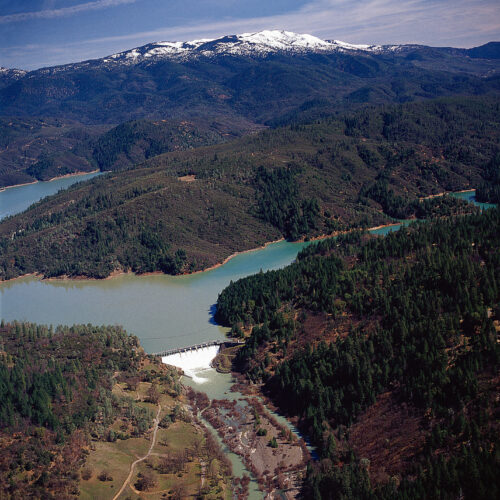
“The Trump administration has offered one of its most detailed explanations of why it wants to stop dam removal on Northern California’s Eel River, citing in a letter numerous concerns that include water, power, wildfire safety and even the state’s “radical leadership.” Still, big questions remain. Agriculture Secretary Brooke Rollins sent the three-page letter Friday in response to a Congressional inquiry about her agency’s sudden interest in a pair of relatively obscure PG&E-owned dams. The inquiry was opened in April by Rep. Jared Huffman, D-San Rafael. In the letter obtained by the Chronicle, Rollins said her agency is actively looking for someone new to operate the project, to both continue power generation and maintain water supplies. She called such a plan not only widely beneficial but financially doable. … ” Read more from the San Francisco Chronicle. | Read via MSN News.
Why is this Trump official dead set on saving a failing California dam?
“The Potter Valley Project, which dams Northern California’s Eel River, isn’t doing very much right now. Its reservoir is clogged with sediment, and drought often empties it out. The project once supported a hydroelectric power plant that could produce about 9 megawatts of electricity, which is about 1 percent of a typical fossil-fuel-fired plant, but it has not worked in years. Plus, some of its infrastructure may be at risk of collapsing during an earthquake. Like thousands of other small dams across the U.S., it is now more trouble than it’s worth. That’s why the utility that owns the project, Pacific Gas and Electric, moved last year to demolish it and undam the river. PG&E has wanted to abandon the project for decades, but a final removal agreement required years of careful negotiation. The dam project currently supplies water to vineyards and cities in Sonoma County, and it’s the sole water source for the rural farm community of Potter Valley. The final agreement was a delicate compromise: The Round Valley Indian Tribe, which has senior rights to water from the Eel, agreed to let some water flow from the river to farmers through a diversion tunnel, and the farmers agreed to accept about half the water they had received in past years when the reservoir was full. Supporters say that dam removal will restore natural water flow for vulnerable fish that have long inhabited the river. But now, U.S. Secretary of Agriculture Brooke Rollins appears determined to blow up the deal. … ” Read more from Grist.
El Nino could push temperatures higher, UN warns
“The UN weather agency on Tuesday issued an update predicting an 80% likelihood of an El Nino event between June and August of this year. El Nino is a periodic warming of sea temperatures in the central and eastern Pacific Ocean, which typically lasts between nine and 12 months, according to the WMO. The weather pattern can lead to increased temperatures worldwide, increasing rainfall to some parts of the world and prompting droughts in others, while also spurring hurricane formation in the central and eastern Pacific. The WMO said that as well as the 80% chance of El Nino beteween June and August, there was a probability “near or above 90%” of it continuing until at least November if it began. “Although some uncertainty remains about El Nino peak strength and timing, most forecast models will suggest it will be at least moderate — and possibly strong,” the WMO said. The WMO’s most senior official said it would be prudent to prepare for the most serious scenario. … ” Read more from DW News.
SEE ALSO:
- El Niño shows early signs of life. How it may impact weather by region, from the USA Today
- Prepare for imminent return of El Niño, UN warns, from The Guardian
How a deep-ocean desalination startup hopes to rewrite California’s water future

“An elephant standing full weight on a smartphone. That’s the pressure 1,400 feet underwater that a startup hopes to use to push seawater through ultrafine filters and make drinking water off the coast of Malibu — without much of the controversy that surrounds desalination. Desalination plants are notoriously large electricity users. Some have natural gas pipelines running to them to fuel dedicated power plants. The company OceanWell estimates its technology will cut that electricity use by up to 40%. Its goal is to anchor an array of units 4.5 miles offshore, at a cost of $500 million to $1 billion, to deliver 60 million gallons of water per day. That’s enough for about 400,000 people. Prompted by severe water cutbacks four years ago, the Las Virgenes Municipal Water District has been working with Menlo Park-based OceanWell to develop a cheaper, less power-hungry way to turn saltwater into drinking water without sucking in tons of sea life. In a recent test at a local reservoir, it worked. … ” Read more from the LA Times. | Read via Yahoo News.
DWR’s vision for the valley points to less irrigated farmland
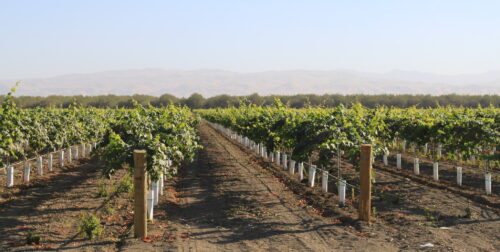 “On May 1, the California Department of Water Resources released an integrated plan, “A Vision for the San Joaquin Valley,” with strategies intended to strengthen water management. “Decades of severe groundwater overdraft and accelerating climate conditions have put the San Joaquin Valley on an unsustainable path,” DWR Director Karla Nemeth said in a press release. “This vision provides the necessary framework for climate-resilient water management, aligning partners and guiding coordinated action to safeguard communities, agriculture, and ecosystems across the region.” The “vision document” utilizes findings from three DWR planning documents — the State Water Project Adaption Strategy, San Joaquin Valley Conveyance Study, and the San Joaquin Basin Watershed Studies. Using these documents, the “vision” provides a high-level overview of their findings to inform strategies for state investment and policy. … ” Read more from Valley Ag Voice.
Cannabis rarely the top water user in Northern California watersheds, UC Berkeley study finds
“Cannabis cultivation accounts for a fraction of total water demand in northern California’s rural watersheds, drawing far less than either residential users or non-cannabis agriculture, according to a peer-reviewed study published April 22 in PLOS Water. The research, led by Christopher Dillis of the University of California Berkeley alongside Ethan Baruch of the California Department of Fish and Wildlife and Theodore E. Grantham of UC Berkeley, analyzed 14 watersheds across 10 northern California counties, comparing water demand and streamflow impacts across three user types: cannabis cultivation, residential use, and non-cannabis agriculture. Cannabis was the top water user in just 1.6% of the catchment-months sampled. Residential use held that position in 34.6% of observations, non-cannabis agriculture in 29.8%. The annual average water demand figures make the gap concrete: cannabis averaged 1,665 cubic meters per catchment annually, against 80,518 for residential use and 901,482 for non-cannabis agriculture. … ” Read more from MMJ Daily.
Defining reasonable use, one regulation at a time
“The State of California’s current constitution, which has been amended over 500 times since its adoption in 1879, requires that all uses of water must be “reasonable and beneficial.” This benign request is not accompanied by an exact definition of what that means in practice, but notes that it does not take away lawful water rights, provided that those rights are used, again, reasonably. Merriam-Webster’s Dictionary defines reasonable as being in accordance with reason, fairness, duty, or prudence. Cambridge Dictionary defines reasonable as being based on or using good judgment, therefore being fair and practical. Cornell Law School defines reasonable as just, rational, appropriate, ordinary, or usual under the circumstances. California’s reasonable use doctrine does not offer a concrete definition. According to a 2015 report from Brian E. Gray of the UC Hastings College of Law, reasonable use is described as a flexible, changing standard dependent on current water conditions, competing demands, and evolving social, economic, and environmental needs. Meaning that a water use deemed acceptable at one time may later become unreasonable as circumstances change. … ” Read more from Valley Ag Voice.
Connie Conway: USDA focused on keeping California farmers farming
“California farmers are battling rising costs, burdensome regulations, water uncertainty, and increasing pressure from policies that many believe threaten the future of agriculture in the Golden State. During a recent visit to California, USDA Farm Service Agency Executive Director Connie Conway sat down with The Ag Meter’s Nick Papagni to discuss what the federal government is doing to support growers, why specialty crop funding matters, and why she believes California agriculture deserves far more attention from state leaders. … ” Read more from AgNet West.
California Farm Bureau President Shannon Douglass discusses federal support, water challenges, and the future of agriculture
“California agriculture continues to face a complex mix of challenges, from labor shortages and water uncertainty to trade concerns and wildlife management. During a recent visit by U.S. Secretary of Agriculture Brooke Rollins to Bakersfield, California Farm Bureau President Shannon Douglass sat down with AgNet West’s Nick Papagni, host of The Ag Meter, to discuss the issues affecting farmers across the state and the importance of strong advocacy at both the state and federal levels. Douglass expressed appreciation for Secretary Rollins making her second trip to California, emphasizing the importance of federal officials hearing directly from the state’s farmers and ranchers. According to Douglas, one of the key goals of the visit was to ensure that the voices of California’s specialty crop producers are being heard in Washington, D.C. California agriculture is unique compared to many other states, particularly those in the Midwest, and growers often face different challenges when accessing federal programs and assistance. … ” Read more from AgNet West.
5 key findings from 60 years of water use in California
“Water is essential for California, supporting households, agriculture, ecosystems, and the state’s economy. Yet across the state, rivers, streams, and aquifers are stressed from overuse, and climate change and continued growth are increasing pressure on water resources. Understanding water use patterns and environmental flows is critical to informing policy and planning across the state. The analysis highlights five key findings: 1. Environmental flows are a critical part of California’s water system, but difficult to define and measure. Environmental flows support aquatic ecosystems and human well-being. Determining how much water is truly dedicated to environmental purposes is difficult due to limited direct measurement, reliance on assumptions, and inconsistent or unclear definitions. … ” Find out the other 4 at the Pacific Institute.
Scientists took water samples from a pier in California – and made a surprising discovery about a “ruthless predator”
“There’s a “ruthless predator” in the ocean that harpoons its prey and feasts on the toxic algae that can harm ecosystems when it forms huge blooms. It’s not a shark, a squid or even an ambush predator like the venomous stonefish but a type of predatory plankton called Polykrikos kofoidii. And it glows in the dark, creating slow, dim flashes of blue-green light like a broken nightlight. P. kofoidii is a dinoflagellate: a single-celled aquatic organism. Although this species is found all over the world, scientists don’t know much about it. What they do know is that, although it’s tiny, this plankton is a wily predator that uses harpoon-like structures to catch prey before swallowing them whole. According to a statement from Michael Latz, a marine biologist emeritus at Scripps Oceanography, this species is “a ruthless predator”. Among its victims are types of toxic plankton that cause problematic algal blooms (red tides). … ” Read more from BBC Wildlife.
A major fisheries bill just passed the California senate with bipartisan support
“A piece of legislation with real consequences for Northern California’s fishing communities cleared a major hurdle this week. Senate Bill 1393, carried by Senator Mike McGuire, passed out of the California Senate with bipartisan support and now heads to the Assembly for consideration. The bill targets three specific areas of the state’s fisheries management system. First, it strengthens the steelhead trout restoration program and directs more funding toward habitat projects that support the species’ recovery. Second, it updates the regulatory framework governing the Dungeness crab fishery, one of the most economically significant commercial fisheries on the entire West Coast. Third, it establishes clear rules for vessel transit through areas where crab fishing has been closed, giving boat operators a defined path forward when navigating restricted zones. … ” Read more from Active NorCal.
Tire pollution may threaten human health, study finds
“Tiny particles of rubber cast off by car tires, which have long been known to harm wildlife, may also pose a risk to humans, according to a new study. The chemical 6PPD, which is added to tires to prevent cracking, transforms when exposed to ozone pollution, which arises from car exhaust. One compound formed from this process, 6PPD-quinone, has been implicated in the deaths of spawning coho salmon in the Pacific Northwest. For decades, heavy rains have led to surges in salmon deaths as polluted stormwater washed into urban waterways. The new study finds that many of the other chemicals derived from tire wear may pose a threat to humans when inhaled. “When you oxidize one chemical from a tire, it probably makes hundreds of chemicals in the mixture,” said coauthor John Liggio of Environment and Climate Change Canada. … ” Read moire from Yale e360.
Trump taps Democrats’ climate money for Western drought
“As the drought-stricken Colorado River faces record-low flows that could set off a sprawling water and power crisis across the West, the Trump administration is opening the federal cash spigot. In recent weeks the Interior Department has contacted farm districts, cities, tribes and other water users in Arizona, California and Nevada looking to extend Biden administration contracts that paid out nearly $1.4 billion from Democrats’ signature climate law to entities that agreed to fallow fields, tighten conservation measures or otherwise forgo water deliveries. At the same time, Interior Secretary Doug Burgum ordered up a list of projects from the region’s seven governors to address the river’s long-term problems, for which the federal government could be a “potential cost-share partner.” The menu of proposals they delivered a week ago includes 85 projects totaling more than $50 billion — a price tag that far exceeds what Interior currently has in its coffers. The sudden willingness to open the federal wallet marks a sharp U-turn for the Trump administration, which froze funding for some of the same efforts last year and has overall sought to claw back billions of dollars of spending from Democrats’ 2022 Inflation Reduction Act. … ” Read more from Politico.
Congressman Valadao joins bipartisan delegation to urge funding to combat golden mussels
“Today, Congressman David Valadao (CA-22) joined Reps. Vince Fong (CA-20), Jim Costa (CA-21), and Josh Harder (CA-09) to send a letter to U.S. Fish and Wildlife Service (USFWS) Director Brian Nesvik urging immediate emergency federal funding to combat the rapidly spreading invasive golden mussel in California waterways. The letter warns that, without immediate federal support, California water agencies, farmers, and communities will continue to bear escalating costs as this invasive species spreads unchecked. … ” Read more from Congressman Valadao.
Fire-prone California could lose hundreds of millions of dollars for wildfire prevention
“With California facing increasingly destructive wildfires, experts and officials have long urged the strategic removal of dense, flammable vegetation that can erupt into particularly destructive flames from a lightning bolt or the spark of a power line. But after years of record investment by the state in such wildfire risk mitigation, two key money sources are drying up, potentially reducing the state’s annual budget for vegetation removal by hundreds of millions of dollars. Wildfire resiliency advocates are warning that the loss of these funds will leave the state vulnerable to devastation and are calling on California’s next governor to take that threat seriously. Currently, California relies heavily on two funding sources for wildfire mitigation work: a state program that charges polluters for their emissions and a climate bond approved by voters in 2024. Late Friday, however, state officials adopted a new structure for the emissions program, called cap-and-invest, that analysts say will probably reduce wildfire mitigation funding by $200 million per year. … ” Read more from the LA Times.
In commentary today …
The Forest Service is too important to be a political pawn
Dan Glickman and Ann Veneman, former secretaries of Agriculture, write, “While most folks think that the U.S. Department of Agriculture focuses on farm policy, the largest agency within USDA is the Forest Service — famous for Smokey Bear and quietly doing significant work on many fronts. As secretaries of Agriculture during the Clinton and Bush administrations, we spent years getting to know what this agency does: not only timber management but also stewardship of the 193-million-acre National Forest System across virtually every state and oversight of two-thirds of federal firefighting resources. But now, the Trump administration has taken significant steps to dramatically change the agency, following an executive order last summer to consolidate the firefighting work of USDA and Interior. In January, the Interior secretary created the U.S. Wildland Fire Service, which brings together that department’s firefighting functions — but which does not yet incorporate the Forest Service. … ” Read more from the LA Times.
In regional water news and commentary today …
NORTH COAST
A parasite is infecting nearly half the young salmon in the Klamath River
“The first detailed health data on juvenile salmon in the post-dam Klamath River is in, and the numbers are concerning. A June 1 memo from the U.S. Fish and Wildlife Service’s California-Nevada Fish Health Center reports that 46% of young Chinook salmon tested in the upper Klamath River are infected with Ceratonova shasta, a waterborne parasite that can be fatal to juvenile fish. Of those infected, 18% carry parasite loads at levels associated with mortality. That is a significant jump from 2025, when 22% of fish tested positive and none carried lethal-level infections. The testing covered 696 fish collected between March 17 and May 12 from three reaches of the upper river, from the Oregon state line down to the Scott River. The first detection occurred on April 2. By late April, infection rates in some reaches had climbed to 93% and 100% of fish sampled. … ” Read more from Active NorCal.
SEE ALSO: Klamath River Juvenile Salmon Health Monitoring Update – June 1, 2026, from the US Fish & Wildlife Service
Ukiah releases draft Water Management Plan for public review
“The City of Ukiah hereby releases its Draft 2025 Urban Water Management Plan (UWMP) and 2025 Water Shortage Contingency Plan (WSCP) for public review. The UWMP and WSCP will be available through June 17, 2026 at the City’s Council Chambers (located at 300 Seminary Avenue, Ukiah, CA 95482). An electronic (PDF) copy can also be obtained by contacting the City and requesting a PDF copy. … ” Read more from the Redheaded Blackbelt.
SIERRA NEVADA
SACRAMENTO VALLEY
San Juan Water District faces $21M budget gap from improvement projects
“The San Juan Water District is eyeing a projected $21.3 million budget deficit for the 2026-27 fiscal year, but staff said the shortfall does not signal financial trouble. The water district plans to spend about $58.15 million next fiscal year, according to a presentation to the board Thursday night. However, Finance Director Donna Silva said about $27.9 million of that total is earmarked for planned capital improvement expenditures. The district’s projected revenues are about $36.8 million. “When you are saving up money to pay for future capital projects, there’s going to be years when you’re using what you’ve saved on those projects, and therefore your expenses are going to be greater than your revenues,” Silva said. “That’s the case this (year), so that is not cause for alarm.” … ” Read more from the Sacramento Bee.
NAPA/SONOMA
Sonoma County supervisors to discuss ag industry wish-list amid economic and political headwinds for farm sector
“Sonoma County government staff are set to embark on the development of sweeping policy changes aimed at bolstering the local agriculture industry, which has been looking to officials for help in the face of mounting economic and political pressures. The Board of Supervisors on Tuesday will be asked to endorse a multi-year plan to forge and implement policy dealing with historically thorny issues, including permitting, regulation of events, nuisance complaints, zoning designations, right-to-farm rules and land conservation. The proposal also includes development of two new ordinances stemming from the local farm industry’s ongoing experience with animals welfare activists. The board on Tuesday has the option of including drone regulations and limits on targeted residential picketing in its laundry list of policy work. An OK from the board would authorize staff to move forward with policy development, but any change will need to return for further discussion and votes before implementation. … ” Read more from the Santa Rosa Press Democrat.
The fog is thinning over West County
“There’s a window most mornings in June when Coleman Valley Road goes from full sun to soft gray inside a quarter mile, and the air gets so wet your bumpers bead before you crest the next rise. Out past Occidental, the redwoods stand with their crowns dipped into cloud, the sword ferns underneath them dripping like it just rained. By mid-morning, the marine layer slides back toward Bodega Head, and the canyon air smells like salt and bay laurel. For anyone who grew up west of 116, that’s what summer is. What’s harder to admit is that it’s been getting less reliable for 75 years. West Sonoma County sits inside one of the most carefully measured fog belts on the planet, and the summer fog that made Bohemian Highway feel like its own microclimate has thinned by about a third since the 1950s. … ” Read more from the Sebastopol Times.
BAY AREA
Alameda County, Castlewood leaders still debating disputed $1.4 million charge
“With less than a month remaining in Alameda County’s fiscal year, the county Public Works Agency and the Castlewood Property Owners Association remain at loggerheads on financial issues the county wants resolved this month. That’s the takeaway from the association’s semi-annual meeting May 26 that was attended by about 30 people at The Club at Castlewood in Pleasanton. Looming over the association is fire season and the vulnerable water system that serves the fire hydrants in the hillside community served by one narrow road. Five years ago, the county, with the association and the country club paying the bill, replaced the original redwood water tanks on the hill above the club. The 150,000-gallon tanks are filled by pumps serving the wells that provide the historic water source that pre-dates the club on the Bernal property near the Arroyo de la Laguna and just north of the golf club’s Valley Course. … ” Read more from Pleasanton Weekly.
CENTRAL COAST
SAN JOAQUIN VALLEY
Tiny tags, one million tricolored blackbird detections, and new clues for conservation
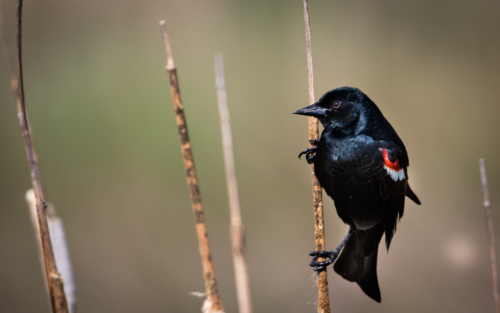
“In spring, Tricolored Blackbirds stage one of California’s great birding spectacles, amassing in the tens of thousands to breed in the Central Valley. This season, the largest colony documented so far is in Merced County, with a preliminary estimate of 29,000 birds. Like many bird species, these charismatic blackbirds are extensively studied and monitored during the breeding season—after all, this is when they are most apparent across the landscape. Less is known about their lives during the rest of the year, when they disperse across the state and mingle with their more common cousins, like the Red-winged Blackbird. Insights from full annual-cycle tracking can expand our understanding and help guide conservation decision-making. … ” Read more from Audubon.
Kern agency releases details of deal to keep taps flowing to homes near Patterson
“A reshaped agreement for the Kern County Water Agency to provide water to a housing development 200 miles to the north erased $14 million in debt, giving residents water certainty into the future just days before KCWA had threatened to shut off their supplies. Other details contained in a “letter of intent” between KCWA and the Western Hills Water District, which serves the 600-home Diablo Grande development west of Patterson, include: KCWA will make up to 1,500 acre feet a year available for purchase to Western Hills, depending on how much is allocated by the State Water Project each year. If it doesn’t need the full amount, Western Hills can return some excess water to KCWA for credit or bank it with a third party for use in dry years. … ” Read more from SJV Water.
EASTERN SIERRA
SOUTHERN CALIFORNIA
Chromium-6 particles potentially traveled 9 miles downwind from Eaton, Palisades fire areas
“UCLA and UC Davis researchers released a report that projected chromium may have traveled six to nine miles downwind from the Eaton and Palisades fire cleanup zones. Researchers found airborne chromium in the carcinogenic oxidation state two months after the fire, according to the study, published in the Journal Nature Communications Earth & Environment. The average concentrations were below the National Institute for Occupational Safety and Health workplace exposure limit but above the U.S. Environmental Protection Agency’s screening levels for indoor air. “It shows that well after the wildfires were extinguished, nanoparticles, which are so small they can enter the circulatory system very quickly, were in the air around the burn zones,” said Dr. Michael Jerrett, UCLA professor in the Department of Environmental Health Sciences, in a statement. “These probably traveled far enough to give 3.3 million people doses that were hundreds of times the levels that are normally seen in the air in Los Angeles.” … ” Read more from the LA Daily News.
Monterey Park takes landmark vote on banning data centers
“Residents in the city of Monterey Park will be the first in the nation to vote on a permanent ban on data centers Tuesday. If approved, Measure NDC would prohibit data centers within the city limits and could only be overturned by another vote. Yard signs saying “No Data Center” in English and Chinese with images of dragons line sidewalks in the San Gabriel Valley city. As a wave of data center opposition sweeps the country, numerous towns and counties across the U.S. have instituted temporary moratoria and other restrictions on the facilities. But only a handful have instituted indefinite bans, and just four other towns have sent related matters to the ballot. … ” Read more from the LA Times.
IMPERIAL/COACHELLA VALLEYS
Rep. Ruiz calls for a freeze on local data center projects, citing environmental and economic risks
“U.S. Representative Dr. Raúl Ruiz (D-CA) called for an immediate halt to proposed data center projects in his district, voicing sharp concerns over their potential impact on local utility costs, power grid stability, and public health. In a video statement released last week, Ruiz—a physician who represents California’s 25th congressional district, encompassing parts of the Imperial Valley and Eastern Riverside County—argued that the massive energy and water demands of these facilities pose an undue burden on an already vulnerable region. “I, too, am concerned that the cost of energy is going to rise for a community that already suffers from one of the highest rates of poverty in the state of California,” Ruiz said. “We need to stop; we need to study and do a full environmental impact study.” … ” Read more from the Imperial Valley Press.
SAN DIEGO
New report finds chronic pollution problems at Mission Bay creek inflows
“A new report released by San Diego Coastkeeper is raising concerns about ongoing water quality issues in Mission Bay, finding that pollution levels remain persistently high in several creek systems that flow into one of the region’s most popular recreational waterways. The nonprofit environmental agency group published its 2025 Mission Bay Water Quality Monitoring Report last week, detailing two years of monthly water quality testing at 10 locations throughout Mission Bay. The findings point to both storm-related pollution and year-round contamination sources affecting the bay, particularly at Rose Creek and Tecolote Creek. According to the report, bacteria levels surged across all monitoring sites following rainstorms. However, researchers found that both of the creeks consistently recorded elevated bacteria counts even during dry weather conditions, exceeding state recreation safety standards at least half of the time. … ” Read more from Fox 5.
San Diego Coastkeeper petitions water board to require stormwater permits for privately-owned commercial facilities polluting the San Diego River
“Today, San Diego Coastkeeper with California Coastkeeper Alliance filed a petition with the San Diego Regional Water Quality Control Board aimed at reducing stormwaterdriven pollution from privately-owned commercial, industrial, and institutional sites that generate runoff into the Lower San Diego River. Under the federal Clean Water Act, advocacy organizations like Coastkeeper can petition regulators to address regulatory gaps that lead to water pollution. Thousands of privately-owned properties in San Diego and throughout California are not being held accountable for their disproportionate contributions to toxic metals, nutrients, and other pollution in local watersheds. The petition demands that the San Diego Regional Water Quality Control Board (Regional Board) exercise its authority under the federal Clean Water Act to require stormwater permits for privately-owned commercial, industrial, and institutional, often referred to as “CII,” sites throughout the Lower San Diego River watershed. … ” Read more from the San Diego Coastkeeper.
San Diego County launches 2 studies to measure toll of Tijuana River pollution
“San Diego County is moving forward with two major research efforts to document the health and economic impacts of the Tijuana River Valley pollution crisis, partnering with UC San Diego on an air quality study while simultaneously launching a public survey to measure the crisis’s financial toll on South Bay communities. The county awarded a $250,000 contract to ECOnorthwest, an independent economic research and policy consulting firm, to conduct the economic impact survey, which targets residents, business owners, visitors and community organizations near the Tijuana River Valley. The survey asks participants about lost work, school absences, hospital visits, property values and business disruption. Results will be compiled into a report expected in fall 2026. Matthew Parr, the county’s director of economic development and government affairs, said the survey is designed to produce evidence the county can take directly to state and federal officials. … ” Read more from the San Diego Union-Tribune.
Gubernatorial candidates weigh in on Tijuana sewage crisis before voters head to polls
“As Californians prepare to head to the polls on Tuesday, the decades-long Tijuana sewage crisis is shaping up to be a key issue for many South Bay voters. Several candidates in the governor’s race recently toured the Tijuana River Valley with San Diego County Supervisor Paloma Aguirre, who has been pushing for stronger state and federal action to address the ongoing cross-border pollution crisis. During the visit, Aguirre asked candidates whether they would declare a state of emergency in response to the sewage contamination that has plagued South Bay communities for years. … ” Read more from Channel 10.
Along the Colorado River …
Snow drought and low flows in the Colorado
“The Colorado River Basin, which supports the lives and livelihoods of an estimated forty million people across the American Southwest and northern Mexico, is currently facing an unprecedented ecological and governance crisis. Driven by an acute drop in winter precipitation and escalating temperatures, the river system is drying up at a pace that far outstrips the scenarios in existing water management plans. The natural infrastructure of the region is experiencing high levels of stress, induced by high water demand and the fluctuations in water availability that result from climate change. In parallel, the seven basin states that are reliant on the river appear to have arrived at an intractable gridlock which is preventing agreement on framework which could secure their collective future. With the date at which the current operational guidelines expire looming, the Federal government faces the challenge of whether to try to impose a solution or to risk further insecurity. … ” Read more from The Water Diplomat.
Colorado’s drought isn’t over: What a record-bad winter means for rivers, agriculture and wildfire risk
“Stored water reserves in the Colorado River system continue to decline. The mismatch between natural supply and overall Basin water use is having the inevitable effect on Basin-wide storage. This paper analyzes the impact on storage in the system’s major reservoirs under two scenarios – a wet year and a dry one. Another dry year brings the system dangerously close to crashing (i.e., run-of-the-river operations), and a wet year provides only a temporary reprieve. Without significant reductions in use throughout the Basin, water users will no longer derive any benefit from the extensive and expensively-constructed Colorado River reservoir system, intended to bring reliable water supplies and associated prosperity to the southwestern United States.” Click here to read the report from UC Boulder.
SEE ALSO:
- Colorado River Basin – new report from my colleagues on the implications of running on empty, from the Inkstain blog
- Another dry winter will ‘crash’ the Colorado River, experts warn, from the Arizona Republic
About 40 million people use water from the Colorado River. Right?
“Nearly 40 million people rely on the Colorado River for water, from Wyoming to northern Arizona and beyond. That’s an estimate seen again and again in news reports and writing about the West’s most important waterway. But the exact number of people who use water from the river is unknown, says Michael Cohen, a senior fellow at the Pacific Institute who’s studied the Colorado River for decades. The institute is an Oakland, California-based water policy think tank. The number is important because it could equate to bargaining power for states and cities with bigger populations amid a 26-year megadrought, he says. And the estimate of 40 million people strikes Cohen as a little high. … ” Read more from KJZZ.
New ASU study uses satellites to make more accurate Colorado River water forecasts
“The Colorado River is stretched thin, and the amount of water in it every year has big consequences for the roughly 40 million people who depend on it. As the river feels the crunch of drought, climate change and steady demand, scientists are working to make Colorado River forecasts more accurate to help cities and farms plan for shortages. A team of researchers at Arizona State University is building models for Colorado River flows that go beyond the amount of water in the river itself, bringing in satellite data about the amount of water held in snow and soil. … ” Read more from KJZZ.
Hoover Dam, challenged by drought, now wears a U.S. flag the size of a football field
“Nope, it’s not AI. It’s just a really big flag with bright lights, draped on Hoover Dam for the next several weeks. As a display to mark the 250th anniversary of U.S. independence, the states of Nevada and Arizona and the federal Bureau of Reclamation teamed up to hang and illuminate an enormous American flag on the dam on Memorial Day. The display, scheduled to be in place through July 4, is visible to anyone crossing between Arizona and Nevada on U.S. Route 93, which goes across the top of the dam. The flag is 150 feet tall and 300 feet long, spread on the south-facing side of the dam and lit by 550 LED lights (powered by dam-generated electricity). … ” Read more from the LA Times.
Grand Canyon’s water system will finally be modernized. How will that impact visitors?
“After years of pipe breaks, water being shut off and other plumbing issues at the Grand Canyon, the National Park Service is moving forward with a new plan to modernize its water system. NPS announced Thursday it had approved a plan to upgrade the system between the North Rim developed area and the Cottonwood Campground. Officials expect construction to begin in the spring of 2027, but first they’ll have to solicit contractors, which they’ll start doing this summer. … ” Read more from KTAR.
The secret underground system keeping the Grand Canyon alive
“Every year, millions of people visiting Grand Canyon National Park stop at one of the park’s water stations. Some are standing on the rim, seeing the canyon for the first time and topping off a water bottle before continuing their trip. Others are far below, hiking through extreme heat, refilling reservoirs and pouring water over themselves to stay safe from dehydration and heat illness. That water comes from a single source: Roaring Springs, a cave-fed spring on the North Rim. Although hikers can hear and glimpse the spring from the North Kaibab Trail, there is no trail leading directly to it. Roaring Springs provides water not only for park visitors but also for the plants, animals, and ecosystems that depend on it. As the region becomes hotter and drier, protecting this vital water source is becoming increasingly important. … ” Read more from Science Daily.
Tempe water facility upgrades could disturb ancient tribal site
“Tempe is upgrading a water treatment facility, which could have negative impacts on a nearby archeological site once occupied by a tribal group. Tempe officials say the upgrades to the Kyrene Water Reclamation Facility will help support long-term water sustainability. But it also sits near a site known as Los Guanacos, which was once a village occupied by the Hohokam, or Ancestral O’odham, people. … ” Read more from KJZZ.
Chandler assesses possible impact of less water
“A vast reservoir of water hides under Chandler, and it has been there for a very long time. “Most of the water underground, in between the cracks and crevices down there, it’s mostly fossil groundwater that’s been there for millions of years,” said Simone Kjolsrud, the city’s water resources manager. There are two problems. First is that water is a finite resource, meaning that once it’s gone, it’s not coming back. Second, communities around Arizona are bracing for dramatic cuts to their share of Colorado River water. “Everyone, not just Chandler, all of the cities that are facing very similar circumstances, everyone’s going to turn to groundwater and stored water,” Kjolsrud said. “That is probably going to lead to some aquifer drawdown, and that’s going to be a challenge.” … ” Read more from Chandler News.
Utah Senate president calls on Kevin O’Leary to scale back data center by 75%
“Amid ongoing outcry over a massive, 40,000-acre data center campus being planned in northern Utah, Utah Senate President Stuart Adams announced that he’s calling for the project to be scaled back dramatically. “I’ve sent a letter directly to Kevin O’Leary calling for a 75% reduction in the proposed data center project area, from 40,000 acres to approximately 10,000 acres,” Adams said in a prepared statement issued Monday. “I am also requiring that any excess water be treated and dedicated to the Great Salt Lake, even though none of the water currently used in that area flows to the lake.” Adams — who is running for reelection against two Republican challengers in the upcoming June 23 primary — is a longtime board member of the Military Installation Development Authority, known as MIDA, which is a powerful special district that’s overseeing the project’s development in Box Elder County. … ” Read more from the Utah News Dispatch.
Colorado officials call for more state actions to combat impacts of drought
“Members of the Colorado Drought Task Force want Gov. Jared Polis to issue an emergency proclamation to unlock more help, potentially from state coffers, in face of worrisome drought conditions. After a historically bad winter that ended a month early, Colorado is already feeling the impacts — whether that’s financial strain, tough business decisions or an overstressed environment. As part of the state’s response, the task force recommended Monday moving into the highest level, phase three, of the state’s drought response plan. The move could allow the state to tap more resources or seek a presidential declaration. “Moving to phase three and declaring a drought emergency is something we should do as soon as possible,” said Nate Pearson, assistant director for water policy for the Colorado Department of Natural Resources. “I would encourage the group to think beyond the bare minimum required in phase three and think through what recommendations we’d be confident could have positive impacts now.” … ” Read more from the Colorado Sun.
In national water news today …
Report calls for stricter fertilizer rules as US nitrate pollution crisis grows
“Lax regulations and mismanaged applications in the US are to blame for the tons of nitrogen fertilizer that runs off into waterways each year and contributes to water and air pollution, cancer and environmental damage, according to a report released Monday. US farmers annually apply over 11 million metric tons of nitrogen fertilizer, according to the US Department of Agriculture (USDA), making it the most used fertilizer in the country. The new report, published by the Natural Resources Defense Council (NRDC), finds that an estimated half of these nutrients aren’t taken up by crops, but leach into the environment instead in ways that cost the US billions of dollars annually in water treatment costs, beach closures and habitat loss. Most of the costs hit small and rural farming communities, the report states. “Excessive fertilizer use is poisoning water, air and wildlife … it is outrageous and unacceptable,” said J.P. Rose, a director of soil health, nature at NRDC and co-author of the new report. “We need commonsense guardrails on nitrogen overapplication and runoff.” … ” Read more from the New Lede.
Fisheries and climate research would be hit hard in Trump’s proposed budget
“Physicist Stephen Volz had been working with colleagues at the U.S.’s National Oceanic and Atmospheric Administration for nearly 10 years to produce a new generation of geostationary satellites — instruments that would provide critical observations about atmospheric conditions, climate patterns and weather. But when Donald Trump returned to office in January 2025, this long-term project was thrown into disarray. “This administration canceled three of the five instruments on that program,” Volz, the assistant administrator for NOAA’s National Environmental Satellite, Data, and Information Service, who has been on administrative leave since July 2025, told Mongabay. The cancellations applied to instruments that measured air pollutants, tracked lightning to forecast hurricanes and tornadoes, and monitored ocean color to detect events such as algal blooms, sargassum seaweed surges and salinity changes, according to Volz. “They said, ‘those are all wasted money, they’re climate alarmist, I don’t need air quality, I don’t need ocean color,’” Volz said about the administration’s decision. … ” Read more from Mongabay.
Trump administration to dismantle ocean monitoring system
“The Trump administration is dismantling a $368 million deep-ocean observation system that was put in place a decade ago to monitor coastal environments, marine ecosystems and powerful currents that affect the global climate. The National Science Foundation said it would send ships in June to begin removing more than 900 deep-sea instruments anchored off Oregon, Washington State, Alaska, North Carolina, and an area between Greenland and Iceland known as the Irminger Sea. Scientists have used data from the system to understand how the ocean is absorbing greenhouse gases from the atmosphere, how changes in ocean temperature such as marine heat waves might affect fisheries or signal bigger shifts in the climate, and coastal flooding along the East Coast. The station in the Irminger Sea has been key to understanding changes in the Atlantic Meridional Overturning Current, a global conveyor belt of water that some scientists are concerned may be weakening as a result of climate warming. A collapse of the current could have severe weather effects. … ” Read more from the New York Times.
Why the Arctic’s rivers are rusting
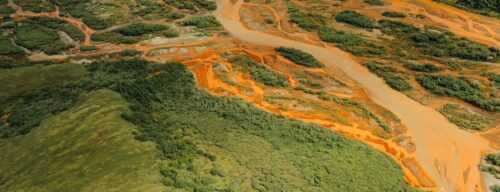
“Scientists have identified the two biggest reasons that once-pristine rivers across the Arctic are growing cloudy with toxic orange iron particles that smother insects and suffocate fish. A new study published in Communications Earth & Environment builds on earlier research documenting widespread contamination in Alaska’s Brooks Range. As the climate warms, a layer of Arctic soil that had been frozen for millennia has begun to thaw. Previous studies suggested that thawing permafrost was the ultimate cause of the damage. This new study proves that beyond a shadow of a doubt. The new study also reveals two distinct ways in which thawing soil is rusting rivers and helps scientists predict where the damage is likely to spread next. … ” Read more from the UC Riverside.

