
Several news sources featured in the Daily Digest may limit the number of articles you can access without a subscription. However, gift articles and open-access links are provided when available. For more open access California water news articles, explore the main page at MavensNotebook.com.
On the calendar today …
- PUBLIC HEARING: Delta Conveyance Project water right hearing beginning at 9am. The State Water Resources Control Board Administrative Hearings Office is holding a Public Hearing on the pending Petitions for Change of Water Right Permits for the Delta Conveyance Project. Interested members of the public who would like to watch this hearing without participating may do so through the Administrative Hearings Office YouTube channel at: bit.ly/aho-youtube. Click here for the meeting notice.
In California water news today …
Sinking land, shrinking capacity: DWR confronts subsidence on the California Aqueduct
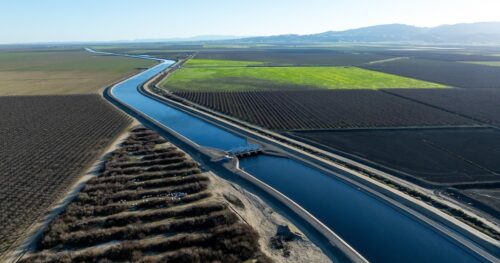
“At Metropolitan Water District’s May Imported Water Subcommittee meeting, Christopher Martin, executive policy advisor for the State Water Project at the California Department of Water Resources, outlined the extent of subsidence along the California Aqueduct, the state’s response strategy, planned corrective measures, and the funding now being assembled for repairs. Subsidence occurs when groundwater pumping lowers water levels and reduces pore pressure in the aquifer system, causing the fine-grained clay and silt layers in the sediments to compact. In the San Joaquin Valley, those compressible clay-rich layers are especially important: they act like weak, water-bearing cushions between coarser sand and gravel aquifers. When pumping draws down groundwater, the clays slowly drain and compress, and much of that compaction can be permanent. As those buried layers thin, the land surface above sinks. Because the sinking is often uneven from place to place, it creates differential subsidence that can distort the slope and freeboard of infrastructure such as the California Aqueduct, reducing conveyance capacity and increasing repair needs. … ” Continue reading from Maven’s Notebook.
A dam good job: Beavers as ecosystem engineers
“Beavers are often misunderstood and can be considered pests, but these remarkable animals are powerful allies in building climate resilience and restoring ecosystems. Once nearly wiped out across California, beavers are now being recognized for their critical role in shaping wetlands to better support wildlife. Through their dam-building and burrowing behaviors, beavers can help repair degraded streams and increase ecosystem functions, earning them the title of “ecosystem engineers.” The benefits that beavers provide extend to more than just other wildlife. Their engineering can also support human communities in meaningful ways, including drought and fire resilience, water storage, and flood mitigation. … ” Read more from FishBio.
Public hearing set on Sites Reservoir by supervisors
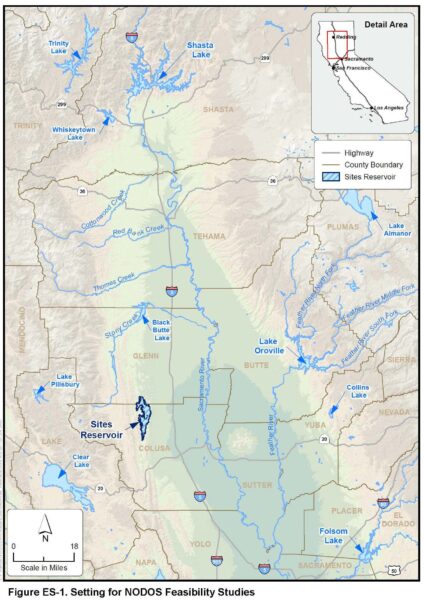 “Yolo supervisors are scheduled to hold a public hearing Tuesday on a development agreement for the Sites Reservoir Project in Northern California. If built, Sites Reservoir would be the largest new reservoir in California in the past 50 years. The $4.5 billion off-stream project proposed for Colusa County would divert water from the Sacramento River in wet years for use in dry years. The 1.3- to 1.5 million acre‑foot reservoir would be located west of Maxwell in Colusa and Glenn counties. Construction is expected to begin in late 2026, with operations anticipated by late 2033. Supervisors endorsed the project in 2023. But on Tuesday the board will be asked to OK an agreement that provides Yolo County with “certain assurances and public benefits in exchange for the County’s agreement not to change any local requirements that might increase construction costs or otherwise create unpredictability during the period of Project construction.” … ” Read more from the Daily Democrat.
California agriculture, water, and regulations take center stage in AgNet News Hour discussion
“The AgNet News Hour focused heavily on California politics, agriculture policy, water management, labor concerns, and the future of farming during a wide-ranging June 1 broadcast featuring political analyst David Collenberg and discussions surrounding the upcoming gubernatorial race. Hosts Nick Papagni and Josh McGill opened the program by discussing frustration among farmers and ranchers who feel agriculture is being overlooked in statewide political debates despite California producing much of the nation’s food supply. “We need leadership that understands agriculture,” Papagni said during the broadcast as the conversation shifted toward regulation, water storage, energy costs, and food production. … ” Read more from AgNet West.
Reclamation streamlines hydropower reviews
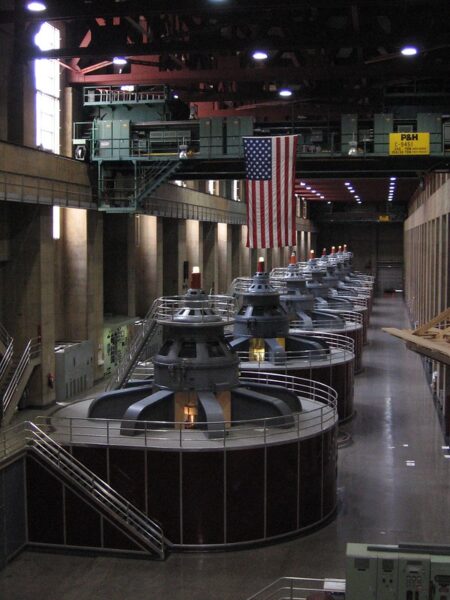
“The Bureau of Reclamation announced on Friday that it has adopted two new categorical exclusions under the National Environmental Policy Act, commonly known as NEPA. The move is part of the agency’s ongoing Hydropower Action Plan and is designed to streamline environmental reviews for certain hydropower activities that have historically shown no significant environmental impacts. According to Reclamation, the new exclusions are intended to reduce review times for specific categories of work while allowing agency staff to focus more attention on projects that may have greater environmental consequences. … ” Continue reading at Western Water.
SEE ALSO: Reclamation introduces new hydropower exclusions to accelerate NEPA reviews, from International Water & Power
What’s the logic of “hydrological” – One of science’s petty debates
Dr. Jay Lund writes, “I have always wondered, but have been too embarrassed to ask, “Are there any formal or informal differences between “hydrologic” and “hydrological”?” So I asked one of the oracles of our age, ChatGPT. Edited for length, here is what I got back: “Short answer: no formal difference in meaning—but there are disciplinary, stylistic, and regional preferences. Hydrologic and hydrological mean the same thing: Relating to hydrology—the science of water in the environment. There is no difference in scope, rigor, or correctness in scientific or legal contexts. “Hydrologic model” = “hydrological model”; “Hydrologic cycle” = “hydrological cycle”. Both are acceptable in peer-reviewed literature. … ” Continue reading at the California Water Blog.
2025 wildfires were the costliest ever, researchers say
“Even though the total area burned was relatively small, 2025 was the most economically damaging wildfire year on record, according to a new analysis published on Sunday. The Los Angeles fires and a handful of severe blazes in other countries, including South Korea and Spain, drove up losses worldwide to at least $54 billion, the study estimates. It was the highest level of insured losses on record. That figure does not include all indirect losses like missed work days, business closures and added pressure on health care systems. It is also a conservative estimate, because insurers do not typically share proprietary data and the damage can be difficult to assess in some countries. … ” Read more from the New York Times.
In regional water news and commentary today …
NORTH COAST
5,800 rainbow trout faced a ‘bleak’ death sentence. An emergency rescue saved them.
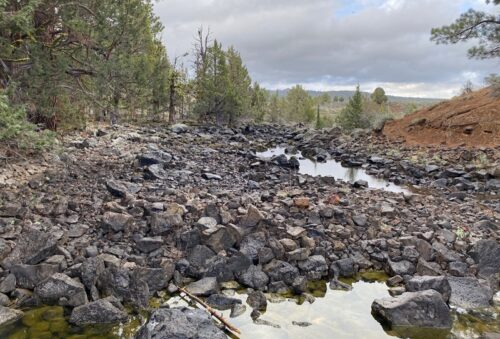
“North of Susanville, on the edge of the Great Basin, Eagle Lake is a wild and beautiful body of water with an undulating shoreline. Sagebrush flats roll off to the north. Pine and fir trees border the southern edge of the lake. It’s the second largest freshwater lake that’s entirely within California, a closed basin with alkaline water, one main tributary and no outlet. Out of that unique environment came a remarkable subspecies of colorful and resilient rainbow trout: the Eagle Lake rainbow trout. Among its attributes, it can survive in severe conditions and outlives other species of rainbow trout: The oldest on record is 11 years old, compared to the 4- to 6-year average lifespan. The trout’s resilience and adaptability is one reason why it plays such a big role in the California Department of Fish and Wildlife’s hatchery operations. The department stocks Eagle Lake rainbow trout in waters across the state for recreational fishing. … ” Read more from SF Gate.
SACRAMENTO VALLEY
Tehama County moves toward implementing groundwater usage fees
“The majority of Tehama County residents could have new fees on the way for the water they use after the county approved a new ordinance establishing fees for groundwater extraction and administration of local basins. “The money has run out and it’s time for us to, like many other jurisdictions, to fund this through our local resources,” said Matt Hansen, chair of Tehama’s Board of Supervisors on the fees. Hansen explained the ordinance is the latest step in a process the county started in 2014 following the state’s passing of the Sustainable Groundwater Management Act. The SGMA requires each county take steps to mitigate lowering ground water levels. At the time Tehama received a number of grants to assist the process. However 12 years later, Hansen said the funding is on it’s last leg. … ” Read more from KRCR.
BAY AREA
Marin Municipal Water District set for next phase of salmon habitat restoration
“Another segment of Lagunitas Creek will get work this summer to restore spawning habitat for endangered fish. The Marin Municipal Water District has hired Hanford Applied Restoration and Conservation to do the work from August through the fall. The $1.13 million contract approved Tuesday includes a 15% contingency for unforeseen expenses. The project is called “phase 1c.” It’s a single site near the Leo T. Cronin Fish Viewing Area that was initially supposed to be completed as part of the construction package last fall. “This is the final site of phase one, which will bring our total number of sites to eight,” said Jonathan Koehler, fisheries program manager at the Marin Municipal Water District. “This reach has historically been one of the highest spawning density reaches for coho, and so it’s exciting that we’ve hopefully really improved conditions in that section of the creek that the fish want to use the most.” … ” Read more from the Marin Independent Journal.
Marin Municipal Water District begins design for Soulajule pump station project
“The Marin Municipal Water District is moving forward with plans to make its remote reservoir in northwestern Marin a more reliable source of water. On Tuesday, the district board approved a contract amendment worth up to $2.01 million with Kennedy Jenks Consultants to design a project to electrify the pump station at Soulajule Reservoir. The pump station has two 800-horsepower pumps, which require more electrical power than available from Pacific Gas & Electric Co. at the site. When the district needs to tap the water supply, it powers the station using a portable 1-megawatt diesel generator rented on an as-needed basis, said Zak Talbott, engineering manager for the water district. “Electrification will allow Marin Water to transfer water from Soulajule Reservoir to Nicasio Reservoir more quickly and reliably, improving operational flexibility and enabling Marin Water to utilize the stored water supply at Soulajule Reservoir on a more regular basis,” Talbott said. … ” Read more from the Marin Independent Journal.
Thousands told to stay out of water in California—‘dangerous conditions’
“Thousands of beachgoers along California’s coastline are being urged to “remain out of the water” as forecasters warn of “dangerous swimming and surfing conditions” driven by powerful ocean swells. The National Weather Service (NWS) has issued a Beach Hazards warning—which is in place until Tuesday morning—covering large stretches of the Pacific coast, including San Francisco, the Coastal North Bay (such as Point Reyes National Seashore), the San Francisco Peninsula Coast, Northern and Southern Monterey Bay, and the Big Sur coastline. According to the NWS, the alert has been triggered by a long-period southwest swell, which is a series of powerful, widely spaced waves generated by distant Pacific storms. … ” Read more from Newsweek.
April showers help boost summer reservoir levels in the East Bay
“Reservoir levels in the East Bay are above average for this time of year, signaling residents won’t have to conserve water – or incur extra drought-related charges – in the coming summer months. Water storage levels are nearly full at 96%, according to the most recent East Bay Municipal Utility District water supply report. Nelsy Rodriguez, a public information representative for EBMUD, said that an early Sierra Nevada snowpack melt, in addition to a lot of April rain, helped refill reservoirs. “We are in a strong position heading into summer. We are well above any potential drought trigger,” Rodriguez said. “We have enough storage now to meet our customers’ needs.” … ” Read more from KQED.
Levee improvement project near Martinez treatment plant begins June 1
“The Contra Costa County Flood Control and Water Conservation District will begin construction June 1 on a levee improvement project designed to strengthen flood protection around the Central Contra Costa Sanitary District wastewater treatment plant in Martinez, according to county officials. The project, scheduled to continue through Dec. 31, will raise the western levee along Grayson Creek and Walnut Creek between State Route 4 and the BNSF railroad tracks, county officials said. … ” Read more from Local News Matters.
East Palo Alto receives $2.6M in federal funding for safety, flood protection projects
“East Palo Alto has secured $2.6 million in federal funding for two projects aimed at improving public safety, infrastructure, and flood resilience, city officials announced Tuesday. The largest award, $2 million, will fund safety improvements along Woodland Avenue between University Avenue and Newell Road, according to city officials. Planned upgrades include new sidewalks, ADA-accessible features, traffic-calming measures, pavement repairs, drainage improvements, and updated roadway signs and striping. … ” Read more from Palo Alto Online.
CENTRAL COAST
CZU Lightning Complex fires weren’t first of its kind, UC Santa Cruz researchers say
“In 2020, the CZU Lightning Complex fires burned through over 86,000 acres in the Santa Cruz Mountains. Over 1,000 homes were destroyed and the impacted communities still feel the reverberations of the disaster over five years later as they work to rebuild. The blaze was the largest ever recorded in Santa Cruz County, and was widely thought to be unprecedented. But according to a research project out of UC Santa Cruz, large-scale fires like the CZU Complex have burned through Santa Cruz redwood forests before. As factors including climate change increase fire risk, collective land management and risk mitigation will be key to avoiding massive fires, said UCSC professor of anthropology Andrew Mathews, who led the research team. “We’re not completely at the mercy of climate change,” Mathews said. “We have some choices that we can make.” … ” Read more from the San Jose Mercury News.
‘Herculean’ effort combats avian influenza outbreak in California’s marine mammals, birds
“The avian influenza outbreak that put some of California’s most beloved marine mammal and sea bird populations at risk has subsided in marine mammals, according to officials who confirmed no positive cases have been detected since March 14. The outbreak in Monterey Bay National Marine Sanctuary marks the first cases of highly pathogenic avian influenza (HPAI) in marine mammals in California and the first detection in northern elephant seals, California sea lions and southern sea otters. The disease decimated populations of other marine mammal species elsewhere, including southern elephant seals in Argentina in 2023. “This is exceptionally rapid detection and close monitoring of an outbreak in free-ranging marine mammals,” said Dr. Christine Johnson, director of the Institute for Pandemic Insights at the UC Davis Weill School of Veterinary Medicine. “We most likely identified many of the initial cases here because of coordinated teams that have been on high alert with active surveillance for this disease for some time.” … ” Read more from the Monterey Herald.
SAN DIEGO
Waterkeepers petition local water board to require stormwater permits for commercial facilities polluting Chino Creek
“Today, California Coastkeeper Alliance, Inland Empire Waterkeeper, and Orange County Coastkeeper filed a petition with the Santa Ana Regional Water Quality Control Board to reduce stormwater pollution from privately owned commercial, industrial, and institutional sites that generate runoff into the Chino Creek watershed in San Bernardino and Riverside Counties. Under the federal Clean Water Act, private organizations like Waterkeeper can petition regulators to address regulatory gaps that lead to water pollution. Hundreds of privately-owned properties throughout the Inland Empire — including massive logistics and warehousing campuses, retail centers, and industrial facilities — are not being held accountable for their disproportionate contributions to toxic metal pollution in Chino Creek and its tributaries. … ” Read more from the San Diego Coastkeeper.
Grant money sought to save lagoon on Carlsbad-Oceanside border
“Regional planners still need at least $3 million more to finish a final design and obtain permits before any sand is shoveled in the long-awaited restoration of the Buena Vista Lagoon at the borders of Carlsbad and Oceanside. A recent federal budget earmark allocated an additional $1 million that could help the San Diego Association of Governments advance the project, SANDAG Senior Regional Planner Kim Smith said Thursday. The money is expected in grants to be distributed by the National Oceanic and Atmospheric Administration. “We will know by September,” Smith said. Construction is estimated to be in the neighborhood of $150 million, with most of that to come from state and federal grants yet to be awarded. However, costs everywhere are rising rapidly, which is a concern, and when the final design is ready in a few more years, it will include a better estimate of the total. … ” Read more from the San Diego Union-Tribune.
Two weeks after emergency repairs, Tijuana wastewater line collapses again
“A pipeline that carries wastewater through Tijuana has collapsed again — just two weeks after Mexico made emergency repairs to the same line. The U.S. Section of the International Boundary and Water Commission (IBWC) on Saturday reported an overnight collapse on the Parallel Gravity Line. The cause of the collapse is unknown. Mexico has shut down several pumps along the border to allow crews to make repairs. That same line failed on May 14, resulting in emergency repairs that were completed on May 16. Area residents may notice increased wastewater flows into the Tijuana River Channel, along with stronger than usual odors. The IBWC said it’s monitoring expected flows, sediment, and trash in the canyon collectors and is ready to respond. … ” Read more from the Coronado Times.
Fixes for the Tijuana sewage crisis are focused downstream, in San Diego. The real problem is upstream, in Tijuana
“For more than three decades, federal, state and local officials have focused attempts to stop sewage-laden flows that contaminate southern San Diego County beaches, poison the Tijuana River Valley and sicken thousands by expanding a treatment plant in San Ysidro. But that fixation obscures a basic truth embraced by many experts: The Tijuana River sewage crisis can’t be fixed downstream in the United States. “I don’t think there’s any realistic scenario where downstream investments alone can solve this problem,” said Paul Ganster, a professor and director emeritus of San Diego State University’s Institute for Regional Studies of the Californias. Ganster has worked on transborder issues, including sewage flows, since 1980. … ” Read more from the Times of San Diego.
Along the Colorado River …
Colorado River Basin faces mixed drought picture
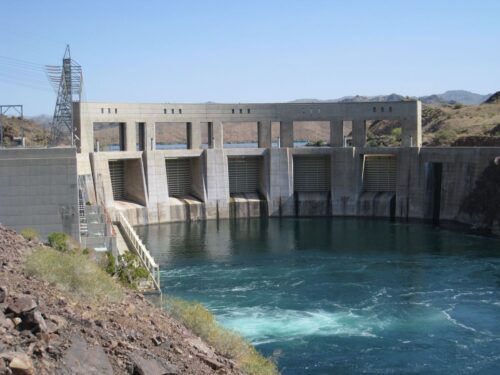 “As the calendar approaches summer, the drought picture across the United States remains highly uneven. While heavy rainfall brought relief to large portions of the South, Southeast, and Mid-Atlantic during the week ending May 26, much of the West continued to experience warm temperatures and generally dry conditions. According to the latest U.S. Drought Monitor report released May 28, 2026, the Colorado River Basin states continue to face a mixed set of challenges shaped by precipitation patterns, streamflow conditions, and lingering impacts from a relatively weak winter snow season. … ” Read more from Western Water.
The 85-year history of the Colorado River Aqueduct
“The 85-year old Colorado River Aqueduct – which was constructed over a 8-year period beginning in 1933, is a major water conveyance system that brings 1.2 billion gallons of Colorado River water to Southern California every day. The aqueduct was paid for by voters in 13 Southern California cities who overwhelmingly approved a $220 million municipal bond in order to finance the monumental construction project. Managed by the Metropolitan Water District of Southern California, the aqueduct stretches 242 miles across the Colorado and Mojave deserts, tunnels under two mountain ranges, and rises a total of 1,617 feet in elevation from its starting point downstream of Parker Dam near Lake Havasu. … ” Read more from Coyote Gulch.
New ASU study uses satellites to make more accurate Colorado River water forecasts
“The Colorado River is stretched thin, and the amount of water in it every year has big consequences for the roughly 40 million people who depend on it. As the river feels the crunch of drought, climate change and steady demand, scientists are working to make Colorado River forecasts more accurate to help cities and farms plan for shortages. A team of researchers at Arizona State University is building models for Colorado River flows that go beyond the amount of water in the river itself, bringing in satellite data about the amount of water held in snow and soil. New research published in Scientific Reports shows how scientists at ASU’s Center for Hydrologic Innovations worked to hone a satellite model called the Variable Infiltration Capacity — or VIC — to work in the unique environments of the Colorado River basin. … ” Read more from KJZZ.
‘A living, breathing thing’: As Lake Powell drops, Glen Canyon’s once lush ecosystem returns
““We’re entering beaver land!” Zanna Stutz yelled joyfully. Stepping lightly over slick, wobbly mud and splashing through ankle-deep water, she approached a small dam created by nature’s engineers. A Woodhouse toad began croaking, harmonizing with the water trickling through a stack of sticks and chewed logs. Stutz, the program director of the Glen Canyon Institute, and other environmental advocates looked for the amphibian. They spotted one hiding in the willows next to the stream. A few steps later, they saw another swimming in the water pooled behind the dam. “That’s a great indicator of really good water quality,” said David Wegner, a founding trustee of the Glen Canyon Institute and former Bureau of Reclamation scientist. “How cool is that?” As the group continued up Davis Gulch — one of the 127 side canyons that have reemerged as Lake Powell has receded — more beaver dams came into view. Each dam gave the stream a different pitch and rhythm as the water flowed over and through woven branches and twigs. … ” Read more from the Salt Lake Tribune.
Uranium problem could keep Colorado’s newest reservoir in limbo for months after initial fill
“A reservoir built to serve nearly a million Northern Coloradans started filling this spring. But Chimney Hollow’s future is still murky weeks after the initial fill. Chimney Hollow will eventually pull water from the Colorado River near its headwaters in Grand County to serve a dozen fast growing cities on the Front Range from Broomfield to Greeley. “Water storage is such a key element of our overall water supply in northern Colorado, and this just adds another increment of that supply to a region where our water demands continue to grow,” Northern Water operations manager Jerry Gibbens said in April as water slowly started filling the reservoir. But the filling operation stopped 12 days later, way short of its maximum capacity of 29 billion gallons. … ” Read more from KUNC.
In national water news today …
Trump lifts restrictions on off-road vehicles on public lands
“President Trump on Friday rescinded two decades-old executive orders that restricted off-road vehicles on public lands, in a move that could lift prohibitions on their use in most national parks. The first executive order, signed by President Richard M. Nixon in 1972, established strict criteria for the use of off-road vehicles on federal lands, in an effort to minimize their environmental impact. The second, signed by President Jimmy Carter in 1977, authorized the government to immediately shut down off-road driving if it was causing ecological damage. Both orders applied to a variety of vehicles designed to drive on unpaved surfaces like dirt, sand, gravel, mud, rocks and snow. That included all-terrain vehicles, dirt bikes and snowmobiles. In a fact sheet, the White House called both executive orders “outdated and burdensome,” noting that they were issued before the advent of modern technologies that can help the government detect off-road vehicle tracks in sensitive ecosystems. … ” Read more from the New York Times.
Congress set for summer sprint on energy, environment policy
“Lawmakers’ return to Capitol Hill this week marks the beginning of a two-month sprint in which permitting reform, government spending bills and party-line budget packages will make up just a fraction of Congress’ jam-packed agenda. The House and Senate are facing a mountain of legislative priorities ahead of the August recess, and lawmakers are hoping to make meaningful progress on each one before entering the summer and fall campaign season. The upcoming scramble will be a major test of Congress’ ability to firm up bipartisan deals on a number of priorities with implications for energy and environment policy. It will be a particularly pivotal time for Republican leaders, who will try to advance two partisan spending and tax packages filled with conservative wins they hope to campaign on. “I’m not saying it’s easy; I mean, our margins are thin just to get consensus with our own party,” House Budget Chair Jodey Arrington (R-Texas) said recently on CNBC’s “Squawk Box.” “It’s a tough process.” … ” Read more from E&E News.

