
A wrap-up of posts published on Maven’s Notebook this week …
Note to readers: Sign up for weekly email service and you will receive notification of this post on Friday mornings. Readers on daily email service can add weekly email service by updating their subscription preferences. Click here to sign up!
In California water news this week …
Sites Project Authority urges revisions to draft water rights permit
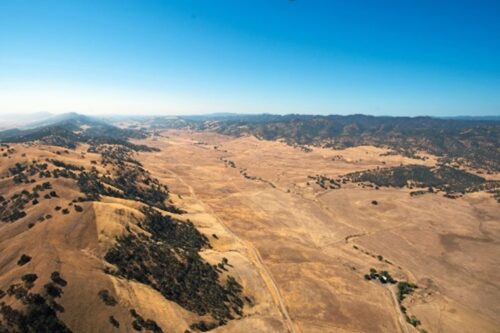
“[Yesterday], the Sites Project Authority released the following statement related to its comments on the State Water Resources Control Board (State Board) Administrative Hearings Office’s (AHO) Draft Decision and Permit for the Sites Reservoir Project (Project): “The Authority appreciates that the AHO has tentatively determined in the draft permit that almost 1 million acre-feet of water is available to be appropriated from the Sacramento River for the Sites Reservoir Project. This is a major finding that paves the way for a successful Project. However, some of the proposed conditions for diversion and release of this water reflected in the draft permit greatly risk undermining the viability of the Project and need to be addressed before the AHO submits the proposed order to the State Board, currently scheduled for July 15, 2026. Our comments, submitted on May 22, 2026, identify several Draft Permit conditions that, as currently written, would significantly constrain Project operations and materially reduce Project yield—without corresponding public or environmental benefit. … ” Continue reading this press release from the Sites Project Authority.
Draft permit conditions could shrink Sites Reservoir’s water yield
“The Sites Project Authority submitted comments on a draft water permit for the Sites Reservoir Project, expressing concerns that some proposed conditions could undermine the project’s viability. The authority filed its comments on May 22, 2026, with the State Water Resources Control Board’s Administrative Hearings Office. The authority praised the office’s tentative determination that almost 1 million acre-feet of water is available for appropriation from the Sacramento River for the project. However, officials said certain permit conditions need revision before the proposed order goes to the State Board, currently scheduled for July 15, 2026. “The Authority appreciates that the AHO has tentatively determined in the draft permit that almost 1 million acre-feet of water is available to be appropriated from the Sacramento River for the Sites Reservoir Project. This is a major finding that paves the way for a successful Project,” the authority said in a statement. … ” Read more from KRCR.
A new bill could bypass water rights review to advance the Delta tunnel. Salmon groups are fighting it.
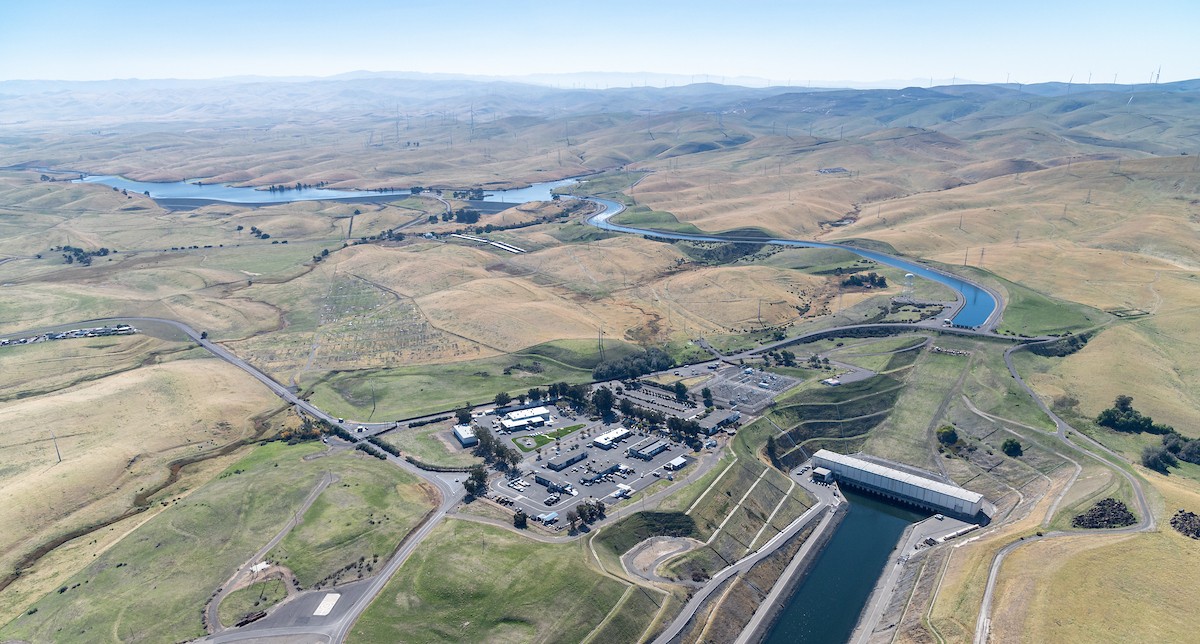
“California’s salmon fishery just reopened after three devastating years of closures. Now fishing groups say a bill moving through the legislature could put the recovery at risk. The Golden State Salmon Association is urging Californians to contact their Assembly members and oppose AB 2215, a bill designed to advance the proposed Delta Tunnel by bypassing the normal water rights review process at the State Water Resources Control Board. A California court recently ruled that the Department of Water Resources does not currently hold the water rights needed to divert additional water through the proposed tunnel. Rather than going through the standard review process, which includes public oversight and scientific evaluation, AB 2215 would attempt to change those expired 60-year-old water rights through legislation. … ” Read more from Active NorCal.
A water renaissance plan for California, from the Bay-Delta Flow Coalition
“The Water Renaissance Plan (the Plan), published May 2026, is a new 27-page proposal for a sustainable water future for California. It was developed by a coalition of entities that include California Sportfishing Protection Alliance, Defenders of Wildlife, Friends of the River, Golden State Salmon Association, LA Waterkeeper, Resource Renewal Institute, Restore the Delta, San Francisco Baykeeper, Sierra Club California, Winnemem Wintu Tribe, and Yosemite Rivers Alliance. To date, the Plan has now been endorsed by 28 organizations. The major thrust of the Plan is to develop alternative water supplies for urban areas in southern California. The Plan offers a path away from importing water from northern California. High levels of exports from northern parts of the state harm native species of fish, other flora and fauna, and northern California communities. … ” Read more from the California Sportfishing Protection Alliance.
Fine tuning the “Water Renaissance” Plan
Edward Ring, Director of Water and Energy Policy at the California Policy Center, writes, “The recently released “Water Renaissance” plan, a product of “conservation groups and tribes,” gets a very big idea right. There is no reason why California’s coastal megacities should have to import water. With that one visionary presumption, this report has made a major contribution. In fact, it doesn’t go far enough. With massive, targeted investments, California’s coastal cities might even be positioned to export water. Push the annual surplus east. Dump it in the Salton Sea. Beyond the big idea, however, this “new vision for a sustainable water future” scores hits and misses. One big hit is their claim that California’s coastal cities could produce up to 800,000 acre feet per year through wastewater recycling, and another 600,000 acre feet per year through stormwater harvesting. Those numbers may actually be on the low side. … ” Read more from Edward Ring.
DWR updates Water Commission on Bulletin 118, the latest groundwater conditions report, the groundwater trading workplan and the new subsidence BMP
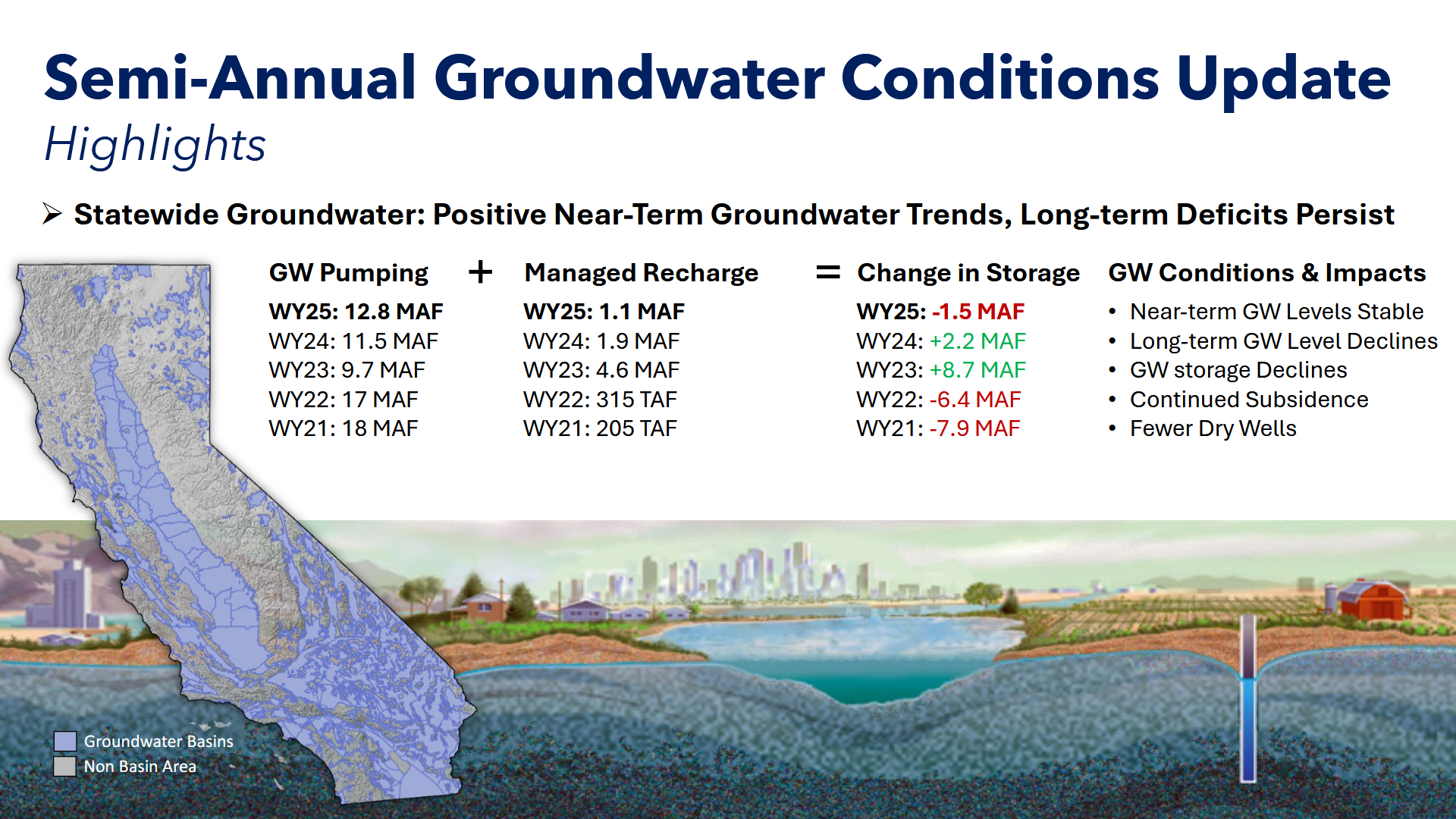 “At its May 20 meeting, the California Water Commission received an update on implementation of the Sustainable Groundwater Management Act, with DWR officials outlining new groundwater reporting, emerging work on groundwater trading and a renewed push to address land subsidence. The presentation was given by DWR Technical Assistance Section Lead Stephen Springhorn, Senior Engineering Geologist Andrew Morgan and Shane Edmunds, lead of the Groundwater Sustainability Plan Review Section. The briefing covered the 2025 update to California’s Groundwater Bulletin 118, the spring semi-annual groundwater conditions report, groundwater trading and the department’s new subsidence best management practice. “It can’t be overstated, groundwater’s importance to California’s water portfolio and to the communities, ecosystems, industries, and agriculture that rely on groundwater, so we’re trying to meet that importance with more timely, accessible, and relevant information on groundwater, so it can be fed into water planning in the state,” said Mr. Springhorn. … ” Continue reading at Maven’s Notebook.
California groundwater recovery stalls
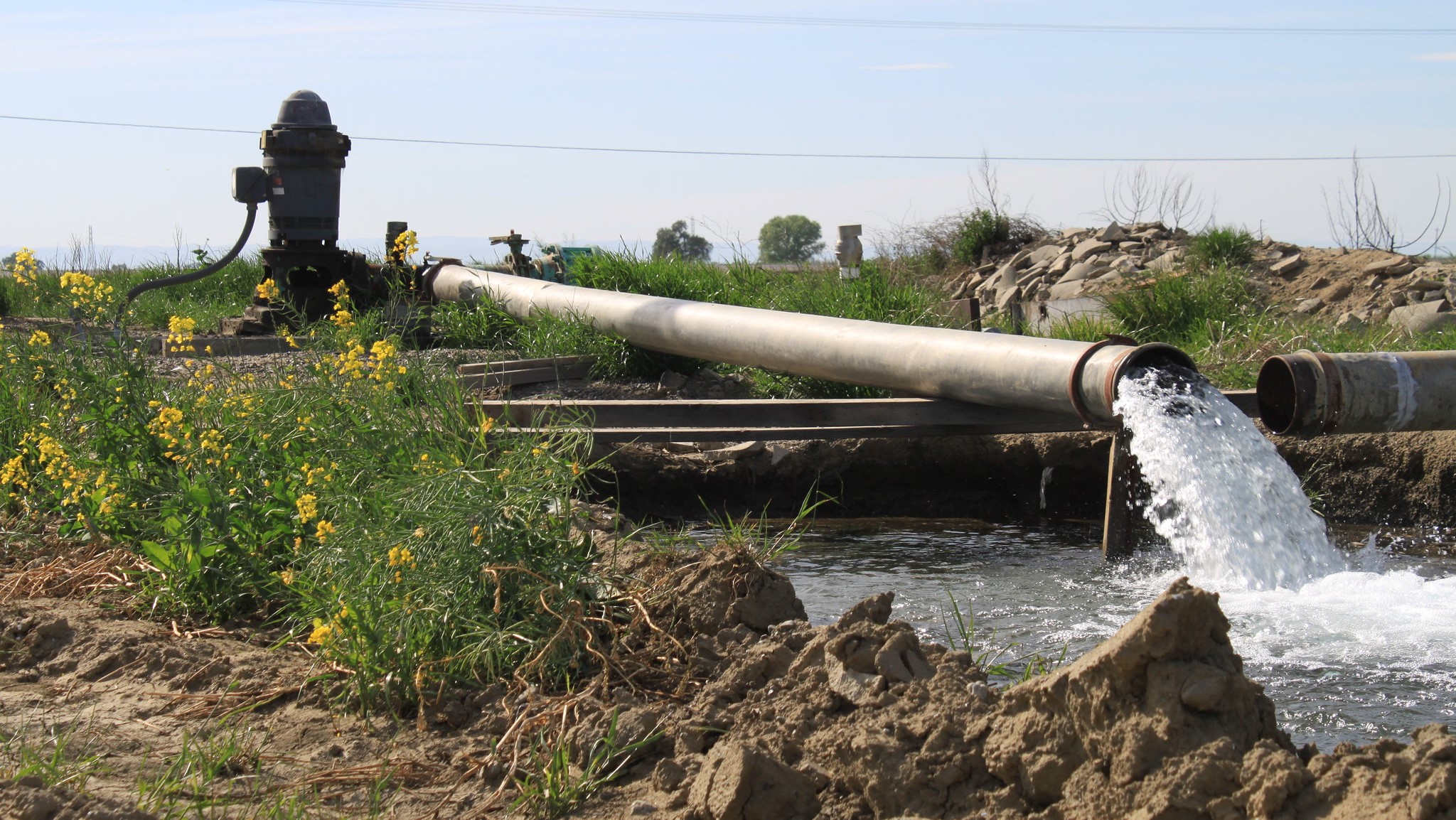 “A new California Department of Water Resources update shows groundwater recovery has stalled as extraction continues to outpace recharge, leaving long-term stress across major basins. The report highlights that statewide extractions reported by local agencies reached 13 million acre-feet pumped, while managed recharge fell sharply, constraining aquifer refill and system recovery. DWR warned that two recent wet years produced only short-term relief and that volatile conditions have returned in the current water cycle. Most monitored wells showed little change over the most recent year, with about 71% relatively stable, 13% rising more than 5 feet and 15% declining more than 5 feet. Those short-term gains mask deeper trends: nearly half of monitored wells exhibit long-term declines in water levels, while only a small share show sustained increases. The Tulare Lake and southern San Joaquin regions remain the most stressed for groundwater levels. … ” Read more from AgroNews.
How floodplains grow fish on the San Joaquin River
“In California’s Central Valley, a river can look alive and still be starving. The San Joaquin winds through farmland and former floodplain country, but for much of the last century, it has been cut off from the seasonal flooding that is the lifeforce of juvenile fish. That is why inland salmon and steelhead — ocean-going rainbow trout — recovery conversations keep circling back to one idea: The river must be reconnected to the land beside it. The modern San Joaquin reflects decades of intensive flow regulation and water diversion. Completed in 1942, Friant Dam, located on the upper San Joaquin River near Fresno, California, was built to store water for irrigation and provide flood control. The dam helped set in motion a long period in which large sections of the upper San Joaquin ran dry as water was diverted into canals. … ” Read more from American Rivers.
California’s salmon fishery is reopening after a population crash and 3‑year closure, but that doesn’t mean all is well
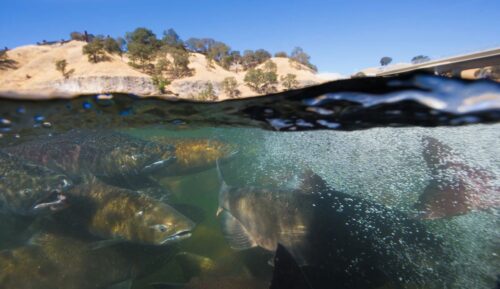 “Along the California coast, from Bodega Bay to Morro Bay, commercial fishing boats have started pulling in salmon for the first time in three years, and local salmon are once again appearing on restaurant menus and in seafood markets across the state. California’s commercial ocean salmon fishery began reopening in May 2026 for the first time since a population crash led to a three-year closure. But while the reopening, happening in phases and with limits, is welcome news, it does not mean the underlying problems have been solved. The Pacific Fisheries Management Council, established by Congress to oversee West Coast fisheries, closed the salmon fishery in 2023 after populations of fall-run Chinook salmon collapsed to critically low levels, down 85% from the average population before 2005. The immediate cause of the latest closure was the extreme drought from 2020-2022 that devastated salmon survival as river levels fell and the water heated up. But more than drought pushed the fishery to the brink. The underlying system of water management, hatchery practices and habitat loss have also eroded the salmon population’s ability to quickly recover from difficult years. We study changing fish ecology in California. The state has the knowledge to create a more resilient system that can help salmon better withstand California’s increasing climate whiplash. But without significant changes in three key areas, we believe today’s good news for salmon could be short-lived once again. … ” Read more from The Conversation.
‘Forever chemicals’ found in California waterways in 10 counties, study says
“PFAS, often referred to as “forever chemicals,” were frequently found in surface water and sediment in 10 counties across California, according to a new study. The analysis from the Environmental Working Group showed that as much as 50% of California surface water samples contained PFAS, stemming from their use in agricultural pesticides. Since they don’t break down easily and given that long-term exposure has been linked to cancer and other health issues, PFAS (formally known as perfluoroalkyl and polyfluoroalkyl substances) are widely known by their “forever chemicals” nickname. Using data from California’s Surface Water Database from 2020 to 2024, samples were taken from waterways across several counties, including Butte, Colusa, Imperial, Merced, Monterey, San Luis Obispo, Santa Barbara, Stanislaus, Sutter and Yolo. Each study found some level of contamination near agricultural areas, with some at higher concentrations than others. … ” Read more from SF Gate.
Paper: Dammed water markets: How Western water transfer markets may be inhibiting an efficient allocation of water
“Western water lawyers and policymakers, may incline to believe that municipalities are overpaying to acquire new supplies. They may not, however, be able to articulate the bad economics at play; indeed, there have been plenty of obfuscatory claims surrounding water transfer OTC markets, such as “[t]he fact that people in Southern California cities pay 100 times more for water than farmers in the Palo Verde Valley” somehow evidences utilitarian value-maximization. Water transfer markets, in theory, provide a pareto-optimal solution to increasing water scarcity. The experience of municipal water purchasers, however, does not appear to square with theory. Indeed, municipal purchasers facing water supply shortfalls often pay comparatively exorbitant premiums for marginal units of water; this evidenced prices-paid differential is likely imputable to allocative inefficiency in water transfer markets—i.e., prices paid by municipal water purchasers are distorted above the marginal cost of supplying the water. Broadly, the hypothesized allocative inefficiency is a market failure in-and-of-itself, calling into question normative arguments that water transfer markets provide for an ideal mode of resource allocation.” Read the paper at the University of Denver Water Law Review.
Data center data is hard to come by. Erin Brockovich wants to change that
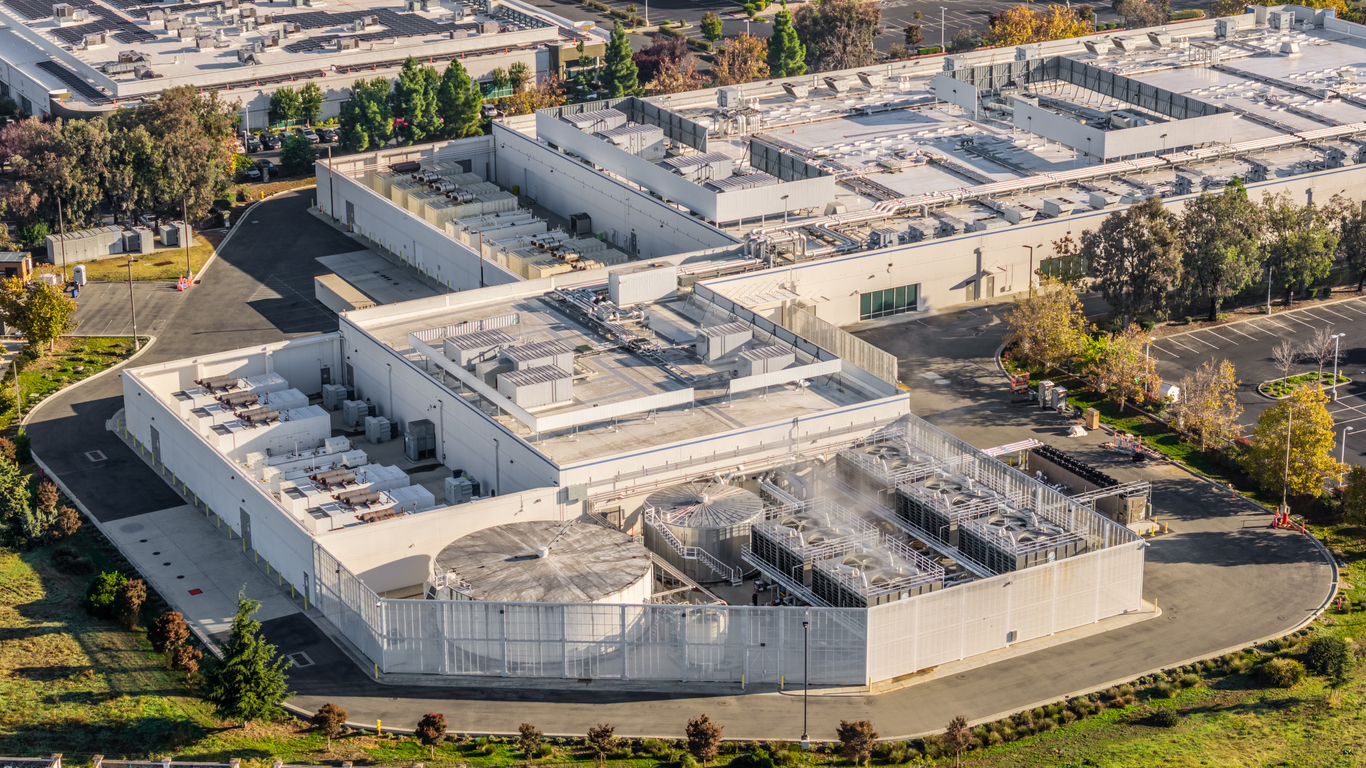
“Artificial intelligence is confusing, so confusing that many companies don’t even understand how their AI works, often labeling their systems a “black box.” But another aspect of AI that’s led to confusion is the infrastructure propping it up. For AI to work, it needs data centers to process massive amounts of information. These data centers have become a bipartisan sticking point, with residents alleging they are loud, obnoxious and an eyesore — and a drain on water and electrical supplies. Some researchers have even claimed the sounds produced by these facilities are harmful to people. But data on data centers is sparse, making it difficult to get a precise number of how many exist, and which ones are used for general internet services and which ones are used to run AI. That’s where famous environmental activist Erin Brockovich comes in. … ” Read more from Straight Arrow News.
Army Corps of Engineers targets dormant water projects
“For decades, Congress approved thousands of water-related projects across the United States through the Water Resources Development Act, often called WRDA. Some involved flood control. Others focused on water supply, wastewater systems, ecosystem restoration, navigation, or drought-related infrastructure. Many projects moved forward. Others remained little more than plans on paper. On May 21, 2026, the U.S. Army Corps of Engineers published a proposed list of projects that could now be formally removed from federal authorization. The move was announced by Assistant Secretary of the Army for Civil Works Adam Telle and published in the Federal Register. … ” Read more from Western Water.
In commentary this week …
California must step up to fight the costly golden mussel infestation
Michelle Paul, executive director of the California Farm Water Coalition, writes, “California is facing another costly invasion of a foreign species that is affecting farmers, urban and suburban residents, the state’s ecosystem resources and the environment. Unwanted arrivals like this have happened before, but this time, the effects are likely going to be much worse. The invaders are golden mussels, a small two-shelled mollusk about 0.5-1.5 inches in length with a brownish-golden shell from which their common name originates. Golden mussels attach to hard surfaces with glue-like fibers. Although they are small, they reproduce at incredible rates, clogging water supply intake screens, pumps, pipes, canals and other systems serving both cities and farms. They also strip waterways of vital nutrients other aquatic species depend on. … ” Continue reading from the Sacramento Bee. | Read via AOL News.
Peaches, pears and PFAS: California lawmakers may limit ‘forever’ pesticides in foods
Nathan Donley, environmental health science director at the Center for Biological Diversity, writes, “Amid growing awareness that so-called forever chemicals, or PFAS, can linger in landscapes and waterways for centuries, federal and state regulators have repeatedly insisted they’re working aggressively to protect us all from the cancer-linked poisons. They are not. Even as regulators and lawmakers tout their baby steps to limit forever chemicals in U.S. drinking water, they’re allowing a dramatic increase in the use of pesticides containing the chemicals across millions of acres of industrial agriculture. That often ends up in waterways and drinking water supplies, including in California. PFAS, or perfluoroalkyl and polyfluoroalkyl substances, are a group of synthetic chemicals used since the 1950s to make consumer products resistant to water, grease and heat. Studies have linked PFAS to cancer, reproductive harm, endocrine disruption and other health effects. … ” Read more from Cal Matters.
In regional water news this week …
Klamath snowpack is just .8% of average, what it means
“There’s a dramatic decline in the Klamath National Forest snowpack this year, the U.S. Forest Service said. Snow depth in the region’s Scott River watershed is just .8% of its historical average, according to the forest service’s May snow survey. The Snow Water Equivalent ― a measure of how much water the snow contains ― is also at .8% of the historical average. The May snow survey found that only the highest site in the Middle Boulder Basin still had any measurable snow. The rest of the area’s snowpack melted away, the report said, despite a few spring storms that brought little relief. … ” Read more from the Siskiyou Daily News.
The Potter Valley bid that makes no sense
“The Potter Valley powerhouse that is the engine of the Potter Valley Project has not made electricity since 2021. The dams are still standing. The water still moves. It falls 470 feet from Cape Horn Dam on the upper Eel River through a century-old tunnel and out into the East Branch of the Russian River an hour later — past three generators that no longer turn. There is no reservoir below the powerhouse. The water drops. It is not pumped back up. There is nowhere to pump it from. … Another water district 600 miles south wants to buy the Potter Valley project anyway. The Elsinore Valley Municipal Water District sits in Riverside County. It has never run a hydroelectric dam. Two members of President Trump’s cabinet, Agriculture Secretary Brooke Rollins and Interior Secretary Doug Burgum, have publicly backed the district’s interest. Rep. Jared Huffman, whose district covers the Eel River, has been demanding to know why. … ” Read more from the Mendocino Voice.
Federal regulators signal support for Pacific Gas and Electric’s bid to decommission Eel River dams
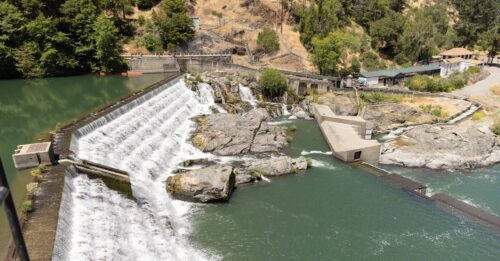
“The federal agency responsible for approving Pacific Gas & Electric Co.’s bid to decommission two Eel River dams and a downstream hydroelectric powerplant has signaled its support for the utility’s plans, despite last-ditch efforts by those who oppose the teardown to keep the waterworks in Lake and Mendocino counties intact. In a May 22 scoping document that provides an overview of proposed actions and potential resource issues, the Federal Energy Regulatory Commission noted it “proposed to eliminate … alternatives” to full decommissioning, including a proposed takeover of the dams either by the federal government or other public agency. Federal takeover of two PG&E dams and shuttered powerplant, known as the Potter Valley Project, would require congressional approval. FERC said “there is currently no evidence” showing that such a takeover should be recommended to Congress. Additionally, no federal agency has expressed interest in operating the project, FERC said. … ” Read more from the Santa Rosa Press Democrat.
Returning to the Ravine: Salmon recorded in restored section of the Auburn Ravine
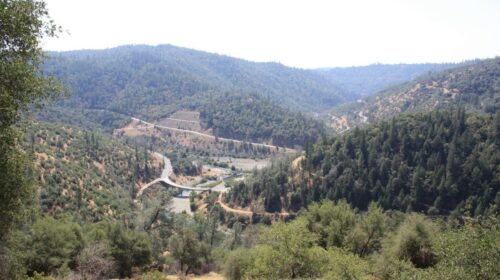
“For more than 80 years, salmon were rarely seen above the Hemphill Diversion Dam in Placer County’s Auburn Ravine. But that changed in 2022 when local organizations worked with the Nevada Irrigation District to remove the concrete dam and replace it with a fish-friendly design. It didn’t take long for the fish to find the newly accessible stream. Recent survey data released by Friends of Auburn Ravine and ECORP show the presence of salmon, steelhead and Pacific lamprey above the new structure, indicating success of the habitat restoration project. “With the old structure, only about 10 percent of the fish could get upstream. Now, we get 90 percent passage rather than 90 percent blockage,” said James Haufler, president of Friends of Auburn Ravine. … ” Read more from Placer County.
Yolo County water dispute ends with settlement after multiple lawsuits
“Yolo County officials have ironed out an agreement on the future of Fair Ranch’s water rights, settling multiple lawsuits filed over access to Sacramento River water. The California Department of Water Resources in February determined its purchase of the 7,500-acre property’s share of Sacramento River water would have little impact on the environment and was therefore exempt from environmental review. But the $180 million deal set off alarms in Yolo County as officials worried about its effect on local groundwater supplies in and around Knights Landing. Now, the state water department has changed its plans. Ownership of the property will transfer to Reclamation District 108, which will operate the farm moving forward, according to a memorandum of understanding approved Tuesday by Yolo County supervisors. … ” Read more from PBS Abridged.
New Dutch Slough study highlights early success of tidal wetland restoration using low-impact monitoring and AI
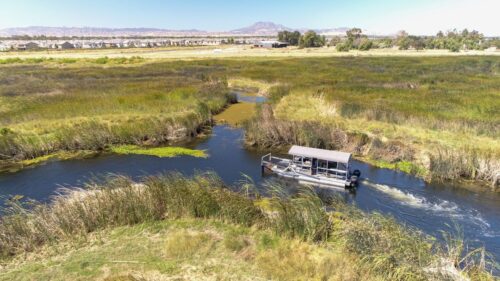
“A newly published study from the Dutch Slough Restoration Project in the San Francisco Estuary shows that restored tidal habitat can begin functioning ecologically within just two years of reconnection and demonstrates the promise of combining low-impact monitoring with artificial intelligence – specifically, computer vision(CV) – to evaluate restoration outcomes. The study found that channel length, habitat complexity, and connectivity strongly influenced early ecological recovery. Following levee breaching, restored habitats shifted toward reference conditions, with greater water-quality complexity, stronger food-web development, and increased fish use, likely supported by diverse habitat conditions and the establishment of native vegetation. The research is especially notable for its monitoring approach. Rather than relying on traditional high-disturbance sampling alone, the team integrated environmental DNA (eDNA), underwater video, in situ zooplankton imaging, and water-quality sensors, supported by CV-assisted image analysis. Together, these tools provided a detailed picture of ecological change while minimizing disturbance to the restored habitat. … ” Continue reading this press release from Cramer Fish Sciences.
Suisun Marsh feeds baby salmon in the winter―can it also feed Delta smelt in the summer?
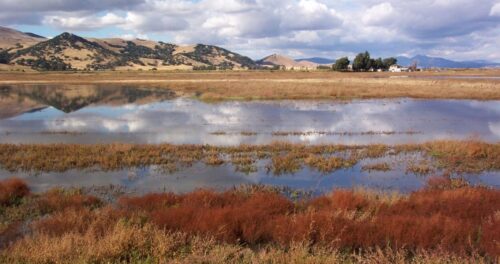
“About a decade ago, researchers at the University of California, Davis made a surprising discovery while teaching a class in Suisun Marsh, the largest contiguous brackish wetland on the west coast of North America. While most of the Bay-Delta is a food desert for fish, the marsh offers a smorgasbord of zooplankton, the tiny creatures that fish eat. “They said, ‘There’s crazy amounts of plankton in here, what’s up with that?” says Kyle Phillips, a UC Davis Center for Watershed Sciences researcher. Phillips found that the answer lies in the wetlands managed by duck clubs in Suisun Marsh. Duck clubs account for about half of the 115,000-acre marsh, which also includes tidal wetlands, bays and sloughs. Managed wetlands are diked, shallow ponds with mechanisms that control water flows to and from neighboring waterways. A new study Phillips led shows that when these managed wetlands are flooded for migrating waterfowl, they produce far more zooplankton than nearby tidal wetlands. … ” Read more from Robin Meadows at Maven’s Notebook.
Saving two marshes from the squeeze
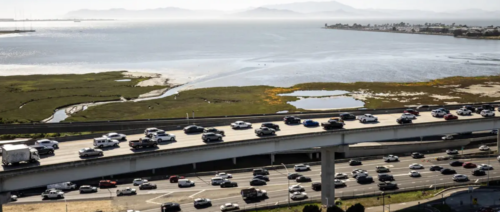 “The ribbons of marsh squeezed between the Bay and the highways that skirt its edges are living relics of California’s gold mining history. Today, at locations in the East and North Bay, they are also the focus of intense efforts not just to save and restore critical wetland habitat, but also to protect the highways themselves from rising seas and bigger storms. “None of these marshes were here 100 years ago,” says watershed planner Christina Toms of the San Francisco Bay Regional Water Quality Board. And with continued erosion, poor drainage, and sea level rise, they might not be here 100 years from now, either. Two particular projects, one scheduled to start construction in the next few years along State Route 37 and one now being planned near the Bay Bridge toll plaza, could help protect thousands of acres of centennial marshes. … ” Read more from Knee Deep Times.
Decades of effort restore steelhead and salmon passage on Alameda Creek
“A NOAA-funded project removed the final barrier on an urban San Francisco Bay Area creek that was once the Bay’s largest producer of steelhead and Chinook salmon. Last year, California Trout and Pacific Gas & Electric removed the final barrier to fish passage on California’s Alameda Creek with funding from NOAA Fisheries’ Office of Habitat Conservation. For the first time in 50 years, threatened Central California Coast steelhead and other migratory fish can reach spawning grounds and juvenile rearing habitat in the upper watershed. Construction crews relocated a Pacific Gas & Electric (PG&E) natural gas pipeline and removed its concrete covering. The pipeline had spanned the creek and created an 8-foot drop in the creek. They installed the new pipeline section deep below the creek bed, removed the old pipe section, and regraded the stream channel—restoring a natural pathway for fish. Alameda Creek was once the largest producer of steelhead and Chinook salmon in San Francisco Bay. It may once again become a stronghold for migratory fish. … ” Read more from NOAA Fisheries.
It may take three years before residents benefit from new water wells, Pleasanton mayor says.
“After the discovery of forever chemicals in 2019, Pleasanton is now moving forward to get new water wells online for residents. However, they may have to wait another three years for that to happen, according to the city’s mayor. After a years-long study and a City Council vote last month, the city began to draft a contract with Tri-Valley water supplier Zone 7 to get the city’s new wells operational. In 2020, the city shut down its three wells due to PFAS – also known as per- and polyfluoroalkyl substances, or forever chemicals – contamination. Since 2022, the city has been buying all of its water from Zone 7. After opening a search for new wells in 2023, the city and Zone 7 identified two sufficient wells at its Tennis Park and Hansen Park properties to supplement the previous 3,500 acre feet of water Pleasanton used to pump from its wells. … ” Read more from the San Jose Mercury News.
Los Angeles is reimagining parks as water infrastructure
“Los Angeles broke ground last week on the first of nine stormwater capture projects at parks in the east San Fernando Valley that it expects will collectively capture nearly 950 million gallons of water a year to help replenish the San Fernando Groundwater Basin. The Stormwater Capture Parks Program will also improve water quality in the Los Angeles River, reduce local flooding and provide recreational benefits to the community through related park improvements, according to the Los Angeles Department of Water and Power, which developed the project in partnership with the Los Angeles Department of Recreation and Parks and Department of Public Works. … ” Read more from Smart Cities Dive.
Cleanup continues after broken pipe sends oil from East LA into LA River and toward Port of Long Beach
“Cleanup continued Wednesday following an oil spill from a broken pipeline that sent at least 2,400 gallons onto an East Los Angeles intersection, into the Los Angeles River and toward the Port of Long Beach, affecting birds and other wildlife. Booms and oil absorbing pads were deployed about 10 miles downstream from the area where the pipe was broken and air monitoring was ongoing as a precaution after the pipeline, which brings crude oil from Kern County to the Port of Long Beach, was broken by a construction crew laying out a fiber optic line around 3 a.m. Friday. Firefighters were dispatched to the area of East Cesar Chavez and North Eastern avenues, according to a Los Angeles County Fire Department public information officer, who said crude oil was visible in the intersection. The pipeline operator was notified of the rupture and shut down the flow within 30 minutes of being notified, she said. The shut-off valve was near Dodger Stadium. … ” Read more from the LA Daily News.
Audio: What the Colorado River drought means for California
“The Colorado River basin and its two largest reservoirs, Lake Powell and Lake Mead, are facing record-low water levels, and the seven states that rely on the water system can’t agree on what to do about it. Now the federal government may need to step in, with the Trump Administration proposing a plan that would cut 40 percent of the Colorado River’s water supply to Arizona, California and Nevada over the next decade. We’ll talk with environment journalists about what this could mean here in California.” Listen to podcast from KQED.

