Several news sources featured in the Daily Digest may limit the number of articles you can access without a subscription. However, gift articles and open-access links are provided when available. For more open access California water news articles, explore the main page at MavensNotebook.com.
On the calendar today …
- MEETING: California Water Quality Monitoring Council beginning at 9am. Agenda items include workgroup updates and discussion, the Ocean Protection Council’s California Coast and Ocean Report; Ocean Monitoring Inventory presented by UCLA Institute of Environment and Sustainability: Summary and Recommendations; and a discussion: Data Gaps and Opportunities for Ocean Monitoring Coordination. Click here for the agenda and registration link.
- MEETING: Delta Stewardship Council beginning at 9am. Agenda items include the Delta Lead Scientist’s Report; Potential Endorsement of the 2026 Delta Science Plan: Strengthening Science in the Sacramento-San Joaquin Delta; and the Delta Levees Investment Strategy Annual Report. Click here to register.
- PUBLIC MEETING: SAFER Drinking Water Program: Advisory Group Meeting #2 from 9:30am to 4:30pm. Agenda items include the Annual Needs Assessment Dashboard, Fund Expenditure Plan Fiscal Year 2026-2027, SAFER Program Updates and Announcements, and Advisory Group Member Announcements. The notices for the upcoming SAFER Advisory Group Meeting are available online (in English and Spanish). Click here for the full agenda.
- WORKSHOP: Drought Resilience Interagency & Partners (DRIP) Collaborative Roles and Responsibilities for Domestic Wells & SSWS from 10am to 12pm. Join the Department of Water Resources for the Drought Resilience Interagency & Partners (DRIP) Collaborative Roles and Responsibilities for Domestic Wells and State Small Water Systems Workshop #2. Remote participation will be conducted via a Zoom platform. Register here: https://zoom.us/meeting/register/j-Tk23FzRcGvDcdpmDAOXQ
In California water news today …
A new bill could bypass water rights review to advance the Delta tunnel. Salmon groups are fighting it.
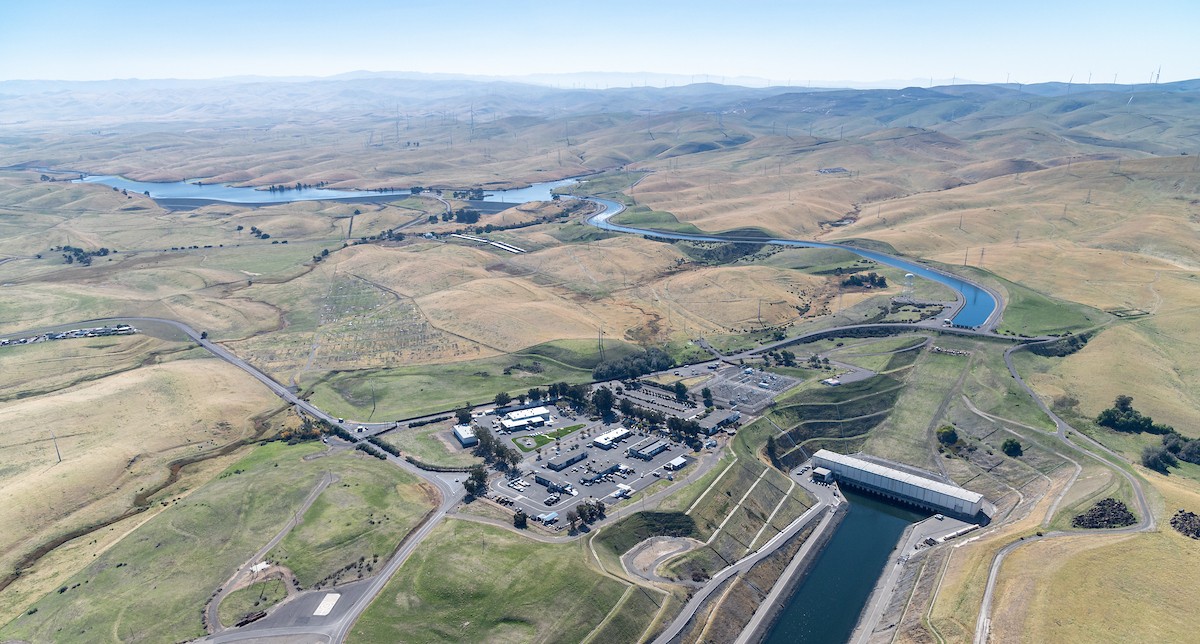
“California’s salmon fishery just reopened after three devastating years of closures. Now fishing groups say a bill moving through the legislature could put the recovery at risk. The Golden State Salmon Association is urging Californians to contact their Assembly members and oppose AB 2215, a bill designed to advance the proposed Delta Tunnel by bypassing the normal water rights review process at the State Water Resources Control Board. A California court recently ruled that the Department of Water Resources does not currently hold the water rights needed to divert additional water through the proposed tunnel. Rather than going through the standard review process, which includes public oversight and scientific evaluation, AB 2215 would attempt to change those expired 60-year-old water rights through legislation. … ” Read more from Active NorCal.
A water renaissance plan for California, from the Bay-Delta Flow Coalition
“The Water Renaissance Plan (the Plan), published May 2026, is a new 27-page proposal for a sustainable water future for California. It was developed by a coalition of entities that include California Sportfishing Protection Alliance, Defenders of Wildlife, Friends of the River, Golden State Salmon Association, LA Waterkeeper, Resource Renewal Institute, Restore the Delta, San Francisco Baykeeper, Sierra Club California, Winnemem Wintu Tribe, and Yosemite Rivers Alliance. To date, the Plan has now been endorsed by 28 organizations. The major thrust of the Plan is to develop alternative water supplies for urban areas in southern California. The Plan offers a path away from importing water from northern California. High levels of exports from northern parts of the state harm native species of fish, other flora and fauna, and northern California communities. … ” Read more from the California Sportfishing Protection Alliance.
Fine tuning the “Water Renaissance” Plan
Edward Ring, Director of Water and Energy Policy at the California Policy Center, writes, “The recently released “Water Renaissance” plan, a product of “conservation groups and tribes,” gets a very big idea right. There is no reason why California’s coastal megacities should have to import water. With that one visionary presumption, this report has made a major contribution. In fact, it doesn’t go far enough. With massive, targeted investments, California’s coastal cities might even be positioned to export water. Push the annual surplus east. Dump it in the Salton Sea. Beyond the big idea, however, this “new vision for a sustainable water future” scores hits and misses. One big hit is their claim that California’s coastal cities could produce up to 800,000 acre feet per year through wastewater recycling, and another 600,000 acre feet per year through stormwater harvesting. Those numbers may actually be on the low side. … ” Read more from Edward Ring.
DWR updates Water Commission on Bulletin 118, the latest groundwater conditions report, the groundwater trading workplan and the new subsidence BMP
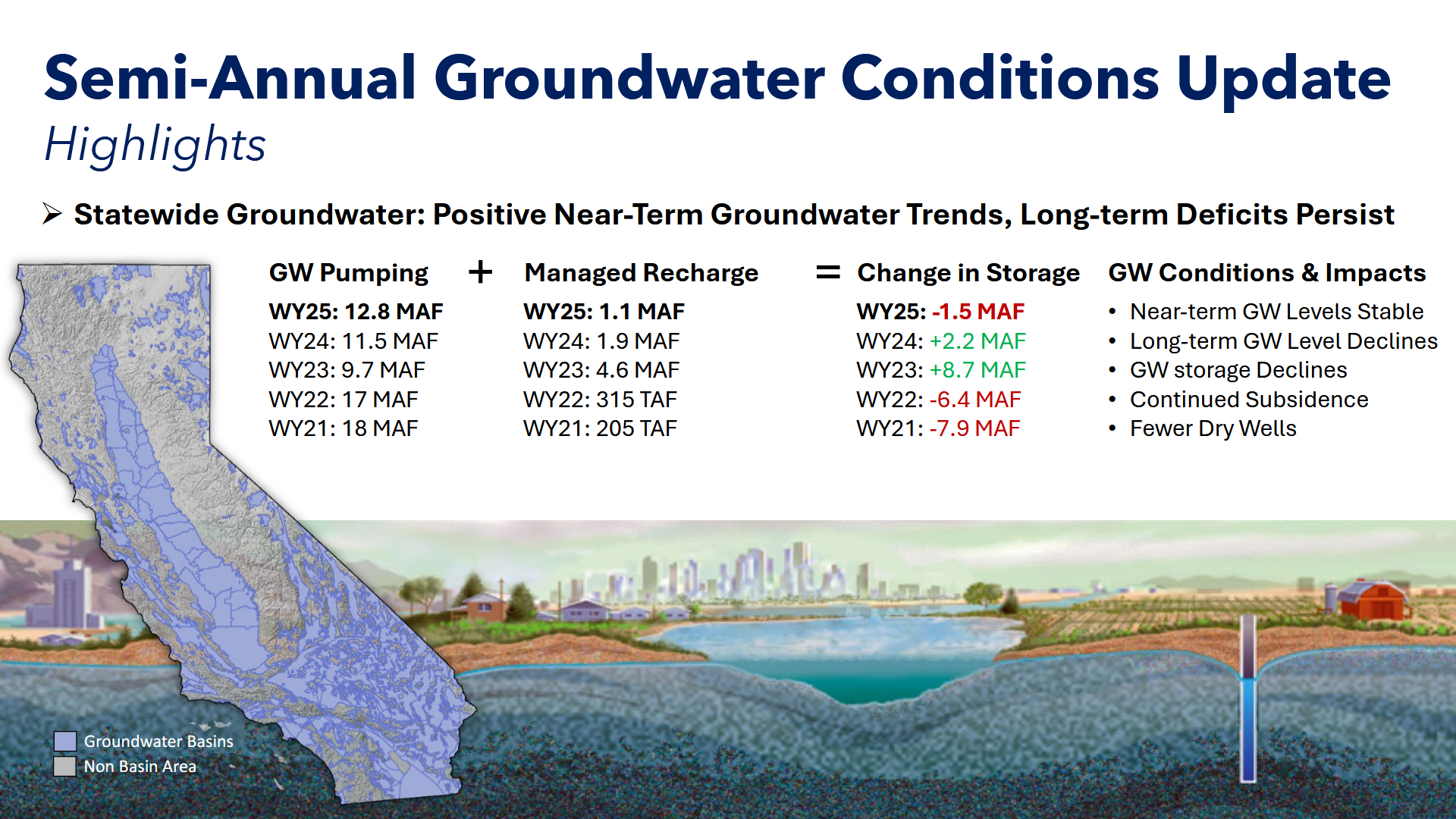 “At its May 20 meeting, the California Water Commission received an update on implementation of the Sustainable Groundwater Management Act, with DWR officials outlining new groundwater reporting, emerging work on groundwater trading and a renewed push to address land subsidence. The presentation was given by DWR Technical Assistance Section Lead Stephen Springhorn, Senior Engineering Geologist Andrew Morgan and Shane Edmunds, lead of the Groundwater Sustainability Plan Review Section. The briefing covered the 2025 update to California’s Groundwater Bulletin 118, the spring semi-annual groundwater conditions report, groundwater trading and the department’s new subsidence best management practice. “It can’t be overstated, groundwater’s importance to California’s water portfolio and to the communities, ecosystems, industries, and agriculture that rely on groundwater, so we’re trying to meet that importance with more timely, accessible, and relevant information on groundwater, so it can be fed into water planning in the state,” said Mr. Springhorn. … ” Continue reading at Maven’s Notebook.
Can AI help predict and manage drought? UC Merced researchers explain in new book
“After a couple of years of sufficient water, much of California is showing “abnormally dry” conditions in spring 2026, according to the state drought monitor. And as climate change adds more swings between wet and dry conditions, researchers are working on ways to better identify, predict and manage drought. Toward that end, a UC Merced team contributed a chapter on “Artificial Intelligence for Multiscale Drought Modeling and Decision Making,” in the new book “Global Drought and Sustainability.” The book was published by Elsevier, a global academic publishing company, and brings together leading researchers from around the world to examine drought as an increasingly urgent global challenge. “Global Drought and Sustainability” explores the connection between drought and climate change and outlines science-based solutions to improve water resource management, agricultural sustainability and ecosystem resilience. … ” Read more from the Merced Sun-Star.
NASA-European sea level mission homes in on El Niño
“Sea level data from a satellite launched by NASA and European partners shows that a swell of warm water hundreds of miles wide has arrived in the Pacific Ocean off the coast of South America, a sign that El Niño will likely emerge later in the year. Because water expands as it warms, a rise in elevation of an area of the ocean indicates increasing ocean temperatures. El Niños can cause heavy precipitation in some regions and deficits in others, influencing daily life and commerce around the world. Launched in 2020 by NASA and led by ESA (European Space Agency) for the E.U. Copernicus Programme, the Sentinel-6 Michael Freilich satellite measures and maps water height for the entire ocean every 10 days, down to fractions of an inch. In the case of El Niño, the satellite tracks what are called warm Kelvin waves. … ” Read more from NASA.
Investing in the long game of restoration
“California has a bold restoration goal to save its wildlife, restore its habitat, and increase climate resilience—and using native seed plays a key role. Yet, restoration-quality native seeds aren’t always widely available, prices can be unsustainably high, and demand far outpaces supply, causing a major bottleneck in large-scale ecological restoration. This is why in 2023, the California Wildlife Conservation Board (WCB) awarded funds for a project sponsored by River Partners and Heritage Growers Native Seed and Plant Supply, a nonprofit program of River Partners. The purpose of the sponsored program was to strengthen the supply of restoration-quality, source-identified native seed by learning where to collect and how to grow and amplify native seed for River Partners’ restoration projects in the San Joaquin Valley and Tulare Basin. As part of a $40 million grant for restoration planning, research, and Tribal engagement across the San Joaquin Valley and Tulare Basin, WCB’s investment in Heritage Growers’ Native Seed Research & Development (Native Seed R&D) project invests in the very future of this region. This funding helped Heritage Growers’ work to collect native seed from the wild and grow them out at the 208-acre Heritage Growers farm near Colusa to help alleviate the native seed bottleneck. … ” Read more from River Partners.
The Nigiri Concept: Salmon habitat on rice fields
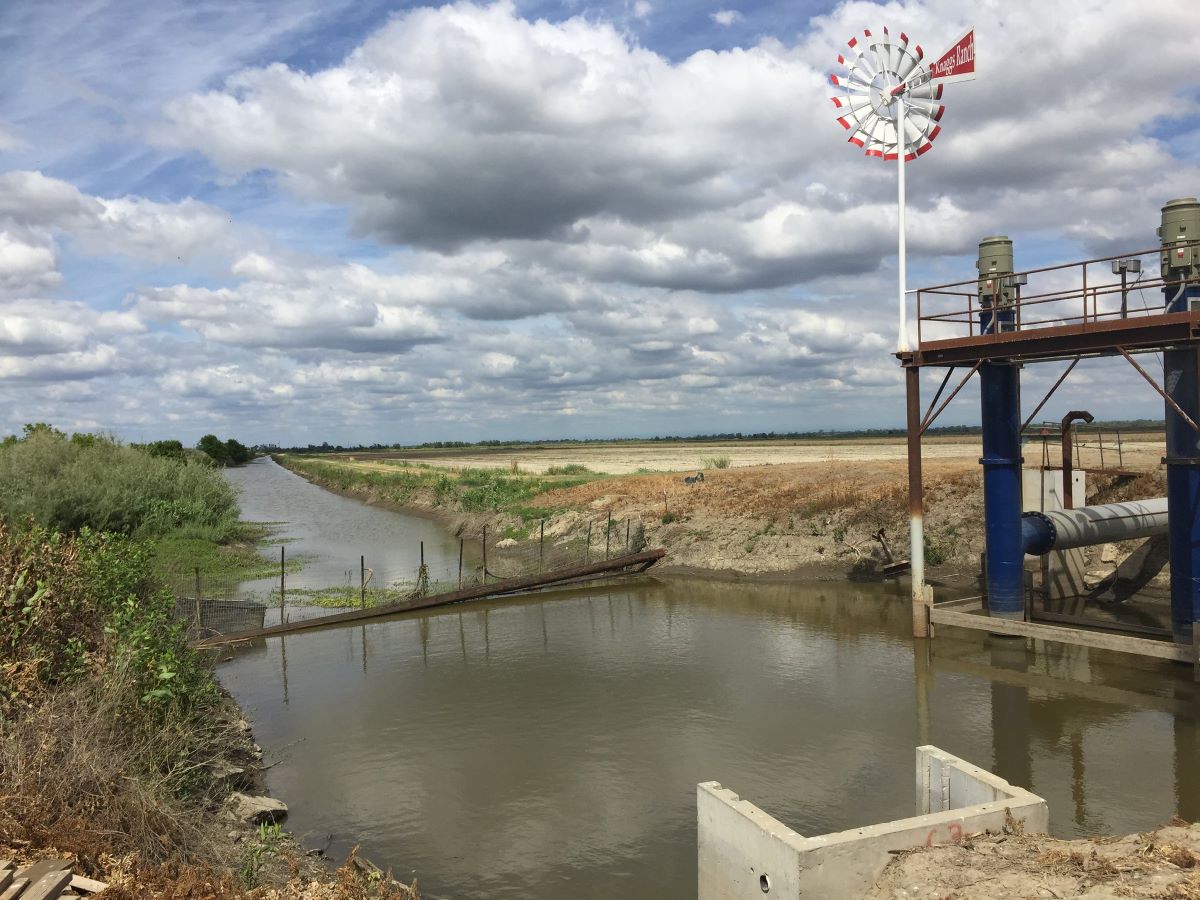 “Nigiri is a form of sushi with a slice of fish atop a compact wedge of rice. In Yolo County, the “Nigiri Project” is the name of a collaborative effort between farmers and researchers to help restore salmon populations by reintroducing them during winter, to floodplains that are farmed with rice during summer. Today, only five percent of the Central Valley’s original floodplain habitat remains for the region’s salmon populations. The Nigiri Project seeks to optimize habitat benefits for salmon and water birds, while maintaining farming on the largest floodplain of the Sacramento-San Joaquin Delta, the 60,000-acre Yolo Bypass.The Project is located on the Knaggs Ranch, in the northern reaches of the Yolo Bypass between Interstate 5 and the Sacramento River. Cal Marsh and Farm, which manages the Knaggs property, aims to provide up to 2,500 acres of winter floodplain habitat for Chinook salmon on land that will continue to be farmed during summer. … ” Read more from Cal Trout.
Conserving water in California for wildlife and people
“Water conservation in California poses complex challenges, to be sure, but also incredible opportunities for public-private partnerships. With nearly 40 million residents, California ranks as the nation’s most populous state. Its economy dwarfs that of nearly every nation in the world. It serves as a global leader in technology, research and entertainment. This one state produces about a third of U.S. vegetables and nearly three-quarters of its fruits and nuts. California also holds a special place in the annals of conservation. Its magnificent landscapes — granite peaks and alpine meadows, stands of towering redwoods, otherworldly desert landscapes, rugged coastlines — inspired President Theodore Roosevelt, John Muir and other giants of American conservation. Behind it all, one resource has shaped, and continues to shape, California’s fortunes: fresh water. … ” Read more from the National Fish and Wildlife Foundation.
Suisun City Council sells properties to California Forever
“The Suisun City Council has accepted the sale of seven downtown parcels of land in the waterfront district to California Forever for a total of $1.14 million. In June 2025, California Forever CEO Jan Sramek reached out to the city about downtown assistance through purchasing some buildings, separate from any expansion conversations. Suisun City Manager Bret Prebula said staff explored ways to fit the purchases into its existing downtown redevelopment efforts. He said the staff negotiates according to the direction of the council during closed session. “This evening is the public culmination of the private retail negotiations that we have had per council’s direction,” Prebula said. … ” Read more from The Daily Republic.
The art and science of transforming California’s forests
“In an event earlier this month, PPIC Water Policy Center research associate Kyle Greenspan presented new research about California’s efforts to reduce severe wildfire hazards. He explored how a state-led task force has ramped up an unprecedented multi-agency effort to “get out ahead of California’s wildfire challenges and confront them proactively.” The state, he said, is over halfway to this goal. This work is critically important in a state that has seen wildfire costs quadruple in the past few decades, while the area burned at high severity has tripled. Fire has always been a part of California’s landscapes, but more than a century of fire suppression has made California’s forests dense, homogenous, and vulnerable to severe wildfire, said Greenspan. Scott Stephens, Henry Vaux special professor of forest policy at UC Berkeley, explained the problem. “It’s about what’s going on inside that fire. Maybe 30–40% of that 2020 year of fire was high severity, so you’re killing all trees over thousands of acres continuously. That’s incredibly detrimental.” It’s particularly problematic for the state’s water supply, the vast majority of which originates in California’s headwaters regions, like the Sierra-Cascade Mountains. … ” Read more from the PPIC.
A ‘fire year’: Widespread US drought fueling fears of never-ending wildfires
“In a normal year, David Acuña, a battalion chief for the California Department of Forestry and Fire Protection (Cal Fire), said firefighters would just be gearing up for another wildfire season. But these are not normal times, he said. The Golden State has already experienced multiple large wildfires in the first five months of 2026, including a series of major wind-driven blazes that ignited this month in Southern California, triggering mandatory evacuations for tens of thousands of residents. “We don’t refer to it as a ‘fire season’ anymore at all. Really, we refer to it as a ‘fire year,’ particularly because in 2025, we had the fires in January,” said Acuña, referring to the Eaton and Palisades fires that ignited in the Los Angeles area in January 2025, killing 28 people, destroying more than 16,000 structures and burning nearly 40,000 acres. … ” Read more from ABC News.
Bill to stop spread of golden mussels infesting California water systems
“US Senator Adam Schiff, Ranking Member of the Senate Environment and Public Works’ Fisheries, Water, and Wildlife Subcommittee, and Senator Alex Padilla (both D-Calif.), members on the Senate Committee on Environment and Public Works, introduced the Golden Mussel Eradication and Control Act of 2026, legislation to expedite the control and eradication of golden mussels—harmful species native to China and Southeastern Asia that pose a significant health risk to the public. These invasive species latch onto pumps, pipes, and infrastructure, compromising water delivery, clogging water screens, threatening water quality for 27 million Californians, harming native wildlife, and jeopardizing over $50 billion in agricultural production across the state. … ” Read more from the Davis Enterprise.
Federal golden mussel bill puts San Luis reservoir and O’Neill Forebay back in focus
“A new federal proposal aimed at slowing the spread of golden mussels is drawing renewed attention to San Luis Reservoir, O’Neill Forebay and other Los Banos-area water facilities already affected by California’s invasive mussel response. U.S. Sens. Alex Padilla and Adam Schiff introduced the Golden Mussel Eradication and Control Act of 2026, a bill that would create a federal demonstration program focused on preventing, monitoring, controlling and researching golden mussels. The proposal would also support early warning systems, watercraft inspection stations and competitive grants for state and local agencies, higher education institutions, nonprofits and industry partners working on response projects. … ” Read more from the Los Banos Enterprise.
Invasive species will try to spread at ‘terrifying speed’ this summer
“You might find yourself a soldier in the nation’s ongoing battle to control invasive species while on vacation this summer, simply by going through a boat propeller inspection or by being forbidden to use your own firewood while camping. The nation is grappling with all sorts of invasive species, but the rapid spread of destructive golden mussels in California has created new urgency and demonstrates why some restrictive rules have been adopted. “The threat is real,” Sam Blue, with the Arvin-Edison Water Storage District, told the Board of Supervisors for Kern County, California, during a May 12 meeting. Kern County is in a large agricultural region just north of Los Angeles. Exotic species are introduced in many ways, including via shipping containers, ballast water in ships, the wildlife trade, imported plants and even tropical cyclones. That has prompted a sprawling and evolving effort to stop the spread of invasive species. Efforts include rules about moving firewood, cleaning boats, killing invasive species on sight or transporting fruits, vegetables and plants. … ” Read more from USA Today.
In regional water news and commentary today …
NORTH COAST
Latest Richard King Mellon Foundation grants will aid DU work in Upper Klamath Basin, engage young conservationists
“Ducks Unlimited (DU) was recently awarded a $255,000 Richard King Mellon Foundation grant to restore approximately 100 acres of degraded montane meadow habitat in Oregon’s Upper Klamath River watershed. Another $150,000 grant will support Ducks University chapters with revitalizing chapter recruitment and scaling effective R3 (hunter recruitment, retention and reactivation) programs. The $255,000 grant will support the planning phase of a pilot project on Green Diamond Resource Company (Green Diamond) property, aimed at restoring approximately 100 acres of degraded montane meadow habitat in the Upper Klamath River watershed in Oregon. This location will serve as an anchor for subsequent projects along this tributary and others in the watershed, ultimately accelerating recovery throughout the basin following dam removal. … ” Read more from Ducks Unlimited.
Research enhances understanding of river otters and wetland conservation on the North Coast
“As communities around the globe celebrate World Otter Day on May 27, Cal Poly Humboldt graduate students, now alumni, helped expand scientific understanding of North American river otters and the coastal wetland ecosystems they call home through four research projects. The North Coast Otters Public Arts Initiative combined public art, community engagement, and conservation education while directly funding graduate student research focused on river otters and the ecosystems they inhabit along California’s North Coast. Launched in 2023, the initiative featured more than 100 hand-painted otter sculptures displayed throughout the North Coast before being auctioned to support research and raise awareness about river otters and wetland conservation. The otter art project ultimately raised more than $300,000 to support student research, conservation, and public education efforts. The initiative highlighted the ecological importance of river otters while bringing together artists, businesses, Tribal members, and local residents to celebrate the region’s wetlands and wildlife. … ” Read more from CSU Humboldt.
Some animals win, some lose when the Potter Valley Project dams come down
“For 104 years, the rainbow trout in the cold tributaries above Scott Dam have carried a secret they could not use. Pearse and Kannry’s genetic work, summarized in Friends of the Eel River’s 2025 comments to the state water board, shows the resident fish still hold much of the code for a sea-run life: the chemistry to slip downstream as smolts, turn silver, run to sea and come back heavier as summer steelhead, the southernmost ghost of Northern California’s runs. Two concrete plugs have kept that code from being tested. Once those plugs are removed, the trout can live out their code to run to the sea. That is the smallest, strangest fact in the Potter Valley Project’s dismantling. Two rivers will live different lives once the dams come down. The Eel, bled for more than a century through a 9,257-foot tunnel under the divide, starts to regain itself; the Russian, drinking imported Eel water since 1908, learns to live thinner. The critters on both rivers are about to get the news. … ” Read more from the Mendocino Voice.
FERC to hold meetings in Ukiah on Potter Valley Project
“As the Federal Energy Regulatory Commission reviews the Pacific Gas and Electric company’s application to surrender and decommission its hydroelectric plant in Mendocino County known as the Potter Valley Project, it has scheduled two “scoping meetings” in Ukiah next month to collect public comments. “This notice initiates the start of a scoping process the commission will use to gather input from the public and interested agencies about issues regarding the proposal,” the Scoping Document recently released by FERC states, explaining that “as part of the (National Environmental Policy Act) review process, the commission takes into account concerns the public may have about proposals and the environmental impacts that could result from its action. Specifically, staff request comments on potential alternatives and impacts, as well as identification of any relevant information, studies, or analyses concerning effects on the quality of the human environment.” … ” Read more from the Ukiah Daily Journal.
SIERRA NEVADA
How projects protect Lake Tahoe
Julie Regan, TRPA Executive Director, writes, “I recently unearthed a magazine article from 2006 where I participated in a roundtable discussion about the future of Lake Tahoe. Moderated by the publisher of Tahoe Quarterly magazine, the piece was called South Shore 20/20 and featured a discussion with 10 community leaders on the pressing issues of the time. New in my position at TRPA, I was honored to join the discussion about what we envisioned 20 years into the future for Lake Tahoe’s environment and communities. Similar conversations were occurring around the lake about our hopes and dreams for the future as part of a multi-agency planning process called Pathway 2007. Communities north and south and in both states rallied around a vision with a healthy, clear lake at the literal and figurative center—a vision that included thriving communities and a robust economy. In re-reading the article from 20 years ago, it struck me just how far we’ve come in achieving that vision, even though much work remains ahead. … ” Read more from the Tahoe Daily Tribune.
SACRAMENTO VALLEY
Yolo Subbasin Groundwater Agency adopts a groundwater sustainability fee
“The Yolo Subbasin Groundwater Agency Board of Directors recently voted on May 18 in favor of adopting a groundwater sustainability fee to support the YSGA’s Project and Management Actions as described in the Yolo Subbasin Groundwater Sustainability Plan and general agency operations and management that contribute to the continued use and availability of groundwater. According to a press release, the Board made an informed decision on May 18 in favor of the fee after completing a thorough fee report, conducting extensive outreach with the community and stakeholders throughout the Subbasin, and receiving guidance from the YSGA Finance Committee. The resulting fee structure is a culmination of data, research, input, and discussions to vet the most reasonable, reliable, and equitable fee methodology to establish a fee acceptable to groundwater users within the Yolo Subbasin. … ” Read more from the Daily Democrat.
BAY AREA
Corte Madera dissects flood response
“Reflecting on its response to devastating flooding, Corte Madera is using lessons learned to prepare for the next crisis. The town produced an “after-action report” to analyze its response to flooding that overwhelmed the area on Jan. 2-5. Staff presented the report to the Town Council on May 19. The report noted flood protection projects in low-lying areas would be key to heading off future disasters, “which are expected to increase in frequency and duration as subsidence and sea level rise continue.” The combination of heavy rains and king tides over the New Year’s holiday challenged the town’s response. Limited staff was on hand to cope with the emergency, town officials said. … ” Read more from the Marin Independent Journal.
AI cameras scan San Francisco Bay to help protect whales from ship strikes
“A new network of thermal cameras powered by artificial intelligence is watching Bay Area waters for gray whales who have started using the San Francisco Bay as feeding grounds, aiming to warn ship captains and avert deadly collisions in one of the region’s busiest waterways. The new network, launched with the installation of two thermal cameras, can locate whales around the clock and in poor visibility, including fog and darkness, then alert boat captains with enough time for them to change course and avoid ship strikes — one contributor to high numbers of whale deaths in the bay in recent years. “We’re in San Francisco Bay, a place known for technology, science and maritime innovation, and this project brings all of those communities together around a shared goal: reducing the risk of a vessel strike while maintaining navigational safety,” said Kathi George, director of Cetacean Conservation Biology at the Marine Mammal Center in the Marin Headlands. “That’s incredibly powerful, and it has the potential to serve as a model for ports and waterways around the world.” … ” Read more from the Marin Independent Journal.
Massive housing development plans for Concord Naval Weapons Station clears latest hurdle
“The Concord Naval Weapons Station has sat abandoned for decades. City officials just agreed to a deal that would move forward development of the site. Concord is expected to acquire about 2,422 acres of land from the U.S. Navy, with plans over the next 30 years to add new housing, businesses, community centers, and other needed infrastructure. In exchange, the Navy could receive about $628 million over that 30-year period, paid in large part by Brookfield Properties, the master developer behind the project, state and federal grants, and city loans, which Brookfield will repay to the city. Another roughly 2,600 acres has been or will be given to the East Bay Regional Parks District and Contra Costa County for open space and public benefit at no cost. Those details were set out in a term sheet unanimously approved by the City Council on Tuesday. … ” Read more from the San Jose Mercury News.
It may take three years before residents benefit from new water wells, Pleasanton mayor says.
“After the discovery of forever chemicals in 2019, Pleasanton is now moving forward to get new water wells online for residents. However, they may have to wait another three years for that to happen, according to the city’s mayor. After a years-long study and a City Council vote last month, the city began to draft a contract with Tri-Valley water supplier Zone 7 to get the city’s new wells operational. In 2020, the city shut down its three wells due to PFAS – also known as per- and polyfluoroalkyl substances, or forever chemicals – contamination. Since 2022, the city has been buying all of its water from Zone 7. After opening a search for new wells in 2023, the city and Zone 7 identified two sufficient wells at its Tennis Park and Hansen Park properties to supplement the previous 3,500 acre feet of water Pleasanton used to pump from its wells. … ” Read more from the San Jose Mercury News.
CENTRAL COAST
State of Morro Bay 2026: Examining extreme weather events
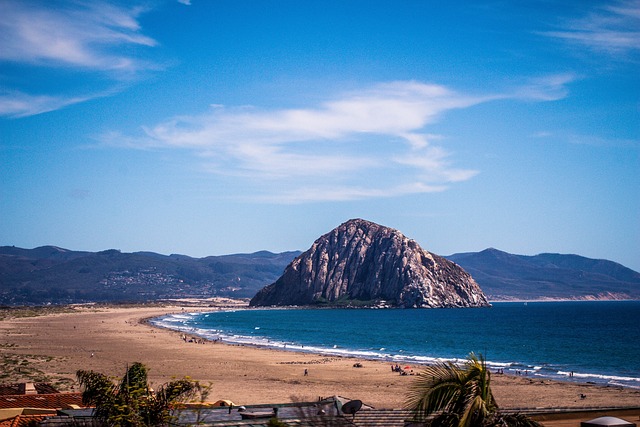 “Every three years, the Estuary Program gathers available monitoring and research data to track changes in our bay and watershed. The 2026 State of the Bay report contains a section focused on extreme weather events, which is an increasingly urgent topic of discussion as deviations from established weather patterns become more common. As part of the report, we take a closer look at extreme weather events within our watershed, predictions from the latest research and modeling, and discuss efforts underway to help us adapt to a changing climate. … ” Read more from the Morro Bay National Estuary Program.
PFAS pesticides found in California’s surface water, including two local sites
“A new environmental report raises serious health concerns about surface water frequently tested across California. Surface water includes rivers, lakes, streams, wetlands and, the ocean. Environmental Working Group (EWG) – a Washington D.C.-based nonprofit – targeted agricultural areas throughout the Golden State and found “forever chemicals” or PFAS in half the samples tested. Repeated samples in ten counties, including Santa Barbara and San Luis Obispo, tested positive. The Santa Maria River and Oso Flaco Creek were two local, surface waters tested. … ” Read more from KEYT.
Los Olivos Community Services District workshop to help shape final wastewater collection decision for Los Olivos
Following years of engineering studies, environmental review and community outreach, the Los Olivos Community Services District is preparing to make a significant decision regarding the future of wastewater collection in Los Olivos. The district is inviting property owners and community members to attend a public workshop on Wednesday, June 3, as officials present updated project information and gather public feedback before selecting a preferred wastewater collection approach. … District officials said the workshop will help inform the board’s final wastewater collection decision before the project advances into the next phase of engineering design. The anticipated Proposition 218 property-owner vote is targeted for early 2027. … ” Read more from the Santa Ynez Valley News.
Calleguas MWD provides primary water supply for aerial firefight during Sandy Fire
“Since the start of the Sandy Fire on the morning of May 18, Calleguas Municipal Water District’s (MWD) on-site reservoir, Lake Bard, served as the primary water source for aerial firefighting operations. Lake Bard holds over 3.4 billion gallons of water – plenty to provide sufficient supply for firefighting operations and maintain the emergency drinking water supplies the lake was built for. Calleguas continued to top off the lake during firefighting operations to keep it full. Lake Bard was utilized by aircraft from Ventura County Fire, Los Angeles County Fire, and the U.S. Forest Service hundreds of times during this incident – day and night. A total of 787,000 gallons of water was pulled. Aircraft include Ventura County Fire Department Firehawks, which can carry up to 1,000 gallons of water, and Coulson Helitankers, which can carry up to 3,000 gallons of water. … ” Read more from ACWA’s Water News.
SAN JOAQUIN VALLEY
$65.8 million more for Friant-Kern Canal
“Congressman Jim Costa on Friday announced federal funding of $65.8 million has been awarded for the continued repairs of the Friant-Kern Canal. The funding comes as part of a $131 million package will go almost entirely for major water infrastructure improvements for the Friant-Kern Canal and the O’Neill Pumping Plant. Costa’s office stated the funding brings the total federal investment secured for water storage, aging water infrastructure, clean drinking water, and groundwater recharge projects benefiting the 21st Congressional District he represents to more than $1.4 billion. The funding comes from two pieces of legislation, the Bipartisan Infrastructure Law and Inflation Reduction Act. Costa’s office stated the funding will help improve water reliability, modernize aging infrastructure, strengthen drought resilience, and support long-term water management efforts. … ” Read more from the Porterville Recorder.
SOUTHERN CALIFORNIA
Los Angeles is reimagining parks as water infrastructure
“Los Angeles broke ground last week on the first of nine stormwater capture projects at parks in the east San Fernando Valley that it expects will collectively capture nearly 950 million gallons of water a year to help replenish the San Fernando Groundwater Basin. The Stormwater Capture Parks Program will also improve water quality in the Los Angeles River, reduce local flooding and provide recreational benefits to the community through related park improvements, according to the Los Angeles Department of Water and Power, which developed the project in partnership with the Los Angeles Department of Recreation and Parks and Department of Public Works. … ” Read more from Smart Cities Dive.
Cleanup continues after broken pipe sends oil from East LA into LA River and toward Port of Long Beach
“Cleanup continued Wednesday following an oil spill from a broken pipeline that sent at least 2,400 gallons onto an East Los Angeles intersection, into the Los Angeles River and toward the Port of Long Beach, affecting birds and other wildlife. Booms and oil absorbing pads were deployed about 10 miles downstream from the area where the pipe was broken and air monitoring was ongoing as a precaution after the pipeline, which brings crude oil from Kern County to the Port of Long Beach, was broken by a construction crew laying out a fiber optic line around 3 a.m. Friday. Firefighters were dispatched to the area of East Cesar Chavez and North Eastern avenues, according to a Los Angeles County Fire Department public information officer, who said crude oil was visible in the intersection. The pipeline operator was notified of the rupture and shut down the flow within 30 minutes of being notified, she said. The shut-off valve was near Dodger Stadium. … ” Read more from the LA Daily News.
California residents evacuated due to chemical tank threat return home but fears remain
“For many Southern California residents who were evacuated after a chemical tank overheated, the relief of finally being allowed to return home has been overshadowed by lingering fears of living near the aerospace plant that has faced problems. A valve on the tank’s cooling system failed and forced 50,000 people to evacuate in and around the Orange County city of Garden Grove last week as officials warned of the potential for a catastrophic explosion. The tank cracked by chance, relieving pressure and eventually allowing residents to return home after the temperature remained stable without intervention. Bobbi-Lee Smart returned home Monday but still has her suitcase, cat carriers and important documents ready so she can leave at a moment’s notice. “I won’t even open the doors and windows in my house because I don’t know for sure that the air is safe,” said Smart, who lives in Anaheim, next to Garden Grove. “How do we know it is stable?” … ” Read more from the Associated Press.
Garden Grove crisis exposes Southern California’s hidden industrial risks
“The days-long threat of a catastrophic chemical explosion in Garden Grove has exposed the pervasive yet often ignored industrial risks hidden amid daily life in Southern California, where aerospace plants and petrochemical facilities are interwoven among homes, schools and parks. Now, experts say this aging infrastructure is converging with population growth and regulatory rollbacks that are increasing the likelihood that similar incidents will happen again. The greater Los Angeles area became a global hub for aerospace and defense manufacturing around the start of World War II, with companies here producing military aircraft, electronics, plastics, petroleum products and other specialized materials that helped transform the region into a dense manufacturing zone even as its suburban footprint was expanding. … ” Read more from the LA Times. | Read via AOL News.
SEE ALSO: Is there a facility like the Garden Grove chemical tank near you? How to find out, from the LAist
CalTrout’s South Coast Team takes conservation from the creeks to the streets
“Southern California is home to steelhead and most people have no idea. That’s the conversation CalTrout’s South Coast team members Russell Marlow, Judi Uthus, and Elizabeth Burns, have been starting all spring. Their jobs are most definitely not desk jobs. At CalTrout, we believe that the work of restoration must be woven together with engagement in our local communities. Over the past few months, our staff has showed up at more than 20+ events across Southern California – at breweries and natural history museums, on riverbanks and recreation center lawns, in university classrooms and next to the very creeks where these critically endangered fish swim – reaching thousands of people of all ages and backgrounds. Their message: wild spaces are extraordinary, and these spaces, and their willdife inhabitants, need us. For landscape-scale restoration to succeed, it takes all of us. … ” Read more from Cal Trout.
IMPERIAL/COACHELLA VALLEYS
Sierra Club sues Imperial County over approval of massive data center complex
“One of the nation’s oldest environmental groups is suing the Imperial County Board of Supervisors over its decision to greenlight a massive and deeply controversial data center complex earlier this year. This month, the San Diego Chapter of the Sierra Club filed a lawsuit challenging the supervisors’ April decision to allow several parcels of land to be joined together so the project can be built. The suit, filed in Imperial County Superior Court, alleges that the supervisors are taking a fragmented approach to approving the nearly one-million-square-foot project, which could obscure its true environmental impact. The suit alleges that this violates the California Environmental Quality Act (CEQA). … ” Read more from KPBS.
SAN DIEGO
San Diego Coastkeeper releases 2025 Mission Bay Water Quality Report
“San Diego Coastkeeper published its 2025 Mission Bay Water Quality Monitoring Report, documenting a second year of monthly water quality data at ten locations throughout the Bay. The report finds that storm events continue to drive sharp spikes in bacteria, metals, and nutrients across all sites, while Tecolote Creek and Rose Creek water quality is very poor, even during dry weather, pointing to chronic, year-round pollution sources that require urgent attention. Now in its second year, Coastkeeper’s Mission Bay Watershed Watch program has built a network of more than 260 trained community volunteers who collect water samples monthly alongside Coastkeeper staff. Samples are analyzed at a private certified laboratory and the data is shared with the public, primarily through an interactive data map at www.sdcoastkeeper.org/mb-wqm. Coastkeeper also submits all the data to the California State Water Resources Control Board’s California Environmental Data Exchange Network (CEDEN) to inform future regulatory action. … ” Read more from the San Diego Coastkeeper.
How Peace Studies students in San Diego are tackling the Tijuana River sewage crisis
“The Tijuana River sewage crisis is a multi-faceted problem, with environmental, public health and political challenges to overcome. It can all feel overwhelming, not only for the people experiencing the crisis, but also for those wanting to help. Enter Sarah Federman’s Peace Studies students. She teaches conflict resolution at the University of San Diego’s Joan B. Kroc School of Peace Studies, and this spring semester, she taught her class on the ongoing cross-border sewage crisis. “We’re a school of peace studies, so you might think, well, it’s not a war, right?” she said. “But we study conflict resolution and how to get different groups to work together across differences to solve a problem.” … ” Read more from KPBS.
Along the Colorado River …
Audio: What the Colorado River drought means for California
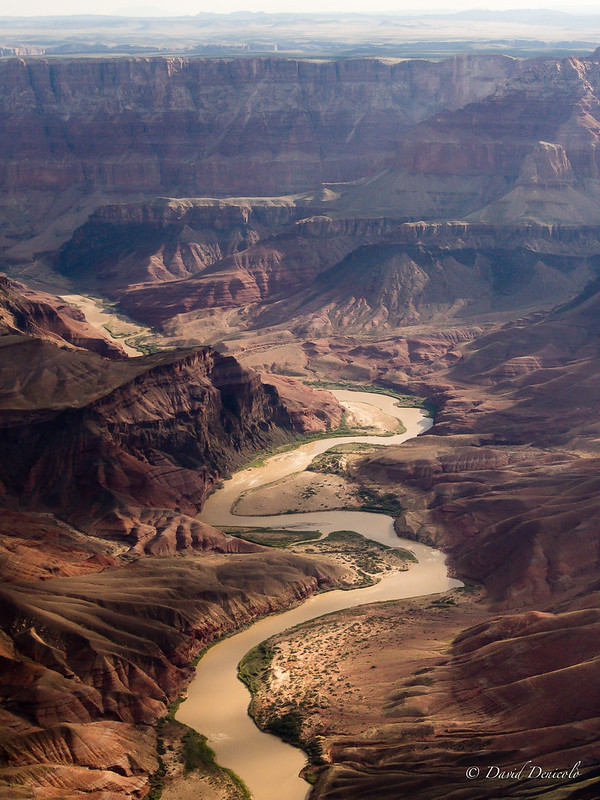 “The Colorado River basin and its two largest reservoirs, Lake Powell and Lake Mead, are facing record-low water levels, and the seven states that rely on the water system can’t agree on what to do about it. Now the federal government may need to step in, with the Trump Administration proposing a plan that would cut 40 percent of the Colorado River’s water supply to Arizona, California and Nevada over the next decade. We’ll talk with environment journalists about what this could mean here in California.” Show airs at 10am. Listen to podcast from KQED.
The Colorado River shows how organizations quietly destroy their own future
“Lake Powell is 24 percent full. Lake Mead is 32 percent full. 2026 is on track to be the driest in more than a century of record keeping. The seven states most directly impacted still can’t agree on new operating rules, even though the federal deadline passed in February and the Bureau of Reclamation needed to adopt new criteria before October 1st. Every state knows the system is failing. This is what a broken strategy looks like in slow motion: rational actors, each making self-interested decisions, collectively producing an outcome that hurts everyone. And if you look closely at most organizations, you’ll find the same dynamic at play. … ” Read more from Inc.
ASU-led study sharpens Colorado River forecasts as Arizona faces deepening water cuts
“For Arizona, where much of the state’s water supply depends on the Colorado River, even small improvements in hydrologic forecasting can have significant consequences. More accurate estimates of water availability could help state agencies anticipate shortages earlier and make more informed decisions about conservation, which is crucial as Arizona continues to face mandatory cutbacks tied to declining river and reservoir levels. A new study led by Arizona State University researchers aims to improve those forecasts by changing how water is tracked across the Colorado River basin. The research was conducted through the Center for Hydrologic Innovations, a pillar of the Arizona Water Innovation Initiative, which is housed in the Julie Ann Wrigley Global Futures Laboratory in collaboration with the Ira A. Fulton Schools of Engineering, with support from NASA’s Earth Science Division and Central Arizona Project. The work centers on improving a widely used hydrologic tool known as the Variable Infiltration Capacity, or VIC, model that is used by researchers and water managers to simulate how water moves through the Colorado River basin. … ” Read more from Arizona State University.
Audio: What a bad winter’s snowpack means for the West this summer
“Any hopes that this winter’s snowfall would put a dent in the ongoing drought across the west have melted away. Federal officials say the season’s snowpack is already gone in many areas — that’s earlier than usual, and generally not a great sign. In addition, this year’s snowpack will serve as the new benchmark low in four states, including Utah, Colorado and New Mexico. Dan McEvoy with the Western Regional Climate Center joined The Show to talk more.” Listen to the show or read transcript at KJZZ.
Low water at Lake Mead may cut power generation by fall, driving up costs for Arizonans
“Discussions about drought typically involve how to respond to water scarcity. But there may be another concern for the Southwest: higher electricity bills. Less water flowing through the Colorado River is expected to reduce hydropower generation at the Hoover Dam. Managers there say they may need to shut off 12 of 17 turbines by fall. About 20% of Hoover’s generation goes to Arizona, including reservations. California and Nevada also rely on the dam. Arizona Water Director Tom Buschatzke is Chief Negotiator for Colorado River Resources. During an interview last month, Buschatzke told 12News that water levels at Lake Mead may drop another 20 feet by the end of the year. … ” Read more from Channel 12.
SEE ALSO: Lake Mead Levels Fuel Power Fears as Hoover Dam Gets America250 Display, from Newsweek
Southern Nevada confronts a challenging future after water cuts further deplete Lake Mead
“Amid the worst regional drought the Western U.S. has seen in 1,200 years, and in a year where Rocky Mountain snowpack levels also hit record lows, the Colorado River system is now barely over one-third of its total hydrological capacity, according to the U.S. Bureau of Reclamation. As a result, water levels at Lake Mead and Lake Powell, the river’s two largest reservoirs, are also depleting rapidly. In April, with Lake Powell on track to fall below 3,490 feet later this year—the minimum level at which it can generate power—the Bureau of Reclamation stepped in to announce emergency reductions to the amount of Colorado River water released from Lake Powell downstream to Lake Mead. In a statement, the Bureau of Reclamation noted that the decision was necessary to prevent issues including “instability in regional power and water supplies” for the upstream communities that depend on Lake Powell and Glen Canyon Dam. But the agency also acknowledged that it could simultaneously “accelerate the downstream decline of Lake Mead,” including a potential 40% reduction to Hoover Dam’s hydropower generating capacity as early as this fall. … ” Read more from Las Vegas Weekly.
Southern Nevada confronts a challenging future after water cuts further deplete Lake Mead
“Amid the worst regional drought the Western U.S. has seen in 1,200 years, and in a year where Rocky Mountain snowpack levels also hit record lows, the Colorado River system is now barely over one-third of its total hydrological capacity, according to the U.S. Bureau of Reclamation. As a result, water levels at Lake Mead and Lake Powell, the river’s two largest reservoirs, are also depleting rapidly. In April, with Lake Powell on track to fall below 3,490 feet later this year—the minimum level at which it can generate power—the Bureau of Reclamation stepped in to announce emergency reductions to the amount of Colorado River water released from Lake Powell downstream to Lake Mead. In a statement, the Bureau of Reclamation noted that the decision was necessary to prevent issues including “instability in regional power and water supplies” for the upstream communities that depend on Lake Powell and Glen Canyon Dam. But the agency also acknowledged that it could simultaneously “accelerate the downstream decline of Lake Mead,” including a potential 40% reduction to Hoover Dam’s hydropower generating capacity as early as this fall. … ” Read more from Las Vegas Weekly.
Massive Las Vegas valley pipeline project carries cost of at least $2 billion
“An enormous project that could prevent future interruptions in water service to Henderson and other parts of the Las Vegas valley is moving ahead. The “Horizon Lateral Program” initiated by the Southern Nevada Water Authority (SNWA) will add a huge pipe to the water system. It will add redundancy to a network of pipes that were placed before many parts of the valley were developed. The project comes with an estimated cost between $2 billion and $2.7 billion, according to SNWA. “The program will be funded locally through regional connection fees paid by developers and the SNWA’s infrastructure and commodity charges paid by all Southern Nevada water users. … ” Read more from KLAS.
‘Super El Niño’ could make Arizona’s already brutal summers even worse, climate scientists warn
“Experts say that Arizona this year is likely to see more of the record-breaking heat, deadly flooding and intense wildfires that have marked recent summers — and it could be even worse, thanks to the strong El Niño expected. “It has been one of the biggest weather stories we have seen,” Shel Winkley, a meteorologist at Climate Central told reporters Wednesday about the “Super El Niño” that has been forming in the Pacific Ocean. Winkley, along with other climate scientists, spoke with reporters as part of a panel put on by Climate Action Campaign. … The El Niño currently forming is breaking all records and could be the largest ever, potentially creating unprecedented weather extremes. The last significant El Niño was in 2023, which saw record-breaking summer heat; those records were later shattered in 2024 when the max temperature in Phoenix sat at or above 100 degrees for approximately 30% of the year. … ” Read more from the Arizona Mirror.
Scottsdale faces water challenge as Colorado River agreements expire
“Arizona’s shrinking Colorado River supply is putting new pressure on cities like Scottsdale and on water bills. City leaders and water experts are working to come up with solutions to prevent a water shortage. Last week, the Scottsdale City Council voted to raise water rates by 4.5%. A crowd turned out for a town hall Wednesday to see what’s being done to prevent a water shortage. Professor of Water Law at Arizona State University, Rhett Larson, joined Mayor Lisa Borowsky at the event. … ” Read more from Arizona’s Family.
SEE ALSO: Scottsdale rate hikes announced ahead of mayor’s town hall, from Fox 10
State asks Utahns to reduce water use as all 29 counties experience severe drought
“With all 29 Utah counties in severe drought and 22 experiencing extreme drought, the state is asking Utahns to be mindful of water use. When it comes to watering your lawn, costs are still higher in other states. A recent report by lawn company Lawn Love revealed the most expensive cities for watering your lawn in 2026. Cities in Arizona and Nevada were listed as having the most expensive cities for watering lawns. … ” Read more from Channel 14.
Colorado River’s dire state demands action from urban water users, experts say — few are
“Dissonance exists between life-close-to-normal policies regarding urban water use and the growing crisis on the river. Casually surveying the urban landscapes in much of Colorado’s Front Range, you’d never know that the Colorado River — the source for roughly half the water of the cities — has deteriorated to its most pitiful shape of perhaps the last century. Oh, yes, some utilities — notably Denver Water and Aurora Water, which together serve 1.9 million residents — have imposed rigorous stage-one drought watering restrictions. Outdoor irrigation is allowed twice per week and never during the heat of day. Other water utilities that tap Colorado River water, however, have asked only for voluntary cutbacks, if any at all. … ” Read more from Sentinel Colorado.
New investment will focus wildfire mitigation in high-risk Colorado River corridor
“The Colorado River Wildfire Collaborative just hired a program manager to focus on fire mitigation between Glenwood Springs and De Beque. That region is particularly fire-prone, and a recent study found the northwest part of the state lacked sufficient resources to address fire risk. The Lee Fire burned 137,758 acres there last summer, making it the fifth-largest wildfire in state history (three acres shy of the 2002 Hayman fire). Sam Feuerborn, the collaborative’s new program manager, is tasked with making the region more resistant to those highly destructive fires. “This whole landscape that I’m working in along the I-70 corridor up north into Rio Blanco and Moffat Counties is one of the most susceptible areas of the state to wildfire,” Feuerborn said. “When we see this larger number of fires on a landscape, the potential for them to spread and grow is absolutely higher.” … ” Read more from Aspen Public Radio.
In national water news today …
How Democrats and Republicans found common ground against data centers
“The backlash against data center construction continues to grow, and it’s becoming increasingly bipartisan. Data centers that run artificial intelligence are on the verge of reshaping America’s electricity grid. And the large warehouses packed with computers are popping up in rural communities across the county. With midterm elections fast approaching, voters largely disapprove of new data centers in their area — and that leaves political candidates in a tactful balancing act. Seven out of 10 Americans oppose data center construction near where they live, according to polling conducted by Gallup in March. Among Democrats, 75% of respondents told Gallup they strongly or somewhat oppose local data center construction, while 63% of Republicans also expressed opposition. … ” Read moire from Straight Arrow News.
UN warns global heat is here to stay, as El Niño looms
“With an El Niño expected to emerge this year and climate change intensifying, the next five years are poised to be very hot with global temperatures expected to remain at or near record levels, according to the World Meteorological Organization and the U.K. Met Office. Thursday’s five-year forecast came amid a record-breaking May heat wave across Europe, including in Great Britain, France, Italy, Austria and Spain. This week, temperatures reached a staggering 35.1 degrees Celsius (95.18 degrees Fahrenheit) in London, hit 37.1 C (98.78 F) in southwestern France and soared to 38 C (100.4 F) in southern Spain. Several heat-related deaths were reported across Europe. Heat waves have swept across South Asia too in recent days with India, Pakistan and Bangladesh experiencing temperatures above seasonal averages. In some areas, temperatures reached between 45 C and 50 C (113 F and 122 F). “The science is clear that human-induced climate change is making these heat waves more frequent and extreme,” said Simon Stiell, the United Nations’ climate change chief, on Wednesday. … ” Read more from Courthouse News Service.
By the Numbers …