
Several news sources featured in the Daily Digest may limit the number of articles you can access without a subscription. However, gift articles and open-access links are provided when available. For more open access California water news articles, explore the main page at MavensNotebook.com.
On the calendar today …
- MEETING: Delta Conservancy Board Meeting from 9am to 1pm. Agenda items include Community Enhancement Program Update, Ecosystem Restoration and Climate Adaptation Program and Delta Carbon Program Updates, Consideration of Amendment to Scope of Nature Based Solutions: Wetland Restoration Program Agreement for Wetland Restoration on Staten Island Project; Consideration of Updates to the Sacramento-San Joaquin Delta Conservancy General Grant Guidelines; DWR Multibenefit Restoration Program Update; Delta Stewardship Council update; Delta Protection Commission update; and a Delta Conveyance update. The meeting will be hybrid and include a site visit. Click here for the agenda.
- WEBINAR: From Field to Policy: Scaling Sustainable Agriculture from 11am to 12pm. Healthy soils are vital to water reliability, climate resilience, and the long-term productivity of California agriculture. However, scaling soil health practices like cover cropping takes more than farmer interest alone. It requires locally relevant science, practical incentives, supportive policy, and strong collaboration across sectors. Join Sustainable Conservation for the third webinar in our Spring 2026 Voices from the Field webinar series, From Field to Policy: Scaling Sustainable Agriculture. Together with panelists from General Mills, East Turlock Subbasin Groundwater Sustainability Agency, and EcoThrive Farm Management, we’ll explore how farmer engagement, science, and policy can work together to advance and expand sustainable agriculture across California. The conversation will examine how growers, researchers, water managers, and industry partners are finding common ground to support soil health and groundwater sustainability under the Sustainable Groundwater Management Act (SGMA). Click here to register.
- WEBINAR: Associations between PFAS in public drinking water systems and serum among Southern California adults from 12pm to 1pm. Studies from areas with high level per- and polyfluoroalkyl substance (PFAS) contamination have reported significant contributions of drinking water to overall exposure but few studies have focused on general populations. Utilizing data from the CARE (California Regional Exposure) biomonitoring study and the California State Water Resources Control Board investigative PFAS monitoring orders, we examined the association between PFAS in public water system drinking water and concentrations in serum among a general population of California adults. Results from this study suggest that PFAS contamination in drinking water, especially PFHxS, may contribute to serum PFAS levels among a general population of Southern California adults. Click here to register.
- WEBINAR: Data for Lunch: Co-Creating the Water Future We Deserve from 12pm to 1pm: California’s water future isn’t fixed. It’s being written right now – through policy choices, infrastructure decisions, and allocation tradeoffs that will shape landscapes and communities for generations. The question is: who gets to help write it? COEQWAL, the Collaboratory for Equity in Water Allocations, was built on the premise that the answer should be all of us. A partnership among UC Berkeley researchers, state agencies, and community groups, COEQWAL uses CalSim3, California’s primary water planning model, to envision and evaluate alternative water futures under a range of climate, policy, and infrastructure scenarios. Those futures aren’t just handed down from a modeling team; they’re co-created with the people who will live them. Join us for a Data for Lunch with UC Berkeley’s Ted Grantham, who leads COEQWAL, as he shares what it looks like to bring communities, researchers, and decision-makers together around a shared vision for California’s water future. And what’s possible when they do. Click here to register.
- WEBINAR: Planning for Sustainable Water Management from 3pm to 4pm. Water management plans are a go-to tool for making California’s water supply more resilient and sustainable. But what do they actually achieve? This talk will dive into research on the state’s water planning requirements, asking whether California water management plans support sustainable water management, whether planning incentivizes more coordinated management, and why California continually turns to planning as a water policy tool. Click here to register.
- MEETING: Working group meetings for the Second Statewide Agricultural Expert Panel from 3pm to 6pm. Staff of the State Water Resources Control Board (State Water Board) will hold two Panel working group meetings for the Second Statewide Agricultural Expert Panel (Panel) on Monday, May 18 and Wednesday, May 27, 2026, to facilitate Panel considerations to public comments received in response to the Draft Panel Report, which provides Panel recommendations on issues relevant to the Panel charge questions. Click here for the meeting notice.
In California water news today …
‘Forever chemicals’ found in California waterways in 10 counties, study says
“PFAS, often referred to as “forever chemicals,” were frequently found in surface water and sediment in 10 counties across California, according to a new study. The analysis from the Environmental Working Group showed that as much as 50% of California surface water samples contained PFAS, stemming from their use in agricultural pesticides. Since they don’t break down easily and given that long-term exposure has been linked to cancer and other health issues, PFAS (formally known as perfluoroalkyl and polyfluoroalkyl substances) are widely known by their “forever chemicals” nickname. Using data from California’s Surface Water Database from 2020 to 2024, samples were taken from waterways across several counties, including Butte, Colusa, Imperial, Merced, Monterey, San Luis Obispo, Santa Barbara, Stanislaus, Sutter and Yolo. Each study found some level of contamination near agricultural areas, with some at higher concentrations than others. … ” Read more from SF Gate.
SEE ALSO: California’s surface water and sediment are often contaminated with PFAS pesticides, from the Environmental Working Group
Committee meets to advise DWR on state water plan
“An advisory committee to the California Department of Water Resources held its first meeting last week to begin work on the next update to the California Water Plan, the state’s long-range strategy for managing water resources across all sectors. The plan is updated every five years and guides statewide water policy, planning and investment priorities. The meeting came months after Gov. Gavin Newsom signed Senate Bill 72 in October 2025, launching a multiyear effort to modernize California’s water planning framework in response to intensifying droughts, floods and long-term water reliability challenges tied to climate change. SB 72 established an interim statewide planning target of 9 million acre-feet of additional water supply by 2040. The target is expected to play a central role in the development of the state’s 2028 and 2033 water plans. A focus of last week’s meeting—held in Sacramento over two days—was to establish the committee’s purpose and build a shared understanding of the challenges ahead. … ” Read more from Ag Alert.
New Dutch Slough study highlights early success of tidal wetland restoration using low-impact monitoring and AI
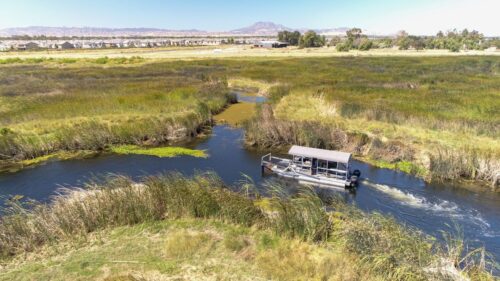
“A newly published study from the Dutch Slough Restoration Project in the San Francisco Estuary shows that restored tidal habitat can begin functioning ecologically within just two years of reconnection and demonstrates the promise of combining low-impact monitoring with artificial intelligence – specifically, computer vision(CV) – to evaluate restoration outcomes. The study found that channel length, habitat complexity, and connectivity strongly influenced early ecological recovery. Following levee breaching, restored habitats shifted toward reference conditions, with greater water-quality complexity, stronger food-web development, and increased fish use, likely supported by diverse habitat conditions and the establishment of native vegetation. The research is especially notable for its monitoring approach. Rather than relying on traditional high-disturbance sampling alone, the team integrated environmental DNA (eDNA), underwater video, in situ zooplankton imaging, and water-quality sensors, supported by CV-assisted image analysis. Together, these tools provided a detailed picture of ecological change while minimizing disturbance to the restored habitat. … ” Continue reading this press release from Cramer Fish Sciences.
Suisun Marsh feeds baby salmon in the winter―can it also feed Delta smelt in the summer?
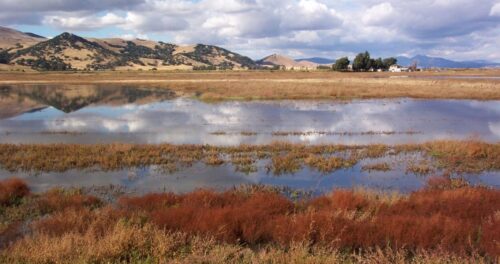
“About a decade ago, researchers at the University of California, Davis made a surprising discovery while teaching a class in Suisun Marsh, the largest contiguous brackish wetland on the west coast of North America. While most of the Bay-Delta is a food desert for fish, the marsh offers a smorgasbord of zooplankton, the tiny creatures that fish eat. “They said, ‘There’s crazy amounts of plankton in here, what’s up with that?” says Kyle Phillips, a UC Davis Center for Watershed Sciences researcher. Phillips found that the answer lies in the wetlands managed by duck clubs in Suisun Marsh. Duck clubs account for about half of the 115,000-acre marsh, which also includes tidal wetlands, bays and sloughs. Managed wetlands are diked, shallow ponds with mechanisms that control water flows to and from neighboring waterways. A new study Phillips led shows that when these managed wetlands are flooded for migrating waterfowl, they produce far more zooplankton than nearby tidal wetlands. … ” Read more from Robin Meadows at Maven’s Notebook.
REPORT: Higher summer outflow and food supply are linked to better Delta smelt outcomes
Ken James / DWR
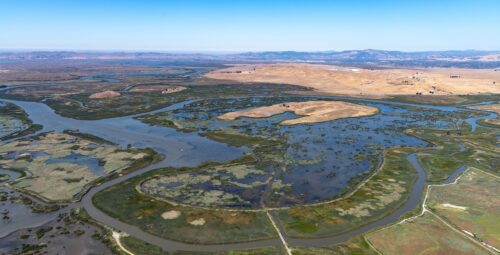
” … In 2008, the biological opinion for State Water Project and Central Valley Project operations required the Department of Water Resources and the U.S. Bureau of Reclamation to keep Fall X2—where salt concentration is 2 parts per thousand—at 74 km or less from the Golden Gate in September and October of Above Normal and Wet years. updated permits issued by the U.S. Fish and Wildlife Service and CDFW in 2019 and 2020 changed the Fall X2 standard to 80 km and added operation of the Suisun Marsh Salinity Control Gates to move freshwater from the Sacramento River into Montezuma Slough. Fall X2 and operation of the Suisun Marsh Salinity Control Gates, together with food subsidy actions, make up the Delta Smelt Summer-Fall Habitat Action (SFHA). The SFHA is intended to improve summer and fall conditions by bringing salinity, turbidity, and food resources into better alignment in places where Delta smelt can use them. Because habitat for juvenile and subadult Delta smelt is limited during this period, the SFHA focuses on a key seasonal bottleneck. Against that background, the report, Summer-Fall Habitat Actions for Delta Smelt – Report on Effectiveness of Actions Taken Between 2011 and 2024, prepared by the Delta Coordination Group Science and Monitoring Work Group, evaluates the Delta Smelt Summer-Fall Habitat Action, including Fall X2 and operation of the Suisun Marsh Salinity Control Gates, using a weight-of-evidence approach that considers several sources of information together to assess effects on habitat, survival, and recruitment. … ” Continue reading at Maven’s Notebook.
Boaters warned of hidden hazards across California Delta waterways
“Memorial Day officially kicks off boating season in Northern California. But with that comes the risk of accidents, hazards and drownings in the delta and local rivers. The San Joaquin County Sheriff’s Office says they’ll be watching and ready to respond. Turlock resident Megan Patterson and her husband have been boating for 15 years. Every Memorial Day weekend, they head to Stockton’s River Point Landing and get ready to set sail on the delta. … But as prepared as they are, they still worry about dangers lurking in the delta. “Logs, abandoned boats. You’ve got to be careful of vessels coming at you with speed or the ships, because there are a lot of ships here on the delta,” Patterson said. … ” Read more from CBS News.
Two years after California reintroduced beavers, they are transforming the landscape into a ‘climate-resilient powerhouse’
“An “unprecedented collaboration” between California Native American tribes and the state’s Department of Fish and Wildlife is bringing beavers back to sites from where they had disappeared, reports Kat Hong in Upworthy. According to Hong, “On October 18, 2023, seven beavers were released into their new home in Tásmam Koyóm, a 2,325-acre valley in Plumas County. By September 2024, the total number of relocated beavers had grown to 28, spread across five release sites.” The relocation program is the first of its kind in 75 years, and the initiative is already showing promising results. “At the Maidu Summit Consortium’s Tásmam Koyóm meadow, which means ‘tall grass’ in the Mountain Maidu language, relocated beavers have constructed an impressive 328-foot dam, effectively creating a massive wetland complex that has increased water coverage by more than 22% according to CDFW’s April 2025 report.” The beavers’ activity benefits water storage, contributes to wildlife prevention efforts and creates natural firebreaks and help improve water quality. … ” Read more from Planetizen.
SEE ALSO: California brought back beavers for the first time in 70 years, and the results are already amazing, from Upworthy
New push at State Capitol to address growing golden mussel infestation
“Lawmakers and local water agencies are ramping up efforts to tackle the spread of Golden Mussels, an invasive species that experts warn could threaten critical water infrastructure across the state. At the same time, a photo circulating on Facebook showing a farmer’s pipe in Tracy covered in mussels is drawing attention online. FOX26 News was unsuccessful in obtaining permission to air the image, but scenes like it are becoming a growing concern throughout Delta-connected waterways. … ” Read more from KMPH.
California fire agencies to evaluate new acoustic fire suppression backpack technology
“As California faces longer wildfire seasons, water constraints, and increasing pressure on frontline fire agencies, Sonic Fire Tech, a NASA-inspired fire tech startup developing infrasound-based fire defense systems, today announced a statewide initiative to place 100 acoustic fire suppression backpack systems into the hands of California fire departments for real-world operational research, controlled testing, and wildfire initial-attack evaluation. The campaign comes as California fire agencies increasingly explore new tools that improve firefighter mobility, reduce refill limitations, and strengthen early suppression capabilities in remote or resource-constrained environments. As of today, approximately 25% of available participation slots have already been claimed, with growing interest from fire agencies, wildfire researchers, and Firewise and Fire Safe community alliances throughout the state. … ” Read more from Business Wire.
Bureau of Reclamation faces partisan blame over water crisis
“The House Subcommittee on Water, Wildlife and Fisheries held an oversight hearing on May 20 examining the future of the Bureau of Reclamation, the federal agency that delivers water to 31 million people across the American West. The hearing exposed a sharp partisan divide over whether the primary barrier to water infrastructure is bureaucratic red tape, as Republicans argued, or the Trump administration’s own budget cuts and staffing reductions, as Democrats contended. … The hearing’s most contentious exchange came when Huffman pressed Scott Cameron, Principal Deputy Assistant Secretary, U.S. Department of the Interior, on whether the administration’s proposed elimination of the Water Smart program, a drought resilience initiative with bipartisan support, was a serious budget proposal. Cameron deflected, saying the agency “always looks forward to getting direction from Congress on what it wants us to do.” Huffman, who has served on the committee for 14 years, responded flatly: “You’ve done this before.” … ” Read more from Legis 1.
U.S. Army Corps of Engineers publishes Notice of Proposed Deauthorization List of water resources projects in the Federal Register
“Assistant Secretary of the Army for Civil Works Adam Telle on May 21 authorized the U.S. Army Corps of Engineers to publish a Notice of Proposed Deauthorization List of water resources projects in the Federal Register. “Over the years, Congress has directed the Corps of Engineers to take on thousands and thousands of projects under the Army Civil Works program. But many of these projects-on-paper were not viable, never funded, or so old and dormant that no one even remembers why they were put there in the first place. That’s why we are doing some much needed spring cleaning in partnership with leaders like Congressman Mike Collins,” said Assistant Secretary of the Army for Civil Works Adam Telle. “There are billions of dollars in authorizations tied up in these ghost projects, and today’s announcement will help deliver on President Trump’s historic common-sense agenda and ensure that we are laser focused on Building Infrastructure, Not Paperwork.”… ” Read more from the Army Corps of Engineers.
In regional water news and commentary today …
NORTH COAST
Public meeting to be held about major water shortage in Klamath County
“The Klamath Water Users Association and Klamath Project irrigation districts are hosting a urgent public meeting tonight regarding the 2026 irrigation season and how water supplies will face major shortages. 23% of water availability from the Upper Klamath Lake has been used while being only six weeks into the irrigation season. It is estimated that the supply could run out in weeks, with the meeting focusing on major challenges and ways to manage the rest of the water year. … ” Read more from KDRV.
Oregon State University research shows common ground for farmers, conservationists in Klamath River country
“Disputes over managing the Klamath River system have existed between farmers and conservationists for years. Growers and ranchers have wanted the water for irrigation and cattle, while conservationists have sought to protect species who depend on the system for sustenance and breeding, including the Chinook salmon. Adding to the discussion is the recent removal of four federal dams from the Klamath River, which runs 250 miles through Oregon and California. To date, it’s the largest such removal in U.S. history. Leading up to — and after — the dam removal project, Oregon State University anthropology professor Bryan Tilt and a team of three current and former graduate students decided to learn more about the competing interests. They found there’s more common ground to be had for the groups. … ” Read more from KLCC.
Federal regulators signal support for Pacific Gas and Electric’s bid to decommission Eel River dams
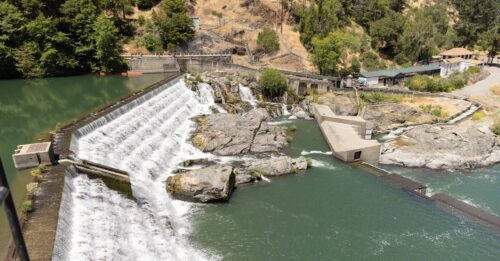
“The federal agency responsible for approving Pacific Gas & Electric Co.’s bid to decommission two Eel River dams and a downstream hydroelectric powerplant has signaled its support for the utility’s plans, despite last-ditch efforts by those who oppose the teardown to keep the waterworks in Lake and Mendocino counties intact. In a May 22 scoping document that provides an overview of proposed actions and potential resource issues, the Federal Energy Regulatory Commission noted it “proposed to eliminate … alternatives” to full decommissioning, including a proposed takeover of the dams either by the federal government or other public agency. Federal takeover of two PG&E dams and shuttered powerplant, known as the Potter Valley Project, would require congressional approval. FERC said “there is currently no evidence” showing that such a takeover should be recommended to Congress. Additionally, no federal agency has expressed interest in operating the project, FERC said. … ” Read more from the Santa Rosa Press Democrat.
No drought in Mendocino County, but task force keeping watch
“Mendocino County is not in a drought. That was the message Tuesday, May 19, from county Department of Transportation staff, who delivered the first formal drought briefing since the county adopted its Drought Resilience Plan on May 20, 2025 — nearly a year ago to the day. The numbers are good. Lake Mendocino has held above 70% of its seasonal storage target since late October. Only one dry well has been reported to the state this water year, within the normal range of zero to two. Coastal rainfall, measured across the Big-Navarro-Garcia rivers watershed, has stayed above 80% of historical averages for most of the year. The U.S. Drought Monitor lists most of the county as drier than normal but short of any drought classification. … ” Read more from the Mendocino Voice.
SIERRA NEVADA
California snow forecast: Up to 9 inches expected at high elevations
“Mother Nature is experiencing a bit of seasonal confusion following Memorial Day Weekend. Forecasts are calling for a wintry storm to hit Northern California, Oregon, and Nevada this week. A low-pressure system is expected to move into the Sierra Nevada from Tuesday, May 26, through Thursday, May 28, 2026, bringing chilly temperatures and unseasonal precipitation. In the Lake Tahoe area, temperatures are expected to hover in the mid-40s through Thursday, with lows dropping to the mid-30s. Temperatures should warm back up on Friday and into the weekend. South of Highway 50, there is a higher chance of snow accumulation, with snow levels expected to drop from 5,500-6,000 ft. by Wednesday morning before rising again later in the day. The highest peaks in the Tahoe area could see 1-3 inches of snow. Some passes and summits along Highway 50 could see snow over the next few days, potentially impacting travel in some areas. … ” Read more from Powder Magazine.
SEE ALSO: Sierra highway passes close as late-season snowstorm moves in, from the San Francisco Chronicle
Salmon return to Auburn Ravine after Hemphill Dam Improvement Project completed
“Salmon are returning to stretches of Auburn Ravine they had not reached in more than 80 years. New survey data released by Friends of Auburn Ravine and ECORP show salmon, steelhead and Pacific lamprey upstream of the former Hemphill Diversion Dam in Placer County, signaling an early success for a major habitat restoration project completed in 2022. The breakthrough came after local organizations partnered with the Nevada Irrigation District to remove the aging concrete dam and replace it with a fish-friendly structure designed to reopen miles of historic spawning habitat. … ” Read more from the Sacramento Bee.
SACRAMENTO VALLEY
Butte County farmers on ‘time crunch’ to sow rice
“Farmers in Butte County are in a rush to get rice into the ground. The window for planting rice is coming to a close June 1, and farmers like David Lundberg have been wrapping up their operations as fast as possible. That’s because moisture and rainstorms in April and May made fields difficult to work up, and crews are “working like crazy until today,” after about two two three weeks off from work, Lundberg said. “It’s a time crunch right now … this year is about the latest it started in a long time,” Lundberg said. “This is my 46th year farming rice, I’ve been around my whole life, I’ve never seen two to three weeks workers have in May to have off.” As the end of the rice planting season approaches, Lundberg suspects many farmers won’t be able to fully plant their fields. He said about 30% of his fields won’t be planted this year, and his neighbors are reporting 20%-40% will also not be planted. … ” Read more from the Chico Enterprise-Record.
Yolo County water dispute ends with settlement after multiple lawsuits
“Yolo County officials have ironed out an agreement on the future of Fair Ranch’s water rights, settling multiple lawsuits filed over access to Sacramento River water. The California Department of Water Resources in February determined its purchase of the 7,500-acre property’s share of Sacramento River water would have little impact on the environment and was therefore exempt from environmental review. But the $180 million deal set off alarms in Yolo County as officials worried about its effect on local groundwater supplies in and around Knights Landing. Now, the state water department has changed its plans. Ownership of the property will transfer to Reclamation District 108, which will operate the farm moving forward, according to a memorandum of understanding approved Tuesday by Yolo County supervisors. … ” Read more from PBS Abridged.
SEE ALSO: Yolo Subbasin Groundwater Agency approves regulatory fee, from the Davis Enterprise
NAPA/SONOMA
Napa Valley nightmare as experts warn wineries could run dry: ‘Unsustainable’
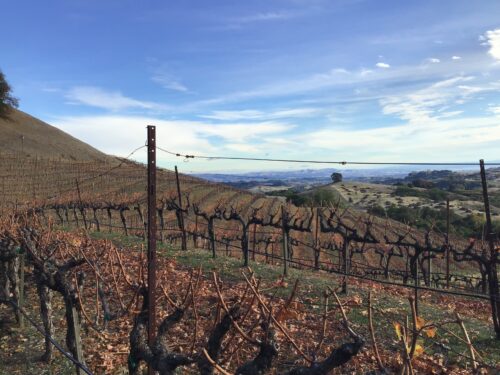
“Napa Valley, home to some of the most prestigious wineries in the world, is facing a water crisis that experts warn is unsustainable. The region pumped about 16,580 acre-feet of groundwater in 2025 — more than 1,500 acre-feet than what the county deems sustainable for the area, according to The Press Democrat, citing a county water report. During that same year, the Napa Valley subbasin received a “below average” amount of rainfall, representing about 21.59 inches. Over the past seven years, Napa Valley on average has consistently used more groundwater than the 15,000 acre-feet than the county recommends, pumping nearly 18,000 acre-feet. … ” Read more from the California Post.
Three former Marin County dairies to split $950,000 in federal funding as two relocate to Sonoma County
“Three of the six dairies that closed in the Point Reyes National Seashore earlier this year will share nearly $950,000 in federal funds secured by Rep. Jared Huffman, and two of those operations have signaled plans to resettle in Sonoma County. Huffman secured the funds through a federal earmark request two years ago. In his budget request, Huffman said the funding would be used to restart organic dairy farms in the North Bay that were facing a gutted market for organic milk; drought conditions; feed cost increases from supply chain bottlenecks and inflation; and lease termination. This was before the National Park Service announcement in January 2025 that six dairies and six ranches operating in the federal park had agreed to close in return for a reported $30 million private settlement brokered by The Nature Conservancy. Although the negotiations leading up to the agreement were closed to the public, Huffman was a participant. … ” Read more from the Santa Rosa Press Democrat.
BAY AREA
Could avocados be a transformational fruit for the Bay region?
“Illegal deforestation. Water pollution and depletion. Worker abuse and extortion — even murder. These are some of the externalized impacts of Americans’ appetite for avocados, one of the world’s most loved, valuable, and — increasingly — controversial fruits. Demand nationally has soared over the past 20 years, yet the United States’ production has dipped. Instead, avocado farming has ramped up in southwest Mexico, where drug cartels have sought to control the industry, collect profits, and brutally punish those who resist. Attuned to the escalating conflict, and with an eye on climate change trajectories, scattered Bay Area activists, planners, and urban farmers want Californians to rinse their hands of these atrocities and increase local resilience by growing their own avocados. They hope to drive an agri-urban infill revolution through which lush fruit-bearing canopies spread over community gardens, public parks, schoolyards, sidewalks, and, ideally, most private properties. … ” Read more from Bay Nature.
Palo Alto: Residents near flood-prone creek finally have a reason to cheer
“Hamilton Hitchings vividly recalls exactly what he was doing on the night that the worst flood in living memory rolled up to his door in the Duveneck/St. Francis neighborhood. He and his wife had just bought their house on at Channing Avenue and Heather Lane in late 1997, about four months before the devastating flood of February 1998, he said in an interview. He was home at 3 a.m. when he heard a loud noise. “I didn’t know what it was. I’ve never seen anything like it. I look out the window and Channing is entirely covered. It’s a river,” he said. He was among the lucky ones. That night, all the houses around his had their crawl spaces fully flooded; his crawlspace was half-flooded, he said. And as water from the San Francisquito Creek inundated homes in East Palo Alto, Palo Alto and Menlo Park, causing millions of dollars of damage, Hitchings was relieved to see the water stop just outside his doorway. … ” Read more from Palo Alto Online.
CENTRAL COAST
Civil Grand Jury wants seawater intrusion a top priority
“A recent Monterey County Civil Grand Jury report finds that efforts to identify and advance projects to stem ongoing seawater intrusion in the Salinas Valley must accelerate in order to protect portions of the region’s multi-billion-dollar agricultural economy. Titled “Seawater Intrusion – A Shared Problem in Monterey County,” the report lays out findings and recommendations, primarily to three agencies in the county: the Board of Supervisors, the Monterey County Water Resources Agency and the Salinas Valley Basin Groundwater Sustainability Agency. Seawater intrusion is directly linked to the decades-long problem of overdraft – pumping more water out of the ground than rain and the Salinas River is able to recharge. Most of the groundwater overdraft is associated with agricultural pumping. As inland groundwater levels decline, reduced freshwater pressure allows seawater from the coast to migrate farther inland. Recent mapping shows elevated salinity levels approaching the city limits of Salinas. … ” Read more from the Monterey Herald.
SAN JOAQUIN VALLEY
Well registration workshops for Hanford-area landowners
“In order to boost well registration, the Mid-Kings River Groundwater Sustainability Agency (GSA) will hold two workshops June 2 and 16. The June 2 workshop will be held from 9 a.m. to noon. The June 16 workshop will be held from 1 p.m. to 4 p.m. Both will be at the Kings County Planning Department offices. Landowners are encouraged to call the GSA to register. An event may be canceled if no reservations are made. … ” Read more from SJV Water.
SOUTHERN CALIFORNIA
L.A. River cleanup continues after 2,400 gallon oil spill
“Over 2,000 gallons of crude oil flowed into the L.A. River after a pipeline located by East Cesar E. Chavez Avenue and North Eastern Avenue ruptured. The incident, which occurred last Friday, resulted in clean-up endeavors that continued through the weekend and into Monday. The oil entered storm drains that emptied out into the river, leading concentrating clean-up efforts to the pipeline site as well as the riverbank. In Long Beach, oil-absorbing containment booms were installed to help prevent oil spill-off from reaching the ocean. Additionally, wildlife volunteers have been at work; approximately 25 oil-soaked birds along the L.A. River have been treated. … ” Continue reading from LA Magazine.
Southern California officials lift all evacuation orders for residents near damaged chemical tank
“Southern California officials lifted the final evacuation orders Tuesday night for residents who live near a damaged chemical tank, allowing 16,000 people to return home. The crisis that began Thursday had forced 50,000 people to evacuate in and around the Orange County city of Garden Grove. A crack that formed by chance on the tank relieved pressure and helped avert a catastrophic explosion, allowing most evacuees to return home over the Memorial Day weekend. Authorities announced they were lifting the final orders after the temperature on the tank remained stable for four hours without intervention from sprinklers. “All residents will go home,” Orange County Fire Authority Division Chief Craig Covey said during a meeting that grew raucous at times as residents questioned why the chemical was allowed in a densely populated area and urged city officials to hold the company that operates the tank accountable. … ” Read more from the Associated Press.
SEE ALSO: 70 people suing Garden Grove chemical tank owner over crisis as of Tuesday, from the LA Daily News
After the fires: protecting LA’s trees while learning lessons for the future
“Southern California is emerging from yet another round of wildfires just as the wildfire season gets underway. It’s been less than 18 months since catastrophic wildfires hit the communities of Altadena and Pacific Palisades. The lessons from those twin 2025 fires are still being learned as researchers from University of California, Davis, and other institutions in the state and the country are working to understand the effect on air quality, human health and the environment. “Each year, the first widespread red flag days bring back memories and yet renew our commitment to fast-track our science,” said Alessandro Ossola, an agronomist and associate professor who runs the Urban Science Lab in the UC Davis. … ” Read more from UC Davis.
Laguna Beach commentary: The groundwater chronicles
Roger Butow writes, “The urgency in my previous City Hall call to action column was heightened after I read vendor Dudek Engineering’s report regarding the now infamous trees in the Promenade. Unfortunately, the off-the-charts salinity of the soil lacks historical context. We need a “Starting Point Database” (SPD) as an integral element of updated groundwater mapping, our tactics as part of our Sea Level Rise Adaptation Plan (SLRAP) to better understand where we are. Things like benchmarks, points of reference. And where we’re trending regarding seawater intrusion. Establishing and beginning the archives of that SPD, we’ll also be initiating the first building blocks of what I’ll call an “Early Warning System.” (EWS). Precursor markers will appear over time. California law (SB72) requires all local governments within the coastal zone to develop a sea level rise plan as part of a new or updated Local Coastal Program (LCP) by January 1, 2034. … ” Read more from the Laguna Beach Independent.
Increased water storage positions Banning for faster fire response
“A new 1-million-gallon reservoir built by Banning Heights Mutual Water Company (BHMWC) with gap funding assistance from the San Gorgonio Pass Water Agency (SGPWA) is expanding drinking water capacity and strengthening wildfire readiness in the hills above Banning. The new reservoir supports SGPWA’s Heli-Hydrant network, providing critical refill access for firefighting helicopters during emergencies. “This project shows what is possible when agencies come together with a shared purpose,” said SGPWA Board President Robert Ybarra. “We have strengthened our water system and made it easier for first responders to do their jobs safely and effectively. This is about protecting lives and supporting our community.” … ” Read more from the Record-Gazette.
Mojave groundwater bank: a decades-old water project finds new federal momentum
“A funding agreement signed this week between Cadiz, Inc. and the US Bureau of Reclamation has put fresh attention on one of the American Southwest’s most contested water infrastructure proposals: the Mojave Groundwater Bank, a conjunctive-use groundwater storage project in southeastern California that has been seeking regulatory approval for nearly three decades. Under the agreement, Cadiz will finance Reclamation’s technical review of the project, covering validation of water supply resources, assessment of proposed water exchange mechanisms within the Colorado River System, and identification of steps required to enable potential federal investment. Work is expected to begin immediately. … ” Read more from Smart Water Magazine.
IMPERIAL/COACHELLA VALLEYS
Proposed Data Center could bring billions to local economy, report says
“A newly released economic impact report says a proposed artificial intelligence data center in unincorporated Imperial County could generate billions of dollars in economic activity, hundreds of millions in tax revenue, and thousands of jobs over the next three decades. The independent report, prepared by Development Management Group, Inc. for the County of Imperial, examines the potential impacts of the proposed Imperial Valley Computer Manufacturing, LLC project, a planned 330-megawatt Tier 4 AI data center campus near Aten and Clark roads. The facility would occupy approximately 234 acres and include a 1.2 million-square-foot main building, a large battery energy storage system, and backup power generation infrastructure. According to the analysis, construction and operation of the project could generate an estimated $2.94 billion to $2.95 billion in economic impact over a 30-year period. … ” Read more from the Desert Review.
SAN DIEGO
Tijuana River wastewater line undergoes emergency repairs
“Emergency repairs to the Parallel Gravity Line — Tijuana’s primary wastewater pipeline that transports sewage near the U.S.-Mexico border — began on May 14. The operation continued through the weekend, and officials from the U.S. and Mexico said that the work prevented additional sewage from entering the U.S. during the remediation. The International Boundary and Water Commission announced in a May 14 press release that work had begun on a leak in the Parallel Gravity Line. In the release, officials said repairs would take 24 hours and the Mexican side of the IBWC would divert sewage flow from the Tijuana sanitation system to the South Bay International Wastewater Treatment Plant in San Diego, possibly resulting in stronger odors in the Tijuana River and resulting in beach closures. … ” Read more UC San Diego.
A small fix could make a big difference in Tijuana River pollution: When will it happen?
“Communities living with one of the most severe pollution problems in California could see immediate relief if San Diego leaders can get a key Tijuana River project out of the gate. While millions of gallons of untreated sewage enter the river on a regular basis, one road crossing, known as the Saturn Boulevard hot spot, is the source of most airborne pollution from the river. As the U.S. and Mexico pursue a combined $800 million in upgrades to wastewater facilities on both sides of the border, local governments are working on a smaller fix to that chokepoint that could improve conditions as soon as next year, officials said. … ” Read more from Cal Matters.
Along the Colorado River …
Hobbs says Colorado River negotiators should look to Hoover Dam for inspiration
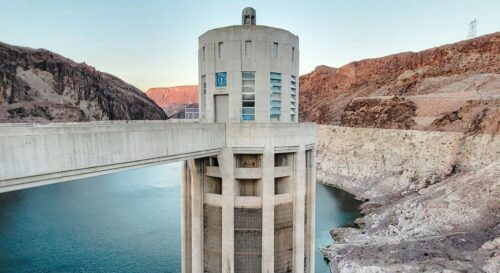
“Arizona Gov. Katie Hobbs said the Hoover Dam — and the dealmaking that made it possible — should provide inspiration for the states fighting over the future of the Colorado River. Hobbs visited the dam on Memorial Day to participate in a ceremonial lighting ceremony as part of America250, a touring celebration of the country’s 250th anniversary. She used the visit to highlight the yearslong negotiations over the future of the river and the states that rely on its water, which have yet to yield a concrete agreement. … ” Read more from KJZZ.
Arizona judge sides with homebuilders in dispute over state groundwater supply requirements
“Arizona homebuilders recently scored a legal win in their lawsuit over state groundwater requirements, paving the way for new development to move forward in two Phoenix suburbs. A Maricopa County Superior Court judge last month ruled in favor of the Home Builders Association of Central Arizona in its lawsuit against the Arizona Department of Water Resources. The judge ruled that the ADWR failed to comply with the Administrative Procedure Act rulemaking process when changing the groundwater criteria it uses to review homebuilding applications. ADWR Director Tom Buschatzke told KTAR News 92.3 FM he plans to appeal the ruling. “We have to look at all of the demands on that groundwater. … Not just homebuilding demand,” Buschatzke said. … ” Read more from KTAR.
Arizona wetlands restoration to support endangered frogs, other wildlife
“A wetlands restoration project in eastern Arizona, which has revitalized six ponds, is helping a frog species get through ongoing drought in the area. The Chiricahua leopard frog, which has been looked after by Arizona Game and Fish in their White Mountains Grasslands Wildlife Area since 2021, is being given a better chance to thrive in less-than-ideal conditions. AZGFD has been attempting to lessen the effect of drought statewide since 2007 for the frogs protected under the Endangered Species Act. A total of 48 sites where the frogs dwell have been enhanced in some way or another. … ” Read more from KTAR.
How New Mexico manages water resources through data
“In New Mexico, all ground and surface waters belong to the public, subject to appropriation by beneficial use, and as such, governing agencies oversee the use of these resources to ensure long-term accessibility for the public. According to Caitlyn Owens, Lead Water Resource Professional, for the New Mexico Office of the State Engineer (OSE), this law is a founding principle of the agency. Under these provisions, OSE serves as the authority body over the supervision, measurement, appropriation, and distribution of all surface and groundwater in New Mexico. “At OSE, we remain committed to strengthening water security for all New Mexicans,” stresses Owens. … ” Read more from the Environmental Monitor.
Advancing water quality through innovation
“The UCB Adaptive Management and Water Quality Division is having a busy spring, and multiple recently funded research projects focused on water quality management, forecasting, groundwater research, and fish species management in the Colorado River Basin area will certainly keep the work flowing strong.“ We’re extremely pleased to see so many innovative projects receive funding this year because the future management of the Colorado River will depend on our ability to continuously adapt, improve our understanding of the system, and make informed decisions using high-quality data,” said Bill Stewart, acting manager of the Upper Colorado Basin Region Adaptive Management and Water Quality Division. “These projects represent important investments in new technology, forecasting, monitoring, and research that will help us better respond to changing conditions across the Basin while supporting reliable water management for the future.” … ” Read more from the Bureau of Reclamation.
Cotter Corp claims it is running out of money and can’t post a bond to assure uranium mill cleanup in Cañon City
“Amid an ongoing dispute over whether the Cotter Corp. must post a $4.7 million bond to ensure completion of risk assessment work at the Superfund site around its former uranium mill, Cotter claimed that it is running out of money. Talks about the company’s financial assets and liabilities are going on behind closed doors with the Environmental Protection Agency’s enforcement division, said Paul Stoick, EPA’s remedial project manager for the Lincoln Park Superfund Site. “I am not involved in that,” he said following a tense public meeting May 19 in Cañon City to update residents about efforts to develop a cleanup plan for the site. “I just do project management.” … ” Read more from the Colorado Sun.
Why does Colorado have 33,000 pounds of nuclear waste decaying outside of Denver? And other nuclear power questions, answered.
“Highly radioactive nuclear waste? It’s calling from inside the house, Colorado. The question for the ages looming over the revival of nuclear power interest in the state is the same conundrum about nuclear power worldwide: If you build more nuclear power, what do you do with deadly radioactive waste that’s dangerous for hundreds of years, and no one wants? Surprise, Colorado: We’ve already got tons of it, quietly shedding alpha particles somewhere between the Happy Tails Dog Ranch and the Platteville Community Center 4 miles east of Interstate 25. Few people want to talk about the 33,069 pounds of spent nuclear fuel rods at Fort St. Vrain left after Colorado’s sole nuclear power plant stopped generating in 1989. But it’s ours to keep. … ” Read more from the Colorado Sun.
In national water news today …
The governance gap threatening long-term ecological archives
“On 31 March 2026, the U.S. Department of Agriculture announced the closure of 57 of its 77 U.S. Forest Service research facilities. The scientific community’s response was warranted: Save the science, restore the funding, protect the researchers. All of that is correct. But it misses a structural problem inherent in agency governance, one that will recur at every reorganization until the Earth science community builds an instrument to prevent it. In massive reorganizations like the ones federal agencies are currently experiencing, the threat to long-term research facilities is not primarily a lack of funding. The true threat is an oversight of administrative architecture. There appears to be no general federal requirement to have a successor stewardship plan in place before reducing the output or outreach of a long-term research facility—or closing it entirely. … ” Read more from EOS.
EPA’s power plant repeal could leave some rules in place
“EPA’s efforts to undo Biden-era climate rules for power plants could get a major overhaul before they clear White House review, according to some insiders watching the process. The White House Office of Management and Budget is currently reviewing EPA’s rollback of Biden-era standards that would have required coal- and some new gas-fired power plants to capture and store most of their carbon emissions. EPA’s proposal last year would have both scrapped both the Biden rules and the underlying Clean Air Act regulatory authority they relied upon. But lawyers tracking the action — many of whom were granted anonymity because they’re either advising or suing EPA — said that when it is released they expect to see that it has undergone a makeover. … ” Read more from E&E News.
In the lowest place on Earth, a sea is rapidly dying — and no one can agree how to save it
“The motorboat cut through the aquamarine water of the Dead Sea, past dazzling-white formations forged from salt crystals. Jake Ben Zaken, the boat captain, pointed to a patch of darker water nearby indicating a sinkhole beneath the seabed. These are both signs of an unfolding ecological disaster, he said. The Dead Sea sits where Israeli, Jordanian and Palestinian land meet and is a place of extremes. It’s the lowest point on the planet, around 1,400 feet below sea level. It’s also one of the world’s saltiest water bodies, nearly 10 times saltier than the ocean, which makes the water so dense people can float effortlessly on its surface. But this unique body of water is dying. Every year it recedes around 4 feet, as the impacts of human activities and climate change take a heavy toll. Over the past five decades, its surface area has shrunk by roughly a third. As the water retreats, it’s forging a new landscape of sinkholes and salt-encrusted shorelines that is both strikingly beautiful and a haunting reminder that the Dead Sea’s future hangs in the balance. … ” Read more from CNN.

