
Several news sources featured in the Daily Digest may limit the number of articles you can access without a subscription. However, gift articles and open-access links are provided when available. For more open access California water news articles, explore the main page at MavensNotebook.com.
On the calendar today …
- WEBINAR: Drought Dashboards to Improve Drought Monitoring, Inform Tribal Resilience, and Preserve Ecological and Cultural Resources from 10am to 11am. This webinar will focus on recently developed drought dashboards and tools to improve drought monitoring, inform tribal drought resilience, and preserve ecological and cultural resources. Click here to register.
- WEBINAR: Preparing for Impact Convening: Unveiling California’s New Climate Change Projections to Guide Action from 1pm to 5pm. This hybrid event will kick off the rollout of California’s Fifth Climate Change Assessment, with a presentation of updated data and projections on climate, sea level rise, water systems, and wildfire risk across the state. These projections provide the foundation for the Assessment’s research and will help guide policy and investment decisions to protect communities and strengthen climate resilience across the state. Click here to register for Zoom. Click here to register to attend in person.
In California water news today …
Sites Project Authority urges revisions to draft water rights permit

“[Yesterday], the Sites Project Authority released the following statement related to its comments on the State Water Resources Control Board (State Board) Administrative Hearings Office’s (AHO) Draft Decision and Permit for the Sites Reservoir Project (Project): “The Authority appreciates that the AHO has tentatively determined in the draft permit that almost 1 million acre-feet of water is available to be appropriated from the Sacramento River for the Sites Reservoir Project. This is a major finding that paves the way for a successful Project. However, some of the proposed conditions for diversion and release of this water reflected in the draft permit greatly risk undermining the viability of the Project and need to be addressed before the AHO submits the proposed order to the State Board, currently scheduled for July 15, 2026. Our comments, submitted on May 22, 2026, identify several Draft Permit conditions that, as currently written, would significantly constrain Project operations and materially reduce Project yield—without corresponding public or environmental benefit. … ” Continue reading this press release from the Sites Project Authority.
Draft permit conditions could shrink Sites Reservoir’s water yield
“The Sites Project Authority submitted comments on a draft water permit for the Sites Reservoir Project, expressing concerns that some proposed conditions could undermine the project’s viability. The authority filed its comments on May 22, 2026, with the State Water Resources Control Board’s Administrative Hearings Office. The authority praised the office’s tentative determination that almost 1 million acre-feet of water is available for appropriation from the Sacramento River for the project. However, officials said certain permit conditions need revision before the proposed order goes to the State Board, currently scheduled for July 15, 2026. “The Authority appreciates that the AHO has tentatively determined in the draft permit that almost 1 million acre-feet of water is available to be appropriated from the Sacramento River for the Sites Reservoir Project. This is a major finding that paves the way for a successful Project,” the authority said in a statement. … ” Read more from KRCR.
Southern California could get 85% of its water locally and avoid Delta tunnel, groups say
“A coalition of conservation groups wants Southern California to get 85% of its water locally, up from the 50% it gets now, by 2045, and says a new plan shows how. It’s urging state leaders to scrap plans for a 45-mile tunnel beneath the Sacramento-San Joaquin River Delta and consider asking voters to approve a bond measure to fund local water solutions. The 34-page strategy was released as critical decisions loom for local officials, California’s next governor and legislators. Over the last century, Southern California has grown and thrived thanks to giant aqueducts it built to bring water from hundreds of miles away — the Eastern Sierra, the Colorado River and Northern California. … ” Read more from the LA Times. | Read via Yahoo News.
SEE ALSO:
- California coalition unveils water plan to rival Delta Tunnel at a fraction of the cost, from Smart Water Magazine
- New CA water coalition releases ‘Renaissance’ water plan that rules out the Delta Tunnel, from IndyBay
- California proposal would change how millions get their water, from Newsweek
Feds say California water board is forcing discriminatory salinity requirements on it
“The federal government argued Friday before a Ninth Circuit panel that seven years for resolution in a case about water salinity standards is too long. A lower court ruled in 2023 that the U.S. Bureau of Reclamation couldn’t claim an amendment to salinity standards for parts of the Sacramento-San Joaquin River Delta discriminates against the U.S. government. But that plan singled out the federal government, setting a more stringent salinity standard for it, attorney Frederick Turner, representing the United States, argued. “Managing water quality in the Bay Delta is certainly a complicated issue,” he said, adding later: “The terms of the amended plan are discriminatory on its face.” … ” Read more from the Courthouse News Service.
California’s salmon fishery is reopening after a population crash and 3‑year closure, but that doesn’t mean all is well
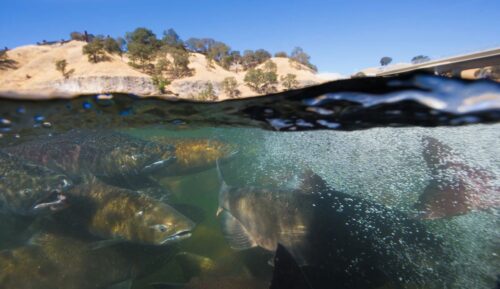 “Along the California coast, from Bodega Bay to Morro Bay, commercial fishing boats have started pulling in salmon for the first time in three years, and local salmon are once again appearing on restaurant menus and in seafood markets across the state. California’s commercial ocean salmon fishery began reopening in May 2026 for the first time since a population crash led to a three-year closure. But while the reopening, happening in phases and with limits, is welcome news, it does not mean the underlying problems have been solved. The Pacific Fisheries Management Council, established by Congress to oversee West Coast fisheries, closed the salmon fishery in 2023 after populations of fall-run Chinook salmon collapsed to critically low levels, down 85% from the average population before 2005. The immediate cause of the latest closure was the extreme drought from 2020-2022 that devastated salmon survival as river levels fell and the water heated up. But more than drought pushed the fishery to the brink. The underlying system of water management, hatchery practices and habitat loss have also eroded the salmon population’s ability to quickly recover from difficult years. We study changing fish ecology in California. The state has the knowledge to create a more resilient system that can help salmon better withstand California’s increasing climate whiplash. But without significant changes in three key areas, we believe today’s good news for salmon could be short-lived once again. … ” Read more from The Conversation.
Reclamation announces increases in water exports south of the Delta, imperiling Sacramento River salmon
“The U.S. Bureau of Reclamation has announced increases of northern California water to be delivered to San Joaquin Valley agribusiness interests, but both the state of California and fishery conservation groups say the increase will reduce the amount of cold water needed to sustain migrating Sacramento River Chinook Salmon. The Bureau of Reclamation said it is increasing Central Valley Project 2026 water supply allocations for south-of-Delta contractors “following continued modest improvements in reservoir storage and spring runoff conditions across California’s water system.” “This allocation update reflects improved operational flexibility and hydrologic conditions resulting from April storm activity, strong carryover storage, and coordinated reservoir management efforts that allowed water managers to capture additional runoff while continuing to meet environmental and flood control requirements,” according to an announcement from Reclamation. … ” Read more from the Daily Kos.
CDFW releases ocean salmon harvest tracking tools
“The California Department of Fish and Wildlife (CDFW) is pleased to announce the launch of new digital tools to track the recreational and commercial in-season harvests of ocean salmon. The new tools, available at CDFW’s Ocean Salmon Fishery Information page, will allow recreational anglers to easily track the number of salmon caught and number of salmon remaining under each regional harvest guideline. In-season management allows fishery managers to close salmon seasons early should harvest guidelines be reached. With recreational and commercial ocean salmon fishing seasons underway, anglers may be interested in knowing how much catch has accrued, and when fisheries in each area will close. “We’re excited to give salmon anglers the data they need to better plan their fishing seasons while at the same time leveraging technology to support in-season management and sustainable fisheries,” said CDFW Director Meghan Hertel. … ” Read more from the Department of Fish and Wildlife.
Another late-spring cut-off to bring mountain showers, coastal drizzle, and cooler temperatures before likely June warm-up
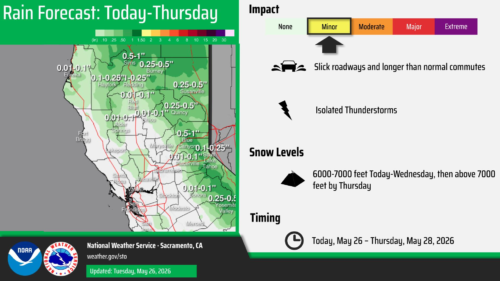 Daniel Swain writes, “As we approach the end of May, it’s worth looking back at the past couple of months of highly changeable weather conditions across California and the West. Spring is always, to some degree, a tumultuous weather period, as it heralds the messy transition period between winter and summer when both winter-like and summer-like conditions are possible (and sometimes in quick succession). But some years, that transition is seemingly singular in California with the flip of a switch: cold, wet conditions give way to warm and dry ones. In other years, the switch keeps flipping on and off, with repeated swings between wet and dry and warm and cool. 2026 has certainly been one of those “swingier” springs, and that reality is perhaps accentuated by the record-shattering heat that occurred in late winter, and especially in March. Some places have only just begun to see temperatures approach or eclipse their genuinely shocking March values–which is a testament more to the extremity of the March heatwave than relative coolness today. … ” Continue reading from Daniel Swain at Weather West.
California at a crossroads: Edward Ring sounds the alarm on water, energy & the future of farming
“California’s future may depend on one question: can the state reverse course before water shortages, energy costs, and regulatory failures permanently damage agriculture and the economy? That was the central theme in a powerful and wide-ranging interview between “The Ag Meter” host Nick Papagni and water and energy policy expert Edward Ring. During the conversation, Ring laid out bold ideas for solving California’s water crisis, reviving domestic energy production, restoring agricultural strength, and reforming state leadership. Ring, Director of Water and Energy Policy at the California Policy Center, warned that California is rapidly approaching a breaking point unless major reforms are implemented soon. Throughout the interview, he repeatedly emphasized what he calls an “abundance-oriented” approach — policies designed to expand water supplies, improve infrastructure, lower energy costs, and strengthen agriculture instead of restricting growth through rationing and regulation. … ” Read more from AgNet West.
Edward Ring says California faces critical crossroads on energy, water, and agriculture
“The AgNet News Hour wrapped up its special four-part interview series with California Policy Center Director of Water and Energy Policy Edward Ring, focusing on California’s growing energy crisis, government overreach, water infrastructure failures, and the upcoming governor race that could shape the future of agriculture statewide. Hosts Nick Papagni and Josh McGill opened the Memorial Day episode by honoring military service members before diving back into the increasingly urgent discussion surrounding California’s oil, gas, water, and economic challenges. Ring warned that California is approaching a dangerous turning point as refinery shutdowns, regulatory pressure, and political gridlock continue creating instability throughout the state’s energy sector. “We have a very unique opportunity with the federal administration right now,” Ring said while discussing the need for California leadership willing to work alongside Washington instead of fighting ongoing political battles. … ” Read more from AgNet West.
Super El Niño could hit US in weeks: 5 worst-case scenarios
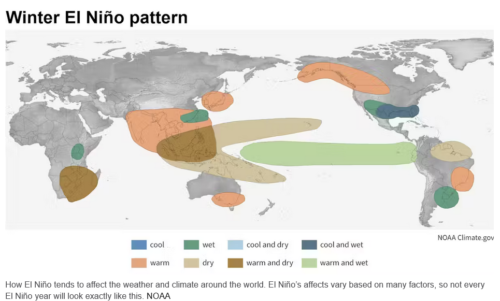 “A potentially powerful El Niño could dramatically reshape U.S. weather patterns over the coming months, with forecasters warning of heightened hurricane activity in the Pacific, increased flooding risks in some regions, and worsening heat, drought and wildfire conditions in others. Experts also say a strong—or even “super”—El Niño could help drive global temperatures even higher into 2027 following a prolonged stretch of record warmth worldwide. Confidence among forecasters has been increasing that El Niño conditions will develop this year. In a recent forecast discussion, the National Oceanic and Atmospheric Administration’s (NOAA) Climate Prediction Center said it is likely to emerge during the May-July period. Meteorologists also say an especially strong or “super” El Niño is possible, which could amplify its impacts. … ” Read more from Newsweek.
Scientists worry El Niño could supercharge marine heat wave roiling coastal California
“Baby kelp need cold, nutrient rich water to mature into tall, strong adult stipes. Giraldo Ospina worries that a massive, ongoing marine heat wave, which has already raised coastal waters by 3 to 4 degrees Fahrenheit, could disrupt efforts to regrow kelp forests vital to the Monterey Bay ecosystem, depending on how warm it becomes. “We have seen kelp recovering, and we don’t know if that trend is going to continue, if we continue to have these warm waters,” Giraldo Ospina said. It’s the seventh marine heat wave in seven years and could be amplified by a developing super El Niño, which has the potential to raise sea surface temperatures even higher. This combined influence could disrupt ecosystems, harm or kill local marine life and attract other species north. “With El Niño, the fear is that the kelp that persisted [past the marine heat wave] may now decline, and recovering kelp may not get a chance to get back to what they were before,” Giraldo Ospina said. … ” Read more from KQED.
SEE ALSO:
- Record-breaking El Niño possible, bringing extreme weather, experts warn
- A strong El Niño is coming to California. You may notice something different at the beach, from KTLA
DWR launching assistance programs for Proposition 4 funding
“Approved by California voters in November 2024, Proposition 4 funds projects focused on safe drinking water, drought, flood, and water resilience, and DWR is launching new assistance programs that will prioritize Climate Adaptation – Investing now to help communities adapt to evolving environmental conditions and reduce vulnerabilities to future climate impacts; Building Resilience – Strengthening natural and built infrastructure to better withstand climate extremes, including wildfire risks, droughts, and floods; and Disadvantaged & Vulnerable Communities – Ensuring equitable access to resources and funding, with a focus on vulnerable populations, including Native American Tribes and other frontline communities. … ” Continue reading this notice from DWR.
California gets $27.5 million to find and replace toxic lead pipes that deliver water to homes
“California will get $27.5 million in federal funding to find and replace lead pipes that deliver water to homes, the U.S. Environmental Protection Agency announced this week. The funding will flow through California’s Drinking Water State Revolving Fund, the agency said in a statement Wednesday. Such programs, which exist in every state, help public water systems pay for infrastructure projects to comply with the federal Safe Drinking Water Act. Lead is a neurotoxin, and exposure to even low levels can damage children’s brains and affect their development. The installation of lead service lines was banned nationwide in 1986, but millions of homes still receive tap water through them. … ” Read more from the LA Times. | Read via AOL News.
Army Corps of Engineers targets dormant water projects
“For decades, Congress approved thousands of water-related projects across the United States through the Water Resources Development Act, often called WRDA. Some involved flood control. Others focused on water supply, wastewater systems, ecosystem restoration, navigation, or drought-related infrastructure. Many projects moved forward. Others remained little more than plans on paper. On May 21, 2026, the U.S. Army Corps of Engineers published a proposed list of projects that could now be formally removed from federal authorization. The move was announced by Assistant Secretary of the Army for Civil Works Adam Telle and published in the Federal Register. … ” Read more from Western Water.
In commentary today …
California must step up to fight the costly golden mussel infestation
Michelle Paul, executive director of the California Farm Water Coalition, writes, “California is facing another costly invasion of a foreign species that is affecting farmers, urban and suburban residents, the state’s ecosystem resources and the environment. Unwanted arrivals like this have happened before, but this time, the effects are likely going to be much worse. The invaders are golden mussels, a small two-shelled mollusk about 0.5-1.5 inches in length with a brownish-golden shell from which their common name originates. Golden mussels attach to hard surfaces with glue-like fibers. Although they are small, they reproduce at incredible rates, clogging water supply intake screens, pumps, pipes, canals and other systems serving both cities and farms. They also strip waterways of vital nutrients other aquatic species depend on. … ” Continue reading from the Sacramento Bee. | Read via AOL News.
Peaches, pears and PFAS: California lawmakers may limit ‘forever’ pesticides in foods
Nathan Donley, environmental health science director at the Center for Biological Diversity, writes, “Amid growing awareness that so-called forever chemicals, or PFAS, can linger in landscapes and waterways for centuries, federal and state regulators have repeatedly insisted they’re working aggressively to protect us all from the cancer-linked poisons. They are not. Even as regulators and lawmakers tout their baby steps to limit forever chemicals in U.S. drinking water, they’re allowing a dramatic increase in the use of pesticides containing the chemicals across millions of acres of industrial agriculture. That often ends up in waterways and drinking water supplies, including in California. PFAS, or perfluoroalkyl and polyfluoroalkyl substances, are a group of synthetic chemicals used since the 1950s to make consumer products resistant to water, grease and heat. Studies have linked PFAS to cancer, reproductive harm, endocrine disruption and other health effects. … ” Read more from Cal Matters.
In regional water news and commentary today …
NORTH COAST
Klamath snowpack is just .8% of average, what it means
“There’s a dramatic decline in the Klamath National Forest snowpack this year, the U.S. Forest Service said. Snow depth in the region’s Scott River watershed is just .8% of its historical average, according to the forest service’s May snow survey. The Snow Water Equivalent ― a measure of how much water the snow contains ― is also at .8% of the historical average. The May snow survey found that only the highest site in the Middle Boulder Basin still had any measurable snow. The rest of the area’s snowpack melted away, the report said, despite a few spring storms that brought little relief. … ” Read more from the Siskiyou Daily News.
A sea lion’s recent journey up Trinity River is ‘unusual’
“A sea lion has taken a trek up the Klamath and Trinity rivers to damn near Willow Creek. The pinniped was spotted by river-goers Friday twirling in fresh water at least 50 miles from the ocean. Experts say such a journey is rarely seen, but does happen every once in a while. In a video posted to social media, the sea lion was spotted gliding through the water near Devil’s Elbow, a popular swimming hole just north of Willow Creek. Professor Dawn Goley, director of Cal Poly Humboldt’s Marine Mammal Education and Research Program, identified the pinniped as a Steller sea lion, in an email to the Outpost. “They typically stay in oceans, sometimes in river mouths, but rarely travel this far upstream,” she said. … ” Read more from the Lost Coast Outpost.
The Potter Valley bid that makes no sense
“The Potter Valley powerhouse that is the engine of the Potter Valley Project has not made electricity since 2021. The dams are still standing. The water still moves. It falls 470 feet from Cape Horn Dam on the upper Eel River through a century-old tunnel and out into the East Branch of the Russian River an hour later — past three generators that no longer turn. There is no reservoir below the powerhouse. The water drops. It is not pumped back up. There is nowhere to pump it from. … Another water district 600 miles south wants to buy the Potter Valley project anyway. The Elsinore Valley Municipal Water District sits in Riverside County. It has never run a hydroelectric dam. Two members of President Trump’s cabinet, Agriculture Secretary Brooke Rollins and Interior Secretary Doug Burgum, have publicly backed the district’s interest. Rep. Jared Huffman, whose district covers the Eel River, has been demanding to know why. … ” Read more from the Mendocino Voice.
SIERRA NEVADA
Weekly forecast for South Lake Tahoe is a bit of everything: rain, snow, thunderstorms, wind
“Summer is coming, promise, but the roller coaster spring weather will take the Lake Tahoe area for a ride again this week. To start the coming week, there is a Lake Wind Advisory in effect from 5 p.m. Monday to 2 p.m. Tuesday. Expect winds from the southwest 15 to 25 mph with gusts up to 40 mph and waves 1 to 4 feet for Lake Tahoe, according to the National Weather Service (NWS) in Reno. Small boats, kayaks and paddle boards will be prone to capsizing and should remain off lake waters until conditions improve. After the wind comes the fun stuff – rain, thunderstorms, and snow (yes, that word). … ” Read more from South Tahoe Now.
Federal government set to spray ‘devastating’ herbicide in Tahoe Basin
“The U.S. Forest Service is moving ahead with plans to spray the controversial herbicide glyphosate, the main ingredient in Roundup, on thousands of acres devastated by the Caldor Fire, including in the Lake Tahoe Basin. The plans have sparked growing public opposition and have come under scrutiny from local residents, wellness and organic food advocates and environmentalists after an investigation published by Mother Jones this spring showed the federal government is spraying the herbicide at “record levels” across California forests. Glyphosate is an effective, if potent, weed killer, approved by the U.S. Environmental Protection Agency, and it’s been widely used by the agricultural industry since Monsanto began selling it as Roundup in 1974. The widespread use of glyphosate on crops has long been controversial: It is known to destroy habitat for monarch butterflies and bees. … ” Read more from SF Gate.
SEE ALSO: Roundup sprayed across California burn scars could flow into water for millions, from The Cool Down
USFS to begin mastication treatment in South Lake Tahoe this week
“The USDA Forest Service Lake Tahoe Basin Management Unit is scheduled to begin hazardous fuels reduction mastication treatments in South Lake Tahoe near Industrial Avenue and Lake Tahoe Blvd. beginning the week of Tuesday, May 26, 2026. These operations will target ground vegetation and brush, primarily manzanita and will not target any trees. Mastication, also known as forest mulching, is a mechanical process that involves using heavy equipment to chop, grind, or shred ground vegetation into smaller pieces. The pieces are then spread out and left to decompose naturally. Fuels reduction treatments such as mastication are essential forest management tools used by the Forest Service and other land managers to protect communities by removing excess vegetation (fuels) that can feed unwanted wildfires. … ” Read more from South Tahoe Now.
Returning to the Ravine: Salmon recorded in restored section of the Auburn Ravine
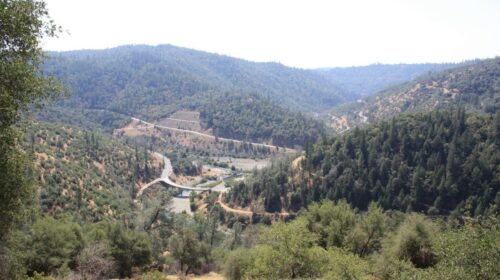
“For more than 80 years, salmon were rarely seen above the Hemphill Diversion Dam in Placer County’s Auburn Ravine. But that changed in 2022 when local organizations worked with the Nevada Irrigation District to remove the concrete dam and replace it with a fish-friendly design. It didn’t take long for the fish to find the newly accessible stream. Recent survey data released by Friends of Auburn Ravine and ECORP show the presence of salmon, steelhead and Pacific lamprey above the new structure, indicating success of the habitat restoration project. “With the old structure, only about 10 percent of the fish could get upstream. Now, we get 90 percent passage rather than 90 percent blockage,” said James Haufler, president of Friends of Auburn Ravine. … ” Read more from Placer County.
SEE ALSO: Chinook Salmon Have Been Recorded in the Auburn Ravine for the First Time in 80 Years, from Active NorCal
Marlette Lake Dam rehab project work resumes
“Work on the Marlette Lake Dam rehabilitation project resumed this month. During the 2026 construction season, trail closures will be in effect from 5 a.m. to 6 p.m. Monday through Friday. Trails will be open on the weekends, but scheduling is subject to change without notice depending on construction needs. … ” Read more from the Tahoe Daily Tribune.
New Colgate Powerhouse clean-up efforts continue with sediment removal from Yuba River
“Yuba Water Agency officials announced that efforts to remove sediment displaced by the rupture of a pipe carrying water from the North Yuba River to the New Colgate Powerhouse commenced on Tuesday. The work requires the removal of as much as 60,000-cubic-yards of sediment and could take several weeks, YWA Communications Director DeDe Cordell told the Appeal-Democrat. “For scale, a typical full-size pickup truck can hold about two-cubic-yards of material,” she noted. Further, the clean-up effort could cloud the river below the powerhouse and Englebright Lake. “We’re doing everything we can to minimize turbidity, both in how long it might last and how cloudy the water gets,” Cordell said, defining turbidity as the relative clarity of water. “We’re also increasing our water-quality monitoring during this time so we can respond to changing conditions appropriately.” … ” Read more from the Appeal Democrat.
SACRAMENTO VALLEY
Lake Oroville update: DWR Starting Construction on Dam Revegetation Project, driftwood abatement
“The Department of Water Resources (DWR) is starting construction in the coming weeks on a project to reestablish native vegetation in areas adjacent to Oroville Dam’s main and emergency spillways. The project is revegetating approximately 70 acres with seed and replanting six acres of woody vegetation surrounding Oroville Dam’s spillways, further enhancing the appearance of the dam’s hillside. The project is designed to improve the appearance of areas near trails and roadways while enhancing the view for visitors and motorists traveling along Oroville Dam Boulevard East. Maintaining a fire-resilient landscape within the Lake Oroville State Recreation Area was also a top consideration during project development, with planting basins well spaced to prevent vegetation from acting as a fire ladder. In addition, selected California native plants are fire-adapted species that can regenerate after fires. … ” Read more from the Department of Fish and Wildlife.
SEE ALSO: Oroville Dam Is Getting Native Plants to Boost Fire Safety Around the State’s Second-Largest Reservoir, from Active NorCal
NAPA/SONOMA
45 Potter Valley posts later, Todd Lands is distancing himself from Southern California agencies eyeing Eel River dams
“On March 12, Todd Lands posted on Facebook about a trip. It wasn’t to an exotic destination or faraway spot. Instead, he’d visited Potter Valley, the Mendocino County farming community just up the road from his home and political base in Cloverdale. “I recently went on a tour with government and private parties who are interested in purchasing the Potter Valley Project and preserving our region’s water supply … I am the ONLY candidate working to protect your water supply. Ask me questions!” It was the 39th time Lands had posted about Potter Valley on social media since declaring himself last summer a candidate to succeed Sonoma County’s 4th District Supervisor James Gore. … ” Read more from the Santa Rosa Press Democrat.
Sonoma Water adopts management, contingency plans
“The Sonoma Water Board of Directors on Tuesday approved the 2025 Urban Water Management Plan, a long-range planning document that outlines how the agency will continue to provide a reliable water supply for more than 600,000 residents in Sonoma and Marin counties. Updated every five years as required by California law, the Urban Water Management Plan evaluates water supply reliability under a range of conditions, including normal, dry and multiple dry years, and identifies projects to meet future demand. The 2025 plan shows Sonoma Water has adequate water supply to meet demands through 2050. If, however, a shortfall in supply was to occur, Sonoma Water’s Water Shortage Contingency Plan details the supplemental supplies, conservation, and operational strategies to maintain reliability. … ” Read more from Community Voice.
BAY AREA
Threatened California species shuts down popular Point Reyes beach
“Biologists consider every single precious nest from snowy plovers, 2-ounce shorebirds protected under the Endangered Species Act. Storms, wind, dogs, ravens and beachgoers are among the many threats to the next generation’s survival. On a beach in the Point Reyes National Seashore in Marin County, a designated monitoring team for the minuscule birds found three eggs in one nest on March 16. It marked the earliest start to the breeding season recorded in the area. The record-shattering March heat wave likely signaled the plovers to get started. “When we get these early heat waves, it can kick-start the nesting season a bit earlier,” Parker Kaye, a biological science technician for the Point Reyes National Seashore Association, told SFGATE. … ” Read more from SF Gate.
San Rafael and sewage agency revise arrangement
“San Rafael will no longer handle certain responsibilities running the San Rafael Sanitation District, which provides sewer services for the city and surrounding unincorporated areas. Instead, the district will enter a “management and operations” agreement with the Central Marin Sanitation Agency, a joint powers authority that provides wastewater treatment, disposal and environmental services. The San Rafael Sanitation District is a member of the Central Marin Sanitation Agency. Under the new arrangement, the Central Marin agency will assume work the city is shedding, like hiring employees and administrative support. To formalize the shift, the City Council and the San Rafael Sanitation District authorized a separation agreement this week after about three years of talks. The council approved the separation agreement on Monday, and the district board on Wednesday. … ” Read more from the Marin Independent Journal.
Saving two marshes from the squeeze
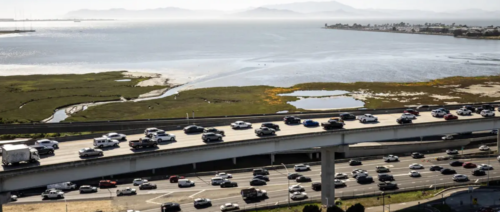 “The ribbons of marsh squeezed between the Bay and the highways that skirt its edges are living relics of California’s gold mining history. Today, at locations in the East and North Bay, they are also the focus of intense efforts not just to save and restore critical wetland habitat, but also to protect the highways themselves from rising seas and bigger storms. “None of these marshes were here 100 years ago,” says watershed planner Christina Toms of the San Francisco Bay Regional Water Quality Board. And with continued erosion, poor drainage, and sea level rise, they might not be here 100 years from now, either. Two particular projects, one scheduled to start construction in the next few years along State Route 37 and one now being planned near the Bay Bridge toll plaza, could help protect thousands of acres of centennial marshes. … ” Read more from Knee Deep Times.
Decades of effort restore steelhead and salmon passage on Alameda Creek
“A NOAA-funded project removed the final barrier on an urban San Francisco Bay Area creek that was once the Bay’s largest producer of steelhead and Chinook salmon. Last year, California Trout and Pacific Gas & Electric removed the final barrier to fish passage on California’s Alameda Creek with funding from NOAA Fisheries’ Office of Habitat Conservation. For the first time in 50 years, threatened Central California Coast steelhead and other migratory fish can reach spawning grounds and juvenile rearing habitat in the upper watershed. Construction crews relocated a Pacific Gas & Electric (PG&E) natural gas pipeline and removed its concrete covering. The pipeline had spanned the creek and created an 8-foot drop in the creek. They installed the new pipeline section deep below the creek bed, removed the old pipe section, and regraded the stream channel—restoring a natural pathway for fish. Alameda Creek was once the largest producer of steelhead and Chinook salmon in San Francisco Bay. It may once again become a stronghold for migratory fish. … ” Read more from NOAA Fisheries.
Plan to build more than 12,000 homes in this Bay Area community faces crucial vote
“After years of delays and failed attempts, Concord could finally move ahead with a plan to build one of the Bay Area’s biggest housing projects on a former naval station. The Concord City Council will decide Tuesday whether to approve a financial agreement with the Navy that would allow a developer to build a $6 billion residential community that would include 12,272 homes — 25% of which would be affordable — more than 800 acres of parks and 6 million square feet of commercial space. If approved, the developer, Brookfield Properties, would pay the Navy, which owns the 2,225-acre Concord Naval Weapons Station, $628 million over nearly 30 years. Tuesday’s vote comes after two negotiations to move ahead with development of the station fell apart amid labor disputes and political pressure, but city officials say this time is different. … ” Read more from the San Francisco Chronicle.
CENTRAL COAST
More than 125 years after it first opened, Monterey’s Del Monte Golf Course has a ‘revival’
“Charles E. Maud was an English businessman and sportsman who moved to California 140 years ago to play polo, golf and design courses. Maud traveled throughout the state for matches in both sporting endeavors. But he was also simultaneously responsible for two iconic golf layouts, Old Victoria in Riverside and Del Monte Golf Course in Monterey. The latter, now carrying the title as the oldest course in continuous operation west of the Mississippi, is also the most unheralded of the six Pebble Beach Company properties. It opened as a nine-hole course in 1897 and was expanded to 18 holes in 1902. Its 6,356-yard layout remains. While all of the Pebble Beach Company layouts are continuously undergoing various makeovers, Del Monte, its owners detail, is experiencing a “revival.” … ” Read more from the Monterey County Herald.
Paso Robles Area Groundwater Authority releases new FAQ ahead of fee hearing
“The Paso Robles Area Groundwater Authority (PRAGA) has released a Frequently Asked Questions (FAQ) document to address questions received from landowners and stakeholders during the ongoing public review of the Draft Rate & Fee Study Report. The FAQ, attached to this release and posted on the PRAGA website, provides additional context on the proposed Fiscal Year 2026–2027 groundwater fee, how consumed water use is calculated, and the appeals process available to property owners. Since the draft report was released on May 7, PRAGA has received several questions from property owners and other community members. Common themes addressed in the FAQ include: the legal basis for the fee; questions of groundwater use and landowner fee responsibility; the methodology used by Land IQ, the technical consultant, to calculate evapotranspiration and consumed water use; and the documentation required to support an appeal. … ” Read more from the Paso Robles Daily News.
Workshop will shape wastewater collection decision in Los Olivos
“The Los Olivos Community Services District (LOCSD) invites property owners and community members to attend a Community Workshop, 6 p.m. Wednesday, June 3, at The Grange Hall, 2374 Alamo Pintado Road, Los Olivos. The workshop will help inform the board’s selection of a wastewater collection approach before advancement to the next stage of engineering design. … Community comments from the workshop are expected to help inform the board’s final collection decision and serve as a foundation for the anticipated Proposition 218 property-owner vote currently targeted for early 2027. … ” Read more from Noozhawk.
Ventura County: Six months after oil spilled into a Santa Paula tributary, families worry the cleanup was never finished
“As he slowly pulled his beige van into the driveway following a trip to the hardware store for garden supplies, Ethan Higbee didn’t suspect anything was wrong. Then he got out of his car. The unmistakable smell of gas subsumed him. “I heard rushing, gushing water. What I thought was water. But it wasn’t, it was oil,” Higbee said Monday, exactly six months after rivulets of crude oil ran into a waterway near his home. The oil—which contaminated at least three-quarters of a mile of a remote tributary of Sisar Creek—came from the top of the hill next to Higbee’s house in Santa Paula. The origin? Oil inside of an above-ground storage tank had breached, state crews later discovered. In the moment, it appeared to Higbee that no one up there was the wiser to what was happening. He called 911 and rushed inside. … The Ventura County incident—what resulted from a tank overfilling and improper rainwater valve management by oil and gas company Carbon California, according to the state—was described by the business as a “small crude oil spill” in a report obtained by Inside Climate News. … ” Read more from Inside Climate News.
SAN JOAQUIN VALLEY
Gustine reviews long range water master plan as city prepares for major growth
“With Gustine expected to nearly double in size over the coming decades, city officials held a workshop last week to review a sweeping update to the community’s Water Master Plan — a technical blueprint that outlines how the city must overhaul and expand its water system to keep pace with growth, aging infrastructure and long‑term groundwater challenges. The plan, prepared by Gouveia Engineering, replaces the city’s 2002 water master plan and uses the 2025 zoning map, the county’s 2024–32 housing element and the city’s annexation plans to project future needs. According to the report, Gustine’s water service area is expected to grow from about 870 acres today to roughly 1,825 acres at full buildout. Population within that area is projected to rise from 6,138 residents in 2024 to about 11,616 — an increase of nearly 90 percent. … ” Read more from Westside Connect.
Water Resiliency summit recap
Geoff Vanden Heuvel, Director of Regulatory and Economic Affairs with the Milk Producers Council, writes, “I spent two days this week at the San Joaquin Valley Water Resiliency Summit at Fresno State. I was on a panel on day one talking about the Water Blueprint’s Unified Valley Water Plan and how it might fit into the State of California’s Water Plan 2028. Laura Ramos, California Water Institute Director, summed up things very well when she said: “You cannot save groundwater without thinking about surface water. We can’t think of flood management without thinking about recharge. We can’t think about conveyance without thinking about subsidence, land use and long-term investment. And we cannot think about long-term resilience without considering communities, agriculture, ecosystems and economic stability.” … ” Continue reading from the Milk Producers Council.
Costa announces more than $131 million for Central Valley water infrastructure projects
“Congressman Jim Costa (CA-21) announced today that more than $131 million in federal funding is being awarded for major water infrastructure improvements across the San Joaquin Valley, including upgrades to the Friant-Kern Canal and O’Neill Pumping Plant, two critical components of California’s water delivery system. The funding brings the total federal investment secured for water storage, aging water infrastructure, clean drinking water, and groundwater recharge projects benefiting California’s 21st Congressional District to more than $1.4 billion. “Reliable water infrastructure is critical to the future of the San Joaquin Valley, our agricultural economy, and the communities that depend on it,” said Congressman Costa. “The Central Valley depends on a reliable water supply to support our farms, local economy, and growing communities. These investments will help strengthen water delivery systems that families, farmers, and communities across the Valley rely on every day.” … ” Read more from Congressman Jim Costa.
Mussels dominate district discussions
“Invasive golden mussels were found May 5 in the North Kern Water Storage District system, General Manager Dave Hampton reported at the district’s May 19 meeting. Hampton said there was a large number and speculated the colony had been covered in silt until recently. The mussels were discovered in water that North Kern was moving for Shafter-Wasco Irrigation District. Due to this Shafter-Wasco has offered to help North Kern cover some of the treatment costs. The exact amount wasn’t discussed and no contract has been entered into, yet. … ” Read more from SJV Water.
TCCWD board talks water allocation increase, illegal dumping at Blackburn Dam, Golden mussels
“The Tehachapi-Cummings County Water District Board of Directors discussed on May 20 a number of developments in local water, including a significant rise in the district’s water allocation for this year, illegal dumping on district property and ongoing concerns about invasive golden mussels, as well as the resignation of one of its members. TCCWD General Manager Tom Neisler said he received an email from Division 1 Director Joseph Sasia May 15 announcing his resignation due to personal reasons. Sasia was not at the meeting. Neisler suggested the board call a special meeting to decide whether to appoint a replacement or hold a special election for the position. An appointment must be filled within 60 days of Sasia’s resignation. … ” Read more from the Tehachapi News.
EASTERN SIERRA
Mono air quality blows far beyond hazardous threshold
“Most days in the Mono Basin provide clear air and stunning scenery, but because the Los Angeles Department of Water & Power has diverted water from Mono Lake’s tributary streams for 85 years, the exposed lakebed can emit toxic dust when the wind blows. Sunday, May 17, 2026 was one of those days. Particulate matter air pollution at Mono Lake reached an extreme level of exceedance at the Mono Shore station, northeast of Mono Lake, with one-hour PM-10 concentrations reaching 10,234 micrograms per cubic meter (μg/m3). For comparison, good PM-10 air quality ranges in hourly concentrations of 0–171 μg/m3, with hazardous concentrations above 892 μg/m3. While the greatest concentrations were likely to be closer to the north and northeast shore, alkali-laden mineral dust blowing off the exposed lakebed traveled across the lake, reached the south shore, and shrouded the eastern horizon and Mono Craters. Motorists on Highway 120 East and visitors to South Tufa encountered unhealthy air. The playa dust eventually wrapped around from the south and entered the towns of June Lake and Lee Vining. … ” Read more from the Mono Lake Committee.
Mining begins on Conglomerate Mesa
“Local conservation groups and residents are carefully monitoring all activities related to a Canadian firm’s mining operations on Conglomerate Mesa and are dedicated to protecting a landscape they call a desert gem. K2 Gold officially began its recently approved second phase of gold exploration on Conglomerate Mesa on May 18. Conglomerate Mesa is the traditional homeland of the Lone Pine Paiute Shoshone and Timbisha Shoshone Tribal Nations, both of which oppose the mining operations. Some 11 tribes were consulted about the project, and their view was that K2 Gold’s proposed mining activities would cause permanent adverse impacts on the mesa. … ” Read more from the Inyo Register via Press Reader.
Troubled waters in Indian Wells?
“Inyo County officials this week said they will continue to say “no” to water exports. In a letter to be sent to the Indian Wells Groundwater Authority this week, the county said it will reiterate its support for the agency’s efforts to address the critical overdraft in the Indian Wells Basin, but not for expanding its status as a water resource for other communities. The Indian Wells Valley Groundwater Authority is the state-mandated groundwater sustainability agency responsible for managing the critically overdrafted 597-square-mile Indian Wells Valley groundwater basin. … ” Read more from the Inyo Register via Press Reader.
SOUTHERN CALIFORNIA
A dramatic rescue and a baby boom for San Gabriel Mountains turtles
“After fires and floods, Southern California’s only remaining native freshwater turtle recently got a boost. Just last month, 15 southwestern pond turtle hatchlings were released into the San Gabriel River — a major milestone in an effort to restore the vulnerable turtle population. But this wasn’t a typical raise-and-release scenario. These turtles’ parents went on a harrowing journey before they were born. In early September 2020, amid a heat wave and dry weather, a tree branch hit a Southern California Edison power line, igniting the Bobcat Fire. The fire eventually scorched more than 180 square miles — mostly forest in the San Gabriel Mountains. For comparison, the 2025 Eaton Fire burned about 22 square miles. … ” Read more from LAist.
LA wildfires leave legacy of tree deaths
“The deadly fires that devastated homes in Pacific Palisades and Altadena also laid waste to a lush canopy of leaves and pine needles that had cooled and shaded residents here for generations. Now, more than a year later, trees that had survived the flames are disappearing at a troubling rate. Since the January 2025 fire siege, roughly 20% of surviving street trees have gone missing, according to preliminary results from a University of California research team. Many of the hundreds of missing trees probably would have recovered from the damage they suffered in the fires, experts say. The results from the survey of about 500 trees in the Palisades and 1,500 in Altadena — including conifers, palms, Chinese elms and carrotwoods — seem to confirm worrying patterns observed by arborists and local volunteers in the burn scars, who said losses will probably continue for years to come. Several factors appear to be at work. … ” Read more from the LA Times via the Marin Independent Journal.
Reimagining water security in California
“The City of Los Angeles is investing in a more sustainable and secure water future — and Jacobs is bringing that vision to life. As the progressive design-build contractor for the Donald C. Tillman Advanced Water Purification Facility, Jacobs is delivering one of the largest and most advanced potable water reuse projects in the United States. When complete, the facility will purify up to 30 million gallons of treated wastewater each day from the existing Donald C. Tillman Water Reclamation Plant, with an ultimate capacity of 45 million gallons per day (MGD). Using a robust multi-barrier treatment process — ultrafiltration, reverse osmosis and ultraviolet advanced oxidation — the facility will produce high-quality water for groundwater replenishment at the Hansen Spreading Grounds. … ” Read more from Jacobs.
Cleanup continues after 2,400 gallons of oil spill and spread into LA River, impacting wildlife
“A crude oil spill that began with a ruptured pipeline in East Los Angeles has now spread miles down the L.A. River, prompting an extensive multi-agency cleanup effort and concerns from nearby residents. California wildlife officials said more than 2,000 gallons of crude oil released from a pipeline that ruptured near Cesar Chavez Avenue and Eastern Avenue on Friday entered storm drains that spill into the river. Cleanup operations at both the pipeline site and the riverbank remained active on Monday. “We know that this community is impacted, and we know that roads are shut down. We know that it’s an impact, so we just ask for everyone’s patience and just keep in mind, we will do this as quickly and as properly as we can,” said Kristina Werner with the Office of Spill Prevention and Response. … ” Read more from KABC.
SEE ALSO:
- Wildlife officials rescue birds impacted by oil spill in L.A. River, from KABC
- Oiled birds found after East Los Angeles ruptured pipeline leaks crude oil into LA River, from CBS News
Garden Grove chemical tank no longer threat for catastrophic explosion, officials say
“Crews have confirmed that a crack inside a malfunctioning chemical tank at a Garden Grove aerospace plant is indeed reducing pressure inside the container, leading fire officials to say they have turned a corner in heading off the most catastrophic threat — a massive explosion. Data collected from an “all-night mission” by fire crews determined that the threat of a a highly destructive blast known as a “boiling liquid expanding vapor explosion,” or “BLEVE,” has been eliminated, interim Orange County Fire Authority Chief TJ McGovern announced in a Monday morning, May 25, video update. “The crack is there,” Division Chief Craig Covey added. “We had identified it is there, and the tank has released its pressure.” After days of often dire warnings by fire officials and experts, the Monday morning announcement was the most optimistic update yet by those working to head off a potential disaster. A boiling liquid expanding vapor explosion — which would have likely caused massive damage and released a toxic chemical plume into the air — occurs when a sealed, pressurized container holding a liquid chemical ruptures. … ” Read more from the San Jose Mercury News.
Garden Grove chemical tank evacuations partially lifted, 16k still evacuated
“North Orange County’s emergency evacuation zone was severely reduced Monday afternoon after firefighters were able to stabilize a malfunctioning chemical tank – eschewing fears that a massive explosion could happen. “The most catastrophic and worst case scenario was mitigated and resolved,” said OC Fire Authority interim Fire Chief TJ McGovern at a Monday afternoon news conference while also warning, “It’s not over yet.” “We still have to mitigate a fire and very small explosion concern and also a spill potential,” he said. McGovern said the options that officials originally faced weren’t acceptable. “Early on in this incident it started with us being advised that there were no options and nothing we could do. Basically it was going to be a major explosion … or a catastrophic spill,” McGovern said. “We knew we had to come up with a plan and that’s what we do.” … ” Read more from the Voice of the OC.
Risk of devastating explosion has been ‘eliminated’ in California toxic chemical tank incident, officials say
“Southern California officials said Monday the risk of a devastating vapor explosion has been avoided in an incident involving a storage tank containing methyl methacrylate, a toxic chemical used to manufacture resins and plastics. A crack in the tank has released pressure and the internal temperature is decreasing, the Orange County Fire Authority said Monday, circumventing the worst-case scenario. The tank started to heat up and bulge last week, prompting concerns that it would rupture and the chemical inside would explode or leak. “We are happy to report that the threat of a BLEVE is now off the table. That threat has been eliminated,” interim Orange County Fire Chief TJ McGovern said in an update posted on X, using an acronym to refer to boiling liquid expanding vapor explosion. … ” Read more from NBC News.
Cadiz and Bureau of Reclamation execute funding agreement for evaluation of Mojave Groundwater Bank
“Cadiz, Inc. today announced that it has entered into a funding agreement (“Agreement”) with the U.S. Bureau of Reclamation to support technical and regulatory review activities associated with the Mojave Groundwater Bank project under the Memorandum of Understanding executed in September 2025 between Reclamation, Fenner Valley Water Authority and Fenner Gap Mutual Water Company. Under the Agreement, Cadiz will provide funding to support Reclamation’s review of proposed water exchange agreements, validation of water supply resources and technical work associated with evaluation of potential future federal investment in the project. The initial tasks, which are expected to begin immediately, include assessing the appropriate method for implementing and accounting for proposed water exchanges within the Colorado River System, technical work to validate water supply and delivery capability, and evaluation of future steps necessary to support potential federal investment in the project. … ” Read more from Trading View.
IMPERIAL/COACHELLA VALLEYS
Imperial council to vote on data center moratorium June 3
“The Imperial City Council agreed to vote on a data center moratorium on June 3 during the regular city council meeting on Wednesday, May 20. Several Imperial residents expressed their approval for this moratorium during the public comment portion of the meeting. Gina Snow referred to this as “the next proactive step,” saying, “A moratorium is not fear. It is responsible governance. It gives the time to evaluate what projects like this truly mean for Imperial through policy, planning, environmental review and public process, not through pressure, promises, ostentatious sales pitches or rushed approvals.” … ” Read more from the Desert Review.
Along the Colorado River …
A terrible winter for snow heads into a bleak summer of drought
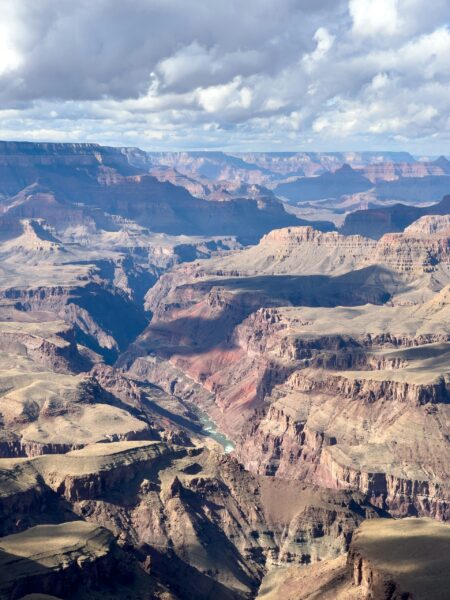 “Erik Fritchman, a farmer who grows apples and peaches on a sunny mesa in Cedaredge, Colo., should be tending his new saplings right now, but with so little water this spring, he is uprooting trees instead. Better that, he said, than watch them die of thirst. Hundreds of miles downstream, the mayor of the tiny desert town of Kearny, Ariz., is warning residents they will run out of water by July unless they take drastic measures now. He suggested showering together or wearing clothes three times before washing them. The two towns are emblems of a water crisis spreading across the American West after one of its hottest, driest winters ever — and one that experts warn is a preview of hotter and drier years to come. … ” Read more from the New York Times.
West prepares for extreme measures to relieve pressure on Colorado River
“New U.S. Department of the Interior data confirmed what many already feared: The Colorado River system, which pumps out water to 40 million people in seven western states, is looking grim. It was already depleted from drought, and a dry winter out West left little snow to replenish it. There’s now concern over hydropower and the structural integrity of Hoover and Glen Canyon Dams, and keeping taps flowing in cities like Phoenix and Tucson. Kyle Roerink, executive director of water conservation group Great Basin Water Network, just finished looking through the latest federal report. “This is the scariest thing I have ever seen in terms of Colorado River projections,” he said. “This is unprecedented — I can’t stress that enough.” … ” Read more from Marketplace.
As the Colorado River crisis deepens, UVA Darden research points to a simple fix
““The Colorado River Is on the Brink of Disaster.” That was the dire warning published recently after years of drought and political posturing have pushed one of the most crucial water sources in the American West to the breaking point. Following a winter of record-breaking heat, the snowpack in the Rockies that feeds the river has dropped to record lows. There was no relief in March, as the West suffered through a searing heat wave. But what if a solution is hiding in plain sight? Research highlighted in Ideas to Action in 2024 identified a simple solution that could put parts of the Colorado River Basin on a more sustainable path. In Colorado, when the river carries enough water to meet everyone’s needs, the “free river condition” applies. During these periods, anyone — regardless of whether they own water rights — can take as much water as they want from the river. … ” Read more from the Darden Report.
Water wars loom as states clash over Colorado River sharing
“The Colorado River has existed for millions of years, but in the year 2026, there’s a brewing battle over control of that river. It’s a battle that crosses political lines and has pitted groups of states against each other. The agreements that delegate the usage of the water in that river expire in 2026, which means new deals need to be reached. However, those negotiations, which involve seven different states, have not gone well. “Until we have seven states agreeing, there’s no certainty about how the river will be managed,” Jennifer Pitt, Colorado River Program Director for the National Audubon Society, told Straight Arrow. … ” Read more from Straight Arrow News.
Podcast: Tribes keep close eye on state of troubled Colorado River
“Seven Western states are divided over the future of the Colorado River, which is depleted after decades of drought and overuse. Last year, tribal groups passed a resolution granting personhood to the troubled river. Here & Now‘s Peter O’Dowd speaks with Amelia Flores, chairwoman of the Colorado River Indian Tribes about the state of a critical water supply for 40 million Americans.” Listen at WBUR.
Releasing cool water protects fish in the Grand Canyon. That comes at cost to hydropower
“As the Colorado River and its once massive reservoirs shrink from overuse and climate change, officials are faced with a decision that pits conservation against ratepayer costs for electricity. To fight off predators of the humpback chub, a threatened fish native to the river, Glen Canyon Dam in northern Arizona would need to do what is known as a “cool mix flow,” where cold water is released from deep in its reservoir to cool the river below. But there are no hydropower turbines in the cool, deep section, so significant power generation would be lost. The proposal comes after the worst snowpack on record for the Colorado River Basin, relied upon by farmers, industries, wildlife and more than 40 million people in seven U.S. states, tribal nations and Mexico. It also comes as those states fail to reach a long-term agreement on how to share the river’s dwindling resources beyond this year, when the guidelines expire. … ” Read more from the Associated Press.
Report: Improved municipal water use in Colorado Basin
“Another government report has warned that now is the time to plan for water shortages on the Colorado River, while saying there are signs of progress. There is uncertainty about what the water situation will look like on the Colorado River 40 years from now. The report said demand could outstrip supply by up to 7 million acre feet. A more likely scenario puts the imbalance at about half that number. Either way, long-term planning needs to start now, said Pam Adams, a hydrologist with the U.S. Bureau of Reclamation, which published the study. The good news, she said, is that recent trends are heading in the right direction. In the major metropolitan areas, per capita water use has decreased by 11 percent to 38 percent since 1990. The situation with agriculture, however, is different. … ” Read more from Arizona Public Media.
Four cities that would vanish without Colorado River water
“We’ve heard thousands of times (without sources being provided) that 40 million people are dependent upon Colorado River water. But which cities in the American Southwest are 100% dependent and would vanish without it? … ” Read more from Coyote Gulch.
NEVADA
$52M for Hoover Dam upgrades aims to protect Nevada power as Lake Mead stays low
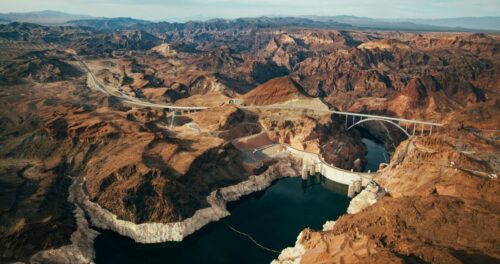 “The Bureau of Reclamation said it has released about $52 million in previously inaccessible funds to support modernization and reliability projects at Hoover Dam, a move Nevada Gov. Joe Lombardo said will help protect a critical power and water asset for the region. According to a statement from Governor Joe Lombardo, the money comes from an administrative error that remained inaccessible for years. Lombardo credited Interior Secretary Doug Burgum, the Department of the Interior and the Bureau of Reclamation for working with Nevada to “unlock these stranded funds,” saying the investment will help ensure Hoover Dam continues delivering “reliable, affordable power for Nevada and the Southwest” for years. … ” Read more from Fox 5.
SEE ALSO: Feds to replace 3 turbines at Hoover Dam with newly released funds, from the Las Vegas Review-Journal
Could ocean desalination help solve Las Vegas’ water woes? It might
“Southern Nevada is now looking to the Pacific Ocean to ease its water woes. In a vote Thursday, the Southern Nevada Water Authority board approved a memorandum of understanding that allows General Manager John Entsminger to hammer out a first-of-its-kind water transfer deal with the San Diego County Water Authority. In a region where growth could outpace permanent water supplies in the next few decades, that matters. The terms are far from certain. But California would leave water in Lake Mead that Nevada could use in exchange for compensation; California would fill that gap with ocean water treated by the Carlsbad Desalination Plant. “It’s a pellet of the silver buckshot, but it’s not a silver bullet,” said Entsminger, in a Monday interview. … ” Read more from the Las Vegas Review-Journal.
ARIZONA
Southern Arizona farmers test new tactics against drought
“Easter is supposed to be Awareness Ranch’s biggest market day: eggs, radishes and greens, the last harvest before Arizona’s heat shuts everything down. This year, there was nothing to sell. The radishes had already bolted, weeks ahead of schedule. The warm temperatures have disrupted the growing season for Cassandra Bock, a farmer at Awareness Ranch, a sustainable agriculture farm and natural building center located just west of Tucson. It’s left the farmers, who once had set seasons and weather patterns to go by, searching for the next best solution. Bock’s disrupted season is part of a larger pattern: Arizona recorded one of its hottest winters on record this year, with data to match what farmers are already feeling. … ” Read more from the Tucson Spotlight.
UTAH
State of Emergency declared for Utah drought after ‘no-pack’ winter
“The governor of Utah declared a state of emergency Thursday as worsening drought threatens a broader water crisis affecting public safety, agriculture, power generation, ecosystems and daily life. The state’s snowpack was dubbed “no-pack” this winter after ending the season at a record-low snowfall percentage. Precipitation for the state has been half to three-quarters of the historical average since April 1. Most of the state, 61 percent, is in an extreme drought, according to the U.S. Drought Monitor. The last time that happened was August 2022. “We can’t control the weather, but we can control the tap,” Gov. Cox said, calling for conservation measures across all sectors. … ” Read more from AccuWeather.
Can low-flow toilets and smart sprinklers solve Utah’s drought? Here’s the problem with the state’s recommendations.
“On Thursday, Utah Gov. Spencer Cox declared a state of emergency due to the state’s drought conditions. Cox’s declaration notes that all 29 of Utah’s counties are in severe drought, and that water supply forecasts project roughly 20% to 55% of normal this year. What changes is Cox going to make as a result? I was struck by the merely suggestive language used throughout: cities, counties, suppliers and companies should “consider” making changes, while residents are “encouraged” to follow “recommendations.” It made me wonder: What is the expected outcome of Cox’s list of interventions? I counted eight recommendations in the document that could impact water usage — some of which were more concrete, others more nebulous. So I decided to take a look at each of the interventions individually, and do some back-of-the-napkin estimation (but still research-backed) of how much diverted water each might save. Let’s take a look. … ” Read more from the Salt Lake Tribune.
Visiting EPA administrator throws support behind Great Salt Lake, punts on controversial data center
“Before discussing the $1 billion allotment in President Donald Trump’s proposed federal budget to help save Utah’s ailing Great Salt Lake, the head of the Environmental Protection Agency took a tour on an airboat. Saturday’s event at Farmington Bay was just one stop during EPA Administrator Lee Zeldin’s time in the Beehive State, where he was joined by members of Utah’s congressional delegation, state lawmakers and local environmental officials. Zeldin said the tour added “many new dimensions” to his understanding of the Great Salt Lake’s plight, emphasizing “we must tackle this very important issue with the local community, the region, the state, and the country.” … ” Read more from the Utah News Dispatch.
COLORADO
Colorado River District launches emergency water plan to protect Western Slope communities during drought
“The state and the Colorado River Water Conservation District, a public water policy and planning agency on the Western Slope, have a new plan to protect mountain towns from losing their water supply during an unprecedented drought this summer. The District’s proposed emergency water supply plan was approved at the Colorado Water Conservation Board meeting on Wednesday. Colorado River District general manager Andy Mueller said that the Colorado River Basin is in a historic drought, and “safeguards that we put in place more than 80 years ago are failing.” The emergency plan would protect certain water users on the main stem of the Colorado River by replacing water that would have historically come from Green Mountain Reservoir. This year forecasts say it won’t fill up for the first time in history. … ” Read more from the Colorado Public Radio.
Colorado Water Trust pays farmers to leave water in rivers amid record-low snowpack
“A Colorado nonprofit is offering farmers and ranchers paid agreements to leave water in the state’s rivers this summer, as federal forecasts warn that runoff levels from May through July could drop to just 24% of normal. The Colorado Water Trust is actively seeking water rights holders willing to temporarily redirect their water back into rivers instead of diverting it to their fields. Executive Director Kate Ryan said the stakes this year are higher than usual. “In an average year, we still have rivers in need, but this year we are gonna see it,” Ryan said. Ryan attributed the crisis to record-low snowpack across Colorado this winter. She said the consequences could be severe for some of the state’s most prominent waterways. “This year, even rivers that normally do have a lot of flow — major big rivers like the Colorado River, the Yampa River — they may go completely dry this year, and that is not normal,” Ryan said. … ” Read more from Channel 9.
Colorado Mining Summit: Got water? In Western U.S., the answer increasingly is ‘no’
“The inability of seven Western states to decide how to allocate water from the Colorado River may cause the federal government to step in and allocate that precious resource, which could inject fresh uncertainties into project planning, imperiling hundreds of billions of dollars of planned industrial project activity as well as thousands of existing industrial plants, a Western water lawyer told attendees at the Colorado Mining Association’s annual conference May 21.”Water is the growth constraint in the arid Western U.S.,” James Eklund, a partner at Taft Stettinius & Hollister LLP, told about 300 attendees at the Western Mining Summit May 21. “It sustains life itself, governing residential development, industrial and advanced manufacturing, and data centers and artificial intelligence (AI) infrastructure.” The conference, held in Denver, Colorado, was sponsored by the Colorado Mining Association. According to Industrial Info Resources data, there are 36 mining-related projects currently under construction in the Rocky Mountains market region, valued at nearly US$15 billion. … ” Read more from Industrial Info Resources.
Trump administration releases $40 million for historic Colorado River water rights purchase
“In a major win for the Western Slope, the Trump administration released $40 million in funding for the purchase of powerful historic water rights on the Colorado River tied to the Shoshone Power Plant. The Colorado River Water Conservation District, which spans 15 counties in western Colorado, has been leading the charge since 2023 to purchase the water rights from the hydropower facility’s owner, a subsidiary of Xcel Energy, for $99 million. In early 2025, it seemed like they’d soon be ready to write the check when the federal government granted $40 million toward the purchase during former President Joe Biden’s final hours in office. Days later, the Trump administration froze the funding, pending review to ensure the grant aligned with the incoming president’s policy priorities. The release of the funds a year and a half later marks a significant step forward in the water rights acquisition, which will still take years to complete. … ” Read more from the Colorado Sun.
SEE ALSO: Funding released for Shoshone water rights in western Colorado, from CBS News
In national water news today …
Data center battles started in the states. Now it’s Congress under siege.
“Higher electric rates? Massive data centers looming over neighborhoods? Ugly political fights over what to do about them? The future of data centers and their huge appetite for electricity is quickly escalating as a political flashpoint from coast to coast, moving from cities and states now to the nation’s capital. Bills are under debate in Congress. The Trump administration has weighed in. Lobbying is intensifying. The Environmental Protection Agency is proposing changes. But finding consensus on how to proceed in D.C. is tough, with the industry spreading around millions to make its case, some lawmakers pushing a moratorium, and others looking for ways to ease the burden on Americans without halting development. At the grassroots, intense opposition continues breaking out. In early May, community members screamed and booed when commissioners in Box Elder County, Utah, unanimously approved two resolutions in support of a 40,000-acre data center campus proposed for an unincorporated site in the county. … ” Read more from the Nevada Current.
The US is seeing stronger storms, so why are droughts getting worse?
“About two-thirds of the U.S. is in some stage of drought in late spring 2026, yet at the same time the country has been seeing more intense downpours. It might seem contradictory, but both are symptoms of rising global temperatures. The reason has to do with the water cycle. Water influences every aspect of our lives through a delicate cycle that transforms liquid water into vapor and back again. As the Earth warms, more of that precipitation is arriving in intense storms that deliver more water than the landscape can handle. When storms drop a few inches of rain over a few days, the water sinks into the soil, nourishing plants and replenishing groundwater. But during heavy downpours, the rain can’t sink in fast enough, and much of the water runs off instead, often fueling flooding. Water also evaporates faster in warmer temperatures. So, despite an increase in total annual precipitation nationally, the landscape is drying out more rapidly as temperatures rise, resulting in more severe and frequent droughts. … ” Read more from The Conversation.
Why scientists retired the dire climate scenario used for over a decade
“It’s rare for technical papers about climate modeling to kick off a heated public debate, or attract attention from the White House. But that’s what happened recently after an international team of researchers published a major revision of the emissions scenarios used to study global warming. When scientists try to model how hot Earth could get this century, they typically look at a range of possibilities for how much planet-warming pollution humans might pump into the atmosphere. These scenarios get updated every seven years or so. In this latest update, the researchers abandoned a dire — and often criticized — high-emissions scenario known as RCP8.5 that has been prominently cited in thousands of climate studies over the past decade. The authors said the scenario was now “implausible” given recent energy trends. … ” Read more from the New York Times.
Climate change alarms are flashing. Washington isn’t paying attention.
“The climate system’s warning signs are blaring, but hardly anyone in Washington has noticed. In recent months, scientists have revealed new ways climate change is affecting the planet: Higher temperatures threaten to worsen damage from a potentially historic El Niño; a record warm winter in the U.S. West pushed river levels near catastrophic levels; new data shows the planet heating up more quickly, shrinking Arctic ice cover to record lows; a critical ocean current that regulates weather is closer to collapse than previously thought. Those developments come as the Trump administration has shredded regulations to corral planet-heating gases, hamstrung climate science agencies and dismantled research institutions. Democrats, meanwhile, have shifted their messaging to energy affordability ahead of the midterm elections, and the environmental movement has gone to ground. … ” Read more from E&E News.
The Great Pacific Garbage Patch is a plastic trash nightmare. It could also be part of a much bigger, hidden problem
“Out in the Pacific Ocean, between Hawaii and California, is the Great Pacific Garbage Patch, a swirl of plastic trash more than twice the size of Texas. As pieces of plastic tumble against each other, they break down into particles tiny enough to be borne aloft on the wind. Once in the air, they have a climate impact that could affect us all, according to new research. The Great Pacific Garbage Patch is a significant source of airborne microplastics and nanoplastics, but there are many other places where tiny plastic particles can be whipped up into the skies, including from landfills, roadside litter and car tires. A team of scientists from China and the US have studied the makeup and behavior of these plastics, and found they are contributing to global heating, according to the study published Monday in the journal Nature Climate Change. … ” Read more from CNN.

