
Several news sources featured in the Daily Digest may limit the number of articles you can access without a subscription. However, gift articles and open-access links are provided when available. For more open access California water news articles, explore the main page at MavensNotebook.com.
On Friday’s calendar …
- MEETING: Central Valley Flood Protection Board beginning at 9am. Click here for the agenda.
- MEETING: Delta Independent Science Board from 9am to 4:30pm. Agenda items include Operations Baseline Update by Dr. Tamara Kraus, Debrief on the Tour of EchoWater Resource Recovery Facility and its Bufferlands, California Sea Grant State Fellow and Delta ISB Postdoctoral Scholar Presentations, and a panel on Nature-based Solutions – Insights from State Agencies. Click here for the full agenda.
- WEBINAR: Northern California’s role in adapting to a hotter, drier future from 12pm to 1pm. With a new state administration and revisions to the California Water Plan under SB 72 on the horizon, David J. Guy will discuss opportunities in the Sacramento Valley to manage water—from ridgetop to river mouth—to serve cities and rural communities, farms, wildlife refuges and managed wetlands, salmon and other fisheries, hydropower, and recreation, while also helping address water needs in other parts of the state. Click here to register.
In California water news this weekend …
In search of water, farmers undermined the San Joaquin Valley. Can collective effort raise their fields, canals – and prospects?
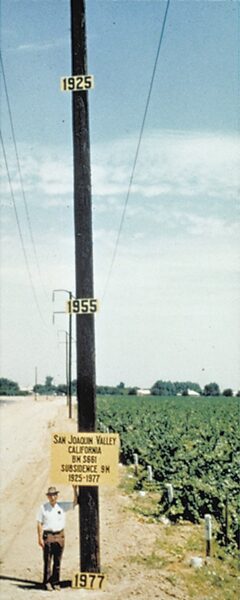
*Photo credit: U.S. Geological Survey
“Of all the risks farmers face in the San Joaquin Valley – floods, droughts, fluctuating commodity prices, labor and its costs – one now dominates their lives. The very land they work is sinking beneath their feet. This phenomenon, known as subsidence, threatens agricultural and other infrastructure and incurs staggering repair costs. Subsidence has been an ongoing drama in two acts. The first act of sinking took place in the mid-20th century, when aggressive groundwater pumping lowered aquifers and, in many areas, the land lying above them. It abated in the early 1970s when surface water from major river systems – the Sacramento and the San Joaquin – flowed downhill scores or even hundreds of miles to San Joaquin Valley farms through new aqueducts and canals. The water deliveries ended subsidence’s first act. The second act began three decades later around the turn of the millennium. Water sent into those aqueducts and canals can no longer be counted on to flow downhill; some sections were deformed as the land fell away and water pooled in new gulches, limiting deliveries. The second act won’t end until farmers sharply cut back on pumping. … ” Read more from … and the West.
New groundwater regulations reshape farm operations
“Aquifer depletion and access to that dwindling water supply across the Southwest and into the South have been contentious issues since the first gallon of water was pumped from the ground. Legal battles in California, Arizona, Texas and even Midsouth states have led to years of litigation regarding who has access to that water. Recent legal cases and regulatory changes are reshaping water rights frameworks across multiple states, with implications for agriculture. Groundwater aquifers in several regions are experiencing depletion rates that exceed natural recharge. … ” Read more from the Western Farm Press.
El Niño could supercharge this year’s Pacific hurricane season
“Eastern Pacific hurricanes are likely to be stronger and more frequent this summer, potentially affecting California weather as an intense El Niño brews. In the northeast Pacific, the National Oceanic and Atmospheric Administration forecasts 15 to 22 named storms, or tropical cyclones, which includes hurricanes and tropical storms. Nine to 14 of these storms are predicted to reach hurricane strength, with five to nine exceeding major hurricane strength, defined as sustained winds of 111 mph or stronger. The agency released its hurricane season forecast Thursday morning. A normal year averages 15 named storms, eight hurricanes, and four major hurricanes. The eastern Pacific hurricane season officially runs from May 15 to Nov. 30. … ” Read more from the San Francisco Chronicle.
Column: Aging dams, Super El Nino, flood insurance and you
Teri Sforza writes, “Our survival depends on water. And, in California, our water supply depends heavily on dams. They store the stuff. They generate electricity. They reduce flood risk. And they are, on average, older than your grandmother and potentially far more dangerous. California has more than 1,200 dams, according to data from the National Inventory of Dams kept by the U.S. Army Corps of Engineers. Their average age is about 77. And the majority of those dams have what the engineers describe as “high hazard potential,” while another 165 carry “significant hazard potential.” Don’t panic (yet). Those labels refer to the amount of mayhem they’d cause if they failed, not to their actual conditions. So, what are their conditions, you ask? … ” Continue reading at the OC Register.
A strong El Niño could be coming. Countries are already preparing.
“From time to time, ocean winds shift and the central and eastern Pacific Ocean experiences a heat wave. The phenomenon, known as El Niño, occurs naturally roughly every three to seven years, and was documented well before people started raising the planet’s temperatures by burning huge amounts of fossil fuels. But this year’s El Niño is shaping up to be one of the strongest on record, and could arrive as the world is already experiencing some of the hottest temperatures in recorded history as a result of human-driven climate change. Over the years, El Niño patterns have led to intense flooding in some parts of the world, while other areas, including some of the planet’s most important agricultural lands, face drought. Already, countries are preparing for the possibility of food shortages … ” Read more from the New York Times.
From wetlands to dry land: Drought and water risk in California
“It is the middle of September. The temperature is a sweltering 92 degrees. The grass on the neighborhood lawns is a yellowish-brown and feels like hay. It has not been green for several months; it has not rained for months, either. Seemingly a single spark would ignite this dormant patch into a fiery blaze. This is the reality for much of California year after year. Wet winters bring with them flooding and mudslides, but by late summer, the reservoirs have emptied and the soil is dry again. California is classified under the Mediterranean climate, meaning its warm summers and autumns are not abnormal, but climate change is rapidly exacerbating both extremes of this wet-dry cycle. This intensification has led to longer, hotter dry periods and more devastating bursts of precipitation. California experienced a constant state of drought from 2012 to 2016. This half-decade drought incited significant damage to the state’s environment and population, causing issues in the agricultural sector as well as within residential flora upkeep that persists today. … ” Read more from the Harvard Westlake Chronicle.
What Sierra snow says about California’s water
“The alpine scene feels like the set of a ‘70s James Bond movie: a helicopter prepping for takeoff, jagged, snow-covered mountains and two men in skis gearing up for a high-country mission. Except, they’re not spies chasing a villain — they’re Southern California Edison hydrographers chasing data in the Sierra Nevada. “This is our laboratory,” said SCE Hydrographer Derrick Tito. “What we find is going to help people make decisions about how to manage one of the state’s most important natural resources — water.” He and fellow SCE Hydrographer Jeff Sherman complete a snowpack survey each year to help answer a deceptively simple question: If all this snow melted, how much water would it turn into, and what would that mean for California? … ” Read more from Edison Energized.
Congress cracks the door to regulating data centers
“Republicans and Democrats took a bipartisan step — or perhaps more precisely, a tiptoe — toward putting Congress’ imprint on the debate over the costs of data centers. As the House Appropriations Committee hammered out a $58 billion fiscal 2027 energy and water spending bill Wednesday, members reached rare consensus on a bipartisan amendment that would empower the Energy Department to start regulating data centers. As my colleague Andres Picon writes, the fiscal spending bill functions as a microcosm of the energy and affordability debates rattling national politics, with fights over renewable energy funding and electricity costs. The bipartisan amendment, which would spur the Energy Department to improve data centers’ water and energy efficiency, was a signal that both parties are feeling the public pressure around energy and data centers ahead of the midterms. … ” Read more from Politico.
EPA announces $58 million WIFIA loan to upgrade aging drinking water infrastructure in rural California
“Today, U.S. Environmental Protection Agency (EPA) is announcing a $58 million Water Infrastructure Finance and Innovation Act (WIFIA) loan to the Amador Water Agency Financing Corporation in Amador County, California, to make improvements to several drinking water treatment plants, which will increase treatment capacity and reliability. This loan will help address aging infrastructure and increase capacity to meet the county’s current and future water demands. “Small, rural communities are the backbone of this country, and we must ensure that they have access to clean, safe drinking water,” said EPA Assistant Administrator for Water Jess Kramer. “Congratulations to Amador County for securing $58 million in WIFIA financing. EPA’s WIFIA Loan Program is an effective way for communities to make water infrastructure investment and protect public health. Its flexible financing features and competitive interest rates save communities like Amador millions of dollars.” … ” Read more from the US EPA.
The Trump administration wants to send more Shasta Lake water to farmers. Salmon could pay the price.
“Salmon fishing just reopened on the Sacramento River after three years of closures. Now fishing groups and environmentalists are warning that a federal plan to send more water to Central Valley farms could threaten the very fish that made the comeback possible. The LA Times reported Wednesday that the Trump administration’s latest plan to increase water releases from Shasta Dam has drawn sharp criticism from conservation groups and fishing organizations. The concern is straightforward: releasing more water from the reservoir during the summer months could warm the Sacramento River downstream to temperatures that are dangerous or lethal for Chinook salmon eggs and juveniles. … ” Read more from Active NorCal.
Why an immense marine heatwave off the US west coast has alarmed scientists
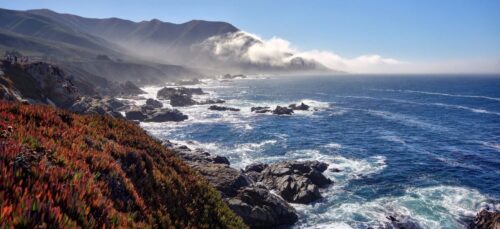
“An enormous marine heatwave off the US west coast is ringing alarm bells among ocean and atmospheric scientists as new data shows its ecological and environmental effects are intensifying. The unusual area of warm water has persisted since peaking in size during September 2025 and still stretches thousands of miles from the California coastline – more than halfway across the Pacific – affecting a vast triangle-shaped region of oceanic habitats from Hawaii to British Columbia and southward to Mexico. As recently as early April, marine scientists had hoped that the heatwave might diminish and the worst of its effects might be avoided. However, new projections released last week by the National Oceanic and Atmospheric Administration (Noaa) show it is now expected to expand and strengthen in the months to come. … ” Read more from the Guardian.
AI is watching for wildfires across the drought-stricken West
“As a historic drought desiccates the West and fire season rages year-round, officials from California to Colorado are relying on camera networks equipped with artificial intelligence to detect flames long before humans can. Early detection in California is “becoming one of the clearest climate‑era advantages,” said Phillip SeLegue, Cal Fire’s staff chief of intelligence. “The system allows firefighters precious minutes in a landscape where fires grow faster every year.” Cal Fire, the state’s firefighting agency, uses a system called Alert California. It’s a network of more than 1,200 cameras installed in key areas from the redwood forests in the North, all the way down to the southern border with Mexico. With sweeping 360-degree views and a boost from AI, the system sends fire managers an alert at the first sign of danger. This week, atop a mountain in Southern California, a camera captured the earliest moments of the Sandy Fire as it erupted Monday outside of Simi Valley. … ” Read more from WBUR.
In people news this weekend …
Promotions, passings, profiles – submit people news items to maven@mavensnotebook.com.
The State Water Board’s “Ocean Hero” returns
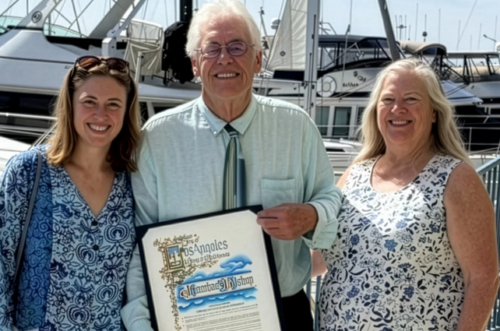
“If you didn’t know Jon Bishop before the pandemic chased everyone out of CalEPA headquarters and into a virtual existence six years ago, the State Water Board’s Chief Deputy Director provided quite the introduction. As he sat in board meetings, addressing his peers and members of the public, his wavy, shoulder-length white hair threatened to fly off in different directions. His colorful Jerry Garcia ties hung limply, if harmlessly askew. His round features, accentuated by wire-rimmed, rectangular glasses, reddened with passion when he leaned into the microphone and forcefully delivered his latest message. You couldn’t miss him if you wanted to — and you wouldn’t want to. After 41 years with the Water Boards — dating back to a time when “total maximum daily loads” (TMDL) referred to weight limits on box trucks instead of pollution limits — he knows where all the pens and pencils are buried. … ” Read more from the State Water Board’s Ebb and Flow.
Appointments …
Leticia Ramirez, of Sacramento, has been appointed to the Sacramento-San Joaquin Delta Conservancy.
Ramirez has been an Attorney at Thatch & Hooper, LLP since 2024. She was General Counsel at Calbright College from 2022 to 2024. Ramirez was Deputy County Counsel at Sacramento County from 2021 to 2022. She held multiple positions at the City of Tracy from 2016 to 2022, including City Attorney and Assistant City Attorney. Ramirez was an Attorney at Meyers Nave from 2014 to 2016. She was a Judicial Law Clerk at the United States District Court for the Southern District of Texas from 2013 to 2014. Ramirez was a Policy Analyst at Advancement Project California from 2006 to 2009. She was an Organizer at Service Employees International Union from 2004 to 2006. Ramirez earned a Juris Doctor degree from University of California, Los Angeles and a Bachelor of Arts degree in History from Stanford University. This position requires Senate confirmation and there is no compensation. Ramirez is a Democrat
Sushma Bhatia, of Cupertino, has been appointed to the San Francisco Bay Regional Water Quality Control Board.
Bhatia has been Global Business and Applied AI Director at Google since 2024, where she was Global Head of Strategy and Operations from 2019 to 2024. She held multiple roles at Accenture from 2014 to 2019, including Business Strategy Senior Manager, Manager, and Consultant. Bhatia was Co-Founder and Chief Executive Officer of Dreeya from 2012 to 2016. Bhatia held multiple roles at the San Francisco Department of the Environment from 2003 to 2013, including Toxics Reduction Program Manager and Coordinator. Bhatia earned a Master of Business Administration degree from the University of California, Berkeley, a Master of Science degree in Chemical Engineering from the University of Southern California, and a Bachelor of Science in Chemical Engineering from the Indian Institute of Technology, Bombay. This position requires Senate confirmation, and the compensation is $250 per diem. Bhatia is a Democrat.
Farfalla Borah, of Santa Barbara, has been appointed to the Central Coast Regional Water Quality Control Board.
Borah held multiple positions at University of California, Santa Barbara, from 1989 to 2018, including Manager, Employee & Labor Relations, Whistleblower Coordinator, Assistant Manager, and Sexual Harassment Prevention Education Coordinator. She earned a Juris Doctor Degree from The Colleges of Law, Santa Barbara and a Bachelor of Arts degree in Film Studies from University of California, Santa Barbara. This position requires Senate confirmation and the compensation is $250 per diem. Borah is a Democrat.
Podcasts …
SHORT WAVE: A solution for California’s water woes
For years, farmers in California have been pumping huge amounts of water from their wells to irrigate their crops. The state’s Central Valley is the nation’s single biggest source for many different foods. But all that water use is making aquifers shrink, wells go dry and, in some places, the ground sink. Science reporter Dan Charles has been looking into the issue and is on the show today to talk about what happens when water gets scarce. What is it like for farmers? And for the people enforcing new water restrictions?
AgNET NEWS HOUR: California water debate intensifies as Edward Ring pushes major reforms for farmers and the Delta
The AgNet News Hour focused heavily on California’s growing water crisis and the political battle surrounding agriculture, featuring an extended interview with water policy expert Edward Ring on the future of farming, Delta management, desalination, and the upcoming governor race. Ring, Director of Water and Energy Policy at the California Policy Center, warned that California is approaching a critical turning point where leadership decisions on water infrastructure and regulation could determine the future of agriculture statewide. “It couldn’t be any more important,” Ring said while discussing the urgency surrounding California’s next governor and the state’s long-running water failures.
AgNET NEWS HOUR: Edward Ring series continues as California water debate and governor race intensify
The AgNet News Hour continued its special multi-part interview series with California water and energy policy expert Edward Ring, diving deeper into the state’s ongoing water crisis, Delta management failures, SGMA concerns, desalination opportunities, and the growing political battle surrounding California agriculture. Part three of the series will air Friday, with the final installment scheduled for Memorial Day. Ring, Director of Water and Energy Policy at the California Policy Center, continued outlining what he believes are common-sense solutions to California’s long-running water shortages while criticizing decades of political inaction and overregulation. “It’s not right,” Ring said while discussing continued low water allocations for farmers despite several strong water years across California.
WHAT MATTERS: The power of water storytelling
In Episode 29 of What Matters Water TV and Podcast, we explore one of the most important—and often misunderstood—innovations in water sustainability: advanced water purification and reuse. While the science behind turning recycled water into safe, high-quality drinking water is proven, public perception remains one of the biggest barriers to progress. This episode shifts the conversation from engineering to storytelling.
WATER IS A MANY SPLENDOR’ED THING: Conversations with Water Economist, Michael Young
 It was when the Sustainable Groundwater Management Act was initiated that I met Michael Young. As an economist, Michael had developed and implemented in Australia, during a severe drought, a water stock market that took into account the priority of beneficial uses. Water is a Many Splendor ’ed Thing and Conversations brings you another water relationship that has a personally significant impact to your life. Produced by Stephen Baker, Bringing People Together to Solve Water Problems, water@operationunite.co 530-205-6388
WATER LOOP: Inside the immune system of water infrastructure
Water utilities are quietly strengthening the “immune system” of our water infrastructure, using compliance programs and technology to prevent pollution, protect drinking water, and reduce sewer overflows before they happen. In this episode, Mick O’Dwyer of SwiftComply shares how his journey from wastewater engineer in Dublin to tech founder led to building software that modernizes programs for backflow, pretreatment, and FOG (fats, oils, and grease). He explains how outdated, paper-heavy systems—once generating hundreds of thousands of documents—are being replaced with digital workflows that free up inspectors to focus on real environmental outcomes.
SCIENCE YOU CAN USE: Hatch me if you can: New hatchR tool helps predict and protect fish development
Hidden like fish eggs in the streambed, the answer was buried in the mathematical models of Morgan Spark’s graduate work. Biologists and land managers know early fish life is sensitive, and nature is difficult to predict. In the streambed, eggs and young fish can be at risk from unintentional habitat disruptions from activities such as grazing, prescribed fire, and road work. The question was how to know when wild fish are hatching and emerging to avoid those sensitive windows. A new tool, hatchR, is here to lend biologists a helping hand – or fin.
In regional water news this weekend …
SIERRA NEVADA
Locals didn’t think Roundup was being sprayed near Lake Tahoe. So I went to find out.
“This past Sunday, I found myself walking across the snowless ski runs of Sierra-at-Tahoe in California, which sits on public land in the El Dorado National Forest. I had come to chase down a rumor. Numerous Tahoe-area residents had told me the Forest Service’s plan to spray the controversial herbicide glyphosate—part of the agency’s forest restoration plan for about 75,000 acres scorched by the devastating 2021 Caldor Fire—had been delayed until 2028. A local news site, along with a major local environmental group—Keep Tahoe Blue—were telling people some version of that. But I had my suspicions. I dug up maps from the Forest Service’s website, and headed to a spot where one of them indicated spraying might already be happening. It was strange to be standing in the middle of a ski run, with neither snow nor skiers around. But I knew if spraying were happening, it would be obvious. … ” Read more from Mother Jones.
Viral video makes false claims on toxic chemicals in Lake Tahoe
“A viral video garnering 1.6 million views has made false claims, using organizations and people in the Lake Tahoe area, that toxic waste barrels, human remains, and dumped cars litter the bottom of the lake. Footage from both Lake Tahoe and several other bodies of water, AI-generated images and voices as well as false citations of quotes to organizations and people has led to those organizations taking steps to address this and multiple other videos of that nature. The video in question, produced by a content farming account called Optic Expedition, sits along others produced in rapid succession: claiming proof of aliens in The Last Supper painting, anti-gravity technology and multiple conspiracies about Hitler. While it shows real news footage, videos of Lake Tahoe, pictures from the Tahoe Environmental Research Center (TERC) and even ROV footage from the Tahoe Fund and Restoring the Lake’s Depths dive from last year, it’s intercut with AI-generated footage and images and videos taken out of context. The video description itself even has a disclaimer, as required by YouTube, that the sounds or visuals were significantly edited or digitally generated. … ” Read more from the Tahoe Daily Tribune.
Tahoe students learn about environmental stewardship at annual snowshoe trek
“This month, 120 eighth graders from Lake Tahoe Unified School District (LTUSD) left their desks for the twelfth annual Heavenly Mountain Resort Snowshoe Field Trip, hosted by the South Tahoe Environmental Education Coalition (STEEC). Over the course of two days, 8th grade students rode the Heavenly tram to participate in interactive environmental education and explore the exciting careers of mountain operations, mechanics, and safety, in addition to meeting avalanche rescue dogs. “The annual field trip provides an invaluable opportunity for students to step out of the classroom and engage in hands-on learning,” LTUSD eighth-grade science teacher Sabrina Zalles said. “This experiential approach not only reinforces our science curriculum but also fosters a sense of stewardship for Lake Tahoe.” … ” Read more from the Tahoe Daily Tribune.
Spring-run chinook salmon are swimming in the North Yuba River for the first time in a century
“For the first time in roughly a century, spring-run Chinook salmon are swimming in the North Yuba River. And the program that put them there just got funded for another year. The Yuba Water Board of Directors approved a $500,000 grant to the California Department of Fish and Wildlife on Tuesday to continue the salmon reintroduction program in the upper reaches of the North Yuba River watershed. The two-year-old pilot program has already placed hundreds of thousands of salmon eggs and adult fish into a 12-mile stretch of gravel riverbed above Downieville. … ” Read more from Active NorCal.
The Sierra Nevada Conservancy to consider wildfire resilience and recreation grants; start two new programs
“The Sierra Nevada Conservancy (SNC), a California state agency focused on improving the environmental, economic, and social well-being of the Sierra-Cascade region, will host its quarterly meeting and field tour in Weaverville, Calif., June 3 and 4. At the June 4 Board meeting, nearly $1.5 million may be awarded to new wildfire-resilience projects and just over $3 million to new projects to help boost recreation and tourism in the Sierra-Cascade. The Board may also approve new Wildfire and Forest Resilience Grant guidelines and guidelines for the new Landscape Grant Program to help increase the pace and scale of forest health. … ” Read more from the Sierra Nevada Conservancy.
SACRAMENTO VALLEY
Bridge Group: Working together to create robust salmon populations
“A coalition of fishermen, water suppliers, farmers, researchers, and conservationists committed to the recovery of Chinook salmon known as The Bridge Group has a new website to help share information on the group’s projects and priorities. The Bridge Group is advocating for and implementing projects to enhance salmon survival, improve fish hatcheries and advance salmon recovery science in the Sacramento Valley. The Bridge Group is helping advance several innovative salmon recovery efforts across the Sacramento Valley, ranging from hatchery improvements and fish passage work to floodplain and agricultural partnership projects. … ” Continue reading from the NorCal Water Association.
Cleanup enters final phase at former Corning recycling plant destroyed in 2018 fire
“Cleanup of the former Specialized Fibers site on South Avenue in Corning has entered its final phase. Crews are now working to clear thousands of tons of debris remain after a 2018 fire. Tehama County Environmental Health, working with CalRecycle and the Tehama County District Attorney’s Office (TCDA), said cleanup began May 18 and is expected to take 30 to 45 days to complete. The site has undergone substantial cleanup over the past year. In 2025, more than 682 tons of metal debris were removed. With support from CalRecycle’s Solid Waste Cleanup Program, crews plan to remove about 7,340 tons of remaining waste and fire-damaged debris from the site. … ” Read more from KRCR.
NAPA/SONOMA
Napa Valley groundwater pumping remains at unsustainable levels, report finds
“Long-term groundwater pumping in Napa Valley remains at unsustainable levels, according to a recent county report. Groundwater pumping totaled about 16,580 acre-feet in the 2025 water year — from October 2024 through September 2025 — according to the annual groundwater report, surpassing the 15,000 acre-feet the county considers sustainable for the Napa Valley subbasin and representing about 40% of total water use. Precipitation during the same period was 21.59 inches, a normal “below average” amount, according to the county report. The county’s average annual pumping over the past seven water years is 17,700 acre-feet, beyond the 15,000 acre-feet and considered an “undesirable result” under the county’s state-approved groundwater sustainability plan, an effort to reduce groundwater use by 10%. … ” Read more from the Santa Rosa Press Democrat.
BAY AREA
Saving two marshes from the squeeze
“The ribbons of marsh squeezed between the Bay and the highways that skirt its edges are living relics of California gold mining history. Everyone who has ever been in a traffic jam by the Bay will have noticed these green fringes, brown mudflats, and shallow waters merging into deep. Today, at locations in the East and North Bay, they are also the focus of intense efforts not just to save and restore critical wetland habitat, but also to protect the highways themselves from rising seas and bigger storms. Two particular projects, one scheduled to start construction in the next few years along State Route 37 and one now being planned near the Bay Bridge toll plaza, could help protect thousands of acres of centennial marshes. “These marshes are just disintegrating, there’s nothing to hold the sediment together, and [the worry is that] the whole marsh platform will come apart,” says water board planner Christina Toms. … ” Read more from the Knee Deep Times.
Whales keep dying in San Francisco Bay. Can AI save them?
“On a remote corner of Angel Island, the waters of San Francisco Bay lap against a collection of whale bones littering the white sand. Marine scientists have towed the mammoth bodies of dead gray whales across the bay to this isolated beach many times in recent years to investigate the mysterious spike in fatalities. On Tuesday, state scientists and a coalition of regional partners gathered on a peak of Angel Island overlooking the graveyard beach. But their eyes scanned past the island to the gleaming bay, where blows from gray whales shot up sporadically between passing cargo ships, fishing vessels and sailboats. … ” Read more from SF Gate.
CENTRAL COAST
Santa Cruz is in the midst of a rare butterfly frenzy
“Exceptional. Magical. Healing. Santa Cruz area residents seemingly cannot stop posting positive adjectives about the unexpected wave of butterflies flooding their region. On Mother’s Day, the thick blanket of orange and brown butterflies arrived in Shannon Robbins’ garden in Bonny Doon, a community in the Santa Cruz mountains devastated by the CZU Lightning Complex fires in 2020. The winged insects have not left yet, though their numbers seem to ebb and flow. “It’s very uplifting,” Robbins, a landscape designer who has lived in Bonny Doon for two decades, told SFGATE. “Everyone here is so excited.” … ” Read more from SF Gate.
Commentary: Cal Am proves yet again it is driven by investor benefit, not public interest.
“Sarah Leeper, president of California American Water, has been out in public recently arguing that its proposed desalination plant ought to be a precondition for lifting the state’s cease-and-desist order on the Carmel River. Her argument is that the Monterey Peninsula’s water supply isn’t secure enough to allow new connections, and the only real solution is desalination. She’s hoping that state regulators will buy this story. The problem is she’s wrong – and she has every financial reason to be. Fifteen years ago, water demand ran around 12,000 acre-feet annually. Today it’s under 9,000, a 25-percent reduction through conservation. Using the California Public Utilities Commission’s findings, available supply will exceed demand for at least the next 11 years, through 2036 – and until at least 2046 with storage, which existing infrastructure already supports. … ” Read more from Monterey Country Now.
SAN JOAQUIN VALLEY
KERN RIVER ROUNDUP: Water agencies seek public’s help to keep mussels out of the Kern River watershed; Flows to last through July 4; Six lives lost in 2025
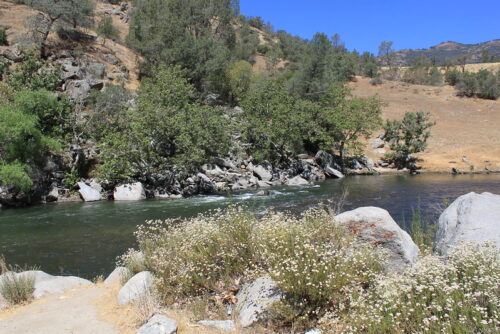 “Invasive and rapidly spreading golden mussels have not been found in the upper Kern River, Lake Isabella nor the lower river – so far. A group of local water entities hope to keep it that way through a public awareness campaign for the public to thoroughly clean all watercraft before launching in any local water way. The “golden rule,” a play on the name of the mussel, campaign kicked off Thursday before the anticipated Memorial Day influx of boaters and river recreators. The Kern County Water Agency, City of Bakersfield, California Water Service, North Kern Water Storage District and Kern Delta Water District, which initiated the campaign, could all be directly impacted if the mussels infest the Kern River watershed. … ” Read more from SJV Water.
SEE ALSO: City joins regional effort to stop invasive golden mussels in local campaign, from Bakersfield Now
EASTERN SIERRA
State Water Board launches workshops to evaluate Mono Lake’s condition
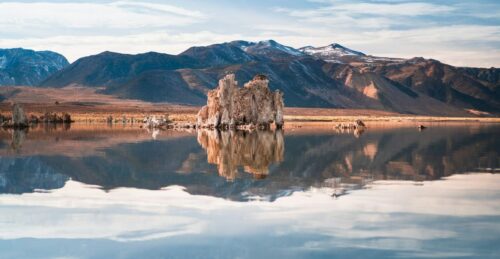 “Following its March 17 meeting, the State Water Board has announced a series of workshops, starting in June, to collect information on the condition of the Mono Basin’s Public Trust resources and evaluate potential management options. At the workshops, experts will presenting new data collected since the Board issued its first decision to raise Mono Lake in 1994. … The first topics are lake limnology and ecosystem health, including salinity trends, problems with lake stratification, the status of brine shrimp and alkali flies, and the condition of the millions of migratory and nesting birds that rely on Mono Lake. Scientists who study these topics will make presentations and take questions. Additional workshops at the end of summer will cover topics including air quality, LA water resources, and diversion reduction options. The Board will hear input from the Mono Lake Kootzaduka’a Tribe through a direct consultation process. … ” Read more from the Mono Lake Committee.
AI data center environmental review: Proposed Inyokern data center highlights water use concerns
“Growing use of Artificial Intelligence (AI) and cloud computing corresponds to an increasing need to develop data centers, many of which must use water to cool servers, to control humidity, and for other purposes. These water requirements have potential to cause conflicts, administrative challenges, and litigation in regions where water is scarce. The proposed RB Inyokern Data Center in Kern County, California, sheds light on the environmental review process for data centers and the broader debate over water use and AI. The proposed data center would include 40 diesel-fired generator sets to provide up to 99 megawatts (MW) of backup emergency generation to support on-site data operations during utility outages. According to a Water and Sewer Service “Will Serve” letter issued by the Inyokern Community Services District to the entity that wants to build the center, the center would use approximately 40,430 gallons of water per day for various purposes. The center is set to be built within the Indian Wells Valley groundwater basin. That basin is in overdraft and the subject of an ongoing adjudication of rights in the Orange County Superior Court. … ” Read more from Somach Simmons & Dunn.
SOUTHERN CALIFORNIA
Feds declare Eaton fire was a cleanup success. Their testing shows otherwise
“Despite finding nearly 1 in 5 homes had excessive levels of lead, the U.S. Environmental Protection Agency this week claimed that recent soil testing in Altadena proved that expedited federal cleanup efforts had effectively removed toxic ash and debris from homes destroyed by the deadly Eaton fire. Earlier this year, the EPA announced it would perform a limited soil sampling at 100 destroyed homes across the burn zone in order to verify that contractors had thoroughly mitigated toxic substances. In a recent news release, the EPA said that testing revealed median lead concentrations below federal standards, and “confirmed that cleanup methods successfully addressed contamination and verified cleanup protocols.” The EPA soil sampling comes amid mounting pressure from residents and environmentalists who claim that a hasty federal cleanup effort had left behind or spread hazardous fire debris. Internal government reports also raised questions about the thoroughness of the cleanup. … ” Read more from the LA Times. | Read via AOL News.
Part 1: How Claremont’s water fight reached the courthouse
“Ten years after Claremont lost its eminent domain battle against Golden State Water Company, the decision continues to affect residents, city finances, local politics, and the broader debate over who should control the community’s most essential resource. This two-part analysis revisits how Claremont’s water fight reached the courtroom, why expectations were so high, what happened after the city lost, and what lessons remain. This is a review of a civic battle with the benefit of time, perspective, Courier reporting, and public records from the case. By the time Claremont filed its eminent domain lawsuit against Golden State Water Company in December 2014, the fight had become much more than a dispute over utility rates. It was about control. It was about trust. It was about whether water should be controlled by a private for profit company or by the city for the benefit of residents. … ” Read more from the Claremont Courier.
Seal Beach City Council OKs water related plans
“After a public hearing, the City Council on May 11 unanimously approved the Seal Beach 2025 Urban Water Management Plan and the 2025 Water Shortage Contingency Plan. The plans were state-mandated. According to the staff report by Public Works Director Iris Lee, California law requires urban water suppliers that serve more than 3,000 customers—or supply more than 3,000 acre-feet of water a year—has to submit an Urban Water Management Plan to the California Department of Water Resources every five years. (An acre foot of water is enough water to submerge 1 acre of land under 1 foot of water.) The water plan is intended to make sure there is enough water to meet existing and anticipated demands, according to Lee’s report. … ” Read more from the Seal Beach Sun.
Seal Beach reaches agreement with The Ocean Cleanup group
“The city of Seal Beach on Wednesday, May 13, joined The Ocean Cleanup, county of Los Angeles, and city of Long Beach in signing a Memorandum of Understanding to advance a coordinated regional approach to addressing plastic pollution in the waterways of Los Angeles and Orange Counties. The briefing highlighted progress on key initiatives along the San Gabriel River and Los Angeles River and outlined a collaborative path toward deployment, partnerships, and long-term environmental impact. The event, held at the Aquarium of the Pacific, brought together federal, state, county, and city leaders alongside environmental advocates, funding partners, and community stakeholders to demonstrate regional momentum and collaboration. … ” Read more from the Seal Beach Sun.
IMPERIAL/COACHELLA VALLEYS
Brawley follows Calipatria with data center development pause
“The Brawley City Council followed Calipatria’s lead and voted to approve a temporary data center moratorium within its city limits on Tuesday, May 19. Councilmember Gil Rebollar began by saying that he saw the action as part of the council’s role in “setting policy and standards regarding zoning and development within our city limits.” “The question and discussion tonight is whether Brawley has the right rules, standards, protections, and public process in place before any such facility or development is considered here,” Rebollar continued. He said the city’s ordinances currently do not specifically define key terms, including “data centers,” “hyper scale data centers,” or “crypto mining facilities.” … ” Read more from the Desert Review.
SAN DIEGO
Embattled Tijuana River sewage contractor wins more work
“The Trump Administration awarded a new, no-bid contract to a company that’s being sued for allegedly failing to keep the Tijuana sewage crisis at bay. And two men who work for agencies on either side of the contract also worked together previously at the Environmental Protection Agency during Trump’s first term. In April, the federal government re-hired Veolia, one of the world’s largest private operators of water, waste and energy services, to run the South Bay International Wastewater Treatment Plant at the U.S.-Mexico border. Veolia has been the private contractor operating and maintaining the plant for years. But recently it became the target of several lawsuits filed by residents, a Coronado school district and environmental groups that allege the plant has violated the Clean Water Act under Veolia’s stewardship. Originally, the federal government put the contract to operate and maintain the plant out for public bid. But the bid was eventually cancelled and the government rehired Veolia. … ” Read more from the Voice of San Diego.
Along the Colorado River …
Enhancing Hoover Dam’s infrastructure and energy reliability
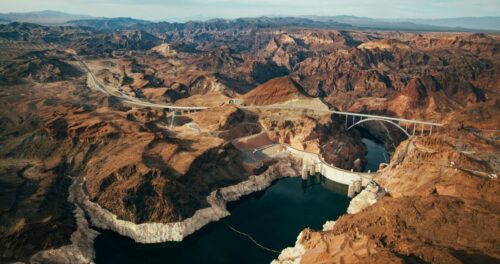 “The Bureau of Reclamation is investing approximately $52 million from the Hoover Dam Post Retirement Benefit fund in critical infrastructure, operations, and maintenance at Hoover Dam, including replacement of up to three older turbines with wide-head turbines designed to operate at lower lake elevations. This determination comes at a pivotal moment as prolonged drought and declining Lake Mead elevations continue to affect hydropower generation that supports people and industry throughout the American Southwest. “This action ensures Hoover Dam remains a cornerstone of American energy production for decades to come,” said Assistant Secretary for Water and Science Andrea Travnicek. “By investing in critical infrastructure upgrades and advanced wide-head turbine technology, we are increasing the dam’s resilience to drought, protecting reliable hydropower generation for communities across the Southwest, and delivering on President Trump’s commitment to strengthen America’s energy security through modernized infrastructure and responsible resource management.” … ” Read more from the Bureau of Reclamation.
SEE ALSO: Bureau of Reclamation to invest $52M in Hoover Dam upgrades amid low Lake Mead levels, from Channel 3
Treat water like family, not profit
Clark Tenakhongva writes, “Hopi has many predictions in our culture — one of them being that the coming of non-Indigenous nations would make the Earth shake and life become ruptured. Many settlers are familiar with this concept from the 1982 film Koyaanisqatsi (the Hopi word for “life out of balance”), which contrasts increasing industrialization with the sandstone of our lands. The record-breaking heat dome and lack of snowpack and moisture in the West this spring are signs of what our elders and ancestors have been warning us about for generations. Pisisvayu, otherwise known as the Colorado River, sits blocked by pah’uutsi (Glen Canyon Dam) like stagnant blood, baking into Lake Powell, smothering our sacred sites and leaking into development projects in St. George, terminating long before her historical journey to paatuwaqatsi, or the Sea of Cortez. This is but one of three dams in Arizona that were built to hold water on the land via Pisisvayu. But we remember a different time, when water was treated like family. The Hopi people have a covenant with the Creator to steward water as well as the land. … ” Read more from High Country News.
Governor declares drought emergency as Utah dips into reservoir ‘savings’
“Gov. Spencer Cox declared a state of emergency Thursday, noting every county is in a state of severe or extreme drought after a dry winter marked by record warmth robbed Utah of its snowpack and left rivers and streams running low. The declaration opens the door for farmers and ranchers to tap into federal funding and loans managed by the state. It also gave state leaders another opportunity to urge homeowners to cut back on watering their lawns and replace some of their grass with less thirsty plants. Speaking to reporters at Little Dell Reservoir east of Salt Lake City, Cox referred to mountain snowpack Thursday as “our checking account,” saying it supplies roughly 95% of Utah’s water. “And right now, our checking account is running low. We are relying on our savings account in our reservoirs,” Cox said. He said there’s enough water in the reservoir system to get through the year on the condition that “we treat every gallon as a finite resource. We need aggressive conservation across all sectors.” … ” Read more from the Utah News Dispatch.
Utah to receive $35 million from feds for Colorado River projects
“Federal funding for water conservation projects in Utah has been held up for over a year, but some of that money is finally flowing to eastern Utah. The Bureau of Reclamation plans to release about $35 million to Utah from the Inflation Reduction Act for drought mitigation projects in the Colorado River Basin, said Amy Haas, director of the Colorado River Authority of Utah. That’s just a portion of the $90 million that the Biden administration awarded to Utah for 11 projects, ranging from wetland restoration near Moab to removal of invasive Russian olive trees along the Green River. Shortly after the funds were awarded in early January 2025, though, President Donald Trump froze spending from the IRA. … ” Read more from the Salt Lake Tribune.
Aspen Journalism’s The Runoff | Confronting scarcity with adaptation
“Welcome back to The Runoff, Aspen Journalism’s Water Desk newsletter providing insider news and water-related updates you won’t read anywhere else. … Ute Water, the largest municipal water provider on the Western Slope serving Grand Junction and surrounding communities, implemented drought rates for the first time since 1977. The increased rates are designed to reduce demand, encourage conservation and are targeted at the largest water users. Customers who stay below 3,000 gallons a month will continue to pay the residential monthly water rate of $28. The biggest water users (more than 30,000 gallons a month) will see their rates go from $11.75 to $58.75 per 1,000 gallons. … ” Continue reading from Aspen Journalism.
In national water news this weekend …
Court overturns landmark fluoride ruling, sides with EPA
“A federal appellate court on Thursday vacated a landmark ruling that ordered EPA to address the health risks of fluoride in drinking water, handing the agency a win in a seven-year legal fight with impacts on federal policy and White House politics. The 9th U.S. Circuit Court of Appeals found a district court judge had “commandeered” the case and abused his discretion by postponing judgment and demanding new evidence and a second bench trial. The unsigned memorandum disposition, issued Thursday, sent the case back to the U.S. District Court for the Northern District of California to rule again — this time based only on the first trial’s record. Thursday’s ruling follows a contentious 2024 decision by Senior Judge Edward Chen in the district court, where he proffered a lengthy analysis that found fluoride in drinking water at the federally recommended level poses “an unreasonable risk of reduced IQ in children.” That determination triggered a federal rulemaking process under the Toxic Substances Control Act. … ” Read more from E&E News.
System-of-systems method can bring cities resilient infrastructure, report finds
“Cities, towns, and municipalities of all sizes across the U.S. are taking a hard look at their existing infrastructure, and a new ASCE-involved report is helping provide increased clarity. With notable increases in frequency and intensity of extreme disaster events, including storms, floods, droughts, and wildfires, communities are realizing that far too many roads, bridges, water systems, and power networks are being pushed past their design limits. As a result, many, especially in smaller and mid-sized communities with limited staff and budget, are looking for practical ways to build and maintain infrastructure that will last, even under today’s – and tomorrow’s – climate conditions. To assist, Duke University’s Nicholas Institute for Energy, Environment & Sustainability, in partnership with ASCE and other industry partners, released Built to Endure: A Smart Guide for US Cities to Build Resilient Infrastructure That Lasts. The new report provides a variety of case studies, from flood recovery in Kentucky to community engagement in Wellington, New Zealand, to highlight the importance of thinking beyond individual infrastructure projects and embracing a more interconnected, system-of-systems approach. … ” Read more from the Civil Engineering Source.
Parking lots get hot and are bad for storm runoff. These groups are testing other options
“At the Hampton Roads Planning District Commission headquarters in Virginia, staff knew their crumbling asphalt parking lot was in desperate need of repair. But instead of replacing the lot with more dark blacktop, the group chose an alternative. The new parking lot, completed last year, includes porous concrete panels and areas with native plants and recycled materials to make the lot cooler and less prone to flooding. With the new panels, “the rain infiltrates faster than it can puddle and stop on the surface,” said Jill Sunderland, the commission’s senior water resources planner. “You notice too, that it’s cooler,” Sunderland added. “You really can tell a difference out there … not to mention it’s just more inviting.” … ” Read more from the Associated Press.
Human urine becomes option for farmers in fertilizer supply crunch
“James Mills has spent a lot of time thinking about chicken muck lately. After the Iran war disrupted supplies of conventional nitrogen fertilizers, the English farmer began scouring the Yorkshire countryside for substitutes to keep his crops growing. That led Mills to the poultry shed of a relative’s friend, whose chicken manure is suddenly so sought after that he now has a long list of buyers. “Everyone is doing the same, looking for alternatives,” said Mills, who harvests wheat, barley and oats on a farm dotted with sheep. Farmers worldwide are under pressure. About a third of traded urea, a widely used nitrogen fertilizer, comes from the Gulf region. With the Strait of Hormuz effectively shut, prices have jumped to multi-year highs. That’s forcing growers to improvise ahead of the fall planting season or risk lower yields, profit losses and disruptions to global food supply. … ” Read more from Bloomberg.
Also on Maven’s Notebook this weekend …
announcements, etc
[spacer]
