
Several news sources featured in the Daily Digest may limit the number of articles you can access without a subscription. However, gift articles and open-access links are provided when available. For more open access California water news articles, explore the main page at MavensNotebook.com.
On the calendar today …
- MEETING: State Water Resources Control Board beginning at 9am. Agenda items include Consideration of a proposed Resolution approving an amendment to the Water Quality Control Plan for the Colorado River Basin Region to establish the total maximum daily loads and implementation plan for pyrethroid pesticides in Alamo River and New River, Imperial County; Racial Equity Plan update; and a Board Workshop on the draft State Fiscal Year 2026-27 Clean Water State Revolving Fund Intended Use Plan. Click here for the full agenda.
- WEBINAR: Community Engagement in Stormwater Planning from 10am to 11am. Comprehensive stormwater management planning can play a pivotal role in enabling communities to address stormwater management challenges and goals strategically, leveraging staff time and budgets to achieve the biggest impact in protecting the health and safety of residents, properties, and public assets. Community engagement is a critical component of this process, enabling utilities to tap into local knowledge around stormwater management issues, align this process with other priorities or complementary initiatives, and create a foundation for long-term, robust community engagement effort around stormwater. This webinar will share resources and highlight the experience of communities in incorporating community engagement throughout the planning process. Click here to register.
- WEBINAR: Buckle Up – What’s the Wildfire Outlook for this Year? Readiness, Response, and Community Protection from 12pm to 1pm. Record temperatures melted the mountain snowpack and seared landscapes from one end of the state to the other in March. Forecasts call for wildfires to start as early as late spring. Join Secretary Wade Crowfoot and state leaders for the latest on conditions and hear what California has been doing to prepare for peak fire season, protect communities, and accelerate wildfire safety projects. Click here to register.
- WEBINAR: Basin Characterization Exchange: Groundwater Salinity Mapping in California’s Central Valley from 12:30pm to 1:30pm. Groundwater aquifers in California’s Central Valley supply a considerable portion of the State’s water resources. While most groundwater is pumped from relatively shallow depths, deeper aquifers have the potential to support sustainable groundwater plans. However, the usability of deep groundwater is largely controlled by natural salinity, which typically increases with depth. Both lateral and vertical salinity gradients can be considerable, yet deeper aquifer systems throughout the Central Valley remain poorly understood. This presentation summarizes recent advances in deep groundwater salinity mapping and outlines ongoing salinity mapping efforts in California’s Central Valley. Click here to register.
- GRA SoCAL: Water Replenishment District State of the Basin beginning at 6pm. Brian Partington, Manager of Hydrogeology at the Water Replenishment District of Southern California will provide an update on the region’s groundwater basin. Dinner is included. Click here to register.
In California water news today …
Podcast: Could groundwater banks help solve California’s water crisis?
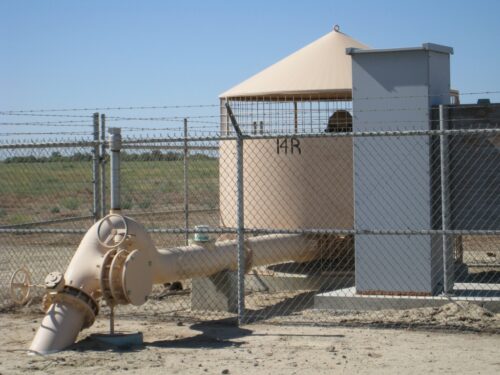 “For years, farmers in California have been pumping huge amounts of water from their wells to irrigate their crops. The state’s Central Valley is the nation’s single biggest source for many different foods. But all that water use is making aquifers shrink, wells go dry and, in some places, the ground sink. Science reporter Dan Charles has been looking into the issue and is on the show today to talk about what happens when water gets scarce. What is it like for farmers? And for the people enforcing new water restrictions?” Listen to the podcast at NPR.
Advocates demand restored funding to combat carcinogenic water contamination in rural California
“Clean water advocates are launching a coordinated push to restore full funding mechanisms for California’s Safe and Affordable Funding for Equity and Resilience (SAFER) program. The effort comes amid growing concern that recent state budget adjustments will leave vulnerable rural communities without the necessary resources to transition away from contaminated groundwater wells. The SAFER program’s base budget was established at 130 million dollars, utilizing revenue generated by the state’s cap-and-invest program. According to Brandon Bollinger of the Community Water Center, previous legislative agreements included protective language that automatically backfilled any funding shortfalls if cap-and-invest revenues underperformed. However, state lawmakers recently removed that backfill provision, raising alarms that long-term infrastructure projects in unincorporated areas may stall. … ” Read more from NBC Palm Springs.
SEE ALSO: Advocates call for restored funding to address contaminated water in rural California, from Action News Now
Shasta, Oroville and Folsom are all nearly full. So why are water managers still worried?
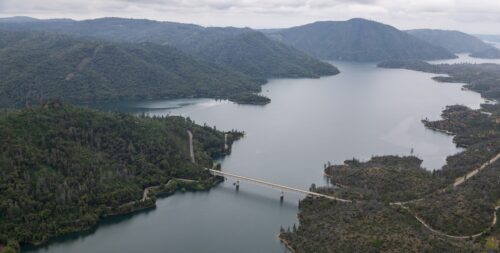
On this date, the water storage was 3,355,264 acre-feet (AF), 98 percent of the total capacity. Andrew Nixon / DWR
“California’s biggest reservoirs are heading into summer in excellent shape. But water managers are not celebrating just yet. Shasta Lake, Lake Oroville and Folsom Lake are all sitting well above their historical averages for mid-May. Oroville, the state’s second-largest reservoir, hit 99% capacity last week. Shasta Lake is at 91% and tracking 109% of average. Folsom Lake is at 93%. By the numbers, the state’s water storage picture looks strong. The concern is what happens next. This year’s snowpack was well below average, which means the reservoirs will not be replenished by melting snow the way they would after a big winter. In a normal year, Sierra snowmelt feeds rivers and reservoirs through June and into July, keeping levels stable even as cities, farms and hydropower facilities draw water down. Without that snowmelt buffer, the draw-down from summer demand could outpace inflows much earlier than usual. … ” Read more from Active NorCal.
What previous Super El Niños can tell us about the next one
“The coming “Super” El Niño is poised to affect the lives of hundreds of millions of people worldwide as it strengthens through the year into the winter season. It may also alter ecosystems for decades to come, judging from the repercussions of past intense El Niños. The last Super El Niño reshaped weather and economies around the world, leaving disruptions that lingered long after the Pacific cooled. Now, as another powerful El Niño builds, we’re looking for clues about what hundreds of millions of people — and the planet’s most fragile ecosystems — may face next. … Past Super El Niños are an imperfect guide to this upcoming one, since no two El Niños are alike in their impact. But in many ways, we will be simultaneously more and less resilient to effects of this super El Niño compared to events in 1982-83, 1997-98 and 2015-16. Most notably, some computer models show the upcoming El Niño exceeding the intensity of all those events to become the most intense since at least 1950. … ” Read more from CNN.
UC ANR, Catalonian research institute to partner on water sustainability, resilience
“On May 14, University of California Agriculture and Natural Resources welcomed a delegation from Catalonia, Spain, for the signing of an agreement to boost research collaboration on water quality, sustainability and resilience. At UC ANR offices in Davis, the event featured remarks by President Salvador Illa of the Government of Catalonia. An autonomous community of Spain, Catalonia has a sister-state relationship with California dating to 1986, based on close ties of culture and similar geographical features and Mediterranean climate. After reaffirming that partnership during a visit with state leaders in Sacramento, Illa traveled to Davis for the signing of a memorandum of understanding between UC ANR and the Catalan Institute for Water Research (Fundació Institut Català de Recerca de l’aigua, or ICRA). The Catalonian institute, based at the University of Girona, focuses on water resource and ecosystem management, technology development and water quality. … ” Read more from UCANR.
A conversation with CDFW’s new director, Meghan Hertel
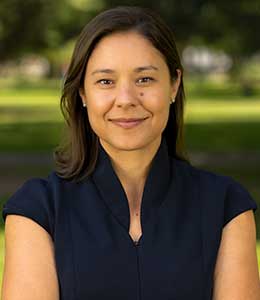 “Earlier this year, Meghan Hertel—formerly the deputy secretary for biodiversity and habitat at the California Natural Resources Agency—took the helm of the California Department of Fish and Wildlife (CDFW). We recently spoke with Ms. Hertel about her vision for the department. Q: Tell us a little bit about why you’re excited to lead CDFW. A: CDFW sits at the center of some of the most important questions facing California’s future: how we protect biodiversity, build resilient communities, support housing and infrastructure, and keep people connected to the natural world that defines this state. That’s what makes this role exciting and also challenging. As the trustee of California’s fish, wildlife, and habitats, we carry an enormous responsibility to ensure these resources are here for future generations. What gives me confidence is the incredible expertise, dedication, and passion of the more than 3,000 people at CDFW who show up every day to advance that mission. … ” Read more from the PPIC.
Wildlife officials begin tagging spring-run chinook salmon ahead of spawning season
“The California Department of Fish and Wildlife (CDFW) has begun tagging Chinook salmon ahead of the fall spawning season. The CDFW, in partnership with staff from the California Department of Water Resources (DWR), has started tagging spring-run Chinook salmon at the Feather River Fish Hatchery in Oroville, the agency announced in a social media post. The tagging enables wildlife officials to identify early-arriving spring-run Chinook salmon from those that arrive later in the fall during spawning operations. … The CDFW typically uses Hallprint, a spaghetti-style fish tag, to visually identify spring-run Chinook salmon. The fish are outfitted with two external Hallprint tags on either side of the dorsal fin and are then released back into the river. … ” Read more from edhat.
Restoring Relationships: Themes from the 2026 Salmonid Restoration Conference
“This spring, the 43rd annual Salmonid Restoration Conference was held near the banks of the Sacramento River in Redding, California. Situated between the Klamath and Sacramento River watersheds, conference highlights included tours that showcased current salmonid fish passage and habitat restoration projects taking place in local rivers. Workshops included discussions and trainings centered around methods for improving stream flows, managing dam removal projects, and developing beneficial tribal water use strategies. This year’s theme, “Bridging the Gaps in Restoration,” was short and sweet, yet layered with meaning. … ” Read more from FishBio.
As ocean temperatures spike, more dead sea birds are washing up on California shores
“For the last several months, wildlife experts have been alarmed by a large influx of dead and emaciated seabirds washing up on California beaches. While experts had been recording high mortality rates for brown pelicans for several years now — the result of harmful algal blooms, or “red tides” — this die-off appears different. Now it’s not just pelicans that are being impacted, but other water birds such as Brandt’s cormorants, loons, common murres, and grebes. The suspected culprit in this case is subtler and more insidious than the algal neurotoxin known as domoic acid. Experts say these recent deaths are likely tied to an extreme marine heat wave that is causing deadly changes in food availability. … ” Read more from the LA Times. | Read via AOL News.
Pacific heat wave triggers legal requirement to protect loggerhead sea turtles
“The Center for Biological Diversity notified NOAA Fisheries today of its legal responsibility to close a large area off the Pacific coast to swordfish drift gillnets to protect endangered loggerhead sea turtles, due to unusually warm waters off southern California. The agency must take action by June 1 to avoid the risk of a lawsuit, the Center’s letter notes. “Drift gillnets always wreak havoc on ocean life, but it’s especially critical they be pulled from California’s water before endangered loggerheads arrive this summer,” said Catherine Kilduff, a senior attorney at the Center. “Thankfully loggerheads have a built-in regulatory protection from these mile-long nets when ocean conditions bring the sea turtles to southern California to feed. Federal officials just need to establish the loggerheads’ conservation area, and they should do that immediately.” … ” Read more from the Center for Biological Diversity.
California cannot manage what it cannot measure: data centers, water, and a governance gap
“As AI-driven demand accelerates the buildout of hyperscale data centers across the United States, California is confronting a specific and underexamined dimension of the challenge: not just how much water these facilities consume, but where they are being sited, and who bears the consequences. A report published by nonpartisan think tank Next 10, authored by researchers at Santa Clara University, The Intersection of Data Center Development, Water Availability, and Environmental Justice in California provides the first comprehensive geospatial analysis of every known operating and planned data center in California, assessed through a combined water scarcity and social vulnerability lens. … ” Read more from Smart Water Magazine.
California Senator proposes legislation to force data centers to bring their own energy
“A California senator is introducing legislation to shield utility customers from footing the bill for power grid upgrades required to power the growing number of electricity-guzzling data centers. Democratic Sen. Adam Schiff said his proposed Energy Cost Fairness and Reliability Act i the strongest and most comprehensive data center energy consumption accountability legislation that’s been introduced in the Senate to date. Schiff, in a video released on YouTube Monday, said the surging number of data centers to power the boom in artificial intelligence is putting an unsustainable strain on the electric grid and taxpayer wallets. … ” Read more from Spectrum News.
In commentary today …
California’s best chance for enough water in the future is to bolster local supplies today
Sean Bothwell, executive director of California Coastkeeper Alliance, writes, “Imagine turning on your tap and not being sure it’s safe to drink what comes out. For one million Californians, this scenario is not hypothetical. In disadvantaged communities, including some in the Central Valley, families have been told for years to boil their tap water for safety or buy bottled water they cannot afford. Their water systems consistently fail to meet safe drinking water standards. Yet no meaningful action has been taken to fix this known problem. Meanwhile, 30,000 miles of the state’s coastlines, lakes and rivers fail basic water quality standards. How does a state at the forefront of environmental leadership fail to ensure clean, reliable water for its people? The short answer: California is managing 21st century water challenges with 20th century technology under 19th century law. And state leaders, including Gov. Gavin Newsom, continue promoting infrastructure projects designed for precipitation patterns that climate change is already erasing. … ” Continue reading this commentary at Cal Matters.
Concerns about data centers deserve a closer look
The Bloomberg editorial board writes, “For a bunch of unremarkable warehouses, they’re generating a lot of controversy. Data centers — low-slung facilities that house the server racks and energy systems that underpin the digital economy — have become a heated issue on the campaign trail. Politicians from both parties are pushing bills to restrict them. Some want a nationwide “moratorium.” That would be a historic mistake. About 4,000 data centers now dot the U.S., according to one estimate, with 3,000 more on the way. Global capital expenditure exceeded $450 billion in 2024. Such facilities sustain much of modern life: cloud computing for communications, finance and healthcare; consumer services such as YouTube, TikTok and Zoom; and, increasingly, the training, fine-tuning and inference processes used by artificial-intelligence models. … ” Read more from the Marin Independent Journal.
In regional water news and commentary today …
NORTH COAST
Agriculture and conservation share common ground after Klamath dam removals, study finds
“A new study of the largest dam removal project in United States history on the Klamath River in Oregon and California offers new insight into a long-running water conflict by finding that farmers and conservation groups share priorities that may help guide decision-making on future river restoration projects. Researchers from Oregon State University found that farmers and conservation groups have a mutual understanding in four main areas: future uncertainty; a need for better collaboration and trust; an ecosystem-based approach to river restoration; and a willingness to experiment with creative management options. “Our research shows the Klamath Basin is not just defined by conflict,” said Bryan Tilt, an anthropology professor at Oregon State and lead author of the study. “Farmers and conservation groups share important priorities, and those areas of agreement can help guide more collaborative management decisions in the basin and inform future river restoration efforts elsewhere.” … ” Read more from Oregon State University.
SEE ALSO: Study finds shared benefits for agriculture and conservation following Klamath Dam removals, from Bioengineer
SIERRA NEVADA
Lake Tahoe’s famed blue waters found to rank 3rd worldwide for microplastics
“Lake Tahoe’s famously clear blue water is facing renewed scrutiny after earlier research found that it ranked third among lakes studied for microplastic concentrations. Now, scientists in Nevada are taking a closer look at how much of the pollution is in the popular lake — and what that could mean for the people and wildlife that rely on it. Researchers at the Desert Research Institute and the University of Nevada, Reno are studying microplastics in Lake Tahoe, including particles smaller than 20 microns — tiny pieces of plastic that are much harder to detect and understand, the Tahoe Daily Tribune reported. … The new work builds on an earlier global study that found Lake Tahoe had the third-highest microplastic concentration among the lakes included in that analysis. … ” Read more from The Cool Down.
NAPA/SONOMA
Russian River dam raised to shore up drinking water supply
“It’s the time of year, when a massive 100-foot rubber dam emerges from the bottom of the Russian River near Forestville. That’s to ensure the 600,000 residents of Sonoma and Marin counties who rely on the river for drinking water have a stable supply during summer, when demand for water increases but river levels are lower. Monday marked the start of the three-day process of raising the dam, which was first raised in the 1970s. Throughout the year, six caissons — or wells — dig 100-180 feet beneath the riverbed to draw up water, which is filtered by gravel along the bottom of the waterway. … ” Read more from SF Gate.
BAY AREA
Repairs begin this summer on Stevens Creek erosion
“A $4.7 million erosion mitigation project in Stevens Creek will kick off construction this summer under a shared funding agreement between the city of Mountain View and the Mountain View Whisman School District. The Mountain View City Council, with a unanimous vote on the city’s consent calendar during a meeting on April 28, authorized the city manager to seek out construction bids, ratify a cost-sharing agreement with the school district (MVWSD) and augment costs to consultants involved in the design and review process. … ” Read more from the Los Altos Town Crier.
South Bay data center boom sparks questions about water and climate impacts
“With more than a dozen data center projects taking shape in Santa Clara County, local leaders have offered assurances that potential environmental impacts will be thoroughly assessed before any new facility gets switched on. But when it comes to water usage, a group of Bay Area researchers is warning such environmental reviews have an alarming number of blind spots. In a report released Thursday, researchers with Santa Clara University and San Francisco-based policy nonprofit Next 10 conducted a comprehensive statewide survey of data centers, amid a rapid AI-fueled buildout that has led to concerns about potential strains on utilities, such as power and water. The report found that spotty legal requirements for environmental review make it difficult to predict the potential impact of new data centers on the state’s water system. … ” Read more from Local News Matters.
SAN JOAQUIN VALLEY
Port of Stockton’s DeJesus says resolving dredging challenges will increase growth
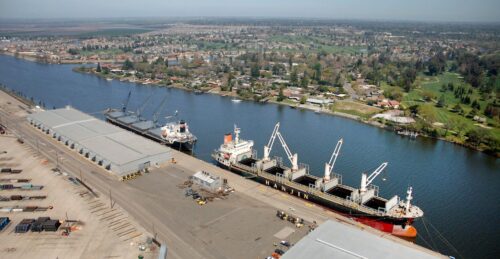
“Continued dredging issues related to U.S. Army Corps of Engineer (USACE) practices have frustrated the Port of Stockton’s ability to reach its legally mandated 35-foot draft undermining waterborne transport volumes of import and export cargoes, according to Kirk DeJesus, Executive Director, Port of Stockton. Resolving these challenges will increase cargo volumes and growth, he said. In an interview with AJOT on April 20th, DeJesus described problems getting the US Army Corps of Engineers San Francisco District to fully dredge the Stockton Ship Channel which stretches along the San Joaquin River to Stockton, an inland river port that is a major import/export link for warehouses and agricultural growers in California’s San Joaquin Valley: “So, we are authorized at 35 feet of draft for the ship channel to Stockton. We are one of two river ports in the state. So, we get a lot of attention, and we get a lot of support… Congressman Josh Harder (D-CA) is great. He bangs the door as much as we need him to… I am in D.C. four or five times a year. We have a great relationship with the Corps…” … ” Continue reading at the American Journal of Transportation.
EASTERN SIERRA
Desert groundwater agency hears overwhelming opposition to proposed desert data center
“The Indian Wells Valley Groundwater Authority’s May 13 meeting was flooded with comments from the public asking the authority to oppose a recently proposed artificial intelligence data center in Inyokern being promoted by R&L Capital, Inc. Judy Decker began public comment urging the groundwater authority board to put the AI center on their agenda as a regularly updated time. She also expressed fear that the developer would go before the California Energy Commission for approval and bypass local agencies. Audience member Renee Westa-Lusk echoed Decker’s concerns and asked the board to look into AB 2469, which would limit such centers in critically overdrafted subbasins and require greater disclosure of their anticipated water use. “It is like nobody can seem to stop this, and my worst fears are we won’t be able to do anything,” Westa-Lusk said. … ” Read more from SJV Water.
SOUTHERN CALIFORNIA
Descanso Gardens breaks ground on water reclamation project
“Descanso Gardens broke ground on a series of water reclamation, wildfire readiness and habitat restoration projects designed to improve long-term sustainability and public access at the botanical garden on Monday morning. The groundbreaking ceremony was held in the auxiliary parking lot at Descanso Gardens, where excavation will begin on a new underground stormwater capture system. According to Descanso Gardens officials, the project will include a cistern system capable of storing about 1.5 million gallons of water and capturing up to 21 million gallons of stormwater annually from a 256-acre watershed. … ” Read more from KABC.
For the first time, a warm winter just wiped out SoCal’s little-known cherry harvest
“On weekends in May, the cars usually spill out of the dirt parking lot at Villa del Sol Sweet Cherry Farms and along both sides of the two-lane road. Yes, they grow cherries in Southern California — in the Leona Valley, in the high desert west of Palmdale. For a few weeks, hundreds of families flock there during the U-pick season. Not this year. “Sad news,” orchard owner Gary Shafer said on an outgoing voicemail he left for would-be pickers. “We had such a warm winter this last year that we did not get a cherry crop this year. It’s the first time in 23 years.” … ” Read more from the LA Times.
State commission to hear from public on proposal to extend marine protected area in Laguna Beach
“An effort by a Laguna Beach environmental group to protect a “final mile” of the city’s coastline by extending its marine protected area status to limit fishing will be up for public discussion and input at a regional meeting of the California Fish and Game Commission on Tuesday, May 19. The meeting in San Clemente will provide commissioners with an opportunity to hear from the public and stakeholders on the proposal, though the commission will not make a decision at this time. Several petitions related to MPAs along the state’s coastline will go before the Ocean Protection Council in June, which is expected to make a broad-based recommendation. The commission is expected to then make a final decision. “This is a really important opportunity for dialogue of the pros and cons of who benefits and who pays the costs,” said Melissa Miller Henson, executive director of the Fish and Game Commission. … ” Read more from the OC Register.
IMPERIAL/COACHELLA VALLEYS
IID honors zanjeros, the backbone of Imperial Valley’s water delivery system
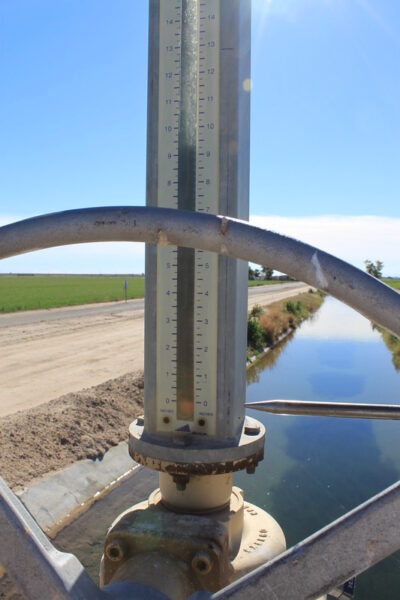 “Before the sun rises over the Imperial Valley, Imperial Irrigation District’s (IID) team of zanjeros is already at work helping move the water that sustains one of the nation’s most productive agricultural regions. Our zanjeros help deliver Colorado River water through the District’s extensive canal and lateral system to farms, communities, businesses, and industries throughout the region. Their hard work supports agriculture, local jobs, food production, and customers who depend on reliable water service every day. In recognition of their essential role, IID is observing Zanjero Appreciation Week from May 18-24, honoring zanjeros, water patrolmen, water dispatchers, water division coordinators, and Water Department employees for their collective 24-hours-a-day, 365-days-a-year commitment to their reliable water delivery and customer service. “Zanjeros are the backbone of IID’s water delivery system,” said IID Board Chairwoman Karin Eugenio. “They are out in the field every day, working directly with water users to help ensure that one of our region’s most important resources gets where it needs to go.” … ” Read more from the Imperial Irrigation District.
IID advances large load tariff to protect ratepayers amid data center boom
“The Imperial Irrigation District is moving forward with a proposed Large Load Tariff to manage a growing wave of high-energy-use projects, including data centers and large industrial developments, while protecting existing ratepayers from potential financial risk. During a recent board meeting, IID Energy Consultant Aly Koslow and IID Power Manager Matt Smelser outlined the proposed tariff structure, which would apply to customers with an expected monthly demand of 20 megawatts or more and a load factor exceeding 85%. According to Smelser, the tariff framework aligns with independent industry standards and mirrors policies already adopted in 20 states, while eight additional states are considering similar measures as electricity demand from large-scale industrial users rapidly increases nationwide. … ” Read more from the Desert Review.
SAN DIEGO
A graveyard of dead birds
“A shuttered portion of Friendship Park, where people from both sides of the U.S.-Mexico border used to meet, touch fingers through the fence and hold binational church services on Sundays has turned into a graveyard for dead sea birds. Friendship Park is a strip of land near the border line between San Diego and Tijuana. The U.S. side of the park is called Border Field State Park, and it’s been closed for months because of the contaminated water polluting San Diego and Tijuana’s oceans and beaches. But for the past month and a half, something else has been going on at Border Field State Park—it has been littered with dozens of dead sea birds. So now, instead of just the smell of polluted water filling the air, the scent of death is mixed in there, too. … ” Read more from the Voice of San Diego.
From ‘heaven on earth’ to ‘paradise lost’: An upscale California beach town is now strewn with sewage – as locals flee and business suffers
“Coronado, an upscale resort town on a peninsula in San Diego Bay, has gotten an unfortunate doo-over. Since 2018, over 100 billion gallons of raw sewage have flowed from the Tijuana River, one of the most endangered (1) rivers in the nation, into Southern California. (2) And Coronado, known for its beautiful beaches and resort tourism, has felt the effects in a big way. The consequences for locals have been pungent, polluting air quality, family time and the local economy. Local and federal governments have been working on a solution to the crisis, throwing money at the problem. For many residents of San Diego County, the damage has already been done. … ” Read more from Moneywise.
Along the Colorado River …
Colorado River users call for $2 billion in new federal drought funding
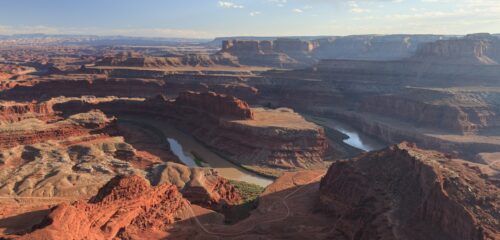 “A broad coalition of Colorado River water users is calling on the federal government to provide at least $2 billion in new funding for drought programs. The letter to congress comes from a strikingly diverse group. Its co-signers include farm districts, environmental nonprofits, Native American tribes, cities and others. The Colorado River has been stretched thin for more than two decades. A 26-year megadrought, fueled by climate change, has shrunk supplies. Policymakers across the Southwest have not done enough to rein in demand accordingly. As a result, the nation’s two largest reservoirs have dropped to anxiety-inducing low levels for the users that depend on their water. The new letter calls for “targeted federal investment in the Colorado River Basin to ensure water, food, and energy security while sustaining rivers and natural systems for the communities and economies that rely on it.” … ” Read more from KJZZ.
SEE ALSO:
- Water users around the west seek billions in federal drought help as Colorado River forecast worsens, from KUNC
- Upper Basin seeks $2 billion to weather Colorado River crisis, more money later, from KLAS
An Arizona water crisis?—Depends on who you ask
“For many metro Phoenix residents, a water crisis feels theoretical. The faucet works. The water bill arrives. Apocalyptic warnings come and go. But for some Arizona farmers, especially those dependent on Central Arizona Project (CAP) water—the shortage became very real years ago. The reason the water shortage hasn’t reached every person at the same time is because the system wasn’t built that way. When supplies shrink, CAP water is delivered through a structure that’s based on priority as to who’s reduced first. “Agricultural users with lower-priority allocations have absorbed some of the earliest and deepest cuts,” Josh Randall, PhD, Senior Policy Analyst in CAP’s Colorado River Programs told Northeast Valley News, “while cities and tribes have been largely insulated from the first rounds of reductions.” … ” Read more from Northeast Valley News.
Arizona: Scientists, uranium mining company clash on allowing higher arsenic levels in groundwater
“The owner of a uranium mine near the Grand Canyon wants state regulators to allow a higher level of arsenic in groundwater under the facility. Two scientists, however, object to the proposal, arguing regulators shouldn’t approve it until a more robust investigation into the elevated arsenic levels takes place. Energy Fuels Resources, the owner of the Pinyon Plain Mine, says its investigation was thorough and that operators aren’t at fault. The mine sits near the South Rim of the Grand Canyon and Red Butte, a geographical feature the Havasupai Tribe considers their place of emergence. … ” Read more from KNAU.
Low Colorado River flows force new approach for endangered fish recovery near Moab
“Earlier this month, biologists with the Utah Division of Wildlife Resources stocked 5,000 larval bonytail chub — the rarest endangered native fish in the Colorado River Basin — into the central pond at the Scott and Norma Matheson Wetlands Preserve as part of an experimental recovery effort. Instead of relying on spring runoff to naturally carry endangered razorback sucker larvae into the preserve, DWR biologists directly introduced the bonytail in hopes that fish raised in a more natural environment may ultimately survive better once released into the Colorado River. The project is being conducted by DWR and The Nature Conservancy at the jointly managed, nearly 900-acre wetlands preserve. It is part of the broader Upper Colorado River Endangered Fish Recovery Program, a multi-agency effort focused on recovering native fish populations that have sharply declined across the basin. … ” Read more from the Moab Times Independent.
Revegetation bill will shape how Colorado cities buy-and-dry farm water
“Southeastern Colorado’s farmers and farming communities say they’ve won valuable protections against the historic worst practices of cities’ “buy and dry” of agricultural water, after final passage of revegetation requirements along the Lower Arkansas River that may spread to other basins of the state. Gov. Jared Polis is expected to sign the measure, House Bill 1340, after officials from his Department of Natural Resources testified favorably for the bill. “For the first time in Colorado, this new law establishes that when irrigation water is permanently removed from farmland for other uses, the responsibility to properly revegetate and reclaim that land belongs to the entity removing the water,” said Jack Goble, general manager of the bill’s primary advocate, the Lower Arkansas Valley Water Conservancy District. … ” Read more from the Colorado Sun.
Colorado’s lakes, reservoirs won’t have enough water for most kinds of boating this summer
“Peggy Bailey doesn’t view Lake Dillon as a place to just gather a few rays. It’s a lifestyle. If you know Bailey, and many do, you might think water flows through her veins instead of blood. She works as a water resources engineer, including as vice president for the Blue River Watershed Group, and she sits on the Colorado Basin Roundtable. Rowing guided Bailey through the University of Wisconsin, where the coach forming a new program recruited Bailey to be the anchor as a first-year student. She ended that year as a national champion and later rowed for the U.S. in the Olympic debut of women’s team rowing, winning a bronze medal in 1976. She is now in the National Rowing Foundation’s Hall of Fame. She came back to the sport with the Frisco Rowing Center and an elite team of Masters rowers across the country. She loves to spend her summers trying to glide and grunt as fast as she can across Lake Dillon’s waters. And this one constant in her life, the sport that keeps her fit and engaged and gives her an identity, is in danger of literally drying up. The severe drought seizing Colorado may leave some of the state’s most popular lakes looking more like puddles by the end of the summer. … ” Read more from the Colorado Sun.
In national water news today …
E.P.A. to end some limits on ‘forever chemicals’ in drinking water

“The Trump administration announced Monday that it will drop some limits on “forever chemicals” in drinking water that officials had determined can cause cancer and other serious health problems — angering some key activists who had supported President Trump’s campaign. The Environmental Protection Agency said it would unravel the nation’s first federal drinking water limits for the compounds, perfluoroalkyl and polyfluoroalkyl substances, or PFAS. The Biden administration established the limits on six of the substances in 2024, after the agency determined that long-term exposure to PFAS was linked to kidney cancer, immune system suppression, developmental delays in infants and children and other issues. Instead, the Trump administration will issue narrower regulations that rescind protections for four of the substances and continue to protect against two of the them, though companies will be able to request two extra years to comply with those. … ” Read more from the New York Times.
SEE ALSO: EPA to roll back PFAS limits for drinking water, from E&E News
Scientists now say this worst-case climate scenario is ‘implausible.’ Here’s what it means.
“For more than a decade, as scientists tried to evaluate just how much the planet might warm by the end of the century, the most extreme scenario they considered in models was one in which humanity doubled down on burning of fossil fuels, took no action to limit emissions and suffered profound consequences as the world grew hotter. Now, as time has passed and the world has changed, the U.N. Intergovernmental Panel on Climate Change seems poised to retire its most extreme future emissions scenario, commonly known as RCP 8.5, after scientists found that those projections “have become implausible.” Some on the right, including President Donald Trump, are now suggesting the move shows that global warming does not pose a significant threat. Many climate scientists, however, say the reality is more nuanced. They note that the deployment of renewable energy and other factors has helped avert the kind of runaway warming that once seemed more conceivable, even as climate change still poses serious risks around the globe. … ” Read more from the Washington Post.
Scientists tweaked the global warming outlook. So Trump weighed in.
“Scientists are dialing back their worst-case scenario for how hot the world might get from climate change. That’s a small bit of good news. But over the weekend, President Trump falsely claimed it was evidence that scientists had been wrong. Here’s a look at what’s changing, what it means and what the president said. Researchers said a worst-case climate scenario that’s been used in science and policymaking for more than a decade had “become implausible” and would be revised downward. That hothouse scenario assumed the highest realistic future greenhouse gas emissions. It predicted that, by the end of the century, global average temperatures could rise by 5 degrees Celsius, or 9 degrees Fahrenheit, over preindustrial levels. … ” Read more from the New York Times.

