
Several news sources featured in the Daily Digest may limit the number of articles you can access without a subscription. However, gift articles and open-access links are provided when available. For more open access California water news articles, explore the main page at MavensNotebook.com.
In California water news this weekend …
State Water Project allocation increases to 45%
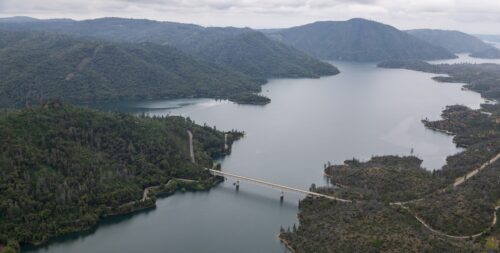
On this date, the water storage was 3,355,264 acre-feet (AF), 98 percent of the total capacity. Andrew Nixon / DWR
“Today, the Department of Water Resources (DWR) announced an increase to the State Water Project (SWP) allocation for 2026. The allocation is now 45 percent of requested supplies, up from the previous allocation of 30 percent announced on January 29. The allocation establishes how much water the State plans to deliver to the 29 public water agencies served by the SWP, which provides water to 27 million Californians and 750,000 acres of farmland. In the spring, SWP allocations are based on current hydrological conditions, existing reservoir storage, and remaining snowpack. While California saw record heat in March and early snowmelt, consistent rainstorms in April provided critical runoff through the system that allowed DWR to capture more water and meet environmental regulations without using stored water. Currently, the SWP’s largest reservoir, Lake Oroville, is at 99 percent of capacity. Statewide, reservoirs are 117 percent of average for this time of year. The challenge remains that California’s snowpack, the state’s frozen reservoir, is essentially gone. As of today, the statewide snowpack is just 12 percent of average. The snowpack peaked in mid-February and has since melted off. “California’s reservoirs are full, but most snowpack melted off weeks ago. We must use this stored water carefully because there’s no backfill until next season,” said DWR Director Karla Nemeth. … ” Read more from the Department of Water Resources.
SEE ALSO:
- Metropolitan issues statement on increased State Water Project allocation
- State Water Contractors Respond to Increase in State Water Project Allocation from Spring Runoff
- California boosts summer water allocations amid ‘weather whiplash’ shrinking snowpack, from Local News Matters
Data centers are guzzling California’s water. We have no idea how much

“Data center builders don’t tell the public how much water they use, according to a new report — and the industry is encroaching into water-stressed and vulnerable communities. The report, by the think tank Next10 and researchers at Santa Clara University, finds that planned data centers — the ganglia of artificial intelligence — are spreading to regions reliant on overtapped groundwater and strained surface water, with potentially major effects in the Central and Imperial Valleys. But, reinforcing previous studies, the researchers found that a patchwork of state, federal and local policies allow data center operators to avoid publicly disclosing their actual water use. California lawmakers tried to address this last year, but California Gov. Gavin Newsom vetoed the measure. Now, the Legislature is trying again, with bills mandating disclosures about water use and planning. … ” Read more from Cal Matters.
SEE ALSO:
- AI’s thirst: California communities face new water strain as data centers move inland, from the Imperial Valley Press
- Data centers are flooding into California communities already desperate for water, report warns, from The Cool Down
Advocates call for restored funding to address contaminated water in rural California
“Advocates are urging the restoration of full funding for California’s Safer program, which aims to help rural communities address contaminated water issues and secure long-term solutions. “Safer, funding. It was set at $130 million. And in the past, they had language that would backfill, any money that wasn’t brought in by the cap-and-invest program,” said Brandon Bollinger. “But the language for the backfill was taken out. And so we’re worried that communities like the one we’re in today aren’t going to have the resources to advance long-term solutions.” The Community Water Center highlighted the struggles of residents in unincorporated areas such as Royal Oaks, Las Lomas, and Castroville, where contaminated wells have been a persistent issue. … ” Read more from KSBY.
California Water Plan 2028 officially underway
“The Advisory Committee for the California Water Plan 2028 held its first meeting this week, marking an important milestone in California’s effort to modernize statewide water planning for the future. Earlier this year, Governor Gavin Newsom formally launched the California Water Plan 2028, describing it as “the most ambitious water plan in California history.” Established through SB 72, the effort includes a statewide goal to develop 9 million acre-feet of additional water supply by 2040 through a combination of storage, conservation, groundwater recharge, and other long-term resilience strategies. … ” Read more from the Northern California Water Association.
A Super El Niño could bring a summer of “extremes.” We explain
“Whether it will be a “very strong” or even “super” El Niño remains to be seen, but the powerful Pacific Ocean pattern is expected to appear this summer. The latest federal forecast gives the El Niño an 82% chance of emerging by July, according to a May 14 update from the Climate Prediction Center at the National Oceanic and Atmospheric Administration. Many of the forecast models indicate this event could be “among the strongest El Niños in recent history,” said Zeke Hausfather, director of climate and energy at the Breakthrough Institute and a research scientist with Berkeley Earth, on May 8. However, he and others say it’s too soon to know for certain just how strong this event will be. AccuWeather has upped its odds for a “super” El Niño to 30% by the end of the Atlantic hurricane season in November.Either way, this summer is likely to be remembered for weather extremes shaped by El Niño’s influence, said Paul Pastelok, AccuWeather’s lead long-range expert. … ” Read more from USA Today.
What a persistent ocean heatwave means for sea life and a possible El Niño year
“California has had a spate of abnormally large marine heatwaves in the past 12 years. Typically, they’ve started far offshore in the spring, reached our coast by the fall, then receded by late winter, according to the National Oceanic and Atmospheric Association, or NOAA. But the current heatwave has stuck around pretty much all year — since last May, particularly off the Central and Southern California coastline. “The only time you ever see that would be during an El Niño, but we’re not in El Niño yet,” said Andrew Leising, an oceanographer with NOAA’s Southwest Fisheries Science Center. … ” Read more from the LAist.
In people news this weekend …
Promotions, passings, profiles – submit people news items to maven@mavensnotebook.com.
Kaysha Kenney: She started collecting oyster shells from restaurants. Now she’s accumulated more than 24,000 pounds
 “When Kaysha Kenney first began collecting discarded oyster shells from local restaurants, the entire operation fit inside three large wooden storage boxes. Now, just a few years later, the marine scientist and creator is standing in front of what she describes as an “oyster field” containing more than 24,000 pounds of shells — and the pile keeps growing every week. “We originally had our shells stored in these three large wooden boxes,” Kenney, 31, tells PEOPLE exclusively. “We started to quickly outgrow that storage.” At first, even Kenney herself struggled to comprehend how quickly the project was expanding. “Once we moved all of our shells to the oyster field, I couldn’t believe the impact we were having and how huge this program could grow to be,” she says. … ” Read more from People Magazine.
Delta Protection Commission recognizes the 2026 Delta Leadership Program graduates
 “The Delta Protection Commission honored the 2026 cohort of the Delta Leadership Program on Monday – the culmination of four months of seminars, leadership skills-building and teamwork for this group of emerging Delta leaders. An initiative of the Delta Protection Commission and the Delta Leadership Foundation, the program aims to support sustained leadership development in the region. Its alumni include the current mayor of Stockton, a former San Joaquin County Supervisor, the vice chair of the Shingle Springs Band of Miwok Indians, the director of the California Department of Fish and Wildlife, the director of public affairs for the Port of Stockton, and numerous members of the DPC’s Delta Protection Advisory Committee and Delta National Heritage Area Advisory Committee. … ” Read more from the Delta Protection Commission.
Podcasts …
WATER IS A MANY SPLENDOR’ED THING: A Water Purveyor’s Worst Nightmare
 How far have we come since the Central Valley water squeeze of 2009-2010? I met with Westland Water District during the severe water allocation reductions of 2009. It was Sarah Wolfe who shared the realities of how water shortage impacts the bread basket of America. Compare for yourself Sarah’s description of the District with today’s experience and ask yourself; How can the Central Valley become more successful as the uncertainty of yearly water deliveries broaden? Water is a Many Splendor’ed Thing brings you another water relationship that has a personally significant impact to your life. Produced by Stephen Baker, Bringing People Together to Solve Water Problems, water@operationunite.co 530-205-6388
VOICES OF THE VALLEY: Regenerative roots: Farming for the next 100 years
In this episode of Voices of the Valley, we explore the future of regenerative agriculture through the lens of stewardship, conservation and long-term resilience. Hosted by Western Growers’ Jeana Cadby, the conversation features Craig McNamara, founder of Sierra Orchards, who shares his decades-long journey in farming and his vision for farming for the next 100 years.
SCIENCE FRIDAY: How El Nino shapes the world’s weather trends
Scientists studying climate models say there’s a high chance this will be an El Niño year—and that we could be in for a “super” El Niño. The difference is indicated by sea surface temperatures in part of the Pacific Ocean rising a little—or a lot—above their long-term average. Climate scientist Dillon Amaya joins Host Ira Flatow to describe the role of the El Niño in shaping world weather, and what effects a particularly strong El Niño year might have on global ecosystems.
SHORT WAVE: Why Swedish scientists gave salmon cocaine
A recent study caught our eye: salmon on cocaine. Or really, researchers giving salmon cocaine…for science. See, scientists know human drugs pollute aquatic environments – past studies have shown even anti-anxiety drugs can change how fish act. But illicit drugs are less studied. And Jack Brand, an aquatic ecologist at the Swedish University of Agricultural Sciences, wanted to know how illicit drugs like cocaine might change fish behavior, like foraging and mating. To answer that question, Jack and his team gave salmon cocaine.
Sunday reads …
AUTHOR INTERVIEW: Royal Gardner, “Waters of the United States: POTUS, SCOTUS, WOTUS, and the Politics of a National Resource”
 With the big-ticket dramas of the Colorado River and who can and can’t turn on spigots in state and regional water supplies, we sometimes lose track of the ongoing legal tug-of-war revolving around the statutory and foundational definition of “waters of the United States.” Recently, the U.S. Supreme Court waded into these waters with their Sackett decision, and the U.S. Environmental Protection Agency has picked up the baton by proposing yet another rule for determining what water bodies fall under the Clean Water Act. Fortunately, Royal Gardner, in his authoritative and engaging book, Waters of the United States: POTUS, SCOTUS, WOTUS, and the Politics of a National Resource (Island Press, 2024), provides both a comprehensive historical review and a critical assessment of the shifting, soggy ground falling under this important term. In the below interview, Gardner discusses his past “playful romp” through the Clean Water Act, his wonderful experience with Island Press, and how avoiding AI and dodging alligators feeds his writing process. … ” Read more from the Water Shelf.
In regional water news this weekend …
NORTH COAST
The downstate bid for Mendocino’s Potter Valley Project
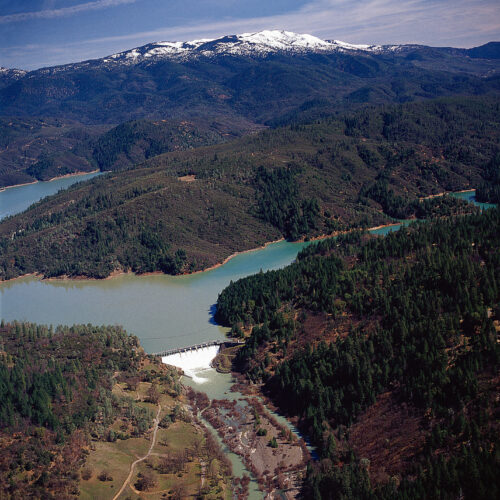
“The Elsinore Valley Municipal Water District wants to buy the Potter Valley Project. The district sits in Riverside County, more than 500 miles south of the Eel River. It has never run a hydroelectric dam. Its vice president, Darcy Burke, told a podcast in late April that her board considered the local plan to take Scott and Cape Horn dams down “criminal — their words, not mine,” she said. Its board president, Andy Morris, signed a letter to Congress last week saying the district has not made any decisions yet. Rep. Jared Huffman, whose own district covers the Eel River basin, has been asking the same question many here are asking: why the interest from a Southern California utility in a far Northern California water project? … ” Read more from the Mendocino Voice.
Clearlake residents affected by historic sewage spill file lawsuits against Lake County, sewer agency
“Brian Cunningham wants to use his air conditioning when the extreme heat of summer strikes. Cassandra and Joe Hulbert have burned through $3,000 since January on bottled water for their family. And Shawn and Lindsay Heape want to know when they’ll finally be able to turn on the tap and be confident that what’s coming out of their well in Clearlake is safe to drink. “My mother cannot use her own home because it was saturated with raw sewage,” Cunningham said. “My wife, Nancy, and I had planned on retiring this month … but that is unlikely to happen now.” May marks the fourth month since 2.9 million gallons of untreated wastewater spilled onto unpaved Robin Lane, leading through the Burns Valley area of Clearlake, where the fallout has upended daily life for nearly 500 rural residents. The 16-inch force main pipe that burst Jan. 11 spewed raw sewage across the ground for more than 37 hours. … ” Read more from the Santa Rosa Press Democrat.
SIERRA NEVADA
Researchers are still trying to understand microplastics in Lake Tahoe
“In the early morning at Lake Tahoe, locals hear waves crashing and birds chirping as the glistening water catches the emerging sun. The pristine water even attracts international attention. However, ongoing research in collaboration with the Desert Research Institute (DRI) and the University of Nevada, Reno (UNR) might reveal how much microplastics are polluting the once pristine lake. Monica Arienzo, an associate research professor in the division of hydrologic sciences at the Desert Research Institute, defined microplastics as particles ranging from five millimeters to as small as one micron. “So that’s basically like the size of a pencil eraser … down to about the size of bacteria,” Arienzo said. … ” Read more from the Tahoe Daily Tribune.
New documentary follows divers cleaning 25,000 pounds of trash from Lake Tahoe
“Lake Tahoe is known for its clear blue water but divers with Clean Up the Lake say there’s another side people don’t always see. The documentary 72 Miles follows the team as they clean all seventy-two miles of Tahoe’s underwater shoreline. The project took place in 2021 and 2022. Divers worked in freezing water and difficult weather. They also dealt with wildfire evacuations during the Caldor Fire and heavy snowstorms. By the end of the cleanup, the team had removed over 25,000 pounds of trash from the lake. … ” Read more from KUNR.
Liberty responds to upcoming power situation for Lake Tahoe
“The story has gone viral around the country. Power company to cut off power to 50,000 Lake Tahoe residents so they can feed power to data centers, or a narrative close to that. Those of us who live closer to the story knew about it as it unfolded weeks ago, and knew the plan. The recent media coverage has raised questions about Liberty’s ongoing energy supply transition as they move from NV Energy, their current supplier, to a supplier not yet identified. The following is from Liberty: We want to provide our customers and communities with facts and answers to questions they may have. Liberty is preparing for a planned transition in our supplemental energy supply beginning in 2028, while continuing to provide safe, reliable electric service to our customers. Liberty began this process in 2019 when Liberty filed for the transmission capacity reservations to enable this transition to the market. … ” Read more from South Tahoe Now.
SEE ALSO: Energy company disputes claim that 50,000 Tahoe residents will lose power next year, from the San Francisco Chronicle
Town hall collects Tahoe input on Roadless Rule repeal
“Tahoe input is on its way to the United States Department of Agriculture’s desk following a town hall collecting comments on the currently in-process repeal of the Roadless Rule. The Sierra Nevada Alliance and Sierra Club hosted the public gathering at the Lake Tahoe Community College on Wednesday evening, May 13. … “One reason that the roadless rule has survived for more than two decades across multiple administrations is because people have consistently defended it,” Sierra Club Toiyabe Chapter Director, Olivia Tanager, said at the town hall, later adding, “This moment is about more than just one policy. It’s about whether public lands will continue to be managed and ecosystems held in trust for future generations or increasingly treated as industrial resource extraction zones.” … ” Read more from the Tahoe Daily Tribune.
NAPA/SONOMA
North Bay water supplies looking stable, save for one scenario, as long term plans head for update
“What’s the shape of the North Bay’s water? This week, Sonoma County supervisors got their latest look in to the future, as part of a regular 5-year update to California’s Department of Water Resources on local water supply plans. They learned about the latest urban water management, UWMP, and water shortage contingency, WSCP, plans from Sonoma Water. Sonoma Water’s Paul Piazza, speaking to the board at their May 12th meeting, said, “projected water demands have decreased since the 2020 urban water management plan projection.” … ” Read more from NorCal Public Media.
BAY AREA
Weeks after pipeline breach, Mountain View residents still without safe water
“Water line disinfection and testing continues in an area of Mountain View that lost service after a pipeline breach three weeks ago, the city said Friday. Water samples taken near home meters in the affected area came back clear of bacteria, but traces continued to be found at a fire hydrant, the city said. The hydrant was disconnected from the system as testing continues. About 67 households in the 600 block of Cuesta Drive and 600-700 block of Leona Lane lost drinking water service when contaminated cement slurry came into contact with a live water main during maintenance on April 24. Twenty-one homes north of Cuesta Park remain under boil water restrictions, according to the city. … ” Read more from Local News Matters.
SEE ALSO: Mountain View tries ‘pipeline pigging’ to restore clean water near Cuesta Park, from the Mountain View Voice
South Bay data centers present environmental challenges
“With more than a dozen data center projects taking shape in Santa Clara County, local leaders have offered assurances that potential environmental impacts will be thoroughly assessed before any new facility gets switched on. But when it comes to water usage, a group of Bay Area researchers is warning such environmental reviews have an alarming number of blind spots. In a report released Thursday, researchers with Santa Clara University and San Francisco-based policy nonprofit Next 10 conducted a comprehensive statewide survey of data centers, amid a rapid AI-fueled buildout that has led to concerns about potential strains on utilities, such as power and water. The report found that spotty legal requirements for environmental review make it difficult to predict the potential impact of new data centers on the state’s water system. In the South Bay, which already has the densest collection of data centers of any region in the state, the lack of clarity could hamper local planners’ ability to navigate unpredictable environmental challenges, such as climate change and drought. … ” Read more from the San Jose Spotlight.
CENTRAL COAST
Monterey County Regional Fire District, Cal Water partner on purchase of water-saving DRAFTS Unit
“A new piece of equipment is allowing Monterey County firefighters to train and test their life-saving fire equipment, while also now saving approximately 7.4 million gallons of water a year — enough to fill more than 11 Olympic-sized swimming pools. Monterey County Regional Fire District (MCRFD) and California Water Service (Cal Water) partnered on the purchase of the new Pump Pod DRAFTS (Direct Recirculating Apparatus Firefighting Training Sustainability) Unit, which is helping the fire department reduce its water usage. Through Cal Water’s conservation program, Cal Water and the MCRFD partnered to bring the DRAFTS Unit to Salinas as a way to continue regular training and fire equipment testing, while also saving water. Though millions of gallons of water are needed for training and testing purposes, the unit allows water used for full-flow training to be recycled and reused instead of going down the drain. … ” Read more from the Rustler.
SAN JOAQUIN VALLEY
Thousands of Californians hit with foul smelling tap water
“The California Water Service is advising Stockton residents that the city’s tap water is safe to drink, despite the water emitting a foul smell that some describe as reeking of sewage. On Wednesday, Cal Water said in a statement that Stockton’s tap water met all water quality standards and was safe to consume. The agency said that the noticeable odor was a result of a recent change in the water source. Residents were alarmed by the foul odor coming from home faucets earlier this week when dozens took to social media to discuss the issue, while others directed their concerns to Mayor Christina Fugazi’s office. Nearly 100 comments posted in the “Stockton — What’s Going On” Facebook group complained about the taste and smell of Stockton’s waters, with characterizations like “moldy dish water,” “vinegar,” and a “fish tank.” … ” Read more from SF Gate.
SOUTHERN CALIFORNIA
SCV Water votes to approve Water Use Efficiency Strategic Plan
“The Santa Clarita Valley Water Agency has voted to approve its Water Use Efficiency Strategic Plan, the agency’s roadmap to reducing its estimated future water usage to match state goals over the next several decades. SCV Water board directors passed the Strategic Plan in an 8-1 vote at the agency’s regular meeting Tuesday evening. Director Kathye Armitage was the sole “no” vote. The plan includes an analysis of the agency’s options for bringing water usage down to the state’s compliance levels — by over 10,000 acre-feet per year over the next several years — while keeping costs low, and recommends one path forward that may change the way SCV Water customers pay their water bills: tiered rates. … ” Read more from The Signal.
Altadena’s latest roadblock to rebuilding: Sewage
“Michele Hanisee has been doing everything in her power to expedite the arduous process of rebuilding her Altadena home. But after navigating permitting delays, insurance stalemates and design flaws, there’s still one big unresolved issue that’s complicating her progress: sewage. Hanisee owns one of nearly 700 properties in Altadena that’s never had sewer lines, instead operating for decades on now-outdated septic tanks or even more archaic and environmentally hazardous cesspools. L.A. County officials — and many residents, included Hanisee — would like to connect these pockets of Altadena to the county sewage system. But the cash-strapped county government said it simply cannot afford the estimated $70 million the new lines would cost. And although officials hope the county can eventually acquire state and federal funding for the project, the lack of certainty on the issue has left hundreds of fire survivors in a stalemate. … ” Read more from the LA Times. | Read via Yahoo News.
OC Public Works says it has stopped spraying pesticides into creeks
“Following months of public uproar and community organizing, Orange County has suspended the practice of spraying herbicide into creeks and flood control channels. For now, the suspension, which began April 30, is open-ended. Supervisor Katrina Foley said this week that OC Public Works has indefinitely halted the application of toxic chemicals in local waterways. In the meantime, Foley said, the county will observe “the growth patterns of invasive species” and decide on the safest way to remove them. “I’ve tried for years to encourage government entities to move away from the use of toxic chemicals toward more organic approaches,” Foley said. “This issue has given us an opportunity to show that this is what the community also wants. … ” Read more from the OC Register.
IMPERIAL/COACHELLA VALLEYS
“The Salton Sea can’t wait”—Inaugural Salton Sea Conservancy board meeting spotlights community engagement and the urgent need for progress
“Thursday marked the first board meeting of the new Salton Sea Conservancy, the first conservancy established in California in over fifteen years and a recognition of the importance of the state’s largest lake. Convened by Joe Shea, Assistant Secretary for Salton Sea Policy at the California Natural Resources Agency (CNRA), the session introduced board members to the public, outlined its budget and structure, and highlighted the importance of community engagement. “I left the meeting hopeful for accelerated progress and strengthened partnerships, optimistic about the commitment of our diverse board, and excited to tackle the challenges ahead,” said Camila Bautista, Audubon California’s Salton Sea & Deserts Program Manager and CNRA’s appointee to the Board. “As Joe said at the start, the Salton Sea can’t wait. It’s too important for the communities and wildlife that depend on it.” … ” Read more from Audubon.
SAN DIEGO
California coastal town desperate to save its city’s beaches
“In a small suburb north of San Diego, the beaches are a warning. At low tide, the squishy, soaked sand leaves nowhere to lay out a towel. When the tide is high, the water reaches all the way to the stairs up to the street above, leaving no sand at all. The waves are sparse because the beach is dissolving into the sea. Coastal erosion is a statewide problem, but in Oceanside, it’s much more visible — and occurring more rapidly. “The only reason we have sand is because we dredge the harbor every year and place the sand,” Oceanside’s coastal zone administrator, Jayme Timberlake, told SFGATE earlier this week. “Every single year we place sand, and it still goes away.” … ” Read more from SF Gate.
Along the Colorado River …
PBS News Hour: As the Colorado River dries up, how Western states are confronting the water crisis
Roughly one in ten Americans gets their water from the Colorado River. But a worsening drought, driven in part by climate change, is drying up the river, and states are fighting over water rights. Horizons moderator William Brangham explores what that means for communities and industries that depend on that water with Luke Runyon, Wade Crowfoot and Joel Ferry.
The Colorado River is on the brink of disaster
“The Colorado River is running dangerously low, and the seven Western states that rely on it can’t agree on how to share what’s left. A deal deadline came and went in February, leading the federal government to threaten its own solution—one that would keep the dams generating power, but likely bring painful cuts to water use. “We’re positive about one thing—no one will be satisfied,” Interior Secretary Doug Burgum said last month. The river provides water for 40 million people and more than 5 million acres of farmland. Its dams produce electricity for millions of people. The current crisis is rooted in a compact Western states made in 1922. Officials overestimated how much water the river would provide. By the 21st century, as drought gripped the region, it became harder to meet the deal’s water-allocation obligations. The diminished water supply, coupled with a growing population, has led to years of shortfalls. … ” Read more from the Wall Street Journal. | Read via MSN News.
Winter to return to Colorado, Wyoming with more May mountain snow
“Winter will attempt to make up for lost ground across parts of the Rockies later this weekend into early next week as a cold storm spreads snow through the high terrain. For some areas, this will mark the second significant snowstorm of May, a time when accumulating snow typically becomes increasingly rare in the region. While many roads may remain mainly wet, even in the mountains, the heavy, clingy nature of the snow could weigh down tree limbs and power lines, leading to localized power outages. “There are some differences between this storm and the storm from May 5-6,” AccuWeather Expert Meteorologist Adam Douty said. “This storm will focus more on the higher elevations of Colorado and will also track farther north than the storm earlier this month.” … ” Read more from AccuWeather.
IID and Bureau of Reclamation partner on up to 100,000 acre-feet of additional Colorado River system support
“The Imperial Irrigation District Board of Directors today approved an amendment to its existing System Conservation Implementation Agreement with the U.S. Bureau of Reclamation, an agency within the Department of the Interior. The amendment will enable IID to create up to 100,000 acre-feet of additional Colorado River conservation in 2026. The additional conserved water will remain in Lake Mead to help stabilize reservoir elevations, protecting Imperial Valley’s only water supply and supporting the broader Colorado River system that serves more than 40 million people. The amendment increases IID’s existing three-year conservation agreement capacity from 700,000 acre-feet to 800,000 acre-feet, in addition to the 106,111 AF conserved for Lake Mead in 2023. … ” Read more from the Imperial Irrigation District.
40% water cut may come with feds’ Colorado River plan; Lake Mead projections show steep drop
“The federal government is ready to cut Nevada’s primary water supply by 40% as projections for the Colorado sink to new lows. The preliminary plan on the table from the U.S. Bureau of Reclamation would reduce water allotted to the Lower Basin states — Nevada, Arizona and California — by 3 million acre feet, according to discussion on Wednesday at a meeting of Arizona water officials. The Lower Basin’s normal allotment is 7.5 million acre feet, meeting the needs of growing cities and thirsty farms. It’s a punch in the gut for water managers who have saved more than an entire year’s water supply over the past 12 years. That’s an accomplishment Tom Buschatzke, director of the Arizona Department of Water Resources, points to with pride. Buschatzke and other members of the Central Arizona Project reviewed parts of the federal plan on Wednesday. It hasn’t been officially adopted yet. … ” Read more from KLAS.
SEE ALSO:
- US Government Planning Dramatic Colorado River Water Cuts Due to Drought, Overuse, from US News & World & Report
- US plan for Colorado River could cut up to 40% supply for Arizona, California and Nevada, from The Guardian
New threats loom as Colorado River flows diminish
“As everyone’s attention is focused on the Colorado River’s diminished streamflow, there’s related dangers lurking in the shadows. As Colorado River water flows diminish and the water heats up, its TDS (total dissolved solids) become concentrated. And as that shallower water warms up in the summertime cyanobacteria can bloom – which further degrades water quality. Cyanobacteria (blue-green algae) thrive in the Colorado River system when specific physical, chemical, and climatic conditions overlap. Major bodies along the basin, such as Lake Powell, Lake Havasu, and the Blue Mesa Reservoir, can experience rapid algae blooms under the following conditions … ” Continue reading from Coyote Gulch.
Megafarm can’t stop excessive groundwater pumping lawsuit in Arizona
“An alfalfa-growing megafarm can’t halt a public nuisance lawsuit accusing it of excessive groundwater pumping in the southwest corner of Arizona, plagued with fissures and land subsidence, a state judge ruled Friday. Fondomonte Arizona LLC, which accounts for more than 80% of groundwater pumping in the 912-square-mile Renagras Plain Basin, asked Maricopa County Judge Scott Minder to pause a 2024 lawsuit filed by Attorney General Kris Mayes so the Arizona Department of Water Resources could first implement its own restrictions. The department designated the basin an active management area in January and has begun a two-year process aimed at cutting groundwater pumping by 50% over 50 years. Fondomonte argued in March that court-ordered limits could conflict with the department’s findings. In a five page order, Minder disagreed. … ” Read more from the Courthouse News Service.
Amid drought and heat, Queen Creek’s Schnepf Farms — and their peaches — remain resilient
“Amid megadrought, extreme heat and facing even more cutbacks to water supply, modern farming and agriculture have had to make major adjustments. Many farms are changing to more water-efficient crops. And some are going out of business altogether. Around the Valley, fields of what were once fruit and cotton have been sold off, replaced by rows of new homes as housing demands grow. But not at Schnepf Farms in Queen Creek. A family business for 85 years and famous for its peaches, Schnepf is doing everything it can to stay viable and profitable in the face of an uncertain climate. … ” Read more from KJZZ.
Judge won’t pause Arizona AG’s groundwater lawsuit against Saudi-owned farm
“A Maricopa County judge won’t pause a lawsuit filed by Attorney General Kris Mayes against Fondomonte, the Saudi Arabian farming company she accused of overpumping groundwater in La Paz County. Mayes sued Fondomonte in Maricopa County Superior Court in 2024 under Arizona’s public nuisance law, which allows the attorney general to bring cases to block anything considered a threat to public health or at odds with “the comfortable enjoyment of life or property” by the community. Earlier this year, Fondomonte asked Judge Scott Minder to pause the case after the Arizona Department of Water Resources established a groundwater protection zone, called an active management area, in the Ranegras Plain basin. … ” Read more from KJZZ.
In national water news this weekend …
Scientists find climate change is reducing oxygen in rivers worldwide
“Global warming is causing rivers to slowly lose oxygen, threatening fish and other lives in the waterways, a new study shows. Researchers in China used satellites and artificial intelligence to track and analyze oxygen levels in more than 21,000 rivers across the globe since 1985. They found oxygen levels have dropped an average of 2.1% since 1985, according to a study published Friday in Science Advances. That doesn’t seem like much but it adds up and if it continues or accelerates, rivers in the Eastern United States, India and across the tropics could lose enough oxygen by the end of the century to suffocate some fish and create dead zones, the study said. … ” Read more from the Courthouse News Service.
SEE ALSO: Scientists warn that the world’s rivers are running out of oxygen, from Science Daily

