
Several news sources featured in the Daily Digest may limit the number of articles you can access without a subscription. However, gift articles and open-access links are provided when available. For more open access California water news articles, explore the main page at MavensNotebook.com.
On the calendar today …
- PUBLIC MEETING: Technical report: Instream Flow Evaluation: Clear Lake Hitch Passage in Tributaries of the Clear Lake Watershed, Lake County from 11am to 12pm. The California Department of Fish and Wildlife (Department) is hosting a virtual, informational public meeting to present the technical report Instream Flow Evaluation: Clear Lake Hitch Passage in Tributaries of the Clear Lake Watershed, Lake County. The public meeting can be accessed here: Instream Flow Evaluation for Clear Lake Hitch Informational Public Meeting. Click here for the meeting notice.
- USGS WEBINAR: Tree rings provide an important multi-century context for current wildfire crisis from 11am to 12pm. Wildfires across the United States are growing larger and more intense, threatening communities, ecosystems, and critical water supplies. But are these “megafires” truly unprecedented—or are they part of a longer natural pattern? In this webinar, USGS Research Ecologist Ellis Margolis shares how scientists are using tree rings to uncover the history of wildfire over hundreds of years. Drawing from the North American tree-ring fire scar network, this research provides valuable context for understanding how current fire activity compares to the past. Findings reveal that while modern fires are not necessarily larger than those before 1900, they are burning less frequently but with greater severity—especially in dry conifer forests of the western United States. Despite recent increases in wildfire activity, many forests still experience a “fire deficit,” meaning they are not burning as often as they historically did. The webinar will also highlight practical solutions. Learn how land managers are using prescribed fire and managed wildfires to restore more natural fire patterns and build forest resilience in the face of multiple stressors.Click here to join the webinar. You can also join on this page.
In California water news today …
This coming El Niño could be a monster. Will it bring epic rain to California this winter?
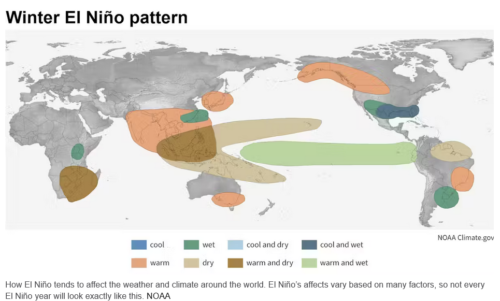 “The likelihood of a potentially powerful El Niño taking shape in the Pacific Ocean is rising, heightening concerns that Southern California could be in for an extreme rainy season. There is now an 82% chance that El Niño is likely to emerge over the next few months, up from the 61% chance estimated a month ago. And there’s now a 96% chance that the climate pattern — characterized by warmer ocean waters in the central and eastern tropical Pacific — will be in force this winter, the National Weather Service’s Climate Prediction Center said Thursday. It remains to be seen how strong this iteration of El Niño could be. There’s up to a 37% chance that it will be “very strong” by the end of the year, up from a forecast of 25% issued last month. … ” Read more from the LA Times. | Read via AOL News.
SEE ALSO: Super El Niño could strain food and water supplies around the world, from AccuWeather
El Niño is coming faster than expected and chances are rising that it will be historically strong
“El Niño is emerging even faster than expected in the Pacific Ocean and odds are increasing that it could become historically strong — a rare “Super” El Niño — by fall or winter. This is according to a just-released update from NOAA’s Climate Prediction Center that says there is a 2 in 3 chance that El Niño’s peak strength will be strong or very strong. El Niño is a natural climate cycle that happens when the tropical Pacific Ocean warms enough to trigger shifts in wind patterns throughout the atmosphere, which has a ripple effect on weather conditions worldwide. Droughts and heat waves can flourish in some regions, fueling wildfire danger and water supply concerns, while others are swamped by flooding rainfall. El Niño’s far-reaching effects can also stymie the Atlantic hurricane season. On a larger scale, it causes already rising global temperatures from human-caused climate change to spike even higher. Stronger El Niños make all these impacts more likely. … ” Read more from the San Jose Mercury News.
Half of California is ‘abnormally dry,’ NOAA data shows
“Abnormally dry and moderate drought conditions continue to spread across California, according to the latest update from the U.S. Drought Monitor. The new map, released Thursday, shows counties across Northern and Central California now classified as “Abnormally Dry” or “Moderate Drought,” the first two levels on the drought scale. Los Angeles, Orange, and Santa Barbara counties are still drought-free, according to the latest map, but “abnormally dry” conditions have moved into San Bernardino and Riverside counties. The update follows new information from NOAA’s National Integrated Drought Information System, which reported that snowpack, the West’s largest non-man-made reservoir, has already disappeared in many areas. … ” Read more from KTLA.
Snow drought current conditions and impacts in the West
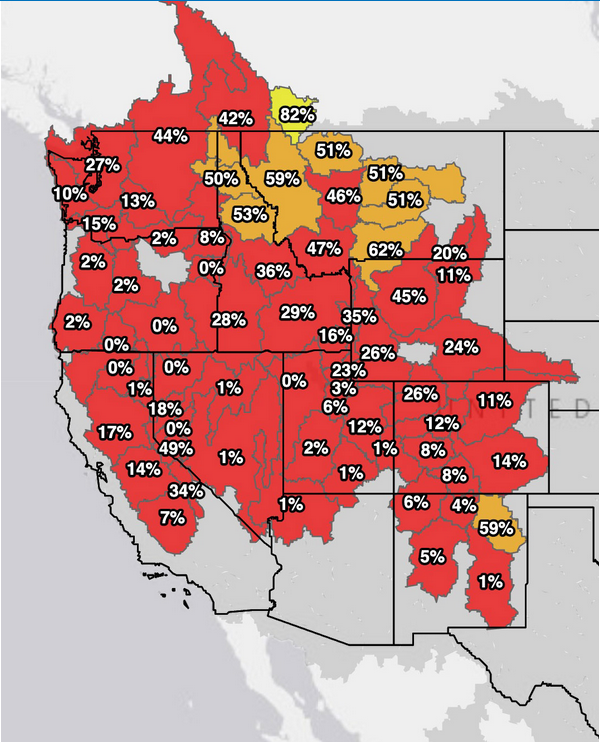 “Snowpack, the western U.S.’s largest non-man made reservoir, is already gone in many places. Significant hydrological drought impacts (low water supply) are already occurring and will continue through summer across much of the West. Compounding these impacts, the West continues to experience long-term drought. Drought conditions can be expected to deteriorate, and impacts to become more pronounced. April and May snowfall in some areas did not offset seasonal snow deficits, but increased soil moisture and slowed high-elevation snowmelt, which may slow drought deterioration and temporarily mitigate early season wildfire risk. Snow did not fall in all states. This year’s peak snowpack will be the new benchmark low for Wyoming, Utah, Colorado, and New Mexico; there are no comparable years. In these states, snow water equivalent (SWE) around April 1, the usual peak date, was 32- 53% lower than the previous record low during the SNOTEL era. In Idaho, record warm temperatures pushed snow to only the high elevations, leaving the state with no historical comparison. … ” Read more from NIDIS.
New paper shows surges of concentrated precipitation can lead to dryer landscapes
“Scientists have uncovered a new driver of aridification, potentially reshaping how drought across the globe is understood. A new study published Wednesday in Nature by a pair of researchers from Dartmouth College and the Université du Québec à Montréal shows that changing precipitation concentrations exert an important influence over landscape moisture retention. When an area receives its annual moisture in a small number of large, wet storms, it can overwhelm the soils, creating pools of water on the land surface. These exposed pools are more prone to evaporation, meaning water that would otherwise reach streams, rivers and dams drifts back into the atmosphere. When paired with long dry spells, these storms dry out landscapes, even though total precipitation hasn’t necessarily changed, the researchers found. “If you’re asking the land to drink from a fire hose, whether that’s through highly concentrated precipitation falling from the sky or rapid snowmelt, you’re going to lose water,” said Justin Mankin, an associate professor of geography at Dartmouth and the study’s senior author. “It is just a feature of the world that as you concentrate rainfall, less of it goes into the land.” … ” Read more from Inside Climate News.
Bay-Delta conditions – Early spring 2026
“The end of winter 2026 brought dry conditions to the lower Sacramento River and Bay-Delta (Figure 1). What had been wet-year-type conditions in early March at Wilkins Slough (WLK) and Freeport (FPT), and high Delta outflows (DTO), had become dramatically drier by late March (Figures 2 and 3). The lower flows and dry warmer weather brought warm water temperatures stressful (>65ºF) to many of the Delta’s native juvenile fish (smelt, salmon, steelhead, and sturgeon) that concentrate in the lower Sacramento River and the Bay-Delta in early spring. Reservoirs were holding back what remained of the winter snowmelt (Figure 4), putting unnecessary stress on this year’s fish reproduction. Minimum flows should have been 10,000 cfs at Wilkins Slough, 20,000 cfs at Freeport (below inputs from the Feather and American Rivers), and 10,000 cfs Delta outflow. … ” Read more from the California Fisheries blog.
Environmental, tribal groups urge Californians to oppose Eel River dams plan at meeting
“Various environmental groups and tribal advocates are urging Californians to weigh in during a virtual Elsinore Valley Municipal Water District board meeting today over a controversial plan involving the Eel River dams. Conservationists say a Southern California water district is exploring a takeover of the Potter Valley Project, a hydroelectric system in Mendocino and Lake counties that impacts the Eel River watershed, including Humboldt County. The system has not produced power since 2020-21. Opponents warn the potential takeover could delay or derail long-planned dam removal and salmon habitat restoration efforts across the North Coast. … ” Read more from KRCR.
How the West could turn a trickle of water into an endless supply
“Hotter, drier weather, poor planning and a ballooning population are putting enormous pressure on the American West’s water supply. So, to get more out of every drop, some cities and counties are beginning to recycle their water — collecting what goes down the drain, removing the icky stuff and then sending it back into the system to use again, one way or another. A few of those places are getting so good at this that they’ve become global leaders in water recycling. To learn more about how they do it, RTBC Founder David Byrne spoke with Mark Gold, former director of water scarcity solutions at the Natural Resources Defense Council, about what it takes to make water something we can use again and again. … ” Read the Q&A at Reasons To Be Cheerful.
New science plan spurs DWR efforts for longfin smelt
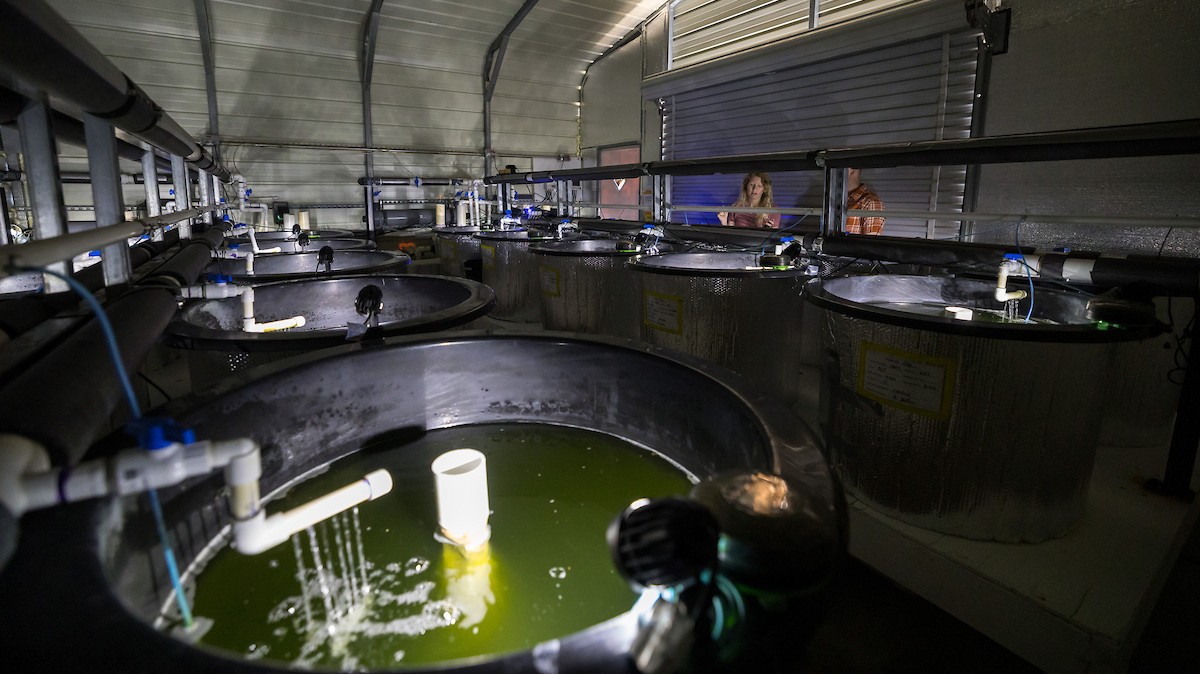 “Tucked within the UC Davis campus, a quiet but critically important effort is helping preserve the Longfin Smelt, a vulnerable fish species native to the Sacramento–San Joaquin Delta. Scientists with DWR and UC Davis are collaborating to better understand and conserve this declining species through immediate conservation actions and long-term research. Longfin Smelt are an indicator of estuarine health. “They can be thought of as the canary in the coal mine,” said Brian Schreier, an environmental program manager with DWR, noting their decline reflects broader ecosystem stress. Federally listed as endangered, these fish can live as long as three years. They migrate to the Pacific Ocean during their first year, then return to the San Francisco Bay Estuary and its tributaries to spawn in their second or third year. Protecting Longfin Smelt means addressing multiple threats. … ” Continue reading from DWR.
‘The infestation is here’: Another Calif. county declares emergency over golden mussels
“Golden mussels are continuing to spread throughout California, potentially imperiling key water infrastructure and leading Kern County to declare an emergency. The invasive species was first detected in California in 2024 but has spread widely since then. The mollusks hail from Asia and can spread rapidly by producing up to 1 million offspring a year. … Kern County is the second to declare an emergency due to the invading bivalves. On April 28, the San Joaquin County Board of Supervisors also declared a local emergency, reporting that golden mussels had already affected key infrastructure, including a $100 million floodgate. … ” Read more from SF Gate.
When surface water runs low, groundwater supplements water supply
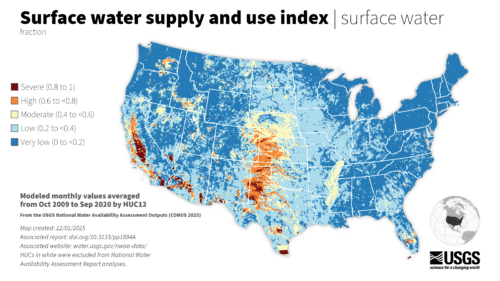 “Both surface water and groundwater provide critical water supplies across the United States. In surface-water limited regions, users turn to groundwater to meet water demand. But water above and below the ground can be closely connected. Is groundwater the answer to limited surface water supplies? Across the lower 48 states, there is generally enough water supplied from rivers, lakes and reservoirs to meet our needs. Regions with low surface-water supply, however, show greater potential for water limitation. The 2025 USGS National Water Availability Assessment found between 2010-2020 that significant portions of the Southern High Plains, Central High Plains, Texas, Mississippi Embayment, and Southwest Desert regions were at risk for local water limitation. In these regions, the gap between surface water supply and demand is small, requiring water managers to look to other water sources. … ” Read more from USGS.
Solano County cities at odds over California Forever annexation plan
“Rio Vista Mayor Edwin Okamura accused California Forever of spreading “personal attacks and inaccurate claims” when responding to Rio Vista City Manager Kristina Miller’s concerns about the possibility of data centers in the Suisun Expansion Specific Plans. “Specifically, it was suggested that we were upset Suisun City received the entire project, so we went on the attack,” he said in a post on Facebook Tuesday evening. “Fact: We did request that the entire project come to us when it became evident that Suisun City intended to accept the proposal in its entirety without any noticeable changes to the original city proposal.” Rio Vista expressed concerns about the impacts of the project for well over a year, Okamura said, but they were ignored by California Forever. The city only arrived at the decision to request the annexation of the whole project when talks with Suisun City, seeking two mutually beneficial annexations, broke down. “We simply were not being heard,” he said. … ” Read more from the Santa Rosa Press Democrat.
How much will Western wildfires worsen under warming?
“Across the western United States, wildfires are increasing in size and intensity. As the climate continues to warm, more extreme wildfires will reshape landscapes and pose a growing risk to human health and natural ecosystems throughout the West. Climate models, used to predict other effects of climate change, are unable to directly simulate wildfires. Instead, researchers link previously burned areas to climate variables such as temperature, precipitation, drought, and evaporation, then apply those relationships to future climate projections. Many recent studies have connected higher vapor pressure deficit (VPD)—a measure of atmospheric dryness—to more area burned in previous fires. VPD increases as the temperature rises, so models that rely on it generally predict an increase in wildfire activity as the climate warms. Cheng et al. raise questions about the role VPD plays in modeling wildfire, suggesting that VPD is a poor measure of fuel dryness at larger scales and overestimates potential burned areas under significant warming conditions. Instead, researchers suggest soil moisture could be a more reliable indicator of fuel dryness and lead to more moderate projections of wildfire increases. … ” Read more from EOS.
May revise of state budget boosts funds for HRL program
“The ACWA-supported Healthy Rivers and Landscapes (HRL) Program would receive an additional $25 million in funding in Gov. Gavin Newsom’s May Revise of the state budget, representing a win for an effort heavily supported by association members. The additional, one-time General Fund monies will bolster efforts to deliver environmental flows, habitat restoration, science, and monitoring to support the requirements of the soon to be updated Bay‑Delta Water Quality Control Plan. ACWA is a long-standing supporter of the HRL Program as the best approach to protecting, restoring and enhancing the Bay-Delta watershed. The State Water Resources Control Board is expected to adopt an updated Bay-Delta Water Quality Control Plan update by the end of 2026 with the HRL as a compliance pathway for participating water agencies. … ” Read more from ACWA.
Restore the Delta denounces Newsom’s revised budget for ignoring critical Delta protections
“In a major blow to an already declining Delta along with California Tribes, Delta farmers, and the environmental justice communities across the Bay-Delta region, Governor Newsom’s May Revise budget proposal allocates $25 million to the misleadingly named “Healthy Rivers and Landscapes” program, which would send even more water to corporate agribusiness interests, while dedicating zero funding to critical Delta levee protections. Investments in Delta levees are essential to protecting the region’s four million residents from worsening flood risks driven by climate change and safeguarding the Delta’s $7 billion annual economy. Restore the Delta has consistently advocated for Proposition 4 funding designated for levee improvement in the Sacramento San-Joaquin Delta. Yet instead of prioritizing these urgent infrastructure upgrades, the Governor’s proposed budget directs $125 million in Proposition 4 funds to the Bay Area for the development of a park. A budget is a moral document, and Governor Newsom’s approach to water resources management fails the tests of morality, fairness, affordability, and protection for everyday Californians. … ” Read more from Restore the Delta.
California legislators kill new spending programs and blame Trump for funding cuts
“If you’re just a bill, sitting up on Sacramento’s “Capitol Hill,” the last place you want to be is on the Legislature’s dreaded “suspense file.” Known as the most secretive and fast-paced biannual hearings, suspense file day is a bill-kill spree where the chairs of the Assembly and Senate appropriations committees quickly and quietly shelve legislative proposals in the name of cost-cutting. Often, the chairs are more ruthless during years of budget woes. But despite a rosier budget picture from Gov. Gavin Newsom, delivered Thursday just down the hall from the appropriations hearings, lawmakers largely halted any new spending programs that didn’t have a way to self-fund. … ” Read more from Cal Matters.
In regional water news and commentary today …
SIERRA NEVADA
USFS holds off on use of pesticides in 2026/27 on Caldor Fire reforestation project
“The U.S. Forest Service Lake Tahoe Basin Management Unit (LTBMU) is working on a large reforestation project on the Caldor Fire scar from the Lake Tahoe Basin and west of the lake. The 2021 Caldor Fire wiped out more than 220,000 acres, and LTMBU is working on 11,700 acres in the project, including areas near Heavenly, Sierra-at-Tahoe, and Meyers. There are various methods used in reforestation, and the approved plan included the following methods … ” Read more from South Tahoe Now.
SACRAMENTO VALLEY
Shasta and Trinity counties reservoirs start summer nearly full as statewide snowpack lags
“Shasta Lake and Trinity Lake are both near capacity heading into the summer months, providing promising conditions for recreation and water storage despite concerns over California’s low snowpack this year. The lakes are in strong shape, though the lack of snowfall across the state could still create challenges later in the season. “One of the things about Shasta is we’re 90% rain-filled,” Michel Burke, from the U.S. Bureau of Reclamation said. “So not having a lot of snow here in Shasta County didn’t really affect the lake levels coming up as much.” While Shasta Lake relies heavily on rainfall, Trinity Lake depends more on snowmelt. Despite what officials described as a statewide “snow drought,” Trinity Lake is also sitting at about 90% capacity. … ” Read more from KRCR.
BAY AREA
Point Reyes ranchers fight for survival as California agriculture faces growing crisis
“Family farmers in Northern California are sounding the alarm over what they describe as an escalating attack on agriculture, rural communities, and America’s food system. During a powerful interview with “The Ag Meter” host Nick Papagni, he sat down with fifth-generation dairy farmer Stephanie Moreda Arend of Moreda Valley Dairy to discuss the ongoing battle surrounding Point Reyes National Seashore and the future of California farming. Moreda Arend explained that Associate Deputy Secretary of the Department of the Interior Karen Budd-Falen recently visited Point Reyes and met directly with more than 600 community members concerned about the fate of local ranches and dairies. According to Moreda Arend, Budd-Falen listened to residents for nearly three hours and is expected to help guide a federal decision later this summer regarding agriculture inside the national seashore. … ” Read more from AgNet West.
Marin Voice: Water districts will always strive to collaborate
Ken Eichstaedt, president of the North Marin Water District Board of Directors, and Ranjiv Khush, a member of the Marin Municipal Water District Board of Directors, writes, “Water is an important resource that everyone shares; we should use it with intention. Being collaborative with water will help ensure it is a sustainable resource into the future. As we move through another year with the reservoirs in Marin mostly full, drought may not be the first issue we think to address. However, we are in the midst of climate change that can have significant impacts on water supply. We need to know our water system and use available tools to keep it functioning for future generations. The “old” water that seemed plentiful is not the “new” water that we recognize as a limited resource. We can reinvent our understanding of water for our future. … ” Read more from the Marin Independent Journal.
Newsom’s budget would help turn Golden Gate Fields horse track into park
“The state budget that Gov. Gavin Newsom proposed Thursday will include $125 million to help close the deal on the acquisition of the East Bay’s Golden Gate Fields, for creation of a new waterfront park. The storied racetrack along San Francisco Bay shut down two years ago, prompting an ambitious plan to put the 161-acre property into the hands of the East Bay Regional Park District. Funding for the transaction, however, has remained elusive. In the draft budget known as the May Revise, Newsom proposes steering money from California’s voter-approved 2024 Climate Bond toward the $175 million purchase of the racetrack, state officials told the Chronicle. … ” Read more from the San Francisco Chronicle.
A massive sandbar blocked an SF harbor for months. Why didn’t the city take care of it?
“A large sandbar has blocked the San Francisco Marina’s West Harbor for months, restricting access for boaters, businesses, nonprofits and emergency responders. City officials say the sand accumulated “more quickly than expected,” while critics argue the buildup was foreseeable and that the city moved too slowly to begin dredging work. The obstruction has left boats unable to enter or leave the harbor, echoing concerns about emergency access. During the 1989 earthquake, a fireboat known as “The Phoenix” used West Harbor to pump seawater and supply firefighters after water mains failed. Today, that same type of response would not have been possible. “Now you can’t get into the harbor,” sailor Mike Peterson said. “The boats can’t leave, the boats can’t get in because the harbor entrance has basically completely filled with sand.” … ” Read more from ABC Bay Area.
Navy discovers unauthorized radiological material at former Hunters Point site
“A contractor for the U.S. Navy discovered unauthorized radiological material in the cabinet of a building at the former Hunters Point Naval Shipyard, the Navy announced Thursday. The contractor reported the discovery on April 8 in a secure building that had no public access. A further inspection revealed that the building also contained boxes with chemicals that also required disposal, according to the Navy. The discovery was made amid ongoing cleanup efforts at the Superfund site, which is a federal designation given to areas contaminated with hazardous materials that require long-term cleanup. … ” Read more from Local News Matters.
Pleasanton agrees to move forward on groundwater wells project with Zone 7
“It’s been almost four years since the city of Pleasanton began its search for a new groundwater supply after finding PFAS chemicals, also known as forever chemicals, in several of its groundwater wells. Now, following the April 21 City Council meeting, the city is one step closer to restoring its long-term local water supply thanks to the council’s unanimous vote to move forward with a joint groundwater supply project with the Zone 7 Water Agency. “I do believe a diversified water supply and portfolio helps all of us in this valley,” Pleasanton Mayor Jack Balch said during last month’s meeting. “From my perspective, we gain a partner with Zone 7’s groundwater knowledge and expertise to help us provide the 3,500 acre-feet, unlocking that lower rate for potential future water rate conversations with our community and that will go a long way to improve the stability of the supply for the whole valley.” … ” Read more from Pleasanton Weekly.
San Jose Commentary: Investing in the future of water
Tony Estremera, Valley Water board of directors, writes, “From the water we drink to the flood protection projects in our neighborhoods, infrastructure quietly supports our daily lives. In Santa Clara County, many of our water systems are nearly 50 to 60 years old, making this a critical time to modernize and strengthen them. As we take time to acknowledge the upcoming National Public Works Week, we recognize the essential role public works play in our community and the people who maintain and improve these systems. These services are essential to our health, safety and quality of life, and they depend on an informed and engaged community that supports the work behind them. Much of this work happens behind the scenes and requires ongoing investment, planning and expertise. At Valley Water, we are investing in modernizing aging infrastructure so it can continue serving our community for years to come. … ” Read more from the San Jose Spotlight.
CENTRAL COAST
Paso Robles area groundwater authority releases draft rate and fee study
“The Paso Robles Area Groundwater Authority (PRAGA) released its Draft Rate & Fee Study Report and officially opened a formal public review and appeals process for its proposed Fiscal Year 2026–2027 groundwater fee program. The draft report lays out the technical and legal foundation for a fee structure designed to fund PRAGA’s state-mandated groundwater sustainability work under the Sustainable Groundwater Management Act (SGMA). Two key dates landowners should be aware: 1) Wednesday, May 27 the PRAGA Board of Directors will hold a public meeting to consider adopting a resolution to set the groundwater fee and place charges on the County tax roll, and 2) Monday, June 8 is the deadline to submit appeals. … ” Read more from Wine Business.
SAN JOAQUIN VALLEY
Cherry crop damage worse than feared: San Joaquin County declares 2nd disaster
“San Joaquin County, the state’s top producer of cherries, has filed a disaster declaration with the state for the second consecutive year because of damage to the crop. This year’s cherry crop was so badly hit — first by heat, then by late-season rains — that county Agricultural Commissioner Kamal Bagri said Thursday that a disaster declaration letter was sent this week to the California Office of Emergency Services. It came after a survey found damage to 63.5% of the county’s crop. That’s a total loss of $174.4 million compared to what would normally be harvested. … ” Read more from Stocktonia.
A Fresno County community finally gets a reliable source of water
“After nearly a decade of advocacy, residents of the unincorporated community of Tombstone Territory in Fresno County are now connected to a reliable water source. Families in Tombstone Territory endured years of unsafe and unreliable water supply, according to the nonprofit organization Leadership Counsel for Justice and Accountability. The group says residents dealt with wells going dry and with contaminated water. But residents in the area, with roughly 40 homes, recently celebrated a consolidation project that connected the community to the City of Sanger’s water system. The consolidation project cost $5 million. The effort is part of a state program known as the Safe and Affordable Funding for Equity and Resilience, or SAFER. … ” Read more from KVPR.
Former Lindsay mayor expresses concern of potential to privatize water services
“Several residents raised their concerns about the city of Lindsay potentially privatizing its water and sewer services at Tuesday’s meeting. In addition longtime community leader and former mayor Valeriano Saucedo wrote a letter to the council expressing his concerns. The issue will eventually be decided by the voters in the November 3 midterm election. In April the council unanimously voted to begin the process to potentially sell the city’s water and sewer systems to an outside agency to operate. The city immediately began accepting applications from those interested in purchasing its water utilties system. … ” Read more from the Porterville Recorder.
SOUTHERN CALIFORNIA
L.A.’s ultra-urban rivers wash tons of trash out to sea. There’s a plan to change that before the Olympics
“Rivers that wind through Los Angeles County have a trashy reputation. Literally. In many stretches, you’d be hard-pressed to stroll along the banks of the San Gabriel or Los Angeles rivers without meeting abandoned water bottles, candy wrappers, golf balls, sad-looking teddy bears, even shopping carts. On the rare occasion when rain graces the semi-arid region, it sweeps all that debris into the coastal communities where they drain — and out into the Pacific Ocean, wreaking havoc on an ecosystem where fish, sea lions and surfers frolic. By the 2028 Olympics, a coalition of city, county, state and private partners hopes to change that by deploying trash-intercepting devices in the Los Angeles and San Gabriel rivers, officials announced Wednesday. … ” Read more from the LA Times. | Read via Yahoo News.
Kia supports The Ocean Cleanup’s LA River cleanup project to block plastic inflow
“Kia said on the 15th that it will support The Ocean Cleanup, a Dutch nonprofit organization, in its LA River cleanup project in the United States. The partnership aims to reduce marine plastic inflow and help improve water quality and environmental pollution. On the 13th local time, The Ocean Cleanup held a media event at the Aquarium of the Pacific in Long Beach, California, and announced plans to expand its LA River cleanup project. The event was attended by Eric Watson, vice president in charge of sales at Kia America, Inc.; Boyan Slat, founder and CEO of The Ocean Cleanup; and Rex Richardson, mayor of Long Beach. … ” Read more from Maeil Business.
After public outcry, Orange County halts herbicide spraying in creeks
“Three months after residents began waging a campaign on Instagram saying they’re concerned herbicides are poisoning local creeks, Orange County officials announced they are halting spraying of the chemicals, for now, in waterways throughout the county. Starting in February, posts by the community group Creek Team OC sparked an outpouring of concern among residents. They posted images of workers spraying chemicals and used artificial intelligence to make illustrations featuring surfers under the slogan “Endless Herbicides.” In March, county Supervisor Katrina Foley told residents the county would halt spraying of herbicides in two creeks near Doheny State Beach. This week, Foley announced that the Orange County Public Works Department had begun a “pause” of herbicide spraying in flood channels countywide. … ” Read more from the LA Times.
SEE ALSO: OC halts use of chemicals that critics say poison the county’s creeks and coast, from the LAist
Sand project at Capistrano Beach pulls from quarry to add to beach before busy summer season
“Capistrano Beach is getting a much-needed shot of sand for summer, an amount that would fill about two football fields, to help build up the eroding shore. An effort to truck in 13,500 cubic yards of sand to the struggling stretch of coast got underway Monday, May 11, not just to add towel space, but to protect infrastructure and shoreline habitats. The sand is being hauled from the Lapeyre Quarry off of Ortega Highway in San Juan Capistrano to Dana Point, a public-private project with a $440,000 price tag. About 30 trucks a day, each with about 25 tons of sand per truck, will work through mid-June to dump and spread the sand. “We are committed to making sure we have annual sand replenishment, so we can continue to build back the beaches,” Fifth District Supervisor Katrina Foley said while on the sand Monday as the project kicked off. … ” Read more from the OC Register.
San Clemente voters will decide on a sales tax to pay for more sand
“San Clemente residents will vote on a sales tax increase on the November ballot to help fund sand placement after an initiative recently garnered enough signatures and the City Council accepted the initiative. What’s the tax: If approved, the 1% tax increase will bring the city’s sales tax to 8.75% and generate around $15 million annually. How we got here: Coastal erosion has left some of the city’s beaches with only a narrow strip of sand — cutting off public access in some areas and threatening to interrupt the beach-front train service that connects Los Angeles and San Diego counties. Beach access is also a major reason why people visit San Clemente, fueling the local economy. … ” Read more from the LAist.
SAN DIEGO
San Diego Coastkeeper calls on LAFCO to resume independent review of regional water agencies
“San Diego Coastkeeper, backed by a broad coalition of water ratepayers throughout San Diego County, sent a formal request to the San Diego Local Agency Formation Commission (LAFCO), calling on the oversight agency to reverse its recent decision halting all work on a critical review of the region’s wholesale water providers. On May 4, 2026, LAFCO voted 5-3 to suspend its Municipal Service Review (MSR) of both the San Diego County Water Authority (SDCWA) and the Metropolitan Water District of Southern California (MWD) for four years. LAFCO is an independent agency required by state law to serve as a watchdog for local governance issues, ensuring the efficient and sustainable delivery of public services, including potable water. It has the authority to audit, restructure, and even dissolve local agencies like SDCWA and MWD, which currently serve as the wholesale water providers for San Diego and all of Southern California. … ” Read more from the San Diego Coastkeeper.
Emergency repairs underway on leaking Tijuana sewage line
“Emergency repairs began Thursday night on a leaking wastewater pipe in Tijuana, which may result in stronger odors, increased wastewater, and potential beach closures, the US International Boundary and Water Commission (IBWC) reports. The repair on the leaking Parallel Gravity Line is expected to take at least 24 hours. During the repair window, two pump stations — PBCILA and PB1 — will be taken offline, rerouting flow from the Tijuana sanitation system to the South Bay International Wastewater Treatment Plant. The IBWC warned that area residents may notice increased wastewater and stronger odors along the Tijuana River Channel as a result. … ” Read more from the Coronado Times.
Emergency Tijuana sewer repairs could increase sewage flows in the South Bay
“San Diego County officials are warning South Bay residents about possible sewage impacts after failures in Tijuana’s wastewater system prompted concerns about increased cross-border flows into the United States. According to the U.S. International Boundary and Water Commission (USIBWC), emergency repairs are underway on a leak involving the Parallel Gravity Line, a major pipeline that carries wastewater through Tijuana. The repair work began Friday night and is expected to last at least 24 hours and could affect operations at the South Bay International Wastewater Treatment Plant. During the repairs, pump stations known as PBCILA and PB1 will be taken offline, forcing additional wastewater from Tijuana’s sanitation system toward the treatment plant near the U.S.-Mexico border. … ” Read more from Fox 5.
Along the Colorado River …
Trump administration readying a plan to impose Colorado River water cuts on Western states
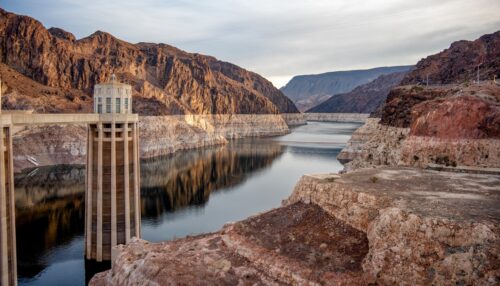
“After months of pressing Western states to come to their own agreement, the Trump administration told their leaders it’s drawing up a 10-year plan for dealing with water shortages on the Colorado River. The river is a major water source for Southern California and much of the Southwest, but its largest reservoirs, Lake Mead and Lake Powell, are severely depleted and their levels continue to drop. News of the federal government’s preliminary plan surfaced Wednesday during a meeting in Phoenix. Tom Buschatzke, director of the Arizona Department of Water Resources, said federal officials informed state water managers they are developing a “10-year framework” with specific rules requiring water reductions that would be reassessed every two years. So far, negotiators for California, Arizona and Nevada have offered to use roughly 1.6 million acre-feet less annually over the next two years. But Buschatzke said the Trump administration’s plan would allow for mandatory cutbacks of up to 3 million acre-feet per year in the three states — as much as 40% of their combined allotments. … ” Read more from the LA Times. | Read via AOL News.
Interior preparing drastic Colorado River water cuts
“The Trump administration is preparing a plan to manage the drought-stricken Colorado River over the next decade that could slash by a third the amount of water delivered to Arizona, California and Nevada, Arizona’s lead negotiator said Wednesday. Without an agreement among the seven states that share the West’s most important river, the Interior Department is preparing to release its final plan in late June, Tom Buschatzke, director of Arizona’s Department of Water Resources, told a meeting of his state’s water users. The plan would cut water deliveries to farms, cities and tribes in the downstream states by as much as 3 million acre-feet per year and would be applied using the legal system that prioritizes the oldest users, Buschatzke said. That approach would put the brunt of the cuts on central Arizona communities, industries and tribes that get their water through the 336-mile-long canal system that delivers Colorado River water to Phoenix, Tucson and surrounding communities. … ” Read more from E&E News (sorry, subscription required).
As the West dries out, a new generation of dams rise
“The Chimney Hollow Dam looks ancient in its simplicity, like a Neolithic mound. The largest dam built in the US in a quarter century, it is not a monumental wall of concrete like the Hoover Dam. Instead, it’s a triangular prism of granite boulders, 350 feet high and 3,700 feet long, stretching across a dry valley in northern Colorado. Two white pipes snake up the far side of the valley and out of sight, heading toward the Colorado River, about 30 miles away. On April 20 engineers turned a valve and began pumping water from the river and putting it behind the dam. Filling the reservoir completely will take years. A new dam of this size is very rare in the US. By turning rivers into lakes, dams destroy riverine ecosystems, and environmentalists have long fought to stop new dams and remove existing ones. More than 100 were torn down last year alone, according to American Rivers, an advocacy group. In 2024 the last of four large dams on the Klamath River in California and Oregon were removed, completing what the group calls “the world’s largest dam removal.” But dams do one thing well: They store water. … ” Read more from Bloomberg.
Trump administration releases nearly $50 million in Colorado drought funding, more than a year late
“The federal government belatedly released $47 million this week to fund four Colorado projects aimed at mitigating the impacts of an unprecedented drought and a parched Colorado River. The funds — promised more than a year ago — will pay for stream restoration, wetland reconstruction and a variety of other projects throughout the state. It comes as most of the state is facing perilously dry conditions, and the outlook for the entire Colorado River Basin remains dire. “The funding released will support the Pine River Indian Irrigation Project, drought-resilient infrastructure across the Southwest, and endangered species recovery efforts, which are all essential to Colorado’s future,” said U.S. Senator Michael Bennet in a joint statement with Senator John Hickenlooper. … ” Read more from Colorado Public Radio.
New proposal to stabilize the Colorado River — Will it work?
Kennedy Claud, Liv Hall, OJ Tumechub, and Alexia Macias, students at the University of Arizona, Mel & Enid Zuckerman College of Public Health, write, “The Colorado River is the lifeline of the American Southwest, supplying drinking water to more than 40 million people, irrigating millions of acres of farmland, powering communities, sustaining Tribal nations and supporting ecosystems and economies that stretch across seven U.S. states and into Mexico (USGS, n.d.). Without urgent action, the future of this river and our region’s environmental and economic future hang in the balance. Arizona, California and Nevada have sent a proposal to the U.S. Interior Department with plans to stabilize the river through 2028, but will officials accept the proposal, and even if they do, will it be enough to secure the future of the Colorado River? … ” Read more from the Arizona Daily Star.
Arizona: Bartlett Dam study takes on new urgency for region
“Rain and melted snow from mountain forests in northern and eastern Arizona flow into Horseshoe and Bartlett dams, where the water is transported by Salt River Project’s canals to water taps in the Valley. But over seven decades, that water has been depositing natural sediment at the bottom of Horseshoe and Bartlett reservoirs, reducing their combined ability to store water by about 15%, according to the U.S. Bureau of Reclamation’s 2021 survey. As the Verde River flows south into Salt River, both together supply roughly 40% of the surface water for the Phoenix metropolitan area. Today, the federal agency estimates that Horseshoe Reservoir loses approximately 500 acre-feet of storage capacity and Bartlett Reservoir 180 acre-feet annually from that sedimentation. An acre-foot typically supplies three single-family homes for a year. … ” Read more from the Queen Creek Tribune.
Arizona drought declarations remain in place
“Arizona climate experts recommended Thursday that Governor Katie Hobbs renew a drought declaration in effect since 1999 as the state continues to reel from the hottest March on record. Though a strong El Niño is likely to form over the Pacific this summer, which could bring tropical rains to the Four Corners region, members of the governor’s Drought Interagency Coordinating Group aren’t betting on it saving the day. “This is not going to be pretty,” said Jordy Fuentes, executive director of the Arizona Power Authority. As the Southwest drought enters its fourth decade, the state’s two largest reservoirs along the Colorado River continue to inch toward deadpool, at which the Hoover and Glen Canyon dams won’t hold enough water to generate hydropower that is in turn used to pump Colorado River water across the state. “We’ve backed ourselves in a corner and have mostly used all the tools in our toolbox,” Fuentes said. “We have very little tools left except to cut.” … ” Read more from the Courthouse News Service.
Nevada wants to cut its own Colorado River share for emergency conservation need
“Nevada, along with its sister states of California and Arizona, has proposed taking a significant cut to its share of the Colorado River, pending approval from officials from each state. Through a news release earlier this month, the Lower Colorado River Basin states of Nevada, California and Arizona said they are willing to up their commitment to stabilize the river’s water supply with a plan that would deliver up to 3.2 million acre-feet of water savings through 2028. The announcement came after the Upper Colorado River Basin states — a group that includes Colorado, Utah, New Mexico and Wyoming — last month called for a third-party mediation process as the two groups continue talks toward a new Colorado River water plan. About 40 million people depend on the river for their water supply. … ” Read more from the Boulder City Review.
Utah protesters want more sunlight on data center plan and its effects on water and air
“Chants of “no data center!” echoed in the Utah Capitol Thursday as protesters carried a letter to the office of Gov. Spencer Cox demanding independent reviews of the planned 40,000-acre Stratos project in Box Elder County and a “genuine public comment period.” A few hundred demonstrators rallied on the Capitol steps Thursday morning before delivering the petition signed by more than 7,000 to the governor’s office. With signs saying “Keep sharks out of the Great Salt Lake” and “You can’t drink data,” they sang, chanted and called for state officials to press pause on the fast-moving Stratos proposal. The data center — set to become one the world’s largest if fully built — is backed by celebrity investor Kevin O’Leary of TV’s “Shark Tank,” known on the show as “Mr. Wonderful.” One big banner at the Capitol Thursday featured a picture of O’Leary’s face and the title, “Mr. Terrible.” The pushback in Utah comes in a wave of wider opposition to new data centers, with communities in states from Virginia to Montana fighting the projects. Several states are considering limiting tax breaks for them. Some, including Washington and Minnesota, already have. … ” Read more from the Utah News Dispatch.
Colorado Parks and Wildlife resumes weekly testing for invasive species in Colorado River
“With six bodies of water in Colorado now considered infested with zebra mussels, Colorado Parks and Wildlife is kicking off weekly sampling of the Colorado River system. The invasive aquatic species — which poses a significant threat to water infrastructure and ecosystems — was first detected in the state in 2022 at Highline Lake near Grand Junction, and in the Colorado River in 2024. After ramping up sampling efforts last summer, the state wildlife agency found zebra mussels across the river system. This year, Parks and Wildlife is planning to conduct weekly samplings in the Colorado River and on its shoreline from Granby to the Colorado border with Utah, according to a Wednesday, May 13 news release. … ” Read more from Aspen Times.
In national water news today …
Securing and financing the future of water
“Water is essential for every aspect of life, yet its pricing, governance, and management often fail to direct flows where they are most needed. Although water covers 71% of the Earth’s surface, only 3% of the world’s water is fresh.1 Access to that supply is increasingly scarce, contested, and misallocated. Meanwhile, the infrastructure and technologies that determine water availability remain chronically underinvested, leaving a widening gap between supply and demand. Water demand is rising even as overall supply faces mounting constraints. … The market and geopolitical forces shaping the future of water are intersecting with an accelerating pace of innovation. Market approaches are beginning to price water more effectively, more capital is flowing into infrastructure, and new technologies are increasingly attracting investments at scale. These developments remain uneven, but they point toward a more investable and resilient water system capable of laying the foundation for a more sustainable future. … ” Read the full article at Goldman Sachs.
A closely guarded plan to cool Earth is revealed
“A company that aims to make billions of dollars by cooling the Earth has lifted the veil of secrecy that until now has hidden its plans for preventing sunlight from overheating the planet. It hinges on aerosol particles that are 125 times smaller than the tiniest grain of sand. Stardust Solutions has raised $75 million since 2023 from investors who are betting that global warming could get so out of control that governments might decide to pay the Israeli-U.S. startup to spray millions of tons of sunlight-reflecting aerosols into the stratosphere. Its plans were so guarded that it required scientists to sign nondisclosure agreements before they could study its potentially planet-altering technologies. … ” Read more from E&E News.

