

Several news sources featured in the Daily Digest may limit the number of articles you can access without a subscription. However, gift articles and open-access links are provided when available. For more open access California water news articles, explore the main page at MavensNotebook.com.
On the calendar today …
- IN-PERSON: California Water Plan Advisory Committee Meeting from 8:30am to 12:00pm. The Department of Water Resources (DWR) is convening the first Advisory Committee meeting for the 2028 California Water Plan. The Advisory Committee is an appointed body, and all Committee meetings are open to the public. Livestream Link: California Water Plan Advisory Committee Meeting – May 14, 2026
- WEBINAR: Alternative Income Sources for Agricultural Properties from 10am to 12pm. This livestream is a presentation of the California Chapter, ASFMRA, led by the Farm Management and Ag Consulting Education Committee. It will examine four alternative sources of income for agricultural properties. The four alternatives include hunting options, conservation easements, solar and carbon storage. Throughout the seminar attendees will have the opportunity to ask questions and deepen their understanding of various opportunities available as alternative income sources and land uses for agricultural properties in California. A Zoom link will be sent to registrants prior to the livestream seminar. If you have not received an invitation link within 24 hours of the event, please contact Suzie Roget at info@calasfmra.com. If you register within 24 hours of the seminar, you will receive the Zoom link immediately prior to the start of the event. Click here to register.
- PPIC: How Is California Working to Prevent Severe Wildfires? from 11am to 12pm. California has experienced increasingly frequent and severe wildfires for years, costing the state billions of dollars and threatening our vital water supply. A state-led task force aims to lower the number of severe wildfires across the state. How is this work proceeding, and what more could be done? As wildfire season approaches, we convene a panel of experts to explore the task force’s progress—and highlight what to expect from this year. Click here to register.
In California water news today …
Money for clean drinking water threatened by Newsom administration’s climate overhaul

“Seven years ago, California Gov. Gavin Newsom signed a law to bring safe and affordable drinking water to the state’s most disadvantaged communities. Last week, Newsom celebrated the program’s accomplishments. “Over 1 million people that didn’t have access to clean, safe drinking water today have access to clean, safe drinking water,” Newsom told a conference room filled with California’s water leaders, to a round of applause. “I’m not saying that to impress you, but to impress upon you real progress. A lot more work to be done.” But that work could lose critical funding as the Newsom administration overhauls its source: California’s carbon market. The changes to the program’s funding priorities and revenue threaten efforts to bring clean drinking water to schools, homes and communities across California. “If that funding goes away,” said Sherry Hunter, who has long battled the arsenic leaching into the water supply in the historic Tulare County town of Allensworth, “Oh my god, I can’t even imagine.” … ” Read more from Cal Matters.
SEE ALSO:
- CA climate program overhaul boosts high-speed rail, cuts clean water projects, from Action News Now
- Dan Walters: California will make less money from greenhouse gas emission auctions, from Cal Matters
A ‘super El Niño?’ Why it’s too early to forecast one with certainty, but not too soon to prepare
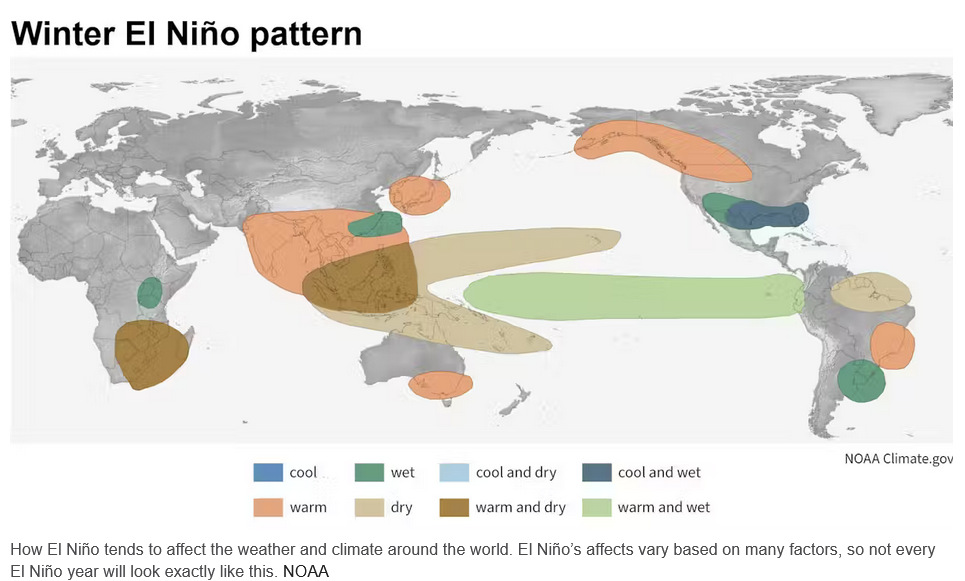 “Talk of a “super El Niño” developing in 2026 is gaining momentum, with concerns rising that this climate pattern could bring extreme rainfall, heat, drought and destructive flooding around the world. The signals appear to be in place: The tropical Pacific is warming along the equator, and computer models point toward extreme conditions by the end of the year. However, forecasting El Niño is not like predicting next week’s weather. Forecasts for El Niño typically aren’t reliable before late spring – not because scientists don’t understand the system, but because we understand its limits. As an ocean-atmospheric scientist who studies El Niño, I spend a lot of time thinking about what scientists can forecast confidently – and what remains uncertain. Here’s what we know about the current event, what we still don’t, and why many regions should begin preparing now, even if a strong, or “super,” El Niño never fully materializes. … ” Read more from The Conversation.
SEE ALSO:
- A Super El Niño is possible by the end of 2026 into the beginning of 2027, from KSBY
- El Niño is almost here with increasing odds of it rivaling the strongest in history, from AccuWeather
Reducing flood risks while refilling the basin: New Central Valley recharge project already boosting the water table
“We have all heard the warnings and seen after-the-fact images of the earth shifting — literally sinking beneath one’s feet — because thirsty water users in the Central Valley have pumped too much groundwater for too many years. But as California continues to expand the state’s water supply, with drought always around the corner, one community in Stanislaus County is celebrating the completion of a $16 million project that captures and stores stormwater to protect against flooding and refill the critically over-drafted Delta-Mendota Subbasin. Located 15 miles south of the city of Patterson, hugging the east side of I-5, with rows of broccoli and assorted crops visible in the distance, the Orestimba Creek Recharge and Recovery Project is an example of how innovation and a decades-long commitment — coupled with a $5.6 million grant and five-year temporary water right permit from the State Water Resources Control Board — can benefit multiple parties and interests. … ” Read more from the State Water Board’s Ebb and Flow.
California farmers push back as NGOs target agricultural land and food security concerns grow
“The AgNet News Hour focused on growing tensions between agriculture and environmental activist groups as California farmers continue battling lawsuits, land pressure, and mounting concerns over the future of food production in the state. The episode opened with discussion about anti-agriculture activism and the increasing influence of NGOs working against farming operations throughout California. Hosts warned that many organizations presenting themselves as environmental advocates are actively lobbying against agriculture, water infrastructure, and farming expansion. “They want your land,” hosts said while discussing pressure facing farms in areas like Point Reyes and Petaluma. The conversation highlighted growing frustration from farmers who feel agriculture is being targeted despite California’s role as the nation’s leading food-producing state. Questions surrounding food security, water access, and local food production remained central throughout the program. … ” Read more from AgNet West.
SEE ALSO: California Farmers Push Back as NGOs Target Agricultural Land and Food Security Concerns Grow, from AgNet West
REPORT: The Intersection of Data Center Development, Water Availability, and Environmental Justice In California
“As demand for artificial intelligence and cloud computing accelerates, large-scale data centers which require significant water resources for cooling are increasingly being sited in regions already facing constrained supplies due to climate change and reliance on imported water. A new report by Next 10, led by researchers at Santa Clara University, finds that California’s rapidly expanding data center industry is increasingly intersecting with regions facing water scarcity as well as environmental injustice—raising concerns about long-term water sustainability and community vulnerability. The report, The Intersection of Data Center Development, Water Availability, and Environmental Justice In California, is the first comprehensive analysis of every known operating and planned data center in California through a combined water access and environmental justice lens. …” Read more from Next 10.
Cal Fire prepares for possible active wildfire season as summer nears
“Cal Fire is preparing for a potentially active wildfire season. Despite getting plenty of rain in the winter, California faces dry vegetation due to warm weather and an underwhelming snowpack heading into the summer. Cal Fire Battalion Chief David Acuña joined KCRA 3 to discuss wildfire risk across the state. “With the fuels, a quite a bit of rain has led to a bumper grass crop,” Acuña said. “Added to that led to the number of crops that had grown the last eight to 10 years and it’s added to layers and it’s added to layers to these dead grasses that are just waiting for a spark.” … ” Read more from KCRA.
California must move faster on wildfire risk, experts warn
“Fire risk experts cautioned California lawmakers this week that the state needs to change course to both survive and bounce back from wildfires and other natural catastrophes. At the state Capitol on Tuesday, Nancy Watkins, an actuary at financial adviser Milliman who specializes in fire risk and insurance, counseled lawmakers that the state needs to stop “nibbling around the edges.” “Nobody is going to save California from our decisions,” she said. “The state has to really step in and be more strategic about how to make things happen faster.” … ” Read more from KQED.
Fire is transforming the West’s public lands
“Colorado’s two largest fires on record, the Cameron Peak and East Troublesome fires, burned hundreds of thousands of acres across some of the state’s most visited landscapes in 2020. The fires scorched trails, campgrounds and beloved ecosystems in and around Rocky Mountain National Park and the Arapahoe and Roosevelt national forests. More than five years later, the scars remain stark: blackened hillsides, closed trails and bare slopes where forests once stood. According to our recent research, which has not yet been peer reviewed, the fires caused significant and lasting declines in visitation at the burned sites. … ” Read more from the Colorado Newsline.
State pondering regulations amid AI boom
“A new push to regulate data center costs in California comes as the state braces for an unprecedented demand for power needed to fuel the expected artificial intelligence boom over the next five years. … “AI data centers are very, very large capital investments,” said David Beier, a former presidential advisor on science and technology. Beier recently evaluated the state’s AI future while serving on the Little Hoover Commission, a non-partisan state think tank. “They’re on the order of magnitude of the entire construction of the British and American railroad system, or if you want to take a longer timeframe, the Egyptian pyramids.” Just one data center draws about as much power as a city the size of Santa Rosa. Upgrades to the grid to allow a single data center to hookup to the grid can cost $100 million, according to utility estimates. Consumer advocates want to make sure Californians don’t suffer higher rates amid the expected unprecedented level of demand. … ” Read more from NBC Bay Area.
California’s new plastic recycling rules spark fights from all sides
“California just gave plastic producers until 2032 to make all their packaging recyclable or compostable — the most ambitious deadline in the country. Advocates say it doesn’t go far enough. Producers say it goes too far. At least one of them is threatening to sue. The sweeping regulations, finalized at the start of the month, put producers in a bind that has no obvious solution. Plastic clamshell containers, for instance, protect berries from being crushed and keep them fresher, longer until they reach a refrigerator. Plastic producers say there’s simply no substitute — yet under the new rules, they’ll have to find one. Last week, two environmental groups — the Natural Resources Defense Council and Californians Against Waste — said they plan to take California to court. Their argument: the state’s rules actually break the law by allowing recycling methods that create a lot of toxic waste, and by letting some plastics slip through the rules entirely. On the other side, plastic manufacturers say the rules go too far and will make products more expensive for shoppers. … ” Read more from the Associated Press.
In commentary today …
Edward Ring: When it comes to water, California needs to think big again
Edward Ring, Director of Water and Energy Policy at the California Policy Center, writes, “For most of the previous century, Californians successfully designed and built big water infrastructure. In sixty years, from 1910 through 1970, we built the most impressive system of interbasin transfers in the world. The Los Angeles Aqueduct, Hetch Hetchy Aqueduct, Colorado River Aqueduct, Delta Mendota Canal, Friant-Kern Canal, and California Aqueduct. Altogether these conveyances are over 1,500 miles in length and every year they move millions of acre feet from where water is found to where water is needed. For more than a half-century since then, progress has slowed. The proposed Delta Conveyance – a 45 mile long tunnel under the Sacramento-San Joaquin Delta, with an internal diameter of 36 feet – regardless of its virtues or detriments, has been mired in controversy. If it were built and run nonstop at maximum capacity, it could move over four million acre feet per year. With or without a tunnel, how the Sacramento-San Joaquin Delta is managed needs an urgent upgrade. Here is a list of solutions, each of which deserves serious evaluation. An assortment of them combined and implemented would restore water abundance to California. … ” Continue reading this commentary by Edward Ring.
In regional water news and commentary today …
NORTH COAST
‘No measurable snow’: Klamath surveys reflect one of California’s worst snow years
“Yesterday, the Klamath National Forest released the final snow surveys of the season which found that snowpack in the Scott River watershed had almost entirely disappeared by May 1. State and federal water officials have described this year’s snowpack conditions as among the worst California has seen in modern recordkeeping. According to the U.S. Forest Service, snow depth and snow water equivalent — the amount of water stored in the snowpack — measured just 0.8% of historical average across the Scott River sub-basin during May surveys. “[S]pring conditions are well underway at all the snow survey sites,” the Forest Service stated, noting that only the highest survey location in the Middle Boulder Basin retained measurable snow. The findings mirror statewide trends documented this spring. … ” Read more from the Redheaded Blackbelt.
SEE ALSO: May snow survey results for Scott River Sub-Basin, from the Forest Service
Veteran Garcia River restorationist accuses state agency of shutting out community voices, and handing contracts to The Nature Conservancy
Craig Bell, Garcia River Watershed Planner since 1989, writes, “To Meghan Hertel, Director CDF&W: Congratulations on your appointment as Director and greetings from the Garcia River watershed. The Garcia River restoration community has a long history of working collaboratively with the Department of Fish and Wildlife. I am sending you this message to make you aware of a restoration planning effort that was conducted for Mendocino Coastal Rivers (Salmonid Habitat Restoration Priorities (SHaRP) Action Plan for the Mendocino Coast) To be clear to you and all who read this, the situation I am going to describe occurred before you became Director. Chuck Bonham was the Director before he transitioned to becoming the California Director of The Nature Conservancy. I apologize for the length, but you will in my opinion get some key insights. … ” Read more from the Redheaded Blackbelt.
SIERRA NEVADA
Forest Service proposal to use glyphosate (roundup) near Tahoe ski resorts sparks growing backlash
“A proposal by the U.S. Forest Service to use glyphosate-based herbicides as part of post-fire restoration efforts in the Lake Tahoe Basin is facing intensifying scrutiny from local residents and environmental advocates. According to reports from Active NorCal and a yearlong investigation by Mother Jones, the plan involves treating areas scorched by the 2021 Caldor Fire to support the regeneration of native conifers. … The scope of the project includes potential application areas near the base and parking facilities of Sierra-at-Tahoe Ski Area, as well as forested sections close to Kirkwood and Heavenly ski resorts. Additionally, the proposal covers campgrounds, popular trailheads, and areas adjacent to residential homes in the community of Meyers. … ” Read more from Snow Brains.
Lake Tahoe power crunch shows AI’s growing energy toll in West
“Lake Tahoe has long been a refuge for Silicon Valley’s tech elite, from Mark Zuckerberg to Larry Ellison. Now the artificial intelligence boom behind much of that wealth is straining the region’s power market, pushing up costs for residents in the lakeside towns below. Energy-hungry data centers across the border in Nevada are adding pressure to the market serving roughly 50,000 electricity customers on the California side of the lake. By the local utility’s own sample-bill calculation, the cost of keeping the lights on at home has surged about 77% since late 2022 — approaching twice the national residential average. The squeeze could get worse next year, when Liberty Utilities, the region’s main electric provider, is expected to lose its primary power supplier, Berkshire Hathaway Inc.’s NV Energy. The Nevada utility says the change was long planned, though it comes as data center development accelerates and competition for power intensifies. … ” Read more from Bloomberg.
Caldor Fire survivors face slow Grizzly Flats rebuild. Here’s what to know
“Nearly five years after the Caldor Fire destroyed about 785 homes in Grizzly Flats, only a small fraction have been rebuilt. Families like the Magidsons remain split between temporary housing as they navigate denied individual federal aid, insurance gaps and a looming deadline on living in RVs. Here are key takeaways: The damage: The Caldor Fire started Aug. 14, 2021, burned for 68 days and spread across nearly 221,900 acres in El Dorado, Alpine and Amador counties. About two-thirds of the destroyed homes were in Grizzly Flats, and nearly 600 were primary residences. … ” Read more from the Sacramento Bee.
SACRAMENTO VALLEY
Lincoln set to update Urban Water Management Plan
“The City of Lincoln is updating its 2025 Urban Water Management Plan (UWMP) and Water Shortage Contingency Plan (WSCP) and is inviting the community to participate in the public review process. These updated plans will guide how the City manages water supply, demand, and conservation efforts, and outline actions during potential future water shortages. The draft documents will be available for public view beginning May 12, online at lincolnca.gov and in person at City Hall and the Twelve Bridges Library. … ” Read more from Gold Country Media.
BAY AREA
Vallejo: Toxic disinfectant spill contained at water department
“A toxic chemical release was prevented from contaminating drinking water at Vallejo’s Fleming Hill Water Treatment Plant, the city said Wednesday. The chemical, sodium hypochlorite, is used as a disinfectant. In highly diluted form, it is the main constituent of liquid household bleach. The spill took place on Monday during maintenance involving the plant’s chemical storage system, the city said in a press release. … ” Read more from SF Gate.
Cuesta Park homes remain under water restrictions through weekend following positive bacteria test
“The boil water notice for 21 homes near Cuesta Park will not be lifted until at least Monday, May 18, due to another positive bacteria test, city officials said in an email on Tuesday night. Crews have been cleaning a contaminated water pipe in the Mountain View neighborhood since last week, culminating in a series of tests intended to lift restrictions on the group of homes with limited water access since April 24. One of the water samples collected on May 11 from the water pipe on Drucilla Drive between Montalto Drive and Leona Lane tested positive for coliform bacteria, pushing the resumption of full water access through at least the weekend. … ” Read more from the Los Altos Town Crier.
CENTRAL COAST
Paso Robles farmers, wineries may need to pay for groundwater. Here’s how much
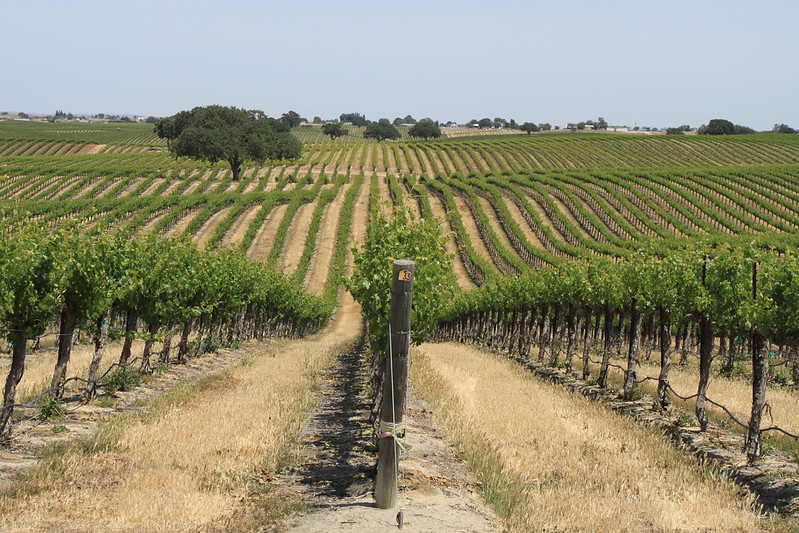 “From farmers to winemakers, commercial water users pumping from the Paso Robles Area Groundwater Basin may soon need to pay for their water use — and this time, they won’t be able to protest the fees. On Friday, the Paso Robles Area Groundwater Authority released a draft rate study that proposed charging $22.90 per acre-foot of groundwater used by water systems, farmers and commercial pumpers. An acre-foot of water is roughly enough to cover a football field in a foot of water. Meanwhile, domestic well owners would not be charged water use fees, the report said. The city of Paso Robles is the largest water system that would pay fees, but this wouldn’t impact the city’s ratepayers, Mayor John Hamon told The Tribune. … ” Read more from the San Luis Obispo Tribune.
SAN JOAQUIN VALLEY
Stockton’s suddenly smelly tap water has residents holding their nose
“Many Stockton residents have been holding their noses every time they turn on the faucet lately. Suddenly, the water smells. Yet describing the odor is a matter of interpretation. On social media, some say it has started stinking like water in a fish tank. Others indicate there are scents of celery or corn. And some say the smell is dank, likening the odor to mold or mildew. Residents aren’t imagining things: The city of Stockton and a major water provider acknowledged the issue Wednesday, saying, “Some customers may notice changes in the taste, odor or appearance of their water.” … ” Read more from Stocktonia.
Manteca: $9.4M project replaces critical, aging central sewer trunk pipeline
“Increased monthly wastewater rates are allowing the city to replace a key sewer trunk line that is critical for more than 50,000 plus Manteca residents to flush their toilets. The City Council on Tuesday authorized going out to bid for a $9.4 million replacement of the 4,200 feet of the Central Sewer Trunk Line that runs along the southern edge of the golf course between Union Road and a juncture where it turns south and heads under Airport Way to the treatment plant. The line is where wastewater from much of Manteca north of the 120 Bypass is funneled through on the final leg of its journey to the treatment plant. The aging line being replaced is considered to be near the end of its useful life. … ” Read more from the Manteca Bulletin.
Golden mussels spreading through California waterways, prompting urgent warnings to Kern County water agencies
“Golden mussels may be small, but experts say they could create major problems for California’s water systems, prompting urgent warnings to local water agencies across Kern County. “The message we’re trying to convey today is the mussels are here. They’re down the water project. They’re here. We’re dealing with them now,” Said Samuel Lux, President of Diversified Project Services International. Local water agencies, engineers, and industry leaders gathered on Wednesday to learn more about the invasive species and possible mitigation efforts. Experts say the mussels were first discovered in California’s Delta in 2024 and are believed to have arrived from Asia on ships. They say the species reproduces quickly. “They are a huge threat to farmers, to irrigation, to hydroelectric dams, to cooling water systems,” Leonard Willett said. … ” Read more from Channel 23.
SOUTHERN CALIFORNIA
Castaic: Northlake plan sued again over environmental concerns
“The Center for Biological Diversity has once again filed a legal challenge to the Northlake project in Castaic, which opponents called the epitome of problematic “sprawl development.” The project’s developer, Woodbridge Capital, described the plan as “thoughtful” in its balance of the need to create thousands of homes for the area, with affordable housing and concern for the sensitive ecology throughout the more-than-1,300-acre property. The L.A. County Board of Supervisors heard public comment and then denied a project appeal March 31, clearing the project for development after three decades of revisions. Northlake has a green light to construct 3,150 homes, including 315 affordable-housing units, 95 for seniors, west of Castaic Lake and east of Interstate 5, on nearly 800 acres. … ” Read more from The Signal.
Pasadena invites residents to ask about the water they drink
“The water flowing through Pasadena’s taps comes from two very different places: a 40-square-mile underground aquifer and a system of aqueducts stretching hundreds of miles to the Colorado River and Northern California. On Wednesday evening, the utility that manages the city’s inflows from both sources wants to explain how it all works. Pasadena Water and Power will host a virtual Water Town Hall on May 13 from 6 to 7:30 p.m. via Zoom, walking community members through the city’s water supply, treatment, and delivery system — a network of 500 miles of pipeline, wells, reservoirs, and treatment facilities that serves about 170,000 people across Pasadena and adjacent communities, including portions of Altadena, East Pasadena, and San Gabriel. … ” Read more from Pasadena Now.
San Gabriel River, LA River will get trash interceptors to combat ocean and beach pollution
“Anytime it rains, trash comes flushing through storm drains and gutters, into rivers and downstream straight into the ocean and onto beaches. The picturesque beaches that Southern California is known for look more like landfills as piles of debris blanket the landscape. Trash fills the Pacific Ocean, threatening marine life and trashing their habitat, their home. It’s a battle that coastal communities and environmentalists have fought for decades. But a solution — stopping the trash before it leaves the rivers — is on the horizon. Two new trash interceptor projects, technology created by the nonprofit group The Ocean Cleanup, will be put in the San Gabriel River and the Los Angeles River, officials announced Wednesday at a gathering at the Aquarium of the Pacific in Long Beach. Already, a similar system has been used for years at Ballona Creek near Marina del Rey. … ” Read more from the OC Register.
Great white sharks are surging off Southern California. It’s actually good for the ocean
“As the early morning breeze tickles the top of the Santa Monica Bay, three scientists pack into a small whaler boat and push out to sea in pursuit of great white sharks. Armed with a set of drones, a GoPro camera on a stick and a tracking device atop a spear, the team from the Cal State Long Beach Shark Lab has many questions they are seeking to answer about this sharp-toothed species. What is driving the ongoing shark surge in Southern California? Which beaches do the predators frequent? And, perhaps most important, why do they, on rare occasion, attack people? While the drone flies above, one of the researchers crouches underneath a blanket shielding the video feed from the sun and scours the screen for a dark black flash amid a sea of blue. … ” Read more from the LA Times.
IMPERIAL/COACHELLA VALLEYS
Amid outcry, this California city may block data centers on its turf
“Amidst national debate over the rapid expansion of data centers, a city in Imperial County has become the county’s first to formally consider temporarily blocking them. Calipatria city council voted on Tuesday to draft a plan that, if approved, could impose a moratorium on data center projects in city limits for five years. “I believe data centers, the only place that they exist, is in hell,” said Calipatria Mayor Michael Leullen. Concerns over data center projects have been spreading throughout the region as residents have been fighting what could become California’s largest data center. The project site is lined by homes and near schools on unincorporated Imperial County land near the city of Imperial. … ” Read more from iNewsSource.
SAN DIEGO
La Jolla study looks at ‘voracious predator’ plankton in a new way
“A new study from UC San Diego’s Scripps Institution of Oceanography in La Jolla is providing a first-of-its-kind look at the biology of a little-understood species of predatory plankton that potentially could play a role in mitigating harmful red tides that occur occasionally along La Jolla’s coast. Scripps Oceanography scientists recently had the opportunity to look at the species, called Polykrikos kofoidii, in a new and unprecedented way, including its unique hunting behavior and ability to produce light through a chemical process known as bioluminescence. Typically, when species are studied, they are collected from the ocean and cultures are made in a lab, said Michael Latz, a marine biologist emeritus at Scripps Oceanography and co-lead author of the study. A lab culture is a method used to multiply microorganisms from a sample within a controlled environment. … ” Read more from the San Diego Union-Tribune.
Countywide Tijuana River tax measure edges toward ballot
“A controversial one-half-cent sales tax measure to address the Tijuana River sewage crisis appears likely to qualify for the November ballot, even as most of the revenue would be directed toward county healthcare programs rather than cleanup infrastructure. Dubbed the San Diego County Health and Safety Act, the measure would raise more than $350 million per year, but at least 60% of the revenue would be allocated to the county’s broader healthcare system, with less than 25% dedicated to the Tijuana River, according to media analyses. The allocation has become a central point of criticism as the United States and Mexico move into the most intensive phase of a binational cleanup. … ” Read more from the North County Pipeline.
Raw sewage from across the border is swamping one of California’s richest beach towns
“Raw sewage from the Tijuana River is fouling beaches in Coronado, California, forcing closures in one of the state’s wealthiest and best-known coastal communities. What should be a public asset for swimming, surfing, and tourism is instead becoming a health hazard for those who live nearby. According to the Wall Street Journal, county officials in the San Diego area have urged people to stay out of the water near Coronado as sewage- and chemical-contaminated runoff reaches the shoreline. Warning signs posted along the beach caution that contact with the water may cause illness, and the pollution has affected waters near major attractions, including the luxurious Hotel del Coronado. The contamination is largely linked to the Tijuana River, which brings untreated wastewater across the border before currents carry the pollution farther north along the Southern California coast. … ” Read more from The Cool Down.
Along the Colorado River …
A dire ‘math problem’ on the Colorado River and wholly inadequate responses
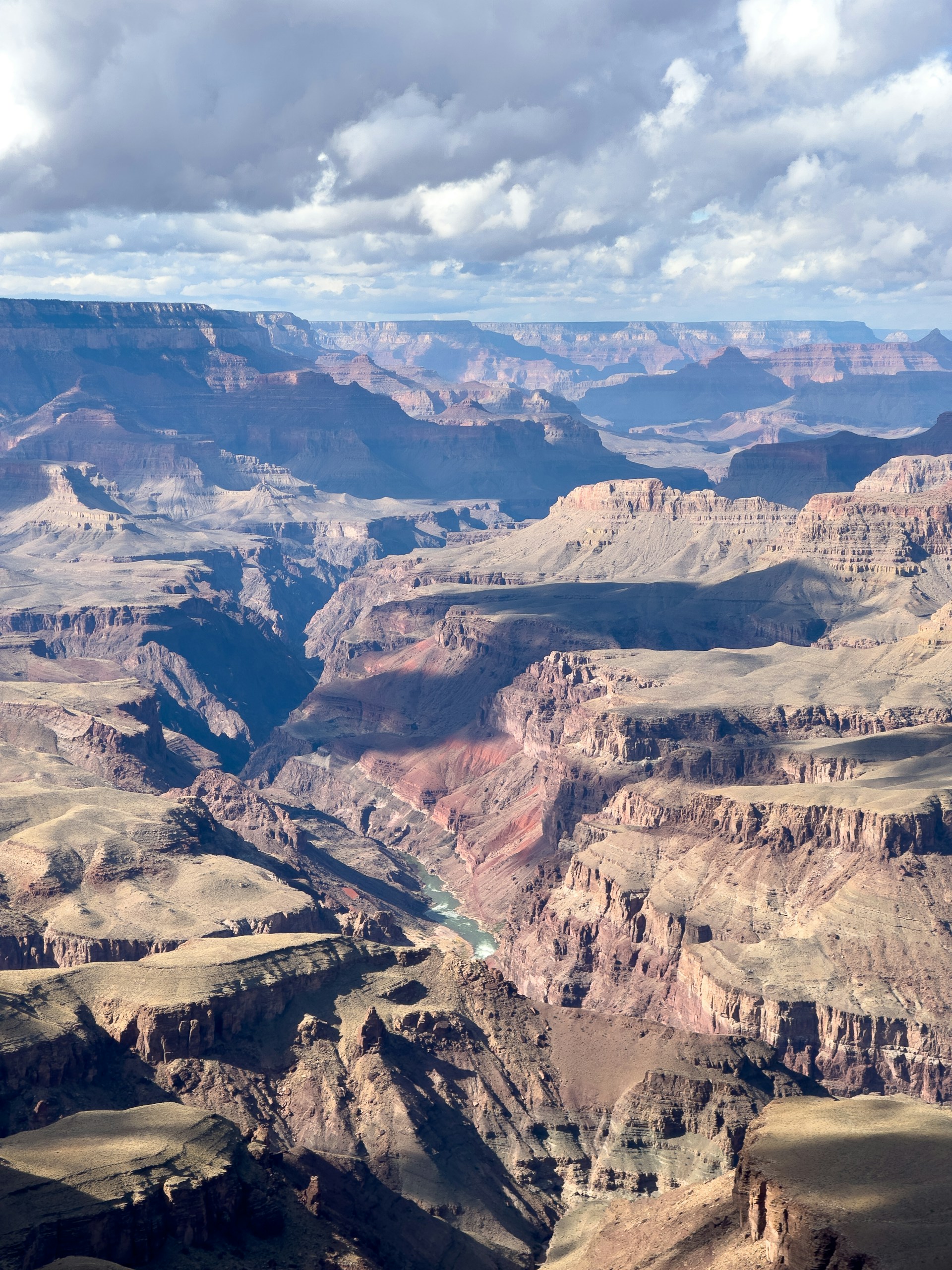 “Among the leading experts who study the Colorado River, Anne Castle stands out. During the Obama administration, she was assistant secretary for water and science at the Interior Department. During the Biden administration, she served on the Upper Colorado River Commission. She is now a senior fellow at the University of Colorado Law School Getches-Wilkinson Center. So when I was moderating an online panel last week, I thought Castle would be the ideal person to answer this question: How far are western states’ leaders from really addressing the Colorado River crisis? Her answer: Nowhere near. … ” Continue reading at the LA Times. | Read via Boiling Point newsletter.
Feds seek short-term fixes on Colorado River, leaving Arizona in limbo
“Unable to get Colorado River states to hash out a new 20-year deal to share in worsening water shortages, the U.S. Bureau of Reclamation has told them it’s now aiming for a 10-year plan with prescribed cutbacks to be reassessed every two years. Federal officials informed the seven states of their new preference late last week, and Arizona’s lead negotiator made it public on Wednesday, May 13, during a meeting of a committee representing the cities, tribes and other water users who meet to develop a unified state position. The shift to what could effectively become five two-year plans carries both opportunities and risks for Arizona. … ” Read more from Arizona Central.
Feds release $47 million for Colorado water projects after long delay
“The Trump administration will release $47 million in long-awaited federal funding for four Colorado water projects aiming to fight the Colorado River Basin’s prolonged drought. The Biden administration promised Coloradans up to $152 million in January 2025 to restore ecosystems, repair infrastructure and address drought impacts. The Trump administration immediately froze the grants pending review. The funding whiplash left dozens of project applicants in limbo with no clear idea if they should wait for the money or pursue other options. One of those applicants was the Southwestern Water Conservation District, which submitted one application to fund 17 projects in southwestern Colorado. The Trump administration released funding for the partnership’s $25.6 million grant Tuesday, but there is still more work to be done before the funds reach Colorado. … ” Read more from the Colorado Sun.
76 Colorado River groups seek $2 billion for drought crisis
“A broad group of Colorado River Basin organizations is asking Congress for at least $2 billion in new federal funding to help address worsening drought conditions, low runoff, and stress on major reservoirs. The May 13, 2026, letter was signed by 76 signatories, including agricultural groups, water providers, conservation organizations, Tribal interests, local governments, businesses, hydropower interests, and infrastructure stakeholders. The letter was sent to leaders of the United States Senate Committee on Energy and Natural Resources and the United States House Committee on Natural Resources. It was also copied to members of the Colorado River congressional delegation. … ” Read more from Western Water.
SEE ALSO: Lake Powell water level update: Map of states demanding $2b from Congress, from Newsweek
Arizonans’ No. 1 issue for lawmakers to prioritize is water, new poll says
“A new poll shows water is the No. 1 issue Arizonans want lawmakers to prioritize. The poll was conducted at the end of April by a conservative firm called Cygnal and was commissioned by Audubon Southwest — which is an office of the National Audubon Society, a nonprofit focused on environmental protection and conservation. The poll asked respondents what their top issues are and what they want state lawmakers to focus on in their budget. Cygnal Senior Partner and Lead Pollster Chris Lane said the responses are striking. “I have seen inflation and cost of living and immigration and the border be the top issues in almost every single state in the country for the better part of a decade. But introducing the idea of water supply and the Colorado River protection, not only does it stand out, it is the No. 1 issue,” he said. … ” Read more from KJZZ.
A Box Elder County group wants voters there to decide proposed data center’s fate
“Brenna Williams paused to fight emotion on a stage in Salt Lake City Wednesday as she talked about the effects she’s worried a massive data center could have on the Great Salt Lake and its Bear River Migratory Bird Refuge. And that was before she got into her concerns about her grandchildren, who have asthma, and others in her wider rural county, down to the cows and the bees. “I have like 15 reasons why we shouldn’t do this, and I think it’s crazy that we’re even considering it,” Williams told an audience during a panel discussion on the proposed Stratos data center. The plan to bring a 40,000-acre data center to a valley dotted with ranches in Box Elder County has met intense public outcry in northern Utah and has frustrated voters who said they didn’t get a meaningful chance to weigh in. Now Williams and fellow organizers with the Box Elder Accountability Referendum, or BEAR, are pursuing a pair of local referendums they hope could prevent the fast-moving project from coming online. … ” Read more from the Utah News Dispatch.
‘It’s a different lake now’: As Lake Powell drops, an iconic marina chases deeper water
“Titus Crawford spent four days calling Lake Powell boaters this spring. After a record low snowpack and off-the-charts March heat, the reservoir was on track to dip so low that Bullfrog Marina would have to move from its namesake bay. As a captain and director of the popular marina, Crawford knew he needed to call the owners of the roughly 350 boats docked there year-round. “There’s definitely concerns,” he said. “The biggest portion of it, however, are just happy to be able to keep their boats in the water. …We were very, very lucky that we were able to move this entire operation to another location and continue to be a full-service marina.” … ” Read more from the Water Desk.
SEE ALSO: Lake Powell is draining away from Bullfrog Marina. Now it has to move, from KUER
In national water news today …
America’s data centers are thirsty. Rural towns are paying the price—from tanked water pressure to stolen desert groundwater
“In the first week of May, two data center developments, one in Arizona and another in Georgia, were caught taking public water without authorization. In both cases, data center developers consumed water they were prohibited from taking, in communities already experiencing water stress, and in both cases it was the residents who discovered it. When residents complained of low water pressure in Georgia or dust control efforts in Arizona, they unknowingly tipped off regulators in areas fraught with depleting water supplies, and added to an escalating conflict over data center water use across the country. In 2023, U.S. data centers directly consumed 17.4 billion gallons of water, a figure projected to rise to between 38 and 73 billion gallons by 2028, according to the EPA. … ” Read more from Fortune.
The hidden cost of dwindling agricultural research
“Organic vegetable farmer Harriet Behar grows rye on her fields in the winter, then flattens the crop with a roller in the spring, creating natural mulch for her vegetables, which sustains her crops and saves her money. Rather than letting her sweet corn fields lie fallow in the winter, she plants rapeseed to keep weeds at bay and hold both the soil and the precious nutrients buried within it in place. “It’s a smart way to farm,” said Behar, whose fields lie hidden between the hills and valleys of southwest Wisconsin. For the past few years, Behar has worked with a research scientist at the University of Wisconsin–Madison to develop planting techniques to maximize her farm’s efficiency. It’s helped. … ” Read more from Straight Arrow News.

