
Several news sources featured in the Daily Digest may limit the number of articles you can access without a subscription. However, gift articles and open-access links are provided when available. For more open access California water news articles, explore the main page at MavensNotebook.com.
On the calendar today …
- LEG HEARING: Wildfire Mitigation, Resilience Financing, and Recovery beginning at 9:30am. The Senate Committee on Emergency Management and the Senate Committee on Natural Resources and Water will hold a joint information hearing titled, Wildfire Mitigation, Resilience Financing, and Recovery. Click here for more information.
- ONLINE EVENT: Town Hall: Maximizing Prop. 4 with Water Data & Information Systems from 11am to 1pm. State agencies and local leaders share ideas for integrating water and ecological data infrastructure into Prop 4 implementation and beyond. Last June, the California Water Data Consortium convened 100+ water leaders across California to identify how modern data systems can strengthen climate resilience investments. The result: evidence-based recommendations on data governance, regional coordination, capacity-building, and public accessibility. This Town Hall brings those recommendations to life. Hear directly from practitioners implementing these strategies in real time—and discover what’s possible when data infrastructure gets the priority it deserves. Click here to register.
- WEBINAR: Ecological Drought: Collaborative Planning, Response, and Decision-Making from 12pm to 1pm. This webinar will focus on research and tools to improve our understanding and management of drought risk in terrestrial and aquatic ecosystems to inform more deliberate and expanded decision-making that supports sustainable, healthy, and resilient ecosystems. Researchers will share their findings from the Fiscal Year 2022 Coping with Drought competition on Ecological Drought. Click here to register.
- WEBINAR: The San Joaquin Valley: Reimagining a Lost Desert from 12pm to 1pm. The San Joaquin Valley has been an agricultural powerhouse for decades, and now the region is tackling the challenge of limited water. Join our upcoming webinar to hear how TNC is working with local and state partners to create new opportunities for nature and people in the San Joaquin Valley. From siting renewable energy to restoring rare desert habitat to recovering native species like the kangaroo rat or San Joaquin kit fox, we’re part of a complex and essential transition into a more sustainable California. Click here to register.
- LIVESTREAM: California Water Plan Advisory Committee Meeting from 1pm to 5pm. The Department of Water Resources (DWR) is convening the first Advisory Committee meeting for the 2028 California Water Plan. The Advisory Committee is an appointed body, and all Committee meetings are open to the public. This meeting will take place over two half-days: May 13 and 14, 2026. Livestream Link: California Water Plan Advisory Committee Meeting – May 13, 2026
In California water news today …
Heavier storms and longer dry spells are drying California and the West
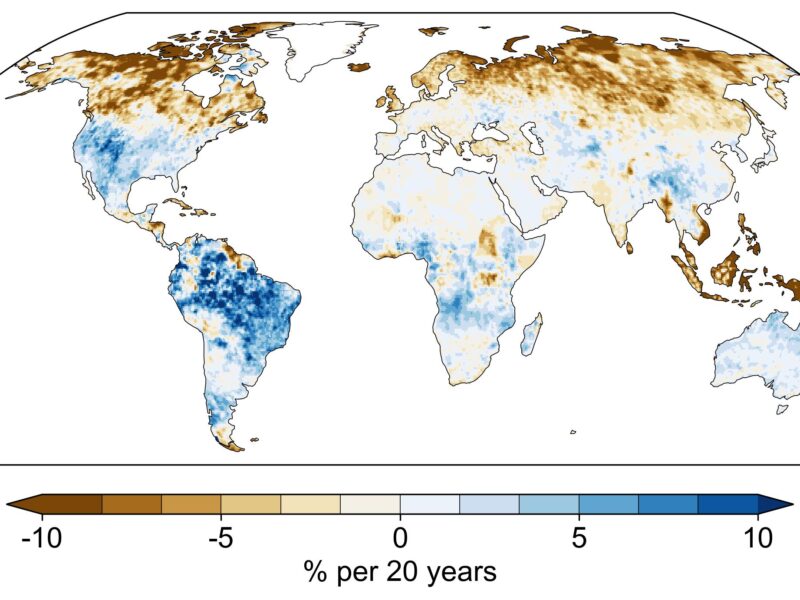 “Rainfall across much of California and the West has become more clustered in heavier storms, with longer dry spells in between. The net effect is a drying out, researchers found in a new study. It isn’t just the western United States; the same is true in much of the rest of the world. The research is the first to reveal how this concentration of rainfall into fewer, heavier events dries out the landscape. “The more concentrated rainfall you get, the drier you become,” said Justin Mankin, an associate professor of geography at Dartmouth College who coauthored the study. The occasional heavy rain is just too much for the land, and the soil can only absorb so much at once. Mankin said it’s like “asking the land to drink from a fire hose.” “As you concentrate rainfall into heavier downpours, more of that water, it sits on top of the land to be easily evaporated,” he said. The trend is less clear in Southern California and more pronounced in the North. The America West is one of the places where rainfall has become most clustered or concentrated. … ” Read more from the LA Times.
More rain doesn’t mean fewer droughts
“Heavier downpours and longer dry stretches, attributed to climate change, are likely leaving less water available for ecosystems, groundwater and public supplies even in places on the planet that are experiencing more annual rainfall. That’s the key finding from a study published Wednesday in the journal Nature. Since soil can only absorb so much water at once, intense bursts of rain are more likely to pool at the surface and evaporate, rather than soak into the ground, researchers say in the study. “It doesn’t matter where you are, more consolidated rainfall means less water is available for the land. We show that this phenomenon is consistent worldwide, what physically accounts for it, and what we should expect going forward,” said Justin Mankin, the study’s senior author and an associate professor of geography at Dartmouth College. … ” Read more from the Courthouse News Service.
SEE ALSO: Something weird and worrying is happening with rain, study finds, from AOL News
Drought and worse-than-usual heat in summer forecast around California
“From Redding to Victorville, Salinas to Stockton, Californians are likely to see hotter-than-average temperatures over this summer, according to the National Weather Service’s recently released long-range forecast. NWS meteorologists issued their national precipitation and temperature outlook for June through August on April 16, calling for “equal chances” for above- or below-normal weather. That’s after a hotter-than-usual spring in Shasta County and other parts of California. Much of the state is likely heading into drought conditions by August, according to the U.S. Drought Monitor. That and hotter-than-usual temperatures could boost wildfire risk earlier in the 2026 fire season than usual, drying out trees and other vegetation, the California Department of Forestry and Fire Protection said. … ” Read more from the Redding Record Searchlight. | Read via AOL News.
As El Niño approaches, scientists predict fierce heatwaves, wildfires and floods
“Scientists said this week that a developing El Niño is likely to amplify heatwaves, droughts and floods this year, but warned that the long-term warming caused by burning fossil fuels remains the main driver of climate extremes. El Niño is the warm phase of a semi-regular temperature oscillation in the tropical Pacific Ocean, during which massive amounts of heat stored in the ocean are released into the atmosphere, temporarily raising the average annual global surface temperature by as much as 0.3 degrees Fahrenheit. During an online briefing this week, researchers said that the consequences of a moderate or strong El Niño today are more damaging than those of similar events just a few decades ago because the entire global climate system is now substantially warmer. If the projected El Niño emerges on top of that warmer climate, there is a “serious risk of unprecedented weather extremes” that would not have happened during similar historical El Niños, said Fredi Otto, a professor in climate science at Imperial College London and a lead researcher with World Weather Attribution, a research group assessing how global warming affects climate extremes. … ” Read more from Inside Climate News.
Low snow in Eurasia linked to wildfires in California
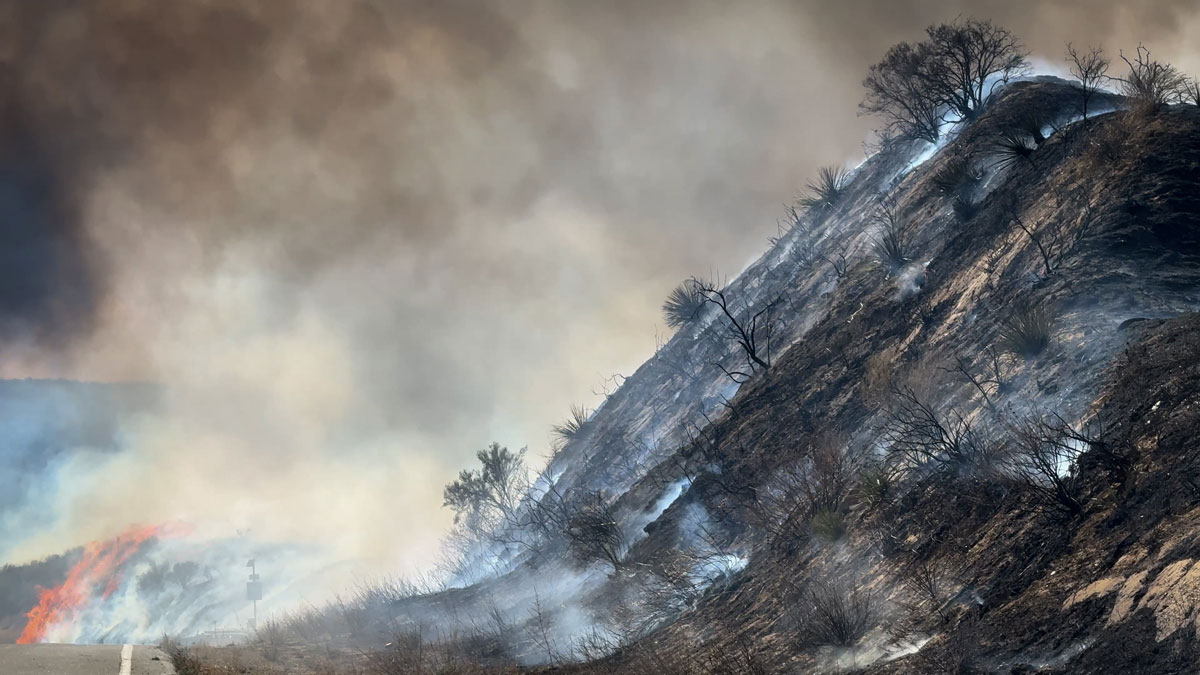
“California is no stranger to the hot, dry summer weather that makes wildfires more likely. But wildfire season in the state is now stretching into the heart of winter, when it has historically been protected by cool, wet weather. In January 2025, Southern California experienced some of the deadliest and costliest wildfires in the state’s history. Now, a new study published in Nature Communications shows that the climatic changes that increase the risk of these winter wildfires could be driven by low autumn snow levels thousands of miles away, in western Eurasia. The authors said that tracking snowfall in Eurasia could help forecast winters in California that will have higher chances of wildfires. The researchers were motivated by the catastrophic 2025 wildfires to search for climate drivers of winter wildfire conditions in California. First, they looked for correlations between winter wildfires and ocean temperatures, especially La Niña events that are associated with drier-than-average conditions in California. They also examined variability in sea ice, which can affect global weather patterns. But they saw only weak connections. … ” Read more from EOS.
The most surprising part of groundwater loss is how slowly it becomes an emergency
“Groundwater loss is often described as a global water crisis, yet it rarely feels like one while it is unfolding. Wells continue to produce water, crops remain green, and cities function normally for years or even decades after overuse begins. This slow pace is precisely what makes groundwater depletion so dangerous. Unlike floods or droughts that create immediate disruption, groundwater loss advances quietly beneath the surface, delaying consequences until recovery becomes extremely difficult or impossible. Hydrologists describe groundwater as a form of delayed feedback in the Earth system, where today’s actions may not produce visible impacts until long after decisions are made. … ” Read more from the Economic Times.
Water Wrights: SGMA must knows
“Following our prior coverage of the State Water Board’s denial of remaining Tule Subbasin exclusion requests, Porterville Irrigation District GSA staff reported new detail: at the April 21 vote, state officials questioned the 34-year rolling precipitation average, how native sustainable yield numbers were derived, and how recharge credits are being treated — raising the possibility of future changes to how PID GSA structures its allocations and Basin Safe accounting. PID staff also noted that the State Water Board has given inconsistent guidance to individual callers on whether to include recharge water in GEARS submittals (Lower Tule excluded recharge from its filings), and cautioned that the scrutiny may force structural changes in coming years. … ” Continue reading at Water Wrights.
Solano looks for ways to help Delta; Mashburn says tunnel will destroy it all
“Supervisor Mitch Mashburn cautiously waded into the murky and often precarious waters of Delta politics at Tuesday’s board meeting intended as a parley with three organizations on ways the county can possibly partner with the groups for the benefit of Solano and the estuary. Expanding the Delta heritage passport program and seeking available grant funding for community enhancement, habitat enhancement and nature-based projects were the primary examples of where that coordination might exist. There is $8.6 million in Proposition 4 dollars available, the board was told. Mashburn, however, made it clear that Solano and other Delta counties believe the proposed $20 billion Delta Conveyance Project could destroy all of that. “We stand to lose it all,” Mashburn said. … ” Read more from the Daily Republic.
Solano Supes hear Delta presentation
“The Solano County Supervisors held a discussion on Tuesday about the Sacramento San-Joaquin Delta region and the overlapping state agencies that protect it. Dick Tzou of the Department of Resource Management said the delta covers 738,000 acres and provides three key resource areas to the region: water supply, natural resources, and cultural value. Amanda Bohl of the Delta Protection Commission explained the relationship between her current organization, the Delta Conservancy, and the Delta Stewardship Council. She said the commission covers land use, heritage and support, the conservancy handles ecosystem restoration and economic development, and the council enforces regulations and oversees scientific efforts. “Our three agencies are three of the dozens of federal, local and state agencies that focus on the delta,” she said. … ” Read more from the Vacaville Reporter.
Lake Oroville, California’s second-largest reservoir, is 99% full and rising
“In a clear sign that California is not facing water shortages or a drought this summer, Lake Oroville, the state’s second-largest reservoir and a key component of California’s water system, has nearly filled to the top. The massive reservoir, contained behind America’s tallest dam, was 99% full on Tuesday afternoon, at 122% of its historical average for mid-May and still slowly rising, with just two feet to go to fill entirely. “It’s great to have,” said Tracy Hinojosa, operations manager for the State Water Project, a huge network of reservoirs, canals and pumps operated by the state Department of Water Resources. “We’re very pleased we were able to capture what we could.” … ” Read more from the San Jose Mercury News.
Reclamation’s Rope Access Team balances high angle work with precision and skill
“The Bureau of Reclamation’s Rope Access Team can often be found suspended hundreds of feet above the ground, scaling the face of a dam or entering a confined space. The Team performs inspections and hands-on work in some of the agency’s most difficult‑to‑reach places. The elite group is made up of highly trained specialists who thrive in challenging environments and are not afraid of heights, according to Montegomery Brewer, Rope Access Team Lead. Their work ranges from concrete and rockslope‑ inspections to coatings assessments and scaling operations. “At Reclamation there are always inspections needed and some of the areas are challenging to access,” Brewer said. “Our team is able to readily access locations exactly when we need to allow for efficiency and timeliness.” … ” Read more from the Bureau of Reclamation.
What lives in a teaspoon of soil? eDNA research is revealing the hidden life driving restoration success
“Last year, River Partners took a step forward to learn more about the ecosystems in our San Joaquin Valley restoration sites—and, according to a 129-page report filled with results, it’s incredible how much life exists in a teaspoon of soil. Using an innovative research tool called environmental DNA (eDNA), River Partners scientists collected 600 soil samples last year from across more than 15 restoration sites in the San Joaquin Valley. eDNA works by extracting and analyzing DNA that organisms shed naturally—from skin, fur, bones, feathers, plant detritus, fungi, and waste—making it possible to detect hundreds of species, including those that are difficult or impossible to find any other way. Crucially, eDNA can detect species that haven’t been seen on a landscape in years or decades—offering clues about what once thrived there and guiding restoration efforts. … ” Read more from River Partners.
Chinook fishing to reopen on Klamath, Trinity and Sacramento rivers after 3-year closure
“Following three consecutive years of closure, salmon fishing will return to the Klamath River Basin and Sacramento River for the upcoming summer and fall seasons. More good news comes for inland anglers with a full season on the Feather, American and Mokelumne rivers after a shortened season in 2025. These added fishing opportunities come as a result of an increase in numbers of adult Chinook salmon returning from the ocean to the Klamath Basin and Central Valley. The California Fish and Game Commission at its May 6 meeting adopted amendments to sport fishing regulations specifying season dates, bag and possession limits for the Klamath River Basin and Central Valley, and a quota for the Klamath and Trinity rivers. The adopted regulations aim to protect salmon as populations are expected to continue to rebound as a result of actions guided by California’s Salmon Strategy for a Hotter Drier Future.
SEE ALSO: Chinook salmon fishing to reopen on key Northern California rivers after 3-year closure, from KRCR
Once again, Sturgeon overlooked in Spring 2026
Tom Cannon writes, “Water temperatures are reaching lethal levels (22oC) for the newly spawned sturgeon eggs and fry in the lower Sacramento River. To save this broodyear of sturgeon, resource managers must immediately increase flows in the lower Sacramento River. Right now, those flows are unusually low. The San Francisco Bay-Delta watershed is home to two native sturgeon species: white sturgeon and green sturgeon. White sturgeon are popular among sport fishers in major rivers and the Bay-Delta. Green sturgeon are less common and are protected under state and federal endangered species laws, making their harvest illegal. … ” Read more from the California Fisheries blog.
In commentary today …
A water doom loop is coming
Gary Ferguson, author of “The Twilight Forest: An Elegy for Ponderosa in a Changing West, writes, “In much of the Southwest, the ponderosa pine is the one and only truly big tree, thriving in dry heat and poor soils. The painter Georgia O’Keeffe captured the beauty of a stately ponderosa north of Taos, N.M., in one of her most stunning works, “The Lawrence Tree.” The creators of the television show “Yellowstone” were so taken with ponderosa forests that they did much of their filming within one far from Yellowstone in western Montana. But after about 26 years of exceptionally high heat and drought, hundreds of millions of these trees in lands stretching from New Mexico and Colorado to the southern Sierra Nevada of California have died. And in many places, something even more startling is happening: The trees aren’t coming back. Ecologists warn that in just 25 years, more than 70 percent of the Southwestern needle leaf evergreen forests, which include ponderosa pines, may be replaced by grass in what might qualify as the first significant post-climate change landscape in America. … ” Read more from the New York Times.
In regional water news and commentary today …
NORTH COAST
Environmental group opposes Forest Service logging plan
“The Environmental Protection Information Center is sounding the alarm about a U.S. Forest Service vegetation management plan in Six Rivers and Shasta-Trinity National Forests that the group says may cause catastrophic damage to the South Fork Mountain ridge, a 40-mile expanse of remote ridgeline the center describes as “the only continuous overland wildlife corridor linking the Yolla Bolly–Middle Eel and the Trinity Alps Wilderness.” EPIC says that the U.S. Forest Service’s South Fork Mountain Vegetation Management plan — which undertook scoping in September of last year and is at the end of a draft environmental assessment public comment period that ends after May 13 — represents “1,200 acres of commercial logging … under the banner of ‘fire safety.’ EPIC Conservation Director Kimberly Baker told the Times-Standard on Monday that the plan is different from previous plans to manage vegetation on sensitive public lands because it follows direction from the Trump administration’s Executive Order 14225, which calls for the “immediate expansion of timber production” and Agriculture Secretary Brooke Rollins’ Secretarial Memorandum 1078-006, which expressly … ” Read more from the Eureka Times-Standard.
Scoping report for the Potter Valley Hydroelectric Project Surrender and Decommissioning Project now available
“On May 12, 2026, the State Water Resources Control Board (State Water Board) posted the Scoping Report for the Potter Valley Hydroelectric Project Surrender and Decommissioning Project(Scoping Report). The Scoping Report summarizes comments received during the State Water Board’s Notice of Preparation of an Environmental Impact Report for the Potter Valley Hydroelectric Project Surrender and Decommissioning Project public comment period, which closed on November 3, 2025.” Click here for the report.
‘Never going to feel safe’: California neighborhood flooded with over 1 million gallons of sewage
“At least 75 residents of a rural Northern California neighborhood sued Lake County last week after a sewer line rupture in January unleashed around 1.38 million gallons of untreated waste, creating a moat of raw sewage around their homes for nearly 40 hours and contaminating a network of private water wells supplied by a shallow aquifer. In multiple complaints filed over the last week in Lake County Superior Court, dozens of residents of Robin Lane accused the county and the agencies that run its water and sewage systems of insufficiently maintaining the sewage system for decades before the spill on Jan. 11. County officials declined to comment on the lawsuits but said crews had installed more than 100 UV sanitation and filtration systems on residents’ properties. The lawsuits come as the county-run sewer system faces mounting pressure from regulators and city officials who have raised concerns for years about how the system has been operated and maintained. … ” Read more from the San Francisco Chronicle.
SIERRA NEVADA
Yuba Water Agency moves forward with penstock rebuild after massive rupture
“Yuba Water Agency has awarded an engineering contract worth up to $8 million as it begins planning to rebuild the penstock pipe that ruptured above New Colgate Powerhouse in February. The agency selected GFT Inc. to conduct engineering and design services related to the damaged penstock. A penstock is a large, pressurized pipe that carries water from a reservoir into a hydropower plant and then back into the river. The penstock rupture occurred Feb. 13, when a 15-foot-diameter section of pipe failed above New Colgate Powerhouse, releasing an estimated 400 acre-feet of water down the hillside. The surge triggered severe erosion, damaged the powerhouse and nearby switchyards, washed debris into the North Yuba River and destroyed portions of Lake Francis Road. … ” Read more from the Sacramento Bee.
Controversial development at Tahoe’s largest ski resort approved
“Ski season is coming to an end at Palisades Tahoe, which announced a closing date on May 24. But the long-term future of Palisades has never been more clear: A development that promises to reshape the Lake Tahoe region is finally moving forward. On Tuesday, the Placer County Board of Supervisors unanimously approved a plan to build hundreds of hotel rooms and expand the village at the bottom of Palisades Tahoe ski resort. Tuesday’s vote resolves a bitter 15-year fight between the private equity developers who own Tahoe’s largest ski resort and a grassroots movement made up of longtime Palisades skiers, local residents and environmentalists. “We have arrived at a compromise,” said Cindy Gustafson, the Placer County supervisor who represents the Lake Tahoe region, at Tuesday’s meeting in Kings Beach. “And compromises, neither side gets fully what they want, but we all work together to move our community forward.” … ” Read more from SF Gate.
SEE ALSO: Tahoe’s ‘biggest development issue’ — building a larger ski resort — clears key approvals, from the San Francisco Chronicle
Commentary: Amid elevated disaster risks Tahoe cannot afford tourism business-driven governance
Pamela Mahoney Tsigdinos, a Washoe County resident and volunteer with Tahoe grassroots groups working to protect Lake Tahoe, writes, “Local and state governments in 2026 are under more pressure than ever to provide services. These new realities and an uncertain summer came into sharp relief recently in Nevada. During the state’s joint interim standing Government Affairs meeting, lawmakers received an alarming update from Nevada’s head of Emergency Management and Homeland Security about strained disaster management resources and imminent concerns, including the severity of this year’s anticipated wildfire season. Nevada’s disaster relief chief Brett Compston’s presentation was equal parts terrifying and refreshingly candid: “if you go home and sleep well tonight after I’m done talking to you, I have done you a disservice.” He went on to state: “The position of the federal government is that state and locals will own disasters. We should expect that FEMA will only come to the biggest of disasters: war, major earthquakes, major hurricanes. That probably leaves Nevada out of what we used to receive in FEMA support.” … ” Read more from the Nevada Current.
BAY AREA
Coastal septic systems: Marin County revisits rules in West Marin amid a history of hassle
“The last thing that comes to mind when visiting the shimmering landscape along Tomales Bay is wastewater, but the people that live and work there think about it often. Marin County officials are revising wastewater regulations for thousands of septic systems in coastal West Marin, prompting debate among homeowners and business operators over maintenance costs, environmental protections and aging infrastructure along Tomales Bay. The county is hosting in-person community meetings to receive feedback on the regulation updates. The next meeting will be Wednesday at 6 p.m. at the Bolinas Firehouse at 100 Mesa Road. The conditions in coastal zones pose unique challenges, like a lack of space, exposure to marine ecosystems and obsolete designs. “We spend $250,000 a year to maintain our septic system,” said Wade Nakamine, general manager of Nick’s Cove, a cluster of a dozen vacation cottages and a restaurant on state Highway 1 just north of the town of Marshall. “We get pumped out weekly.” … ” Read more from Local News Matters.
Highway 37 project wins permit from regional agency
“A multimillion-dollar project to reduce gridlock and protect against flooding on Highway 37 between Marin and Solano counties has secured a key approval after more than 10 years of regional planning. The San Francisco Bay Conservation and Development Commission voted unanimously to authorize a permit for the first leg of a three-phase construction project on a 10-mile segment of the highway from Sears Point to Mare Island. The project, which also is intended to fortify a portion of the San Pablo Baylands, is an interim solution while planners work toward what they call the “ultimate project” to raise the entire 21-mile corridor. The undertaking is years away and expected to cost billions of dollars. The first phase involves replacing the Tolay Creek Bridge at Sears Point with a longer and wider bridge, and widening the highway to four lanes east through Tubbs Island. … ” Read more from the Marin Independent Journal.
Water woes continue for 21 homes in Mountain View
“A “boil water” notice will remain in effect for nearly two dozen homes in Mountain View after a water sample from a recently disinfected pipe tested positive for coliform bacteria. The illness-causing bacteria were initially detected in the pipe following a water main breach nearly three weeks ago. The pipe, which serves 21 homes on Drucilla Drive and Carla Court, was disconnected last week and injected with a high concentration of chlorine – a process called “super-chlorination” – to eradicate the bacteria. The pipe was reconnected Monday after tests indicated it had been “properly disinfected,” according to the city. However, a sample collected that same day later tested positive for the bacteria, the city said in an incident update Tuesday evening. … ” Read more from the San Jose Mercury News.
Google: We’re advancing wetland restoration and carbon removal science in Google’s backyard.
“Today we’re announcing a wetland restoration and research project to restore a degraded salt pond and advance the science of carbon removal — right in Google’s backyard. For over a century, salt production has displaced Bay Area tidal marshes with industrial ponds, impacting water quality, biodiversity and ecosystem health. Decades of restoration efforts are now reviving these degraded areas into thriving ecosystems that benefit local communities and wildlife alike. We’re building on this work alongside the South Bay Salt Pond Restoration Project and Ducks Unlimited to restore Pond A1, right next to Google’s Mountain View campus. We’re also partnering with California-based academic researchers to use this project as a living laboratory, accelerating novel approaches to quantifying the positive benefit of wetlands restoration on carbon removal. … ” Read more from Google.
CENTRAL COAST
Bill to expedite Pajaro River flood protection projects passes Senate
“A bill to accelerate flood protection projects along the Pajaro River gained more traction as the California Senate passed legislation to expand contracting tools available to the Pajaro Regional Flood Management Agency last week. Senate Bill 1055 — authored by Sen. John Laird, D-Santa Cruz — aims to authorize the agency to utilize additional methods to expedite construction, including job order contracting, design, build, best value and construction manager/general contractor contracting. It also seeks to expand the number of contracting tools available to the agency from three to seven, help reduce project costs, accelerate construction timelines and improve project delivery for levee maintenance and flood control improvements. … ” Read more from the Monterey Herald.
Paso Robles groundwater authority releases draft groundwater fee study
“The Paso Robles Area Groundwater Authority released its draft rate and fee study report and opened a public review and appeals process for its proposed fiscal year 2026-2027 groundwater fee program. The draft report outlines the technical and legal basis for a proposed fee structure intended to fund groundwater sustainability work required under California’s Sustainable Groundwater Management Act. The authority identified two upcoming dates for landowners. On May 27, the board of directors will hold a public meeting to consider adopting a resolution to establish the groundwater fee and place charges on the county tax roll. June 8 is the deadline to submit appeals. … ” Read more from the Paso Robles Daily News.
SOUTHERN CALIFORNIA
Fighting for Southern steelhead: Science, the law, and what’s at stake
“This June, CalTrout will be in the Los Angeles Superior Court defending a landmark listing of Southern California steelhead as endangered under the California Endangered Species Act (CESA). We are fighting alongside our partners at the Center for Biological Diversity and the Wishtoyo Foundation on behalf of the fish that can’t speak for themselves and the communities that rely on them. Oncorhynchus mykiss, the species that gives us both rainbow trout and steelhead, is one of the most ecologically and culturally significant fish in California. In Southern California, steelhead once returned each fall to rivers that cut through chaparral and canyon country, connecting the mountains to the sea. They are a keystone species: their bodies carry marine nutrients deep into inland watersheds, feeding entire riparian ecosystems upon their return. Today, that ecological legacy is under threat. Southern steelhead have disappeared from roughly 60% of the watersheds they historically occupied in Southern California. In key rivers, annual returns now number in the single digits. … ” Read more from Cal Trout.
Warmer waters bring great white sharks to Southern California
“Southern California has seen a spike in great white shark sightings amid a spate of unseasonably warm spring weather. Experts expect to see more unusual heat, and more sharks, in the months ahead. Weather forecasters expect a warming El Niño to shape over the summer, and according to some experts, it may be one of the strongest ever recorded. “The last time we had a strong El Niño was in 2015 and 2016, and we had a lot of juvenile white sharks hanging around early,” Chris Lowe, head of the Shark Lab at Cal State University, Long Beach, told the Los Angeles Times. “So I’m expecting this year to be a sharky summer.” Over the last two decades, sightings of juvenile great whites in Southern California have been trending up. Experts attribute the uptick both to warming waters and to expanded protections for the sharks. … ” Read more from Yale e360.
World’s oldest oak secures protection from giant California development
“After years of fierce debate, a large-scale Southern California development project seems to have finally moved past its tallest hurdle: protecting one of the world’s oldest trees. Jurupa Valley, the Riverside County city of more than 100,000, in the sprawling Inland Empire east of Los Angeles, has been bitterly divided for years over the fate of a specific Palmer’s oak that rests in a rocky wash of (currently) open land. The tree, thought to be at least 13,000 years old, is not only historic; it’s also considered culturally vital to the Gabrieleño Band of Mission Indians’ Kizh Nation. Rio Vista, an incoming residential and light industrial development near the base of the Palmer’s oak, has drawn loads of local dissension during public comments and meetings over the past several years. The project, spread across some 918 acres, calls for around 1,700 residential units, as well as a business park, a new school and other community additions like parkland and open space. … ” Read more SF Gate.
IMPERIAL/COACHELLA VALLEYS
Nonprofits bring resources to frontline Salton Sea communities
“In response to the pressing need for accessible community resources along the Salton Sea’s western shoreline, Comité Cívico del Valle, in collaboration with Rostros y Corazón Organization (Faces and Hearts), recently hosted a mobile resource fair in Salton City — bringing vital environmental health, legal rights, and social services information directly to residents who face significant geographic barriers to accessing such support. The event drew residents from communities spanning the Desert Shores to Salton City corridor, a stretch of unincorporated Imperial County where families are disproportionately exposed to hazardous air quality, dust pollution, and the ongoing environmental degradation tied to the receding Salton Sea. Many attendees reported they had previously been unaware of the resources available to them. Cecilia Armenta, secretary of Rostros y Corazon, said, “If we don’t get informed, we are in the dark. We don’t know what we really need as a people.” … ” Read more from the Calexico Chronicle.
Congressman Ruiz heads New River stakeholder roundtable
“A New River stakeholder roundtable meeting, led by Congressman Raul Ruiz, was held on Monday, May 11, in the south-end border city to address the longstanding environmental and health issues related to the contamination of the New River. Several local leaders from across Imperial County attended the meeting to develop a plan to establish an international partnership with leaders in Mexico to clean up the highly contaminated New River. The New River flows into Imperial County from Mexico, carrying highly toxic contamination, raw sewage, and fecal matter, and eventually empties into the Salton Sea. Although the New River undergoes a water treatment process in order to dilute contaminants as the river enters the U.S. through Calexico, stakeholders believe that the water treatment process is not enough and that more must be done. … ” Read more from the Imperial Valley Press.
SAN DIEGO
San Diego County farms lose $1.7M annually to natural hazards
“While San Diego County shoppers grumble about persistent inflation at the checkout counter, a new report suggests the culprit isn’t just economic — it’s also environmental. According to a 2026 analysis released by Trace One, natural disasters are now a multi-billion dollar drain on the American food supply, with San Diego County agriculture losing an estimated $1.7 million every year to weather-related hazards. … The report, “Where Natural Disasters Are Having the Biggest Impact on the Nation’s Food Supply,” uses data from the Federal Emergency Management Agency and the United States Department of Agriculture to map how climate shocks disrupt the journey from seed to shelf. Nationally, the figures are staggering: the U.S. loses approximately $5.1 billion in agricultural value annually, roughly $2,717 for every farm in the country. … ” Read more from East County Magazine.
Commentary: Sewage crisis endangers brown pelicans as well as humans
Shannon Book, a student at San Diego City College and a member of the Bird Alliance at San Diego City College, writes, “The coastline of San Diego is home to an amazing ecology, and the brown pelican, a famous representation of tenacity and the beauty of nature, soars there. However, underneath these magnificent birds’ beautiful silhouettes is an environmental tragedy — the chronic sewage crisis in Tijuana. Untreated sewage from Tijuana has contaminated the waters of the Tijuana River Estuary and nearby coastal regions for years. According to advocacy group San Diego Coastkeeper, “billions of gallons of toxic pollution flow across the U.S./Mexico border bringing untreated sewage, hazardous industrial chemicals and trash into the Tijuana Estuary and Pacific Ocean.” A recent peer-reviewed study found that polluted flow from the river is now entering the air as well, with hydrogen sulfide levels measured at up to 4,500 parts per billion within the South Bay region. That is about 70 times the California one-hour air quality limit for hydrogen sulfide. … ” Read more from the San Diego Union-Tribune.
Along the Colorado River …
Post-2026 Colorado River operations: Lower Basin proposal and next steps
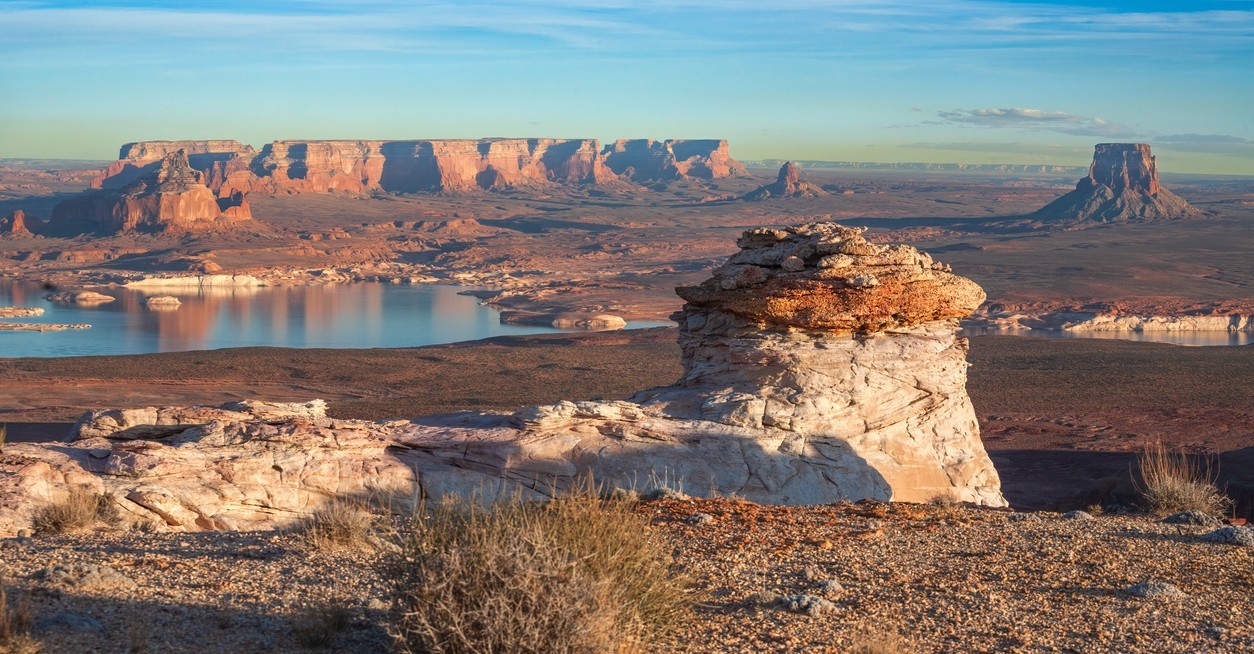
“Two years ago, the Lower Basin states proposed post-2026 operating guidelines in hopes of building a seven-state agreement. But after more than two years of talks between the Lower and Upper Basin states, no consensus emerged. On May 1, Arizona, California, and Nevada submitted a joint proposal to the Bureau of Reclamation describing how the Lower Basin should operate through 2028. Reclamation is now considering which parts of that proposal to include in the federal preferred alternative for post-2026 operations. At Metropolitan’s May One Water and Adaptation Committee meeting, Colorado River policy manager Shanti Rosset briefed members on the proposal and said both the federal review process and the negotiations needed to turn it into binding agreements are expected to move much faster. The 2007 interim guidelines that have governed Lake Powell and Lake Mead operations for nearly two decades are set to expire this year, setting the stage for a major shift in how the system is managed. … ” Read more from Maven’s Notebook.
Flexible pool of water could be key to protect Lake Powell
“An environmental organization is floating a concept that could help the Colorado River system during extremely dry years like this one and keep the nation’s two largest reservoirs above critical thresholds. Boulder-based Western Resource Advocates has released a concept paper that explores the idea of a flexible pool of water that can be moved wherever it’s needed most among the basin’s biggest reservoirs. Water users in the Lower Basin states — California, Arizona and Nevada — currently have about 3.2 million acre-feet stored in Lake Mead through voluntary conservation and efficiency measures. Water users bank water in this pool, known as the Intentionally Created Surplus, and can take this water back out again to use under certain circumstances. The paper’s authors — John Berggren, a regional policy manager with Western Resource Advocates, and Kevin Wheeler, principal and engineer with Water Balance Consulting — used the ICS pool as an example to explore how the idea would work. They say that if the ICS pool could be moved from Lake Mead to Lake Powell, the U.S. Bureau of Reclamation could have a buffer to more easily protect Glen Canyon Dam infrastructure, minimize the need for large releases from upstream reservoirs and reduce the risk of litigation among the seven basin states that share the Colorado River. … ” Read more from Aspen Journalism.
‘No good news’: The latest Colorado River forecast is historically bad
“A federal hydrologist appeared to be momentarily at a loss for words Thursday as he described how dire the latest forecast has gotten for how much water will flow through the Colorado River Basin this summer. “Really no good news this winter,” Cody Moser with the Colorado Basin River Forecast Center said before taking a long pause on a webinar. Moser went on to describe how just 800,000 acre-feet of water is projected to flow into Lake Powell, the upper basin’s largest reservoir, through July. That’s 13% of its average supply. It would also be the lowest summer inflow in the reservoir’s history. The projected flows into Powell have dramatically decreased over the last two months. … ” Read more from Utah Public Radio.
Utah’s negotiator on Colorado River says feds may make short-term decision for states
“Utah’s negotiator over the Colorado River told FOX 13 News that the Trump administration may have to make a short-term decision for the states before they can achieve some consensus. With an October deadline to strike a new deal to manage the mighty river that supplies water to more than 40 million people across the West, the states have been at an impasse. So Gene Shawcroft, Utah’s commissioner over the river, said they may let the U.S. Bureau of Reclamation proceed with its proposal in the short term. “The rules of the game for the next year would be according to that record of decision,” Shawcroft told FOX 13 News on Tuesday at a meeting of the Colorado River Authority of Utah, the entity that manages Utah’s stake on the river. “If we were to come up with something beyond that, after that, then there’s opportunity for Reclamation to adjust the environmental work and put in a seven-state alternative — if we were to come to that point in the near future.” … ” Read more from the Utah News Dispatch.
A rollback on coal ash rules could hurt groundwater in the Mountain West
“The Environmental Protection Agency is proposing to roll back federal coal ash cleanup rules, raising concerns about groundwater contamination at dozens of coal plants and waste dumps across the Mountain West. In a region where many rural communities rely on groundwater as their main drinking water source, along with agriculture and industry, even small increases in contamination risk can have outsized impacts, especially where there are few alternative water supplies. … ” Read more from Utah Public Radio.
Arizona voters rank water supply above immigration and inflation, new poll finds
“As the state faces the possibility of big cuts to its share of Colorado River water, a new poll shows that protecting the water supply is a top issue for likely Arizona voters across the political spectrum. A poll commissioned by Audubon Southwest found that, when voters were asked to rank their top three priorities for the Arizona legislature, water supply and protecting the Colorado River was the No. 1 answer at 50%. Behind it were inflation and cost of living at 47% and Illegal immigration and border security at almost 30%. The poll was conducted April 23-25 by the private conservative polling company Cygnal, and includes 600 people with a margin of error of +/- 4 percentage points. The company, which has been recognized for its accuracy, initially polled 1,100 respondents and whittled down the number to match the demographics of the Arizona electorate. “This issue has stuck out above the rest in a way that we haven’t seen in a long time,” Chris Lane, pollster for Cygnal, told reporters during a Tuesday press call. … ” Read more from the Arizona Mirror.
SEE ALSO: New poll: 75% of Arizona voters demand action on Colorado River water security, from Audubon
Free trade with Mexico and Canada is critical for Arizona farmers, governor says
“Gov. Katie Hobbs says an extension of the free-trade agreement between the U.S., Mexico and Canada is critical for Arizona’s agricultural economy. But the governor also acknowledged that there needs to be a consideration of the water used to grow those crops. And that, she said, includes not just the question of the volume of water but also who benefits. All this came Friday, with a deadline fast approaching for a review of the United States-Mexico-Canada Agreement. Under its terms, all three countries have to decide this year whether to extend the agreement until 2042 or let it sunset in 2036. … ” Read more from the Arizona Capital Times.
Utah: Washington County’s population is growing but water demand isn’t, conservancy district says
“A silver lining in Utah’s ongoing drought emerged during a meeting of the Colorado River Authority of Utah on Tuesday. Most people in Washington County are apparently taking water conservation to heart. “All the water conservation measures we’ve implemented in the last few years are showing,” said Zach Renstrom, the general manager of the Washington County Water Conservancy District. “Even though our population is growing, our demand, our overall demand for water has actually plateaued. It’s good to see that.” … ” Read more from Fox 13.
Climate change starts a new clock on Colorado’s river runoff, study says
“The first question posed about Colorado’s most precious resource, water, is always, “How much?” The second water question is always, “Where?” A study from the Colorado School of Mines poses a new third question that may prove just as important for Colorado’s drought-plagued future: “When?” The study from a hydrologist and an economist published April 30 in Nature Water combines theoretical calculations with real data from the Rio Grande headwaters in southern Colorado. Warmer temperatures from climate change are resulting in more streamflow coming from rain rather than snow, spreading out the peak runoff to a longer period, according to School of Mines economist Steven Smith and hydrologist and climate change researcher Adrienne Marshall. … ” Read more from the Colorado Sun.
Colorado water managers stress water conservation as the mountains sit in the ‘nasty bullseye’ of widespread drought
“Colorado water managers stressed the importance of water conservation during a talk last week about what homeowners should know as the state faces widespread drought following a winter with a record-low snowpack. Water managers representing Summit County, the Yampa River region, the Fairplay area and Lake and Park counties presented during the meeting hosted on Thursday, May 8, by Altitude Realtors. “The take-home message is we just experienced the warmest winter on record,” Summit County Water Commissioner Troy Wineland said. … ” Read more from Vail Daily.
Colorado’s Drought Task Force ramps up response to record-breaking conditions
“Officials on Colorado’s Drought Task Force are working to identify local drought impacts and vulnerabilities as the group kicks into gear for the first time since 2020 in response to deep drought conditions. Gov. Jared Polis activated the task force March 16 in the midst of a record-smashing heat wave that ended up triggering rapid melting from the state’s already-low snowpack. The group is flagging issues to watch, like wildfire risk, water shortages for farmers and ranchers, and the ability of small communities to find replacement water if their other supplies aren’t available. “Colorado ag water users are used to preparing for drought and adjusting accordingly,” said Tracy Kosloff, deputy director of the Colorado Division of Water Resources. “They know that this is our system and they have to adjust. It doesn’t mean they’re not impacted.” … ” Read more from the Colorado Sun.
In national water news today …
Water costs are rising faster than inflation — and sending bills soaring
“When the reservoirs that provide water to Corpus Christi, Texas, dropped to just a tenth of their full capacity, officials knew they needed to take drastic action. Forecasts projected the city, which had entered its fourth year of drought, could run out of water in a matter of months. So the city council approved nearly half a billion dollars to seek out new water sources, including paying a contractor almost 40 percent more to speed up construction of a nearly $500 million groundwater project for which it didn’t yet have the necessary permits. To fund this 11th-hour spending, residents will likely see their water rates double over the next few years, according to city manager Peter Zanoni — putting Corpus Christi among countless American communities whose water costs are on the rise as the planet warms. … ” Read more from the Washington Post.
This paint could cool your home and harvest water from the air
“As global temperatures rise and water scarcity worsens, a nanoengineered paint developed by researchers in Australia aims to tackle both — with the stroke of a brush. For University of Sydney scientists Chiara Neto and Ming Chiu, these growing pressures sparked an idea: a rooftop coating that could cool buildings and harvest water from the air. That work evolved into startup Dewpoint Innovations, founded in 2022 with ambitions beyond cooling paint to a broader rethink of how infrastructure is designed: If rooftops across a city could reflect heat and collect water, they could become part of the climate solution. In a warming world, cities are becoming heat traps. Concrete and rooftops absorb the sun’s energy, raising temperatures, leading to what’s known as the urban heat island effect — where cities experience higher temperatures. … ” Read more from CNN.

- About the Daily Digest: The Daily Digest is a collection of selected news articles, commentaries and editorials appearing in the mainstream press. Items are generally selected to follow the focus of the Notebook blog. The Daily Digest is published every weekday with a weekend edition posting on Sundays.
