
Several news sources featured in the Daily Digest may limit the number of articles you can access without a subscription. However, gift articles and open-access links are provided when available. For more open access California water news articles, explore the main page at MavensNotebook.com.
On the calendar today …
- MEETING: Environmental Flows Workgroup from 10am to 12pm. Agenda items include Low flows in the Napa River, Supply and demand modeling, and Coastal hydrology and regional drought planning. Click here for the full agenda and remote access instructions.
- WEBINAR: Ready, Set, Go! California’s Climate Bond in Action – Unleashing Transformational Investments across the Golden State from 12pm to 1pm. California’s Climate Bond is turning historic funding into real results. State investments are helping communities reduce wildfire risk, diversify water supplies, restore habitats, expand access to nature, protect farmland, and adjust to intensifying climate extremes. Join Secretary Crowfoot for a candid conversation with state leaders and nonprofit partners about how these funds are getting utilized and how state agencies are working to make it easier to use bond funding to protect communities and natural places across California. Click here to register.
In California water news today …
Treating nitrate-contaminated wells with distributed water systems in California
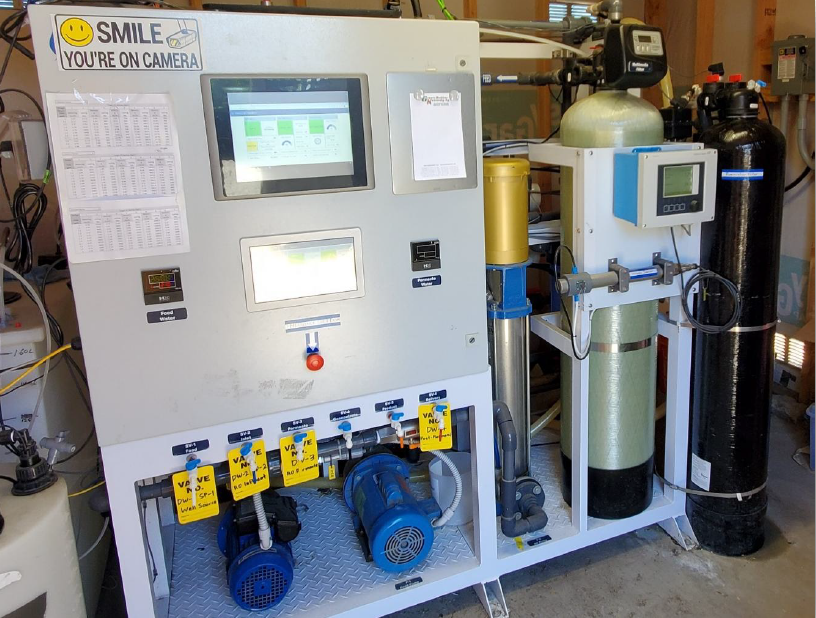
“About 15 seasonal workers and their families live in a trailer park on Huntington Farms, a 6,000-acre land-holding in the Salinas Valley that grows crops including broccoli, lettuce and strawberries. It’s a good deal for both parties. The workers get affordable spaces for their mobile homes and the company gets a reliable local crew. But this arrangement also has a downside. The well that supplies the trailer park’s water is contaminated. Nitrate is five times higher than the state standard, and salinity is twice the state recommended limit. Excessive nitrate can diminish the oxygen-carrying capacity of red blood cells, causing “blue baby syndrome” in infants. This is rare but can be fatal. “Every shallow well in the Salinas Valley has the same problem,” says Mitch Moss, the equipment manager at Huntington Farms. “Nitrate is high from overfertilizing.” People living in the Huntington Farms trailer park haven’t had to worry about unsafe drinking water since 2022, when University of California, Los Angeles researchers installed a new kind of reverse osmosis system on their well. Reverse osmosis uses membranes to filter out impurities. While conventional reverse osmosis systems are large-scale and costly, the new one is small-scale and affordable. … ” Continue reading from Robin Meadows at Maven’s Notebook.
The case for investing in the Delta
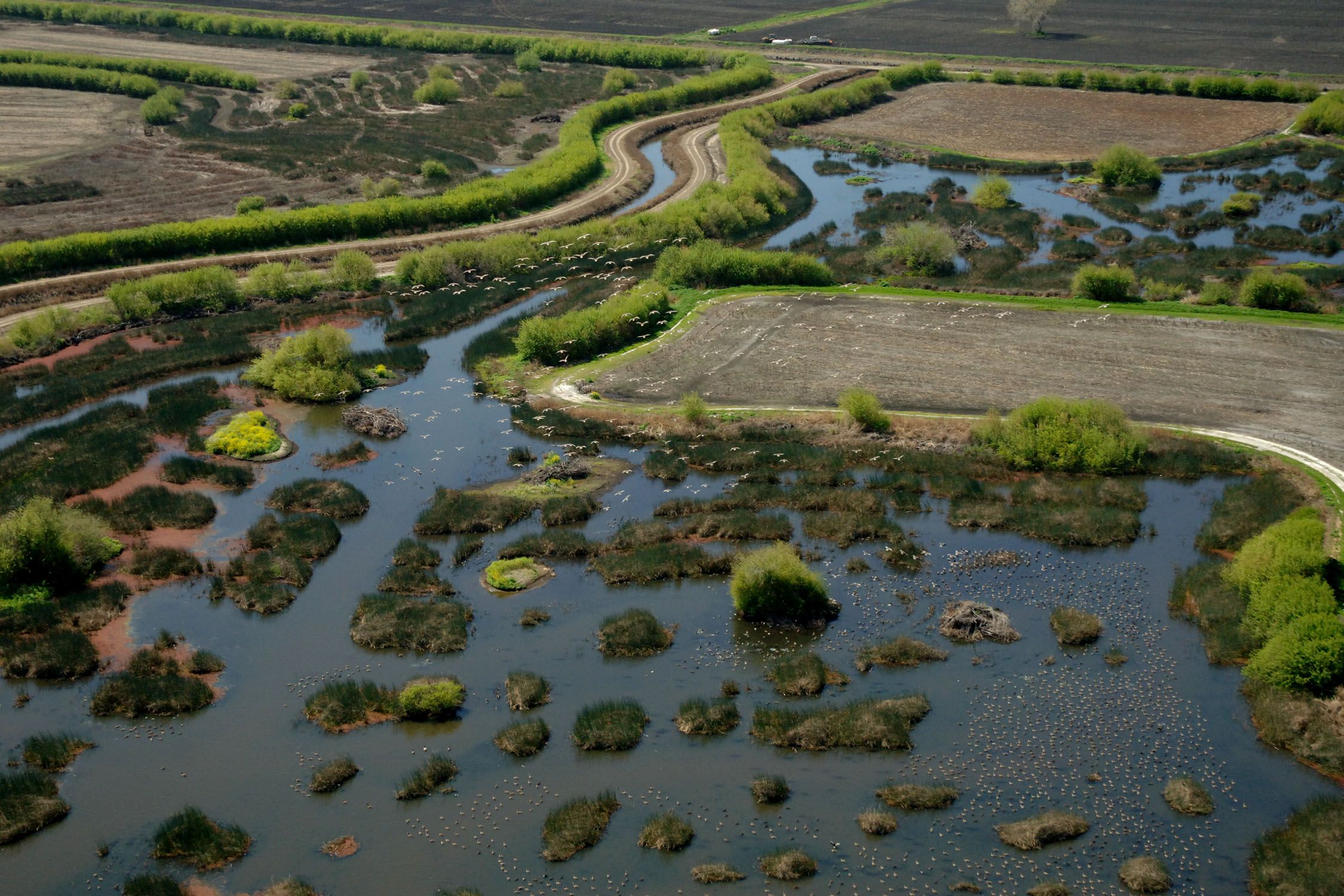 “The Sacramento–San Joaquin Delta is at the center of California’s long-distance water distribution system. But a number of challenges—from aging levees and sea level rise to sinking land—are threatening this vital resource. We spoke with Campbell Ingram of the Delta Conservancy about what’s needed to increase the resilience of the Delta’s communities, ecosystems, and water infrastructure. Water exported from the Delta supplies about 30 million people and irrigates about 3 million acres of farmland. Q: What challenges is the Delta facing as a water infrastructure hub? A: Subsidence is a big one. Currently, 150,000 acres of Delta islands lie 25–30 feet below sea level because of the oxidation of peat soils. This subsidence continues to happen at the rate of 1–2 inches a year, releasing about 1.2 million tons of carbon into the atmosphere. As the climate changes, more intense storms are coming through and eroding levees. If you lose one island, the wind energy causes waves to erode other levees. … ” Read more from PPIC.
Newsom water board pick draws opposition from enviros ahead of Bay Delta vote
“Environmentalists and a salmon fishing group unsuccessfully lobbied a California Senate committee to reject Gov. Gavin Newsom’s reappointment of a veteran State Water Resources Control Board member last week, as tensions over the board’s upcoming vote on a controversial update to water policy for the Sacramento and San Joaquin watersheds spilled into the gubernatorial appointment process. Gov. Gavin Newsom nominated Dorene D’Adamo to her fourth term on the board earlier this year, ahead of an expected September vote on the Bay-Delta Plan, which governs water use of the two rivers, their watersheds and the San Francisco Bay. … ” Read more from the Sacramento Bee.
California agriculture faces early harvests, water pressure, and growing regulatory concerns
“The AgNet News Hour covered a wide range of issues impacting California agriculture, including unusually early crop harvests, ongoing water challenges, labor concerns, and mounting frustration over regulations affecting growers across the state. The episode opened with discussion surrounding California’s early growing season, as warmer spring temperatures continue accelerating crop development statewide. Hosts noted that blueberries, strawberries, and table grapes are all running ahead of schedule this year after a hot March pushed production earlier than normal. … The program also featured part two of an extended interview with Western Tree Nut Association President and CEO Roger Isom, who continued discussing major concerns facing California agriculture. One of the biggest issues raised during the conversation involved water allocations and long-term infrastructure failures tied to SGMA groundwater restrictions and limited storage capacity. “We need meaningful water storage,” Isom said while discussing California’s ongoing water crisis. … ” Read more from AgNet West.
California farmers battle water challenges amid climate change, difficult regulations
“California growers are taking an increasing amount of agricultural land out of production every year because of lack of available irrigation water to grow those crops. And there is likely little argument that laws and regulations play an outsized role in that equation. Statewide, the debate revolves around where the fault lies and what solutions can assure the largest and most productive agricultural region in the United States, and probably the world, remains in that lofty position. “We don’t have a water supply issue,” declared Michelle Paul, executive director of the California Farm Water Coalition (CFWC). “We have a water management issue.” Nonetheless, California growers have been receiving less surface water than contracted for many years. And the passage of the Sustainable Groundwater Management Act (SGMA) more than a decade ago is impacting their ability to use groundwater to supplement those reduced water deliveries. … ” Read more from the Organic Produce Network.
Trump water plan could increase deliveries through California water projects
“A federal water plan adopted under the Trump administration could increase deliveries through two of California’s biggest water projects. The plan, called Action 5, changes how the federal Central Valley Project and California’s State Water Project are operated. The U.S. Bureau of Reclamation says the plan was developed after President Donald Trump signed Executive Order 14181 in January 2025. The order directed federal agencies to take steps to increase water deliveries and hydropower production while following federal law and environmental protections. According to a Bureau of Reclamation fact sheet, Action 5 could increase annual Central Valley Project deliveries by 130,000 to 180,000 acre-feet. The State Water Project could see an additional 120,000 to 220,000 acre-feet, depending on water conditions and whether the state adopts the plan. … ” Read more from the Los Banos Enterprise.
‘Not in my backyard’: California to surpass 300 data centers despite local opposition
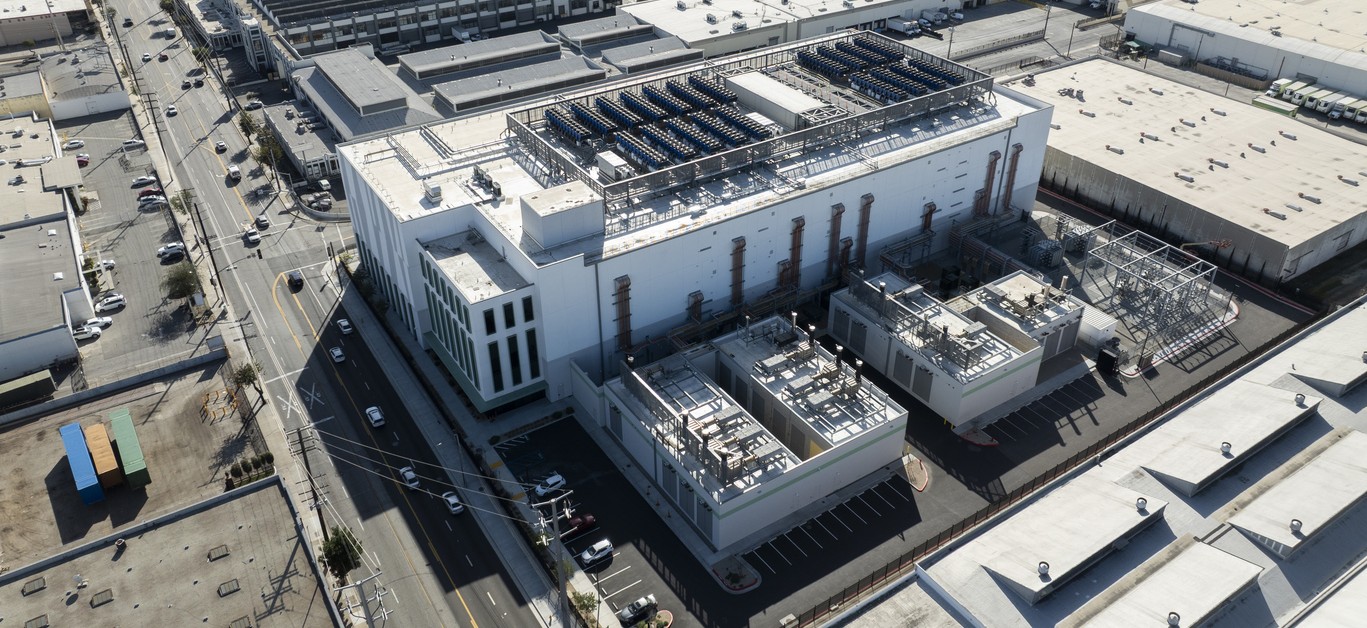
“A proposed $10 billion data center in Imperial, California, has become the center of a much larger statewide debate over how far the AI infrastructure boom should go, according to Inside Climate News. The controversy comes as California is on track to surpass 300 data centers. The state already has 288 operating facilities as of May 10, 2026, according to the Data Center Map. Cleanview analysts say 25 more are planned by 2030, including the proposed data center in Imperial. That rapid growth is arriving as communities and regulators continue to wrestle with questions over electricity demand, water consumption, and oversight. In Imperial County, the proposed facility would be built less than half a mile from some homes and could span roughly 17 football fields if completed in 2028. Developer Sebastian Rucci said the two-story project would use 330 megawatts of power and about 750,000 gallons of water per day while generating construction activity and around 100 permanent jobs, according to ICN. … ” Read more from The Cool Down.
A startup confronts water shortages by pulling it out of the air
 “The large metallic white box sits in a Southern California parking lot, looking unremarkable until water starts flowing from a hose attached to it. Peer inside, though, and it’s nearly empty but for some wires, tubes and a container of light-colored material. The water isn’t being conjured out of thin air by magic but by MOFs— metallic organic frameworks. MOFs are nanocrystalline structures engineered at an atomic level to attract specific molecules. In this case that’s H2O and the machine made by startup Atoco is silently harvesting molecules from the surrounding air and storing them in the material’s porous cavities that serve as microscopic water tanks. Atoco founder Omar Yaghi shared the 2025 Nobel Prize in chemistry for pioneering MOFs and on an April morning he gave Bloomberg News an exclusive demonstration of the commercial prototype of its atmospheric water harvester in the lot outside the company’s Orange County laboratory. … ” Read more from Bloomberg.
Harvesting water from air
“Even in the driest desert, water abounds in the air as vapor. But we don’t have a means to tap this supply in arid climates without using huge amounts of energy.Scientists in recent years have sought to efficiently draw moisture from ambient air and condense it into potable water using materials made of salt and absorbent polymers. But these materials, known as hydrogels, until now have degraded too quickly to be practical or cost effective. Researchers have now discovered a way to harvest water from air using solar power and a hydrogel that lasts for eight months or more. Attached to metal coated to prevent corrosion, the long-lasting material can produce water at low cost almost anywhere. … ” Read more from Stanford News.
Why salmon runs across Northern California are coming back stronger than they have in years
“Salmon runs across Northern California are showing the strongest signs of recovery in years, and the rebound is happening across multiple river systems at the same time. After three consecutive years of fishing closures, the comeback did not happen on its own. It is the result of a coordinated effort across hatcheries, rivers and watersheds that has been building for years. Hatchery production has been a major piece. CDFW ramped up output at facilities across the region, including the Feather River Fish Hatchery in Oroville, which released roughly 1.5 million spring-run and 1.16 million fall-run Chinook salmon into the Feather River this spring alone. Another 129,000 fingerlings were stocked directly into Lake Oroville in April to support inland recreational fishing. The increased production put more young fish into river systems at a time when conditions were favorable for survival. … ” Read more from Active NorCal.
AI in fisheries: What it is, what it isn’t, and why it matters
“In biological sciences, accuracy and advancement are important, but sometimes these two pillars do not go hand in hand. In fisheries science, managers and biologists make decisions that impact entire species and ecosystems, so, naturally, these decisions must be rooted in science that is correct, transparent, and defensible. Because of this, biology can be slow to adopt new technologies until rigorous testing has occurred. Today, artificial intelligence (AI) is a new technology on scientists’ minds, and it took center stage at the recent Interagency Ecological Program (IEP) workshop where plenary talks and an entire session were dedicated to the topic. Over these talks, aspects of AI—from how it works to common concerns in science—were discussed, leaving attendees with the sense that AI is not a passing trend, but a tool that fisheries science is already engaging with critically and carefully. … ” Read more from FishBio.
Looking to DNA for answers as climate change outpaces California wildlife’s ability to evolve
“Evolution works over millennia. Climate change is moving far faster. That mismatch is killing some of the planet’s most vital ecosystems, including California’s towering redwoods and the seagrass meadows along its coast, both of which store vast amounts of carbon and support complex webs of life. Marine heat waves, record wildfires and coastal development are pushing these systems beyond their limits as climate change, driven by emissions of fuels such as oil and gas, accelerates. An estimated 1 million species face extinction, many within decades, largely due to human activities such as habitat destruction, pollution and overuse of natural resources, according to a 2019 report by a United Nations-affiliated intergovernmental scientific body. … ” Read more from the LA Times.
In regional water news and commentary today …
NORTH COAST
Water, odor issues alleged in Carlotta cannabis farm expansion
“A Carlotta area cannabis farm is seeking to expand but water use issues and a neighboring property owner’s complaint about odor will complicate county approval. The permit hearing for the expansion was on the consent agenda of the Humboldt County Planning Commission’s May 7 meeting but it was continued to May 21. The floor was opened to discussion and public comment, however, and there was a lot of it. The permit application, from Eureka resident Van Levi doing business as Carlotta Gardens LLC, is for a 20,000 square-foot expansion of an existing 50,000 combination mixed light/outdoor cannabis farm in the Carlotta area. With the expansion, the farm’s permitted annual water use will increase to 1.76 million gallons sourced from a groundwater well. And that got a lot of commentary from commissioners. … ” Read more from the Redheaded Blackbelt.
SIERRA NEVADA
Yuba Water Agency awards initial contract for design and engineering to support rebuild of ruptured penstock
“Yuba Water Agency has awarded a contract to GFT Inc. for engineering and design services related to the penstock that ruptured above New Colgate Powerhouse in February. The penstock is the large pipe that moves water between New Bullards Bar Dam and Reservoir and New Colgate Powerhouse to generate hydropower. An initial contract of nearly $2 million will cover a thorough condition assessment of the penstock, as well as an alternatives analysis. An estimated additional $6 million will cover detailed engineering design and support during future construction. Additional costs and a repair schedule will depend heavily on the results of the condition assessment and the forensics investigation, which is currently underway. … ” Read more from YubaNet.
SACRAMENTO VALLEY
Sacramento region reaches new long-term agreement to balance water use and future growth
“The debate over Sacramento’s water has been going on for decades. From farming to urban uses, it’s a natural resource that is in high demand, especially during droughts. On Monday night, a celebration was held to announce that a new signed agreement in place to make sure there’s enough water in the future. Ashlee Casey with the Sacramento Water Forum said that opposing groups including environmentalists, developers, farmers and cities have all reached an agreement on how to best use water that’s released from Folsom Dam and flows down the American River. “The goal of the agreement is to balance those things so that it is equitable, that people have what they need and the environment has what it needs,” Casey said. … ” Read more from CBS Sacramento.
SEE ALSO: Sacramento Region Celebrates Signing of Water Forum 2050 Agreement, from the Water Forum
BAY AREA
Mill Valley forum addresses sea-level rise planning
“Susan Ives studied the map of salt marshes and inlets stretching like fingers from Richardson Bay into Mill Valley’s lowlands. She noted where wetlands, tidal waters and creeks have been hemmed in over the decades by roads, homes, schools, ball fields and parks. “So this isn’t showing sea level rise as much as it’s showing the land that was the buffer zone,” said Ives, a Mill Valley resident who also is a member of the San Francisco Bay Restoration Authority citizens oversight committee. Ives was one of several dozen residents who attended the city’s first public forum for writing its shoreline adaptation plan, which 50 communities that ring San Francisco Bay must draft by 2034. The conference room at the Mill Valley Community Center was filled with posters and maps on 20 easels depicting tidal zones, development over the years, photos of recent flooding and mitigation options. … ” Read more from the Marin Independent Journal.
Mountain View water pipe disinfected, free of harmful bacteria
“The city of Mountain View is moving closer to restoring clean water to nearly two dozen households that have been without the resource since late April. The “super-chlorination” of a pipe serving 21 households on Drucilla Drive and Carla Court has been completed, the city said in an update Monday afternoon, adding that tests indicated it has been “properly disinfected,” with no coliform bacteria present. As a result, work to reconnect the pipe at both ends of Drucilla Drive to restore full water service started Monday and was expected to wrap up by the end of the day. … ” Read more from the San Jose Mercury News.
CENTRAL COAST
John Laird bill to expedite Pajaro River flood protection projects passes Senate
“A bill to accelerate flood protection projects along the Pajaro River made further traction as the California Senate passed legislation to expand contracting tools available to the Pajaro Regional Flood Management Agency Thursday. Senate Bill 1055 — authored by Sen. John Laird, D-Santa Cruz — aims to authorize the agency to utilize additional methods to expedite construction, including job order contracting, design, build, best value and construction manager/general contractor contracting. It also seeks to expand the number of contracting tools available to the agency from three to seven, help reduce project costs, accelerate construction timelines and improve project delivery for levee maintenance and flood control improvements. … ” Read more from the Santa Cruz Sentinel.
SAN JOAQUIN VALLEY
PG&E adds 106 acres to river preserve near Modesto. Bunnies, butterflies benefit
“Pacific Gas & Electric Co. has paid to restore 106 acres of riverside habitat west of Modesto. It was the latest of the projects that mitigate the environmental effects of operations in the utility’s vast service area. This one wrapped up May 1 at the west end of Beckwith Road, about nine miles from Highway 99. It is at the north border of the San Joaquin River National Wildlife Refuge, which totals about 7,500 acres. PG&E did the project with the nonprofit River Partners, a leader in restoration in California. Planning help came from the U.S. Fish & Wildlife Service, which owns the refuge. … ” Read more from the Modesto Bee.
Friant Water Authority ramps up mussel awareness ahead of Memorial Day weekend
“Friant Water Authority is planning an “aggressive” outreach campaign before Memorial Day weekend in an effort to keep golden mussels out of several eastside reservoirs, including Millerton Lake. The campaign includes social media and handouts urging boaters “Clean, Drain and Dry” all watercraft and trailers. This is especially important for boaters who have visited the Sacramento-San Joaquin Delta, ground zero for the golden mussel infestation. Friant is working with California State Parks and the Bureau of Reclamation to remind boaters to check and clean watercraft before launching into Millerton Lake, or any water body, said Katie Duncan, water resources engineer at Friant Water Authority’s April 30 board meeting. … ” Read more from SJV Water.
EASTERN SIERRA
Proposed Inyokern data center could use 12 to 16 million gallons of water annually
“As residents continue to raise concerns about a possible data center moving into their small desert community, the Indian Wells Valley Water District in Ridgecrest said they are aware and “are trying to learn more about it to make an educated decision” regarding the proposal. The data center in question is proposed in Inyokern, in an unincorporated area of Kern County. The company behind the proposal – R&L Capital Inc. – has filed a small power plant exemption application with the California Energy Commission, laying out details of the project they hope to build. R&L Capital estimated that the proposed project would use approximately 12 to 16 million gallons of water per year from the Indian Wells Valley groundwater Basin. By comparison, the average household in the United States uses about 329 gallons of water per day. … ” Read more from KGET.
SOUTHERN CALIFORNIA
Scrap yards, scrapped enforcement?
“Throughout California’s Senate District 20, roughly thirty scrap metal recycling facilities sit in the industrial corridors running alongside residential housing. For the working-class, majority-Latino communities living blocks away, the legal system has been slow to respond. Drive through Sun Valley or Pacoima on a weekday morning and you will smell it before you see it: the metallic tang of shredded steel, the faint chemical bite of residual fluids baking in the San Fernando Valley sun. More than half of the thirty scrap metal dismantling and recycling facilities in District 20 sit within a few blocks of homes, schools, and parks. The juxtaposition is not accidental. It is the product of decades of permissive land use policy, inconsistent enforcement of environmental and zoning laws, and a regulatory architecture built for a different era. … ” Read more from the Legal Planet.
Sand project at Capistrano Beach pulls from quarry to add to beach before busy summer season
“Capistrano Beach is getting a much-needed shot of sand for summer, an amount that would fill about two football fields, to help build up the eroding shore. An effort to truck in 13,500 cubic yards of sand to the struggling stretch of coast got underway Monday, May 11, not just to add towel space, but to protect infrastructure and shoreline habitats. The sand is being hauled from the Lapeyre Quarry off of Ortega Highway in San Juan Capistrano to Dana Point, a public-private project with a $440,000 price tag. About 30 trucks a day, each with about 25 tons of sand per truck, will work through mid-June to dump and spread the sand. “We are committed to making sure we have annual sand replenishment, so we can continue to build back the beaches,” Fifth District Supervisor Katrina Foley said while on the sand Monday as the project kicked off. … ” Read more from the OC Register.
SAN DIEGO
Why It Matters: County sales tax measure vague on Tijuana sewage fixes
“The county sales tax signature gatherers seemed to be everywhere – outside Trader Joe’s in Hillcrest. Or on the corner of 30th and University Avenue – the busiest intersection in North Park. They all asked passersby one question: Would you like to stop the Tijuana River sewage crisis at the border? They were promoting a citizens’ initiative to get a countywide half-cent sales tax on the November ballot. I asked one how it would be used on the Tijuana River. They couldn’t point to a specific project. Probably because the “Protect San Diego County Health and Safety Act” doesn’t specifically point to one. … ” Read more from KPBS.
Along the Colorado River …
Water levels at Lake Powell, Lake Mead could go dangerously low
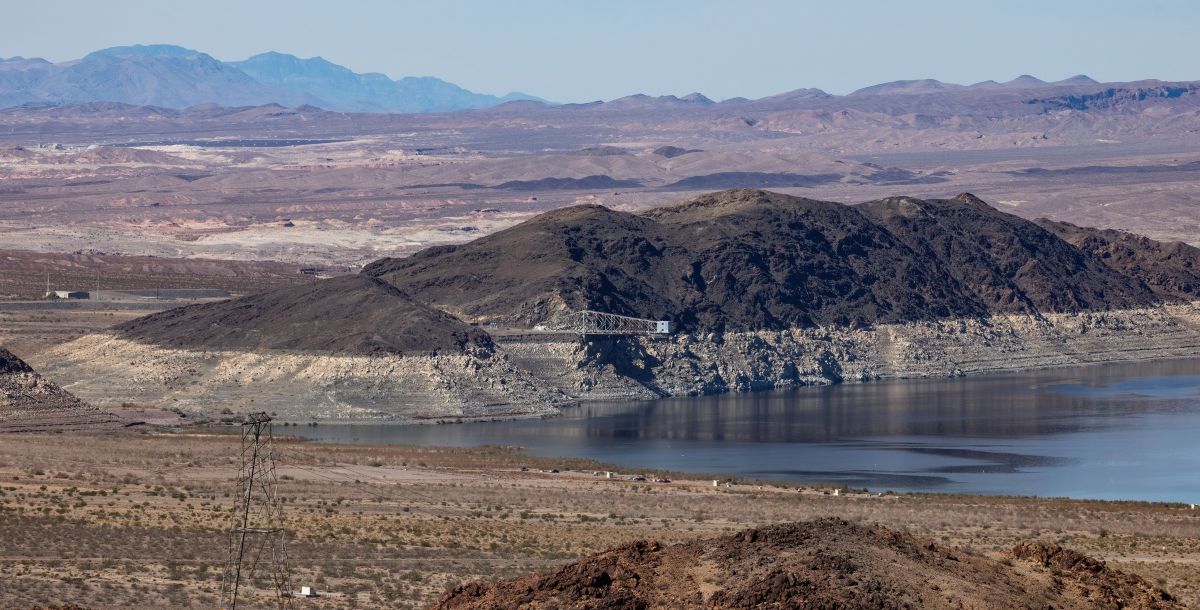 “Spring is a critical time for the Colorado River Basin watershed, when snowmelt flows into major reservoirs. But after a hot and dry winter, the state of spring runoff is grim, especially at Lake Powell, where forecasters are predicting the lowest water flows ever recorded. The Colorado River Basin Forecast Center expects 800,000 acre feet of water to flow into Lake Powell in the period between April and July this year. That’s just 13% of the 30-year average, between 1991 and 2020. What’s more, about half of that water has already showed up to Lake Powell, thanks to a record-breaking warmup in March that triggered an early runoff, said Cody Moser, senior hydrologist at the Colorado River Basin Forecast Center, in a webinar on Thursday. “We are seeing the water from that March heatwave showing up in early April,” Moser said. … ” Read more from SF Gate.
‘No good news’: The latest Colorado River forecast is historically bad
“A federal hydrologist appeared to be momentarily at a loss for words Thursday as he described how dire the latest forecast has gotten for how much water will flow through the Colorado River Basin this summer. “Really no good news this winter,” Cody Moser with the Colorado Basin River Forecast Center said before taking a long pause on a webinar. Moser went on to describe how just 800,000 acre-feet of water is projected to flow into Lake Powell, the upper basin’s largest reservoir, through July. That’s 13% of its average supply. It would also be the lowest summer inflow in the reservoir’s history. The projected flows into Powell have dramatically decreased over the last two months. … ” Read more from Utah Public Radio.
Arizona golf courses balance green fairways, shrinking water supplies
“At Alta Mesa Golf Club, general manager Scott Mattiello said the club is trying to strike a delicate balance between keeping fairways green and conserving water amid Arizona’s ongoing water crisis. Mattiello gave a tour of the course’s high-tech irrigation system and weather-forecasting devices that track soil moisture and adjust watering schedules to reduce waste. He said crews also still hand-water certain areas with hoses — “the way golf course managers did a century ago” — when it is the most efficient option. “I understand why there’s a perception that golf courses are overusing or using too much water here in Arizona, but it’s really not the case,” Mattiello said. “We’ve actually been stewards of water usage for many years, even prior to the concerns.” … ” Read moire from Channel 15.
Utah pipeline nears completion after 17 years
“Southern Utah County is nearing the end of one of the region’s largest long-term water infrastructure projects as crews complete the final section of the Spanish Fork-Santaquin Pipeline, a system designed to move Colorado River water from Strawberry Reservoir to growing communities along Utah’s Wasatch Front. The project, which traces its roots back to the federally authorized Central Utah Project of 1956, has taken roughly 17 years to build and will eventually help deliver up to 23,090 acre-feet of water annually for municipal and industrial use in South Utah County. According to the Central Utah Water Conservancy District, the final “Santaquin Reach” includes more than 23,000 feet of 60-inch steel pipe and marks the last major segment needed to complete the system. … ” Read more from Western Water.
Colorado lawmakers reject environmentalist-backed effort to regulate data centers
“Colorado lawmakers abandoned a last-minute effort Monday to pass environmental regulations for data center development in the state. After rewriting the environmentalist-backed legislation, Senate Bill 102, to add a tax incentive for data centers, state Sen. Cathy Kipp, D-Fort Collins, proposed her bill be postponed indefinitely. The Senate Transportation and Energy committee voted down the legislation unanimously, putting an end to the measure Kipp has been working on for about a year. The bill, also sponsored by Rep. Kyle Brown, D-Louisville, would have required data center companies to pay the full cost for the power needed to run their facilities. It also would have ensured that data centers don’t blow the state’s greenhouse gas emission reductions targets, intended to stave off the worst effects of climate change. … ” Read more from the Colorado Sun.
In national water news today …
Trump administration cancels rule that made conservation a use of public lands
“The Interior Department is canceling a rule that put conservation on equal footing with development, as President Donald Trump’s administration eases restrictions on industries and seeks to boost drilling, logging, mining and grazing on taxpayer-owned land. The 2024 rule adopted under former President Joe Biden was meant to refocus the Interior Department’s Bureau of Land Management, which oversees about 10% of land in the U.S. It allowed public property to be leased for restoration in the same way that oil companies lease land for drilling. But Interior Secretary Doug Burgum has said the rule could have blocked access to hundreds of thousands of acres (hectares) of land — preventing energy and timber production and hurting ranchers who graze on public lands. … ” Read more from the Associated Press.
SEE ALSO: Trump axes Public Lands Rule, from The Land Desk
Misusing the Congressional Review Act as a tool for land management policy
“The Congressional Review Act (CRA) provides the U.S. Congress with an expedited procedure to review and potentially overturn rules issued by federal agencies. Despite being touted as a critical avenue for congressional oversight, the CRA is more often deployed as a partisan tool that replaces agency expertise and democratic consideration with political maneuvers and slim voting majorities. In a recent analysis, the Center for Progressive Reform took stock of how Congress used the CRA and showed how easy it is to misuse “resolutions of disapproval”—the specialized form of legislation it creates—both in numbers and the scope of its application. It is tempting to think that the threat of the current Congress abusing the CRA is over, now that the deadline to revisit rules implemented during the previous Congress’s session—provided by the CRA’s unique “lookback provision”—has formally passed. But that would be a mistake, as conservative lawmakers have found novel ways to target agency actions from previous administrations. … ” Read more from The Regulatory Review.
Trump’s EPA seeks looser construction rules for gas plants, data centers and factories
“The U.S. Environmental Protection Agency announced proposed changes Monday that would allow gas power plants, data centers and factories to begin construction on non-polluting components such as piping, wiring, cement pads and other support structures before obtaining air-emission permits. EPA Administrator Lee Zeldin said in a news release that the “proposal works to provide solutions to issues that have held up critical American infrastructure and advance the next great technological forefront.” The changes will undergo a 45-day public comment period. … ” Read more from Inside Climate News.
SEE ALSO: EPA plan would let work start on data centers, power plants before air permits, from E&E News

