
A wrap-up of posts published on Maven’s Notebook this week …
Note to readers: Sign up for weekly email service and you will receive notification of this post on Friday mornings. Readers on daily email service can add weekly email service by updating their subscription preferences. Click here to sign up!
In California water news this week …
Newsom pledges to move forward with Delta water tunnel in California
 “Gov. Gavin Newsom said his administration is “moving forward aggressively” to continue laying the groundwork for a giant tunnel beneath the Sacramento-San Joaquin River Delta to replumb the state’s water system. “We got to move faster. Move faster,” Newsom said to regulators during a speech Thursday at a conference held by the Assn. of California Water Agencies. “We all have to be held to a higher level of accountability.” California’s 40th governor provided a chronological look back at his water policies since taking office in 2019 and asserted the need to continue his effort to modernize state infrastructure to provide for cities and farms into the future. Newsom cast the tunnel as a “climate adaptation project,” noting that climate change is projected to shrink the amount of water the state can deliver with its current infrastructure. With his term expiring at the end of the year, Newsom acknowledged that he will soon “pass the baton” on water policy to the next governor. Democrat or Republican, that person could decide the fate of his signature water project. … ” Read more from the LA Times. | Read via AOL News.
Why the odds keep rising for the strongest El Niño in a century
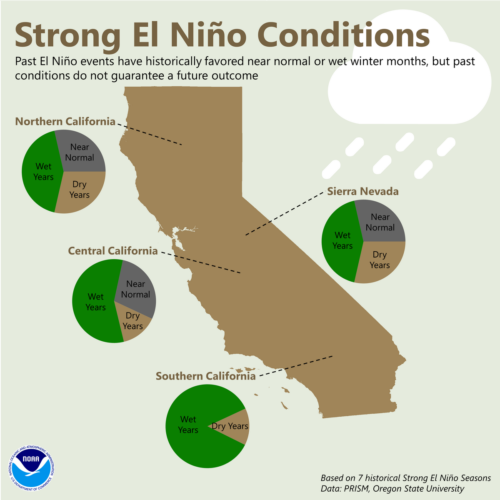 “Chances are rising that an El Niño expected to form soon could become one of the most powerful such events on record, according to new data released this week. The latest outlook from the European Center for Medium-Range Weather Forecasts (ECMWF) shows water temperatures in a key region of the central equatorial Pacific Ocean potentially reaching 3 degrees Celsius (5.4 degrees Fahrenheit) above average late in the year. That could approach or even surpass the current records set in 1877 and 2015 and exceed the threshold for a super El Niño. “Confidence is clearly shifting higher on potentially the biggest El Niño event since the 1870s,” wrote Paul Roundy, a professor of atmospheric science at the State University of New York at Albany. Records for El Niño began around 1850. … ” Read more from the Washington Post.
SEE ALSO: The world is about to get a preview of life in 2035, from the New York Times
El Nino to fuel Pacific hurricane season, increase risks for California, Hawaii, Mexico
“Exceptionally warm waters and a developing El Niño will boost tropical activity during the 2026 Eastern and Central Pacific hurricane season, raising the risk of direct impacts in Hawaii, Southern California and parts of Mexico. The Eastern and Central Pacific basins are expected to produce above the historical average number of named storms, hurricanes and major hurricanes in 2026. The Eastern Pacific hurricane season starts on May 15, while the Central Pacific hurricane season begins on June 1. “This could be an unusually active and potentially impactful year in the Pacific basin, unlike the Atlantic basin, where we are forecasting fewer storms than the historical average,” AccuWeather Lead Hurricane Expert Alex DaSilva said. … ” Read more from AccuWeather.
A whiplash spring and California’s water supply
“It has been widely reported that March was a disaster for California’s snowpack. Summer seemed to arrive three months early, with record-shattering heat and dryness and a mere pittance of precipitation. Did a relatively cool, rainy, and even snowy April make up for it? The short answer is no—but it helped. It’s important to remember that snowpack is California’s third-largest source of water storage, behind surface reservoirs and groundwater. Our statewide water supply grid is built around storing roughly 30% of statewide water supply in snowpack, a relatively reliable source of water through the 20th century. In a typical year, snow accumulates from December through March. Around April 1, warming temperatures, lengthening days, and a higher angle of the sun cause the snowpack to warm up and start melting, raising rivers and filling reservoirs. Depending on how thick the snowpack is, this melting can last well into June and even July in some years. … ” Read more from the PPIC.
Groundwater law begins reshaping valley
Photo/Caleb Hampton
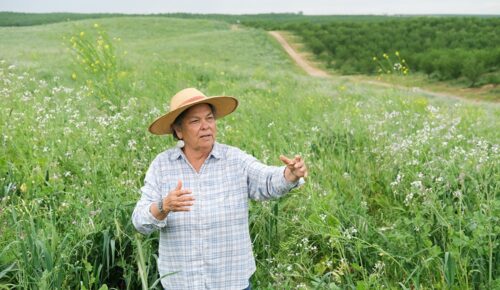
“Earlier this spring, an excavator maneuvered through the rolling hills of eastern Merced County, stacking almond trees removed by farmer Rosie Burroughs. During the past couple years, Burroughs scrapped about 170 acres of almond and walnut trees. Another 140 acres are slated for removal, reducing the family’s acreage by about a fifth. San Joaquin Valley farmers are increasingly fallowing land as California’s Sustainable Groundwater Management Act curtails pumping. “Every farmer is affected,” Burroughs said. Groundwater serves as a lifeline for orchards and vineyards in the valley that need water regardless of rain or drought. For some growers, it’s their only water source. Under SGMA, which is implemented by local agencies, groundwater basins have until 2040 or 2042 to achieve sustainability. But since 2020 or 2022, depending on local conditions, groundwater agencies have been required to prevent “undesirable results” such as land subsidence and household wells running dry. … ” Read more from Ag Alert.
California farms see compliance costs grow alongside crops
“According to a December 2025 report by the Public Policy Institute of California, “Business Regulation and Business Starts in California,” California does not necessarily have more business regulations than other states, but it is an outlier for the detailed restrictions or requirements embedded in its rules. California is the most regulated state in terms of occurrences of “shall,” “must,” “may not,” “required,” and “prohibited” within its regulations, according to PPIC. … Specific to agriculture, a Joint Informational Hearing of the Assembly Committees on Economic Development, Growth, and Agriculture on October 24, 2025, brought together legislators, academic experts, and local agricultural leaders at California State University, Fresno to discuss the issues contributing to rising food and production costs. During the hearing, Ryan Jacobsen — CEO of the Fresno County Farm Bureau — explained that regulatory complexity is a major driver of high compliance costs, and local farmers may deal with over 90 different state agencies. … ” Read more from Valley Ag Voice.
DWR unveils new vision to strengthen water management and climate resilience in San Joaquin Valley
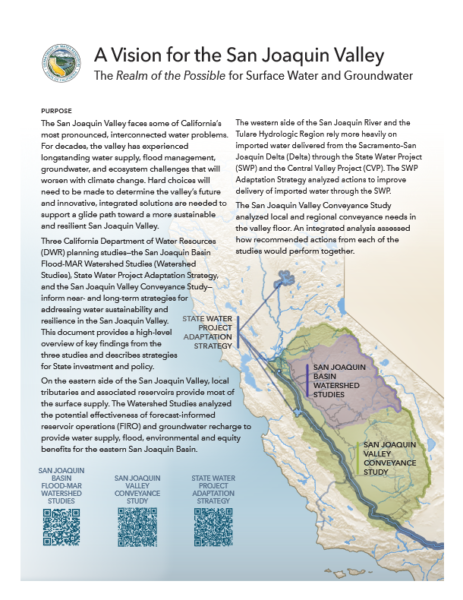 “The San Joaquin Valley is at a turning point, where long-standing complex and interconnected water management challenges are intensifying with climate change and creating mounting pressures for communities, agriculture, and ecosystems. To confront these growing pressures, the Department of Water Resources (DWR) has developed A Vision for the San Joaquin Valley, an integrated plan with near- and long-term strategies to strengthen water management and climate resilience. “Decades of severe groundwater overdraft and accelerating climate conditions have put the San Joaquin Valley on an unsustainable path,” said DWR Director Karla Nemeth. “This vision provides the necessary framework for climate-resilient water management, aligning partners and guiding coordinated action to safeguard communities, agriculture, and ecosystems across the region.” … ” Read more from DWR.
California farms adapt to water crisis with AI, drip irrigation and permanent crops
“According to reporting from Katie Rodriguez with California Farm Bureau, farmers throughout the Golden State are bracing for a difficult water year as the state records its second-lowest April snowpack on record, with unusually warm temperatures accelerating snowmelt and reducing available surface water. And growers south of the Sacramento-San Joaquin River Delta are preparing for even tighter irrigation water supplies, forcing many into difficult planting decisions. In Fresno County, farmer Dan Errotabere told Rodriguez he expects to operate with just a 20% water allocation from the federal Central Valley Project. The constraints are forcing him to fallow up to 30% of his land, particularly impacting water-intensive annual crops. Like many growers, he is shifting focus toward permanent crops and maximizing efficiency through drip irrigation and soil monitoring—though gains from these methods are reaching their limits. … ” Read more from Fruit Growers News.
Potter Valley fight intensifies as community pushes back against dam removal and water loss
“The AgNet News Hour highlighted a growing battle in Northern California, where residents and agricultural leaders are pushing back against efforts to remove key dams in Potter Valley, an issue that could have major consequences for water supply, farming, and rural communities. The episode featured an in-depth interview with Keely Covello, a journalist and Potter Valley native who has become a leading voice in the fight to preserve the region’s water infrastructure. “This is a David and Goliath story,” Covello said. “We are in the thick of the fight.” At the center of the issue is the Potter Valley Project, a system of dams and water infrastructure that supports farms, ranches, and communities across the region. The project plays a critical role in delivering water to an estimated 750,000 people, making it a cornerstone of both local agriculture and broader regional supply. … ” Read more from AgNet West.
Solar on canals reduces water evaporation by 70% and algae growth by 85%
“In September 2025, the Nexus pilot project in California, United States, was completed. The 1.6 MW solar installation is located on canals operated by the Turlock Irrigation District (TID) and was developed through a public-private partnership between the California Department of Water Resources, TID, Solar AquaGrid, and the University of California (UC), Merced. The project aimed to generate empirical data under real-world operating conditions. … The project monitors key performance indicators including electricity generation, evaporation losses, water quality, aquatic vegetation growth, and canal maintenance requirements. After one irrigation season, initial results indicate measurable benefits for the water sector. Canal sections covered with PV modules showed reduced evaporation and lower aquatic weed proliferation, which may translate into reduced operating costs. … ” Read more from PV Magazine.
ACWA names Karla Nemeth as Executive Director, plus Karla Nemeth podcast: The hard truths of California water
 “California Department of Water Resources Director Karla Nemeth has been selected to lead the Association of California Water Agencies (ACWA) as its next executive director, President Ernie Avila announced today. Her selection follows a nationwide recruitment process and overwhelming support of the association’s Board of Directors. Effective Sept. 1, Nemeth will oversee staff of the nation’s largest statewide coalition of public water agencies. Based in Sacramento, ACWA represents approximately 470 members responsible for 90 percent of the water delivered to cities, farms and businesses across California. Nemeth will lead a staff of more than 40, including a Washington D.C.-based office, supporting state and federal advocacy, educational outreach and events. ACWA’s membership includes urban, rural and agricultural water suppliers of all sizes throughout California. She will lead ACWA as its first female executive director in the association’s 116-year history. … ” Continue reading at Maven’s Notebook.
PPIC Report/Policy Brief: Tracking Headwaters Management for Wildfire Resilience in California
“California has dramatically shifted how it manages its headwaters. After more than a century of fire suppression, the state is now engaged in an unprecedented multi-agency effort to reduce the risk of severe wildfire on one million acres of forest each year. Better headwater management will both protect the state’s water supply and help keep residents safe. The state is over halfway to meeting its annual million-acre goal. In the first four years, the task force coordinated and tracked efforts to reduce wildfire hazard on an average of 591,000 acres treated each year. Our research shows that the highest-priority areas received the bulk of the management, indicating that efforts are targeting the right places. … ” Read more from the PPIC. | Read the policy brief.
Forest fuel treatments reduce wildfire spread, prevent $2.8 billion in damage
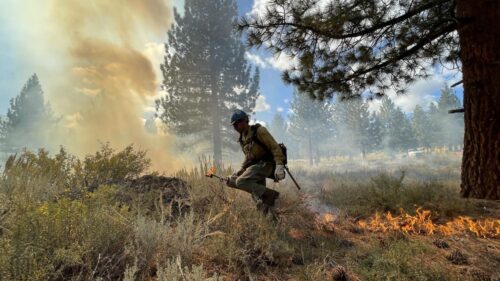
“Every dollar spent on forest fuel treatments saves about $3.75 in wildfire damages, according to a new study, led by researchers at the University of California, Davis, of nearly 300 fires in the western United States. The study estimated that the treatments, such as forest thinning and prescribed burns, prevented $2.8 billion in losses, reduced wildfire spread and fire severity. The researchers analyzed the nearly 300 wildfires that intersected USDA Forest Service fuel reduction treatments in 11 states between 2017 and 2023. The study is the first to evaluate the economic value of Forest Service fuel treatments across the West at a large-scale using data from wildfires that encountered fuel treatments rather than relying on wildfire simulation models. It was published today in Science. “Fuel treatments and forest management are critically underfunded public goods,” said lead author Frederik Strabo, a postdoctoral scholar with the UC Davis Department of Agricultural and Resource Economics. “Our results suggest that when fewer resources are available to agencies like the Forest Service, more of the economic burden of wildfires falls on the public.” … ” Read more from UC Davis.
Why 2026 could be one of the worst wildfire seasons in recent US history
“Wildfire season is fast approaching, and with low snowpack, dry conditions, and soaring temperatures across the U.S., experts are warning that 2026 may be one of the worst on record. Combine those extreme conditions with massive restructuring at the U.S. Forest Service (USFS), and the result is a powder keg for federal wildland firefighters. “We have a wildfire crisis on our hands right now,” said Riva Duncan, an ex-fire chief who spent 32 years fighting wildfires for the USFS and Bureau of Land Management. Today, she’s the president of the advocacy organization Grassroots Wildland Firefighters. “We used to call it a fire season, now it’s a fire year,” Duncan told Outside. “Our fires are larger, more destructive, last longer, and are more difficult to suppress.” … ” Read more from Outside Online.
In commentary this week …
Climate change is impacting California’s water. Here’s how we can prepare.
 Mike Taraszki, a senior vice president and hydrogeologist at WSP, writes, “California rang in the new year by announcing that it was 100% drought free for the first time in 25 years. While that’s good news, it’s risky to assume the trend will last. The last few months of winter were unusually warm, leaving statewide snowpack at nearly half of its historical average. While some places experienced unprecedented rainfall, many are seeing record high temperatures. Swings from deluge to drought are nothing new in California, climate change is rewriting the rules in ways that could represent a real constraint on growth and development. What we do now will dictate the future of our communities and economy. … ” Continue reading this commentary.
Beware of scapegoating coastal protections
The OC Coastkeeper writes, “The California Coastal Commission is under attack like never before. As deregulation continues to sweep the country, developers and their allies are trying to frame coastal protections as barriers to progress and affordable housing. It’s a familiar playbook. Vague claims about red tape and delays, with little acknowledgment of what’s really driving the conversation: profit and the push for more unchecked development. The Coastal Commission exists because Californians wanted it. Voters created it, and they’ve continued to support it for decades. It’s a big part of why our coast is still publicly accessible and far less developed than much of the East Coast. And despite how it’s often portrayed, the Commission is not anti-development; it’s for responsible development. It approves over 90% of projects it reviews, and the average decision takes about two months. … ” Read more from the OC Coastkeeper.
In regional water news this week …
Yuba Water expands sediment removal and road repairs at New Colgate
“Yuba Water Agency has expanded recovery operations at its damaged New Colgate Powerhouse in California, with large-scale sediment removal, road reconstruction and hillside stabilisation works now under way following February’s penstock rupture. The latest update marks a shift from emergency response into longer-term restoration activity at the 340MW hydropower facility on the North Yuba River near Dobbins. The powerhouse has remained offline since 13 February, when a 14ft diameter penstock ruptured above the site, releasing around 400 acre-feet of water and causing extensive erosion and infrastructure damage. Yuba Water said work is progressing on multiple fronts, including repairs to Lake Francis Road, sediment excavation within the river corridor and restoration of systems inside the powerhouse itself. Crews have already removed significant volumes of mud and debris from the powerhouse deck, where deposits reached more than 13ft deep in some locations. Approximately 11,000 cubic yards of material have been cleared from around the facility so far. … ” Read more from International Water & Power.
Federal funding advances Sacramento Regional Water Bank toward completion
“The Regional Water Authority (RWA) announced today it has secured $708,466 in federal funding through the Water Infrastructure Improvements for the Nation (WIIN) Act, advancing the Sacramento Regional Water Bank (Water Bank) toward full implementation. RWA represents nearly two dozen water providers serving 2.2 million people in the Sacramento region. Administered by the U.S. Department of the Interior, WIIN Act funding will support final planning and technical work needed to bring the Water Bank to operational readiness. The Water Bank uses the region’s groundwater basin as a natural reservoir, storing water in wet periods for use during dry times. While local agencies have practiced conjunctive use—the coordinated management of surface water and groundwater—for decades, the Water Bank formalizes and expands these efforts using existing infrastructure. The aquifer can hold enough water to fill Folsom Reservoir twice. In addition, groundwater banking supports flows in the Lower American River year-round and reduces reliance on the river during dry years—leaving more water for fish and habitat. … ” Read more from the Sacramento Regional Water Bank.
Restoring salt ponds to marshes is a win. Unless you’re a snowy plover.
“Parenting is no joke for our local western snowy plovers. First there’s finding real estate on the San Francisco Bay—somewhere salty, flat, and undisturbed in which to dig a slight scrape for a clutch of two to six inch-long eggs. Development, introduced beachgrass, and other human disturbance make likely spots scarce. Fewer than a third of the eggs hatch. The chicks that do emerge must move far and fast, even in their first hours. Parents show their thumb-size, flightless offspring where to feed and help distract predators, but getting food is on the chicks. After six days, the mother abdicates parental responsibility to the father and leaves to start her next brood. So few chicks make it, she’s hedging her bets. And yet our local plover population has hit a winning streak, ticking up almost every year since 2020, according to a new report from the San Francisco Bay Bird Observatory (SFBBO). It’s part of a broader success across the whole Pacific coast population, a federally threatened bird whose breeding habitat ranges from Baja California to the state of Washington. … ” Read more from Bay Nature.
A draft allocation policy aims to structure where new water supply should go in parts of unincorporated Monterey County.
“After decades of water scarcity in parts of unincorporated Monterey County, new water supply from Pure Water Monterey is poised to open the tap. The question is how that water will be tracked and allocated to new projects. On April 19, County Planning Commissioners discussed a draft water allocation policy that outlines a framework for delivering water to California American Water service areas in unincorporated areas within the Monterey Peninsula Water Management District. These areas include parts of Carmel Valley, Pebble Beach, the Highway 68 corridor, Jacks Peak and more. The draft policy, set to return to the Planning Commission on Wednesday, May 13 before heading to the Board of Supervisors for possible adoption in June, seeks to shift water allocations away from a historically first-come, first-served basis to a more structured process. The goal: to fairly distribute the new water supply while also supporting the County’s housing and economic development goals. “We’re dealing with the fact that there’s possibly a limited amount of water to do something, and we don’t know what,” Planning Commissioner Martha Diehl says. “It hasn’t worked like that. It’s a change of state.” … ” Read more from Monterey County Now.
‘Pressures already on an unsustainable system’: Ridgecrest, Inyokern residents voice concern over possible data center proposed in the area
“Dozens of residents from a small desert community showed up to a Ridgecrest city council meeting on Wednesday to push back against a proposed data center on the edge of town. The AI-driven data center is proposed to be built in Inyokern, a town with less than one thousand residents, who have concerns over the environmental impacts and water resource strains a large data center could bring. The data center in question is proposed by California–based stock corporation R&L Capital, Inc. and is dubbed as the “RB Inyokern Data Center.” It is proposed to be sited near the intersection of U.S. Highway 395 and State Route 178. The project would be in an unincorporated area of Kern County. During a public comment period, Inyokern residents told the Ridgecrest City Council that if a data center were to be built in their town, they would worry about its environmental footprint, its high energy use, noise from the facility, the high amounts of water the facility would use and potential lower property value rates. … ” Read more from KGET.
Las Virgenes Municipal Water District takes action against water theft
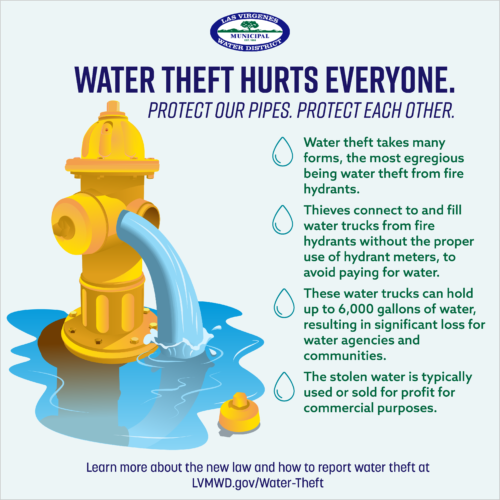 “Las Virgenes Municipal Water District (LVMWD) took decisive action to enforce Senate Bill 394, the landmark water theft legislation co-sponsored by the District and signed into law by Governor Gavin Newsom on October 10, 2025. Following a public hearing on April 7, 2026, the LVMWD Board of Directors introduced and passed Ordinance No. 291, formally updating LVMWD code to align with the new state law and put water thieves on notice that illegal diversions will carry serious consequences. In recent years, LVMWD estimated losses of approximately 45 million gallons of water due to water stolen from unauthorized use of fire hydrants, primarily for commercial purposes including construction, landscaping and farming. Beyond the staggering volume of water lost, illegal hydrant diversions have the potential to damage infrastructure, reduce system pressure, and risk contamination of the public water supply, affecting every ratepayer and resident that LVMWD serves. “Water theft is not a victimless crime. It is a direct threat to the reliability and safety of the water system that 70,000 residents depend on every day,” said LVMWD Board President Andy Coradeschi. “With this ordinance now in place, we have the tools to act swiftly and decisively against anyone who steals from our system and thereby potentially threatens the health of our ratepayers. The era of low-consequence water theft in our service area is over.” … ” Read the full press release from Las Virgenes Municipal Water District.
Salton Sea plans face critical flaw: Not enough water, Army Corps finds
 “There is not enough water. That is the blunt assessment from the U.S. Army Corps of Engineers on the feasibility of four modest plans intended to address environmental and health problems at the Salton Sea. The announcement came during a community informational meeting at the North Shore Yacht Club in Mecca, one of a series of recent meetings the Corps has held on the long-standing crisis. The four plans, developed to ease the dust and air pollution created as the Salton Sea shrinks and more lakebed is exposed, share one critical flaw: none has the water needed to be viable. … ” Read more from the Uken Report.
Volunteers clean up plastic pellets, or nurdles, along Carlsbad train tracks
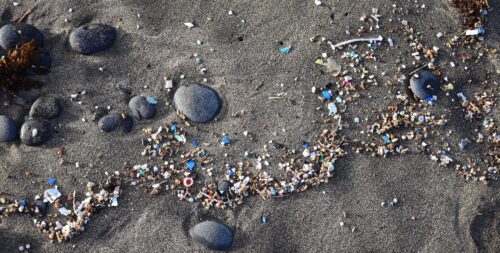
“More than a dozen of volunteer came to Rotary Park in Carlsbad on Saturday to help clean up tiny plastic pellets, often called nurdles. The cleanup is part of the second-annual International Plastic Pellet Count, intended to help document the extent of plastic pollution across the globe. One of the volunteers was Janice Jones with the Surfrider Foundation San Diego Chapter. As the head of the Plastic Pollution Program, Jones has been involved in similar cleanup efforts and initiatives over the last 7 years. However, Jones has been cleaning up beaches in Carlsbad for more than a decade. “At the beginning you’d see litter maybe, stuff that people had left behind and attribute it to careless beachgoers,” said Jones. “But over time, it became more and more apparent that it was a huge problem,” said Jones. … ” Read more from NBC 7.
Lower Basin states advance plan to deliver up to 3.2 million acre-feet through 2028 to Protect Colorado River
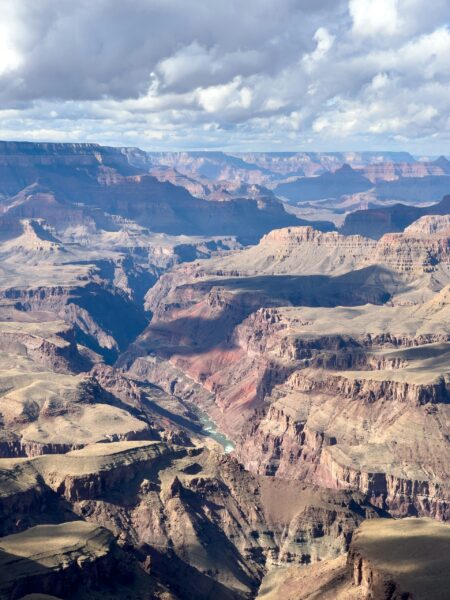 “The Lower Basin States of Arizona, California, and Nevada today advanced a plan to stabilize the Colorado River through 2028, responding to declining reservoir levels, record low inflows to Lake Powell, and increasing risk of reaching critical elevations at both Lake Powell and Lake Mead. Earlier in the post-2026 process, the Lower Basin took a significant step by proposing 1.25 million acre-feet in annual reductions, with an additional 250,000 acre-feet from Mexico, totaling approximately 1.5 million acre-feet per year. This proposal builds on that foundation with an expanded system conservation program across the Lower Basin with an estimated contribution of at least 700,000 acre-feet. In total, the plan identifies up to 3.2 million acre-feet of water savings to the system through 2028. “With this proposal, the Lower Basin is putting forth real action to stabilize water supply along the Colorado River. We’re putting forward additional measurable water contributions for the system. Without that, the system will continue to decline,” said JB Hamby. … ” Continue reading this press release.
California, Arizona and Nevada announce new water-saving plan for dwindling Colorado River
“With the Colorado River’s giant reservoirs declining toward critically low levels, negotiators for California, Arizona and Nevada announced Friday that they have agreed on a water-saving plan for the next two years. Representatives of the three states said in a written statement that their plan aims to “stabilize the Colorado River through 2028.” It will require larger cuts in water use than they had offered previously in talks with other states and the federal government. “We’re putting forward additional measurable water contributions for the system,” said JB Hamby, the chairman of California’s Colorado River Board. “Without that, the system will continue to decline.” … ” Read more from the LA Times. | Read via AOL News.

