
Several news sources featured in the Daily Digest may limit the number of articles you can access without a subscription. However, gift articles and open-access links are provided when available. For more open access California water news articles, explore the main page at MavensNotebook.com.
In California water news today …
Record ocean heat off California coast echoes ‘The Blob,’ killing seabirds and reshaping weather outlook
“Over the past several months, an intense marine heat wave has developed in the Pacific from Washington to Baja Mexico, with a particularly extreme hot spot between the Bay Area and San Diego. Ocean temperatures have spiked to as much as 7 degrees hotter than average, with many places breaking records for this time of year. The heatwave off the California coast is already causing starving birds to wash ashore and could increase the risk of thunderstorms and dry lightning that could worsen the wildfire season, scientists say. Researchers at the Scripps Institution of Oceanography at UC San Diego have recorded 38 days since Jan. 1 when the surface temperature off their La Jolla pier in San Diego broke records going as far back as 1916. On March 20, the ocean there reached 71 degrees, the hottest ever recorded in March and a level normally seen in August. … ” Read more from the San Jose Mercury News.
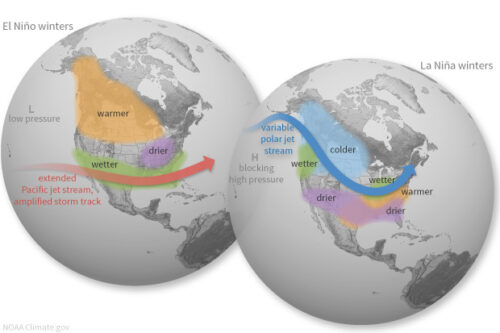
A strong El Niño may be coming. Global warming is changing its effects.
“Forecasters say a powerful El Niño weather pattern could form later this year, with a chance of becoming one of the strongest in three decades. The winds above the Pacific are shifting, the ocean is releasing stored-up heat, and a cascade of effects on rain, droughts and wildfires could be on its way. The National Oceanic and Atmospheric Administration says there’s a roughly 60 percent chance of an El Niño developing between May and July. That’s a major reason scientists now say next year could surpass 2024 as the planet’s warmest year since modern records began in the mid-19th century. El Niño and La Niña are the opposite phases of a natural climate cycle that has been active in the Pacific for thousands of years. They appear at irregular intervals, and no two events are ever the same. But Earth’s steady warming from the burning of fossil fuels is also influencing the way these episodes shape the weather around the globe. … ” Read more from the New York Times.
Climate change drives California’s water plan
“California’s natural resources agencies are beginning to move ahead with an updated state water plan in response to climate warming that threatens an estimated 10% reduction in the state’s available water by 2040. Late last year, Newsom signed SB 72 into law, giving state agencies the go-ahead for a broad-based water supply plan with conservation, new storage facilities and local projects at its core. A panel of state leaders recently discussed the importance of the plan for the state’s future. California’s water supply plan for a hotter, drier climate came in the shadow of prolonged drought. In 2022, Newsom ordered a series of actions to build water resilience for the near future in the face of recurring climate whiplash. That strategy is being updated with a data-driven and science-based approach to calculating how much water, in any given year, will be available and how it will be stored and delivered. Those issues were unpacked by a panel of state leaders. Wade Crowfoot, heading the California Natural Resources Agency, outlined the challenge. … ” Read more from the Fresno Community Alliance.
Extreme weather is turning young salmon into ‘river ghosts’
“Salmon are built for tough journeys. They hatch in freshwater, travel to the ocean, then fight their way back upstream to spawn. It’s a cycle that has worked for thousands of years. But in parts of California, that journey is starting to break down in ways scientists did not expect. In recent years, rivers have swung between extremes. Long, punishing droughts shrink waterways and raise temperatures. Then, powerful storms hit, sending surges of water rushing downstream. For young salmon, this back-and-forth has turned their migration into a risky gamble. Many never make it. … ” Read more from Earth.com.
California farms adapt to water crisis with AI, drip irrigation and permanent crops
“According to reporting from Katie Rodriguez with California Farm Bureau, farmers throughout the Golden State are bracing for a difficult water year as the state records its second-lowest April snowpack on record, with unusually warm temperatures accelerating snowmelt and reducing available surface water. And growers south of the Sacramento-San Joaquin River Delta are preparing for even tighter irrigation water supplies, forcing many into difficult planting decisions. In Fresno County, farmer Dan Errotabere told Rodriguez he expects to operate with just a 20% water allocation from the federal Central Valley Project. The constraints are forcing him to fallow up to 30% of his land, particularly impacting water-intensive annual crops. Like many growers, he is shifting focus toward permanent crops and maximizing efficiency through drip irrigation and soil monitoring—though gains from these methods are reaching their limits. … ” Read more from Fruit Growers News.
Farmers gather to talk sustainability projects at dairies
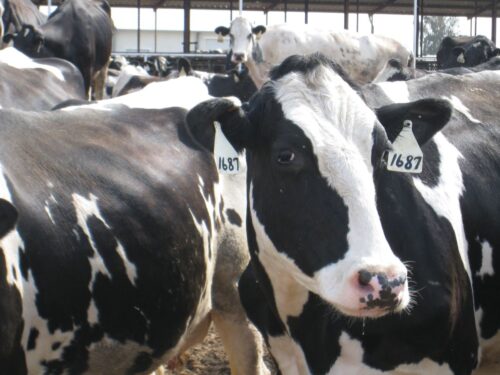 “California dairy farmers have faced new challenges in recent years as they work to beef up their sustainability practices. About a decade ago, the state passed the Sustainable Groundwater Management Act and legislation setting a target to reduce livestock methane emissions by 40% of 2013 levels by 2030. “The reality of implementation is right here, right now,” California Department of Food and Agriculture Secretary Karen Ross said. Ross spoke to dairy farmers and other industry groups at this year’s annual California Dairy Sustainability Summit. The late March gathering, held in Visalia, focused on connecting dairy farmers with tools to save water and reduce methane emissions, and other ways to make their operations more sustainable amid changing state requirements. “These are all remarkable things that come out of innovation and partnership with incentive dollars,” Ross said. … ” Read more from Valley Ag Voice.
UC Cooperative Extension and UC Davis exploring quicker measurement of dairy lagoon water nitrogen
“Farm advisors from UC Cooperative Extension covering the whole San Joaquin Valley, where most CA dairies are located, are working with a UC Davis specialist to research new ways to measure now much nitrogen (N) is in dairy lagoon water. Funding from the CA Dairy Research Foundation and local collaborating farmers support this research. Dairy farmers often irrigate their forage crops with fresh water blended with lagoon water. Lagoons are storage ponds on dairies that hold dairy process wastewater and contain water used for cleaning and cooling cows as well as flushing barns where the animals excrete urine and manure. Irrigating with lagoon water is like fertilizing because many plant nutrients are found in lagoon water, and N is abundant. This is good because N is the most limiting plant growth and development nutrient. However, there are challenges with using lagoon water as a crop nutrient source. Not all the N in lagoon water is available for plants to take up right away. … ” Read more from Valley Ag Voice.
States across the wildfire-prone Western US are using AI for early detection
“On a March afternoon, artificial intelligence detected something resembling smoke on a camera feed from Arizona’s Coconino National Forest. Human analysts verified it wasn’t a cloud or dust, then alerted the state’s forest service and largest electric utility. One of dozens of AI cameras installed for the utility Arizona Public Service had spotted early signs of what came to be known as the Diamond Fire. Firefighters raced to the scene and contained the blaze before it grew past 7 acres (2.8 hectares). As record-breaking heat and an abysmal snowpack raise concerns about severe wildfires, states across the fire-prone West are adding AI to their wildfire detection toolbox, banking on the technology to help save lives and property. … ” Read more from the Associated Press.
In regional water news and commentary today …
SIERRA NEVADA
How much snow fell in Tahoe this winter?—The answer may surprise you
“From hanging up skis early to a beach day in March, this winter in Tahoe didn’t feel like the longed-for snow utopia. But in terms of snowfall, has it been as sparse a winter as public perception suggests? “We’re actually pretty close to average,” says director of the Central Sierra Snow Laboratory, Andrew Schwartz, Ph.D. The lab recorded a cumulative 294 inches as of April 17, putting the region at 87% of the annual median snowfall. That’s just about 40 inches below average. But Schwartz says there is a reason why it hasn’t felt like an average winter. … ” Read more from the Tahoe Daily Tribune.
SACRAMENTO VALLEY
Citrus Heights Water District files new lawsuit against San Juan Water District
“The Citrus Heights Water District has filed a second lawsuit in two years against the San Juan Water District. The suit, filed April 22 in Sacramento Superior court, alleges the San Juan Water District approved an agreement to sell and transfer up to 6,000 acre-feet of water between April 2026 and February 2027 to Sacramento Suburban Water District without conducting the environmental review required under the California Environmental Quality Act (CEQA). The San Juan Water District is the wholesale water provider for the Citrus Heights Water District. … ” Read more from the Citrus Heights Sentinel.
BAY AREA
Bay Area to get another round of rain, but it should dry out soon
“The Bay Area is in line for a shot of light rain Monday night and Tuesday morning, but the heaviest totals will fall well north of San Francisco. Santa Rosa, Napa and the surrounding hills could see up to half an inch, while most of the urban Bay Area will be lucky to pick up more than a tenth. A low-pressure system has been hovering just off the coast of Central California all weekend, bringing consecutive days of below normal temperatures and cloudy skies. That low will slowly drift toward the southeast on Monday and Tuesday, taking about 36 hours for the center of the storm system to move from the Bay Area toward Los Angeles. Initially, that means Monday will be another day filled with clouds and cool temperatures. But by Monday night, rain showers will develop on the “backside” of the storm system, moving in from the northeast — an atypical direction for Bay Area rain — and sliding southwest across the North Bay, San Francisco, the Peninsula, and parts of the East Bay through Tuesday morning. … ” Read more from the San Francisco Chronicle.
Mountain View residents to spend another week under Boil Water notice
“A Mountain View neighborhood will have to spend another week boiling tap water if they want to use it to drink and cook, the city announced Sunday. City officials said they do not anticipate fully lifting the “Boil Water” restrictions for the affected homes before the weekend of May 9 and May 10. This is due to the latest water tests coming back positive for low levels of coliform bacteria in one area of the neighborhood, according to the city. They added these tests remain negative for E. Coli. … ” Read more from NBC Bay Area.
SAN JOAQUIN VALLEY
Students, salmon and a river of stories
““Oh, bubbles!” might be the perfect way to describe this year’s Mokelumne Current, the City of Lodi’s student watershed newspaper, featured in the Lodi News-Sentinel. The 2026 edition marks the program’s 13th year, and it’s full of student voices — especially stories about salmon. This year, the Salmon in the Classroom program took center stage, growing rapidly across San Joaquin County. Supported by the California Department of Fish and Wildlife and many local partners, the program brings hands-on environmental learning directly into classrooms. … ” Read more from the Lodi News-Sentinel.
Commentary: Playing roulette with our water future?
Brik McDill, Ph.D., a retired psychologist, writes, “In Kern County, the ground beneath our feet is telling a story. Wells are deeper, land is sinking and the math on groundwater simply no longer works. Yet the county continues to approve water guzzling development, restart oil permitting, and make regulatory decisions that seem to assume water scarcity is a distant problem rather than a present constraint. This is not planning; it’s gambling. California’s Sustainable Groundwater Management Act was supposed to end exactly this kind of disconnect. … But more than a decade later, Kern County still appears caught between two competing realities: the legal requirement to reduce groundwater use, and our governor’s pressure to keep building more affordable housing and housing for the homeless as if our aquifers are full and inexhaustible. … ” Continue reading at the Bakersfield Californian.
SOUTHERN CALIFORNIA
Colorado River proposal spurs focus on long-term water planning in Pasadena
“A new proposal from California, Arizona and Nevada to reduce water use along the Colorado River is drawing renewed attention to long-term water planning in Pasadena and across Southern California. … Pasadena receives imported water through the Metropolitan Water District of Southern California, which draws in part from the Colorado River. The city also relies heavily on local groundwater supplies, making both regional and local water management strategies critical. … Pasadena Councilmember Justin Jones, who chairs the city’s Municipal Services Committee, said the proposal underscores the need for cities to stay focused on water reliability.“One of my focuses on the Municipal Services Committee has been making sure Pasadena is thinking ahead on water reliability,” Jones said. “That means continuing to strengthen and optimize our water portfolio, recharge the Raymond Basin, support conservation, and make sure Pasadena Water and Power is planning for a more constrained imported water future.” … ” Read more from Pasadena Now.
IMPERIAL/COACHELLA VALLEYS
What comes next for the Salton Sea? Officials outline possibilities
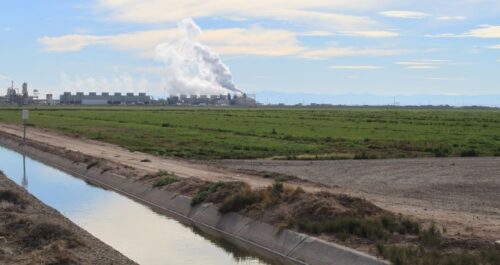 “The U.S. Army Corps of Engineers from the Los Angeles District gave a presentation about the Salton Sea Aquatic Ecosystem Restoration feasibility study during a community meeting on Thursday, April 30. Miguel Hernandez, a public affairs officer at the California Natural Resources Agency for the Salton Sea Management Program, explained that the study “is looking into future long-term restoration for the Salton Sea.” He asked participants to take a survey ranking four objectives in order of importance regarding the Salton Sea: restoring habitat for birds and fish, creating jobs and economic opportunities, improving recreational access and reducing dust to improve air quality. Corrie Stetzel, the planning lead from the Corps, explained that the state of California has a 10-year plan to improve the Salton Sea. … ” Read more from the Desert Review.
SAN DIEGO
Volunteers clean up plastic pellets, or nurdles, along Carlsbad train tracks
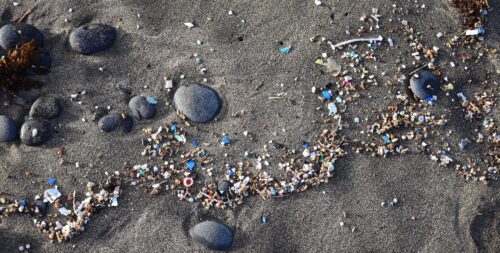
“More than a dozen of volunteer came to Rotary Park in Carlsbad on Saturday to help clean up tiny plastic pellets, often called nurdles. The cleanup is part of the second-annual International Plastic Pellet Count, intended to help document the extent of plastic pollution across the globe. One of the volunteers was Janice Jones with the Surfrider Foundation San Diego Chapter. As the head of the Plastic Pollution Program, Jones has been involved in similar cleanup efforts and initiatives over the last 7 years. However, Jones has been cleaning up beaches in Carlsbad for more than a decade. “At the beginning you’d see litter maybe, stuff that people had left behind and attribute it to careless beachgoers,” said Jones. “But over time, it became more and more apparent that it was a huge problem,” said Jones. … ” Read more from NBC 7.
Flood or fire? A disaster at Lake Hodges is looming, residents warn
“Lake Hodges is a San Diego landmark where people hike, bike, fish, kayak, canoe, bird watch and take photographs against the backdrop of a century-old, city-owned reservoir. It’s also a disaster waiting to happen. The question is whether calamity would come by flood or by fire. An earthquake could destroy the aging dam and flood Rancho Santa Fe and other communities, so San Diego routinely releases water from the reservoir. But many residents fear less water leads to a greater threat of wildfires in an area already among the most at risk in the state. “We have a fire opportunity that is massive, and we have now increased the ability to make that fire dramatically,” area resident PJ Lynch said. … ” Read more from iNewsSource.
Along the Colorado River …
California, Arizona and Nevada propose water-saving plan for Colorado River
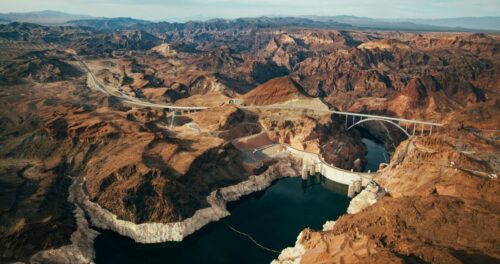 “The states of California, Arizona and Nevada have proposed voluntary water-saving measures for the next three years aimed at buying time while negotiations remain deadlocked over the future of shrinking reservoirs filled by the Colorado River. The Colorado River provides water to some 40 million people in the American west. But the two massive reservoirs filled by the river, Lake Mead and Lake Powell, both stand at historically low levels, after consistent overdrawing coupled with reduced snowpack and warming from climate change. The seven states with legal rights to water from the Colorado River have so far failed to agree on how to spread the pain of lost access to the dwindling resource. …, ” Read more from The Guardian.
‘Unprecedented drought conditions’: More than 500 data centers across Nevada, California, and Arizona could feel the pinch as the iconic Hoover Dam potentially loses 40% of its power output
“The Hoover Dam, a critical power source for three US states, could see its electricity generation drop by as much as 40% as early as this fall. Completed in 1936, the dam currently has an installed capacity of 2,078.8 megawatts (approximately 2.08 gigawatts) and produces about 3.3 terawatt hours of energy annually. The Department of the Interior has announced an emergency drought management plan that will cut water releases from Lake Powell to the minimum legally allowed level. This decision, designed to protect Glen Canyon Dam’s ability to produce power, will directly reduce Hoover Dam’s generating capacity by approximately 830 megawatts (0.83 gigawatts), removing roughly 1.32 terawatt hours of annual energy from the regional grid. … ” Read more from Tech Radar.
Arizona joins new plan to cut Colorado River water use
“A new proposal from Arizona and other Southwestern states aims to keep the Colorado River system from reaching a critical breaking point. After more than a year of stalled negotiations, Arizona, California and Nevada are now voluntarily proposing deeper water cuts to help stabilize the river and protect water levels at Lake Powell and Lake Mead. “This proposal reflects the creativity and commitment of water users across the Lower Basin who continue to step forward with solutions that support the river,” said Tom Buschatzke, Arizona’s Colorado River negotiator. “We have shown that collaborative, voluntary efforts and reductions that are certain can produce meaningful water savings.” But even as states step in, experts warn nature may ultimately determine whether those efforts are enough. … ” Read more from ABC 15.
Diné called to pray for water as drought worsens
“The Navajo Nation is being urged to pray for water as the Colorado River Basin enters another dangerous dry stretch. Federal forecasts warn that Navajo Reservoir could run short of water from November 2026 through February 2027. Lake Powell also could drop toward levels that make it harder to produce hydropower. Dwight Witherspoon, an attorney with the Navajo Nation Department of Justice Water Rights Unit, said the call for prayer comes from worsening drought and Diné teachings about caring for the land. Witherspoon said he has been part of regular meetings where federal officials and water experts share updates about Lake Powell, Navajo Reservoir, snowpack, river flows and water operations. Those updates, he said, show serious problems across the Colorado River system. … ” Read more from the Navajo Times.
Las Vegas church, golf group and HOAs join ‘non-functional’ grass lawsuit
“For some 40 years, churchgoers at Our Lady of Victory Catholic Church have enjoyed a grassy oasis tucked off Windmill Lane in southeast Las Vegas. The towering trees and green grass keep them cool in blazing summers. The longevity of those peaceful gardens came into question last year when the Southern Nevada Water Authority sent church leaders a letter, insisting their grass was “non-functional” and must be removed before a law takes effect in 2027. “We understand there’s a water issue going on here, but you just can’t broad-brush something and put everybody in a certain category,” said Paul Clay, a 64-year-old parishioner. “And that’s exactly what they did.” … ” Read more from the Las Vegas Review-Journal.
Drought-stressed Colorado communities getting $40M infusion in state water grants
“The Colorado Water Conservation Board is funneling $40 million to dozens of water projects statewide as communities grapple with a drought emergency that is making saving water more important than ever before. Among the 136 projects receiving state support this fiscal year, which ends June 30, is a $2.3 million grant that will pay nearly half the cost to install new, automated irrigation control systems across 105 Denver Public School system sites. Another grant, for $227,225, will help the city of Trinidad with early studies on repairing and potentially enlarging Monument Lake Reservoir. Still another grant, for $111,855, will help pay to train and certify metro area teens in becoming turf replacement specialists. … ” Read more from the Colorado Sun.
Carman: A peach crop or more data centers? I know which one I’ll choose.
“The data for Colorado’s snowpack this spring are shocking. The latest figure reveals statewide the mountains hold only 19% of the historical median snowpack. It’s the worst on record. The Colorado River is so low, drastic measures are planned to release water from Flaming Gorge, Navajo and other reservoirs to keep Lake Powell from hitting dead pool. Farmers and cities downstream in Arizona and California have looked at those snowpack numbers and know they’re in trouble. They’re lobbying for renegotiation of the Colorado River Compact, the 1922 agreement that divides water supplies not by a percentage of what’s available but by acre-foot, even though most of the time the river doesn’t produce a fraction of the supply needed to fulfill its commitments. Even if the complicated, politically fraught compact could be rewritten, that wouldn’t keep the river from dropping to a trickle this year. Litigation can’t manufacture more water no matter how powerful your congressional delegation is. So, face it, it’s an emergency by any reasonable definition. … ” Read more from the Colorado Sun.
In national water news today …
Study finds airborne microplastics may be worsening global warming, with hotspots over ocean garbage patches
“Plastic waste, while unsightly, could also be impacting global warming in ways that we did not realize. Colored microplastics lingering in the atmosphere could contribute to climate change much more than we previously thought, according to a new study published on Monday in the monthly science journal Nature Climate Change. The study suggests that colored microplastic and nanoplastic particles could be contributing to climate change at a level equivalent to 16.2% of the effect of black carbon, or soot. The researchers discovered a pronounced warming effect caused by airborne microplastics in certain oceanic gyres, where garbage has accumulated into enormous patches, such as the Great Pacific Garbage Patch. “In plain language, tiny plastic particles floating in the air — especially colored ones — can absorb sunlight and warm the atmosphere,” Hongbo Fu, a researcher with Fudan University in Shanghai and an author of the study, wrote in an email to Courthouse News. “So plastic pollution has a climate dimension we had largely overlooked.” … ” Read more from the Courthouse News.
Adaptation was supposed to be safe under Zeldin. It didn’t turn out that way.
“Lee Zeldin introduced himself to EPA staff last year as someone who had experienced first-hand the risks some U.S. communities face from climate change. In his first speech to agency staff in February 2025, the newly confirmed administrator said his home town on Long Island “got crushed” during Hurricane Sandy in 2012. “Rising sea levels, it hits my street,” he told staff gathered in a room named for conservationist Rachel Carson at EPA headquarters in Washington. Firefighters had to evacuate his young daughters through the rear window of the family car after his wife “totaled” it because of the flooding, he said. Benjamin DeAngelo, then the career director of EPA’s Office of Climate Adaptation and Sustainability, said he found those comments encouraging, even though Zeldin didn’t firmly connect the dots from sea-level rise to warming temperatures. “At the time, I took it as a positive sign that, yeah, indeed, adaptation work might be supported,” he said in an interview with POLITICO’s E&E News. It didn’t turn out that way. … ” Read more from E&E News.

