
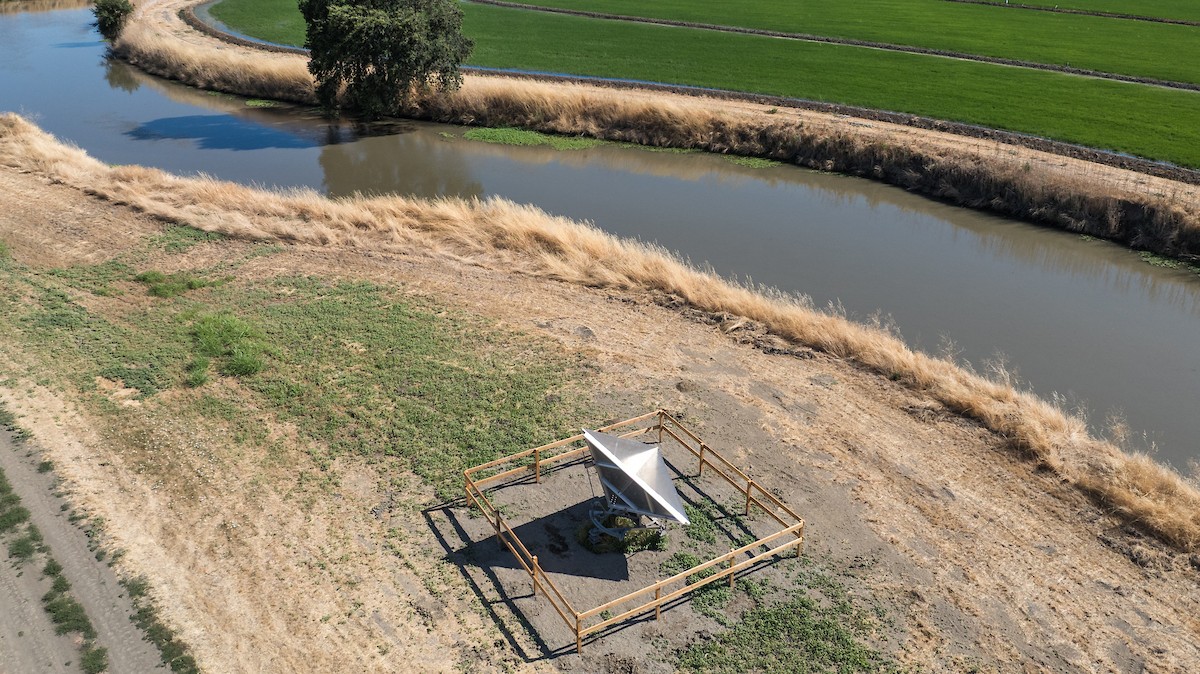
The San Joaquin Valley Conveyance Study, released by the Department of Water Resources in November of 2025, examines how land subsidence is affecting the region’s major water conveyance facilities and assesses the urgency for infrastructure improvements or expansion across the valley. By analyzing these impacts, the study highlights the pressing challenges confronting the valley’s primary aqueducts and assesses where reduced conveyance capacity limits surface water deliveries.
Impact of subsidence on conveyance infrastructure
Subsidence in California has had significant financial impacts on water conveyance systems, flood management efforts, transportation infrastructure, and groundwater wells.
Subsidence decreases conveyance capacity by altering channel slopes. Gravity-fed canals require precise gradients, so even subtle changes matter. Subsidence also creates depressions that impede water flow and damages infrastructure through structural cracking or misalignment. These effects limit operational capacity. Increased maintenance is necessary to address such issues, including repairs, sediment removal, and realignment. Additionally, subsidence contributes to flooding and seepage. Uneven canal beds can lead to water loss and localized overflows. Collectively, these impacts undermine the reliability of water conveyance. If subsidence continues at rates seen over the last decade, it could have severe consequences for California’s farms and cities by impacting water delivery.
Most critically, subsidence is directly impairing the Valley’s main water conveyance corridors:
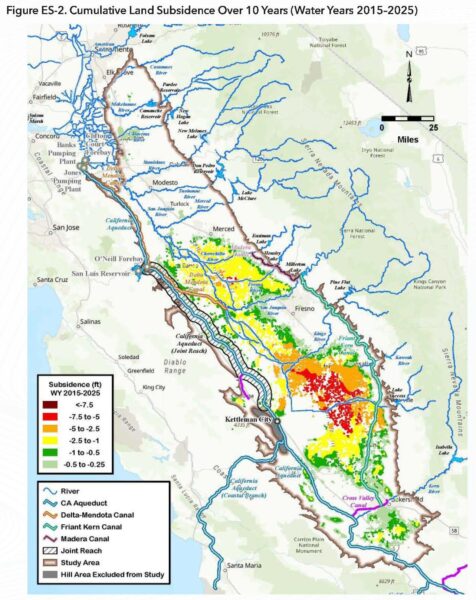 CA Aqueduct/San Luis Canal: Subsidence has caused sections of the San Luis Canal and California Aqueduct to sink, which has affected their ability to carry water. Since its construction in 1968, some portions of the San Luis Canal have dropped by more than 8 feet. According to DWR’s State Water Project Delivery Capability Report 2023 Addendum: Impacts of Subsidence, subsidence in 2023 led to a 44% decrease in the California Aqueduct’s capacity and a 46% decrease in the San Luis Canal’s capacity. Without new operational strategies or infrastructure upgrades, the SWP’s average delivery capability could fall by as much as 87% over the next two decades due to ongoing subsidence and climate change.
- Delta Mendota Canal: The Delta-Mendota Canal has been affected by subsidence from groundwater pumping since its construction. Although remediation efforts occurred in 1969 and 1977, subsidence persists, limiting the canal’s flow capacity and impacting deliveries to south-of-Delta CVP contractors. Currently, upper canal capacity is down by about 870 cfs (20%), and lower canal capacity is reduced by approximately 1,031 cfs (30%).
- Friant Kern Canal: Sections of the Friant-Kern Canal have lost up to 60% of their capacity due to subsidence; some areas have sunk more than 10 feet since 1951. Repairs in the 1970s and 1980s did not restore full capacity, which still limits surface water delivery for groundwater recharge and increases reliance on limited supplies. In 2017, diminished capacity lowered water deliveries by as much as 300 TAF. Reclamation and the Friant Water Authority started the Middle Reach Capacity Correction Project, completing phase one in Spring 2024 and continuing negotiations for the second. Once finished, the canal’s capacity will return to its original 4,000 cfs.
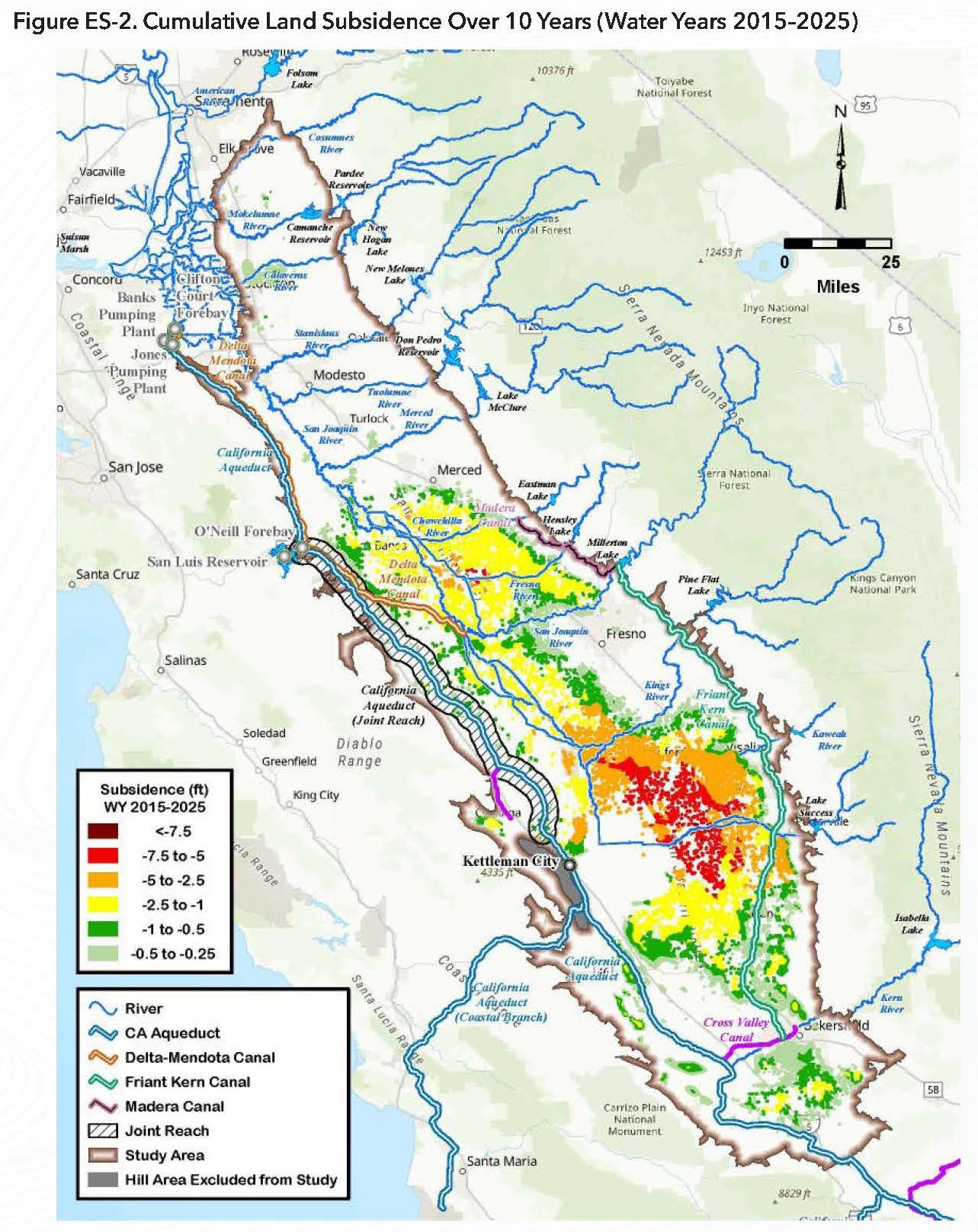
The main conveyance priority in the San Joaquin Valley is to reduce or halt subsidence impacts, especially around SWP and CVP’s main conveyance systems. To prevent continued subsidence and avoid future problems, it’s crucial to restore groundwater levels above the critical head—the threshold groundwater level in fine-grained sediments, below which permanent compaction and subsidence occur—as quickly and effectively as possible. Critical head refers to the groundwater level in fine-grained sediments, below which permanent compaction and subsidence happen.
Repairs to address ongoing subsidence are either planned or underway at all these facilities, with the goal of restoring lost conveyance capacity. Raising groundwater levels above critical head is essential to ensure these repairs deliver long-lasting benefits and recover lost conveyance capacity.
SJV Conveyance needs assessment
The second objective of the study was to determine regions where surface water supplies may be constrained by conveyance capacity. Surface water deliveries depend on water supply availability, conveyance capacity, and demand. In areas where supply and demand are adequate but conveyance capacity is insufficient, constructing new or expanded infrastructure could enhance surface water deliveries. Conversely, in locations with a limited water supply, additional conveyance would offer minimal benefit.
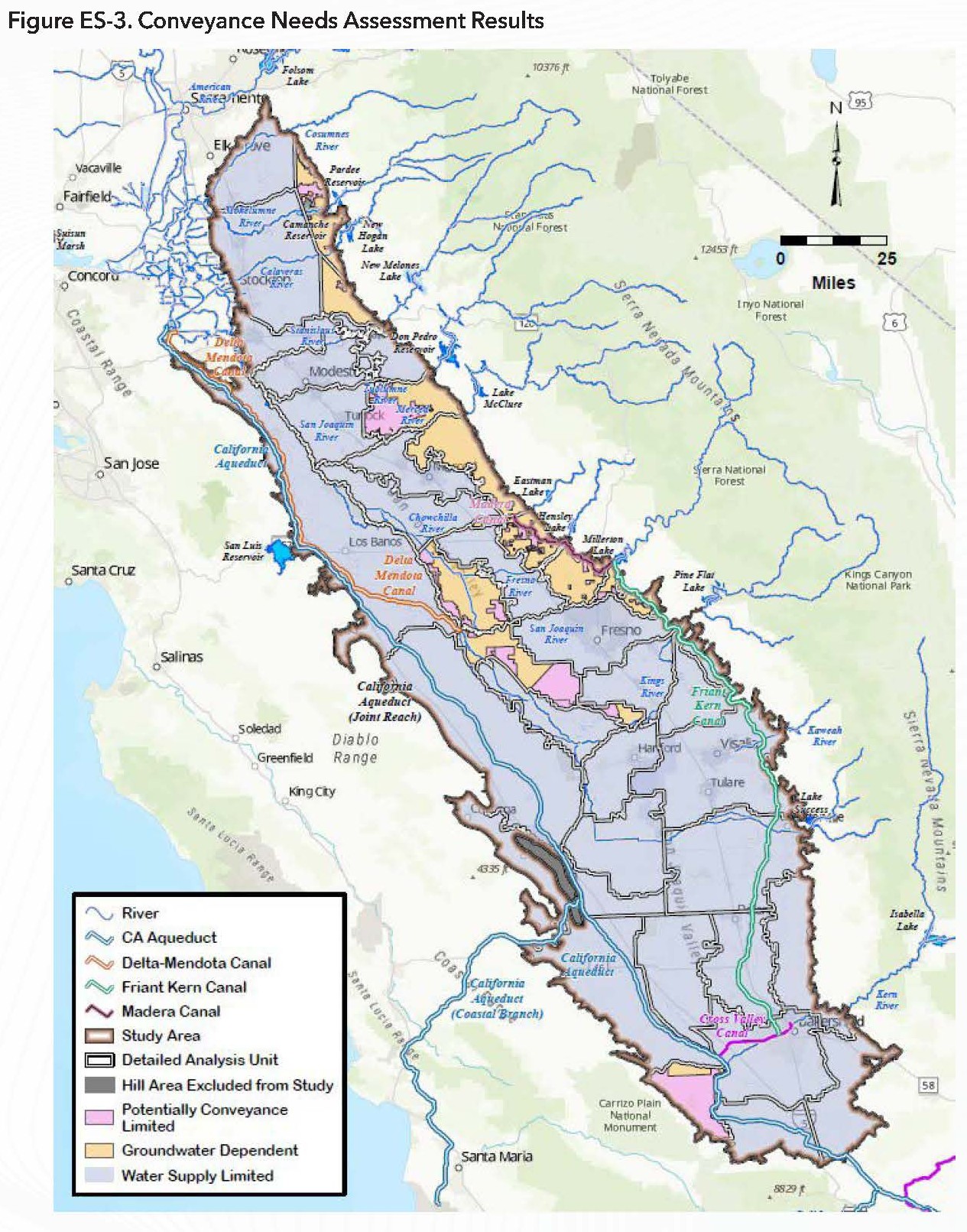 The study evaluated 38 detailed analysis units (DAUs) within the San Joaquin Valley. Historical surface water delivery data sourced from DWR’s California Water Plan Water Balances Data, along with groundwater overdraft information from the California Central Valley Simulation Fine Grid (C2VSimFG) Model, were utilized to assess whether surface water deliveries were restricted by conveyance limitations or by water availability.
Of the 38 DAUs assessed, 29 were found to be limited by water supply, while nine were initially identified as potentially having conveyance limitations. Subsequent analysis revealed that in six of these nine DAUs, only a small area had access to surface water, with the remaining portions relying exclusively on groundwater. This reliance explains why groundwater overdraft exceeded unused conveyance capacity in these DAUs. Most of these nine DAUs did not have sufficient surface water supplies to benefit from new or expanded conveyance improvements; only one DAU (Turlock Lake) was determined to potentially gain from such enhancements. In many cases, implementing a regional strategy to restore groundwater levels within the local basin is likely to be more effective than pursuing additional surface water resources or investing in new conveyance infrastructure.
The study concluded that the San Joaquin Valley faces a greater challenge in terms of reliable surface water supplies than in the need for new or expanded conveyance infrastructure. Except in regions affected by subsidence, findings indicate that surface water deliveries are primarily constrained by scarcity of supply relative to demand, rather than by limitations in conveyance capacity.
Conclusion
The study’s findings emphasize that subsidence continues to severely reduce the conveyance capacity of major infrastructure, including the San Luis Canal, California Aqueduct, Delta-Mendota Canal, and Friant-Kern Canal. This loss of capacity limits the state’s ability to capture and store flood flows during wet years, forcing a greater reliance on already-strained groundwater reserves. If these current subsidence rates continue unabated, they will cause severe disruptions to the water supplies necessary to support California’s farms and cities. To prevent further damage, the primary conveyance priority in the San Joaquin Valley is to halt subsidence by raising groundwater levels to safe elevations as quickly as possible, particularly near the main facilities of the State Water Project (SWP) and Central Valley Project (CVP).
Beyond the areas directly affected by sinking land, the assessment shows that surface water deliveries are primarily constrained by a lack of available water supply rather than inadequate infrastructure. Most regional conveyance facilities operate well below capacity, and water transfers are generally limited by regulatory approvals and supply availability rather than physical bottlenecks.
Ultimately, the study underscores that the Valley’s water reliability depends on addressing supply shortages and preventing further subsidence by managing groundwater levels.

