
Several news sources featured in the Daily Digest may limit the number of articles you can access without a subscription. However, gift articles and open-access links are provided when available. For more open access California water news articles, explore the main page at MavensNotebook.com.
On the calendar today …
- WORKSHOP: Proposition 4 Sustainable Groundwater Management Grant Program & Watershed Resilience Grant Program from 9am to 12pm. This virtual workshop will provide a general overview of both programs, discuss upcoming Proposition 4 funding opportunities, and provide an opportunity for early input on program development ahead of developing Guidelines. Register at this link.
- WEBINAR: Smart Meters, Smarter Decisions Webinar from 1pm to 3pm. Stop just collecting AMI data – start using it. Hear from peers and experts on how to turn this data into your most powerful asset. Topics to be covered include water utility use cases for maximizing your AMI investment and technology and resources to unlock AMI’s full potential. Click here for more information and to register.
- IN-PERSON: Field Notes from the Bay: An Evening of Live Storytelling, 5:30-8:30pm, Alameda. Join us for Field Notes from the Bay, an evening of storytelling on Thursday, April 30th at the Ocean Photographer of the Year exhibition in partnership with the West End Arts District in Alameda. In short, five-minute talks, environmental scientists from the San Francisco Estuary Institute (SFEI) will share insider perspectives on what it takes to study and protect the Sacramento–San Joaquin Delta and San Francisco Bay. In a special art-meets-science collaboration, the scientists will be preparing with Alameda storyteller extraordinaire JP Frary—a six-time The Moth StorySLAM winner—who will also emcee the evening as his protégés take the stage. Expect insight, humor, and a deeper connection to the waters in our own backyard. Click here for more information and to register.
In California water news today …
State’s first solar canal project moves from UC Merced lab to real world
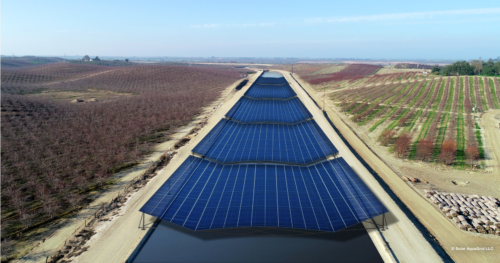
“What started as a premise in a UC Merced lab culminated with a commemoration of Project Nexus, California’s first solar canal project. On Wednesday, state leaders gathered at the Project Nexus sites in Hickman and Keyes to celebrate the completion of the construction pilot, which demonstrates how covering operational irrigation canals with solar panels can help save water, generate clean energy, and conserve natural lands. “For the past three years our UC Merced research team – including our project manager Dr. Brandi McKuin and team members here today – has treated these canals as a living laboratory,” said Roger Bales, professor emeritus of civil and environmental engineering. “We didn’t just want to build a canopy to produce electricity; we wanted to quantify a ‘triple win’ for California: water, energy and land.” Project Nexus, launched in 2022, represents an innovative public-private-academic collaboration between the California Department of Water Resources, Turlock Irrigation District, Solar AquaGrid LLC and UC Merced. “We are excited this day is here,” TID General Manager Brad Koehn said. “It’s been a long journey.” … ” Read more from UC Merced.
SEE ALSO: Governor Newsom announces the completion of first-of-its-kind solar-covered canal in the Central Valley — piloting a new way to save water and reduce costs, from the Office of the Governor
What the State Water Board is watching in drinking water — and why it matters

“In the book “What Should We Be Worried About?” science writer John Brockman asked leading scientists a simple question: What keeps you up at night? The answers weren’t always what you might expect. Instead of focusing on the loudest headlines, many pointed to quieter, slower-moving challenges — problems that require steady attention and long-term commitment. That’s a useful lens for thinking about something deeply personal to all of us: our drinking water. In California, water is often in the news — droughts, floods, wildfires, emerging contaminants. It can be difficult to separate what truly warrants concern from what may lack context. When our scientists and engineers talk among themselves, their focus is rarely on sensational fears. … ” Read more from the State Water Board’s Ebb and Flow.
Where does California’s water come from? The science behind Northern California’s spring-fed rivers
“When you think about how California’s water travels, you might imagine the water cycle diagram many of us were shown in elementary school: evaporation, transpiration, condensation, precipitation. However, the reality is a bit more complicated, especially in California’s spring-fed systems, which are of critical importance for water security for both fish and people. The cold, clear water flowing through the upper Sacramento Basin, fed by springs in the Shasta, McCloud, and Pit rivers region, is stored underground, sometimes for years or even decades, before it re-emerges as the cold water that sustains fish and summer baseflow through California’s droughts and dry seasons. However, relatively little is known about the spring waters and how they have been affected by recent drought and other climate change impacts. In 2023, CalTrout and our partners embarked on a three-year study to provide a scientifically based toolset to better understand, manage, and advance the protection of the cold, clean spring waters in the Upper Sacramento River Basin. … ” Read more from Cal Trout.
Hidden from view, vernal pools host a dazzling display of diversity
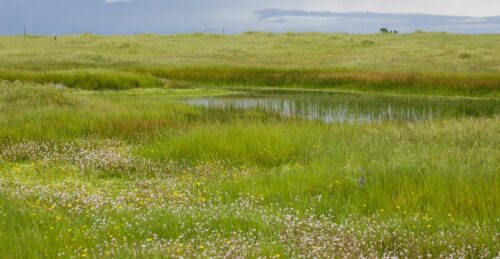
“Vernal pools don’t immediately catch the eye’s attention. They’re stealthy and scattered across rolling grasslands – hidden beneath layers of vegetation. Appearing seasonally during the cooler months, vernal pools are temporary shallow wetlands that hold water in winter and spring until they dry in the summer heat. A keen eye for these isolated gems is rewarded with an amazing slice of biodiversity, bursting with color. On a recent spring morning, under leaden skies, DWR Senior Environmental Scientist Clay DeLong offered a glimpse of vernal pool habitat at Mather Regional Park in southeast Sacramento County, an area he deemed a “unique grasslands system.” A botanist with more than a decade of experience working in and around vernal pools in Central and Northern California, DeLong is a fervent advocate of their unique nature and value to the ecosystem. “Because of the biodiversity and their relative scarcity, vernal pools are also home to a wide variety of rare endemic plants and animals, many of which are special status species of regulatory significance to many of DWR’s projects,” he said. … ” Read more from DWR.
San Joaquin Valley Conveyance Study: Subsidence and Capacity Challenges
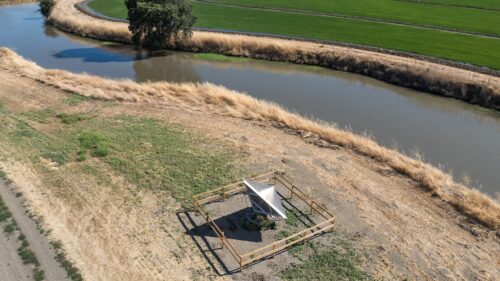
“The San Joaquin Valley Conveyance Study, released by the Department of Water Resources in November of 2025, examines how land subsidence is affecting the region’s major water conveyance facilities and assesses the urgency for infrastructure improvements or expansion across the valley. By analyzing these impacts, the study highlights the pressing challenges confronting the valley’s primary aqueducts and assesses where reduced conveyance capacity limits surface water deliveries. Subsidence in California has had significant financial impacts on water conveyance systems, flood management efforts, transportation infrastructure, and groundwater wells. Subsidence decreases conveyance capacity by altering channel slopes. Gravity-fed canals require precise gradients, so even subtle changes matter. Subsidence also creates depressions that impede water flow and damages infrastructure through structural cracking or misalignment. These effects limit operational capacity. Increased maintenance is necessary to address such issues, including repairs, sediment removal, and realignment. … ” Continue reading this report summary.
Fertilizer costs, policy debate, and water challenges take center stage for California agriculture
“The highlighted major issues shaping agriculture right now, including rising fertilizer costs, ongoing political debates in California, and serious water challenges facing growers in key production regions like Monterey County. … The episode also featured part one of an interview with Monterey County Farm Bureau Executive Director Norm Groot, who outlined some of the biggest challenges facing one of the most productive agricultural regions in the country. “We are fourth in the state and fourth in the country in gross value production,” Groot said, pointing to Monterey County’s importance in supplying crops like lettuce, strawberries, and broccoli. … ” Read more from AgNet West.
Dredging the San Joaquin River has been a goal for the Greater Valley Farm Water Partnership
“Dredging the San Joaquin River as it meanders through the South Delta could become part of a larger strategy to provide more robust water supplies for California and increase the survival rate of threated Chinook salmon. It’s the goal of the Greater Valley Farm Water Partnership (GVFWP) consisting of 13 growers in the Delta as well as south of the Delta that was formed more than two years ago. The need to dredge is based on the natural process that started more than 250 million years ago filling in what was once a massive island sea to give birth to the Great Central Valley. Dredging the river and Delta waterways happened to various degrees over roughly a century until environmental successfully were able to basically stop it in the 1970s. The GVFWP asserts on its website “Delta channels, particularly those in the South Delta, suffer from diminished capacity due to siltation, or excess sediment, much of which is deposited during high flow events such as occurred in 2017.” … ” Read more from Dredging Today.
DWR modifies its Invasive Mussel Inspection Program at Oroville
“The California Department of Water Resources (DWR) is modifying its inspection program for invasive mussels at Lake Oroville, the Thermalito Forebay, and the Thermalito Afterbay. Effective today, April 29, watercraft inspections, decontamination services, and seal checking at the Oroville facilities are no longer required. Blue Oroville seals are no longer required to launch watercraft and owners have permission to remove seals themselves, as inspectors will no longer be stationed at launch ramps. DWR will also reopen facilities that were closed to trailered launching including those at the Thermalito Forebay and Thermalito Afterbay. At locations requiring the removal of physical barriers, additional time will be required for crews to fully reopen facilities. Launching access at Lake Oroville will once again be available 24 hours a day, every day. … ” Read more from DWR.
SEE ALSO: Lake Oroville drops invasive mussel inspections after risk review, from Action News Now
California reopens parts of its salmon fishery: resilient fisheries management is essential to ensure recovery lasts
“After years of unprecedented closures, California is reopening parts of its ocean salmon fishery — bringing welcome relief to commercial and recreational fishing communities and renewed optimism that some salmon runs are beginning to rebound. But as climate change continues to drive increasingly unpredictable conditions, restoration efforts and science-based management will be more important than ever. The commercial troll fishery will be reopened for the first time in three years in the San Francisco and Monterey regions but remains closed in Fort Bragg, Eureka, and Crescent City regions due to weaker abundances of Chinook salmon from the Klamath River and the presence of threatened California Coastal Chinook salmon in these waters. Recreational sport fisheries will be open throughout the state but will be limited in the northern half of the state. … ” Read more from Cal Trout.
‘No one is above the law.’ Fans of the Feather River cheer as farming counties defeat State before California Supreme Court, nullifying funds for embattled Delta Tunnel
Dan Bacher writes, “Those worried about the survival of salmon and steelhead populations in the Feather, Yuba and Sacramento rivers were relieved last week when the California Supreme Court upheld a lower court ruling that the Newsom Administration created an invalid bonding scheme to come up with the $20-to-80 billion needed to finance its extremely controversial Delta Tunnel. The high court’s decision was celebrated by seven county governments in the area – including Butte and Plumas counties – along with a number of Tribes, fishing groups, environmental organizations, small towns and Delta water agencies. The history of the Feather River Project is partly what guided the Appeals Court Ruling that the Supreme Court upheld. … ” Read more from the Appeal Democrat.
‘This is where you live’: California adds three new state parks
“California’s state parks system is getting larger, following a trio of new additions announced on Earth Day. State officials said the three parks will be located in an area where these public spaces have long been few and far-between. They are the Feather River Park near Olivehurst in Yuba County — the county’s first state park — the San Joaquin River Parkway in Fresno and Madera counties, and the Dust Bowl Camp near Bakersfield in Kern County. The new additions have been called the largest expansion to the state parks system in decades, and are part of California’s State Parks Forward initiative. The program also aims to add 30,000 additional acres to existing state parks by the end of the decade. … ” Read more from Capital Public Radio.
California State Parks recommends $42.6M in grants for Land and Water Conservation Funds
“Exactly one week after unveiling its biggest expansion in decades, California State Parks today announced recommendations to the National Park Service (NPS) for $42.6 million in Land and Water Conservation Fund (LWCF) grants for 18 local park projects that will protect more than 2,800 acres meant for public outdoor recreation, further enhancing Outdoors for All. Through this competitive grant program, outdoor access will expand in local communities throughout California, with a priority of expanding access in underserved communities. The selected projects span across cities, counties, park districts and tribes to provide them with the ability to acquire or develop land for public outdoor recreation purposes such as playgrounds, splashpads, multi-use trails, sports fields/courts, picnic areas, and skate and dog parks. “The recommended projects do more than just build parks and trails – they strengthen community connections and enhance quality of life by creating spaces like a new cultural center or expanding more outdoor access to all Californians,” said California State Parks Director Armando Quintero. … ” Read more from the California State Parks.
Moy demands Williams, supervisors to call for California Forever ballot measure
“Catherine Moy this week brought her campaign for the District 3 seat on the Solano County Board of Supervisors to the board itself. Knowing that the board members, including District 3 representative Wanda Williams, are restricted on how they can respond to public comment, Moy had the campaign stage to herself. “I’m here with a simple message and a request, and this request is actually to District 3 Supervisor Williams,” Moy said. “I’m asking that you agendize having staff place the California Forever annexation (into Suisun City) on the ballot for this November for a countywide vote. … ” Read more from the Daily Republic.
California startup tests sound-wave system to stop wildfires without water
“From Altadena to the Pacific Palisades, Shaver Lake to Paradise, a series of devastating wildfires in recent years have forced communities and experts to rethink how fires are prevented and how they’re stopped once they start. A California-based company says the answer may not involve water at all. At Sonic Fire Tech, engineers are testing a system that uses sound waves instead of traditional suppression methods to put out flames. It’s a concept the company says was developed with input from former NASA engineers. … ” Read more from KMPH.
How wildfires worsen flood risk
“A new approach to analyzing watersheds shows how storms occurring after a wildfire can have higher flooding risk than similar storms that occurred before a fire. Wildfires can increase flooding risks in and downstream of burned areas by removing vegetation and disturbing hydrologic processes. As the climate changes, the severity of both wildfires and heavy rainfall events is increasing, meaning flooding is likely to become more severe in the near future. Better understanding how, and by how much, wildfires change flood risk is important for disaster and infrastructure planning for communities around the country. Canham and Lane used streamflow data from the U.S. Geological Survey’s National Water Information System and precipitation data from the NOAA Analysis of Record for Calibration product to identify storms and quantify their effects across seven burned watersheds in the western United States. … ” Continue reading at EOS.
As wildfire risks rise, Forest Service shutters labs that study them
“Inside a low-slung building on the outskirts of this town in north-central Washington State, federal scientists are examining how tree seedlings are responding to a drier, hotter climate, collecting important data as officials brace for what is expected to be an intense wildfire season. But this federal research station and 56 others in 31 states are slated to close in the next few months, part of a shake-up of the U.S. Forest Service by the Trump administration. “The future is uncertain, and that uncertainty is deeply shaking,” said Paul Hessburg, an affiliate professor of forestry at the University of Washington who spent 42 years at the Wenatchee lab until his retirement in 2024. … ” Read more from the New York Times.
In commentary today …
Protect produce from PFAS: No forever chemicals in California pesticides
Dennis Calvert, president and CEO of BioLargo, writes, “California prides itself on setting the nation’s environmental standards. From vehicle emissions to plastic waste, we often lead while others follow. But when it comes to perfluoroalkyl and polyfluoroalkyl substances (PFAS) — also known as “forever chemicals” — in pesticides, California is falling behind. As reported by the media, recent testing has found that a significant share of produce contains pesticide residues, and some of those pesticides are part of the PFAS chemical family. These chemicals, prized by manufacturers for their durability, can persist in the environment for decades. Some have been linked to cancer, immune system damage and developmental harm. … ” Read more from the Sacramento Bee.
In regional water news and commentary today …
NORTH COAST
Sewage keeps spilling into Humboldt Bay. It’s hurting oyster farmers
“The oyster producing giant of Humboldt Bay comes to a grinding halt for weeks each year due to sewage overflows. And while emergency aquaculture closures keep the shellfish-dining public safe, oyster farmers say the situation is putting the industry on ice. “When we are notified, everything stops,” said Todd Van Herpe, owner of Humboldt Bay Oyster Company, which farms on three acres in the north bay. Affected farms are ordered closed by the California Department of Public Health’s Preharvest Shellfish Unit, and planned harvests come to a standstill. Sometimes, shipments have to be recalled. For oyster companies, this means cancelled deliveries and triggers what Van Herpe calls a “cascading effect” that disrupts the careful timing of oyster seeds planted years in advance. … ” Read more from the Lost Coast Outpost.
Restoring the Elk River Estuary: A new chapter for one of Humboldt Bay’s most important watersheds
“The Elk River was once the heartbeat of Humboldt Bay. Salmon swam freely through its waters, the Wiyot people harvested and smoked fish along its banks, and the river’s estuary nourished a web of life that defined the region’s ecology and culture. For decades, diking and draining for agriculture and heavy logging for timber degraded the landscape and, today, continues to cause problems for landowners and native fish. Alongside our partners, CalTrout is working to revitalize this life-sustaining watershed. We’re proud to share several major milestones in the Elk River Estuary restoration project, a 857-acre effort just south of Eureka to bring tidal marsh, salmon habitat, and estuarine function back to one of the North Coast’s most significant landscapes. We also just launched an interactive StoryMap that lets you explore the history, ecology, and restoration vision for the Elk River Estuary and Lower Valley firsthand. … ” Read more from Cal Trout.
Not too scenic to widen: Richardson Grove Project set to begin
“More than 60,000 people have signed letters urging Gov. Gavin Newsom to halt a long‑disputed Caltrans highway realignment through Richardson Grove State Park, warning that cutting into the root systems of ancient redwoods could cause long‑term harm to one of California’s most iconic old‑growth groves, according to the Center for Biological Diversity. The move comes on the heels of a major legal win by Caltrans that allows the project to proceed. Caltrans says the realignment will improve truck access along a narrow stretch of highway. Environmental groups say the work would cut into shallow redwood roots that extend up to 30 meters from the trunk, a vulnerability documented in the “Long-term impacts of road disturbance on old-growth coast redwood forests” study that was published in 2021. … ” Read more from the Eureka Times-Standard.
Project focuses on controlling phosphorus as part of improving Clear Lake’s health
“Earlier this month, one of several projects aiming to improve Clear Lake’s health wrapped up, completing a key phase of treatment meant to address phosphorus loading in an area along the Northshore. The county of Lake and EutroPHIX led the phosphorus mitigation demonstration project to improve the lake’s water quality, one of several projects to receive approval and funding through the Blue Ribbon Committee for the Rehabilitation of Clear Lake, or BRC. The BRC was created in 2017 by Assembly Bill 707, written by Assemblymember Cecilia Aguiar-Curry. Ahead of the actual treatment work on the lake, the county and EutroPHIX held a town hall at the Soper Reese Theatre in Lakeport on March 25 to explain the science to a group of about two dozen community members. … ” Read more from the Lake County News.
SIERRA NEVADA
Lake Tahoe Community College awarded two grants supporting meadow restoration and Washoe partnership
“Lake Tahoe Community College (LTCC) has been awarded two new grants that will expand its efforts to strengthen partnerships with the Washoe Tribe of California and Nevada while advancing environmental stewardship and access to outdoor education in the Lake Tahoe Basin. The funding will support both ecological restoration and community-based programming that highlights Indigenous knowledge and outdoor leadership. Trout Creek Meadow, adjacent to the LTCC campus, is one of several meadow systems that punctuate the city of South Lake Tahoe and contribute to the iconic landscape of the Tahoe Basin. Meadow systems provide a wide array of wildlife and watershed benefits; however, factors such as fire suppression and land-use changes undermine the ecological functions of these important habitats. … ” Read more from the Tahoe Daily Tribune.
Upcoming wildfire risk reduction projects may temporarily impact recreation access
“The Middle Truckee River Watershed Forest Partnership (MTRWFP) is notifying Truckee-area residents and visitors of upcoming wildfire risk reduction work that may impact recreation access within Tahoe National Forest. Some hard closures of Forest Service roads, trails and lands may be enforced for public safety as contractors engage in active implementation this field season. Public access may be restricted due to the use of mechanical vegetation management work including the use of heavy equipment, movement of haul trucks, tree-falling operations, mastication and piling. … ” Read more from YubaNet.
SACRAMENTO VALLEY
Dam thoughts: A history of Folsom Dam
“May 5, 2026, will mark 70 years since the dedication of the Folsom Dam. When full, the dam can hold more than 1 million acre-feet of water and includes a powerplant that generates electricity for the region. Its construction also led to the creation of Folsom Lake, now one of the city’s most popular destinations for recreation and tourism. Although the dam itself is 70 years old, its story begins more than a century ago – in 1925. In the early decades of the 20th century, engineers in the Sacramento region began developing plans for large-scale irrigation projects that would support agriculture, infrastructure, recreation and flood control. … ” Read more from Gold Country Media.
U.S. Army Corps of Engineers awards $71.1 million contract for Sacramento River erosion protection
“The U.S. Army Corps of Engineers Sacramento District has awarded a $71.1 million contract to The Dutra Group for Sacramento River Erosion Contract 3, a critical component of ongoing flood risk reduction efforts in the Sacramento region as part of the American River Watershed (Common Features) Project, Natomas Basin, Sacramento and Sutter Counties, Calif. The contract, awarded April 24, 2026, focuses on stabilizing vulnerable sections of the Sacramento River levee system. Work under this contract includes installation of bank protection features such as launchable rock, in-stream woody material, planting benches, and slope protection to reduce erosion and strengthen levee integrity. Construction is scheduled to begin in May 2026, with completion anticipated in December 2027. … ” Read more from the Army Corps of Engineers.
NAPA/SONOMA
Climate change is coming for Cabernet. Here’s how one Napa winery is getting ready
“In 2019, the greatest threat to California wine was climate change. It felt like a reckoning was coming, especially to Napa Valley, where the future of its crown jewel grape, Cabernet Sauvignon, was being called into question: In 30 years, will it be too hot to produce Cabernet at an elite level? “There’s going to come a point with Cabernet in Napa where you have it seared on the outside and completely raw on the inside,” winemaker Dan Petroski told the Chronicle in 2019. Then, suddenly, winemakers stopped talking so much about climate change. COVID-19 hit in 2020, forcing wineries to close to visitors and find new ways to reach customers. (Remember virtual tastings?) A few months later, more than 30 Napa Valley wineries were damaged or destroyed in devastating wildfires, and smoke from the disasters nearly wiped out an entire vintage. … ” Read more from the San Francisco Chronicle.
BAY AREA
Mountain View main breach may leave residents without potable water until Sunday
“Residents in Mountain View affected by a water main breach last week may not have potable water until at least Sunday, the city said Wednesday. “At this time, the city of Mountain View is preparing for the possibility that the clearance by the California State Water Resources Control Board to restore drinking water will not happen before Sunday, May 3,” the city said in a release. City crews have been working to rectify the problem after about 67 households in the 600 block of Cuesta Drive and 600-700 block of Leona Lane had water shut off due to a breach of a water main during maintenance work on Friday, according to Lenka Wright, a City of Mountain View spokesperson. The breach happened when the contractor, C2R Engineering, was performing water main replacement activities at the intersection of Cuesta Drive and Bonita Avenue. … ” Read more from Local News Matters.
CENTRAL COAST
Water and land disputes loom large in a LAFCO vote that results in a stubborn stalemate.
“A vote to elect a member of the public as a commissioner on the Local Agency Formation Commission (LAFCO) of Monterey County turned into a political skirmish on Monday, April 27, dredging up disputes over both Peninsula water and a Salinas Valley land annexation. It resulted in a stalemate over the vote to choose someone to represent the public on the influential land use board. Commissioner Matt Gourley’s term was set to end on Monday, May 4, triggering the need for the commission to select a public member. Gourley reapplied for another four-year term. Running against him were Michael DeLapa, executive director of LandWatch Monterey County, and Brian Okazaki, an attorney originally from Orange County. The seven-member commission is made up of two representatives from the Monterey County Board of Supervisors, two from among the county’s 12 cities, two from among the county’s 41 special districts and one member of the public. To be appointed, the public member needs support from at least one supervisor, one city representative and one special district representative, and at least four votes. … ” Read more from Monterey Now.
SLO County is considering desalination for water. Where could a plant be built?
“San Luis Obispo County is investigating the potential for building a desalination facility as a new drinking water source. As weather patterns change and the length of droughts increase due to climate change, the county is interested in pursuing a drinking water source that doesn’t rely on rainfall. The county’s current water portfolio includes groundwater, reservoirs, recycled water and state water — all of which rely on rain. Desalination, however, produces drinking water regardless of the weather, according to the county’s consultant, Carollo Engineers project manager Lydia Holmes. “It is drought resilient,” she said at a community meeting about the project on April 20. “It doesn’t have to be raining. You don’t have to have surface water flows or wastewater flows, and so it can provide a safeguard against unpredictable water shortages.” … ” Read more from the San Luis Obispo Tribune.
Ventura County school district could lose connection to drinking water
“A small school district in the Somis area may soon lose its longtime connection to drinking water after failing to reach an agreement with the purveyor. Del Norte Water Company, founded over a century ago, has provided the Mesa Union School District with water since its campus was built in 1939, officials said. While the school was not within Del Norte’s service area, it reportedly started providing water to the campus on an emergency basis and later continued to do so. In recent years, however, the company faced more challenges, from a wildfire that damaged its drinking water reservoir to fallout from groundwater rights litigation, said John Orr, president of Del Norte’s Board of Directors. His great grandfather was one of the company’s founding members in 1910, he said. … ” Read more from the Ventura County Star.
SAN JOAQUIN VALLEY
‘Ground zero for mussels’: San Joaquin County officials detail threats caused by invasive species
“San Joaquin County has declared a local state of emergency as invasive golden mussels continue to spread in the Delta, causing widespread issues for water systems, infrastructure, and agriculture. “We are in ground zero for golden mussels, they’re out of control. One mussel can produce, like, a million eggs,” said Paul Canepa, San Joaquin County supervisor for District 2. The mussels are clogging pipes, threatening water supplies and creating challenges for local communities. “The state is basically worried about the spread and we’re worried about it. What are the consequences for our local communities in San Joaquin County,” Canepa said. … ” Read more from KCRA.
One river, two wounds, one path forward
“The Stanislaus River doesn’t announce its troubles. On a spring morning, it looks alive — green banks, moving water, cottonwoods coming into leaf. But spend a day on the ground with a fisheries scientist, and a different picture emerges. One shaped not just by drought or climate, but by decisions made decades ago that the river is still absorbing today. That’s exactly what our team did on April 22nd. Julia and Patrick joined Jesse Anderson of Cramer Fish Sciences to visit two Stanislaus River sites — each telling a different story about how we got here, and what it will take to turn things around. … ” Read more from Yosemite Rivers.
Federal funding targets major fixes to Delta-Mendota Canal on the Westside
“The Delta-Mendota Canal — a crucial water supply line for Westside farms and communities — is set to receive $235 million in federal funding for major repairs and upgrades, the largest single allocation in a new $889 million Western water infrastructure package announced by the Department of the Interior. The investment is part of the One Big Beautiful Bill Act, signed in 2025, which directs $1 billion to the Bureau of Reclamation through 2034 to restore and expand water conveyance systems across the West. California will receive $540 million of the total, with the Delta-Mendota Canal topping the list of funded projects. The canal, which runs roughly 116 miles from the C.W. “Bill” Jones Pumping Plant to the Mendota Pool, supplies irrigation water to farms along the west side of the San Joaquin Valley and delivers replacement water for San Joaquin River flows stored at Friant Dam. It passes near the Westside towns — all heavily dependent on its deliveries. … ” Read more from Westside Connect.
Officials celebrate completion of Orestimba Creek recharge project in Newman
“Local, state and federal water officials gathered in Newman last week to celebrate the completion of the Orestimba Creek Recharge and Recovery Project, a major groundwater initiative designed to boost water reliability, improve flood management and strengthen drought resilience across the Westside. The ribbon‑cutting ceremony was held April 14 at the project site on Orestimba Road, hosted by the Del Puerto Water District and the Central California Irrigation District. The event featured remarks from elected officials, agency leaders and community partners, followed by a luncheon at Stewart & Jasper Orchards. The celebration marked the end of a multi‑year effort to expand and modernize groundwater recharge capacity along Orestimba Creek. … ” Read more from Westside Connect.
Kings County groundwater agency to hold another workshop on how to register wells
“After overwhelming farmer interest at a workshop held Tuesday on how to register wells with the Mid-Kings River Groundwater Sustainability Agency (GSA), the agency will hold another workshop on Friday. Every seat was taken at a workshop held Tuesday, where about 70 landowners spent several hours learning how to navigate the GSA’s system. The additional workshop will be held from 1:30 to 5 p.m. at the Kings County Government Center’s Ag Commissioner’s multipurpose room at 1400 W. Lacey Blvd. No registration is required. … ” Read more from SJV Water.
SOUTHERN CALIFORNIA
County OKs water plan for Lancaster development
“A major development proposed is one step closer to reality after the Los Angeles County Board of Supervisors signed off on a key question: Is there enough water to support it? Supervisors approved a water supply assessment on April 14 for the proposed Parkway Village Specific Plan, a 435-acre project planned near Avenue K and Sierra Highway. The project calls for more than 4,200 homes, plus a hotel, offices, commercial space, a hospital, parks and even an aquatic center. So what does this approval actually mean? … ” Read more from the Antelope Valley Press.
SCV Water celebrates completion of PFAS treatment project at Rio Vista Facility
“The Santa Clarita Valley Water Agency (SCV Water) marked a major milestone Wednesday with a ribbon-cutting ceremony celebrating the completion of its new PFAS and VOC treatment project at the Rio Vista Intake Pump Station. The project restores groundwater production from five wells — T7, U4, U6, and Saugus 1 and 2 — that were previously taken offline due to contamination from per- and polyfluoroalkyl substances (PFAS) and volatile organic compounds (VOCs). … ” Read more from KHTS.
Along the Colorado River …
Parched western states at war over Colorado River amid fears major cities may have to accept huge water cuts
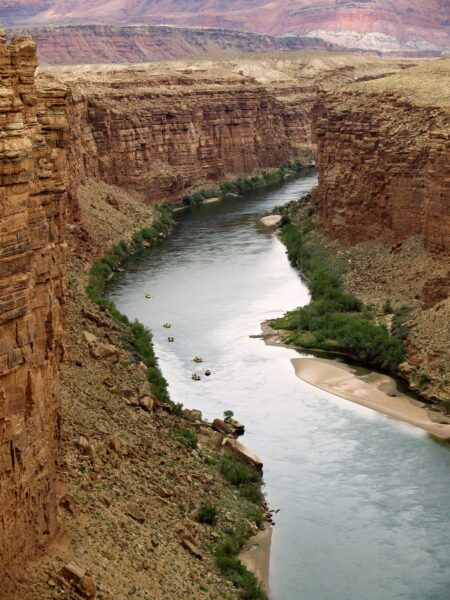 “The seven states that rely on the shrinking Colorado River for their water supply all believe they must cut their usage, but up to this point, an agreement has not been reached. The two-year-long feud – which already has some cities signaling there could soon be water cuts – was supposed to be resolved by the February 14 deadline that had been imposed by the federal government. For the last two decades, the southwestern United States has endured its driest period in at least 1,200 years, according to a UCLA study. A consistent lack of rain combined with stubbornly high temperatures has dramatically reduced the flow of the Colorado River, leaving critical reservoirs such as Lake Mead and Lake Powell at historically low levels. In a statement last week, the Upper Colorado River Basin states of Colorado, Utah, New Mexico and Wyoming called for ‘immediate mediation’ with the Lower Colorado River Basin states of Nevada, California and Arizona. … ” Read more from the Daily Mail.
5 things to know as Hoover Dam electricity costs could become unaffordable
“Lower water levels at Lake Mead are likely to lead to higher prices for electricity from Hoover Dam — prices high enough to make the power unaffordable to at least some of the dam’s customers, a state official says. Because the U.S. Bureau of Reclamation plans to slash flows of Colorado River water this year from Lake Powell at the Arizona-Utah boundary to Lake Mead at the Arizona-Nevada boundary, Hoover Dam’s capacity to generate electricity could be reduced by up to 40% this fall. If that happens, the price of that electricity, which serves millions of people and businesses in three states, is likely to rise sharply, experts say. Lake Mead was formed by Hoover Dam’s construction in 1935, while Lake Powell was formed by Glen Canyon Dam’s construction in 1963. Here are five takeaways about Hoover Dam’s power generating and pricing. … ” Read more from the Tucson Sentinel.
Colorado River emergency actions buy time, not solutions
“On April 17, the federal government ordered emergency measures to prevent water levels at Lake Powell from falling so low that Glen Canyon Dam, which created the reservoir, could no longer generate power or deliver water downstream. Without this intervention, models showed that the reservoir could drop below safe operating levels in August, meaning that the river would not have a reliable way to flow past the dam. This would threaten water and power supplies for millions of people across the Southwest, as well as the flow of water through the Grand Canyon. Across the Colorado River Basin, an extremely low snowpack combined with a record-shattering March heat wave, have left water managers with few other options. The region’s reservoirs were already depleted from years of relying on wet winters to balance the growing demand with the ongoing drought. … ” Read more from KUNC.
Colorado River cuts raise water, power concerns
“A Senate hearing yesterday placed the Colorado River’s fragile condition into sharp focus. During questioning before the Senate Energy and Natural Resources Committee, Senator Ruben Gallego of Arizona pressed Department of the Interior Secretary Doug Burgum on how the federal government plans to manage both water shortages and rising energy concerns tied to the river. At the center of the discussion were emergency actions designed to stabilize the river system. Federal officials have proposed moving large volumes of water between reservoirs, including releasing up to one million acre-feet from Flaming Gorge Reservoir. At the same time, releases from Lake Powell to Lake Mead would be reduced to six million acre-feet, the lowest amount allowed under current legal requirements. … ” Read more from Western Water.
Colorado forecasters expect up to 15 inches of snow in mountains, but say it ‘won’t move the needle’ on drought
“Colorado forecasters expect the recent pattern of wetter, cooler weather to continue into the start of May, offering relief — but not real healing — from drought conditions after a historically hot, dry winter. National Weather Service meteorologist Lucas Boyer said that the mix of snow and rain that Colorado mountains have seen this week is expected to continue as a storm hits Thursday and Friday, with showers through the weekend. “The truth of the matter is that we’ve been so dry that it does feel wet right now,” Boyer said. “But it’s not going to be enough to move the needle because this is not a storm that has excessive amounts of water wrapped up in it.” … ” Read more from Sky Hi News.
Phoenix introduces new roadmap as potential water shortages loom
“As federal cuts to the Colorado River are looming, Phoenix water leaders brought a plan to the City Council on April 28 for the future of the water supply. City leaders made it clear that Phoenix is not running out of water, saying they’ve planned for drought for decades. “The Colorado River is currently experiencing the lowest flows that it’s seen in over 1000 years,” Max Wilson, the Water Resources Management Advisor said. “And this is brought much of the infrastructure that the federal government manages on the Colorado River really to the brink of not being able to do its job.” … ” Read more from Fox 10.
Nukes and AI require 1.4 million gallons of water a day at New Mexico lab
“High atop a plateau in northern New Mexico, Los Alamos National Laboratory is facing its biggest expansion since the World War II-era Manhattan Project, the top-secret government effort to produce the world’s first atomic weapons. The current expansion will require a colossal use of resources, including one that New Mexico has in short supply these days — water. Last month, the U.S. Department of Energy projected that the Los Alamos expansion would require around 504 million gallons of water annually — about 1.4 million gallons of water per day — for at least another decade. By comparison, a single New Mexico resident uses about 81 gallons per day. The lab started making plutonium bomb cores, or “pits” for a new generation of warheads well before an environmental impact statement was published in March. In its latest move, however, the Department of Energy has set its sights on an even larger — and thirstier — expansion. … ” Read more from High Country News.
In national water news today …
Panel debates opening ESA reviews to water contractors
“Members of the House Natural Resources Committee debated Wednesday whether to give local water contractors input into Endangered Species Act reviews, as shrinking water supplies across the West increasingly put agricultural and environmental needs at odds. The Subcommittee on Water, Wildlife and Fisheries reviewed H.R.8259, the “Federal Water Projects Consultation Improvement Act,” which would require federal agencies to involve local contractors during ESA biological assessments, which can dictate when and how much water flows. The bill, introduced by Rep. Cliff Bentz (R-Ore.), focuses on the Bureau of Reclamation which operates across 17 western states. That includes the Klamath Basin in Oregon, where Reclamation is rewriting the endangered species rules that govern its dams and pumps. “This bill does not change the Endangered Species Act or change consultation requirements,” said Bentz who has argued that existing ESA rules do not give irrigation districts and farmers consideration. “This bill would improve the ESA consultation process and nothing more.” … ” Read more from E&E News.
The invisible force making food less nutritious
“In 1988, the chickpeas and rice in this curry were part of a well-balanced meal — a serving of each provided a plethora of essential nutrients, including roughly 22 percent of the zinc a person needs to consume each day. Today, the very same meal has become a little less wholesome, meeting only 20 percent of the Food and Drug Administration’s recommendation for daily zinc intake, according to a meta-analysis of relevant research. And by 2040, chickpeas could contain even fewer nutrients, including just 17 percent of recommended daily zinc — putting those who rely on them at greater risk of life-threatening deficiencies. Chickpeas and rice are not the only foods steadily growing less nutritious. Many of humanity’s most important crops — including wheat, potatoes, beans — contain fewer vitamins and minerals than they did a generation ago. The invisible culprit behind this damaging phenomenon? Carbon dioxide pollution. … ” Read more from the Washington Post.

