
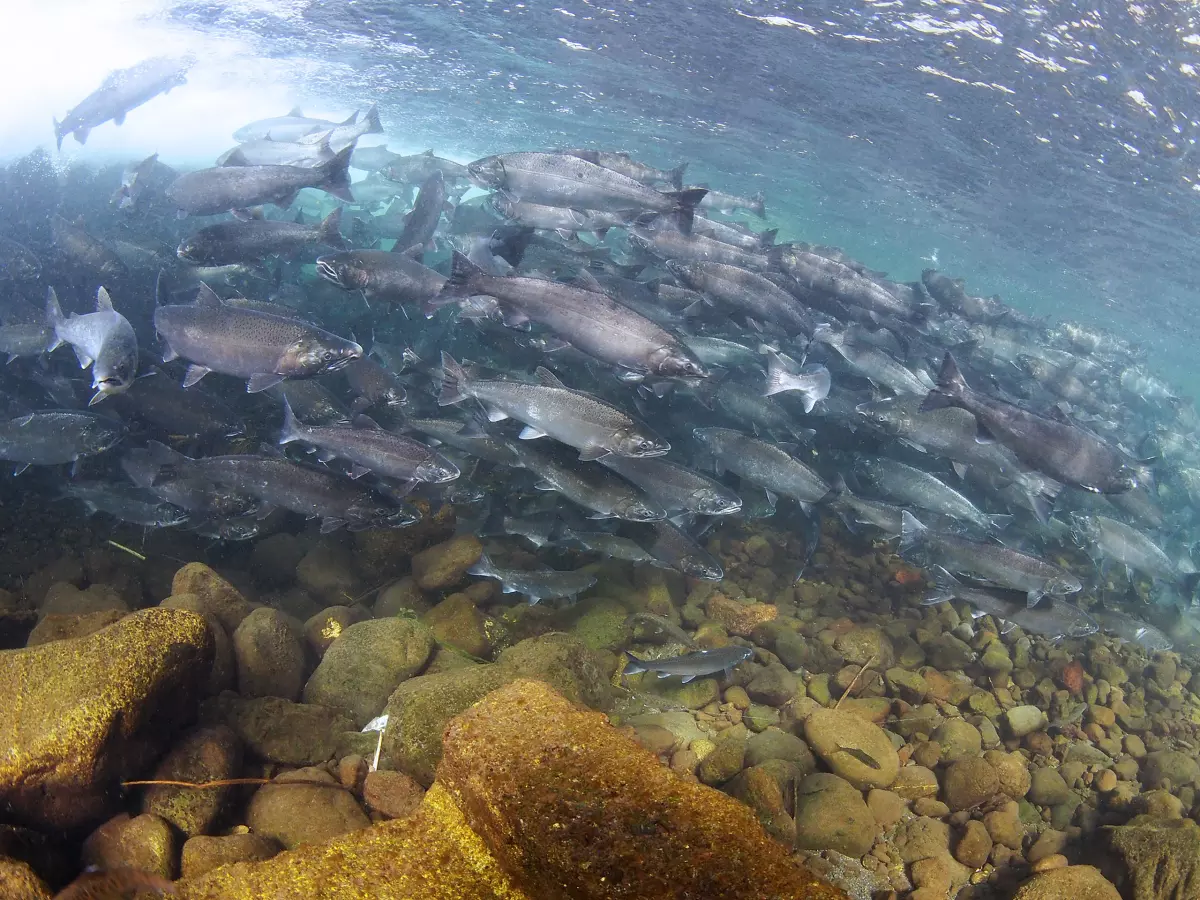
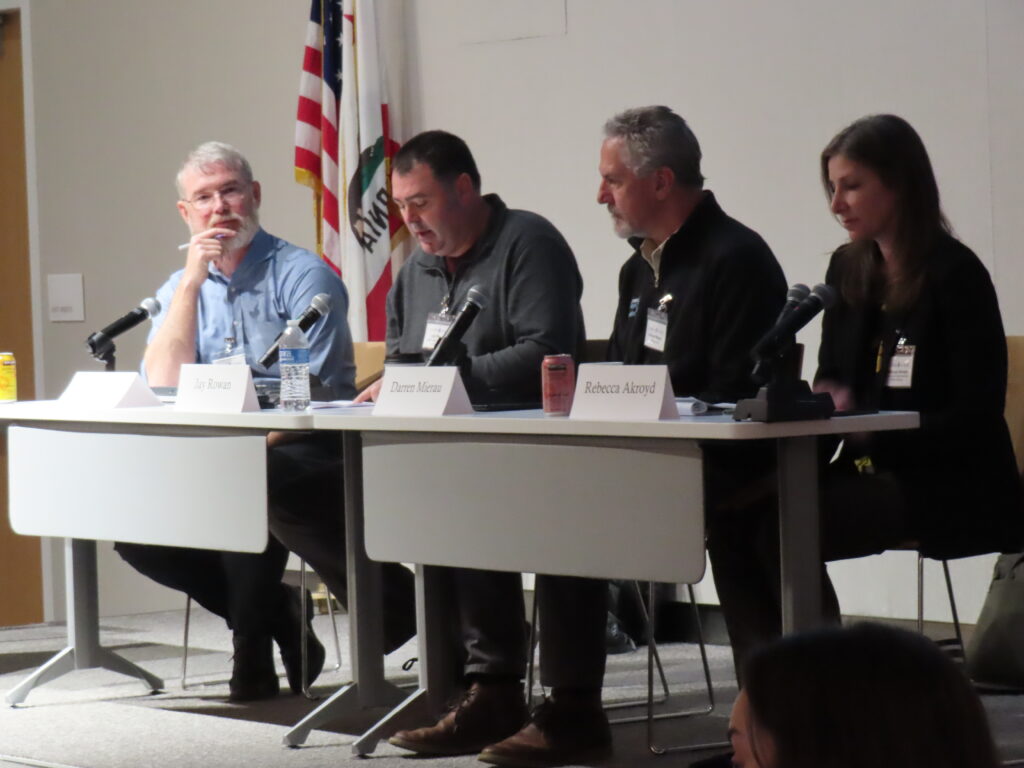
Hatcheries are a complex issue, tasked with meeting diverse demands that are often at odds: producing large numbers of fish for commercial and recreational fisheries while also serving purposes such as mitigation and conservation. These objectives often clash: hatchery fish can differ from wild fish and impact their recovery, so decisions about production, methods, and release strategies require careful consideration of conflicting factors. These complex challenges were discussed at the 2026 California Water Law Symposium, where a panel evaluated how hatchery policies fit into broader salmon recovery strategies under state and federal law.
The panelists:
- Jay Rowan, Branch Chief, Fisheries, California Department of Fish and Wildlife
- Rebecca Akroyd, General Counsel, San Luis and Delta-Mendota Water Authority
- Darren Mierau, Director of Science, California Trout
- Karrigan Börk, Director, UC Davis Center for Watershed Sciences (moderator)
The panel was organized by law Jessica Friley and Jasmine Garza, students at the University of the Pacific, McGeorge School of Law.
Hatcheries in California
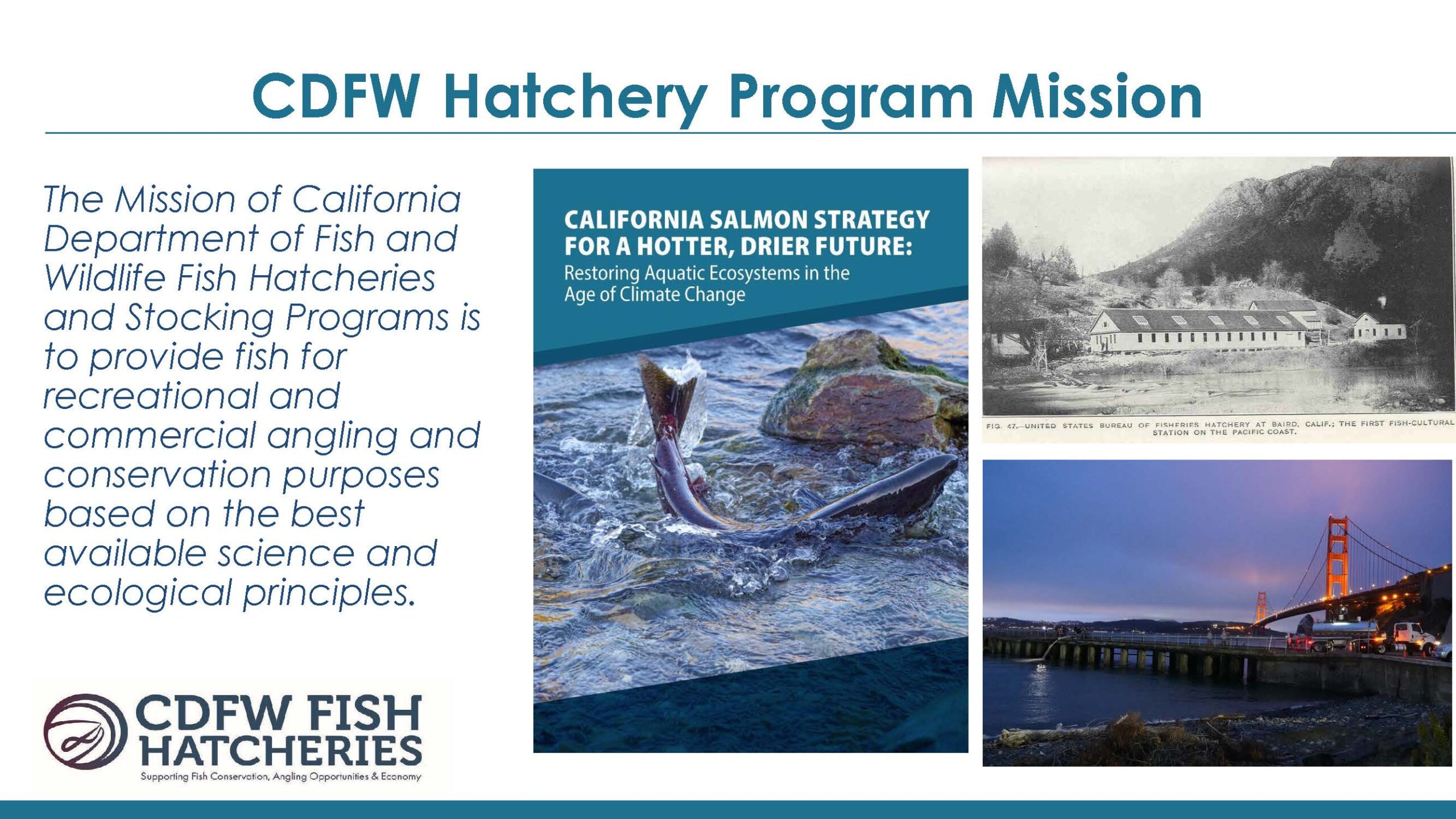 The Department of Fish and Wildlife oversees one of the largest fish hatchery programs in the nation, guided by a mission to provide fish for recreational, commercial, and conservation purposes using the best available science and ecological principles. The program supports recreational fishing for millions of Californians, contributing $6.2 billion annually to the state’s economy and sustaining 46,000 jobs. It also bolsters the $300 million commercial salmon fishing industry.
California’s hatchery policies began in 1870, when the Legislature passed an act to restore and preserve fish in the state’s waters. This law established the Board of Fish Commissioners, the predecessor to today’s Department of Fish and Wildlife. The legislation also had provisions for the conservation of native fish and established the first two public fish hatcheries, one in San Francisco and one at UC Berkeley. In 1872, Livingston Stone established the first federal fish hatchery in the country on the banks of McCloud River.
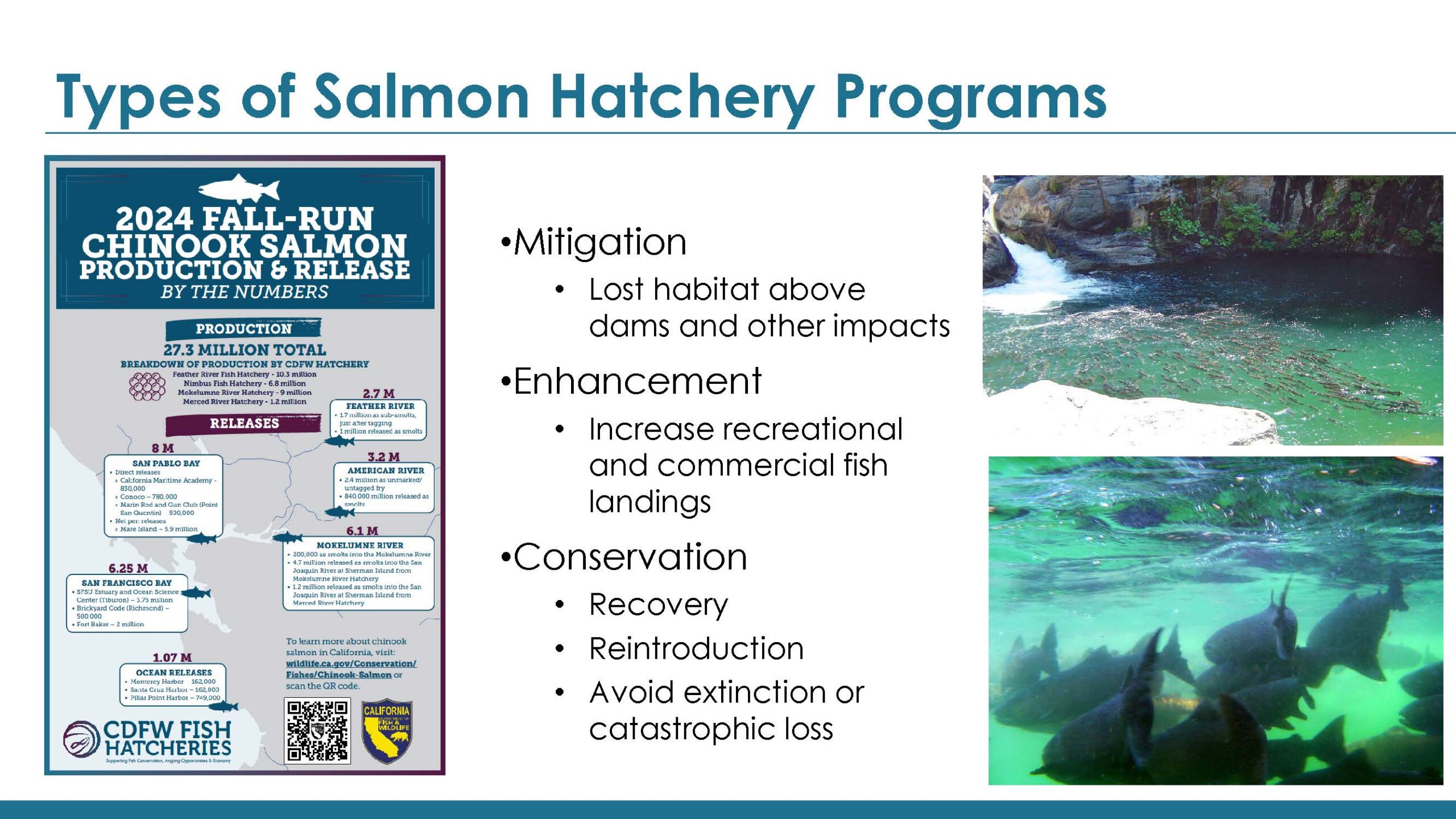
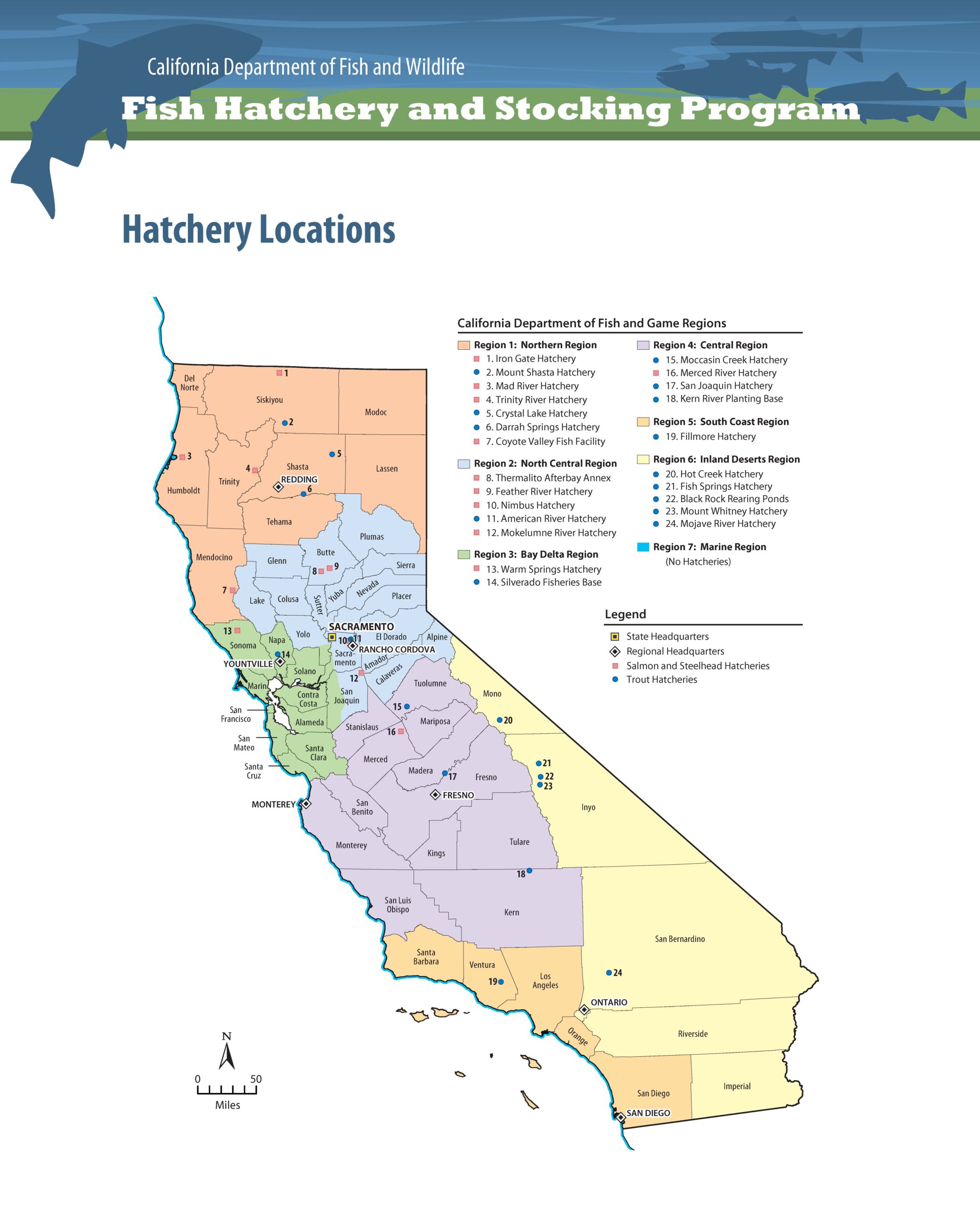 Today, the Department operates 22 hatcheries across the state, including two federal hatcheries, one stakeholder hatchery, and one tribal hatchery. Hatchery programs fall into three categories: mitigation, which compensates for habitat lost above dams; fisheries enhancement, mandated by fish and game codes to produce fish supported by fishing license sales and commercial salmon stamp funds; and conservation, which focuses on species recovery, reintroduction to historic habitats, and preventing extinction by holding fish in captivity until habitats are restored.
Hatcheries play a key role in supporting commercial and recreational fisheries, offering significant economic benefits at a relatively low cost. They also serve as hubs for science, research, education, and outreach, attracting 150,000 to 200,000 visitors annually—many of them children—providing opportunities to promote conservation to future generations.
“Hatchery programs aren’t their own thing in and of themselves,” said Jay Rowan, Fisheries Branch Chief with California Department of Fish and Wildlife. “They are a tool that is used in fisheries management. There are many ways to achieve your fisheries management goals. Hatcheries are one way to do that.”
Listed fish impact water supplies
Rebecca Akroyd is General Counsel for the San Luis and Delta-Mendota Water Authority, which serves 27 water agencies supplying water to 1.2 million acres of farmland, 2 million residents, and 200,000 acres of wetlands. The Authority operates the Delta-Mendota Canal and related Central Valley Project facilities.
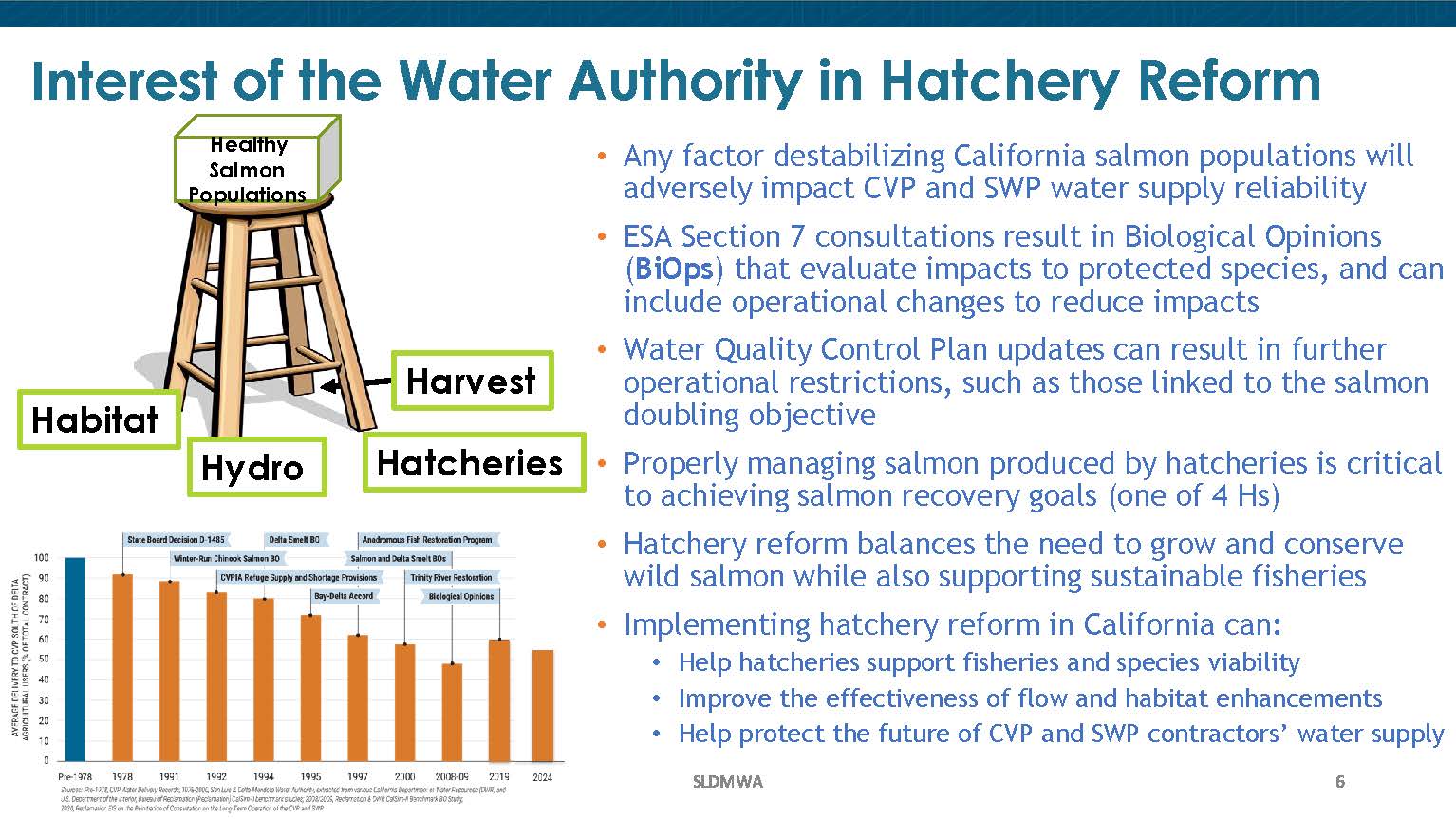 The bar graph on the bottom of the slide shows how, since the 1990s, the decline of fish species listed under the federal and state Endangered Species Acts has resulted in operational restrictions on the Central Valley Project and the State Water Project, reducing contract allocations to CVP and SWP contractors. ESA section seven consultations and the resulting biological opinions impose operational restrictions to reduce impacts to protected species, such as salmon and steelhead, in the Delta. Water quality control plan updates can lead to additional restrictions.
“So the water supply future of CVP and SWP contractors, like Water Authority members, is tied directly to the health of ESA-listed species and wild fish species,” she said. “Any factor that destabilizes the California salmon population will adversely impact CVP and SWP water supply reliability.”
The focus is often on habitat, more specifically, flow and temperature, when it comes to salmon recovery. But habitat is just one of the four factors necessary for healthy salmon populations: habitat, hydro, hatcheries, and harvest. All four things have to come together, and hatcheries are a key part of that.
“Properly managing salmon production produced by hatcheries is critical to achieving salmon recovery goals. It can help hatcheries support fisheries and species viability and, importantly for water users, improve the effectiveness and flow of the habitat enhancements they help fund. Significantly, that helps protect the future of CVP and SWP contractors and the water supply for all the farmlands, refuges, and water users. Without hatchery reform, there’s the potential for wild fish and ESA-listed populations to further decline, which would lead to further limitations on Project operations and restrictions.”
Wild fish an important part of California’s biodiversity
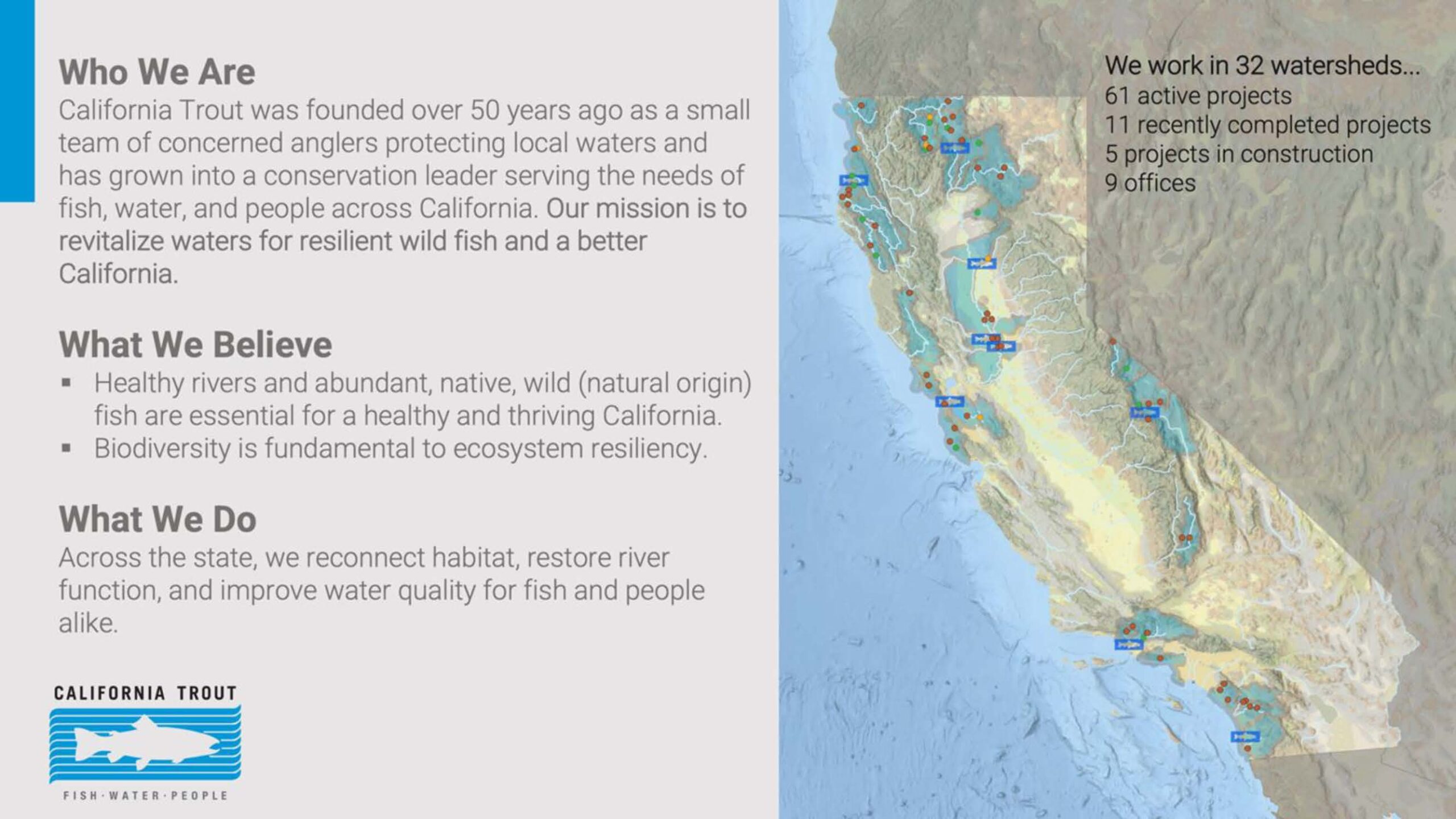 Darren Mierau is the Director of Science for California Trout, whose mission is to revitalize waterways to support resilient wild fish populations and enhance California’s natural environment. Cal Trout emphasizes that the health of salmonid and trout populations is closely tied to understanding the impacts of hatcheries, making hatchery management an important area of focus for the organization.
He pointed out that hatcheries and commercial fishing are closely linked; without hatcheries, we would probably have a severely diminished commercial and recreational fishery. But hatcheries also mask the dysfunction of our rivers to naturally produce fish.
“My main thesis for today is that we need wild fish and habitats that support them to sustain biodiversity in California,” said Mr. Mierau. “So when I think about hatchery reform, I think about trying to pivot away from reliance on hatchery supplementation and artificial propagation, and getting back to that original state we had, which is that our rivers and streams can support, sustain, and produce natural wild fish.”
Why are hatcheries an issue?
The panel discussed why distinguishing between hatchery and wild fish is important, and why simply increasing hatchery production is not a solution.
“Hatchery fish, like natural fish, are subject to evolutionary pressures, and yet they’re selected for conditions in a hatchery environment that don’t suit them for the natural environment, such as selecting for genetic genotypes that function there and not there, and so their survival may be lower,” said Darren Mierau. “Secondly, one of the key aspects of salmon populations is what we call life history diversity. We need a portfolio of life histories that buffer against the environmental strains and constraints that allow them to survive as a population, but may constrain them in certain individual cases, and that life history diversity is lost in hatchery production or diminished severely, such that they don’t function as well in natural populations.”
 Jay Rowan agreed. “You really want the wild environment, everything that’s happening outside of the hatchery, to drive the evolution of the species. That’s really important, especially as the climate continues to change, continues to get warmer … they’re exposed to more diseases, different diseases, with warming water temperatures. You really want that to be driving the evolution of species long-term. So you can have some short-term gains with hatcheries, but you really want to look at the long game.”
Rebecca Akroyd noted that there may be increased competition for limited food and habitat. “If you have too many hatchery fish flooding the system, that makes it very difficult for the wild fish to get the same access to food. They can get crowded out.”
The other reason it matters is that state law and policy require us to protect wild salmon runs. “While that’s on the books, we need to be focused on that, rather than just increasing hatchery fish,” she said.
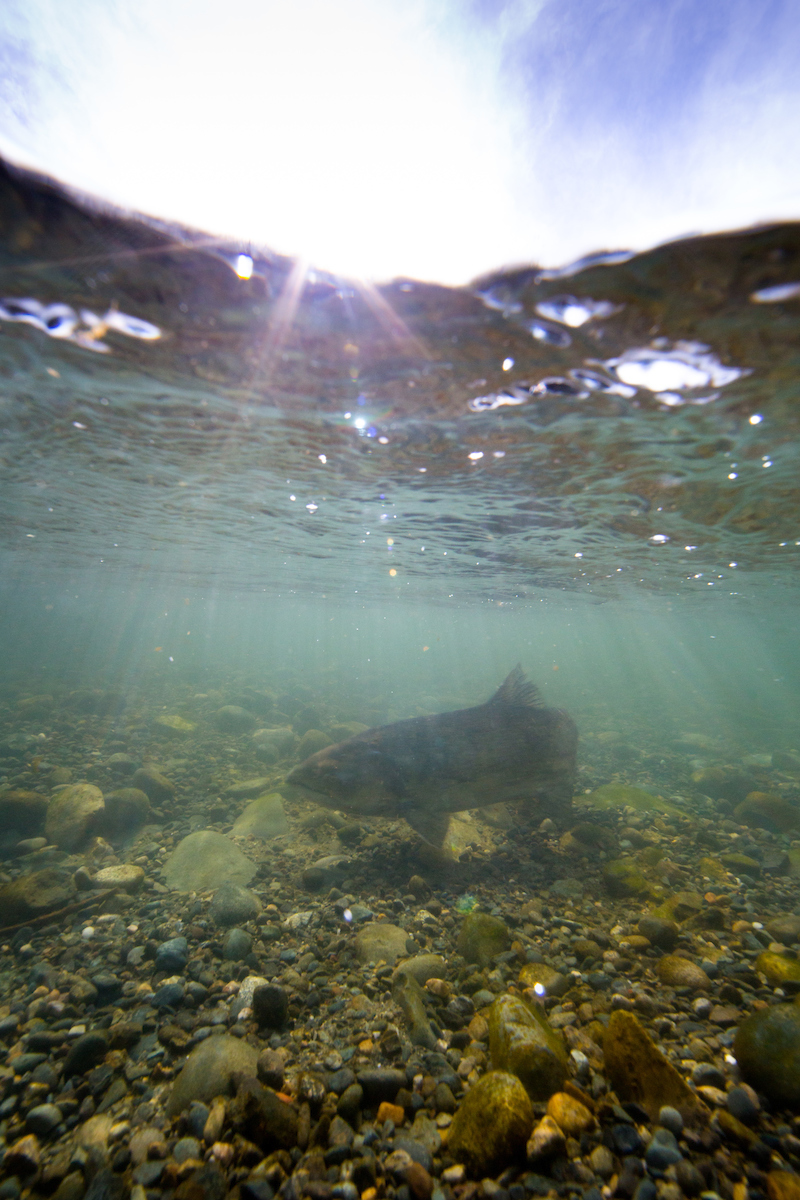
Karrigan Börk noted that adult salmon that return to spawn are about three years old, but if you looked at the actual ages, it would be a bell curve. “There are some that are jacks that come back every year, and some of these fish are really old – 5 and 6-year-old Chinook salmon. But we’re taking a little slice of that population, amplifying it by running it through a hatchery program, and making a whole lot of fish from particular parts of it. So, as you get a bit more of a compressed curve, you lose some of the extremes on those populations. Same thing with timing when they come into the river, same thing with time when they’re moving out of the river.”
Additionally, he noted that recent research shows differences in the habitats used by hatchery and wild fish. “The fish that come from the hatcheries tend to stay in the river the whole time. The fish that are spawned in the wild tend to move up into tributaries, move on the flood plains, and use a much more diverse set of habitats. So that if the river conditions are bad for a year, you still get more of those wild fish in a year [that utilize other habitats].”
Progress since the 2012 report
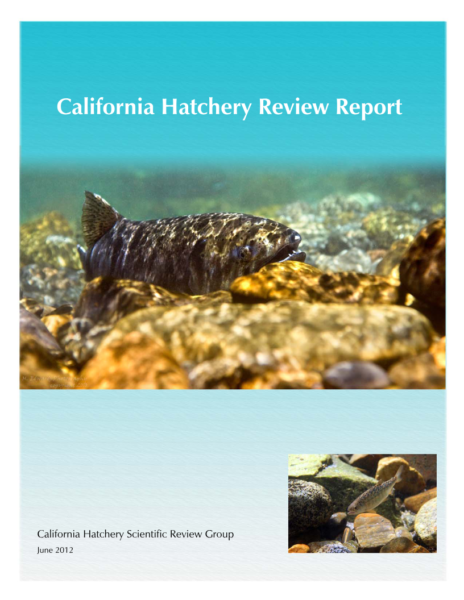
The federally mandated California Hatchery Review Report in 2012 reviewed hatchery operations in the state and made recommendations about how hatchery operations should change. Those recommendations included setting clearly defined goals and success criteria for each hatchery program; implementation of improved brood stock, rearing and release protocols; upgraded monitoring, marking and tagging programs to achieve 100% marking of hatchery fish; strengthen monitoring, evaluation, reporting of hatchery operations to achieve adaptive demand management; and tailoring hatchery program size and release strategies to ecological context, population structure and conservation needs. So, how well has California implemented those recommendations?
 Jay Rowan said the easier recommendations, such as those on collecting brook stock and spawning fish, were implemented promptly. The report relies heavily on conservation, which is a good thing, but it ignores some realities set out in law that require us to produce fish for commercial and recreational fisheries. Other recommendations don’t take into account the realities of what’s happening on the landscape.
“For instance, it does presume that fish can spawn in rear and migrate successfully out of some of our rivers, and we know that is definitely not the case in some places, in some years, particularly dry years, as we go through droughts,” said Mr. Rowan.
Other recommendations will need investment to implement in habitat restoration and technology. “We’re going to need investments in habitat restoration to fix the natural world and get more natural origin fish out of these systems coming back as adults,” said Mr. Rowan.
“We’re in the situation that I describe as a shifting baseline,” said Darren Mierau. “Hatcheries initially were developed with goals to supplement natural populations of salmonid and steelhead in our streams, and make up for the habitat lost above those dams. However, over the many decades since that concept began, we’ve shifted that baseline, and now we’re entirely reliant on hatchery fish to sustain our commercial and recreational fishing. And so I think we’ve lost the original goals and established new ones. I think the current operation of these hatcheries really does mask what we’ve lost, which is functioning ecosystems throughout our state.”
Mr. Mierau noted that just the hatchery production of chinook salmon is somewhere between 30 and 40 million juveniles that would be produced, trucked throughout the state, and released. “That’s just a magnitude of fish production that I think goes beyond what was ever envisioned for these programs,” he said. “I think we have lost sight of many of the other purposes of those hatcheries, such as conservation. We’ve lost those goals, and we’ve gravitated toward just production of fish, too many fish, without thinking about the purpose, which is to have functional ecosystems that support natural production of fish in abundance that’s harvestable.”
Newsom’s salmon strategy
Governor Gavin Newsom’s “Salmon Strategy for a Hotter, Drier Future” is a comprehensive plan launched in 2024 to restore California’s struggling salmon populations through 71 specific actions. Focused on combating climate change, key priorities include removing migration barriers (such as dams), habitat restoration, improving water quality, and modernizing hatcheries.
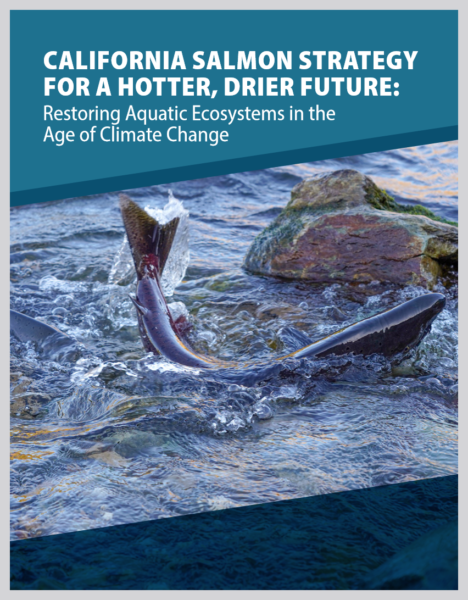 Jay Rowan noted that he drafted a lot of the salmon strategy, particularly the hatchery sections. “In my view, what’s going to make salmon strategy durable over the long term, actually, isn’t the hatchery sections; it’s all the other sections,” he said. “It’s removing barriers, modernizing infrastructure for salmon migration, restoring and expanding habitat, protecting water flows, water quality, and key rivers at the right time to support salmon. Fish need water. It’s transforming technology and management systems for climate adaptability and strengthening partnerships – one agency department can’t do this alone.”
“So hatcheries are just one tool in the toolbox,” he continued. “But the more we can fix the natural environment, the more we can get fish out on the landscape, doing what fish do, the more we can shift from heavy production for fisheries towards more conservation practices.”
Rebecca Akroyd agreed that the strategy focuses on having healthier, thriving salmon populations. The hatchery chapter is really focused on modernization and maintenance of hatcheries, and some goals focus on the future climate.
“I think really focusing on the goals that are related to protecting the wild fish population, and making sure that hatchery management is tied toward protecting wild fish and making sure you’re not hammering wild fish is really a key aspect,” she said.
Climate change impacts on hatcheries
Hatcheries play a role in climate resilience efforts, including increasing salmon genetic diversity, protecting life-history diversity, improving access to first habitats, and moving fish over barriers.
Rebecca Akroyd said that rather than increasing genetic diversity, she would say increasing fitness. “My understanding is in terms of genetic diversity, there’s really not a huge genetic difference between some hatchery fish,” she said. “But to have the hatchery fish adapted to do well in the environment, we really have to look to the future. I think having the requirement to incorporate a certain number of wild fish into that hatchery brood stock is really a way of adding in that fitness.”
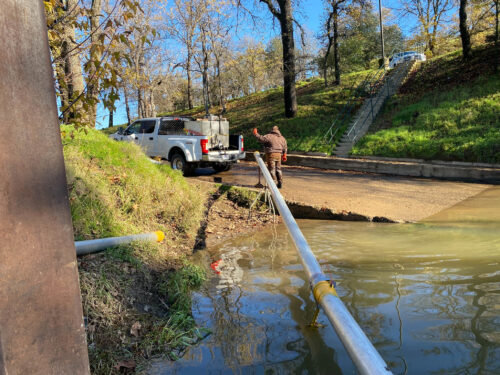
Darren Mierau pointed out that the Livingston Stone hatchery is keeping the winter run chinook salmon from going extinct, so hatcheries play a vital role in conserving at least some species, without which we would lose them. He also noted Cal Trout has been partnering with rice farmers to rear fish on flooded rice fields. “So if we can get fry released, put them on these fields, and let them rear in those natural conditions, I think that’s the benefit of using hatcheries to reintroduce them and start getting more abundance.”
“Long term and climate change, our hatcheries are going to be doing a lot more of putting fish above rim dams and reintroduction projects,” said Jay Rowan. “As the climate continues to change, especially in the Central Valley, it’s going to become more and more inhospitable for salmon populations below those dams. So hatcheries are going to play a key role in getting fish above those dams, especially early on.”
“We’re probably going to be doing a lot more to keep the fish on the landscape,” he continued. “We have a lot of populations out there that are really on the borderline. I work with trout in areas that are not expected to do well under climate change. Some of the things climate scientists have been warning us about for decades are here. We’re seeing impacts of climate change right now.”
100% tagging of all hatchery fish
One topic that was discussed several times during the discussion was the recommendation to tag all hatchery fish. Generally, fish are tagged with a coded wire tag, a very small piece of wire inserted into the fish’s mouth. When the fish returns as an adult, the tag can identify which hatchery the fish came from and when it was released. There is an external mark to help quickly identify a tagged fish. The fish have to grow large enough to be tagged, so it’s a couple of months before juvenile fish can be tagged. The benefit of the parental base tagging is that the fish don’t have to be handled. The tissue is collected from the parents, and from that, their offspring are identified.
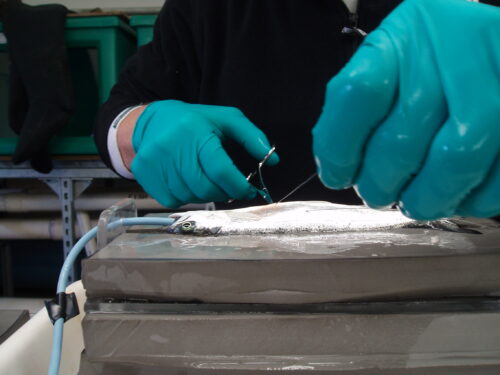
“The recommendations for 100% marked or tagged fish is logistically impossible to achieve,” said Mr. Rowan. “However, Prop 4 does provide funding to expand parental-based tagging, which makes it possible to identify parents and link the offspring of those fish. “That will allow us to get to a 100% marking and tagging so that we can get to the fine-scale information that we need from those types of tagging strategies.”
Ms. Akroyd acknowledged the challenges, but it should still be the goal. “100% marking can make the parental-based tagging that’s been referenced more effective because you can have sampling efficiencies,” she said. “It also allows for brood stock management, and, really importantly, the option for selective ocean harvest. So right now, when ocean fishermen catch a fish, and it’s not tagged, it’s unknown if it’s a hatchery fish or a wild fish. … You can protect the wild fish if you have 100% tagging. Tagging also allows you to evaluate the success of habitat measures and efforts to improve the natural environment.”
Darren Mierau noted that commercial fishermen are constantly opposed to 100% marking. “There’s almost certainly commercial fishing and recreational fishing that’s taking listed fish, and we’re eating them, and we don’t know it,” said Karrigan Börk. “We know what’s happening, but we don’t know how often. We probably don’t want to know.”
Panelists discuss hatchery reforms
Panelists at the symposium emphasized the need for investments in science and infrastructure to reform hatchery practices. Jay Rowan highlighted the importance of advancing scientific tools, including parent-based tagging, genetic analysis, and cohort reconstruction.
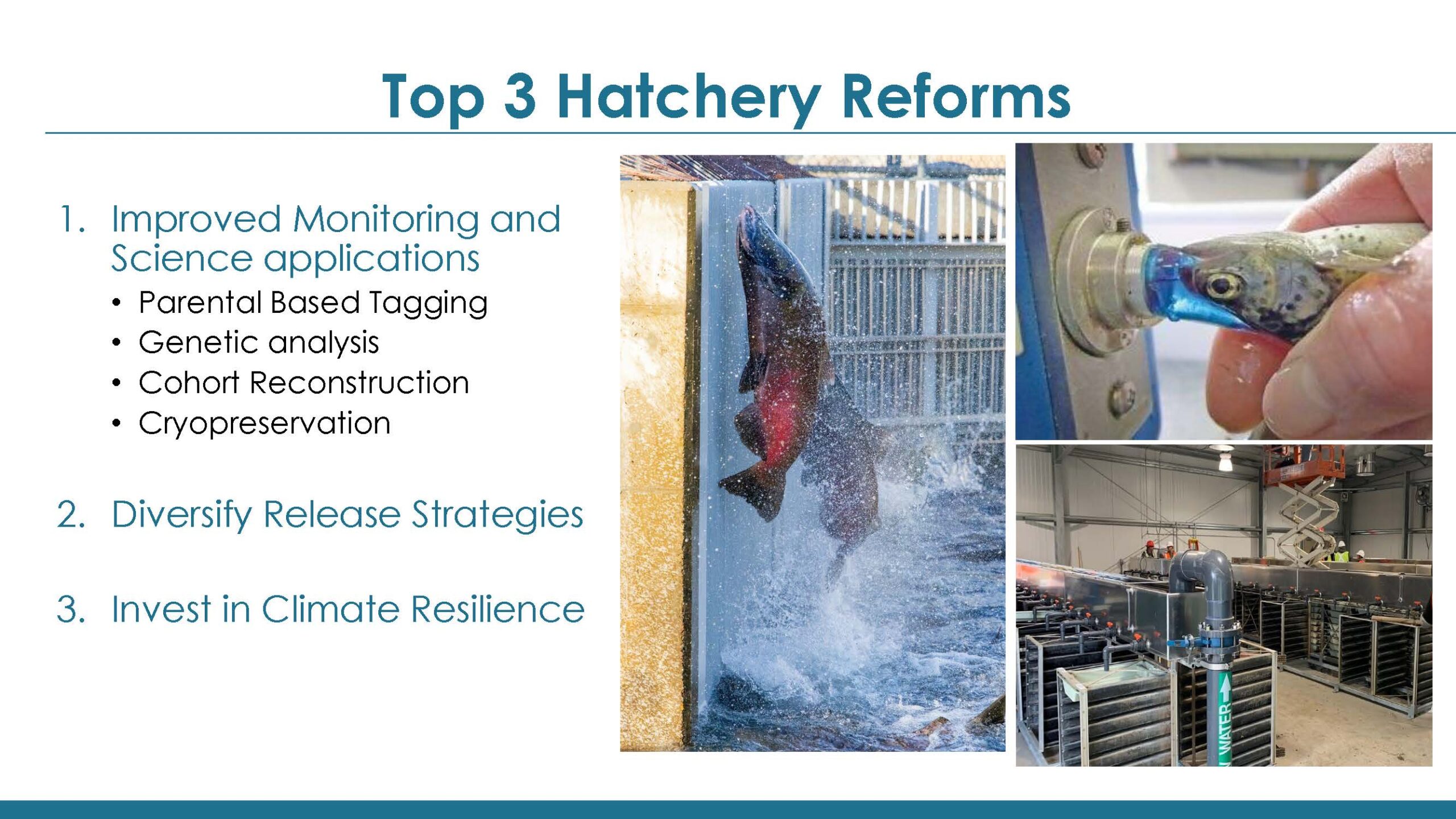 “We’re learning an incredible amount about these fish and how they express themselves under different conditions,” he said. He also stressed the need for infrastructure upgrades, noting, “The average age of our hatcheries is 85 years old. We have major failures in water supplies, pretty much constantly.”
Darren Mierau called for studies to better understand the economics of hatcheries, including operations and maintenance costs, the cost per fish caught, and the balance of public and private investment. “I think we need to look at whether or not that investment in these hatcheries is paying off. What does it cost for each fish that a commercial fisherman catches? We’re probably supporting that in some way,” he said.
Rebecca Akroyd focused on minimizing the effects of domestication in hatchery fish, emphasizing the importance of incorporating wild fish into hatchery broodstock and reducing the number of hatchery fish on spawning grounds.
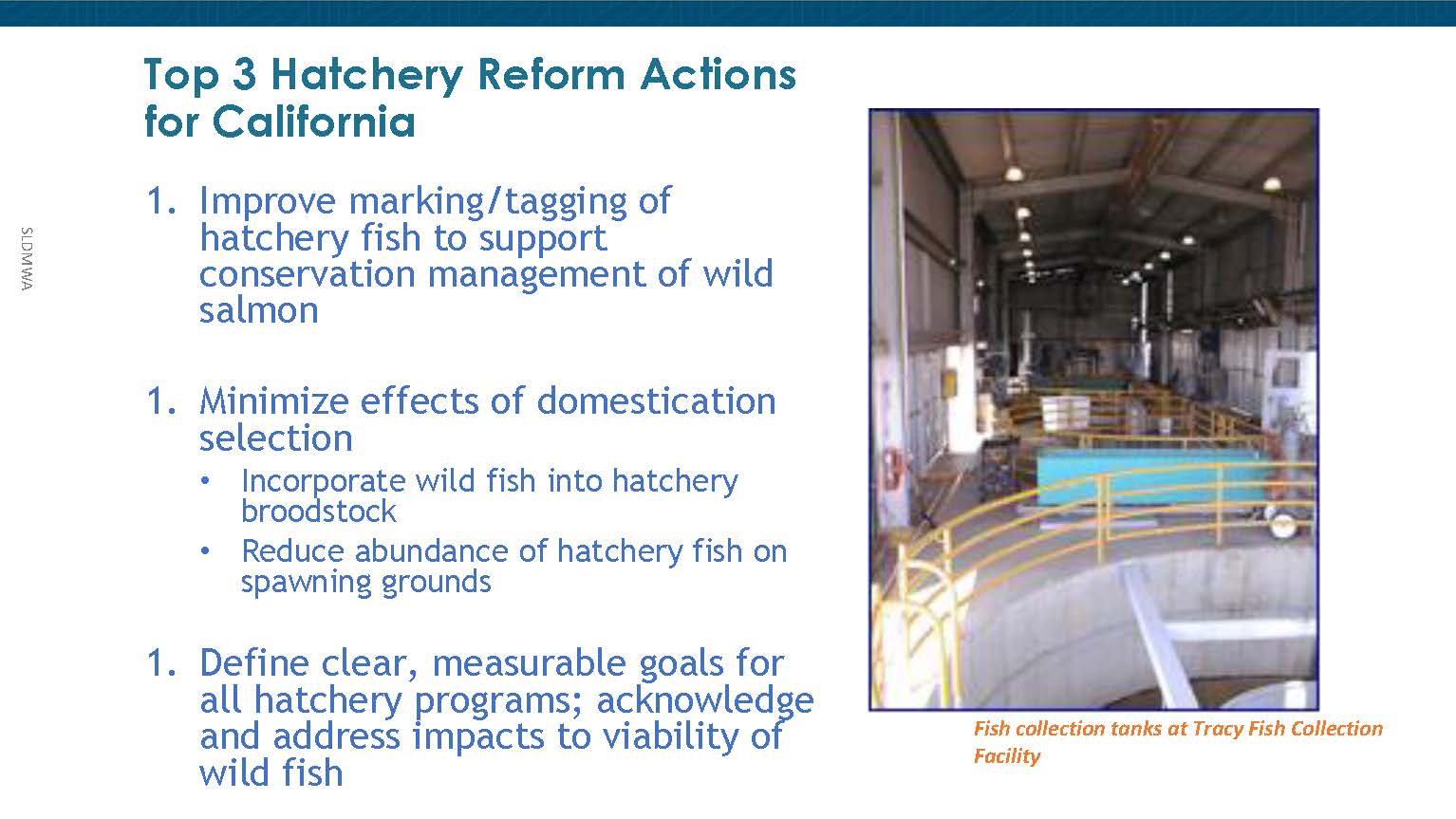 “Making sure you are minimizing the effects on wild fish and changing operations to ensure the hatchery fish can do well in the environment and not just the hatchery,” she said. She also noted the challenges of trucking fish downstream, explaining, “If you were to truck a fish from a hatchery, they’re kind of losing that experience of knowing what the river’s like and being able to come back to it.”
Karrigan Börk illustrated the issue with an example of hatchery fish behavior. “Think of visitors feeding the fish at the hatchery, tossing pellets into the water. The fish that are doing well are those that can live in that kind of concrete-trough habitat and recognize people bringing food. Those same traits maybe aren’t adaptive in the wild,” he said. “So when you breed and produce large numbers of fish and then release them in the wild, you do tend to see a reduction in fitness of wild populations when those fish come back and are able to spawn with wild fish.”
Mr. Rowan also advocated for diversifying release strategies to better mimic natural life cycles. While trucking fish downstream has been effective, he highlighted the Department’s efforts to release fry directly into rivers as soon as they absorb their yolk sacs. “We’re letting those fish go literally as they’re swimming up just as soon as they have absorbed a yolk sac, put them on the river and let them do their thing,” he said. “When we have wet water years, it will be fantastic. But it won’t work in all years. In severe drought years, they’re probably not going to do very well. That’s the reality we’re facing right now, until we can do more restoration and improve water management strategies.”
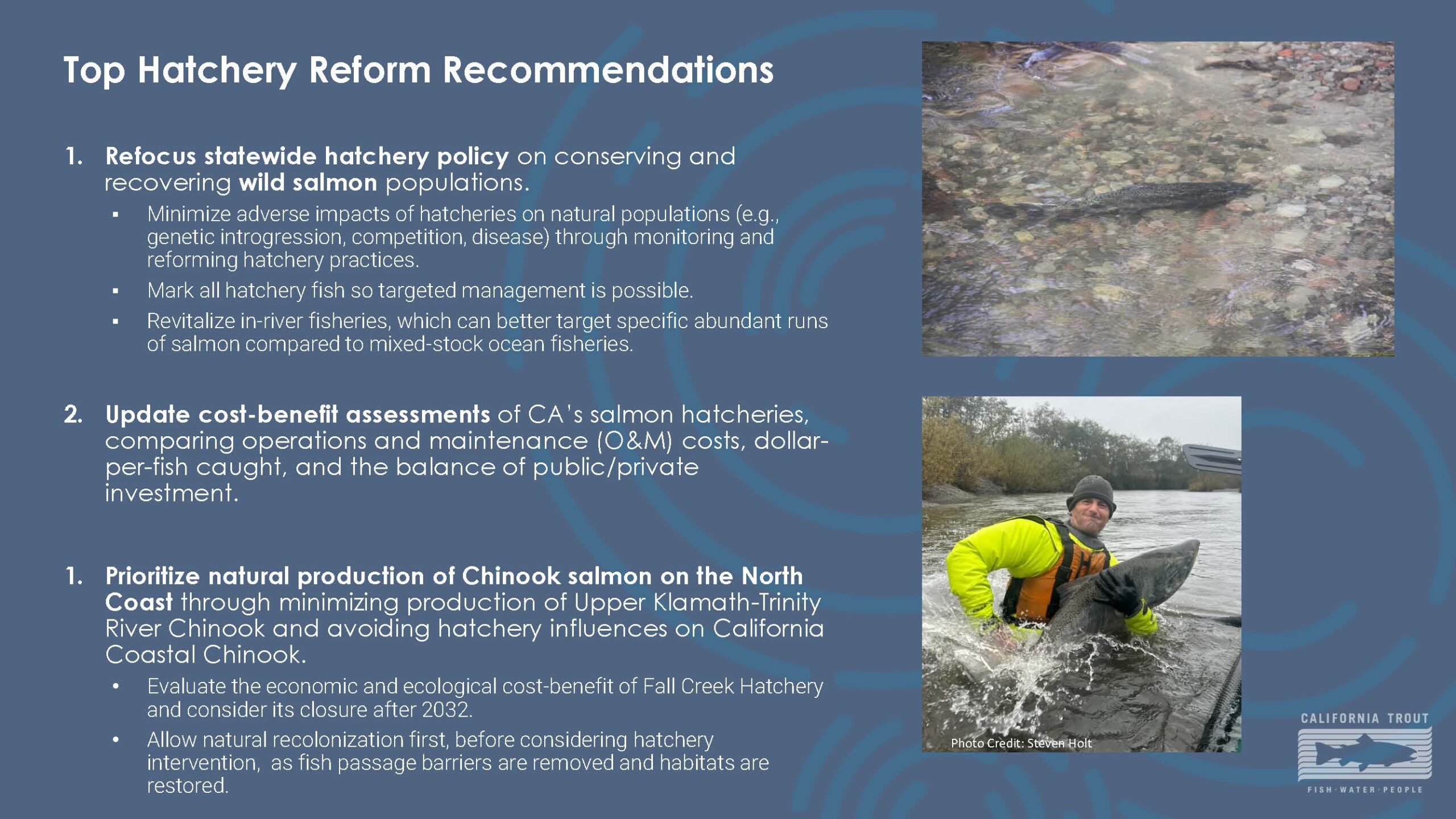 The panelists agreed that hatchery policies should prioritize conserving and recovering wild fish over simply increasing hatchery production. Darren Mierau emphasized, “The best hatchery is the healthy river,” quoting from California’s salmon strategy. He stressed the importance of protecting wild salmon and steelhead populations, particularly in regions like the North Coast, where self-sustaining wild populations still thrive. “We need to prioritize the protection of wild salmon and steelhead populations in places where we have them, and not allow them to be altered by hatcheries, like what has happened in the Central Valley,” he said.
Mr. Mierau also pointed to the salmon strategy’s proposal to decommission the Fall Creek Hatchery on the Klamath River by 2032. “Cal Trout supports the decommissioning of the Fall Creek hatchery by 2032 so that the Klamath River can be free of hatcheries, and we can start to have a wild North Coast,” he said. “I think of the North Coast as a salmon stronghold—Smith River, Klamath, Trinity, the Eel River. The Mendocino Coast can have abundant wild fish populations without hatcheries.”
Rebecca Akroyd added that hatchery programs should have clear, measurable goals beyond production metrics, such as tracking the number of adults produced and their contribution to wild fish conservation. “There are goals and success criteria, but they appear to only be production goals and egg collection goals that are focused on juveniles,” she said. “There isn’t a focus on the number of adults or how this can exactly relate to conservation of wild fish.”
Looking forward …
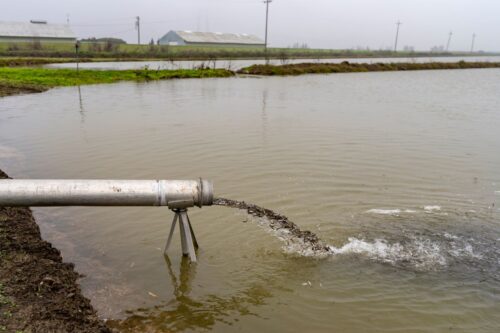 In January 2026, the “Bridge Group”—a coalition of fishermen, farmers, and researchers—in partnership with the Coleman National Fish Hatchery, released roughly 1 million juvenile Chinook salmon into flooded Sacramento Valley rice fields near the Yolo Bypass. This initiative aims to improve survival rates by mimicking natural, food-rich floodplain habitats, allowing the salmon fry to grow before migrating to the ocean.
“We know these fish are going to grow really well out there, but we don’t necessarily know that that’s going to translate to survival when they migrate off the field, maybe a little later than they would have in a natural environment,” said Mr. Rowan. “So I think it’s a good experiment, and we’ll learn a lot more in the years to come.”
“No one loves ducks as much as people who hunt ducks,” said Karrigan Börk. “No one loves fish as much as people who catch fish, but I think those rice farmers may be second in line. It is really exciting.”
- Michael Ford et al., Abundance Trends of Pacific Salmon During a Quarter Century of ESA Protection (August 31, 2025) (open access): https://onlinelibrary.wiley.com/doi/10.1111/faf.70019?af=R
- Eric Huber et al, Seventy years of diminishing biocomplexity of California Central Valley hatchery steelhead, Oncorhynchus mykiss, Canadian Journal of Fisheries and Aquatic Sciences (February 2024) (open access): https://cdnsciencepub.com/doi/10.1139/cjfas-2023-0077
- NOAA Fisheries, Protective Regulations for Threatened Species under the Endangered Species Act: Section 4(d) (ESA section 4(d) rule sets the stage for Hatchery Genetic Management Plan and Fisheries Management Evaluation Plan requirements): https://www.fisheries.noaa.gov/national/endangered-species-conservation/protective-regulations-threatened-species-under-endangered
- California Department of Fish & Wildlife (CDFW) Hatchery Operations Final EIR/EIS: https://wildlife.ca.gov/Fishing/Hatcheries/EIR
- CDFW Hatchery Climate Resilience Reports: https://wildlife.ca.gov/Fishing/Hatcheries/Climate-Resilience
- CDFW Strategic Plan for Trout and Inland Salmon Hatcheries (2022-2032): https://nrm.dfg.ca.gov/FileHandler.ashx?DocumentID=213739&inline
- Anna Sturrock et al., Eight Decades of Hatchery Salmon Releases in the California Central Valley: Factors influencing Straying and Resilience, Fisheries Magazine (2019) (open access): https://onlinelibrary.wiley.com/doi/full/10.1002/fsh.10267?af=R
- Berejikian and Doornik, Increased natural reproduction and genetic diversity one generation after cessation of a steelhead trout conservation hatchery program (2018) (open access): https://journals.plos.org/plosone/article?id=10.1371/journal.pone.0190799
- David Dayan et al., A single generation in the wild increases fitness for descendants of hatchery-origin Chinook Salmon (2024) (open access): https://onlinelibrary.wiley.com/doi/full/10.1111/eva.13678
