
Several news sources featured in the Daily Digest may limit the number of articles you can access without a subscription. However, gift articles and open-access links are provided when available. For more open access California water news articles, explore the main page at MavensNotebook.com.
In California water news this weekend …
Proposed Delta water tunnel advances after state council rejects most challenges
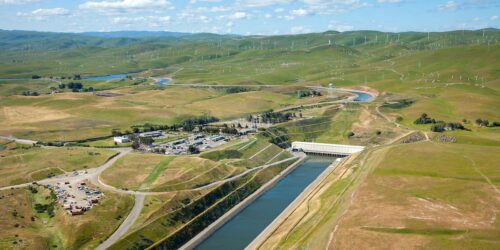
“A plan to install a tunnel beneath a 45-mile stretch of the Sacramento-San Joaquin Delta has moved closer to final approval after a state agency determined most of the project’s certification was consistent with a regulatory plan, according to a news release Friday from the office of Gov. Gavin Newsom. The Delta Stewardship Council voted 6-1 Thursday to return two issues related to the Delta Conveyance Project back to the California Department of Water Resources for further review, while rejecting most appeals filed by 10 groups challenging the project’s compliance with policies. … The council directed DWR to revisit two issues before final certification: 1) whether the tunnel would improve conditions for the non-native invasive golden mussel; and 2) potential conflicts involving one of the tunnel’s major construction sites near the town of Twin Cities just south of Sacramento and the Harvest Water program run by the Sacramento Area Sewer District that addresses groundwater recharge and ecosystem protections for local species. That includes the sandhill crane, which is listed as threatened under the California Endangered Species Act. … ” Read more from Local News Matters.
Newsom celebrates Delta plan advancement while his bond plan is shot down
“The Delta tunnel project cleared a key regulatory step Thursday after the Delta Stewardship Council — a state body created in 2009 following the Legislature’s passage of the Delta Reform Act to oversee planning — voted to uphold the state’s finding that the project complies with the Delta Plan. The approval came with two caveats: State officials must review whether the project could worsen the invasive golden mussel problem and address concerns about possible conflicts with Sacramento-area recycled water systems. The greenlight for the controversial, 45-mile-long Delta tunnel project, which would move water beneath the Sacramento-San Joaquin Delta to supply farms and cities farther south, drew praise from Gov. Gavin Newsom but criticism from environmental and tribal groups, who say the project could harm species that depend on the Delta’s fragile ecosystem. … ” Read more from the Sacramento Bee. | Read via Yahoo News.
SEE ALSO:
- DELTA STEWARDSHIP COUNCIL votes 6-1 to remand the Delta Conveyance Project back to the Department of Water Resources (DWR), press release from the Delta Stewardship Council
- OFFICE OF THE GOVERNOR: Delta Conveyance Project achieves important milestone, advances closer to construction, from Office of Governor
- STATE WATER CONTRACTORS applaud the Delta Stewardship Council’s vote of Delta Plan consistency for the Delta Conveyance Project, press release from the State Water Contractors
New twist emerges in battle over century-old Northern California dams
“The Trump administration is urging PG&E to halt plans to remove two aging Northern California dams that play a crucial role in the region’s river system. PG&E owns Scott Dam in Lake County and Cape Horn Dam in Mendocino County, which together are known as the Potter Valley Project. Those dams divert water from the Eel River to the Russian River, providing water supply to local communities in Mendocino and Sonoma counties. The utility submitted its proposal to decommission the structures in July 2025 and plans to eventually remove them altogether after determining that they are no longer economically beneficial. … ” Read more from SF Gate.
Here’s where California reservoirs stand after spring storms
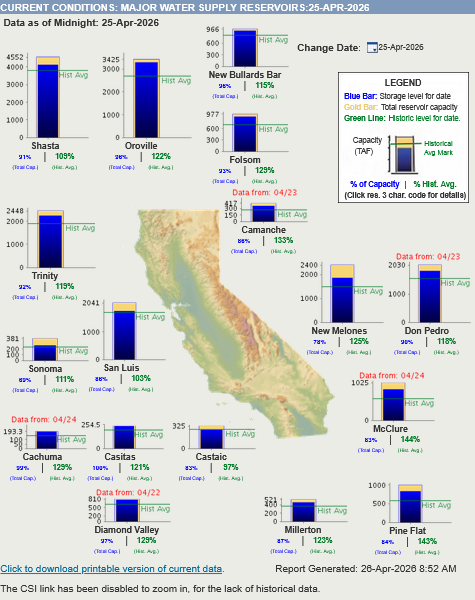 “As California heads into its dry season, its major reservoirs are in good shape, with statewide storage on Friday estimated to be 20% above normal for this time of year. Robust rainfall in April has given a slight boost in places — especially welcome after an unusually dry March. The state’s overall water outlook remains complicated, however. The Sierra snowpack, which effectively functions as a frozen reservoir, is far below normal. The Colorado River system, which is critical for Southern California’s water supply, is also struggling amid a deepening drought and below-average snowfall in the Rocky Mountains. “Reservoir levels have remained mostly above average since 2023, when California saw one of the largest snowpacks on record,” said Michael Anderson, state climatologist with California’s Department of Water Resources, by email. … ” Read more from the San Francisco Chronicle. | Read via MSN News.
State Board rejects SGMA exclusion requests
“On Tuesday afternoon, the State Water Resources Control Board spent more than four hours considering requests from eight Tule Subbasin groundwater sustainability agencies (GSAs) to be excluded from the SGMA probation requirements – specifically, the requirements to report groundwater pumping and pay state fees tied to that pumping. See the next article for a meeting recap. For many landowners, this hearing made SGMA probation feel more real than ever – it is the first time some California growers are confronting the prospect of writing a probation-related check directly to the State Board. In the Tule area, producers say SGMA compliance and GSA-imposed rules have already cost millions of dollars and significantly reduced access to groundwater. Those reductions have affected land values and, in turn, lowered borrowing capacity – raising concerns about the financial viability of some operations. … ” Read more from the Milk Producers Council.
California joins world’s largest environmental protection organization
“Governor Gavin Newsom announced today California’s official acceptance to the International Union for Conservation of Nature (IUCN), marking a historic milestone that elevates the state’s role in shaping international solutions that tackle the climate crisis, protect biodiversity, and boost sustainable economic development. California makes history by becoming one of the first subnational governments, and the largest from the United States, to join the IUCN. This achievement follows California’s previously announced intent to join the global body in 2025, underscoring the state’s commitment to advancing climate action and protecting ecosystems — even as the Trump administration cuts good-paying clean energy jobs, weakens environmental safeguards, retreats from global efforts to cut pollution, and hands the global economy to our competitors. … ” Read more from the Office of the Governor.
In commentary this weekend …
The drought is over, but will state policies reflect the new reality?
Edward Ring, director of water and energy policy at the California Policy Center, writes, “On January 5, 2026, for the first time in 25 years, the entire state of California was declared drought free. The source of this welcome news was the federally funded U.S. Drought Monitor (USDM), a collaborative effort involving experts from academia along with the USDA and the National Oceanic and Atmospheric Administration (NOAA). Once per week, USDM produces a national map that shows where drought is occurring, and for most of the last few decades, large swaths of California have been tinted alarming shades of red to denote conditions ranging from “exceptional drought” to “severe drought.” The fact that the US Drought Monitor has declared California to be totally drought free carries with it unusually high credibility, as demonstrated by a new study by researchers at the California Policy Center. … ” Continue reading at the OC Register.
It’s high time to revisit California’s Water-Year classification system
Paul S. Weiland writes, “This past month, as California experienced record high temperatures and a historic “snow drought” as reported by the L.A. Times and other outlets, we were reminded once again that it is perilous to manage the State’s water supplies based on climate conditions from the historical record. The current October 1 to September 30 water year is an outlier in historical context. The northern Sierra Nevada has received well below median accumulated snowfall, the snow water equivalent declined precipitously more than a month before the historical median date, and snowfall occurred in three large events, each followed by immediate melt off. And, at this point in the water year, precipitation as snow and rain together is actually slightly above median level. Yet the State Water Resources Control Board has managed – and proposes to continue to manage – California’s water supplies based on historical climatic conditions. … ” Read more from the Center for California Water Resources Policy and Management..
In people news this weekend …
Promotions, passings, profiles – submit people news items to maven@mavensnotebook.com.
UC Irvine’s Amir AghaKouchak recognized as a Frontiers Planet Prize national champion
 “In the six decades since it was founded, UC Irvine has garnered a reputation as an engine of solutions-oriented research and innovation.Having been on campus for a quarter of those 60 years, Amir AghaKouchak, Chancellor’s Professor of civil and environmental engineering and director of the Center for Hydrometeorology and Remote Sensing, has helped increase the institution’s renown with his lab group’s research on the effects of water resources and climate extremes on the environment and infrastructure systems. On the occasion of Earth Day 2026, AghaKouchak is being recognized as a Frontiers Planet Prize national champion. The only U.S. representative, he joins an international group of 25 scientists who are being honored for their work in coming up with real-world answers to the planet’s climate crisis. They are finalists in the running for one of three $1 million awards to further their research. Winners will be announced later this year. … ” Read more from UC Irvine.
Nicole Elliott, of San Francisco, has been appointed to the California Water Commission.
Elliott was Director of the California Department of Cannabis Control from 2021 to 2025. She was Senior Advisor on Cannabis in the Office of Governor Gavin Newsom from 2019 to 2021. Elliott was Director of the San Francisco Office of Cannabis from 2017 to 2019. She held multiple positions in the Office of San Francisco Mayor Edwin Lee from 2011 to 2017, including Director of Legislative and Government Affairs, Board Liaison, Director of Appointments and Commission Liaison. Elliott held multiple positions in the Office of San Francisco Mayor Gavin Newsom from 2009 to 2010, including Budget Office Policy Assistant, Director of Scheduling and Deputy Board Liaison. She earned a Bachelor of Arts degree in Sociology and Politics from the University of San Francisco. This position requires Senate confirmation, and compensation is $100 per diem. Elliott is a Democrat.
Podcasts …
WATER RESOURCES: Floods, droughts, and data: How satellites are changing hydrology
Augusto Getirana discusses global flooding in 2025, the new SWOT satellite, advances in NASA modeling and flood work in Brazil.
ECONEWS REPORT: How can we restore the Elk River?
The Elk River was once idyllic: baby salmon once grew big and healthy in the slack waters of its estuary, Elk once browsed in meadows by the river, and returning adult salmon once laid their eggs in cold river gravel, kept shady by old-growth redwoods. The watershed was stewarded by the Wiyot people. And then colonization screwed things up. The lowlands were diked and drained, turned over to cattle. Elk were killed and the meadows swallowed up by conifer encroachment and homesteads, and clearcutting smothered cold water gravel with sediment from logging roads and landslides. The river is unwell—legally recognized as impaired under the Clean Water Act. And absent intervention, it is unlikely to get better anytime soon. That’s where CalTrout comes in. In projects from the river’s headwaters to its mouth, CalTrout is working to recover the function of the river. Katy Gurin and Bill Matsubu of CalTrout join the show to discuss their restoration work.
ONCE UPON A BAY: Who will keep this place?
A small team takes on big polluters and wins. In this episode, the story of San Francisco Baykeeper, from its scrappy beginnings to a formidable force defending the Bay. Along the way, a deeper question emerges: What does it mean to be a keeper? It started with a guy they called Mad Dog…
WATERLOOP: The next 50 years of safe drinking water
A group of top water experts is challenging one of the core assumptions behind U.S. drinking water policy—that chasing ever-smaller traces of contaminants is the best way to protect public health—and instead calling for a fundamental shift toward fixing pipes, strengthening systems, and prioritizing the risks that actually matter most. In this episode, members of the Water Health Advisory Council lay out a bold path forward through their new book Safe Drinking Water Act: The Next Fifty Years.
WATER IS A MANY SPLENDOR’ED THING: Paradise
 A dream I have is to visit one of the Polynesian islands located in the middle of the Pacific Ocean. It is the color of the ocean, Polynesian lifestyle and weather that is so appealing. Water plays a most important role in the life styles of the people on these islands. Water is a Many Splendor’ed Thing brings you another water relationship that has a personally significant impact to your life. Produced by Stephen Baker, Bringing People Together to Solve Water Problems, water@operationunite.co 530-205-6388
In regional water news this weekend …
NORTH COAST
Scientists test new treatment to tackle harmful algae blooms in Clear Lake
“By some measures, Clear Lake is thriving. It holds more fish per acre than any other lake in the United States and supports a vast population of birds and other wildlife. But, by another measure that has defined the lake for decades, Clear Lake is deeply out of balance. Every year, harmful algal blooms take over the lake’s surface, producing toxins that can make people and animals who use the lake sick. The blooms shut down recreational activities and strain local tourism. But now, a group of scientists believe they have found a way to restore Clear Lake’s water quality by tackling phosphorus, one of the biggest drivers of the harmful algal blooms. … ” Read more from the San Jose Mercury News.
SIERRA NEVADA
Shedding winter’s colors: What could early spring conditions mean for wildlife in Tahoe
“As the last bit of snow melts on the north and west shores of Lake Tahoe and warmer weather becomes a daily occurrence, so begins the foraging, nest-building and migration of wildlife in the Tahoe Basin. As the region has seen below average snowpack, the season’s conditions don’t just impact skiers and riders trying to shred on the slopes. An early spring can have direct effects on Tahoe’s wildlife. For insight, Tahoe Institute for Natural Science (TINS) weighed in on the topic with their years of research, outreach and education in the Tahoe Region. As a member-supported nonprofit organization, TINS aims to promote greater stewardship, appreciation, and understanding of the natural resources of the Tahoe region. … ” Read more from the Tahoe Daily Tribune.
Weeks after emergency, planned Main Tuolumne Canal outage renews calls to conserve water
“More than 40,000 Tuolumne County residents are being asked to conserve water from this Sunday, April 26 to Sunday, May 10 while Pacific Gas and Electric Co. does further repairs and maintenance on vulnerable flume sections of the Main Tuolumne Canal, less than two months since the most recent emergency shutdown that lasted 17 days. The duration of the most recent unplanned outage on the canal was Feb. 17 to March 5, which occurred when the most powerful storm of the winter season dropped more than 200 trees on sections of the canal’s flumes and ditches. The canal conveys 95% of TUD’s drinking water supply for more than 40,000 Tuolumne County residents. Its elevated flumes and dirt ditches date to the 1850s, when gold miners financed and built the flumes and ditches to bring water from the mountains to mining camps for mining purposes. … ” Read more from the Union Democrat.
SACRAMENTO VALLEY
Lake Oroville Update: DWR maintaining releases for flood protection, Feather River Fish Hatchery fish planting activities
“The Department of Water Resources (DWR) is maintaining water releases from Oroville Dam to provide flood protection for downstream communities. Releases are being made through the Hyatt Powerplant for power generation and Oroville Dam’s main spillway. DWR is conserving as much water as possible in Lake Oroville while continuing to meet federal guidelines for downstream flood protection and state environmental regulations. Between mid-September and June, DWR is required to operate Lake Oroville for flood control under federal Water Control Manual Guidelines set by the U.S. Army Corps of Engineers. These federal regulations establish a set storage space that is reserved to capture inflows from rain and future snowmelt, while protecting downstream communities from damaging flood events through coordinated releases. To maintain this storage space, DWR conducts flood protection releases from Lake Oroville. Some of the water released from Oroville for flood control is captured downstream for beneficial uses by local landowners, communities, and the State Water Project. Releases from Oroville Dam also support Feather River habitat for salmon, steelhead, sturgeon, and other river species. … ” Read more from DWR.
April 29 meeting in Red Bluff to provide info on updated FEMA flood maps
“Tehama County is hosting a public meeting next week on updated FEMA flood maps. County officials said the informational session will be held in conjunction with the city of Red Bluff on Wednesday, April 29, from 9 a.m. to 12:00 p.m. at the Board of Supervisors Chambers in Red Bluff. … ” Read more from KRCR.
Butte County to test Big Chico Creek for E. coli again in May
“Butte County Public Health will conduct additional water sampling in Big Chico Creek in early May to test for E. coli O157 as the summer season approaches. Water samples will be collected and sent to the State Water Board laboratory for analysis, with results expected to take several weeks due to the specialized nature of the testing. “If the water samples come back negative for E. coli 0157, we’ll plan for another round of testing mid-summer,” Butte County Public Health Officer, Dr. Jarett Beaudoin, said. “We’ll continue to monitor and investigate any new human cases to ensure there’s no connection with the creek.” … ” Read more from Action News Now.
Roseville and PCWA strengthen regional water reliability with new system connection
“The Roseville City Council and the Placer County Water Agency (PCWA) Board have approved an agreement to formalize the shared operation and maintenance of the Woodcreek Intertie, strengthening water reliability for both agencies’ customers in Roseville, PCWA service areas, and the surrounding region. The Woodcreek Intertie is a connection between the two water systems that allows water to move in either direction when needed. Located along the border of the two service areas, the 12-inch connection, which includes metering and telemetry, helps maintain steady water service during both planned maintenance and unexpected disruptions. The intertie will primarily be used during emergencies, planned maintenance, or when additional system flexibility is needed. “Its advanced metering and telemetry capabilities allow us to monitor and control operations remotely 24/7, so we can respond quickly, especially in the event of an emergency,” said Jeremy Shepard, Director of Technical Services for PCWA. “Its design allows us to move water in either direction, ensuring operational flexibility and resilience when it matters most.” … ” Read more from ACWA’s Water News.
BAY AREA
San Francisco is about to hike up water rates — and much of the Bay Area will feel it
“San Francisco is planning to sharply raise water and sewer rates over the coming decade, beginning with a nearly 25% projected bump in residential bills over the next two years, as the growing cost of maintaining the city’s waterworks comes due. This summer, the average single-family household bill for combined water and sewer service will increase from $171 a month to $189 a month, and next summer it will rise to $212 a month, according to estimates in the rate-hike proposal scheduled for approval next week. Officials expect that utility rates will continue to climb through at least 2036, though at varying levels. … ” Read more from the San Francisco Chronicle.
CENTRAL COAST
Graniterock illegally polluted the Pajaro River, lawsuit alleges
“Two environmental groups filed a federal lawsuit Wednesday accusing Granite Rock Company of violating the Clean Water Act for more than 1,000 days at its A.R. Wilson Quarry in Aromas. Environment California and the California Sportfishing Protection Alliance allege the Watsonville-based company has for years discharged excessive levels of pollutants—including dissolved solids, aluminum, iron and molybdenum—into the Pajaro River. The groups say the violations continued even after the state imposed mandatory minimum penalties for earlier infractions. “Graniterock habitually violates its Clean Water Act permit, pays a trivial penalty and then continues polluting the Pajaro River as usual,” Environment California state director Laura Deehan said in a statement. … ” Read more from Good Times Santa Cruz.
Developer can finally build homes in SLO County beach town, CA Supreme Court rules
“The California Supreme Court has overruled the California Coastal Commission and decided that a developer can keep its permit to build three new homes in Los Osos. In 2019, San Luis Obispo County issued a coastal development permit to Shear Development Co. to build those three homes. The California Coastal Commission, however, appealed the county’s decision and revoked the permit, saying that the homes would be built in a sensitive coastal resource area. Both a superior court and an appellate court upheld the commission’s decision in 2021 and 2024, respectively, and on Dec. 3, the California Supreme Court heard oral arguments for the case. On Thursday, the California Supreme Court ruled unanimously that the California Coastal Commission did not have the jurisdiction to revoke the 2019 permit. … ” Read more from the San Luis Obispo Tribune.
Carpinteria seeks community collaboration on living shoreline project
“Like many cities along the coast, Carpinteria is seeking to maintain its shoreline amid threats of sea-level rise. To do this, the city is looking to nature-based solutions, or a “Living Shoreline” composed of native vegetation and natural beach materials. This Saturday, April 25, the city is holding a community workshop to talk about the science behind the project, garner community feedback, and give the public an opportunity to speak directly with city staff and scientists about changing shoreline conditions. It will be held from 2 to 4 p.m. at the Carpinteria Veterans Memorial Building (941 Walnut Ave.). The city will be using natural defenses to restore portions of the historic dune system along Carpinteria City Beach, “creating a resilient and natural buffer between the ocean and nearby public areas,” according to the project website. Proposed solutions include dune restoration and beach nourishment — avoiding reliance on hard barriers such as concrete sea walls and dams, which have the potential to decrease biodiversity and marine habitat, and may actually increase seaward erosion, according to the National Oceanic and Atmospheric Association. … ” Read more from the Santa Barbara Independent.
Camrillo fights to prevent decades of water war ‘uncertainty’
“The City of Camarillo escalated its legal offensive in a high-stakes battle over local water rights, making a pivotal mid-trial filing with the California Supreme Court. The April 20 filing demands an immediate review of a Santa Barbara County Superior Court judge’s rulings that city officials warn could jeopardize the reliability and affordability of water for local residents for a generation. At the center of the storm is the Oxnard and Pleasant Valley groundwater basins, the primary source of water for the city’s nearly 70,000 residents. This latest move signals that Camarillo is no longer willing to wait for a legal process that often moves at a glacial pace. The litigation began in 2021 when the OPV Coalition—a group of powerful agricultural landowners—filed a comprehensive adjudication. Their goal: to legally quantify how much water every pumper in the region is entitled to. … ” Read more from the Camarillo Acorn.
SAN JOAQUIN VALLEY
Rare Central Valley tornado outbreak: four twisters strike in five hours
“Tornadoes aren’t completely out of the question in California’s Central Valley. Over the last century, the region has had scores of them. But this week, as several thunderstorms moved through, the region experienced something rare: four tornadoes on the same day, all in less than five hours. The first touched down Tuesday around 2:20 p.m. near Biola, about eight miles from Fresno. Another was spotted an hour later near Atwater. Shortly after 5 p.m., a tornado touched down in Clovis. The final tornado was an outlier, showing up much farther south at around 6:30 p.m., in Terra Bella in Tulare County, said Alex Cooke, a meteorologist for the National Weather Service’s Hanford/San Joaquin Valley office. .. ” Read more from the LA Times. | Read via AOL News.
Responses to ballooning mussel invasion range from full-on combat to getting ready to make a plan
“The Arvin-Edison Water Storage District found invasive golden mussels in its system last December, quickly approved a $2.5 million budget and by the first week of April had already completed a 30-day treatment. Results, so far, appear to be “complete mortality,” according to Resource Manager Sam Blue. “Our board has been very aggressive on this issue,” Blue said of Arvin-Edison. “They understood how critical it was to beat the curve before it got out of control.” Time is of the essence as golden mussel breeding ramps up with the temperature. The mussels are tiny but cling to equipment and inside pipes, building on each other until pipes are clogged and equipment fails. “It’s a scary deal,” Blue said. “There’s a lot of talk about this summer being really bad. They’re established now and they’re starting to breed.” … ” Read more from SJV Water.
East Orosi residents celebrate groundbreaking for long-awaited new water system
“Residents of the tiny Tulare County town of East Orosi gathered Wednesday, April 22, for an event many thought might never happen – the official beginning of construction on a new, $13.5 million drinking water system. “It’s been a long time coming, right?” East Orosi resident Carlos Sanchez told the crowd of the more than 20-year quest for clean water. “Years of fighting for water. A simple thing. “Si, se pudo – yes, it was possible.” Bertha Diaz, a mother of three and grandmother of six, has been fighting since 2000 when she was told there was no clean water for residents. “I never gave up,” Diaz said. … ” Read more from SJV Water.
EASTERN SIERRA
In the Eastern Sierra, anglers wait all year for ‘Fishmas’
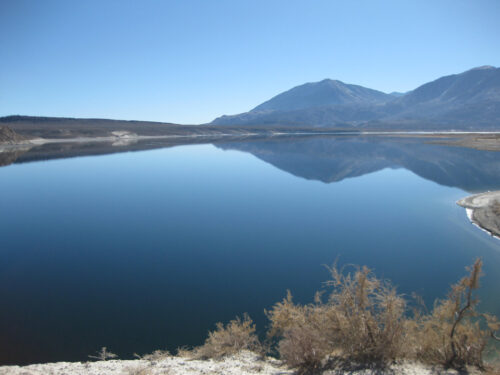
“For anglers looking to cast their lines on a glassy lake rimmed by the snow-capped Eastern Sierra, the best day of the year always comes on the last Saturday of April. It’s the opening day of trout season, a day so anticipated and cherished by the fly fishing community they’ve turned it into an unofficial holiday: “Fishmas.” “Fishmas — it’s been known as that forever and ever because it’s like Christmas, but it’s for fishing,” said Fred Rowe, a longtime fishing guide who lives in Bishop. “Fishing is such a big huge thing for people, it really is like Christmas.” This year, Fishmas takes place on April 25 and the California Department of Fish and Wildlife expects thousands of people to make the pilgrimage to idyllic lakes in the Eastern Sierra and across the state — places like Lake Crowley, Convict Lake, the Mammoth Lakes Basin — and kick off the fishing season. It’s a tradition embraced by families of fishing enthusiasts and passed down from one generation to the next. … ” Read more from SF Gate.
SOUTHERN CALIFORNIA
$40 million stormwater improvement project coming to MacArthur Park
“One of Los Angeles’ most iconic parks is getting a major boost. On Wednesday, the city unveiled a $40 million plan to transform MacArthur Park, focusing on cleaner water and a greener future. Councilmember Eunisses Hernandez said the project will change how the park’s lake operates, which will move away from drinking water and toward capturing and reusing stormwater. “It’s about transforming how we care for this space, capturing, treating, and reusing storm water to improve water quality, reduce pollution and create a cleaner healthier environment for the thousands of families who rely on this park every single day,” she said. … ” Read more from ABC 7.
Along the Colorado River …
Could a mediator help break the Colorado River deadlock? These states think so
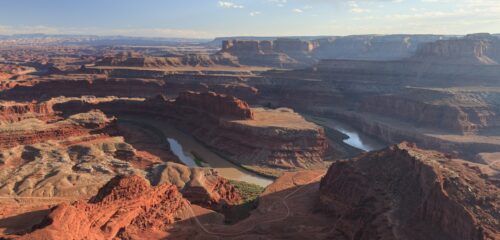 “A group of states that use water from the Colorado River is proposing a new way to break the deadlock in negotiations about the river’s future: bringing in a moderator. After states blew through a mid-February deadline for a new plan about sharing the river’s shrinking supply, the Upper Basin states of Colorado, Utah, Wyoming and Utah are calling for state leaders to return to the negotiating table and bring a moderator into the room. “I really would like to see the swords laid down,” Becky Mitchell, Colorado’s top water negotiator, told KJZZ. “Particularly the threats of litigation. That creates a scenario where it’s really hard to be creative.” … ” Read more from KJZZ.
Colorado River states clear emergency water transfer as system nears hydropower floor
“The Upper Basin states formally approved an emergency water transfer to Lake Powell on April 23, clearing the way for Interior Secretary Doug Burgum to authorize releases as soon as Friday—roughly double the 500,000 acre-feet released in a comparable 2022 emergency. The plan, announced April 17 by the U.S. Bureau of Reclamation under the 2019 Drought Response Operating Agreements, calls for releasing 660,000 acre-feet to 1 million acre-feet from Flaming Gorge Reservoir between April 2026 and April 2027. The action is paired with a reduction in annual releases from Lake Powell to Lake Mead of 1.48 million acre-feet—from 7.48 million acre-feet to 6.0 million acre-feet through September 2026—authorized under the 2024 Supplemental Environmental Impact Statement for near-term Colorado River operations. … ” Read more from Engineering News-Record.
Interior Department starts emergency drought measures to prop up Lake Powell
“A desperate operation to save one of the Colorado River basin’s most important reservoirs is underway. Again. Widespread drought and fears of a power crisis are forcing the Interior Department to start sending billions of gallons of water from Flaming Gorge Reservoir downstream to prop up Lake Powell. The releases began Thursday. The water will travel down the Green River until it joins the Colorado near Canyonlands in Utah and makes its way to Lake Powell. As much as one million acre feet, or a third of the water in Flaming Gorge, could be dedicated to keeping Lake Powell levels stable. Powell is getting so low that there are fears it could stop producing hydropower by August. … ” Read more from KUNC.
High temps the biggest factor in low snowpack, low river flows
“Meteorological records dating back 130 years show a handful of years with winters drier than the 2025-26 winter, said Rebecca Briesmoore, a water resources engineer with the Colorado River District. “But it has been the warmest by far … that has really been the headline: It wasn’t the driest, but it was the warmest — and that is having a huge impact on hydrology and water resources,” Briesmoore said. She spoke to a packed room of about 150 attendees at Thursday’s Roaring Fork River: State of the River event hosted by the Colorado River District at the Pitkin County Library. “It’s important for people to know that this year is unprecedented . . . it’s like nothing we have ever seen before,” Briesmoore said. “Every single drop of water really, really matters. We have to think about how we are using it, and what we are going to do with very, very low water resources.” … ” Read more from Aspen Daily News.
Lake Mead’s drops raise prospect of unaffordable Hoover Dam electricity
“For generations, the presence of Hoover Dam and its massive power plant routinely translated into cheap electricity for cities, farmers, irrigation districts and other major electrical energy users in Arizona and the Southwest. By all accounts, the long-plentiful water and power supplies made possible by the dam helped transform the arid Southwest during the second half of the 20th century into a collection of vibrant, fast-growing metropolises whose growth far outpaced that of the rest of the U.S. … Hoover power is today sold to millions of people in Arizona, Nevada and Southern California and Nevada. It’s also used to pump Colorado River water uphill to Tucson and Phoenix via the Central Arizona Project canal system, while the other cities Hiltzik mentioned get water or power from other dams along the river. But now, Hoover Dam may be on the verge of no longer supporting the bounty of cheap energy and readily available water that reshaped the West. … ” Read more from the Arizona Daily Star.
The country’s largest reservoir is running low, signaling a ‘dire water supply situation’
“Lake Mead is the country’s largest reservoir and a crucial supplier of drinking water to millions in the West, located on the Nevada-Arizona border. It’s nearing a historic record low. Lake Mead hit its all-time low water level in 2022. And we’re just about 20 feet away from breaking that record, with the lake’s levels nearly 175 feet below maximum capacity. And water levels are still dropping. In fact, they’ve fallen by 8 inches since March 1. Lake Mead was formed after the construction of the Hoover Dam on the Colorado River in 1935. Since its formation, the U.S. Bureau of Reclamation has kept records on Lake Mead’s water storage (measured in volume by acre-feet) and water level (measured in elevation by feet). Since the year 2000, the lake has trended in a decline of both measures. … ” Read more from The Weather Channel.
Arizona GOP pushes to protect Colorado River’s limited water
“Arizona Republicans are seeking to protect the Colorado River as its water supply continues to dwindle. State Senate President Warren Petersen, R-Gilbert; state House Speaker Steve Montenegro, R-Surprise, and other Arizona Republicans recently met with the Trump administration, urging the federal government to use the Colorado River Storage Project Act. The 1956 law allowed the U.S. Bureau of Reclamation to create dams and reservoirs in the Upper Colorado River Basin while also managing its water resources among Colorado, New Mexico, Utah and Wyoming. The river also provides water to the lower basin states of Arizona, California and Nevada. … ” Read more from Center Square.
NAU professor studies impact of wildfires on community water systems
“A Northern Arizona University professor and other researchers are studying the monetary impacts of wildfires on local communities. Wildfires can lead to issues like changes in the water treatment process or the pollution of water due to sediments, smoke and soot. That’s according to Siyu Pan, an economics assistant professor at NAU. Her research came out of a partnership with the U.S. Forest Service. One of her studies found that communities with lower education and household income are more open to wildfire exposure. … ” Read more from KJZZ.
[spacer]
