
A wrap-up of posts published on Maven’s Notebook this week …
Note to readers: Sign up for weekly email service and you will receive notification of this post on Friday mornings. Readers on daily email service can add weekly email service by updating their subscription preferences. Click here to sign up!
In California water news this week …
California Delta tunnel project gets partial green light
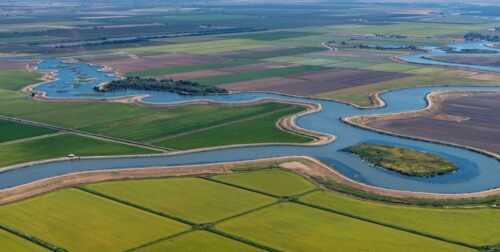 “Opponents of the Delta Conveyance Project said Thursday they had only days to read a 200-page draft decision that, if approved, would destroy their way of life. They stood before the Delta Stewardship Council, asking for more time before it opted to deny their appeals — a move that charts a course for the massive water diversion project to proceed. “I hate coming to these meetings,” said Gia Moreno, with the Hood Community Council. “We don’t ever get invited. The town doesn’t get invited. We are at Ground Zero.” Hood is a small town that would sit near two intake facilities by the Sacramento River needed for the water project. Moreno said no one has given good responses to questions about noise and dust pollution from the project, or explained where muck dredged from the earth for a 45-mile tunnel would go. “Essentially, we’ve been told we’re just going to have to deal with it,” she said. … ” Read more from the Courthouse News Service.
DWR: Delta Stewardship Council determination affirms record; Limited remand to clarify two areas
“The Department of Water Resources (DWR) appreciates the careful and thorough review conducted by the Delta Stewardship Council regarding appeals of the Delta Conveyance Project’s Certification of Consistency with the Delta Plan. The Council’s determination affirms the strength of the extensive evidentiary record supporting the project’s consistency with the Delta Plan. As DWR anticipated, the Council dismissed or denied the vast majority of the appeals. Today’s Council determination is an important step forward for the project in completing the Delta Plan Consistency process. … ” Continue reading this statement from DWR.
RESTORE THE DELTA: Tribal and environmental advocates denounce Certification of Consistency approval for the Delta Conveyance Project
“A coalition of tribes and environmental advocates expressed sharp criticism following the Delta Stewardship Council’s approval of the California Department of Water Resources (DWR) Certification of Consistency for the proposed Delta Conveyance Project (DCP). The coalition argues that the project violates state law and poses an imminent threat to Delta communities, its ecosystem and cultural heritage. … ” Continue reading from Restore the Delta.
PRESS RELEASE: California Supreme Court denies review of major appellate decision rejecting DWR’s attempt to validate bond financing for Delta tunnel project
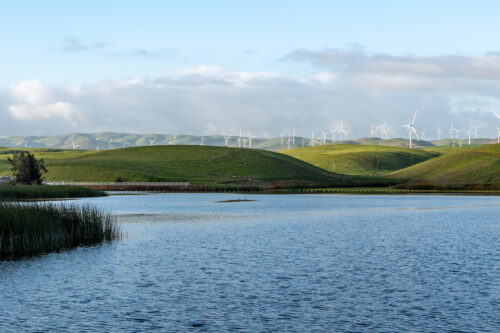
Sara Nevis / DWR
“In a major milestone that prevailing attorneys described as a victory for common sense, the Delta region, the environment, and ratepayers throughout California, the California Supreme Court has denied review of a landmark opinion issued by the Court of Appeal in the Sacramento-based Third Appellate District late last year. That Court’s opinion, first issued on December 31, 2025 and finalized with minor modifications when rehearing was denied the next month, unanimously affirmed a trial court decision holding that the State Department of Water Resources (DWR) exceeded its authority when it approved bond resolutions to finance DWR’s proposed Delta tunnel. The appellate decision was certified for publication except for a short section involving issues the Court of Appeal did not need to reach after invalidating DWR’s resolutions and revenue pledges. … ” Continue reading this press release.
Delta Counties celebrate final court victory blocking illegal financing for Delta tunnel
“The Delta Counties Coalition (DCC) announced that a major legal victory is now final after the California Supreme Court denied review of an appellate court decision rejecting the State’s attempt to finance the proposed Delta Tunnel project. The Court also declined to depublish the ruling, meaning it will stand as binding legal precedent going forward. This decision ends the State Department of Water Resources’ (DWR) 2020 effort to validate billions of dollars in bonds for the project without clear legal authority. Courts at every level have thus far found that DWR exceeded its authority. “This is a clear and final win for the rule of law,” said Supervisor Pat Hume, Chair of the Delta Counties Coalition. “The State cannot sidestep legal safeguards to push forward a project of this size and cost. This decision reinforces that accountability and transparency still matter.” … ” Read more from the Delta Counties Coalition.
Trump administration offers plan to stop dam removal on California river
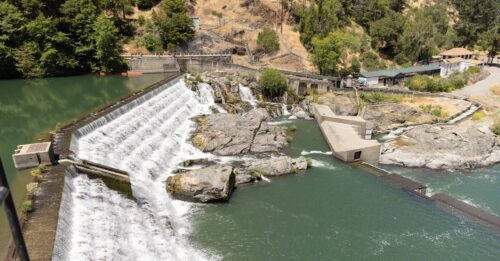
“The Trump administration injected a surprising twist into the fight over Northern California’s Eel River on Tuesday, offering up a potential plan to stop the removal of two dams in the basin — though how serious the plan is remains to be seen. In a social media post, U.S. Agriculture Secretary Brooke Rollins said she had been in touch with a Southern California water agency that was interested in buying the Scott Dam in Lake County and Cape Horn Dam in Mendocino County and continuing their operation. Such a move would run counter to longtime plans by Pacific Gas and Electric Co., the owner of the dams, to remove the facilities as part of the retirement of the century-old Potter Valley hydroelectric project. … “Last week, I heard from the Elsinore Valley Municipal Water District. A legitimate buyer who expressed strong interest in purchasing the project from PG&E,” Rollins wrote on X, formerly Twitter. … ” Read more from the San Francisco Chronicle. | Read via MSN News.
Huffman: Federal Potter Valley intervention could be catastrophic for Northern California water
“This Tuesday, Agriculture Secretary Brooke Rollins announced that she had heard from a potential buyer for the Potter Valley Project, a now-defunct hydroelectric project composed of the Scott and Cape Horn dams and related facilities. Rollins said that the buyer, a water district in Southern California, could take over the project and return the dams to operating status, an assertion local stakeholders and many familiar with the project say is unlikely if not impossible. PG&E, who had operated the project and is in the process of surrendering and decommissioning the project with the Federal Energy Regulatory Commission (FERC), said that it has “had some previous communication with the Secretary’s staff” and met with the identified potential buyer earlier this year, but that no proposals have been made. Many stakeholders expressed confusion about the announcement, but U.S. Representative Jared Huffman (D-San Rafael) is spreading the alarm that this might be part of a broader effort to reshape water rights in the state and shift control from the North Coast to Central and Southern California water interests. … ” Read more from the Eureka Times-Standard.
State Board denies requests by Tulare County farmers to be exempted from up to $12 million in pumping fees
“The Water Resources Control Board voted to go forward with sanctions against some Tulare County farmers – including up to $12 million in pumping fees – after they failed to show they had made enough progress toward stemming subsidence, among other issues. More than 20 farmers from the Tule subbasin, which covers the southern half of Tulare County’s flatlands, appeared at the Water Board’s April 21 hearing on the issue. They made technical, tearful and even angry pleas that they be exempted from the sanctions, including the fees and a requirement that they report to the state how much they pump beginning May 1. But, after a nearly five-hour hearing, the Water Board voted unanimously to deny the exemption requests. … ” Read more from SJV Water.
A new resource for Healthy Rivers and Landscapes, at a pivotal moment for California water
“A new website has been launched to help tell the story of the Healthy Rivers and Landscapes (HRL) program. The HRL program is a science-based, collaborative approach to restoring river health, floodplains, and natural landscapes, and continues to gain momentum as an important path forward for the Bay-Delta Water Quality Control Plan update. Developed by California public water agencies from Redding to San Diego, working with our many partners, the site brings together videos, infographics, and clear, accessible information to help explain how this approach works for Californians and why it matters. … ” Read more from the Northern California Water Association.
U.S. Army Corps of Engineers completes Record of Decision for Sites Reservoir Project
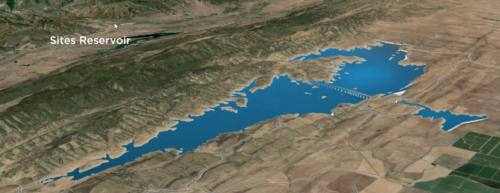
“The U.S. Army Corps of Engineers Sacramento District has finalized its Record of Decision for the proposed Sites Reservoir Project following completion of its National Environmental Policy Act review. The Sites Reservoir Project is a proposed off-stream water storage project located in Colusa County, California, north of the Sacramento-San Joaquin Delta. The ROD documents the Corps’ evaluation of the project in accordance with the National Environmental Policy Act and informs future permit decisions under Section 404 of the Clean Water Act and Section 10 of the Rivers and Harbors Act. The Environmental Impact Statement for the project was prepared under the leadership of the Bureau of Reclamation, with USACE participating as a cooperating agency. “My team worked collaboratively with the Sites Project Authority, the Bureau of Reclamation, Environmental Protection Agency, and other agencies to reach this milestone,” said Col. Robert McTighe, commander, U.S. Army Corps of Engineers Sacramento District. … ” Read more from the Army Corps.
Butte County leaders urging state to deliver promised Oroville Dam benefits
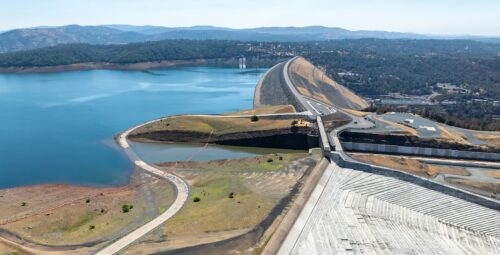
On this date, the water storage was 2,243,714 acre-feet (AF), 66 percent of the total capacity. Photo taken September 5, 2024. Sara Nevis / DWR
“Butte County officials are renewing a long-running dispute with the California Department of Water Resources, launching a public awareness campaign they say highlights unfulfilled promises tied to the construction of Oroville Dam. County staff this week unveiled a website titled “Our Water, Their Power,” aimed at informing residents about what local leaders describe as ongoing economic and recreational shortfalls since the dam’s completion in 1968. Bill Connelly, chair of the Butte County Board of Supervisors, said expectations set before construction never materialized. “Prior to the dam being built, Butte County was promised a huge economic boom with 10 to 20 million visitors a year. We’re lucky to get 2 million,” Connelly said. … ” Read more from KRCR.
California’s newest solar project isn’t powering homes. It’s powering your water
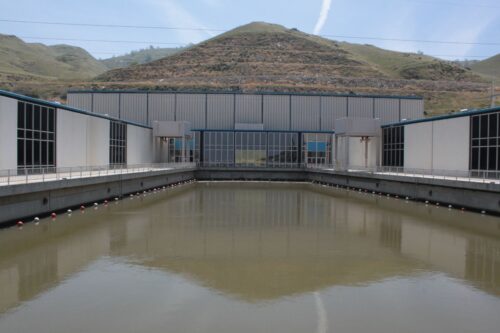 “At the bottom of the San Joaquin Valley, a low-slung Midcentury building tucked into the green-gold hillside is the beating heart of California’s impressive water delivery system. For more than five decades, the Edmonston Pumping Plant has lifted water nearly 2,000 feet up the towering Tehachapi Mountains, connecting water from Northern California to 27 million people in the southern part of the state. The plant houses 14 rumbling pumps in two football-field sized wings and is one of the most powerful water lifting systems in the world. But it can need upward of 800 megawatts of electricity to run, making it among the largest single power users in the state. Now the equation is changing. On a recent weekday morning, dozens of state officials and energy industry representatives gathered at Tejon Ranch, just across the road from Edmonston, to celebrate a sparkling new solar plant that will help power the pumps. … ” Continue reading from the LA Times. | Read via AOL News.
Do data centers really use so much water? Here are 5 key issues
 “As data center projects have popped up across the St. Louis region, driven by the growth of industrial-scale computing for artificial intelligence, one of the primary concerns raised by residents is about water — as in, will data centers consume vast amounts of the local water supply? Data centers — essentially huge warehouses for servers and computers — need to cool off all of that equipment, which is powered around the clock by electricity. To keep the equipment from overheating, water-based approaches often represent the most efficient solutions. The size of the project can determine the water needs. Medium-sized facilities, for example, may use 1 million gallons of water on peak days, while larger ones could need 8 million gallons, experts say. … Here are some key questions about data centers and water usage … ” Read more from the OC Register.
An intense marine heat wave has California in its crosshairs, with impacts set for land and sea
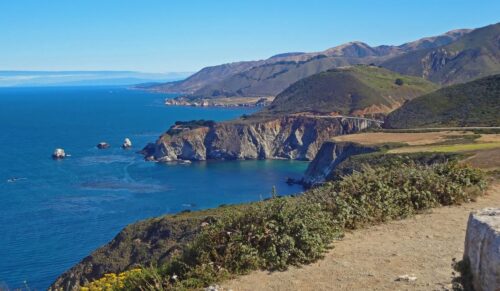 “Something unusual and with far-reaching consequences is lurking in the sea off the California coast, stretching all the way down the Baja Peninsula and more than 500 miles to the southwest. In this broad region, a large, long-lasting and record-setting marine heat wave has set in and is forecast to persist and intensify, altering the weather conditions on the West Coast and adversely affecting the marine food chain. This heat wave, which is the oceanic equivalent of a heat wave on land, could have broad ramifications for sea life, as warm water species like hammerhead sharks and bluefin tuna migrate into areas where they are normally not seen, and cold-water species move deeper and further north. … ” Read more from CNN.
Wildfire-driven deforestation rates in California among highest in world
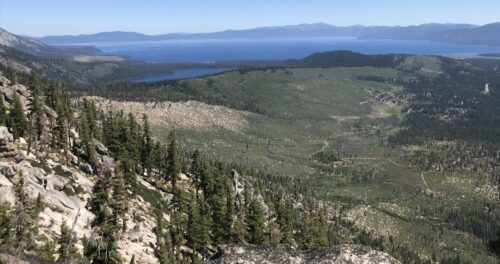
“California has one of the highest rates of wildfire-driven deforestation in the world, and the trend has accelerated over the past three decades, according to a study from the University of California, Davis. The study, published in the journal Frontiers in Forests and Global Change, assessed the state’s wildfire-driven deforestation rates and reforestation needs between 1991 and 2023. It found that deforestation in California’s conifer-dominated forests increased exponentially over the study period, taking place primarily on USDA Forest Service and private lands. Meanwhile, reforestation efforts are not keeping pace with the losses. Reforestation needs were minimal in the early 1990s, rose sharply in the early 2000s and surged after 2020. During that time, California lost between 6% and 11% of its conifer forests. Multiple big-fire years caused deforestation rates to rise to between 0.25% and 0.47% per year between 2001 and 2023. That is substantially higher than the global average of 0.15% per year. “Those rates are right up there with the world’s leaders in fire-driven forest loss, like Russia, Portugal, Greece, Bolivia and even Canada,” said senior author Hugh Safford, a forest and fire ecologist with the UC Davis Environmental Science and Policy department. “In the case of California, the rate is also accelerating rapidly. A couple more big-fire years like 2020 or 2021, and we could be looking at large-scale loss of conifer forests over wide swaths of the state.” … ” Read more from UC Davis.
The ramifications of record-shattering heat on the West’s ecosystems
 “In March, a month traditionally known for heavy mountain snows and dreary lower-elevation weather, a heat wave settled across the West, shattering temperature records from Tucson, Arizona, to Casper, Wyoming. The heat wave’s intensity and early arrival shocked many climate scientists. “It is exceptionally difficult for the Earth system to produce temperatures this warm so early in the season,” wrote Daniel Swain, a climatologist with the University of California Agriculture and Natural Resources who runs the Weather West blog. Yet not only did Western locations set new March highs; many exceeded temperature records for May. And those high temperatures kept hanging on, said Zachary Labe, a climate scientist at the nonprofit science center Climate Central, for nearly two weeks. While heat waves are a natural phenomenon, this was the earliest and most widespread one ever recorded in the Southwest. And it was caused by climate change, which is making intense heat waves much more likely. Researchers say this means understanding their fallout is even more important. … ” Read more from High Country News.
In commentary this week …
Colorado River crisis: What Moab taught me about solving the impossible
, chair of the board of the Metropolitan Water District, writes, “Standing on the banks of the Colorado River near Moab, watching the last traces of 16 million tons of uranium tailings give way to open sky and cleared earth, I keep thinking about a Republican congressman from Utah and a Democratic congresswoman from Los Angeles — and what they understood about rivers that the seven states now locked in stalled post-2026 negotiations may learn from: The river doesn’t care who wins. As current chair of the Board of the Metropolitan Water District of Southern California, I’ve come here with former Congresswoman Grace Napolitano to mark the completion of the Moab uranium tailings cleanup — one of the most significant environmental remediation projects in the American West. Between 2000 and 2005, Grace and I worked to bring members of Congress to this site, to show them the pile of radioactive waste left by a former uranium-ore processing facility on the riverbank, threatening 30 million downstream water users and millions of acres of productive agriculture. Those visits built the coalitions that eventually secured the Department of Energy funding that made this cleanup possible. … ” Continue reading at the Moab Times-Independent.
The Abundance Alliance
Edward Ring, Director of Water and Energy Policy at the California Policy Center, writes, “Abundance, and its political twin, affordability, are now bipartisan mantras, but cannot be realized if the only permissible avenues are via urban infill, renewable energy, and water rationing. California is uniquely positioned to do much more. Breakthrough technologies and big projects, both pioneered here, could unite a powerful coalition of farmers, energy companies, high tech firms, and reasonable environmentalists. Such a coalition could transform California, permitting innovation and smart investments to restore ecosystems while lowering the cost of living. The world is watching. Achieving sustainable abundance, everywhere, is not far fetched. California can lead the way. With appropriate stewardship and innovation unhampered by over-regulation or corruption, there is abundant energy, abundant water, and abundant land available for everyone on planet earth, and there always will be. … ” Read more from Edward Ring.
We must revive community solar in California
Tulare County farmer Pete Tiemersma writes, “I started my family farm in Tulare County in 1971 with just 40 acres. Over the past 50 years, my wife, Diane, and I have raised a family on this farm and grew it into a 200-acre dairy facility. Today, we support the California dairy industry by raising heifers and growing feed crops. We’re hoping to add a community solar project to that list. But first, we need functioning community solar legislation. For the past few years, it looked like hosting small community solar and storage projects would be the wisest pivot to care for our family, community and the natural resources on our farm. Unfortunately, efforts to establish a viable, robust community solar and storage program at the California Public Utilities Commission (CPUC) have stalled. This lack of progress is now harming all of the things we are trying to steward. We need lawmakers to take a more aggressive role in making the CPUC do their job by passing new community solar plus storage legislation this session, so Californians can benefit from the promise of community solar. … ” Read more from the Sacramento Bee.
In regional water news this week …
Klamath Falls farmers urged to idle 10,000 acres amid drought
“The Klamath Drainage District is asking landowners to idle 10,000 acres through Klamath Project Drought Response Agency programs as the region faces low snowpack and limited water supplies. The Bureau of Reclamation allocated only 221,000 acre-feet of water to the Klamath Irrigation Project this year. According to the Klamath Water Users Association, between 40,000 and 50,000 acres will need to be idled across the Klamath Project. “I’m hoping our district can idle around 10,000 acres,” White said. “Fortunately, KDD is an extremely efficient district. We’ve gotten by on limited supplies in the past, but it takes a village to make it work.” … ” Read more from KDRV.
Clearlake sewage spill lagging cleanup prompts protest and seeks answers from officials
“It has been 98 days since the Robin Lane Sewage spill and the lingering odor of swamp gas, especially when it rains, prompted residents of the ground zero neighborhood where the pipe burst in Clearlake to travel across the lake to Museum Park to alert Lake citizens they need to hold their leaders accountable. “There’s still toilet paper in peoples’ fences and ducting saturated with sewage; people can’t use their heaters or wells because they’re contaminated,” Cassandra Hulbert said. “We’re not satisfied with the results. While there’s been some movement (toward resolution) there’s not been any more Town Halls, and now we don’t have a platform to ask questions. We’re trying to gather evidence to prove what the situation is. My neighbor messaged me the morning of January 11 saying, ‘there’s a river down our street and I don’t think it’s regular water.” Hulbert went on to state that the neighbors were all talking amongst themselves and they feel the county people were avoiding residents, so as not to answer questions. … ” Read more from the Lake County Record-Bee.
Clear Lake: Environmentalists sue feds to protect endangered California fish
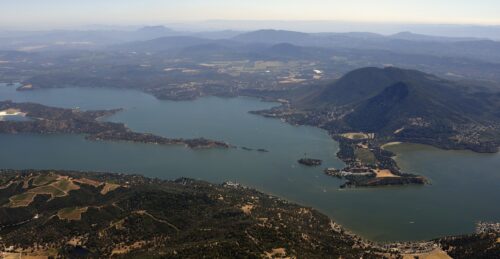 “An environmental advocacy group sued the U.S. Fish and Wildlife Service on Tuesday to force the federal agency to protect a rare California fish through the Endangered Species Act. The Center for Biological Diversity claims the agency missed a deadline in January to decide protection measures for the Clear Lake hitch. The Clear Lake hitch is found only in Lake County in Northern California, and the center says the freshwater minnow is on “the brink of extinction.” “The service’s failure to issue a timely final listing rule protecting the Clear Lake hitch as a threatened species under the [Endangered Species Act] leaves the hitch vulnerable to the ongoing loss and degradation of habitat that is critical for its survival and recovery,” the center said in its complaint. Environmentalists say development and dams are the largest obstacle for hitch recovery, as diversions have “altered tributary habitats and impeded fish passage.” Droughts brought by climate change are also a reason for the hitch’s population decline. … ” Read more from the Courthouse News Service.
Friends of the River appeals court decision that leaves Yuba salmon endangered
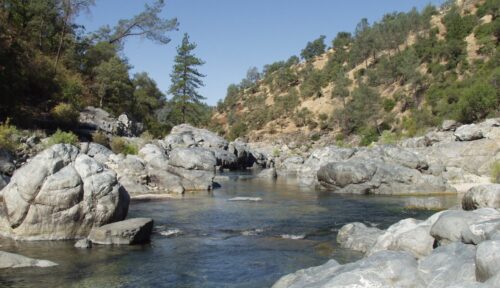 “Today, Friends of the River filed an appeal challenging a federal court ruling that lets the U.S. Army Corps of Engineers (Corps) avoid responsibility for the harm caused by its dams on the lower Yuba River. Chinook salmon, steelhead, and green sturgeon are threatened with extinction because Englebright Dam and Daguerre Point Dam block high-quality habitat, inflict harms to the species, and are not managed in compliance with the federal Endangered Species Act (ESA). The Corps has also failed to comply with the ESA in its management of the activities of third parties the Corps has authorized to use the dams. In a decision issued March 31, 2026, Judge Calabretta of the U.S. District Court for the Eastern District of California got it wrong when he ruled that the Corps has no duty under the ESA to mitigate any of the dams’ adverse effects. The Court declined to hold the Corps accountable for the harms caused by the dams blocking fish passage and creating deadly conditions for juvenile fish migrating out to the ocean. He further got it wrong in ruling that the Corps need not ensure that its contracts with companies that use Englebright Dam for hydropower generation are in compliance with the ESA. … ” Read more from Friends of the River.
Sonoma County declares dry water supply for Russian River area despite recent rains
“With weather forecasts calling for rain and reservoirs at, or nearing, capacity, it seems strange to think that parts of Sonoma Water are under a “dry water supply” designation. It’s a technical term, but it shows how careful they’re being when it comes to managing water, especially now that climate change is being taken into account. Lake Sonoma near Geyserville is considered full; there really isn’t any room for more water. Farther north on U.S. Highway 101, Lake Mendocino stands at about 85% of capacity. That’s good news for Sonoma Water, which uses the two reservoirs as its water supply. But Don Seymour, the agency’s deputy director of engineering, said, technically, it’s still not up to “normal.” … ” Read more from CBS News.
Study measures regulatory costs for Napa vineyards
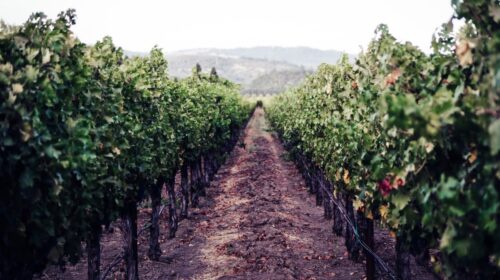
“A new study has put a price tag on the cost to Napa County winegrape growers of complying with government regulations. The study, titled “Regulatory Cost of Production in Napa County Vineyards,” was commissioned by the Napa County Farm Bureau and prepared by Cal Poly, San Luis Obispo, professors Lynn Hamilton and Michael McCullough. They found that the cost of regulatory compliance last year for winegrape growers in the county was between 8% and 12% of production costs. For a large grower, that equated to more than $1,700 an acre and nearly $2 million overall. For a small grower, regulatory compliance cost more than $1,100 an acre and around $226,000 overall. Paying that much to comply with regulations “makes a big difference in profitability,” Hamilton said. “Both growers and policy makers need to understand the impact of regulatory costs on the viability of farming.” … ” Read more from Ag Alert.
MONTEREY: The clock is ticking on water projects to bring local groundwater basins into compliance.
“With a short window to tackle a high-stakes problem – water – things are getting serious, fast. Members of the Salinas Valley Basin Groundwater Sustainability Agency’s (SVBGSA) advisory committee met on Thursday, April 16 to talk about potential solutions, and the consequences if deadlines are missed. The goal, under California’s Sustainable Groundwater Management Act, is to develop projects and management actions to bring basins to sustainability by 2040 or 2042. If local groundwater sustainability agencies cannot come up with effective solutions, control could shift to the State Water Resources Control Board, which has the authority to impose pumping restrictions. That could result in fallowing farmland, impacting the county’s top economic driver. “We are asking you to develop a recommendation to the board,” SVBGSA Executive Director Piret Harmon told committee members. She said potential projects would need to be finalized by early fall. “We need a suite, a portfolio of projects. Not any single one, because it doesn’t get us there. It really comes together to be the most optimal.” … ” Read more from Monterey Now.
Tulare County water managers push back on state subsidence data

“Water managers from eight groundwater agencies in Tulare County are pushing back against a state Water Resources Control Board staff’s report that they have not done the work to earn a “good guy” pass from fees and reporting requirements. Managers are also critical of the state’s subsidence methodology that they claim is unfair and flawed. “We aggressively rang their bell on these two issues,” said Lower Tule River and Pixley irrigation districts groundwater sustainability agency (GSA) resources manager Travis Millwee. He and other staff members spent a day meeting with state board staff and Water Board members April 8 on these issues. “But the takeaway is that the ship is in motion.” … ” Read more from SJV Water.
RIDGECREST: The pipeline reality: Living in a desert region requires importing water
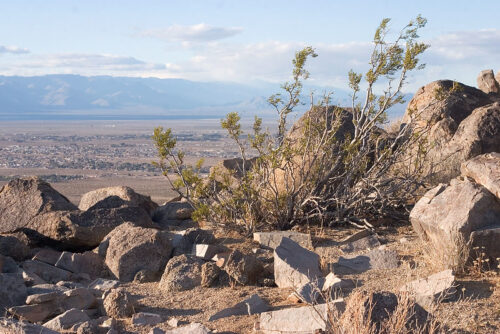 “California’s desert communities share a common challenge: they exist in arid regions with minimal natural water sources. And the common solution has been to import water through pipelines to sustain their communities. From Lancaster to Palm Springs, from Yucca Valley to Imperial County, every major desert water district in California has made the same determination the Indian Wells Valley Groundwater Authority has reached: that importing water is essential to long-term sustainability. “The reality about pipelines is straightforward,” said Scott Hayman, chair of the Indian Wells Valley Groundwater Authority. “We live in a desert. The Indian Wells Valley Basin is an isolated groundwater basin with no natural runoff for replenishment. After decades of overdraft, importing water isn’t one option among many, it’s the only proven path to sustainability.” … ” Read more from the Indian Wells Valley Groundwater Authority.
LA County dams and reservoirs captured 120 billion gallons of stormwater in the 2025-2026 storm season
“Think back to those torrential rains that hit Southern California in December, and on Jan. 1 when storms drenched pancho-wearing Rose Parade marchers, float riders and umbrella-hoisting onlookers in Pasadena. To water supply managers in Los Angeles County, rain is not an inconvenience. It is a windfall. Since local rain accounts for 40% of the region’s drinking water supply, folks from Los Angeles County Public Works were busy making sure it got captured and sunk into reservoirs and groundwater basins as non-rainy day storage. As the storm season ended, they tallied up their wins: L.A. County captured a whopping 120.3 billion gallons of stormwater for the 2025-2026 storm season that ran from early October through April 15. The rain-gain was oceans more than last year’s total of just 11.9 billion gallons, the county announced earlier this week. … ” Read more from the LA Daily News.
After almost 90 years, some sections of the LA. River are finally recovering — and a native bird species is making a comeback
“The Los Angeles River didn’t always look like a giant concrete channel. Before the 20th century, it was a wild, shifting river surrounded by wetlands and floodplains. But that came with a serious problem: flooding. In the early 1900s, especially after devastating storms like the Great Flood of 1938, the city faced repeated destruction. Homes, roads, and entire neighborhoods were at risk. The solution was drastic but effective. The U.S. Army Corps of Engineers led a massive project to encase most of the river in concrete, speeding water safely out to the ocean. It worked, but at a cost… The natural ecosystem was largely erased. Wetlands that once absorbed floodwater and supported wildlife disappeared, replaced by a sterile channel. As Candice Dickens-Russell, President & CEO of Friends of the L.A. River, explains, “flooding is a reality in Los Angeles… but I don’t think it makes sense to remove all the concrete tomorrow.” Instead, she points to a more balanced approach: reducing concrete where possible while maintaining flood protection. … ” Read more from Secret Los Angeles.
Millionaire beach town erupts after their swimming pools destroyed so officials can fix sewers
“A wealthy beach town is in turmoil as officials rip out backyard swimming pools to repair a sewer line, sparking outrage and lawsuits from homeowners desperate to halt the destruction. Crews moved in on a stretch of Rhone Lane in Huntington Beach, demolishing pools, patios, and other backyard features above a 30-foot-wide sewer easement running through about 30 properties, according to the Daily Mail. The underground line — dating back over 60 years — is controlled by the Orange County Sanitation District, which says it has the legal right to access the land and remove any obstructions to the pipeline so it can carry out repairs and maintenance. However, residents say the situation has gone far beyond just allowing access. “Easement means access, but OC Sanitation sees this as no; they want possession. And that’s what they’ve done. Effectively, they are taking possession of these people’s lands without giving them any kind of monetary consideration,” homeowner Tony Shahidi told ABC7, adding he stands to lose $350,000 of equity if part of his backyard is demolished. … ” Read more from the New York Post.
A lost ghost town near LAX is finally turning back into nature
“For over 40 years, Surfridge was a slice of paradise in the city of Los Angeles. The neighborhood’s roughly 800 homes dotted coastal dunes about 100 feet above the shore, a stone’s throw from the ocean. But in 1967, the city began razing the homes due to the exponential growth of Los Angeles International Airport right next door. The Jet Age was booming, and LAX had begun to make the neighborhood unlivable due to noise, safety and pollution concerns. At this point, Surfridge has nearly been abandoned for longer than it ever existed. The land is now just a fenced-off swath of coastal land with little more than paved cul-de-sacs as a reminder of its idyllic history. It’s also become an unlikely habitat for endangered species, and a yearslong effort to restore the former neighborhood to nature took a major step forward last week. Left alone, however, Surfridge has slowly turned back into nature over the past several decades, transforming into a vital coastal dune habitat. … ” Read more from SF Gate.
LAFCO: Dissolve the Water Authority? Not yet.
“Getting rid of the San Diego County Water Authority might be the best way to address regional water costs and needs in the future. That’s what the plurality of concepts studied by the San Diego Local Agency Formation Commission or LAFCO, suggest under its first audit of the county’s water wholesaler. The Water Authority fell under LAFCO’s scrutiny a few years ago after two member water districts fought to leave the agency over its high water prices. So LAFCO decided to do what’s called a municipal service review of the Water Authority, which is basically an audit with recommendations on how to fix certain problems. LAFCO came up with three possible solutions to the Water Authority’s dire financial straits: Dissolve the Water Authority into smaller water wholesale regions; or dissolve it and form a new special district to manage water treatment and reservoir storage while giving the rest of the Water Authority’s assets to the Metropolitan Water District of Southern California. The third option is to actually expand the Water Authority’s power by letting it absorb its 22 member water districts’ role of selling water to cities and the county. … ” Read more from the Voice of San Diego.

