
Several news sources featured in the Daily Digest may limit the number of articles you can access without a subscription. However, gift articles and open-access links are provided when available. For more open access California water news articles, explore the main page at MavensNotebook.com.
On the calendar today …
- MEETING: Central Valley Flood Protection Board beginning at 9am. Agenda items include Presentation of the U.S. Army Corps of Engineers Levee Inspection Results for American River Flood Control District, an informational update on Yolo Bypass Cache Slough Master Plan Overview, Key Updates, and Recommendations for Implementation; and an informational update on the Watershed Studies Alignment with the 2027 Central Valley Flood Protection Plan Update. Click here for the full agenda.
In California water news today …
California Delta tunnel project gets partial green light
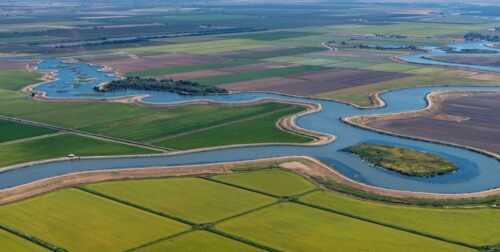 “Opponents of the Delta Conveyance Project said Thursday they had only days to read a 200-page draft decision that, if approved, would destroy their way of life. They stood before the Delta Stewardship Council, asking for more time before it opted to deny their appeals — a move that charts a course for the massive water diversion project to proceed. “I hate coming to these meetings,” said Gia Moreno, with the Hood Community Council. “We don’t ever get invited. The town doesn’t get invited. We are at Ground Zero.” Hood is a small town that would sit near two intake facilities by the Sacramento River needed for the water project. Moreno said no one has given good responses to questions about noise and dust pollution from the project, or explained where muck dredged from the earth for a 45-mile tunnel would go. “Essentially, we’ve been told we’re just going to have to deal with it,” she said. … ” Read more from the Courthouse News Service.
DWR: Delta Stewardship Council determination affirms record; Limited remand to clarify two areas
“The Department of Water Resources (DWR) appreciates the careful and thorough review conducted by the Delta Stewardship Council regarding appeals of the Delta Conveyance Project’s Certification of Consistency with the Delta Plan. The Council’s determination affirms the strength of the extensive evidentiary record supporting the project’s consistency with the Delta Plan. As DWR anticipated, the Council dismissed or denied the vast majority of the appeals. Today’s Council determination is an important step forward for the project in completing the Delta Plan Consistency process. … ” Continue reading this statement from DWR.
RESTORE THE DELTA: Tribal and environmental advocates denounce Certification of Consistency approval for the Delta Conveyance Project
“A coalition of tribes and environmental advocates expressed sharp criticism following the Delta Stewardship Council’s approval of the California Department of Water Resources (DWR) Certification of Consistency for the proposed Delta Conveyance Project (DCP). The coalition argues that the project violates state law and poses an imminent threat to Delta communities, its ecosystem and cultural heritage. … ” Continue reading from Restore the Delta.
Despite heavy April showers, drought just crept back into California
“Despite the excessive rain and snow that California received in April, drought has crept back into the state, new data show. The U.S. Drought Monitor map released on Thursday shows 65% of California as abnormally dry and nearly 5% experiencing moderate drought. Before now, the period from December 2025 through March 2026 marked the first time in 25 years that California was entirely free of drought or even dryness on the monitor. “The drought and abnormally dry conditions being shown are mostly to capture the very poor snow season or ‘snow drought’ in the region,” Brian Fuchs, the University of Nebraska National Drought Mitigation Center climatologist who authored the recent map, wrote to SFGATE. He added: “The rain is good and beneficial, but the lack of snow over the winter for much of the West, including California, will lead to impacts down the road.” … ” Read more from SF Gate.
Butte County leaders urging state to deliver promised Oroville Dam benefits
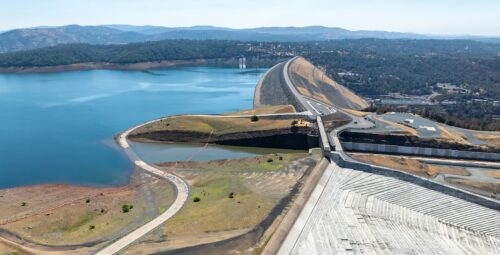
On this date, the water storage was 2,243,714 acre-feet (AF), 66 percent of the total capacity. Photo taken September 5, 2024. Sara Nevis / DWR
“Butte County officials are renewing a long-running dispute with the California Department of Water Resources, launching a public awareness campaign they say highlights unfulfilled promises tied to the construction of Oroville Dam. County staff this week unveiled a website titled “Our Water, Their Power,” aimed at informing residents about what local leaders describe as ongoing economic and recreational shortfalls since the dam’s completion in 1968. Bill Connelly, chair of the Butte County Board of Supervisors, said expectations set before construction never materialized. “Prior to the dam being built, Butte County was promised a huge economic boom with 10 to 20 million visitors a year. We’re lucky to get 2 million,” Connelly said. … ” Read more from KRCR.
Oroville Dam stands as towering legacy of water, power and protection in California
“Standing 770 feet above the Feather River, the Oroville Dam remains a cornerstone of California’s water system and a reminder of how a single piece of infrastructure can shape water supply, power generation and flood protection across the state. Built as part of the California State Water Project, Oroville Dam is the tallest dam in the United States and can store roughly 3.4 million acre-feet of water, making it one of California’s most critical water management facilities. Completed in 1967, the dam brought major changes to Butte County even before Lake Oroville filled. Roadways and rail lines were relocated to make way for construction, and the area saw an influx of workers and economic activity. … ” Read more from KRCR.
‘This is Not OK’: Huffman says he’ll launch an investigation into the Trump administration’s Eel River ‘water grab’ scheme
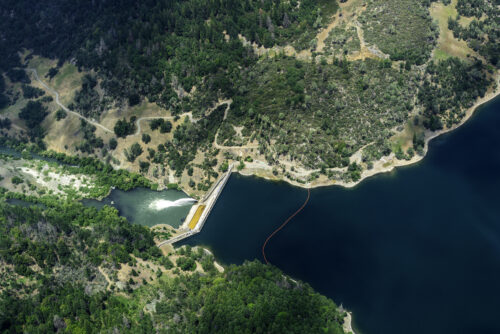
“U.S. Rep. Jared Huffman this morning came out swinging in response to U.S. Secretary of Agriculture Brooke Rollins’ recent announcement that a Southern California water district has expressed interest in taking over PG&E’s defunct hydroelectric dams near the headwaters of the Eel River … Here’s what he had to say in a newsletter to constituents: I want to alert you to some very disturbing breaking news about a scheme to export Eel River water from my North Coast district to southern California — why I oppose it, and what I’m doing to stop it. We’ve learned from media reports and statements by Agriculture Secretary Brooke Rollins that the Trump administration is trying to federalize the Potter Valley Project — to make it part of the Bureau of Reclamation, ostensibly as a way to block PG&E from removing two obsolete hydropower dams on the Eel River. … ” Read more from the Lost Coast Outpost.
Where the tides have returned
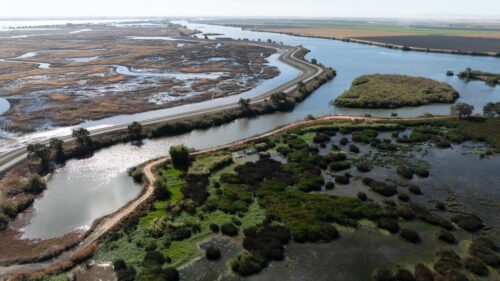
“With a high-pressure system parked over the Pacific Ocean and a tenacious fogbank blanketing the San Francisco Bay region in mid-December, Dave and I drive through farmland in eastern Solano County, our silver Coleman canoe strapped to the top of the truck. Our destination is the 3,400-acre Lookout Slough, the largest tidal wetland restoration project in the Sacramento–San Joaquin Delta and in state history. The $130 million project was designed to enhance fish and wildlife habitat while increasing floodwater capacity of the Yolo Bypass as sea level rises. It also provides 26 miles of new tidal channels. Completed in September 2024 by the California Department of Water Resources (DWR) and Ecosystem Investment Partners, it’s part of a larger effort by DWR to restore 16,000 acres in the North Delta. … ” Read more from Bay Nature.
California water agencies present water policy framework for next state leaders
“The Association of California Water Agencies (ACWA) has introduced an initiative called Vision for Our Water Future, aimed at increasing the priority of water policy for California’s next governor, legislative leaders, and state officials. ACWA said the initiative provides a framework to improve the reliability and resilience of the state’s water system for economic, community, and environmental needs. The organization noted that the effort is supported by its member agencies across California. Chelsea Haines, who works on state regulatory and legislative issues affecting water agencies, said the proposal reflects input from water suppliers and includes actions to address ongoing challenges. She pointed to the role of water in housing, the economy, public health, and community resilience, and called for state leadership to advance the proposals. … ” Read more from Smart Water Magazine.
California Supreme Court limits Coastal Commission’s power to block development
“In a decision that could lead to more development along the coastline, the state Supreme Court on Thursday limited the California Coastal Commission’s authority to restrict or halt coastal construction that has been approved by a city or county. The commission, whose members are appointed by the governor and state legislators, “and local governments share responsibility for planning coastal development,” Chief Justice Patricia Guerrero observed in the court’s 7-0 ruling. But once a local government has won the commission’s approval for its overall development plan on coastal lands, Guerrero said, the commission cannot “edit” that plan by vetoing specific projects or ordering new restrictions. Under the California Coastal Act of 1976, “both local and state goals are important, and neither the County nor the Commission, as local and state entities respectively, should have greater deference,” the chief justice wrote. … ” Read more from the San Francisco Chronicle.
Dry winter and later rains raise the chance for busy fire season
“North Bay state senator Mike McGuire recently organized a virtual town hall to talk about wildfire and this year’s fire forecast. His guests: three key local fire chiefs. Each answered questions from the public, outlined how the addition of night-flying firefighting aircraft to their permanent arsenal has made all the difference, and reflected on previous fire experiences. The 2015 Valley Fire and 2017 Tubbs Fire that ravaged Lake and Sonoma counties spurred major changes to California’s wildfire preparation. One of the greatest impacts has been the push to use controlled fire as a tool for fire suppression. … ” Read more from NorCal Public Media.
Padilla Joins Klobuchar, Heinrich, Merkley, colleagues in raising concerns about Forest Service reorganization
“U.S. Senator Alex Padilla (D-Calif.), co-chair of the Senate Wildfire Caucus, joined Senators Amy Klobuchar (D-Minn.), Ranking Member of the Senate Committee on Agriculture, Nutrition, and Forestry, Martin Heinrich (D-N.M.), Ranking Member of the Senate Committee on Energy and Natural Resources, Jeff Merkley (D-Ore.), Ranking Member of the Senate Appropriations Subcommittee on Interior, Environment, and Related Agencies, and 30 other Senators in raising strong concerns about the reorganization of the U.S. Forest Service (USFS) to the U.S. Department of Agriculture. “The USFS is charged with managing the 193 million-acre National Forest System (NFS), performing world-class forestry research, and delivering forestry assistance to improve the management of the more than 800 million acres of public and private forestlands across the country, including over 141 million acres of urban forests in our cities and towns. After the deep cuts over the previous year, a 2025 survey by the Partnership for Public Service found that the USFS was significantly worse at fulfilling stakeholder needs and providing quality service than a year earlier.,” wrote the Senators. … ” Read more from Senator Alex Padilla.
In regional water news and commentary today …
NORTH COAST
Lawsuit seeks endangered species protection for Clear Lake hitch
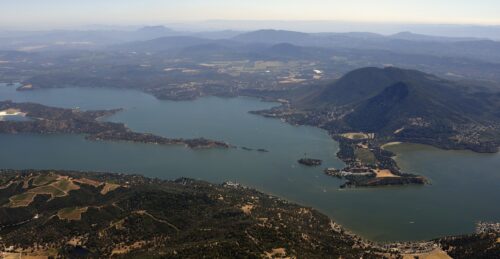 “The Center for Biological Diversity sued the U.S. Fish and Wildlife Service on Tuesday to force the agency to finalize Endangered Species Act protection for the Clear Lake hitch. These rare fish are found only in Lake County and are said to be teetering on the brink of extinction. The agency missed a legally required January 2026 deadline to issue a final decision on protecting the species. The Center for Biological Diversity said the delay underscores a broader failure: In 2025 not a single plant or animal received Endangered Species Act protections, marking the first time that has happened since 1981. “It’s appalling that the Trump administration continues to ignore the law while these iconic fish edge closer to extinction,” said Meg Townsend, a freshwater attorney at the Center. “Clear Lake hitch, the beloved ‘chi,’ are being stranded not just in drying streams, but in bureaucratic limbo. Without immediate protections we risk losing them forever.” … ” Read more from the Lake County News.
SIERRA NEVADA
More snow on the horizon for Tahoe region
“As the latest storm system moves out of the Tahoe-Truckee region, a brief stretch of sunnier weather is expected — but it won’t last long. Forecasters say additional snow showers are likely to return over the weekend, continuing an — April pattern that has brought significant late-season snowfall to the Sierra. At Palisades Tahoe, officials reported up to 11 inches of new snow from the most recent storm, with totals ranging from 1 to 11 inches between the base and upper mountain. That brings April snowfall to approximately 81 inches so far, and the season total to 359 inches and counting. … ” Read more from the Tahoe Daily Tribune.
Tahoe ski area extends season after 81 inches of April snow
“California skiers and snowboarders looking to get a few more turns in this season just got some good news: Spring storms have allowed Palisades Tahoe to extend its season by at least a couple of weeks. Palisades spokesperson Patrick Lacey said in a Wednesday email that this week’s storm brought 11 inches of new snow, bringing the April total to 81 inches with a week left in the month and cool temperatures ahead. “That momentum is setting the stage to keep lifts spinning into early to mid-May,” Lacey said. “There’s currently no set closing date, and operations will continue as long as conditions allow.” … ” Read more from SF Gate.
Wildfire may come earlier this year
“Fire has already struck in the high-elevation west after a winter that has fire experts holding their breath as seasons change. At the end of March, the Dry Fork Fire hit the Uintah mountains in Utah at a similar elevation (7,000 feet) to the Tahoe Basin, where, “…typically this time of year,” Basil Newmerzhycky said in Great Basin Seasonal Outlook report, “fire would be unimaginable.” That’s because these areas would typically be under several feet of snow, Newmerzhycky explains, but this year they’ve been bare already for quite some time. “A bit of a canary in the coal mine,” Newmerzhycky added, “of what is possibly to come in the coming months.” … ” Read more from the Tahoe Daily Tribune.
SACRAMENTO VALLEY
CDFW pilot program seeks to establish bass fishery at Gibson Ranch
“Responding to angler interest in more close-to-home, warmwater fishing opportunities, the California Department of Fish and Wildlife (CDF) has stocked smallmouth, largemouth and spotted bass into the park pond at Gibson Ranch in Sacramento County. “We understand that most of California’s licensed anglers live in urban, metropolitan areas so creating diverse angling opportunities close to home is really important to keep these anglers engaged,” said Farhat Bajjaliya, a CDFW Fisheries Branch supervisor. “Creating a new fishing opportunity at a place like Gibson Ranch allows these anglers to get out close to home in a really beautiful area, a nature-like setting, and, hopefully, catch something.” … ” Read more from the Department of Fish and Wildlife.
BAY AREA
A gray, drizzly weekend is taking shape for the Bay Area. Here are the details
“Thursday’s sunshine is yesterday’s news. A low-pressure system approaching the California coast will turn the Bay Area cool and gray on Friday, with drizzle and light rain spreading across the region Saturday and Sunday. It won’t be a washout and rainfall totals should remain light. But in addition to the drizzle and light rain, persistent winds from the Pacific Ocean will keep things abnormally cool and cloudy. All in all, it may end up being a rather dreary weekend. The forecast for Friday has changed to become increasingly cloudy, cool and slightly wet. Winds from the Pacific will keep much of the Bay Area socked in cloud cover on Friday morning. … ” Read more from the San Francisco Chronicle.
Residents push back against San Jose’s data center plans
“San Jose’s plan to support the rapid development of new data centers in coming years is running into increasingly vocal pushback. What might have been a routine policy review session during Tuesday’s City Council meeting instead became a venue for a procession of angry residents to vent their concerns about the city’s efforts to attract a dozen large energy users, including data centers, to the city and get them hooked onto the grid by the end of the decade. City officials said the projects will undergo rigorous vetting, including public input, and could provide an economic windfall. But those who spoke up expressed alarm over potential impacts, including environmental harms as well as the strain these extra energy users would place on the city’s power grid. Ellina Yin, who leads the civic engagement nonprofit Dreaming Collaborative, organized a letter writing campaign ahead of Tuesday’s meeting calling for greater transparency, as well as a petition that gathered more than 800 signatures. She said many residents feel blindsided by the pace these plans have progressed. … ” Read more from the San Jose Spotlight.
CENTRAL COAST
The strange tale of Rincon Island
“Adorned with a few spindly palms, an unlikely sight rises from the Pacific by Mussel Shoals: Rincon Island, an artificial island built for oil production. Since construction began in 1957, the island’s story traces engineering innovation, ecological pride and shame, and even a fleeting appearance in the U.S. Supreme Court. Rincon Island was the first of its kind, and the last. Why an island? The story began in 1954, when the California State Lands Commission offered 1,175 acres in coastal waters off Ventura County for oil and gas production, a tract known as the Rincon Lease. State law limited how it could be drilled. After early operators abandoned their wooden drilling piers, the legislature banned new drilling piers in 1928. Offshore platforms — introduced in the Gulf of Mexico in 1937 — had not yet been authorized in California. That left Rincon Lease bidders with two options: slant-drill from shore or build an artificial island. … ” Read more from Coastal View.
Camarillo files reply in support of petition with California Supreme Court in OPV groundwater adjudication, warns that years of costly litigation and water supply uncertainty are to come
“The City of Camarillo yesterday filed a reply with the California Supreme Court, pressing for immediate review of critical legal issues in ongoing groundwater litigation that directly threatens the City’s ability to provide reliable and affordable water. At the heart of the case is a clear divide: Camarillo is seeking timely resolution of key legal questions that affect water supply and cost, while United Water Conservation District is attempting to delay that review—potentially forcing the region through many more years of costly and uncertain litigation. The case involves the Oxnard and Pleasant Valley (OPV) groundwater basins, where the OPV Coalition — a group of large agricultural landowners — filed suit in 2021 seeking pumping allocations that Camarillo believes would come at the expense of local residents and businesses. United has aligned itself the Coalition’s position in determining the amounts, and kinds, of water available in the basins. … ” Read more from the City of Camarillo.
SAN JOAQUIN VALLEY
Port of Stockton’s DeJesus says resolving dredging challenges will increase growth
“Continued dredging issues related to U.S. Army Corps of Engineer (USACE) practices have frustrated the Port of Stockton’s ability to reach its legally mandated 35-foot draft undermining waterborne transport volumes of import and export cargoes, according to Kirk DeJesus, Executive Director, Port of Stockton. Resolving these challenges will increase cargo volumes and growth, he said. In an interview with AJOT on April 20th, DeJesus described problems getting the US Army Corps of Engineers San Francisco District to fully dredge the Stockton Ship Channel which stretches along the San Joaquin River to Stockton, an inland river port that is a major import/export link for warehouses and agricultural growers in California’s San Joaquin Valley: “So, we are authorized at 35 feet of draft for the ship channel to Stockton. We are one of two river ports in the state. So, we get a lot of attention, and we get a lot of support… Congressman Josh Harder (D-CA) is great. He bangs the door as much as we need him to… I am in D.C. four or five times a year. We have a great relationship with the Corps…” … ” Read more from the American Journal of Transportation.
Weather service survey confirms three rare tornadoes in Central California
“Three rare tornadoes touched the ground in California’s Central Valley on Tuesday, stirring up a lot of excitement but causing only minor damage and no injuries, according to a preliminary report from the National Weather Service. The tornadoes formed in Fresno and Madera Counties during an outbreak of thunderstorms that also delivered a heavy pounding of rain, wind and hail as a storm system moved across the state. A funnel cloud is officially called a tornado only if it touches the ground, and once one is confirmed, experts on the ground determine its strength on the five-point enhanced Fujita scale by measuring the damage it has caused. Soon after tornado reports emerged on Tuesday, a survey team from the Weather Service office in Hanford headed to the scene and also used information from the public, law enforcement agencies, the media and emergency managers to confirm the details. The team released its report on Wednesday. … ” Read more from the New York Times.
After four decades, Fresno gets a state park. Here’s what it means for the San Joaquin River Parkway.
“After four decades of piecing the San Joaquin River Parkway together parcel by parcel, the state is preparing to hand six of its properties — 874 acres in all — to California State Parks, giving the long-stalled greenway its first permanent institutional landlord. The new San Joaquin River Parkway State Park is one of three that Gov. Gavin Newsom proposed Wednesday under the “State Parks Forward” initiative — billed as the largest expansion of California’s state park system in decades, alongside Feather River in Yuba County and Dust Bowl Camp in Kern County. If approved, the additions would bring California’s total to 283 state parks, more than any other state. A six-person agency has run the San Joaquin River Conservancy on grants and contracts since 1992, and the transfer would put six of their properties under the control and supervision of California State Parks. … ” Read more from Fresnoland.
East Orosi celebrates groundbreaking to achieve safe water
“On Earth Day, the unincorporated community of East Orosi in Tulare County hit a key milestone to achieve their Human Right to Water by breaking ground on their safe drinking water project. Many families in this area currently rely on drinking water contaminated with unhealthy levels of nitrates. This is water families need to drink, cook, shower and carry out other everyday tasks. Studies show exposure to nitrates can cause blue baby syndrome, low blood pressure and can lead to cancer, marking this water consolidation project a step towards a healthier community. “This is a wonderful experience and a big change going from AGUA Youth to advocating as a leader and mother since now my kids keep me motivated. I don’t want them stressing that they can’t drink the water and they should be comfortable where they live,” said Miriam Sanchez, East Orosi AGUA Member. “Communities need to keep speaking up and when one community wins, we are not fighting for just us, we are fighting for all Californians to have clean water.” … ” Read more from Valley Voice.
EASTERN SIERRA
RIDGECREST: The pipeline reality: Living in a desert region requires importing water
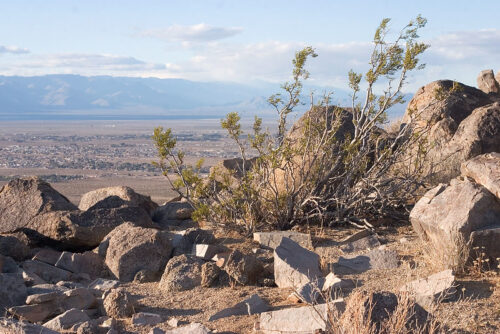 “California’s desert communities share a common challenge: they exist in arid regions with minimal natural water sources. And the common solution has been to import water through pipelines to sustain their communities. From Lancaster to Palm Springs, from Yucca Valley to Imperial County, every major desert water district in California has made the same determination the Indian Wells Valley Groundwater Authority has reached: that importing water is essential to long-term sustainability. “The reality about pipelines is straightforward,” said Scott Hayman, chair of the Indian Wells Valley Groundwater Authority. “We live in a desert. The Indian Wells Valley Basin is an isolated groundwater basin with no natural runoff for replenishment. After decades of overdraft, importing water isn’t one option among many, it’s the only proven path to sustainability.” … ” Read more from the Indian Wells Valley Groundwater Authority.
SOUTHERN CALIFORNIA
More rain is on the way for Los Angeles this weekend
“Los Angeles could be in for some light rain this weekend. A storm system could bring intermittent showers to most areas from late morning Saturday through the evening and overnight, with rainfall totals expected to be under a quarter-inch and probably one-tenth of an inch or less, said Mike Wofford, meteorologist with the National Weather Service in Oxnard. With rainfall rates projected to be less than a quarter-inch per hour, no flooding or debris flows are expected, he said. … ” Read more from the LA Times.
LA County dams and reservoirs captured 120 billion gallons of stormwater in the 2025-2026 storm season
“Think back to those torrential rains that hit Southern California in December, and on Jan. 1 when storms drenched pancho-wearing Rose Parade marchers, float riders and umbrella-hoisting onlookers in Pasadena. To water supply managers in Los Angeles County, rain is not an inconvenience. It is a windfall. Since local rain accounts for 40% of the region’s drinking water supply, folks from Los Angeles County Public Works were busy making sure it got captured and sunk into reservoirs and groundwater basins as non-rainy day storage. As the storm season ended, they tallied up their wins: L.A. County captured a whopping 120.3 billion gallons of stormwater for the 2025-2026 storm season that ran from early October through April 15. The rain-gain was oceans more than last year’s total of just 11.9 billion gallons, the county announced earlier this week. … ” Read more from the LA Daily News.
After almost 90 years, some sections of the LA. River are finally recovering — and a native bird species is making a comeback
“The Los Angeles River didn’t always look like a giant concrete channel. Before the 20th century, it was a wild, shifting river surrounded by wetlands and floodplains. But that came with a serious problem: flooding. In the early 1900s, especially after devastating storms like the Great Flood of 1938, the city faced repeated destruction. Homes, roads, and entire neighborhoods were at risk. The solution was drastic but effective. The U.S. Army Corps of Engineers led a massive project to encase most of the river in concrete, speeding water safely out to the ocean. It worked, but at a cost… The natural ecosystem was largely erased. Wetlands that once absorbed floodwater and supported wildlife disappeared, replaced by a sterile channel. As Candice Dickens-Russell, President & CEO of Friends of the L.A. River, explains, “flooding is a reality in Los Angeles… but I don’t think it makes sense to remove all the concrete tomorrow.” Instead, she points to a more balanced approach: reducing concrete where possible while maintaining flood protection. … ” Read more from Secret Los Angeles.
SAN DIEGO
Why is your water bill so high? The story behind San Diego’s rising rates
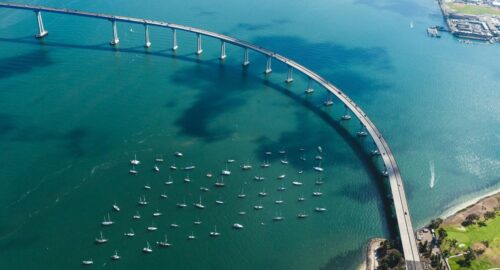 “San Diego is often held up as a model of water resilience. In a region battered by drought, officials here are quick to boast that the taps keep running — that we’ve solved the water problem. We’re even selling our surplus to neighboring regions. Crisis averted, right? Not exactly. Behind that confidence lies a far more complicated story: San Diego residents pay some of the highest water rates in the nation. Even as conservation efforts have driven actual water use to historic lows, rates continue to climb. To the average ratepayer, that doesn’t quite add up. Isn’t saving water far cheaper than producing it? So what’s really driving these increases? The forces behind your water bill involve staggering debt, flawed planning, and an agency that may have spent billions on water infrastructure we never needed. Here’s what every San Diegan should know. … ” Read more from the San Diego Coastkeeper.
LAFCO: Dissolve the Water Authority? Not yet.
“Getting rid of the San Diego County Water Authority might be the best way to address regional water costs and needs in the future. That’s what the plurality of concepts studied by the San Diego Local Agency Formation Commission or LAFCO, suggest under its first audit of the county’s water wholesaler. The Water Authority fell under LAFCO’s scrutiny a few years ago after two member water districts fought to leave the agency over its high water prices. So LAFCO decided to do what’s called a municipal service review of the Water Authority, which is basically an audit with recommendations on how to fix certain problems. LAFCO came up with three possible solutions to the Water Authority’s dire financial straits: Dissolve the Water Authority into smaller water wholesale regions; or dissolve it and form a new special district to manage water treatment and reservoir storage while giving the rest of the Water Authority’s assets to the Metropolitan Water District of Southern California. The third option is to actually expand the Water Authority’s power by letting it absorb its 22 member water districts’ role of selling water to cities and the county. … ” Read more from the Voice of San Diego.
$16.8M Ramona-Barona water pipe project begins, may cause road delays
“Motorists may experience delays on Wildcat Canyon and San Vicente roads starting this month and continuing through December 2027 as the $16.8 million Ramona-Barona pipeline project gets underway. The water and recycled water pipeline project is a joint effort between the Ramona Municipal Water District and the Barona Band of Mission Indians. The two organizations have been collaborating to design and build a pipeline to provide water and recycled water to the tribal reservation. Water District General Manager Erica Wolski said roads on Wildcat Canyon and San Vicente will have lane closures intermittently during the project. Signs will be placed at the corner of the intersection and on reservation land temporarily, she said. Updates on the road impacts will be available online at Baronapipeline.org. “The actual impact dates to Wildcat Canyon and San Vicente roads are not yet known but information about the road impacts will be available on the website as the project progresses,” Wolski said. … ” Read more from the San Diego Union-Tribune.
Poway agrees to pay $441K to resolve water rights billing dispute with San Diego
“The Poway City Council unanimously approved a $441,000 payment to the city of San Diego on Tuesday to resolve a years-long billing dispute and establish an amended water rights agreement with the city. The payment retroactively replaces water charges made by San Diego to Poway for the calendar years 2017 to 2025, according to a Poway staff report. The water agreement between the two cities, which dates back to 1968, was intended to resolve a protest related to San Diego’s prior downstream water rights at Hodges Dam and to secure permits needed to build the Poway Dam in 1971. “The 1968 agreement requires the city of Poway to measure surface water diversions and provide replacement water to offset downstream impacts as surface water flows are diverted away from San Diego by the Poway Dam and stored in the Lake Poway reservoir,” the staff report stated. … ” Read more from the San Diego Union-Tribune.
These San Diego kids grew up with the sewage crisis. They want more people to know about it.
“Eric Camberos used to walk along the Imperial Beach shoreline with his mother every weekend, collecting seashells and venturing into the water. Their family spent years living a couple of miles from what’s known as the Saturn Boulevard hotspot. But when water pollution levels in the Tijuana River Valley rose significantly during the COVID-19 pandemic, the two stopped going to the beach altogether. He didn’t return until last month, when he took part in a youth cleanup at La Jolla Shores. “We have grown up with these conditions,” Camberos said. “We have noticed that these are what we have been born into, and we know that this has to change.” The high school junior is part of a recently formed coalition called the Youth Circle. … ” Read more from iNewsSource.
Along the Colorado River …
The driest year revisited: Five takeaways from 2002 for today’s Colorado River
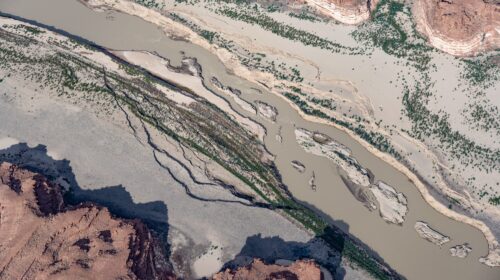
“The Colorado River basin has been here before. This year’s historic winter of low snow might feel novel. But recent years give some insight into just how dry the West’s most important river system can get. This season’s scant snowpack is melting rapidly, and turning up memories of other notably dry years. Prolonged drought conditions and warming temperatures since 2000 have produced severe single-year droughts in 2002, 2012, 2018 and 2020 in the river’s headwaters states of Colorado, Wyoming and Utah. As severe drought years continue to put the Southwest’s water infrastructure to the test, communities in the region are grappling with how best to understand and adapt to a changing climate. 2002 stands as the worst drought on record for the Colorado River, measured as the flow into one of its biggest reservoirs, Lake Powell on the Utah-Arizona border. It’s possible 2026 could break that record. Back then the year acted as a wake-up call to the region’s water leaders, spurred important policy changes, and reshaped attitudes around conservation. We asked Colorado River experts Eric Kuhn, Jeff Lukas and Jim Lochhead to share five important takeaways from the 2002 drought, and what to know as we enter the warmer, drier months of 2026. … ” Read more from The Water Desk.
Emergency plans for the Colorado River buy time, not solutions
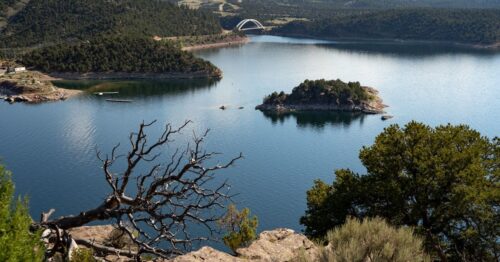
“Last week, the federal government ordered emergency measures to prevent water levels at Lake Powell from falling so low that Glen Canyon Dam, which created the reservoir, could no longer generate power or deliver water downstream. Without this intervention, models showed that the reservoir could drop below safe operating levels in August, meaning that the river would not have a reliable way to flow past the dam. This would threaten water and power supplies for millions of people across the Southwest, as well as the flow of water through the Grand Canyon. … The Bureau of Reclamation ordered releases from Flaming Gorge Reservoir, which straddles the Utah-Wyoming border, to bolster Lake Powell’s water levels. At the same time, the amount of water delivered from Powell to downstream users will be significantly reduced. “This is a short-term solution,” said Jenny Dumas, water attorney for the Jicarilla Apache Nation, which sits near the border of Colorado and New Mexico. “It’s going to take time to recover these reservoirs before we can do this again. So while we can exhaust our reserves to avoid system collapse this year, it means reserves won’t be there next year.” … ” Read more from High Country News.
Flaming Gorge water release sparks concerns
“A major water release from Flaming Gorge Reservoir is moving forward as part of an effort to protect the Colorado River system. The plan, approved by Upper Basin states and the U.S. Bureau of Reclamation, calls for releasing up to one million acre-feet of water into Lake Powell. That is a large volume. It represents nearly one-third of Flaming Gorge’s total storage. The goal is to keep Lake Powell from dropping to dangerously low levels. If water levels fall too far, the dam could lose its ability to generate power and move water downstream. That would create ripple effects across the West, where more than 40 million people rely on the Colorado River. … ” Read more from Western Water.
Legal alert: Colorado River developments and potential compact litigation
“The Colorado River Basin is approaching a critical inflection point. The 2026 operating guidelines are set to expire in October this year and 2026 is shaping up to be the worst hydrologic year on record. In a matter of days, the Bureau of Reclamation will implement significant additional reductions in water deliveries to Lake Mead, a step which likely will ripen into a lawsuit over obligations arising under an interstate compact. This alert explains the 2026 reductions, explores the principal disputes (among many) brewing among the Colorado River Basin States, and discusses the resulting litigation risk. … ” Read more from Kilpatrick.
Colorado River operations – What’s current and what’s future?
“There’s again been a flurry of media coverage related to the Colorado River – some related to actions taken due to the dismal snowpack and some related to the guidelines that will go in effect after this year. To help sort things out, here’s a look at actions related to current operations and actions related to future operations. The Bureau of Reclamation (Reclamation) just announced a Lake Powell release adjustment related to the final 2024 Supplemental Environmental Impact Statement. What triggered this action? The potential for Lake Powell to decline below elevation 3490’. What actions were and will be taken? … ” Continue reading from the Central Arizona Project’s Know Your Water News.
Court invalidates Arizona water policy used to restrict Phoenix-area development
“Maricopa County Superior Court Judge Scott Blaney ruled Tuesday that the Arizona Department of Water Resources (ADWR) did not comply with state law when implementing a policy that restricted residential development in parts of Maricopa County. In the order, the court found the agency “did not comply” with Arizona law in adopting the challenged requirements and declared the policy invalid. The policy, commonly referred to as the “Unmet Demand” approach, was used by ADWR in evaluating whether proposed developments could meet the state’s requirement to demonstrate a 100-year assured water supply in the Phoenix Active Management Area. Arizona law requires developers in designated areas to obtain a certificate of assured water supply demonstrating access to sufficient groundwater or other supplies for 100 years before construction can proceed. … ” Read more from Arizona Free News.
SEE ALSO: Arizona groundwater ruling could be ‘death knell’ for 100-year water supply rule, expert says, from KJZZ
Fly along on an SRP helicopter tour of their watershed
“A dry winter across Arizona is taking a visible toll on the Salt River Project’s reservoir system and forcing water managers to adjust how they supply the Valley. From the air, the signs are hard to miss. Along the edges of Roosevelt Lake, the largest reservoir in the SRP system, a clear “bathtub ring” marks where water levels used to be. The lake is now sitting just below 50% capacity after consecutive dry years. SRP manages a system of dams and reservoirs that delivers water to more than 2.5 million people in metro Phoenix. But with below-average snowfall this winter, less water is flowing into those reservoirs. … ” Read more from Channel 15.
Why some Arizona communities don’t drink tap water — even when it’s safe
“In a small Arizona community, millions of dollars were spent upgrading a drinking water system to meet federal safety standards. Residents were relieved to learn their water was now safe. But many still didn’t drink it. The disconnect between water that is safe and water people actually trust and use is at the center of new research from Arizona State University. Connecting households to centralized, municipal water systems has long been a cornerstone of water policy. But in some places, that goal is colliding with a more complex reality: Access does not necessarily translate into use. Instead, some households in the Southwestern U.S. choose not to connect to piped systems at all, even when they are readily available, instead relying on private wells or informal networks of neighbors and family. Others are connected, but drink only bottled or hauled water. … ” Read more from Arizona State University.
Thousands of Las Vegas homeowners join grass removal lawsuit against Southern Nevada Water Authority
“Thousands of homeowners have now joined a lawsuit against the Southern Nevada Water Authority and the grass removal program. In January, several local residents sued the agency, arguing the SNWA’s grass removal mandates lack proper legal and constitutional oversight. Attorneys for SNWA previously stated the plaintiffs in the case were already paid to have grass removed, so they “cannot complain about prospective nonfunctional grass designations.” They also argued the case should be dismissed because none of the plaintiffs “have legal standing” or have demonstrated actual harm. However, the court disagreed and the lawsuit has now become a class action lawsuit. According to the amended complaint, which was filed on Tuesday, multiple homeowners associations have joined as well as the Our Lady of Victory Catholic Church. … ” Read more from Channel 13.
Shoshone water rights gain new support
“A broad coalition across western Colorado continues to expand as more local groups step forward to support the protection of the historic Shoshone water rights. On Tuesday, five soil conservation districts from the West Slope announced a ombined $30,000 contribution to the Shoshone Water Rights Preservation Project. The Eagle County Conservation District provided the largest share at $10,000. Four others, including the De Beque-Plateau Valley, Bookcliff, South Side, and Mount Sopris conservation districts, each pledged $5,000. These contributions add to a much larger effort led by the Colorado River District, which is working to complete a $99 million purchase agreement with Xcel Energy to permanently secure the water rights tied to the Shoshone hydroelectric plant. … ” Read more from Western Water.
Though water is scarce right now, its price in parts of Colorado has dropped
“Despite the scarcity of water this year, water prices in Colorado have dropped in major markets, such as the northern Front Range, as construction of new homes flatlines and infertility and aging slow population growth, according to a new report. In northern Colorado, for instance, prices for Colorado-Big Thompson Project water dropped to $85,000 an acre-foot in 2025, down from a high of $101,000 in 2022, according to WestWater Research, a Boise-based consulting firm that tracks water transactions in Colorado and across the American West. One acre-foot of water equals 326,000 gallons, enough to serve two to four urban households for one year. “In 2025, we’ve seen the prices drop from a record high, indicating that there is not as much demand for it as there was in 2022, when they were building a lot of houses,” said Justin Bowen, a Colorado-based WestWater hydrologist and author of the report. … ” Read more from the Colorado Sun.
He’s lived alone in the mountains for 52 years measuring snow. His numbers reveal just how unprecedented Colorado’s dry winter is
“There are places people go to get away from the news. Trails with little cellphone service and usually, even fewer headlines. You’d think someone would have to live alone in a hut in the middle of the mountains to not know about Colorado’s record-breaking drought this year. Actually… the guy living alone in the middle of the mountains knows this story better than anyone. “The whole hermit thing… first of all you’d have to define that, but I’m very social. I just like being alone,” said billy barr in an interview in his house 4.3 miles into the Colorado backcountry outside Crested Butte. “The fact that I’m here and I’ve been here a long time and I look like the Unabomber. It adds a bit of a novelty to it.” … ” Read more from Channel 9.
In national water news today …
Climate disasters and federal funding uncertainty in 2025 deepen threats to water and sanitation systems
“In 2025, a growing mismatch was evident between escalating climate disruptions to water and sanitation systems and more uncertain federal support. From destructive wildfires in California to catastrophic flooding in Texas, overburdened and underresourced communities lost access to safe water and sanitation. Water and sanitation systems in these communities are confronting more frequent and severe climate disruptions to these vital lifelines at a time when funding for preparedness and recovery dwindles. The events of 2025 highlighted a central challenge whereby climate risks intensify while federal funding is increasingly constrained and unpredictable, making it harder to achieve equitable and climate-resilient water and sanitation systems in communities who need it the most. … ” Read more from the Pacific Institute.
Warming El Nino set to return in mid-2026: UN
“The El Nino weather phenomenon, which pushed global temperatures to record highs the last time around, is expected to return in mid-2026, the U.N. said Friday. The United Nations’ weather and climate agency said El Nino conditions could well develop as early as May to July. The World Meteorological Organization (WMO) meanwhile said early signs indicated a particularly strong event. El Nino is a naturally-occurring climate phenomenon that warms surface temperatures in the central and eastern equatorial Pacific Ocean, bringing worldwide changes in winds, pressure and rainfall patterns. … ” Read more from the Courthouse News Service.

