
Several news sources featured in the Daily Digest may limit the number of articles you can access without a subscription. However, gift articles and open-access links are provided when available. For more open access California water news articles, explore the main page at MavensNotebook.com.
In California water news today …
PRESS RELEASE: California Supreme Court denies review of major appellate decision rejecting DWR’s attempt to validate bond financing for Delta tunnel project
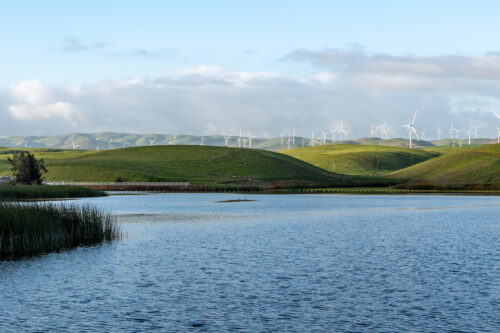
Sara Nevis / DWR
“In a major milestone that prevailing attorneys described as a victory for common sense, the Delta region, the environment, and ratepayers throughout California, the California Supreme Court has denied review of a landmark opinion issued by the Court of Appeal in the Sacramento-based Third Appellate District late last year. That Court’s opinion, first issued on December 31, 2025 and finalized with minor modifications when rehearing was denied the next month, unanimously affirmed a trial court decision holding that the State Department of Water Resources (DWR) exceeded its authority when it approved bond resolutions to finance DWR’s proposed Delta tunnel. The appellate decision was certified for publication except for a short section involving issues the Court of Appeal did not need to reach after invalidating DWR’s resolutions and revenue pledges. … ” Continue reading this press release.
Unusually active April weather pattern to continue this week, and possibly beyond, as subtropical northeastern Pacific waters reach record warmth
“What a strange Water Year it has been in 2025-2026! We started the WY with record rainfall during Oct-Dec across much of the central and south coast, including the wettest Oct-Dec period ever observed in Santa Barbara, Ventura, Kern, and parts of LA County. Then, California oscillated between periods of exceptional dryness and quite stormy conditions in Jan-Feb (including one of the largest single Sierra snowstorms in recent decades, the-multi-foot accumulations from which melted almost immediately) before experiencing the by far the hottest and in some cases the driest March on record across much of California and the broader West. Now, in April, the tables have turned once again: quite active and damp conditions have returned, especially in northern and Sierra portions of the state (including notable April mountain snowfall). In fact, it is possible that some locations in the Sierra and western foothills could (with the current forecast) end up seeing a top-3 wettest April on record! … ” Read more from Weather West.
California’s newest solar project isn’t powering homes. It’s powering your water
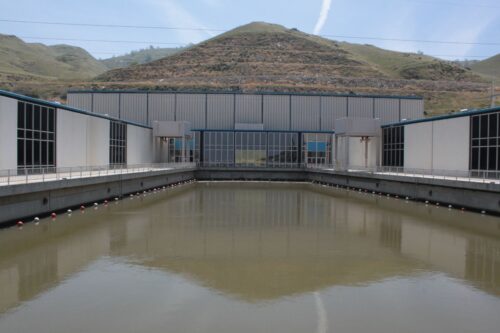 “At the bottom of the San Joaquin Valley, a low-slung Midcentury building tucked into the green-gold hillside is the beating heart of California’s impressive water delivery system. For more than five decades, the Edmonston Pumping Plant has lifted water nearly 2,000 feet up the towering Tehachapi Mountains, connecting water from Northern California to 27 million people in the southern part of the state. The plant houses 14 rumbling pumps in two football-field sized wings and is one of the most powerful water lifting systems in the world. But it can need upward of 800 megawatts of electricity to run, making it among the largest single power users in the state. Now the equation is changing. On a recent weekday morning, dozens of state officials and energy industry representatives gathered at Tejon Ranch, just across the road from Edmonston, to celebrate a sparkling new solar plant that will help power the pumps. … ” Continue reading from the LA Times. | Read via AOL News.
SEE ALSO: California powers its massive water pumps with 105 MW Kern County solar project, from PV Magazine
Do data centers really use so much water? Here are 5 key issues
 “As data center projects have popped up across the St. Louis region, driven by the growth of industrial-scale computing for artificial intelligence, one of the primary concerns raised by residents is about water — as in, will data centers consume vast amounts of the local water supply? Data centers — essentially huge warehouses for servers and computers — need to cool off all of that equipment, which is powered around the clock by electricity. To keep the equipment from overheating, water-based approaches often represent the most efficient solutions. The size of the project can determine the water needs. Medium-sized facilities, for example, may use 1 million gallons of water on peak days, while larger ones could need 8 million gallons, experts say. … Here are some key questions about data centers and water usage … ” Read more from the OC Register.
SEE ALSO: Data centers are expensive, unpopular — and could be a tipping point in the midterms, from NPR
Survey confirms need for groundwater demand management network and resources
“Our partners at the Groundwater Demand Management Network (GDM Network) recently released an executive summary of the results from their “California Groundwater Community Needs Assessment Survey”. Nearly 100 groundwater professionals responded, representing a diverse cross-section of the community: technical consultants, Groundwater Sustainability Agency representatives, agricultural users, domestic well owners, and nonprofit advocates. Almost 75 percent of respondents rated GDM as the most or more important issue to their groundwater basin(s). The survey results confirm the urgent need for a dedicated network and resources to support this work. … ” Read more from the California Water Data Consortium.
SGMA “must knows”
“DWR‘s April 1 snow survey came in at just 18% of statewide average — the second-lowest on record for that date, trailing only 2015 — and the effects are already hitting the Valley. Tulare Irrigation District reported Kaweah snowpack at 17% and told growers to plan for 4–5 weeks of surface water at 0.4–0.5 AF/acre, down from 6 weeks at 0.65 last summer. Lower Tule River Irrigation District projected 3–5 weeks depending on whether CVP Class 1 holds or drops to 85%, and Exeter Irrigation District is planning around 1.04 AF/acre at $325/acre under an assumed 85% allocation. … ” Read more from Water Wrights.
UC Merced study explores whether agave could be a future crop for California
“Researchers at University of California, Merced are studying whether agave, -a drought-tolerant plant best known for producing tequila, could become a viable crop in California’s water-strained agricultural landscape. The research, announced April 16, focuses on how agave performs in the northern San Joaquin Valley, where farmers continue to face ongoing drought conditions and reduced water availability. As crops go, agave is being evaluated for its ability to thrive in hot, dry climates while requiring significantly less water than traditional Valley crops. … ” Read more from the Los Banos Enterprise.
USFWS: Delta Smelt Life-Cycle Model and Individual-Based Model
“Statisticians and biologists in the Bay-Delta and Lodi fish and wildlife offices have created a Delta Smelt Life-Cycle Model and a Delta Smelt Individual-Based Model to assess and predict the effects of water resource-management actions on the Delta smelt population. The team worked for years to create the models, which help scientists follow trends in fish abundance, reproduction and mortality. … ” Continue reading at the US FWS.
What’s the oldest lake in the USA? The answer used to be simple – then geologists noticed something that made it complicated
“The Great Lakes of the Northeastern US and Canada may be the largest in the continent, and they’re almost certainly the most famous – but compared to some of their smaller cousins, they’re mere babies. Some lakes out there are 10 or more times the age of, say, the 10,000-year-old Lakes Michigan or Huron, defying the odds – and the very laws of geology – to hang on for literally millions of years. Seriously. The oldest confirmed lake in the world is Lake Baikal, in Russia, and it’s around 30 million years old – meaning it predates, like, daisies and sunflowers. And that might not even be the true record holder: Lake Zaysan, in Kazakhstan, could be more than twice as old as that. So, we’re just going to say it outright: no lake in North America comes close to either of these Asian ancients. But what is the oldest lake in the US? Well… it’s complicated. … ” Read more from IFL Science.
Deregulation might be bearing down on the California Coastal Commission
“To the extent that the state is on a path to quietly weaken the California Coastal Commission — and a growing number of the agency’s critics and supporters say that it is — Jan. 12, 2025, is as good a starting point as any. That’s the date Gov. Gavin Newsom issued Executive Order N-4-25, the first in a series of orders that said most of the people hoping to rebuild homes or businesses in fire-ravaged Pacific Palisades and Malibu wouldn’t need to get approval from the Coastal Commission. Newsom, no longer a candidate for public office in California, and perhaps speaking to a national audience, even threw some shade on an agency that’s widely viewed as having kept much of the state’s 840-mile coastline comparatively pristine for the past 50 years. “As the state helps the Los Angeles area rebuild and recover, we will continue to remove barriers and red tape that stand in the way,” Newsom wrote in his signing statement about his order to sideline the Coastal Commission. … ” Read more from the OC Register.
A deep dive into the Suisun City and California Forever project
“Since 2023, we’ve been following and writing about the audacious plan by the private company California Forever to build a new city of up to 400,000 residents in Solano County, poised midway between the Bay Area and Sacramento. That plan suddenly appeared much more viable in March, 2025, when Suisun City officials reached out to California Forever with a proposal to annex a portion of its vast holdings and incorporate the property into their city. That process is now underway. Because of the scope and unique nature of the project, we present here a deeper look at the various parties involved, the landscape under consideration and the history and current status of the civic processes required to transform thousands of acres of rangeland into a city. … ” Continue reading from California Local.
Could Sonic Fire Tech replace traditional water sprinklers in California homes?
“Los Angeles County has issued its first building permit for a 3D-printed concrete home that includes an infrasound-based fire defense system as a voluntary protection component. Sonic Fire Tech announced that the Sonic Home Defense system is integrated into the interior fire defense plan for a residence in the Eaton Fire rebuild zone. Monrovia-based PCI Builders received the permit for the project which utilizes 3D-printed concrete (3DCP) technology to produce non-combustible walls. The construction method produces the walls for a 1,500-square-foot home in approximately 12 hours. Allison Allain, CEO of PCI Builders, explained her motivation for using new construction methods. “The day after the fires, I began researching construction technologies that could help ensure this never happens again to my clients,” Allain said. … ” Read more from Fire and Safety Journal.
Wildfires make soils poisonous
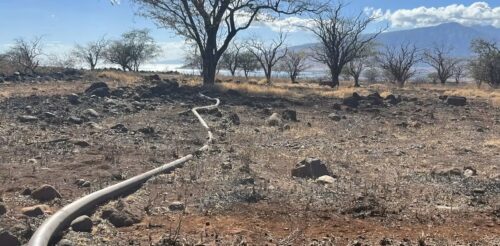
“Soil and rocks throughout the West naturally contain chromium-3, a harmless trace element also found in animals and plants — and even included in dietary supplements. “You could dig a hole outside, wherever you are right now, and you’re going to find some amount of chromium-3,” said Matthew Polizzotto, professor of earth sciences at the University of Oregon. But researchers are learning that wildfires change the element’s chemical composition, turning it from a nutrient into a poison. Heat from burning soils and plants, combined with oxygen, triggers a process that converts chromium-3 into chromium-6, a carcinogen linked to lung, nasal and sinus cancers. It can also cause asthma, skin irritation and kidney and liver damage. Chromium-6, or hexavalent chromium, can become airborne in smoke during a blaze or be stirred up in dust after the fire is out, contaminating the air. It can also loiter in a burn scar for years, leaching into groundwater. Firefighters breathing in toxic ash and rural residents who drink contaminated well water are at risk, along with anyone else who encounters chromium-6. … ” Read more from High Country News.
House Dems condemn Forest Service cuts as Republicans cheer agency’s move West
“U.S. House Republicans from Western states laid out a figurative welcome mat for the U.S. Forest Service Thursday as its chief pitched plans to whittle down the agency’s budget, move its headquarters to Salt Lake City and rely more heavily on states to manage millions of acres. “I think it’s very interesting what you’re proposing to do, and I support it,” said Idaho Republican Rep. Mike Simpson, chair of the House Appropriations Subcommittee on the Interior, Environment, and Related Agencies. Democrats on the budget panel grilled Forest Service Chief Tom Schultz about how billions of dollars in cuts to the agency proposed by President Donald Trump could drive up costs for states and stamp out important research. The subcommittee’s ranking Democrat, Rep. Chellie Pingree of Maine, said she’s deeply worried. “I guarantee you, my state is not prepared to take over all of the things that the federal government is currently doing. We don’t have those resources,” she told Schultz. … ” Read more from the Utah News Dispatch.
And lastly … These salmon got high on cocaine. That wasn’t the craziest part.
“In 2022, Jack Brand, an environmental toxicologist, loaded a bunch of Swedish fish with cocaine. He wasn’t trying to bring a Halloween hoax to life; he wanted to see how salmon in the wild reacted to pollution from the illegal drug. In recent years, there has been an alarming rise in the number of waterways polluted with cocaine, prompting scientists to wonder how fish might be handling their highs. As it turns out, fish indeed get wired when on cocaine. In a study published Monday in the journal Current Biology, Dr. Brand and his colleagues show that coked-up salmon swim faster and travel farther than their sober counterparts. This study prompts additional questions about the effects that human drug habits may be having on salmon and other freshwater fish. … ” Read more from the New York Times.
In commentary today …
2026 is shaping up to be a mixed bag in the water world
Mike Gardner, Director on the Western Municipal Water District Board, writes, “As our climate continues to warm and shifts to longer dry periods and shorter, more intense, wet periods with more precipitation in the form of rain and less snow, water providers are concerned about longer term supply if 2026 turns out to be a dry year. On the plus side, California and the Colorado River Basin both had a pretty good year in terms of overall precipitation, but warmer storms with rain rather than snow and a historically warm March destroyed the snowpack that would normally provide capturable runoff throughout the spring. The graphic below shows April snowpack for the last four years. As you can see, we didn’t have any this year. … ” Read more from the RainCross Gazette.
In regional water news and commentary today …
NORTH COAST
Mendocino County a popular destination for free water tanks
“The Mendocino County Fire Safe Council (MCFSC) is allocating close to 200 free water tanks to more than a dozen Firewise Communities, Neighborhood Fire Safe Councils, and fire departments throughout the county. In 2022, the California Department of Water Resources (DWR) was allocated $10 million from the Governor’s 2022 budget to establish a water tank program as part of its Small Communities Drought Relief program. The one-time water tank portion of the program is ending at the close of this fiscal year. Alena Misaghi, a senior water resource engineer in Fresno and assistant program manager for the Small Community Drought Relief program, reported that about 1,000 tanks will be distributed across California as a result of the program, with roughly 450 of them going to Mendocino County. … ” Read more from the Fort Bragg Advocate News.
Mendocino County’s little conservation fund has big ideas and a shrinking wallet
“At the Mendocino County Fish and Game Commission’s April grant hearing, commissioners spent the better part of an afternoon listening to some of the most ambitious habitat restoration pitches the North Coast has produced in years: a plan to wipe American bullfrogs out of the Ten Mile Creek basin by 2036, a red abalone captive-breeding lab in Noyo Harbor, a kelp restoration project in Caspar Cove meant to carry on the legacy of a recently deceased diving advocate, steel bollards to finally keep trucks out of salmon redds on the Garcia River, and a wildlife telemetry antenna that would fill a 150-mile gap in the Pacific Flyway monitoring network. Except they have $80,000 to spread across all of it. And next year they’ll have less. … ” Read more from the Mendocino Voice.
SIERRA NEVADA
Winter storm warning and lake wind advisory issued for Lake Tahoe
“Winter returns, again, to Lake Tahoe next week. The National Weather Service (NWS) in Reno has issued a Winter Storm Warning and a Lake Wind Advisory for the Lake Tahoe Basin. First comes the wind. The Lake Wind Advisory is in place from 11 a.m. to 10 p.m. Monday. Expect southwest winds 10 to 20 mph with gusts up to 35 mph with wave heights of 1 to 3 feet expected. The warning is for the Greater Lake Tahoe Area, Lassen-Eastern Plumas-Eastern Sierra Counties, and Mono County. The Winter Storm Warning is in effect from 5 a.m. Tuesday to 5 p.m. Wednesday. NWS Reno says to expect heavy snow above 6500 feet. Snow accumulations of 4 to 10 inches above 6500 feet with 12 to 18 inches along highest mountain peaks. 1 to 4 inches of snow possible at lake level, especially on the west shore. Wind gusts of 30 to 35 mph across lower elevations, including Lake Tahoe where wave heights reach 1 to 3 feet. Ridgetop winds could be gusting up to 90 mph at times. … ” Read more from South Tahoe Now.
SYRCL’s 2026 State of the Yuba — Looking back while looking ahead
“On the evening of Wednesday, April 15, approximately 150 people gathered at the Miners Foundry Cultural Center in Nevada City for SYRCL’s annual State of the Yuba — and this year, the celebration carried special weight. Twenty-five years ago, 39 miles of the South Yuba River earned permanent protection under California’s Wild & Scenic Rivers Act. On April 15, the community that made that possible came together to mark the milestone, hear the latest on the health of the watershed, and recommit to the work ahead. The Miners Foundry provided a fitting setting for the occasion: spacious, historic, and alive with the energy of a community that cares deeply about this river. The evening opened at 5:30 PM with an open house, giving attendees the chance to connect directly with SYRCL staff, explore volunteer and engagement opportunities, and enjoy food from Petra while the Miners Foundry Bar kept the evening warm. There were even activities for kids, and in the spirit of the anniversary, the crowd joined in at the end of the evening to sing happy birthday to the Yuba River and share a slice of cake — a moment of joy that captured exactly why this work matters. … ” Read more from the South Yuba River Citizens League.
NAPA/SONOMA
How would the ‘Big One’ impact Sonoma County today? Earthquake hazard modeling provides an idea
“It could strike without warning — even in an age of advanced alerting systems. A sudden jolt would be followed in some places by violent waves that cause the walls to shudder thunderously and windows to shatter as the ground shakes in all directions for longer than a minute. Homes in Santa Rosa’s Memorial Hospital neighborhood that aren’t anchored to their foundations will slip off amid the jerking. The contents inside those four walls, from fridges and radiators to bookshelves, will topple over. Young boys on the baseball diamond at nearby Doyle Park would be hurled to the ground. Farther north, sections of the vacant former county hospital campus on Chanate Road, abandoned about a decade ago in part over seismic safety concerns, crumple. A 7.0 or greater magnitude earthquake on the Rodgers Creek Fault that runs beneath central Santa Rosa or a similar-sized shaker on any of the active faults that traverse the region would unleash widespread devastation — something likely not seen in 120 years since the last Big One struck in 1906. … ” Continue reading at the Santa Rosa Press Democrat.
BAY AREA
‘Uncommon’ weather shift brings rain, thunder and possible flooding to Bay Area
“Rain is re-entering the Bay Area forecast as a low pressure system and cold front join forces near the Gulf of Alaska, delivering a potent mix of widespread showers, chances of thunder and possible flooding. Coastal drizzle is forecast to arrive by Monday morning, reaching Santa Rosa and parts of the North Bay before making its way south through the region, Brayden Murdock, a meteorologist for the National Weather Service’s Bay Area office, told SFGATE. “Chances continue through Tuesday before the main rain band exits sometime into Wednesday afternoon or evening, but we’ll have off and on showers and storms,” he said over the phone. A 30% chance of thunderstorms are possible with a focus over the East Bay before the weather pattern clears out by midweek. … ” Read more from SF Gate.
SEE ALSO: Bay Area rain Monday: Timing, totals and wind gust forecast, from the San Francisco Chronicle
US official wades into coastal Marin agriculture conflict
“A high-ranking federal official who visited Point Reyes Station this week found an active fault line on the issue of agriculture. Karen Budd-Falen, associate deputy secretary of the U.S. Department of the Interior, appeared for a public forum Thursday at West Marin Elementary School. The event drew more than 500 people from both sides of the lingering conflict over animal husbandry at Point Reyes National Seashore. A legal settlement that prompted the closure of six dairies and six beef ranches that had been in the seashore for generations has divided the community into opposing camps. April 8 was the final deadline for all of the dairies and ranches to shut down, but that hasn’t ended the controversy. … ” Read more from the Marin Independent Journal.
San Francisco unveils updated climate plan targeting net-zero emissions by 2040
“San Francisco officials on Thursday released an updated Climate Action Plan, outlining a roadmap to cut emissions, reduce household costs, and improve public health while aiming for net-zero emissions by 2040. Mayor Daniel Lurie announced the plan, the city’s first update in five years, alongside legislation aligning official climate goals with the new strategy. The updated blueprint includes expanding renewable energy, electrifying homes and businesses, improving transit, and increasing access to electric vehicles, a press release by the Mayor’s Office noted. City officials said the plan also focuses on reducing waste, conserving water, and expanding green spaces. … ” Read more from the San Jose Mercury News.
CENTRAL COAST
Carpinteria Valley water bills could go up under new rate structure
“Adjusted rates and new charges to help to support financial reserves, needed infrastructure improvements and major capital projects could cause Carpinteria Valley water bills to go up starting July 1. Increases — which could amount to 7.5% for fiscal year 2027, 7.5% for fiscal year 2028 and 6.5% for fiscal year 2029 — would kick in July 1 if approved by the Carpinteria Valley Water District board. District General Manager Kelley Dyer said a customer’s actual bills may be higher or lower than the proposed adjustments, depending on water usage. Water bills are based on the actual cost of providing a service, which varies by pipeline size, parcel type, and the amount of water used. … ” Read more from Noozhawk.
SOUTHERN CALIFORNIA
A landslide brought it down: How Rancho Palos Verdes’ beloved trails have been forever altered
“Roughly three years after above-average rainfall fueled a devastating landslide in Rancho Palos Verdes, the landscape has become almost unrecognizable. Homes, ripped apart by the land movement, have been wiped away, creating swaths of unusable open space. Trying to slow the landslide has pushed the city to the financial brink. But also caught in the landslide’s crosshairs is a beloved seaside network of trails that continues to be pulled apart and will never be the same. The area was once green rolling hills offering spectacular views of the Pacific Ocean and Catalina Island. Now, much of the land is riddled with 20-foot chasms, some of which span 12 feet. … ” Read more from the LAist.
SAN DIEGO
Stoyer water facility ends decades long run of regional service
“The Ray Stoyer Water Recycling Facility was officially decommissioned on April 8 marking more than 50 years of service in East San Diego County and closing a significant chapter in the region’s water recycling history. Over its decades of operation, the facility played a central role in regional water management, helping address water supply challenges, supporting wastewater treatment and recycling efforts, and contributing to recreational uses at Santee Lakes. It also served as an early and long-running example of sustainable water reuse in East County, based on the principle that water is too valuable to be used only once. … ” Read more from the East County Californian.
Along the Colorado River …
U.S. Government orders emergency actions to protect Glen Canyon Dam
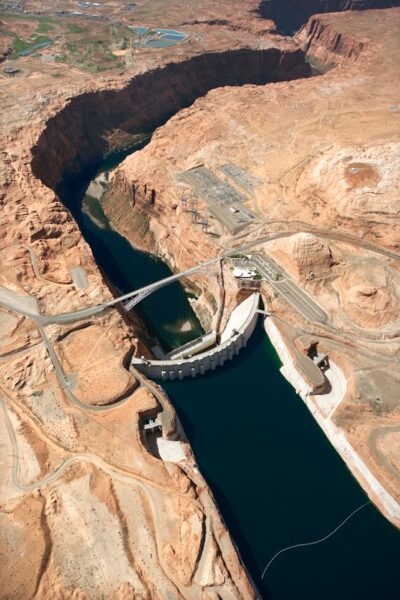 “Difficult decisions for the Colorado River are starting to be made. In what will be a defining year for the struggling watershed, the federal agency that manages the basin’s dams took unprecedented actions on Friday to store more water in Lake Powell in order to preserve hydropower generation and protect water-delivery infrastructure at Glen Canyon Dam that the agency says is at risk of damage due to low reservoir levels. The April 17 announcement from the Bureau of Reclamation will also set in motion events that could result in first-ever lawsuits from Arizona, California, or Nevada against their upstream neighbors over water supply from the shrinking Colorado River. … ” Read more from Circle of Blue.
Critics question feds’ plans for future of Colorado River: In years of severe drought, ‘the system is failing’
“The multitude of water managers tasked with overseeing the drying Colorado River system stand at a dire crossroads. As a yearslong stalemate in negotiations persists between the seven states that share the river, it’s become increasingly likely that the federal government will impose its own long-term plan, choosing from a range of proposals officials have outlined in recent months. But experts and water managers across the 250,000-square-mile Colorado River basin are raising the alarm about the five plans, questioning if any of them hold up under the new climate reality. They say the federal plans won’t keep the system from crashing in critically dry years — which are becoming more frequent — and could wreak chaos on the pivotal lifeline for 40 million people in the American Southwest. … ” Read more from the Greeley Times.
SEE ALSO:
- Colorado River crisis: Arizona Republican lawmakers meet with Trump administration, from KJZZ
- Feds want to cut back water releases from Lake Powell in response to Colorado River drought, from the Colorado Sun
- Colorado River faces new emergency actions, from Western Water
Robots are joining a fight to protect fish and crops from elusive invaders in the Colorado River
“Invasive species are on the march in the Colorado River, threatening everything from endangered native fish in Arizona to Colorado’s juicy Palisade peaches. They lurk in hard to find places and can rapidly multiply, with one species of destructive mussel laying as many as 30,000 eggs. Finding and containing these cryptic species before they settle into a new area is critical. So scientists are deploying a new tool on the frontlines to find and contain the invaders. Enter the environmental DNA autosampler. At first glance, it looks like an unglamorous silver storage trunk with a hose coming out of it. It’s hard to tell it’s actually a $29,595 sophisticated robot. … ” Read more from KUNC.
The Colorado River disappeared from the geological record for 5 million years. Scientists now know where it went
“Geologists have solved the mystery of the disappearance from the geological record, millions of years ago, of one of North America’s most important waterways: the Colorado River. A new paper published in Science shows that the river flowed into an upstream lake over the course of a few million years, then likely flowed for the first time into the Grand Canyon. The moment marked the Colorado River’s transition to a continental-scale river as it made its way down to the Gulf of California. “In some ways, you could really think of it as the birth of the Colorado River that we know today,” said first author and UCLA geologist John He. “There are rivers everywhere, but a river that carries water and sediment across the continent connects life throughout the region, and the entire ecosystem probably changed as a result of the arrival of the Colorado River into the basin.” … ” Read more from UCLA.
Arizona’s Growth Machine keeps churning even as existing communities dry up
“Sometimes it feels like there are two parallel Southwestern United States out there. One is naturally arid, is getting hotter and hotter by the year and is gripped by the most severe drought of the last millennium or more. Its water lifeline, the Colorado River system, is on the brink of collapse, and communities and farmers from Wyoming to Calexico are facing painful mandatory water cutbacks this summer. And then there’s the other one, a sort of fantasy world, or maybe just an oblivious one, in which new water diversion projects like the Lake Powell Pipeline remain on the table, state leaders prepare to go to legal war to protect their states’ profligate water consumption, and a developer is breaking ground on a 2,300-acre “city within a city” called Halo Vista in North Phoenix. … ” Read more from The Land Desk.
Utah: Eagle Mountain 193-acre data center campus is set to be done this year with big water promises
“The bones of a 193-acre data center campus in Eagle Mountain are ready after developers placed the project’s last beam on Friday in an event crowded by the about 2,000 construction workers employed at the site. The development by Layton Construction and QTS Data Centers, a Virginia-based company, is starting out with three buildings of between 592,000 and 579,000 square feet that have been under construction since last fall and are set to be completed later this year not far from the existing Meta data center. One aspect of the facilities that company executives highlighted during the event centered around the immense need for water notorious among most data centers. This one, they said, uses a closed-loop cooling system that would only need to be filled once and won’t consume any additional water for cooling systems once the project is operational. “You guys are building, literally, the future. And while you all hear a lot of misinformation about what this future might be, and we should be afraid of it, I’m not afraid. Look at this group. This group has no fear. This group is building the future of America, literally,” Lane Anderson, executive vice president of development at QTS said during the event. “If this is the future, I want more of it. I want more of this in Utah.” … ” Read more from the Utah News Dispatch.
In national water news today …
EPA’s ‘PFAS OUT’ initiative looks to help utilities get proactive on contaminants
“U.S. Environmental Protection Agency (EPA) Assistant Administrator for Water Jess Kramer has announced the launch of a new agency initiative called PFAS OUTreach — or PFAS OUT. The effort will foster proactive work with communities and water systems to reduce exposure to PFOA and PFOS in drinking water, years ahead of compliance with federal requirements. “Protecting Americans from exposure to PFAS in drinking water is a priority for EPA. That’s why I’m thrilled to launch the PFAS OUT initiative to help water systems accelerate actions to reduce exposure to PFOA and PFOS,” said Kramer. “These contaminants are well studied, their health impacts are well understood. Through PFAS OUT, EPA will help protect public health by — for the very first time — proactively engaging with water systems, states, and other partners to address drinking water contamination.” … ” Read more from Water Finance & Management.
Toxic substances control act in transition: EPA, courts, and Congress race to define TSCA’s future
“For the third time since the Toxic Substances Control Act (TSCA) Section 6 was amended in 2016 to mandate existing chemical risk evaluations, the US Environmental Protection Agency (EPA or the Agency) is working to finalize a new iteration of its “Framework Rule” that establishes risk evaluation procedures. The newest proposal would reject the Framework Rule adopted during the Biden administration and its “whole chemical” comprehensive risk evaluation approach. The new proposed rule would allow EPA to narrow the scope of risk evaluations by excluding both particular conditions of use and exposures unlikely to result in unreasonable risk. EPA plans to publish a final rule in April 2026. … ” Read more from Latham & Watkins.

