
Several news sources featured in the Daily Digest may limit the number of articles you can access without a subscription. However, gift articles and open-access links are provided when available. For more open access California water news articles, explore the main page at MavensNotebook.com.
In California water news today …
California Water Commission approves updates to state dam safety regulations
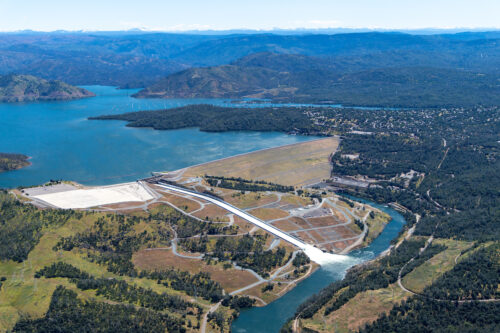
Sara Nevis / DWR
“California dam safety regulations are set for a significant update after the California Water Commission approved changes proposed by the state Department of Water Resources (DWR) Wednesday, April 15,2026. Under DWR’s Division of Safety of Dams (DSOD), the state proposed additions and modifications to existing dam safety regulations. The Division of Safety of Dams updated Articles Two, Five, Six and Seven to clarify the application process for dam alterations, repairs and removals, as well as time extensions and how unlawfully constructed dams are addressed. The changes also require the State Water Project to cover DSOD labor costs, eliminate hard copies of technical memorandums, allow written hearings and simplify the lien process. … ” Read more from KRCR.
Data centers’ water use is hard to track, raising concerns in the drought-prone West, study finds
“A new study led by the University of Illinois finds that much of that information isn’t publicly available, creating challenges for communities trying to plan in a region where water is already scarce. Data centers — the massive facilities that power everything from streaming to artificial intelligence — rely on water to keep their computer servers from overheating. But a fast-growing problem is how little is known about their total water use, said co-author Ana Pinheiro Privette. “If we don’t have the data, if we don’t have the transparency, we’re just walking in the dark right now,” she said. Pinheiro Privette said the gap includes both direct water use at facilities and indirect use tied to electricity generation. … ” Read more from KUNR.
Early California snow melt may lead to droughts, heightened wildfire risks
“California officials are figuring out how to proceed after finding no snow to measure in a recent survey. As SFGate reported, the California Department of Water Resources’ April survey of the Sierra Nevada snowpack came up empty. This year represents the second-lowest snow level on record, but it’s not due to a drought like in the all-time low 2015 season. “We’ve been having a warm snow drought this winter,” Andrew Schwartz, the director of the UC Berkeley Central Sierra Snow Lab, told SFGate. “… What we’re seeing this year is plenty of precipitation but warm temperatures, meaning rain instead of snow.” … ” Read more from The Cool Down.
The fire forecast: AI model accurately predicts the spread of wildfires in real time
“If you’ve ever been evacuated from your home during a wildfire, you’ll be aware of the terrifying unpredictability of the situation. From your location on the ground – rapidly gathering a few vital belongings and attempting to identify the best route to safety – there’s no way of knowing how fast a fire is growing or which direction it’s likely to take. That was the experience of Assad Oberai, Hughes Professor of aerospace and mechanical engineering at USC Viterbi. He was evacuated from his home during the Eaton Fire in January 2025 – one of the most destructive wildfires in Southern California history, burning for 24 days before full containment and leaving more than 9400 structures destroyed and over 1000 damaged. “Due to changing climate we’re seeing more of these extremely intense fires – those that burn very fast and very bright,” he reflected. “We have the data at our fingertips. It all comes down to how we put it to use.” … ” Read more from Viterbi School of Engineering.
Farmers gather to talk sustainability projects at dairies
“California dairy farmers have faced new challenges in recent years as they work to beef up their sustainability practices. About a decade ago, the state passed the Sustainable Groundwater Management Act and legislation setting a target to reduce livestock methane emissions by 40% of 2013 levels by 2030. “The reality of implementation is right here, right now,” California Department of Food and Agriculture Secretary Karen Ross said. Ross spoke to dairy farmers and other industry groups at this year’s annual California Dairy Sustainability Summit. The late March gathering, held in Visalia, focused on connecting dairy farmers with tools to save water and reduce methane emissions, and other ways to make their operations more sustainable amid changing state requirements. … ” Read more from the Patterson Irrigator.
New analysis shows ecological restoration in California’s state parks creates good-paying careers
“A new economic analysis of large-scale ecological restoration projects in state parks on California’s North Coast shows that investments in public lands do more than restore ecosystems — each year they create hundreds of good-paying, accessible jobs, open new career opportunities and produce tens of millions of dollars in economic benefits throughout the region. According to the analysis, restoration activities are on track to generate an estimated $140 million in annual economic benefit across Del Norte and Humboldt counties. The study was developed by the BMO Climate Institute, California State Parks, the Ecological Workforce Initiative and Parks California. “Restoration of state park ecosystems is one of the smartest investments we can make — for the land, for the economy and for the people who depend on these spaces,” said State Parks Director Armando Quintero. “These aren’t temporary jobs or short-term gains. This is about healing the land while building a skilled, local workforce that will help steward California’s parks for decades. None of that happens without the partnerships that made this work and analysis possible.” … ” Read more from the California State Parks.
How does elevation influence climate change impacts in mountains?
“Winter in the Sierra Nevada this year was defined by unusually warm temperatures, bringing storms with increased rainfall and less snow. As climate change continues to affect snowpacks in the Sierra Nevada mountains, researchers at the University of Nevada, Reno are working to answer how change is experienced at different elevations. Adrian Harpold, director of the Nevada Mountain Eco-Hydrology Lab, professor in the Department of Natural Resources & Environmental Science in the University’s College of Agriculture, Biotechnology & Natural Resources, and faculty at the Tahoe Institute for Global Sustainability, is part of the team of mountain ecohydrologists studying the flow of water in the Sierra Nevada. In an interview with the Hitchcock Project for Visualizing Science, Harpold answers questions to help better understand the effects of elevation-dependent climate change in the mountains. … ” Read more from Nevada Today.
In regional water news and commentary today …
NORTH COAST
Klamath Irrigation District one step closer to upgrades
“During a public meeting Thursday in Merrill, Klamath Irrigation District took another step toward a $22.8 million project that would modernize its infrastructure. KID leaders, irrigators, and staff from the U.S. Department of Agriculture’s Natural Resources Conservation Service in Oregon, and the Farmers Conservation Alliance held an information meeting at the Merrill Civic Center. The meeting location was chosen to accommodate impacted water users in the Merrill and Malin areas. The purpose of the meeting was to outline ongoing steps required before possible approval of a $22,798,000 project to upgrade KID’s existing pumping infrastructure at the Adams and Stukel pump stations and to pipe and line about 14.3 miles of canals and laterals within a portion of the system. … ” Read more from the Herald & News.
SIERRA NEVADA
Portola approves Grizzly Lake CSD water intertie study
“An unresolved 18-year-old water quality issue returned to the table during the Portola City Council’s March 25 meeting, when councilmembers considered moving forward with a feasibility study for a potential intertie — a pipeline connecting the city water system to Grizzly Lake Community Services District water infrastructure. The community services district asked the city to enter an agreement to evaluate potential options for the city to supply water to the district. In the agreement included with the council’s meeting materials, Teresa Garrison, a water resources engineer with district consultant GHD, said the purpose of a connection would be to improve the district’s ability to provide potable water to its Delleker Water System customers. … ” Read more from the Plumas Sun.
The secret lives of Tahoe’s critters
“Throughout the Tahoe Basin, four-legged and feathered creatures are living lives often unseen to their two-legged counterparts. However, eyes placed strategically around South Lake Tahoe and the West Shore in the form of wildlife cameras are uncovering their mysteries. The secrets these eyes unveil are helping wildlife managers understand some of Tahoe’s most elusive creatures and help protect them. The brains behind the research are Tanya Diamond and Ahíga Sandoval at Pathways for Wildlife. The pair is conducting a camera study of wildlife linkages across the landscape and along roads to identify areas that need wildlife crossings and other road augmentations. The five-year study is funded through the California Tahoe Conservancy. Currently in year two, Pathways for Wildlife has not only gained insight into wildlife movement, but also made other surprising discoveries that could shed light on the value of Tahoe’s ecosystem for sensitive species. … ” Read more from the Tahoe Daily Tribune.
SACRAMENTO VALLEY
A fighting chance for oaks
“If, as the proverb says, it takes a village to raise a child, wait until you hear how many people it takes just to temporarily save an 850-year-old oak tree. Or, rather, a few thousand trees, towering amid a sea of vernal pools and animal habitat. Consider Coyote Creek, for instance. The waterway, which meanders through a vein of privately held oak woodland in eastern Sacramento County, has become shorthand for a solar-energy project planned for the area. According to its developers at D.E. Shaw Renewable Investments (DESRI), the 1,400-acre Coyote Creek Agrivoltaic Ranch will generate around 200 megawatts of energy—enough to power 44,000 homes in the region, along with 100 megawatts of battery storage. The prospect of clean and accessible solar power in its backyard was enough to hook the Sacramento Municipal Utility District (SMUD), which entered a long-term arrangement in 2021 to purchase power from the Coyote Creek solar farm. … ” Read more from the California Native Plant Society.
NAPA/SONOMA
A hidden stretch of the Sonoma Coast is finally open to the public
“Along Northern California’s Sonoma Coast, finding stretches of shoreline that still feel truly wild and undeveloped is becoming increasingly rare. That’s what makes the Estero Americano Coast Preserve, just south of Bodega Bay, such a remarkable discovery. For nearly a century, this rugged piece of coastline remained closed to the public, hidden behind ranch gates and private land. Today, after years of conservation work, the newly opened 547-acre preserve offers something few people have experienced along this part of California: the chance to walk windswept coastal prairie and blufftop cliffs where the Pacific meets the narrow, winding waters of the Estero Americano. … ” Read more from Only in Your State.
Sonoma Water faces potential lawsuit over 5.5 million gallon sewage spill into Russian River
“A Sebastopol environmental watchdog group has threatened to sue Sonoma Water and the small sewer district it operates in Guerneville over alleged water quality violations tied to a massive, multi-day spill of wastewater during a heavy storm this past January. A March 18 letter from local attorney Jack Silver, representing the nonprofit California River Watch, accuses the county water agency and Russian River Sanitation District of violations of the federal Clean Water Act. The notice of intent to sue comes three months after an estimated 5.5 million gallons of wastewater, including untreated sewage, overflowed from the district’s Guerneville treatment plant into the lower Russian River over three days, making for the largest such spill in the river in more than four decades. The treatment plant itself did not flood during the storms, but the plant’s two storage areas — a main basin and the emergency storage pond — overflowed. The effluent drained about a quarter-mile south through a wooded area to the Russian River, bypassing homes. … ” Read more from the Santa Rosa Press Democrat.
BAY AREA
Marin to sunset Inverness flood district
“County officials are poised to disband West Marin’s flood control district spanning Inverness Ridge to Tomales Bay’s west shore. The dissolution of Flood Control Zone 10 would transfer the oversight of eight creeks and low-lying areas to the Marin Resource Conservation District, which would also receive $37,000 in remaining zone funds to continue periodic risk reduction efforts. “Flood zone 10 has not had a funding source since its inception,” said Dennis Rodoni, the District 4 supervisor. “Grants funded the zone so that after the 1982 floods in the Inverness area, the area could rebuild the water system and repair the watersheds.” … ” Read more from the Marin Independent Journal.
Oakley OKs temporary ban on data centers, a first for the Bay Area
“Oakley has become the first Bay Area city to impose a temporary ban on data centers as others in Silicon Valley continue to support the intensive energy needs of artificial intelligence. The Oakley City Council on Tuesday unanimously approved the 45-day moratorium. It will prohibit the city from accepting, processing or approving any land use applications for data centers. The pause also will give officials breathing room to “study, deliberate, and determine the acceptable scope” of data center land uses within the city, according to a staff report. City staff also have the opportunity to “evaluate impacts, gather public input, and ultimately draft zoning regulations” that will promote economic growth while protecting residents. … ” Read more from the San Jose Mercury News.
SEE ALSO: Bay Area city becomes first to ban data centers over power and water concerns, from the San Francisco Chronicle
Zone 7 eyes a new pipeline to secure area’s water future
“Zone 7 Water Agency, the Tri-Valley’s water manager and wholesaler, is considering a large pipeline to exchange water between the Chain of Lakes area and the South Bay Aqueduct to prepare for the harsher water landscape expected in the coming decades. Zone 7 staff, at a special April 1 Board of Directors workshop, shared a proposal for a 7-mile-long, 42-inch-wide pipeline that would run from Lake I and Cope Lake, located south of Stoneridge Drive between the cities of Pleasanton and Livermore, to the South Bay Aqueduct at the Del Valle Water Treatment Plant in south Livermore. A new pump station at the lakes would convey water uphill from the lakes to the aqueduct, while gravity could carry water in the opposite direction. The project would also include a new PFAS treatment plant at Del Valle. … ” Read more from the Livermore Independent.
CENTRAL COAST
Lawsuit alleges quarry operator Granite Rock Company illegally polluted Pajaro River
“The nonprofit groups Environment California and California Sportfishing Protection Alliance (“CSPA”) filed a lawsuit in federal court on Wednesday against Granite Rock Company (commonly known as “Graniterock”), alleging the company violated the federal Clean Water Act for more than 1,000 days. The nonprofits charge that, for years, the company has routinely discharged illegal levels of harmful pollutants — including dissolved solids, aluminum, iron and molybdenum — into the Pajaro River at its A.R. Wilson Quarry, a granite mining and processing facility in Aromas. The groups say that even after the state imposed “mandatory minimum” financial penalties upon Graniterock for previous infractions, the violations continue unabated. … ” Read more from Environment America.
Monterey Bay National Marine Sanctuary Foundation creates new nonprofit to maintain independence
“The Monterey Bay National Marine Sanctuary Foundation announced Wednesday the creation of the Monterey Bay Sanctuary Fund, a new local nonprofit that will replace the sanctuary foundation. Previously, the Monterey Bay National Marine Sanctuary Foundation was a chapter of the National Marine Sanctuary Foundation, a national organization dedicated to protecting marine sanctuaries across the United States — including the Monterey Bay National Marine Sanctuary, which runs from Marin to Cambria. Though the sanctuary itself will remain in place as it has since 1992, the Monterey chapter of the National Marine Sanctuary Foundation will be dissolved and replaced with the independent Monterey Bay Sanctuary Fund. The fund will be led by Hilary Bryant and Leon Panetta, who also co-chaired the Monterey Bay National Marine Sanctuary Foundation, and will be composed of similar leadership. … ” Read more from the Monterey Herald.
Ventura City Council approves eminent domain for water project
“The Ventura City Council voted 5-2 to use eminent domain to acquire a 2.43-acre vacant property adjacent to the Ventura Auto Center for the city’s planned water recycling project, VenturaWaterPure. Councilmembers Jim Duran and Alex Mangone voted against the resolution on April 14. “I’m not convinced we fully exhausted a good faith effort” to not use eminent domain, where a government can take over private property for public use, Duran said. Duran said he wanted to see more engagement with the property owner and questioned whether the site was the most viable. … ” Read more from the Ventura County Star.
SAN JOAQUIN VALLEY
Mother of two killed in Northern California tunnel collapse at Canyon Tunnel Project
“A person who was killed in a tunnel collapse at a construction site near Knights Ferry in Northern California has been identified as Twyla Capurro, officials said Wednesday. Capurro, a member of the Provost and Pritchard Consulting Group team advising the Canyon Tunnel Project, died after a rock fall inside the tunnel Tuesday afternoon, according to a statement from the South San Joaquin Irrigation District and Oakdale Irrigation District. The collapse happened around 3:42 p.m. at the project site in Calaveras County, just northeast of Knights Ferry (Stanislaus County), authorities said. … ” Read more from the San Francisco Chronicle.
SEE ALSO: Canyon Tunnel Project work suspended after deadly ‘rock fall’ inside tunnel, water agencies say, from KCRA
Kern River may flow through Bakersfield all summer despite wacky weather
“The Kern River watershed suffered a rapid snow melt during the record-breaking heat wave in March just like the rest of the state. But its upper elevation snow managed to hang on, according to a report by Miguel Chavez, the hydrographic manager for the Bakersfield Water Department. “We’re in good shape,” Chavez said during the City Council’s Water Board committee meeting on Wednesday, April 15. So good, in fact, that he said the city would run its water in the river bed through town possibly as early as next month for a minimum of six weeks, up to five months, depending on how the watershed’s hydrology continues to shake out. “It will be a good opportunity to display what the city can do with its supplies,” he said. … ” Read more from SJV Water.
SOUTHERN CALIFORNIA
County, EPA raise concerns about ‘imminent threat’ from Chiquita
“The Environmental Protection Agency ordered Chiquita Canyon Landfill to address “an imminent threat to surrounding communities” in a recent order, based on problems at the landfill seen during a recent tour of the facility. The issues were observed by EPA officials during a March 5 visit of Waste Connections’ Castaic property, which has been subject to oversight from the federal agency, among others, for more than three years. Regulators have said the problems there — a 60-acres-and-growing underground fire, and a sickening stench caused by more than a million gallons of stinky leachate it produces each week — could last for the next 10 to 20 years. … ” Read more from the Signal.
LA County will study data center’s appetite for power, water to meet AI demand
“Because large data centers use exorbitant amounts of electric power and water, and may produce health risks to nearby communities, the Los Angeles County Board of Supervisors will study the potential strain on public utilities and possible health effects with a report expected in four months. The board voted to move forward with a study on Tuesday, April 14, after the original motion by First District Supervisor Hilda Solis was watered down and amended. After hearing from many construction unions who said the building of these mammoth data centers produce jobs, Solis struck from her original motion on the table any possibility of enacting a moratorium on new centers proposed for unincorporated county communities. The amended motion also removed sections asking County Counsel to “explore all available legal actions” that would have laid the groundwork for lawsuits to prevent their construction or require remediation. … ” Read more from the LA Daily News.
IMPERIAL/COACHELLA VALLEYS
Dust storms have overtaken Coachella. Researchers say it’s a sign of what’s to come
“A powerful dust storm disrupted the first weekend of the Coachella music festival as blustery winds swept over the sprawling grounds and enveloped concertgoers in a whirlwind of desert sand. Several social media videos from last Friday night showed attendees navigating the festival grounds amid wind-tossed tents and wearing face masks to guard against the airborne dust. The weather conditions prompted the South Coast Air District to issue dust advisories for parts of the Coachella Valley, warning that strong winds could expose people to unhealthy dust levels. The dust storm caused festival organizers to cancel a highly anticipated performance by Italian EDM artist Anyma, who had been scheduled to perform Friday at midnight on the main stage. … ” Read more from the LA Times. | Read via Boiling Point Newsletter
Imperial Valley utility could decide fate of massive data center following key vote
“As a fierce debate has risen in the Imperial Valley over a massive planned data center in recent months, one agency has remained notably quiet. The Imperial Irrigation District (IID), the valley’s powerful public water and energy utility, has largely declined to take a stance on the proposed 950,000-square-foot computing complex. One of IID’s directors has come out against the project, but other district officials have largely declined to take a position. Now though, the agency could have the final say on the project. … ” Read more from KPBS.
SAN DIEGO
San Diego now has so much water that it’s selling it
“With the Colorado River in crisis, Arizona and Nevada are turning to an unconventional lifeline: the ocean water off California’s golden beaches. Both desert states are pursuing a deal with the San Diego County Water Authority to tap millions of gallons of fresh water produced by a Carlsbad ocean-desalination plant—the largest in North America—to help offset their reliance on the collapsing Colorado River. … Pending federal and other approvals, Arizona, Nevada and other Colorado River users could strike water-transfer deals with the San Diego utility. No water is literally shipped; rather, the parties would trade access rights to water sources. States would fund much of the estimated 56,000 acre-feet of water that the desalination plant produces annually in exchange for San Diego’s share of the Colorado River. The agreement could supply enough water for some 500,000 people. … ” Read more from the Wall Street Journal (Note: The article is unlocked. Minimize the subscription ask).
SEE ALSO: Building flexibility beyond 2026: Interstate water transfers in the Lower Basin of the Colorado River, from Maven’s Notebook
San Diego vs. Brawley: A 33-to-1 disparity in the cost of Colorado River water
“There’s a 33-to-1 disparity in the cost of Colorado River water that’s being utilized by the residents of San Diego, versus the residents of Brawley – both of which are in Southern California and are just 97 miles away from each other. The disparity stems from differences in two primary areas: water rights and conveyance. San Diego’s municipal water rates – which are the fourth highest for a major city in the United States, are also inflated by the city’s massive investment in recycling and desalination. … ” Read more from Coyote Gulch.
Thousands suffer nausea, delirium and other health issues from toxins in the Tijuana River
“The smell of rotten eggs permeates Steve Egger’s Southern California home, especially at night as the nearby Tijuana River foams up with sewage from Mexico before emptying into the Pacific Ocean. Egger, 72, says he and his wife have frequent headaches and wake up congested and coughing up phlegm. Their home is outfitted with a hospital-grade filtration system that cycles the air every 15 minutes. Despite those measures, “most nights we breathe in a horrible stench,” he said. “It’s awful.” … ” Read more from SF Gate.
SEE ALSO: Tijuana River sewage pollution raises San Diego health concerns as US Mexico cleanup deal advances, from Good Returns
County official demands Newsom declare state of emergency for toxic river
“San Diego County Supervisor Paloma Aguirre is asking California Gov. Gavin Newsom to declare a state of emergency to address the pollution coming from the Tijuana River, a long-running crisis that’s so bad the pollution has been visible from space. “The San Diego County Board of Supervisors has declared this an emergency 22 times and sent a letter to our governor asking him to follow suit,” Aguirre said on Instagram. “Governor [Gavin Newsom] it is time. We can’t keep passing the buck to another country even if they’re the source.” … ” Read more from SF Gate.
Along the Colorado River …
MET COMMITTEE: Building flexibility beyond 2026: Interstate water transfers in the Lower Basin of the Colorado River
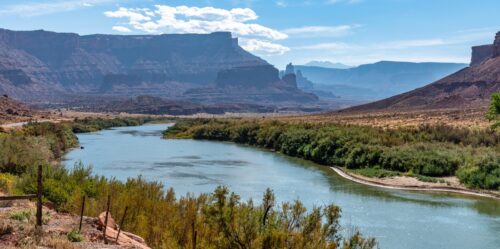 “Several years ago, both the Southern Nevada Water Authority and entities in Arizona each invested $6 million in Pure Water Southern California, anticipating that successful implementation of the project would entitle them to a share of the water produced. Currently, no regulations allow for the long-term availability of this type of exchange. It was anticipated that interstate transfers and exchanges would be included in the post-2026 guidelines; however, the status of the guidelines remains uncertain. Nevertheless, there remains strong interest in advancing interstate exchanges. At the April meeting of Metropolitan’s One Water and Adaptation Committee, Joe Vanderhorst, a retired annuitant working on Colorado River issues, briefed Committee members on a memorandum of understanding (MOU) that has been developed to initiate discussions on how to incorporate interstate transfers or exchanges to provide greater flexibility in Lower Colorado River operations. … ” Read more from Maven’s Notebook.
Feds to drastically alter Colorado River releases, Arizona officials warn
“To prop up a declining Lake Powell, the federal government plans to significantly cut Colorado River releases from Powell to Lake Mead and to boost releases from Upper Colorado River Basin reservoirs to the lake, Arizona’s top water officials say. The measures would be aimed at preventing Lake Powell from falling below the level at which Glen Canyon Dam, which adjoins the lake, would no longer be able to generate electricity that serves more than 5 million people in seven states including Arizona. At the same time, however, the reductions in water deliveries from Powell would significantly reduce the amount of water stored in Lake Mead — water that is delivered to Tucson and Phoenix, as well as other cities in Arizona, Nevada and California. … ” Read more from the Arizona Daily Star.
Arizona towns feel the strain as drought deepens, experts warn of tougher years ahead
“Drought conditions continue their grip on Arizona communities, and small towns like Kearny are already feeling the impacts. Some in the Valley believe things are going to get worse if we do not do enough. “I don’t think you can stop it, honestly. I think we’re going to run out of water,” Mesa resident Mike Gallagher. More than 70% of Arizona is currently experiencing drought, according to water experts. A lack of winter storms and below-average mountain snowfall have left reservoirs depleted — a critical issue for rural towns that rely almost entirely on those water sources. … ” Read more from Channel 15.
SEE ALSO: Arizona town facing severe water restrictions as supply could run out by summer, from Fox 10
Here’s how Utah can navigate the data center boom
“Utah is home to 48 operational data centers with over 920 megawatts of energy capacity. But both figures will see a sharp uptick in the coming years, with seven under-construction data centers set to add 2,600 megawatts of capacity, including 1,700 megawatts behind-the-meter or off-grid by 2028. “Data centers fuel our modern economy,” Natalie Gochnour, director of the Kem C. Gardner Policy Institute, said during a panel discussion Wednesday. “Investment in data centers is also driving stock market valuations, supporting innovations in artificial intelligence and promoting tech industry growth in Utah and around the nation and world.” … ” Read more from KSL.
Colorado: Will a super El Niño bring an epic ski season? It has before
“The big question, for all but diehard skiers and snowboarders, after a dismal ski season in Colorado due to historically low snowpack: Do you buy a discounted season pass before deals end in hopes of better snowpack next year? Depends on how much faith you have in the developing hype surrounding a potential super El Niño brewing later this year. If you’re curious about what a super El Niño is, catch up on our full explainer that recently published. If you just want the ski outlook, read on. … ” Read more from the Coloradoan.
In national water news today …
Thirsty data centers fuel local angst over water infrastructure
“Soaring electric bills are sparking grassroots anger at data centers, spurring promises from lawmakers and the Trump administration to make tech companies pay for their own energy costs. But there’s another big ticket item roiling the debate over data centers: Who will pay for water and sewer infrastructure? Data centers that use water to cool servers can consume millions of gallons during a single hot summer day. And as more projects tap into local water systems, some utilities are planning major expansions to handle dramatically increased demand. Water worries have spurred two communities in arid Arizona to reject data center proposals amid intense public pushback. And even in wetter areas, water costs have sparked public opposition to the booming industry that fuels artificial intelligence. But it’s unclear, experts say, how AI’s rise is affecting household water bills. … ” Read more from E&E News.
U.S. EPA announces $30 million to support water systems in small and rural communities
“The U.S. Environmental Protection Agency (EPA) has announced the availability of $30 million in grant funding to strengthen water services in small and rural communities across the United States. This newly available funding supports technical assistance and training to benefit small drinking water and wastewater systems and to help private well owners improve drinking water quality. The funding forms part of the agency’s Real Water Technical Assistance initiative (RealWaterTA). The RealWaterTA programme helps connect small and rural drinking water and wastewater systems with established services, including engineering and design expertise, operational support, workforce development and financial management. … ” Read more from Smart Water Magazine.
Map: PFAS legislation is on the table in these states
“The Republican leading the U.S. Environmental Protection Agency (EPA) may be walking back plans to regulate PFAS chemicals, but Republicans in the Wisconsin Legislature recently headed in the opposite direction. Legislation authored by GOP representatives in the state, signed into law on April 6, provides $133 million to address PFAS contamination. The money will fund testing and remediation, including replacement of contaminated wells. The PFAS family includes more than 10,000 water-, stain- and grease-resistant human-made chemicals used in consumer products ranging from paper and textiles to cosmetics. These so-called “forever chemicals” don’t occur in nature, and when they find their way into natural systems (including human bodies), they don’t break down. … ” Read more from Governing.
Rusting rivers: Alarm grows over uptick in acidic Arctic waters
“When ecologist Patrick Sullivan flew into the Salmon River in Alaska to conduct a vegetation study in the summer of 2019, he was excited about paddling down the pristine Arctic river. Before he and his colleague got there, however, the pilot warned that they might not see what John McPhee had described, in his best-selling book Coming Into the Country, as the “purest water I have ever seen.” Even then, Sullivan was not prepared for the river that eventually came into view. For as far as the eye could see, the water flowed bright orange. Research would later reveal that it was too toxic for fish, most other forms of aquatic life, and shoreline vegetation to survive. “It was a shock,” Sullivan recalls. “The pilot told us that [the river] was clear the year before. And we have photographic evidence that shows that it was clear in 2017.” … ” Read more from Yale e360.

