
Several news sources featured in the Daily Digest may limit the number of articles you can access without a subscription. However, gift articles and open-access links are provided when available. For more open access California water news articles, explore the main page at MavensNotebook.com.
On the calendar today …
- MEETING: California Water Commission beginning at 9:30am. Agenda items include consideration of supplemental funding for the Harvest Water Program; consideration of DWR’s dam safety regulations; and an outreach and engagement update. Click here for the agenda and remote access information.
- WEBINAR: A Conversation with John Watts, Water Policy Counsel for Senator Alex Padilla from 10am to 11am. Grab a cup and please join us for RWA’s virtual Coffee and Conversation with John Watts, Water Policy Counsel for Senator Alex Padilla. Hosted by RWA’s Manager of Strategic Affairs, Michelle Banonis, the discussion will examine how shifting federal priorities and budget decisions are shaping water policy across the West. The conversation will explore the outlook for federal water infrastructure funding, the outlook for Congressional appropriations, and how federal agencies are approaching water operations and environmental policy. With more than two decades of experience working on California water issues in the U.S. Senate and federal agencies, John Watts brings a unique perspective on how federal legislation, policy development, and funding decisions influence water management across the West. Click here to register.
- WEBINAR: Russian River Water Year 2026 Update – Rainfall and Supply Levels beginning at 12pm. This webinar will review reservoir conditions in the Russian River watershed, lessons learned from the water year so far, and the forecasts that will shape water supply planning for the rest of Water Year 2026. Register at https://bit.ly/water-year
In California water news today …
‘The river is deciding for us’: Shrinking flexibility and rising stakes on the Colorado River
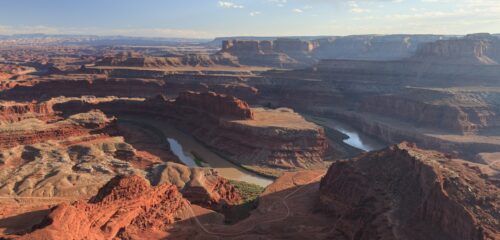 “Over the past several years, the Colorado River Basin states have been working, with limited success, on guidelines that will take effect next year when the current guidelines expire. But given the deteriorating hydrology, basin states’ discussions now focus on how to survive the record dry conditions. At the April meeting of Metropolitan’s One Water and Adaptation Committee, Shanti Rosset, Metropolitan’s Colorado River policy manager, discussed how the dismal conditions are shaping the negotiating landscape in real time. … ” Read more from Maven’s Notebook.
Kings County farmers caught between millions in back fees and being ghosted, again, by state water regulators
“A Kings County court is set to consider a request for a new injunction to stop the state from charging farmers $5.4 million in a variety of fees, including for groundwater they pumped two years ago. The motion for the injunction, filed by the Kings County Farm Bureau in its ongoing lawsuit against the Water Resources Control Board, is scheduled to be heard April 21. A case management conference in the underlying lawsuit is set for Wednesday, April 15. If the injunction is denied, farmers will likely have to pay the fees sometime after May 1 when they are required to begin reporting groundwater extractions. The fees are retroactive to 2024 after the region was put on probation for lacking a cohesive groundwater plan. If the injunction is granted, however, that could create a whole other set of problems for water managers, according to an email from Water Board spokesman Edward Ortiz. … ” Read more from SJV Water.
Rainstorms after wildfires: Erosion can threaten water quality for years
“When major storms arrive in areas recently burned by wildfire, scientists and engineers at the Water Boards pay particularly close attention—not because problems are guaranteed, but because fire fundamentally changes how landscapes respond to rain. That’s something Griffin Perea, a senior engineering geologist with the Central Valley Regional Water Quality Control Board, has seen repeatedly in Northern California watersheds. “Once a big fire happens, the impacts to water don’t end when the flames are out,” Perea said. “In many cases, the first few winters after the fire are when we see the most severe erosion and sediment movement.” … ” Read more from the State Water Board’s Ebb and Flow.
‘It’s a tough pill to swallow’: California salmon season plan draws mixed reactions from North Coast fishermen
“Commercial salmon season is opening off the coast of California for the first time since 2022 this May. The Pacific Fishery Management Council announced this week that it had elected to adopt recommendations for the 2026 fishing season on the West Coast. It’s an auspicious occasion for many, including Gov. Gavin Newsom, who announced the opening in a news release on Monday with the triumphant title “Let’s go fishing! Salmon fishing is back in California after more than 3-year closure.” This season, though, might be less propitious than hoped for fishermen on the North Coast, who have hoped their three years of sacrifice would pay immediate dividends. Salmon fishing will remain closed from the Oregon border to Point Arena (the Klamath Management Zone, or KMZ, and the zone immediately to the south of that) and further restricted from Point Arena to Pigeon Point, forcing fishermen on the North Coast to travel far north to Oregon or south to the central California coast to take advantage of a limited season. … ” Read more from the Eureka Times-Standard.
A gas that causes climate change is bubbling out of reservoirs
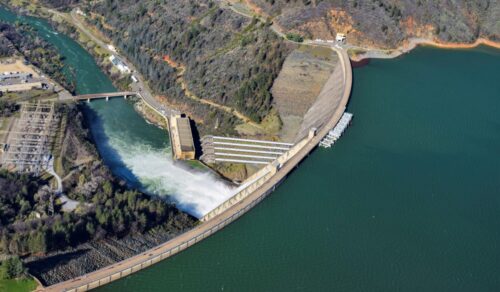 “Methane, the second-biggest contributor to climate change, is spewing into the atmosphere from the oil and gas industry, landfills and dairy farms. It’s also coming from another lesser-known source: reservoirs. As plants break down underwater, they form methane, which then bubbles to the surface. California doesn’t monitor how much is coming from these waters, but now several environmental groups are urging air regulators to find out, and some experts agree it’s important. “Reservoirs constitute an important source of methane,” said John Harrison, a professor at Washington State University’s School of the Environment who studies the greenhouse gases that reservoirs emit. … ” Continue reading at the LA Times. | Read via AOL News.
3 insights to accelerate corporate water stewardship in California
“In California, an economically critical region, the evidence of a mounting water crisis is clear. Over the past decade, a group of first movers has shown what is possible with corporate water stewardship. But participation from a broader and more diverse set of companies is needed to address complex, entrenched, and large-scale water challenges. Here are three recommendations to accelerate the pace and scale of corporate water stewardship actions in pursuit of a water-resilient future … ” Read more from the Pacific Institute.
Where water connects us: Across California’s waters, UC Davis scientists reveal how public research shapes safety, food systems, and resilience
“Their study systems are spread far and wide, from the inner delta to the coast and out into the open ocean, but their work is united in themes of change and community. Dr. John Durand, Dr. Hollis Jones, and Nicholas Trautman are all working to observe, understand, and apply science to a changing world. The impacts of this work reach back to all of us, wherever we are. Because what’s in the water doesn’t stay there: it flows into every community and every life through infrastructure, food security, public safety, ecological health and community resilience. When you think about science, you might picture a sterile lab. Clean white coats. Goggles. Pipettes. Machines humming in the background. And plenty of science looks like that — but it can also look like rugged instruments perched on coastal bluffs, built to withstand salt spray and winter storms. It can look like teams of life-jacketed researchers motoring across the Delta, sharing knowledge, ideas, and extra hands as they work with private landowners and agencies to balance the needs of many in a small, uniquely stressed ecosystem. It shows up on farms, too, that are working to feed a growing population using sustainable, science-informed solutions. … ” Read this storymap from UC Davis.
Bay and Delta’s most detailed elevation map ever reveals flood risks and more.
 “A new mapping effort has produced the first high-resolution elevation data across the entire San Francisco Bay-Delta Estuary. The sub-ten-centimeter vertical accuracy makes the data key tool to planning for flood risk, sea level rise, and habitat restoration. Elevation data across the Bay-Delta was historically collected through separate, project-by-project efforts. The result was uneven measurements, timing, and processing approaches. Without shared planning or pooled resources, coverage was fragmented, costs were higher for individual programs, and datasets were less consistent and useful across jurisdictions. … ” Read more from the San Francisco Estuary Institute.
Can we bring back the butterflies?
 “The Butterfly Grove at Pismo Beach used to sound alive before you even saw it. The first time I visited on a winter morning over a decade ago, I stood beneath the towering eucalyptus and heard a faint rustle, like distant rain, as thousands of monarch butterflies shifted their wings along the branches overhead. Through a docent’s telescope, tight clusters the size of pine cones resolved into overlapping black and orange wings, each butterfly hanging in suspended animation as it waited out the cold months on California’s Central Coast. This grove, framed by Monterey cypress and eucalyptus just off Highway 1, is one of more than 200 overwintering sites along the state’s coastline. Historically, it has been among the largest refuges for the western population of the monarch butterfly, known scientifically as Danaus plexippus. But when I returned this January, the trees looked strangely bare. … ” Read more from Reasons to be Cheerful.
California Forever poll suggests growing support for new city in Solano County
 “A new poll suggests people may be warming to the idea of a proposed new city in Solano County. The poll, commissioned by the California Forever group, shows growing support for the project. Project organizers said it shows a majority of voters surveyed feel the county’s economy is struggling. And when voters learned what the new city would bring with it, 59% said they’re in favor of it. “Everyone here knows someone who has lost a job or is losing a job,” California Forever CEO Jan Sramek said. “I think we feel privileged to be in a position to hopefully do something about it.” Sramek said he’s encouraged by the new numbers and is determined to make his vision a reality. He hopes to break ground in 2028. … ” Read more from NBC Bay Area.
SEE ALSO: California Forever: Poll shows Solano County voters support Suisun Expansion, Solano Shipyard, from the Daily Republic
Thinning forests to protect communities: lessons from Lake Tahoe’s Caldor Fire
“On August 30, 2021, disaster for Lake Tahoe’s south shore community seemed inevitable. The day before, fire fighters lost their tenuous hold on the raging Caldor Fire and it raced up the American River canyon toward Lake Tahoe, fueled by extreme winds and dry conditions, incinerating cabins and homes in its path. Now the fire reached the final ridgeline and began to march down the mountain toward the south shore and the Christmas Valley neighborhood directly below. Fire experts worried about a potential urban conflagration. Evacuated from my neighborhood in South Lake Tahoe, I watched from afar in horror and dread, imagining the worst for my community, my friends and neighbors, my home. And then, like a miracle, the fire jumped over Christmas Valley entirely. It spotted across the valley and stayed south of town, where it continued on up the high rugged ridge toward Nevada. The south shore – permanent home to around 30,000 people and visited each year by tens of thousands more – was somehow spared. … ” Read more from the National Forest Foundation.
In regional water news and commentary today …
NORTH COAST
Fort Bragg City Council expresses support and skepticism about state forest modernization bill
“The Fort Bragg City Council narrowly rejected a proposal Monday night to formally support Assembly Bill 2494, a measure designed to modernize management practices within the state’s demonstration forest system. In a 3–2 vote, the council declined to send a letter of support to the legislature for the bill, which has sparked intense local debate over the future of the 49,000-acre Jackson Demonstration State Forest. Councilmembers Tess Albin-Smith, Scott Hockett, and Vice Mayor Marcia Rafanan voted against the motion, while Mayor Jason Godeke and Councilmember Lindy Peters were in favor. … ” Read more from the Redheaded Blackbelt.
SIERRA NEVADA
PG&E to pay $80M in Mosquito Fire settlement with Placer County Water Agency
“Pacific Gas and Electric Company (PG&E) has agreed to pay $80 million to the Placer County Water Agency (PCWA) and the Middle Fork Project Finance Authority (MFPFA) to settle litigation resulting from the 2022 Mosquito Fire. The fire caused significant damage to PCWA’s Middle Fork American River Hydroelectric Project, interrupting power generation for about 6 months. As part of the settlement, PG&E has also committed to reconfiguring its electric system in areas where it connects with PCWA’s facilities to enhance the safety and reliability of the regional energy grid. … ” Read more from National Today.
Golden mussel threat close popular boat ramp for second straight year
“Due to the threat of the highly invasive golden mussel, Stanislaus National Forest (STF) officials will close the Beardsley Lake Boat Ramp for the next two months. Forest officials, at the request of the Tri-Dam Project, have issued Forest Order STF-16-2026-03, effective Wednesday, April 15, through June 15, 2026, which closes the Beardsley Lake Boat Ramp for all use. “Tri-Dam has been advised by the California Department of Fish and Wildlife that the golden mussel is a threat to Beardsley Lake and all its associated infrastructure for water delivery and hydropower production,” explained Forest Supervisor Jason Kuiken. … ” Read more from My Mother Lode.
SACRAMENTO VALLEY
New hiking trails coming near Battle Creek. What you’ll see
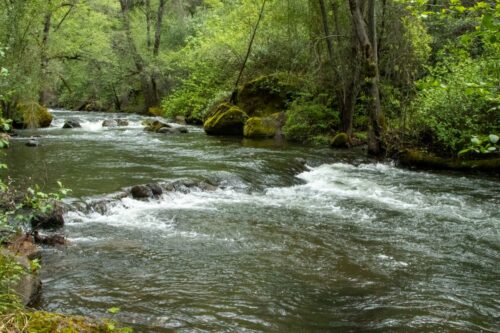
“Conservationists restoring a section of bank along the Sacramento River east of Cottonwood plan to install new hiking trails along Battle Creek. River Partners — a California waterway conservation organization out of Chico — announced it’s going to restore Battle Creek Ranch land along Jellys Ferry Road, near Coleman Fish Hatchery. The nonprofit acquired in November 2025 the 1,721-acre area on the east bank where Battle Creek flows into the Sacramento River, said River Partners spokesperson Sean Murphy. Averaging roughly 20 feet across, Battle Creek flows down a narrow canyon, according to Redding sporting goods store and guide service The Fly Shop: “It’s a rugged wilderness atmosphere, and little has changed in years in what was once home to Ishi and his California Indian ancestors.” … ” Read more from the Redding Record Searchlight.
Sacramento eyes utility rate increase to fill $2.2 billion infrastructure backlog
“The city of Sacramento faces a $2.2 billion infrastructure backlog to upgrade water and sewer infrastructure, and residents could see higher utility bills by next year to pay the bill. On Wednesday night, the city’s Utility Rate Advisory Commission voiced support for raising rates by the 2027-2028 fiscal year, and weighed in on marketing messages that might help tell residents why utility bills need to get higher. Per state law, Sacramento’s utilities are funded separately from the city’s General Fund and are predominately fueled by the monthly utility bills that residents pay for water, sewer and trash pickup. … ” Read more from PBS Abridged.
BAY AREA
Google launches wetland restoration project at its Mountain View campus in California
“Google has launched a wetland restoration and research project near its Mountain View campus in California. The project seeks to restore a degraded salt pond, known as Pond A1, sited right next to the Mountain View campus. The project is being undertaken alongside the South Bay Salt Pond Restoration Project and Ducks Unlimited. “For over a century, salt production has displaced Bay Area tidal marshes with industrial ponds, impacting water quality, biodiversity, and ecosystem health. Decades of restoration efforts are now reviving these degraded areas into thriving ecosystems that benefit local communities and wildlife alike,” said Randy Spock, carbon removals program lead at Google. … ” Read more from Data Center Dynamics.
Mountain View fined $1.2 million for Clean Water Act violations
“A federal judge ruled Mountain View and Sunnyvale owe nearly $1.2 million each in civil penalties for allowing sewage to flow into Stevens Creek and other waterways through its stormwater system, a violation of the federal Clean Water Act. “The violations here are serious and long-running. They involve actual pollution – not just paperwork violations – that can pose public health risks,” wrote U.S. District Judge Edward Davila, in a decision from March 31. The suit was filed in 2020 by San Francisco Baykeeper, a nonprofit environmental advocacy organization, against Sunnyvale and Mountain View for discharging bacterial pollution into area waterways which led to violations of water quality standards. … ” Read more from the Los Altos Town Crier.
Cal Water to lay more than 1.6 miles of pipe in Sunnyvale, Los Altos to improve reliability
“California Water Service has begun two major infrastructure projects in Sunnyvale and Los Altos aimed at improving water reliability and fire protection, Cal Water officials said. Crews are installing about 8,590 feet — roughly 1.6 miles — of new water main across both projects, along with dozens of new service connections and fire hydrants, Cal Water noted. … ” Read more from Local News Matters.
SAN JOAQUIN VALLEY
CEMEX’s plans could push the San Joaquin River to ‘edge of collapse’
“A concrete company’s plans to drill hundreds of feet into the San Joaquin River have landed it second on this year’s list of America’s Most Endangered Rivers. American Rivers made the announcement Tuesday, claiming that CEMEX’s Rockfield Project “could push the San Joaquin to the edge of collapse.” “This river makes life in our state possible,” said Patricia Flores, California Central Valley associate director for American Rivers. “A mine of such a proposed magnitude could push the San Joaquin to the edge of collapse, and once that damage is done, it is done. Why risk such an important waterway that millions depend on?” … ” Read more from Your Central Valley.
Clunky state groundwater portal grinds to halt as deadline for farmers approaches
“The state is demanding farmers in Kings and and parts of Tulare counties begin reporting how much groundwater they pump or face fines starting May 1. But it apparently doesn’t have a reliable system to take in that information. The State Water Resources Control Board’s reporting platform, known as GEARS, had already received criticism for being clunky and hard to navigate. So much so, that Water Board staff have scheduled several workshops starting later this week to help farmers learn the system. Then GEARS quit functioning altogether on Monday, according to an email forwarded by the South Fork Kings Groundwater Sustainability Agency (GSA) to farmers. “GEARS will be down temporarily. We’re sorry for any inconvenience this may cause,” the email from Water Board staff reads. … ” Read more from SJV Water.
This Tulare County community is working to get safe drinking water
“Following years of contamination, a Tulare County community will begin a project on Wednesday that will finally provide them with safe drinking water. On Wednesday, the community of East Orosi will break ground on a drinking water consolidation project with Orosi Public Utility District (OPUD). … ” Read more from Your Central Valley.
SOUTHERN CALIFORNIA
LA DWP: 2026-27 water supply forecast below average snowpack levels, proactive water management underway
“The Los Angeles Department of Water and Power (LADWP) announced the Eastern Sierra snowpack measured 24 percent of normal, providing key information to prepare for the coming runoff year and plan water deliveries to Los Angeles customers and the Eastern Sierra. Warmer temperatures prompted snowmelt and runoff to begin earlier than usual, however, this year’s below normal water supply forecast is still expected to meet close to 40 percent of the City’s annual demand. That represents approximately 81 billion gallons of water, enough to supply nearly 43,000 households for an entire year. “As climate change continues to strain water supplies across the West, water providers face the triple challenge of ensuring reliability, protecting the environment, and keeping water affordable for customers,” said Allan Marks, President, Board of Water and Power Commissioners. “These pressures are interconnected and long‑term, which is why we’re committed to a holistic, strategic approach — including more efficient use, water recycling, and groundwater replenishment — that strengthens operational resilience, supports sustainability, and ensures our city has safe, dependable drinking water for generations to come.” … ” Read more from the LA DWP.
Metropolitan board adopts two-year budget, commits to addressing aging infrastructure, future reliability
“Metropolitan Water District’s Board of Directors unanimously adopted today a two-year budget that includes funding to rehabilitate aging infrastructure and advance planning of a major new recycled water project, ensuring the agency is able to continue delivering safe, reliable water to Southern California communities. The approved operating budget, which totals $2.3 billion in 2026/27 and $2.4 billion in 2027/28, includes overall rate increases of 6.2% on Jan. 1, 2027 and Jan. 1, 2028, charged to Metropolitan’s 26 member agencies. It also anticipates a small increase to the voter-approved special tax Metropolitan levies on properties in its Southern California service area, amounting to an increase of approximately $12 a year for the average value home in the area. Importantly, the adopted two-year budget increases Metropolitan’s Capital Investment Plan by more than $300 million, for a total CIP of $1.025 billion. This increased investment will help Metropolitan address a backlog of critical projects to replace and refurbish its aging water treatment and delivery system, as well as continue planning and design work on the Pure Water Southern California program. … ” Read more from the Metropolitan Water District.
Metropolitan Water District allocates $150 million for wastewater recycling project planning
“The Metropolitan Water District of Southern California’s board has voted to allocate $150 million over the next two years to continue planning for its Pure Water Southern California wastewater recycling project. This project aims to provide enough local water to meet the daily needs of at least 1.5 million people when fully developed. Environmental advocates have praised the decision, emphasizing the importance of investing in sustainable local water supplies, particularly given the challenges facing the Colorado River and California’s snowpacks. Bruce Reznik, executive director of Los Angeles Waterkeeper, highlighted that Pure Water Southern California represents a resilient water solution that could help address ongoing water scarcity concerns. … ” Read more from Smart Water Magazine.
California leaders promised fire recovery in record time. Los Angeles isn’t seeing it.
“Soon after wildfires leveled two Los Angeles communities last year, public officials touted the record-setting speed of the recovery. California Gov. Gavin Newsom said it was happening “faster than ever before.” Los Angeles Mayor Karen Bass boasted it was “on track to be the fastest in California history.” That’s no longer true. A POLITICO analysis of local permitting data found just 34 homes have been built in Pacific Palisades and Altadena in the 15 months since the blazes, a figure that trails the rate of construction following two recent, similarly destructive fires in Northern California. The review also determined that owners of fewer than half of the 9,900 lots on which homes were destroyed have applied for permits for new houses. … ” Read more from Politico.
California Board of Forestry and Fire Protection expands efforts to stop invasive beetles in Southern California
“The California Board of Forestry and Fire Protection announced today that it has expanded what are called Zones of Infestation for invasive pests named shot hole borers and the goldspotted oak borer in Southern California with the goal of protecting susceptible trees and limiting associated tree mortality. “With the continued expansion of these invasive species, each Zone of Infestation is critical in the fight to limit their spread,” said Board Executive Officer Tony Andersen. “Through these zones, the Board facilitates CAL FIRE’s ability to enter into agreements with public and private landowners, and state and federal agencies to control and eradicate these invasive pests. This also allows us to foster greater outreach and education about the risks of firewood and green waste movement associated with spreading these pests to new locations.” … ” Read more from the California Board of Forestry and Fire Protection.
IMPERIAL/COACHELLA VALLEYS
Some Salton Sea residents skeptical new conservancy can improve environment after years of health issues
“Governor Gavin Newsom has announced the creation of the Salton Sea Conservancy, which is meant to restore the habitat in the area and improve air quality. It’s the state’s first conservancy in 15 years. “For too long, communities around the Salton Sea have carried the burden of environmental challenges and neglect,” Newsom said in a video statement. “Today, California is changing that.” Residents like Imari Kariotis say they’ve developed chronic health issues from living in the area. “I have breathing issues. So I am on this Nova disc in the morning. I have a rescue inhaler,” Kariotis says. She’s lived in the area for 30 years, and says affordability is what brings most people to the area. But, she says the government has neglected the region. … ” Read more from KESQ.
SAN DIEGO
Funding allocated for ‘critical’ fall dredging of Oceanside Harbor
“Federal funding has been allocated for a fall dredging of the Oceanside Harbor, which will be the second dredging this year and will allow the U.S. Army Corps of Engineers to transition the annual maintenance to a fall schedule. “I’m proud to have secured over $8.2 million in new federal funding to ensure the Oceanside Harbor continues to be a lifeline for our commercial users, our military, and the surrounding community,” said Rep. Mike Levin, D-San Juan Capistrano, in a news announcement Monday. “Regular dredge work is critical to keeping the harbor open,” Levin said. “This funding will ensure that all of those who use this harbor are able to do so safely.” For decades, the harbor entrance has been dredged each year in the spring, usually finishing in time to leave a fresh coat of sand on Oceanside’s nearby beaches in time for the Memorial Day weekend. … ” Read more from the San Diego Union-Tribune.
San Diego: America’s 4th most expensive municipal water
“Residents in the San Diego region currently pay between $3,707 and $5,179 per acre-foot of water, making San Diego’s municipal water the fourth most expensive in America – after San Francisco, Seattle, and Portland. For years San Diego relied almost entirely on a single source of municipal water: the Metropolitan Water District of Southern California. However, a severe drought in the early 1990s exposed the region’s vulnerability. This crisis sparked a multi-decade strategy by the San Diego County Water Authority to diversify its portfolio, effectively trading lower costs for long-term supply reliability. To break its dependence on Los Angeles, San Diego secured its own water rights through massive, high-cost agreements. … ” Read more from Coyote Gulch.
South Bay leaders urge state of emergency for toxic Tijuana sewage crisis
“Residents in the South Bay say the rolling chronic sewage crisis has gone from a nuisance to an acute health hazard. “These levels of Hydrogen Sulfide, which is a toxic gas that smells like rotten eggs, were very prevalent back then. Now those levels have exceeded those levels in 2024, and now the number of hours that we are exposed to those gases is longer,” said Paloma Agurrie, a San Diego Supervisor who lives in Imperial Beach. County officials say the toxicity of the Tijuana River has reached record levels, and local leaders are calling on the Governor and the President to declare a state of emergency, which would waive all local, state, and federal regulations, allowing emergency action to address the overwhelming sewage health disaster. … ” Read more from the Border Report.
Federal SBA official visits Imperial Beach as border sewage crisis takes toll on small businesses
“After more than 1,000 consecutive days of beach closures, small businesses in Imperial Beach say they are still struggling to recover from the ongoing sewage crisis along the U.S.-Mexico border. On Tuesday, U.S. Small Business Administration Deputy Administrator Bill Briggs visited the area, touring contaminated flood zones in the Tijuana River Valley and meeting directly with local business owners. “This is sewage from Tijuana, straight untreated for the most part,” IB Mayor Mitchell McKay told Briggs during the tour. The visit is part of a broader federal effort to address the decades-long cross-border pollution problem, which has impacted water quality, public health, and the local economy. Briggs pointed to the Environmental Protection Agency as the lead agency working with Mexico on a solution. … ” Read more from CBS 8.
Tijuana River sewage treatment resumes following heavy rain
“Wastewater pumps were back to cleaning sewage from the Tijuana River Tuesday morning after heavy rainfall across Southern California Sunday and Monday prompted water authorities to suspend operations. The South Bay International Wastewater Treatment Plant (SBIWTP) in San Diego, located along the Tijuana River just north of the U.S.-Mexico border, suspended pump operations at 3:11 p.m. PDT on Monday to protect equipment after heavy rain caused the plant to take on over 50 million gallons per day during the rain, according to the U.S. International Boundary and Water Commission (USIBWC). That wastewater was mixed with storm water, heavy sediment and trash. … ” Read more from Fox 5.
Along the Colorado River …
The American West’s water crisis has a governance problem
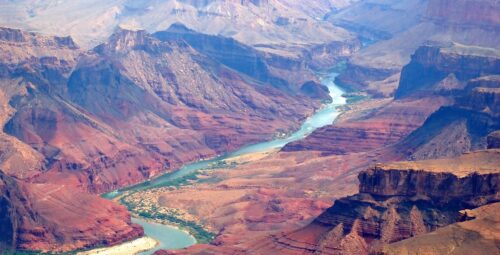
“The American West is drying out. Over the past two decades, a relentless cycle of drought, scorching temperatures, and record-low reservoir levels has accelerated aridification across the region. This winter marked one of the hottest and driest on record in the Western U.S., leaving snowsport enthusiasts grieving and water managers bracing for a strained summer supply. As climate impacts intensify, managing limited water resources has become one of the defining challenges of the century. At a conference hosted by Stanford’s Water in the West program, researchers, government officials, and water industry leaders from throughout the western U.S. emphasized a key message: the West’s water crisis is not only a climate problem, it’s also a governance problem. Solving it will require new policy design and political leadership as well as scientific innovation. … ” Read more from Stanford News.
A short-term fix for Lake Powell could be coming while Colorado River negotiations drag on
“Federal water managers are soon expected to announce a round of water releases that would prop up Lake Powell, the nation’s second-largest reservoir. Water levels there are near record lows, and they are expected to plummet even lower after a historically dry winter. The Bureau of Reclamation, the federal agency which manages dams and reservoirs around the West, is trying to protect Glen Canyon Dam in northern Arizona. If water levels there drop much lower, it could become impossible for the dam to generate hydropower. Farther drops could make it impossible to pass water into the Colorado River on the other side. … ” Read more from KJZZ.
Record-breaking March heat worsens Arizona drought outlook
“The hottest March in Arizona history undid the progress made by an exceptionally wet fall season, leaving climate experts with little hope looking into the summer. Each of the Grand Canyon State’s 15 counties recorded its highest March temperatures on record, which in Phoenix soared to 105 degrees Fahrenheit and broke 15 daily temperature records. In Lake Martinez, 30 miles north of Yuma along the Arizona-California border, a high of 110 degrees on March 20 set the record for the hottest March temperature in the United States. In an Arizona Drought Monitoring Technical Committee meeting held Tuesday morning, State Climatologist Erinanne Saffel said some areas of the state hit temperatures in March that shouldn’t have been reached until May. … ” Read more from the Courthouse News Service.
Nevada river makes ‘most endangered’ list as mining, solar threats mount
“The mighty-but-little-known Amargosa River gained dubious national recognition this week. Without intervention preventing mining and solar farm development, the river that makes life possible in one of America’s harshest deserts is in grave danger, the nonprofit American Rivers declares in its top 10 most endangered rivers list, which was released Tuesday. “The Amargosa River is a vibrant ribbon of life in one of the driest landscapes in North America, but right now its future is in a precarious position,” Chantel Dominguez, director of conservation partnerships for American Rivers, said in a statement. “While the river and ecosystems it preserves are fragile, the fight to save them has united a strong, bipartisan movement dedicated to protecting their life-giving resources.” … ” Read more from the Las Vegas Review-Journal.
Las Vegas water conservation efforts face drought test
“Las Vegas continues to boom with new neighborhoods, new residents, and new demand. But there’s one thing that’s not growing with it: water. 8 News Now took a closer look at how Southern Nevada is managing that balance and whether conservation efforts are really working. “We’ve had an exceptionally dry year on the Colorado River that is actually compounded by multiple dry years over the past quarter century,” Southern Nevada Water Authority’s Bronson Mack said. The white “bathtub ring” at Lake Mead tells the story of where the water used to be and how far it’s fallen. Mack told 8 News Now he expects Lake Mead to continue to decline as climate change and reduced snowpack in the Rockies shrink the Colorado River supply. … ” Read more from KLAS.
Commentary: Spoiled suburbanites clutching at their lawns put Lake Mead in peril
Kyle Roerink, executive director of the Great Basin Water Network, writes, “The Colorado River doesn’t care about the whims of wealthy gardeners in the Mojave Desert. Today, Lake Mead is one-third full. Within the next year, the reservoir’s level will be even lower, according to projections from the federal government. The 2026 winter is one of the worst on record in the Colorado River Basin — with flows about one-fifth of normal. There’s no spare water in the region. Water managers in Southern Nevada have challenges ahead — and most of them come from entities outside our state. However, some in Las Vegas are fighting — quite litigiously — to remove our commonsense water safeguards and contingency plans approved by the Legislature. A recent opinion column in The Nevada Independent describes Las Vegas’ water provider as waging a “war on grass” that’s killing trees and increasing heat in the desert. The piece’s author, local business owner Norm Schilling, is vocally supporting efforts of wealthy plaintiffs from tony neighborhoods who are suing the Southern Nevada Water Authority (SNWA). … ” Read more from the Nevada Independent.
Colorado snowpack tells a troubling story for water and wildfire in the West
“At 9,500 feet on an early spring day, Jennifer Kay would usually expect to find thick snow blanketing the CU Boulder’s Mountain Research Station at Niwot Ridge, an alpine monitoring and research site 25 miles west of Boulder. But this March, as Kay stepped out of her car, she found bare ground. The sleds Kay had planned to use to haul equipment had to stay behind. Instead, the scientist stuffed her gear into a giant duffle bag and led a group of students on a one-mile hike through dirt and only occasional patches of snow. Kay, professor in the Department of Atmospheric and Oceanic Sciences, was leading a field trip of nine students to a SNOTEL, or snowpack telemetry, station at Niwot Ridge. The station is one of over 900 snow monitoring stations located across the West, including more than 100 active sites in Colorado. … ” Read more from the University of Colorado at Boulder.
Southwestern Wyoming, other upper Colorado River Basin states, prepare for water shortages
“Gov. Mark Gordon joined fellow governors from other Colorado River headwater states Thursday to announce that a significant extra water release from Flaming Gorge is imminent. Dire water conditions in the region will likely require reducing water use, he warned. “Because of such diminished runoff, existing state laws in the Upper Division States [Wyoming, Utah, Colorado and New Mexico] require water users to face cuts to water rights dating back to the 1800s — these cuts are mandatory, uncompensated, and will have significant impacts on water users, including Upper Basin tribes, and local economies,” Gordon said Thursday afternoon in a joint press release with Govs. Spencer Cox of Utah, Michelle Lujan Grisham of New Mexico and Jared Polis of Colorado. … ” Read more from Cap City News.
In national water news today …
Your local fishing hole is getting browner, changing which fish species thrive and which ones struggle
“The lakes, streams and ponds you’ve visited for years are likely looking more brown than they used to. And people who are fishing those waters are likely catching different species and sizes of fish than in the past. Our research has identified a link between those two developments, which means that trout, bass, perch and whitefish may become less common in unstocked lakes. But pike and walleye anglers may be in for a trophy-sized surprise. In the past several decades, across much of northeastern North America and northern Europe, many freshwater ecosystems are getting darker, and they are changing in other ways as a result. … ” Read more from The Conversation.
The world ditched wasteful toilets, the US stayed behind
“If you’re flushing a toilet in the US, you’re probably accustomed to that characteristic whoosh as a jet of water fills the bowl and then siphons down the contents with a dramatic gulp. In Europe, on the other hand, the process looks much different. There’s almost always an option for a lighter or stronger flush, depending on what you need. And the water doesn’t suction, but instead simply shoves the waste down. For a true contrast, in Germany and the Netherlands, sometimes the waste lands on a ceramic shelf that sits directly above a pool of water. All this potty talk isn’t just impolite dinner table conversation. How our toilets flush has significant ramifications for water supply. It’s an increasingly urgent issue in the US as climate change worsens drought, and many communities confront water scarcity across the country, particularly in the western states. … ” Read more from DW.
Sweeping forest service overhaul puts public lands at risk, critics warn
“The US Forest Service manages 193 million acres of public land across the country, including some of the best hunting and fishing destinations in the world. The work requires a robust network of employees, offices, and administrative sites. But in late March, the Department of Agriculture (USDA) announced plans to eliminate all of the agency’s nine regional hubs. The move will also shutter 57 ecological research stations in 33 states. The plan, which the USDA called “common sense forest management” in a recent press release, has sparked a firestorm of criticism with public land advocates calling it a coordinated attempt to dismantle the storied agency. … ” Read more from Field & Stream.

