
Several news sources featured in the Daily Digest may limit the number of articles you can access without a subscription. However, gift articles and open-access links are provided when available. For more open access California water news articles, explore the main page at MavensNotebook.com.
On the calendar today …
- WEBINAR: NOAA Drought Seminar: Pathways of Ongoing Aridification in Southwest North America from 10am to 11am. Southwest North America is projected by climate models to undergo aridification, defined here as reduced soil moisture, during the coming decades. Richard Seager with Lamont-Doherty Earth Observatory of Columbia University will present on the use of an atmosphere model forced by plausible sea surface temperature (SST) scenarios to examine the mechanisms of aridification that connect, across seasons, the ocean, atmosphere, and land surface. This is the first event in the NOAA Drought Seminar Series, a new recurring monthly event dedicated to drought monitoring, prediction, and predictability. Click here to register.
In California water news today …
Commercial salmon fishing set to resume along California coast after 3-year shutdown
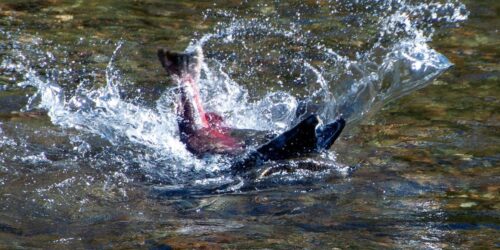
“Commercial fishing crews will be permitted to catch salmon along the California coast this year for the first time since 2022 as regulators plan to end a three-year shutdown after seeing an increase in the struggling salmon population. The Pacific Fishery Management Council, a body established by Congress that manages ocean fishing along the West Coast, is expected to vote Sunday on a plan that will reopen the salmon fishing season under strict limits in California. A sharp decline in the Chinook salmon population led to the ban on commercial fishing in 2023, 2024 and 2025, the longest shutdown in state history. The state’s fishing industry has been hit hard by the shutdown, which has driven many to leave their boats and look for other work. The planned resumption of fishing this spring will enable crews to catch limited numbers of fall-run Chinook salmon on certain dates. “The limited reopening is a lifeline. It gives you a little bit of money,” said Vance Staplin, executive director of the nonprofit Golden State Salmon Assn. “They’re not getting enough to sustain their businesses the way it was prior to this shutdown, by any means.”… ” Read more from the LA Times. | Read via AOL News.
Ocean salmon fishing comeback continues
“Significant improvements in key California salmon populations – specifically Sacramento River fall-run Chinook and Klamath River fall-run Chinook – will allow for more ocean salmon fishing opportunities this year. The California Department of Fish and Wildlife (CDFW) is pleased to announce that commercial ocean salmon fishing is back after being closed three straight years and that recreational ocean salmon anglers will have more opportunities in 2026. “Seeing our salmon populations recover is incredibly heartening and demonstrates what’s possible when we all work together — state and federal partners, tribes, sport anglers and commercial fishing interests, NGOs and others – to do what’s best for salmon,” said CDFW Director Meghan Hertel. “Salmon are part of the cultural fabric of California, and I’m delighted more Californians will have the opportunity to enjoy these magnificent fish whether that’s in the water, on the end of their fishing lines or on their dinner plates.” … ” Read more from the Department of Fish and Wildlife.
SEE ALSO: Commercial salmon fishing to open in California for the first time since 2022 as population rebounds, from the Associated Press
Rumors swirl of Louisiana’s role in California’s nutria invasion
 “A recent surge of nutria, the large orange-toothed rodents native to Louisiana’s swamps, in California has sparked speculation that the state’s political rival, Louisiana Governor Jeff Landry, may have played a role in maliciously introducing the pests to the Golden State. While the evidence is circumstantial, the author explores the plausibility of this ‘secret revenge’ theory. The nutria invasion poses a serious threat to California’s agriculture and ecosystems. If the rumors of Louisiana’s involvement are true, it would represent a troubling escalation of the ongoing political tensions between the two states, with potential legal and diplomatic consequences. … ” Read more from National Today.
SEE ALSO: Alleged Nutria Release Sparks Political Tensions Between Louisiana and California, from Merced Today
California’s northern Sierra sees significant snowfall. Here are the totals
“A spring Sierra storm dropped more than a foot of snow in parts of the northern Sierra, according to a report from the California-Nevada River Forecast Center. Snow totals from automated gauges showed the heaviest snowfall in Alpine County, where Leavitt Lake recorded 15 inches and Ebbetts Pass measured 13 inches. Carson Pass and Monitor Pass each saw 9 inches. In Placer County, Palisades Tahoe reported 14 inches of snow, while the Central Sierra Snow Lab measured 12 inches. Tahoe City recorded 5 inches. Nevada County also saw significant snowfall, including 12 inches at Independence Lake and 7 inches in Truckee. … ” Read more from the Sacramento Bee.
Are we heading for ‘super El Nino’ – and what could we expect?
“There is a high likelihood that the phenomenon known as “El Niño” will emerge this summer – and it could be exceptionally strong. A so-called “super El Niño” could supercharge extreme weather events and push global temperatures to record heights next year if it develops, according to experts. Meteorologists are keeping a close eye on the climate patterns developing in the Pacific Ocean that will enable stronger predictions about what’s to come in the year ahead. A strong El Niño would put 2027 in the running to break global heat records, and could produce a series of devastating effects, ranging from supercharged rainstorms to drought depending on the region of the world. While it’s not “a slam dunk”, climate scientist and media director for Climate Central Tom Di Liberto said during a briefing held on Thursday that the ingredients for El Niño are there. Forecasts in spring can’t account for unexpected changes that can happen over the summer, he added, but “the risk is high enough to be worried”. … ” Read more from The Guardian.
Walling off nature: Exploring the consequences of our urge to claim ecosystems
Andrew L. Rypel writes, “It’s one of the first memories. Getting into the little v-hull aluminum boat with Dad on the shoreline of a small sandy lake. It’s summer in northern Wisconsin and water lilies surround the deep parts of the lake like ancient ecological armor. There are only a few homes – no other boats. I’m probably only 6 or 7 years old, which would have made Dad around 45 years old then (roughly my age now). It was tricky getting the sturdy vessel into the water. The narrow landing was immediately adjacent to the road; just big enough to slip the small trailer into without jackknifing, provided the driver is sufficiently deft. Of course, Dad expertly negotiates the exchange and parks the empty rig along the narrow shoulder of the road. Soon, we are on the water, and the smell of nature hits fast – like a good drug. There is a pleasurable freshness to everything. It smells wild. Peering down into the water, I see the submerged cabbage plants shooting up from the depths. They look to my youthful eye like an army of plant aliens rising to attention (Fig. 1). What else lives down there? Soon, we’re fishing for whatever bites, and out of nowhere, my rod bends deeply. Several minutes later, the fish was in the boat. It’s a nice northern pike, and I was enthralled, with all of it. … ” Read more from the California Water Blog.
In regional water news and commentary today …
NORTH COAST
‘Nobody’s a hero in this’: Blue Lake landowner says city bullied her as she attempted to negotiate lease agreement
“The Blue Lake City Council voted to approve a resolution last week to authorize City Manager Jennie Short to close an agreement between the city and Richard McClure Trust trustee Erin McClure on an easement and lease for the city’s 400,000-gallon water storage tank. McClure, though, said that she had been “getting the runaround” as she attempted to finalize the deal last week; she said it has been a pattern for the city as she has attempted to negotiate a new agreement for the last 15 years. The city of Blue Lake made its first payment to McClure on a new 40-year lease and conveyance of an easement on Friday afternoon, McClure said. Over the course of that 40-year term, the city estimates that the deal will cost as much as $879,685. The city hopes to close escrow on the deal in the next month. … ” Read more from the Eureka Times-Standard.
SIERRA NEVADA
Where does federal funding in Tahoe come from?
“Plenty of different politicians represent the Lake Tahoe area: straddling two different states, with five counties and overlapping jurisdictions. On the congressional level, Tahoe is represented by Representatives Kevin Kiley and Senators Alex Padilla, Adam Schiff, Catherine Cortez Masto and Jacky Rosen. They’ve each provided millions of dollars and introduced different acts to protect the lake. But who’s responsible for what? … ” Read more from the Tahoe Daily Tribune.
BAY AREA
More gray whales are visiting San Francisco Bay, and many die there
“Nearly one-fifth of the gray whales that swam into the San Francisco Bay in recent years died there, mostly after colliding with ships, according to new research published on Monday. The study estimated that 18 percent of the whales that entered the Bay from 2018 to 2025 did not survive. And among those that died, at least 40 percent had sustained lethal injuries from ship strikes. In reality, the number of deaths is quite likely higher, the study’s authors and other experts said. “It’s really important to understand that these are just minimums that we were fully able to confirm,” said Josephine Slaathaug, a graduate student at Sonoma State University and the lead author of the paper, which was published in the journal Frontiers in Marine Science. … ” Read more from the New York Times.
SEE ALSO: Gray whales are dying in San Francisco Bay at an alarming rate – this isn’t normal, from The Conversation
Vista Grande Drainage Basin Improvement Project in Daly City to receive $34M loan from EPA
“The U.S. Environmental Protection Agency has announced a $34 million loan to help fund a major stormwater infrastructure project aimed at reducing flood risks in San Mateo County. The financing, provided through the Water Infrastructure Finance and Innovation Act program, will support the Daly City Joint Powers Financing Authority’s Vista Grande Drainage Basin Improvement Project, according to Daly City officials. EPA officials said the project will increase stormwater system capacity and reroute runoff to Lake Merced. Planned upgrades include replacing an undersized canal, enlarging a tunnel, improving the overflow system, and constructing a new outlet to the Pacific Ocean. … ” Read more from the San Mateo Journal.
CENTRAL COAST
$950M water project on drafting table
“A bold plan is being developed that would convey tens of thousands of acre-feet of brackish water — a mix of freshwater and seawater — from near the coast to where it would be treated and then injected in front of an encroaching underground plume of seawater licking at the heels of the Salinas and Castroville areas – intrusion that threatens the major economic driver of Monterey County. The project is called the Brackish Groundwater Restoration Project. When or if implemented, it aims to dramatically help stem seawater intrusion that is threatening segments of the $11.7 billion agriculture industry in Monterey County. It would also help raise the aquifer levels in some seriously overdrafted groundwater basins to a sustainable level, as required by law. “There is no issue more critical than water this year,” said Monterey County Supervisor Glenn Church, who represents the northern end of the county. “The decisions made in the coming months (on moving ahead with projects) will impact the entire county for the next 30 to 50 years. This is a matter that will impact everyone — residents, businesses and agriculture. We have to get it right. The consequences of not doing so are dire.” … ” Read more from the Monterey Herald.
SAN JOAQUIN VALLEY
Arvin water projects expand with federal support, focus on groundwater recharge
“Efforts to strengthen water storage and delivery systems in California’s Central Valley are gaining momentum, as federal and local leaders emphasize the need for groundwater recharge projects and long-overdue infrastructure upgrades. For communities like Arvin and Lamont, water largely comes from underground sources, making stable groundwater levels essential. “It makes the water levels sustainable so that groundwater pumping doesn’t become so expensive for water districts,” said Raul Barraza Jr., general manager of the Arvin Community Services District. … ” Read more from Channel 23.
SOUTHERN CALIFORNIA
‘Strong’ El Niño may be brewing. Here’s what it could mean for Southern California
“After two winters of La Niña, an official “El Niño Watch” is underway, the National Weather Service Climate Protection Center said Thursday. In its latest ENSO Alert System Status report, the Climate Protection Center said there’s a 61% chance that an El Niño is “likely to emerge” between this May and June, and “persist through at least the end of 2026.” The agency’s outlook also notes there’s a 25% chance that the Pacific seasonal variation could develop into a “strong” or “very strong” El Niño this winter. “The possibility of a very strong El Niño largely depends on the continuation of westerly wind anomalies across the equatorial Pacific throughout the Northern Hemisphere summer months, which is not assured,” the Climate Protection Center’s report said. … ” Read more from NBC 4.
LA County cities weigh the data center question in the face of AI surge
“A nationwide expansion of controversial and resource-guzzling artificial intelligence data centers has reached Los Angeles County, and the wave has cities in the region grappling with questions over their impact. Some municipalities have acquiesced to this latest tech drive, while other regional communities are pushing back against and, in some cases, halting proposed projects, citing their potential environmental impacts, the costs of powering them to utility customers and other trade-offs. In some communities, for instance, data center proposals compete with the urgent need for affordable housing, which in urban, densely populated Los Angeles County can make them a tough argument for developers and city officials who want to attract them and who say they are vital to powering the new tech boom. … ” Read more from the LA Daily News.
Stingrays are stinging more Southern Californians. Here’s why
“I recently had the excruciatingly painful experience of being stung by a stingray while swimming at Bolsa Chica State Beach. It was my second time being stung, so as soon as I felt the familiar stab in the bottom of my foot, dread arose. But at least this time I knew what to do. I hollered at my friend in the water — “I got hit by a stingray!” Ironically, I’d just been telling her about the “stingray shuffle” — the strategy to shuffle your feet as you enter the water and therefore scare any nearby stingrays away. I swam as fast as I could to the sand and sprinted to the nearest lifeguard tower. Already, the pain was sharp in my foot, and I could feel it pulsing up my leg, growing more intense. I took deep breaths and tried to keep my face stoic. Now, you lucky folks who have never been stung may be smirking at my desperation. But if you know, you know — a stingray’s sting is no joke. … ” Read more from the LAist.
IMPERIAL/COACHELLA VALLEYS
Borrego Springs give us a look at the agricultural use of groundwater in the California desert
“For decades, the desert town of Borrego Springs – in eastern San Diego County, thrived upon what appeared to be an unlimited supply sunshine and groundwater. Lacking an alternative supply of water this isolated community was entirely dependent on the prehistoric groundwater that was lying beneath it. This finite resource acted as the lifeblood for two competing interests: a flourishing agricultural sector and a steady expansion of residential and resort development. … ” Read more from Coyote Gulch.
The Salton Sea is a paradox
“The Salton Sea is a paraodox for a multitude of reasons. The most striking is that the Salton Sea can exist only as long as the Imperial Valley continues to drain 1.3 million acre feet of salt and pesticide-laden runoff into it, annually. That’s exactly how much the Sea loses to evaporation every year. But ironically, the better the Imperial Irrigation District gets at conserving Colorado River water, the faster the Salton Sea will dry up. … The Imperial Valley functions as a critical “winter salad bowl” for the United States, yet this massive agricultural output creates a severe environmental health paradox for its residents. … ” Read more from Coyote Gulch.
Along the Colorado River …
New federal plan for sharing the Colorado River could come in April
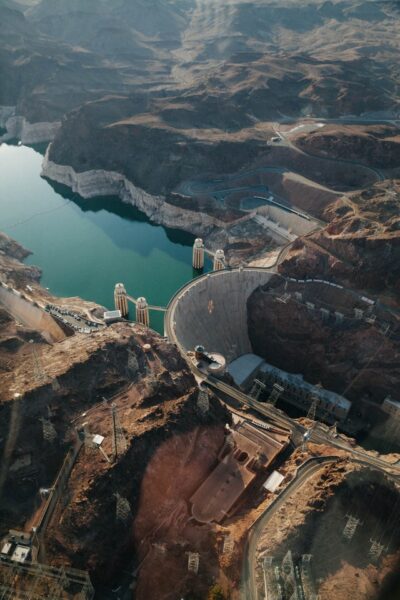 “Arizona’s future share of Colorado River water could be decided within weeks as the federal government prepares to release a final plan for how to divide the shrinking river after states failed to reach their own agreement. Interior Secretary Doug Burgum said the plan could be ready by the end of April. “We’re working on the final details of that, we probably only have two weeks left,” Burgum told KTAR News this week. The current rules for managing the river expire before the start of the new water year on October 1, meaning a replacement plan must be in place before then. … ” Read more from KTAR.
Conservation isn’t enough for the Colorado River’s drier future, ASU water expert says
“A new article by an Arizona State University water expert argues that existing conservation measures are a step in the right direction, but may not be effective enough in the face of climate change. Dave White, director of ASU’s Global Institute of Sustainability and Innovation, says city leaders around the Colorado River basin need to think bigger to plan for a future in which the river has less water to go around. “We have to think about a reset, a recalibration,” White told KJZZ, “to have an economy and a lifestyle in the southwest that lives within the means of the new normal of water availability in the Colorado River.” … ” Read more from KJZZ.
The future of the Colorado River
“The Colorado River provides water to 40 million people and about 5.5 million acres of irrigated farmland. There’s only so much water to go around, so how to divide up the water has been hotly disputed for over a century. The previous agreement has come unstuck, but finding a replacement has proved devilishly difficult. A century ago, we thought we had the answer.. The 1922 Colorado River Compact was negotiated under the aegis of Herbert Hoover, who was then a cabinet secretary. It allocated water among the seven states that rely on the river. It requires the upper basin states (New Mexico, Utah, and Wyoming) to leave at least 7.5 million acre-feet (maf) in the river (averaged over ten years). That would have been a roughly equal split between Upper and Lower Basin states based on recent experience at the time of the Compact. Congress approved the Compact immediately, although Arizona waited years before ratifying. I had always assumed that the Compact was the same as the “Law of the River,” which is the law governing the Colorado. It turns out, however, there were a lot of issue left unsettled (or at least disputed). … ” Read more from Legal Planet.
Drought and low snowpack raise wildfire risk as Trump’s budget creates a funding puzzle
“With extreme drought gripping most of Utah and spring heat melting reserves of mountain snow to an all-time low, the state is staring down a tinder dry wildfire season that could come with big changes to its federal funding. Maps of the national wildfire forecast show Utah covered in red by July — signifying higher than normal risk throughout the state — and with southern Utah getting there by June. “It has the potential to be a real season,” said State Forester Jamie Barnes, emphasizing “real” as she spoke, “but we’re going to make it through it, and we’re going to make sure that we do all we can to keep Utah safe.” Barnes and her teams in the Division of Fire, Forestry and State Lands are heading into the summer with more money for prevention efforts thanks to a state law passed last year. But they’re also keeping an eye on Washington, D.C. President Donald Trump is proposing budget cuts to forestry programs, along with research and development, as his administration moves to create a new, centralized fire agency and relocates the U.S. Forest Service headquarters to Salt Lake City, a move celebrated by state leaders and condemned by environmental groups. … ” Read more from the Utah News Dispatch.
Flaming Gorge could be tapped to make up for ‘horrible’ Colorado River levels
“This could be the year that a brewing crisis along the Colorado River comes to a head. Roughly a third of Flaming Gorge Reservoir could be drained to make up for increasingly desperate downriver water shortages. “Things are bad in the Upper Green (river drainage). They’re horrible everywhere else,” said Wyoming Senior Assistant Attorney General Chris Brown. The pressing problem is keeping Lake Powell, on the Utah-Arizona state line, from getting catastrophically low, he said during a meeting of the Wyoming Colorado River Advisory Committee on Friday. … ” Read more from Cowboy State Daily.
Flight data offers another look at Colorado’s snowpack. The view is grim.
“In a Colorado Mesa University ballroom Tuesday, about 200 farmers, water professionals and community members watched as the Colorado River District staff flipped through graph after graph during a presentation. Each new slide had one fundamental message: Colorado and downstream states are heading into summer with epicly poor water conditions. “If there’s anything in your memory about a dry year that you’ve seen, a warm year that you’ve seen, 2026 is beyond all of that,” said Raquel Flinker, the district’s director of interstate and regional water resources. … The Airborne Snow Observatories (ASO) teams found themselves in a flurry of activity in March. ASO did 18 flights in seven days across Colorado, from St. Vrain and Big Thompson watersheds in northern Colorado to the Rio Grande, Boulder Creek, Roaring Fork and Dolores watersheds in central and southern parts of the state. What they found was more grim data. “It’s been pretty frantic,” Deems said. … ” Read more from the Colorado Sun.
Southwestern Wyoming, other upper Colorado River Basin states, prepare for water shortages
“Gov. Mark Gordon joined fellow governors from other Colorado River headwater states Thursday to announce that a significant extra water release from Flaming Gorge is imminent. Dire water conditions in the region will likely require reducing water use, he warned. “Because of such diminished runoff, existing state laws in the Upper Division States [Wyoming, Utah, Colorado and New Mexico] require water users to face cuts to water rights dating back to the 1800s — these cuts are mandatory, uncompensated, and will have significant impacts on water users, including Upper Basin tribes, and local economies,” Gordon said Thursday afternoon in a joint press release with Govs. Spencer Cox of Utah, Michelle Lujan Grisham of New Mexico and Jared Polis of Colorado. … ” Read more from Cap City News.
Arizona lawmakers seek to stop AG from suing groundwater pumpers
“Republican lawmakers are moving to clip the wings of Democratic Attorney General Kris Mayes, with one legislator calling her a “bully.” Legislation approved by the Republican-controlled House and Senate would allow those who think they have been damaged by an improper “nuisance” or “consumer fraud” lawsuit to sue the attorney general for damages — everything from legal fees to lost profits and a reduction in the value of a business. It would not be absolute. The action the attorney general took against them would have had to be dismissed or found to have no merit. And the person filing the suit would have to show that the attorney general knew the action lacked merit, or, at least, that she publicized the case. Benson Republican Rep. Lupe Diaz said the legislation should be enough to restrain any overly anxious attorney general from going after businesses by using nuisance claims. … ” Read more from the Arizona Daily Star.
In national water news today …
How America’s wastewater systems became conduits for “forever chemicals”
“On a hot, sunny day in August of 2024, Erin Donmoyer waded into the east branch of South Carolina’s Pocotaligo River and removed a “PFASsive” sampling device from its protective case. The gadgets are designed to measure PFAS concentrations in waterways. … She installed two of these devices in the Pocotaligo that day, placing one upstream of Sumter, South Carolina’s wastewater treatment plant, and another downstream of it. There the devices remained for 33 days, quietly accumulating whatever PFAS flowed past. When she analyzed the results later, Donmoyer was surprised. As a riverkeeper at Winyah Rivers Alliance — a Conway, South Carolina-based nonprofit working to protect, preserve, and revitalize the Winyah Bay watershed of the Carolinas — Donmoyer stewards two of the region’s major river systems: the Black River and the Sampit River. (The Pocotaligo is a tributary of the Black River.) Of these two river systems, Donmoyer expected the Sampit, lined with paper mills and chemical plants, to be the one with elevated PFAS levels. “But it really wasn’t,” Donmoyer says. “In terms of PFAS, the Black River is the major problem child out of my two.” … ” Read more from Earth Island Journal.
How Lee Zeldin shifted the mission — and the message — of the E.P.A.
“Lee Zeldin does not speak like any other Environmental Protection Agency administrator in recent history. The job of the E.P.A. chief is to protect human health by safeguarding “the air we breathe, the water we drink and land that grows our food,” as the agency’s founding charter puts it, and most administrators have talked about their work in those terms. Mr. Zeldin, though, speaks more about supporting industry and exporting fossil fuels than about protecting the environment. A New York Times analysis of thousands of public communications by E.P.A. administrators, including news releases, social media posts, television appearances and podcast interviews dating back three decades, shows that Mr. Zeldin has fundamentally shifted both the agency’s mission and the words he uses to describe it to reflect President Trump’s desire to maximize economic development and industrial activity while downplaying environmental consequences. … ” Read more from the New York Times.

