
Several news sources featured in the Daily Digest may limit the number of articles you can access without a subscription. However, gift articles and open-access links are provided when available. For more open access California water news articles, explore the main page at MavensNotebook.com.
On the calendar today …
- PUBLIC WORKSHOP: Second Statewide Agricultural Expert Panel Draft Report from 2pm to 6pm. Water Board staff will accept comments on the Recommendations of the Second Statewide Agricultural Expert Panel Draft Report. A presentation will be provided, followed by the opportunity for verbal comments. Click here for the meeting notice.
In California water news today …
Storms to bring rain, thunder and Sierra Nevada snow to California
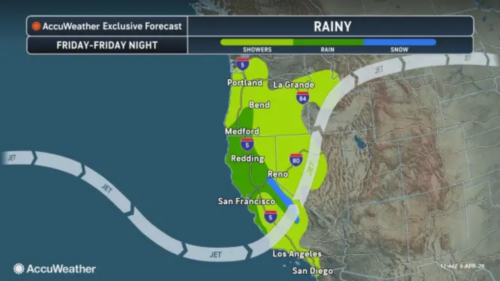 “A pair of storms will move into California and then the Southwest through this weekend, bringing much-needed rain, gusty thunderstorms and the risk of travel-snarling snow in the high elevations along Interstate 80. The first, and warmer, of the two storms will move inland across California through Friday then weaken over the interior West this weekend. Most of its moisture will be wrung out over California as showers, with only a bit of snow over the highest terrain in the northern Sierra Nevada and Siskiyous. Showers can occur at any time in San Francisco through the weekend due to both storms, with the second moving ashore in Northern California later Saturday before drifting inland Sunday. The first showers may not reach Los Angeles until Friday afternoon, while San Diego should remain dry until Friday night. … ” Read more from AccuWeather.
Super El Niño: What it could mean for US weather, global heat and daily life
“A developing El Niño could strengthen into a significant “Super El Niño” event in the months ahead, raising the stakes for everything from summer rainfall patterns to global temperatures and food prices. AccuWeather forecasters say the odds of El Niño are increasing, with expectations pointing toward at least a moderate event and more likely a strong one that peaks late in hurricane season into early winter. Impacts could begin to emerge as soon as this summer. El Niño occurs when sea surface temperatures rise at least 0.5 degrees Celsius (0.9 degrees F) above average across the central and eastern equatorial Pacific. AccuWeather Long-Range Forecaster Paul Pastelok said the process is tied to weakening trade winds, which limits the upwelling of cooler water and allows surface waters to warm. … ” Read more from AccuWeather.
SEE ALSO:
- Very strong El Niño could emerge. Here’s what California expects, from SF Gate
- California may be in path of a ‘super’ El Niño. It could bring rain, floods, coastal erosion, from the LA Times
Snow drought current conditions and impacts in the West
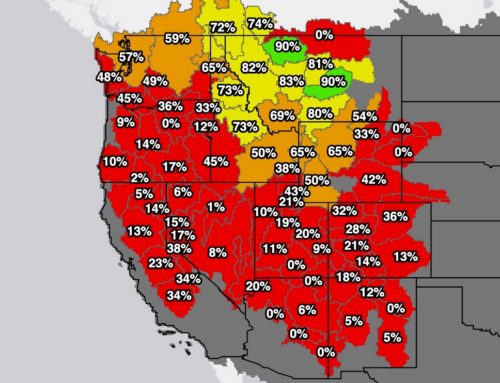 “Snowpack depth and water content typically peak around April 1, making the snow water equivalent (SWE, the amount of liquid water contained in the snowpack) on this date a primary indicator of spring runoff. This year, Arizona, Colorado, Idaho, Nevada, New Mexico, Oregon, Utah, and Wyoming all set new record-low April 1 SWE values since SNOTEL monitoring began in the 1980s. California recorded its second-lowest April 1 SWE value. Snow usually accumulates in March, but the record-shattering heat wave coupled with abnormally dry conditions led to rapid and early melting of an already historically low snowpack across most of the West. The exceptions are Washington and parts of Idaho and Montana. California River Basins experienced their driest March on record. The Colorado River Basin (Upper and Lower) experienced its warmest March on record, at 13.7 °F warmer than the normal. … ” Read more from NIDIS.
A snowless Sierra renews California water worries – and drags AI back into the chat
“The scene at Phillips Station in the Sierra Nevada looked dour on April 1, as a small team of engineers in matching blue windbreakers meticulously probed the ground, measuring the scattered patches of winter snow that remained. The results of the Department of Water Resources’ (DWR) April survey were stark, even to the untrained eye. An early-season March heat wave and recent rain had mostly melted the station’s frosty base, making this only the second time on record in 75 years that no measurable snowpack was found at the site. Historically, this is the time of year when the snowpack volume reaches its peak. The melt from the Sierra supplies about 30% of the state’s average water, and the survey is a key indicator for water managers as they prepare to allocate resources. … ” Read more from State Affairs (note: free registration required).
Someone may have maliciously caused a huge rodent invasion in California
 “For years now, California has been waging war on nutria, a highly destructive 20-pound rodent native to South America that poses a serious threat to fragile wetlands and endangered species. And now, wildlife officials say it’s possible that someone intentionally reintroduced them. According to an April 7 news release from the California Department of Fish and Wildlife, genetic sequencing has revealed that the state’s nutria populations are most genetically similar to populations in Oregon, suggesting that, “California’s current nutria invasion was the result of intentional reintroduction, with the original source animals likely being transported from the central Oregon population.” … ” Read more from SF Gate.
SEE ALSO: Giant rodent that could devastate California wetlands was ‘deliberately’ reintroduced to population, experts fear, from the Independent
Coalition urges lawmakers to reject bill threatening water oversight
“A coalition of Tribes and environmental advocates has submitted a letter to the California Assembly Committee on Water, Parks, and Wildlife opposing AB 2215. The bill, which seeks to extend the Department of Water Resources’ water rights permit for the State Water Project until 2085, is being criticized for bypassing existing regulatory processes managed by the State Water Resources Control Board (“Water Board”). “This bill would set an extremely dangerous precedent,” said Morgen Snyder, Director of Policy and Programs at Restore the Delta. “Protecting our waterways and the communities that depend on them requires maintaining rigorous standards for all water rights holders. Granting exemptions that override existing processes creates a system that favors powerful users at the expense of ecosystem and community health.” … ” Read more from Restore the Delta.
A Southern California lawmaker wants to ban ‘forever chemicals’ on state crops
“Home to the nation’s largest agricultural industry, California produces nearly half of the country’s vegetables and more than three-quarters of its fruits and nuts. And, on average, 2.5 million pounds of pesticides containing toxic perfluoroalkyl and polyfluoroalkyl substances (PFAS) – so-called “forever chemicals” – get sprayed on these crops every year, according to some environmental advocates. To address growing concerns about the adverse impacts these substances have on the environment and human health, Assemblymember Nick Schultz, D-Burbank, has introduced a bill to phase out the use of PFAS pesticides in the state. … ” Read more from the LA Daily News.
SEE ALSO: Lawmakers push to phase out PFAS ‘forever chemicals’, from KGET
California Ag Secretary Karen Ross discusses future of farming, water, and regulation challenges
“Ross emphasized that agriculture in California is at a critical moment, balancing economic pressures, regulatory demands, and long-term sustainability goals. She noted that farming today requires navigating a complex landscape of competing interests across a state with more than 39 million residents. “Everything in farming is difficult right now,” Ross said. “The job of government is to balance… a little bit of this and a little bit of that.” One of the biggest issues discussed was water—an ongoing concern for growers across the state. Ross pointed to changing weather patterns, including reduced snowpack reliability, as a major factor impacting water availability. While some argue the issue is tied to infrastructure, she stressed that shifting hydrology must also be considered. “Our hydrology looks like it’s changing,” she said. “We must do a better job with water storage. It’s that simple.” … ” Read more from Ag Net West.
Trump energy chief attacks California oil and gas policies in Long Beach
“Last year, Long Beach celebrated a deal Synergy Oil & Gas negotiated with a regional wetlands authority in Southern California. A former oil field, 154 acres of land in the city of Long Beach would become public wetlands; the company would gain a more valuable property and environmental credits. But a state law meant to keep wells away from homes and schools thwarted the company’s plan for more drilling – and now the wetlands deal has become fodder for the Trump administration’s war against California Democratic energy policies. U.S. Energy Secretary Chris Wright traveled to the property, owned by Synergy Oil & Gas, on Wednesday with a message to Gov. Gavin Newsom: state policies are increasing costs for Californians, and the Trump administration will be challenging them. Wright’s visit to the Synergy site comes just a week after a U.S. district court denied the U.S. Department of Interior’s request to stop enforcement of California’s setback law while a broader legal challenge is pending. Pointing to the deal, Wright said policies that limit oil and gas starve the state of jobs and “enfeeble” California. … ” Read more from Cal Matters.
The U.S. Forest Service is closing down research stations ahead of a catastrophic wildfire season
“Last week, the U.S. Forest Service announced that it will be closing three-quarters of its research facilities as part of a reorganization. Now, experts are worried not only about the number of scientists who might be leaving the agency, but also about how the disruption could affect the gathering and dissemination of crucial wildfire and climate change data. The restructuring comes as parts of the U.S. face what is expected to be a catastrophic wildfire season. The most recent wildland fire outlook shows that wildfire activity is already “well above average,” with more than 16,000 wildfires reported this year. Under the reorganization plan, the Forest Service will close 57 of 77 research facilities, as well as move its headquarters from Washington, D.C., to Salt Lake City, Utah. … ” Read more from Fast Company.
In commentary today …
U.S. water infrastructure is vulnerable to hacks. Iran knows it.
Jake Braun, executive director of the Cyber Policy Initiative at the University of Chicago Harris School of Public Policy, writes, “No matter what becomes of the Iran war ceasefire, another form of warfare waged by Tehran against the United States is almost certain to continue: cyberattacks on the water supply. The U.S. Cybersecurity and Infrastructure Security Agency warned on Tuesday that last month a U.S. water facility was hit with more than 1,900 hacking attempts from around the world, with Iran the principal source of the attacks. While these hacking attempts failed, the effort is not new. Adversaries are constantly looking for weaknesses to exploit in America’s infrastructure. Since water is so essential to daily life, these facilities are a favorite target.The vulnerability of water infrastructure has become a recurring theme in the Iran war. … ” Continue reading at the Washington Post.
Cadiz Inc.’s water extraction scheme threatens our traditional territories
“Daniel Leivas, chairman of the Chemehuevi Indian Tribe, and Timothy Williams, chairman of the Fort Mojave Indian Tribe, write, “Our tribes — the Chemehuevi Indian Tribe and the Fort Mojave Indian Tribe — have lived and stewarded lands in the California desert since time immemorial. These are our traditional territories, and we are physically and spiritually connected to the land. Groundwater-fed springs in the desert are sacred to our tribes and give life year-round to plants and animals, including bighorn sheep, mountain lions, and bobcats. All these species and more are part of a connected landscape found in our stories, songs, and ceremonies. For over 40 years, our traditional territories have been targeted for the corporate extraction of vulnerable desert water resources by Cadiz, Inc., a foreign investor-backed company. We have successfully opposed their efforts to extract and sell desert ground water, but still they continue to pursue an unrealistic scheme to drain the desert to make a profit for their shareholders. Today, we write to urge others – both tribal nations and tribal allies to stand with us – in solidarity against Cadiz’s efforts. Here’s why. … ” Read more from Indian Country Today.
In regional water news and commentary today …
NORTH COAST
Klamath Basin ranches and farms to face irrigation water shortages
“Farms and ranches in the Klamath Basin with the Klamath Project are expected to face irrigation water shortages this year amid dry conditions and a low snowpack. The Klamath Project delivers water for irrigation to around 230,000 acres across the region. The Bureau of Reclamation announced Monday they’re initially allocating a total of 221,000 acre-feet in water supply to the Klamath Basin area of the project from Upper Klamath Lake. The Klamath Water Users Association says that is just over half of what they need– meaning that its farmers will have to idle 40 to 50,000 acres of their land. … ” Read more from KOBI 5.
Study of Big Valley streams, creeks aim to improve Hitch spawning habitat, better understand water flow
“An ongoing study by a hydrologic consultant is broadening to collect and analyze surface and ground water samples, along with stream geology, in an attempt to better understand the effect of water use on stream flow and enable researchers to produce models of hydrologic processes and ultimately improve water management of various watersheds across a sizable tract in Lake County, as was presented to the Board of Supervisors Tuesday. Objectives include, collecting and analyzing information about surface water, groundwater, stream geomorphology, and hitch (chi) spawning habitat in selected Clear Lake tributary streams. The study tries to improve understanding of the status of hitch habitat and the effects of surface and groundwater use. This study evaluates water management strategies that can enhance instream flows focused on the spring spawning season. The firm, O’Connor Consulting, Inc. was engaged to conduct research by a key principal, Matt O’Connor, to produce more accurate model forecasting. … ” Read more from the Lake Record-Bee.
SACRAMENTO VALLEY
About 3.5M fall Chinook salmon released as Shasta Dam pulse flow boosts river currents
“Millions of young fall Chinook salmon are being released into Northern California waterways this week as state and federal managers boost river flows to help the fish begin their journey downstream, according to Coleman National Fish Hatchery. Approximately 3.5 million fall Chinook salmon are being released from the hatchery, with roughly 3 million going into Battle Creek and 400,000 being released into the Sacramento River at Tisdale. The release is timed to coincide with a pulse flow from Shasta Dam that will increase flows on the Sacramento River, a move intended to help the fish move downstream. … ” Read more from KRCR.
Sacramento County approves Water Forum 2050 Agreement
“The Sacramento County Board of Supervisors has approved the Water Forum 2050 Agreement, marking an important step as regional partners advance a shared approach to water supply reliability and protection of the Lower American River. As an original signatory to the 2000 Agreement, Sacramento County has helped shape the region’s collaborative approach to balancing water supply and environmental protection. This action builds on that foundation while supporting progress on climate-driven challenges, including more frequent droughts, shifting hydrology, and rising river temperatures. “Sacramento County’s approval reflects the continued commitment of regional partners to work together on complex water challenges,” said Water Forum Executive Director Ashlee Casey. “The County’s role as a major regional partner helps reinforce the collective commitment needed to move the Water Forum 2050 Agreement into implementation.” … ” Read more from the Sacramento Water Forum.
Nearly century-old Sacramento County bridge to be torn down and rebuilt
“A nearly 100-year-old bridge in the Sacramento-San Joaquin River Delta will close for at least seven months as crews demolish and rebuild the structure over Grizzly Slough, according to the Sacramento County Department of Transportation. A section of New Hope Road near Mokelumne City will close beginning Friday through at least Nov. 30 for the $4.5 million project, which includes bridge reconstruction, roadway grading and paving within 400 feet of the bridge, as well as installation of rock slope protection, embankments and shoulder improvements, the county said in a news release. The road will be closed between Orr Road and West New Hope Road, though area residents will still have local access. The two-lane bridge, which is six miles west of Galt, will be widened to accommodate two bike lanes, Robinson said. … ” Read more from the Sacramento Bee.
NAPA/SONOMA
Cloverdale residents demand full environmental review of proposed mega development
“Cloverdale leaders faced intense criticism Wednesday, April 8, as a swarm of public commenters accused the city council of failing to ensure residents and resources are safeguarded from impacts associated with a proposed mega housing and resort development on the south end of town. More than a dozen residents demanded the council require a new environmental impact report for the proposed Esmeralda project, slated for 266 acres of vacant former industrial land. The project, one of the largest in northern Sonoma County in decades, has been inching toward formal consideration by the planning commission and city council. But proponents with the San Francisco-based developer, Esmeralda Land Company, have advanced their vision while relying in large part on an environmental report completed 18 years ago for the Alexander Valley Resort, a different, now defunct development on the same land. … ” Read more from the Santa Rosa Press Democrat.
BAY AREA
Marin Municipal Water District approves $12.1M pump station upgrade
“A 65-year-old pump station in rural Marin is getting a $12.1 million makeover. The Marin Municipal Water District board approved a $9.26 million contract Tuesday to rehabilitate the Tocaloma pump station between Olema and Nicasio. It supplies 20 million gallons of raw water a day from the Soulajule and Nicasio reservoirs to the treatment plant in Woodacre. The contractor is C. Overaa & Co. of Richmond. The board approval includes a $1.12 million contingency for unexpected costs, plus a contract amendment with the engineering firm Hazen and Sawyer, increasing its costs nearly $600,000 to $1.3 million. The rest of the $12.1 million is for expenses such as testing, labor and inspections. “Another important capital project,” said Jed Smith, president of the water district board. “Super glad we’re going forward with it.” … ” Read more from the Marin Independent Journal.
Marin County supervisors to weigh dissolving dormant Inverness flood control district
“A flood control district created more than four decades ago to address severe flooding in West Marin may soon be dissolved after years of dormancy and insufficient funds. The Marin County Board of Supervisors will hold a public hearing May 5 to gather community input before making a final decision. Flood Control Zone No. 10 in Inverness was formed in 1982 after a major flood caused heavy sediment buildup and creek bank erosion. At the time, residents raised about $200,000 to stabilize local creeks and remove sediment threatening roads and properties. Many of the projects envisioned following the flood were completed, but some could not be done because access to private properties was not secured. … ” Read more from Local News Matters.
Sargent Ranch is protected. Who will steward it?
“In January, Peninsula Open Space Trust (POST) purchased a 2,284-acre parcel on the southern slope of Santa Cruz Mountains, preserving a site where a proposed sand-and-gravel quarry was scrapped following a decade-long, Indigenous-led campaign opposing the project. It’s the third parcel the environmental nonprofit has acquired within a 6,500-acre property, known as Sargent Ranch, over the past two years. POST has plans to conserve the remaining 480 acres of the ranch by the end of the year. Located southwest of Gilroy, among oak-studded foothills that descend into the Upper Pajaro Valley, the land serves as a crucial wildlife corridor for several imperiled species that travel between the Santa Cruz range and the Gabilan Mountains to the south. … “It is a pretty massive ecosystem at the southern end of the Santa Cruz Mountains, which form the backbone of the San Francisco Peninsula,” Clark says. “So Sargent Ranch represents the centerpiece of a vision we have to maintain those linkage points for wildlife, and to ensure that—from an ecological standpoint—our region is connected to the rest of the state.” … ” Read more from Bay Nature.
CENTRAL COAST
Here’s what’s in Salinas’ new Climate Action Plan
“Across California – and much of the nation – ambitious documents are being drafted in hope of charting an evasive course from the worst of climate change. The city of Salinas now joins these efforts with its first-ever Climate Action Plan. The city is asking for public comment on the draft plan, released Wednesday, through the end of the month. Concurrent with the city’s updated general plan, “Visión Salinas 2040,” Salinas’ Climate Action Plan outlines ways the city can reduce its contribution to global climate change, while adapting to the harmful effects locally. The Plan lays out 21 strategies for mitigation and adaptation, including things like transportation reform, building efficiency and more robust emergency response strategies. … ” Read more from the Monterey Herald.
Monterey County study identifies causes of chronic Bolsa Knolls flooding
“Monterey County supervisors are evaluating solutions to chronic flooding in the Bolsa Knolls area, located north of Salinas, after a county-led study identified key issues affecting the Santa Rita Creek. The study found that sediment and vegetation are blocking water flow, the culvert system is undersized, and erosion on private property is contributing to the problem. “As you can see, there was flooding in 2025, flooding in 2022, flooding in 2017, and even further back to the first picture in the left-hand corner, floods back in 2014,” said Randell Ishii, County of Monterey Public Works director. … ” Read more from KSBW.
SAN JOAQUIN VALLEY
Tornado warning canceled, but quarter-size hail hits Central California
“A tornado warning issued Thursday evening for parts of Central California was canceled after the immediate threat diminished, but severe thunderstorms continued across the region with damaging winds, hail and possible funnel clouds. The National Weather Service said shortly before 6:15 p.m. that the tornado threat had weakened. Earlier in the evening, forecasters warned that “a severe thunderstorm capable of producing a tornado” was moving northeast near South Dos Palos at about 15 mph, threatening mainly rural areas of southwestern Madera and western Fresno counties. … ” Read more from the San Francisco Chronicle.
SOUTHERN CALIFORNIA
New partnership expands water supply security in SoCal
“The San Diego County Water Authority and Eastern Municipal Water District have reached a new long‑term water supply agreement – the second major regional partnership announced by the Water Authority in 2026. This latest arrangement expands a growing effort among Southern California water agencies to coordinate resources, strengthen drought preparedness, and make more efficient use of existing water supplies. The Water Authority and EMWD collectively support more than 4 million residents in San Diego and Riverside counties. Leaders from both agencies said regional cooperation is essential as climate variability and economic pressures reshape long‑term planning and underscore the need for fresh approaches that sustain water affordability and reliability. “When I became Chair, I committed to bring new, innovative solutions to the table to match the moment we’re in with ratepayer affordability as our North Star,” said Water Authority Board Chair Nick Serrano. “This partnership is exactly that: practical and common-sense regional cooperation that strengthens reliability and creates real value for ratepayers.” … ” Read more from Eastern Municipal Water District.
San Diego has so much water, it’s selling thousands of acre-feet
“Less than a month after cutting a deal with a Riverside County water district, the San Diego County Water Authority’s board Thursday approved another agreement with a different water agency from the county to the north. The water authority will supply an annual quantity of 10,000 acre-feet to the Eastern Municipal Water District of Southern California for 21 years at a rate in Year 1 of around $1,350 per acre-foot. Additionally, Eastern will pre-purchase an additional 30,000 acre-feet for $19 million. All told, in the first five years of the agreement, the water authority would generate $74 million in new revenue. “When I became chair, I committed to bring new, innovative solutions to the table to match the moment we’re in with ratepayer affordability as our North Star,” said Water Authority Board Chair Nick Serrano. “This partnership is exactly that: practical and common-sense regional cooperation that strengthens reliability and creates real value for ratepayers.” … ” Read more from NBC 7.
Runoff in Tijuana River caused by U.S. repairs, not Mexico, says Seproa
“The sewage runoff affecting the Tijuana River is the result of repair work being carried out by the United States, not Mexico, according to Víctor Manuel Amador, head of Baja California’s Secretariat for Water Management, Sanitation, and Protection (Seproa). Speaking during the state government’s morning conference, Amador explained that the runoff stems from repairs to the JB-1 gate, which began in November. The gate is located on the U.S. side of the border. Over the weekend, U.S. authorities issued an alert regarding high concentrations of hydrogen sulfide in the Tijuana River Valley. That gas, which is associated with the decomposition of wastewater, has been linked to structural issues involving discharges into the river basin. … ” Read more from San Diego Red.
Along the Colorado River …
Lake Mead drops more than 6 feet since March, nearing record low
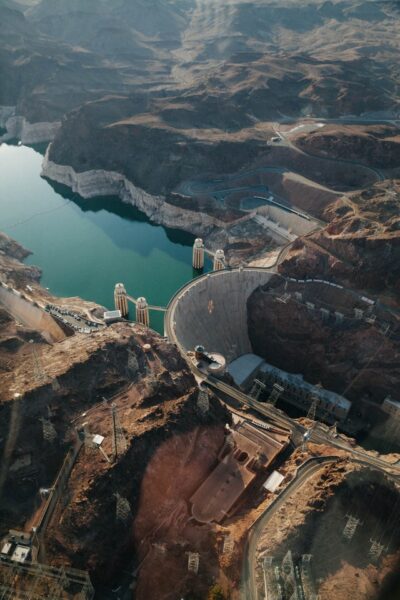 “Lake Mead has dropped more than 6 feet since March 1 and now sits just 20 feet above its all-time low from July 2022, with water levels expected to fall even lower soon. The dropping water level has created challenges for boaters and raised questions about Southern Nevada’s water supply. FOX5 spoke with boaters and the Southern Nevada Water Authority about the conditions. “I was shocked when I came down and saw how low the water was,” said Ron Klug, a longtime boater. … ” Read more from Channel 5.
Gov. Hobbs ties Colorado River fight to national security, blames GOP for budget impasse
“Gov. Katie Hobbs made her most direct case yet for federal intervention in Colorado River negotiations to KTAR 92.3 FM Outspoken with Bruce & Gaydos, arguing that Arizona’s water supply underpins the nation’s defense, food and technology sectors. “No other state can make that economic case, that national security case that Arizona can make on Colorado River water,” Hobbs said. She cited Arizona-made semiconductors, Tomahawk missile production and the state’s role supplying 90% of the nation’s winter leafy greens, all dependent on groundwater. The remarks echo a pitch Hobbs is making directly to the Trump administration, according to the Tucson Star, as seven Western states remain deadlocked over how to divide a shrinking river. … ” Read more from KTAR.
Tucson takes action as feds threaten Colorado River cuts
“The federal government wants to cut Arizona’s Colorado River water supply by more than 77%, and Tucson isn’t waiting to find out what happens next. The proposed cut targets the Central Arizona Project, a 336-mile system that delivers Colorado River water to central and southern Arizona. The seven states that rely on the Colorado River, Arizona, California, Colorado, Nevada, New Mexico, Utah and Wyoming, have been negotiating new water allocations after the 2007 Interim Guidelines for managing Lake Mead and Lake Powell are set to expire this year. The federal government intervened in early 2026 after the states missed the November 2025 negotiation deadline. … ” Read more from the Tucson Sentinel.
Upper Colorado River Basin States’ Governors release statement on proposed draw down of Flaming Gorge and Upper Basin Reservoirs
“Today, Governors Jared Polis (D-Colo.), Mark Gordon (R-Wyo.), Michelle Lujan Grisham (D-N.M.) and Spencer Cox (R-Utah) released a statement on the proposed draw down of Flaming Gorge and other upper basin reservoirs: “This is an unprecedented year on the Colorado River, and likely will be one of the worst on record. A dry year like this reminds us of why it is critical that all who rely on this resource learn to live within its means and adapt our uses accordingly. The Upper Division States of Colorado, New Mexico, Utah, and Wyoming, are actively and strictly regulating water uses. Because of such diminished runoff, existing state laws in the Upper Division States require water users to face cuts to water rights dating back to the 1800s – these cuts are mandatory, uncompensated, and will have significant impacts on water users, including Upper Basin Tribes, and local economies. … ” Read more from Colorado Governor Jared Polis.
Southwestern Wyoming, other upper Colorado River Basin states, prepare for water shortages
“Gov. Mark Gordon joined fellow governors from other Colorado River headwater states Thursday to announce that a significant extra water release from Flaming Gorge is imminent. Dire water conditions in the region will likely require reducing water use, he warned. “Because of such diminished runoff, existing state laws in the Upper Division States [Wyoming, Utah, Colorado and New Mexico] require water users to face cuts to water rights dating back to the 1800s — these cuts are mandatory, uncompensated, and will have significant impacts on water users, including Upper Basin tribes, and local economies,” Gordon said Thursday afternoon in a joint press release with Govs. Spencer Cox of Utah, Michelle Lujan Grisham of New Mexico and Jared Polis of Colorado. … ” Read more from the WyoFile.
In national water news today …
EPA sets ‘no surprises’ science policy, reassigns researchers
“The Trump administration is tightening its grip over EPA’s scientific enterprise as it prepares to relocate employees from its once esteemed research arm. The agency’s new, smaller science office has laid out its policies on how EPA will approve new research and publish its work for the public, according to internal memos obtained by POLITICO’s E&E News. Further, EPA’s remaining scientists from the now-dissolved Office of Research and Development received reassignments earlier this week, including many who will have to move if they want to continue working at the agency. The agency’s nonstop swirl of change has suffocated agency scientists, said Chris Frey, who led EPA’s research office during the Biden administration. “The deck is stacked against scientists who want to do good-faith science,” Frey said. … ” Read more from E&E News.

