
Several news sources featured in the Daily Digest may limit the number of articles you can access without a subscription. However, gift articles and open-access links are provided when available. For more open access California water news articles, explore the main page at MavensNotebook.com.
On the calendar today …
- FLYWAY NIGHTS: Updates on the Yolo Bypass Wildlife Area from Garrett Spaan, Yolo Bypass Wildlife Area Manager from 7pm to 9pm. Yolo Bypass Wildlife Area Manager Garrett Spaan will provide an overview of key projects and developments from the past year. His presentation will focus on major wetland restoration and habitat enhancement initiatives, along with other significant improvements and ongoing efforts within the Wildlife Area. Click here to register.
In California water news today …
Sparse snowpack in California fuels concern over fast-approaching fire season
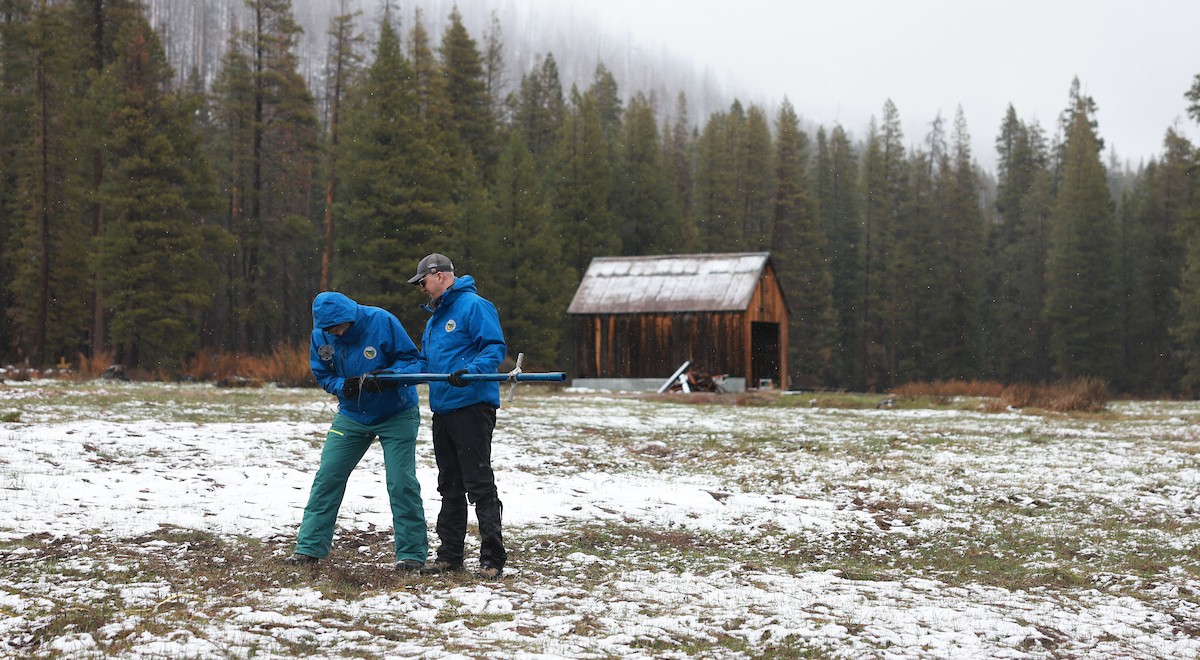
“California clocked its second-worst snowpack on record Wednesday, a potentially troubling signal ahead for fire season. It’s an alarming end to a winter that saw abnormally dry conditions briefly wiped from California’s drought map in January, for the first time in a quarter-century. Though precipitation to date has been near average, much of it fell as rain rather than snow. Then March’s record-breaking heat melted most of the snow that remains. The state’s major reservoirs are nevertheless brimming above historic averages and are flirting with capacity, and a smattering of snow, rain and thunderstorms are dousing last month’s heat wave. But experts now warn that California’s case of the missing snowpack could herald an early fire season in the mountains. On Wednesday, state engineers conducting the symbolic April 1 snowpack measurement at Phillips Station south of Lake Tahoe found no measurable snow in patches of white dotting the grassy field. “I want to welcome you call to probably one of the quickest snow surveys we’ve had — maybe one where people could actually use an umbrella,” joked Karla Nemeth, director of the California Department of Water Resources. “We’re getting a lot of questions about are we heading into a hydrologic drought? The answer is, I don’t know.” … ” Read more from Cal Matters.
Scorching March heat drops California snowpack to second-lowest mark in 75 years
“The light snow flurries in the Tahoe area this week after a spell of record-setting March heatwaves across California were not enough to reverse the damage. California’s water officials gathered at Philips Station near Lake Tahoe on the first day of April to measure what is typically the winter’s peak snowpack. Instead, they found only thin, patchy snow and no measurable snow, marking the second-lowest April 1 snowpack in 75 years. At the Phillips Station snow survey site, much of the field had been reduced to wet, matted grass. From the remaining patchy snow, the Department of Water Resources officials were not able to obtain any measurable snowpack using their survey pole. The devastating final snow survey of the season at Phillips Station aligned with a broader snow drought trend across the state, with the statewide snowpack remaining far below average at 18%. Wednesday’s statewide April 1 measurement is also the second-lowest April 1 snowpack since 1950 for California, it is a continued decrease from the late February survey, when the state snowpack stood at 66% of average. … ” Read more at the Sacramento Bee.
Meager California snowpack at near-historic low following dry winter
“California isn’t quite in a drought just yet but one could be looming if the state endures another disappointingly dry winter next year, state water officials announced Wednesday. The California Department of Water Resources conducted its fourth and final snowpack survey of the year and found that the statewide measurement for April 1 was the second-worst since 1950. Based on measurements from more than 260 locations throughout the Sierra Nevada, the statewide snowpack stands at just 18% of average — larger only than the 2015 measurement of .5% of average, according to Andy Reising, manager of DWR’s Snow Survey and Water Supply Forecasting Unit. “The snowpack typically reaches its peak around April 1,” Reising said. “Some years that peak happens a bit earlier or a bit later, but this year we saw a significant departure from that historical norm.” … ” Read more from NBC Bay Area.
EXPLORE MORE COVERAGE:
- California in for ‘ugly summer’ amid one of the worst snowpacks on record, from the San Francisco Chronicle | Read via MSN News
- ‘Hope is not a water management strategy’: California snowpack 2nd worst in 75 years, from Fox 40
- Sierra Nevada snowpack just 18% of normal — second-lowest in recorded history, from the San Jose Mercury News
- California faces second-worst snowpack in decades, from the Courthouse News Service
- Metropolitan issues statement on state’s fourth snowpack survey of the season, statement from the Metropolitan Water District
These maps show exactly where the West might burn this summer
“Every state in the West is expected to face an above-normal threat of wildfire this summer, according to the latest projections, released Wednesday by the National Interagency Coordination Center. The government-run center publishes monthly reports predicting fire risk for the four months ahead, and the change since the March outlook is staggering. The agency denotes elevated risk in red on its maps, and the June forecast from March 2 showed a small swath of rouge in the Southwest. But, citing an ongoing snow drought, rapid snowmelt, and a recent unprecedented heat wave, the latest maps feature red spilling across the Southwest and into the Rockies, Pacific Northwest, and northern California. “We’re probably not going to be in great shape this year,” said Matthew Hurteau, director of the Center for Fire Resilient Ecosystems and Society at the University of New Mexico. While it’s normal for the Southwest to experience a relatively early fire season, before the summer monsoons hit, what really stood out to him was how quickly the red moved north. “It’s really early for that.” … ” Read more from Grist.
Support for Delta tunnel dropping in Kern County
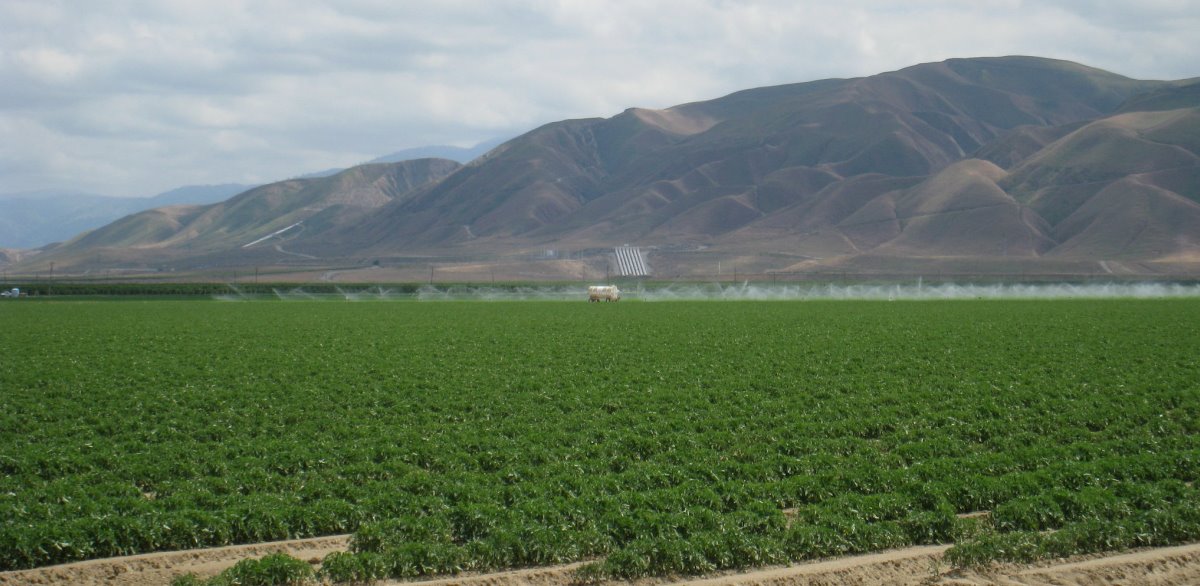 “Financial support for the controversial Delta Conveyance Project has been eroding among Kern County agricultural water districts over the past year and lost another significant chunk when the Wheeler Ridge-Maricopa Water Storage District opted recently to cut its contribution by nearly 97% – from $4.6 million down to $146,000. “We still believe it’s a good and viable project that needs to be built,” Wheeler Ridge General Manager Sheridan Nicholas said. “But it has become extremely difficult, especially for ag, with other expenses going up.” Four other large State Water Project contractors in Kern are also considering lowering their participation levels as the Department of Water Resources is trying to firm up agreements to collect $300 million from contractors for the ongoing planning and design phase of the $20 billion project. … ” Read more from SJV Water.
Proposal to raise Shasta Dam levels could submerge tribal sacred sites, tribe warns
“Plans to raise water levels at Shasta Dam are sparking debate, with tribal members warning the change would cause spiritual harm. The proposal would increase water storage capacity, and state leaders say the additional storage is needed during drought years. But for the Redding Rancheria, which has members of the Winnemem Wintu Tribe, the issue goes beyond water. Tribal Chairman Jack Potter said the dam has already disrupted salmon runs and that raising water levels would submerge sacred areas that remain, including burial sites and places where they hold traditional ceremonies. … ” Read more from KRCR.
Watering smarter, not more
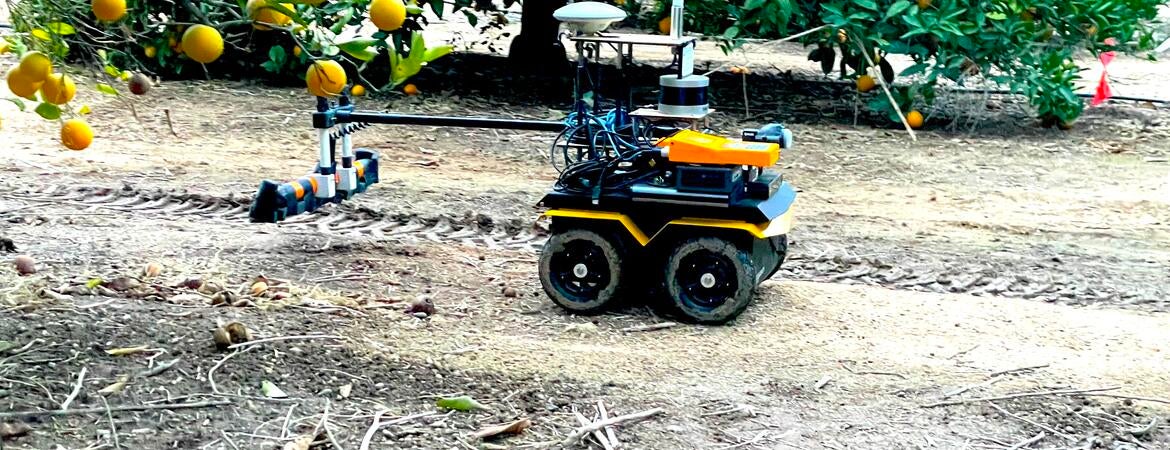
“Advanced technology can help farmers get to the root of a growing problem ¾ overwatering in an era of increasing drought and water scarcity. A new UC Riverside system can map soil moisture tree by tree, so growers water only where and when it’s needed. This system, detailed in the journal Computer and Electronics in Agriculture, was led by the research group of Elia Scudiero, associate professor of precision agriculture and the Director of UCR’s Center for Agriculture, Food, and the Environment (CAFE). Water management is one of the biggest challenges facing agriculture in California and other dry regions. Currently, some growers rely on soil moisture sensors buried in the ground to determine when to irrigate. These sensors are expensive and typically installed in only a few locations, leaving growers to guess how conditions vary across hundreds or thousands of trees. “The information those sensors provide is very limited,” Scudiero said. “It really only tells you what’s happening in the immediate areas where they’re placed.” … ” Read more from UC Riverside.
Growing solutions: The role of rice in restoring the Delta’s landscape
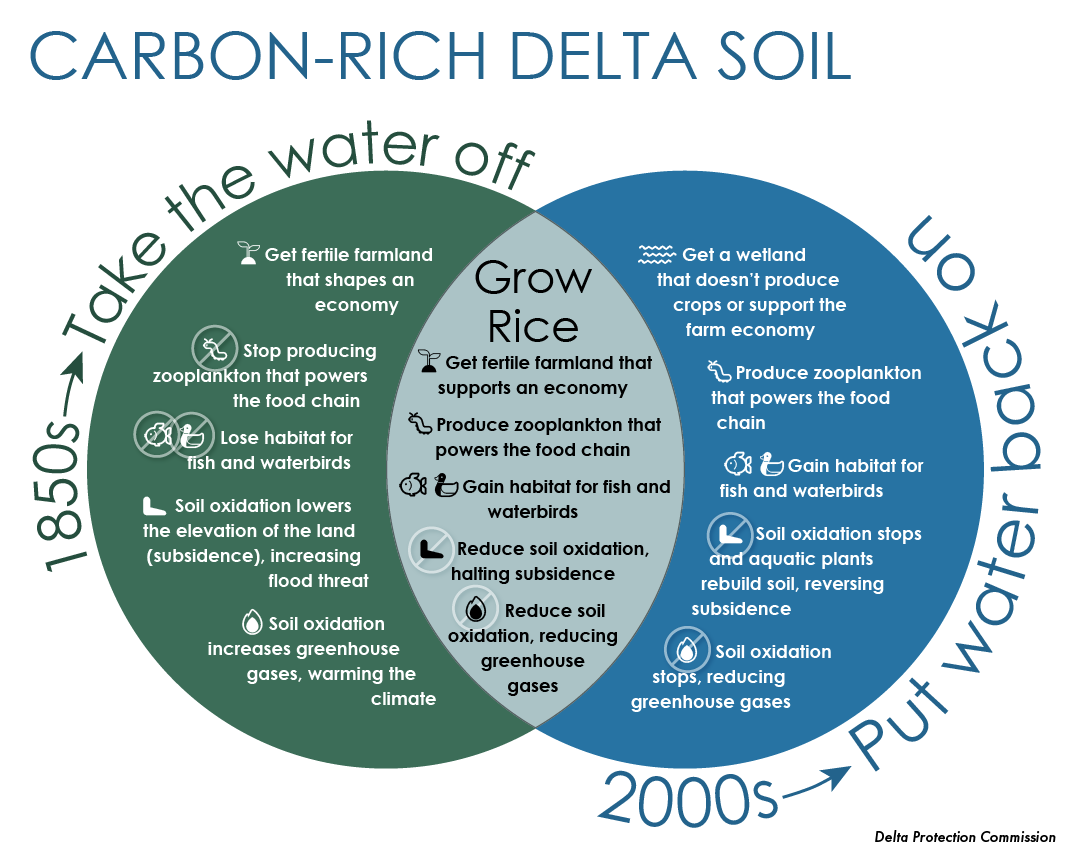 “The Delta Stewardship Council has long recognized that elevation and agricultural emissions are critical issues for the Sacramento-San Joaquin Delta. In response, the Council’s Delta Plan policies and the Delta Adapts initiative have been developed to address challenges such as land loss, restoration elevations, greenhouse gas emissions, and rice cultivation strategies—all aimed at sustaining agriculture in the Delta while combating subsidence. Over the past three decades, the Delta region has benefited from increasingly sophisticated measurements, models, and mapping tools for tracking carbon, surpassing most other estuaries in the country. These advancements continue to improve through innovative pilot projects across both public and private lands, exploring a range of management approaches. With 80% of the Delta too deeply subsided to restore to tidal marsh, rice agriculture stands out as one of the most promising interventions for reducing subsidence while preserving agricultural livelihoods. These priorities and solutions were highlighted at the Delta Stewardship Council’s March meeting, where Dr. Nina Bingham, Senior Environmental Scientist at the California Department of Food and Agriculture, presented an overview of the Healthy Soils Program and discussed how Delta farmers can now receive an incentive through the Healthy Soils Program for switching to rice cultivation in an upcoming grant solicitation. … ” Read more from Maven’s Notebook.
State says cormorants, pelicans among seabirds starving along California coast
“Some of California’s seabirds are increasingly starving to death, state scientists say. Starvation is the “primary cause of increased mortalities” in Brandt’s cormorants, common murres and brown pelicans found from Mendocino County to San Diego, the California Department of Fish and Wildlife said. The state began receiving reports last fall that weak or dead birds were discovered along California’s central and southern coasts. Wildlife rehabilitators were also admitting increased numbers of the seabirds. Nearly all have been younger birds, the CDFW said. “Brandt’s cormorants, common murres, and brown pelicans breed on offshore rocks and islands along the coast,” the wildlife agency said, and 2025 was an unusually good year for their reproduction. … ” Read more from Local News Matters.
‘You’re a liar.’ Why the world’s biggest building boom has run into a wall in California
“Bryan Marsh was booed by the crowd as he approached the podium in Monterey Park’s City Hall. Things weren’t going as planned. In front of a wall of people holding “No Data Center” placards, he outlined how his company, Australia’s HMC StratCap, invested tens of millions of dollars and became the city’s largest landowner after years of negotiations, clearances and hearings. City officials had previously welcomed its plans to build a sprawling, new data center and the jobs and tax revenue that would follow, he said, but then things suddenly changed. “There was no widespread opposition,” until late last year, he said as people in the room yelled, “You’re a liar!” “Now, for the last few months, the city has faced intense public pressure.” … ” Read more from the LA Times.
New court decision reinforces water agencies’ authority to conduct early project studies
“A new California Court of Appeal decision – Department of Water Resources Cases (March 26, 2026) — Cal.Rptr.3d —-, 2026 WL 835863 (Case No. C103207) – provides important clarity for water agencies planning major infrastructure projects. The ruling confirms that agencies with eminent domain authority may temporarily access private property to conduct environmental and technical studies before a project is fully approved or funded. For water agencies tasked with long‑term planning amid uncertainty, the decision reinforces a practical and legally sound foundation for early‑stage project development. … ” Read more from Nossaman.
California Governor candidates talk water, regulations at Fresno State Forum
“Cutting regulations and increasing water supply were the consensus themes at a forum Wednesday in Fresno among six candidates for California governor. The gubernatorial hopefuls met on stage at the Resnick Student Union on the Fresno State campus to discuss affordability and agriculture. All presented messages that overregulation is hurting farming and vowed to cut regulations. Several advocated an “all of the above” approach on energy, homebuilding, and water storage. Some were more specific than others. All positioned themselves as friends of farmers. San Jose Mayor Matt Mahan, D-San Jose, called for “comprehensive CEQA reform,” referring to the state law requiring construction to comply with environmental regulations. He also called for an “all of the above” energy strategy and said he would suspend the gas tax. … ” Read more from GV Wire.
In commentary today …
Ted Sommer: A flood of hope
“My most inspiring bike ride this past year was not on a mountain or in some exotic destination. It was sixteen flat and muddy valley miles under overcast skies. My destination was a new concrete structure designed to reconnect the Sacramento River with its adjacent floodplain, the Yolo Bypass. This habitat restoration project reflects decades of work by my team and represents one of the most important steps to save Central Valley salmon. In the late 1990s, I worked full-time as a scientist for California Department of Water Resources while moonlighting as a U.C. Davis Ph.D. student. Like several other scientists in my cohort, I was trying to answer the question of why wet years are so good for many species in the Bay-Delta and its watershed. I chose to study the Yolo Bypass, the primary floodplain of the region. This system is essentially an overflow basin for the Sacramento River during big flood events—it is a 60,000 acre partially leveed feature that is designed to safely convey floodwaters away from Valley communities like Sacramento. My logic was that floodplain inundation was one of the most unique aspects of high flow years, so perhaps there was something special about the Yolo Bypass for the ecosystem. … ” Read more from Bay Nature.
Federal options for large scale seawater desalination
Edward Ring writes, “The Carlsbad desalination plant is reportedly operating at half-capacity, basically because it’s less expensive to import water from the Colorado River. That is likely to change, as Arizona’s Department of Water Resources is negotiating with the San Diego County Water Authority to purchase some of the water they get from the Colorado River. The funds from Arizona will defray some of the cost to increase output from the desalination plant. This is a mutually beneficial exchange that leverages the fact that California cities get water from the Colorado River at a cost that is way below what urban water agencies in Arizona and Nevada are willing to pay. It is a model that can be scaled. As discussed in WC #132, up to 800,000 acre feet per year of California’s withdrawals from the Colorado River could be sold to water agencies in Arizona and Nevada in exchange for those out-of-state agencies paying for construction of seawater desalination plants on the California coast. … ” Continue reading from Edward Ring.
In regional water news and commentary today …
NORTH COAST
A Yreka Creek cleanup could help struggling salmon populations
“The Karuk Tribe of California and the city of Yreka will host a creek cleanup April 25 aimed at restoring Yreka Creek, a waterway biologists consider the “last stronghold” for coho salmon in the Shasta River watershed. Though the creek runs through an urban area, it supports a small but significant salmon population that many residents may not realize is there. “I know a lot of the conversations I’ve had with people, they’re kind of surprised that there’s salmon at all in this creek that looks kind of run down and unkempt,” said Christy Wheatley, a fisheries technician with the Karuk Tribe. … ” Read more from Jefferson Public Radio.
SIERRA NEVADA
Fireworks barge removed from lake, beach reopens to community
“Nine months after a fireworks barge capsized in Lake Tahoe near Incline Village, the debris has finally been removed from the lake. The barge, along with the fireworks on board, sank after a windstorm on July 4, 2025, capsized the boat. While a lot of the work to remove the debris was done behind the scenes, filling insurance claims, finding contractors, etc., crews made a big push from March 13-30 to remove the biggest items. Ski Beach was closed during the removal operation. The crews started by pulling out firework debris and smaller debris items. The barge was broken into three pieces, then divers attached airbags to the pieces to bring them closer to the surface. According to Kevin Moore of Kevin Moore Associates, the company contracted to lead the barge removal, the operation was a technical one. … ” Read more from the Tahoe Daily Tribune.
SACRAMENTO VALLEY
Rain this week may not be enough to stop summer drought in Redding
“A wet storm this week will bring rain relief to Redding after a dry March — but it may not be enough to stave off looming summer drought conditions and an early start to high fire season, weather forecasters said. This week’s storm will drop up to an inch of badly-needed rain on Redding by Thursday, the National Weather Service said. It will also dust mountain areas along Interstate 5 and in eastern Shasta County with up to 2 inches of snow; dropping snow levels to around 4,000 feet by Thursday. That storm may not make up for an unusually dry start to 2026. Climate predictions said the Redding area could fall into drought conditions by the end of spring, boosting fire risk. … ” Read more from the Redding Record-Searchlight.
U.S. Army Corps of Engineers supports award-winning restoration program at Beale Air Force Base
“The U.S. Army Corps of Engineers Sacramento District supported a team effort at Beale Air Force Base that recently earned the Department of the Air Force’s General Thomas D. White Environmental Award for Installation Restoration. The award recognizes excellence in environmental restoration programs across the Air Force, highlighting achievements in restoring contaminated sites, protecting natural resources and advancing long-term environmental stewardship. The Sacramento District partnered with the Air Force Civil Engineer Center, regulatory agencies and contractors to support Beale’s restoration program, contributing technical expertise and project delivery across 23 sites in various phases of environmental remediation, addressing a range of contaminants. Key members of the USACE team included project manager Krissy Grill-Block, program manager Amy Estey and geologist Jessequa Parker. “This award reflects strong partnerships and a shared commitment to safe, effective restoration,” said Col. Robert McTighe, district commander. “It takes coordinated effort across agencies to deliver results.” … ” Read more from the Army Corps of Engineers.
When the salmon are running: a season of life, death, and renewal on the American River
“We rarely think about water until something goes wrong. But on the American River this winter, water has been doing exactly what it’s meant to do – carrying life upstream. Over the past few months, Chinook salmon have returned from the Pacific Ocean to the place they were born. Gulls spiraled overhead. Turkey vultures with wingspans stretching to six feet rode thermals above the treeline. In the shallows, fish churned gravel and completed one of nature’s most precise migrations. Now, as the season tapers off, the river has grown quieter. But the work continues. … ” Read more from the State Water Board’s Ebb and Flow.
NAPA/SONOMA
St. Helena spells out plan to tackle persistent tap water problems
“While St. Helena has made efforts to stop minerals that cause discolored water from flowing through city pipes to residents’ homes, a buildup of those minerals likely still remains in the old water distribution system the city may ultimately seek to replace. Hence the persistence of the problem: The water system occasionally spurts out discolored or brown water, sometimes with an odor. The issue goes back decades, but increased in severity starting in 2023. The city maintains the water is safe to drink. But Issam Najm, an environmental engineer and vice president of Hazin and Sawyer — a water consulting company based in New York City, working with the city to solve the issue — told a crowd of over 50 people at the St. Helena Public Library on Monday, March 30, that, even though the water issues are largely aesthetic, he didn’t want to minimize the impact of those issues. “To me, if you can see the water, you should not drink it,” Najm said. “I don’t want to discuss the health effects of (it): I do not want to drink colored water and you should not drink colored water.” … ” Read more from the Santa Rosa Press Democrat.
BAY AREA
Marin Water proposes Nicasio capture
“The last time Marin Water came up with a plan for increasing water resiliency in times of drought, Nicasio residents rose up in protest. Now the water district has a new plan for boosting its water supply, and locals are worried again. The Atmospheric River Capture, or ARC, project involves constructing a 13-mile-long, 36-inch-wide pipeline that would carry rainwater from the Russian River watershed to the Nicasio Reservoir. The anticipated cost surged from $168 million to $214 million last month, after the district board decided to plan for a second pump station for the project, which originally called for one. The new pipe would connect to the existing North Marin Aqueduct, which runs along Highway 101. It would follow San Marin Drive to Novato Boulevard, pass Stafford Lake and take a left at the Point Reyes-Petaluma Road before connecting to the reservoir. … ” Read more from the Point Reyes Light.
Editorial: Doable MMWD pipeline plan is the right move
The Marin Independent Journal editorial board writes, “Nearly four years ago, Marin Municipal Water District voters overhauled its board of directors, electing three new directors with a promise to bolster the local water supply. Those voters were focused on the 2021 alarming warning that the drought-parched MMWD was within months of running out of water. The district’s primary strategy of conservation helped, but would not solve the district’s dilemma. The election put the new board on a vigorous mission of growing its supply and capacity. Conservation remains a significantly important part of MMWD’s strategy. But the close call of 2022 was a clear sign that more needed to be done – and soon. … ” Read more from the Marin Independent Journal.
Golden Gate Fields site could be redeveloped as 161-acre bayfront park in proposed deal
“A plan to transform the former Alameda County horse racetrack Golden Gate Fields into an enormous community park could give a whole new meaning to the term “photo finish.” Conservationists, elected officials, and community members announced visions Tuesday for an expansive, nature and amenity-filled open space on the 161-acre bayfront property after the owner agreed to sell the parcel, according to a joint news release from the Trust for Public Land and the East Bay Regional Park District. The Trust for Public Land is a San Francisco-based nonprofit conservation organization that acts as an intermediary between different public entities in real estate transactions for the purpose of land conservation and the preservation of open space. … ” Read more from Local News Matters.
Court rules that cities’ pollution of local creeks violated Clean Water Act
“On March 31, San Francisco Baykeeper won in court over the cities of Sunnyvale and Mountain View in a longstanding Clean Water Act lawsuit. The court determined that the cities are responsible for 1,208 Clean Water Act violations in Stevens Creek and Calabazas Creek. The cities will be required to comply with their Clean Water Act permits and stop high levels of bacteria pollution from reaching these waterways. Baykeeper filed lawsuits against the cities in February 2020. The cities’ stormwater systems have been discharging, and continue to discharge, bacteria pollution into local creeks connected to the Bay. Baykeeper’s water sampling of local creeks showed bacteria pollution at levels 50 times higher than the legal limits and revealed levels of E. coli from human fecal matter in amounts which pose a danger to health and safety. … ” Read more from SF Baykeeper.
CENTRAL COAST
A Marina desalination project is underway to add drinking water supply.
“The desalination project at Marina State Beach was originally a pilot study in 1996 – one that proved successful, though more expensive than pumping groundwater at the time. So, it was put on pause. In mid-March, after more than two decades and increasing pressure on local aquifers, the Marina Coast Water District (MCWD) began reviving that same desalination plant to help reduce reliance on groundwater. Now in Phase 1, parts of the plant infrastructure are being restored, and water quality tests are underway. Once online, the plant will add 300 acre-feet annually – enough to supply around 900 homes. “We’re executing on a series of projects that are meant to help the district diversify its water portfolio,” says Remleh Scherzinger, MCWD’s general manager. “We have to think in small bits.” … ” Read more from Monterey Now.
Monterey officials remind public of fire risk as wildfire season begins
“Public safety officials are reminding the public about wildfire risks despite relatively mild weather in parts of Monterey County. April marks the start of wildfire season. During the county briefing Wednesday, officials from Cal Fire and California State Parks gave updates on how the fire season is looking before the summer months and how to protect yourself and others when being outdoors. “Across the entire region, we’re seeing fuel moisture start to dry up as the weather gets warmer and drier,” said Josh Silveira, battalion chief for Cal Fire San Benito-Monterey. “You can see driving up the 101 corridor, our grass crop is starting to dry, turn brown and it’s very thick and tall.” … ” Read more from the Monterey Herald.
3 groups challenge Clean Water Act certification for Diablo Canyon nuclear plant
PG&E got one of the certifications it needed to release wastewater from the Diablo Canyon nuclear power plant for the next 20 years — but three nonprofit organizations are fighting to shorten that window. The power plant’s cooling system sucks in about 2.5 billion gallons of seawater per day, enough to fill almost 3,800 Olympic-sized swimming pools. On Feb. 26, the Central Coast Regional Water Quality Board issued a five-year permit that allows the power plant to release that wastewater back into the Pacific Ocean. Also at that meeting, the board certified that the 20-year operating license PG&E requested from the U.S. Nuclear Regulatory Commission would comply with the Clean Water Act. But a group of nonprofit organizations said the 20-year certification violates state law. … ” Read more from the San Luis Obispo Tribune.
San Miguel CSD deadlocked over vacant board seat amid past groundwater dispute
“A regional groundwater dispute that began more than a decade ago is now shaping who can sit on the current San Miguel Community Services District (CSD) board. In 2013, a group of North County landowners, including former board member Raynette Gregory, filed a “quiet title” lawsuit against several public water agencies, including the San Miguel CSD, Templeton CSD, the city of Paso Robles, Atascadero Mutual Water Company, and San Luis Obispo County. The suit sought to affirm landowners’ inherent rights to groundwater amid concerns over drought and new regulatory restrictions on pumping. The litigation, which eventually involved more than 600 property owners, went to trial in Santa Clara County and concluded in 2018, according to court records. … ” Read more from New Times SLO.
SAN JOAQUIN VALLEY
Clovis residents could get first water rate hike since 2009
“Water customers in Clovis could soon pay more when they turn on the tap. Residents have a chance to voice their opinions on a proposed rate hike. The city says inflation has driven up the cost of operations and infrastructure, prompting consideration of Proposition 218. Clovis has not had a water rate increase since 2009, and the city says it needs more funds to maintain service and make improvements. … ” Read more from KFSN.
Kings River snowpack at 43% of average; CA total at 18% of average
“A crucial snow survey on Wednesday reveals California’s snowpack is at 18% of average. A bare Phillips Station near Lake Tahoe serves as a sign of the findings, which revealed 0 inches of water content and depth, making the location sit at 0% of average. … The Kings River snowpack is another contributor. Its water content is about 12.5 inches, only 43% of the average, according to findings from the Kings River Water Association. These low results come at a time when the snowpack should be at its peak, but recent warm, dry weather has created issues. … ” Read more from ABC 30.
Longtime Alpaugh water manager retires
“Bruce Howarth’s last day on the job at Alpaugh Irrigation District is April Fool’s Day, but one thing he doesn’t joke about is his admiration for the district and its landowners. “It’s the best job I’ve ever had,” he said. “I love working with farmers.” Howarth is retiring today after 12 years at the helm of the tiny district, which was founded in 1915 and covers about 10,000 acres on the far southwestern edge of Tulare County. Alpaugh’s farmers cultivate mainly pistachios, pomegranates and row crops on land that historically is in the bottom of the Tulare Lake bed. “Even though we’re pretty isolated, they’re committed to being sustainable and they’ve done well over the years.” … ” Read more from SJV Water.
SOUTHERN CALIFORNIA
Why SoCal shark sightings are up — and ways to stay safe in sharky waters
“Don’t freak out, but there are always sharks swimming along Southern California beaches. We just don’t notice them that often because sharks are not interested in people. “We have hundreds of hours of footage of white sharks swimming right up to people or right underneath them, and not even changing their path,” said marine biologist Chris Lowe, who directs the Cal State Long Beach Shark Lab, which works with local authorities to monitor shark activity. But shark sightings have been on the rise lately. Just last week, Newport Beach issued a temporary closure after a great white was spotted near a surfer. … ” Read more from the LAist.
OCWD and OC San unveil GWRS brew made with purified recycled water at national Water Reuse conference
“The Orange County Water District (OCWD) and the Orange County Sanitation District (OC San) unveiled a commemorative, limited-edition beer made with purified recycled water from the Groundwater Replenishment System (GWRS) during the 2026 WateReuse Symposium in Los Angeles. The beer, called GWRS Brew, was produced by Anaheim-based Brewery X and sponsored by H2O Innovations. “GWRS Brew is a creative way to highlight the innovation behind the Groundwater Replenishment System,” said OCWD Board President Denis R. Bilodeau, P.E. “For nearly two decades, GWRS has helped establish the global roadmap for potable reuse, from engineering and operations to public outreach. As the industry leader, we remain committed to advancing water recycling and strengthening reliable local water supplies.” … ” Continue reading this press release.
IMPERIAL/COACHELLA VALLEYS
Newsom promised California a lithium bonanza. It still hasn’t arrived.
“In one of California’s poorest corners, jagged rocks rise like Godzilla’s scales along a muddy lakeshore. The glassy Obsidian Butte forms the remains of an all-knowing snake called Arse-weeuv, according to the Quechan tribe, which has inhabited this land since long before colonization. … The valley is no stranger to 21st century plans that arrive with great promise but do little to benefit locals. Since 2010, solar companies have laid out massive complexes of panels, and coastal utility San Diego Gas & Electric continues to pursue battery-based electricity. Yet solar projects have collapsed or resulted in few jobs or tax dollars, while SDG&E sends the energy from its Westside Canal battery park for use outside the valley. County officials say that this time will be different and that new industries will bring residents the jobs, money and clean energy they’ve been promised for so long. It was only three years ago, at a press conference, that state and federal lawmakers and business figures were touting the area’s great promise for extracting lithium, a mineral critical for batteries in electric cars, smartphones and industrial power systems, from volcanic layers deep in the ground. … ” Read more from Capital & Main.
SAN DIEGO
Mexico reluctant to follow through and fix sewage problem, environmentalist says
“Environmental advocates acknowledge there is political will between Mexico and the United States to address the beach pollution crisis, but they also recognize funding is lacking to build sewage-mitigation projects. “If having meetings and signing agreements resolved the problem, there wouldn’t be any problem,” said Fay Crevoshay, director of communications and public policy for WILDCOAST, an environmental group in San Diego.. She was referring, in part, to a Memorandum of Understanding signed by both Mexico and the United States last June pledging to find solutions to the sewage and trash problem that impacts people on both sides of the border, particularly in the Tijuana River Valley and the beach communities in Tijuana and San Diego. … ” Read more from the Border Report.
Along the Colorado River …
The 100-year error: How selective science drained the Colorado
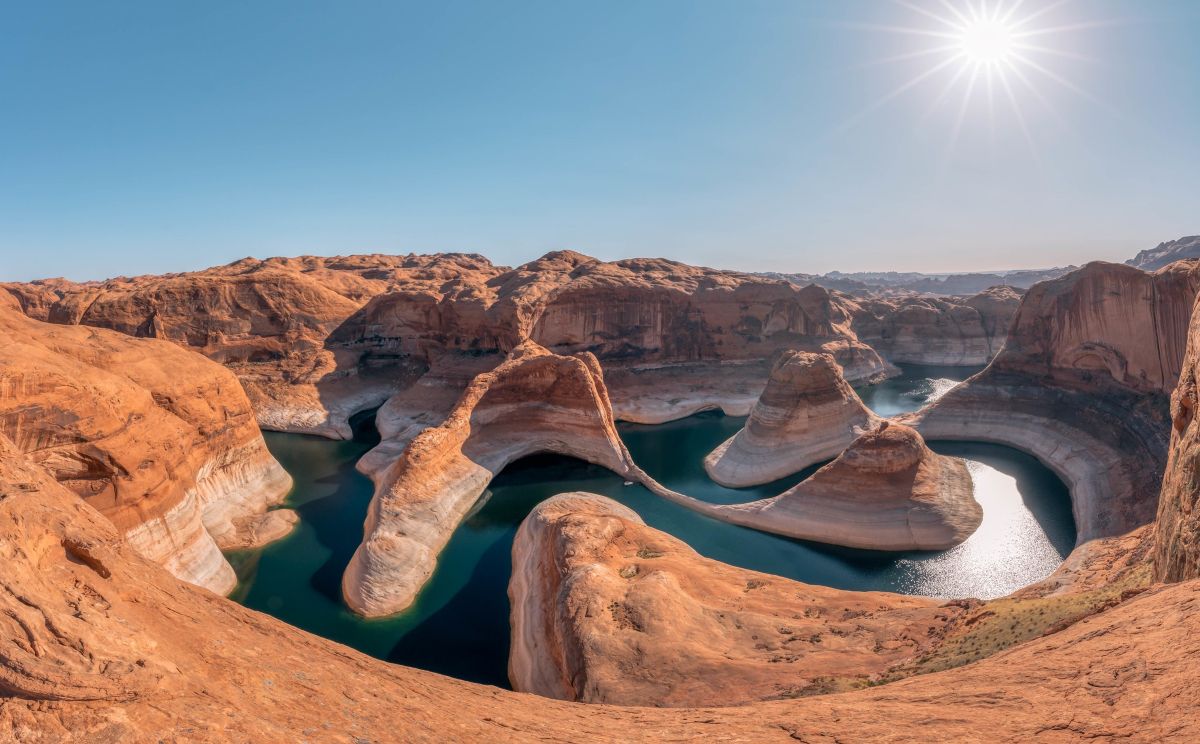
“The white bathtub ring clinging to the sandstone walls of Glen Canyon is more than a marker of a receding lake; it is a physical manifestation of a century-old accounting error. For decades, the conventional story of the Colorado River’s decline has been framed as a tragic stroke of bad luck. The narrative, popularized in modern classics like Cadillac Desert, suggests that the framers of the 1922 Colorado River Compact simply did their best with a limited record of “eighteen years of streamflow measurement” taken during an unusually wet “binge.” However, emerging historical research and systems analysis tell a more complicated and troubling story. In their definitive study, Science Be Dammed, authors Eric Kuhn and John Fleck argue that the crisis we face in 2026 was not an accident of nature but a predictable consequence of “selective science.” The decision-makers of 1922 were not victims of ignorance; they were sophisticated professionals who chose to ignore inconvenient data in favor of a political vision that required the river to be larger than it actually was. … ” Read more from the Lake Powell Chronicle.
Arizona farmers brace for uncertain future as Colorado River deal remains unsettled
“Uncertainty over Arizona’s share of Colorado River water has created instability for farmers who grow most of the nation’s winter vegetable supply. Yuma farmer Matt McGuire said growers are still waiting for the finalized Colorado River agreement, which will determine how the dwindling water supply is shared among multiple states well into the future. “Most of the groundwater in this area is fed by the Colorado River, so you dry up the river, you dry up the wells,” McGuire told KTAR News 92.3 FM’s Arizona’s Morning News on Wednesday. … ” Read more from KTAR.
Appeals court rejects bid to overturn monument designation near Grand Canyon
“A federal appeals court has rejected a bid by Republican lawmakers in Arizona to overturn the designation of nearly a million acres of federal land near the Grand Canyon that the Biden administration dedicated a national monument. In a ruling Wednesday, the three-judge panel concluded GOP legislative leaders lack the legal standing to even bring a claim in federal court over the creation in 2023 of the Baaj Nwaavjo I’tah Kukveni Ancestral Footprints of the Grand Canyon National Monument. Ditto, they said, of Republican state Treasurer Kimberly Yee. That right, they said, belongs to Democratic Attorney General Kris Mayes. Mayes — along with Gov. Katie Hobbs, also a Democrat — actually intervened in the case against the challengers and in support of Biden’s designation. That, said the court, leaves no one with the right to sue. … ” Read more from the Arizona Daily Star.
Mayes challenges utility rate hike in Robson Ranch retirement community in Eloy
“Attorney General Kris Mayes is challenging a decision by Arizona regulators that will double water and sewage rates in an Arizona retirement community. In early March, the Arizona Corporation Commission voted 3-2 to approve new rates for the Robson Ranch 55+ community in Eloy. Residents had enjoyed below market rates for years that were subsidized by developer Robson Communities, which owned the Picacho Water and Sewer companies that served residents. In 2024, Robson Communities sold the utilities to Phoenix-based JW Water, which is owned by a Netherlands-based investment firm. After the sale, the new owners sought rate increases to cover the actual costs of operating the utilities. … ” Read more from KJZZ.
Water agency asks Nevada Supreme Court to intervene in ‘useless turf’ case
“The Southern Nevada Water Authority (SNWA) has asked the state’s high court to intervene in a legal battle over “useless turf” enforcement. Attorneys for SNWA filed a petition for a writ of mandamus with the Nevada Supreme Court on Monday. They are asking the court to dissolve a temporary restraining order, dismiss the plaintiffs’ claims and prevent more parties from being added to the suit. Several homeowners alleged in a lawsuit, which was filed in Clark County District Court, that SNWA’s enforcement of a provision seeking to bar nonfunctional turf led to the deaths of more than 100,000 trees in Southern Nevada and $300 million in damages. … ” Read more from Channel 3.
Rural farmers try to adapt to shrinking Colorado River
“The Colorado River has 20% less water flowing through it than it did in the 20th century due to a decades long drought exacerbated by climate change. Caitlin Ochs, a photojournalist and National Geographic Explorer, has been documenting how farmers are trying to adapt. She said each year, members of the Ute Mountain Farm and Ranch in rural southwestern Colorado create multiple plans for what to plant based on water allocations, which vary greatly from year to year. They have already made adjustments on the operations side, including building a mill to add value to the blue corn they grow. “They’ve implemented low-flow nozzles into their center pivot system,” Ochs noted. “They’ve installed these small-scale hydro-powered generators to help them power their mill.” … ” Read more from KRWG.
In national water news today …
Scientists measuring microplastics may be corrupting data inside their own labs
“Commonly used laboratory gloves may have contaminated samples and led scientists to overestimate levels of microplastic pollution, according to a new study published this week. The finding emerged unexpectedly. Researchers at the University of Michigan were studying how many microplastic particles locals might be breathing in. The team collected samples and analyzed them in the lab, all the while taking normal precautions to avoid contamination, including limiting plastic use in the lab and avoiding synthetic clothing. … ” Read more from Straight Arrow News.

]
