
Several news sources featured in the Daily Digest may limit the number of articles you can access without a subscription. However, gift articles and open-access links are provided when available. For more open access California water news articles, explore the main page at MavensNotebook.com.
On the calendar today …
- MEETING: Central Valley Flood Protection Board beginning at 9am. Agenda items include levee inspection results for the Sutter Basin North levee system; State’s Roles and Responsibilities for Unhoused Abatement within the Floodway; adoption of the Sacramento and San Joaquin Drainage District Property Abatement Policy; and Presentation on the Lower San Joaquin River Improvement Projects. Click here for the agenda.
In California water news today …
Pacific storms to snap record heat wave in western US next week with cooler air, rain
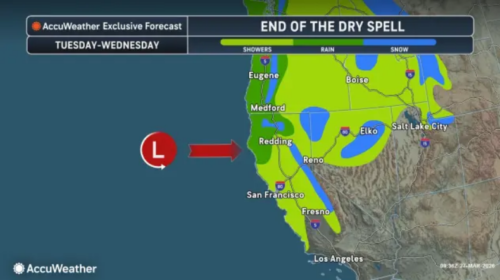 “Many areas have already recorded their highest temperatures of the extensive heat wave, but several more hot days are ahead across much of the interior West and Great Plains. Relief from the heat is on the horizon; however, a shift in the weather pattern will send multiple storms, cooling much of the region and bringing rain and mountain snow to some areas. … From Tuesday into Tuesday night, the next storm will move in from the Pacific Ocean. This storm will bring rain to California, northern Nevada and parts of southern Oregon and Idaho. In places such as San Francisco, it could produce the most significant rainfall since mid-February, with a few tenths of an inch possible. … ” Read more from AccuWeather.
SEE ALSO: Bay Area rain, Sierra snow arrive next week with cold storms, from ABC 7
El Niño is on the way: What that means for California’s weather
“Earlier this month, scientists at NOAA, the National Oceanic and Atmospheric Administration, issued an “El Niño Watch” for this summer. They said there is a 62% chance that El Niño conditions will appear from June through August, growing to 83% by October. That triggered a lot of hype about “Super El Niños,” “Godzilla El Niños” and other scary-sounding weather events. What’s actually going on? Jan Null is a veteran meteorologist who worked as a lead forecaster with the National Weather Service and now runs Golden Gate Weather Services, a company in Half Moon Bay. This conversation has been condensed and edited for clarity and length. … ” Read more from the Santa Rosa Press Democrat.
Groundbreaking atmospheric river forecasting collaboration crosses the finish line
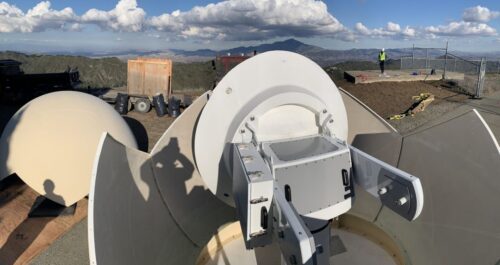
“A cutting-edge forecast system developed by NOAA, Colorado State University, and Scripps Institution of Oceanography at the University of California San Diego is now fully operational and providing improved precipitation forecasts of landfalling atmospheric rivers in the Bay Area. When big storms approach California, accurate and timely precipitation estimates become critical for making decisions regarding public safety, infrastructure operations, and emergency response preparations. Atmospheric rivers provide up to 50% of total annual precipitation in California but also cause more than 80% of flood damages. Forecasting rainfall and runoff in California’s complex coastal terrain has been challenging because as these storms move ashore, heavy rains form at low elevations that sit beneath the level visible to the standard National Weather Service (NWS) radar network. … ” Read more from NOAA Research.
Atmospheric river storms will be tracked more accurately with new Bay Area weather radar stations
“Hoping to collect more information about the biggest, wettest storms that soak California each year — filling reservoirs and also causing damaging floods — a coalition of Bay Area water agencies on Thursday unveiled a new $19.7 million system of high-tech radar stations that stretches from Sonoma County to Santa Cruz. The network features six new radar installations in Contra Costa, San Mateo, Santa Clara, Santa Cruz, Marin and Sonoma counties that can track storms with faster and higher-resolution updates than the current National Weather Service radar stations. In a typical year, California receives about a dozen big atmospheric river storms, huge conveyor belts of moisture that account for roughly 50% of the state’s annual precipitation. Also called “Pineapple Express” storms, they sometimes deliver localized bursts of extreme weather and rainfall that can cause landslides, flooding and other mayhem. … ” Read more from the San Jose Mercury News.
Tribes, environmental groups urge Governor Newsom to oppose Shasta Dam raise
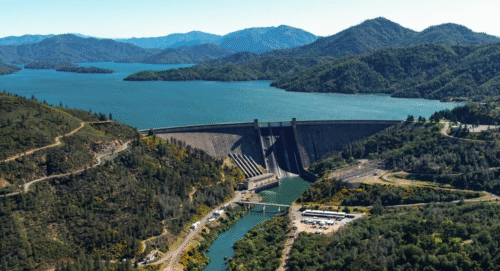 “A coalition of fifty Tribes, environmental justice organizations, commercial fishing groups, recreational advocates, and conservation organizations has called on California Governor Gavin Newsom to oppose efforts to raise the height of Shasta Dam. In a letter addressed to the governor, the coalition expressed concerns over the Trump Administration’s push to advance the controversial project, which they argue violates state law and undermines California’s authority over water governance. The Trump Administration recently allocated an extra $40 million for dam expansion planning. The project, which would raise the dam by 18.5 feet, has long been sought by Central Valley agricultural interests. Supporters say it will boost water storage and reliability for Central Valley agriculture, while critics point to environmental and legal concerns, especially its effects on the protected McCloud River. … ” Read more at Maven’s Notebook.
SEE ALSO: Tribes, environmentalists urge Newsom to oppose federal plan to raise Shasta Dam, from KRCR
Huffman opposes ‘illegal’ Shasta Dam raising proposal
“U.S. Rep. Jared Huffman has condemned the Department of the Interior’s proposal to spend $40 million on planning and preconstruction activities to raise Shasta Dam. Huffman, D-San Rafael, called it an “unlawful, wasteful and destructive boondoggle.” He said it is a project to benefit a powerful water district. “The proposal to raise Shasta Dam is a stubbornly unlawful, wasteful, and destructive boondoggle that refuses to die, and it is past time we bury it for good. It is illegal under California law. Raising Shasta Dam has been blocked by state courts, opposed by California’s Attorney General, and killed in Congress before,” Huffman said in a statement. … ” Read more from the Daily Republic.
Reclamation launches new Bay-Delta monitoring webpage
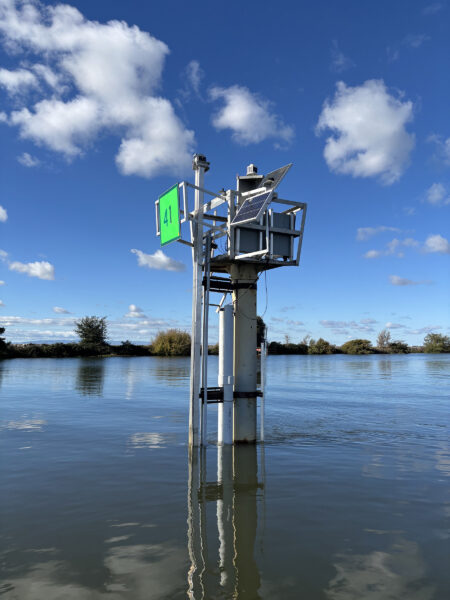 “The Bureau of Reclamation has launched a new project webpage designed to centralize public access to its Bay-Delta flow and water quality monitoring data, agency officials announced this week. The site provides information on how interested parties can access monitoring data collected at stations funded by Reclamation. Data from those stations continue to be collected through routine manual downloads and posted online. As equipment becomes available, telemetry systems are being installed to allow real-time access to sensor readings through the California Data Exchange Center. “When stakeholders have questions about how to access data from monitoring programs we support, we want it to be easy to find and understand,” said Josh Israel, Science Division Chief for Reclamation’s Bay-Delta Office. “This webpage serves as a one-stop location for that information.” … ” Read more from the Bureau of Reclamation.
Salmon-fishing industry swimming upstream
“Fishing-related businesses across the North Bay are navigating changes in salmon fishing seasons as the California Department of Fish and Wildlife [1.1](CDFW) is engaging in a massive effort to increase the number of salmon in California’s rivers and off its coast. Through this period, businesses from charter fishing boats to bait and tackle shops are indicating they could use more federal emergency funds. This will help them stay in business through limited seasons and remain ready to serve customers purchasing everything from chartered trips to lures. … ” Read more from KSRO.
DWR celebrates science and partnerships as essential guides to California water management
“Science isn’t just part of the California Department of Water Resources (DWR) work — it drives it. From forecasting storms to managing reservoirs and protecting ecosystems, DWR relies on rigorous science and strong partnerships to guide decisions and prepare for an increasingly uncertain water future. Science is the critical foundation for all that DWR does. Partnerships strengthen that foundation. DWR works with a wide network of partners that fosters collaboration, information sharing, and scientific progress. One of the core values in DWR’s Strategic Plan is Science Drives Our Decision-Making, emphasizing that the department “is dedicated to using and advancing the best available science to make informed management decisions.” This commitment is reflected in support for staff-driven scientific inquiry and publication, scientific community engagement, and promotion and adoption of cutting-edge technologies that enhance California’s water future. … ” Read more from DWR.
Judge dunks environmental groups in California water ruling
“Utilities and cities across California secured a victory Thursday in a water dispute that hinged on contracts between the federal government and local agencies. U.S. District Judge Jennifer Thurston granted summary judgment to the U.S. Interior Department and a host of cities and agencies, dismissing the case against them. A coalition of environmental groups, headed by the North Coast Rivers Alliance, failed to persuade her that Central Valley Project water deliveries require judicial approval. After years of litigation, the environmental coalition had one remaining claim: that no water delivery by a federal reclamation project to an irrigation district could occur without a proper court confirming the contract. The Central Valley Project, operated by the U.S. Bureau of Reclamation, supplies water to over 250 water contractors, with most using it for agriculture. The government uses the contracts to recoup some costs of building the water project. … ” Read more from the Courthouse News Service.
California pledges to open 7% of its land and waters to Indigenous tribes — a step toward healing a 175-year-old broken promise
“California unveiled a plan Tuesday to bring at least 7.5 million acres of land and coastal waters under the care of Indigenous tribes. That number represents roughly 7% of the state’s land and waters. It also corresponds with the amount of land the federal government promised it would hold as reservations for Indigenous tribes after California joined the union in 1850. Congress ultimately rejected these treaties in a secret meeting — after pressure from the state — and failed to notify tribes, many of whom upheld their end of the agreement to relocate. The new policy, set by the California Natural Resources Agency, aims to start healing the harm caused by the state’s actions to bar tribes from their homelands and criminalize their cultural and land management practices. These actions not only harmed Native communities, whose cultures and ways of life are intimately tied to the plants, animals and landscape of their homelands, but also caused well-documented harm to ecosystems through the loss of biodiversity, takeover of invasive species, degradation of water quality and increase in wildfire risk. … ” Read more from the LA Times.
Senator Lena Gonzalez introduces SHINE Water Act
“Senator Lena Gonzalez (D-Long Beach) has introduced Senate Bill (SB) 1291, the SHINE (Standards for Honesty, Integrity, Notification & Enforcement) Water Act. For years, many Californians served by mutual water companies (MWCs) have struggled to reliably access clean water. While private utilities are regulated by the Public Utilities Commission, and public water districts are subject to public transparency laws, mutual water companies operate in a middle ground without oversight. This has resulted in well-documented problems across California—from arsenic contamination in Tulare to directors raising their own salary by over five times in Cudahy. The result is a lack of transparency and real harm to the communities they serve. … ” Read more from Senator Gonzalez.
California blew a hole in environmental planning law. Now, lawmakers are trying to fix it
“Just south of downtown Los Angeles, the Exide battery recycling facility spent decades leaking lead and arsenic into the soil — sickening children, causing cancer, and creating a nearly billion-dollar liability for the state of California. A flurry of last-minute reforms to the California Environmental Quality Act at the end of last year’s legislative session exempted a broad, poorly defined category of industrial facilities from environmental review – so broad that if Exide were proposed now, it might get a pass, critics say. Now lawmakers are trying to figure out what they actually meant when they approved those exemptions. State Sen. Catherine Blakespear, a Democrat who represents coastal San Diego and Orange counties, introduced a bill this week seeking to more narrowly define what kinds of facilities are exempt from environmental review and to add protections for communities near developments. … ” Read more from Cal Matters.
California sues Trump administration over restart of Central Coast oil pipeline
“California sued the Trump administration on Monday for ordering a Texas-based energy company to transport oil through the Central Coast. On March 13, U.S. Department of Energy Secretary Chris Wright issued the Pipeline Capacity Prioritization and Allocation Order, which told Sable Corp. to resume the transport of oil from the Las Flores Canyon processing facility on the Gaviota Coast to Pentland Station in Kern County. That pipeline crosses San Luis Obispo County at the Cuyama River before reaching Pentland Station. Sable announced on March 14 that it complied with the order and started transporting oil through this pipeline, which caused the 2015 Refugio Oil Spill. On Monday, the state sued Wright over the order, calling it federal overreach. … ” Read more from the Sacramento Bee.
In regional water news and commentary today …
NORTH COAST
Shasta River restoration
“The Shasta River is a relatively short, but unique high dessert-like spring creek north of Mount Shasta. It is a critically important and historically productive tributary to the Klamath River. As the last major tributary to the Klamath before Iron Gate Dam, the Shasta River population of Chinook and coho salmon and steelhead will be the primary natural populations to colonize the area above the Klamath dams once removed in 2020. Chinook salmon numbers historically topped 80,000 but declined precipitously due to habitat decline and unfavorable water management approaches.CalTrout has been working in partnership with The Nature Conservancy and UC Davis to address a full-spectrum of habitat and water management improvements. In fall of 2012, ~ 29,000 Chinook salmon returned, a significant rebound in numbers. Out-migration numbers this spring already are estimated at over 3 million juveniles, suggesting future returns at greater than 60,000 adults. We take this as clear encouragement that our recovery efforts are on the right path. … ” Read more from Cal Trout.
Record 30,000 endangered Central California Coast Coho salmon return to Mendocino Coast rivers
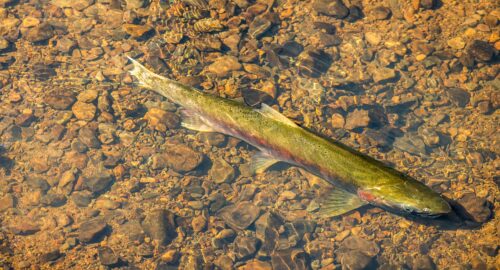
“During the 2024–2025 spawning season, endangered Central California Coast coho salmon (CCC coho) migrated to Mendocino Coast rivers in numbers few scientists thought they would see in their careers. Monitoring teams estimated that more than 30,000 adult coho returned, double the previous season’s record-breaking return of 15,000 coho. These numbers represent a significant leap from the past decade, where as few as 3,000 fish returned annually. Several factors contributed to this surge. Many scientists believe that reconnecting spawning streams to mainstem rivers and other large-scale habitat restoration projects significantly boosted their productivity and abundance. These actions expanded and improved the habitat available for salmon to spawn and grow. Since 2000, NOAA has supported more than 100 restoration projects across the region. For biologists and restoration practitioners who have spent decades surveying streams with few or no fish, the new numbers feel profound. … ” Read more from NOAA Fisheries.
SIERRA NEVADA
‘Winter is coming back’ to Tahoe next week
“After an extended dry stretch, rain and snow are expected to return to the Truckee area early next week, bringing a renewed burst of winter conditions to the northern Sierra. Dry weather is forecast to hold through at least Sunday, March 29, and possibly into the daytime hours on Monday, March 30, according to OpenSnow forecaster Bryan Allegretto. However, a shift in the pattern is expected Monday night as a pair of storms moves through the region. The systems are projected to impact the northern Sierra from Monday night through Thursday, April 2, delivering colder air, lowering snow levels, and the potential for significant snowfall — especially over higher elevations like Donner Pass. … ” Read more from the Tahoe Daily Tribune.
Yuba Water to begin sediment removal on riverbank below New Colgate Powerhouse on North Yuba River
“Yuba Water Agency will begin removing sediment on the riverbank below New Colgate Powerhouse as part of ongoing response following the Feb. 13 penstock pipe rupture. The work is expected to begin Friday, March 27 and last several weeks, with completion targeted for June 1. Crews will remove an estimated 60,000 cubic yards of sediment that entered the river when water from the ruptured penstock carried soil, rock and debris down the hillside, creating two large sediment fans on either side of the powerhouse. Crews will also work to locate and safely remove any man-made debris that may be buried within the sediment. … ” Read more from YubaNet.
SACRAMENTO VALLEY
Northern California Water welcomes NOAA Fisheries for Sacramento Valley tour
“Recently, NCWA alongside our partners in the Bridge Group (farmers and fishermen), welcomed Assistant Administrator Genio Piñeiro Soler and staff from NOAA Fisheries offices across California for a Sacramento Valley tour focused on salmon recovery. Throughout the day, the group visited sites that demonstrated real projects and infrastructure working for salmon and food production across the Sacramento Valley. In the Yolo Bypass, fishermen and scientists stood alongside the fields, showing juvenile salmon actively growing in harvested rice fields through efforts like the Nigiri Project demonstrating how these working landscapes can double as rich rearing habitat when floodplains are reconnected. … ” Read more from the Northern California Water Association.
BAY AREA
Solano County: Forty-year wait for Goat Island restoration may be nearing an end for Land Trust
“The Goat Island Marsh was one of the attractions for the Solano Land Trust to purchase the Rush Ranch property in May 1988. The ranch was the first of the Land Trust’s holdings, acquired two years after the founding of what was then the Solano County Farmlands and Open Space Foundation. The Solano Land Trust is celebrating its 40th anniversary this year. It was a combination of open space advocates, land developers and local government entities working together that created the foundation. “This unusual genesis created the structure for a board of directors that reflects all sides of land-use issues united in the mission to preserve the agricultural legacy and natural landscapes of Solano County and enhance people’s relationship to the land,” the Land Trust said in its history material. … ” Read more from The Daily Republic.
CENTRAL COAST
Historic water system challenges force extended closure of Hearst Castle restrooms
“Step onto the grounds of Hearst Castle, and you’d expect marble staircases, gilded ceilings, and sweeping views of the Pacific. Instead, your first encounter might be something far less glamorous: a row of large portable toilets right outside of the visitor center. What was meant to be a temporary solution during the 2022 drought is now a fixture. California State Parks first closed the restrooms at the Hearst San Simeon Historical Monument Visitor Center in July 2022 as part of stage 3 of its drought contingency plan—the highest level of restrictions, according to Dan Falat, the San Luis Obispo Coast District superintendent for State Parks. The closure was prompted by declining spring water production and the need to preserve water for essential operations, including firefighting reserves. … ” Read more from New Times SLO.
SAN JOAQUIN VALLEY
Gustine approves updated groundwater agreement as basin governance shifts
“The Gustine City Council on March 17 approved a revised and restated Memorandum of Agreement among the Delta‑Mendota Subbasin Groundwater Sustainability Agencies, updating the city’s role in regional groundwater management as part of a basin‑wide governance transition. The item was approved on the council’s consent calendar. Gustine is one of several Groundwater Sustainability Agencies within the Delta‑Mendota Subbasin, a critically overdrafted groundwater basin regulated under California’s Sustainable Groundwater Management Act. In 2024, the agencies adopted a single Groundwater Sustainability Plan to coordinate compliance across the basin. … ” Read more from Westside Connect.
Slew of lawsuits between Friant Water Authority and its own members settled in one fell swoop
“Friant Water Authority announced conclusions to an array of lawsuits that had been a burr for the agency and its members after a lengthy closed session Thursday, March 26. That includes a 2024 lawsuit by Friant and Arvin-Edison Water Storage District against the now mostly defunct Eastern Tule Groundwater Sustainability Agency (GSA) over how much the GSA had agreed to pay for repairs to the sinking Friant-Kern Canal. The canal had sunk over 33 miles from about Pixley to the Kern County line due to excessive groundwater pumping that caused the ground to collapse. Repairs on just one 10-mile section have cost $326 million so far. It was that 2024 lawsuit that unleashed a waterfall of other lawsuits within the Friant “family,” leading to accusations of Brown Act violations, extortion and even delayed infrastructure upgrades. That’s all settled now, according to a statement by Friant. … ” Read more from SJV Water.
Kings County groundwater managers frustrated, enlightened by state actions
“One Kings County groundwater agency will send an emissary to Sacramento to ask for more time before its farmers are charged fees while other agencies pour over a recent state report for guidance. At its March 24 meeting, the Mid-Kings River Groundwater Sustainability Agency (GSA) approved sending Doug Verboon, also a Kings County Supervisor, to Sacramento April 7 to appear before the Water Resources Control Board. The Water Board placed the region on probation, which comes with reporting and fee requirements, in 2024 for lacking an adequate groundwater plan. After the Kings County Farm Bureau sued and obtained a preliminary injunction holding off those sanctions, Water Board staff ceased meeting with Tulare Lake managers. … ” Read more from SJV Water.
EASTERN SIERRA
Mono County Board of Supervisors adopts ordinance to protect local waterways from invasive golden mussel
“Committed to preserving the health and beauty of local lakes and rivers, earlier this month the Mono County Board of Supervisors adopted a critical ordinance establishing a mandatory Water Vessel Inspection Program. The proactive measure aims to prevent the introduction of the highly destructive, non-native golden mussel into Mono County waterways. First detected in California in late 2024, the golden mussel has spread rapidly across the state. Unlike other invasive mussels species, golden mussels can survive in a wider range of temperatures and extreme alpine environments, meaning they pose a severe and imminent threat to the Eastern Sierra’s aquatic ecosystems, world-class fisheries, and local economy. Because trailered water vessels entering Mono County from infested areas are the highest risk for carrying adult mussels and microscopic larvae, the Board recognized that voluntary measures of self-inspection or simple clean-drain-dry protocols are no longer sufficient. … ” Read more from the Sierra Wave.
SOUTHERN CALIFORNIA
“Pure Water Southern California is transformational for the region’s long-term water reliability”
“For decades, Southern California’s water system has relied heavily on importing supplies from hundreds of miles away. Water from the Colorado River and Northern California helped sustain the growth of one of the world’s largest metropolitan regions. But increasing pressure on those sources is prompting the region to rethink how it secures its long-term water future. Shivaji Deshmukh stepped into the role of General Manager of the Metropolitan Water District of Southern California at a time when those questions are becoming more urgent. The agency provides water to 26 member agencies serving nearly 19 million people across six counties, placing it at the centre of the region’s water planning and supply strategy. In this interview, Deshmukh discusses how Metropolitan is diversifying Southern California’s water portfolio through conservation, infrastructure investment and new local supplies such as recycled water. … ” Read more from Smart Water Magazine.
Altadena residents with bone-dry lots turn to ABC7 after receiving bills from water company
“Eaton Fire victims’ homes burned down to the ground, and they haven’t used water on their properties for more than a year, but now, bills from their water company are back. Now, angry Altadena residents are reaching out to ABC7 On Your Side Investigates, calling the bills unjust and unfair. One of them is Ricky Parish, who says even the water meter on his lot was destroyed. His property is mostly bone-dry dirt. 7 On Your Side asked him how much water he has used on the property since his home burned down to the ground. “Absolutely none, there’s no pipes,” Parish answered. … ” Read more from KABC.
Along the Colorado River …
The Colorado River is on the brink of possible forced water cuts. One thing is certain: There will be lawyers.
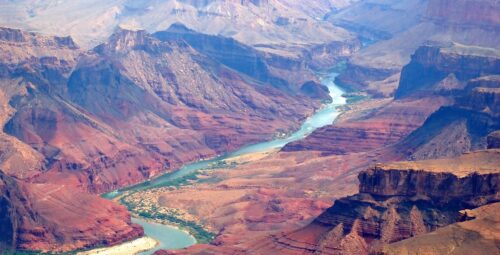
“Under the rusty cliffs of Marble Canyon, the start of the Grand Canyon in Arizona, a nondescript river measurement gauge has been tracking the flow of the Colorado River for decades. It’s a picturesque place, often filled with rafters and swimmers, about 15 river miles downstream from one of the nation’s largest reservoirs, Lake Powell. It’s also central to looming legal battles over the river’s future — and the potential of forced water cuts in Colorado. The Colorado River’s flows at the gauge, called Lees Ferry, are fundamental to water sharing agreements among upstream states, like Colorado, and downstream states including Arizona, California and Nevada. If the river’s flow falls too low, the three downstream states can raise a ruckus, arguing the upstream states are breaking century-old agreements and forcing the basin into a legal mire that might only be decided in the U.S. Supreme Court. … ” Read more from the Colorado Sun.
Lake Mead faces four major problems
“Federal projections, public health alerts, power reliability worries, and dangerous temperatures converged at Lake Mead this month, compounding risks for the nation’s largest reservoir and the millions who rely on it. The Colorado River system, including Lakes Mead and Powell, supplies water to roughly 40 million people and irrigates more than 5 million acres of farmland. Recent federal forecasts from the Bureau of Reclamation projected Lake Mead’s end-of-November 2027 elevation at 1,032.76 feet, lower than earlier expectations and below 2022 levels— when the lake was battling critically low water levels following years of drought. … ” Read more from Newsweek.
The 2.3 million-acre-foot reality
“As of mid-March 2026, the diplomatic channels that once managed the Colorado River have largely been replaced by legal posturing. After the February federal deadline for a seven-state consensus passed, Colorado has strengthened a “hydrologic reality” defense, arguing that the state cannot be legally forced to provide water that simply does not exist in its system. The Colorado legislature recently bolstered this stance by establishing a dedicated legal fund—now exceeding $2 million—specifically to fight federal or Lower Basin attempts to mandate Upper Basin cuts. … ” Read more from the Lake Powell Chronicle.
Arizona loses 90% of snowpack in three weeks after record heat
“Arizona has lost about 90% of its snowpack in just three weeks following this month’s record-breaking heat wave, according to a new survey. The snowpack in the White Mountains acts like a slow-release savings account that feeds Phoenix’s largest reservoirs. But this year, that bank is emptying fast. “Understanding snowmelt and snowpack is very important when it comes to managing a water supply,” said Jacob Richardson, a senior hydrologist with the Salt River Project (SRP). Arizona State University and SRP have been tracking the snowpack from the sky using a new airborne survey that measures snow across the entire watershed, not just one spot. … ” Read more from Arizona Family.
Phoenix hits water reuse milestone as heat melts supply
“As record heat melts snow in the Rocky Mountains and threatens Arizona’s water supply, Phoenix is investing in a different kind of solution, turning wastewater into drinking water. City leaders say a major milestone at the Cave Creek Water Reclamation Plant marks a step toward making that future a reality. Crews this week filled a one-million-gallon treatment basin as part of system testing, a sign the project is about 50% complete. The facility is designed to take wastewater and purify it into a reusable resource, something water leaders say could help offset expected cuts to the Colorado River. “Because maybe there are times we don’t have enough water, like on the Colorado, we’re going to have major concerns there, significant cuts,” said Phoenix Assistant Water Services Director Nazario Prieto. “Eventually, this program is going to offset some of those cuts.” … ” Read more from Channel 15.
Grim outlook: Colorado faces limited water supply after record-low snowpack
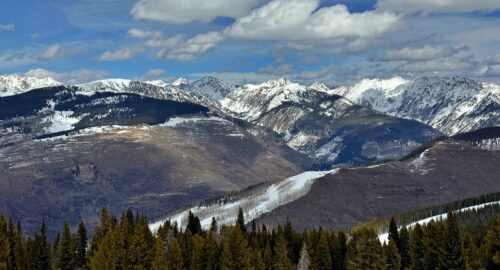
“Each day during the winter and spring, one of the first things I look at is the U.S. Department of Agriculture’s website that shows the current status of the snowpack in Colorado’s mountains. Maybe that sounds like the strange habit of a state climatologist, but I’m far from the only one. Why? Because the snow that falls in our state’s mountains will, when it melts in the spring and summer, become a large portion of the water supply for tens of millions of people. It hasn’t been a pretty sight when I have opened that USDA website each morning this winter. Those people aren’t only here in Colorado, but are in other states, Tribal nations, and Mexico, drawing their water from the rivers that originate in Colorado. Mountain snow is essential for our winter recreation industry, for farms and ranches that grow our food, for drinking water, for ecosystem health, and much more. … ” Read more from Colorado State University.
Water world: Top things to know about water in Colorado
“In the arid U.S. West, water is scarce, yet it is also essential for growing food, maintaining homes, and sustaining the environment and economy. Colorado’s snowy slopes, trout-filled streams and frothy rivers draw people to the state – while also providing critical water supplies to 18 other states and Mexico. Karen Schlatter, director of the Colorado Water Center at Colorado State University, says water is the reason people are here; she wants Coloradans to understand both its value and limitations. This month, the Colorado Water Center celebrates 60 years as a leading hub of expertise that serves the state through outreach, education and applied research. The center addresses water quality and access challenges, trains the future water workforce, and works with farmers and ranchers to improve agricultural water management. In this Q&A, Schlatter shares information about Colorado water that’s relevant to people living in this state – and beyond. … ” Read more from Colorado State University.
In national water news today …
Republicans split on how to legislate on data centers
“Republicans in Congress are no closer to addressing how data centers affect electricity bills, a week after the president urged legislation. GOP leaders pledged to work with the White House to ensure that the rapid expansion of data centers driven by artificial intelligence does not raise ratepayer electricity bills. But committee inaction and a derailed markup Thursday show growing discord within the party on how to carry out President Donald Trump’s AI national policy framework. House Energy and Commerce Chair Brett Guthrie (R-Ky.) — who joined House Speaker Mike Johnson (R-La.) and Majority Leader Steve Scalise (R-La.) last week in saying Congress “must take action” — said he’s unsure whether federal legislation is necessary. … ” Read more from E&E News.
World’s freshwater fish in crisis, U.N. report finds
“Over the last half century, populations of migrating freshwater fish have dropped by 81 percent, according to a stark new U.N. report. Hundreds of species of fish, which together sustain hundreds of millions of people, are imperiled by warming, pollution, dams, and intensive fishing, according to the report, launched at a U.N. meeting on migratory wildlife now underway in Brazil. As threats mount, populations of freshwater animals are declining faster than populations of animals on land or sea. With more than 250 rivers and lakes worldwide crossing international borders, conservationists say that countries must work together to protect imperiled fish. “Rivers don’t recognize borders — and neither do the fish that depend on them,” said coauthor Michele Thieme, deputy lead of freshwater for World Wildlife Fund U.S. … ” Read more from Yale e360.

