
Several news sources featured in the Daily Digest may limit the number of articles you can access without a subscription. However, gift articles and open-access links are provided when available. For more open access California water news articles, explore the main page at MavensNotebook.com.
On the calendar today …
- MEETING: Delta Stewardship Council beginning at 9:30am. Agenda items include a presentation on the Healthy Soils Program and rice cultivation in the Delta; California Water Plan update, and the Delta Lead Scientist’s report. Click here for the meeting notice.
- WEBINAR: SB 54 Plastic Pollution Mitigation Fund Kick-off from 12pm to 1pm. The California Environmental Protection Agency (CalEPA), in partnership with the California Natural Resources Agency (CNRA), and the California Strategic Growth Council (SGC), invites you to a kickoff webinar to learn about the Plastic Pollution Mitigation Fund (PPMF). As a key component of the landmark Senate Bill 54 (the Plastic Pollution Prevention and Packaging Producer Responsibility Act), the PPMF shifts the responsibility for pollution cleanup from the public to the producers of single-use plastic materials. Beginning in 2027, the fund will receive $500 million annually for 10 years to mitigate the environmental and public health impacts of plastic pollution. Registration: https://us02web.zoom.us/webinar/register/WN_8gh-S-F2TXizvKPmgDzQJg#/registration
- WORKSHOP: Building our Collaborative Capacity with Beavers from 12pm to 2pm. What if beavers were not just a challenge to manage, but partners in watershed stewardship? Join Watershed Solutions Network and the WATER Institute at Occidental Arts & Ecology Center (OAEC) for a virtual conversation exploring how beavers can help us restore healthier, more resilient watersheds. Drawing on the work of OAEC’s Bring Back the Beaver Campaign, their California Beaver Coexistence Training and Support Program, and the new California Beaver Help Desk, this workshop will invite participants to see beavers as ecosystem engineers whose presence can help slow floodwaters, improve water quality, expand wetland habitat, and reduce drought and wildfire impacts. Click here to register.
In California water news today …
Millions of hatchery salmon face ‘deadly’ low water flows in warm Sacramento River
“The U.S. Fish and Wildlife Service released more than 6.2 million juvenile Chinook salmon from the Coleman Hatchery into the Sacramento River this week, even as the river faces unusual March heat and low water flows. The announcement of the release came during a spell of extreme heat throughout California, prompting urgent calls from conservationists who warn the young fall‑run Chinook could die in the river’s warm, low‑flow conditions before making their way to the ocean, unless the Bureau of Reclamation releases more water from Shasta Dam. “No sooner do we start to gain a little ground back in rebuilding our salmon runs, the federal Bureau of Reclamation is destroying them again,” Vance Staplin, executive director of the Golden State Salmon Association said in an email. “These fish are in big trouble if the Bureau doesn’t relent very soon.” … ” Read more from the Sacramento Bee.
Upwelling saved the West Coast in 2025, NOAA reports
“Despite a massive marine heatwave that gripped the eastern Pacific through much of 2025, the West Coast marine ecosystem held its own — thanks largely to strong wind-driven upwelling, according to NOAA Fisheries’ annual California Current Ecosystem Status Report. “Warming continues to be an inescapable reality off the West Coast, but upwelling saved the day,” said Andrew Leising, a research oceanographer at NOAA’s Southwest Fisheries Science Center. The cold, nutrient-rich water pushed to the surface helped keep the ecosystem productive and held heatwave warmth offshore. The good news carried through the food web. Krill proved abundant coastwide, and juvenile salmon, young rockfish, and anchovy all flourished — providing vital prey for salmon, whales, and seabirds. Seabird colonies along the West Coast largely recovered from prior years of low productivity. Surveys even recorded the highest numbers of juvenile coho and chum salmon on record, a promising indicator for future adult returns. … ” Read more from National Fisherman.
Suisun Marsh study shows managed wetlands produce more zooplankton than tidal habitats
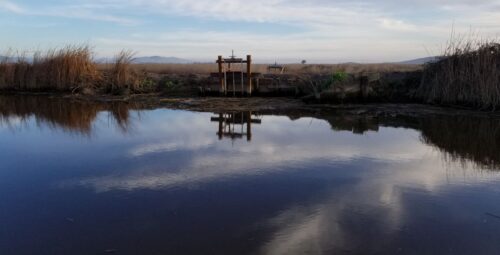
“California’s Bay Area may be a culinary hot spot for people, but food options for fish in the San Francisco Estuary have been limited and declining in recent decades. A study from the University of California, Davis, shows there is a part of the estuary that is teeming with fish food — the managed wetlands of Suisun Marsh. The study, published in the journal Estuaries and Coasts, found that managed wetlands produce 11 to 22 times more zooplankton than tidal habitats, including tidal restoration sites. Zooplankton are drifting, microscopic animals that form the foundation of a fish’s diet. The paper said zooplankton increases in response to controlled floods. … ” Read more from UC Davis.
CA Water Board issues draft water rights decision for widely-opposed Sites Reservoir Project
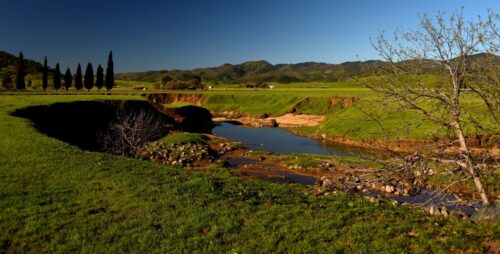
“While California Governor Gavin Newsom and President Donald Trump disagree on a number of issues, one project that they both strongly support is the controversial plan to build Sites Reservoir in the rolling foothills of the west side of the Sacramento Valley — at the behest of Big Money interests. The Administrative Hearing Office of the State Water Resources Control Board last Friday issued a draft water rights decision for the proposed Sites Reservoir project, despite longstanding concerns by Tribes, fishing groups and environmental organizations about the project’s environmental impacts, high costs, and limited benefits. “The hearing process involved 21 parties, 60 witnesses, 2,115 evidentiary documents and took place over 32 separate hearing days, with a two-day site visit,” the State Water Resources Control Board wrote in a statement. “The draft decision evaluates the evidence and legal arguments received during the proceedings and provides the rationale for conditions contained in the draft water right permit; it is the product of extensive deliberations by the board members during closed sessions over the last two years.” … ” Read more from Dan Bacher at the Daily Kos.
SWRCB prioritizes politics over the public interest in Sites decision
“The Board’s draft decision allows the Newsom administration to formalize strategies for diverting water from the Sacramento River for the project, which would include a 1.5 million acre-foot “offsite” reservoir in Colusa and Glenn counties. The reservoir’s current construction cost estimate is between $6.2 and $6.8 billion. Promoted by the administration as a needed response to climate change, the reservoir’s operation would be based on flow rules for the Sacramento River. The Board’s draft decision would impose operating conditions designed to maintain water quality, which would drive up the cost of any water delivered to downstream customers. “While the Board should have rejected the permit, the proposed operating conditions demonstrate why building another surface water reservoir is a foolish pursuit,” said Max Gomberg, Senior Policy Analyst for the California Water Impact Network. “There is no business case for storing water for delivery to big water contractors on a river system that is already oversubscribed and needs more flow to sustain fish populations.” … ” Read more from C-WIN.
Commentary: I almost always side with environmentalists. Sites Reservoir is the exception.
Zach O’Brien writes, “When I started Active NorCal, I made a commitment to champion conservation. Northern California’s wild places, its rivers, forests, and mountains, are the reason this publication exists. I’ve spent years covering environmental stories with that lens, and I don’t take it lightly when I find myself on the opposite side of groups whose mission I typically support. This is the second time I’ve broken ranks. The first was when conservationists tried to halt fuel reduction work near Weaverville over spotted owl concerns. That position, however well-intentioned, ignored the reality that catastrophic wildfire posed a far greater threat to both the owl and the surrounding ecosystem than responsible forest management. I felt strongly then, and I feel just as strongly now about Sites Reservoir. … Here’s the bigger picture opponents tend to ignore: what are the alternatives? Desalination is extraordinarily expensive and energy-intensive. Expanding existing reservoirs (i.e. Shasta Dam) means disrupting ecosystems that are already built around them. Sites Reservoir would divert water from the Sacramento River only during high-flow months, November through mid-June, and release it during dry seasons for agricultural and municipal use. It works with California’s natural water cycle rather than against it. … ” Read more at Active NorCal.
LAO acknowledges potential benefits of Healthy Rivers and Landscapes Program
“The Legislative Analyst’s Office (LAO) on March 18 issued a report on the Bay-Delta Plan and Voluntary Agreements, also known as the Healthy Rivers and Landscapes (HRL) Program, that acknowledges the HRL Program’s potential to benefit the Sacramento-San Joaquin Delta watershed. ACWA is a long-standing supporter of the HRL Program as the best approach to protecting, restoring and enhancing the Bay-Delta watershed. The LAO report takes a balanced approach in evaluating the HRL Program alongside the State Water Resource Control Board’s pathway that would primarily rely on enforcing unimpaired flows. … ” Read more from ACWA’s Water News.
Mapping the Delta, made simple: A new online resource for Delta partners
“When you think of the Sacramento-San Joaquin Delta, where do you picture its boundaries? Some may see it as part of a larger whole, an estuary and landscape that stretches from the upper watershed in the Sierra to the Pacific Ocean at the Golden Gate, and beyond. Others may think of the Delta in terms of a specific community or their favorite fishing spot. While all of these and many more make up the Delta, the Delta Plan references specific jurisdictional bounds: the Legal Delta and Suisun Marsh, political boundaries that we commonly refer to as the “Delta.” Two frequent questions we get from partners are where exactly the boundaries of the Delta are and if we can provide a map or data showing their extent. Delta Stewardship Council staff also regularly need to identify where projects or specific locations are in relation to the Delta. Council staff built an interactive online Delta atlas as a useful reference tool to make data accessible and more easily answer these types of questions. The atlas illustrates select boundaries, reference layers, and Delta Plan policies with a geographic component. Using the atlas, people can display this data, perform basic location searches, add placemarks and sketches, and export a map as a PDF or image. … ” Read more from the Delta Stewardship Council.
Untangling ISW depletion: What DWR’s upcoming guidance means for GSAs
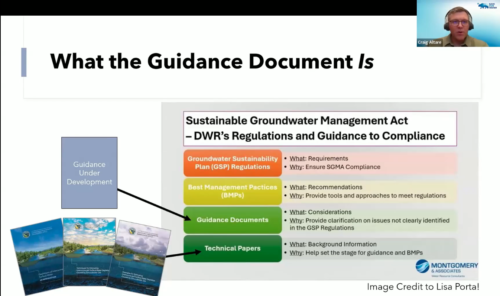 “In December 2025, the Groundwater Resources Association of California hosted a two-day webinar to examine the complex connections between Interconnected Surface Water (ISW) and groundwater. The sessions explored how pumping groundwater affects surface water flow and the ecosystems that rely on it. … To conclude, Craig Altare, a Supervising Engineering Geologist with the Department of Water Resources, reviewed SGMA regulatory requirements for ISW depletion and introduced DWR’s forthcoming guidance document, which aims to help GSAs achieve regulatory compliance. Interconnected surface water depletion is one of the six sustainability indicators identified by SGMA and the GSP regulations. GSAs are required to avoid significant and unreasonable adverse impacts on beneficial uses of surface water caused by groundwater conditions occurring throughout their basin. “Even with that regulatory language, which is relatively clear, interconnected surface water depletion is among the most challenging, technically challenging parts of SGMA to implement,” said Mr. Altare. “Surface water flows respond to many different processes: climate variability, runoff and reservoir operations, surface water diversions, riparian ET, and groundwater pumping. Distinguishing how much of a low flow condition that may be an adverse impact is attributable specifically to groundwater extraction is not always obvious. In fact, it’s probably mostly not obvious.” … ” Read more from Maven’s Notebook.
A look back at the 2025 Cal-Neva American Fisheries Society Annual Meeting
“Every year, the California-Nevada Chapter of the American Fisheries Society (AFS) brings together a community of people who care deeply about native fish, watersheds, and the science that enhances our ability to understand and protect them. This year’s annual meeting convened in Chico in mid-February, drawing Tribal leaders, academics, students, agency staff, and conservation practitioners from California, Nevada, Oregon, and beyond. Under the theme “From Microscapes to Macroscapes: Integrating Knowledge Across Scales and Systems,” the event featured fascinating talks, poster presentations, field tours, a fish printing workshop, a salmon run, and much more. This conference is built around the idea that protecting fish means working at every scale, from single stream biology to whole watersheds to the web of communities that depend on them. The CalTrout team showed up in full force at AFS to share and discuss what we’ve been working on and to learn from some of the field’s sharpest minds. … ” Read more from Cal Trout.
How California rose to the challenge of protecting water quality
“In the late 1940s, as the country recovered from World War II, California was the place to be for movie stars, business tycoons, military veterans and ordinary folks who moved West with their new-found wealth. As the population exploded and the economy boomed, roads and freeways connected towns and farmland. Suburban housing tracts dotted the landscape. High rises sprouted in city centers. And the post-war military industrial complex expanded throughout the state and thrived for decades. But along with new opportunities came many of the old problems, including the inability of government agencies to manage waste and protect groundwater. “In the 1920s and 30s, the attitude was ‘oh, don’t worry about contaminating groundwater’ because the layers of soil already protect what was down there,” said current State Water Board Chair E. Joaquin Esquivel. “Clearly, that was not true.” … ” Read moire from the State Water Board’s Ebb and Flow.
Reservoirs contribute to climate change, it’s time for California to track their emissions
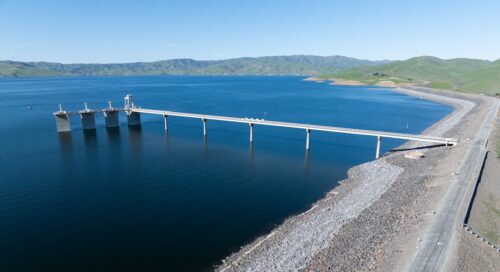
“Today, a petition was filed with the California Air Resources Control Board (CARB) to add dams and reservoirs as reporting entities under California’s Regulation for the Mandatory Reporting of Greenhouse Gas Emissions. Numerous scientific studies have established that dams and reservoirs produce and emit substantial amounts of greenhouse gases, with California’s major dams and reservoirs producing the equivalent of burning 5.8 billion pounds of coal every year. The petitioners, which include Patagonia, California Trout, Friends of the River, Ríos to Rivers, Center for Biological Diversity, Save the World’s Rivers, Ridges to Riffles Indigenous Conservation Group, and the research entity Tell the Dam Truth, assert that these should be tracked to ensure that the state can reach its climate goals. “Methane is a highly potent greenhouse gas, and water storage reservoirs in California are a significant and largely untracked source,” said Keiko Mertz of Friends of the River. “Our goal with this petition is to support the State’s climate efforts. If California is serious about climate leadership, it must measure and combat all major sources of emissions, including those hiding in plain sight.” … ” Continue reading this press release.
Sramek defends vision for Suisun Expansion
“Critics of California Forever often claim the company lacks concrete plans, but CEO Jan Sramek is ready to dispute that. In fact, the former Goldman Sachs wunderkind-turned-developer now attends community events armed with a dozen paper copies of the 223-page Suisun Expansion Specific Plan, prepared to dive into the weeds with Solano County residents about details like landfill space and gravity-pulled utilities. California Forever provided a community update for the Nor Cal Filipino-American Chamber of Commerce on Tuesday evening, filling in Solano County residents about the company’s operations since it pulled its controversial ballot initiative in 2023. Sramek said the project was a big, controversial idea when introduced, but said Vallejo was more willing than any other community to look at the project on the merits and see its potential to help people in the county. … ” Read more The Vacaville Reporter.
Report finding PFAS pesticides on California crops prompts a new bill..
“The “miracle” class of chemicals known as PFAS (polyfluoroalkyl substances) can do it all – famous for making pans nonstick, clothing water-resistant and carpets stain-resistant. PFAS are prolific, used in everything from deodorant and dental floss to agriculture, yet their special chemical structure is so strong it does not break down in the environment. They have been linked to cancer, found contaminating waterways and bioaccumulating in the food chain. A report conducted by the Environmental Working Group (EWG), a nonprofit environmental group, found that 2.5 million pounds of PFAS pesticides are spread annually on California farmland. Of that total, 551,108 pounds were used on crops in Monterey County between 2018 and 2023, where the highest traces were found on wine grapes (116,499 pounds), strawberries (99,972 pounds) and leaf lettuce (76,248 pounds). … ” Read more from Monterey Now.
Sen. Blakespear introduces legislation to balance CEQA reforms with needed environmental and worker protections
“Sen. Catherine S. Blakespear, D-Encinitas, introduced legislation Wednesday to balance reforms made to the California Environmental Quality Act (CEQA) last year with needed protections for the environment, workers and endangered species. The bill, SB 954, includes measures called for by a dozen Senators and 20 Assemblymembers in response to SB 131, legislation passed and signed into law that provides a CEQA exemption for nearly all manufacturing facilities, among other changes. A new poll indicates that 64 percent of Californians disapprove of the advanced manufacturing exemption. “Refining and reforming CEQA is important so that it works the way we want it to for modern California, but we must be thoughtful about it,” Sen. Blakespear said. “SB 954 ensures that when new industrial facilities are built, that the environment, workers and the communities living next door are protected as they should be.” … ” Read more from Senator Blakespear.
In regional water news and commentary today …
NORTH COAST
Why Dunsmuir, California, claims to have the best water on earth
“A small city along the upper Sacramento River is leaning into its natural assets — from spring-fed drinking water to fly fishing — as it works to balance tourism with long-term sustainability. Dunsmuir, in northern California’s Siskiyou County, has about 2,800 residents and sits along Interstate 5 and the Union Pacific Railroad. Situated in a canyon, it draws visitors for its scenery and access to outdoor recreation. Dunsmuir boasts the “best water on earth,” sourced from underground volcanic flows. “Our water comes from a volcanic tube that never sees the light of day until you turn the tap water on,” Mayor Juliana Luchessi said. … ” Read more from Jefferson Public Radio.
Water District completes emergency repairs to dam gate at Ruth Lake following hydraulic fluid leak
“The Humboldt Bay Municipal Water District has completed emergency repairs to a hydraulic gate at the R.W. Mathews Dam on Ruth Lake, according to a press release issued today. Environmental containment and cleanup operations have also been wrapped up following a March 3 failure in the dam gate’s hydraulic operating system. The subsequent discovery of a hydraulic fluid leak triggered “an all-hands emergency that demanded immediate action to protect our community’s water supply,” District General Manager Michiko Mares says in the press release. No oil was observed in the Mad River at any point during the incident or repair operations, according to the district. … ” Read more from the Lost Coast Outpost.
SIERRA NEVADA
Reducing fuels on steep slopes
“Tahoe National Forest’s North Yuba watershed is a highly productive water source for downstream residents and the agricultural industry across northern California. Although it is the largest continuous unburned landscape in the Central Sierras, it is also one of the most difficult forests to keep safe. This remote and rugged location has some of the most challenging terrain in California for fighting fire. The steep slopes are also why it is difficult to reduce fuels in the area, with an almost unimaginable cost to treat the landscape in this condition. Also, the checkerboard ownership pattern of the Central Sierras requires working across public-private boundaries. Taken together, treatment is nearly impossible. But the Tahoe National Forest and partners are finding a way.“We continue to make moves on this landscape thanks to the bold efforts of the North Yuba Forest Partnership and our collective agreement that we need to act fast to proactively and sustainably reduce wildfire risk for these communities,” said Tahoe National Forest Supervisor Chris Feutrier. … ” Read more from YubaNet.
Tahoe’s largest ski resort to close early as heat wave melts Sierra snowpack
“Palisades Tahoe, California’s largest ski resort, said it expects to close weeks earlier than planned, the latest resort to scale back its season as unusually warm March weather strips snow from the Sierra. In a blog post on Tuesday, the resort said “the lack of early/mid-season snowfall and a quickly diminishing base will not allow us to make our targeted closing date of May 25 this year.” Instead, it is now “targeting late April,” though officials said no final closing date has been set. “We do not have a specific closing date because we are committed to going as long as conditions allow,” the resort said. … ” Read more from the San Francisco Chronicle.
Placer County supervisors approve farmland plan to guide agricultural resilience
“Placer County supervisors approved a $549,655 effort to develop an agriculture resilience plan that will guide future farmland protection and farming policies. The project, known as the Placer County Agriculture Resilience Initiative, was requested by members of the county’s agricultural community and is intended to guide policies that improve climate and economic resilience, according to a county staff report. It focuses on six areas of the county’s farming industry: the economic value of farming, which farmland is most at risk of development, how to protect the best farmland, housing for farmworkers, how farms can better prepare for climate challenges and how to grow agricultural tourism. … ” Read more from the Sacramento Bee.
SACRAMENTO VALLEY
Reconnecting winter-run chinook salmon with their historical source waters
“It’s not just big mountains, or the hottest deserts, or the tallest trees, or the clearest lakes and most beautiful beaches. Unlike many states that have one or two iconic features, our state has too many to list, from the geological to the biological and everything in between. … From a fisheries perspective, the list goes on and wouldn’t be complete without winter-run Chinook salmon, a distinct member of California’s biodiversity found only within the Sacramento Valley. And you wouldn’t know it by looking, but the real beauty of California is that these features are all connected, from the highest mountains to the smallest fish in the streams. Read on as we explore the unique biology of winter-run Chinook salmon and efforts that are underway by CalTrout and our partners to conserve them. … ” Read more from Cal Trout.
Supervisors take action on flood control in north Chico
“Ongoing flood woes just north of Chico could be seeing some easement after the Butte County Board of Supervisors unanimously approved a plan for stormwater drainage for the Wildflower Estates community. The board heard a presentation by Interim Public Works Director Wendy Tyler that went over the issues faced by County Service Area 128 as well as the recent study that formulated a cost for mitigating the drainage and potential flood risks. Those living in the community on Hereford Drive had previously requested an increased assessment to allow for both the study and subsequent work to be done. “We worked with PG&E, we worked with our engineering staff and our engineer’s report has been completed with an estimated cost of $164,000 for a pump, electrical service, site work and about $10,000 for contingencies,” Tyler said. “What we are here to request today is a resolution authorizing a Prop. 218 election for the voters in the district by about $700.” … ” Read more from the Chico Enterprise-Record.
Yolo County water worries hit the courts as officials allege DWR skirted environmental review
“Concerns about groundwater are once again bubbling to the surface in Yolo County. Last month, the California Department of Water Resources determined that a $180 million purchase of water rights from a large farm near Knights Landing would have minimal impact on the environment and was therefore exempt from a lengthy, state mandated review process. Local officials disagreed with that assessment. In separate lawsuits filed last week, Yolo County and the Yolo Subbasin Groundwater Agency alleged that DWR inappropriately skirted the environmental impact review required under the California Environmental Quality Act, or CEQA. According to the plaintiffs, the water transfer, which would provide DWR with the rights to up to 16,000-acre feet of Fair Ranch’s Sacramento River surface water, could put more pressure on the county’s already depleted groundwater reserves. … ” Read more from PBS Abridged.
NAPA/SONOMA
Clearlake residents affected by January sewage spill spared major sewer rate hike — for now
“Clearlake residents still reeling from the Jan. 11 sewage spill on Robin Lane were spared from a 120% sewer rate hike proposed by the Lake County Special Districts during the March 24 Lake County Board of Supervisors meeting — at least for now. The Lake County Board of Supervisors postponed the process to implement the new rates for at least six months to give the county time to wrap up response to the 2.9-million gallon sewage spill that has upended life for about 475 Clearlake residents. “At this time, I am very uncomfortable with even having the conversation about rate increases,” said Lake County Supervisor Bruno Sabatier, whose district encompasses the area impacted by the spill. “We are still in the midst of an emergency and some people still don’t have access to clean, potable water.” But according to officials, rate increases are required — and inevitable -— to meet exceeding operational costs. … ” Read more from the Santa Rosa Press Democrat.
BAY AREA
Bay Area weather: Rain is forecast to break the long dry spell. Here’s when to expect it.
“It might seem like an April Fool’s joke. But it’s not. After a month of dry and sometimes record hot weather, rain is finally back in the Bay Area forecast. A low-pressure system from the Pacific Northwest is expected to bring rain to much of Northern California next Tuesday and Wednesday. The showers would be the first rain in the Bay Area in a month — since March 2 — and although it is still early, could generate half an inch to 1 inch of precipitation across the Bay Area, forecasters say. “In the grand scheme of things, it’s a light, beneficial rain,” said Jan Null, a meteorologist with Golden Gate Weather Services in Half Moon Bay. “It’s certainly better than nothing. And I won’t have to get my car washed.” … ” Read more from the San Jose Mercury News.
Sea level rise proposal for Highway 101 in Marin County
“Some of the most vulnerable public assets to sea level rise are ocean side and bay side roads and transit. A plan looking at the next quarter-century confirms that whatever we do will be expensive, but not as expensive as doing nothing at all. On Wednesday, the Metropolitan Transportation Commission released a tentative plan to deal with sea level rise that’s worsening. “A projection of $96 billion of investment from now through 2050 to protect against sea level rise,” said Metropolitan Transportation Commission spokesperson John Goodwin. The Bay Area poster child for sea level rise is Highway 101 on the Marin City bay shore between Sausalito and Mill Valley. Building a bridge or raising the road level would cost roughly $1.2 billion, plus stormwater infrastructure costs. … ” Read more from KTVU.
City PFAS investigation continues
“The San Francisco Bay Regional Water Quality Control Board approved this month the city’s plans to look further into possible PFAS at Livermore Municipal Airport. The approval comes after the Water Board pointed out last fall errors and misjudgments in the city’s initial investigations, calling for more tests to determine whether the airport is a source of the Tri-Valley’s groundwater contamination. “The workplan is needed to define the extent of the groundwater contamination plume,” wrote Water Board Executive Officer Eileen White in the March 13 directive. “The benefits to be obtained from the report are to ensure the protection of water quality, beneficial uses and human health from contamination.” … ” Read more from the Livermore Independent.
SAN JOAQUIN VALLEY
Convicted polluter sentenced to prison for role in 2024 Stockton oil spill
“A Stockton man will serve prison time following his conviction stemming from an illegal petroleum dumping case in which approximately 280 gallons of oil product was dumped into a waterway near the Smith Canal in Stockton. David Andrew Sump was sentenced to six years in prison by a San Joaquin County Superior Court Judge on Monday, March 23, 2026. Sump’s prior criminal record was factored into the sentence. An investigation by CDFW’s Law Enforcement Division, with assistance from the Stockton Police Department and the San Joaquin County Sheriff’s Department, connected Sump to the incident, which took place on Sept. 27, 2024. … ” Read more from the Department of Fish and Wildlife.
Kings County water agency expands its leadership ranks, looks to hire new chief executive
“The board of the Kings County Water District got the ball rolling Wednesday in its quest for candidates to fill its newly created chief executive position. The district, which covers Hanford and surrounding farmlands, had relied solely on General Manager Dennis Mills to oversee all district operations from personnel to maintenance. Mills will remain as general manager overseeing operations. Duties under the new chief executive, or chief operations officer, will be developed by Melissa Eurton, hired by the board Wednesday, March 25, to write up the job description, recruit and interview candidates. … ” Read more from SJV Water.
SOUTHERN CALIFORNIA
Don’t want to miss the bloom? This L.A. scientist created a poppy forecast
“Imagine waking up early, eager to peep dazzling carpets of brilliant orange flowers at the Antelope Valley California Poppy Reserve. Instagram posts promised a spectacle. You drive to the reserve north of Los Angeles, but the rolling hills aren’t alive with color. Bummer. The bloom is over. Thanks to AI, and a local scientist, such disappointment may soon be a thing of the past. This year, Steve Klosterman, a biologist who works on natural climate solutions, launched a “wildflower forecast,” powered by a deep-learning model, satellite imagery and weather data. … ” Read more from the LA Times.
Mysterious spill as toxic sewage shuts down popular California beach
“A sewage spill forced officials to shut down part of a popular California shoreline and warn visitors to stay far away from the water. Roughly 300 gallons of sewage were discharged near Avalon Beach on Wednesday, March 25, with the contaminated flow making its way into both the ocean water and the shoreline sand in Avalon. The mess prompted an immediate ocean water closure, stretching about 50 yards in both directions from the spill site. What’s usually a postcard-perfect stretch of coastline on Santa Catalina Island quickly became a danger zone as officials warned the public to steer clear of the water — and even the wet sand. … ” Read more from the New York Post.
SAN DIEGO
How sewage pollution in a California beach town is affecting kids’ health: Headaches, rashes and more
“Last week fog crept over the Tijuana Estuary in Imperial Beach, oozing a pungent rotten-egg smell, as hydrogen sulfide bubbled up from the polluted Tijuana River. Virginia Castellanos, the school nurse for Bayside STEAM Academy near the estuary, worried that students would get headaches, upset stomachs or breathing problems from the foul odor. She had another pressing concern: her own seven-year-old daughter was home sick with asthma, which flares up when pollution spikes. “I’ve been having headaches and nausea this whole week,” Castellanos said. “The smell has been so bad. And I was already expecting my daughter to get sick and sure enough, in the last couple days, she’s showing symptoms and she said, ‘Mom, I need my inhaler.’” … ” Read more from Cal Matters.
SEE ALSO:
- Sewage spill closes Dog Beach, multiple traffic lanes in Ocean Beach, from the San Diego Union-Tribune
- Spikes in sewer gas levels in Tijuana River Valley highlight gap in a public alert system, from KPBS
Along the Colorado River …
The fight over water in the West
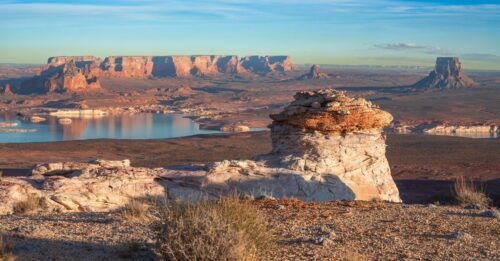
“The seven states connected to Colorado River share at least one thing in common: all are feeling the pain of trying to cut their water consumption from the iconic Western waterway. As the current guidelines over how to divide water resources in dry years expires, the states have a deadline of Oct. 1 to come to a new agreement. This is no small feat. The states have been stuck in a stalemate over water cuts for more than two years, with the Upper Basin states — Utah, Colorado, New Mexico and Wyoming — at odds with their Lower Basin neighbors — Arizona, California and Nevada. The urgency for these Western states to finalize a deal is greater than ever amid the record-breaking heatwave and generational drought moving through the Mountain West. “It’s way too early to be having 80-degree weather and of course, the snowpack is a concern,” Utah Gov. Spencer Cox said last week during his monthly news conference. In Phoenix, Arizona, temperatures have been over 100 degrees for multiple days in March, marking the earliest 100-degree weather in the city’s recorded history. … ” Read more from Deseret News.
Amid ‘dire situation’ for Colorado River Basin, headwater states say they can’t cut water they don’t have
“Under pressure to strike a compromise on water cuts, and amid talk of litigation, Wyoming and other upper Colorado River Basin states are pointing to the climate-driven disaster unfolding in the West to insist they can’t cut what Mother Nature isn’t providing in the headwaters. While some observers suspect that argument is cover for withholding more cuts in water use, the upper-basin contingency insists it has negotiated in good faith and still hopes to strike a deal with its lower-basin counterparts despite missed deadlines. They simply cannot commit to calculations that are beyond their control. “If the water is not there, our water users don’t get to use it, and that is typically the case,” New Mexico’s water negotiator Estevan Lopez said. On paper, it might appear the headwater states are being stingy, Lopez added. New Mexico, Colorado, Wyoming and Utah, however, live with “very real and mandatory reductions that are imposed by nature, which we refer to as hydrologic shortage.” … ” Read more from WyoFile.
Water isn’t red or blue, former Reclamation boss tells Utah water users
“The former commissioner of the U.S. Bureau of Reclamation under President Joe Biden told a group of Utah water users to avoid looking at water from a red state, blue state lens. “It’s inherently clear,” Camille Touton said, pointing out that it flows through communities regardless of politics. Touton, who served under President Biden, had praise for Governor Spencer Cox and Utah leaders for the work they have done on water issues. She said the state worked well with the U.S. Bureau of Reclamation during her time in office because of a mutual trust and work done on both sides. … ” Read more from Fox 13.
Lake Mead’s very bad year is only getting worse
“Lake Mead National Recreation Area is having a very bad start to spring. The water level is dwindling in Lake Mead, America’s largest reservoir and a major supplier of drinking water to California, and soaring temperatures are driving toxic algae outbreaks in the water and prompting federal officials to close hiking trails. Just east of Las Vegas and straddling the Nevada-Arizona border, Lake Mead’s water level was already perilously low in early January, U.S. Bureau of Reclamation data showed, with the reservoir at only about one-third of its capacity. And then came the heat. As unseasonably warm winter weather scorched much of the American West over the past several weeks, Lake Mead has lost crucial opportunities for replenishment. … ” Read more from SF Gate.
Feds need 1.7 million acre-feet to save Lake Powell this year
“For more than two years, Southwestern states have struggled to reach an agreement on managing the parched Colorado River after 2026. But a true crisis threatens to hit the river basin before that agreement would even take effect. River managers need to conserve around 1.7 million acre-feet in Lake Powell to keep the reservoir from dropping below hydropower turbines this year, according to federal government projections. The Bureau of Reclamation, a federal agency that manages dams on the Colorado River, has estimated that reservoir levels could fall below required elevations for hydropower production before August as record-low snowpack turns into pitiful flows in streams and rivers. “The situation is dire, the stakes have never been higher, and the reservoirs have never been drier,” Estevan Lopez, New Mexico’s negotiator on interstate Colorado River matters, said during a meeting of the Upper Colorado River Commission on Tuesday. … ” Read more from Aspen Daily News.
SEE ALSO:
- What the historic snow drought means for water, wildfires and the future of the West, from The Conversation
- Federal plan to divide drought-stricken Colorado River water brings flood of pushback, from Cronkite News
- The situation is dire’: Lake Powell is heading for a record low as Colorado River states remain deadlocked, from the Salt Lake Tribune
- Arizona lawyers up ahead of potential legal action against Utah, other Colorado river states, from ABC4
As alfalfa drains the Colorado River, alternative feed is crop sought
“The green shoots that rise from the soil under Perry Cabot’s cultivation look a little different from the standard, brushy bunches of alfalfa and other cattle forage crops growing on the flats here north of the Colorado River. … “The plant tells the story,” said Cabot, an extension professor and irrigation specialist with Colorado State University. The story that he and colleagues at the Western Colorado Research Station’s Grand Valley farm are trying to narrate is one of a future in which farmers and ranchers have alternative forage crops to help them survive drought and the intensifying tug-of-war between Colorado River water users. Alfalfa and grass hays are the biggest drain on the Colorado River, using as much as 46% of the water, according to recent research. … ” Read more from Arizona Central.
Megafarm seeks pause in Arizona groundwater public nuisance case
“As the Arizona Department of Water Resources works to regulate groundwater pumping in western Arizona, a megafarm responsible for more than 80% of all pumping in a 912-square-mile groundwater basin seeks to stay a public nuisance lawsuit in which it’s accused of excessive pumping. In a state courthouse Wednesday, Fondomonte Arizona LLC argued the ongoing process to designate the Ranegras Plain Basin as an active management area would achieve the same groundwater regulation goals as the lawsuit Attorney General Kris Mayes filed against it in 2024. Rather than move forward with the litigation, Riley Snow of Rose Law Group suggested the court allow the two-year process to play out and address any remaining concerns later. “We can essentially avoid duplication of effort and allow the agency to do what the legislature intended it to do, which is step in and regulate groundwater,” Snow told Maricopa County Judge Scott Minder. … ” Read more from the Courthouse News Service.
SEE ALSO: Fondomonte asks judge to pause groundwater lawsuit brought by Arizona AG, from KJZZ
ASU-SRP snow surveys show much of Arizona’s headwater snowpack melted in weeks
“Arizona’s mountain snowmelt provides a significant portion of the Phoenix metropolitan water supply. Results from a new airborne snow survey over northeastern Arizona found that due to a dry and warm winter, most of the snow water measured in January and February had melted by mid-March, offering water managers an unusually clear view of how quickly the season changed. Gathering critical data on just how much water is available can help Salt River Project manage it. The Upper Black River Basin in eastern Arizona, where the surveys were conducted, may be remote, but the snow that falls there feeds the Salt River system upstream of Roosevelt Dam. It is part of SRP’s network of reservoirs that supply water to more than 2.5 million people in the Phoenix metropolitan area. Three airborne snow surveys conducted this winter tracked how much water was stored in the basin’s snowpack. … ” Read more from the Arizona State University.
Water-based recreation gives nearly $12 billion boost to Arizona economy, new report says
“A new report from the Audubon Society found that water-based recreation drives $11.7 billion of economic output in Arizona. The environmental group says the findings highlight the importance of keeping water in the state’s rivers, streams and reservoirs amid water shortages. “We just wanted to bring attention to the importance of these places,” said Haley Paul, an Arizona-based policy expert with Audubon. “We know that, culturally, spiritually and in general, these are important places for us as people in Arizona, as well as our tourists that come and visit. But we thought, ‘What if we put some numbers behind it?’” The report took a wide-reaching tally of recreational activities that people do along the water in Arizona — fishing, hiking, biking, boating, birding and more — and calculated the amount of money those activities contribute to the economy. … ” Read more from KJZZ.
Nevada just had its warmest winter ever. What does it mean for summer?
“It seems whatever state I’ve lived in, there’s been a variation of the same joke about the seasons … Most of the joke hinges around when spring actually starts. But this year, at least in Nevada, it feels like we skipped false spring, spring of deception and actual spring and went right from winter to summer, with high temperatures blowing past records to bits. Meteorological winter (December through February and usually the coldest months of the year) wrapped up Feb. 28. But Nevada experienced its warmest winter ever this year, with a statewide average temperature 5.5 degrees above normal. Now that it’s March, temperatures in Reno are in the mid-80s — breaking the city’s previously monthly record of 83 degrees, set in 1966. Prior to this year, only 11 days in Reno had ever reached 80 degrees or above in March since 1893 — this year, multiple, consecutive days have topped 80 degrees. And Las Vegas also broke its own March temperature records as the city approached triple digits, prompting the city to open cooling centers for people seeking relief from the heat. … ” Continue reading at the Nevada Independent.
Lawmakers in driest state weigh excessive water and energy needs of data centers they court
“NV Energy believes it will need 50% more energy than it projected needing just two years ago, and that energy demand could double by 2030. The skyrocketing demand is overwhelmingly driven by the boom in artificial intelligence and large scale data centers. And state lawmakers, who have for a decade have courted data centers with millions of dollars in tax abatements, are taking notice. “I think it should make all of us pause for a moment,” said Stacy Tellinghuisen from Water Resource Advocates, “because it is truly staggering.” Water Resource Advocates was one of more than a dozen groups that gathered Wednesday for a joint meeting of the interim committees on natural resources and infrastructure. The meeting focused solely on data centers and their water and energy needs. Other participating groups included industry lobbying group Data Center Coalition, environmental advocacy group Sierra Club Toiyabe, researchers from the Desert Research Institute, and representatives from regional water authorities and energy utilities. … ” Read more from the Nevada Current.
Denver Water imposes twice-a-week restrictions on watering; outdoor surcharges ahead
“Denver Water drove home the serious nature of the 2026 drought Wednesday with a unanimous vote for two-day-a-week watering restrictions and warnings that the agency for 1.5 million Front Range customers is developing new enforcement plans and outdoor watering surcharges. Denver Water customers can water this summer season on only two of seven days, with houses ending in even numbers taking Sunday and Thursday, and those ending in odd numbers taking Wednesday and Saturday. The state’s largest water agency also begged customers to not turn on their lawn systems at all until mid or late May, instead watering trees and shrubs by hand and holding off irrigation as long as possible in order to preserve reservoirs. … ” Read more from the Colorado Sun.

