
Several news sources featured in the Daily Digest may limit the number of articles you can access without a subscription. However, gift articles and open-access links are provided when available. For more open access California water news articles, explore the main page at MavensNotebook.com.
On the calendar today …
- PUBLIC HEARING: Delta Conveyance Project water right hearing beginning at 9am. The State Water Resources Control Board Administrative Hearings Office is holding a Public Hearing on the pending Petitions for Change of Water Right Permits for the Delta Conveyance Project. Interested members of the public who would like to watch this hearing without participating may do so through the Administrative Hearings Office YouTube channel at: bit.ly/aho-youtube. Click here for the meeting notice.
- MEETING: Delta Conservancy Board Meeting from 9am to 1pm. Agenda items include an Ecosystem Restoration and Climate Adaptation Program Update, Community Enhancement Program Update, Delta Carbon Program Update, Consideration of Draft Solicitation Notice for Climate Bond (Proposition 4) and Nature Based Solutions Funding of the Rice Incentive Program, Consideration of Updates to the Conservancy General Grant Guidelines, Update on Nutria Control Activities in the Delta and Suisun Marsh, DWR Multibenefit Restoration Program Update, and Delta agency updates. Click here for the full agenda.
- WEBINAR: Sierra Wildlife Habitat Connectivity from 12pm to 1pm. The Sierra Nevada holds continental-scale significance for wildlife connectivity, serving as a critical bridge between ecosystems spanning from the Cascades to the Mojave Desert. As species such as wolves, mule deer, pine marten, Sierra Nevada red fox, and porcupine navigate an increasingly fragmented landscape, maintaining connected habitats across the Sierra is essential to their long-term survival. In this webinar, Mari Galloway will highlight how wildlife crossings, research, policy, and restoration efforts are helping reconnect and restore landscapes across the Sierra Nevada. Click here to register.
- SoCAL WATER DIALOG: Making Water More Affordable from 12pm to 1:30pm. The increase in the cost of water impacts all ratepayers but particularly those with low- to moderate-incomes. The Water Dialogue will examine what actions local agencies and the state can take to ensure access to affordable, safe and reliable water while keeping water systems financially strong. Click here to register.
- WORKSHOP: Drought Resilience Interagency & Partners (DRIP) Collaborative – Dry domestic wells from 1pm to 4:30pm. Join the Department of Water Resources for the Drought Resilience Interagency & Partners (DRIP) Collaborative Roles and Responsibilities for Dry Domestic Wells Workshop #1. Members of the public are able to attend the meeting remotely via Zoom. Remote participation will be conducted via a Zoom platform. Register here: https://ca-water-gov.zoom.us/meeting/register/q5Tocs9MQh2JXz-EDD0htw.
In California water news today …
What California landowners, water companies, and agencies need to know about the Las Posas Valley groundwater adjudication rulings—and why they matter for SGMA compliance statewide
 “If you are involved in California groundwater, you’ll want to pay close attention to two recent appellate court decisions from the Las Posas Valley Groundwater Basin. These rulings, issued in March 2026, mark the first contested comprehensive groundwater adjudication affirmed under the framework enacted alongside SGMA. The court affirmed a settlement of the action over objection, addressing how adjudication integrates with SGMA planning, permissible allocation models, dormant rights, and ownership of overlying water rights by mutual water company shareholders. In short, these opinions offer a practical roadmap for post-SGMA groundwater cases across the state. … ” Read more from O’Melveny.
When the water stops: One rural community’s crisis and the national problem behind it
“Residents of Alderpoint recently received a letter in the mail that stopped many of them cold. The Alderpoint County Water District, the only source of water service for the rural community in southeast Humboldt County, warned customers that unless the district could pay a past-due PG&E power bill of $14,357.17, power to the water system could be shut off as soon as April 17, 2026. When power goes, the pumps stop. When the pumps stop, the water stops. And when water stops, county environmental health officials could begin red-tagging homes as uninhabitable — even for residents who have paid their water bills every single month. … What’s happening in Alderpoint is not unique. Across California, hundreds of public water systems are currently designated as failing by the state — more than 79% of them serving disadvantaged communities. The vast majority are small systems just like this one, lacking the resources to keep pace with rising costs and aging infrastructure. … ” Read more from the Redheaded Blackbelt.
Contaminated water from California prison sickens residents of nearby town
“Last July, the California Department of Corrections and Rehabilitation (CDCR) held a series of town halls inside Mule Creek State Prison intended to be run-of-the-mill information sessions on colon cancer. Incarcerated attendees packed the hall on the prison’s E yard with other health concerns in mind: Two months earlier, an investigation by The Appeal circulated through the facility about a severe environmental and infrastructural breakdown at Mule Creek, which incarcerated people believed had poisoned their water and impacted their health. Many had questions pertaining to serious medical conditions, frustrations regarding care provided, the status of the water, and what appeared to be an increase in the number of people suffering from thyroid and kidney ailments. “Why not zone in on cancers that people are getting?” some attendees asked. CDCR officials didn’t have an answer. … ” Read more from Prism Reports.
Could salad get you high? Wastewater irrigation raises contamination questions
“Drugs found in treated wastewater can be stored in the leaves of vegetables irrigated with that water, Johns Hopkins researchers found. But are drug-infused greens sitting on your grocer’s shelf, and how powerful is the dose? “Farming practices place a high demand on freshwater resources. With limited rainfall and droughts threatening global water supplies, we’re looking at a future with shortages that may only be met by repurposing treated wastewater,” Daniella Sanchez, a doctoral student at Johns Hopkins University and study lead author, told ScienceDaily.com. “To continue to use wastewater safely, we need a more sophisticated understanding of where and how crop species metabolize, or break down, agents in the water.” In their lab, Sanchez’s team grew lettuce, tomatoes and carrots in water infused with tiny amounts of psychoactive chemicals as often found in treated wastewater. They found that the leaves stored much more of the drugs than the edible fruits and roots. The findings are intended to help understand how crops process contaminants as farmers turn to new sources of water for irrigation, including processed wastewater. … ” Read more from The Derrick.
Fish groups say juvenile salmon will die unless feds release pulse flows into Sacramento River
“The federal government yesterday released over 6.2 million juvenile Sacramento River Fall-run Chinook Salmon into Battle Creek at the Coleman National Fish Hatchery, a move celebrated by representatives of fishery conservation groups. But representatives of those groups warned that the failure by the U.S. Bureau of Reclamation to release sufficient water flows into the Sacramento River in a time of a record heat wave could result in the death of millions of salmon as they migrate downriver. “Sooner do we start to gain a little ground back in rebuilding our salmon runs than the federal Bureau of Reclamation is destroying them again,” said John McManus, Board Member of the Golden State Salmon Association. … ” Read more from the Daily Kos.
Where do sturgeon go?
“White sturgeon can grow to 12 feet long and live for a hundred years. Despite this, not a great deal is known about the lives of these ancient fish as they move between rivers, estuaries and the ocean. Recently, UC Davis researchers published a study of how white sturgeon move around the San Francisco Estuary and Sacramento river system as they grow and mature. The research shows how white sturgeon face environmental hazards, fishing and other threats over their lives. The team, led by Jon Walter, senior researcher at the UC Davis Center for Watershed Sciences, made use of years of acoustic telemetry data collected in the Delta region. Researchers had previously fitted individual sturgeon with tags that give an individual acoustic code. This code is picked up when a tagged fish swims near a recording station in the river. … ” Continue reading from UC Davis.
Final independent peer review report for WY 2024-25 Winter-run Chinook Salmon Annual Loss
“At the request of the U.S. Bureau of Reclamation (Reclamation) and the California Department of Water Resources (DWR), the Delta Stewardship Council’s Delta Science Program has completed facilitating an inde
Feds bump water allocation up modestly for west Fresno County. Westlands says not enough
“An update from the Bureau of Reclamation means a modest increase in water sent to south-of-Delta contractors, including Westlands Water District. On Tuesday, the bureau announced the yearly allocation would increase to 20% from 15%. This comes as a recent heat wave has experts worried about accelerated melting of the vital Sierra snowpack. Allison Febbo, general manager of Westlands, said in a release that the government needs to better coordinate with experts to adapt allocations to real-world conditions and decrease the need for groundwater pumping. “While we appreciate the modest increase in allocation and acknowledge the constraints of California’s current hydrology — particularly as snowpack declines rapidly — this additional 5 percent is simply inadequate,” Febbo said in a statement. “Continued low allocations lead to increased reliance on groundwater pumping, a direct result of our broken water system that has suffered from decades of underinvestment and unreliable water supplies.” … ” Read more from GV Wire.
SEE ALSO:
-
- Reclamation increases Central Valley Project 2026 water supply allocations; Westlands responds, press releases from the Bureau of Reclamation and Westlands Water District
- Westlands: Water allocation increase is “inadequate”, from SJV Sun
- California boosts water allocations after storms, but shortages remain, from KRCR
Developing a GSP to manage interconnected surface water: A case study
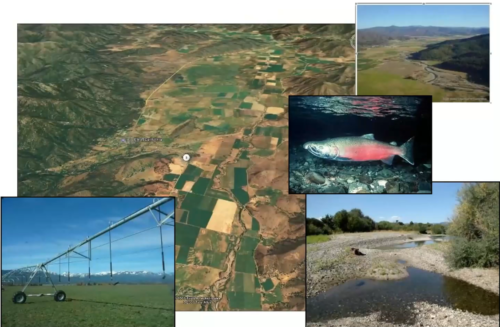 “In December 2025, the Groundwater Resources Association of California hosted a two-day webinar on Interconnected Surface Water (ISW) and groundwater. ISW connects surface water bodies, such as rivers and streams, with groundwater beneath them. The webinar included expert presentations. Dr. Vivek Bedekar gave an overview of ISW depletion and management needs. Dr. Nicholas Murphy discussed groundwater-dependent ecosystems and their role in sustainability planning. In this third article, Dr. Thomas Harter applies these concepts to the Scott Valley and explores its groundwater sustainability plan for ISW management. Nestled in a small alluvial basin surrounded by mountain ranges that soar up to 8,000 feet in western Siskiyou County, the Scott Valley supports approximately 30,000 acres of irrigated agriculture, primarily alfalfa and pasture. The Scott River, fed by multiple tributaries, flows through the valley from its southern end to the northwest, eventually joining the Klamath River. This river system is home to both chinook and coho salmon. The valley’s groundwater levels have stayed stable for 20 years. However, seasonal fluctuations and agricultural demands bring challenges. One major issue is the seasonal drop in groundwater levels, which threatens late-summer streamflows vital for salmon. … ” Read more at Maven’s Notebook.
Matthew Maciosek gets his hands dirty to keep groundwater clean
“Growing up in Minnesota, Matthew Maciosek spent much of his time outdoors exploring wetlands and marshes — water-rich ecosystems that support insects, wildlife and entire ecological communities. The water in those communities, however, is at risk due to agricultural practices that draw groundwater and surface water. Now Maciosek is a fourth-year biological systems and engineering major at the University of California, Davis, where his research focuses on water use in farming. By improving irrigation practices and understanding how water moves through agricultural systems, Maciosek believes it’s possible to reduce those impacts and help preserve wetlands for future generations. “I grew up being outside. I thought that if I went into agriculture, I can help with better irrigation practices, save this water, and the marshes will be able to come back. People will be able to enjoy these spaces in the future,” he said. … ” Read more from UC Davis.
Second ag expert panel public workshop announced for April 10; Draft report anticipated by March 30
“The State Water Resources Control Board has announced that a public workshop will be held April 10 from 2-6 pm at the California Environmental Protection Agency office in Sacramento and online to present the Second Agricultural Expert Panel’s draft report and to gather oral comment on it. The draft report itself has not yet been released but is expected to be available by March 30, 2026 for a 30-day public comment period. … The expert panel met March 11 for its final working group meeting before the draft report is released. During this meeting, expert panel members continued to work through their recommendations, devoting most of their time to discussing whether to set N application or discharge targets and limits. This has been a hot-button topic throughout the expert panel’s deliberations, with the agriculture industry opposing any limits and environmental justice advocates calling for immediate mandatory limits on N fertilizer applications to protect communities from further groundwater contamination. … ” Read more from Jane Sooby at Maven’s Notebook.
California’s warm, dry streak could soon end. Here’s when rain may return
“California’s herky-jerky wet season is at an inflection point. There has hardly been any rain this month, and the mountain snowpack is melting at a startling rate, which means drought could return by summer. But the wet season isn’t entirely over. Weather models are arriving at a consensus: California’s next chance of precipitation will come as March ends and April begins. It’s not a guarantee, as the start of the stormy window is still a week away, but it appears to be the best shot of widespread rain and snow in nearly six weeks. … ” Read more from the San Francisco Chronicle.
What are the impacts of California’s unseasonably hot March?
“California and much of the Western United States has been drying out this month. An unseasonable streak of warm weather has broken temperature records, pushing highs into the 80s and 90s. The small community of North Shore in Riverside County even tied the record for the highest March temperature ever recorded in the U.S., hitting 108 degrees last Wednesday. This heat is raising concerns, particularly for those monitoring California’s snowpack in the Sierra Nevada which supplies about a third of the state’s water supply. Officials from the Department of Water Resources said last week the statewide snowpack has been melting at an average rate of 1% per day. This could put California on track to experience a near record-low measurement on April 1, historically when the snowpack has been at its peak. … ” Read more from Capitol Public Radio.
Satellite images show how fast California’s snowpack is disappearing
“California’s snowpack is plummeting toward record low levels as a “snow-eater heat wave” rapidly melts what little remains. Record-shattering March temperatures in the 60s and 70s forced early closures of some Sierra Nevada ski resorts. Nearly every snow-measuring station in the Sierra has lost more than a foot of snow in the 10 days since the heat wave kicked into full gear. An even more important measurement, snow water equivalent, has dropped faster than ever measured in March, said Mike Hittle, a hydrologist at the National Weather Service’s California-Nevada River Forecast Center. It’s a key measure for how much liquid is stored in the snowpack, if melted completely. … ” Read more from the San Francisco Chronicle.
Snowpack decline kindles more severe fire in the western United States
“Climate change is reducing winter snowpack and advancing spring snowmelt across the western United States, interacting with El Niño–Southern Oscillation (ENSO) teleconnections that drive spatially predictable interannual fluctuations that contribute to high- or low-snow winters. Early snowmelt extends the fire season, enhancing opportunities for ignition and increasing fuel dryness, both of which contribute to greater burned areas. However, relationships between snowpack on burn severity, a measure of forest loss and expected biogeochemical and hydrological impacts of fire, have not been examined. Here, using remotely sensed snow and fire data spanning 1985–2021, we examined how snowpack quantity and timing of spring snowmelt influence annual area burned and burn severity at the watershed scale. … ” Read more from YubaNet.
Lessons from salt lakes for making a home in a changing world
“When Mormon settlers descended upon the Salt Lake Valley in 1847, the land was an oasis. From the Wasatch Front, creeks and rivers flowed into the valley. Grasses were abundant. The soil was rich. It even featured both a freshwater and a saline lake—Utah Lake and the Great Salt Lake—just like Israel with the Sea of Galilee and Dead Sea. It was clear the area had been chosen for them by God. But as the population of the valley grew, the relationship to the Great Salt Lake changed. It was a waste of water, too saline for fish, and unable to be used for irrigation. So the water that replenished it was diverted, and the Great Salt Lake shrank to a fraction of what it once was. It is now verging on a complete collapse, threatening the ecosystem dependent on it and the city built on its shores. The story of the Great Salt Lake’s decline is the template for others around the world, writer and reporter Caroline Tracey writes in her debut book, “Salt Lakes: An Unnatural History.” … ” Read more from Inside Climate News.
With a landmark report and historic investments California doubles down on ocean health
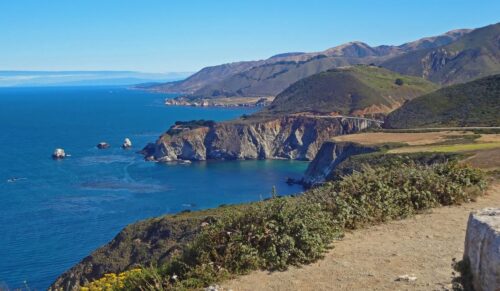 “At a time when federal actions are putting coastal waters and public lands at risk, California is moving in the opposite direction. Yesterday, the California Ocean Protection Council (OPC), in partnership with the California Ocean Science Trust, released the 2026 California Coast and Ocean Report – the first comprehensive, science-based assessment of coastal and ocean health in California history. The report describes not only the pressures facing California’s coast and ocean, but also the historic progress that our state is making to support resilient marine ecosystems and thriving coastal communities. The Council also approved over $6 million in funding for nine key science and restoration projects that support healthy oceans and advance the state’s goal to conserve 30% of its coastal waters by 2030. Scientific research projects will help identify biodiversity “hotspots” to prioritize for conservation, while restoration work will bolster biodiversity in eelgrass, estuary, and kelp forest ecosystems impacted by climate change, wildfire, and other threats. “California’s coast and the Pacific Ocean define who we are Californians,” said California Secretary for Natural Resources Wade Crowfoot. … ” Read more from the Natural Resources Agency.
SEE ALSO: California doubles down on ocean health with historic investments, following landmark report findings, from the Office of the Governor
Channel Islands: See California’s version of the Galapagos
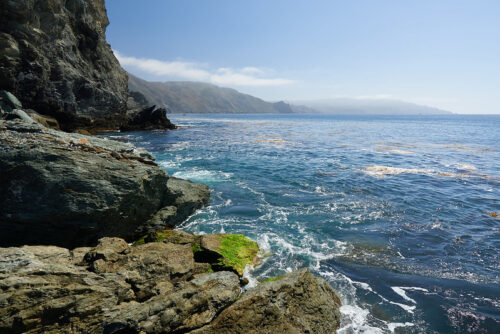 “Just an hourlong ferry ride from the coast of southern California is the only place in the world you can see what might also be one of the world’s cutest apex predators: the island fox. This small gray fox — roughly the size of a large cat —is the top of the food chain at Santa Cruz Island, one of the five islands that make up Channel Islands National Park. Spend some time at the island, and you might just cross paths with one, or several, of these adorable critters. You might also spot the islands’ endemic island scrub jay, a bright blue bird that’s bigger and bluer and has a larger, thicker beak than California scrub jays. The Channel Islands, often referred to as the “Galapagos of North America,” are considered to be among the world’s most biodiverse places, and a visit to Santa Cruz Island, the biggest and most developed of the islands that comprise Channel Islands National Park, offers a one-of-a-kind escape not too far from home, serving up both restoration and adventure on an ambitious weekend jaunt. “It’s a very special place,” says Michelle Beebe, a wilderness guide at the Channel Islands Adventure Company. “A lot of people don’t even know these islands exist.” … ” Read more from the San Jose Mercury News.
Sewer district signs California Forever reimbursement agreement
“The Fairfield Suisun Sewer District entered a reimbursement agreement with California Forever and voted to allow General Manager Jordan Damerel to execute the agreement Monday. The Board of Directors voted 8-2 to approve, with Fairfield Mayor Cathrine Moy and Suisun City Councilmember Parise Shepherd voting no. The board authorized Damerel in October to spend $50,000 on reviewing the project, he said. $40,000 of the initial fund has been spent on defending the rate payers and assessing the technical details of the project. Damerel said the board asked at the previous meeting for staff to pursue a reimbursement agreement. The company and sewer district staff negotiated the agreement over the course of months, Damerel said, and California Forever agreed to it before the meeting. The agreement will reimburse the district for funds spent to date, and both parties will agree to specific scopes of work before any review begins. “We will review as we see fit, not as they see fit,” Damerel said. … ” Read more from the Vacaville Recorder.
Pipeline in 2015 oil spill is flowing again. Environmentalists have been fighting it for years
“An oil pipeline that was shut down after a 2015 environmental disaster is flowing again after President Donald Trump issued an executive order earlier this month. California mounted a legal fight against the pipeline this week. But environmentalists have won court rulings against the pipeline in recent years too. Before state Attorney General Rob Bonta filed his suit, the Environmental Defense Center, a nonprofit focused on Ventura, Santa Barbara and San Luis Obispo counties, was already involved in its own ongoing lawsuit to keep the pipeline system shutdown. Last year, a judge granted the group a preliminary injunction to keep the pipeline closed. “ It’s a really dangerous project,” said Linda Krop, chief counsel for the Environmental Defense Center. “It would not only cause harm to the environment, but it also threatens public health and safety and our local economy.” … ” Read more from the LAist.
SEE ALSO: The California frack off, from Politico
And lastly … Man brings a cup of water to the Hoover Dam in Las Vegas. Is it true water refuses to go in?: ‘How does it work?’
Have you ever tried this? “The Hoover Dam is an incredible feat of engineering. Built between 1931 and 1936, the Hoover Dam sits on the Colorado River at the border of Nevada and Arizona. At the time of its construction, it was the tallest dam in the world. While there are now taller dams, that doesn’t mean that the Hoover Dam is not impressive. In fact, this dam alone produces approximately 4 billion kilowatt-hours (kWh) of electricity annually, which is enough to supply power to over 1.3 million people in the area. Given the awe-inspiring nature of this construction, it’s no surprise that the landmark welcomes around 7 million visitors every year. While there, tourists may take a walk through the visitor center, snap a few pictures at one of its many lookout points, or try and fail to pour a glass of water down the side of it. Wait, what was that last part? … ” Read more from the Bro Bible.
In regional water news and commentary today …
NORTH COAST
Klamath River Restoration Project celebrated in national engineering competition
“The removal of four Klamath River dams and the ongoing restoration has gained more national attention. Earlier this month it was announced that the American Council of Engineering Companies (ACEC) has awarded McMillen, Inc., a Grand Award for exemplary engineering achievement in ACEC’s annual Engineering Excellence Awards (EEA). The award comes for the Klamath River Renewal project on the Klamath River, which begins near Klamath Falls and flows more than 400 miles to the Pacific Ocean near Klamath, California. As one of only eight Grand Award-winners, the project is also a contender for the EEA’s top honor, the 2026 Grand Conceptor Award. That winner will be announced during the EEA Gala on May 5. … ” Read more from the Herald & News.
SIERRA NEVADA
Yuba River fall-run salmon crash 2016-2025
Tom Cannon writes, “The Yuba River Fall-Run Chinook salmon population “crashed” in the last decade. Yuba River escapement ranged only from 2000-5000 spawners counted per year. Such low escapements were last encountered only during the Central-Valley-wide crash during the 2007-2009 drought. The decade-long low escapement reflects the effects of two droughts (2013-15 and 2020-22). Though the 2023-to-2025 escapements have increased slightly1 despite the 2020-2022 drought, the higher escapement reflects the benefit of fishery closures from 2023-2025 (fisheries normally harvest more than 50% of the adult stock). Yuba escapement also reflects substantial numbers of hatchery strays from other rivers, including the Mokelumne and American River hatcheries, the Coleman hatchery on Battle Creek in some years, as well as the Feather River (Oroville) hatchery. Small numbers of spring-run Feather hatchery strays from release locations near the mouth of the Yuba on the Feather River are also included. … ” Read more from the California Fisheries blog.
SACRAMENTO VALLEY
Listening in: River Partners tracking juvenile salmon’s migratory paths
“Central Valley Chinook salmon are in serious trouble. Multiple runs are listed under the Endangered Species Act, and populations have declined dramatically over the past century as dams, diversions, and development have stripped away the cold water, food, and floodplain habitat salmon need to survive. Understanding exactly how juvenile fish navigate what remains of their habitat has never been more urgent. So, what if we could listen to the secrets juvenile salmon share about their migratory journeys? River Partners and other researchers are doing just that at Dos Rios Norte, our floodplain restoration site located 45 minutes north of Sacramento along a vital migratory pathway for imperiled Central Valley Chinook salmon. The 1,600-acre former rice farm is bordered by three critical bodies of water for salmon in the Sacramento Valley: the confluence of the Sacramento and Feather Rivers and Lower Butte Creek. … ” Read more from River Partners.
SEE ALSO: Restoration projects underway along Sacramento River corridor, from Action news Now
BAY AREA
Marin Co.: down or up: Should a flood-prone stretch of highway become a tunnel or a bridge?
“While regional agencies weigh a proposal to raise a floodprone stretch of U.S. Highway 101 between the Manzanita park-and-ride and Donahue Street in Marin County, a local scholar has explored an alternate vision: putting the freeway in a tunnel beneath a new linear park. The two views highlight the stakes for Marin City, a lowlying community that is already likened by experts to a bathtub with an inadequate drain as sea levels rise. There is currently a preliminary plan to elevate Highway 101 from Manzanita to Donahue at a rough estimate of $1.2 billion, with an extra $33 million for stormwater pumps and a drain pipe to carry rainwater beneath a shopping center that sits on slightly higher ground between Marin City’s entrance road and Richardson Bay. … ” Read more from SF Gate.
Water rate increases in Mountain View looming at start of new fiscal year
“A new set of rate increases for water in Mountain View are expected to be codified in the coming months before the start of the new fiscal year on July 1. Yearly rate increases by the San Francisco Public Utilities Commission (SFPUC) – which provides the large majority of water to the city of Mountain View – were approved on June 25, 2024. Gradual rate increases were approved over the next five years to provide adequate funding for operational and maintenance expenses, and capital improvements such as the rehabilitation and replacement of aging infrastructure. On April 14, a five-member commission with the SFPUC will consider the amount of the rate hike to wholesale customers at the start of the fiscal year. … ” Read more from the Los Altos Town Crier.
CENTRAL COAST
Marina Coast Water District begins rehabilitation of reservation road desalination plant
“Marina Coast Water District (MCWD) has begun rehabilitation of its existing desalination (desal) system on Reservation Road, with active construction now underway on the beach at Marina State Beach. The project restores infrastructure originally constructed in 1996 and last operated in 2003, and will add 300 acre-feet of locally produced water per year to the District’s supply portfolio. This is a rehabilitation of existing facilities, not a new construction project. The intake well on the beach has been buried there since 1996 and will be reburied once it is rehabilitated. … ” Read more from ACWA’s Water News.
California Coastal Commission to hold meeting in Gonzales
“San Diego, Ventura and Half Moon Bay are the sort of places the California Coastal Commission typically meets at for its monthly public hearings. But in April, the Commission will be changing things up, heading inland to the city of Gonzales. While the Salinas Valley town of around 9,000 people is roughly 40 minutes away from the coast, holding April’s meeting there is part of the Commission’s effort to increasingly involve inland communities in its decision making. According to the Commission, the decisions it makes often intersect with issues important to inland communities, including those related to water, agriculture, infrastructure and public access. … ” Read more from the Monterey Herald.
SAN JOAQUIN VALLEY
Woodward Reservoir water: Its even cleaner
“Just a day after the Stanislaus County Department of Public Health was bombarded with questions after allegations that a stomach bug a Stockton man contracted came from the water at Woodward Reservoir came to light, they’re now saying that the water is actually cleaner than what was previously thought. In a release that was sent out Thursday afternoon, the department outlined how recently completed tests on water at popular swimming areas – the same areas that were tested before the Memorial Day weekend and showed higher than normal traces of Coliform bacteria – actually show a significant decline to a level that would normally be below where postings would be required. The cause of the Campylobacter – a common food-borne illness that can also be attributed to untreated water which was detected in Stockton man Luis Lopez after his hospitalization – was not found after an investigation by the San Joaquin Public Health Agency. … ” Read more from the Manteca Bulletin.
Program to protect Lemoore-area drinking water wells approved by groundwater agency
“A program to help Lemoore-area domestic well owners if their taps go dry has been approved by the South Fork Kings Groundwater Sustainability Agency (GSA). The GSA anticipates funding for the program through groundwater pumping and land assessment fees. A $1.5 million reserve fund will be set aside for the program. The GSA board approved the program at its March 19 meeting. However, not all damaged wells may qualify for the program. “The purpose of this well mitigation policy is to provide emergency water supply and implement long-term solutions for households that have lost access to drinking water as a result of groundwater levels decreasing,” consulting engineer Amer Hussain told the board. The program is similar to the well program passed by neighboring Mid-Kings River GSA. … ” Read more from SJV Water.
Series of San Joaquin Valley water talks kick off Wednesday in Visalia
“The Pa’ashi Speaker Series focusing on water in the San Joaquin Valley kicks off Wednesday, March 25, at 5:30 p.m. with a talk by Tachi Yokut Tribe cultural liaison Kenny Barrios. The talk will take place in the Ponderosa Hall at College of the Sequoias, 915 S.Mooney Blvd. in Visalia. An outdoor reception will follow each lecture. The lectures are put on jointly by the Cultural and Historical Awareness Program (CHAP) at College of the Sequoias and the Alta Peak chapter of the California Native Plant Society. The series is building off of last year’s lectures, which explored the past, present and potential future of Tulare Lake, called Pa’ashi by indigenous tribes. This year, the free series is titled “Water Influencers Across California,” and will feature Barrios, attorney Adam Keats and Dr. Ron Goode, chairman of the North Fork Mono Tribe. … ” Read more from SJV Water.
Kern County conference highlights dangers of abandoned oil wells
“Oil industry stakeholders from across the West gathered in Kern County to discuss the environmental and health risks posed by abandoned oil and gas wells. Unused wells are a major concern due to the pollution they can cause. Brandy Cormier, with the Energy Conference Network, noted that abandoned wells are more harmful than people might think. Over time, they can produce and leak methane, acting as a major source of greenhouse gas emissions that affect human health and the surrounding environment. “It’s an important topic across California, with the oil and gas transition. Looking at urban wells solutions, plugging wells with different technology, margin well management, and triaging and prioritizing wells for plugging,” Cormier said. … ” Read more from Channel 23.
EASTERN SIERRA
The economics of managing Mono Lake
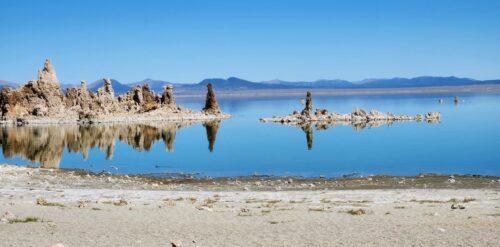 Edward Ring, Director of Water and Energy Policy at the California Policy Center, writes, “Along with the California Condor, one of our state’s most magnificent environmental success stories of the 20th century is how Mono Lake was saved. In the early 1980s, after decades of unsustainable water withdrawals from the Owens River into the Los Angeles Aqueduct, the lake had declined in elevation to 6,372 feet. The decline was primarily caused by the Los Angeles Department of Water and Power diverting an average of 80,000-100,000 acre feet per year from the tributaries feeding Mono Lake. The turnaround has been incredible. Today, LADWP’s average withdrawals from the upper Owens River watershed are down to 16,000 acre feet per year. The level of the lake has risen to an elevation of 6,383 feet, which is within 9 feet of the what the State Water Resources Board has set as the ultimate goal of 6,392 feet. The acute crisis is over. For example, Negit Island, an important rookery where a land bridge was forming due to the dropping lake level, now remains safe from predators. And overall, years of investment in habitat restoration have preserved and enhanced one of North America’s most productive stopovers on the Pacific Flyway, supporting millions of migratory birds. … ” Continue reading from Edward Ring.
SOUTHERN CALIFORNIA
Four Roomba-like rovers are cleaning waterways in Port of LA
“A fleet of robotic vessels has been busy the past few weeks scooping up debris in the Port of Los Angeles before the trash flushes into the open ocean. Similar efforts have already been deployed in Huntington Harbour and Newport Harbor, with thousands of pounds of trash removed from Southern California waterways using the Roomba-like devices, with hopes that the low-maintenance method will catch on in harbors across the country. The four Clean Earth Rovers in the Port of Los Angeles were launched in January, with the goal of removing tens of tons of debris over the next year throughout the port’s 15 marinas. Already, an estimated 2,000 pounds of trash have been pulled out of the water. … ” Read more from the OC Register.
SAN DIEGO
Del Mar City Council receives update on San Dieguito Lagoon project
“The city of Del Mar is accepting public comment for a draft initial study and mitigated declaration for the San Dieguito Lagoon levee, habitat enhancement and trail project, followed by an anticipated June decision by the Del Mar City Council to adopt the final versions. Del Mar Principal Planner Amanda Lee said during the March 17 Del Mar City Council meeting that it’s “a nature-based, adaptation project” that includes shoreline treatments to reduce the risks of flooding. “It’s a really complicated area of hydrology, a lot of great engineering work that’s been done, so that is one bucket of improvements that are being done on both sides of the river,” Lee said. … ” Read more from the San Diego Union-Tribune.
Along the Colorado River …
Climate-fueled heat waves are creating a water crisis in the Southwest
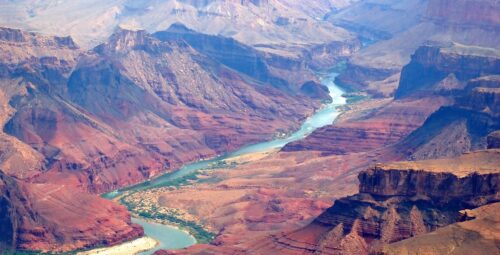
“Deadly heat waves have become the summertime norm in Arizona and much of the Southwest in recent years. But this year, those heat waves are coming months before the height of summer. As an atmospheric “heat dome” planted itself over much of the U.S. West, temperatures outside Phoenix reached 101 degrees on the first day of spring, making Arizona the hottest place on Earth. The heat dome continues to shatter temperature records this week. What crucial snowmelt that remained in desert mountains quickly dissipated, all but guaranteeing water shortages and another violent forest fire season later this year. A groundwater crisis decades in the making has already slowed the otherwise rapid expansion of suburban sprawl around Phoenix, leaving entire housing developments sitting empty in the desert. That water shortage hasn’t stopped state officials from offering lucrative tax breaks to companies building AI data centers that guzzle huge amounts of freshwater and electricity. Arizona Gov. Katie Hobbs, a Democrat, has called for curtailing tax incentives for such data centers but faces an uphill battle against the GOP-controlled legislature. … ” Read more from Truthout.
Solving the West’s water problems will require tapping into multiple resource streams
“Hundreds of water experts from across the United States convened at Arizona State University last week to tackle the West’s mounting water challenges, seeking solutions that go beyond scarcity toward coordinated systems, investment and collaboration. “Water stress is not just a constraint. It is a signal that our current systems are misaligned with the realities of climate, society and economic demand,” said Upmanu Lall, director of the ASU Water Institute at the Julie Ann Wrigley Global Futures Laboratory. The “Transforming Water, West” convening brought together more than 400 scientists, entrepreneurs, investors and policymakers with a shared understanding that incremental change is no longer enough. The region’s water challenges demand something more coordinated and more ambitious. … ” Read more from Arizona State University.
‘The situation is dire’: Lake Powell is heading for a record low as Colorado River states remain deadlocked
“Utah and its neighbors in the Upper Colorado River Basin shared a resounding message on Tuesday: it’s going to be a rough year. Snowpack peaked weeks earlier than usual, and set a record low. The latest forecasts show Lake Powell dipping below the level where Glen Canyon Dam can generate electricity or sustainably release water downstream by the end of the year. And states still can’t agree on how to manage the shrinking water supply for 40 million people after the current guidelines expire at the end of the year. “The situation is dire. The stakes have never been higher. And unfortunately the reservoirs have never been drier,” Estevan López, New Mexico’s Colorado River negotiator, said during a meeting of the Upper Colorado River Commission on Tuesday. … ” Read more from the Salt Lake Tribune.
Colorado River negotiations have stalled among 7 states and water is scarce. What happens next?
“The seven U.S. states that make up the Colorado River basin are struggling to agree on how best to manage the river’s water as its supply dwindles due to climate change and a period of prolonged drought. Their negotiations, which are not open to the public, missed a Feb. 14, 2026, deadline the federal government had established, after which federal officials said they would impose their own plan. The federal government has not yet done so, but the prospect of such an action is not good news for the nearly 40 million people who depend on the Colorado River for water, energy, agriculture and recreation, nor for the estimated US$1.4 trillion in economic activity the river supports. We have led or participated in complex water management discussions from the river’s headwaters in Colorado to its delta in Mexico and elsewhere in the arid Southwest and around the world. Even on less contentious issues, the keys to success involve learning together, understanding one another’s interests, working through conflict and developing inclusive solutions for diverse participants. And that works best with an outside facilitator. … ” Read more from Live Science.
The Colorado River’s right to exist
“By the time the Colorado River Indian Tribes passed a personhood resolution in November, granting the Colorado River an elevated legal status that formally recognizes its right to exist and thrive, the river’s water levels had plummeted to historic lows, with nearly 60% of the watershed in severe drought. “The river is a living being, just like we are living beings. We are made up of water,” said Amelia Flores, who is Mohave and serves as the chair of the Colorado River Indian Tribes (CRIT). The consortium of four tribes—the Mohave, Chemehuevi, Hopi, and Navajo—collectively steward a 300,000-acre reservation that abuts the Colorado River, the body of water that has given Indigenous peoples of the land their life since time immemorial. … ” Read more from Prism Reports.
Rise of data centers in the Southwest raises concerns
“Do you use Chat GPT? Do you talk to Siri on your phone? If so, you’ve helped fuel the rise in data centers. Now, the energy-hungry, water-thirsty centers are coming to places in the Southwest, including the lands of native peoples. That was the topic of a panel discussion Friday in Window Rock, Arizona, organized by Diné C.A.R.E., a Navajo environmental organization. Executive director of Diné C.A.R.E. Robyn Jackson said data centers have become a serious concern for the Navajo Nation. She said five centers have been proposed in and near the nation, three in Arizona and two in New Mexico. … ” Read more from KSJD.
Arizona braces for legal battle over Colorado River: What to know
“Cuts are coming to Arizona’s water supply. We just don’t know yet how bad they’ll be, and now the state is lawyering up in preparation for a long legal battle over water rights. In February, the seven states that rely on water from the Colorado River blew past a deadline to strike a new agreement to govern the future of the river, which has far less water flowing through it than when the original agreement governing the river was struck in 1922. For months, the states have been deadlocked over who has to cut back, with Arizona and other states in the river’s lower basin claiming that the upriver states aren’t sharing the load. The current agreement expires in October, at which point the federal government may impose restrictions unilaterally. … ” Read more from New Times Phoenix.
Arizona considers buying California water as Colorado River tensions remain high
“As state leaders battle along the Colorado River for a larger share, a city in California is possibly willing to sell its water to Arizona—but it comes at a huge price. Just a few years ago, Arizona considered asking Mexico to allow the construction of a desalination plant. It never happened, but in California, there already is one, leaving the question— can Arizona get a cut? The salty Pacific might be one of the answers officials have been waiting for. In Carlsbad, California, the largest desalination plant in the Western Hemisphere provides 10% of San Diego’s water, and that water might soon be up for grabs. … ” Read more from Fox 10.
Nevada sees warm snow drought; as cloud seeding helps boost precipitation
“Despite below-average snowpack in the Sierra Nevada, total precipitation levels are hovering near, or even above, normal. According to the U.S Department of Agriculture, snowpack levels are sitting at just 59% of the median, while precipitation has reached 119% of normal for the month of February. Experts are calling this a “warm snow drought,” where warmer temperatures lead to more rain instead of snow. Along the Truckee River, those conditions are raising questions about cloud seeding, a decades-old practice used to enhance precipitation. … ” Read more from Channel 4.
As the West’s scant snowpack melts, Coloradans brace for a lean water year
“Call it the winter that wasn’t. Throughout Colorado a record-warm and dry winter has come to a close. Attention now pivots to spring and the potential for additional snow to allay increasing drought concerns. Though, there appears to be little relief in sight. The Denver-metro area went months without measurable snowfall this winter. The city’s daytime temperatures often surpassed 60 degrees. Hikers and trail runners rejoiced over the warm weather while grumbling skiers lamented their underused season passes. In the state’s Rocky Mountains snow accumulation was sluggish, as warmer than normal temperatures led to midseason snowmelt, and caused more precipitation to fall as rain instead of snow. A persistent mid-March heatwave kicked off rapid snowmelt. Colorado’s snowpack, and in the broader Colorado River basin, set new record lows throughout winter. T-shirt weather wasn’t just confined to lower elevations either. The high country too experienced balmy days and nights. … ” Read more from The Water Desk.
Colorado towns enact water restrictions as drought forecast looks grim
“A dry winter and dwindling snowpack are raising concerns across Colorado, where water managers warn that restrictions may be needed if conditions do not improve heading into spring and summer. Large portions of the state are experiencing moderate to severe drought, with some areas slipping into extreme drought, according to the U.S. Drought Monitor. The lack of consistent snowfall during the winter has limited runoff expectations, a critical source of water supply for reservoirs across the region, according to state water officials and climatologists. Communities along the Front Range of Colorado are already taking action or preparing to act. … ” Read more from AccuWeather.
Front Range water utilities impose restrictions and push conservation to combat drought this summer
“Water utilities around the state are responding to an early peak snowpack and snowmelt with summer restrictions — or warnings about possible cutbacks — and calls for increased conservation. Snow accumulation in the winter months is crucial for Colorado and the downstream states that rely on snowmelt from the Rocky Mountains. This year, that snowpack was sparse, the worst since at least 1987. Its accumulation peaked nearly one month early, and has been followed by a rapid melt during an unseasonably warm March. For Colorado’s urban residents, water planners have one central message: Be prepared to cut down on outdoor watering for lawns and landscapes, either voluntarily or as part of a mandated drought response plan. “With the weather, with these drought conditions, that’s a red flag for us that we need to be really proactive,” Alice Conovitz, water conservation specialist with Fort Collins Utilities, said. … ” Read more from the Colorado Sun.
In national water news today …
Tracking microplastics above and below the waves
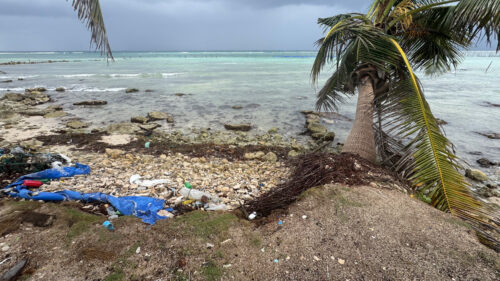
“Standing on Cozumel Island’s leeward shore at sunrise, the first thing one feels is the wind. Every morning, warm air rising from the land draws in a soft sea breeze. Waves break against the barrier reef, producing countless bubbles that burst at the surface. To most people’s eye, the crashing surf off Cozumel, which lies across a 16-kilometer channel from mainland Mexico’s Yucatán Peninsula, offers a postcard scene of the Caribbean. In those waves and bubbles, we also see a transport system, one that lofts salt and moisture into the air, as well as fragments of plastic light enough to ride the breeze. Microplastics (MPs), particles smaller than 5 millimeters, are now widespread in the ocean and make up much of the growing volume of plastic pollution arriving from land and air. These materials can pose health risks for marine life and for humans, especially people who live near or depend on coastal waters. … ” Read more from EOS.
Questions mount as Interior’s wildfire agency takes shape
“The Trump administration’s new wildfire agency is taking shape at the Interior Department, coalescing around a mission to prioritize swiftly putting out fires on public lands, even as some experts question that strategy. To some, the U.S. Wildland Fire Service offers an answer to the growing threat of large-scale wildfires by providing tighter coordination of the many federal agencies that respond to fires. But its sudden emergence this year, as a drought-stricken West faces a high-risk fire season, has raised questions about how it will operate and how many staff have been reassigned. Tracy Stone-Manning, who served as the Bureau of Land Management director under the Biden administration, last week raised concerns that the shift of thousands of firefighters to the new agency will needlessly separate agency land managers from fire experts. … ” Read more from E&E News.

