
Several news sources featured in the Daily Digest may limit the number of articles you can access without a subscription. However, gift articles and open-access links are provided when available. For more open access California water news articles, explore the main page at MavensNotebook.com.
On the calendar today …
- PUBLIC HEARING: Delta Conveyance Project water right hearing beginning at 9am. The State Water Resources Control Board Administrative Hearings Office is holding a Public Hearing on the pending Petitions for Change of Water Right Permits for the Delta Conveyance Project. Interested members of the public who would like to watch this hearing without participating may do so through the Administrative Hearings Office YouTube channel at: bit.ly/aho-youtube. Click here for the meeting notice.
- LEG. HEARING: Assembly Committee on Water, Parks, and Wildlife beginning at 9am. Click here for more information.
- LEG HEARING: Senate Committee on Natural Resources and Water beginning at 9:30am. Click here for more information.
- WEBINAR: Operational Strategies for Maximizing Stormwater Capture from 12pm to 1pm. Explore how the Orange County Water District (OCWD) is advancing stormwater capture initiatives and what recent storms have already delivered. This webinar will highlight OCWD’s decades-long partnership with the U.S. Army Corps of Engineers, focusing on coordinated operations at Prado Dam and along the Santa Ana River that enable stormwater to be strategically captured and stored in the Orange County Groundwater Basin. Participants will receive an update on how much stormwater has been captured to date and learn how projects like Forecast Informed Reservoir Operations (FIRO) are further enhancing OCWD’s ability to maximize stormwater capture. FIRO is a cutting-edge water management strategy that integrates advanced forecasting tools into operational decision-making, supporting more effective capture and storage of storm flows while maintaining flood protection objectives. Click here to register.
In California water news today …
How long will the record heat wave last in the western U.S.?
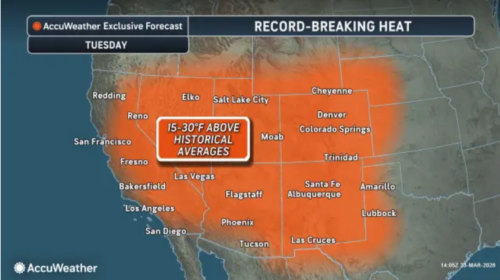 “Many areas in the southwestern United States have endured day after day of heat more typical of early summer than early spring. The region will face yet another week of intense heat, but there are signs of a major change before the end of March. “The heat wave has already lasted five to seven days and appears likely to continue through Friday,” said AccuWeather Vice President of Forecasting Operations Dan DePodwin. “Phoenix has never experienced more than five days in a row with highs of 100 degrees Fahrenheit or greater during March or April,” DePodwin said. “There are a couple of days with a high near 100 forecast this week, but if temperatures surpass the upper 90s on those days, we could be looking at 10 days in a row of triple-digit heat.” Many locations from California to parts of Colorado and Texas have tied or broken daily record highs for a long string of days. Some have shattered old records by several degrees. Some have set new early-season high temperature records, wiping out marks set in March and April, even though April is still a week away. … ” Read more from AccuWeather.
What the surprisingly early heat wave means for California’s summer
“An extraordinary heat wave toppled records this week across the Western United States. In California, it brought the hottest temperatures ever recorded in March. The final days of winter felt like summer, and across the state, many have wondered what it means for actual summer. If the temperature in Death Valley soared to a record-breaking 104 degrees in the middle of March, would it rise even higher in July? No one can say for sure in March what the temperature will be in July. Meteorologists can create seasonal forecasts that look several months into the future and estimate whether temperatures will be above or below normal, but those forecasts are not precise. They can’t reliably forecast specific weather beyond seven or 10 days. But while this heat wave doesn’t dictate California’s summer temperatures, its effects will linger in other ways into the months to come. Here are three of them. … ” Read more from the New York Times.
California’s warm, dry streak could soon end. Here’s when rain may return
“California’s herky-jerky wet season is at an inflection point. There has hardly been any rain this month, and the mountain snowpack is melting at a startling rate, which means drought could return by summer. But the wet season isn’t entirely over. Weather models are arriving at a consensus: California’s next chance of precipitation will come as March ends and April begins. It’s not a guarantee, as the start of the stormy window is still a week away, but it appears to be the best shot of widespread rain and snow in nearly six weeks. California hasn’t seen the end of the massive high-pressure system that’s dominated much of the Western U.S. for the past two weeks, driving temperatures up. It’ll stick around for at least five more days and threaten more temperature records in Central and Southern California. … ” Read more from the San Francisco Chronicle.
As early season heat wipes out Sierra snowpack, can a new approach help California catch more runoff?
“To replenish California’s chronically depleted aquifers, the state’s Department of Water Resources is taking a hard look at a new line of attack: Pairing more sophisticated reservoir operations with groundwater recharge. Water managers are aiming to make greater use of the increased floodwater that’s expected to come with flashier, more intense storms and earlier snowmelt. The new approach is known as FIRO-MAR, which stands for Forecast-Informed Reservoir Operations-Managed Aquifer Recharge. In December, DWR released a study focused on the five main tributary watersheds of California’s second-largest river, the San Joaquin, that provides the most comprehensive assessment of the concept’s potential yet. The study suggests that by weaving together better weather forecasts, more-flexible reservoir operations and strategically targeted recharge locations, “FIRO-MAR has the potential to increase the volume of recharge more than fourfold, and it can greatly diminish the size and frequency of flood flows.” … ” Read more from Western Water.
How do you measure snow from space? First, climb a mountain.
“At 4:30 a.m. on a recent Wednesday, three alpine scientists arose from fitful sleep in a chilly research lab in the Colorado mountains, 11,500 feet above sea level. They drank some grainy coffee, strapped into their skis and headed out into the moonlight, dragging a sled loaded with gear. They had a satellite to meet. The scientists were on an unusual mission. They needed to measure the depth of the snow at a particular mountaintop location just as a new satellite passed directly overhead. That satellite, equipped with powerful radar, has the potential to be the first one capable of estimating how much water is on the ground, in the form of fallen snow, from outer space. It would be an extraordinary technological milestone, providing global data on snowpack, precipitation and how much water might be available to feed rivers and reservoirs downstream in spring and summer. But first, the satellite would need to be calibrated. … ” Read more from the New York Times.
Five overlooked facts about California’s water supply
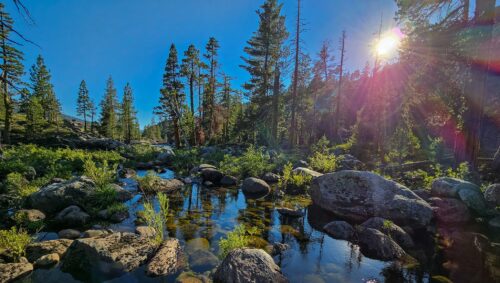
“California’s vast Sierra Nevada mountains act like a giant sponge that squeeze moisture from the clouds drifting eastward from the Pacific Ocean. The forests that flank these then mountains capture and filter rain and snow before it reaches streams, rivers and aquifers. Many of our National Forests, which cover more than 20 million acres of the state, are located in higher elevation areas and play a large role in capturing precipitation. California’s National Forests supply 65 percent of the state’s water while occupying only 20 percent of the total land area. With national attention on California’s record drought, decision-makers and the public are racing to find solutions. While leaders have implemented water conservation measures and engineers are exploring infrastructure solutions, little attention has been given to the source of California’s water – National Forest headwaters. … ” Continue reading from the National Forest Foundation.
A bit of good news: It’s possible to turn around a groundwater crisis
“Generally, when you hear “water use” and “sustainability,” you expect those words to be followed by some bad news. Humanity’s enduring ability to ignore the math of declining water supplies is almost impressive. But there are cases where actions have successfully reversed our loss of water resources. A new paper in Science by Scott Jasechko of the University of California, Santa Barbara, examines documented cases of groundwater recovery around the world to identify which strategies have worked. Groundwater is invaluable for many reasons. For one, it’s (usually) cleaner than surface water. It’s also right under your feet and often close enough to the surface that it doesn’t take much energy to pump it up. And there’s loads of it down there, no matter the season. Because of this, humans use a lot of it for drinking water, agriculture, and every other use you can think of. … ” Read more from Ars Technica.
Environmental group raises alarm over draft approval of California’s Sites Reservoir
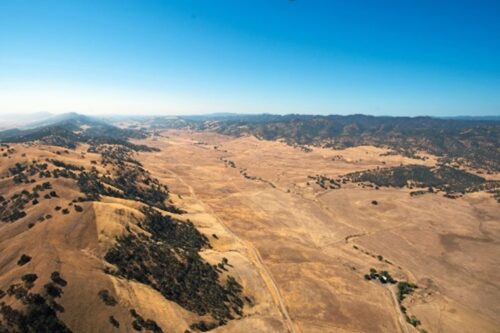
“The State Water Resources Control Board on Friday unveiled a draft approval that would advance Sites Reservoir, marking another step forward for what would be the largest reservoir project for California since the 1970s. The draft decision came two months after the Bureau of Reclamation gave the project a green light on environmental review, moving a plan forward that would store up to 1.5 million acre-feet of water west of Colusa County in the Sacramento Valley. Sites Project Authority, or a joint regional agency behind the project, welcomed the move following the federal approval and reiterated the project would strengthen California’s water supply and protect the environment at the time. With the draft approval, members of the public can submit written comments through May 22. “This draft decision recognizes some of the harms the reservoir would bring but it doesn’t address all of the serious threats to the Sacramento River ecosystem and the imperiled fish populations the project would cause,” said Harrison Beck, an attorney at the Center for Biological Diversity on Monday. … ” Read more from the Sacramento Bee.
SEE ALSO:
- California Water Board releases draft decision on proposed Sites Reservoir project, from Smart Water Magazine
- Sites Project Authority releases statement on proposed order for Sites Reservoir Water Right, from Action News Now
California’s water agencies begin looking to AI
“Water is known for being a cautious sector. While pressure grows on some workers to use AI for more tasks, most California water agencies are just beginning to take advantage of the technology. Eventually, AI is likely to help water agencies with a range of applications, including finding ways to save time, reduce water use, and bring down costs. So how are California water agencies currently using AI, and what should agencies consider as they adopt the technology? We spoke with experts who shared some key first steps. … ” Read more from the PPIC.
March 26 workshop to explore ways to stop the spread by disinfecting waterways
“The California Coastal Commission Workshop will host a virtual workshop on April 2 for anyone who uses the state’s waterways to show them how to stop the spread of freshwater aquatic invasive species into uninfected waterways. This free virtual workshop will help the public learn how they can recognize freshwater invasive species in their region and how to take action to prevent them from spreading, according to a press release from Supervisor Diane Burgis’s office. … ” Read more from the Brentwood Press.
Bill would create an official designation for California’s iconic surf spots
“A Southern California lawmaker hopes to create a new designation for the state’s iconic wave breaks through the creation of “surfing reserves.” Excepting perhaps Hawaii, California’s coastline is home to more world-famous waves than any state. Breaks dot the coast, from renowned Malibu and San Diego beaches to the monstrous Mavericks big wave spot near Half Moon Bay to dozens of lesser known waves (including some consciously kept secret by local surfers) running from the Mexico to Oregon borders. Assemblymember Jacqui Irwin, D-Thousand Oaks, seeks to officially recognize popular breaks, particularly as they face threats from rising seas, coastal erosion and pollution. She’s introduced a bill that would create a process for local governments to designate treasured breaks as “surfing reserves” with the California Ocean Protection Council — a conservation body the Legislature created in the 1970s. … ” Read more from the Sacramento Bee.
California sues Trump to keep shut oil pipeline on Santa Barbara coast
“California sued the Trump administration Monday to block what it says is an unprecedented power grab: using emergency authority to force the restart of an offshore oil operation shut down more than a decade ago. The lawsuit, filed in federal court in San Francisco, argues a March 13 order by U.S. Energy Secretary Chris Wright oversteps his authority under the Defense Production Act, a Cold War-era law. “No matter how much President Trump may claim there’s a so-called national energy emergency — it’s just not true,” Attorney General Rob Bonta told reporters. “The U.S. already produces significantly more oil and gas than we use — it’s a completely fabricated claim intended to curry favor with the oil industry.” … ” Read more from Cal Matters.
SEE ALSO: California sues feds over offshore oil drilling, latest in over 60 challenges, from the Sacramento Bee
In commentary today …
Protecting California’s water – SB 872
Michelle Paul, California Farm Water Coalition, writes, “From the moment California’s earliest residents called the vast, fertile soils of California’s Central Valley home, efforts began to solve one of the state’s oldest challenges: harnessing the water. With rainfall and snowpack varying dramatically year to year, and because most people and farms are in the state’s arid regions, water must be carefully managed and transported long distances to ensure all communities can thrive. California’s water infrastructure has developed over more than 220 years, beginning with the construction of a stone dam on Mission Creek in 1807. Since then, countless projects have been added to meet the evolving needs of each region. Today, nearly every part of the state’s engineered water supply system is interconnected, either through hydrology or connections between physical infrastructure. The most obvious examples of this are the federal Central Valley Project and the California State Water Project, mostly built between 1940 and 1979 to meet agricultural, urban, and now, environmental water supply needs. They both share the Sacramento-San Joaquin Delta, and both systems need upgrades and repairs after, in some cases, 80 years of water deliveries. … ” Continue reading this commentary.
California’s water crisis isn’t a drought—it’s bad policy
Mohamed Moutii, a Research Associate with the Arab Center for Research, a Research Fellow with the Institute for Research in Economic and Fiscal Issues (IREFeurope), and a member of the Ibn Khaldun Initiative for Free Thoughts, writes, “In late December, winter storms brought rain and snow that modestly improved California’s reservoirs and snowpack. Officials quickly cautioned, however, that this would not solve the water crisis. The message was clear: despite years of restrictions and emergency measures, policymakers still have no path to long-term water security. California’s water shortages are routinely attributed to drought, climate change, and population growth, while residents are urged to ration water, shorten showers, and accept fines as a civic responsibility. Yet household behavior does not drive scarcity. California’s water shortage is essentially the product of government policy—decades of price suppression, subsidizing waste, and allocating water according to political rules rather than economic value. Until water is treated as the scarce resource it is—correctly priced and efficiently allocated—no amount of rain or restrictions will fix a crisis of the state’s own making. … ” Read more from the Daily Economy.
In regional water news and commentary today …
NORTH COAST
Klamath Tribes observe baby chinook above upper Klamath Lake for first time
“A just-hatched Chinook has been spotted in an Upper Klamath Lake tributary, the first time a young salmon has been observed there in over 100 years. It follows last year’s return of adult Chinook here for the first time in over a century following the removal of four dams on the Klamath River in far northern California and southern Oregon. According to a press release from the Klamath Tribes, it’s “a major milestone in post-dam-removal restoration and monitoring efforts in the Upper Klamath Basin.” “I see this as the Creator’s will of the unwritten natural laws which are allowed to be part of us again,” said Chairman William E. Ray Jr. in the release. … ” Read more from Northwest Sportsman.
Water tank project faces possible hold as Redway District board meets Wednesday; Planned shutoff March 30
“A dispute over an unpaid subcontractor is threatening to complicate a state-funded water storage project in Redway, according to the board packet prepared for Wednesday’s Redway Community Services District meeting. Sonoma Reinforcing, a subcontractor that supplied welded rebar cages and HRC T-heads for the project, has filed a stop notice against general contractor Mercer Fraser over an unpaid bill. RCSD Office Manager Glenn Gradin explained in an email that a stop notice instructs the project’s owner, in this case the district, to withhold payment to Mercer Fraser until the subcontractor is paid. If Sonoma Reinforcing isn’t paid, the company could place a lien on the property within 30 days of the project’s notice of completion. Gradin said the district doesn’t expect it to go that far. “We are confident that we will not be going down this path,” he wrote. “But time will tell.” … ” Read more from the Redheaded Blackbelt.
Potter Valley Project debate draws attention
“A town hall was held on March 21, 2026, at Potter Valley Jr/Sr High School, where residents gathered to hear updates and ask questions about the future of the Potter Valley Project. Assemblymember Chris Rogers hosted the meeting and provided a legislative update while taking questions from constituents. Rogers later reported strong turnout at the event and noted that discussions focused on what the community’s future may look like. … ” Read more from Western Water.
SIERRA NEVADA
SYRCL’s State of the Yuba 2026: Celebrating 25 years of Wild & Scenic protection
“The South Yuba River Citizens League invites the public to State of the Yuba 2026 on Wednesday, April 15, at the Miners Foundry Cultural Center in Nevada City. The open house begins at 5:30 PM, with the speaking program starting at 6:30 PM. This family-friendly event will also feature fun, educational activities for kids. Since 2013, this free annual event reports on the success of SYRCL’s ongoing restoration, advocacy, education, and outreach projects. This year, the event also celebrates the 25th anniversary of the South Yuba River’s Wild & Scenic designation and addresses recent challenges, including the accident at New Colgate Powerhouse. … ” Read more from the South Yuba River Citizens League.
Nevada Irrigation District to provide Water Shortage Contingency Plan Wednesday
“Nevada Irrigation District is required as part of the Water Shortage Contingency Plan to provide an analysis of forecasted water availability for the upcoming summer months. The forecast incorporates current reservoir storage and anticipated snowpack runoff based on snow survey data. This analysis is used to determine the amount of water available for the summer irrigation season, and to make a determination on whether a Water Shortage Contingency Plan will need to be enacted. Tomorrow, the board of Nevada Irrigation District (NID) will meet and receive an update on current and forecasted water supply and adopt a resolution making a declaration of surplus water availability for 2026. … ” Read more from the Union Democrat.
SACRAMENTO VALLEY
Regional partnerships advance Redding-area restoration, community and ecosystem health
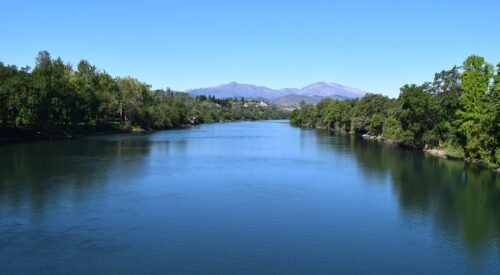 “In partnership with state natural-resource agencies, River Partners, a nonprofit river restoration organization based in Chico, is restoring a pair of sites along a critical ecological corridor between Redding and Red Bluff that spans two Northern California counties. River Partners is leading two projects along the Sacramento River at Battle Creek. The Rancho Breisgau floodplain and Battle Creek Ranch restorations will help boost salmon recovery, wildlife habitat, water resources, and local communities through improved access to nature. Key partners in the restoration include the U.S. Bureau of Land Management (BLM) and California Wildlife Conservation Board (WCB). River Partners is also partnering with local Tribes, adding to the area’s decades-long legacy of collaborative conservation. River Partners President Julie Rentner believes that working with a diverse group of partners on these efforts will help guide the work and lead to multi-benefit solutions and positively impact wildlife and communities. “The Battle Creek watershed is vital for a healthy Sacramento River ecosystem and salmon recovery,” said Rentner. “And this type of partnership in restoring critical landscapes is an absolute win-win for the ecology and will help keep the region thriving.” … ” Read more from River Partners.
City of Sacramento approves Water Forum 2050 Agreement
“The Sacramento City Council has approved the Water Forum 2050 Agreement, marking an important milestone as Water Forum members continue to bring the updated agreement to their governing boards and councils for approval across the region. As one of the region’s largest Water Forum members, the City of Sacramento’s approval represents a significant step forward in the process. With this action, the City joins 17 other Water Forum members that have already approved the agreement—bringing the regional approval process to its halfway point. “Each approval reflects the commitment and persistence of Water Forum members who have worked for more than five years through the negotiation process to reach this point,” said Water Forum Executive Director Ashlee Casey. … ” Read more from the Water Forum.
BAY AREA
When summer heat arrives in March
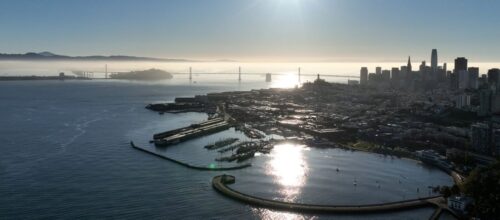 “The Bay Area is baking this week. Cue our modern human adaptations to summer: On go the shorts—and the A/C, if we have it. But how are our wild neighbors faring? A high-pressure system is sitting over much of the West Coast, creating a heat dome: sinking air warms as it compresses and acts like a lid, trapping heat near the surface. The resulting heat wave is by many measures extraordinary, with record temperatures 20–30 degrees above average. Winter is over, and suddenly. A temperature jolt like this can disrupt the harmonious change of season. If flowers bloom before insects emerge, for example, that could in turn make life harder for the birds that eat those very insects. Such phenological mismatches—a desynchronizing of seasonal biological timing—could stress native flora and fauna. But it might not be so bad in some parts of the San Francisco Bay Area. An absence of drought conditions and a strong maritime layer are likely buffering the region from the most extreme negative effects—though some experts still say they are concerned. … ” Read more from Bay Nature.
‘Yikes’: Bay Area heat lingers, Sierra Nevada snowpack melting fast
“Although March’s hottest days may be behind us, the unseasonable heat that baked California last week is set to continue, forecasters said Monday. While great for beach goers, the high temperatures threaten to melt the entirety of the state’s dwindling snowpack by the end of the month. National Weather Service meteorologist Rachel Kennedy wrote in the Bay Area’s daily forecast discussion that while temperatures won’t be as warm as last week’s, they’ll still be about 10 to 15 degrees above normal. Across inland areas, high temperatures will reach the upper 70s to low 80s through Tuesday, with the 60s to 70s along the coastline. Karleisa Rogacheski, a lead meteorologist with the weather service’s Bay Area office, said temperatures are expected to cool overnight, with morning lows in the upper 40s to mid-50s. “That’s the story: we are going to bebop around the 70s, it’s going to still be that summer-like pattern,” Rogacheski said. … ” Read more from KQED.
25 years of change: A quarter century of hard work has restored nature to the San Francisco Bay Area in places where it was once unimaginable.
“When Bay Nature was born 25 years ago, the greater Bay Area stood at a tipping point. Environmental movements of the 1970s had galvanized a core group of people committed to bringing nature back. Thanks to key achievements—the Clean Water Act, the founding of land trusts, new state and federal funding—stinking landfills became parks, and areas once slated for bulldozing were protected. Now environmental groups had to do something with the places they had saved. “It went from ‘You’re not going to develop this’ to ‘We’re going to restore this,’” says David Loeb, who cofounded Bay Nature with Malcolm Margolin and was its publisher and editor in chief for 17 years. After news-grabbing purchases come far less glamorous years of developing restoration blueprints, applying for permits, cleaning up trash, and rearing native plants. Meanwhile the threats to nature have grown and changed, Loeb says. Development continues to encroach upon natural areas, but climate change now drives much of the restoration work. New invasive species are always arriving. Yet many places have been transformed for the better, and more people are invested in local nature. “It’s not just a specialized cadre,” Loeb says. “You have a whole ecosystem of people now.” … ” Read more from Bay Nature.
How stormwater studies can make the San Francisco Bay cleaner
“As stormwater sampling across the San Francisco Bay Area reveals more poorly regulated chemicals, those who want clean water in the Bay face a tricky question: what can be done about it? A raindrop falling over a Bay Area city or suburb might land on a dizzying number of human-made surfaces: artificial turf, roofs, cars, pavement, windows, solar panels, construction sites, and many others. By the time water heads toward San Francisco Bay as stormwater runoff, it can collect hundreds of chemicals from these painted, treated, or worn-down surfaces. In all Bay Area cities except portions of San Francisco, stormwater flows straight to the Bay. “The fundamental challenge of stormwater is that the scale is just really big,” says Karen Cowan, the executive director of the nonprofit California Stormwater Quality Association. “It’s the world we live in, for all practical purposes.” … ” Read more from the San Francisco Estuary Institute.
CENTRAL COAST
Marina revives old desal plant to boost drought-resistant water supply
“The Marina Coast Water District is reviving a 30-year-old desalination plant in Marina to provide an additional 300 acre-feet of water annually to the Monterey Peninsula, enough to support a thousand homes. “This is the one that was built in 1996,” said a representative from the Marina Coast Water District, Rem Scherzinger. “We’re going to take this package out, get a new one, slide it right in, plug it in, and off we go. So this is literally we’re using the assets that the district built back 25 years ago.” The reactivated plant is expected to come online next year, providing a drought-resistant water supply. “Droughts are coming and they have been here,” Scherzinger said. “And so we want to make sure that we have a very diverse and drought-resistant, drought-tolerant water supply.” … ” Read more from KSBW.
DWR approves assignment of State Water Project Contract
“The Central Coast Water Authority (CCWA) is pleased to announce that the State of California’s Department of Water Resources (DWR) has approved the assignment of the State Water Project (SWP) contract (SWP Contract) from Santa Barbara County Flood Control and Water Conservation District (District) to CCWA. Since 1991, CCWA has been financially responsible for the SWP Contract, as well as the conveyance, treatment and delivery of SWP water to Santa Barbara and San Luis Obispo counties. CCWA has pursued the full and complete assignment of the SWP Contract for more than a decade. This transition aligns fiscal responsibility for the SWP Contract with the contractual authority to manage this important supplemental water supply for the region in a manner that maximizes beneficial use of the resource and optimizes water supply reliability. … ” Read more from ACWA’s Water News.
SAN JOAQUIN VALLEY
Man who dumped oil into Stockton waterway gets 6 years
“The man who illegally dumped more than 200 gallons of waste oil that flowed into a Stockton waterway in 2024 has been sentenced to prison. David Sump, 52, has been sentenced to six years in prison — twice the three-year maximum due to a prior-strike conviction, according to the San Joaquin County District Attorney’s Office. He was arrested in March 2025. He will pay nearly $53,000 and roughly $41,400 to the California Department of Fish and Wildlife and the United States Environmental Protection Agency, respectively. … ” Read more from Fox 40.
Woodward Reservoir looks to improve spillway to meet California dam standards
“A 13-square-mile watershed in Stanislaus County that distributes water to farmers is seeking help from engineers to keep up with standards set by the California Department of Water Resources (DWR). CBS News Sacramento spoke with Forrest Killingsworth, the South San Joaquin Irrigation District engineering department manager, who said they are stewards of these water resources and want adequate facilities to protect the public. The Woodward Reservoir in Oakdale is a man-made storage facility holding around 34,000 acre-feet of water, helping the South San Joaquin Irrigation District distribute irrigation ag water to their customers in a more timely manner, according to Killingsworth, and they’re working with the DWR’s Division of Safety of Dams (DSOD) to find the best way to protect it. … ” Read more from CBS News.
Fresno Irrigation District releases water early amid record March heat
“Record-breaking temperatures this week are drawing more people outdoors while putting the region’s agricultural community on alert, prompting the Fresno Irrigation District to begin releasing water earlier than planned. Police were not involved in this story; instead, officials with the Fresno Irrigation District said the unusually warm March conditions led the district’s board of directors to start scheduled water deliveries to agricultural customers on Monday, about two weeks earlier than anticipated. Temperatures climbed above 90 degrees this week, creating summer-like conditions across the area. At local parks, residents took advantage of the warm weather, though some said it was harder to prepare for the heat. … ” Read more from ABC 30.
‘We’re harvesting the sun’: A huge solar project grows in California
“Harris Ranch Resort isn’t close to much. Residents of California’s major cities know it mainly as a rest stop about halfway between Los Angeles and San Francisco on Interstate 5’s long run through the San Joaquin Valley. The sprawling stucco building has a Western-themed gift shop and a couple of good restaurants where travelers can enjoy regional specialties like tri-tip tacos and almond-smoked prime rib — perhaps while they charge their EV at one of the Tesla stations outside. But in the vast expanse of California’s Westlands Water District, the ranch is about the most central spot for a meeting. On a sunny afternoon in late January, Jeff Fortune, Ross Franson, and Jeremy Hughes, three of the nine directors of the country’s largest agricultural water agency, gathered there for lunch to discuss an ambitious plan to rescue some of the most productive farmland in the U.S. from a decades-long water crisis. … ” Read more from Canary Media.
SEE ALSO: Arvin unveils solar panels to power wastewater plant, cut 360 metric tons of CO2 yearly, from Bakersfield Now.
Groundwater allocation workshops open for Hanford-area well owners
“Workshops explaining how groundwater pumping will be tracked and allocated for Hanford-area landowners and growers will be held this week. After passing its groundwater pumping allocation policy in December, the Mid-Kings River Groundwater Sustainability Agency (GSA) will hold two workshops to explain its policies and how groundwater usage will be tracked. The first workshop will be held today, March 23, from 5:30 p.m. to 7 p.m. online only. The second will be held in-person on Wednesday, March 25, from 3 p.m. to 4:30 p.m. at the Kings County Ag Commissioner’s Multipurpose room, 680 Campus Drive. … ” Read more from SJV Water.
EASTERN SIERRA
State Water Board receives climate report, agrees action for Mono Lake is needed
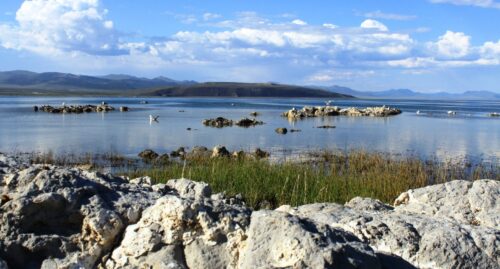 “[Last] week the California State Water Resources Control Board focused on Mono Lake’s low level in a five-hour discussion at their regular meeting in Sacramento. A new Mono Lake report and hydrology model from the UCLA Center for Climate Science was the impetus for the agenda item, and there was robust discussion, followed by extensive public comments. At the conclusion, Board members agreed: a formal, decision-making hearing about Los Angeles Department of Water & Power (DWP) water diversions is necessary, this year. The UCLA team presented a project overview and key findings. The report shows that while climate change is a factor, ongoing DWP water diversions are the main cause of the present-day low lake level. The report also shows that current diversion levels are unlikely to allow the lake to rise. However, Mono Lake recovery is still achievable if water diversions are reduced—a clear opportunity for meaningful action by the Board. … ” Read more from the Mono Lake Committee.
SOUTHERN CALIFORNIA
SoCal water leaders announce landmark regional water partnership
“The San Diego County Water Authority and Western Municipal Water District today announced a historic long-term regional water supply agreement that strengthens water reliability and creates a paradigm shift in how water providers share resources across the region to benefit millions of customers. Together, the agencies serve communities representing more than 4 million Southern California residents across Riverside and San Diego counties. “This agreement is a win for San Diego ratepayers, a win for Western, and a win for Southern California,” said Water Authority Board Chair Nick Serrano. “It allows us to maximize the value of the investments San Diego County residents made over decades, strengthen water reliability, and do so in a way that is mindful of affordability and public responsibility. It is exactly the kind of innovative, collaborative approach this moment demands.” … ” Read more from ACWA’s Water News.
SEE ALSO: Opinion: Historic Regional Water Exchange Signed, from the Raincross Gazette
Santa Monica’s sand dunes are mounting a low-tech resistance to rising sea levels
“On a recent morning, traffic sped by the Annenberg Community Beach House in Santa Monica where San Vicente and Ocean boulevards meet. A few hundred yards away, the waves crashed on the shore. But 100 years ago, when Hollywood starlet Marion Davies lived in this once-rural spot of coast, standing this close to the house would put you knee deep in water at high tide. “That low white concrete wall was the sea wall to protect the pool, to protect the backyard of that home,” said Tom Ford, CEO of the Santa Monica Bay Foundation, gesturing toward the house. A century ago this wide flat beach was far narrower. Many beaches in the Santa Monica Bay were artificially widened from the 1930s through the 1960s. The sand came from an ancient system of coastal dunes that extended from LAX all the way to the Palos Verdes Peninsula. The endangered El Segundo blue butterfly is found only in the dunes’ restored, fragmented remains. … ” Read more from the LAist.
SAN DIEGO
Port awards $2.9M contract for wildlife-friendly shoreline projects in San Diego Bay
“A contractor is preparing to install wildlife-friendly shoreline structures in San Diego Bay after receiving approval earlier this month from the Port of San Diego’s Board of Port Commissioners, officials announced Monday. On March 10, the board awarded a $2.9 million construction contract to Power Engineering Construction for two projects — one along Harbor Island Park in San Diego and one along the Chula Vista side of the Sweetwater Channel. … ” Read more from the Times of San Diego.
Along the Colorado River …
Colorado River states are back at the table with a pitch to prop up Lake Powell
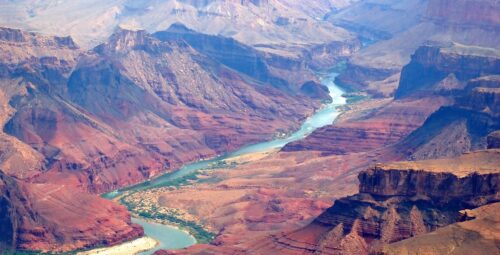
“Critical negotiations about the future of the Colorado River took a two-week hiatus after the seven states in the basin missed a key Valentine’s Day deadline for striking a deal. As of March, the states are back at the table, said Estevan Lópe, New Mexico’s water negotiator. A short-term pitch from Nevada has been the new starting point for the upper and lower basin states. “Right now, we’re in discussions with the lower basin about a potential short-term agreement,” Lopez told New Mexico’s Interstate Stream Commission in a March 19 meeting. Nevada proposes increasing water releases from upper basin reservoirs like Flaming Gorge by at least 500,000 acre feet to help prevent Lake Powell from dropping too low. The latest forecasts predict Powell could drop enough to stop producing hydropower by December. … ” Read more from KUER.
ASU hosts national water policy event, experts stress urgency of water in the Southwest
“Transforming Water, West gathered scholars, innovators and policymakers on March 20 to discuss solutions to counter the United States’ water challenges. Previously known as the Rethinking Water series, the organizers rebranded the event to showcase a transition from thinking about water solutions to taking action to implement them. Urgency was stressed throughout the conference, with scientists sharing concerns about how current population growth contradicts the availability of water in the Southwest. “We are in the midst of an area which is experiencing fairly critical water conditions,” said Upmanu Lall, the director of the Water Institute at ASU. “They are acknowledged to a certain extent, but what is going to be done about those is not really being talked about nearly as much.” … ” Read more from Arizona State University.
Video: AZPM Press Room: Southern Arizona’s regional water future
“On this week’s Press Room: Host David Lee talks about negotiations between the states about Colorado River water, with Tucson Sentinel senior reporter Paul Ingram, Arizona Daily Star reporter Tony Davis, AZPM reporter Katya Mendoza and UA Water Resources Director Sharon Megdal.” Watch at Arizona Public Media.
Arizona hires high-powered law firm, setting the stage for a legal battle over Colorado River water
“Arizona is preparing for a legal battle over its rights to Colorado River water. Following an extraordinarily dry winter along the river basin and what’s expected to be an exceptionally hot and dry spring across the West, where high temperatures in March have already blown past records, the pressure to maintain access to the state’s fair share of river water is growing. The Colorado River is a vital source of drinking water for 40 million people in the seven basin states, Mexico and 30 Native American tribes, and provides water for farming operations and hydroelectricity. Reaching a water usage agreement is imperative to the basin states as the river’s water supply continues to decline, as it has done for the past 25 years due to a persistent drought spurred on by climate change. … ” Read more from the Arizona Mirror.
SEE ALSO:
- Arizona ‘lawyers-up’ over Colorado River negotiations, from Arizona Public Media
- Arizona water department secures law firm for potential Colorado River legal fights, from KJZZ
New water rules could put the squeeze on southern Arizona vineyards
“Arizona’s wine industry has seen exponential growth in the past three decades, going from a couple of wine producers in the early 1990s to about 168 today. Now, winemakers, viticulturists and their allies fear that new groundwater rules in southeastern Arizona could stunt that growth. To make wine, you need wine grapes, and nearly 80% of all the fruit used by Arizona winemakers is grown in the Willcox groundwater basin. … ” Read more from Arizona Central.
Cocopah Tribe launches habitat restoration project along Colorado River
“The Cocopah Indian Tribe’s Environmental Protection Office successfully completed its first ecological restoration project, restoring 40 acres at the Cocopah North Reservation. Part of the project included a three-day workshop led by Fred Phillips of Fred Phillips Consulting. The workshop brought together more than 30 participants and volunteers, who contributed to hands-on fieldwork while learning planting and restoration techniques. Phillips has specialized in large-scale restoration and ecological landscaping projects for over two decades. During that time, he has worked on numerous initiatives, including tribal projects in the Yuma wetlands along the Colorado River. When the Cocopah Tribe selected him for this project, he worked closely with the tribe to design a plan aimed at improving both habitat conditions and the quality of water flowing into the Colorado River. … ” Read more from KAWC.
Colorado lawmakers step in — again — to urge federal action on stalled tribal water access
“The Southern Ute and Ute Mountain Ute Indian tribes have been pushing for the federal government to uphold its water-related responsibilities for years. Now, Colorado legislators are jumping back into the fight. Lawmakers in the Colorado House of Representatives unanimously passed a resolution advocating for tribal water access Friday, during Ute Day at the Capitol. The resolution — which lists a series of longheld tribal water priorities and urges federal agencies to respond — awaits consideration in the Senate. It calls on the feds to take action on everything from releasing frozen funding for tribal water projects to repair deteriorating federal water systems and improving access to reservoirs like Lake Nighthorse near Durango. … ” Read more from the Colorado Sun.
Colorado lawmakers move to protect beavers as a way to mitigate the threat of wildfires
“A lack of snow and unseasonably warm temperatures in Colorado have significantly increased the risk of wildfires this year, and some state lawmakers are taking an unusual approach to help lower that risk. HB26-1323 would outlaw the killing of beavers on public lands in Colorado, except in cases where beavers threaten infrastructure or public safety. Supporters say not only do the dams built by beavers help regulate the state’s water supply, but the wetlands created by them also act as natural firebreaks, provide refuge for other wildlife during fires, and reduce downstream pollution after fires. … ” Read more from CBS Colorado.
In national water news today …
Blue states rip EPA’s ‘compliance first’ approach to enforcement
“Democratic state attorneys general called on the Environmental Protection Agency to retract a memo instructing regulators to advise industries on how to comply with environmental laws before issuing penalties. The 13 attorneys general claim the memo puts the interests of businesses over the environment and public health. Without strong enforcement, industries have little incentive to comply with laws, the attorneys general allege. “This administration’s approach gives polluters a tacit green light to break federal environmental laws,” Washington Attorney General Nick Brown said in a statement. … ” Read more from the Capital Press.
Global review finds freshwater fish in peril
“Many freshwater fish worldwide are in crisis, according to a new global assessment, but varied solutions based on specific environmental needs may curb further population decline. On Tuesday, researchers with the Convention on the Conservation of Migratory Species of Wild Animals (CMS) — an environmental treaty of the United Nations — formally introduced the first comprehensive report specifically designed to identify all transboundary migratory freshwater fish of conservation concern. The assessment evaluates the conditions and health of over 15,000 species. The release of the assessment coincides with the CMS Conference of the Parties (COP15) taking place March 23 through March 29 in Campo Grande, Brazil. Three hundred and twenty-five species of migratory freshwater fish are singled out in the assessment and need international protection, the researchers say. … ” Read more from the Courthouse News Service.
SEE ALSO: The world’s great fish migrations are collapsing – that’s a problem for millions of people, from The Conversation

