
Several news sources featured in the Daily Digest may limit the number of articles you can access without a subscription. However, gift articles and open-access links are provided when available. For more open access California water news articles, explore the main page at MavensNotebook.com.
On the calendar today …
- PUBLIC HEARING: Delta Conveyance Project water right hearing beginning at 9am. The State Water Resources Control Board Administrative Hearings Office is holding a Public Hearing on the pending Petitions for Change of Water Right Permits for the Delta Conveyance Project. Interested members of the public who would like to watch this hearing without participating may do so through the Administrative Hearings Office YouTube channel at: bit.ly/aho-youtube. Click here for the meeting notice.
- LEG HEARING: Assembly Natural Resources Committee beginning at 9am. Click here for more information.
- WEBINAR: California-Nevada March Drought and Climate Outlook Webinar from 11am to 12pm. The March Drought & Climate Outlook Webinar will provide climate and drought updates and the outlook from the California-Nevada River Forecast Center, as well as highlight new research on drought indicators. The California-Nevada Drought Early Warning System March 2026 Drought & Climate Outlook Webinar is part of a series of regular drought and climate outlook webinars designed to provide stakeholders and other interested parties in the region with timely information on current drought status and impacts, as well as a preview of current and developing climatic events (i.e., El Niño and La Niña). Click here to register.
In California water news today …
Record-breaking heat in the West to resurge this week
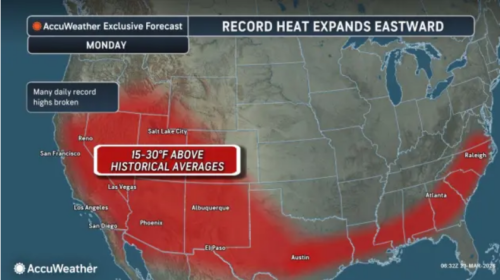 “The record-breaking heat will continue eastward this week, breaking more daily records, AccuWeather meteorologists say. While a brief dip in intensity of the heat is expected into Monday, it won’t last long as high pressure is expected to restrengthen toward midweek. Temperatures have already climbed to levels more typical of late May and June across a broad area of the western United States and will continue to do so farther east early this week as a strong area of high pressure remains in place. “Dozens of daily and all-time March temperature records have already been set across the Southwest, including 108 degrees Fahrenheit in Palm Springs, California, and 105 degrees in Phoenix,” said AccuWeather Senior Meteorologist Bill Deger. … ” Read more from AccuWeather.
Across the west, record heat is colliding with a snow drought
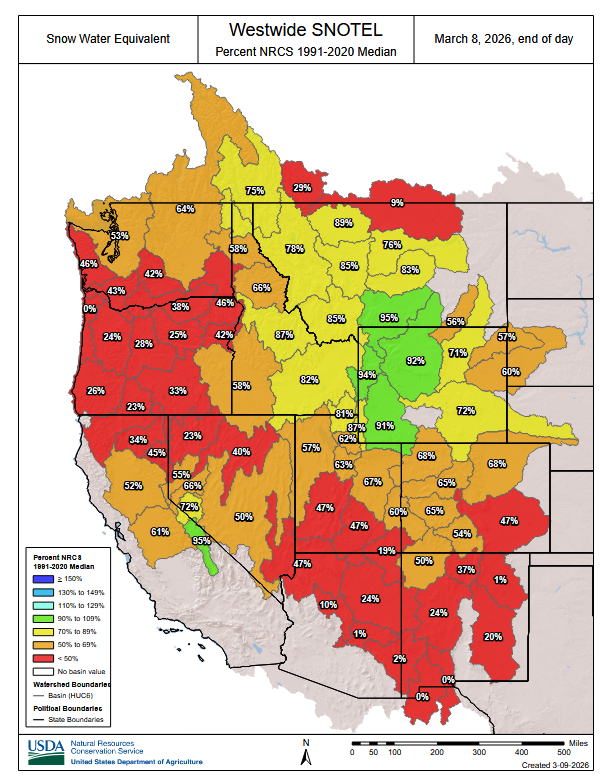
“At this point in a typical year, as the seasons officially turn from winter to spring, snowpack would still be accumulating across the Mountain West. But this winter wasn’t typical, even before a heat wave this past week. It was the warmest on record for six Western states. Snow cover is the lowest level on record for the Colorado River Basin, and across much of the rest of the West, there are record or near-record low amounts of snow. That alone would create a challenging year for water managers, who rely on slow and steady snowmelt to feed streams, rivers and reservoirs and meet spring and summer demand for irrigation and drinking water. While rainfall runs off quickly and can more readily evaporate from soil, snowpack serves as a valuable and lasting source of moisture and accounts for a majority of water supplies across the region, as much as 80 percent in some areas. … ” Read more from the New York Times.
SEE ALSO:
-
- After the West’s historic snow drought, spring could bring water shortages and wildfires, from CBS News
- The West’s heatwave ‘virtually impossible without climate change’, from High Country News
State Water Board releases draft right decision for Sites Reservoir
“The state Water Resources Control Board is seeking public review and comment after releasing a draft water right decision and associated permit for the proposed Sites Reservoir in western Colusa County. The conditions proposed in the draft include an annual diversion limit from the Sacramento River of 986,000 acre-feet; all requirements to align with the planning processes underway for the Bay-Delta watershed; and operating criteria at the diversion facilities to protect fisheries. The Sites Project Authority proposes to build a 1.5 million-acre-feet facility to store and divert water from the Sacramento River for future uses, including agriculture, municipal, and fish and wildlife preservation. The site is 17 miles west of the river in Colusa and Glenn counties, near the town of Maxwell. … ” Read more from the Daily Republic.
Press release: Draft water rights decision highlights flaws in proposed Sites Reservoir Project
“The draft water rights decision for the proposed Sites Reservoir project – released today by the Administrative Hearing Office of the State Water Resources Control Board – underscores longstanding concerns about the project’s environmental impacts, high costs, and limited benefits. The project, already estimated at roughly $6.8 to 9 billion, would inundate thousands of acres of habitat and reduce flows that are critical to salmon and other species and critical to maintaining water quality downstream. In addition, it will produce relatively small amounts of water at high cost. The draft order includes a number of proposed permit terms to prevent or offset the project’s impacts on water quality, fisheries, and Tribal resources – impacts that Friends of the River and allied groups argued were far from fully accounted for. … ” Read more from Friends of the River.
Leave it to beavers
“On an early October morning in 2025, a group of BeaverCorps trainees lugged a 40-foot-long section of plastic pipe with a 7-foot-wide wire cage on one end into a stream in El Dorado Hills, near Sacramento. They had built this device, called a pond leveler, as part of their training to become beaver coexistence professionals. Beavers had moved into a subdivision, and the local community service district was concerned that their dam would cause flooding. But instead of sending someone out to euthanize the beavers, the CSD had decided to try a new approach: living with them. After decades of viewing beavers as pests, California is finally beginning to welcome them home. And not a moment too soon. … ” Read more from Alta Magazine.
SEE ALSO: Groundbreaking study finds a natural way to fight climate change, from the USA Today
Where the sturgeon go: how age-related differences in habitat use shape exposure of white sturgeon to population risks
“White sturgeon are a prominent member of the sturgeon family in North America. They are generally considered the largest fish found in North American freshwaters (up to 12 feet long) and are quite long-lived (reaching 100 years or more). In California, a population of white sturgeon spawns in the Sacramento River, and these fish spend much of their lives in the San Francisco Estuary (SFE). White sturgeons’ long lives and immense size might make them seem invincible, but in reality, their populations face grave risks: currently, white sturgeon are a candidate for listing under the California Endangered Species Act, underscoring the need for research to support decision-making and management. As white sturgeon (Figure 1) move between rivers, estuaries, and the Pacific Ocean, they encounter a variety of habitats and a gauntlet of risks, from fishing pressure to harmful algal blooms. A new study sheds light on how white sturgeon movements and habitat use intersect with potential risks across the San Francisco Estuary (SFE) and Sacramento River system, and how these patterns change across life stages. … ” Read more from the California Water Blog.
From lake to lab: New DNA and eDNA research projects in fisheries
“It is no secret that DNA contains valuable information, and sequencing methods have been used for decades in biological research. In recent years, these procedures have become cheaper, easier to use, and more accessible, shifting DNA data from a niche lab specialty to a handy tool for field biologists. This means that the use of molecular methods and technologies is transforming fisheries research in new and innovative ways. With DNA sampling methods, ranging from backpack samplers and hand-pump syringe kits to simple fin clips or genetic swabs, researchers can access genetic information and answer questions that traditional methods, like nets or traps, could not address. Recently, the session “DNA & eDNA” at Cal-Neva 2026 introduced attendees to new research that uses DNA to answer study questions and inform solutions for fisheries management challenges in California, Nevada, and the Pacific Northwest. … ” Read more from FishBio.
Data centers under scrutiny by California lawmakers as fears rise about health and energy impacts
“Data centers have existed for decades but are rapidly changing and expanding due to the worldwide boom in artificial intelligence, or AI as it’s known. States and communities nationwide have started pushing back, citing concerns that the projects could strain power grids, increase utility bills and have negative health and environmental impacts. In California, state legislators are debating how to protect residents and natural resources without creating so much red tape that developers go elsewhere, taking their jobs and taxable earnings with them. “We can be supportive of innovation and a technology that is needed but also protect our communities and our health and our environment,” said state Sen. Steve Padilla (D-San Diego). “We can do both at the same time.” … ” Read more from the LA Times.
SEE ALSO: Local residents orchestrate impressive takedown of massive data center project, from The Cool Down
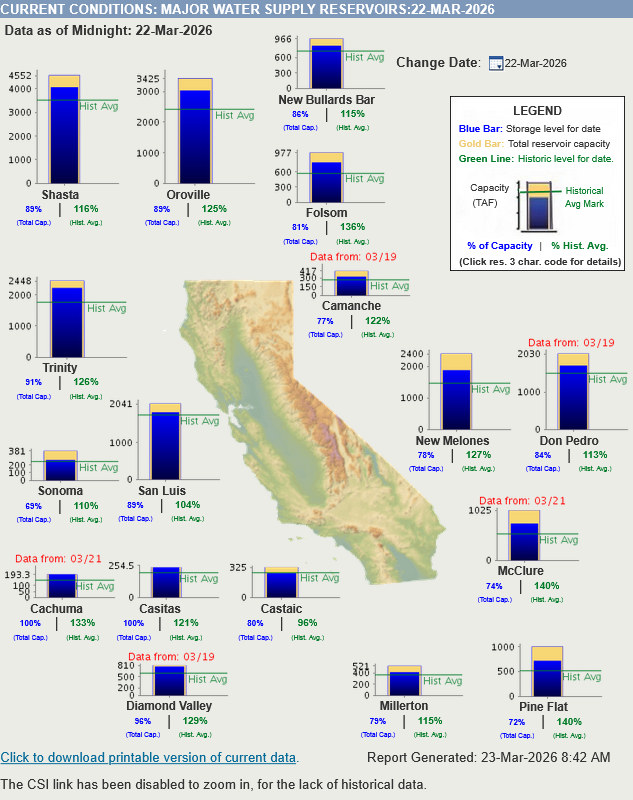
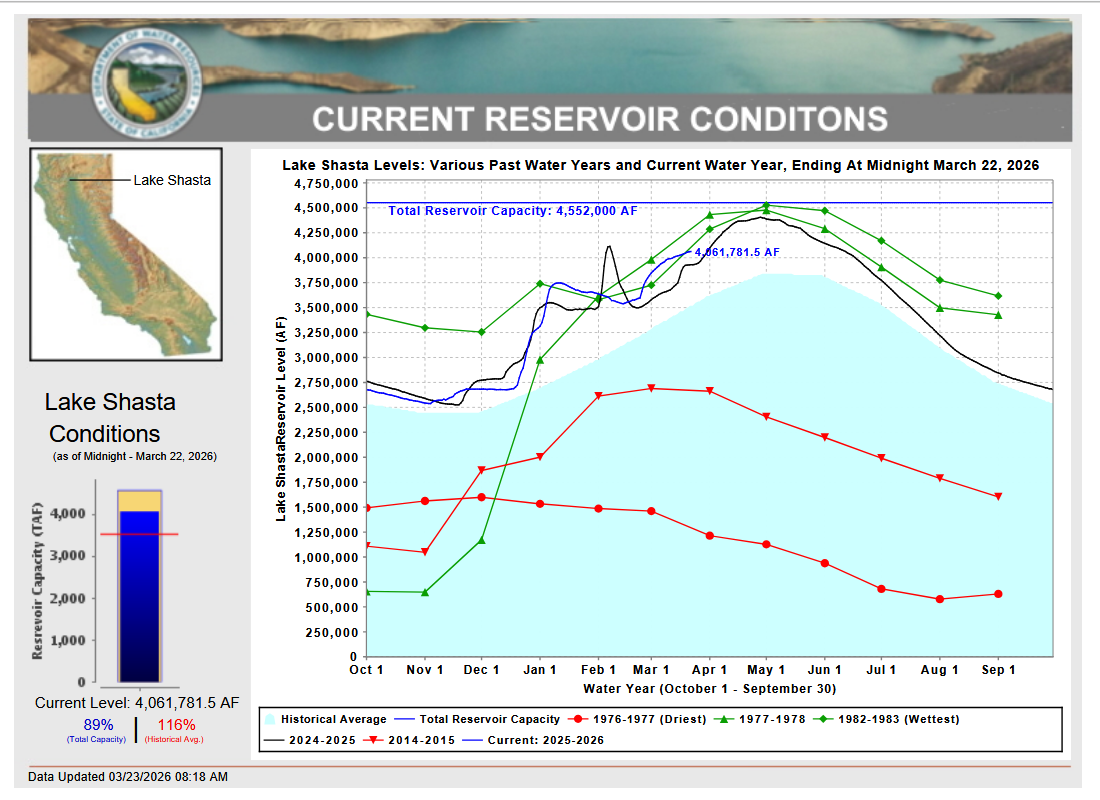
A look at current reservoir and water conditions …
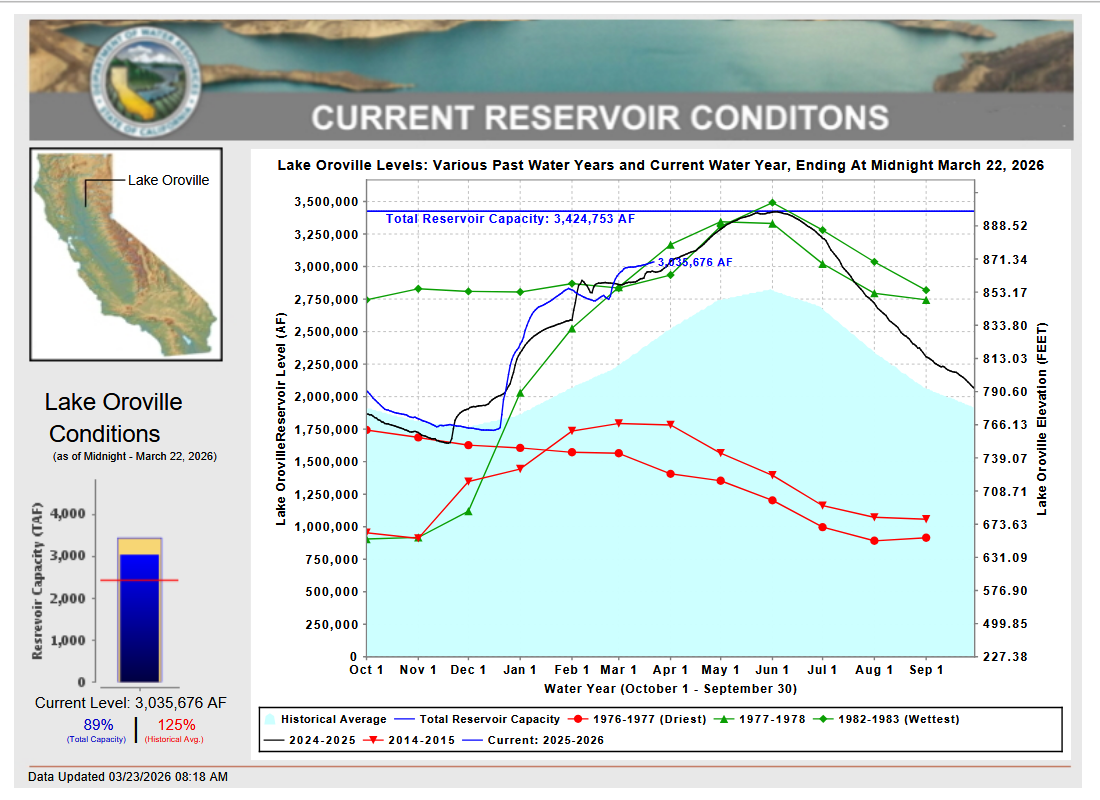
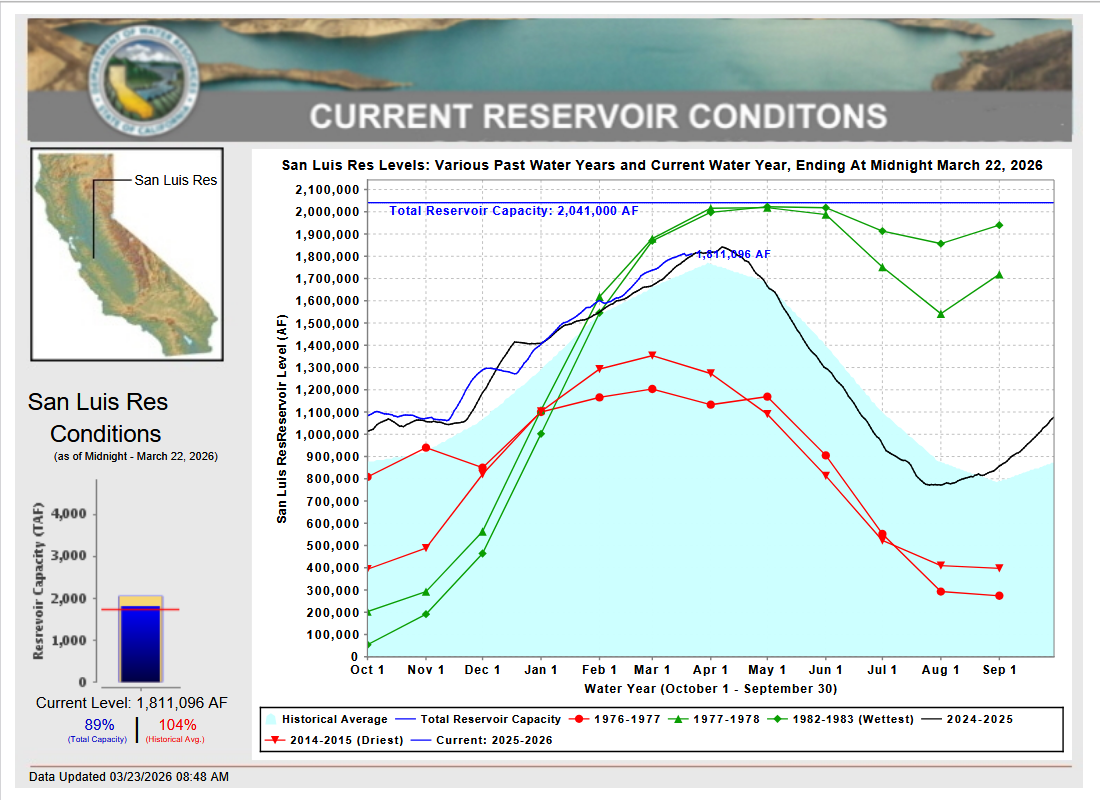
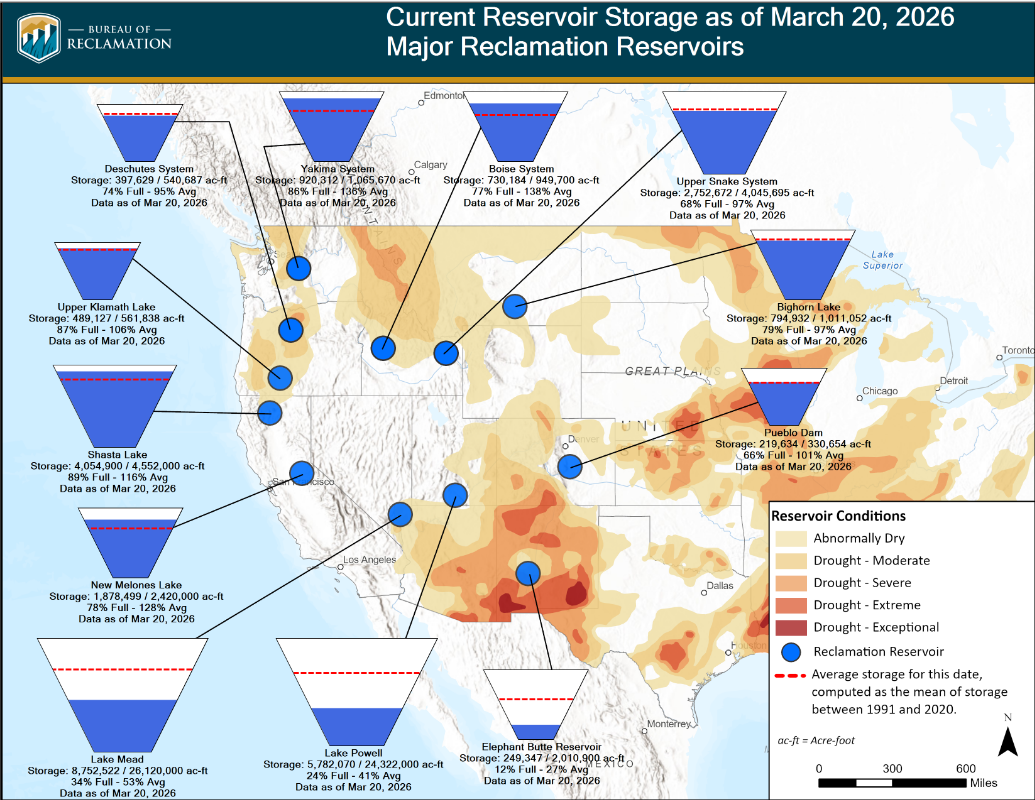
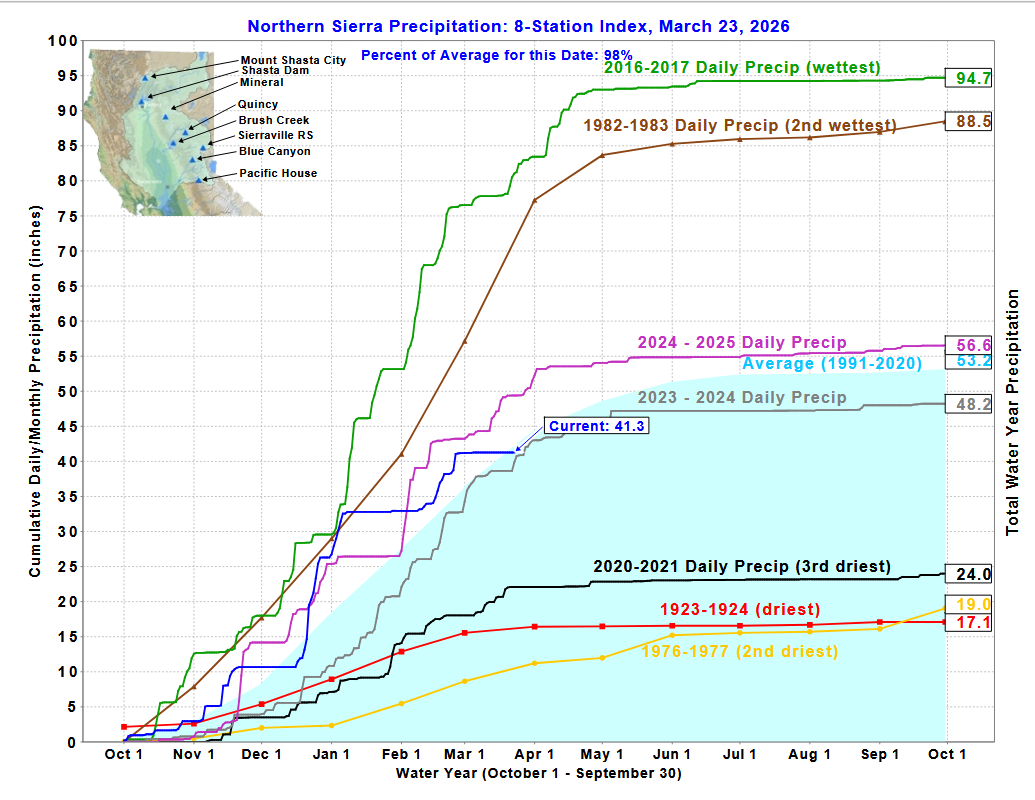
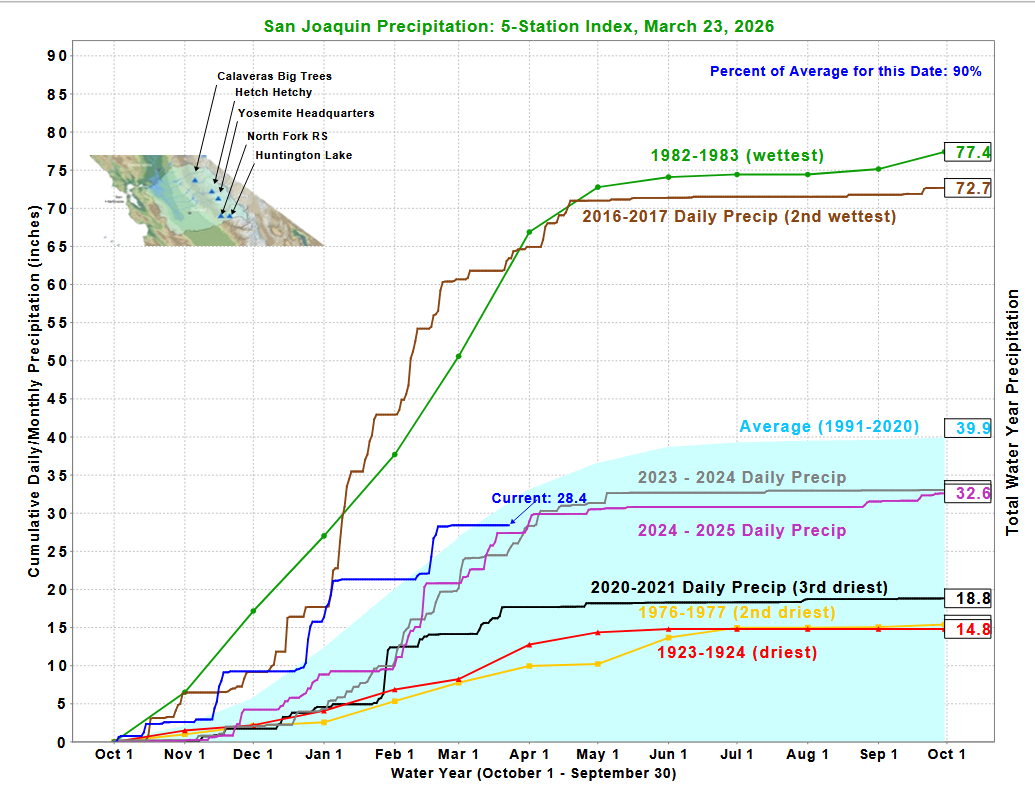
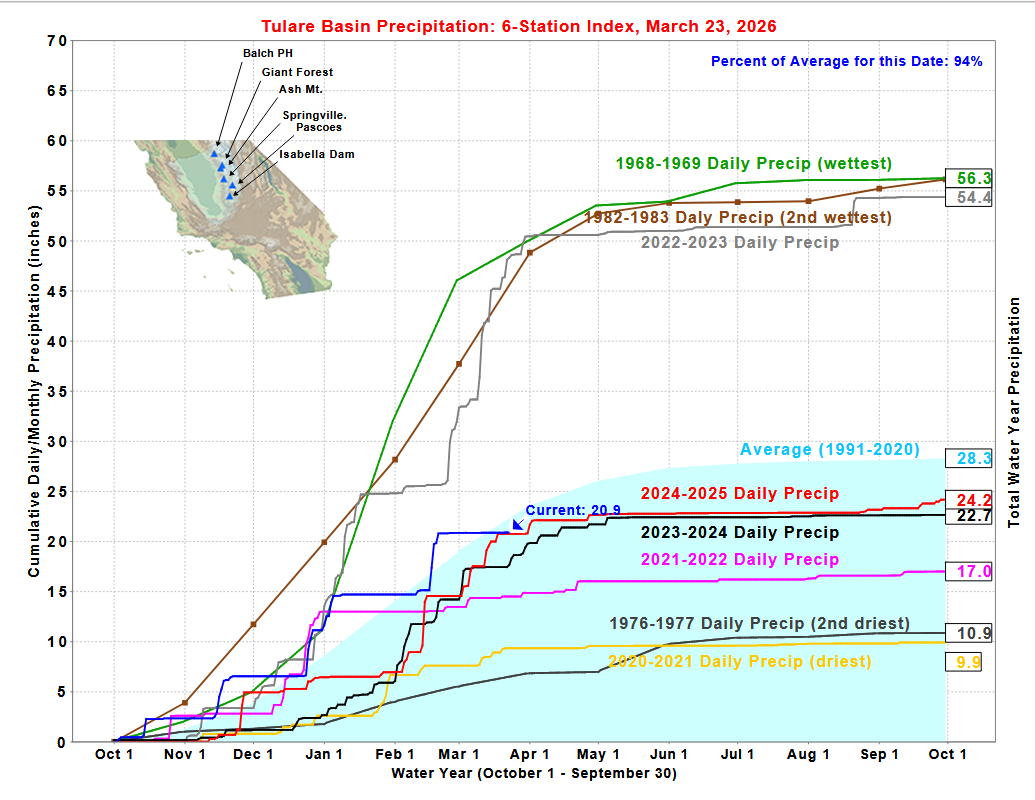
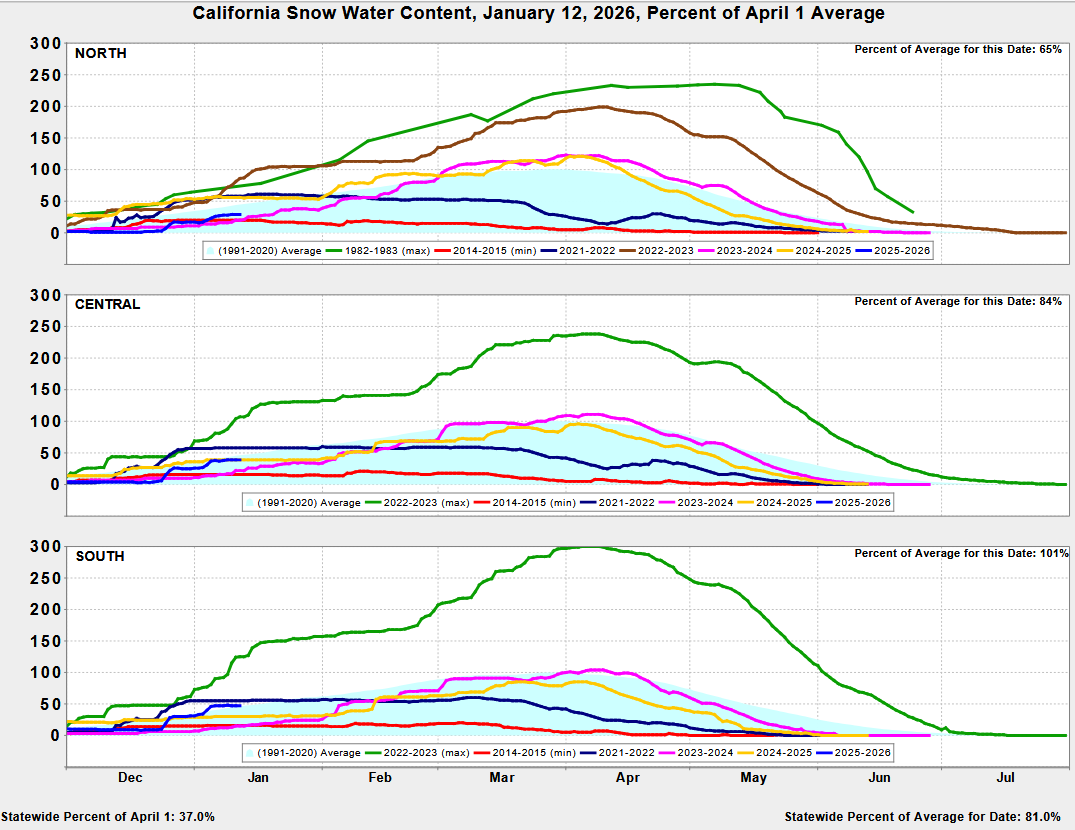
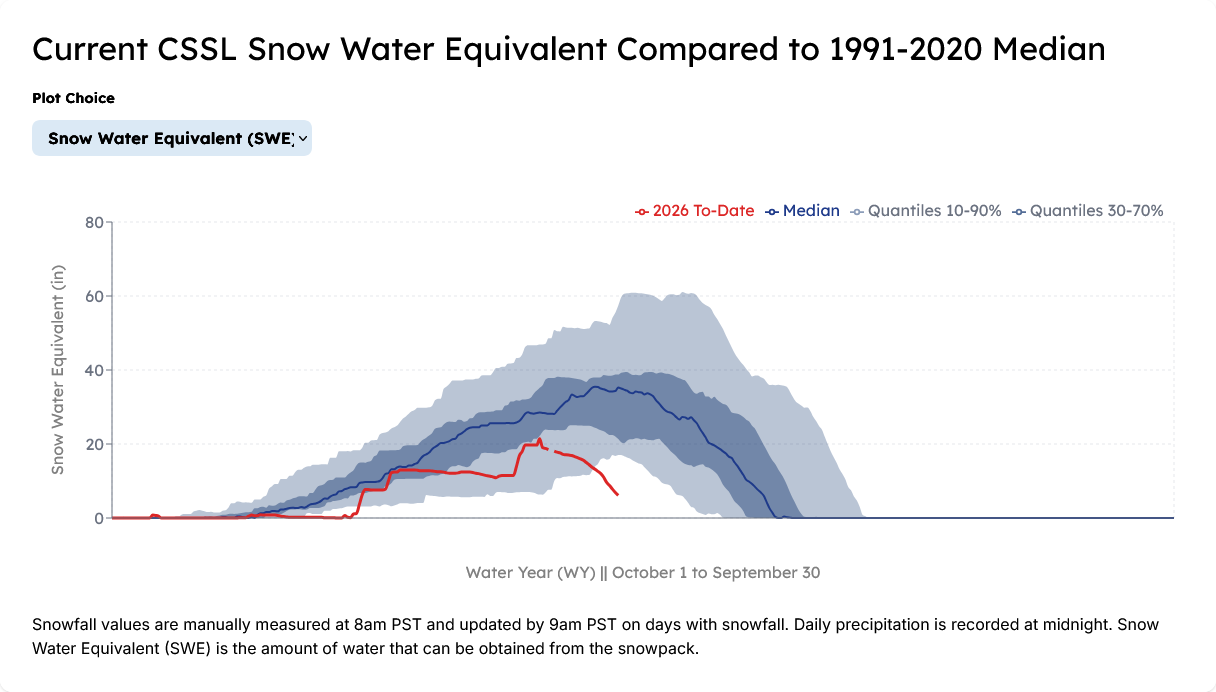
In regional water news and commentary today …
NORTH COAST
SIERRA NEVADA
Slight gain in Sierra Valley groundwater
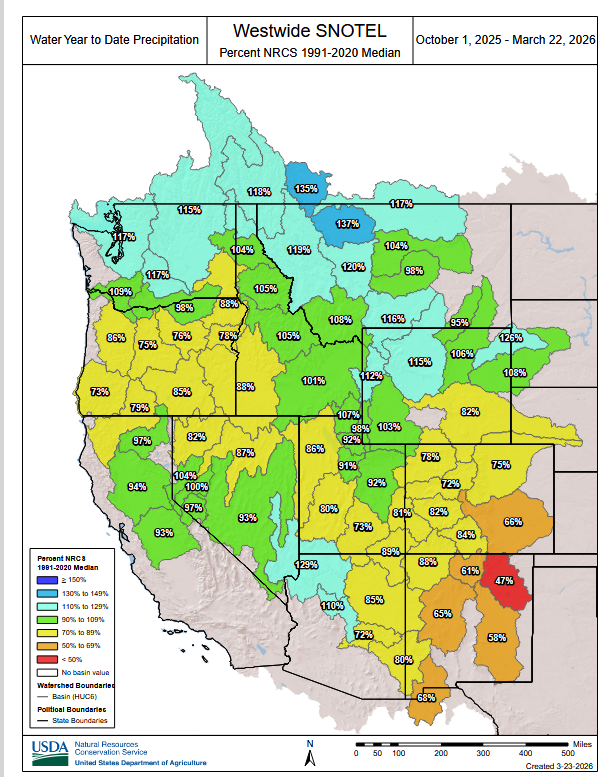
“Directors of the Sierra Valley Groundwater Management District discussed an annual groundwater sustainability report when they met March 16. Also on the agenda were grant opportunities and approval of two $60,000 recharge land-lease agreements. Gus Tolley, project hydrogeologist, and Plumas County Planning Director Tracey Ferguson presented a draft of the Groundwater Sustainability Plan Annual Report. Sierra Valley had more precipitation in 2025 than the historical median by about 108.2%, according to the report. While more rain came in, less groundwater was taken from the basin — approximately 700 acre-feet less. Agricultural uses, which comprised 87% of extractions in 2025, were down from 89% the year before, the report stated. … ” Read more from the Plumas Sun.
Fireworks barge recovery underway in Lake Tahoe
“Recovery efforts are now actively underway to remove the sunken fireworks barge from the waters offshore of Ski Beach in Incline Village. This highly technical and physically demanding salvage operation began on March 16, 2026. Dive teams, marine crews, and agency partners are working in close coordination to locate, secure, and begin extracting debris from the lakebed, with some materials resting at depths approaching 160 feet. From the outset, the work has been methodical. Each day begins with planning and safety briefings involving multiple agencies, followed by carefully staged operations on the water. A remotely operated vehicle, or ROV, was first deployed to locate the barge and establish precise working zones. Divers then began descending along secured lines to recover debris and assess conditions on the lakebed. … ” Read more from the Tahoe Daily Tribune.
Warm temperatures continue for Lake Tahoe this week; will more records fall?
“The unseasonably warm air mass continues to be positioned over the west this week, and is expected to peak on Tuesday and Wednesday, with temperatures climbing 15-25 degrees above late-March norms. This past week saw several records fall, including the highest daily temperature for March. On March 18, the National Weather Service (NWS) in Reno recorded 76 degrees in South Lake Tahoe. The highest March temperature before that was on March 30, 2015,j when it was 71. So far, there have been five consecutive days of record-breaking temperatures in South Lake Tahoe. The other record days besides the 18th, so far – March 19 – 72, March 20 – 70, March 21 – 71, and March 22 – 69. … ” Read more from South Tahoe Now.
Nevada utility to Lake Tahoe: Find electricity elsewhere
“A utility serving 49,000 Lake Tahoe customers has a little over a year to find a new source for 75% of its power. Liberty Utilities, one of California’s three smaller investor-owned power companies, alerted regulators this month that its main power supplier won’t continue its contract after May 2027. Liberty, whose territory sits on the border of California and Nevada, generates about 25% of its power from solar facilities in Nevada. The rest is purchased through Nevada-based NV Energy, which said that it wouldn’t be able to continue this arrangement because of its “own resource needs,” Liberty told regulators this month. “Our absolute goal is twofold: We want to achieve our renewable requirements in the state, and we also want it to be as affordable as possible,” Eric Schwarzrock, president of Liberty, said. … ” Read more from Cal Matters.
BAY AREA
Multiple record highs shattered across Bay Area with more heat on the way
“Monthly records were shattered across the Bay Area in the culmination of a weeklong heat wave that led to triple-digit highs throughout California. But some respite is on the way as the lingering high-pressure system releases its grip from the region. Nine record highs for the month of March were broken in the last four days alone … Dial Hoang, a meteorologist for the National Weather Service’s Bay Area office, added that a number of other daily records were broken or matched on Saturday. San Rafael reached a high of 86 degrees, breaking a previous record of 82 degrees set in 1960. Meanwhile, SFO soared to a high of 75 degrees, barely surpassing the previous record of 74 degrees set in 1997 and 1965. … ” Read more from SF Gate.
Marin Municipal Water District pursues pipeline project review as expenses mount
“The Marin Municipal Water District is moving forward with an environmental review on a major drought resiliency project as the scope expands and costs rise. The “atmospheric river capture” project, which was approved one year ago, involves a proposed pipeline that would replenish Marin reservoirs with Sonoma County rainwater during droughts. On Tuesday, the district committed to plan for two pump stations to serve the pipeline, increasing the design and engineering contract with Carollo Engineers by $1.45 million to $11.15 million. There was always an option for a second pump station, but it was not included in the initial design contracts or project estimate. The board also approved a $179,829 increase for an environmental analysis for a new contract total of $1.42 million with Panorama Environmental Inc. … ” Read more from the Marin Independent Journal.
For this Bay Area island city, water is coming from all sides
“Danielle Mieler spread out maps of Alameda across a concrete table at a park on a bluff overlooking the city of nearly 80,000. A ferry from San Francisco approached the island’s sandy western shore. Each map highlighted a different flood risk — one showed low-lying areas in blue and green, another projected sea level rise in blocks of purple. In one of the more ominous maps, Alameda appeared in red, indicating areas where saturated soil could liquify during an earthquake. Mieler, the city’s sustainability and resilience manager, pointed to a grey stretch of land in the city’s center — the only area her team does not expect to plan protections from future flooding, she said. Still, because Alameda is an island, flooding will affect all residents. “It’s kind of a lot when we think about all that needs to be done, and we’ve started to wrap our heads around that,” Mieler said. “We need to raise the shoreline.” … ” Read more from KQED.
CENTRAL COAST
Levee construction underway at Corralitos Creek
“The Pajaro Regional Flood Prevention Agency and the U.S. Army Corps of Engineers have broken ground on a multi-phase project to enhance flood prevention in Pajaro and Watsonville, focusing initially on Corralitos Creek, a key contributor to the 2023 floods. Corralitos Creek, situated between East Lake Avenue and Green Valley Road in Watsonville, currently lacks any flood prevention measures. Construction began this week to install new levees and a flood wall. “This area overtopped four times in 2023,” said Mark Strudley. “Flooded the city of Watsonville College road neighborhood. Army Corps is building new levees out here for us.” … ” Read more from KSBW.
Beavers can’t live in this SLO creek. So volunteers are making their own dams
“On a warm spring day, mud-splattered volunteers mimicked beavers as they stacked coyote brush and soil into a dam with the goal of catching more water in San Luis Obispo’s Walters Creek. Water only flows through the creek for about half the year, so actual beavers can’t survive there. That’s where the local volunteers come in: They build dams where beavers can’t, with the goal of restoring the river to full health, Nature’s Engineers founder Cooper Lienhart told The Tribune. “They have an amazing intelligence and technology that they developed,” he said of the beavers. “We can also learn from them and copy what they do.” … ” Read more from the San Luis Obispo Tribune.
SAN JOAQUIN VALLEY
SSJID addressing need to improve spillway at Woodward Reservoir
“The South San Joaquin Irrigation District is continuing the process needed to address Woodward Reservoir spillway deficiency issues identified by the California Division of Safety of Dams. The state determined several years ago the Woodward Reservoir Dam lacks a properly designed spillway, which is considered a dam safety deficiency. Now the state has approved the direction SSJD is moving in to put a properly designed spillway in place, the district board when they meet Tuesday at 9 a.m. is being asked to authorize the next phase of design and engineering. The implementation plan, prepared by Provost & Pritchard, presented to the state in September 2025 outlined the district’s conceptual spillway approach located near the existing boat ramp and Fisher Point Day Use Area. … ” Read more from the Manteca Bulletin.
Tehachapi-Cumming County Water District faces new challenge as prospects for the next year of water dim
“The Tehachapi-Cumming County Water District is the latest among many water agencies in south and central California to find in its system golden mussels, an invasive species that has spread throughout much of the state at an alarming rate as experts continue to try to find a solution. The discovery of these mussels was announced at the March 18 meeting of the TCCWD Board of Directors. District General Manager Tom Neisler said the golden mussels were found while repairing a leak in the system nearly three-quarters of the way up the mountain. The invasive species was discovered in the state less than two years ago, and, despite efforts made by the state, they have been found in waterways across more than two-thirds of California. … ” Read more from the Tehachapi News.
EASTERN SIERRA
SOUTHERN CALIFORNIA
San Clemente’s beach is eroded, expert tells city officials, but future sand projects are on the way
“San Clemente’s stunning coastline, which will serve as backdrop to Olympic surfing in two years, has also turned into a battlefield against beach erosion. Construction crews, hopper dredges and bulldozers have worked to patch up vanishing stretches of beach with much needed sand. The city has also contracted a coastal administrator to manage sand replenishment projects and serve as a liaison between government agencies. As part of her “beach czar” duties, Leslea Meyerhoff gave a “state of the beach” presentation before the San Clemente City Council on Tuesday, as elected officials considered contract extensions and grant applications to keep efforts going. “We have a critical erosion problem right now,” Meyerhoff told the council. “The goal here is to have programs that are supported by city leaders and also endorsed by community members.” … ” Read more from the LA Times.
IMPERIAL/COACHELLA VALLEYS
SAN DIEGO
Along the Colorado River …
Colorado River remains in crisis with continued uncertainty on water supply and operations
“The winter of 2025-2026 has not been kind to the Colorado River. Record-warm temperatures day after day across the mountains that feed the river have led to record-low snow levels. All indications are that spring snowmelt feeding the river will be scant. That is a huge problem, because Colorado River reservoirs, which historically held vast water reserves, are already depleted, with Lake Powell at 25% and Lake Mead at 34% of capacity. This is bad news for people and birds relying on water from the Colorado River. The U.S. Bureau of Reclamation (Reclamation), the federal agency managing the dams, projects that Lake Powell’s water levels could fall low enough to threaten Glen Canyon Dam’s infrastructure, downstream water delivery, hydropower, and native wildlife in the Grand Canyon including the California Condor and the Western Yellow-billed Cuckoo, among others. … ” Read more from Audubon.
The Colorado River problem: Does water infrastructure create resiliency? PCL Construction highlights solutions
” … One of the most promising ways to reduce strain on water basins is to invest in water infrastructure across the West, expanding systems that capture, move, and reuse water to strengthen the region’s water security. While water cuts can be managed in several ways, augmentation strategies like pipeline connections and water reuse infrastructure allow communities to capture previously unusable water and build long-term resilience. PCL is helping lead this charge by delivering water reuse facilities that increase resilience, expand supply and support communities as they adapt to a drier future. Momentum for water reuse is building, with U.S. reuse investments forecasted to average $47.1 billion over the next decade, according to Bluefield Research. Water reuse facilities treat municipal and industrial wastewater for safe return to communities for non-potable uses such as irrigation and showers, reducing the strain on America’s hardest-working river and supporting long-term water plans. … ” Read more from the Denver Business Journal.
Scientists issue warning about ‘drought paradox’ sucking up critical water source
“A new study is raising alarms about a surprising “drought paradox” that could shrink one of the United States’ most important water supplies: the Colorado River. According to Live Science, researchers found that during hot, dry periods, plants pull more water from underground than expected, leaving less water for rivers, reservoirs, and ultimately, people’s faucets. The study focused on the Upper Colorado River Basin, where snowmelt supplies water for millions. Scientists discovered that even when the soil is extremely dry, plants continue releasing water into the atmosphere. Instead of relying on recent rain or snowmelt, they tap into deeper groundwater reserves, diverting water that would otherwise replenish rivers. … ” Read more from The Cool Down.
Record heat is fast-tracking Utah’s already dire water outlook
“Spring has just sprung yet the weather already feels like summer across Utah and the West this week. Temperatures are expected to shatter records, with daily highs reaching as much as 30 degrees Fahrenheit above normal, according to the National Weather Service. The heat wave will likely spark rapid snow melt and early spring peak flows, Cody Moser, forecaster with the Colorado Basin River Forecast Center, said. This follows an extremely warm winter and abnormally poor snowpack, leading to dismal water supply forecasts for Utah and the greater Colorado River Basin. “This will be … the warmest winter on record and the driest, and those two things don’t help us when we’re trying to figure out how to fill Lake Powell and Lake Mead,” Gene Shawcroft, Utah’s Colorado River negotiator, said at the Utah Water Users conference on Tuesday. … ” Read more from the New York Times.
In national water news today …
Spring Outlook: Drought forecasted to expand in U.S. West, parts of Plains
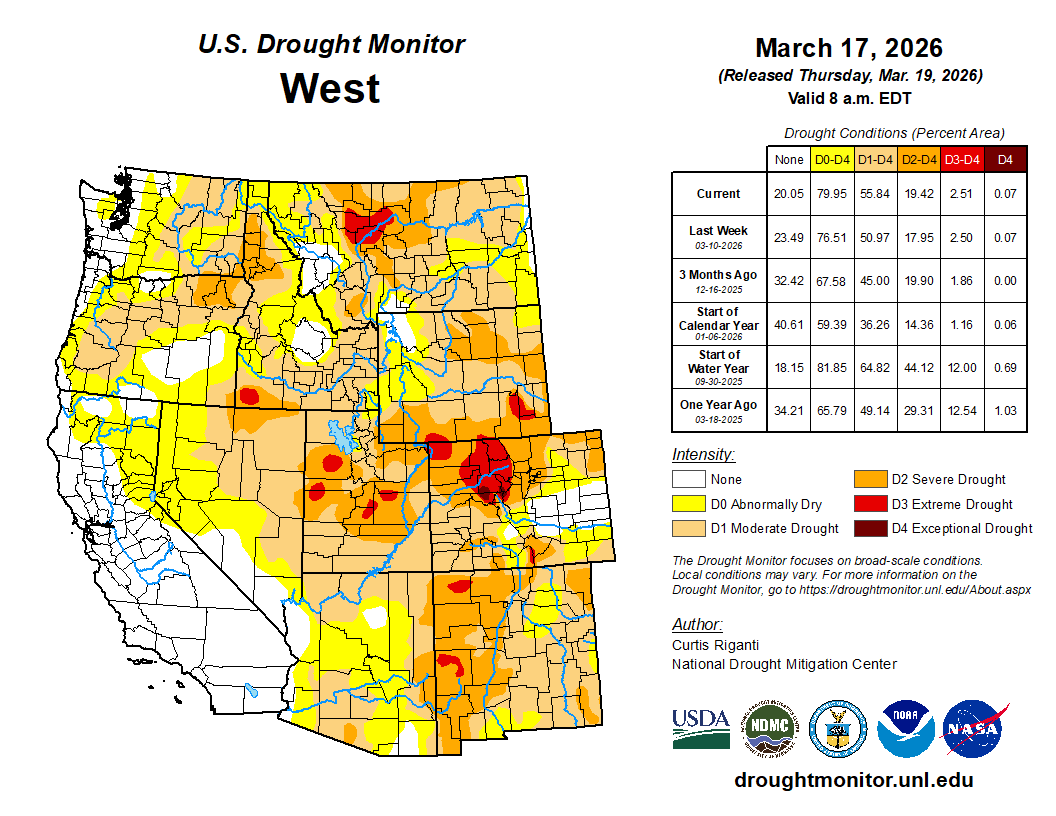
“Drought conditions are forecast to worsen or develop for many areas in the West and south-central Plains, according to NOAA’s Spring Outlook released today for April through June. Forecasters from NOAA’s National Weather Service also predict above-normal temperatures for the majority of the U.S. “Factors influencing NOAA’s Spring Outlook include the El Niño-Southern Oscillation (ENSO), low snowpack in the West and soil moisture content throughout the lower 48 states,” said Ken Graham, director of NOAA’s National Weather Service. “This spring will also feature a transition from La Niña to ENSO-neutral conditions, meaning neither El Niño nor La Niña.” As of mid-March, moderate to exceptional drought conditions exist across 55% of the continental United States. … ” Read more from NOAA.
World Water Day: Earth’s freshwater reveals new species & faces mounting threats
“Water covers most of our planet, yet less than 3% of it is freshwater and most of it is contained in glaciers, making it not readily usable. Contamination and overuse threaten the valuable supplies of freshwater that humans and other animals, especially aquatic organisms, depend on to live. On World Water Day, a United Nations day observed every March 22, Mongabay highlights three recent stories showcasing recent wins and losses for freshwater ecosystems. More than 300 new-to-science freshwater fish species were described in 2025. It was the third-highest tally year since 1758, when scientists began keeping records. Among the species are two cave-dwelling fish in China, both adapted to life in permanent darkness: the Yang’s plateau loach (Triplophysa yangi) and the Sichuan mountain cave loach (Claea scet). … ” Read more from Mongabay.
The balance that keeps climate stable is out of whack, U.N. report finds
“The Earth is out of balance. That’s the message from a United Nations report released late Sunday that looked at how much energy from the sun is absorbed by the Earth or reflected back into space. Researchers found the gap between the two is the biggest since measurements began in 1960, meaning more of the sun’s heat energy is now staying on Earth. And that energy imbalance is heating up the oceans, atmosphere, and frozen regions of the world, according to the World Meteorological Organization’s State of the Global Climate report. Ashkay Deoras, a research scientist at Britain’s National Center for Atmospheric Science at the University of Reading, likened the planet to a heated room with the windows closed. “If you open the window, naturally, you will allow the hot air to escape,” said Dr. Deoras, who was not associated with the report. “But now what is happening is that, because of all these greenhouse gases, they are just trapping more and more heat. The planet is just not getting a chance to cool down.” … ” Read more from the New York Times.

