
Several news sources featured in the Daily Digest may limit the number of articles you can access without a subscription. However, gift articles and open-access links are provided when available. For more open access California water news articles, explore the main page at MavensNotebook.com.
In California water news this weekend …
Sites Reservoir on track for key state permit
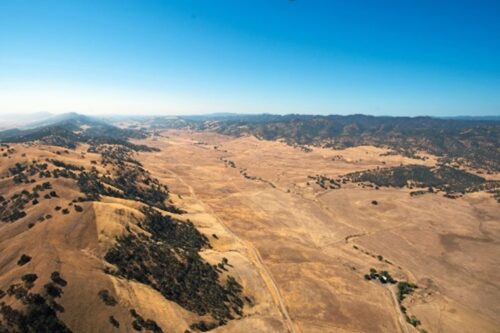
“The plan to build California’s largest reservoir in nearly 50 years has cleared one of its last and most fundamental hurdles: tentative approval of the project’s water right. The State Water Resources Control Board on Friday released a draft permit that would allow Sites Reservoir, a proposed 13-mile-long storage facility 70 miles northwest of Sacramento, to draw water from the Sacramento River. While not final, the much-awaited draft permit indicates that state water regulators support the project, which is driven by a coalition of water agencies, and that they will likely sign off on the needed water in the fall. This could pave the way for construction of the $6 billion reservoir to begin as soon as late this year or early next. Sites Reservoir, which has been in discussion for decades, has been widely supported by cities and farms as well as by state leaders, including Gov. Gavin Newsom. However, some environmental groups and tribal communities have opposed the venture, saying it will take water from an already-stressed watershed, thus harming plants and wildlife — including the state’s biggest salmon runs. … ” Read more from the San Francisco Chronicle. | Read via Yahoo News.
SEE ALSO:
- PRESS RELEASE: State Water Board releases draft water right decision for proposed Sites Reservoir, from the State Water Board
- Sites Project Authority Statement on Proposed Order for Sites Reservoir Water Right
Public comments wanted for Sacramento’s Sites Reservoir proposal
“The State Water Resources Control Board released a draft water right decision and permit for the proposed Sites Reservoir, inviting public review and comments. The reservoir is planned to store and divert 1.5 million acre-feet of water from the Sacramento River for agriculture, municipal use, and wildlife preservation. The Sites Project Authority applied for a water right permit in May 2022. Following a protest period, the board’s Administrative Hearings Office reviewed the application, involving 21 parties and 60 witnesses over 32 hearing days. The draft decision includes conditions to limit annual diversions to 986,000 acre-feet, align with Bay-Delta watershed planning, and protect fisheries. Existing infrastructure will divert water near Red Bluff and Hamilton City, with new facilities in Glenn and Colusa counties. … ” Read more from Action News Now.
‘Snow-eater’ heat wave behind big Sierra melt is a look at our climate future
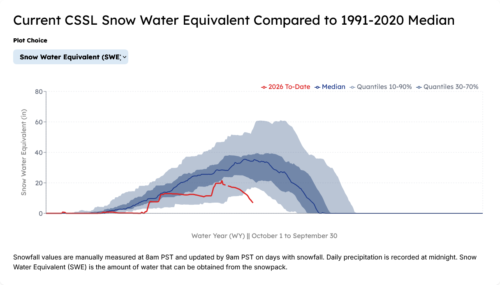 “The snowpack is melting so fast across the Sierra Nevada that ski resorts in the Tahoe area are farming snow to deepen the slush. Meanwhile, state officials are worried the melting snowpack could lead to troubling drought and early wildfire conditions. Climate experts said the truncated winter and an early spring heat wave are exactly what they’ve predicted in a warming world. California has been baked all week with temperatures 20 to 30 degrees above normal for this time of year. “The monthly record has already been completely smashed for South Lake Tahoe,” said Christopher Johnston, a meteorologist with the National Weather Service’s Reno office. The town set a new March record of 76 degrees on Wednesday, 5 degrees warmer than the previous record set in 2015. … ” Read more from KQED.
What does the March heat wave mean for fire season?
“The five-day heat wave that broke records across California and the West this week is winding down, with temperatures in the Bay Area forecast to fall from the 90s to the 70s in many places over the weekend. But the impact of the overall hot, dry month of March is likely to be felt all summer, experts say, through increased fire risk around the state. “Much of the West is experiencing the warmest temperatures ever recorded in March,” said Daniel Swain, a climate scientist with the University of California Agriculture and Natural Resources division. “It’s really just kind of mind-boggling.” “A lot of folks say ‘it gets hotter in July,’” he added. “Typically, though, we don’t consider summer weather to be normal in winter.” … ” Read more from the San Jose Mercury News.
The irony of needing more water when less is available
“As the American West gets hotter, farmers will need more water to irrigate the same amount of crops1. More water will also required to help produce the extra electricity needed by more air conditioning systems in hundreds of thousands of homes and businesses. Warmer air has a higher vapor pressure deficit, so it “pulls” more moisture out of soil and plant leaves, increasing evapotranspiration. This means that to get the same crop yield, farmers must apply more water per acre because a larger fraction of applied water is lost to the atmosphere rather than staying in the root zone. Earlier snowmelt and reduced snowpack in Western mountains expose soils sooner to heat and sun, drying them out faster and further increasing irrigation needs. The same corn field will need more irrigation in 2050 than it did in 1980 just to achieve the same yield, because the atmosphere is “thirstier.” … ” Read more from Coyote Gulch.
What is a snow drought? Why California’s ‘warm snow drought’ matters
“The heatwave California has been experiencing since early March has had lasting consequences, including future water availability, even though it is not in a drought. The National Oceanic and Atmospheric Administration, or NOAA, records the amount of water and snowfall nationwide, as well as the temperature records. The national agency reported that most of the western United States, including California, recorded its hottest winter, with all other areas experiencing above-normal temperatures from January through February. The storms in early winter brought rain and snow to California, but not enough to counter what the heatwave is causing in the state, a snow drought. … ” Read more from the Desert Sun. | Read via the Redding Record-Searchlight.
Mono Lake water levels are well below what’s required. Now some want L.A. to tighten its tap
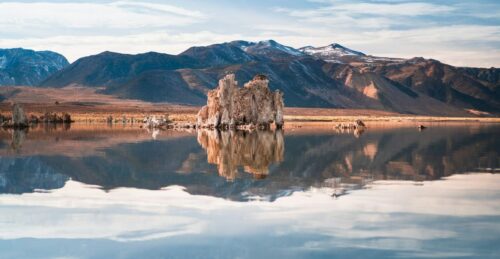 “More than three decades after a landmark decision called for Los Angeles to limit its taking of water to raise the level of Mono Lake, California regulators are reexamining why the lake still hasn’t rebounded and what should be done about it. At the request of state water officials, UCLA climate scientists developed a new model to analyze why the lake remains far below its state-mandated target level. In a new report, they said that without L.A.’s use of water from creeks that feed the lake, its waters would be about 4 feet higher — closer to that required threshold. “The way the exports are regulated, meeting lake level objectives is unlikely,” Alex Hall, a UCLA climate scientist, told members of the California State Water Resources Control Board at a meeting Tuesday. … ” Read more from the LA Times. | Read via AOL News.
As precious groundwater vanishes, a few in California find ways to bring it back
“In the southern San Joaquin Valley, where roads cut through thousands of acres of orange groves, grapevines and carrot fields, a canal reaches a linchpin that keeps the farming economy going: dozens of oblong ponds filled with shimmering water. While many parts of California’s Central Valley are struggling to counter widespread overpumping and declining underground water levels, the irrigation agency here is using the ponds to effectively swallow gulps of river water, getting it to seep into the soil and recharge the groundwater. “That sandy ground, when you put the water on it, it percolates into the groundwater and it recharges,” said Jeevan Muhar, chief executive officer of Arvin-Edison Water Storage District. “So it’s underneath us. We can see that water come up.” … ” Read more from the LA Times. | Read via AOL News.
SEE ALSO: Why some regions are winning the fight against groundwater depletion, from The Current
Hardscapes that filter rain
 “Most roads, sidewalks, and parking lots are designed to shuttle stormwater and other runoff straight toward drains. Since concrete and asphalt are impervious, or impermeable, water runs off them instead of through them — in some cases carrying oil, microplastics, and other contaminants straight to bodies of water like the San Francisco Bay. Climate change is making winter storms more intense, leading to heavier runoff that picks up more pollution and is more likely to overwhelm existing stormwater infrastructure. A solution that local cities and regulatory agencies are increasingly considering is replacing these hard surfaces with porous alternatives that let water pass through into the underlying soil. There are four main categories of permeable paving — porous asphalt, pervious concrete, permeable pavers, and grid pavements — and each has a specific use case or application, explains Peter Schultze-Allen, a senior technical scientist with Oakland environmental consulting firm EOA, Inc. … ” Read more from Knee Deep Times.
Invasive mussels are wreaking havoc in California, now officials are offering $200k for plans on how to stop them
“As invasive mussels continue to cause damage in California, government agencies are turning to citizens to help develop ideas to curb the issue. The United States Bureau of Reclamation announced the Halt the Hitchhiker challenge, which aims to find solutions to a problem that costs more than $1 billion annually. They’re prepared to give competitors up to $200,000 for successful ideas across the challenge’s three phases. … ” Read more from People.
Lawmaker seeks to ban PFAS pesticides in California
“A California lawmaker wants to ban the use of long-lasting chemical pesticides in the state within a decade. Assembly Bill 1603 would ban the use, sale and manufacture of PFAS pesticides in California beginning in 2035. More than 20 of the chemicals already banned in the European Union would be prohibited earlier, starting in 2030. The bill would also halt state approvals of PFAS pesticides and require public disclosure. Assemblymember Nick Schultz, a Burbank Democrat, introduced the measure in January. It was amended this week to include the ban and is expected to receive its first hearing in the Environmental Safety and Toxic Materials Committee in the coming weeks. … ” Read more from the Courthouse News Service.
Federal funds reach Central Valley Project as California snowpack nears record-low
“The U.S. Department of the Interior announced this week that it is allocating about $540 million to upgrade the Central Valley Project’s aging water infrastructure, a key federal water management system in California that supporters and critics alike have described as a broken system for very different reasons. The announcement came during an unusually hot and dry start to March in California, as climate scientist Daniel Swain said the state’s snowpack is on an accelerating downward trajectory and could end up matching 2015’s record-low by April 1, when the state’s supposed to see its peak snowpack. … ” Read more from the Sacramento Bee.
In commentary this weekend …
State regulatory decisions (or refusal to make decisions) continue to cost critical water supplies in a changing climate
Geoffrey Vanden Heuvel, Milk Producers Council, writes, “On February 9, 2026, Congressmen Costa, Gray, Valadao and Fong jointly sent a letter to Governor Newsom (read here) asking him to suspend a regulation in the Delta called the Port Chicago water quality standard because the triggering of this standard would require releases from the reservoirs and the loss of as much as 600,000 acre-feet of fresh water to the ocean. If you remember, in January the California drought map showed our state for the first time in a long time completely free of drought. This situation is a contributor to the triggering of the Port Chicago standard that was implemented by the State Water Resources Control board in 1999. The idea being that if there is lots of water in the system, then we can afford to freshen up the western Delta around Port Chicago and that will be good for fish. As the Congressmen pointed out in the letter, the Delta has significantly changed since 1999, and the weather has become even more variable. So, what looks like an above normal year in January can change, and sending water to the ocean early may mean losing water you may need later in the year. … ” Read more from the Milk Producers Council.
Equality begins with water
Jason Morrison, president and CEO of the Pacific Institute, writes, “World Water Day always makes me pause. It is one of the few moments in the year when the world collectively agrees to look at water not as background infrastructure, but as something that shapes people’s daily lives. This year’s theme, “Where water flows, equality grows,” puts a bright light on something we do not say plainly enough. The global water crisis affects everyone, but not equally. Women and girls often carry the heaviest burden when safe water and sanitation are unavailable, and they are too often missing from the decisions that shape water services and investments. The data is stark. 1.8 billion people live in households without water on the premises, and when water must be collected, women and girls are primarily responsible in 7 out of 10 households. That time cost is not a small inconvenience. It is hours taken from school, paid work, rest, and community leadership. Water security is an equality issue because time, safety, and opportunity are equality issues. … ” Read more from the Pacific Institute.
In people news this weekend …
Promotions, passings, profiles – submit people news items to maven@mavensnotebook.com.
2026 Will S. Green Award goes to Fritz Durst
 “The 2026 Will S. Green Award recipient is Frederick “Fritz” Durst. Fritz’s leadership in the Sacramento Valley is extensive, diverse, and well-known, helping to guide the region into the modern era of water and flood management. His leadership is centered on a foundational theme that Fritz has coined and has embodied: “Fix not Fight.” Fritz recognizes there is a time to fight to protect the region, but he understands that is not the path for an enduring and vibrant future for the Sacramento Valley. It is partnerships, purposeful action, and understanding that lead us to a better tomorrow. … ” Continue reading from the Northern California Water Association.
Podcasts …
AgNET NEWS HOUR: California water debate: Can farming’s future be secured?
California agriculture sits at the center of an ongoing debate over water policy, infrastructure, and the future of farming in the state. In a recent episode of the AgNet News Hour, host Nick “The Ag Meter” Papagni welcomed Geoffrey Vanden Heuvel of the Milk Producers Council for a passionate and insightful conversation about California’s water challenges and what must change moving forward. The interview, part two of a continuing water series, explored the growing concerns among farmers about water allocations, environmental regulations, and the long-term sustainability of agriculture in the Golden State.
ONCE UPON A BAY: Dirt, water, and power
Who pays for the growth of a world‑class city? In this episode of Once Upon a Bay, Mike and Kate sit down with historical geographer Gray Brechin, author of Imperial San Francisco: Urban Power, Earthly Ruin. Together, they trace how gold, mercury, dirt, and long‑distance water grabs turned shared waters into real estate, wealth, and leverage for a handful of powerful landholders. From hydraulic gold mining that poured the equivalent of eight Panama Canals of sediment into the Bay to water schemes that irrigate cities like high‑value crops, this is the story of how San Francisco grew the way imperial cities so often do: by conquering other people’s rivers, lands, and lives.
CALIFORNIA SUN: Caroline Tracey on the strange life and unnatural death of our salt lakes
Caroline Tracey explores the world’s threatened salt lakes with a focus on California — Mono Lake, Owens Lake, and the Salton Sea — where irrigation diversions have transformed stunning desert ecosystems into sources of toxic dust. She discusses landmark environmental cases that established California’s public trust doctrine and how these seemingly dead landscapes remain vital habitats worth preserving. Her decade of research across four continents is chronicled in her new book “Salt Lakes: An Unnatural History.”
WATER IS A MANY SPLENDOR’ED THING: City Slicker Farms
 When I think of farming, I envision lines of leafy vegetables stretching out to the horizon, large irrigation structures diligently sending a downpouring of cold water onto the ground and a smiling farmer that is so happy that life is sprouting everywhere. Well, you know what? I found the same kind of happy farmer in downtown Oakland, California. Water is a Many Splendor’ed Thing brings you another water relationship that has a personally significant impact to your life. Produced by Stephen Baker, Bringing People Together to Solve Water Problems, water@operationunite.co 530-205-6388
In regional water news this weekend …
NORTH COAST
Klamath Tribes document first Chinook salmon hatch in Upper Klamath Lake tributaries
“The first documented observation of a naturally reproduced Chinook salmon, or c’lyaal, has been reported by the Klamath Tribes’ Ambodat Department. Fisheries biologists with Ambodat — which means “from the water” — said the documented observation of naturally reproduced c’iyaal’s in tributaries of Upper Klamath Lake is the first in more than a century. “This historic event, recorded by the Klamath Tribes’ Ambodat Department on March 18, is a major milestone in post-dam-removal restoration and monitoring efforts in the Upper Klamath Basin,” tribal leaders said in a news release. “I see this as the Creator’s will of the unwritten natural laws which are allowed to be part of us again,” Chairman William E. Ray Jr. said. … ” Read more from the Herald & News.
SEE ALSO: Klamath Tribes Document First Salmon Hatch in Upper Klamath Lake Tributaries in 100 Years!, from Dan Bacher at the Daily Kos
Public meeting set for Klamath Irrigation District Infrastructure Modernization Project
“The Klamath Irrigation District (KID) has announced it wants to modernize the district’s irrigation infrastructure to “improve the efficiency of its system” and is hoping for public input at a meeting in Merrill in April. The project would include piping and/or lining canals and laterals and installing automatic flow monitoring equipment. According to Gene Souza, KID’s executive director, “These measures would improve the use and control over water throughout the district and be more resilient to drought.” Souza said a public meeting to help people learn about the proposed project, participate in a question-and-answer session, and provide feedback will be held from 1 to 2 p.m. on Thursday, April 9, at the Merrill Civic Center, Walt Wilson Hall, 363 W Front St. in Merrill. The meeting location is purposely intended to accommodate impacted water users in the Merrill and Malin areas. … ” Read more from the Herald & News.
‘A major milestone’: Great Redwood Trail Agency approves master plan
“The Great Redwood Trail Agency voted to approve its Great Redwood Trail Master Plan at the agency’s quarterly board of directors meeting on Thursday. That plan, the culmination of nearly four years’ work, represents a final vision for constructing the trail’s 43 rural north segments. The entirety of the trail will encompass a more than 300-mile corridor spanning from the San Francisco Bay Area to Humboldt Bay. Current sections of the trail being constructed between Arcata and Blue Lake will represent the northernmost extremity of the trail. The trail will extend south to meet with the Sonoma Marin Area Rail Transit (SMART) Trail at the Sonoma County line north of Cloverdale. When completed, the Great Redwood Trail will be the longest rail-trail in California, running through portions of Humboldt, Trinity, Mendocino, Sonoma and Marin counties. … ” Read more from the Eureka Times-Standard.
SIERRA NEVADA
Tahoe Conservancy approves $850k for aquatic invasive plant management, public Access and recreation at Lake Tahoe
“The California Tahoe Conservancy (Conservancy) Board has approved $850,000 in grants to address the threat of aquatic invasive plants and enhance public access and recreation. The Board also approved the Conservancy to acquire a parcel of environmentally sensitive land in South Lake Tahoe, and discussed and took action on multiple Conservancy projects. … ” Continue reading at the Tahoe Daily Tribune.
Nevada utility to Lake Tahoe: Find electricity elsewhere
“A utility serving 49,000 Lake Tahoe customers has a little over a year to find a new source for 75% of its power. Liberty Utilities, one of California’s three smaller investor-owned power companies, alerted regulators this month that its main power supplier won’t continue its contract after May 2027. Liberty, whose territory sits on the border of California and Nevada, generates about 25% of its power from solar facilities in Nevada. The rest is purchased through Nevada-based NV Energy, which said that it wouldn’t be able to continue this arrangement because of its “own resource needs,” Liberty told regulators this month. “Our absolute goal is twofold: We want to achieve our renewable requirements in the state, and we also want it to be as affordable as possible,” Eric Schwarzrock, president of Liberty, said. … ” Read more from Cal Matters.
New ‘fishway’ started for lower Yuba River’s dam
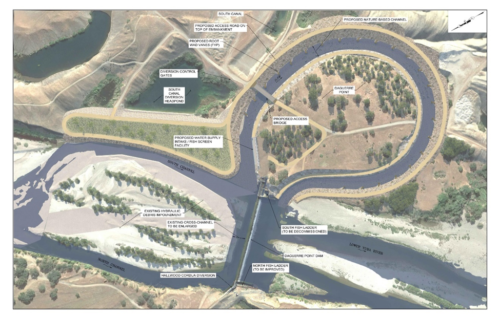
“Fish that were previously held up in the lower Yuba River at the U.S. Army Corps of Engineer’s Daguerre Point Dam will soon have safe passage. The creation of a “nature-like fishway” is underway, which is envisioned as a channel resembling a typical river that salmon, steelhead, sturgeon and lamprey can follow to bypass the dam. Yuba Water Agency Communications Manager DeDe Cordell said her team won’t have an estimated project completion date until after planning is completed. “We anticipate construction to begin this fall after planning has been wrapped up this summer,” Cordell noted. … ” Read more from the Appeal Democrat.
Yosemite ski area shuts down weeks early as California heat wave melts Sierra snow
“Winter ended early in Yosemite this year. Badger Pass Ski Area, one of California’s oldest ski resorts, closed for the season Wednesday after a burst of unusually warm weather rapidly melted snow across the Sierra Nevada. “Due to the lack of freezing temperatures at night, much higher than average daytime temperatures, and fast melting snow, Badger Pass operations will close for the season,” the ski area said in a recorded message. The closure caps a shortened and uneven season. … ” Read more from the San Francisco Chronicle.
NAPA/SONOMA
St. Helena urges water conservation as city works to restore drinking water system
“St. Helena officials are asking residents to conserve water as much as possible while they try to fix the city’s drinking water system, which has been malfunctioning since Thursday morning. People should eliminate all non-essential water use, especially outdoor irrigation, until at least Monday and limit overall water use as much as possible. The problem involves a malfunctioning chlorine feed pump, according to city officials. … Read more from Local News Matters.
SAN JOAQUIN VALLEY
Recommendation to deny exclusion from pumping fees
“It has been recommended to the State Water Resources Control Board that it deny a request from eight districts within the Tule Subbasin to be excluded from groundwater pumping reporting and fees which is required by May 1. The board will consider the recommendation at its meeting on April 21 and is now accepting public comment on the issue. At that meeting the board will also hear updates on possible next steps for interim plan for the Tule Subbasin. The request was made by the Lower Tule River Irrigation District, Pixley Irrigation District, Porterville Irrigation District, Saucelito Irrigation District, Terra Bella Irrigation District, Tri-County Water Authority, Tea Pot Dome Water District, and Vandalia Irrigation District. … ” Read more from the Porterville Recorder.
West Kern water districts ink 59-year deal to buy water from southern California
“It’s usually the other way around. Southern California urban areas are typically on the hunt for more and more water from agricultural regions. In this case, though, four Kern County, and one Kings County, ag water districts have entered into a 59-year agreement to buy water from an over-the-Grapevine agency in southern California. The water will come from Santa Clarita Valley Water (SCVW), which wholesales supplies to several purveyors serving about 300,000 urban dwellers in northwestern Los Angeles County. The ag districts, collectively called the “Westside Districts,” include the Belridge and Wheeler Ridge-Maricopa water storage districts along with the Berrenda Mesa and Lost Hills water districts in Kern County and the Dudley Ridge Water District in Kings County. … ” Read more from SJV Water.
SOUTHERN CALIFORNIA
Long Beach begins efforts in addressing homeless encampments along LA river
“Long Beach is continuing its efforts to address homelessness and encampments along its stretch of the Los Angeles River. The City Council this week unanimously approved an agreement with the Colonial Motel in Central Long Beach to temporarily house people who are homeless along the riverbed. The city will also provide wraparound services and case management, and connect people to permanent housing, city officials said. The agreement at the two-story, 57-room motel, 802 E. Pacific Coast Highway, will be for a period of one year, with two one-year options to extend, in an amount not to exceed $1.8 million annually, according to the staff report. … ” Read more from the Long Beach Press Telegram.
SAN DIEGO
San Diego County Water Authority announces long-term sale of surplus to Riverside County
“The San Diego County Water Authority on Thursday announced a 21-year agreement to sell surplus water to the Western Municipal Water District in Riverside County, potentially offsetting costs for local customers. Western Municipal, which serves nearly 1 million residents in western Riverside County, will pay $13.5 million annually for 10,000 acre-feet of water — enough for 30,000 homes. It will also pay $40 million up front for the equivalent of three-years supply that can be tapped in case of an drought emergency. “This agreement is a win for San Diego ratepayers, a win for Western, and a win for Southern California,” said Water Authority Board Chair Nick Serrano. “It allows us to maximize the value of the investments San Diego County residents made over decades, strengthen water reliability, and do so in a way that is mindful of affordability and public responsibility.” … ” Read more from the Times of San Diego.
SEE ALSO: San Diego County agency selling water to keep its high rates in check, from the LA Times
Amid record San Diego heat wave, pollution in South Bay is spiking
“As temperatures soared to record levels and officials issued warnings about the heat wave sweeping San Diego, hydrogen sulfide levels in and around the Tijuana River have also spiked. At the same time, bacterial levels are also high. The Tijuana River Coalition issued a press release on Friday calling for a “timely and reliable” alert system to warn residents of contamination spikes and for better coordination among public agencies to connect residents and schools with information that could help people protect their health. “This crisis will only get worse as we head into summer, and we need to be aware of the dangers we face as we dare to breathe the air,” said Bethany Case, an Imperial Beach community member and a lead volunteer for San Diego Surfrider’s Clean Border Water Now initiative. … ” Read more from iNewsSource.
SEE ALSO: Heatwave amplifies border pollution, pushes hydrogen sulfide to highest levels since 2024, from the San Diego Union-Tribune
Along the Colorado River …
Colorado River negotiations resume with focus on stopgap measure in face of worsening hydrology
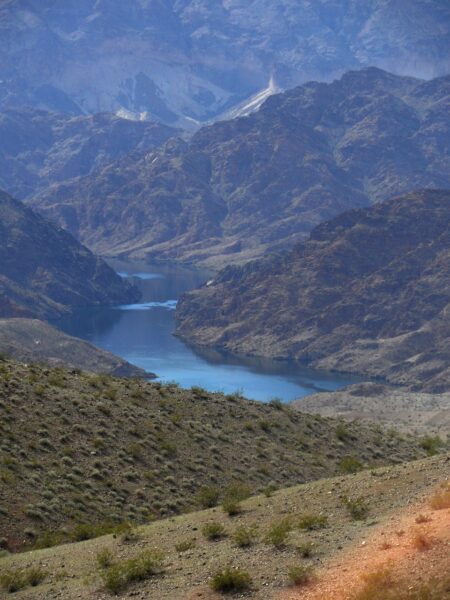 “Critical negotiations about the future of the Colorado River took a two week hiatus last month after the seven states in the basin missed a key Valentine’s Day deadline for striking a deal, New Mexico’s water negotiator said Thursday. Estevan López said talks resumed March 2, and the upper and lower basin states are using a short-term pitch from Nevada as a starting point. “Right now, we’re in discussions with the lower basin about a potential short-term agreement,” Lopez told New Mexico’s Interstate Stream Commission. Nevada is proposing to increase water releases from upper basin reservoirs like Flaming Gorge by at least 500,000 acre feet to help prevent Lake Powell from dropping too low. … ” Read more from KUNC.
Colorado River outlook was bleak, but the heat is making it worse
“The West’s mid-March heat wave and deepening drought are worsening the outlook for Colorado River flows this year, according to forecasters. What was already a dismal snowpack in the river’s Rocky Mountain headwaters has begun melting early, with little prospect for replacement from major snowstorms. The result is a substantial downgrade from the government streamflow forecast of March 1 and the potential for it to drift lower still under expected blue skies ahead. “The two-week weather outlook is favoring continued warmer and drier than normal weather,” Colorado Basin River Forecast Center hydrologist Cody Moser said, “and if this persists, record low spring runoff is increasingly likely at some locations.” … ” Read more from Arizona Central.
4 key things to know as heat wave shrinks Colorado River flow forecasts
“As the temperature keeps heating up, the Colorado River’s expected spring-summer flows into Lake Powell keep declining. The latest federal forecast, released Tuesday, projects the river will only carry 27% of its normal April to July flows into Lake Powell. That lake supplies water to Lake Mead, which stores water for delivery to Arizona, Nevada and California in the Lower Colorado River Basin. Just two weeks ago, the U.S. Colorado Basin River Forecast Center had projected that April-July flows into Powell would be 36% of normal. Put in raw numbers, the lake at the Arizona-Utah border is now expected to get 1.75 million acre-feet of water in that period this year, down from forecasts of 2.3 million on March 1st and 3.65 million at the start of 2026. One million acre-feet of river water used to be delivered each year to the Central Arizona Project canal system serving drinking water to Tucson and Phoenix, until the federal government started cutting deliveries to the project in 2022. … ” Read more from the Arizona Daily Star.
Tribes want input, influence on Colorado River drought plan
“With several key Colorado River management agreements set to expire this year — including the 2007 Colorado River Interim Guidelines for drought management — tribes have submitted comments on the draft environmental impact statement for a replacement plan. The draft EIS aims to guide adoption of more reliable, predictable rules, but doing so is challenging due to low reservoir levels, variable water supply and a drier future, according to the Bureau of Reclamation, which manages the reservoirs on the Colorado. … ” Read more from the Arizona Republic.
Video: Central Arizona Project cuts loom as Colorado River talks collapse
“This week, The Press Room discusses one of the most pressing environmental issues facing southern Arizona and the greater southwest: water allocations from the Colorado River. Our panel digs into the failed negotiation between states in the Colorado River basin, the potential cuts Arizona’s CAP could face and the economic fallout. Plus, we look at mining projects in the region.” Watch at Arizona Public Media.
The future of Southern Arizona’s Water: What Colorado River cuts could mean for Tucson’s water supply
“In February, the seven Colorado River Basin states failed for a second time to come up with post-2026 operating guidelines for the Colorado River. The Upper Basin states – made up of Colorado, Utah, New Mexico and Wyoming – argue that the Lower Basin – made up of Arizona, California and Nevada – should take on the brunt of the cuts. Despite the stalemate in negotiations, representatives from the Lower Basin have offered substantial cuts to their allocations, according to the Arizona Department of Water Resources: 27% for Arizona, 17% for Nevada and 10% for California. A total of 40 million people rely on Colorado River water – which comes out to about 6 million Arizonans. … ” Read more from Arizona Public Media.
Cox won’t rule out drought declaration if Utah’s water woes intensify
“Governor Spencer Cox said he would not rule out seeking a drought declaration if Utah’s already-bleak water situation intensified. While the good news is that water supplies are good because reservoirs are full, FOX 13 News first reported on Wednesday that new government reports showed snowpack levels are among the worst ever; Utah’s snow water equivalent (the water we get out of snow) is at a record low; and this winter was the warmest on record. The Great Salt Lake could hit a new record low this year and Lake Powell, which helps prop up the Colorado River system, could drop to such a low it ceases to generate electricity for millions of people across the West. … ” Read more from Fox 13.
Bullfrog Marina to be temporarily relocated amid Lake Powell’s water woes
“A major Utah ramp area within Lake Powell is set to be adjusted to ensure recreation is possible as Glen Canyon National Recreation Area officials continue to prepare for lower water levels this summer. Concessions provider Aramark plans to temporarily move the Bullfrog Marina on the western shore of Lake Powell closer to Halls Crossing Marina on the other side of the eastern shore, beginning in late April, park officials noted on Wednesday. The company wrote on its website that the measure seeks to provide “reliable services” while the nation’s second-largest reservoir has fallen to 25% capacity, and it may not receive much of a snowmelt bump this year. The marina is expected to reopen in its new location by mid-May. … ” Read more from KSL.
How low levels at Lake Powell could affect Wyoming’s water
“It’s been so dry this winter that the Glen Canyon Dam at the outlet of Lake Powell could stop producing hydropower. That means utility rates in the southwest could go up at the moment when people need electricity the most, like during hot spells. While that may not seem like a Wyoming problem, Wyoming water might be a part of a solution. Wyoming Public Radio’s Kamila Kudelska spoke with Luke Runyon. He reports for The Water Desk on all things Colorado River, including the ongoing negotiations between the seven states that rely on it. He said Wyoming’s Flaming Gorge Reservoir might end up shipping water downstream, with varied effects for Wyomingites. … ” Read more at Wyoming Public Media.
In national water news this weekend …
Should potentially harmful chemicals be appraised by class, not one at a time?
 “Look around your home. A food wrapper, a shampoo bottle, a couch cushion and many other items very likely contain synthetic chemicals that were never tested for long-term safety before reaching store shelves. In most countries, chemicals are assumed safe until proven harmful, and companies don’t have to demonstrate their products are safe before selling them. Instead, the responsibility falls on regulators to prove the harmfulness after chemicals are already in widespread use, a process that is expensive and slow. In many cases, regulators spend years building a case against one harmful chemical, only for manufacturers to then swap it for a structurally similar substitute that starts the process over. This pattern has a name: “regrettable substitution,” or the “toxic treadmill,” a cycle in which one harmful chemical is replaced by a structurally similar one that turns out to be equally problematic, requiring years of new research to prove. … ” Read more from Mongabay.
AI data centers: big tech’s impact on electric bills, water, and more
“John Steinbach was shocked to receive a $281 electricity bill in January 2026—a huge spike from the roughly $100 he’d paid the previous month. “It’s just so far beyond any bill that I’ve ever had,” he says. Steinbach, who has lived in his Manassas, Va., home for nearly 40 years, worries his rates will keep climbing as the outsized electricity demand from AI data centers grows. “They’re building them like it’s ‘Field of Dreams’—build it and the electricity will come—but we don’t see how that’s going to happen.” The contribution of AI data centers to higher bills is just one of the ways the development boom is affecting consumers. The facilities also compete for critical resources like water and land, and they can lower air quality and increase traffic, often while benefiting from changes to zoning laws and huge tax breaks. … ” Read more from Consumer Reports.
Vertical farms tried to compete with open field farming. It isn’t going well.
“Vertical farming businesses blossomed a decade ago, promising an abundant, cleaner source of fruits and vegetables. Today, most of those start-ups have withered. Constructed in opaque buildings, like warehouses, vertical farms resemble sterile manufacturing facilities more than farms. Crops are grown in trays stacked to the ceiling, fed with hydroponic or aeroponic systems. Plants are bathed in white and purple LED lights to maximize photosynthesis. Owners of vertical farms once talked about their industry in almost messianic terms, as a climate-friendly solution to the ills they said plagued modern farming: pesticide use, water overconsumption, long-distance trucking and labor exploitation. By the late 2010s, Silicon Valley was on board, investing billions of dollars in companies promising to remake agriculture. Now, that venture capital funding has gone up in flames, most prominently the $938 million raised by Bowery Farming and $792 million by AppHarvest, which are out of business. … ” Read more from the New York Times.
[spacer]
