
Several news sources featured in the Daily Digest may limit the number of articles you can access without a subscription. However, gift articles and open-access links are provided when available. For more open access California water news articles, explore the main page at MavensNotebook.com.
On the calendar today …
- MEETING: Delta Independent Science Board from 9:30am to 3:30am. Agenda items include California Sea Grant State Fellowship Reflections, Interagency Ecological Program Workshop Reflections, Contaminants Monitoring Review, Summary of the Emerging Climate Science Symposium, and Brainstorming a Review of Nature-based Solutions. Click here for the meeting notice.
- MEETING: Oil & Gas Groundwater Monitoring Update from 10am to 12pm. The US Geological Survey (USGS) will be presenting summaries of recently published studies for the State Water Board Oil and Gas Regional Groundwater Monitoring Program (RMP). Please see the meeting agenda for links to the manuscripts and remote access instructions.
- WEBINAR: Data for Lunch: Using AI to Track SGMA Implementation Across California from 12pm to 1:30pm. Learn how WaterOne.ai turns hundreds of GSA board meetings into actionable, cross-basin insights on statewide SGMA implementation. The Sustainable Groundwater Management Act (SGMA) was designed around localized decision making — each Groundwater Sustainability Agency (GSA) adapting to the hydrology, economics, and politics of its own basin. But that strength creates a blind spot: it can be a significant challenge for myriad stakeholders to maintain a clear picture of the evolving policies and projects unfolding across the state. In this session, Ryo Takanashi will share patterns emerging across agencies, discuss the persistent gap between boardroom decisions and the growers who need to act on them, and demonstrate how making this information accessible can support more coordinated groundwater management across California. Click here to register.
- WEBINAR: GAMA Presents: CV-NPSAT from 1pm to 4pm. Introduction to the UC Davis Nonpoint Source Assessment Tool framework for the California Central Valley (CV-NPSAT); overview of applying CV-NPSAT to simulating nitrate pollution in the Central Valley aquifer system; hands-on tutorial to the online version, CV-NPSATweb for simulating future nitrate leaching scenarios; Q&A session. Click here to register.
- MEETING: Delta Protection Commission from 5pm to 7pm in West Sacramento. Agenda items include reports on the activities of the Delta Stewardship Council, Delta Conservancy, and the Delta Protection Advisory Committee; golden mussels update; Report on National Heritage Area Progress and Recent Activities; Consider Approval of the 2025 Annual Report; and Presentation and Discussion on 2026 Workplan. Click here for the meeting notice.
In California water news today …
Dry times for Newsom and Trump
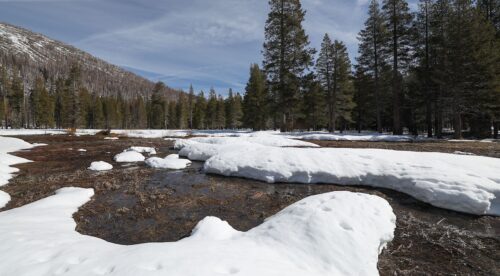
“This was supposed to be the year Gavin Newsom and Donald Trump showed off how much water they could pump and store, a political competition to appeal to farmers and cities. Instead, a rapidly-shrinking snowpack is undercutting plans from the governor’s office and White House, exposing the limits of California’s water playbook and leaving the state on the precipice of drought. The early-season heat wave now gripping the state is wiping out much of its remaining Sierra Nevada snowpack, which acts as a frozen reservoir to dribble out roughly a third of California’s water supply throughout the spring and summer. Statewide snowpack stood at 40 percent of normal as of Wednesday, according to the Department of Water Resources, already a full 2 percent drop from the day before. The snowpack in Northern California, which sends water to the state’s two largest reservoirs, is particularly low, at just 20 percent of normal. … ” Read more from Politico.
California’s biggest reservoir nearing empty as 90 degree heat is ending winter in Golden State
“Today is officially the last day of winter. If the weather forecasters have it correct, we will hit 86 degrees in Manteca-Ripon-Lathrop. That will be a record going back to the mid-1850s when California temperatures were first recorded. Elsewhere in California, temperatures on the last day of winter are expected to be 90 degrees or higher. As a sidenote, it reached a record 90 degrees Wednesday in Manteca. The highs will start receding back into the mid-80s and high 70s next week. There is nothing in the long range forecast that calls for a repeat of the odd heat wave we are now having. Giving precipitation statewide since the start of the water year on Oct. 1 as of March 16 was 103 percent of average — based on data at the California Water Watch website operated by the Department of Water Resources (DWR) — what we are experiencing is a lark, right? … ” Read more from the Manteca Bulletin.
SEE ALSO: A Winter With Less Snow Could Create Huge Problems for the West, from the Sierra Club
Trump administration cuts key California drought-monitoring program
“As California has endured increasingly severe droughts, a long-running federal research program has used planes to survey, and help explain, the growing toll on the landscape: how many trees have died, what areas are being hit hardest and where wildfire risk is greatest. The state Aerial Detection Survey, run by the U.S. Forest Service, however, has become a casualty of the Trump administration, which has sought to aggressively slash spending, sometimes running afoul of federal courts, which have deemed many of its cuts illegal. The research flights, which for decades crisscrossed California’s forests to assess their health, ground to a halt last year because of funding and staffing reductions, federal officials say. The program’s recently released annual report shows that less than a quarter of the area typically flown was covered in 2025, leaving researchers, land managers and fire agencies with an incomplete picture of forest conditions — and questions about when and if the surveys will return. … ” Read more from the San Francisco Chronicle.
California analyst urges lawmakers to supervise upcoming water control plan
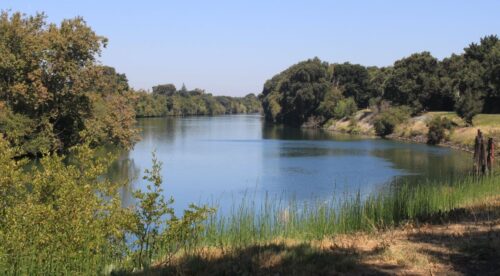 “The analyst for California lawmakers advised Wednesday for the Legislature to lean into its oversight role of an upcoming water plan to firm up water supply throughout the parched state. The Legislative Analyst’s Office in its report focused on an update to the water quality control plan for the San Francisco Bay-Sacramento-San Joaquin Delta. That plan will create water quality standards intended to protect fish and wildlife in the Bay-Delta, along with the Sacramento and San Joaquin rivers and their tributaries. A resource that’s always the subject of dispute, water’s importance has only grown with a changing climate that delivers less rain and the failure of the seven Colorado River basin states — of which California is one — to reach a water-sharing agreement this year. The analyst’s office noted that the State Water Resource Control Board likely will approve an updated Bay-Delta plan this year. Lawmakers could shoulder an essential role in ensuring its implementation. … ” Read more from the Courthouse News Service.
LAO Report: The Bay-Delta Plan and Voluntary Agreements: Ensuring Effective Legislative Oversight
“This report discusses the State Water Resources Control Board’s (SWRCB’s) proposed—and long-overdue—update of the water quality control plan for the San Francisco Bay-Sacramento-San Joaquin Delta, which includes an alternative compliance pathway for certain water users called voluntary agreements (VAs, also known as Healthy Rivers and Landscapes). Given that SWRCB appears likely to adopt the update including VAs, the report provides recommendations for legislative oversight to help ensure the plan achieves its objectives.” Read the report here.
The many benefits of dredging the Sacramento-San Joaquin Delta
Edward Ring, Director of Water and Energy Policy at the California Policy Center, writes, “The salmon decline in the delta has been attributed to the impact of water withdrawals into the California Aqueduct and the Delta Mendota Canal. But something else happened at the same time as the pumps began operating; dredging in most channels in the delta virtually ceased. For the last 50 years, especially in the south delta, silt has been accumulating. This has harmed an aquatic environment that, for the century prior to the 1970s, had a thriving salmon population that was not adversely affected by dredging. Many delta channels that had been maintained at depths of 12 feet or more up until the 1970s are now less than two feet deep. The introduced non-native species of bass that prefer warm shallow water are now free to prey on salmon and other pelagic fish that prefer cooler and deeper water. Even without bass predation, salmon can’t possibly migrate as effectively in water that is so much warmer, and the water isn’t warmer because of climate change, it’s mostly warmer because the channels are so shallow. … ” Continue reading from Edward Ring.
California begins implementing new statewide water supply targets under SB 72
“State water officials on Friday outlined the first major steps in carrying out Senate Bill 72, the landmark water‑planning law that for the first time requires California to set measurable statewide water‑supply targets and modernize how the state prepares for droughts, floods and climate‑driven extremes. Speaking at San Luis Reservoir, Senator Anna Caballero — who authored SB 72 — joined leaders from the Department of Water Resources and the California Water Commission to highlight how the law is now being put into practice through the launch of the California Water Plan 2028. The plan marks the start of a multi‑year effort to overhaul the state’s water‑management framework and close widening supply gaps. … ” Read more from Westside Connect.
Conservation group intends to sue U.S Fish and Wildlife over western ridged mussel
“The Center for Biological Diversity on March 17 notified the U.S. Fish and Wildlife Service that it intends to sue the agency for failing to make a timely decision on whether the western ridged mussel should be protected under the Endangered Species Act. The native, water-filtering mussels “quietly do enormous work keeping our rivers clean, but they’re disappearing from many rivers in an unfolding extinction crisis,” Meg Townsend, a center attorney who focuses on freshwater issues, said in a news release. These mussels are “on the brink of extinction and need Endangered Species Act protection soon if they’re going to survive.” Western ridged mussels are disappearing from streams and rivers across the three West Coast states, and Idaho and Nevada. The decline of these mussels across much of their historic range is due to dams, degraded water quality, climate-driven drought, and invasive species such as zebra and quagga mussels, according to the center. … ” Read more from the Capital Press.
Plan to raise Shasta Dam could add water for 2.5 million people for a year
“The Shasta Dam, in Northern California’s Shasta County, could be raised to store more water under a new $40 million federal investment, officials said Tuesday. Shasta Dam would gain enough extra capacity to supply about 2.5 million people for a year if the project moves forward. The funding will pay for planning and early construction steps needed before any expansion begins. The money comes from the One Big Beautiful Bill Act, a federal law signed July 4, 2025, that sets aside $1 billion through 2034 for water projects across the West. The projects are managed by the U.S. Bureau of Reclamation. … ” Read more from KRCR.
A conversation with Regional Administrator Jennifer Quan about the 2026 West Coast salmon fishing seasons
“Q: After 3 years with salmon fishing closed, what kind of a salmon season can California expect this year? Jennifer Quan: “I’ll start with what everyone wants to see this year, which is a season that puts the fleet back to work, gets everyone back on the water, and puts California salmon securely back on the seafood market. That’s what we’re striving for. The way we get there is with a fishing season that provides confidence that enough salmon will survive to spawn in the rivers and continue to strengthen the species and the fishery. Only a few years ago Sacramento River fall-run Chinook salmon were designated overfished, and other salmon and steelhead populations on the West Coast listed under the Endangered Species Act continue to struggle. Sacramento River fall-run Chinook salmon are the backbone of the California salmon fishery and are no longer overfished. Last year, for the first year in some time, their returns exceeded expectations. We want to maintain a solid foundation of fall-run Chinook returns that, like the principal in a bank account, support sustainable salmon fisheries. We need strong salmon fisheries to make the U.S. seafood sector more competitive, providing jobs and putting more healthy domestic seafood on American dinner plates. … ” Read more from NOAA.
California lawmakers advance data center bills to balance industry, environmental concerns
“Rising energy bills for ratepayers, exorbitant water use, feeding the big appetites of companies racing to power AI – debate on how to harness and accommodate the data center boom is sweeping the nation. As developers clash with communities over hyper-scale data centers nationwide, two bills that would curb potential economic, environmental and public health impacts on residents have cleared hurdles in California. Senate Bills 886 and 887, both introduced by state Sen. Steve Padilla, D-San Diego, advanced from committee this week. The Democrat’s district includes both San Diego County and Imperial County, where a proposal to build what would be one of California’s largest data centers is in a dispute about environmental review. “That’s exactly the scenario that demands that we set standards for these types of projects,” Padilla said. … ” Read more from iNewsSource.
SEE ALSO: The multi-faceted water footprint of data centers, from EOS
In regional water news and commentary today …
NORTH COAST
Portion of Link River Trail in Klamath Falls closed due to canal project
“Pacific Power on Tuesday started work on the West Side canal just downstream of Link River Dam in Klamath Falls, necessitating temporary closure of a portion of the Link River Trail. This project will stop water flow in the canal from near the dam downstream to the powerhouse, and requires the use of heavy equipment in the area. Project construction has been coordinated with the U.S. Bureau of Reclamation and the City of Klamath Falls. To accommodate this work, the north access and a portion of the Link River Trail is temporarily closed and will remain closed for approximately two to three weeks until construction is complete. Closed areas will be clearly marked, and the public is asked to respect this closure and remain a safe distance from the construction area. … ” Read more from the Herald & News.
Thousands of fall Chinook salmon return to Klamath River Basin
“Thousands of fall Chinook salmon returned to the Klamath River Basin in 2025, greatly exceeding the projected forecast, California Department of Fish and Wildlife (CDFW) officials said. Data presented at the CDFW Salmon Information Meeting in Sacramento on Feb. 25 showed that an estimated 51,400 Klamath River fall Chinook returned to the basin, roughly 180% of the projected forecast of 28,600 kings. Preliminary findings from the meeting showed that the 2025 Klamath Basin fall Chinook run size estimate is 61% of the 48-year long-term average. The last commercial salmon season for the Klamath River was in 2022, said Peter Tira, information officer for CDFW in Sacramento. The return of the salmon comes in the wake of dam removal activity that began in the summer of 2023 with the removal of the first of four Klamath River dams in California, named Copco 2, Tira said. The second of the four dams – named JC Boyle – was removed in 2024, followed shortly thereafter by the removal of Copco 1 and lastly, the Iron Gate Dam. … ” Read more from National Fisherman.
Klamath River coho salmon – December 2025 update
Tom Cannon writes, “This is my first update of the status of the Klamath River coho salmon population since the removal of four Klamath River dams in 2024. My initial focus was on the Chinook populations.1 The adult coho run during late fall 2024 seemed unperturbed by the effects of dam removal in 2024. Adult coho in 2024, from Broodyear 2021, came back to the Scott River in relatively good numbers. (Figures 1 and 2). The progeny of Broodyear 2021 were in the ocean prior to the fall of 2024. They returned to the Scott River late enough in 2024 to miss the last of the high turbidity events of late summer 2024, when the remnants of the dams were removed (Figures 3 and 4). … ” Read more from the California Fisheries blog.
Major state grant advances transformational habitat restoration for coho salmon on the East Fork Scott River
“California Trout (CalTrout) has been awarded a grant from the California Wildlife Conservation Board (WCB) to advance restoration of the East Fork Scott River at The Wildlands Conservancy’s Beaver Valley Headwaters Preserve — a critical stronghold for imperiled coho salmon in the Klamath River Basin — while engaging communities including local students and Tribal youth in field-based learning opportunities in the watershed. The award is part of nearly $60 million approved by WCB for 27 projects across 18 counties to protect biodiversity, restore key wildlife habitats and expand public access to nature. Five of those projects — including the East Fork Scott River restoration — directly advance the California Salmon Strategy for a Hotter, Drier Future by restoring floodplains, increasing stream complexity, and improving spawning and rearing habitat for coho salmon, Chinook salmon, and steelhead. The funding also supports California’s 30×30 initiative — the statewide commitment to conserve 30 percent of lands and coastal waters by 2030 to protect biodiversity, expand equitable access to nature and build climate resilience. … ” Read more from Cal Trout.
Mendocino County Board of Supervisors to review Assembly Bill 2494: “Modernizing Our Forest System”
“In response to significant public interest, inquiries, and community feedback, the Mendocino County Board of Supervisors will review and discuss Assembly Bill 2494, titled “Modernizing Our Forest System,” during its regular meeting on Tuesday, March 24, 2026. AB 2494 would redefine “management” for purposes of state forests as the handling of forest vegetation and soils within state forests for biodiversity conservation and fire resilience, while maximizing the promotion of durable onsite carbon storage and sequestration, climate resiliency goals, equitable forest access, wildlife and recreation opportunities, and compatible research efforts. … ” Read more from the Redheaded Blackbelt.
Lake County: Resource Conservation District funding allocation improves healthy forests
“After some lean years the Lake County Resource Conservation District & Fire Safe Council, saw ambitious funding efforts are paying off with expanded programming brought to light at the Board of Supervisors meeting Tuesday. Julia Sullivan Sheban joined the Lake County Resource Conservation District (RCD) as its first Executive Director in August of 2024. She brings nearly a decade of experience in collaborative conservation and restoration both within and outside of California to this role. She provided highlights of this past year to the Board focusing on their annual report of 2024/25 which focused a lot on strategic planning. … ” Read more from the Lake County Record-Bee.
SIERRA NEVADA
‘Sometimes Mother Nature just wins’: Tahoe ski resorts cut season short
“Amid a historic California heat wave, two additional Tahoe ski resorts are following Homewood Mountain Resort’s lead and either planning an early end to the ski season or already calling it quits. On Tuesday, Bryan Hickman, Sierra-at-Tahoe’s director of operations, announced that the resort would shut down the slopes for the 2025-2026 season on Sunday. He pointed to near-record temperatures and the rapidly melting snow behind him as the reason for the closure. “Our teams have been doing an amazing job keeping everything alive,” Hickman said on Instagram. “… But sometimes Mother Nature just wins.” … ” Read more from SF Gate.
Nature-like Fishway project in lower Yuba River awarded to Teichert Construction
“Teichert Construction will build the Nature-like Fishway around Daguerre Point Dam on the lower Yuba River, a multi-benefit project among Yuba Water Agency, California Department of Fish and Wildlife and the National Marine Fisheries Service. “Even as we pump the brakes on other spending while we recover from the recent penstock incident, it’s important that we continue moving forward with projects that deliver long-term benefits for the Yuba River and the communities that depend on it,” said Yuba Water General Manager Willie Whittlesey. “This project builds on years of collaboration and investment to improve fish passage while maintaining reliable water deliveries for local agriculture. Delaying it would risk losing critical funding and the momentum we’ve built, and it would have real consequences for both fisheries and the agricultural community in Yuba County.” … ” Read more from YubaNet.
SACRAMENTO VALLEY
Dead salmon return to Sacramento River to restore nutrients and boost young fish survival
“Crews are putting dead salmon back into the Sacramento River, trying to rebuild something most people never see: the nutrients that keep the river alive. Along a stretch near Jellys Ferry Bridge, workers are releasing fish carcasses from a nearby hatchery into the water. The goal is simple: feed the river so young salmon have a better chance of surviving. “We’re taking carcasses from Coleman Fish Hatchery and putting them back into the river to reintroduce ocean-derived nutrients. Those nutrients are the building block for the entire ecosystem — for the bug life, for plant growth and for juvenile salmon trying to survive,” said Josh Peard, a fishing guide with Peard’s Fishing. “We’re losing these fish, and that’s having an impact not just on the river but on agricultural land, too.” … ” Read more from KRCR.
Sacramento’s utilities require a $2.2 billion upgrade. Water rates could go up
“Sacramento residents could see higher utility fees as the city grapples with aging infrastructure that requires a $2.2 billion upgrade. The city’s utility department has not increased rates in eight years. During this time, Sacramento faced an increase in state regulations and soaring costs for supplies and labor, said Daila Fadl, the director for the city’s utility department. The city also opted to forgo rate hikes as the COVID-19 pandemic caused financial stress and uncertainty, she said. “If there is any take-home message, it’s that we need the rate increase for water and wastewater,” Fadl said during Tuesday’s City Council meeting. … ” Read more from the Sacramento Bee.
BAY AREA
California’s heat wave is about to peak — but a shift is finally in the S.F. forecast
“While Southern California is preparing for a reinvigorated heat wave, the unseasonable warmth will start to crack around the Bay Area this weekend, with temperatures cooling by 5 to 15 degrees. Thursday will likely be the peak of the heat in our region and the last legitimate shot at San Francisco breaking its all-time March temperature record of 87 degrees. For the third consecutive day, temperatures will soar into the mid to upper 90s in the inland valleys of the East Bay and South Bay. The records at risk Thursday are not close calls. San Jose is forecast at 94, more than 10 degrees above its March record of 82 set in 1988, according to the National Weather Service. San Rafael is expected to hit 92, topping a record from 1964. Livermore, Redwood City and Napa are all on track to break records dating back decades. Friday looks nearly identical to Thursday before the pattern shifts over the weekend. … ” Read more from the San Francisco Chronicle.
An empty Oakland industrial lot is set to become a $16.9 million waterfront park
“An empty industrial lot on the shore of San Leandro Bay in Oakland will soon be transformed into seven acres of waterfront park, in a $16.9 million project topped off by a fresh $1 million federal grant. The major expansion of a small picnic area called Tidewater Day Use Area along the Oakland Estuary is being managed by the East Bay Regional Park District. It manages the 741-acre Martin Luther King Jr. Regional Shoreline, which surrounds San Leandro Bay — a tidal marsh and shorebird habitat bordering Oakland International Airport that connects to the estuary. … ” Read more from the San Francisco Chronicle.
CENTRAL COAST
Carpinteria Groundwater Sustainability Agency to host well registration assistance March 26
“The Carpinteria Groundwater Sustainability Agency will host a Well Registration Assistance Day on Thursday, March 26, from 9 a.m. to noon and 1 to 4 p.m. at its offices, 1301 Santa Ynez Ave. Attendees can ask agency staff questions and receive help registering wells and installing flowmeters. Appointments are recommended; RSVP for a 30-minute slot by emailing sgma@cvwd.net. At its March 11 meeting, the agency’s board of directors approved a grace period for well and flowmeter registration. Penalties for missing the March 31 deadline will be delayed until Sept. 1. Beginning then, flowmeter data will be used to measure water usage and calculate rates. Properties without flowmeters will face penalties and have usage estimated at the highest crop factor, equivalent to greenhouse and nursery operations. … ” Read more from Coastal View.
SAN JOAQUIN VALLEY
San Joaquin Farm Bureau, fire crews share concerns amid unseasonable heatwave
“Fire crews and farmers are staying alert as temperatures across the Central Valley continue to break records. “If this was July, it’d be a normal day, but it isn’t,” San Joaquin Farm Bureau Executive Director Andrew Genasci said. “Mostly heat exhaustion is what we’re looking for,” Woodbridge Fire District Battalion Chief Eric Johnson explained. Both farmers and fire crews are dealing with record-breaking temperatures for March. The warm weather is helping dry out the landscape before spring even starts. … ” Read more from CBS News.
Golden mussels take over water district discussions
“The Westside Water Authority, at its March 11 meeting, got an idea of how much it will likely cost to combat the golden mussel invasion – at least $3.8 million. And that’s just the start. The authority is composed of Belridge Water Storage District, Lost Hills Water District, Berrenda Mesa Water District, and Dudley Ridge Water District. Belridge first detected the mussels in its facilities in October 2025. The mollusks have since spread throughout all four districts on Kern County’s western edge. Members of the authority will separately consider and vote on how much to spend as well as whether to jointly use GreenLeaf Ag. … ” Read more from SJV Water.
Ceres aims to reduce reliance on Modesto sewer system
“For decades the sewer needs in the north part of Ceres have been met by hooking up to the Modesto sewer system. The city is working to break off that relationship and allow the area to be serviced by the city of Ceres sewer system. Last week the Ceres City Council approved a $971,881 contract with Consor North America of Rancho Cordova to engineer, design and provide technical support necessary to advance this infrastructure project. Councilman James Casey pulled the item to make sure the council wasn’t being asked to add a million dollar expenditure to the city budget deficit. City Engineer Michael Beltran clarified, saying the funds are not coming from the General Fund but from the sewer enterprise fund. … ” Read more from the Ceres Courier.
State to hold workshops for Kings and Tulare county farmers to begin reporting extractions
“The state Water Resources Control Board is hosting two online-only workshops on how to use its groundwater extraction annual reporting system, or GEARS, ahead of the May 1 deadline for Tule and Tulare Lake subbasin pumpers to report extractions and pay fees. Both workshops will demonstrate how to register for GEARS and offer time for questions from participants near the end of each event. … ” Read more from SJV Water.
EASTERN SIERRA
State to examine desert groundwater agency’s “safe yield” data
“The Indian Wells Valley Groundwater Authority board agreed at its March 11 meeting to provide the data it used to set its safe, or sustainable, yield amount to the Department of Water Resources for review. DWR made the request as a trial over the issue is upcoming this June where a judge will look over evidence and set a safe yield figure for the eastern Kern County basin independently. Safe yield is the amount of water that can be pumped from a basin without causing negative consequences, such as drying up domestic wells or causing land to sink. The safe yield is the crux of groundwater sustainability plans in overdrafted basins. … ” Read more from SJV Water.
Death Valley’s superbloom, ancient lake are disappearing as temps hit 100 F
“The rare superbloom that lit up Death Valley National Park in recent weeks is fading as an early-season heat wave bakes the Southwest. “Due to hot weather and high winds, many areas are now past peak,” the National Park Service said earlier this week. On Tuesday, the temperature in Death Valley reached 100 degrees, tying the record for the earliest triple-digit temperature on record. Some flowers remain in bloom, but the display is no longer what it was in late February and early March, when low-elevation hillsides were painted yellow and purple in a way not seen since 2016. … ” Read more from AccuWeather.
SOUTHERN CALIFORNIA
Public warned of high bacteria levels at LA-area beaches. See the list
“Health officials have warned people in Southern California about unsafe swimming conditions at Los Angeles-area beaches as the region grapples with scorching and dangerous temperatures. The Los Angeles County Department of Public Health issued warnings advising beachgoers to avoid swimming, surfing, and playing in the ocean waters stretching from Malibu, California, to Santa Monica, California, due to high bacteria levels. Recent water samples taken at several beaches found bacteria exceeding health standards, the department said March 16 in a notice on its website and on social media. Excessive bacteria in water can increase the risk of illness. … ” Read more from USA Today.
Innovative project secures groundwater resilience
“A unique regional collaboration between local and regional water agencies is demonstrating how communication, cooperation and creative financing can help small, disadvantaged water systems overcome longstanding groundwater challenges. During a panel at a California groundwater conference in Ontario, titled “Innovative Approaches to Groundwater Management through Large Systems Helping Small Systems,” leaders from South Mesa Water Company (SMWC), San Gorgonio Pass Water Agency (Pass Agency), and San Bernardino Valley Municipal Water District (Valley District) highlighted a partnership model that enables small systems to access funding, technical expertise, and infrastructure support that would otherwise be out of reach. … ” Read more from the Record-Gazette.
Long Beach partners with county, nonprofit to continue efforts to clean up trash from LA River
“Long Beach is continuing its efforts to reduce trash and debris that comes from the Los Angeles River into the city’s waterways and beaches. The City Council this week unanimously approved continuing Long Beach’s partnerships with Los Angeles County and The Ocean Cleanup – a Dutch nonprofit developing and scaling technologies to rid the oceans of plastic – through an agreement that supports those cleanup efforts. “We want to find ways to better protect and clean our beaches, a way that is sustainable financially,” Mayor Rex Richardson said during the Tuesday, March 17, council meeting, “and that the region should step up and help, because it’s the burden and the waste that’s upriver that impacts our communities.” … ” Read more from the Long Beach Press-Telegram.
1,028 surveys later: What we learned about MPA visitor activity in 2025
“Marine Protected Areas (MPAs) are cherished stretches of California’s coastline set aside to conserve the ocean’s bounty and beauty for future generations. These protected waters help safeguard marine life, support healthy ecosystems, and ensure that our coast can be enjoyed for years to come. Through Orange County Coastkeeper’s MPA Watch program, we monitor human activity in and around local MPAs to help improve the management and performance of these important spaces. Our trained volunteers conduct observational surveys from designated coastal sites, documenting how people are using these areas, from recreational activities to potential violations of conservation rules. The goal is simple: gather reliable data that helps resource managers understand how MPAs are being used and whether regulations are being followed. … ” Read more from the OC Coastkeeper.
SAN DIEGO
Hydrogen sulfide levels spike this week in Tijuana River Valley
“Hydrogen sulfide’s chemical formula is H2S, it’s also refered to as “sewer gas,” but no matter what you call it, there’s plenty of it circulating in the Tijuana River Valley. The compound is created by the high levels of sewage coming in from south of the border via the Tijuana River. The gas, known to cause respiratory illnesses, is monitored at several stations set up by the County of San Diego along the Tijuana River. Results can be used to warn people when it’s not safe to go outside. … ” Read more from Channel 9.+
Along the Colorado River …
The ship needs a captain: A call for leadership in the Colorado River Basin
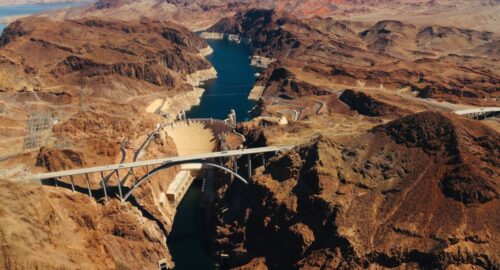 “The situation is clear: the precipitation outlook in the Colorado River Basin is dire, the river cannot sustain the demands placed on it, and this year we’re likely to face unprecedented management decisions with potentially catastrophic consequences. Despite decades of warnings and years of negotiations, there remains no clear blueprint for how the West can live with less water. That future is no longer hypothetical—it is already here. We often talk about the Colorado River and drought in ways that can feel removed, impersonal, abstract, and buried in jargon. But beneath the stories, there are real lives, livelihoods, ecosystems, and traditions that make the region what it is, and that are very much at stake. … ” Read more from American Rivers.
‘A blaring alarm’ issued for Colorado River as heat wave melts snow early
“The Colorado River system’s immediate outlook got even worse this week when federal forecasters downgraded the expected inflows into Lake Powell to just 27 percent of average. At the beginning of the month, that number was 36 percent of average. This year has brought the third lowest mid-March projection on record, with only 1.75 million acre-feet expected to flow into the Lake Powell between April and July, said Cody Moser, a hydrologist with the Colorado Basin River Forecast Center in Salt Lake City. Previously, forecasters predicted that number would be closer to 2.3 million acre-feet. Below-average precipitation paired with an unusual heat wave caused the shift in the numbers, Moser said. “In what we call a normal year, it’s valid to target April-through-July volume for your forecast,” Moser said. “But in a year like this, when we’ve been extremely warm and dry and we’ve got this heat wave coming, it’s just shifting everything earlier.” … ” Read more from the Las Vegas Review-Journal.
The Colorado River and the tragedy of the anti-commons
Jon Fleck writes, “Some notes on the current state of the Colorado Rive. I’m preparing for a panel discussion this evening in Albuquerque. I promised – three-finger promise, Scout’s honor, which still means something to me – that I wouldn’t use any swear words., either in the blog post or the panel discussion. The state of the water: Per the latest numbers from my colleague/collaborator/friend Jack Schmidt, Lake Powell currently holds 1.57 million acre feet of water above the protect-the-infrastructure no-go line of elevation 3,500. Storage at this point in the year is similar to 2022, when we began a hair-about-to-be-on-fire drill as Interior raced to figure out how to protect Glen Canyon Dam because of newly understood (or newly publicly understood) risks of dropping below minimum power pool and using the dam’s outlook works. That constraint still holds. The forecast this year is a catastrophe compared to 2022: 1.75 million acre feet for the 2026 runoff season, compared to 3.8 maf in the 2022 runoff season. … ” Continue reading from Inkstain Blog.
Drought paradox: Study reveals plants around Colorado River turn to groundwater when it gets too hot and dry, reducing flow into the already strained basin
“Thirsty plants are sucking up water that would otherwise end up in the Colorado River, according to a new study. The findings could have important implications for water management in regions that rely heavily on snowmelt for their water, including Arizona and California. More than 1.4 billion people around the world rely on water from snowmelt-driven mountain rivers. In the United States, more than 10% of the population gets the majority of their water from the Colorado River alone. But as global temperatures rise, less water is flowing into the Colorado River and many other rivers, and an understanding of what is driving that change is essential to managing water in a hotter and drier future. … ” Read more from Live Science.
ARIZONA
Hobbs advocates for Arizona’s place on Colorado River, infrastructure funds, trade agreement in D.C.
“Gov. Katie Hobbs delivered a keynote address in Washington, D.C., on Tuesday at a U.S. Chamber of Commerce event ahead of a new federal infrastructure bill. At the Keep America Moving: Transportation, Infrastructure, and America’s Future event, Hobbs used her speech to emphasize Arizona’s importance in infrastructure advancements, the need for Colorado River water solutions and international trade agreements. “Let me be very clear, this administration’s goals rely on Arizona receiving our fair share of Colorado River water,” she said. “It relies on Arizona-made missiles, Arizona-made semiconductors and Arizona-grown agriculture.” Hobbs’ office declined a request for comment following her speech. … ” Read more from KJZZ.
A crack in Arizona’s Colorado River front
“Arizona leaders are getting antsy as the state’s water future hangs in limbo without a negotiated deal on Colorado River sharing guidelines and without federal intervention. A federally imposed deadline for an agreement on splitting the river’s water between the seven basin states came and went in February with no movement. And despite leaders from the Department of Interior pledging to step in and broker a deal, no progress has been made so far this year. Arizona leaders at every level and from every party are opposed to the Interior Department’s draft environmental impact statement on post-2026 Colorado River operations, which they say fails to consider the meaningful cuts the state has already made to its water usage. The public comment period on the draft environmental impact statement ended on March 2 and the Department of Interior and Bureau of Reclamation have yet to communicate a path forward. … ” Read more from the Arizona Capital Times.
UTAH
Record heat could accelerate Utah’s Colorado River water crisis after historic dry winter
“Spring has just sprung yet the weather already feels like summer across Utah and the West this week. Temperatures are expected to shatter records, with daily highs reaching as much as 30 degrees Fahrenheit above normal, according to the National Weather Service. The heat wave will likely spark rapid snow melt and early spring peak flows, Cody Moser, forecaster with the Colorado Basin River Forecast Center, said. This follows an extremely warm winter and abnormally poor snowpack, leading to dismal water supply forecasts for Utah and the greater Colorado River Basin. “This will be … the warmest winter on record and the driest, and those two things don’t help us when we’re trying to figure out how to fill Lake Powell and Lake Mead,” Gene Shawcroft, Utah’s Colorado River negotiator, said at the Utah Water Users conference on Tuesday. … ” Read more from the Salt Lake Tribune.
Utah uses airborne tech to track snowpack
“The Utah Division of Water Resources announced a new project called “Wings Over Weber” to improve snowpack measurement in the Great Salt Lake Basin. The effort includes state agencies, the Weber Basin Water Conservancy District, and the Great Salt Lake Commissioner’s Office, with support from the Bureau of Reclamation. The project uses Airborne Snow Observatories technology, developed with support from the National Aeronautics and Space Administration. A plane equipped with specialized instruments flies over the watershed, measuring snow depth and the amount of water stored in the snow. This information is used in computer models to estimate how much water will flow into rivers and reservoirs during spring runoff. … ” Read more from Western Water.
In national water news today …
The weather is getting wilder, and some see a dire signal in the data
“Scientists who study global warming are currently wrestling with a question that, while seemingly technical, is profoundly consequential: Is climate change accelerating? The debate spilled into the open this month, after new research found that the rate of global warming has nearly doubled over the last decade. The findings set scientific circles buzzing, and not all researchers agree with the conclusion. But while the debate about accelerating global warming remains unsettled, a growing number of scientists do agree on another troubling development: The effects of climate change are intensifying in ways that have surprised even experts. Many of the consequences of global warming — such as more intense storms, warming oceans and melting glaciers — are arriving faster and more powerfully than many scientists had expected. … ” Read more from the New York Times.
Trump’s plan for rising energy costs: pump oil, make data centers pay
“Energy affordability was in the spotlight during President Trump’s lengthy and at times rambling State of the Union address Tuesday evening as the president promised to bring down electricity prices in an effort to assuage voter concerns about rising costs. The president announced a new “ratepayer protection pledge” to shield residents from higher electricity costs in areas where energy-thirsty artificial intelligence data centers are being built. Trump said major tech companies will “have the obligation to provide for their own power needs” under the plan, though the details of what the pledge actually entails remain vague. “We have an old grid — it could never handle the kind of numbers, the amount of electricity that’s needed, so I am telling them they can build their own plant,” the president said. “They’re going to produce their own electricity … while at the same time, lowering prices of electricity for you.” … ” Read more from the LA Times.
Feds face lawsuit over ‘extinction’ meeting activists warn will eliminate Gulf of Mexico whales
“The Center for Biological Diversity sued the Interior Department on Wednesday in an effort to block a looming Endangered Species Committee meeting that could lift restrictions on oil and gas tanker movement in the Gulf of Mexico. In a 26-page lawsuit filed in the U.S. District Court for the District of Columbia, the environmental group warns the March 31 meeting’s ultimate decision regarding speed limits and sea life monitoring requirements meant to prevent ship strikes will drive the critically endangered Rice’s whale to extinction. According to the National Oceanic and Atmospheric Administration, there are less than 100 Rice’s whales remaining, one of the rarest whale species in the world. The most recent estimates from 2018 indicate there are approximately 50 left. An updated population estimate will use sighting data collected during surveys in 2023 and 2024, although the committee’s meeting would quickly make that information outdated, the center argues. … ” Read more from Courthouse News.

