
Several news sources featured in the Daily Digest may limit the number of articles you can access without a subscription. However, gift articles and open-access links are provided when available. For more open access California water news articles, explore the main page at MavensNotebook.com.
In California water news this weekend …
U.S. forecasts blizzard, polar vortex, heat dome and atmospheric river all at once
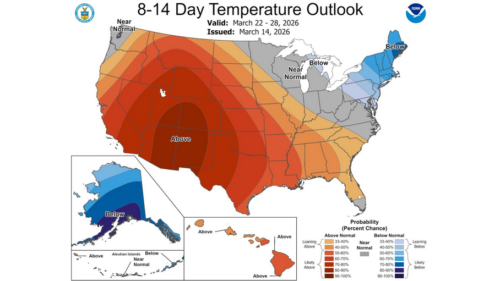 “Nearly every part of the United States is getting walloped by wild weather or just about to be. Days of downpours have begun in Hawaii. The Southwest will soon bake with day after day of record 100-degree-plus heat. Two storms will dump snow by the foot over northern Great Lakes states. And the dreaded polar vortex will again invade the Midwest and East with soul-crushing Arctic chill. This forecast of extremes comes as weather whiplash has already hit much of the East. On Wednesday, Washington, D.C., residents walked around in shorts in record-breaking 86 degrees Fahrenheit. On Thursday, it snowed. … ” Read more from the LA Times.
Summer in March? Unusual heat wave descends on already parched Western U.S.
“An early-season heat wave is descending across the Western United States, likely to bring record-shattering temperatures to much of the region. Temperatures already climbed into the 90s on Thursday in states such as Arizona and California and are expected to peak on Friday before the dome expands to the Mountain West and parts of Oregon next week. The abnormal weather is largely caused by a high-pressure system trapping heat from unusually warm Pacific Ocean waters. These conditions follow the warmest winter on record and significant drought across much of the Western U.S. As a result, states in the region have seen staggeringly low levels of snowpack this year, leaving officials concerned about low water availability and high fire risk heading into spring and summer. The heat wave will only make this situation worse, experts say. … ” Read more from Inside Climate News.
Lawmaker: Bond to pay for updates for state’s water
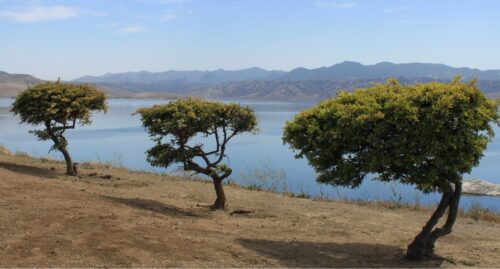 “The legislator who wrote a law modernizing California’s water infrastructure says there’s no concrete estimate for the cost to respond to worsening drought conditions. In a press conference held Friday morning at the San Luis Reservoir in western Merced County, Sen. Anna Caballero, D-Merced County, author of last year’s successful Senate Bill 72, said there is no way to know the cost of developing 9 million acre-feet of water by 2040. Her bill, which Gov. Gavin Newsom signed into law in October, is being implemented and requires the California Department of Water Resources to formulate long-term water supply goals. “Frankly, we don’t know what the cost will be to meet that goal,” Caballero said, answering a question from The Center Square at the end of the press conference. “It’s speculative to say it’s a certain amount. Will it be expensive? Yes.” Caballero added she’s proposing a bond that could pay for implementing much-needed updates to the state’s water plan. … ” Read more from the Center Square.
SEE ALSO: Sen. Anna Caballero unveils California Water Plan at San Luis Reservoir, from KMPH
San Joaquin County backs plan to strengthen Delta levees
“San Joaquin County is officially supporting a measure by State Senator Jerry McNerney to upgrade Delta levees and repair the California Aqueduct. Senate Bill 872 strengthens California’s existing water infrastructure by dedicating $300 million annually over 20 years for critical Delta levee repairs and improvements to existing State Water Project canals south of the Delta. The legislation invests equally in protecting communities in the Sacramento San Joaquin Delta and in stabilizing canals that deliver water to millions of Californians. “The Delta is not just a regional issue, it is the heart of California’s water system,” said Supervisor Steven Ding who advanced the recommendation to support McNerney’s measure to his colleagues on the county board. … ” Read more from the Manteca Bulletin.
California’s 2026 ocean salmon season set to open April 11 from Pigeon Point south
“The Pacific Fishery Management Council (Council) adopted three alternative options for 2026 ocean salmon fisheries off Washington, Oregon, and California, now available for public review, at its March meeting. The Council will make a final decision on salmon seasons at its next meeting on April 8-12, 2026. Detailed information about season starting dates, areas open, and catch limits for the three options are available on the Council’s website at www.pcouncil.org. But there’s one important detail that isn’t obvious in the PFMC materials, according to the Golden State Salmon Association (GSSA). … ” Read more from the Daily Kos.
AB 2026: more groundwater recharge opportunities for the Sacramento Valley
“Lawmakers in Sacramento introduce bills each January to address major water policy issues affecting the state. This year, we see momentum building around groundwater recharge-in partnership with Northern California Water, the Regional Water Authority, and others interested in recharge. State Assemblywoman Cecilia Aguiar-Curry (D-04) is leading the efforts to improve our recharge permitting processes and protect our long-term water supply reliability for an abundant future. Groundwater aquifers are California’s biggest naturally occurring reservoirs-making groundwater recharge one of the most cost-effective storage solutions in the state’s water toolkit. There has been growing recognition that scaling up groundwater recharge is necessary to maintain reliable water supplies for farms, cities and the environment. In the last decade there have been several Legislative and Executive actions directed at increasing recharge. Among these actions are the establishment of seasonal (180-day) and 5-year permits as well as a new category of “floodwater” available for diversion. … ” Read more from the Northern California Water Association.
New report highlights California’s vital work to recharge groundwater
“Governor Newsom spotlights a new release from the Department of Water Resources (DWR) regarding information about California’s groundwater and the work of state and local communities to preserve and recharge this vital resource. Across the state, over 80 percent of Californians rely on groundwater for some portion of their water needs. Flowing beneath the earth’s surface, this water collects through rain, drainage, and other water sources. When groundwater is used in excess of recharge, it causes land to subside and puts water infrastructure and supply at risk. The state is collecting more groundwater data than ever before, and strengthening partnerships with water agencies to ensure that more groundwater is collected. This week, during Groundwater Awareness Week, DWR issued a new report outlining California’s strategy. “California’s long been a leader on water policy, and we’re taking an all-in approach to securing our water future — including recharging and expanding groundwater storage,” said Governor Newsom. “We’re preparing for what’s ahead, but we also recognize there’s more work to do.” …, ” Read more from the Office of the Governor.
Water vanished in California. Here’s how one species saved itself.
“As the most extreme drought period in more than 10,000 years ravaged California from 2012 to 2015, many wildflowers died. But in a new study published Thursday in the journal Science, researchers documented how one flower survived the hard times without rain. Their findings show rare evidence of “evolutionary rescue” — a phenomenon whereby a species rapidly evolves to survive — outside the lab and amid climate change. “Essentially what we found is that the populations that recovered are also the populations that evolved the fastest,” Daniel Anstett, the first author of the study and a biology professor at Cornell University, said in a statement. … ” Read more from SF Gate.
If the giant sequoia is dying out, why are there tens of thousands of seedlings and saplings?
“In a Sierra Nevada canyon all but incinerated in the 2021 KNP Complex fire, a new forest of California’s beloved giant sequoias is now growing. Only not yet one that is actually giant. The seedlings and saplings are mostly knee-high to chest-high and mixed with thickets of ceanothus and other post-fire brush growing amid the true giants that stand dead among them. The fire killed almost every tree in this section of the Redwood Mountain Grove in Sequoia & Kings Canyon National Parks, reputedly the world’s largest stand of sequoias. The new trees number in the thousands — at least 4,000 per acre or as many as 20,000, depending on who is counting. A few rise above head-height, the most energetic sentinels of regeneration. What will become of this nursery in the wild in the next hundred years, or thousand, is the crux of a scientific and policy dispute. Starkly different visions of how the grove will recover in the long run have implications on how forest managers should act today. … ” Read more from the LA Times.
Forever… or never? California Forever plan for new city of 400,000 divides Solano County
 “The two men stood near a rickety barbed wire fence by state Highway 12 between Suisun City and Rio Vista in Solano County, looking east over a vast tract of gently rolling rangeland. In the summer, this sprawling property will be sere and brown. But now, freshened by heavy winter rains, it is intensely green. Wetlands dot the landscape, some supporting Canada geese and mallard ducks dabbling in the water. Northern harriers and red-tailed hawks cruise overhead, seeking mice and voles in the grasses and emerging wildflowers below. Both men admired the view. But Jim DeKloe, a biology professor at Solano Community College, and John Harter, the owner of Waterfront Comics in Suisun City, have different visions for the property. To DeKloe, the land is fine just as it is: a spectacular open space burgeoning with wildlife and supporting rare ecosystems such as vernal pools and native grasslands. Harter, on the other hand, shares the dream of Flannery Associates, a group of wealthy investors led by Jan Sramek, a former Goldman Sachs trader. Flannery — and Harter — want to see this 100-square-mile parcel developed. They hope to see a new city rising here, one that will ultimately support 400,000 residents at full build-out. … ” Read more from Local News Matters.
Citing Iran crisis, Trump orders Santa Barbara oil pipeline restart. California will fight it
“The Trump administration invoked emergency powers under the Defense Production Act Friday, ordering the restart of the Santa Ynez offshore oil platform and pipeline along the Santa Barbara County coast that was shuttered after a spill released thousands of barrels of crude into the Pacific 11 years ago. The move, which comes in response to skyrocketing fuel prices in the wake of the Iran conflict, brought an immediate threat to sue by Gov. Gavin Newsom. The order also marks the most aggressive federal intervention yet in a yearslong dispute. On one side is the Trump administration and Sable Offshore Corp., a Houston-based startup that has been trying to restart the pipeline. On the other are California officials and environmental groups who oppose the effort. … ” Read more from Cal Matters.
SEE ALSO:
- Governor Newsom condemns and vows to fight Trump for exploiting Iran war crisis of his own making to harm California’s coastline, from Governor Newsom
- Padilla Condemns Trump Admin’s Illegal Use of Emergency Powers to Harm California’s Central Coast, from Senator Alex Padilla
USGS Powell Center releases new guidance for managing ecosystems amid rising climatic novelty
“A new manuscript from the U.S. Geological Survey’s Powell Center offers a forward‑looking framework for understanding and managing ecosystems as climate‑driven environmental conditions move further away from historical norms. The work, led by researchers at the St. Petersburg Coastal and Marine Science Center, synthesizes emerging ecological and climatological research to address a pressing question for natural resource managers: What happens when resisting ecological change is no longer feasible, and ecosystem reassembly becomes inevitable? The manuscript developed by the “Ecosystem Stability Drivers” Working Group, draws on two years of collaborative analysis by USGS scientists, federal partners, and academic experts. By examining data from terrestrial and marine systems around the world, the group sought to identify the mechanisms that support ecosystem resilience in the face of “abiotic shocks,” such as heatwaves and droughts, which are expected to intensify in the coming decades. … ” Read more from the USGS.
In people news this weekend …
Promotions, passings, profiles – submit people news items to maven@mavensnotebook.com.
Celebrating fish biologist Peter Moyle
 “UC Davis professor emeritus Peter B. Moyle is arguably the most important fish biologist in California’s history. The 84-year-old scientist has authored 10 books, as well as hundreds of peer-reviewed publications and dozens of blog posts. He’s trained a small army of biologists over the course of at least two generations. He’s a valued member of the PPIC Water Policy Center research network and has contributed to many of the center’s key publications. And perhaps most importantly, he’s devoted his career to expanding the understanding of the remarkable diversity—and steep decline—of California’s native fishes. Last Saturday, a stellar collection of California water leaders, agency heads, wildlife experts, and Moyle’s students and family gathered to pay homage to the man behind the mustache. … ” Read more from the PPIC.
The 25th Anniversary of a Wild & Scenic River: Izzy Martin, former Nevada County Supervisor
After nearly two decades of tireless organizing, late-night strategy sessions, and countless hours spent in legislative offices and along the banks of the river, 39 miles of the South Yuba officially became protected as a State Wild & Scenic River on January 1, 2001. That designation didn’t just protect the river from dams and development. It affirmed something even bigger: people can save a river. Throughout 2026, we will be sharing these interviews to honor their legacy and inspire the next generation of river defenders. Read the article here.
Restoration Heroes: Field Foreman, Eligio Hernandez
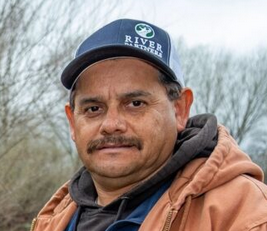 “The morning air along the Sacramento River smells different than city air, according to River Partners Field Foreman Eligio Hernandez. “You can smell plants and trees here,” Hernandez says. “You cannot smell this in the city.” Hernandez stood at one of River Partners latest projects in Northern California, Rancho Breisgau—a 150-acre field of sycamores, willows, oaks, cottonwoods, and other native vegetation restored in partnership with the U.S. Bureau of Land Management and California Wildlife Conservation Board to support the recovery of critically endangered wildlife. “When you go outside, you feel different. You leave the stress out,” he says. “That’s part of my life, being outside. And if I’m doing something for wildlife, it makes me feel good.” For 25 years, Hernandez has spent his days planting riparian forests, installing irrigation lines, collecting native seeds, and helping rewild California riverways. During his service at River Partners, he’s helped transform over 10,000 acres of riverside lands into a thriving tapestry of renewed riparian forests that benefit people, wildlife, and economies. But for him, it’s never felt like just a job. … ” Read more from River Partners.
Podcasts …
Locally led strategies for protecting groundwater resources
In this episode, guest host Renata Rimšaitė, Senior Program Manager at DWFI, sits down with Matthew Beaman, groundwater regulatory manager with the Merced Irrigation-Urban Groundwater Sustainability Agency in Merced County, California. A professional geologist, Matt works on regulatory implementation, groundwater accounting, data management and other requirements of the state’s groundwater law for the Merced Irrigation-Urban GSA. Joining them is also Jim Schneider, technical expert in environmental infrastructure for Olsson, a national design and engineering firm that got its start in Nebraska. Jim is a hydrogeologist who consults for Merced and other GSAs in California and other states. He formerly served as deputy director of the Nebraska Department of Natural Resources, where he developed expertise in groundwater modeling, interstate water compacts and water policy. Matt and Jim discuss the challenges in sustaining groundwater and how local management in California and Nebraska is helping to address them.
AgNET NEWS HOUR: California Water, energy, and policy: Duarte, Vanden Heuvel break it down
California agriculture sits at the center of some of the state’s most important policy debates—water supply, infrastructure, energy, and the future of farming. Those issues took center stage on the latest AgNet News Hour , where host Nick “The AgMeter” Papagni spoke with several key voices shaping the conversation.
H2oRadio: “Forever Water”—What Happens in L.A., Stays in L.A.
Climate change could mean less water for Los Angeles, which currently gets the majority of its supply from Northern California and the Colorado River. But the city has plans to become more resilient—by making what’s old, new again.
WATER IS A MANY SPLENDOR’ED THING: Kansas Water
 Imagine Kansas water as an up-side down and backwards system. All the water in the state of Kansas is in the driest part of the state. It’s a very, varied state that straddles the wet Midwest from the dry high plains. Water is a Many Splendor’ed Thing brings you another water relationship that has a personally significant impact to your life. Produced by Stephen Baker, Bringing People Together to Solve Water Problems, water@operationunite.co 530-205-6388
Sunday video …
SoCal Water Coalition: Renewed: The Journey to Safe Drinking Water
Advanced water purification turns recycled water into safe, reliable drinking water—an essential strategy as climate change intensifies droughts and floods. This short explainer demystifies Direct and Indirect Potable Reuse (DPR/IPR) within the One Water approach, strengthening sustainability, water security, and affordability for Southern California—and for water stressed communities everywhere.
Sunday read …
Author explores California Delta water crisis in new novel ‘More Than Any River’
“The ongoing debate over a state plan to construct a 36-foot underground tunnel below the Sacramento-San Joaquin River Delta to carry water to a reservoir in Alameda County has now been given the novelization treatment. Santa Cruz author Victoria Tatum, who swam in the Delta in her youth, tells a fictional story of a farmworker family’s fight over the tunnels in “More Than Any River.” The book will be published March 24, the same day Tatum will be hosting a joint event with Joe Ortiz of Gayle’s Bakery & Rosticceria on the two primary forms of sustenance: food and water. Tatum has been writing since she was a kid, having primarily written poems. As an adult, she has mostly written fiction, including the 2006 novel “The Virgin’s Children.” “Writing is just a great calming, centering exercise,” she said. … ” Read more from the Santa Cruz Sentinel.
In regional water news this weekend …
NORTH COAST
After dam removal, salmon reach upper Klamath Basin for first time in over 100 years
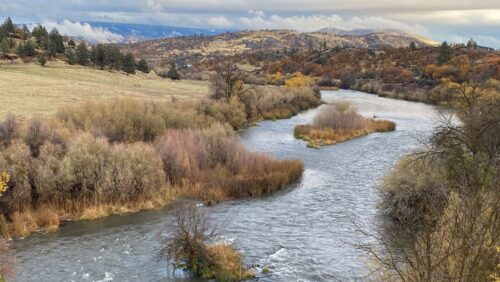
“Recent radio monitoring shows that chinook salmon have reached stretches of the Upper Klamath River Basin—an area that anadromous fish have been absent from for over a century, according to a press release from the Oregon Department of Fish & Wildlife (ODFW). The news is an indication that dam removal efforts on the Klamath River are working as expected. The Klamath is a 263-mile river that flows through the Cascade Mountains in southern Oregon and northern California. According to NOAA Fisheries, the river was once the third largest salmon-producing river on the West Coast, not to mention a famous steelhead fishery. But those anadromous fish runs suffered in large part from four hydroelectric dams that impacted water quality and impeded fish passage. Years of advocacy from a variety of stakeholders, including local Indigenous tribes, led to America’s largest dam removal; those four dams were demolished by September, 2024. … ” Read more from Field & Stream.
March snow survey results from the Klamath National Forest
“The Klamath National Forest has completed its March 1 snow surveys as part of the statewide California Cooperative Snow Survey program. These measurements support California’s efforts to forecast water availability for agriculture, hydropower, recreation, and streamflow management throughout the year. February brought significant weather variability to the region. A mid‑month storm delivered substantial snowfall and cold temperatures, briefly boosting snowpack levels. However, an atmospheric river arrived near the end of the month, bringing unseasonably warm temperatures and periods of heavy rainfall that eroded many of those gains. … ” Continue reading from the Redheaded Blackbelt.
Arcata: Old water meters are costing Arcata almost half a million dollars annually
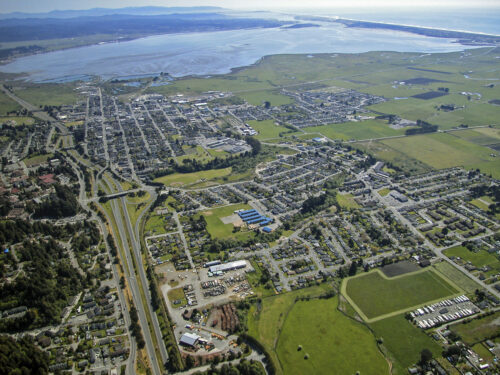
“Old houses have plenty of problems. Leaky pipes, cracked foundations, bad heating and worse insulation all make for hard living. But an ancient water meter can actually save owners money — at the city’s detriment. Arcata’s housing stock is rife with them. Around 6,600 meters city-wide measure the water residents use, and all of them need to be replaced. (About 680 already have been.) When a meter turns 15 years old or so, it stops measuring the water usage accurately, almost always in favor of the customer, sometimes undercounting by huge margins. Arcata doesn’t recover costs for up to a third of the $1.7 million it spends on water bought from the Humboldt Bay Municipal Water District and resells at-cost, Finance Director Tabatha Miller told the Outpost. Arcata loses some $300,000-$500,000 annually, though the losses have mounted over time as more meters deteriorate. … ” Read more from the Lost Coast Oupost.
SEE ALSO: Arcata warns of water shutoffs during waterline replacement work, from the Eureka Times-Standard
No risk to local water supply after hydraulic fluid leak at Ruth Lake Dam, water district says
“A hydraulic fluid leak at Ruth Lake — the reservoir that holds most of Humboldt County’s water supply — does not pose any kind of health risk for local residents, according to Humboldt Bay Municipal Water District. Nor have there been any impacts to fish and wildlife, the agency says. Here’s what happened: On Tuesday of last week, during a routine safety inspection of R.W. Matthews Dam on Ruth Lake, a hydraulic slide gate malfunctioned. During subsequent diagnostic work, roughly 15 gallons of hydraulic fluid leaked into an enclosed space underground. This stuff is not typical hydraulic fluid, according to the District; it’s non-toxic, plant-based and biodegradable. Still, it’s not supposed to leak into the water. … ” Read more from Lost Coast Outpost.
SIERRA NEVADA
As a warming climate changes skiing, is it making the sport riskier?
“Skiers and snowboarders, especially when fired up by fresh snow, can talk with enough slang that it can sound like they’re speaking in tongues. One new addition to the lingo is the term “frothing” — a foaming-at-the-mouth excitement to plunge downhill into deep, light , fresh powder snow. For Sierra skiers and snowboarders, the frothing has been rare this winter. Throughout the 2025-2026 ski season, weeks have gone by without snow. And what’s already been a thin season may now be headed toward an early end. … Amid such a season, it was only natural ski lovers wanted to make the most of the February blizzard that blanketed California mountains and over four days dropped as much as eight feet of new snow in parts of the Sierra. The storm brought skiers and riders some of their best turns of the year – but also a series of deaths. … ” Read more from the Sacramento Bee.
Yuba Water reports salmon and steelhead habitat affected during pipe rupture
“Yuba Water Agency filed a report with the Federal Energy Regulatory Commission on Friday regarding the large water pipe rupture at the New Colgate Powerhouse on Feb. 13, stating that the incident may have reduced water flow in the lower Yuba River and temporarily dried out rearing habitat for Chinook salmon and steelhead. In Friday’s report, the agency noted that roughly 0.5% of the total annual fall‑run Chinook salmon redds — nests where fish lay their eggs — and 1.2% of the annual steelhead redds upstream of Daguerre Point Dam “could potentially have been exposed to dewatering” due to the outage at the power facility. The rupture occurred as the agency was wrapping up major infrastructure upgrades at the facility, injuring one worker and prompting a Yuba River conservation group to report that hundreds, and possibly thousands, of young Chinook salmon were stranded and died in the rocks along the shore. … ” Read more from the Sacramento Bee.
Reservoirs are full. The Sierra snowpack isn’t
“On paper, it looks like a good water year in Nevada County. Reservoirs throughout the Nevada Irrigation District (NID) are sitting at about 117 percent of their historical average for early March, boosted by a few powerful winter storms and healthy carryover storage from prior years. But high in the Sierra Nevada, where the District’s water supply begins, the snowpack tells a different story. At 65 percent of average, the mountains are holding far less water than water managers would like to see heading into spring. That contrast between plenty of water today and less certainty for tomorrow is shaping how NID plans for the months ahead. “It’s an unusual combination,” said Thor Larsen, NID Water Resource Superintendent. “We have strong reservoir storage right now, but the snowpack that refills those reservoirs is running light. That changes how we think about the year ahead.” … ” Read more from YubaNet.
Placer County expands French Meadows forest thinning to reduce wildfire risk
“Placer County officials say work to make local forests safer from wildfires is expanding, with millions of dollars in projects underway across the county. County leaders recently approved three contracts totaling $1.3 million for tree thinning work as part of the French Meadows Ecological Restoration Project. Placer County created its Regional Forest Health Division in 2021 to coordinate wildfire prevention work, and officials say the program has since secured more than $6.8 million in funding, with about $5 million in projects underway. One major effort is the French Meadows fuel reduction program, a partnership between the county and the U.S. Forest Service to remove dangerous wildfire fuel across a large area. The project covers 22,000 acres of national forest lands and 6,000 acres of private land. … ” Read more from the Sacramento Bee.
SACRAMENTO VALLEY
Rice and the Water Board’s Irrigated Lands Regulatory Program
“The California Rice Commission is the Third-Party organization that represents commercial rice Growers for the Irrigated Lands Regulatory Program (ILRP) Waste Discharge Requirements General Order for Sacramento Valley Rice Growers. By extension, the Order also applies to landowners that lease, rent, or otherwise own land that is used by a producer of rice. The CRC and Growers each have specific compliance requirements under the Order. The CRC completes the water quality monitoring assessments and programs, conducts outreach and education, and submits fees, plans and reports to the Water Board. A copy of the WDR Order and a summary of Grower requirements are on the CalRiceNews.org website. … ” Read more from Cal Rice News.
BAY AREA
‘A Delight-Mare’ — Bay Area sizzles, March heat wave could shatter records
“The Bay Area is already baking under an early spring heat wave, as unseasonably hot temperatures throughout the region climb toward all-time March records — and climate change is part of the issue. Forecasters at the National Weather Service said that San José, Santa Rosa, Redwood City, Livermore and Salinas might set all-time high temperature records — for any day ever in March over the next week. While daily high-temperature records could be threatened in San Francisco, San José, Oakland and Napa. “We expect a slew of daily records to be broken, and several monthly records are likely to go down as well,” wrote NWS Bay Area meteorologist Dylan Flynn in the local office’s daily forecast discussion. … ” Read more from KQED.
SEE ALSO: Heat wave hitting Bay Area could feel ‘like early August’, from SF Gate
San Francisco Baykeeper challenges unlawful sand mining leases for SF Bay
 “On March 12, 2026, San Francisco Baykeeper filed a lawsuit in California Superior Court for the County of Alameda against the State Lands Commission for authorizing harmful sand mining leases in San Francisco Bay. Baykeeper is represented in the litigation by Robert “Perl” Perlmutter of Shute, Mihaly & Weinberger and by in-house Baykeeper attorneys. The case asserts that the State Lands Commission’s approval of ten-year sand mining leases violates both the California Environmental Quality Act and the agency’s public trust obligations. The leases benefit two for-profit companies, Martin Marietta and Lind Marine, which turn the Bay’s dwindling sand into concrete and asphalt. The Bay’s sandy floor is important habitat for countless Bay fish and wildlife, including Dungeness Crab and White Sturgeon. Sand is also necessary in the ecosystem to fortify shorelines and beaches, which are already experiencing erosion and worsening sea level rise. Alarmingly, new research has determined that much of the Bay’s sand is ancient and irreplaceable. … ” Continue reading from SF Baykeeper.
CENTRAL COAST
Residential well owners asked to register
“When groundwater levels drop, residential wells are often the first to go dry. A new program by the Monterey County Water Resources Agency and the Salinas Valley Basin Groundwater Sustainability Agency hopes that by making a complete record of wells in the Salinas Valley, they will be able to better understand and protect the crucial groundwater resources of the area. To make that record, all well owners are asked to register with the Groundwater Monitoring Program. The two agencies announced earlier this week that to increase participation, they would be extending the registration deadline for these wells to March 31. … ” Read more from the Monterey Herald.
State approval for Greenfield’s building moratorium on standby while wastewater issues persist.
“Faced with a problematic wastewater treatment plant, Greenfield City Council took drastic measures last year, voting to pause new construction to prevent further strain on the aging facility. However, that moratorium remains on standby pending final approval from the California Department of Housing and Community Development. A three-month waiting period as a result of a backlog at the state agency has turned into a wait of over seven months. “We don’t yet have their approval to actually have the building moratorium in place, nor do we know why,” Greenfield City Manager Paul Wood writes via email. This isn’t the only policy that is on standby. Since the city didn’t include a moratorium when it submitted its housing element – a plan produced every eight years to map out the zoning for needed new development – Greenfield will also have to resubmit its housing development plan to HCD for approval. … ” Read more from Monterey Now.
SAN JOAQUIN VALLEY
Work on storm water system for S. Manteca ready to start
“The first phase of a new surface water discharge outlet into the San Joaquin River to drain storm water from south of the 120 Bypass may go out to bid Tuesday. The Manteca City Council when they meet at 6 p.m. are being asked to approve calling for bids for the construction of the outfall 3,000 feet west of the western end of Woodward Avenue. It will be located near Aplicella Court at the former Oakwood Lake Water District corporation yard. Besides the outfall structure, the first phase includes a 48-inch forced main to carry stormwater runoff along the toe of the Reclamation District 17 levee. It will go from a pump station near Woodward Avenue and Aplicella Court to the new outfall structure. … ” Read more from the Manteca Bulletin.
San Joaquin Valley farmers will have water certainty – if they can make it through the next few years, panelists say
“Water supply certainty is in the future for San Joaquin Valley growers, according to three water experts who spoke at California Citrus Mutual’s Citrus Showcase Wednesday in Visalia. But it’s at least five to eight years out, acknowledged Paul Gosselin, Deputy Director for Sustainable Water Management at the Department of Water Resources. About 70 people attended the annual event, held in the heart of California’s citrus belt where farmers are already having to let some orchards die as they can no longer pump enough groundwater to keep them alive under restrictions brought on by the Sustainable Groundwater Management Act (SGMA). SGMA mandates that local groundwater sustainability agencies (GSAs) bring overdrafted aquifers into balance by 2040. To do that, many GSAs have had to severely restrict pumping allotments for farmers. … ” Read more from SJV Water.
Some Kings County farmers call “BS” on state proposal to let small pumpers off the hook
“A proposal for the state Water Resources Control Board to exclude “small pumpers” in both the Tule and Tulare Lake subbasins from the groundwater reporting and fee requirements required under probation, elicited strong reactions from some Kings County farmers. “It’s just a divide and conquer BS strategy, that’s all they’re trying to get at,” said Frank Coelho Jr., at the March 5 South Fork Kings GSA’s grower advisory group meeting. He recommended the GSA send a letter to the Water Board opposing the exclusion. South Fork General Manager Johnny Gailey speculated that the state is considering letting small fry pumpers off the hook because it doesn’t have an efficient way to corral that many people. “I think they know how much of a challenge it’s going to be to chase everyone down,” Gailey said. … ” Read more from SJV Water.
State’s groundwater reporting platform – complete with fees – is live
“Landowners and farmers in the Tule and Tulare Lake subbasins can now log onto the state’s groundwater reporting system ahead of the May 1 deadline. The state Water Resources Control Board announced that its groundwater extraction annual reporting system, or GEARS, is open for pumpers to begin reporting how much they pump and paying fees. Pumpers are required to meter their wells, pay $300 per well to register then with the state and pay $20 per acre foot of groundwater pumped. A 25% surcharge of the total monthly amount will be charged on top of the fees if a landowner fails to submit their extractions by the deadline. Fees will be due 30 days after the state issues an invoice, which will be mailed to landowners. … ” Read more from SJV Water.
EASTERN SIERRA
A superbloom is covering Death Valley — but not for long
“Death Valley, known as the driest place in North America, is teeming with life with a once-in-a-decade blossoming of wildflowers known as a superbloom, transforming a normally brown desert landscape into carpets of gold. Wildflowers bloom across parts of Southern California and Nevada at different degrees usually every year. In some years, superblooms are so vibrant they can be seen from space. But it’s rare for Death Valley National Park, the hottest place on Earth, to burst with color. “This landscape that sometimes people think of as desolate or devoid of life is coming alive right now with this really beautiful palette of colors,” said park ranger Matthew Lamar. This year’s bloom is the best the park has seen since 2016, thanks to steady rainfall and warm temperatures in the last six months, Lamar said. … ” Read more from Stocktonia.
SOUTHERN CALIFORNIA
Los Angeles area under its earliest ever extreme heat watch.
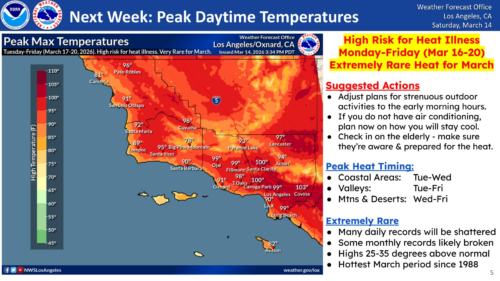 “The National Weather Service issued its first-ever extreme heat watch in March, in a sign of how anomalous next week’s heat event has become. The watch, issued by National Weather Service offices in Los Angeles and San Diego, runs from Monday morning through Friday evening and stretches across a wide arc of Southern California, from the Central Coast near San Luis Obispo and Santa Barbara through Ventura and Los Angeles and into inland communities such as Santa Clarita, Riverside and San Bernardino. Forecasts call for temperatures next week to be 20 to 30 degrees above normal, climbing well into the 90s across many inland communities, with some of the hottest areas eclipsing 100 degrees. The extreme heat watch will likely become a warning shortly before the event. … ” Read more from the San Francisco Chronicle.
Land movement in Rancho Palos Verdes increases after recent rainfall
“Land movement has increased in the Rancho Palos Verdes landslide area after historic storms over the recent holidays. Why it matters: City officials said in some parts of the ancient landslide in the Portuguese Bend area of the city, land movement increased to 2 inches per week, that’s up from the average of 1.74 inches per week. How we got here: Movement was minimal in the landslide complex for decades. But above average rainfall in 2022 and 2023 set off a rapid increase in movement — up to 1 foot per week in some places — which prompted Southern California Edison and SoCalGas to shut off utilities for hundreds of residents. … ” Read more from the LAist.
Along the Colorado River …
Record heat could put Colorado River closer to crisis
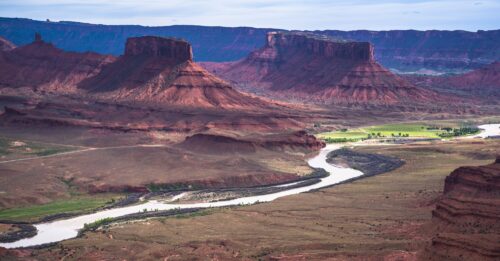
“The record-breaking heat in this month’s forecast is likely to help push the Colorado River Basin to the edge of “disaster,” in which drastic cuts in water use will be necessary next year, experts say. The heat is almost certain to slash river flows even more than already expected after the snowpack in key sites above Lake Powell hit record lows this winter. The upshot: Lake Powell is likely to get less than one-third the water from the river that it would in an average April to July. The unusually low flows won’t be bad enough to push the basin into immediate disaster this year. But several experts said it is virtually inevitable that major cuts in river water use will be needed next year in Arizona and other Western states — unless the winter of 2026-27 is far cooler and wetter than the current one. … ” Read more from the Arizona Daily Star.
Water woes: Colorado River getting less snow, sending projections for Lake Mead lower
“Forecasts keep going from bad to worse for water in the West, and a new report released Friday brought more bad news for the outlook at Lake Mead. Experts are now projecting the Colorado River will bring just over a third of the normal amount of water to Lake Powell from April through July as snowpack levels hover around their lowest levels during the drought that began in 2000. A report released at mid-month from the U.S. Bureau of Reclamation, which is responsible for dam operations along the Colorado River, showed Lake Mead declining even further than projections showed last month. The nation’s largest reservoir is currently 34% full, but water from this year’s snowpack won’t be enough to keep it there. … ” Read more from KLAS.
Commentary: Shift happens: When Colorado River cuts hit home
Rusty Childress writes, “This is no longer someone else’s problem. If Arizona loses a significant share of its Colorado River supply, you won’t feel it standing on the shore of Lake Mead. You’ll feel it in your water bill, in the cost of keeping a lawn alive, and eventually in what your home is worth. That’s the shift, from abstract resource crisis to something unmistakably personal. For years, the conversation has circled around structural deficits, aridification trends, and post-2026 operating guidelines. Eyes glaze over. But when shortage conditions led to Rio Verde Foothills losing its hauled water access, none of that technical language was necessary. Real estate listings stalled. Buyers hesitated. And agents started hearing a question they hadn’t heard before: Does Arizona actually have enough water? That question travels faster than any policy memo. … ” Continue reading at the Arizona Capital Times.
Yuma City Council submits comments on future Colorado River operations
“The Yuma City Council has submitted formal comments to the U.S. Bureau of Reclamation regarding the Draft Environmental Impact Statement for the Post-2026 Operational Guidelines for the Colorado River system—a federal process that will help determine how the river is managed for decades to come. The comments address proposed strategies for managing Lake Powell and Lake Mead—the two major reservoirs that help regulate the Colorado River. In its submission, the city council emphasized the importance of maintaining water levels in the reservoirs to support reliable water deliveries and overall stability of the river system. The City Council’s comments stress protecting long-standing water rights, maintaining the priority system that governs Colorado River allocations, and ensuring that communities that rely directly on the river are not disproportionately impacted by future shortage policies. … ” Read more from the Imperial Valley Press.
‘These are treaty and trust responsibilities’: Lawmakers struggle with tribal water rights
“President Donald Trump isn’t known for being shy on any issue but when it comes to a basic necessity in Indian Country, his administration isn’t quite as forthcoming. For the first time in the 119th Congress, the Trump administration got a chance to explain its stance on Indian water rights settlements. At a hearing on Wednesday, a political official from the Department of the Interior (DOI) confirmed that a long-running policy at the federal agency with the most trust and treaty responsibilities remains in place despite a change in power in the nation’s capital. “The department supports the long-standing policy that negotiated Indian water rights settlements are … certainly preferable to protracted and divisive litigation,” Deputy Assistant Secretary for Water and Science Scott Cameron told the Senate Committee on Indian Affairs. … ” Read more from Indianz.
‘You’re using public resources’: Everyone must be named in SNWA case, judge rules
“A Las Vegas judge has denied a request to keep new plaintiff names out of the public record in a case challenging the Southern Nevada Water Authority’s enforcement of a ban on irrigating certain grass with water from Lake Mead. “I think there’s a very high standard for something like this,” Judge Anna Albertson said. “I understand why you want it. I really do. However, I think when you’re using public resources, when you’re filing a public lawsuit and this room is paid for by our taxpayer dollars, I think we have to consider that.” The case concerns the water authority’s enforcement of a 2021 law that will make it illegal at the beginning of next year to use water from the Colorado River to irrigate “useless grass,” or grass that an expert committee has deemed nonfunctional. … ” Read more from the Las Vegas Review-Journal.
In national water news this weekend …
Trump housing order targets water, efficiency programs
“President Donald Trump signed an executive order Friday aimed at boosting the nation’s housing supply by reducing “regulatory barriers,” including water pollution requirements and energy efficiency programs. The order directs EPA and the Army Corps of Engineers to review and revise permitting programs for wetlands, rivers, lakes and stormwater pollution. It also directs the Energy Department, Agriculture Department and other agencies to assess and potentially eliminate “unduly burdensome or costly energy-efficiency, water-use, or alternative-energy requirements regarding housing.” The move comes one day after the Senate passed a major bipartisan housing bill that faces an uncertain future in the House and as both parties seek to address affordability concerns ahead of the midterm elections. … ” Read more from E&E News.
[spacer]
