
Several news sources featured in the Daily Digest may limit the number of articles you can access without a subscription. However, gift articles and open-access links are provided when available. For more open access California water news articles, explore the main page at MavensNotebook.com.
On the calendar today …
- MEETING: State Water Resources Control Board beginning at 9am. Agenda items include Current Hydrologic Conditions and Response, Office of Enforcement: 2025 Enforcement Program Highlights, Consideration of a proposed Resolution adopting the prioritization of drinking water regulations development for calendar year 2026, and a discussion on yearly board priorities. Click here for the full agenda.
- MEETING: Board of Food and Agriculture from 10am to 2pm. Agenda items include panel discussions on Sustainable Groundwater Management and Water Management Issues, a presentation on the Climate Resilience Strategy, and an update on the Strategic Growth Council. Click here for the agenda.
In California water news today …
How are water managers adapting to a smaller Sierra snowpack?
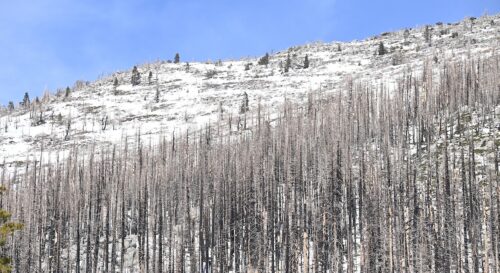
“As average temperatures rise across the western United States, snowpack in the Sierra Nevada is dwindling. This year, Reno recorded its latest-ever frost date on November 19. When snow does fall, climate change has increased the likelihood of more extreme storms. This winter provided an example: in mid-February, a heavy snowstorm hit the Donner Pass region, triggering the deadliest avalanche in California’s modern history. For the most part, however, warming temperatures mean precipitation falls as rain instead of snow, changing the decisions water managers make about storing runoff from the Sierras, which supplies drinking water to millions in both California and Nevada. Reservoirs—the manmade lakes that store water—were originally designed with snowpack in mind. Snow would accumulate throughout the winter and melt slowly in spring and summer, filling reservoirs during the dry season. Each reservoir has flood space that water managers keep empty during winter in case a heavy storm fills the reservoir quickly. Now, with more rain running off the mountains than snow, this flood space is filling earlier in the season. That requires water managers to release more water during winter, without the promise of snowmelt to replenish it in spring and summer. … ” Continue reading from the Sierra Nevada Ally.
Conservation groups sue feds to save fish from California water flows
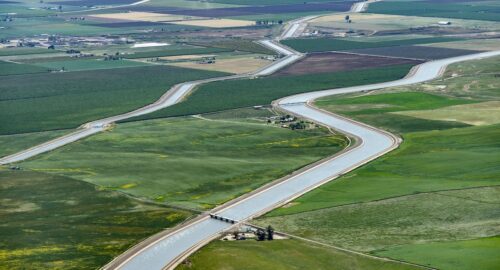
“The San Francisco Baykeeper and others sued the federal government on Monday, accusing it of harming fish protected by the Endangered Species Act. The Center for Biological Diversity, Friends of the River and Baykeeper claim that pumping excessive amounts of water from the Sacramento-San Joaquin River Delta hurts fish like the Central Valley steelhead, North American green sturgeon and Chinook salmon. The U.S. Bureau of Reclamation’s operation of the Central Valley Project affects factors like water temperature and salinity. Those factors, along with the volume and direction of the water, cause fish to swim into harmful environments, the conservation groups say in their suit. The Central Valley Project is a large system that moves water from the delta to the Central Valley, mostly for agricultural use. In addition to changing water temperature, it also blocks access to fish breeding areas, the groups say. “The delta is the irreplaceable home of iconic and endangered California fish, like salmon and steelhead, and we can’t let Trump’s reckless pumping destroy it,” said Harrison Beck, staff attorney with the center, in a statement. “If the Trump administration continues to pump as much water as it can out of the delta ecosystem, we may lose these native fish forever. We can’t allow mass extinction when it’s entirely avoidable.” … ” Read more from the Courthouse News Service.
SEE ALSO: Lawsuit challenges Trump’s water operations plan (Action 5), press release from conservation groups
Board staff recommends Delta-Mendota Subbasin return to DWR oversight under SGMA
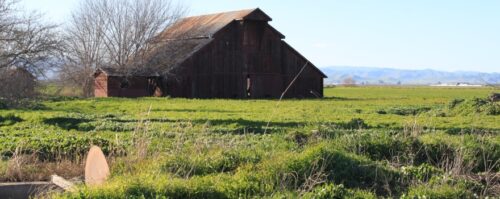 “State Water Resources Control Board staff today released a Staff Assessment of the Delta-Mendota Subbasin recommending that the State Water Board return the subbasin to the Department of Water Resources’ (DWR) oversight under the Sustainable Groundwater Management Act (SGMA). The five-member board will consider acting on the staff recommendation at an April 7, 2026, board meeting. The release of the Staff Assessment begins a 30-day public comment period that ends April 1. The Staff Assessment of the subbasin’s 2024 groundwater sustainability plan found that Delta-Mendota’s 23 groundwater agencies made significant progress in adequately addressing deficiencies identified in their 2022 sustainability plans. The progress includes addressing groundwater quality concerns, establishing a mitigation program for drinking water wells and resolving coordination issues by adopting one plan for the entire subbasin. … ” Continue reading from the State Water Board.
State to consider excluding “small pumpers” from groundwater regulations
“Small farmers pumping less than 20 acre feet per year in the Tule and Tulare Lake subbasins may see some respite from the state’s groundwater reporting sanctions. The state Water Resources Control Board announced that it would consider excluding small pumpers from the May 1 reporting deadline. The Water Board will discuss the exclusion at its April 7 meeting. Those wishing to submit a public comment before the meeting, may email comments to SGMA@waterboards.co.gov with the subject line “Comments – Minimal Impact Exclusions” by March 30 at 12 p.m. Information on how to attend the April board meeting in person or virtually are not yet available. Smaller pumpers may be excluded as they thave minimal impact on groundwater extractions, a statement from the Water Board read. … ” Read more from SJV Water.
California ag, lawmakers rip meager CVP water allocation
“California farmers, lawmakers and water officials south of the Sacramento-San Joaquin River Delta say they’re underwhelmed by the U.S. Bureau of Reclamation’s initial allocation of only 15% of contracted Central Valley Project water allocation for the coming season considering the region’s ample rainfall and full reservoirs. The San Joaquin Valley region has received 109% of its average rainfall since Oct. 1 and its reservoirs are all well above their normal contents for this time of year, with Exchequer leading the way at 137% of its historical average, according to the California Department of Water Resources. But the bureau noted a dry and warm January significantly reduced snow accumulation, with recent measurements showing the statewide snowpack at roughly 59% of the historical average and key high-elevation basins still below their median snow-water equivalents for this time of year. … ” Read more from the Western Farm Press.
As Trump tears apart decades of environmental progress, Governor Newsom restores nearly 300,000 acres of habitat and cuts average permitting time to 42 days
“As the Trump administration tears apart decades of environmental progress, Governor Newsom remains committed to streamlining California’s efforts to restore and protect its lands, waters, and wildlife. The California Department of Fish and Wildlife (CDFW) released its Fiscal Year (FY) 2024-25 Report to the Legislature on its Cutting the Green Tape initiative, now in its fourth full year. The report shows that over the past four years, the program has helped more than 500 restoration projects move forward by reducing costly delays and making the approval process easier to navigate. To date, these efforts have already helped restore nearly 300,000 acres of habitat, reconnect 5.5 million acres of land, and improve over 700 miles of California streams. “Good environmental work shouldn’t get buried in paperwork, and we’ve proven it doesn’t have to,” said Governor Newsom. “More than 500 restoration projects, nearly 300,000 acres of habitat returned to health, and permits approved in an average of 42 days. Donald Trump is the weakest President in American history on the environment. While he tears apart decades of progress, California will keep restoring and protecting our environment for this generation and every generation that follows.” … Continue reading from Governor Newsom.
Invasive golden mussels continue to plague waterways
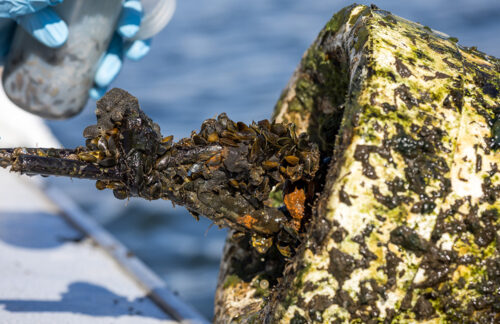
Xavier Mascareñas / DWR
“The golden mussel, an invasive species native to China and Southeast Asia, was initially detected in the Sacramento-San Joaquin Delta and O’Neill Forebay in October 2024, according to the California Department of Water Resources. This species poses a threat to California freshwater and large populations impact water quality, physically displace native mussels and clams, and adversely alter the ecology of a waterbody which affects other aquatic animals and plants. According to the California Department of Fish and Wildlife, golden mussels consume large quantities of aquatic microscopic plants and animals that native species depend on for food. “Their colonization of hard surfaces impedes water flow, clogs pipes, and fouls watercraft motors, and necessitates ongoing, costly removal to maintain operational function,” CDFW stated. “These costs result in economic impacts to water conveyances, energy production, recreation, agriculture, and ultimately the public.” … ” Read more from the Valley Ag Voice.
Bill introduced to reduce the spread of aquatic invasive species
California Assembly Member Diane Papan, Chair of the Committee on Water, Parks, and Wildlife, and 10 bipartisan coauthors, recently introduced AB-1772 a bill that would help reduce the risk of spreading aquatic invasive species – particularly the Golden Mussel – and improve access for boaters in California. Stopping the spread of the Golden Mussel and maintaining boating access has been a top priority for NMMA and the recreational boating community in California. The bill is called an “intent bill,” which allows the authors of the bill to draft legislative language related to these priorities … ” Read more from Marina Dock Age.
Sense and sensibility: The five senses of fish perception
“Fish rely on many of the same senses that humans do to navigate their aquatic world. Many fish species have developed extensive chemical and mechanical receptor structures that allow them to detect food, sense threats, and find their way back home. Fish smell using chemical receptors that communicate information to their brains for scent identification (olfaction). Water carries chemical scent particles through olfactory pits—essentially nostrils—on a fish’s snout, where particles contact chemical receptors and transmit information to the brain. The size and specialization of these structures vary among species but are often associated with how much a fish relies on smell for survival. For example, sharks, known for their keen sense of smell, have more receptors or larger brain structures associated with olfaction compared to other species. While villainized in movies, sharks cannot actually smell a drop of blood from a mile away—in reality, they can smell up to several hundred yards away. … ” Read more from FishBio.
Video: Georgiana Slough Effectiveness Study
DWR is leading the Georgiana Slough Effectiveness Study in partnership with UC Davis. This study involves the tagging and tracking of juvenile salmon in the Sacramento River to determine how well the non-physical barrier along Georgiana Slough is keeping fish out of the interior Delta and away from State. Water Project export facilities.
State invests $10 million in salmon restoration projects across Northern California
“California is doubling down on salmon recovery, approving millions in new funding aimed at restoring rivers and rebuilding fish habitat across the state. The California Wildlife Conservation Board recently approved nearly $60 million in grants for 27 conservation projects in 18 counties. Five of those efforts directly support the state’s California Salmon Strategy for a Hotter, Drier Future, focusing on restoring floodplains, improving stream habitat, and strengthening spawning and rearing conditions for coho and Chinook salmon, along with steelhead. In Siskiyou County, $2.9 million will help restore portions of the East Fork Scott River, adding side channels and reconnecting historic floodplain habitat. Farther south in Tehama County, $1.85 million will go toward improving lower Battle Creek by removing old levees and installing large wood structures to create better salmon habitat. … ” Read more from Active NorCal.
State officials push update of statewide water plan
“State officials in California have announced the implementation of a statewide water-saving plan meant to conserve water resources amid worsening climate change. “Climate change is reshaping life in California through historic droughts and record storms that threaten the farms that feed the nation, communities that depend on reliable water, and the environment we all share,” Gov. Gavin Newsom said in a news release sent on Feb. 25. “The 2028 Water Plan is a commitment to every Californian that we will capture, store, and conserve the water our state — the 4th largest economy in the world — needs to thrive, no matter what climate change throws at us.” … ” Read more from the San Joaquin Sun.
Which component of data centers presents the most risk for water?
 “A new report published by Bluefield Research suggests that the biggest risk to water infrastructure is not happening on-site within data center facilities, but rather at electric power plants. Titled The Water-Power Nexus: How Data Centers are Reshaping the U.S. Water Landscape, the report explains that surging electricity demand is shifting water risks upstream to power generation and impacting communities that never anticipated becoming “ground zero for AI infrastructure.” The artificial intelligence (AI)-driven data center boom is fundamentally transforming the U.S. water landscape, Bluefield says. It notes that by 2030, 72% of total water consumption associated with data centers will occur off-site and be tied to electricity generation — more than double the forecasted on-site cooling demands. Data centers are expected to account for 8.9% of the total U.S. electricity demand by the end of the decade, up from 4.4% in 2023, the report says. … ” Read more from Water Finance & Management.
Conservation easements discussed at World Ag Expo
“As groundwater regulations tighten and land use debates intensify across the Central Valley, farmers are increasingly hearing terms like “land repurposing,” “multibenefit,” and “conservation easement.” In February, Abigail Hart, project director at The Nature Conservancy, spoke at the 59th Annual World Ag Expo in Tulare, breaking down the different types of conservation easements and financial incentives that exist for farmers. Hart was joined by Logan Robertson Huecker of Sequoia Riverlands Trust and Nick Reed-Krase of the Tule Basin Land and Water Conservation Trust. According to Hart, TNC, Sequoia Riverlands Trust, and the Tule Basin Land and Water Conservation Trust are partners involved in the Tule Subbasin’s Multibenefit Land Repurposing Program block grant, which is supported by the California Department of Conservation. “We were one of the very first teams to get block grants from this new state program,” Hart said. “The goal around the state program was to help areas in critically overdrafted parts of the state to address transitioning land out of irrigated agriculture and into other lower water intensive places.” … ” Read more from the Valley Ag Voice.
Legislative Analyst’s Report: The 2026-27 Budget: Permitting Support at the State Water Resources Control Board
In this post, we assess the Governor’s proposal for new positions and associated funding at the State Water Resources Control Board to manage increased workload stemming from a recent U.S. Supreme Court decision. Click here for more from the LAO.
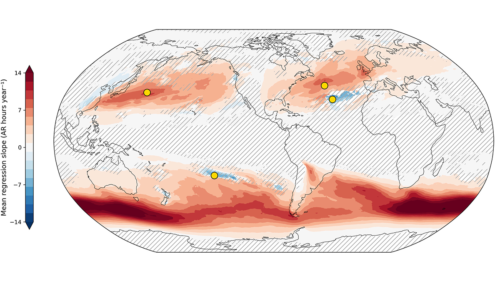
Research: Future hotspots of atmospheric rivers
The West has been in a 32-year drought. But it may be worse than that
“For thousands of years, drought in Arizona has followed a familiar arc: Dry years stacked up, water supplies shrunk and snowpack lacked its usual depth. Then, eventually, the pattern broke with a run of snowy winters, dramatic monsoons and a sense that balance had been restored in an ecosystem that had adapted for survival. This cyclical pattern is baked into life in the Southwest. Drought is painful, but temporary. Until it’s not. Arizona has recorded about 11 inches of rain statewide — less in Phoenix, more in the High Country — every year since the 1990s, an inch below the long-term average and enough to declare a drought. As the state enters the 32nd year of drought, the end should be near. … ” Read more from Arizona Central.
‘Unprecedented’ snow drought sets up extreme wildfires for Western US in 2026
“It’s been 40 years since the United States’ western region has experienced this low of snowpack near winter’s end, setting the stage for what many fear will be an early and extreme peak wildfire season. Much of the mountainous West is experiencing a snow drought due to drier-than-normal and warmer-than-normal winter weather, according to the United States Department of Agriculture’s National Water and Climate Center. Recent heavy precipitation in the western states did little to reduce the deficit, as large amounts of snow fell in areas that were either not experiencing drought or were already far behind their usual snowpack levels. “Below-average snow-water equivalency remains a concern in much of the West, even in drought-free areas such as the Sierra Nevada,” the Center said in its most recent weekly report. “According to the California Department of Water Resources, the Sierra Nevada snowpack contained an average snow-water equivalency of 16 inches—up about 6 inches from earlier in the month, but less than three-quarters of normal for late February. In much of Arizona, New Mexico, and Oregon, snow-water equivalency values were less than 50 percent of normal.” … ” Read more from Wildfire Today.
Modern twist on wildfire management methods has a bonus feature that protects water supplies
“Wildfires are among the most economically costly natural disasters and are becoming more severe and frequent due to global warming. The United Nations Office for Disaster Risk Reduction estimates that global damage from wildfires was on average $106 billion per year between 2014 and 2023. The US is especially prone: the 10 most costly wildfires since 1970 all happened there, with the 2025 wildfires around Los Angeles topping the charts at $53 billion. Worldwide, wildfires destroyed 3.9 million km2 in 2025. … ” Read more from PhysOrg.
In commentary today …
Improvement in water supplies from the Delta is possible
Scott Hamilton, President, Hamilton Resource Economics, writes, “Delta science issues are complex and controversial, stakeholders are passionate, and disadvantaged communities and farmers — too busy with their daily lives to weigh in — have been caught in the firefight. The longest running issue is determining what actions might benefit endangered fish. This is surprising because salmon and smelt have been the subject of recovery efforts for three decades, but their numbers continue to decline. While the scientific knowledge base continues to grow, the progress toward recovering native fish species has not met expectations. The target for the latest controversy is “Action 5.” Action 5 is an effort by the U.S. Bureau of Reclamation (the Bureau) to export more water from the Delta to help ease the pain farmers are suffering as a result of the Sustainable Groundwater Management Act. It looks to modify a number of Delta regulations that the Bureau believes are not well supported by science. … ” Read more from the Valley Ag Voice.
New AI data centers will pose a threat to California’s already limited water resources
Ann Hayden, vice president of climate resilient water systems at Environmental Defense Fund, writes, As the data center boom accelerates to power the rise of artificial intelligence, concerns about the impacts of these behemoth structures typically focus on their energy consumption. While energy impacts are important, leaders in arid regions around the world should be just as attentive to water use — for cooling servers and power generation. If local and state leaders don’t quickly step up with a smart, proactive response, already over-allocated water systems across the western U.S., and indeed the world, will shift even further out of balance, with existing water needs pitted against a new competitor. This is a recipe for heightened water inequity and strain on already challenged communities and ecosystems. In order to make sure that developers don’t just seek out locations where land is cheap or communities are less equipped to push back against big tech, California and other states should require disclosures from companies on the projected water use for each proposed data center. … ” Read more from the San Francisco Chronicle.
A look at current hydrological conditions …
California …
Colorado River …
In regional water news and commentary today …
NORTH COAST
Restoration update: In the wake of Klamath Dam removal
“State officials in California have announced the implementation of a statewide water-saving plan meant to conserve water resources amid worsening climate change. “Climate change is reshaping life in California through historic droughts and record storms that threaten the farms that feed the nation, communities that depend on reliable water, and the environment we all share,” Gov. Gavin Newsom said in a news release sent on Feb. 25. “The 2028 Water Plan is a commitment to every Californian that we will capture, store, and conserve the water our state — the 4th largest economy in the world — needs to thrive, no matter what climate change throws at us.” … ” Read more from The Revelator.
Elk River restoration project enters implementation phase
“After more than a decade of study, a long-discussed effort to restore the Elk River system is moving forward with a plan county officials approved last month, as project leaders work to rebuild coastal wetlands and prepare for sea level rise. Biologists and members of the Elk River Project have spent the past 14 years studying the feasibility of restoration work on the Elk River system. Project leaders say the work is crucial to ecosystems and critical infrastructure. “It’s dysfunctional for both the agricultural uses because sea level rise is coming in and taking back some of those former title lands,” said Mierau. “It’s also dysfunctional for habitats that used to be here for endangered salmon and steelhead populations and other fish species that utilize these kinds of areas.” … ” Read more from KRCR.
SIERRA NEVADA
Ongoing warm, dry weather aids Main Tuolumne Canal repairs
“Work to restore the storm-damaged Pacific Gas and Electric Co. Main Tuolumne Canal’s flumes and ditches — Tuolumne County’s primary source of drinking water — continued in more unseasonably warm weather over the weekend and Monday. “It is important that customers continue to conserve water where possible, report any leaks, fix customer side leaks promptly,” Tuolumne Utilities District spokeswoman Abby Parcon told The Union Democrat on Monday afternoon. “Conservation is key until PG&E is able to restore water delivery to TUD’s system.” PG&E announced Friday afternoon that March 13 is the estimated date for when water flows will resume in the canal, which provides 95% of the drinking water for more than 40,000 Tuolumne County residents who rely on TUD. … ” Continue reading from the Union Democrat.
SEE ALSO: More Repair Work Completed On Tuolumne Main Canal, from My Mother Lode
NAPA/SONOMA
$2.5M federal grant headed to Sonoma Creek to curb flooding, boost steelhead habitat
“U.S. Rep. Mike Thompson (D-4) announced he has helped secure nearly $2.5 million in federal funding for floodplain restoration work along Sonoma Creek. The $2,496,686 grant from the National Fish and Wildlife Foundation will support the Sonoma Ecology Center in advancing restoration planning at three priority sites in Sonoma Creek, a press release issued Friday noted. The project aims to reduce flood and erosion risks while improving habitat for steelhead trout and other threatened species. Additionally, it aims to improve the long-term watershed resilience in Sonoma Valley. … ” Read more from Local News Matters.
Can a spray protect grapes from wildfire smoke?
“Smoke from wildfires can alter grapes and affect the taste and sensory experience of wine, threatening California’s $88 billion industry as it faces an increase in fires on the horizon. Researchers from the University of California, Davis, and U.S. Department of Agriculture spent this summer applying a calcium spray to grapes to see if the treatment can protect the fruit from smoke exposure. “Wildfire smoke exposure can lead to something called smoke taint in wines and this is an unfavorable sensory outcome in the wines themselves that relate to smoky, ashy flavors,” said Arran Rumbaugh, a USDA research chemist who works closely with the Department of Viticulture and Enology and helps mentor students. “We want to see how we can affect the absorption itself of smoke into the grapes by using a calcium spray.” … ” Read more from the Western Farm Press.
BAY AREA
Rain returns to Bay Area but it may be the last for the season
“A brief bout of unsettled weather brought showers to the Bay Area on Monday, and it could be the last measurable rain for the foreseeable future, according to the National Weather Service. Roger Gass, a meteorologist at the weather service’s Bay Area office, said Monday’s showers are due to a “passing, short wave trough.” The rainfall totals are expected to be relatively low before dry weather returns Monday afternoon to evening. “I’m not expecting much more than a few hundreds of an inch per hour, and up to around a 10th of an inch in total,” he said. … ” Read more from SF Gate.
Low snowpack, higher temperatures cause concern for Bay Area scientists, farmers
“While growers across the North Bay welcomed the February rains, scientists have said more rain and snow in the higher elevations in March will be crucial to preserving water resources across the state amid an unusually warm winter. Back-to-back storms in December moving into the new year helped increase volume, and statewide water storage levels as of March 1 indicate most reservoirs are between 70-80% full, according to the California Department of Water Resources (DWR). However, rainfall and snowstorms in March will be crucial for improving the season’s outlook, according to watershed scientists. The March 1 Philips Station measurement found that snowpack measured 47% on average for March and 45% of the April 1 average. Statewide the snowpack stood at 66% of average. … ” Read more from the San Jose Mercury News.
Flush with questions: Septic rules affecting West Marin homeowners under review
“The county is updating the way it inspects and permits on-site septic systems. On Thursday, the public is invited to a West Marin community meeting to gather public input on how its Local Area Management Program (LAMP) should be applied and improved. Septic systems serve much of West Marin, where many properties are not connected to sewer lines. The underground systems treat wastewater on-site through tanks, pipes and treatment units. The LAMP sets standards for when inspections are required, how permits are issued and what requirements apply when systems must be repaired or replaced. … ” Read more from Local News Matters.
Marin County suspends Corte Madera flood control project
“The Marin County Department of Public Works has suspended a Corte Madera Creek flood control project to determine if its goals can be accomplished. An announcement by the department said the project “faces a combination of regulatory, technical, and community challenges that prevent it from moving forward in its current form.” “This pause gives us the opportunity to step back, reassess our approach, and ensure we are making responsible decisions on behalf of the community,” said Christopher Blunk, the public works director. The announcement follows a notification by the Federal Emergency Management Agency that aspects of the project are problematic. … ” Read more from the Marin Independent Journal.
Scenic ranch south of San Jose owned by Bechtel family sells for $24 million in latest major conservation deal
“The Peninsula Open Space Trust, a non-profit environmental group based in Palo Alto, made headlines in January when it closed the last significant part of a $63 million deal to buy the 6,500-acre Sargent Ranch, a vast property south of Gilroy that had been the center of battles since the 1990s over a proposed casino, subdivisions and most recently a gravel mine. On Tuesday, the group secured another landmark property in Santa Clara County, announcing it had purchased Mead Ranch, a 1,921-acre parcel between San Jose and Morgan Hill, for $24.3 million. The ranch, located in the picturesque rolling foothills along Uvas Road, will be preserved as open space, according to the organization, commonly known as POST. It’s the latest property in recent years to be set aside for wildlife, farming or open space in and around Coyote Valley, an area west of Highway 101 on San Jose’s southern edges where tech giants Apple and Cisco once proposed to build huge campuses in the 1980s and 1990s. … ” Read more from the San Jose Mercury News.
CENTRAL COAST
Santa Cruz County residents notified of “Erin Brockovich chemical” in drinking water
“Since California’s new regulations for the water contaminant chromium six went into effect in October 2024, many Santa Cruz County residents have received notifications that their tap water may exceed the limit. That includes Ginger Hollinga, who in October found out that the water at her daughter’s school, Valencia Elementary School in Aptos, potentially contained chromium six, a heavy metal associated with an increased risk of cancer. Local water agency officials have assured residents that the water is safe for drinking, cooking and bathing while they work to reduce the level of chromium six to comply with the new rules — including in Soquel Creek Water District, which includes Valencia Elementary. Other schools affected include Aptos High School, Aptos Junior High, Mar Vista and Rio Del Mar Elementary. … ” Read more from Santa Cruz Local.
SEE ALSO: Residents on alert after discovering ‘Erin Brockovich chemical’ in drinking water: ‘Especially dangerous for children’, from The Cool Down
Consumer advocates denounce Cal Am water rate increase estimates
“A branch of a state regulator charged with protecting the interests of ratepayers has come down hard on California American Water Co.’s request for rate increases, at one point calling the investor-owned utility’s explanations “gimmickry.” The Public Advocates Office, a legislative-established sector of the California Public Utilities Commission, is recommending to the full commission a significant curtailment of Cal Am’s rate increase requests – called General Rate Cases – that would cover the next three years. “Cal Am’s proposed rates are developed using unreasonable methodologies and frequent ratemaking gimmickry,” the Advocates Office wrote to the CPUC commissioners in late January. “This includes seeking profit on assets that will not be in use, budgeting for items unrelated to the provision of safe and reliable water service, and requesting ratepayers repeatedly pay for previously funded but unbuilt capital projects.” … ” Read more from the Monterey Herald.
Diablo Canyon clears last California permit hurdle to keep running
“Central Coast Water authorities approved waste discharge permits for Diablo Canyon nuclear plant Thursday, making it nearly certain it will remain running through 2030, and potentially through 2045. The Pacific Gas & Electric-owned plant was originally supposed to shut down in 2025, but lawmakers extended that deadline by five years in 2022, fearing power shortages if a plant that provides about 9 percent the state’s electricity were to shut off. In December, Diablo Canyon received a key permit from the California Coastal Commission through an agreement that involved PG&E giving up about 12,000 acres of nearby land for conservation in exchange for the loss of marine life caused by the plant’s operations. … ” Read more from the LA Times.
Water-reclamation plant gets green light from San Luis Obispo County Planning Commission
“Cambria’s long-idled, often controversial water-reclamation facility got a unanimous go-ahead by county planning commissioners Thursday, when they authorized the decade-old installation for operations at times other than just during declared severe water-shortage emergencies. Commissioner Anne Wyatt made the motion to approve the Cambria Community Services District’s coastal development permit application for the project. The vote came after a three-hour hearing. If opponents appeal the Planning Commission’s decision, county supervisors would be next in line to consider the multi-million-dollar project, possibly followed by the California Coastal Commission. … ” Read more from the San Luis Obispo Tribune.
Goleta West Sanitary District settles with board over sewage spill
“State regulators have reached a settlement with the Goleta West Sanitary District for the 2024 spill that released more than 1 million gallons of raw sewage into the Goleta Slough and the Pacific Ocean. Goleta West entered into the settlement agreement with the Central Coast Regional Water Quality Control Board on Friday, including paying a $1.55 million civil penalty. Investigators attributed the February 2024 spill to external corrosion on a section of underground pipe. On Feb. 16, 2024, a broken force main owned by the Goleta West Sanitary District released more than 1 million gallons of raw sewage. The discharge continued for roughly 14 hours before district staff identified and stopped it, sending wastewater into an unnamed tributary to Tecolotito Creek, the Goleta Slough State Marine Conservation Area and the ocean. … ” Read more from Noozhawk.
Santa Barbara judge rules against company that turned to Trump for help restarting pipeline
“A Santa Barbara judge intends to rule against Sable Offshore Corp.’s bid to restart a pipeline that spilled thousands of barrels of crude into the Pacific 11 years ago – dealing a significant blow to the company’s attempt to use the Trump Administration to get around California regulators in its path. In a tentative ruling, Santa Barbara County Superior Court Judge Donna D. Geck said the Trump administration’s intervention was not enough to undo her earlier order keeping the pipeline shut down. The ruling — a preliminary decision signalling how the judge intends to rule unless persuaded otherwise — comes ahead of a Friday hearing. … ” Read more from the LAist.
SAN JOAQUIN VALLEY
High water levels expected for 2026 as San Joaquin River begins rising
“The San Joaquin River is expected to rise to some of its highest levels in years, and officials are attributing it to this year’s “unique” back-to-back storms. Sunday, the river began rising as part of the 2026 San Joaquin River Restoration Program flow schedule. The Aquarius Aquarium Institute, otherwise known as the Fresno Aquarium, says this year, “above-average Sierra snowpack and runoff are predicted.” “We’re getting a lot of runoff into our rivers right now. And as Spring progresses, we’re going to see more and more, so by late May, early June, we’re going to see a lot of water coming down the mountains and we’re going to be enjoying full reservoirs this year,” said Tom Lang, Executive Director of the Fresno Aquarium. … ” Read more from ABC 30.
Kern water summit returns for 10th year as California unveils ambitious 2050 water banking plan
“The 2026 Water Summit is coming to Bakersfield on Thursday, just one week after the governor’s office announced California’s 2028 water plan. The event marks the 10th annual gathering of water leaders and community members in Kern County. Jenny Holtermann, executive director of the Water Association of Kern County, said this year’s summit has a train theme — a nod to “The Little Engine That Could” and Kern County’s continued progress on water issues. … ” Read more from Channel 23.
SOUTHERN CALIFORNIA
Commentary: Pavement is undermining LA’s future
Deborah Bloome is Senior Policy Director at Accelerate Resilience L.A., writes, “For much of the 20th century, Los Angeles—like many other American cities—measured progress in miles of pavement. Pavement had a starring role in the California dream, palm trees swaying above wide boulevards, and sun glinting off the open road. That seduction helped build a metropolis, but in sealing over the soil and shade, we buried the very resilience the city now needs. As Los Angeles endures intense rainstorms this week, overrunning neighborhoods and turning streets into rivers, the costs of that vision are impossible to ignore. Today, those same hard surfaces trap heat, worsen flooding, and strain our communities, which means we have to rethink what counts as progress. The goal isn’t to erase pavement; it’s to make our communities more livable. … ” Continue reading at Capitol Weekly.
SAN DIEGO
San Diego County hires D.C. lobbying firm to push federal action on Tijuana River sewage crisis
“The County of San Diego has hired a Washington, D.C.-based law firm to lobby federal officials on the Tijuana River sewage crisis, a contract worth up to $637,200 over five years, according to county records. Best Best & Krieger LLP, known as BBK, was selected through a competitive process in which the county received four bids, according to county spokesperson Tammy Glenn. The contract, signed in January 2026, tasks BBK with advocating before Congress, the White House and federal agencies on behalf of the county to secure funding and action to address cross-border sewage flows that have fouled South Bay beaches and communities for decades. Ana Schwab, BBK’s partner and director of government affairs, said the firm’s primary goal is ensuring the physical infrastructure necessary to address the crisis gets funded and built. … ” Read more from the San Diego Union-Tribune.
Along the Colorado River …
California water officials urge stronger legal review in Post-2026 Colorado River Plan
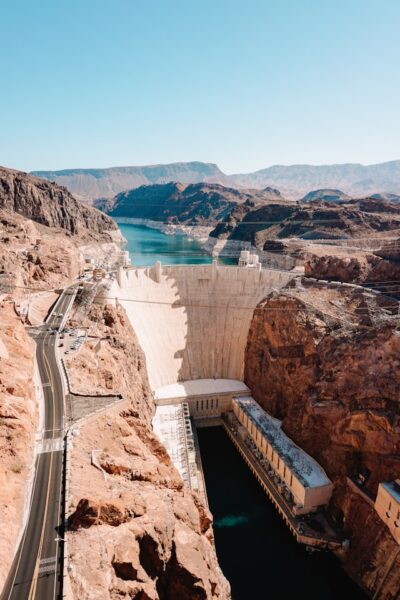 “California water officials are calling on the federal government to strengthen its legal and environmental analysis of proposed new operating rules for the Colorado River, warning that the current draft plan fails to adequately address interstate obligations, infrastructure limitations, and impacts to communities, including the Imperial Valley, according to a recent Colorado River Board of California press release. In formal comments submitted Monday to the U.S. Bureau of Reclamation, the Colorado River Board of California Chairman JB Hamby outlined concerns with the Draft Environmental Impact Statement (DEIS) governing post-2026 operations for Lake Powell and Lake Mead. The draft plan is being developed under the National Environmental Policy Act as existing shortage guidelines adopted in 2007 are set to expire. But California officials argue the river’s worsening hydrology has rendered the earlier framework outdated. … ” Read more from the Desert Review.
RELATED: Click here for JB Hamby’s statement and to read the comments submitted to Reclamation.
Rep. Greg Stanton says Arizona does not want Interior Sec. to make Colorado River water decision
“Arizona U.S. Rep. Greg Stanton emphasized that Arizona does not want Interior Secretary Doug Burgum making the decision when it comes to the state’s share of Colorado River water. “We do not want that to happen for a variety of reasons,” Stanton told KTAR News 92.3 FM’s Arizona’s Evening News on Monday. “There’s a really good chance he could make a decision that is not good for Arizona. But more importantly — almost inevitably — it will end up in litigation. If it ends up in litigation, this could be 10 or more years before we actually get a final decision and we’ll sort of be in no man’s land in the meantime.” … ” Read more from KTAR.
Worst CAP cuts will ‘flatten’ Arizona’s economy, agency says
“A controversial new video produced by the Central Arizona Project offers a dire warning: Cut water deliveries to the canal system too much and it will “cripple our state, flatten our economy and weaken our national defense.” The video’s tone and atmosphere are dramatic, opening with crosshairs aimed at a scene of the Arizona State Capitol complex and accompanied by a harsh soundtrack that sounds as if it were lifted from a World War II-era documentary on the military. The video comes as the U.S. Bureau of Reclamation is reviewing five proposed alternatives for cutting Colorado River deliveries, three of which would cut supplies to the CAP by a range of 77% to 98%. … ” Read more from the Arizona Daily Star.
Arizona officials claim federal water management plans would cut them off: ‘The impacts … could be devastating’
“Officials in Arizona have begun an aggressive television campaign defending their right to water from the Colorado River, claiming that the state is being “unfairly targeted” by federal water management proposals. In America’s dry western region, the Colorado River is a vital source of water for many. It runs through five American states (Colorado, Utah, Arizona, Nevada, and California) before making its way to two Mexican states (Baja California and Sonora). As AZ Central noted, detailed agreements on water use in the upriver states ensured there would be enough for everyone downstream. However, drought in the region has continued for decades, and many water sources are depleted — the Colorado River included. Controversial decisions have been made to allow the sale of private water rights on this river, despite the dry conditions. Then, in 2025, urgent short-term agreements were put in place to conserve the river’s water. … ” Read more from The Cool Down.
Lake Powell drains faster than it fills. What can be done?
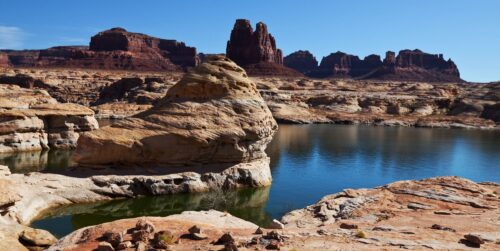
“Lake Powell has an issue: More water is streaming out than flowing in. As of Sunday, Lake Powell’s water level measured 3,530 feet above sea level. Though this is higher than it was at this time in 2022 and 2023, officials in Utah and at the Bureau of Reclamation are worried that water levels could dip beneath what is required to generate hydropower. The reservoir is currently 26% full and could drop to 16% by Sept. 30. By March 2027, Lake Powell’s elevations could hit 3,476 feet, a record low, the Colorado River Authority of Utah told the Deseret News. In an announcement from last Friday, the National Park Service promised Lake Powell visitors, “lake access is not anticipated to be lost this summer.” However, boaters “should anticipate increased congestion at Stateline Auxiliary Ramp,” if water levels continue to decline. … ” Read more from Deseret News. | Read via Yahoo News
30 Arizona groundwater bills were introduced this year. Most aren’t aimed at conservation
“GOP lawmakers are pushing several bills to regulate Arizona’s groundwater, but none would do anything to conserve the state’s water supply. Democrats and Republicans got close to passing bipartisan legislation to conserve rural groundwater supplies over the last few years, but a final deal has never materialized. This year, GOP lawmakers are instead pushing a series of partisan water bills, including one that would protect the rights of Arizona residents and businesses to continue pumping groundwater. GOP lawmakers’ bills generally protect the water allocation rights of industries like agriculture and homebuilding. Conserving groundwater often means restricting development. … ” Read more from KJZZ.
Arizona: Water infrastructure will cost Queen Creek $180M.
“Queen Creek’s efforts to expand and diversify its 100-year water supply have been drawing a lot of attention. The big-picture numbers are mind-boggling. In less than a year, the town has made two purchases of water from the Harquahala Basin totaling 1.7 million acre-feet at an approximate cost of $285 million. Securing that water supply was one of the accomplishments featured in the Feb. 24 State of the Town presentation. “The Harquahala purchase makes 90% of the town’s water supply insulated from water cuts and drought conditions,” Utilities Director Marc Skocypec said. Out of the spotlight, town staffers are putting together pieces of the massive puzzle. … ” Read more from the East Valley Tribune.
Critical minerals mine near Patagonia now 50% complete as final federal approval nears
“Construction cranes reach into a blue sky as 46-ton dump trucks rumble past with loads of rocks and dirt on a recent Wednesday at the South32 Hermosa Project. A pair of 20-story headframe towers perch above 25-foot-wide vertical shafts that are being excavated at a rate of 7 feet a day and now extend roughly a quarter of a mile beneath the surface. The larger of the two headframes already ranks as the tallest structure in Santa Cruz County, and it is destined to grow by another 50 feet or so with the addition of a “penthouse” containing the giant winches that will be used to lower equipment and lift ore from underground. The critical minerals mine about 75 miles southeast of Tucson only received its final state air quality permit a few weeks ago, and it won’t receive full federal approval until later this year, but you wouldn’t know it from a tour of the site on Feb. 18. … ” Read more from the Arizona Daily Star.
Southern Nevada Water Authority asking court to dismiss grass removal lawsuit
“The Southern Nevada Water Authority has asked a Clark County District Court judge to dismiss a lawsuit alleging that grass removal led to thousands of valley trees dying. You may remember that several local residents sued the agency and argued the SNWA’s grass removal mandates lack proper legal and constitutional oversight. The lawsuit argues that only 10% of trees in the Las Vegas Valley survive after grass removal and that the policies have created a “valley-wide graveyard of trees” that would take decades to recover. … ” Read more from Channel 13.
In national water news today …
Judge sides with salmon against Trump administration in hydropower ruling
“A federal judge in Oregon sided with salmon against the Trump administration on Wednesday, ordering the federal government to change hydropower system operations long considered at the heart of native fish populations’ sharp decline. At the center of the dispute are eight dams and reservoirs on the Columbia and Snake Rivers in the Pacific north-west that have created devastating obstacles for salmon and steelhead unable to breach their deadly turbines or navigate through the large, warm, artificial pools. The federal agencies and their supporters, which include a group of utilities, water managers and farming organizations, argued that reservoir drawdown would put power reliability in peril. … ” Read more from the Guardian.
America’s national parks face an uncertain future as climate risks mount
“America’s national parks were conceived as sanctuaries from the forces remaking the rest of the continent. Climate change is now breaching that boundary. A recent assessment of park vulnerability suggests that many of these landscapes are not simply warming or drying in familiar ways. They are being pushed toward ecological states that may be fundamentally different from those they were created to preserve. The study, published in Conservation Letters, evaluates 259 park units across the contiguous United States using a framework common in climate science: exposure, sensitivity, and adaptive capacity. Exposure measures the scale of climatic change; sensitivity captures how strongly ecosystems respond; adaptive capacity reflects the ability of landscapes and species to adjust. Taken together, these dimensions describe not just how much parks will change, but how likely they are to experience transformation. … ” Read more from Mongabay.

