
Several news sources featured in the Daily Digest may limit the number of articles you can access without a subscription. However, gift articles and open-access links are provided when available. For more open access California water news articles, explore the main page at MavensNotebook.com.
On the calendar today …
- MEETING: Central Valley Regional Water Board beginning at 9am. Agenda items include enforcement, Tulare Lake Basin Plan amendment, Waste Discharge Requirements, and a presentation on PFAS in California groundwater. Click here for the full agenda.
- WEBINAR: Everyday Conservation: Real Ways Californians Can Protect Biodiversity from from 12pm to 1pm. This lecture will highlight practical actions anyone can take, such as planting native species, removing invasive plants and joining community science projects and other activities in your local community. Presenters will provide a toolbox of resources and organizations that will help participants save biodiversity wherever they live. Whether you’re a gardener, educator, hunter, angler, outdoor enthusiast or someone who simply cares about California’s natural heritage, this session will inspire you to take everyday steps that make a lasting impact for wildlife and wild places. Click here to register.
- PUBLIC MEETING: Second Statewide Agricultural Expert Panel from 3pm to 6pm. These sessions will facilitate Panel deliberations on issues relevant to the Panel charge questions, which ask the Panel to consider the approaches in State Water Board Order WQ 2018-0002, In the Matter of Review of Waste Discharge Requirements General Order No. R5-2012-0116 for Growers Within the Eastern San Joaquin River Watershed that are Members of the Third-Party Group (Eastern San Joaquin Petition Order) and State Water Board Order WQ 2023-0081, In the Matter of Review of General Waste Discharge Requirements for Discharges from Irrigated Lands Order No. R3-2021-0040 (Central Coast Ag Petition Order). Click here for the meeting notice and remote access instructions.
In California water news today …
Rain, snow returning to California. Here’s when a flurry of storms could hit
 “Northern California’s three-week dry spell looks like it will end with a bang. Confidence is growing that the second half of December will feature a flurry of storms from the Bay Area to the Sierra Nevada. It’s too early to say just how much rain and snow will fall, but the atmosphere is expected to transition to a pattern that favors Northern California for significant precipitation through the end of 2025. A windier pattern will also wipe away the relentless tule fog that has gripped the Central Valley for weeks and knock out the temperature inversions that have kept the valleys cool and the mountains warm. … ” Read more from the San Francisco Chronicle.
SEE ALSO: Atmospheric Rivers affecting the Pacific Northwest and California into late December, from NOAA’s Climate Prediction Center
Snow drought current conditions and impacts in the West
 “Snow cover across the West was the lowest December 7 snow cover amount in the MODIS satellite record (since 2001), at 90,646 square miles. Water Year 2026 (October 1, 2025–September 30, 2026) precipitation to date is near or above median for many parts of the West. However, much warmer-than-normal temperatures caused precipitation to fall as rain instead of snow across many basins, leading to snow drought despite wetter-than-normal conditions across most of the West. Nearly every major river basin in the West experienced a November among the top 5 warmest on record. Snow drought is most severe across much of the Sierra Nevada in California, the Cascade Range in Washington and Oregon, the Blue Mountains of Oregon, and the Great Basin in Nevada, with snow water equivalent (SWE) in most of these basins at less than 50% of median. … ” Read more from NIDIS.
Is a rapid reversal from La Niña to El Niño brewing in the Pacific?
“The Pacific Ocean remains officially locked in a La Niña phase, but the mechanisms keeping it there are beginning to sputter. On Thursday, the Climate Prediction Center left a “La Niña Advisory” in place, confirming that cool sea surface temperatures continue in the equatorial Pacific. But it won’t last much longer. The agency expects the La Niña phase to fade by February. “There is high confidence that we currently are at or near the peak of this weak La Niña, so we expect that ocean temperatures in the eastern equatorial Pacific will rise and bring us to ENSO-neutral within a couple of months,” said Nat Johnson, a meteorologist at the NOAA Geophysical Fluid Dynamics Laboratory. … ” Read more from the San Francisco Chronicle (gift article).
‘We depend on water’: Valley ag reacts to new federal plan providing water from Delta
“Water is the lifeblood of the agriculture industry, an industry led each year by California’s Central Valley. However, with unpredictability due to drought and state water allocations, it can be harder to come by for those farms that need it most. “We provide food for the world. People need food. And in California, where we depend on water, we got to make sure that we have enough water to keep agriculture going,” said farmer Joe Del Bosque, who operates Del Bosque Farms in western Fresno County. Del Bosque has been farming practically all his life, watching his father from a young age until he began to grow himself. … ” Read more from KSEE.
Good news for tiered rates: Court upholds LADWP’s budget-based tiered water rates
“On December 8, 2025, the California Court of Appeal issued its decision in Dreher v. City of Los Angeles Department of Water and Power, affirming Los Angeles Department of Water and Power’s (LADWP) budget-based tiered water rates for single-dwelling unit customers. The Court rejected Patz v. City of San Diego’s strict interpretation of Proposition 218 in several key respects, finding: (1) agencies may base tiered rates on source-of-supply costs even when supplies are commingled; (2) tier breakpoints do not require cost-based justification; and (3) agencies may rely on peak pumping and storage costs to support higher rates in upper tiers. The Court also held that while a low-income subsidy adjustment violates Proposition 218, refunds are not presumed. Instead, a claimant must satisfy statutory prerequisites, including paying under protest and submission of an administrative claim. … ” Read more from Best Best & Krieger.
Climate whiplash could push creekside forests past their tipping point
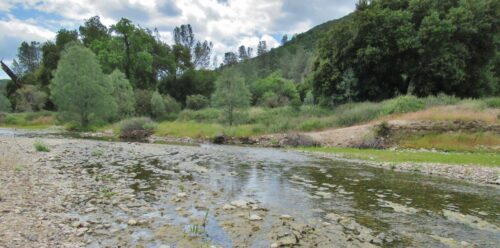
“Trees along riparian corridors are both vital biodiversity hotspots and incredibly important to the health of California’s dryland ecosystems. But a recent, multi-year study led by scientists in the Department of Environmental Science, Policy, and Management (ESPM) suggests the state’s worsening weather whiplash could push creekside woodlands past their ecological tipping point. Willow, cottonwood, and valley oak trees located along intermittent stream segments that ran dry during summer had shorter and more variable growing seasons than those growing near segments that had water year-round, according to the study. In some cases, the researchers found that certain tree species shortened their growing seasons by up to five weeks. The findings were first published in the October issue of Global Change Biology. “California is experiencing more frequent and intense swings between extremely wet and extremely dry years,” said lead author Rose Mohammadi, a PhD student in the lab of ESPM Associate Professor Albert Ruhí. “We wanted to investigate whether trees by drying streams were able to tolerate such high volatility, or if these intensifying climatic cycles are pushing them beyond their physiological limits.” … ” Read more from UC Berkeley.
Now Available: FY 2023-2024 Delta Crosscut Budget Report
“The Delta Plan Interagency Implementation Committee’s (DPIIC) Fiscal Year 2023-2024 Delta Crosscut Budget Report is now available online. DPIIC members and water agencies have worked collaboratively over the past five years to annually submit and analyze Sacramento-San Joaquin Delta science and restoration funding data. This annual reporting of expenditures, known as the Delta Crosscut Budget, implements a process for collecting data and includes contributions from many DPIIC agencies. Delta Crosscut Budget Reports enhance our understanding of science funding by implementing credible and common accounting and reporting protocols, which enable an accurate assessment of science and restoration funding to inform management and decision-making.” Read the report from the Delta Stewardship Council.
Costa, Gray push new water infrastructure package to expand storage and address California’s water crisis
“Representatives Jim Costa (CA-21) and Adam Gray (CA-13) introduced their End California Water Crisis Package today, a suite of bills that would authorize additional California water storage projects, ease permitting restrictions, and create enforceable timelines for environmental review processes. The bills aim to expand California’s water storage capacity by providing funding and technical support to both develop and maintain water infrastructure projects. “California needs a modern water system that can meet today’s challenges. These bills take meaningful steps to strengthen California’s water future. By improving coordination, cutting through red tape, and investing in real projects on the ground, we can use all of our water tools in our toolbox to deliver more reliable water for families, farms, and communities across our state. This is about practical solutions that will make a difference for the Valley and all of California,” said Congressman Costa. … ” Read more from Congressman Jim Costa.
California Coastal Commission approves land deal to extend last nuclear plant through 2030
“California environmental regulators on Thursday struck a landmark deal with Pacific Gas & Electric to extend the life of the state’s last remaining nuclear power plant in exchange for thousands of acres of new land conservation in San Luis Obispo County. PG&E’s agreement with the California Coastal Commission is a key hurdle for the Diablo Canyon nuclear plant to remain online until at least 2030. The plant was slated to close this year, largely due to concerns over seismic safety, but state officials pushed to delay it — saying the plant remains essential for the reliable operation of California’s electrical grid. Diablo Canyon provides nearly 9% of the electricity generated in the state, making it the state’s single largest source. The Coastal Commission voted 9-3 to approve the plan, settling the fate of some 12,000 acres that surround the power plant as a means of compensation for environmental harm caused by its continued operation. … ” Read more from the LA Times.
California startup’s new fire-suppression system uses sound instead of water
“When wildfires sweep through the dry hills outside Los Angeles, homes can be lost in moments. A California startup imagines a different outcome: as embers fall and nearby brush ignites, flames reach a house and abruptly die out. There’s no water, foam, or retardant involved – only inaudible waves of sound extinguishing the fire before it spreads. Sonic Fire Tech, co-founded by aerospace engineer Geoff Bruder, has developed a system that uses infrasound – low-frequency sound waves below the threshold of human hearing – to suppress fire. Bruder, who previously researched thermal energy conversion at NASA, says the key is shaking up the oxygen molecules that feed combustion. When vibrations disrupt how oxygen mixes with fuel, the chain reaction that sustains a flame collapses. … ” Read more from Tech Spot.
In regional water news and commentary today …
NORTH COAST
Yurok Tribe welcomes back salmon, native plants, and Indigenous sovereignty to a former lumber mill site in Northern California
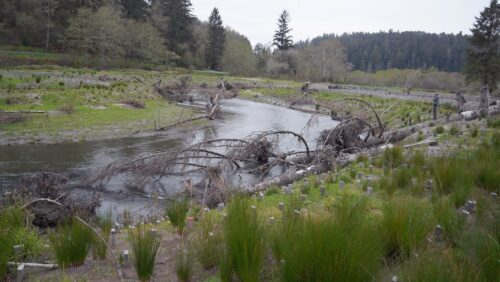 “Bright-yellow excavators, swathes of ocher fabric, and sculptural piles of large logs lie scattered across the floodplain of Prairie Creek, just off US Highway 101 in the northernmost reaches of California’s Humboldt County. A noisome lumber mill once spewed smoke here as it processed the region’s last unprotected ancient coast redwoods, while cattle grazed near a faded green barn. But before it became a mill site and ranch in 1954, and before goldminers and homesteaders seized it from the Yurok Tribe in the 1850s, this land was the site of ‘O Rew, one of more than 70 Yurok villages that once hugged the Pacific coast and embraced the banks of the Klamath River. Now the ‘O Rew Redwoods Gateway & Prairie Creek Restoration Project, set against the majestic backdrop of surviving old-growth redwood forest, is transforming “Orick Mill Site A” back into the salmon stronghold and seat of Indigenous sovereignty it once was. ‘O Rew is also writing an important chapter in America’s land-back story, whose keynote is “Indian lands in Indian hands.” … ” Read more from Earth Island Journal.
Juvenile coho salmon found in Mendocino County after 30-year absence
“Juvenile coho salmon have been documented in a tributary of the Russian River in Mendocino County for the first time since 1991, state officials announced Thursday. According to the California Department of Fish and Wildlife, a water specialist with the Pinoleville Pomo Nation discovered several young coho salmon in Ackerman Creek north of Ukiah this summer. After the juvenile salmon were discovered in an isolated pool that was drying, the tribe and CDFW partnered on a rescue effort, according to Gov. Gavin Newsom’s office. The state did not provide additional details about how or where the fish were moved. … ” Read more from the Mendocino Voice.
MOUNTAIN COUNTIES
Yuba River salmon return numbers: September – November 2025
“This year, Chinook salmon returns are the highest they’ve been in a decade. At the South Yuba River Citizens League (SYRCL), we track Chinook salmon returns closely because healthy populations of this keystone species are a key indicator of a thriving river ecosystem. Through SYRCL’s participation in the River Management Team (RMT), our staff receives monthly updates on the number of Chinook and steelhead adults utilizing the fish ladders at Daguerre Point Dam. This information is collected using VAKI River Watcher camera systems installed in the North and South ladders, which snap a photo every time a fish swims past it. For 2025, we have seen more Chinook salmon than in the past 10 years: 6198 adults and counting…. ” Continue reading from the South Yuba River Citizens League.
Clean Up The Lake launches the second 72-mile lake cleanup
“Renewed efforts are underway at Lake Tahoe to keep Tahoe blue. Clean Up the Lake, is a Tahoe non-profit known for its environmental dive teams and scuba cleanups. The group is back in action for a second lap around the lake’s 72-mile circumference. Colin West, Founder & CEO, Clean Up The Lake, says this all started as a small idea, but has blossomed into a nationally-recognized initiative. “I think this used to be something we always used to joke about back in the day, right? ‘Like, oh yeah, we are going to need to do a second lap.’ But after 4 years of research, 60 different deep dive surveys, 2 years of monitoring, and a full-on pilot research program with NTCA, we found that we were pulling out close to a couple of hundred pounds of trash.” … ” Read more from KOLO.
SACRAMENTO VALLEY
Rope access team scales Shasta Dam for safety check
“Crews from the Bureau of Reclamation have been inspecting the Shasta Dam using a rope access team to ensure its safety. Photos captured the team rappelling down the face of the dam, which stands at an impressive 602 feet tall, similar in height to Seattle’s Space Needle.”
SGMA input hangs by thread in Tehama County
Columnist Shanna Long writes, “We’ve been busy over here at the farm bureau. It all started two weeks ago when I received a call from Bill Borror, one of two Farm Bureau representatives who sit on the Demand Management working group. He let me know he didn’t feel the county was listening to their input. Bill, a former county supervisor and award-winning cattleman and orchardist, knows a thing or two about groundwater trends and governance in Tehama County. Our other representative is Brendan Flynn of Pacific Farms, another knowledgeable orchardist who sits on several state boards and is a leader in the prune and walnut industry. This group is appointed by the Groundwater Commission, which also has three of its own commissioners sitting on this working group. … ” Read more from the Red Bluff Daily News.
BAY AREA
Milestone reached in Palo Alto’s levee project to filter wastewater before it reaches the Bay
“Construction is complete on the first experimental levee along the San Francisco Bay shoreline that will clean treated wastewater and discharge it into the Bay. Now, all that’s needed is for the levee to be plugged in to the source of treated water. On Wednesday, officials invited press to visit the Palo Alto Horizontal Levee Pilot Project, which sits between the Regional Water Quality Control Plant and the upland marshes of the Baylands in the lower south of San Francisco Bay. What’s experimental is the way the levee is engineered. The top layer is a thick, loamy clay soil covered in native plants. Treated effluent, or cleaned wastewater from the treatment plant, will flow from beneath the surface in a dense layer of gravel and sand. The plants will stick their roots down into it and get water that way. … ” Read more from Local News Matters.
CENTRAL COAST
Santa Cruz rethinks water use to conserve coho salmon, save steelhead
“This fall, workers from the Santa Cruz Resource Conservation District spent three days felling redwood trees along the banks of the San Vicente Creek, a few miles upstream of Davenport Beach. The timber settling into the water created complexity along the creek floor — water flow slowed and deep pools formed, providing precious shelter for threatened steelhead trout and endangered coho salmon. At the same time, the San Vicente corridor was cleared of over 100 sick and overstocked redwood trees and other invasive plants cluttering the creek’s edge. Now, healthy redwood trees will have space to grow bigger and faster, and other native plants will have the chance to flourish. The restored creek corridor’s banks, stabilized by native vegetation, will deposit less sediment, providing clear, cool water for fish and people. … ” Read more from the Santa Cruz Sentinel.
SOUTHERN CALIFORNIA
Federal government orders LADWP to inspect nearly 100 drinking water reservoirs, storage tanks
“The U.S. Environmental Protection Agency has ordered the Los Angeles Department of Water and Power to inspect nearly 100 drinking water reservoirs and storage tanks over concerns about improper maintenance, the agency announced Thursday. The EPA identified violations of the Safe Drinking Water Act, such as unprotected openings and inconsistent storage system cleaning, during a July 2024 inspection, according to a news release. The LADWP said in a statement that it entered into a consent order with the EPA on Dec. 3 to resolve concerns raised from the EPA’s 2024 inspection of 18 water storage tanks without litigation. The consent order did not cite evidence of water contamination, but noted that if left unaddressed these deficiencies could pose a risk for contamination. … ” Read more from the LA Times. | Read via Yahoo News.
SEE ALSO: EPA orders LADWP to Inspect 100 Drinking Water Reservoirs and Tanks To Prevent Contamination Risks, press release from the EPA
Van Nuys man shocked with $13,000 utility bill
“”I thought it was a hoax,” says Van Nuys resident Will Ventres, when he got an LADWP bill for over $13,000 earlier this year. But it wasn’t. Even though he had notified the agency of his new address when he moved in back in 2020, the bills were being sent somewhere else. “I called repeatedly,” he explains, saying he was told COVID issues were making it difficult to correct billing issues, but not to worry. He wasn’t sure if his landlord was paying them or if the moratorium had been extended. He couldn’t check online because he did not have the correct account number, since he hadn’t gotten bills. When he received the huge bill this year, he spent hours writing emails and calling customer service. … ” Read more from Fox 11.
The science of snowmaking: How Southern California resorts bring snow to the slopes during warm winters
“When Mother Nature doesn’t deliver, it’s up to technology — and a dedicated crew willing to work in freezing cold weather while the rest of the world sleeps — to bring winter to the slopes. There has been an unseasonably warm start to this winter, with local ski resorts cranking on their snowmaking machines to blanket slopes for enthusiasts eagerly awaiting the start of the ski and snowboard season. It’s nothing new for resort operators in Southern California; winters can be fickle and unpredictable for the mountain towns wedged between desert landscape and the Pacific Ocean. Some seasons, the mountains are a winter wonderland blanketed in deep snow, while other years, the season doesn’t get started until after the holidays. And some winters, snow hardly shows up at all. … ” Read more from the LA Daily News (gift article).
Students join Friends of the Los Angeles River to help preserve Sepulveda Basin
“Student volunteers gathered to participate in Habitat Restoration Day, a monthly environmental community service event hosted by Friends of the LA River (FoLAR), on Nov. 22. The event was held at the Sepulveda Basin Wildlife Reserve in partnership with the California Native Plant Society and the San Fernando Valley Audubon Society. The reserve is a 225-acre protected habitat in San Fernando Valley that serves as one of Los Angeles’ critical ecological zones, according to FoLAR. By clearing invasive mustard, volunteers helped the basin protect hundreds of native plants and wildlife species and maintain essential ecosystems in Los Angeles. Ernie Cardenas, a member of the Los Angeles Board of Public works, said the basin plays a key role in the region’s water system. “The Tillman sanitation location handles sewage from the San Fernando Valley,” Cardenas said. “Pure Water Los Angeles is going to clean that water and put it back into the aquifer system so that we have more water to drink.” … ” Read more from the Harvard-Westlake Journal.
Volunteers plant 250 native trees at Hidden Valley Nature Center
“Volunteers planted 250 native trees at Hidden Valley Nature Center on Dec. 5 as part of an effort to restore habitat along the Santa Ana River. The project, organized by Trout Unlimited and the Arbor Day Foundation with support from industrial gas company Linde, replaced invasive species with native cottonwoods, sycamores and willows. The trees will create a riparian buffer designed to improve biodiversity and enhance the ecological health of the area. Over time, the trees will shade the river to keep water temperatures cool for wildlife, stabilize soil to reduce erosion and filter pollutants from stormwater runoff. The project is also expected to help mitigate climate change-driven flooding impacts along the Santa Ana floodplain. … ” Read more from the Raincross Gazette.
L.A. County sues oil companies over unplugged oil wells in Inglewood
“Los Angeles County is suing four oil and gas companies for allegedly failing to plug idle oil wells in the large Inglewood Oil Field near Baldwin Hills. The lawsuit filed Wednesday in Los Angeles Superior Court charges Sentinel Peak Resources California, Freeport-McMoran Oil & Gas, Plains Resources and Chevron U.S.A. with failing to properly clean up at least 227 idle and exhausted wells in the oil field. The wells “continue to leak toxic pollutants into the air, land, and water and present unacceptable dangers to human health, safety, and the environment,” the complaint says. The lawsuit aims to force the operators to address dangers posed by the unplugged wells. More than a million people live within five miles of the Inglewood oil field. … ” Read more from the LA Times.
SAN DIEGO
San Diego officials say Tijuana River pollution is a state of emergency
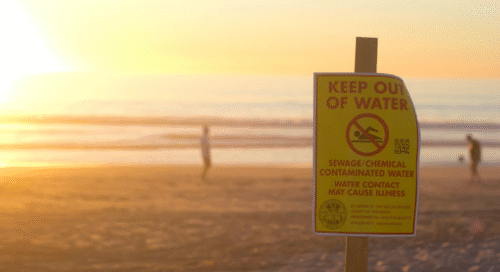 “California public officials, scientists and coastal advocates rang the alarm over the continued pollution of the Tijuana River into the Pacific Ocean and nearby communities on the Mexican border, describing the situation as one of the worst public health and environmental disasters in the country and around the world. “Since 2018, over 200 billion gallons of sewage have crossed our border,” Paloma Aguirre, who serves on the San Diego County Board of Supervisors, told an audience at a California Senate Environmental Quality Committee hearing in San Diego. “That is a gigantic amount of sewage you don’t hear about anywhere in our nation. It is the biggest public health and environmental crisis in the western hemisphere.” She said the situation has been compared to the public water crisis in Flint, Michigan, a national scandal that exposed failures in the government and left that city’s residents without safe drinking water for years. … ” Read more from the Courthouse News Service.
State Senator tours Tijuana River Valley for first time, calling sewage crisis ‘Truly revolting’
“State Senator Catherine Blakespear toured the Tijuana River Valley for the first time on Thursday and hosted a legislative hearing in La Jolla to draw attention to the ongoing sewage crisis affecting communities along the border, where millions of gallons of raw sewage flow daily from Mexico into the region. Blakespear, who represents the 38th state senate district in North County and chairs the California Assembly Environmental Safety and Toxic Materials Committee, experienced the crisis firsthand during a tour of Saturn Boulevard, a particularly affected area. “I think it’s truly revolting, it’s horrible,” she said after smelling the sewage for the first time. … ” Read more from CBS 8.
Along the Colorado River …
Climate change is stealing rain and snow from the Colorado River, new report says
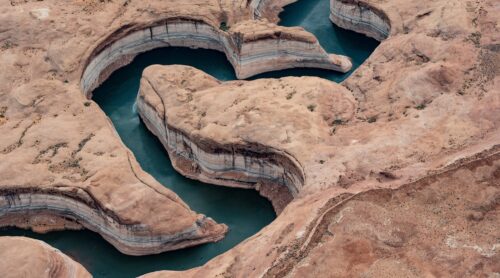
“Climate change is stealing rain and snow from the Colorado River, and it might be the basin’s new permanent condition, according to a report released this week. Leading scientists from around the Colorado River Basin, which spans parts of Colorado, six other Western states and Mexico, released Tuesday a collection of essays on the future water supply for 40 million people. In many ways, it’s bleak. Rainfall is low, river flows are down, reservoir storage is on the brink of depletion and groundwater is struggling, according to several authors in the Colorado River Research Group. “We still don’t have a crystal ball, but the future is pretty dark,” Brad Udall, a member of the research group and a Colorado-based climate scientist, told The Colorado Sun. … ” Read more from the Colorado Sun.
Colorado River Insights, 2025: Dancing with Deadpool
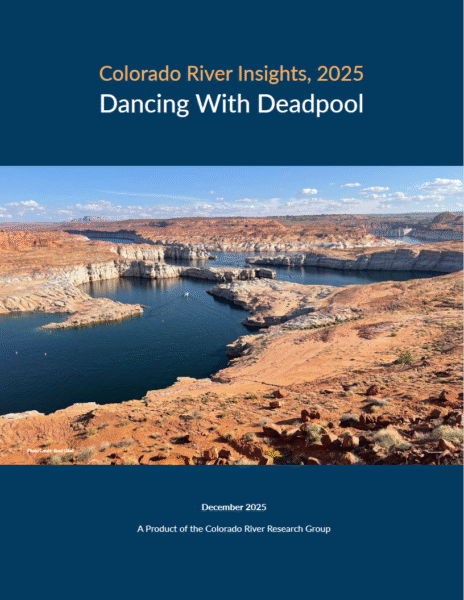 “In a collection of essays and research summaries, eleven members of the Colorado River Research Group (with eight guest contributors) touch on issues as diverse as plummeting reservoir storage, climate change trends, risk management, agricultural water conservation, equity, and governance, all against the backdrop of the need to fashion post-2026 reservoir operating rules. … ” Read more from the University of Colorado at Boulder.
The Colorado River’s water level is so low that a man can walk across it
“A man was able to walk completely across the Colorado River in Laughlin due to extremely low water levels, documenting the feat with drone footage. Ryan Deters, who operates on the water almost daily with his foil board or by renting jet skis, captured drone video of himself walking from one side of the river to the other and back. The clear, shallow water made the river bottom visible across its entire width. “In the summertime, I have a mark on the pole 2-3-4 units deep… enough where we can actually jump in and dive in,” Deters said. Deters said he had been wanting to attempt the crossing for a long time. The river level was the lowest he had ever seen when he made the walk earlier this month. He wore a wetsuit top and life jacket for the crossing. … ” Read more from Channel 5.
Major US reservoir avoids ‘dead pool’ status thanks to California farmers: ‘Lowest levels since 1940s’
“Water levels in the largest reservoir in the United States are looking a whole lot healthier after two years of voluntary conservation efforts from an array of local stakeholders in California. SFGATE reported that after years of decline and getting perilously close to “dead pool” status — when a reservoir’s water is too low to send downstream — Lake Mead’s water levels are up 16 feet in the last two years. The remarkable turnaround is the product of an agreement made in late 2022 after officials were alarmed by the lake’s visible decline. Bleached “bathtub rings” seen in 2021 served as a potent warning of the lake’s peril. This prompted the U.S. Bureau of Land Reclamation, the Fort Yuma Quechan Indian tribe, and half a dozen California water agencies to commit to saving 1.6 million acre-feet of water by 2026. As of December 2025, 1.2 million acre-feet has been saved; that initial goal is not only in reach, it’s very likely to be surpassed. … ” Read more from The Cool Down.
Nevada Governor Lombardo urges Colorado River states to come to agreement
“In a rare public statement on contentious water use negotiations, Nevada Gov. Joe Lombardo urged the seven Colorado River Basin states to come to an agreement as time runs out to strike one. Lombardo thanked Interior Secretary Doug Burgum in a letter dated Tuesday for an invitation to a meeting in Washington, D.C., this week with all the states’ governors and appointed negotiators. Though it didn’t happen, Lombardo asked Burgum to reschedule it for January “as the risks of inaction continue to grow.” What happens in the interstate negotiating room in the coming months has immense implications for Southern Nevada, which sources about 90 percent of its water supply from Lake Mead, the nation’s largest reservoir. Federal water managers project that the Colorado River reservoir, about 28 percent full this week, will decline below historic lows in 2027. … ” Read more from the Las Vegas Review-Journal.
‘Nobody’s the enemy’: Ex-Nevada water chief on Colorado River deadlock
“From the birth of the agency that took on Southern Nevada’s water crisis to the installation of a third straw at Lake Mead, a small but mighty woman has been there through it all: Pat Mulroy. And today, as an outsider to the stalemate between the seven Colorado River states that are running out of time to strike a deal that will last two decades, Mulroy isn’t thrilled with the progress. “What I see missing is they have not figured out the one thing that really allowed a lot of the other discussions to move forward, which is that they enjoy a common fate,” she told the Las Vegas Review-Journal on Tuesday. “The notion that one part of this river system will be better off than another part of the river system is ridiculous.” But she understands the nuanced challenges in a way few ever will. … ” Read more from the Las Vegas Review-Journal.
Study finds federal water giveaways in the West exacerbate strained water systems and cost taxpayers
“A new report out today, Free Water While It Lasts: An Analysis of Wholesale Water Pricing in the Lower Colorado River Basin States, examines new data that shows huge disparities in who pays what for water from the Colorado River and the Sierras and recommends how to keep the water system sustainable into a drier future. The report, published by the UCLA Institute of the Environment and Sustainability (IoES) and NRDC (Natural Resources Defense Council) finds that numerous water districts in the lower Colorado River basin are paying minimal amounts for wholesale water supplies, with major agriculture users paying only a fraction—often zero—of what cities pay for the same water. The study highlights how the dirt-cheap prices of federal water for big agricultural districts create powerful disincentives for conservation and efficient use, which has helped bring the Colorado River to historic shortages. … ” Read more from the NRDC.
SEE ALSO: Colorado River Water Is Too Cheap, Particularly for Agricultural Users, from Inside Climate News
Arizona’s 1st ‘ag-to-urban’ water credits approval goes to Buckeye housing development
“A new state program awarded its first water credits on Tuesday to support the development of 825 homes in Buckeye. State lawmakers created the “ag-to-urban” program earlier this year, which allows agricultural users to sell their land and water rights to housing developers in areas where groundwater use is restricted, like the West Valley. Sen. T.J. Shope (R-Coolidge) sponsored the original legislation, and said it’s a win-win for farmers and developers. “We killed two birds with one stone,” Shope said. “We know that we have willing sellers in many cases and those willing sellers currently are members of the ag community, which we know is high water use.” … ” Read more from KJZZ.
Arizona lawmaker wants to ban fluoride in drinking water
“A state lawmaker wants to ban fluoride in drinking water, but several cities use it. Sen. Janae Shamp (R-Surprise) introduced legislation this week to ban fluoride in public drinking water. The legislation comes in the wake of Health Secretary Robert F. Kennedy Jr. calling for states to ban fluoride earlier this year — citing a 2024 study showing a correlation between high fluoride levels and lower IQ in children. However, that report studied much higher fluoride concentrations than Arizona water contains. Since Kennedy’s call to states, both Utah and Florida have banned it. … ” Read more from KJZZ.
Colorado water regulators approve historic stream, wetlands protections
“Colorado water regulators late Wednesday approved an extensive set of rules designed to protect thousands of miles of streams and vast wetlands, stepping up as one of the first states in the nation to do so. “It’s a big moment,” said Kathy Chandler-Henry during the last day of hearings. She is a member of the Colorado Water Quality Control Commission from Eagle County. The rules cover dozens of issues related to how the state will issue permits dictating how construction, homebuilding and farming activities that disturb waters and wetlands can occur. The idea is to protect these natural resources while giving businesses the flexibility they need to operate. The vote by the nine-member Colorado Water Quality Control Commission came after nearly 16 months of public hearings and meetings of environmental groups, water providers, farmers and other industry interests. … ” Read more from the Colorado Sun.
Historic step forward to secure environmental flows in the Colorado River
“On the evening of November 19, a packed conference room in the Denver West Marriott erupted in cheers when the Colorado Water Conservation Board approved one of the largest ever dedications of water for the environment in Colorado’s history. This new deal, if completed, will ensure that water currently running through the aging Shoshone Hydropower Plant on the Colorado River, deep in the heart of Glenwood Canyon, will keep flowing through the canyon when the plant eventually goes off-line. It’s not a sure thing yet – water court wrangling over the details and financial hurdles remain. But the Board’s action was a crucial step forward. … ” Read more from American Rivers.
In national water news today …
Clean Water Act permitting bill clears the House
“The House passed legislation Thursday that would make more than a dozen changes to the Clean Water Act, including establishing new procedures to reduce lawsuits and limiting states’ authority to block infrastructure due to environmental concerns. The “PERMIT Act” passed 221-205. The vast majority of Democrats voted against it, but six — Reps. Sanford Bishop (D-N.C.), Jim Costa (D-Calif.), Henry Cuellar (D-Texas), Donald Davis (D-N.C.), Adam Gray (D-Calif.) and Marie Gluesenkamp Perez (D-Wash.) — voted yes. Rep. Brian Fitzpatrick (R-Pa.) was the only Republican to vote no. During floor debate, Democrats sought to characterize the bill as a threat to affordability and a handout to industry. Republicans described the changes as commonsense reforms necessary to accelerate permitting. … ” Read more from E&E News.
3rd warmest on record (again): November 2025 keeps a hot global streak going
“November 2025 was Earth’s third-warmest November in analyses of global weather data going back to 1850, NOAA’s National Centers for Environmental Information, or NCEI, reported December 11. NASA and the European Copernicus Climate Change Service also rated November 2025 as the third-warmest November on record, behind only 2023 and 2024. November marked the sixth month in a row that has ranked third-warmest for that calendar month across the past 176 years. While “third-warmest” may not sound eye-poppingly impressive, this comes without a planet-warming El Niño event, whose presence helped fuel the record-warm years of 2023 and 2024. … ” Read more from Yale Climate Connections.

