

Several news sources featured in the Daily Digest may limit the number of articles you can access without a subscription. However, gift articles and open-access links are provided when available. For more open access California water news articles, explore the main page at MavensNotebook.com.
On the calendar today …
- WEBINAR: People, Place and Policy: Community-Driven Solutions in Fairmead from 12pm to 1pm. For generations, the community of Fairmead has faced dwindling water supply and advocated for more equitable access to water. As an unincorporated community, without a local government, Fairmead Community and Friends is showing what’s possible when communities lead the way. Join Sustainable Conservation for an inspiring conversation with local Fairmead leaders on how collaboration, trust-building, and resource access are essential to community-based solutions, and how Fairmead’s journey offers a model to advance water equity and resilience across California. Click here to register.
- IN-PERSON EVENT: Groundwater and Land Subsidence – A Pending Crisis beginning at 7pm at 210 W. Center Ave in Visalia. The event presented by Tulare County Voices at 210. Panelists include Johnny Amaral, chief operating officer at Friant Water Authority, Aaron Fukuda, general manager at Tulare Irrigation District and Mid-Kaweah Groundwater Sustainability Agency, and Greg Collins, former Visalia mayor and co-author of “Seven Generations: The Past, Present and Future of the Tulare Lake Basin.” The forum is intended to explain what is being done to address the twin issues of groundwater depletion and subsidence.
Deadline for the Colorado River …
Colorado River talks hit crunch time. What’s at stake for California water?
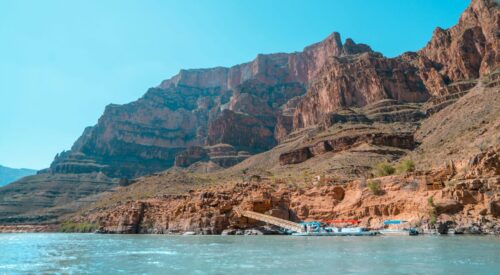 “The clock is ticking down to a federal deadline Tuesday for California and six other Western states to reach the broad strokes of a deal portioning out supplies from the parched Colorado River. Officials at the U.S. Bureau of Reclamation, the federal stewards for the river under the Department of the Interior, have threatened to impose their own plan if the states can’t agree how to manage the river after 2026, when the river’s current rulebook expires. Dire projections that another dry year could send the basin’s major reservoirs plummeting to alarmingly low levels have ramped up the urgency, and the tensions. But, after two years of fraught negotiations, the states remain at an impasse. Those in the river’s lower basin — California, Arizona, and Nevada — are clashing with Colorado, Wyoming, Utah and New Mexico upstream. A key point of contention is how much each basin must scale back their use of the overtapped river as climate change further squeezes supplies. “We’ve been in a holding pattern, and we need to land this plane by Tuesday,” J.B. Hamby, California’s chief negotiator as chairman of the Colorado River Board of California, told CalMatters. … ” Read more from Cal Matters.
Why Colorado River negotiations are so difficult
“On the day of a Nov. 11 federal deadline for states to submit a water management plan for the Colorado River, negotiations remain deadlocked. Without agreement, it is unclear how a water supply that millions depend on will be managed after the fall of 2026. With hours left, a deal seems increasingly unlikely — raising the possibility of the federal government stepping in with its own plan, or that states will resort to litigation. As they continue to search for solutions, negotiators and stakeholders involved in the process described frustration and concern. Seven Western states have spent over two years struggling to reach a plan to cut water use and change rules governing major reservoirs. After 25 years of record heat and sustained severe drought, the depleted river has less to give, and it is 20% smaller on average than it was last century. With hotter, drier conditions expected to continue, the states are also grappling with limits of aging infrastructure made more urgent by low water levels and legal ambiguities. “There’s very little to no resiliency built into the river system right now, because the system is very depleted,” said J.B. Hamby, California’s representative in the negotiations. … ” Read more from High Country News.
SEE ALSO:
- As an important deadline for the Colorado River approaches, uncertainty for water users hangs over negotiations, from KSJD
- Deadline arrives Tuesday for Colorado River agreement between Nevada, 6 other states, from KLAS
- Colorado River water shortages threaten to curtail Utah towns and farmers, from Utah Public Radio
- A Colorado River deadline looms, here is what’s at stake for Colorado, from Colorado Public Radio
In other California water news today …
Heavy dose of wet weather expected to soak California
 “A potent, fast-moving storm is set to drench the California coast this week, bringing a quick burst of heavy rain and at least some potential for flash flooding and mudslides. Rain is guaranteed, but whether enough rain will fall to lead to widespread flooding remains the central uncertainty. Beginning Wednesday, this system will deliver a quick, intense shot of heavy rain to much of the state’s coast, including San Francisco and Los Angeles. Forecasters in San Francisco urged residents to finish flood preparations by Tuesday but said they did not anticipate days of prolonged, intense rainfall. The speed of this “quick hitter” could be the key difference between manageable rain and a destructive event. … ” Read more from the New York Times.
First major snow of the season expected as atmospheric river targets California
“A colder-than-expected Pacific storm is on track to deliver the Sierra Nevada’s most substantial snowfall of the season, with a winter storm watch in effect from late Wednesday night through Thursday night. Forecast models show 1 to 2 feet of snow above 8,000 feet, including most major passes, and 10 to 18 inches across Tahoe’s main resorts. Even Tahoe City and South Lake Tahoe could see 3 to 6 inches at lake level, while Mammoth Mountain stands to gain close to two feet. It’s the first storm this season cold enough to drop significant snow across most Tahoe ski bases, marking a sharp break from the mild, dry pattern that dominated early November. While higher elevations saw some snowfall in October, warm temperatures quickly melted it away. … ” Read more from the San Francisco Chronicle. | Read via Yahoo News.
SEE ALSO: Travel delays to mount in California as storm races through with downpours, mountain snow, from AccuWeather
A fireside chat with Metropolitan Water District’s Deven Upadhyay
“General manager Deven Upadhyay has guided Metropolitan Water District through major droughts and much more. As he prepares to retire at the end of the year, we sat down with him to talk about his experiences guiding an urban water agency through the volatile 21st century. Q: How is our current water infrastructure dealing with the challenges posed by a changing climate? A: Industry-wide, it’s a mixed bag. The 2020–22 drought was almost our Day Zero. In 2022, we saw the lowest State Water Project allocation in the state’s history—they were allocating on a human health and safety basis for the first time. Without the major investments we had made in storage, conservation, and transfers, we would have been facing a Day Zero—when we would have had to severely curtail deliveries to as low as 13 gallons per person per day. The fact that we didn’t have to says a lot about how the region has planned for variability and drought. It showed that we could get through climate extremes with moderate impact to consumers, which wasn’t the case everywhere. … ” Continue reading from the PPIC.
Ryan Jacobsen on farming through storms, labor, and the future of California agriculture
“The November 11 edition of the AgNet News Hour featured an in-depth conversation with Ryan Jacobsen, President and CEO of the Fresno County Farm Bureau, who joined hosts Nick Papagni and Josh McGill to reflect on the past year in agriculture and look ahead to 2026. Jacobsen, a fourth-generation Central Valley farmer, described 2025 as “one of the most unique and challenging years in decades.” He noted that while the weather was remarkably mild for most of the year, the harvest season tested farmers’ patience and endurance. “We had about seven different storms roll through during harvest,” he said. “Farmers were working like madness between each one, trying to dry crops, pick what they could, and prepare for the next round of rain.” Despite the setbacks, Jacobsen praised growers’ resilience and credited advancements in meteorology for helping minimize losses. “We get far more heads-up now than we did 20 years ago,” he said. “That preparation made all the difference this year.” … ” Read more and listen to podcast at AgNet West.
Central Valley farmers feed the world
“When people talk about the best farmers in the world, they mean the Central Valley. No region on Earth produces more food. The latest Fresno County Crop Report shows over $9 billion in agricultural production, a record-breaking year. From almonds and grapes to dairy, citrus, and tomatoes, Fresno’s over 300 commodities form the backbone of our local economy and a vital link in the global food chain. This achievement reflects not only fertile land but also generations of innovation, family dedication, and smart stewardship of our resources. … ” Read more from SJV Water.
Kings County Farm Bureau take fight over groundwater limits to the Ca Supreme Court
“Groundwater is the lifeline of California’s agriculture, and now, it’s at the center of what’s expected to be a multi-million-dollar legal fight in Kings County. Farmers in Kings County are challenging the state’s authority to regulate how much water they can pump, a legal battle that could have sweeping impacts across California’s agriculture industry. After a lower court recently sided with the State Water Resources Control Board, the Kings County Farm Bureau says it’s preparing to take its case to the California Supreme Court. … ” Read more from Fox 26.
From data gaps to habitat maps: a fresh approach to studying a rare species
“The rarest species often have the most to gain from tailored management strategies, but they are also the hardest to monitor because so little is known about them. Once abundant, the Bay-Delta population of longfin smelt (Spirinchus thaleichthys) has been steadily declining, a trend revealed by abundance indices and surveys. The decline has been so severe that regulatory agencies now list these smelt as Endangered. With so few remaining individuals, studying them is a challenge. Fortunately, advances in statistical modeling are helping to address these problems. Utilizing spatially dynamic multistate occupancy models, scientists have uncovered new insights into the distribution and abundance of the Bay-Delta longfin smelt population that could lead to more effective management strategies. … ” Read more from FishBio.
Trump plan would open California to offshore oil drilling
“Trump officials are planning to propose oil drilling off the California coast for the first time in decades, according to a draft map reviewed by The Washington Post, a move sure to antagonize Gov. Gavin Newsom and other Democrats in California. The administration’s plan proposes six offshore lease sales between 2027 and 2030 in areas along the California coast. The plan also envisions expanding drilling in the eastern Gulf of Mexico, an area where drilling has generally been avoided because it faces stiff opposition from many in Florida who fear an oil spill could spoil their beaches and devastate the tourism industry. The administration is considering lease sales there in 2029 and 2030. … ” Read more from the Washington Post.
Climbing to extremes: An extreme tree hunt in the Sierra Nevada
““Here, Jeffy, Jeffy!” Hugh Safford is calling out into the woods for a tree. That’s normal enough for a forest ecologist, but the tree he’s searching for — the Jeffrey pine — was not, until recently, expected to live anywhere near here. Safford, his team and this writer are in the Inyo National Forest in the Southern Sierra Nevada mountains, more than 11,000 feet above sea level. Foxtail, lodgepole, limber, and whitebark pine? Sure, you can find those here. But Jeffrey pines, with their butterscotch-scented bark and green bushy branches, are usually several thousand feet lower. Yet, Safford knows better. A University of California, Davis, forest ecologist recently retired from 21 years with the U.S. Forest Service, Safford has summited about 600 mountains, been struck by lightning twice, and lived to tell many tales. So his was an informed response in 2024 when, hiking up the south slopes of Mount Kaweah at 12,657 feet in Sequoia National Park, he took one look at a small Jeffrey pine and asked it, “What the hell are you doing here?” He might as well have spotted an armadillo in Antarctica. … ” Read more from UC Davis.
In regional water news and commentary today …
NORTH COAST
Salmon are back in the Klamath River. Now farmers want to keep them off their land
“Observers have rejoiced at recent sightings of Chinook salmon swimming past former Klamath River dam sites toward historic spawning grounds. Scott White, general manager of the Klamath Drainage District, shared in the celebration but grew nervous after spotting Chinook in canals used to divert water to agricultural land. He said long-planned screens to keep fish from washing onto farmland are not yet in place. “They’re in our canals, which don’t get me wrong, it’s pretty darn exciting to see salmon in our canals,” White said. “But obviously, we want to make sure that the fish are protected, just as much as we want our growers protected.” … ” Read more from Jefferson Public Radio.
Mendocino County board narrowly supports PG&E’s Potter Valley dam removal plan
“The Mendocino County Board of Supervisors has approved a nonbinding resolution in support of PG&E’s plan to decommission the Potter Valley Project’s dams. The resolution was approved 3-2, with Supervisors Madeline Cline and Bernie Norvell dissenting. The resolution was placed on the board’s Nov. 4 agenda by Supervisor Ted Williams without naming Potter Valley Project in the title. PG&E’s Potter Valley Project has diverted water from the Eel River to the Russian River Watershed through two dams — the Scott Dam at Lake Pillsbury and Cape Horn Dam at Lake Van Arsdale — that have supplied water to communities throughout Mendocino and Sonoma counties. Instead, the title on the board’s agenda reads, “Adoption of Resolution Reaffirming Support for the Co-Equal Goals of the Two-Basin Solution and the Water Diversion Agreement for the New Eel-Russian Facility.” … ” Read more from Local News Matters.
MOUNTAIN COUNTIES
Tahoe set for dramatic weather twist, ski season still uncertain
“After unseasonably warm temperatures in the Lake Tahoe area early this week, a storm system is expected to create a dramatic shift in weather conditions by Thursday. The warm spell is expected to peak Monday, with lower valleys seeing temperatures up to 75 degrees and mountain areas hitting about 70 degrees, according to the National Weather Service. Tuesday will likely be the last day of warm weather before the storm system brings southwest winds of 15 to 20 mph, with gusts up to 35 mph. And in wind-prone areas, gusts could even reach up to 45 mph, the weather service said in its forecast discussion. … ” Read more from SF Gate.
SEE ALSO: Winter storm watch in place for the Greater Lake Tahoe Area for Thursday and Friday — may reach 10 inches of snow, from the Press Democrat
SACRAMENTO VALLEY
PG&E no longer diverting water through Upper Miocene Canal
“Pacific Gas and Electric has announced it will stop diverting water through the Miocene Canal. This change is taking effect after the Butte County Board of Supervisors recently approved an amendment to a 2014 water supply agreement between Butte County, the Butte County District Attorney’s Office, and PG&E. … ” Read more from Action News Now.
BAY AREA
Tiburon approves contract for sea level rise adaption plan
“As all-too-familiar floodwaters receded after the storm on Wednesday, the Tiburon Town Council took a significant step in creating a sea level rise vulnerability assessment and adaptation plan. “It’s absolutely essential that we create a good plan on how to prevent flooding and other things with sea level rise,” Mayor Holli Thier said. The town will move forward with a $593,877 contract with the engineering advisory firm Moffat and Nichols to complete the sea level rise plan. The project is entirely funded by the California Ocean Protection Council, which awarded Tiburon a grant in June to create the plan. The plan is projected to focus on four areas: the entrance to downtown Tiburon, downtown itself, Blackie’s Pasture and the Greenwood Cove area. Each of these areas experience consistent flooding or are at high risk for sea level rise. … ” Read more from the Marin Independent Journal.
Valley Water, Trout Unlimited and partners remove century-old dam to reopen habitat for threatened steelhead
“A major step forward for fish and river health was recently achieved in South Santa Clara County with the removal of Pickell’s Dam. Once a century-old barrier on Little Arthur Creek, the dam no longer served a purpose but continued to block steelhead migration and disrupt the creek’s natural process. Valley Water and Trout Unlimited partnered to bring it down, opening the way for a healthier river ecosystem. Located about a mile upstream from Uvas Creek, the barrier cut off more than three miles of high-quality spawning habitat for South-Central California Coast Steelhead, a species listed as threatened under the Endangered Species Act. With the dam now gone, steelhead can once again reach upstream habitat. The creek also regains its natural flow, gravel movement, and habitat-forming features. The project also benefits other native aquatic species, such as amphibians, that can now freely move upstream and downstream. … ” Read more from Valley Water News.
CENTRAL COAST
Central Coast Water Board releases draft permits for Diablo Canyon Nuclear Power Plant
“The Central Coast Regional Water Quality Control Board has released two draft permits for public comment. The permits are necessary to extend operations at Diablo Canyon Nuclear Power Plant, as directed by Senate Bill 846 (2022). The comment period closes on Dec. 8. Operated by Pacific Gas & Electric Company, the plant located in San Luis Obispo County near Avila Beach is California’s last operable nuclear power plant. The draft permits which require approval by the Central Coast Water Board to become final, contain critical regulatory requirements for PG&E to continue operations following the state mandate to extend the plant’s operational timeline. The drafts include stricter effluent limits and monitoring requirements to strengthen environmental protection and ensure compliance with the latest state and federal water quality standards. As part of the permit renewal process, regional board staff comprehensively evaluated PG&E’s compliance with the plant’s current discharge requirements and incorporated new regulatory provisions. Among these are requirements to bring the plant in line with the state’s 2010 Once-Through Cooling Policy, which aims to reduce the harmful effects cooling water intakes used at coastal power plants can have on marine life. … ” Read more from the Central Coast Water Board.
SAN JOAQUIN VALLEY
Blog: Growing opposition to proposed Del Puerto Canyon Reservoir
“Earlier this year, the Stanislaus County Board of Supervisors provisionally approved a proposed reroute of county-owned Del Puerto Canyon Road to make way for the proposed Del Puerto Canyon Reservoir in Del Puerto Canyon at the request of Del Puerto Water District General Manager Anthea Hansen. Afterwards, she sent a letter to the California Water Commission asking for additional state funding for the project from the Water Quality, Supply and Infrastructure Improvement (WSIP) Act referencing their support. Save Mount Diablo launched a campaign in September allowing people who oppose the reservoir and support the pre-existing plans for a park in Del Puerto Canyon to send letters to 32 officials in Stanislaus County. As of November 6th, 8,096 letters have been sent out through the English and Spanish versions of the petition. … ” Read more from the Valley Citizen.
SOUTHERN CALIFORNIA
Fast-moving atmospheric river storm, capable of heavy rain, rolling toward California
 “A fast-moving atmospheric river is heading toward California this week and could pack a punch, with the possibility of periods of heavy rain, and a risk of flooding and debris flows in recently burned areas. After arriving in Northern California on Wednesday, the storm system is expected to land in Southern California on Thursday. It could produce the most rain downtown Los Angeles has seen in at least a month, and possibly since February. The National Weather Service office in Oxnard called the forecast storm “potentially significant,” with roadways expected to flood in spots, rockslides possible on canyon roads and a chance of mudflows. … ” Read more from the LA Times.
California Water Commission meets, will tour Pyramid, Castaic
“The November meeting of the California Water Commission will be held Wednesday, Nov. 19 in Southern California and will include the fifth State Water Project briefing of 2025. Department of Water Resources staff will provide an update on current construction projects and modernization programs within the State Water Project. The meeting will conclude with a public tour of Pyramid Lake and Castaic Lake, two State Water Project reservoirs. … ” Read more from SCV News.
The deadliest toxic algae bloom on record is behind us; what’s next?
“Jules Leon climbed into a Ford pickup truck fitted with a net, a wheeled crate he calls a “moon buggie” and a defective winch. It was March 18 and Leon was on his way to Redondo Beach — for his third call of the day. Leon, a responder with San Pedro’s Marine Mammal Care Center, checked in with lifeguards to confirm that a sick sea lion was last seen just north of the Avenue B Lifeguard Tower. Leon located the sea lion — which showed clear signs of domoic acid toxicosis — and, with the help of ocean lifeguard Charles Pogue, quickly captured and transported the mammal back to the Marine Mammal Care Center for treatment. … That’s because Southern California’s 2025 toxic algae bloom was unprecedented — in scale, length and deadliness. Hundreds of dolphins and sea lions succumbed to elevated levels of domoic acid from San Diego to Santa Barbara. Not even birds were spared. Ultimately, multiple marine species — including some that hadn’t been affected before — required treatment. For months, from late winter to early summer, rescue centers nursed sick animals back to health and investigated why this bloom was so much worse than previous ones. … ” Read more from the Los Angeles Daily News.
Long Beach breaks ground on new $6 million greenbelt along LA River
“Long Beach leaders broke ground Monday on a $6 million project to give new life to an undeveloped acre in North Long Beach. The 51st Street Greenbelt Project will turn a stretch of land on De Forest Avenue between 51st and 52nd Streets into a park featuring pedestrian and cycling paths, fitness equipment, play structures, native plants and green infrastructure. The greenbelt, which is part of Long Beach’s infrastructure investment plan, is scheduled to be completed by fall 2026, the project manager said. In recent years, the city has expanded recreational space in the lower Los Angeles River region by dozens of acres. This project represents the latest effort to create more green space in the area. … ” Read more from the Long Beach Post.
SAN DIEGO
Is there enough sewage to go ‘round in San Diego?
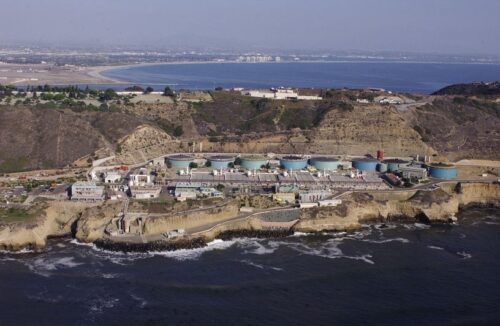
“Every month, a group meets to debate what should be done with our toilet water. Right, now they’re arguing about the fact that there might not be enough for everybody to reuse. Three years ago, I wrote about how the city of San Diego was at war with a bloc of Eastern County cities over the region’s wastewater supply. Both wanted to treat it and supply it to residents as drinking water. But their systems are intertwined, and when East County rolled off to do their own thing, it left costs to support the region’s wastewater system on the backs of other cities. But as Diegans conserve and need to flush their toilets less often, there’s potentially not enough wastewater for everyone to build their own recycling projects cost-effectively. … ” Read more from the Voice of San Diego.
Commentary: Why the region’s agricultural water rate is good for everyone
Gary Arant, Frank Hilliker, Jim Madaffer and Amy Reeh, all board members of the San Diego County Water Authority, write, “As San Diego County continues to navigate the complex challenges of water affordability and supply reliability, the Permanent Special Agricultural Water Rate Program, or PSAWR, offers a smart, equitable solution that economically benefits the entire region — not just farmers. Some water agencies have asked: “What’s in it for us?” — especially those who don’t serve farmers directly. It’s a fair question. But the answer is clear: PSAWR helps stabilize water rates across the region, preserve local jobs, protect our economy and sustain the environment of San Diego County. … ” Read more at the Times of San Diego.
Water, sewer rate hikes dialed back for Oceanside
“Water and sewer rate increases proposed in October to take effect in 2026 for Oceanside residents and businesses were cut in half Wednesday by the Oceanside City Council, but only for a year. Water department employees initially asked for increases of 6% for water and 4% for sewer in 2026 and again in 2027, but the council pushed for belt-tightening and postponed a decision after complaints from residents at the Oct. 1 meeting. The revised proposal, approved 3-2 Wednesday with Mayor Esther Sanchez and Councilmember Rick Robinson opposed, calls for a 3% hike for water and 2% for sewer in 2026 and then the 6% and 4% increases in 2027. … ” Read more from the San Diego Union-Tribune.
Tijuana River Valley Community Garden saved after county finds new operator
“A beloved community garden in the Tijuana River Valley will continue operating after San Diego County announced a local nonprofit will take over management of the facility. The signs at the entrance of the Tijuana River Valley Community Garden say it all: “Thank you” and “We can stay.” After a month of uncertainty, the county announced that Olivewood Gardens and Learning Center would serve as the garden’s new interim operator. “We definitely feel heard from the county, you know, they definitely listened to us. They definitely went the extra mile,” said Clayton Howard, a gardener who led the push to save the community space. … ” Read more from Channel 10.
US to extend river boom that blocked tons of trash from Mexico
“A boom stretching along the Tijuana River that recently stopped approximately 20 tons of debris from entering California in just over an hour during a rainstorm could see its funding extended, and more systems like it could be introduced in the coming years. There have been longstanding health and environmental concerns regarding the flow of sewage, trash and contaminated water into the U.S. from Mexico. Media outlet BorderReport revealed last week that the 1,200-foot system stopped 20 tons of trash flowing downriver in October, after the same system had stopped 500 tons during the last rainy season. … ” Read more from Newsweek.
Along the Colorado River …
Can Arizona maintain its drought response as water and money dry up?

“In front of Buddy Rocha Jr. stood a group of Arizona’s local and state-level politicians, agency staffers and water experts. Behind the Yavapai-Apache chairman flowed the Verde River. For centuries, he said, his people have depended on the land along the 193-mile waterway—from its headwaters to the lower stretch that is designated now as a National Wild and Scenic River. Rocha grew up here in the Verde Valley playing and fishing in the river. “It’s a part of me,” he said. “It’s a part of my people.” That is why it is so important to protect every drop of the Verde River, he explained. The three sewage lagoons sitting in the floodplain on the other side of the river are an outdated eyesore, he said, and “irresponsible” given they are in a 100-year-flood zone. “You can go back to Roman times, and they utilized those systems,” he said, “and we’re still using them today.” … ” Read more from Inside Climate News.
Colorado River wins personhood status from Arizona tribal council
“The Colorado River Indian Tribes have formally accorded personhood status to the Colorado River, creating a powerful new mechanism to protect the eponymous river that makes life possible in their arid homelands. The resolution was approved by the CRIT Tribal Council on Nov. 6 in Parker. The nearly 4,300-member tribe has long been alarmed at the state of its life-giving waterway, CRIT Chairwoman Amelia Flores wrote in a statement shared with The Arizona Republic. “The Colorado River is in jeopardy,” she said. The tribe, which holds the largest quantity of senior water rights in the state, regards the river as a living being, so the resolution codifies that belief and the tribe’s commitment to protecting its needs and ability to provide water for future generations. … ” Read more from the Arizona Republic.
How a new pipeline will help Mesa deal with Colorado River cutbacks
“Unless Arizona’s farmers and tribes can strike deals to bail out the state’s growing cities, the largest population centers could start to face water restrictions on the Colorado River. Cities like Mesa, Phoenix and Scottsdale could lose more than 20% of their river allocations, triggering public debates in council chambers and municipal offices over how to respond, what to sacrifice and what to prioritize. Arizona’s cities have been shielded from existing cuts for the past three years by agreements with tribes and through compensation from fast-depleting pools of federal money. But those agreements and that money are set to run out by the end of 2026. Water managers and officials don’t know how big the cuts will be, but most agree on one thing: real cuts are possible. … ” Read more from the Arizona Republic. | Read via Yahoo News.
Audio: Why Arizona is looking to create a new area to manage groundwater
“The Arizona Department of Water Resources, known as ADWR, has taken the first step toward creating a new Active Management Area — basically a part of the state in which groundwater is regulated. This is the second time ADWR has worked to do this. This new one is in La Paz County, while the first time was in Willcox, in southern Arizona. That action has proven to be controversial, though. Camryn Sanchez from KJZZ’s Politics Desk joined The Show to explain more.” Listen at KJZZ.
Queen Creek poised to cut historic water deal
“Queen Creek officials say a proposed purchase of 12,000 acre-feet of Harquahala Valley water annually would dramatically cut the town’s reliance on groundwater – and the rising costs that come with it – while locking in stable pricing for possibly the next 10 years. “That amount of water will allow us to essentially get off of groundwater and once we become once we get off of groundwater, then we can manage our own destiny,” said town Utility Director Marc Skocypec in an interview last week. “As far as our water resource future, we’re not reliant on the Colorado River. We’re not reliant on if it snows in Utah. We’re not reliant on any of the traditional Arizona problems when it comes to long term water resources.” … ” Read more from the East Valley Tribune.
In national water news today …
America’s deadliest waterborne disease is not letting up
“At the end of July, a lethal infection, one borne in water but carried in the air, spread through Harlem. At least 114 people in the New York City neighborhood reported symptoms ranging from fever and chills to severe coughs. Ninety people were hospitalized as the disease outbreak multiplied, and seven people died. All had contracted Legionnaires’ disease, a respiratory illness that resembles pneumonia and is spread by inhaling water droplets that carry Legionella bacteria. These bacteria are found in rivers and lakes, but they flourish in warm, stagnant water inside building plumbing systems. The disease stems from malfunctions in the built environment. … ” Read more from the Circle of Blue.
Environment takeaways from the spending deal
“For the first time in more than a year, the House and Senate produced compromise spending bills that could lay the groundwork for a broader deal to fully fund the government. The package of three fiscal 2026 bills, which cleared the Senate Monday, contains both Democratic and Republican priorities and rejects most of the steep funding cuts sought by the Trump administration and House GOP lawmakers. The bills are the product of months of negotiations, and neither side got everything it wanted. There are wins for conservatives, such as cuts to Department of Agriculture climate hubs, and wins for Democrats, including full funding for the Government Accountability Office. … ” Read more from E&E News.
‘Not good’: Ocean losing its greenness, threatening food webs
“The consequences of global warming, caused mainly by burning fossil fuels, are varied and many. Now scientists have documented yet another one: The ocean is losing its “greenness.” The ocean’s chlorophyll concentration, a proxy for phytoplankton biomass, declined over the past two decades, especially in coastal areas, a new study has found. Phytoplankton are plant-like organisms that are the base of the marine food web, supporting fisheries and broader ecosystems. The findings in the study, published Oct. 17 in the journal Science Advances, have far-reaching implications, according to the authors, most of them based at Tsinghua University in Beijing. “These changes will profoundly affect the magnitude and distribution of marine ecosystem functioning,” they wrote in the study’s conclusion. … ” Read more from Mongabay.

