
Several news sources featured in the Daily Digest may limit the number of articles you can access without a subscription. However, gift articles and open-access links are provided when available. For more open access California water news articles, explore the main page at MavensNotebook.com.
On the calendar today …
- PUBLIC HEARING: Sites Reservoir Water Right Permit beginning at 9:00am. The State Water Resources Control Board is holding a multi-day public hearing on the Sites Project Authority’s application for a water right permit to store up to 1.5 million acre-feet of water annually in a proposed reservoir in the Sacramento Valley. View hearing on the Administrative Hearings Office YouTube channel.
- WEBINAR: Ecological Drought: What We Have Learned and Where We Are Going from 12pm to 1pm. Introducing ecological drought as a scientific concept distinct from other definitions of drought, this webinar explores recent advances on the topic, including transformational drought, drought vulnerabilities, and understanding the future of low-flows. Click here to register.
In California water news today …
New UC Davis clinic hopes to give small valley farmers some legal fire power to defend their groundwater stake
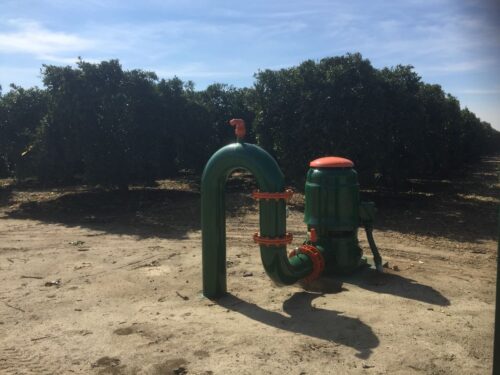 “Nicole Larson is afraid for small farmers. Before enrolling as a law student at University of California, Davis, she served a term on the Turlock City Council where she was appointed to a committee that would decide how to get local farmers to cut back on groundwater pumping. “Everyone agrees that something needs to change,” she said of groundwater over pumping, which has caused drinking water wells to go dry and sunk huge swaths of land in the San Joaquin Valley. But solutions will be painful and expensive for farmers – whether they rely on groundwater exclusively, or as a backup during drought. Larson believes that some farming operations can shoulder new groundwater restrictions and regulations easier than others. “We don’t want to see the generational farmers, the smaller farmers, be forced into bankruptcy or forced to sell their operation.” That is a guiding focus for Larson as she takes part in a new water law clinic at UC Davis. … ” Read more from SJV Water.
Scientists implement creative measures to save dwindling fish population: ‘We’re realistic about the projects we build’
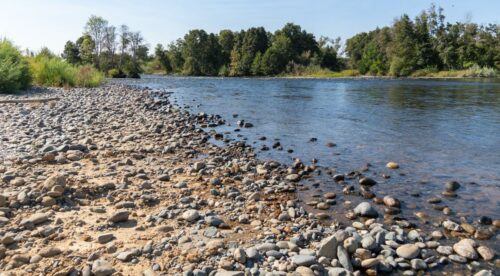 “The U.S. Bureau of Reclamation is working with key partners to do important restoration work that will support two struggling fish species on California’s American River. The federal agency announced via a September 2024 news release that it would be starting a restoration project near the confluence of the American and Sacramento rivers that will increase the productivity of fall-run Chinook salmon and steelhead, two species that swim from the river to the Pacific Ocean and back again. Part of the project includes adding 6,800 cubic yards of gravel to the riverbed, enabling female salmon to create nests where they can deposit their eggs. In order to help juvenile salmon survive once they hatch, crews will also be adding geographic elements to shield the young fish from strong currents and predators while boosting the available food supply. “We are realistic about the projects we build,” said Erica Bishop, program manager for habitat and science with the Water Forum, one of the bureau’s partners on the endeavor. … ” Read more from The Cool Down.
SEE ALSO: The Bright and Dark Sides of Pacific Salmon Biotransport, from the University of Conneticut
The shifting landscape of water rate setting
“The landscape for water rate setting in California is quickly evolving, and public agencies face growing challenges adjusting to new and complex standards when establishing or increasing water fees and charges. For example, in Coziahr v. Otay Water District, the San Diego Court of Appeal recently struck down Otay Water District’s tiered water rates, suggesting increased scrutiny on evidence supporting tiered water rates, and further ruled that substantial refunds are available in a Proposition 218 case. The Riverside Court of Appeal is set to hear a similar case concerning San Diego’s water rates. These cases, in addition to other recent and pending opinions, are part of a growing universe of rate cases that continue evolve the rate-setting environment for public agencies in California. Partly in response to these challenges, Governor Newsom recently signed three new bills governing rate-setting under Proposition 218. The laws come at a critical time to bolster the ability of public agencies to establish and defend vital revenue streams for property-related services. … ” Read more from Best Best & Krieger.
Certification of Consistency filed for Delta Conveyance Project geotechnical activities
The Department of Water Resources has submitted a Certification of Consistency for Delta Conveyance Project geotechnical activities, opening up a 30 day period for filing appeals. Read this notice from the Delta Stewardship Council.
Notice of Availability Of Friant-Kern Canal Pump-Back Project Draft Environmental Impact Report
The Friant Water Authority (FWA) has released a Draft Environmental Impact Report (Draft EIR) for a 45-day public review. The Draft EIR evaluates the Friant-Kern Canal Pump-Back Project, which proposes to facilitate the recirculation of recaptured Restoration Flows released from Millerton Lake for the San Joaquin River Restoration Program and other waters obtained by Friant Division Contractors (Friant Contractors) to increase operational flexibility and long-term reliability of the water supplies conveyed through Friant-Kern Canal (FKC). FWA proposes to increase operational flexibility and long-term reliability of water supplies conveyed through the FKC by constructing three new permanent pump-back facilities along the FKC with a 500 cubic feet per second (cfs) facility at the Shafter-Wasco check structure, a 250 cfs facility at the Lake Woollomes check structure, and a 250 cfs facility at the Deer Creek check structure (proposed project). … ” Continue reading this press release.
Solar desalinization system from MIT needs no grid connection or battery backup
“Using sunlight to power a desalinization system is fairly simple to do, but what happens when the sun isn’t shining? The clever folks at MIT say they have the answer — a desalination system that runs with the rhythms of the sun to remove salt from water at a pace that closely follows changes in solar energy. As sunlight increases throughout the day, the system ramps up its desalinization process and automatically adjusts to any sudden variation in sunlight, for example by dialing down in response to a passing cloud or revving up as the skies clear. Because the system can quickly react to subtle changes in sunlight, it maximizes the utility of solar energy, producing large quantities of clean water despite variations in sunlight throughout the day. In contrast to other solar-driven desalination designs, the MIT system requires no extra batteries for energy storage and no supplemental power supply, such as from a grid connection. … ” Read more from Clean Technica.
American Water cyberattack renews focus on protecting critical infrastructure
“A cyberattack continues to affect the largest regulated water and wastewater utility company in the United States, renewing a focus on the importance of protecting critical infrastructure sites. New Jersey-based American Water paused billing to customers as it announced the cyberattack on Monday. It said it became aware of the unauthorized activity on Thursday and immediately took protective steps, including shutting down certain systems. Water services have been unaffected as protections remained in place Wednesday. The company — which provides drinking water and sewer services to more than 14 million people in 14 states and on 18 military installations — said it does not believe its facilities or operations were impacted by the attack, although staffers were working “around the clock” to investigate its nature and scope. … ” Read more from SF Gate.
Can California have hurricanes? As Florida braces for Hurricane Milton, here’s what to know
“Floridians are bracing for Hurricane Milton, the “catastrophic” storm expected to make landfall late Wednesday night or early Thursday morning. It comes nearly two weeks since Hurricane Helene brought devastation to parts of the Southeast and killed at least 230 people, the Associated Press reported. Last year, the West Coast faced Hilary, which strengthened to a Category 4 hurricane far off southwestern Mexico’s coast before weakening to a tropical storm when it made landfall in Baja California, according to a National Hurricane Center report in February. Hilary flooded parts of Mexico, Southern California, and Nevada, leaving three people dead and causing more than $900 million in damage in America. While Hilary’s impact in the U.S. was that of a tropical storm, it was a post-tropical cyclone when it reached northern Baja California — meaning it was no longer considered a tropical cyclone — the report found. … ” Read more from The Desert Sun.
In regional water news and commentary today …
NORTH COAST
First Chinook salmon swims past site of former Iron Gate dam
“In a historical milestone, the first chinook salmon swam past the former Iron Gate dam site on the Klamath river in over 100 years. Nonprofit, state, and federal scientists collaborated to study the movement of fish around the former dam site. On the night of October 3, just past 10 p.m., a sonar camera used ultra sonic waves to detect a fish swimming upstream. … ” Read more from KOBI.
Local agencies collaborate to address sea level rise and climate migration
“At a meeting hosted by the Grass Roots Institute, multiple agencies responsible for housing and planning for sea level rise came together to understand the scope of climate migration and the types of impacts that they need to prepare for. The Coastal Commission, Mendocino County Planning Dept, City of Fort Bragg Planning, Mendocino Council of Governments (MCOG), and Supervisors Dan Gjerde and Ted Williams joined about 60 participants. Tim Robustelli from the Washington DC-based think tank, New America, provided an overview of the findings that his organization published in an April report. Loretta Ellard from MCOG and Sarah McCormick from the City of Fort Bragg provided an update on their current efforts regarding changes at Noyo Harbor, and Julia Krog gave a brief update on the LCP process at the county. … ” Read more from the Fort Bragg Advocate News.
MOUNTAIN COUNTIES
Lake Tahoe, Truckee River projects receive CDFW grants to boost recreational boating access
“The California Department of Fish and Wildlife (CDFW) announced the award of $7.5 million in grants for 10 projects that support public recreational boating access to state waterways, including several in the Lake Tahoe basin. These projects are federally funded by the Sport Fish Restoration Grant Program, administered by the U.S. Fish and Wildlife Service (USFWS), which provides funds to state fish and wildlife agencies for fishery projects, boating access and aquatic education. More information about the program and the annual solicitation can be found on the CDFW Boating Access web page. “California is home to some of the richest aquatic environments in the world, and this grant program exists to ensure all Californians have the opportunity to experience the joy and freedom of being out on the water,” said CDFW Director Charlton H. Bonham. “These projects provide the requisite care and maintenance to keep access to the water for boaters safe and reliable.” … ” Read more from the Tahoe Daily Tribune.
SACRAMENTO VALLEY
Yolo County Supes discuss Roadmap to the Future, hold water workshop
“On Tuesday, the Yolo County Board of Supervisors were given a presentation and update on the Roadmap to the Future initiative from the Yolo County Office of Education. … The board also held a workshop on water resource management, flood protection and ecosystem restoration projects and policy efforts in the Yolo Bypass and the Sacramento-San Joaquin Delta region. Supervisors were asked to provide direction to county staff on next steps. State economy is heavily dependent on Delta infrastructure. It provides drinking water to 25 million people and irrigation for 4,480,000 acres of agriculture. However, much of its infrastructure is aging and not up to modern standards…. ” Read more from the Davis Enterprise.
BAY AREA
Oil and shipping companies to pay $3.3 million for polluting the Bay in settlement with environmentalists
“Oil company Valero and shipping company Amports will pay $3.3 million as part of a settlement with San Francisco Baykeeper for the alleged pollution of the Port of Benicia. The settlement announced Monday is the result of a year-long investigation by San Franciso Baykeeper, an environmental nonprofit that utilized drone footage to document numerous discharges of petroleum coke — a carbon-rich byproduct of the oil-refining process that can contain toxic metals — into bay waters outside of Valero’s refinery in Benicia for a period of more than a year. Under the terms of the settlement, Valero and Amports will pay $2.38 million to the Rose Foundation for Communities and the Environment, a Bay Area nonprofit championing environmental stewardship, which will be gifted to local nonprofits. Baykeeper was also awarded $875,000 from the defendants for costs incurred from the investigation and the ensuing lawsuit. … ” Read more from the Marin Independent Journal.
East Bay school district hopes Measure R will fund drinking water, fix sinking classroom
“Superintendent of the Byron Union School District, Crystal Castaneda, didn’t think doing research on water wells would be part of her job. “We have to run, maintain, and make sure it’s always up to standard by all the codes for the state,” says Castaneda. In rural school districts like Bryon, deep in eastern Contra Costa County and surrounded by farmland, well water is Excelsior Middle School’s only source of water. But the well is decades old. First, the pump broke. Then, they discovered a leaking pipes. “We are seeing a lot of additional new holes coming in. And the well is deteriorating and caving in on itself. So, that well has been deemed no longer a good source for water,” explains Castaneda. … ” Read more from ABC 7.
New trail opens south of San Francisco as part of vast restoration project
“Just after sunrise during low tide, Dave Halsing pointed to a vast brown and green marsh on the bayshore at Menlo Park that only months ago was a barren, industrial salt pond. Snowy egrets fluttered down to the fertile muck in search of shrimp and crab larvae. Not long ago, bulldozers breached the levee along the 300-acre pond that’s just a couple miles from Meta’s headquarters. The breach allowed water from the bay to dilute the salty brine, algae to form, pickleweed to grow, and fish and shorebirds to return. It’s part of a 50-year project to restore wetlands in the bay. … ” Read more from the San Francisco Chronicle.
Invasive, 20-pound ‘swamp rat’ rodents spreading across Bay Area, definitely pose a threat
“Rodents of unusual size are no longer just something from the movies. These swamp rats known as nutria are a scourge spreading across Contra Costa and Solano counties, and they’re a risk to our crops, livestock, and water supply. In the autumn of Moo Deng, California is dealing with an invasive outbreak of rodents that could be considered the anti-Moo Deng: they’re not cute, they’re not in captivity, and they’re dangerous on a number of levels. We’re talking about nutria, sometimes called “swamp rats,” who can measure up to two feet long and weigh up to 20 pounds, and are recognizable for their bright orange front teeth. And these damned things are trouble. … ” Read more from SFist.
CENTRAL COAST
New SLO County program to help farmers pump less water from Paso Robles basin. Here’s how
“San Luis Obispo County is developing a program that will encourage farmers to pump less water from the Paso Robles Groundwater Basin. On Tuesday, the Board of Supervisors voted 3-2 to approve a contract with the Los Angeles-based consultant Land IQ to design the Paso Robles Groundwater Basin Multibenefit Irrigated Land Repurposing Program, also known as the MILR Program. Through the program, a staff member will support irrigators who want to pivot to farming practices that use less water, according to county groundwater sustainability director Blaine Reely. The program will offer technical and potentially even financial assistance to farmers who volunteer to participate, he said. … ” Read more from the San Luis Obispo Tribune.
EASTERN SIERRA
LA City Council declares September 28 Mono Lake Day
“Yesterday was a good day for Mono Lake in Los Angeles. The Los Angeles City Council recognized the 30th anniversary of California State Water Resources Control Board Decision 1631 (D1631) by adopting a resolution establishing September 28 as Mono Lake Day. The resolution states that “the Los Angeles City Council hereby remains steadfast in its commitment to Mono Lake and its tributaries as a part of the City’s sustainable water future and declares September 28th to be Mono Lake Day.” Councilmembers Katy Yaroslavsky and Tim McOsker introduced the commendatory resolution on October 1 and the Los Angeles City Council unanimously adopted it on October 8. “We welcome the City Council’s resolution and thank Councilmember Yaroslavsky for her leadership,” said Geoff McQuilkin, Executive Director of the Mono Lake Committee. “The resolution maintains the City’s support for D1631, including the restoration of the lake to the healthy lake level of 6,392 feet above sea level, as ordered by the State Water Board in 1994. Looking ahead, we have collaborative work to do since the lake currently is only halfway to that requirement.” … ” Read more from the Mono Lake Committee.
SOUTHERN CALIFORNIA
Garcia, Schiavo pen bipartisan letter over landfill
“Rep. Mike Garcia, R-Santa Clarita, and Assemblywoman Pilar Schiavo, D-Chatsworth, have penned a bipartisan letter from elected officials at the state and federal level asking Gov. Gavin Newsom for a State of Emergency declaration due to the issues at the Chiquita Canyon Landfill. The letter, signed by Garcia and 15 state legislators, says there is an urgent need for this declaration to protect the health and safety of residents living near the landfill. Schiavo and Garcia both issued news releases about their joint letter on Wednesday afternoon. “The environmental disaster at Chiquita Canyon has only worsened for residents in Val Verde, Castaic and the Santa Clarita Valley,” Garcia wrote in a news release Wednesday. … ” Read more from The Signal.
Water-starved shrubs likely intensified recent wildfires in Southern California
“Native shrubbery that died during a severe 7-year-long drought helped spread the 2017 Thomas and 2018 Woolsey Fires, according to research published in the journal, Ecosphere. These wildfires were ignited by electric power line failures and spread through vast areas of dead vegetation, directly impacting communities in Santa Barbara, Ventura and Los Angeles counties. Evergreen, densely packed shrubs cover much of Southern California. These shrubs, called chaparral, are adapted to California’s wet winters and dry summers, but when one of the driest and longest lasting droughts hit the state from the end of 2011 to spring of 2017, landscapes normally filled with living green plants were left with grey-colored drought-killed remains. Although many people think of forest fires when they think of large fires, forests only cover 10% of natural landscapes in Southern California. “Chaparral dominates the same landscapes that people dominate,” said Jon Keeley, a USGS research ecologist who led the study. “Our new research helps us understand how drought-stricken chaparral can help spread big fires that are close to where people live.” … ” Read more from the USGS.
SAN DIEGO
Feds won’t let anticipated sewage spill hit the Tijuana River after all
“Remember that warning about more raw Tijuana sewage headed toward San Diego this month? That’s not happening anymore, said the U.S. Environmental Protection Agency in an update on the state of sewage pipe repairs in the Mexican city. I reported up to 30 million gallons of sewage would spill into the cross-border Tijuana River each day Mexican officials work on upgrading the city’s biggest and broken down sewer main mid-October. Instead, Mexican military engineers will be building an extra pipe called a bypass, borrowed from Acapulco where it was used for hurricane recovery, and sending the flows to the the International Wastewater Treatment Plant in San Diego for treatment. … ” Read more from the Voice of San Diego.
San Diego County rejects shot at millions of dollars to clean polluted Tijuana River Valley
“On Tuesday, the San Diego County Board of Supervisors rejected a notion that could’ve resulted in millions of dollars and other resources to clean up the badly-polluted Tijuana River Valley, a decision that baffled and disappointed Paloma Aguirre and other political and community leaders in the area. “It’s frustrating,” said Aguirre, mayor of Imperial Beach. She wanted the County of San Diego to declare the valley as a “Superfund Site,” meaning the federal government and Environmental Protection Agency would have to start an investigation into the pollution and sewage problems in the Tijuana River Valley. … ” Read more from the Border Report.
Along the Colorado River …
Tribes’ long fight for share of Colorado River water nears resolution
“Seven states that rely on the Colorado River each got a cut of its water under a deal struck over a century ago – a deal that excluded the Hopi, the Navajo and other tribal nations. After years of pressure and negotiation, Congress is moving to rectify what the tribes have long seen as an injustice that has caused enormous hardship. “We’re closer than we’ve ever been before in reaching a final settlement,” Bryan Newland, assistant secretary for Indian Affairs with the Department of the Interior, told a Senate hearing on Wednesday. Representatives from four Arizona tribes – the Yavapai-Apache Nation, Hopi, San Juan Southern Paiute and the Navajo Nation – said the settlements, once approved by Congress, will secure their long-standing claims and provide more accessible water for their people. … ” Read more from ICT News.
Gila River Indian Community solar panel-over-canal project powers up on a hot October day
“In the heart of Sacaton, located south of Phoenix, the Gila River Indian Community received nearly $6 million in funds from the Biden administration in 2023 to create a renewable energy plan involving the construction of solar panels over the Casa Blanca Canal. Funding came from the Inflation Reduction Act, part of Biden’s Investing In America agenda, which aimed to combat the effects of climate change with new projects to conserve energy, according to the Department of the Interior. The project aims to cover 2,782 feet of the canal and requires approximately 2,556 solar panels. On Thursday, Gila River Indian Community Gov. Stephen Roe Lewis; along with Rep. Greg Stanton, an Arizona Democrat; Tom Perez, director of the White House Office of Intergovernmental Affairs and senior adviser and assistant to Joe Biden; and David Palumbo, the Bureau of Reclamation deputy commissioner, turned on the first power to the canal project. … ” Read more from Cronkite News.
Also on Maven’s Notebook today …
NOTICE: New SGMA Reporting Requirements for Groundwater Extractors in the Tule Subbasin
NOTICE of assignment of Santa Clara Valley Water District petitions to State Water Board’s Administrative Hearings Office

