
Proposition 1, approved by California voters in 2014, authorized $2.65 billion for the public benefits associated with water storage projects. The California Water Commission administers that funding through the Water Storage Investment Program. Of the eight projects conditionally accepted into the program, five remain active. The Harvest Water Program was the first to complete the required steps and receive a final funding award. The remaining projects must still satisfy statutory requirements, including securing permits, completing environmental documentation, executing contracts for the administration of public benefits, and finalizing agreements for non-public-benefit cost shares. Once those requirements are met, applicants return to the Commission for a final award hearing.
At its August meeting, the California Water Commission received an update on the Willow Springs Water Bank Conjunctive Use Project from CIM Group and representatives of the Southern California Water Bank Authority, the project’s proponents. The project is designed to store groundwater and support pulse-flow releases from Lake Oroville for ecosystem improvement and emergency response benefits. Southern California Water Bank Authority representatives John Perez, managing director of government affairs; Kris Bale, first vice president of investments; and Alan Sollof, vice president of development, presented the update.
John Perez began by thanking the Commission and the staff for their time and energy working through this project. “We understand that we’re [a] unique project amongst the Prop 1 applicants, and really appreciate the flexibility and creativity that has gotten us to this position that we’re in today.”
PROJECT OVERVIEW
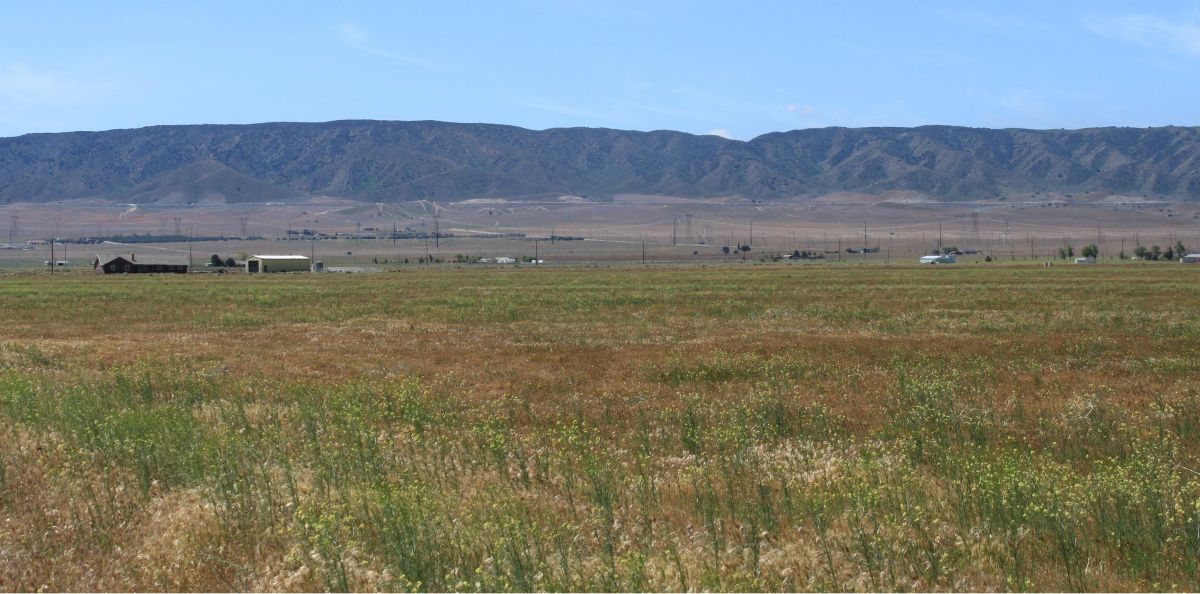
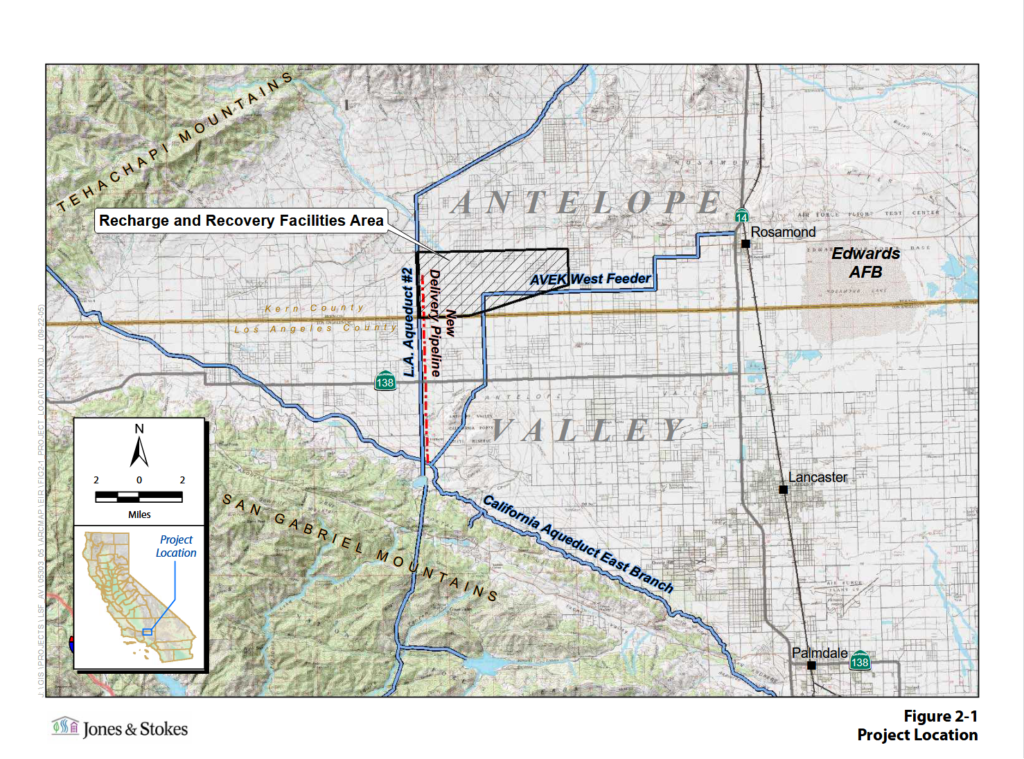
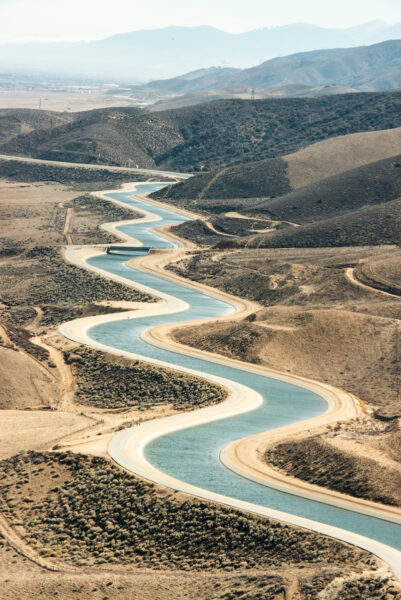
The Willow Springs Water Bank is located in Kern County, south of the Tehachapi Mountains, along the East Branch of the California Aqueduct. The site is within the Antelope Valley-East Kern Water Agency service area and under the jurisdiction of the Antelope Valley Watermaster.
The existing water bank is permitted to store up to 1 million acre-feet of water. Project proponents said the facility’s permeable soils support groundwater storage and recovery, and the proposed expansion would add infrastructure, including a pipeline connection to the California Aqueduct, to serve participating agencies.
Willow Springs is structured as a conjunctive-use project that would capture Article 21 water when available and store it in the groundwater bank for later use. (More on Article 21 water here.) The project has received a conditional award of $128 million through the Water Storage Investment Program for public benefits tied to ecosystem improvements and emergency response.
Under the proposed operating approach, a portion of the stored water would be reserved for ecosystem benefits through pulse-flow releases on the Feather River to support salmon. In dry or below-normal years, the California Department of Fish and Wildlife could identify a need for a pulse flow; in that case, a participating State Water Project contractor would forgo part of its Lake Oroville allocation and instead receive substitute water from Willow Springs, leaving water in the reservoir for release. Over the 50-year project term, Willow Springs is expected to provide an average of 8,800 acre-feet per year for pulse flows. (More on how the WSIP groundwater projects provide pulse flows on the Feather River here.)
The project also would provide emergency response benefits. According to the presentation, Willow Springs could deliver up to 215,000 acre-feet of emergency water to communities along the East Branch of the California Aqueduct in the event of a major disruption or during an extreme multi-year drought.
PROJECT PROGRESS
Since the project’s previous update to the California Water Commission, work has advanced on environmental review, pipeline design, groundwater modeling, participant agreements, and steps toward a final funding award.
Pipeline CEQA (IS/MND)
The Willow Springs Water Bank project received CEQA approval through an environmental impact report in 2006, followed by a 2018 addendum addressing changes to the recharge basins and well field. The current Initial Study/Mitigated Negative Declaration, or IS/MND, focuses on a new conveyance pipeline alignment connecting the California Aqueduct to the water bank. Under CEQA, an Initial Study evaluates a project’s potential environmental effects; a Mitigated Negative Declaration may be adopted when identified impacts can be reduced to less-than-significant levels, avoiding the need for a new EIR.
The project description has been finalized, and technical studies have been completed for biological, cultural, paleontological, air quality, and noise resources. The draft IS/MND is substantially complete, and AB 52 tribal consultation has begun. Remaining steps include finalizing the draft IS/MND, completing public review, holding a public hearing, and filing a notice of determination. The current schedule calls for completion of the IS/MND in the fourth quarter of this year.
Preliminary engineering and design work for the pipeline is proceeding alongside the IS/MND. Work completed to date includes evaluating the site configuration, identifying major infrastructure locations, analyzing potential pipeline routes and right-of-way needs, and incorporating construction access and staging areas into the conceptual design. Upcoming work includes field surveys, geotechnical investigations, and electrical studies.
Turnout on the California Aqueduct
Project proponents have begun discussions with the Department of Water Resources on the turnout location and design. DWR completed a hydraulic modeling study indicating that an 800-cubic-foot-per-second turnout is feasible within Pool 46 of the California Aqueduct. A follow-up meeting with DWR was scheduled for September 1 to continue coordination on the design.
Groundwater Modeling
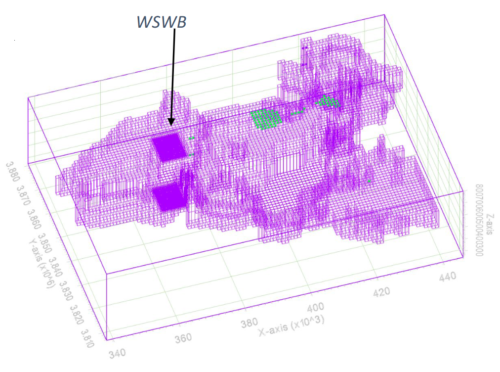 Because the Willow Springs Water Bank is located in an adjudicated groundwater basin, project operations must be coordinated with the Antelope Valley Watermaster. Groundwater modeling is being used to evaluate whether proposed operations would avoid harm to other basin participants and to inform future storage agreements.
The modeling effort began with the most recent U.S. Geological Survey model for the basin. Project consultants refined the model to create a more detailed three-dimensional representation of the Willow Springs area, using historical groundwater levels and localized geologic information to better reflect conditions at the water bank.
The next phase involves running operational scenarios and reviewing the results with the Watermaster to demonstrate that proposed operations would not harm other parties in the basin. That work is expected to continue through the end of the year, followed by development of a water storage agreement with the Watermaster.
PROJECT PARTICIPANTS
Project proponents said participation agreements with State Water Project contractors are advancing. The process includes reviewing project costs, confirming interest in the water bank, and defining how participating contractors would help deliver the project’s public benefits. Two memorandums of interest have been signed, two more are expected, and one or two additional agreements could follow in the coming months.
The memorandums are intended to establish expectations for participation in the water bank and create a framework for future binding agreements. Project proponents said formalized participation documents would also support continued work with the California Department of Fish and Wildlife on public benefit agreements and pulse-flow delivery.
“I think it’s very important to just highlight… the momentum we’re making here with the project participant is extremely important,” said Kris Bale. “With the contracts now being more formalized, we’re able to accelerate that process and work with the Department of Fish and Wildlife to advance the public benefits contract and the pulse flow delivery in more detail.”
PATH TO FINAL FUNDING
The path to final funding depends in part on formalizing project participation and confirming the project’s cost and public benefit commitments. A working group is expected to be established with agencies that have signed memorandums of interest. As the project advances, those memorandums are expected to move toward binding agreements.
For the pulse-flow component, project proponents said a general delivery framework has been developed through presentations and technical memorandums. Continued work will focus on public benefit terms with the memorandum-of-interest group and coordination with the California Department of Fish and Wildlife. The first pulse-flow commitments are expected to be included in binding documentation among participating State Water Project contractors, the Willow Springs Water Bank, and CDFW.
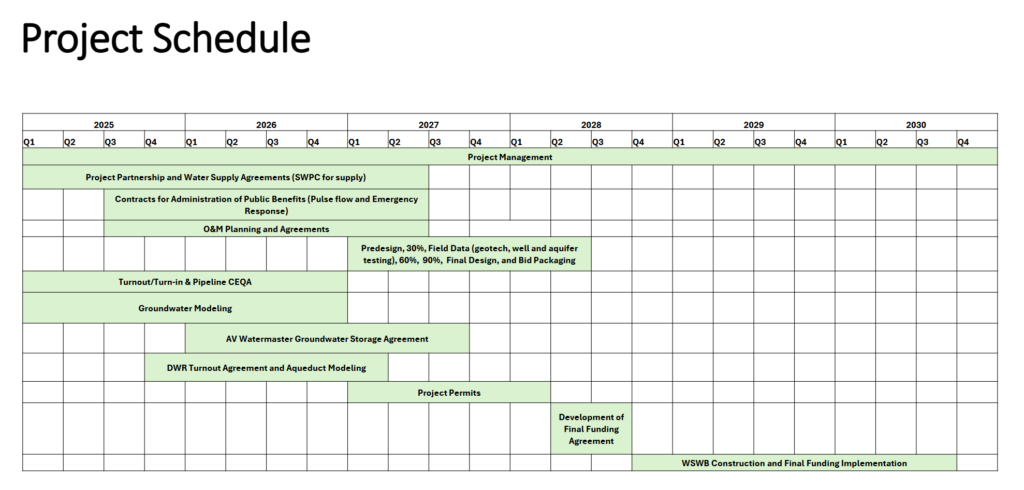
The project schedule calls for filing a notice of determination by the end of the year. Work also continues with the Antelope Valley-East Kern Water Agency on the pipeline alignment, which is being refined for inclusion in the CEQA process. Tribal outreach and stakeholder communication are also underway.
The project is expected to complete all permits, approvals, and public benefit contracts by mid-2027 before returning to the Commission for a final funding award hearing.
PUBLIC COMMENT AND DISCUSSION
During the public comment period, several water agencies spoke in support of the project; no one spoke in opposition.
“Our water supply reliability depends on groundwater banking partnerships with projects like the Willow Springs Water Bank, where we can store excess supplies underground during wet years and recover them when they are most needed in dry years, of course, minus the leave behind that benefits the basin,” said Joshua Golka of the Valley Water District.
“We also recognize the need for additional storage, particularly south of Delta storage, that can improve the reliability and flexibility of the State Water Project supplies. For this reason, San Bernardino Valley is interested in exploring participation in the Willow Springs Water Bank, said Michael Plinski with the San Bernadino Valley Municipal Water District. “We believe Willow Springs has the potential to become an important component of a more resilient and integrated water system.”
Claudia Bolanos-Garza with Palmdale Water District said their agency has signed a Memorandum of Interest for the project.“We do see that this project is promising; it’s a promising opportunity, and it will be enhancing regional reliability and resilience for agencies like ours, but also agencies that are outside of the Antelope Valley.”
“We just want to very much stand behind our encouragement that the commission continue to support Willow Springs Water Bank,” said Peter Thompson, Central Coast Water Authority. “We will be very actively engaged in following the progress of this project and looking forward to potential participation.”
Commissioner Sandi Matsumoto asked how the number of participating agencies could affect delivery of the project’s public benefits.
“Participants that are signing up are acknowledging that their expectation is that they will take their pro rata share of the public benefit,” said Mr. Bale. “They are expected to participate with their pro rata component of that. To your point, the fewer participants there are, the bigger the burden is for respective contractors in terms of how their share of the public benefit and the water being delivered. So we need to work through that analysis with our customers and participants as we’re progressing to the next step. But we are fairly confident that we will continue to see additional contractors coming on board and signing up for the project to participate as well. But to your question, we haven’t talked about necessarily scaling back the public benefit with our contractors. But the fewer contractors there are, the bigger sort of pro rata component there is, the more challenging it is to deliver to the full public benefit.”

