
By Eileen Mamaghani, Cronkite News
 Are the data centers responsible for the water shortage? For now, researchers say no – though details on exactly how much water each facility uses remain hard to pin down.
“While I don’t think that data centers are the cause of the current Colorado River crisis, they are growing and they’re growing fast,” said Rhett Larson, a professor of water law at Arizona State University. “They do use a lot of water.”
Only seven states have more data centers operating or planned than Arizona, according to U.S. Data Center Map, which tracks the industry. At last count, the state had 113 in operation.
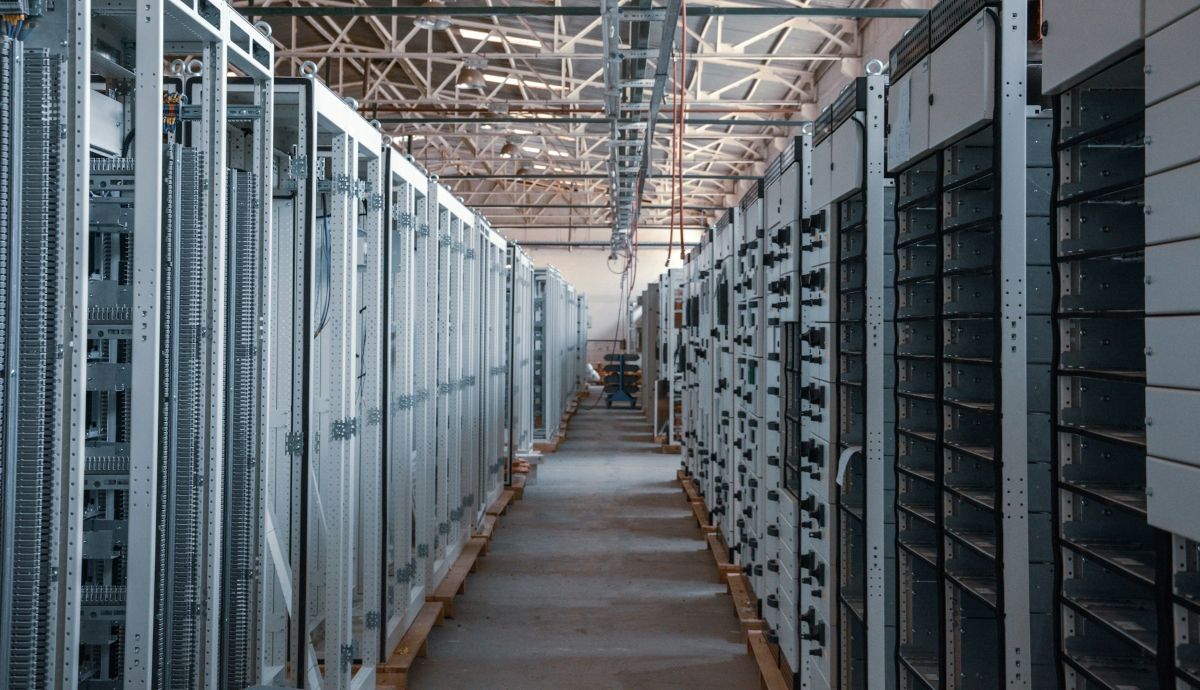
Some take up hundreds of acres. The facilities provide the infrastructure necessary to meet surging demand for cloud computing and large-scale artificial intelligence processes.
Arizona gets about 40% of its water from the Colorado River, according to a 2024 report from the Arizona Department of Water Resources.
But after a decades-long drought, the river is supplying far less than a century ago, when Arizona and six other states set the annual entitlement.

On Aug. 21, after states in the Upper and Lower Basins deadlocked earlier this year over how to divide the water as the river runs low, the federal government issued its own two-year plan. Arizona will have to cut its consumption by 760,000 acre-feet (an acre-foot is enough to cover one acre of land one foot deep).
That’s roughly a 27% to 30% cut.
Ten days after the federal Bureau of Reclamation issued the two-year plan, Arizona Attorney General Kris Mayes called for a pause on new data center construction.
“Data centers are power- and water-intensive, and Arizona is challenged on both fronts right now,” she said in a statement.
Gov. Katie Hobbs, a fellow Democrat, rejected the idea, though in June she signed a budget bill that includes a three-year moratorium on new tax breaks for data centers.
ADWR does not track water usage for most data centers, and the companies are not required to publicly report usage in Arizona. Water utilities contacted by Cronkite News said they don’t keep records on data centers they serve or cited privacy policies that preclude release of information on a specific customer.
“I definitely think it has to be an issue, but in terms of figuring out the scale of it – it’s really challenging,” said Nell Green Nylen, senior research fellow at the University of California at Berkeley’s Wheeler Water Institute at the Center for Law, Energy and the Environment.
In January, Hobbs issued a budget proposal that called for a 1 cent per gallon fee on water used by data centers, with a revenue estimate of $6 million a year.
The proposal didn’t go anywhere and the governor’s office said it is outdated. But it did provide a clue into annual water usage by Arizona data centers: Raising $6 million would require 600 million gallons, or 1,841 acre-feet.
That’s a tiny fraction of the water consumed in Arizona, though it only includes direct water usage, most of which goes to cooling. Data centers use far more water indirectly because the power they consume also requires water to generate.
Total usage by each data center depends on where it gets its electricity, the type of cooling system, and the local climate, Green Nylen said.
For instance, Iron Mountain’s three data centers in Arizona, in Phoenix and Scottsdale, use closed-loop cooling systems that recirculate water, according to the company. That uses far less water than evaporative cooling.
Overall, Arizona is projected to use roughly 1.9 million acre-feet of river water in 2026, according to a Sept. 9 Bureau of Reclamation forecast. Much of the state’s water comes from other sources.

A September 2025 report from Ceres, a nonprofit organization that advocates for sustainability, estimated that in the Phoenix area – where many of the state’s data centers are clustered – data centers use 385 million gallons annually for cooling. The total rises to 3.3 billion gallons including the water needed for power generation.
Larson doesn’t think data center demand currently threatens the Colorado River. But, he said, “They are definitely capable of making the problem we’re in much worse if they aren’t sustainably managed.”
A February 2026 report from ASU’s Kyl Center for Water Policy found no evidence that water use by electricity suppliers has increased in central Arizona, despite the growth in data centers.
“It is difficult to quantify the exact number of data centers in Central Arizona, and even harder to quantify their water use,” the report said, noting that facilities vary in size, power requirements and cooling technologies.
Agriculture accounts for 72% of the state’s water usage, according to the Arizona Department of Water Resources. Arizona will have to decide whether it values data centers enough to redirect water from farms, Larson said.
“We can have a lot fewer data centers and keep producing the same amount of food (and) have lower prices in the grocery store,” he said. “But when you use Google Maps, it might move a lot slower” if there aren’t enough data centers to meet demand.
Data centers supported over 87,000 jobs in Arizona as of 2024, according to the Arizona Technology Council, which advocates for technology-related economic development.
In California, which will lose 440,000 acre-feet of Colorado River water next year, Assemblymember Diane Papan authored a bill to force data centers to report their projected water usage before they can even apply for a business license or permit.
“I very much feel that transparency and operating from a position of knowledge is how we can coexist,” said the San Mateo County Democrat, noting her community’s outrage over data center projects. “There wasn’t public input and an understanding of what the data center meant to local resources.”
The bill is awaiting Gov. Gavin Newsom’s signature. A number of similar proposals are pending in Congress.
Sandy Bahr, director of the Grand Canyon chapter of the Sierra Club, an environmental advocacy group, acknowledged that she’s not sure exactly how much water data centers use. Whatever it is, though, it’s concerning because “there’s no extra Colorado River water.”
This article first appeared on Cronkite News and is republished here under a Creative Commons Attribution-NoDerivatives 4.0 International License.

