
From the Bureau of Reclamation:
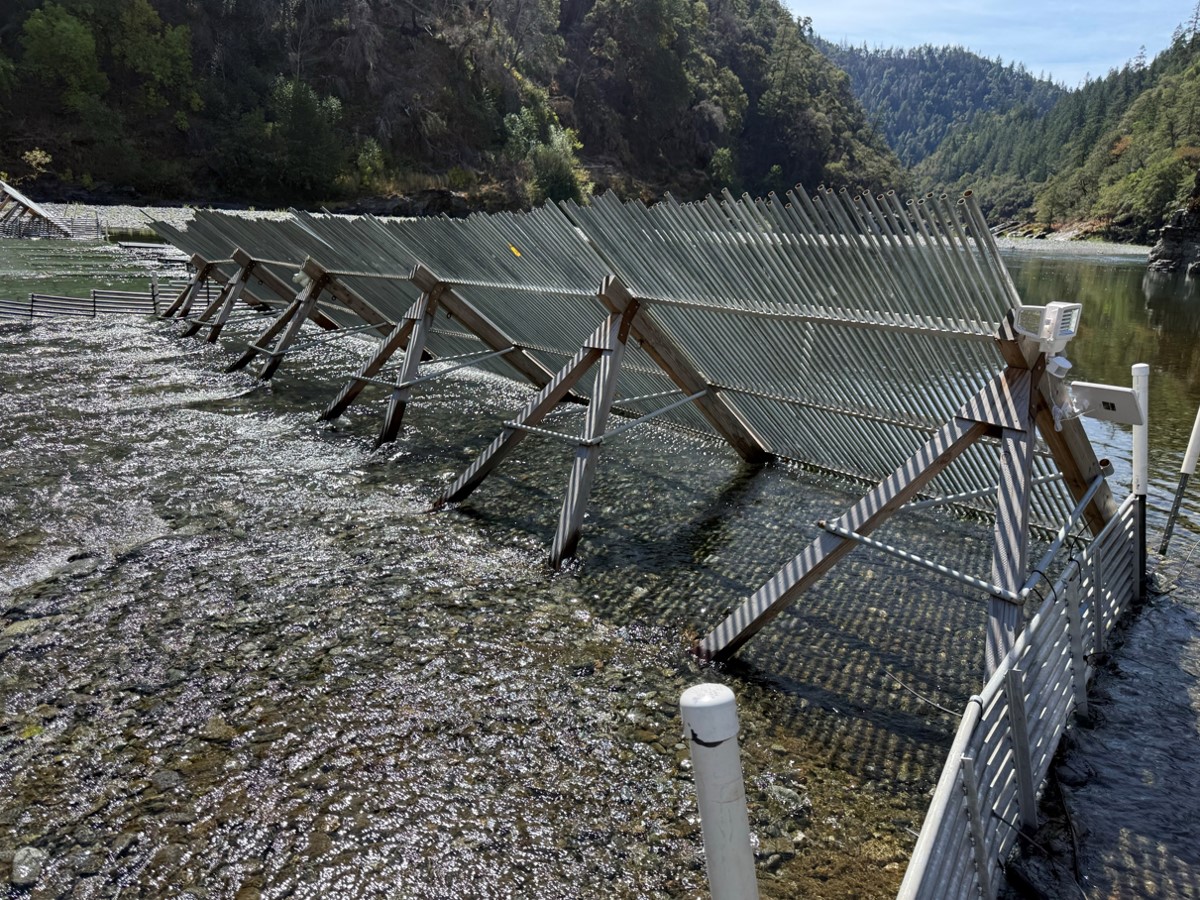
A new chapter for Trinity River salmon begins this fall as the California Department of Fish and Wildlife and Hoopa Valley Tribe bring separate fish monitoring and harvest operations together at one jointly operated location. The Bureau of Reclamation joined its partners today to celebrate the milestone with a ribbon-cutting ceremony recognizing stronger collaboration, more efficient monitoring of Trinity River restoration efforts, and reduced stress on salmon when they are migrating up-river to spawn.
Beginning this fall, CDFW and the Hoopa Valley Tribe will collaboratively conduct Reclamation’s run-size estimation activities at the tribe’s harvest weir rather than at a separate monitoring location farther upstream. Working at a single location allows partners to continue collecting critical information on Chinook salmon, coho salmon, and steelhead while reducing repeated capture and handling of migrating fish, streamline monitoring and reduce costs to Reclamation.
This approach continues to support selective harvest activities at the Hoopa Valley Tribe’s existing harvest weir on the Hoopa Valley Indian Reservation.
Reclamation supports the consolidation, as this unified operation strengthens our ongoing commitment to monitoring Klamath Basin salmonid restoration and harvest opportunities while also improving operational efficiency.
“This milestone demonstrates what strong partnerships can accomplish for the Trinity River,” said Reclamation Acting Regional Director Adam Nickels. “By bringing these efforts together, we can support the science needed to understand salmon populations, reduce impacts to migrating fish and recognize the Hoopa Valley Tribe’s enduring connection to the river and its fisheries.”
Reliable monitoring helps fisheries managers track returning salmon, measure progress toward restoration goals and make informed decisions about restoration and harvest management. Reclamation helped to bring the parties together to reach an agreement that allows this work to continue within the Trinity River Restoration Program partnership.
CDFW has estimated Trinity River coho salmon run sizes since 1978 using mark-and-recapture methods at monitoring weirs in the lower and upper basin. CDFW and the Hoopa Valley Tribe have worked cooperatively on monitoring efforts since the 1990s.
For the Hupa people, fishing with weirs has a much deeper history. Hupa people have used fish weirs and other fishing methods on the Trinity River since traditional times. In 2016, the Hoopa Valley Tribe began operating a modern harvest weir on the Hoopa Valley Indian Reservation, where the tribe selectively harvests fish, including fish used to support its tribal elders’ program.
The ribbon cutting marks a renewed commitment among Reclamation, CDFW, and the Hoopa Valley Tribe to work together for the Trinity River and the people and fish that depend on it. By bringing monitoring and tribal harvest together at one location, the partners are building on decades of cooperation while supporting salmon restoration, fisheries management and the continuation of tribal traditions.
# # #
The Bureau of Reclamation is a federal agency under the U.S. Department of the Interior and is the nation’s largest wholesale water supplier and second largest producer of hydroelectric power. Our facilities also provide substantial flood control, recreation opportunities, and environmental benefits.

